Friday, August 11, 2023

Legislators insist on 'procedure' as dental-school deans plead for approval of expansion of dental benefits in Kentucky Medicaid

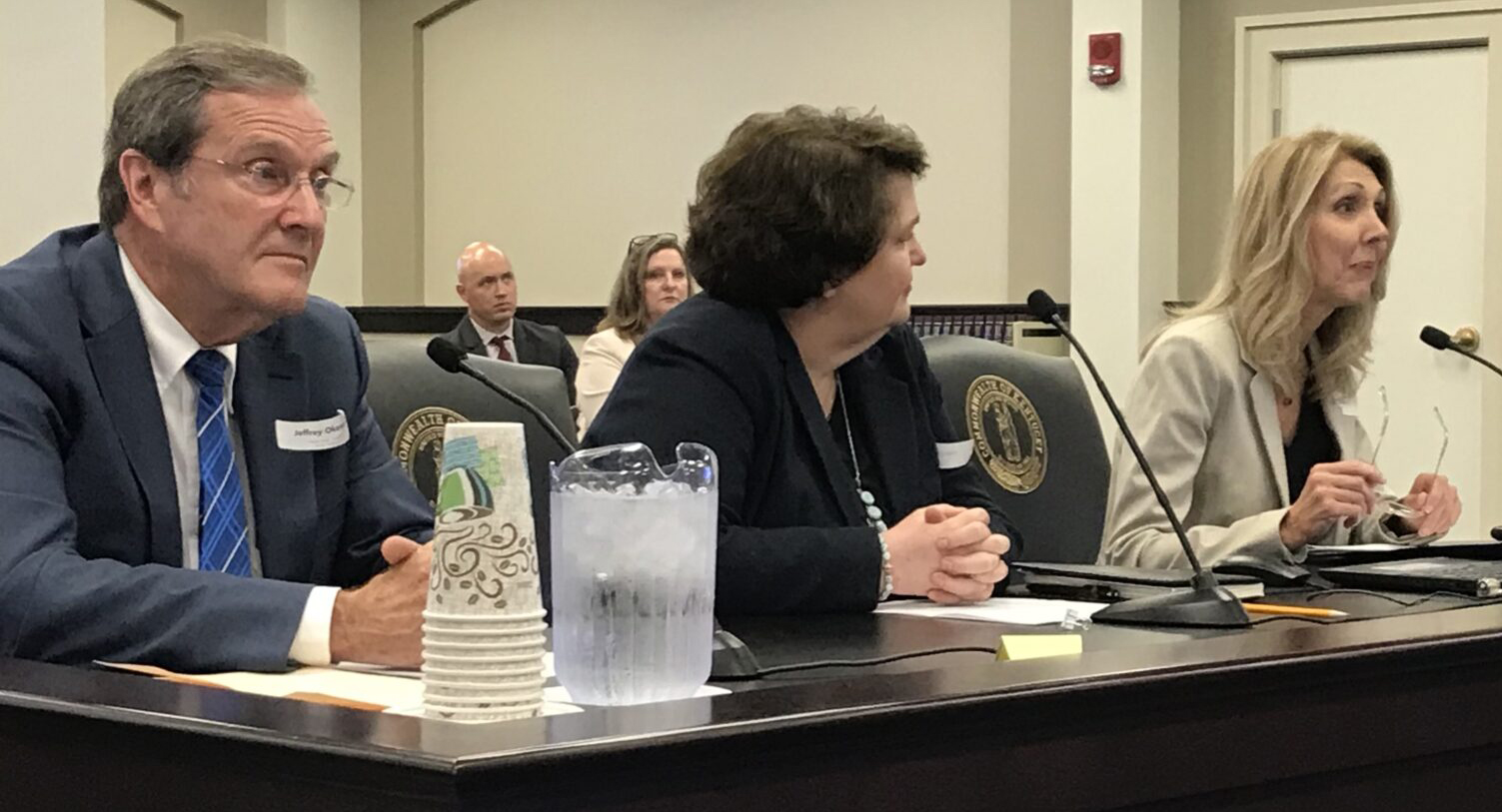
Dr. Pamela Stein, right, dean of the University of Pikeville dental school, spoke in Frankfort Tuesday about the need for expanded Medicaid dental benefits, joined by Dr. Margaret Hill, interim dean of the University of Louisville dental school, and Dr. Jeffrey Okeson, dean of the University of Kentucky dental school. (Kentucky Lantern photo by Deborah Yetter)
By Deborah Yetter
Kentucky Lantern

Working at a public “safety net” dental clinic in rural Western Kentucky, Dr. Pamela Stein routinely saw a heartbreaking sight.

“It was not unusual at 6 o’clock in the morning to see 10 or 15 people standing in line waiting to get in because they had tooth aches, because they couldn’t find anyone else to care for them,” said Stein, appointed last year as dean of a new dental school being formed at the University of Pikeville.

Some patients at the Marshall County clinic were in tears after having diseased, throbbing teeth removed at the clinic operated by the University of Kentucky, she said.

“People would actually cry, they were so relieved,” Stein said, speaking before a legislative committee Tuesday in Frankfort.

She and others spoke in support of the state’s recently expanded Medicaid dental services for adults to include dentures, fillings, root canals and crowns. Medicaid previously paid only for one annual cleaning and tooth extractions for adults though children get a full range of services.

Stein joined the deans of dental schools at the universities of Kentucky and Louisville to urge continuation of the dental services authorized by Gov. Andy Beshear that have ignited a partisan political fight in Frankfort.

Republicans who control the General Assembly are seeking to block Beshear, a Democrat, from expanding Medicaid dental coverage, as well as vision and hearing benefits, arguing he usurped power that rests with lawmakers.

Officials with the Beshear administration disagree, saying they had the authority because the $39 million expansion is paid for through savings in Medicaid and doesn’t require allocation of new money. The federal government covers 85% of the costs.

But the dental school deans, as did other witnesses who appeared, avoided politics, instead focusing on Kentucky’s abysmal oral health — it ranks 49th in the nation — as well as low reimbursement rates that keep many dentists from treating Medicaid patients.

As a result, many patients living with untreated dental disease can’t find a dentist, especially in rural areas, or often find long waiting lists. And oral infection is linked to a host of other health problems that plague Kentucky, including heart disease, stroke, diabetes and premature births.

“It’s an enormous problem that we have here and it’s not getting any better,” said Dr. Jeffrey Okeson, the UK dean. Okeson said Medicaid doesn’t cover costs of dental care.

For example, he said, UK last year billed Medicaid $14.2 million to treat 37,000 patients but was reimbursed only $4.1 million, about 30% of its costs. UK makes up the difference but can’t do so indefinitely if it begins cutting into the academic budget, he said.

His counterpart at U of L agreed, noting that together UK and U of L treat around 90,000 Medicaid dental patients a year, many of whom can’t find care elsewhere.

“These folks would probably not be able to receive dental care if it wasn’t for dental schools acting as a safety net,” said Margaret Hill, interim dean of U of L’s dental school.

“Today we are here before you, speaking on behalf of our patients and our students who would like to do the right thing, and ask that the Medicaid expansion of dental services continue and that rates of reimbursement be more reasonable,” Hill added.

Several witnesses described the enormous suffering of patients who previously lacked dental coverage and now, even if covered under the expanded benefits, can’t find a dentist.

“I don’t mean to tug on your heart strings but I really hope that I do,” said Tiffani Hays, a social worker who works with cancer patients in Winchester, many in dire need of dental treatment. “Oral health is probably one of the most common problems in our patients.”

It was the first opportunity for public comment on the dental benefits expansion enacted by Beshear in April after the lawmakers voted down his first, Jan. 1 expansion in the 2023 legislative session. Beshear reinstated them, with some changes, after lawmakers adjourned.

The stop and start nature of the expanded benefits has patients scared, said Missy Newland, a Louisville woman who gets health coverage through Medicaid and needs ongoing dental care.

“The political tug of war has always had me worried about staying eligible,” said Newland, who works cleaning homes and testified by video. “I fear my access to health care will be taken away and with my health issues, that’s scary.”

The current benefits — which also include expanded benefits for items such as eyeglasses and hearing aids — are good through the end of the year. While Republican lawmakers have objected, they don’t have the power to block them till they meet in 2024 in the next legislative session.

Meanwhile, tens of thousands of Kentuckians have received benefits such as dentures, crowns, fillings, hearing aids and eyeglasses, said Emily Beauregard, executive director of Kentucky Voices for Health, a coalition of health advocacy groups.

“These services are life-changing for people,” said Beauregard, adding that with better vision, hearing and teeth, people are more likely to find jobs.

But GOP legislators object even as some acknowledge the benefits are sorely needed for the about 900,000 adults who get health coverage from Medicaid, a federal-state health plan for low income and disabled individuals.

Rep. Randy Bridges, R-Paducah, and a vocal critic of Beshear’s expanded Medicaid services, accused officials with the Cabinet for Health and Family Services of making “end runs” around lawmakers who, he argued, hold the sole power to fund such programs through its budget committee.

“To come in here and pull at our heartstrings, to say we are the keepers of the purse — we aren’t the keeper of the purse,” he said of the Administrative Regulation Review Subcommittee holding Tuesday’s hearing.

“You’re doing end runs and you want to make us appear to be the villains and we’re not,” Bridges added. “We just want to do it in the proper manner.”

But Sen. David Yates, a Louisville Democrat, argued it’s the health needs of constituents rather than legislative procedure that should matter.

“It did in fact pull on my heartstrings as it should any Kentuckians,” Yates said. “Forget the partisan politics and political games, I think everyone agrees that something has to be done.”

Bridges also complained that witnesses who appeared in support of the expanded benefits were misled by state officials about the legislative process.

“I feel like you have inappropriately led them with some wrong ideas on how this works,” Bridges said.

That prompted a heated retort from Lisa Lee, state Medicaid commissioner, who also spoke Tuesday.

“I have never, ever misled anyone in my 23 years in Medicaid and I will not do so,” Lee told Bridges. “And I really don’t appreciate the fact that you indicated that we have been misleading people.”

As for the witnesses who spoke, Lee said, “They are here because they are concerned that people are going to lose their benefits.”

They included Dr. Bill Collins, a dentist at the Red Bird Mission dental clinic in Clay County who said he constantly seeks grants to cover the costs of dental care for patients Medicaid doesn’t fully cover.

Kentucky has one of the highest rates in the nation of adults with no teeth and patients are flocking to get dentures newly covered under the expanded Medicaid rates, Collins said.

But Medicaid covers only about half the costs, he said.

“When the grant money runs out it has to stop,” he said.

Collins was among witnesses urging lawmakers to continue expanded services and increase payments to dentists. “You can make it a reality,” he said. “That’s what I beg you to do.”

The committee took no action Tuesday. It already has found the regulations Beshear issued to enact the expansion “deficient,” meaning lawmakers could strike them down when they meet next year.

But Rep. Derek Lewis, R-London, committee co-chair, ended the meeting on a conciliatory note, saying he’s willing to work with everyone involved to find a solution.

“I know we’re in an election year,” Lewis said, alluding to the fact Beshear is seeking a second term as governor. “What I don’t want to see is this made to be a political football, I don’t want to poison the well and leave patients and providers holding the bag.”

“I think we can make a difference,” he said. “We need to make a difference.”

AppalReD Legal Aid to hold 20th annual Domestic Violence and Elder Abuse Awareness Conference via Zoom on Sept. 15

 
The Appalachian Research and Defense Fund of Kentucky is holding its 20th annual Domestic Violence and Elder Abuse Awareness Conference  Sept. 15 from 8:30 a.m. to 3:15 p.m. ET via Zoom.

The organization, which uses the brand AppalReD Legal Aid, said in a news release that it is using Zoom this year to allow people from all over Kentucky to participate. 

"Domestic violence and elder abuse challenge every community across the commonwealth," the release said.

The sessions will address several topics, including: when to call protective service, how to help survivors in recovery, advocacy for clients without homes, trauma-informed advocacy and communications challenges. 

The free event is open to everyone including legal professionals, health-care workers, social workers, counselors, nursing home administrators, educators, students, and community leaders. 

"By uniting people from various backgrounds, we can collectively make a significant impact on how we combat elder abuse and domestic violence and best serve those affected," said the release.

While attendance is free, pre-registration is required, and spots are limited. Click here to register. The Zoom link will be provided upon registration. For more information about sessions, CEUs, or speakers visit www.ardfky.org/dv23.

Pandemic image of nurses as 'health care heroes' is both daunting and inspiring to nursing students, who are in short supply

A nurse at Louisville's James Graham Brown Cancer Center
(Photo by Ron Cherry, Getty Images, via Kentucky Lantern)
By Sarah Ladd
Kentucky Lantern

Fewer students were studying to become nurses in Kentucky last year than in 2019, the last pre-pandemic year.

Enrollment in educational programs that lead to a nursing license declined in 2021 and 2022. But a variety of statewide efforts could help push the numbers back up in the coming years.

Kentucky needs more nursing students in the pipeline to address staff shortages, especially as the state tries to bounce back from the worst of Covid-19. In 2021, nearly 5,000 nurses left their jobs, most of them to retire.

And, a 2022 Kentucky Hospital Association’s workforce report showed more than 13,000 vacancies in the state’s hospitals.

Experts attribute the enrollment drop to several pandemic-related factors. Those include the conflicting images of nursing that emerged and the learning loss experienced by high school students.

During the emergency years of Covid-19, highly-trusted Kentucky nurses became more visible.

This was a good thing, in part. The label of “health care heroes” presented nurses and other medical professionals as celebrities, making a career in those fields look exciting and rewarding.

But nurses were also shown as worn down, exhausted, burnt out. The people who stood in for family at the end of patients’ lives. The ones who treated infectious patients early in the pandemic with insufficient personal protective equipment. 

College preparedness became more of a challenge during the emergency years of the pandemic as well.

In 2018, 8,253 nursing applicants met admission criteria. That jumped to 11,121 in 2019 and 11,676 in 2020, according to data obtained through an open records request.

But in 2021, 8,925 students — a 24% decline from 2020 — met admission requirements, which bumped up to 10,199 in 2022.

Mary DeLetter, interim dean of the University of Louisville School of Nursing, said many nursing applicants completed most or part of their high school education online.

It’s an “unfortunate situation” and not everyone is college-ready at the same level, she said.

The Kentucky Lantern previously reported that there was an increase during the pandemic of youth not proficient in reading and mathematics.

“The rapid shift to online was difficult,” DeLetter said. “I think that’s one of our biggest challenges, is that variability of how students are coming to college right now, (and) whether they are college ready.”

By the numbers

Pre-licensure nursing programs in Kentucky have seen a decline in “traditional” students coming in – traditional meaning a person who has just left high school and is now going to college, Kentucky Board of Nursing Executive Director Kelly Jenkins told the Lantern.

In 2020-21, there were 14,394 students enrolled in pre-licensure programs. That dropped by 971 to 13,423 students for 2021-22. (Graduate-level nursing programs do not submit their numbers to the Board of Nursing, so those numbers are not represented).

Spread across the commonwealth, in undergraduate and advanced nursing programs and across the two to four years it takes to earn an undergraduate nursing degree, Kentucky has 5,257 “empty seats” that could be filled with students who could eventually help ease the shortage.

None of the state’s 101 programs are at risk of being shut down and “most,” Jenkins said, are meeting the benchmarks required by the nursing board.

Nursing schools also have lost faculty. According to data obtained through an open records request, Kentucky’s pre-licensure nursing programs had 87 full time faculty vacancies last fall.

No one program had more than six vacancies in the fall of 2022. The programs collectively had 38 part-time faculty vacancies last fall, for a total of 125 part- and full-time vacancies across 30 programs.

That’s an increase from the four years prior, data from the nursing board show. In 2018, there were 50 part- and full-time vacancies.

The total jumped to 79 in 2019 and dropped again to 73 in 2020. In 2021, there were 77 full and part time vacancies.

The University of Kentucky College of Nursing did not make their dean available for this story. A spokesperson said there were no faculty shortages last year, which data confirms.
 
Financial challenges – and Covid-19

A bill that became law during the 2023 legislative session could help funnel more workers into health care fields.

House Bill 200, which received bipartisan support from legislators, will create a health care workforce fund with private-public partnership administered by the Council on Postsecondary Education.

DeLetter, of UofL, said that the bill should help programs around the state bounce back from any COVID-19 -induced delays.

“Any time we can help students pay for part of their schooling, it is a huge benefit to the student,” she said. “They can focus and they can be more successful when they are less distracted by the need to to work, or to work extensive hours.”

But, financial challenges continue – and HB 200 doesn’t have state funding yet.

DeLetter said in addition to how expensive higher education is, nursing programs have more expenses that other programs don’t: stethoscopes, uniforms, liability insurance.

Those items may fall under “fees” and not “tuition,” meaning specifically-designated dollars don’t cover them.

“So,” she said, “those become the burden of the student.”
Training heroes

The image of nurses as heroes during the emergency phase of the pandemic was both inspiring and daunting for students, DeLetter said.

But being a hero can’t happen overnight, she said. You need to have both hard and soft skills necessary to save a life – and comfort the patient.

“One can be a hero when one is prepared,” DeLetter said. “I can teach everyone physiology ’till the cows come home. But if they can’t interact with patients in a positive way, you know, they won’t be trusted.”

In her more than 40-year career, DeLetter said, “I’ve worked in two states and several cities, and we’ve cycled through shortages.”

But: “Never have I seen anything like Covid in my lifetime.”

And: “I never have worked as hard as I worked during Covid.”

Every day was a new challenge. The federal and state governments changed guidelines back-to-back as infectious disease experts learned more about the virus.

Shifting alongside those institutions, hospitals and other clinical settings had to adjust how they let students come in and train. The pipeline could not halt.

“I think what made it daunting for people was to see how incredibly hard nurses were working,” she said. “And some people did not want that for a lifestyle. And, you know, who’s to blame them? I mean, it was hard.”

Her job, then, was to show students the reality of the world, prepare them for it as best she could, and get them out the door and into the workforce as fast as possible.

Covid-19 caused temporary restrictions on clinical availability, causing programs to give their students that experience in creative ways.

“We were able to manage all of our clinical with simulation options,” DeLetter said. “It was very hectic and it was a great deal of work on our part. But we were very committed to graduating those students and giving them the best possible experiences that we could given the worldwide situation.”

“We did not want to send people out into the workforce who were woefully underprepared and thought they were going to be a hero only to be daunted by the reality of the world,” she said. “So we worked really hard to make them ready for what was out there.”

‘A rewarding career’

The Board of Nursing is focused on the nursing education pipeline, Jenkins said. It’s working with partners who can talk to students early about why they should go into nursing.

The board is partnering with organizations like the Kentucky Hospital Association and long term care organizations to help address shortages.

“We understand … that they’re suffering from shortages and so we’re trying to work with them on creating new avenues” to address those, Jenkins said.

The Chamber of Commerce Foundation and the hospital association, Jenkins said, plan to get “talent pipeline managers” spread out across the state.

These people will go into high schools; they’ll meet with students and other folks and talk to them about the benefits of pursuing a health care career.

Despite the pandemic and its challenges, nursing faculty say the career is a rewarding one.

Vanessa Lyons, the LPN to RN Bridge Coordinator at West Kentucky Community and Technical College in Paducah, said now is a great time to go into nursing.

That’s because Covid-19 helped create newfound appreciation for nurses, Lyons said. It also bolstered benefits, working conditions, helped improve patient ratios, flexibility and more.

And, nurses are in high demand, so “it’s very easy to find your perfect job,” she said.

The best nurses are people who have resilience, flexibility and a caring attitude, she said. Patients remember the tenderness a nurse provides during a hospital stay.

Those qualities help make them the most trusted professionals in the country.

“We can teach the academics, we can teach the skills and we can provide the knowledge. But those innate abilities like … resilience and caring, we can’t teach those,” Lyons said. “And so it helps if people come in with those characteristics already.”

When Jenkins goes home to Union County, people still remember the care she gave their loved ones as a working nurse.

“I always run into somebody who says, ‘I remember when you took care of my grandma.’ Or: ‘I remember when you took care of my husband,’” she said. “It’s a very rewarding career.”

Thursday, August 10, 2023

Tiny antibodies hold big promise for cancer treatment, UK says

Alpacas are one of the few animals to produce nanobodies,
a promising tool for drug research and development.
(Photo: Ben Corwin, UK Research Communications)
By Elizabeth Chapin 
University of Kentucky 

Using antibodies derived from alpacas, a University of Kentucky research team has developed a tool that could lead to new therapies to stop the growth of several types of cancer.

While cancer researchers have known that a protein called PRL-3 is linked to the growth of colon, breast, lung, skin and blood cancers, there is little understanding about how it works due to a lack of tools to study it effectively.

With unique alpaca antibodies known as nanobodies, the team led by UK Markey Cancer Center researcher Jessica Blackburn developed the first effective tool to specifically target PRL-3.

The discovery brings scientists one step closer to developing a drug that can stop the expression of PRL-3 and the growth of cancer, says Blackburn.

"The nanobodies are valuable new tools that can help researchers better understand how PRL-3 contributes to cancer progression," said Blackburn, an associate professor in the UK College of Medicine's Department of Molecular and Cellular Biochemistry. "Ultimately, this discovery opens up new possibilities for developing better treatments to fight cancer and improve the lives of patients."

The PRL-3 nanobodies, developed in collaboration with UK's Protein Core, showed promising results in lab tests highlighted in the journal PLoS ONE.

Blackburn says that the nanobodies' ability to locate PRL-3 within cancer cells will give researchers new insights into what other proteins or molecules it interacts with, which will add to the understanding of its function in cancer. Their ability to attach to PRL-3 could also have potential for therapeutic development.

"Nanobodies that target other proteins are already in clinical trials for a variety of human diseases, so it could be possible for a PRL-3 nanobody to be used as a drug to bind to PRL-3 and inhibit its activity," Blackburn said.

Alpacas are one of the very few animals that produce nanobodies, which are 10 times smaller than regular antibodies. Their size gives them the potential to enter a cell in ways that a normal antibody cannot, offering a promising tool for understanding disease and drug development.

UK is just one of a handful of institutions currently producing alpaca nanobodies used for biomedical research. 

This story has been edited by Kentucky Health News. Click here for the original.

Wednesday, August 9, 2023

Attorney general files lawsuit against pharmacy benefit managers, manufacturers over alleged insulin pricing scheme

By Melissa Patrick
Kentucky Health News

Attorney General Daniel Cameron has filed a lawsuit against three pharmacy benefit managers and drug manufacturers over an alleged insulin pricing scheme.   

The lawsuit alleges that PBMs CVS Caremark, Optum Rx, and Express Scripts along with manufacturers Eli Lilly, Novo Nordisk and Sanofi have worked together to manipulate and increase insulin prices. 

PBMs act as middlemen between insurance plans and drug manufacturers; they determine what drugs are offered, how much someone pays for the drug, and how much the pharmacists are paid.
This graphic from the lawsuit "shows how collectively the manufacturers have exponentially raised
the prices of insulin products in near unison," the attormey general's news release says. 
A Cameron news release said, "The lawsuit alleges that instead of using such leverage to negotiate lower prices for their customers, PBMs have sought to increase their own profits by raising insulin prices. In that scheme, the insulin manufacturers artificially and willingly raised their reported prices and then deceptively refunded a significant portion of that price to PBMs through rebates, discounts, credits, and administration fees. . . . Executives for PBMs recently testified that between 75 and 84 cents of every dollar spent on insulin goes directly to affiliates of PBMs." 

The 133-page lawsuit states, "Insulins, which today cost manufacturer defendants less than $2 to produce and which were originally priced at $20 when released in the late 1990s, now range between $300 and $700." 

Cameron said in the release, “I understand the pain inflicted on Kentucky families by unfair and inflated insulin prices. The unlawful business practices that drove these increases have to end, and normal market forces must be allowed to lower the cost of insulin for all Kentuckians.”

Nearly 450,000 Kentuckians live with diabetes, and an additional 1.1 million are prediabetic.

Kentucky #insulin4all Chapter Advocate Angela Lautner told WKYT that it's time for both manufacturers and PBMs "to be held accountable for the massive insulin prices we see here in the United States" and questioned why they exist at all. 

“These lawsuits have been going on for a number of years, and it’s time that they come to a conclusion,” Lautner told the Lexington TV station. “Everybody knows that we are being taken advantage of and lives are literally being lost because of greed.”

Attorneys general from Arkansas, California, Illinois, Kansas, Louisiana, Mississippi, Montana, and Ohio have filed similar lawsuits in their states. 

Kentucky lawmakers have been working on PBM issues for years, most recently passing 2020 Senate Bill 50 that among other things, required the state to hire a single PBM to manage Kentucky Medicaid's prescription-drug business of more than $1 billion a year. Kentucky has saved at least $38 million from this move, money Gov. Andy Beshear has used to expand Medicaid benefits over objections of the Republican-controlled legislature. He and Cameron are running for governor. 

Monday, August 7, 2023

UK HealthCare joins several other Kentucky hospital systems and will no longer require employees to get a Covid-19 vaccination

Today's Clinical Lab photo
By Melissa Patrick
Kentucky Health News

Federal rules requiring Covid-19 vaccinations in health-care settings were lifted in early June, and while several of the larger Kentucky hospital systems soon lifted their requirements, UK HealthCare's new policy didn't kick in until this month. 

"As of August 1, 2023, UK HealthCare will no longer require Covid-19 vaccination as a condition of employment," the university announced last Monday. "UK HealthCare will continue to monitor vaccine and positivity rates for adverse outcomes and will reassess this decision if indicated or new federal or state guidelines require it."

The hospital said it plans to encourage Covid-19 vaccination with no disciplinary action if not obtained and will reconsider the requirement when Covid vaccine recommendations become similar to those for influenza. 

"As the schedule, dosage and other features of Covid vaccination mature, we will consider instituting a requirement similar to flu vaccination (at defined intervals, when an efficient process to enforce it is available)," the university said. 

In mid-July, Kentucky Health News reported that Norton Healthcare and Appalachian Regional Healthcare, which has 14 hospitals in Kentucky and West Virginia, had changed their policies to no longer require Covid-19 vaccination.

Sunday, August 6, 2023

2-1 appeals court ruling will interrupt gender-affirming care for Ky. transgender youth as the new law against it moves through courts

Judges Jeffrey Sutton, Amul Thapar and Helene White are pictured in front of the Potter Stewart Courthouse in Cincinnati, where their Sixth Circuit U.S. Court of Appeals sits. (L.A. Blade illustration)

By Melissa Patrick

Kentucky Health News

A federal appeals court panel voted 2-1 last Monday to allow Kentucky to enforce a recently enacted ban on gender-affirming care for transgender youth while the law that imposed the ban works its way through the courts. The ruling will have a health impact on transgender youth undergoing treatment.

The provisions in 2023 Senate Bill 150 under legal challenge are the ones that ban gender-affirming medical care for minors diagnosed with gender dysphoria, such as hormone therapy and puberty blockers.  

The American Civil Liberties Union of Kentucky has filed a motion asking that the entire Sixth Circuit Court of Appeals review the ruling, which would involve all 16 judges instead of the three-judge panel.

ACLU Communications Director Angela Cooper said the motion was filed because the ruling risks "irreparable harm" to some transgender youth.

"Youth who are already receiving puberty blockers and hormone therapy are being forced to taper off that service or seek it out of state," Cooper said. "We don't advise clients on what to do about their medical choices, but they are being forced to make very serious decisions about their health that go against the advice of their physician and the prevailing standard of care." 

She added that the medications are "prescribed by their doctor, in accordance with the prevailing standard of care. It's the same as any other medication and it should not be denied." 

Gender-affirming care is considered the accepted standard of care and is recommended by a broad range of medical associations, including the American Medical Association and the American Academy of Pediatrics. 

In early August, the AAP reaffirmed its policy to support gender-affirming medical care for transgender youth, while also taking steps to commission a systematic review of medical research and treatments. The group said it opposed "any laws or regulations that discriminate against transgender and gender-diverse individuals, or that interfere in the doctor-patient relationship." 

The AMA has strongly opposed laws that ban gender-affirming care for transgender youth, while voicing concerns about the increased risk of mental-health conditions, including depression, anxiety and suicidality, that transgender youth often experience – especially when they lack appropriate supports.

"It is important to note that this higher suicide risk is not unavoidably associated with transgender or nonbinary status, but instead is the result of stigma, discrimination and mistreatment," Dr. Jack Resneck, immediate past president of the AMA, wrote last August. "A large body of medical literature demonstrates that with support at home, school and in the community – and with access to gender-affirming care – transgender youth do as well on mental-health measures as their non-transgender peers." 

Kentucky's ban was set to take effect in late June, but on June 28 U.S. District Judge David Hale placed a temporary block on the section of the law that dealt with gender-affirming care. After the same Sixth Circuit panel issued a similar ruling in a Tennessee case, Hale lifted his injunction. Four days later, on July 18, the ACLU filed for emergency relief that would allow gender-affirming care while the lawsuit worked its way through litigation. On July 31, the request was rejected. 

Attorney General Daniel Cameron, the Republican nominee for governor against Democratic Gov. Andy Beshear, applauded the appeals court ruling, which allows SB 150 to be enforced in full. "Last night’s ruling was a win for Kentuckians and a win for our values," he said in an Aug. 1 news release.

The ruling was not unexpected, given the Tennessee ruling. It was written by Chief Judge Jeffrey Sutton, an appointee of George W. Bush, and Judge Amul Thapar, an appointee of Donald Trump.  

They said the issues involved – irreparable harm, the balance of harms, the public interest and the ACLU's likelihood of success on the merits – are best left to the legislature rather than judges: “The people of Kentucky enacted the ban through their legislature. That body, not the officials who disagree with the ban, sets the Commonwealth’s policies.”

Judge Helene White, who was first nominated by former President Bill Clinton and later nominated by Bush, dissented.

She wrote that the need for an injunction to block the ban in Kentucky was greater than in Tennessee because "Kentucky's law provides no grace period during which patients receiving care may continue treatment. Instead, health-care providers must immediately cease treatment or "institute a period during which the minor's use of the drug or hormone is systematically reduced."

Tennessee's law allows minors that are receiving treatment to keep getting it until March 31, according to the appeals court's decision. 

The decision ruling is preliminary. An expedited final ruling on the lower court's ban is expected by Sept. 30. 

"At least 20 states have now enacted laws restricting or banning gender-affirming medical care for transgender minors. Most of those states face lawsuits. A federal judge struck down Arkansas’ ban as unconstitutional. In other states, judges have issued disparate rulings on whether the laws can be enforced while the cases are being litigated," The Associated Press reports.   

If you’re looking for transgender peer support, you can reach Trans Kentucky at 859-448-5428 or online at transkentucky.com. You can also contact the Trevor Project, which provides free, confidential counselors who specialize in helping LGBTQ youth.

Saturday, August 5, 2023

Mobile unit provides addiction recovery, other medical services in Glasgow, Leitchfield, Hodgenville, Bardstown and Lebanon

The Intensive Health mobile unit serves five rural communities in
    Kentucky. (Photo by Michael Crimmins with Glasgow News 1) 
A drug-recovery company based in Glasgow is using a mobile health-care unit and partnerships with businesses to bring an array of health services to people in the area, Michael Crimmins reports for Glasgow News 1. 

The white-panel van, run by Intensive Health, part of Stepworks, is housed with "medical equipment such as gloves, AEDs [automatic external defibrillators], blood-drawing equipment and a small room in the back for telecommunication," Crimmins reports.

Google map shows the communities being served.
Jonathan Fondow, the mobile unit's data coordinator, told Crimmins that the unit offers both recovery services and general medical services in Glasgow, Hodgenville, Lebanon, Bardstown and Leitchfield, going to a different location on each of the five days it operates.

The unit provides medication-assisted treatment, mental-health counseling, Hepatitis C screening and treatment, HIV screenings, health assessments, primary care, and general medical services, according to its website.  Fondow said the unit also offers peer-support services for people who need addiction care. 

Fondow told Crimmins that they provide mental-health care via telehealth with two therapists in Elizabethtown, where the company began.

 “We’re trying to put the stigma behind us, so someone that needs to talk to someone can also go in the back of this mobile unit and speak to therapists," he said. 

He added that patients who need further assistance would be referred to a pharmacy or healthcare service in the community. And, he said, they can help people with gas cards or transportation if needed.

Crimmins reports that the mobile unit has been a great service to homeless people, who often don't have medical insurance. 

“So far, since we started last week, around 70 percent of our patients are homeless,” Fondow said. “They have nothing except their backpack that they’re carrying.”

According to Fondow, Crimmins writes, "The mobile unit is run through a four-year federal grant of $2 million to help the people, primarily in rural areas, that are without insurance and either are forced to forgo treatment or pay entirely out of pocket. In that same vein, he said, a goal of the unit was to get patients at least started on the path to Medicaid."

This mobile health-care model will soon expand in Kentucky via the state-federal Medicaid program.

In mid-July, the Centers for Medicare & Medicaid Services announced that Kentucky will join five other states in providing mobile Medicaid crisis intervention teams later this year, Sarah Ladd reports for Kentucky Lantern.  It will take effect Oct. 1 and funding will come from the American Rescue Act of 2021.

Friday, August 4, 2023

As a drug-resistant fungal disease, Candida auris, adapts to the warmer climate, cases of it rise; up 214% in Kentucky in 2022

Cases of a potentially fatal fungal disease called Candida auris have increased by 1,200 percent since 2017 and the warmer climate could be to blame, Camille Fassett reports for The Associated Press and Grist.

All of Kentucky's 29 clinical cases of C. auris were reported in 2021 and 2022. However, there was a 214% increase between the years, with seven in 2021 and 22 in 2022, according to the Centers for Disease Control and Prevention. 

Fungal disease expert Arturo Casadevall, a microbiologist, immunologist and professor at Johns Hopkins University, told Fassett that humans normally have tremendous protection against fungal infections because of our temperature. 

“However, if the world is getting warmer and the fungi begin to adapt to higher temperatures as well, some … are going to reach what I call the ‘temperature barrier’,” he said, referring to the threshold at which mammals’ warm bodies usually protect them from infection.

In other words, Fassett writes, "Over time, humans may lose resistance to these climate-adapting fungi and become more vulnerable to infections. Some researchers think this is what is happening with C. auris." 

And while C. auris is not usually dangerous for healthy people, it can be for older patients, people with pre-existing medical conditions and people in health-care settings. The death rate is estimated to be between 30% and 60%, according to the CDC. 

The pathogen was first identified 14 years ago in Japan and early on most cases in the U.S. were linked to people who had traveled from other places, Meghan Marie Lyman, an epidemiologist for mycotic diseases at the CDC, told Fassett. Now, she said, most cases are acquired locally, generally spreading among patients in health-care settings.

"In the U.S., there were 2,377 confirmed clinical cases diagnosed last year," Fassett reports. She adds, "In the U.S., the most cases last year were found in Nevada and California, but the fungus was identified clinically in patients in 29 states. New York remains a major hot hotspot."

Dr. Luis Ostrosky, a professor of infectious diseases at McGovern Medical School at UTHealth Houston, told Fassett that he thinks C. auris is “kind of our nightmare scenario.”

“It’s a potentially multidrug-resistant pathogen with the ability to spread very efficiently in health care settings,” he said. “We’ve never had a pathogen like this in the fungal-infection area.”

The problem is so bad that the CDC issued a news release in March, calling the fungus "an urgent antimicrobial resistance (AR) threat" and noted that it "spread at an alarming rate in U.S. health-care facilities in 2020-21." 

"CDC has deemed C. auris as an urgent AR threat, because it is often resistant to multiple antifungal drugs, spreads easily in health-care facilities, and can cause severe infections with high death rates," the release says.

The article is published in Grist, an online journal of environmental news and commentary, as part of a collaboration with AP called Climate Connections, to explore how a changing climate is accelerating the spread of infectious disease around the world, and how mitigation efforts demand a collective, global response.

UK HealthCare again top Kentucky hospital in U.S. News & World Report rankings, with four more in the state listed among the best

By Melissa Patrick

Kentucky Health News

Five Kentucky hospitals have been named among the nation's "Best Regional Hospitals" in the annual ranking by the U.S. News & World Report magazine. 

The No. 1 hospital in Kentucky is the University of Kentucky hospital, followed by St. Elizabeth Healthcare Edgewood-Covington. Tying for third place were Baptist Health Lexington, Norton Hospitals and St. Joseph Hospital-Lexington. 

To make the list, a hospital must:
  • Offer a full range of services;
  • Rank nationally in one of 11 measured specialties, or have seven or more high-performance rankings for procedures and conditions; and
  • Have at least three more "high performing" than "below average" rankings for procedures and conditions.
The report offers an overview of 121 Kentucky hospitals with a breakdown of each of the measured categories, according to the services a hospital provides.

UK HealthCare, for the eighth straight year, ranks No. 1 with its Albert B. Chandler Hospital. It also ranked in the top 50 hospitals for cancer care for the seventh straight year, ranking 44th. Its Markey Cancer Center is Kentucky's only National Cancer Institute-designated cancer center, and one of 72 in the nation.

"Excellence in health care is not merely a title to be held but a relentless pursuit to improve the lives of our patients,” Dr. Robert S. DiPaola, UK's provost and acting co-executive vice president for health affairs, said in a news release. “To be consistently ranked among the best in the nation requires a commitment to exceptional care, groundbreaking research, innovative education and compassionate service from our faculty, providers and staff across UK HealthCare as we serve Kentucky and beyond."

The evaluation of the UK hospital includes data from its Kentucky Children's Hospital and Good Samaritan Hospital. The hospital system was also nationally ranked in two other adult specialties: ear, nose and throat and obstetrics and gynecology and three children's specialties: pediatric cardiology and heart surgery, pediatric orthopedics and pediatric urology. 

It rated high-performing in the adult specialty of gastroenterology and GI surgery, and the following procedures and conditions: chronic obstructive pulmonary disease, colon cancer surgery, diabetes, heart attack, heart failure, hip replacement, kidney failure, leukemia, lymphoma and myeloma, lung cancer surgery, ovarian cancer surgery, pneumonia, stroke, and uterine cancer surgery.

St. Elizabeth ranked high-performing in these procedures and conditions: colon cancer surgery, lung cancer surgery, prostate cancer surgery, abdominal aortic aneurysm repair, heart attack, heart bypass surgery, heart failure, diabetes, kidney failure, back surgery (spinal fusion), stroke, ovarian cancer surgery, uterine cancer surgery, hip replacement, knee replacement, COPD, and pneumonia. 

Baptist Health Lexington rated high-performing for leukemia, lymphoma and myeloma, colon cancer surgery, heart attack, back surgery (spinal fusion), stroke, hip replacement and knee replacement. 

Norton Hospitals (Norton Audubon Hospital, Norton Brownsboro Hospital, Norton Healthcare Pavilion and Norton Women's and Children's Hospital) rated high-performing in prostate cancer surgery, heart attack, aortic valve surgery, heart bypass surgery, heart failure, stroke, maternity care (uncomplicated pregnancy), hip replacement and knee replacement. It ranked below average for hip fractures. 

St. Joseph Hospital-Lexington rated high-performing for colon cancer surgery, heart attack, heart bypass surgery, heart failure, kidney failure, COPD, and pneumonia. 
 
Data from the report came from the Centers for Medicare & Medicaid Services, the American Hospital Association, professional organizations and medical specialists. Ratings for procedures and conditions were based entirely on objective quality measures, the news release said.  

The 34th annual rankings compared hospitals in 15 specialties and 21 common procedures and conditions. Nationally, the report named the top 22 hospitals to the national "Honor Roll."  The top hospitals were not ranked this year, but were instead listed in alphabetical order. Regionally, 494 hospitals were recognized in 49 states and 92 metro areas as "Best Regional Hospitals." 

Click here for a list of frequently asked questions about how the magazine ranks the hospitals.

Wednesday, August 2, 2023

Some experts say Alzheimer's drug is brilliant first step to a cure; others say it's a waste of money that shortchanges the poor

Photo from Eisai Co., maker of the drug
By Arthur Allen
KFF Health News

The first drug purporting to slow the advance of Alzheimer’s disease is likely to cost the U.S. health care system billions annually even as it remains out of reach for many of the lower-income seniors most likely to suffer from dementia.

Medicare and Medicaid patients will make up 92% of the market for lecanemab, according to Eisai Co., which sells the drug under the brand name Leqembi. In addition to the company’s $26,500 annual price tag for the drug, treatment could cost taxpayers $82,500 per patient per year, on average, for genetic tests and frequent brain scans, safety monitoring, and other care, according to estimates from the Institute for Clinical and Economic Review (ICER), a nonprofit that evaluats the cost-effectiveness of health care.

The Food and Drug Administration gave the drug full approval July 6. About 1 million Alzheimer’s patients in the U.S. could qualify to use it. The drug is still in a clinical trial being conducted at many unversities, including the University of Kentucky.

Patients with early Alzheimer’s disease who took lecanemab in the trial showed mental decline five months later than other subjects over an 18-month period, but many suffered brain swelling and bleeding. Although those side effects usually resolved without obvious harm, they apparently caused three deaths.

The great expense of the drug and its treatment raises questions about how it will be paid for, and who will benefit.

“In the history of science, it’s a significant achievement to slightly slow down progression of dementia,” said John Mafi, a researcher and associate professor of medicine at UCLA. “But the actual practical benefits to patients are very marginal, and there is a real risk and a real cost.”

To qualify for Leqembi, patients must undergo a PET scan that looks for amyloid plaques, the protein clumps that clog the brains of many Alzheimer’s patients. About 1 in 5 patients who took Leqembi in the major clinical test of the drug developed brain hemorrhaging or swelling, a risk that requires those taking the drug to undergo frequent medical checkups and brain scans called MRIs.

In anticipation of additional costs from the Leqembi drug class, the Centers for Medicare and Medicaid Services (CMS) in 2021 increased monthly premiums for Medicare patients by 15%, and premiums may rise again in 2024 after a slight decline this year.

Such increases can be a significant burden for many of the 62 million Medicare subscribers who live on fixed incomes. “Real people will be affected,” Mafi said. He contributed to a study that estimated lecanemab and related care would cost Medicare $2 billion to $5 billion a year, making it one of the most expensive taxpayer-funded treatments.

In its analysis, ICER suggested that Leqembi could be cost-effective at an annual price of $8,900 to $21,500. In an interview, David Rind, ICER’s chief medical officer, said $10,000 to $15,000 a year would be reasonable. “Above that range doesn’t seem like a good place,” he said.

Whatever its price, patients may be delayed getting access to Leqembi because of the relative shortage of specialists capable of managing the drug, which will require genetic and neuropsychological testing as well as the PET scan to confirm a patient’s eligibility. A similar drug, Eli Lilly’s donanemab, is likely to win FDA approval this year.

Already there are long waits for the testing needed to assess dementia, Mafi said, noting that one of his patients with mild cognitive impairment had to wait eight months for an evaluation.

Such testing is not readily available because of the lack of effective treatment for Alzheimer’s, which has helped to make geriatrics a relatively unappealing specialty. The United States has about a third as many dementia specialists per capita as Germany, and about half as many as Italy.

“Time is of the essence” for the neuropsychological testing, Mafi said, because once a patient’s cognitive ability declines below a certain threshold, they become ineligible for treatment with the drug, which was tested only in patients in the earliest stages of the disease.

Mafi’s study estimates that patients without supplemental Medicare coverage will have to pay about $6,600 out of pocket for each year of treatment. That could put it out of reach for many of the one in seven  “dual eligible” Medicare beneficiaries whose income is low enough to simultaneously qualify them for Medicaid. The two programs are responsible for about 20% of physician bills for drug infusions, but they don’t always cover the full amount.

Some practitioners, such as cancer centers, cover their Medicaid losses by charging privately insured patients more. But since almost all lecanemab patients are likely to be on government insurance, that “cross-subsidization” is less of an option, said Soeren Mattke, director of the Center for Improving Chronic Illness Care at the University of Southern California.

This poses a serious health-equity issue because “dual eligibles are low-income patients with limited opportunities and education, and at higher risk of chronic illnesses including dementia,” Mattke said in an interview. Yet many doctors may not be willing to treat them, he said. “The idea of denying access to this group is just appalling.”

Eisai spokesperson Libby Holman said the company is reaching out to specialists and primary-care physicians to make them aware of the drug, and that reimbursement options were improving. Eisai will provide the drug at no cost to patients in financial need, she said, and its “patient navigators” can help lock down insurance coverage.

“A lot of clinicians are excited about the drug, and patients are hearing about it,” said David Moss, chief financial officer of INmune Bio, a company that has another Alzheimer’s drug in development. “It’s a money center for infusion centers and MRI operators. It provides reasons for patients to come into the office, which is a billing thing.”

Outstanding doubts about Leqembi and related drugs have given urgency to efforts to monitor patient experiences. CMS is requiring Leqembi patients to be entered into a registry that tracks their outcomes. The agency has established a registry, but the Alzheimer’s Association, the leading advocacy group for dementia patients, is funding its own database to track those being treated, offering physician practices $2,500 to join it and up to $300 per patient visit.

In a letter to CMS on July 27, a group of policy experts said CMS should ensure that any and all Leqembi registries create and share data detailed enough for researchers and FDA safety teams to obtain a clear picture of the drug’s real-world profile.

The anti-amyloid drugs like lecanemab have created a polarized environment in medicine between those who think the drugs are a dangerous waste of money and those who believe they are a brilliant first step to a cure, said ICER’s Rind, who thinks lecanemab has modest benefits.

“People are as dug in on this as almost anything I’ve ever seen in medicine,” he said. “I don’t think it’s healthy.”

KFF Health News is a national newsroom that produces in-depth journalism about health issues and is one of the core operating programs at the Kaiser Family Foundation, an independent source of health policy research, polling, and journalism. Learn more about KFF.

Tuesday, August 1, 2023

Covid-19 vaccines: What parents need to know now

Photo illustration via Children's Hospital Los Angeles
The Covid-19 pandemic is no longer a national emergency, but the virus that caused it isn’t gone—and neither is the risk of getting the disease, says Children's Hospital Los Angeles. It published a Q and A with Dr. Michael Smit, the hospital's medical director of infection prevention and control:

Who is eligible for the bivalent Covid-19 vaccine that was approved last fall? Everyone who is 6 months and older should get a bivalent booster dose as long as it has been at least two months since they received a monovalent vaccine dose, which was the original Covid vaccine. People who are 6 years and older and who are immunocompromised can also receive a second dose of bivalent vaccine at least two months after their first dose of the bivalent. If you have questions about the eligibility of you or your child to get the booster, you should check with your medical provider.

For children who are getting their first Covid-19 vaccine shot, will they receive the original monovalent series or the bivalent vaccine? The current Covid-19 vaccine guidelines from the Centers for Disease Control and Prevention, which were updated in May 2023, recommend that unvaccinated children 6 months and older get the bivalent vaccine.

Are children who received the original Covid vaccine series eligible for the bivalent booster? Yes. Children who already received the original vaccine series are eligible for the bivalent vaccine. The guidelines can be complicated if your child has previously received the original vaccine, so I recommend consulting public health guidelines and your medical provider.

Coronavirus cases are waning in most places in the U.S. Do you recommend getting the bivalent vaccine if you haven’t gotten it? I recommend following vaccine guidelines provided by U.S. public health agencies such as the CDC and the California Department of Public Health. Although Covid-19 cases are currently low, it is still a serious disease that can cause illness, hospitalization and death.

What does the research show about side effects of the Covid-19 vaccine in children? Side effects of the Covid-19 vaccine tend to be mild and temporary. The most common side effects for children ages 6 months to 3 years include pain on the leg or arm where the shot was given, swollen lymph nodes, irritability or crying, sleepiness and loss of appetite. For children 4 to 17, side effects also include pain at the site where the shot was given, swollen lymph nodes and fatigue. This age group can also experience headaches, chills, muscle aches and loss of appetite. In some rare cases, adolescent boys have been found to experience myocarditis, a rare inflammation of the heart, after vaccination. However, the risk of this condition is higher for children who get infected with Covid-19 than for those who have received the vaccine.

The CDC has indicated that people will get a Covid-19 vaccine shot once a year. Is that for everyone? People 65 and older can receive a dose of the bivalent vaccine at least four months after the first dose. I recommend that people discuss whether to get the additional booster with their medical provider.  The CDC has not announced a second booster shot for groups other than those who are 65 and older or people who are immunocompromised.

Can children get long Covid? Is there a way to protect against long Covid in kids or adults? Yes, children get long Covid. The best way to protect anyone against long Covid is to remain up to date on Covid-19 vaccinations. If you do not get Covid-19, you will not get long Covid. If you do get Covid-19 after being vaccinated, you are less likely to develop long Covid.

Are there medications available for adults or children if they get infected with Covid-19? Yes, there are medications available for both adults and children if they get Covid-19. These medications can have interactions with other medications or have specific indications for use based on an individual’s health status. I recommend discussing taking any Covid-19 medications with your medical provider.

What are the isolation rules today if someone is infected with Covid-19? If you test positive for Covid-19, current isolation guidelines from the CDC depend on whether or not you have symptoms. Regardless of symptoms, if you test positive you should isolate for five days. If you must be around others, you should wear a high-quality mask and avoid contact as much as possible. If you do not have symptoms, isolation is completed after day five, with day zero being the day you had a positive test. If you do have symptoms, then you may end isolation after day five as long as you are fever-free and your symptoms are improving. If you are experiencing moderate symptoms, including shortness of breath, you should isolate for 10 days. For moderate or severe cases, you should discuss specific isolation details with your medical provider.

What are the best ways to avoid Covid-19 at this point? The best way to avoid Covid-19 is to stay up to date on your vaccines. This decreases your chances of catching Covid-19, which, in turn, greatly decreases your chances of developing long Covid. You can also decrease your chances of getting Covid-19 by avoiding crowded situations where you cannot maintain physical distancing of about 3 feet—arm’s length—from others. If crowded situations cannot be avoided, then wearing a well-fitting mask may decrease your chances of getting Covid-19, but only if the mask is worn correctly and consistently.