Showing posts with label Latinos. Show all posts

Monday, August 22, 2022

Seven Healthy Kentucky Champions named by Foundation for a Healthy Kentucky; finalists for Friedell Award to be given Oct. 17

The Foundation for a Healthy Kentucky has announced its 2022 class of Healthy Kentucky Champions. The awards recognize individuals dedicated to improving the health of Kentuckians at a community level or state level; they are finalists for a statewide award to be announced in October.

“These seven Healthy Kentucky Champions are an inspiration to all working to better the health of our state,” said Ben Chandler, president and CEO of the foundation. “We owe them much gratitude for their dedication to addressing some of the health challenges Kentuckians face. The commonwealth is better because of these Healthy Kentucky Champions.”

The seven Healthy Kentucky Champions are nominees for the 2022 Gil Friedell Memorial Health Policy Champion Award, which comes with a $5,000 grant from the foundation to a Kentucky-based nonprofit of the winner’s choice. This year’s Friedell Award winner will be announced at the Howard L. Bost Memorial Health Policy Forum Oct. 17. The forum will focus upstream the social determinants of health on the connection between educational opportunities and health outcomes of Kentuckians. To learn more and register for this free, virtual event, click here.

The Healthy Kentucky Champions are Dr. Patricia Bautista-Cervera of Louisville, Eric Crawford of Maysville, Terry Gehrke of Louisville, Denise Hall of Trimble County, Michelle Howell of Scottsville, Dr. Patrick Kitzman of the University of Kentucky and Mark Thomas of Todd County.
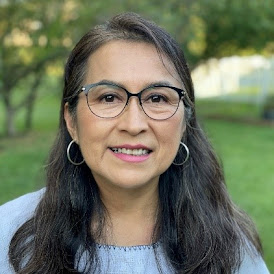
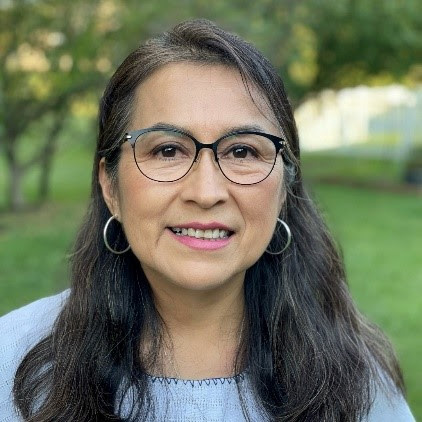
Dr. Patricia Bautista-Cervera
Dr. Patricia Bautista-Cervera is a pediatrician and pediatric allergist at the La Casita Center, an organization dedicated to enhancing the well-being of Louisville’s Latinx and immigrant community. As health empowerment coordinator, Bautista-Cervera works to promote health through workshops, informational videos, one-on-one communications, and other various means. During the COVID-19 pandemic, she delivered important information to the Spanish-speaking community through the online video series, “Consejos de Salud con la Dra. Paty.” She also was instrumental in developing virtual forums with stores and restaurants to educate the Hispanic community about the virus and promote preventive measures and vaccination. In 2020 she supported 994 Covid-19-positive patients, offering medical guidance and, through an empowering model, connecting them to LCC’s wrap-around services and other resources in the community.
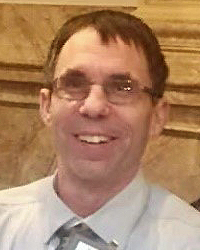
Eric Crawford
Eric Crawford, a Maysville native, joined Kentuckians for Medicinal Marijuana in 2013. Crawford’s education in the endocannabinoid system and cannabis, as well as his experience as a quadriplegic, has fueled his passion for advocating for the legalization of medical marijuana in Kentucky. He has been involved in crafting legislation and has testified at the state Capitol about how cannabis improves his quality of life. He is a member of the Governor’s Medical Cannabis Advisory Committee and has also traveled the state with Kentuckians for Medicinal Marijuana for more than 50 medical cannabis educational seminars. Crawford remains active in the Maysville community by serving on the Lions Club and volunteering at a nursing home. He is a Finis Davis Fellowship recipient through the Kentucky Lions Eye Center and a past member of Kentucky Partners in Policymaking through the Commonwealth Council for Developmental Disabilities.

Terry Gehrke
Terry Gehrke has been in the fitness-wellness industry for more than 30 years. She founded Balanced Wellness LLC in 1999 in Jefferson County and still leads the organization as president and wellness consultant/health educator. Gehrke joined the Kentucky Diabetes Network in 2019 as executive director and has guided the organization to promote better health for Kentuckians at-risk for and living with diabetes. She leads KDN’s symposium committee each year to offer the largest professional education opportunity for diabetes training in the state, the Kentucky Diabetes Symposium. Gehrke’s background includes teaching in the University of Louisville Health and Sport Sciences Department and working with Southeast Christian Church’s Sports & Fitness Ministry. Gehrke is a member of several organizations including the National Wellness Institute, the National Physical Activity Society, and Exercise is Medicine.

Denise Hall
Denise Hall of Trimble County began working in the substance use prevention field in 1998 at Seven Counties Services. In 2003, she became coordinator for Trimble County Family Resource and Youth Services Center before writing two Drug Free Communities grants and directing them. The DFC grant is now in its 10th and final year. Hall’s work includes implementing a Drug Education Series in Trimble County and a Sources of Strength group at Trimble County Junior/Senior High School. She administers a survey to middle and high schoolers to understand the needs for substance-misuse prevention. Hall was crucial in getting vape detectors installed at the high school and is managing director of the Trimble CARES Coalition.
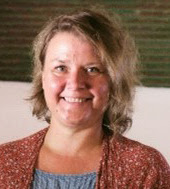
Michelle Howell
Michelle Howell co-owns Need More Acres Farm in Scottsville with her husband Nathan. She has an agriculture degree from Western Kentucky University and previously worked for University of Kentucky Cooperative Extension assisting tobacco farmers as they transitioned to fruit and vegetable production. She collaborates with local and state partners to increase equitable opportunities for farmers. Howell has also been involved in writing grants worth more than $2.4 million to benefit food access, women’s life courses, and urban-rural development. Need More Acres co-founded the Community Farmers Market in Bowling Green, which piloted several Supplemental Nutrition Assistance Program incentives. CFM was essential to growing Kentucky Double Dollars into a statewide program and CFM is one of the organization's pilots of the Fresh Rx MOMs program for expecting mothers on Medicaid. Both programs help under-resourced Kentuckians access fresh, healthy food from farmers markets. Additionally, Howell partners with UK, WKU and Kentucky State University for interactive professional development on diversity and inclusion.
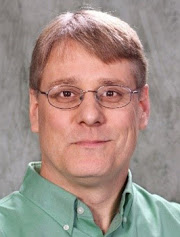
Patrick Kitzman
Dr. Patrick Kitzman is a professor in the University of Kentucky Department of Physical Therapy. He’s also founding director of the Kentucky Appalachian Rural Rehabilitation Network, a team that develops strategies to reduce disability and improve the quality of life for individuals with neurological impairments living in underserved rural Appalachian counties. Kitzman and his team established projects CARAT and CARAT-TOP. In CARAT (Coordinating and Assisting the Reuse of Assistive Technology) students learn to refurbish used medical equipment and donate it to those in need in the community. CARAT-TOP (Coordinating and Assisting the Reuse of Assistive Technology- Together One Priority) is a training program created through a partnership with the UK Center of Excellence in Rural Health. It brings together community members and high-school students of all abilities to learn new skills to help individuals and communities affected by disability.

Mark Thomas
Mark Thomas, Todd County Schools superintendent, was instrumental in establishing the AXIS Program: Centering All Services in the district. In partnership with the Todd County Health Department, the program addresses students’ social and emotional well-being through mental-health case management. The program also assists with basic needs such as nutrition, clothing, toiletries, housing, transportation, and treatment for substance use disorder. Thomas played a crucial role in gaining needed buy-in of the program from staff and the community. Through his support, the program is expanding services to include parenting classes, prenatal classes, and mental health awareness programs for students and staff. Thomas began his career in Shelby County in 1996 as a middle school teacher. He has served in a number of school and district administrative roles across Kentucky before starting his current position in 2020.
Friday, June 26, 2020

New cases drive up Ky. seven-day average for fifth straight day; Republican senators want Trump to get in the fight, wear a mask

Kentucky Health News chart shows daily cases for last two weeks and 7-day average for each day.
By Al Cross and Melissa Patrick
Kentucky Health News

The state reported 256 new coronavirus cases Friday, moving Kentucky's seven-day rolling average upward for the fifth day in a row. Hospitalizations rose slightly, to 387 from 377, but intensive-care cases declined, to 74 from 79.

Counties with more than five new cases Friday were Jefferson, 53; Fayette, 33; Warren, 29; Kenton, 17; Shelby, 9; Laurel, 8; Daviess, 7; and Mercer, 6.

Gov. Andy Beshear reported in a press release, announcing seven more deaths, raising the state's total to 553. The fatalities were a 90-year-old woman from Clark County; 85- and 88-year-old women and an 83-year-old man from Jefferson County; a 47-year-old man from Monroe County; and 92- and 97-year-old women from Warren County.

In other covid-19 news Friday:
  • Republican senators, fearing loss of their majority in the Nov. 3 election, urged President Trump's administration to step up its response to the coronavirus "and pushed Trump to start wearing a mask, at least sometimes," Politico reports. "Trump is still downplaying the virus’ impact, questioning the value of testing and ridiculing the idea of wearing a mask despite holding large-scale campaign rallies. . . . but mask-wearing has become virtually ubiquitous among GOP senators," led by Kentucky's Mitch McConnell.
  • "This is not as complicated as a ventilator, and this is a way to indicate that you want to protect others," McConnell said at Morehead's hospital Friday, the Courier Journal reports. "I see various events on television in which people are clearly not wearing masks, not taking it seriously and not doing others a favor," he continued. "We need to get past that in order to protect not only ourselves but our friends and colleagues and others until we get to a vaccine."
  • "Trump and Republican governors are pointing to fewer coronavirus deaths to suggest that the worst of the coronavirus pandemic has passed — and to blunt criticism that a surge of new infections in more than half the states is proof the country reopened too soon," Politico reports in another story. "But that’s a dangerous gamble. Death rates tell nothing about the current spread of the virus and only offer a snapshot of where the country was roughly three weeks ago."
  • As the number of coronavirus cases continues to spread among Lexington's Hispanic community at an alarming rate, Alex Acquisto reports for the Lexington Herald-Leader on how that affects contact tracing. Health department officials told her that right now, there are nearly 300 people the department must call each day. Of those, close to 80 are Hispanic and 50 prefer to speak in Spanish. Fayette County led the state in new cases Thursday, and officials said the Hispanic community and Keeneland Race Course, where many Hispanics work, were the main sources.
  • Planning to fly soon? WLEX-TV reports on which airlines are booking at full capacity, and which ones aren't. Forbes reports on four essential websites to help you plan a safer road trip. 
  • The Centers for Disease Control and Prevention has expanded its list of people at risk of severe covid-19 illness. These additions include asthma, high blood pressure, neurologic conditions such as dementia, cerebrovascular disease such as stroke, and pregnancy. They are in addition to kidney disease, obesity, heart conditions, COPD, sickle-cell disease, diabetes and those who are immuno-compromised. The CDC estimates that 60 percent of adults in the U.S. suffer from at least one of these conditions.

Tuesday, May 5, 2020

Pandemic has created divides, socioeconomic and political

A GrubHub delivery is made in Washington, D.C. (Photo by Erik S. Lesser, European Pressphoto Agency)
Former labor secretary Robert Reich, a professor at the University of California, Berkeley, writes for Common Dreams that the pandemic has created four new socioeconomic classes. In The New Yorker, Robin Wright summarizes and elaborates on them:
  • “Remotes” are professional, managerial, and technical workers still at their jobs, usually remotely and usually for the same pay.
  • “Essentials” include health care, the food-supply chain, police and other first responders, and truck drivers, about 30 percent of workers, many of whom "are putting their lives at risk with limited physical or economic protection," Wright notes.
  • “Unpaids” are the growing numbers of the unemployed, the furloughed and personal-services workers whose task can't be done remotely. "So far in this crisis, 43 percent of adults report they or someone in their household has lost jobs or pay, according to the Pew Research Center," Reich notes.
  • “Forgottens” are migrant workers, the homeless, Native Americans, the disabled, the elderly, and the imprisoned. "Outbreaks in nursing homes, homeless shelters, and prisons have proved among the most merciless," Wright writes.
Reich concluded, "Not surprisingly, the Essentials, the Unpaid, and the Forgotten are disproportionately poor, black, and Latino. And they are disproportionately becoming infected. An Associated Press breakdown of available state and local data showed close to 33 percent of coronavirus deaths so far are African-American, despite representing only 14 percent of the total population in areas surveyed."

In Kentucky, African Americans have accounted for 18 percent of deaths from covid-19 though they are only 8.3 percent of the state's population, and Latinos have a higher rate of coronavirus cases than their population share.

Black, Latino and poor Americans "aren’t getting what they need to survive this crisis because they don’t have lobbyists and political action committees to do their bidding in Washington or state capitals," Reich argues. "The Remotes among us should be concerned, and not just because of the unfairness of the covid-19 class divide. If the Essentials aren’t sufficiently protected, the Unpaid are forced back to work earlier than is safe, and the Forgotten remain forgotten, no one can be secure. Covid-19 will continue to spread sickness and death for months, if not years to come."

Wright, after citing Reich's insights, writes of another split: "The most dangerous divide emerging from the pandemic is the oldest in American history—over the rights and duties of the states versus the power of the federal government. We fought a war over the issue a hundred and sixty years ago; it has flared again during the pandemic—and now threatens to tear the nation apart in new ways."

After citing President Trump's Twitter mischief aimed at governors in Michigan and other Democratic-led states, and his mixed signals about federal and state authority and responsibility, Wright warns:
"The impact could outlast the pandemic’s pathogens. The American social contract—based on the “inalienable rights” of “life, liberty and the pursuit of happiness” in the Declaration of Independence—was already eroding; the interpretations were being redefined, a process begun by Reaganism in the 1980s as part of a sustained attack on the role and meaning of government, David Blight, a Yale historian, told me. From the Civil War to the 1970s, government expanded its reach to try to insure the same rights for African-Americans, women, Native Americans, the disabled, veterans, the elderly, and the ill. 
Government grew to fight wars and secure the homeland, improve the economy, advance education, and institute the first environmental protections. “But part of our political culture has never really supported this long and seismic change and done the best to roll it back,” Blight, who grew up in Flint, Michigan, told me. During the pandemic, those opposed to expansive government have decried shelter-in-place orders as excessive and questioned the recommendations of the government’s top health officials. . . .

The existential but conflicting issues spawned by the pandemic—the right to life and physical health versus the right to liberty and economic health—have provided the perfect vector for new fissures in America. The gun-toting protesters may be a minority, but polls show that the President’s positions on the role of the state during the pandemic have solid public backing. In the midst of Trump’s skirmish with (Michigan Gov. Gretchen] Whitmer, his job-approval rating soared by six points, to 49 percent, according to a new Gallup poll released on Thursday. It tied for Trump’s personal best in Gallup’s polling data; 47% disapprove. America is a country evenly and bitterly divided. But Americans should remember, Blight added, “There won’t be any blue or red rooms in heaven.”