Showing posts with label mental health. Show all posts

Saturday, August 10, 2024

Grant applications open to nonprofits that work with substance-use disorder and mental health in underserved communities

Foundation for a Healthy Kentucky photo 
By Melissa Patrick
Kentucky Health News

The second round of Foundation for a Healthy Kentucky grants to expand services and programming for substance use recovery and mental heath support in minoritized communities is open through Sept. 13. 

The Funding for Recovery Equity and Expansion program, dubbed FREE II, will provide at least 10 grants in the amount of $50,000 to nonprofit organizations, with priority given to grass-roots organizations, Black-led organizations and organizations that primarily work in minoritized, under-resourced and BIPOC communities. BIPOC stands for Black, indigenous and people of color. 

Among other things, the program aims to fund projects that work toward expanding services and programing for substance use recovery and mental health support in marginalized communities and to reduce the stigma associated with assessing evidence-based interventions that support substance use recovery and mental health. 

"With this project, we aim to reduce overdose deaths and increase the overall well-being of these historically under-resourced Kentucky communities," says the release.

This program is in partnership with the Kentucky Opioid Response Effort and the Kentucky Department for Health and Family Services

According to the website, the collaboration will only fund projects that:
  • Use a trauma-informed and resilience-informed care approach to reduce premature death of BIPOC Kentuckians
  • Provide culturally responsive, evidence-based prevention, mental health treatment and recovery support services to BIPOC Kentuckians
  • Strengthen treatment and prevention infrastructure through collaborative projects centering BIPOC voices
Go to healthy-ky.org/free-program to learn more  about the program and to access the application. 

Tuesday, July 30, 2024

Kentucky's first emergency psychiatric unit opens in Lexington

The unit has a separate entrance. (UK photo by Hilary Brown)
By Allison Perry
University of Kentucky

State officials, community leaders and UK HealthCare officials celebrated Tuesday's opening of a new emergency unit in Lexington dedicated to the treatment of patients experiencing a mental health crisis.

The EmPATH (Emergency Psychiatric Assessment, Treatment and Healing) Unit is the first of its kind in Kentucky. It will open at 7 p.m. Tuesday, July 30, on the campus of Eastern State Hospital.

“The EmPATH model is a game-changer for mental-health care, and we are so proud to be the first in the state to open this unit,” said Robert S. DiPaola, UK's co-executive vice president for health affairs. “For many, seeking care for a mental-health issue can be difficult, frustrating and even frightening. With EmPATH, we’re using a proven, evidence-based approach that allows our behavioral health team to provide fast, appropriate evaluation and care that’s easier for patients to access in an environment conducive to healing.”

The U.S. has about 30 EmPATH units. UK HealthCare and New Vista, a mental-health care provider in 17 counties in the Lexington area, have collaborated with leadership from the state Cabinet for Health and Family Services to bring this new model of emergency behavioral health care to Kentucky.

Pioneered by DR. Scott Zeller, an internationally known emergency psychiatry expert , EmPATH units are carefully designed physical environments that help patients experiencing an acute mental health issue receive immediate support. Instead of individual treatment rooms, the units are wide open spaces with comfortable seating. Upon arrival, individuals will interact with supportive health care providers including psychiatrists, nurses, social workers, and even peer support specialists and can stay in the unit for up to 23 hours.

Eastern State Chief Administrative Officer and psychologist Lindsey Jasinski says peer support is one of the main factors that has made the model so successful. Patients will have the chance to speak to others who have deal with taking medication, receiving therapy, and participating in different programs.

“We have those folks here in the unit to say, ‘Can I share my experience with you?’” Jasinski said. “It can be helpful to hear from someone who has been in a difficult place and been able to successfully navigate that. It provides hope, and that’s what the EmPATH model is all about.”

At roughly 11,000 square feet, the EmPATH unit has room for up to 12 patients. Providers and support staff will regularly assess the individual’s symptoms and develop a care plan, which could include a treatment plan and discharge home with connection to appropriate outpatient services, or admission as an inpatient for round-the-clock care.

Studies show that 60 to 70 percent of individuals who come to an EmPATH unit are stabilized and back home within 24 hours; patients treated in these units are also far more likely to continue their care. A study published in Academic Emergency Medicine showed that 60% of individuals in rural areas with suicidal thoughts or ideation sought follow-up care after their initial treatment in an EmPATH unit.

In addition to providing faster, more appropriate care for psychiatric patients, the EmPATH unit will help reduce the load on traditional emergency departments. A 2020 study of emergency-room visits related to mental health showed an increase from 6.6% to 10.9% from 2007 to 2016. Zeller and the physician-owned partnership Vituity, which helps hospitals develop their own EmPATH units, estimate that 12 to 15% of ER visits are related to behavioral health.

While ERs can provide critical care to acute injuries, illnesses, and traumas, they often do not have the resources or staffing to effectively treat individuals in a mental health crisis. Because ERs must prioritize patients with life-threatening issues, those coming to an ER for mental-health care are likely to experience long wait times in an environment that isn’t conducive to helping these individuals.

“Our emergency departments give amazing care and save countless lives every day,” said Dr. Andrew Cooley, a UK HealthCare psychiatrist who has served as chief medical officer for Eastern State Hospital since 2013. “But we know that patients who come in with a life-threatening injury will need to take priority, and patients experiencing a behavioral health crisis will be further down the list to receive treatment. EmPATH is the alternative to that – a patient shows up here, and we immediately greet them and begin care.”

The EmPATH unit is open to adults age 18 and over experiencing a behavioral health crisis, which has a broad definition: any mental-health problem that impairs their ability to perform normal daily functions, take care of themselves, and keep themselves safe. That could include those seeking help for a substance use disorder, those experiencing depression and anxiety, someone who is thinking about self-harm or suicide, and more. Patients may be brought in through emergency medical services, or may self-refer and bring themselves in.

“The patient defines the crisis. We’re very open-door,” said Marc Woods, Eastern State's chief nursing officer. “We immediately try to assess what their needs are – not only for behavioral health, but also their basic needs. It allows our clinicians to say, ‘Are you hungry? Would you like a Coke?’ We’re quickly building a relationship so we can help address not only a mental health issue, but also get them connected to other services to improve their overall health and wellness.”

The EmPATH unit is part of UK HealthCare and will have its own entrance at Eastern State's campus, on Bull Lea Road in Lexington. The entire hospital is owned by the state Department for Behavioral Health, Developmental and Intellectual Disabilities and is managed by UK HealthCare. It operates 195 acute-care beds and provides critical, recovery-focused psychiatric care for adults from a 50-county region of the state.

Friday, July 19, 2024

Mental-health care access can be a challenge in Eastern Kentucky; on top of that, the subject still carries stigma for some

Appalachian Regional Healthcare Behavioral
Health Facility (Photo submitted to WEKU)
By Stan Ingold
WEKU

Experts are concerned about a growing mental-health crisis nationally. This story looks at the struggles faced by those dealing with access to mental-health care in Eastern Kentucky.

“We're Appalachian people, so we're seen as being strong and that's how we want to portray ourselves, and if you have any kind of mental illness it is seen as a weakness," Kasey Wright says.

Wright is the system director of behavioral health, education, and psychological support for Appalachian Regional Healthcare. She said mental health carries a stigma for many people in Eastern Kentucky, and she and her colleagues try to persuade their patients otherwise.

“We try to tell our patients . . . if you have diabetes you have to treat that, its a medical condition. It's the same if you have depression, you have to treat that, it's a medical condition.”

For some, it takes a major incident for them to make the decision to seek help.

“I had a suicide attempt when I was 21,” said Valeri Jones of Morehead. She reached her tipping point almost 20 years ago. She said dealing with substance abuse and anxiety was getting to be too much for her to handle.

“I just couldn't live like that. I couldn't live feeling depressed and I couldn't function. I couldn't work. I lost my job. I just couldn't function,” she said. “So, that is when I was like, 'It's time to do something. It's a true, real chemical imbalance.'”

But it hasn't been an easy road. Once she started getting help, it was hard to find consistency with her treatment, she said: “My appointments would get canceled, they would get rescheduled and every third or fourth appointment that I would finally make it in for, now, some of that was my fault, I would have work or scheduling conflicts or whatever, when I would make it in, I was constantly with a new therapist.”

And she said seeing a new therapist every other visit was a struggle in and of itself.

Jones said it is frustrating because she is constantly told she needs to pair her medications with therapy.

“I'm told by my doctors that 'You need to pursue counseling, you need to be in therapy while taking these medications, because this is the most effective way to deal with your issues.' But then I'm trying to keep up my end of the bargain; but then I keep getting canceled and told, 'Basically, it doesn't really matter.'”

She said sometimes it makes her lose heart. “And it makes me not want to go, and I'm limited with what providers I have access to.”

Jones works in the mental-health field herself. She knows it isn't easy for those trying to help.

“I get it; the pay is not great, the work is demanding, it's mentally exhausting, but as someone on the other end of that, who is trying to get those services for myself, and someone with anxiety, it's hard to, it's hard to just go in and talk to someone period.”

This isn't the only hurdle people face. Kasey Wright, with ARH, said that in southeastern Kentucky, sometimes even just getting to an appointment is difficult.

“We don't have Uber. We don't have taxis here. We don't have things like that. Most of our people live in hollers and things like that, that aren't close to town, so it's really hard for our people to get a ride to any of their appointments.”

Paulina Jones is the director of counseling and psychological services at ARH. She said public transportation isn't much of an option either.

“Our public transportation, when you have to make an appointment for them to come and get you, you have to do it three days in advance. So, some of our patients don't even have telephones, and even for wi-fi, there isn't good wi-fi service either.”

Paulina Jones said another stumbling block for those seeking help is finances. Many of the people who get help from ARH are on Medicaid, but for others, it can be much more difficult to pay for treatment.

“But if you have Medicare, only certain providers can get paid for that. And if you have private or insurance, you're only allotted so many days of like, outpatient therapy, so you may be only getting like 10 days to clear up whatever the issue is. And if you have trauma and something like PTSD you're probably not going to get that healed up in 10 sessions.”

Both Paulina Jones and Kasey Wright say they are seeing more funding being directed toward mental healthcare, but they would like to see officials do more.

Jones said while they have several inpatient facilities for those dealing with substance use disorder, there needs to be something set up for long-term, lower-level mental-health care, for exemple, because there are few personal-care homes in the region.

She said there are "no nice facilities for our chronically mentally ill to go and live and live the rest of their lives and not have that high recidivism, keep coming into the hospital because of the living conditions or not having a safe place to go.”

Along with funding, other efforts are underway. Earlier this year, Gov. Andy Beshear signed into law House Bill 385, known as Seth’s Law. Officials say the law will result in fewer citizens needing to be placed under state guardianship to access health care.

The bill honors the memory of Seth Stevens, who was an advocate for mental health reform, who died by suicide in 2023.

Anyone who may be experiencing suicidal thoughts or any kind of mental health crisis can call or text 988, 24 hours a day, seven days a week to speak to someone qualified to help. Click here to learn more about the 988 Suicide and Crisis Lifeline. 

Tuesday, July 9, 2024

This year, more than 3,700 calls from Kentucky to the 988 suicide-and-crisis lifeline have been routed to the Veterans Crisis Line

This story has been updated.

By Lisa Autry
WKU Public Radio

More than 16,000 Kentucky veterans struggling with their mental health have used the national 988 hotline since it launched two years ago.

The suicide and crisis lifeline doesn’t require callers to disclose personal information, but veterans' overall use can be tracked because callers can be directed to the Veterans Crisis Line. In Kentucky, more than 3,700 calls have been routed to the veterans line so far this year, according to the state Cabinet for Health and Family Services.

In a recent speech to the Veterans of Foreign Wars state convention in Bowling Green, Gov. Andy Beshear urged veterans to seek help.

“We see an epidemic of suicide among our veterans and even our active service members that is unacceptable," Beshear said. "It’s important we have all of the services to make that individual whole at the ready.”

Since the 988 line was launched in July 2022, more than 80,000 calls have been received from residents of Kentucky.

The line connects those in distress to trained counselors 24 hours a day, via calls, chats or text messages. Thirteen of Kentucky's 14 regional mental health centers serve as call centers, and the 14th is in the process of becoming nationally certified. That means 988 calls in all 120 counties can be served by a local center instead of the call being answered out of state.

Calls from all 120 counties are routed initially to an in-state center. If they're not answered within 90 seconds, the calls roll over to an out-of-state backup center.

Since May 2023, the state has seen a 40% increase in calls from Kentuckians to 988 and a 53% increase in the number of those calls that are answered in-state.

"The centers work continuously to recruit, train, and retain compassionate local individuals dedicated to helping fellow Kentuckians in crisis," said Brice Mitchell, a spokesman for the state Cabinet for Health and Family Services. "Using federal grant funding, the centers have increased the workforce capacity through hiring staff and utilizing volunteers."

In May, 84% percent of calls in May were answered at the local level, according to to CHFS. The current in-state answer time of 23 seconds remains faster than the national average of 36 seconds.

Thursday, July 4, 2024

Saint Joseph hospitals in Lexington, London and Mount Sterling seek applications for grants to improve well-being, health equity

By Melissa Patrick
Kentucky Health News

The CHI Saint Joseph Health hospitals in Kentucky are accepting applications for local nonprofit organizations to apply for grants aimed at supporting services to improve well-being and health equity in their service areas. 

The grants are part of the Community Health Improvement Grants program, which was created in 2019 when Catholic Health Initiatives and Dignity Health came together to create the national health system CommonSpirit Health.

Grants through Saint Joseph Hospital and Saint Joseph East in Lexington, and Saint Joseph London, can be as small as $20,000 and as large as $100,000. Grant opportunities are also available at Saint Joseph Mount Sterling to serve that area, ranging from $10,000 to $19,500.  Click here for the link to the application website. 

"Grant applications must include collaborating partner organizations helping to deliver services and not be solely about one agency’s work,” Michael Bilton, CommonSpirit Health's senior director for community health and benefit, said in a news release. 

The application period is open through Aug. 16. Grants are available to nonprofit organizations that address substance-use disorders, mental health, and issues involving weight, physical activity and nutrition. All projects must be planned for calendar year 2025. 

The priorities were identified in the hospitals' most recent community health needs assessment, which is conducted every three years. 

“We are deeply committed to the well-being of our community," Christy Spitser, interim market president of CHI Saint Joseph Health, said in the release. "Providing grants to local nonprofits is a vital part of our mission to give back and make a tangible difference in the lives of those we serve.” 

Interested organizations can learn more about the grant program, including eligibility criteria, how to apply, and a local contact for questions, by visiting https://www.commonspirit.org/communitygrants.

Friday, June 28, 2024

988 roll-out uneven, but Ky. appears to be doing 'pretty well;' last of 14 regional mental-health centers nearing certification for calls

By Melissa Patrick
Kentucky Health News

Even though the roll-out of the three-digit national suicide hotline remains a work in progress across the nation, Kentucky's roll-out over the past two years has gone "pretty well."

So says Steve Shannon, executive director of the Kentucky Association of Regional Programs for mental health. He said Kentucky's success has largely been because of a statewide 988 coalition and its subcommittees that work toward quality outcomes and toward having all of the state's 988 calls to be answered by people inside the state.

"We appreciate the partnership with the team at the Department for Behavioral Health, Developmental and Intellectual Disabilities," he said. "The call centers have worked very closely with them and it's been a great outcome for Kentuckians." 

The 988 line connects people experiencing a mental-health or substance-use crisis with a trained counselor. Shannon said 13 of the state's 14 community mental health centers act as call centers, and that the 14th center is in the process of getting certified to meet the national 988 call center standards, which will mean that eventually 988 calls in all 120 counties can be served by their regional cengter.   

"Our goal is 100% of Kentucky calls get answered by Kentucky," he said. 

Brice Mitchell, spokesman for the state Cabinet for Health and Family Services, also praised Kentucky's 988 roll-out, stating that the centers have used federal grants to increase workforce capacity by hiring staff and utilizing volunteers. 

"These efforts have ensured calls to 988 are most often answered at the local level, 84% in May," Mitchell said in an email. "Additionally, the current in-state answer rate of 25 seconds steadily remains faster than the national average of 36 seconds, and we know every second is critical when it comes to getting someone connected to help."

Asked about the 379 abandoned in-state calls that were reported in May, Mitchell said, "We are not able to determine why calls may be abandoned; one reason could be due to internet or cell phone instability." 

Since May 2023, the state has seen a 40% increase in calls from Kentuckians to 988 and a 53% increase in the number of those calls that are answered in state. Additionally, there has been a 15% increase in Kentucky’s answer rate over the past two years, according to data provided by the the cabinet. 

The federal government provided about $1 billion to launch and implement the 988 Suicide & Crisis Lifeline, with the expectation that states would establish their own funding to operate the call centers, but Axios reports that the "efforts have been uneven . . .  leading to significantly lower response times in certain states." 988 launched in July 2022. 

Axios reports that only 10 states have added a surcharge to cell-phone bills to fund 988 services, though all states fund their general-emergency 911 services in this way, according to a report from Inseparable, a mental health advocacy group. Kentucky is not one of them. 

Kentucky's General Assembly has put money in the budget for the 988 call centers since the 2022 legislative session, but "At some point, a dedicated funding mechanism that allows to accommodate for growth and calls is really necessary," Shannon said. "The appropriation is good, but the concern is, as utilization increases, those costs will increase."  He added that there have been some "preliminary conversations" about this, and the goal is to have an "ongoing, dedicated funding stream, comparable to 911."

This year, Rep. Adam Bowling, R-Middlesboro, filed HB 740 to fund 988 with a fee on special license plates, gifts, grants, contributions, appropriations or other sources. It was never heard in committee.

Another challenge is that many people still don't know about 988. The Pew Charitable Trusts released a survey last year that showed only 13% of adults in the U.S. had heard of the 988 line.

A national 988 paid marketing campaign will launch this month and run through October to help address this issue. It will also likely increase the number of calls. 

Axios reports that going forward, "States and cities are also moving toward integrated 988 and 911 services, said Kaiser Family Foundation researcher Heather Saunders, who tracks policies around the hotline. Federal regulators are also looking to require that 988 calls are routed to a person's actual location, rather than their area code, to better connect them with nearby resources." 

Sunday, June 16, 2024

Men's Health Month a reminder to schedule preventive screenings

By Melissa Patrick

Kentucky Health News

Men's Health Month in June is a reminder for men to think about their health and consider making some screening appointments that could lengthen, or even save, their lives. 

Why is it so important for men to take care of themselves? For one thing, on average in the United States, men die nearly six years earlier than women. 

That is a wider gap than before the pandemic, which took a disproportionate toll on men. Researchers also note that men are more prone to unintentional injuries, such as drug overdoses and  accidents. Homicides, heart disease and suicides also contribute to the worsening life expectancy for men. 

Men's Health Month is a time for men to take charge of their health and to schedule their preventive  health screenings, especially for the conditions that if caught and treated early could save their life. 

Some recommended screenings include: 
 
Heart disease is the leading cause of death in men, according to the Centers for Disease Control and Prevention.  The American Heart Association says the key screenings for heart health involve an annual physical that include test for blood pressure, cholesterol, body weight and diabetes. Smoking is also a major cause of heart disease, and a health-care provider can help with a cessation plan. 

Skin cancer: Increased sun exposure and fewer trips to the doctor put men at a higher risk of developing skin cancer, so it's important to not only protect your skin when outdoors, but to see a dermatologist if you notice any change in a mole's color or appearance, or if they bleed, ooze, itch, appear scaly or become tender or painful. A dermatologist can also do a full-body skin cancer screening. 

Lung cancer: Kentucky still has one of the highest smoking rates in the nation and leads the nation in lung-cancer cases and deaths. Lung-cancer screening via low-dose computed tomography (a low-dose CT scan) is recommended for anyone 50 to 80 who smokes or has quit in the past 15 years and has at least a 20 pack-year smoking history (a pack per day for 20 years or two packs per day for 10 years). 

Prostate cancer: On average, one in eight men will be diagnosed with prostate cancer and it is the second leading cause of death among men, according to the American Cancer Society. It is recommended that prostate cancer screenings for men who are at average risk begin at age 50. 

Colon cancer: Routine screening for colorectal cancer is recommended to start at age 45. Men with a family history of the cancer may be advised to get screened earlier.

Diabetes: In Kentucky, about 100,000 people have diabetes and don't know it. That's why it's important to get screened with a blood test even when you don't think you have any symptoms.

Mental health: A primary-care provider is a good place to start if you are seeking help with a mental-health concern. Mental Health America of Kentucky also offers a free, online mental-health screening. The new, national 988 suicide/crisis hotline is available 24/7.

"While men are diagnosed with depression half as often as women and are less likely to attempt suicide, men die by suicide three to four times more frequently," says a peer-reviewed article in the American Medical Association Journal of Ethics by Nathan Swetlitz. "Although there is no one-to-one correspondence between depression and suicide, depression is one of suicide’s most significant risk factors."

Monday, June 3, 2024

New website helps Kentuckians find mental-health treatment; has had 5,000 first-time users since it launched in March

The site is part of FindHelpNow.org, which also serves Tenenssee.
By Stephanie Ramsey
University of Kentucky

Despite growing awareness of mental-health issues, many people still struggle to find the right resources and treatment for mental health. The journey to receiving care can be confusing and overwhelming due to limited information on available services, long wait times and geographical barriers.

To address these challenges, the Kentucky Injury Prevention and Research Center has introduced an extension of its FindHelpNowKY.org website to include a dedicated website for mental health, FindMentalHealthNowKY.org. The new resource portal provides information on mental-health treatment options, helping to bridge the gap between those seeking help and the providers that offer it.

"This revamp is about breaking down the barriers to mental health care and making it easier for people to find the support they need. The new FindMentalHealthNowKY.org is a critical resource that offers near-real-time information on treatment options, reducing the stress and uncertainty that often come with seeking help," said KIPRC Director Terry Bunn.

FindMentalHealthNowKY.org was created by KIPRC as an agent for the state Department for Public Health in partnership and with funding from with the Department for Behavioral Health, Developmental and Intellectual Disabilities, both in the Cabinet for Health and Family Services.

The new website offers a comprehensive array of mental-health services designed to meet the diverse needs of its users. If someone is seeking individual or group counseling, the platform provides curated list of licensed therapists and counselors. For those requiring more intensive care, the site connects users with inpatient treatment facilities and hospitals equipped to handle more complex mental health conditions. The range of options ensures that individuals can find the right level of care, whether dealing with everyday stress or facing more challenging concerns.

Since its launch in March 2024, FindMentalHealthNowKY.org has seen significant engagement, with over 5,000 first-time users. Notably, more than 36% of these users have specifically been searching for mental health resources, indicating a significant demand for information and support in this area.

“Accessibility and convenience are key,” said FindMentalHealthNowKY Program Manager Catherine Hines. “FindMentalHealthNowKY.org provides a simple, user-friendly interface, allowing visitors to quickly locate the information they need. The prompt updates allow users to find openings for counseling, inpatient treatment or crisis intervention without the frustration of outdated or inaccurate information."

In addition to treatment options, FindMentalHealthNowKY.org is launching a comprehensive resource library on mental health topics. The library will contain thousands of entries, providing an extensive collection of information and support. These educational resources offer guidance on a variety of topics, empowering users to make informed decisions about their mental health.

One of the biggest barriers to seeking mental health support is the stigma associated with mental health issues. "Our goal is to provide reliable, accurate information that helps break down the stigma surrounding mental health,” Bunn said. “By offering comprehensive resources and educational materials, we aim to make it easier for people to seek help and encourage open conversations."

FindMentalHealthNowKY.org helps break down barriers by offering accessible, up-to-date and trustworthy resources. Its extensive resource library of educational materials foster a more open and understanding approach to mental health. If you're seeking mental health resources or support, visit FindMentalHealthNowKY.org.

Wednesday, May 29, 2024

Kentuckians’ access to mental-health care lags behind the nation. Paying providers more would help, psychologists say in report.

By Sarah Ladd
Kentucky Lantern

Kentuckians are far more likely to pay out of pocket for mental and behavioral health services than for surgical or other medical care, except for care in outpatient facilities, where the state is doing better than most states. 

This insight comes from a recent American Psychological Association report, which examined health-insurance claims made by millions of Americans who sought care. The report showed that as Covid-19 peaked in the state, the number of Kentuckians forced to go out of their insurance network for acute inpatient care also increased.

Eric Russ
Eric Russ, the executive director of the Kentucky Psychological Association, told the Lantern the actual numbers are likely higher than the report reflects because not everyone who seeks out-of-network care will file an insurance claim.

Overall, the report shows that Americans were 10.6 times more likely to go out of their insurance network for psychological care than they were for medical care. The paper cites lower reimbursement rates for mental health care providers as a major culprit.

The report’s findings are “gravely disappointing,” Arthur C. Evans Jr., CEO of the APA, said in a statement. “The federal parity law, the Mental Health Parity and Addiction Equity Act, passed in 2008 and it has still not achieved its goal of equitable access to care for mental health patients.”

“The fact that so many patients are forced to go out of network to receive mental health and substance use care is unacceptable,” said Evans.

The report recommends that states and health-insurance plans expand their behavioral-health networks by raising reimbursement rates, “as they do for medical/surgical providers.” Having access to more in-network providers, the report says, would ease the financial burden on patients who now, if they cannot afford to pay out of pocket, may go without care.

Covid-19 was ‘a sledgehammer’

The report showed that from 2019 to 2021, out-of-network use of inpatient behavioral-health care increased from 2.5% to 4.0% in Kentucky. That’s much higher than the 0.4% reported in 2019 and 0.2% in 2021 for medical and surgical care.

In 2021, Kentuckians were 17.2 times more likely to get out-of network care for behavioral health than they were for medical or surgical care. But the percent of Kentuckians going out of network for outpatient behavioral care care decreased from 2019 to 2021 — 11% to 5%.

“One thing we’ve seen out of Covid is an increase in behavioral health needs,” Russ said. Even before the pandemic, there was an increased need for mental health support. “And then Covid just took a sledgehammer to everybody’s mental health.”

Because there were not enough in-network providers, Kentuckians had to look elsewhere for help, a burden Russ said “falls harder on minority populations.”

“Structural discrimination puts minority populations at an increased risk of mental-health issues generally,” he said. “And then the clinical field tends to be a pretty white-dominated field,” which makes it more difficult to find providers who are culturally competent to treat someone from a particular background or identity.
 
Lack of access is ‘demoralizing’

Usually when people seek care for a mental-health issue, they’ve often already been struggling for a while, Russ said.

“Usually they’ve been feeling down, depressed, anxious, having relationship problems, having eating disorders for quite a long time before they even start seeking treatment,” he said. “When you start looking, finally ready to get help, and then call your insurance company or call your primary-care provider and say, ‘Hey, where do I go?’ And they give you a list of providers and everybody’s full and you can’t get in — that’s incredibly demoralizing.”

This can add to the stigma that already surrounds mental health issues, Russ said. It can also put people’s well being in jeopardy while they wait for help. This can be worse for people with conditions like ADHD (attention deficit hyperactivity disorder), who may already struggle with organization and time management.

Kentucky is doing slightly better than other states in some categories, the data show. 

In particular, the report shows Kentucky was among the states where outpatients were least likely to seek out-of-network behavioral health care, compared to medical-surgical care in such facilities, with only 13 states having a better score than Kentucky in this category.  But Kentuckians were still twice as likely to seek out-of-network behavioral-health care in an outpatient facility as they were to go out of network for outpatient medical-surgical care. 

Kentucky also showed slightly better scores than 12 other states when it came to getting out-of-network behavioral-health care, compared to medical-surgical care for inpatient facilities (17.2 times)  and for office visits with a clinician (4.9 times).  

“No one is doing well,” though, Russ said. “We have room to go before we have something that looks like real parity between our mental-health and medical systems.”

Kentucky Health News contributed to this story. 

Sunday, May 26, 2024

Kentucky gets a 'D' grade on second annual report card on maternal mental health, a bit worse than the national average

By Melissa Patrick
Kentucky Health News

Kentucky received a D grade on the second annual report from the Policy Center for Maternal Mental Health, moving up from a D-minus in last year's report card. The national grade was D-plus; D was the most common grade, and 23 states had grades higher than Kentucky's.

“Maternal mental health is core to the health and well-being of women and families. Our report cards provide state government and advocacy leaders with a tool for identifying areas of opportunity and the ability to track annual progress,” Joy Burkhard, executive director of the policy center, said in a news release from the Milken Institute School of Public Health at George Washington University, which supported creation of the report cards.

“We are particularly hopeful about one of the new measures added this year, which tracks how often women are being screened for these disorders,” Burkhard said. ”Asking about symptoms is the first step toward diagnosis and treatment.”

The report notes that two things changed in Kentucky to improved the state's grade, however slightly. The state now meets the recommended maternal-mental-health prescriber ratio for the perinatal population and has a perinatal quality collaborative that prioritizes maternal mental health (a new category).  

The 2024 report cards include 18 measures that are divided into three key domains: Providers and Programs, Screening and Screening Reimbursement, and  Insurance Coverage and Treatment Payment. 

Kentucky met six of the 18 measures on the report card, with most of them in the Insurance Coverage and Treatment Payment domain, for things like expanding Medicaid, extending Medicaid coverage to one year after birth, and the ability to submit claims to proivate insurers for pre- and post-birth maternal mental-health treatment.

Kentucky got a D for providers and programs, an F for screening and screening reimbursement, and a C for insurance coverage and treatment payment.

What's Kentucky doing? 

Kentucky has several groups working on this issue, including a mental-health initiative in the state Department for Public Health, called the Maternal Mental Health Collaborative, and the Kentucky Perinatal Quality Collaborative, an effort of hospitals, doctors, nurses, public-health experts and others.

Another group working on this issue is the Mind the Gap Kentucky Coalition, which includes Postpartum Support International along with a host of other members, led by Nikki Boyd, the director of maternal infant health initiatives with the March of Dimes

"One thing all the groups involved in maternal mental health are doing is being sure to work together, to share resources and reduce unnecessary duplication of effort across the board," Marcie Timmerman, executive director of Mental Health America Kentucky, said in an email. 

In 2023, the legislature passed Senate Bill 135 to require the Cabinet for Health and Family Services to make information on postpartum depression and a postpartum assessment tool available on its website. It also required the cabinet to develop and implement a collaborative program aimed at improving the quality of prevention and treatment of postpartum depression.

In 2024, legislators passed a multifaceted bill dubbed the "Momnibus" as part of Senate Bill 74. It was originally House Bill 10, sponsored by Rep. Kim Moser, D-Taylor Mill. The Momnibus portion of this bill came out of a working group of Republican and Democratic women in the House and the Senate. 

Among other things, the Momnibus ensures access to health-insurance coverage for pregnant women by adding pregnancy to the list of exceptions for enrollment outside the normal open-enrollment period.

It also establishes a mental-health hotline called Lifeline for Moms that allows providers access to an immediate mental-health consultation for a mother in need; expands the Health Access Nurturing Development Services (HANDS) home-visitation program and lets it be available up to three years after birth; covers lactation consultation and needed equipment to encourage breastfeeding; and will educate mothers on the benefits of safe sleep for infants. These services would also be available via telehealth.

"I'm not surprised by our report card here, but I am energized by the existence of more than one advocacy group, the commitment to improving maternal mental health by legislators who were involved in HB 10, which turned into SB 74, and by providers who are increasingly involved in this effort to improve and ultimately save lives," said Timmerman, of Mental Health America.

Boyd said the results of the report card drive a lot of work being done by the Mind the Gap Coalition and the state task force. 

"These are things that can't be done overnight," she said. "There's a lot of policy involved and a lot of across the aisle work that needs to happen for these to happen. . . . It's a good guide, a good metric to help us figure out what the needs are." 

Boyd said each measure on the report card needs to be considered related to the needs of the state. For example, the report card shows Kentucky does not have at least one inpatient maternal-mental-health treatment program, but does not consider that the state does not  have enough patient volume to support one. Places are available to provide this kind of care, but she said this is something the state should monitor. 

Boyd said she's excited that Kentucky is taking the reins on this issue. 

"Kentucky's really doing a good job around prioritizing this and doing small things to ensure that Kentuckians are getting access," she said. "So obviously, there's a long way to go, but  I think getting it started, it's a great, great start." 

National numbers and efforts

The national grade improved slightly from a D to a D+, with four states earning B grades, up from one in the 2023 report; 19 states receiving C grades, up from 10 in 2023; 24 states receiving D grades, down from 25 in 2023; and five states getting a failing grade, down from 15 in 2023.  

"The U.S. is failing mothers," says the report. 

On May 14, the U.S. Department of Health and Human Services released the Task Force on Maternal Mental Health's national strategy to address maternal mental health, calling it an "urgent public-health crisis." The news release said the U.S. has the highest maternal death rate among high-income countries and 22% of the deaths are related to suicide, drug overdose, mental-health issues and substance-use disorder. 

“Many of these tragic deaths can be prevented by eliminating health disparities and understanding the impact of mental health during pregnancy and in the first months as a parent,” said HHS Secretary Xavier Becerra. “We want to address the challenges people are facing, decrease stigma associated with these challenges, and improve access to support both inside and outside of the health-care system.”

The five pillars of the national strategy are: building a national infrastructure that prioritizes perinatal mental health and well-being, with a focus on reducing disparities; making care and services accessible, affordable, and equitable; using data and research to improve outcomes and accountability; promoting prevention and engaging, educating, and partnering with communities; and lifting up the voices of people with lived experience, according to the news release.

Saturday, May 25, 2024

Eastern State Hospital is 200 years old; ex-patient, who says it saved his life, urges those who need mental-health care to get it

By Melissa Patrick
Kentucky Health News

This story mentions suicide. If you or someone you know is contemplating suicide, please call or text the National Suicide Prevention Lifeline at 988.

Eastern State Hospital in Lexington, which is celebrating its 200th anniversary this month, is the oldest continuously operating state psychiatric hospital in the United States.

When Eastern State opened its doors as part of the old Fayette Hospital on May 1, 1824, it was just the second state psychiatric hospital in the nation, according to a University of Kentucky news release. 

“We believe that health care is a right for all Kentuckians; this includes access to mental-health resources,” said Lt. Gov. Jacqueline Coleman, who spoke at the official observance of the anniversary. “For 200 years, Eastern State Hospital has provided care for Kentuckians in need of help. The staff at Eastern State Hospital is knowledgeable and compassionate. They deserve to be called health-care heroes.”

Lexington lawyer Bruce Simpson – who received treatment at Eastern State following a suicide attempt in January 2023 – shared his personal story and thanked the staff who helped him at the anniversary celebration. Below is a YouTube video, produced by UK, of Simpson telling his story. 

The UK news release notes that after his evaluation at Eastern State, Simpson began medication for his illness and began ongoing therapy, which he says has vastly improved his health. 

“I said, ‘I’m fine’ a million times. I was not fine,” Simpson said in the release. “But we need to talk openly about mental-health treatment. If you have a stomach ache, you’re going to the doctor. If your heart is palpitating, you’re going to the doctor. But if you have depression, you’re just as likely to not see anyone or even acknowledge you have a problem. That is a cultural correction we need to make. Mental illness is just as legitimate as cancer, heart disease, broken bones and a stomachache.”

For Simpson, who said he had dealt with ideas of suicide for nearly four decades, the stay at Eastern State completely changed his life.

“The clarity of my thinking now is so much better than it’s ever been,” he said in the release. “Eastern State got me on a different track. I want people to know that it is the best place to be if you’re in serious struggles with mental health. I wish I had gotten treated 40 years ago, and I don’t want anyone to suffer 40 years like I did. If things get difficult, don’t be afraid of going to Eastern State.”

"I can't say enough about the care I received at Eastern State along with my fellow patients," he said at the event. "But we're entitled to the same courtesy, respect and treatment as someone that's completely mentally healthy as human beings. And an Eastern State Hospital, I have 100% certainty that that takes place and I applaud the staff and I thank you for saving my life."

Health and Family Services Secretary Eric Friedlander said Eastern State's history "mirrors the many astounding developments in mental-health treatment over the past two centuries, from long-term custodial care in the 19th century, to the advent of modern medications in the mid-20th century, and the present focus on evidence-based, recovery-oriented services. Today the staff of Eastern State provide state-of-the-art care in a state-of-the-art facility to meet its unwavering goal of enhancing the behavioral health and quality of life of the Kentuckians it serves."

At the event, Kelly Gunning, director of advocacy and policy for the National Alliance on Mental Illness Lexington, said in 2002 she understood why her youngest son was "horrified" to be admitted to Eastern State Hospital -- and it had nothing to do with the dedicated staff.

"But the place itself was so foreboding and so off putting and so scary that it was stigmatizing for the patients that had to go there," she said. "Together, we decided we were going to start a campaign to make it better." 

Eastern State Hospital (Photo provided)
The state opened a modern, 300,000-square-foot Eastern State facility on UK’s Coldstream Research Campus in 2013 that houses 195 acute care beds and provides critical, recovery-focused psychiatric care for adults from a 50-county region of the state.

In 2021, then hospital became the first state psychiatric facility to achieve Magnet status, the gold standard for nursing excellence.

Later this summer the hospital will open its new Emergency Psychiatric Assessment Treatment and Healing unit, known as EmPATH. This program will offer an individual-centered, evidence-based care model designed to address the increasing needs for inpatient and emergency psychiatric care across Kentucky, according to the release. 

Friday, May 10, 2024

17 Ky. schools have free online mental health wellness course

Kentucky Health News map; for a larger version, click on it
More than 1,500 students in 17 Kentucky schools recently gained access to a free digital course on mental wellness, provided by the Medicaid program of Anthem Inc., one of the health insurers that manages the federal-state health program in Kentucky.

"The announcement comes during Mental Health Awareness month and as more adolescents, especially girls, report depressive symptoms," notes Sarah Ladd of the Kentucky Lantern.

The 17 schools in the program are Clay County Middle School, Daviess County High School, Estill County High School, Grant County Middle School, Graves County High School, Grayson County Middle School, Hazard Middle School, Henderson County High School, Bazzell Middle School in Allen County, Jenkins Independent School in Letcher County, Lewis County Central Elementary School, Marion County High School, Murray Middle School in Calloway County, Ohio County Middle School, Owensboro Middle School, Russell High School in Greenup County and Webster County High School.

The program has been launched in these schools and will continue into the 2024-25 academic school year, according to Quin Welch, media contact for Anthem Medicaid.

Understanding Mental Wellness” is a course for students in grades 8, 9 and 10. It has six 15-minute lessons, according to Blackbaud, the digital-services firm that designed the course. 

Anthem says the course exposes students “to the experiences of others in order to develop awareness and empathy, reduce stigma, and provide facts on the prevalence and symptoms of mental health conditions.”

Students then “explore their own mental health, identify challenges they may face, and develop concrete strategies for managing those challenges while increasing their awareness of resources and empowering them with the knowledge, skills, and language necessary to identify and support a peer in need or at risk.”

Ladd reports, "Online previews of the course show a tour of mental health through the program, starting with a lesson on what mental health is and ending with the chance to create a personal wellness plan.

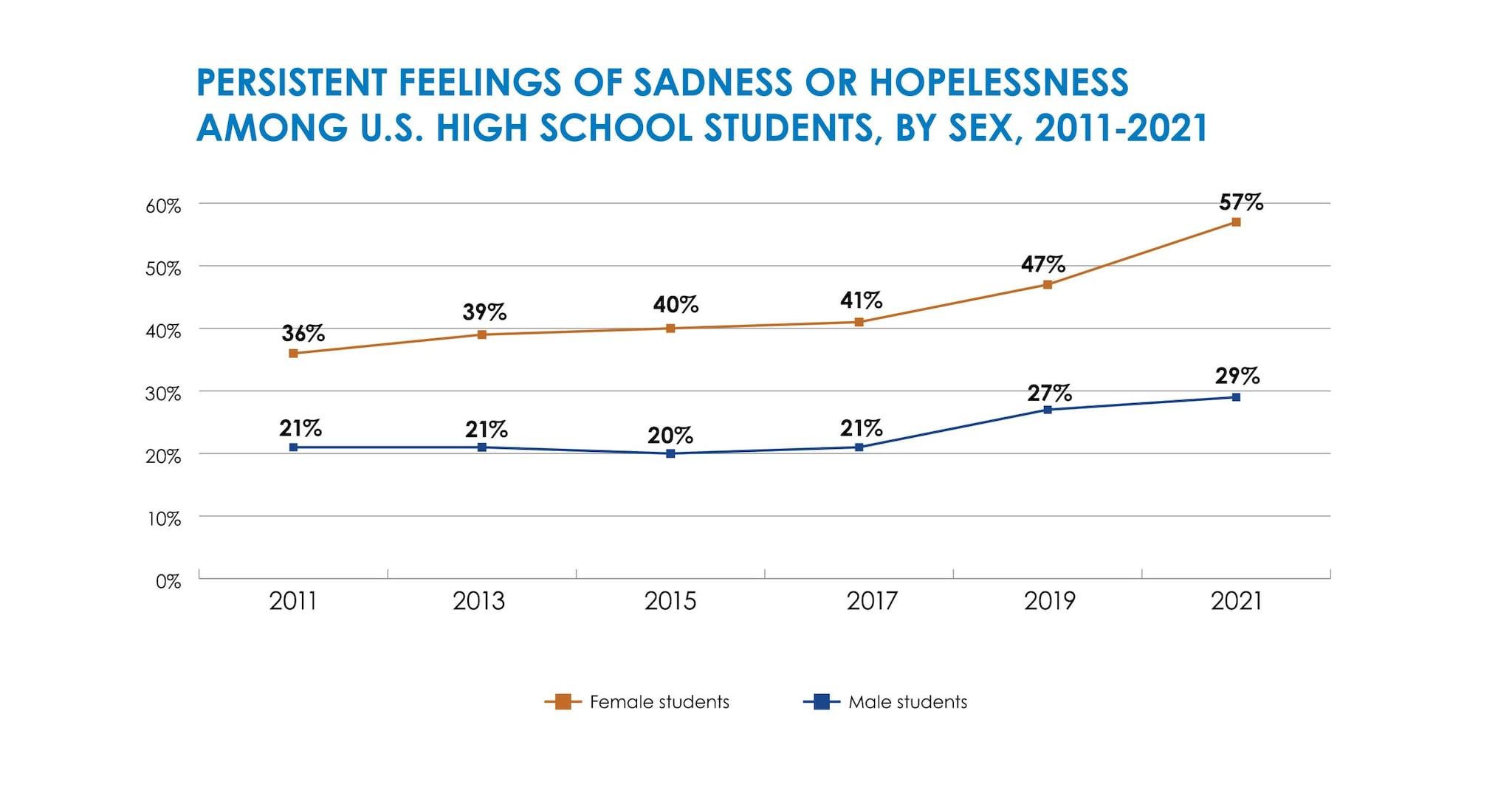
"Since the onset of Covid-19, mental health has worsened. In 2021, the Centers for Disease Control and Prevention found that sadness and hopelessness had increased from pre-pandemic levels, especially for teen girls. In 2017, 41% of female high school students and 21% of male high school students felt sad or hopeless. By 2021, those statistics were at 57% and 29%, respectively."

“Young people need resources and education from trusted sources to protect their mental health,” said Leon Lamoreaux, market president for Anthem Medicaid. He said the program “will help us reach students from all over the Commonwealth and equip them with tools and strategies that will make a positive difference in their lives for years to come.”

Tom Davidson, the CEO of Everfi, said the goal of the program is to help “those who are impacted by mental-health challenges, those who want to build and maintain positive mental health and those who have the opportunity to positively impact the mental health of a friend or peer.”

Friday, April 19, 2024

Eight suicides in a month make for 'mental health crisis' in PIke

Pike County (Wikipedia map)
By Stan Ingold
, WEKU

Officials in Eastern Kentucky are dealing with what they are calling a “mental health crisis.” In Pike County, over the last 30 days at least eight people have committed suicide.

To put that into perspective, the county had eight suicides in all of 2023, said Tammy Riley, the county's public health director. She said there are two common occurrences with these incidents.

“In a short span on time, the suicides have all been adults, ranging from the 30's to the 80's as far as years of age, primarily all have been male, and the mode has all been via firearms.”

She said many agencies are banding together to address the issue, including “Mountain Comprehensive Care Center, that's the federally qualified help center that is our primary provider for mental-health services for Pike County. We're also working with the Pike County coroner's office, the judge-executive's office, as well as resources available through the Kentucky Department of Public Health.”

Riley said the county is working on hosting several events in the coming days to make sure people are aware of resources that can help.

She also encouraged the use of the 988 crisis hotline for anyone who may feel they are in some kind of mental distress. Anyone can call or text 988 at any time to speak to someone qualified to help.

Wednesday, April 10, 2024

State's high maternal-death rate gets study; pregnancy-related deaths mostly from violence, substance use, anxiety, depression

UK researchers studying the state's high maternal-mortality rate include (front row, left to right) Anna Chamberlain, Ann Coker, Linda Berry, Heather Bush; (back, left to right) John O'Brien, Cynthia Cockerham, Dana Quesinberry and Josh Bush. (Photo by Jeremy Blackburn, UK Research Communications)
Thursday, April 11 is the International Day of Maternal Health and Rights.

By Lindsay Travis
University of Kentucky

A team of health-care providers and researchers at the University of Kentucky is working with community and government leaders across the state to address a pressing issue facing the state: its high rate of death and illness among women who give birth.

“Kentucky has one of the highest maternal mortality rates in the country. Lowering the proportion of women dying during or after childbirth in our state is not just a goal, but a necessity to safeguard the health and futures of both mothers and their children,” said Dr. John O’Brien, director of the Division of Maternal Fetal Medicine at UK HealthCare. O'Brien is also a professor in the Department of Obstetrics and Gynecology in the UK College of Medicine, and the appointed chair of the Kentucky Maternal Morbidity and Mortality Task Force in the state’s Cabinet for Health and Family Services.

The task force is funded by a $5.2 million, five-year grant from the Health Resources and Services Administration of the U.S. Department of Health and Human Services.

The state has a Maternal Mortality Review Committee that determines the causes of maternal deaths and identify opportunities for preventing future deaths, through policy or practice. The panel has documented that substance use, injury and behavioral-health conditions are all common contributing factors to maternal death or maternal illness, also called maternal morbidity.

“In Kentucky, the study of severe maternal morbidities reveals a stark reality that these outcomes are deeply intertwined with health-care disparities,” O’Brien said. “Rural communities and people of color bear a disproportionate burden, highlighting the urgent need to address systemic inequalities in maternal healthcare access and quality.”

O'Brien's task force will work with hospitals, other health-care providers, community partners and state agencies to implement and promote best practices to make birth safer, improve maternal health outcomes and, ultimately, save lives.

The task force will work with state agencies to develop a scorecard to track severe maternal-health issues, using hospital records. The team will also create a data surveillance system to monitor maternal deaths and injuries, with a goal of making this information publicly available.

“Our team also wants to be able to provide critically important hands-on learning opportunities for smaller hospitals to be prepared to handle pregnancy-related complications,” said O’Brien. “We also want to extend and assist coordination of telehealth services to birthing facilities throughout the state as we have shown reduction of severe morbidity in rural communities is possible through telehealth availability.”

The federal grant will also fund bystander-informed violence intervention and prevention training specifically for obstetric health-care providers to address maternal health related to violence.

“In Kentucky, the majority of pregnancy-associated maternal deaths stem from partner or family violence, substance use and anxiety or depression,” said Dana Quesinberry, associate director of the Kentucky Injury and Prevention Research Center and an assistant professor of health management and policy in the UK College of Public Health. “Our goal is to leverage our collective expertise to share violence intervention and prevention training models statewide to make a targeted effort to reduce these types of death.”

“The majority of violence-related maternal deaths ARE preventable. We are firm in our belief that this proactive approach will offer hope to mothers in our state and make a measurable difference in health outcomes,” said Ann Coker, one of the team leaders on the project. She is the Verizon Wireless Endowed Chair in the Center for Research on Violence Against Women and a professor of epidemiology in the Department of Obstetrics and Gynecology.

O'Brien said, “This task force is a comprehensive project involving multiple stakeholders and a crucial step for Kentucky moving forward. By uniting expertise, resources and advocacy, our goal is to ensure every mother receives care and support.”

In addition to the grant, HRSA provided $170,233 to be used for Medicaid redetermination and postpartum-care coverage navigation for pregnant and postpartum individuals and their families. “We have utilized these funds to establish a Perinatal Community Health Worker Program . . . to provide culturally and linguistically matched services to pregnant and postpartum persons in the state,” said Cynthia Cockerham, community program and research director for UK HealthCare’s Division of Maternal Fetal Medicine.

The study team also includes Linda Berry, a registered nurse and perinatal substance use coordinator at UK HealthCare; Public Health Dean Heather Bush, an endowed professor in the Center for Research on Violence Against Women; and Dr. Barbara Parilla, medical director of the UK HealthCare Perinatal Assistance and Treatment Home (PATHways) program and a professor in the Department of Obstetrics and Gynecology.

To inquire about the task force, email Kentucky_MMM@uky.edu. For more information about the Perinatal Community Health Worker Program, email PerinatalCHW@uky.edu.

A webinar to discuss how a new Transforming Maternal Health Model provides opportunities to improve rural maternal-health access will be held at 12:30 p.m. ET April 18. This is the newest model from the Centers for Medicare and Medicaid Services.  At 2 p.m. April 23, the Rural Helath Information Hub is hosting a webinar obstetric readiness in rural facilities without birth units.

Friday, March 15, 2024

State Senate restores most Medicaid cuts made in the House

Dr. Bill Collins treats a patient at the Red Bird Mission dental
clinic in Clay County. The Senate budget would increase
dentists' Medicaid fees. (Ky. Lantern photo by Deborah Yetter)
By Deborah Yetter
Kentucky Lantern

The state Senate has largely eliminated cuts to Medicaid that were proposed in the House budget. A top state official had warned the House plan would create a hole next year in the federal-state health plan that covers 1.5 million low-income Kentuckians, a third of the state's population.

“We are pleased that the Senate’s proposed budget restores funding to Medicaid so patients can continue to access the necessary health care services they’re accustomed to,” said a statement from the Cabinet for Health Services, which manages the $15 billion a year federal-state program.

Cabinet Secretary Eric Friedlander appeared before the Senate Appropriations and Revenue Committee last month, along with John Hicks, budget director for Democratis Gov. Andy Beshear, asking the Republican-majority Senate to consider restoring the funds the House cut for the fiscal year that begins July 1.

“This creates a hole in the Medicaid budget for Fiscal Year '25,” Hicks told the committee.

Advocates worry the House plan could force cutbacks in Medicaid services through more than $900 million in cuts to the amount sought by Beshear.

Republicans generally have expressed support for the Medicaid program that pumps money into hospitals, clinics, pharmacies and other medical services throughout the state—with 70% to 80% of the funding provided by the federal government. But some have expressed concern it has grown so large.

The Kentucky Center for Economic Policy told the Lantern last month that overall, the House plan cut about $139 million in state funds Beshear sought for Medicaid in fiscal 2025, which would cause the state to forfeit another $783 in federal matching money, for a total of around $922 million.

The Senate moved its budget bills through committee and to a final floor vote on Wednesday. Dustin Pugel, policy director for the center, said Thursday it appeared the Senate had restored most of the funds but made some cuts including a reduction in “waiver programs” for people with disabilities.

The House plan included about $200 million — about $143 million of that in federal funds — for 2,550 new slots in Medicaid “waiver” programs such as "Michelle P." that provide housing, therapy or other supports for people with disabilities.

Thousands of people are on waiting lists for such services, which generally have been increased by only 50 or so each year.

The Senate version reduces the number of slots over the next two budget years to 1,925.

The Senate did not fund proposed “mobile crisis units,” which were also left out of the House budget. They would provide an alternative to police intervention when someone is experiencing a mental-health crisis.

But the Senate did include an increase in Medicaid payments for dental services, which oral-health advocates say is urgently needed to attract more dentists to the program in a state with high rates of dental disease.

Overall, Pugel said, the Senate plan is “good news for the Medicaid budget.”

However, the budget process is far from over. The House will consider the Senate changes, and if it disagrees, as is usually the case, the budget will bedecided by a House-Senate conference committee.

Friday, February 9, 2024

'Momnibus' bill aimed at lowering state's maternal-mortality rate, second highest in the nation, moves to the full House for a vote

By Melissa Patrick
Kentucky Health News

A bill aimed at decreasing the state's high maternal-mortality rate was approved by the House Health Services Committee Thursday and now awaits a vote in the full House. It's been dubbed the "Momnibus" bill.

The prime sponsor, Rep. Kim Moser, R-Taylor Mill, who chairs the committee, said House Bill 10 was the result of an informal House-Senate workgroup that dug into Kentucky's maternal-mortality data over the summer to try to understand why the state has the nation's second highest rate of death in the year following a childbirth in the nation, according to the Centers for Disease Control and Prevention.

Reps. Kim Moser and Nancy Tate
presented the "Momnibus" bill
to the House Health Services
Committee. (Photo by Melissa Patrick)

“It was a bipartisan, bicameral look at what’s wrong with our maternal health in Kentucky, why are our numbers so high and what can we do about it,” she later told reporters. “So this really addresses the priorities that we thought we could tackle.”

She told the committee that the bill addresses a number of contributors to the state's high maternal-death rate. 

"Initiatives that are included in this legislation will address the high rate of substance-use disorders, which are now the number one reason that Kentucky women die in the first year following childbirth; a lack of access to prenatal care, a lack of access to mental health treatment, a lack of education and this also provides a referral to service including treatment support and follow up care," she said.

Kentucky's maternal-mortality rate is 38.4 maternal deaths per 100,000 live births, according to CDC data gathered by the Kaiser Family Foundation. This number includes the deaths of women while pregnant or within 42 days of termination of pregnancy in 2018-21. During that time, Kentucky had 81 maternal deaths.

Rep. Nancy Tate, R-Brandenburg, a co-sponsor of the bill, said 89% of the deaths could be preventable and that 54% of the deaths are related to substance-use disorder. 

Moser agreed, telling reporters, " “I mean, if we’re talking about the maternal-mortality numbers that rival a third-world country, we have got to get serious about this."

What would the bill do? 

A key part of the bill would allow a special health-insurance enrollment period for pregnancy by allowing it to be designated as a "qualifying life event." Said another way, this would allow a woman without health insurance to sign up for coverage at any time after becoming pregnant.

“We discovered that pregnancy was not considered a qualifying life event for some insurance, and we just want to close that gap and make sure that moms can get the prenatal care that they need,” said Moser. "That's the period of time when we know that any chronic disease or any health issue is picked up and can more easily be dealt with." 

It also would establish the Kentucky maternal psychiatric access program, called the "Kentucky Lifeline for Moms." 

This program would establish a dedicated hotline to allow health-care providers to connect with a psychiatrist or a psychologist as a way to help address maternal mental health issues. It would be operated by the Cabinet for Health and Family Services and open weekdays from 8 a.m. to 5 p.m.

Moser said the state has a $750,000 grant to implement this program, but it is important to codify it to make sure it is long-lasting. 

"We know that mental health is an issue that is not being adequately addressed," she told reporters. 

The bill also calls on the cabinet to establish the Kentucky maternal and infant health collaborative. A committee substitute added two additional members to the collaborative, one from the cabinet's Department for Public Health and one from a local health department. 

Moser said this collaborative will oversee the psychiatric lifeline, will collect data, monitor the program and inform future policy needs. CHFS will also study doula certification, and whether or not this is a valuable service, said Moser. 

It also amends and expands the Health Access Nurturing Development Services (HANDS) program, a voluntary home-visitation program for new or expectant parents, to require it to provide lactation counseling, education about the importance of breastfeeding and to provide information about safe sleep for babies. It would also ensure that HANDS clients can participate via telehealth if needed. 

“Telehealth has become a really common-sense way to help address some of the health situations that we’re seeing," Moser told reporters. " If there are some needs that a mom has, we were looking for any way to help her." 

The amended version of the bill also included remote patient monitoring as a billable service for prenatal care and added in-home addiction treatment as a billable service. It also changed the phrase "pregnant individual" to "pregnant woman." 

Rep. Rachel Roarx, D-Louisville, asked Moser whether a person who identifies with a "gender marker of a different sex" would be excluded from this bill. Moser said the bill would "cover anyone who is carrying that pregnancy. . . . At this point in time, women are the only persons who can conceive and carry a pregnancy to term.”

The bill passed out of the Feb. 8 committee meeting on a vote of 15-0-2, with Reps. Josh Bray, R-Mount Vernon, and Felicia Rabourn, R-Pendleton, passing. Bray said he had questions about the "defrayal" cost to the state Department of Insurance and about a possible floor amendment. 

Earlier, Moser mentioned the possibility of a floor amendment to "really target who is able to provide this open enrollment." She also noted that she had not seen this bill marked as a "cost defrayal" to the state and that it "doesn't substantially raise the rates." The department's financial-impact statement estimates that the bill would increase premiums as much as $1.42 per member per month, or might not increase them at all.