Showing posts with label survey. Show all posts

Sunday, November 26, 2023

Kentucky Hospital Association says its annual survey shows state continues to have an 'acute shortage' of health care workers

Kentucky Hospital Association graph; to enlarge, click on ot; to download, right-click.

By Melissa Patrick
Kentucky Health News

The Kentucky Hospital Association's annual Workforce Survey Report says Kentucky suffers from an "acute shortage" of health care workers, with nearly 13,000 job vacancies in hospitals across the state at the end of 2022.

“While the shortage of health-care workers is nationwide, it has hit the commonwealth especially hard, and KHA is working with multiple partners to find ways to address the challenges,” KHA President and Chief Executive Officer Nancy Galvagni said in a news release.

The KHA Workforce Survey Report provides an in-depth look at the non-physician hospital workforce in Kentucky. It found that Kentucky had a 15% vacancy rate among that workforce in 2022.

Of the 13,000 open jobs, nearly 5,000 were openings for registered nurses and nearly 300 for licensed practical nurses, teh survey found. And, there are over 1,000 open slots for nursing aides. 

For the first time, hospital-employed paramedics, EMTs and other EMS personnel are included in the report. They had the highest vacancy rate among non-nursing occupations (19.2%), followed by respiratory therapists (15%) and behavioral-health professionals (12%). 

Kentucky Hospital Association charts; click to enlarge
The survey report shows vacancy rates differ from region to region with only two area-development districts, Green River and Fivco in the northeast, having vacancy rates below 10% for registered nurses and all hospital employees. The Kentucky River ADD, in the southeast, has the highest vacancy rate, with nearly 24% of its hospital workforce and 34% of its RN positions vacant.

The survey shows that the shortage of registered nurses is the most pronounced, with four AD districts having registered-nurse vacancies above 20 percent – Barren River (21.2%), Lincoln Trail (22.3%), Buffalo Trace (22.4%), and Bluegrass (23.7%). Vacancies employee vacancies above 20 percent, Kentucky River (23.7 percent).

The report notes that the level of vacancies means wait times are longer for those seeking treatment.  KHA says it is working with hospitals to actively convene partners to address these provider shortages, including the Kentucky Chamber of Commerce, the Council on Postsecondary Education and the Kentucky Community and Technical College System, along with nurses and hospital administrators. 

“Our primary objectives are to expand Kentucky’s health care workforce pipeline, remove barriers to health care education, retain the current health care workforce, and redesign models of care,” Russell F. Cox, president and chief executive officer of Norton Healthcare and chair of the KHA Workforce Committee, said in the release. “Through extensive public and private sector collaboration, we are poised to help more Kentuckians attain rewarding, long-term careers in health care while improving the health of our communities.”

The news release notes that the work of this committee is crucial because a new Global Data study, commissioned by KHA and the Kentucky Board of Nursing, shows there will be a shortfall of 6,000 RNs by 2035, which is about the same as it is today. 

Sunday, September 13, 2020

Teenagers' use of e-cigarettes drops by 1/3 following 'T-21' law, but many now use disposable e-cigs, which still have all flavors

Puff Bars are disposable electronic cigarettes meant for one-time use. Survey shows use of  disposables
by youth has surged since last year. Other brands include Blu, Posh and Stig. (Photo: The Truth Initiative)

By Melissa Patrick
Kentucky Health News

The number of U.S. teenagers who use electronic cigarettes has declined by one-third, according to the latest national poll on their use of tobacco products.

The poll followed passage of a federal law raising to 21 the legal age to buy tobacco products, including e-cigarettes, and a ban on most flavors in e-cigs. However, the flavor ban does not apply to one-use, disposable e-cigs that have quickly become popular. Kentucky and other states passed similar "T-21" laws. The poll report did not give state figures for youths' e-cig use.

Electronic cigarette manufacturers have made them easier to inhale than traditional cigarettes, and continue to offer flavors that appeal to youth, the U.S. Centers for Disease Control and Prevention reports. The CDC notes that most e-cigs contain nicotine, which is highly addictive, can harm the adolescent brain and can increase risk for future addiction to other drugs. 

The 2020 National Youth Tobacco Survey found that 19.6 percent, or nearly one in five, high-school students and 4.7% of middle-school students said they currently used e-cigarettes or some other vaping product. That's down from a record high of 27.5% of high-school students and 10.5% percent of middle-school students in last year's survey. 

The percentages translate to 3.6 million U.S. youth currently using e-cigarettes, down one-third from the 5.4 million estimated from the 2019 survey.

"This is good news," Stephen Hahn, commissioner of the Food and Drug Administration, said in a statement. "However, the FDA remains very concerned about the 3.6 million U.S. youth who currently use e-cigarettes, and we acknowledge there is work that still needs to be done to curb youth use." 

Of great concern is an alarming uptick in young people's use of one-time-use, disposable e-cigarettes. The 2020 survey shows disposables being used by 26.5% of high-school e-cigarette users, up from only 2.4% in 2019. Among middle-school students who vape, the use of disposables rose from 3% in 2019 to 15.2% in 2020.

That said, the most commonly used type of device used by teenagers continues to be pre-filled pods or cartridges, such as Juul. They are used by 48.5% of high-school and 41.3% of middle-school vapers. 

The survey also found that most teens continue to prefer flavored products. The poll found that 83% who vape use flavored products, with fruit, mint, menthol and candy among the most common. This is the first year the poll has distinguished between mint and menthol flavors.

“As long as any flavored e-cigarettes are left on the market, kids will get their hands on them, and we will not solve this crisis,” Matt Myers of the Campaign for Tobacco Free Kids and other advocates said in a joint statement.

Menthol products and disposables are popular for a common reason: They were exempted from the new federal laws that regulate most flavored e-cigarettes.

The poll also shows that the percentage of youth who vape frequently has grown every year since 2015, the Tobacco Free Kids statement noted.

The poll found that 39% of high-school students and 20% of middle-school students who use e-cigarettes said they use them more than 20 days a month. It also found that 22.5% of high-school students and 9.4% of middle school students reported daily use. 

"The message is clear," the Campaign for Tobacco Free Kids said. "Unless we reverse that trend quickly and decisively, we are condemning this generation of youth to a long-term addiction."

The FDA report did not give figures for states. According to the 2019 Youth Risk Behavior Surveillance System, which has the latest Kentucky data available, 26.1% of high schoolers in the state said they currently used e-cigarettes, meaning they vaped at least one day in the month prior to the survey. That was up from 14.1% in 2017. The survey found that 11.1% of them vaped on 20 or more days prior to the survey, up from 2.7% in 2017; and 8.7% of them vaped daily, up from 1.9% in 2017,  

The 2019 survey found that 17.3% of Kentucky's middle-school students used e-cigarettes or similar products, up from 3.9% in 2017; 2% of them vaped on 20 or more days prior to the survey, up from 0.3% in 2017; and 1.2% of them vaped daily, up from 0.1% in 2017. 

The national survey was released on the same day all U.S. vaping manufacturers were required to submit their products for FDA review to keep their products on the market. Among other things, the FDA will assess if a company's products show they can help addicted smokers who are trying to quit, while also weighing their popularity among young people. 

The Tobacco Free Kids statement said it looks at this as another opportunity for the FDA "to get this right and eliminate all flavored e-cigarettes." 

The CDC report calls for the comprehensive implementation of evidence-based strategies at the national, state and local levels, in coordination with FDA regulation, to prevent and reduce youth use of tobacco products. Such strategies include strong public health media campaigns, price increases and comprehensive smoke-free policies.

Thursday, May 9, 2019

State gets $9 million to address mental health in 3 school districts; survey finds teens statewide having more mental-health issues

By Melissa Patrick
Kentucky Health News

The school districts of Bullitt, Henderson and Warren counties will participate in a five-year, $9 million program to increase awareness of mental-health issues among Kentucky students.

Centers for Disease Control and Prevention illustration
The $9 million grant from the Substance Abuse and Mental Health Services Administration and the Center for Mental Health Services was awarded to the Kentucky Department of Education and the Department for Behavioral Health, Developmental and Intellectual Disabilities, which is is a part of the state's health cabinet.

The money will be used to implement mental-health policies and processes in the districts. Kentucky is one of four states receiving the Advancing Wellness And Resilience in Education (AWARE) grants.

“We know that one in six students experience mental-health challenges that impact their academic achievement. However, less than half of them receive adequate treatment,” Wendy Morris, commissioner of the behavioral health department, said in the news release. “Partnerships between schools and local mental health providers allow identification and referral systems to be built so concerns can be detected and addressed earlier which creates the best opportunity to help the student."

A biennial survey of the state's youth shows that mental-health issues abound in its schools.

The Kentucky Incentives for Prevention survey primarily assesses alcohol, tobacco and other drug use, but it also looks at suicide and other high risk behaviors. It is taken by sixth, eighth, 10th and 12th graders in participating schools every two years. In 2018, more than 159,000 students in 151 of the state's 173 public-school districts took the survey. Its results were released April 25 by the Substance Abuse Prevention Program in the state's behavioral-health department.

One issue that school-aged children across the nation deal with is bullying, and that's no different in Kentucky. The survey found that while bullying is especially prevalent in the lower grades, with 29% of sixth graders and 27% of eighth graders reporting they have been bullied on school property in the past year, it's also high in the upper grades with 20.9% of 10th graders and 15.7% of 12th graders reporting such behavior.

The survey also found that a good number of Kentucky's teens have suffered from serious psychological distress, such as depression or anxiety, in the past 30 days: 10.8% of sixth graders; 17% of eighth graders; 22.3% of 10th graders; and 22.1% of 12th graders. All of these rates were higher in 2018 than in 2016.

The survey also found that many of Kentucky's youth  struggle with thoughts, and actions, of suicide and self-harm.

For example, 10.6% of sixth graders, 16.4% of eighth graders, 19.5% of 10th graders, and 18.5% of 12th graders said they had ever cut or harmed themselves on purpose.

The percentage of sixth, eighth, and 12th graders who said they had seriously considered attempting suicide in the past year increased since 2016, going from 6.4% to 8.5% among sixth graders; from 12.9% to 14.1% among eighth graders; and from 13.1% to 14.1% among 12th graders. The rate for 10th graders, high-school sophomores, stayed at 15.7%.

Many of those students said they had made a plan about how they would attempt suicide: 6.1% of sixth graders said they had, up from 4.7% in 2016. The rates in the other grades stayed stable, with 10.4% of eighth graders, 12.2% of 10th graders and 10.6% of 12th graders reporting they had planned how they would attempt suicide.

The percentage of actual suicide attempts increased in every age group, with 5.7% of sixth graders reporting they had actually attempted suicide at least one time in the past year, up from 4.2% in 2016; 8.2% of eighth graders, up from 7.3%; 8.4% of 10th graders, up from 8.2% and 6.5% of 12th graders, up from 5.7%.

The AWARE grant will be used to enhance school mental health supports, provide "youth mental health first-aid training," implement trauma-informed practices, and generally improve social emotional skills for students in the districts.

The news release touted the grant funding as a way to help implement the School Safety and Resiliency Act, or Senate Bill 1, that among other things calls for one trained school resource officer in every school and one guidance counselor for every 250 students by July 1, 2021 or as funds and qualified personnel become available. The bill did not include funding.

Schools will also be able to bill Medicaid for both physical and behavioral health for all students enrolled in Medicaid by the start of the next school year, according to Kristi Putnam, deputy secretary of the Kentucky Cabinet for Health and Family Services. Currently, Kentucky schools can only bill Medicaid for students who are disabled or meet other limited criteria.

The project will serve 37,556 students annually for 5 years and affect 375 school administrators, 3,292 school staff, and over 1,000 parents and community members, the release said.

Saturday, June 16, 2018

Fewer Ky. teens smoke, but the rate is still high, and new vaping products like the Juul create worry that this trend will reverse

By Melissa Patrick
Kentucky Health News

Kentucky's high-school students continue to smoke at higher rates than their national counterparts, but the good news is that their rates continue to drop. The bad news: An influx of new vaping products could reverse this downward trend.

2017 Youth Risk Behavior Survey
The recently released 2017 Youth Risk Behavior Survey found that 14.3 percent of Kentucky high-school students reported smoking cigarettes; 14.1 percent said they smoked e-cigarettes, 10.6 percent used smokeless tobacco; 11 percent smoked cigars; and 26 percent of those who reported using tobacco products use more than one product.

All of these numbers are "significantly higher" than the national averages for the same measures, which Foundation for a Healthy Kentucky President and CEO Ben Chandler says is a real problem, because most adult smoking habits are "hard-wired" by the age 18 -- and Kentucky has the second highest adult smoking rate in the nation, 26 percent.

"The cigarette smoking rate for Kentucky high schoolers remains 62 percent above the national average, and nearly twice as many use smokeless tobacco. A third more Kentucky youth are dual users, which exacerbates their exposure to nicotine and the damage tobacco use does to their developing brains," Chandler said in a news release.

Chandler commended the state's efforts to keep young people from smoking, but cautioned that Kentucky's progress is slower than other states.

"We have proven measures to ensure the trend in youth tobacco use continues downward, but we have to have the courage to enact them and the common sense to fund them," he said. "We need smoke-free laws, higher tobacco taxes, including taxes on new tobacco products, and more youth tobacco prevention funding."

A look at some of the state's most recent anti-smoking efforts shows there is room to do more to protect children from smoking:
  • Only 70 of the state's 173 school districts have adopted 100 percent tobacco-free school policies and only 49 of those have included electronic cigarettes in their policies, Elizabeth Anderson-Hoagland, youth tobacco-policy specialist with the state health department, told Kentucky Health News.
  • Bills to require school properties and school events to be tobacco-free were introduced but not called up in the legislature's education committees this year. The Senate passed a similar bill last year, but the House didn't take it up. A recent Kentucky Health Issues Poll found that 87 percent of Kentucky adults support such a law, and the poll has shown consistent support for such policies since 2013.
  • A strong lobbying effort by the Coalition for a Smoke-free Coalition to get lawmakers to raise the cigarette tax by $1, to $1.60 per pack, failed. The coalition, chaired by Chandler and staffed by the foundation, said among other health benefits, such a hike would have kept more than 23,000 Kentucky teens from ever smoking and would have resulted in over 29,000 adults quitting. The tax was raised 50 cents, to $1.10, but Chandler said tobacco companies will be able to ease its impact with coupons and discounts.
  • Though 71 percent of Kentucky adults support a statewide smoking ban, the last bill to get any traction on this issue was introduced in 2015, when the House passed a ban that was not called up in the Senate. Republican Gov. Matt Bevin, who took office in December 2015, has said this should be a local decision, so it's not likely such a bill would pass while he is in office. Only 35 percent of Kentuckians are protected from exposure to secondhand smoke by local smoke-free ordinances, according to the Kentucky Center for Smoke-free Policy.
On top of all of that, Chandler said he worries that teens' use of electronic cigarettes will undermine all the progress the state has made. About 45 percent of the state's high school students in the survey said they had ever tried an electronic vapor product.

A vaper uses a Juul device. (Photo by Adrian Leuthauser, Kentwired)
"And the explosion in teen popularity of new e-cigarette products threatens to undermine all the progress we've made by hooking teens on nicotine products that are proven gateways to smoking," Chandler said. "How sad it would be if we ended up back where we were a generation ago!"

One such product is the Juul device, a highly popular vaping tool that packs a powerful nicotine punch, with dozens of flavors that attract teens. And because it is small and looks like a USB drive, they are easy to hide them from parents and teachers.

The sale of these products to minors has become such a problem that the Food and Drug Administration conducted a nationwide undercover "blitz" to crack down on their sales. "They are a huge problem in the schools because they are so easy to conceal," Hoagland said. "Teens themselves are saying they are a problem, as well as administrators."

Chandler concluded, "Tobacco-related illness already costs the commonwealth 8,900 lives and $1.92 billion a year in health care expenditures. And even with the progress we've made, 119,000 kids currently under age 18 will die prematurely from smoking. That's nearly a thousand kids per county in Kentucky!"

Saturday, October 21, 2017

Study finds more than 1/4 of adults with health insurance are under-insured, largely because their deductibles are so high

By Melissa Patrick
Kentucky Health News

More than one-fourth of U.S. adults with health insurance were under-insured in 2016, including 44 percent who got their coverage from the federal marketplace and almost 25 percent who got their coverage from employer plans, according to a recent study.

Using data from The Commonwealth Fund's 2016 Biennial Health Insurance Survey, a report from the fund found that of all working-age adults who had health insurance for a full year in 2016, 28 percent, or about 41 million people, were underinsured.

This was up from 23 percent in 2014 and 12 percent in 2003, the first year the survey asked questions on the topic.
People in the study were considered underinsured if they had health insurance plans with high deductibles and high out-of-pocket expenses relative to their income.

More than half of the under-insured in the survey said they had trouble paying their medical bills, and 45 percent said they went without needed care because of cost.

“People who are under-insured face problems affording health care at rates similar to those seen for people with no health insurance at all, and they are almost as likely to skip needed care and to end up in debt when they get sick," Sara Collins, lead author of the study, said in a news release.

A 2016 Kentucky Health Issues Poll found that nearly one-third of Kentucky adults, whether they had health insurance or not, struggled to pay their medical bills, and one-fifth said they often delayed or skipped needed medical care because of cost.

The Commonwealth Fund's national report says the added cost burden that comes with high-deductible plans, which have become the norm, has created a steady increase in the rates of under-insured people.

In 2016, the study found that 13 percent of adults enrolled in a private plan had a deductible of $3,000 or more, up from just 1 percent in 2003. It added that only 22 percent of private insurance plans offered plans with no deductibles in 2016, down from 40 percent in 2003.

And the deductibles are even higher in the individual marketplace. "Twenty-three percent of adults with individual and marketplace plans had plan deductibles equaling 5 percent or more of income," says the report.

For example, the least expensive 2017 "silver" plan that popped up on Healthcare.gov for a Kentucky family of four making around $75,000 a year requires a $548 monthly premium (after applying the $441 per month premium tax credit) and a $12,300 deductible. It also required a $30 co-payment for every visit to the primary-care provider, with a $14,000 out-of-pocket family maximum.

The survey also found that about half of the under-insured adults who had problems paying their medical bills or had medical debt said they had used up all their savings to pay their bills, with 40 percent of them saying they now have a lower credit rating because of their bills.

This should come as no surprise. A 2017 GOBankingRates survey found that more than half of Americans (57 percent) said they have less than $1,000 in their savings accounts and 39 percent of them had no savings at all. A separate survey found that 49 percent of all Americans live paycheck-to-paycheck.

The authors say that extending the federal cost-sharing reduction payments to more enrollees, excluding more services from plan deductibles, and increasing the required minimum value of employer plans, along with addressing rising health-care costs, are possible ways to make health insurance more affordable.

Thursday, August 10, 2017

State gives 28 school districts grants to teach children healthy life choices and to avoid drugs, alcohol and tobacco

By Melissa Patrick
Kentucky Health News

If you have ever heard Kentucky's Health Commissioner Hiram Polk speak, you have likely heard him talk about his plan to create an education program to teach young children how to live healthy, drug-free lives, and it looks like his plan is about to become reality.

As part of Dr. Polk's initiative, the state Department of Public Health has distributed $942,938 to 28 school districts statewide to receive "Early Childhood Healthy Living" grants, reaching 96 schools.

"If there is a secret to drug, tobacco and alcohol addiction, it is through very early childhood education. I believe that," Polk told Kentucky Health News in September 2016, after being in the position a few months.

The one-time awards vary between $15,000 and $40,000 per school district and Polk hopes to be able to provide additional funding in the future, Doug Hogan, spokesman for the Cabinet for Health and Family Services, said in an email.

The grants will support "evidence-based" programs that focus on reducing substance abuse, violence, bulling and suicide, as well as ones that promote physical activity, improve academic success and promote parental and caregiver supports. They target preschool through fourth grade.

"The early development years are essential to equipping our children to make healthy life choices when they face the temptations of drug, alcohol and tobacco use in later years," Hogan said.

Kentucky's children face those temptations earlier than you might think.

The biennial 2016 "Kentucky Incentives for Prevention" survey, which is given to students across the state in even-numbered grades starting in the sixth grade, found that 21.5 percent of the more than 30,000 sixth graders polled thought that tobacco use was a problem at their school, 12.8 percent thought alcohol was a problem and 15.3 percent thought drug use was a problem.

"Waiting until fifth grade, or middle school, to provide these programs is too late," Hogan said. "Starting programs to reach students sooner is a must."

Recipients of the grants will report the results of their projects at the end of the fall semester, and will then share this information with other school districts in March or April, Hogan said.

These programs are part of an initiative to combat the opioid epidemic that is sweeping Kentucky. Last year, 1,404 Kentuckians died as a result of an opioid overdose -- a 7.4 increase from 2015.

“We need to build a foundation in our children for healthy lives, free from substance abuse,” Lynne M. Saddler, director of the Northern Kentucky Health Departmenttold The River City News of Northern Kentucky. “The programs being implemented with these grant funds can reduce the use of alcohol, tobacco, and illegal drugs and drive down youth suicide rates. They can improve children’s social and emotional health by reducing violence and bullying. Such programs can build strong systems for teachers and parents and improve the long-term health of our community.”

Five Northern Kentucky school districts received grants, including Kenton County and the independent districts of Beechwood, Dayton, Erlanger-Elsmere and Walton-Verona.

Other districts include: Paris in Bourbon County; Danville in Boyle County; Bullitt County; Franklin County; Menifee County; Rowan County; Henderson County; Union County; Casey County; Pulaski County; Russell County; Lincoln County; Hardin County; Marion County; West Point in Hardin County; Marshall County; Shelby County; Crittenden County; McCracken County; Carroll County; Barbourville in Knox County; Whitley County, Corbin and Williamsburg.

Saturday, May 6, 2017

National survey finds many Americans can't identify mental-health problems, and even some who do are unfamiliar with treatment

By Melissa Patrick
Kentucky Health News

Fewer than half of Americans recognize symptoms of anxiety, and many don't know what to do about it, even when they recognize them. And most don't know that prescription drug abuse is a treatable problem.

These were just some of the findings in a federally funded study conducted by Michigan State University that looked at mental-health literacy around four major issues: anxiety, depression, alcohol abuse and prescription drug abuse. It's timely, since May is Mental Health Awareness Month.

Sheila Schuster
"I think that Kentucky has a poor level of health literacy, period, and I would say probably, as the case is nationally, also a poor understanding of mental-health issues," Sheila Schuster, of the Kentucky Mental Health Coalition, said in a telephone interview. She noted that often, Kentucky adults and children alike, tend to use the catch-all phrase "my nerves are bad" to describe any state of poor mental health.

Participants in the study were asked to read short stories about each of the four issues and then asked questions about the stories. Nearly 4,600 people participated in the national, web-based survey.

It found that 54 percent of the participants were not able to recognize the symptoms of anxiety, while 46 percent could. Those who recognized the symptoms were more likely to recommend professional help over self-help strategies, and were also less likely to feel stigma.

Stigma about anxiety remains strong, with 63 percent of the respondents having some level of stigma toward anxiety and 73 percent of them reporting that this stigma exists in their communities.

Anxiety symptoms include restlessness, fatigue, worry, difficulty in concentration, muscle aches, and changes in sleeping patterns.

The study also looked at depression. Nearly one in five Kentucky adults at some time in their life have been told by a health-care provider that they are depressed, according to polling by the federal Behavioral Risk Factor Surveillance System. Nationally, 16 million adults reported they had a "major depressive episode" in 2015.

Symptoms of depression include difficulty concentrating, fatigue, hopelessness, insomnia, overeating, undereating, muscle aches and sadness.

Study participants were better able to identify depression than anxiety, with 69 percent of them correctly identifying the condition, half again as much as the percentage who could identify anxiety. Again, those who recognize the symptoms of depression were much more likely to recommend professional help than those who didn't recognize the symptoms.

A recent Kentucky Health Issues Poll found that nearly half of Kentucky adults know someone who has a serious problem with depression and nearly 70 percent of those polled said they knew who to contact for services for treatment.

Asked about stigma from depression, 62 percent of the respondents expressed some level of stigma about the condition and 71 reported some stigma in their communities.

"Stigma toward people with depression is a huge barrier to treatment, as individuals do not discuss their depressive symptoms, and are therefore unable to get the help they need. Almost 60 percent of individuals who have depressive symptoms do not seek treatment," says the report.

Schuster, a retired clinical child psychologist, said fear of being labeled and fear of stigma often keeps individuals from seeking treatment for any kind of mental health care.

"We see that in the local communities, small-town communities where people are reluctant to be seen going into the community mental health center," she said. "If it was just a doctor's office building or a health center where services were co-located, where you could get physical and mental health services, people would probably be more likely to go in."

The study also looked at alcohol abuse and prescription-drug misuse.

More than three out of five respondents (63 percent) were able to identify alcohol abuse, which affects almost 16 million Americans; 37 percent were not able to identify it.

Two-thirds of those who correctly identified alcohol abuse recommended self-help strategies instead of recommending professional help, suggesting that many might not be aware that professional help exists for this condition.

About half (51 percent) of respondents who couldn't identify alcohol abuse recommended professional help, while 35 percent of this group recommended self-help strategies.

Symptoms of alcohol abuse include spending a great deal of time obtaining and using alcohol; failing to fulfill obligations at work, home or school due to alcohol use; and continuing to use alcohol despite its negative impact.

Prescription drug abuse is a huge problem in Kentucky. In the survey, 68 percent could correctly identify it, but nearly one-third couldn't.

Signs of prescription drug abuse include taking higher doses than prescribed, excessive mood swings, changes in sleeping patterns, poor decision-making and seeking prescriptions from more than one doctor.

And like alcohol abuse, those who recognized prescription drug misuse were much more likely to recommend self-help strategies than professional help, whereas those who did not identify the misuse were more likely to recommend professional help than self-help.

"Nearly eight in 10 people don’t recognize prescription drug abuse as a treatable problem," says the release.

"I'm not sure that people really understand what an addiction is, as opposed to thinking well, they just made a bad choice or they aren't right with God, or those kinds of things," Schuster said.

Individual and community stigma for alcohol abuse and prescription drug misuse was about the same, 77 percent for individuals and 80 percent and 82 percent respectively for communities.

"There is more talk about the addiction issues than there has been, so in some ways there is a lot less stigma about say, that person has an opiate addiction or is on heroin," Shuster said. "I'm not sure it's any better on the mental-health side. . . . If you see people who are agitated, very anxious or very depressed, I think people tend to shy away from them. They don't want to engage with them. They don't want to talk about it. So, I'm not so sure that that is any better than it has been."

Mark Skidmore, one of the researchers, said the survey aims to give health officials and policymakers a better understanding of where to target education and prevention efforts for these major societal issues. The study is funded by the U.S. Department of Agriculture and the Substance Abuse and Mental Health Services Administration.

Schuster said parents need to start talking to young children about how they react to things and help them learn how to better define their emotions. "We really need to educate our kids as much in health topics, both physical and mental health, as we do on pure education topics," she said.

"It would be really helpful if we developed a curriculum where we [encourage] people to ask questions about their mental health, their spiritual health if you will, their behavioral health as well as about their physical health. . . . [to have a] pretty simple check-list of things to at least acquaint people with some of their symptoms" so they would better know when to get help.

Most primary-care physicians and nurse practitioners, don't ask patients, "How are things with you? What's going on in your life? What kind of stress are you under? How are things now compared to six months ago? What is your outlook for the future?" Schuster said. "I don't think they are taking the time to look at that, and yet we know that I think it's 80 percent of the doctor visits are for symptoms that are much more psychological than organic in nature. We need to focus on the whole person."

Thursday, December 22, 2016

1/3 of long-term prescription opioid users say they're addicted

One-third of long-term opioid users in the U.S. report being addicted or dependent on the painkillers, and nearly all of the long-term users in the survey said they got their prescription from a doctor, according to a recent survey.

But despite this high rate of dependence, 57 percent of the long-term users in the survey said the painkillers have improved their quality of life. One in six, 16 percent, said the drugs have made it worse.

Doctors in the U.S. wrote 240 million prescriptions for opiates in 2014, enough for every adult to have his or her own bottle of pills. Stateline reported in March that Kentucky ranks fourth nationally in painkiller prescriptions, at about 130 prescriptions for every 100 people. The federal Centers for Disease Control and Prevention reports that about 2 million Americans are addicted to prescription opioids.

Data for The Washington Post and Kaiser Family Foundation's Survey of Long-Term Prescription Painkiller Users and Their Household Members came from adults 18 and older who had used a prescription painkiller for at least two months or more at some time in the past two years, other than to treat pain from cancer or terminal illness.

The news release says only 5 percent of U.S. adults are long-term opioid users, and most long-term users have significant health issues; seven in 10 of them report they have a debilitating disability or chronic disease. An estimated 100 million Americans live in chronic pain, says the release.

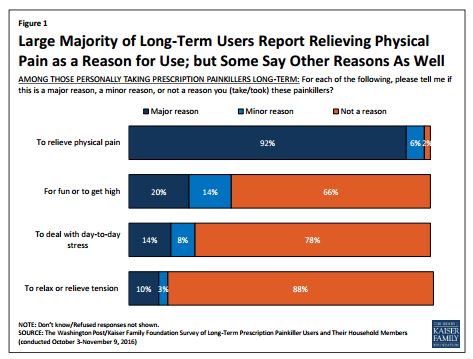
While almost all long-term users said they took the painkillers for pain, one-third said they took them "for fun or to get high;" one in five said they took them "to deal with day-to-day stress;" and one in 10 said they took them "to relax or relieve tension." Only 3 percent of long-term users in the survey said they started taking them for recreational reasons.
Others reported misuse of their painkillers, with 20 percent of them knowing or suspecting someone was using, taking or selling their drugs; 17 percent report taking painkillers not prescribed for them; and 14 percent saying they’ve shared the drugs with a family member or friend.

The majority of long-term users in the survey said their doctor talked to them about the possibility of addiction or dependence, avoiding alcohol and other medications and other ways to manage pain., but 61 percent said there was no discussion or plan for getting off them.

In March, for the first time ever, the CDC issued guidelines for prescribing opioids. They encourage doctors to limit the length of opioid prescriptions to three to seven days, to use the lowest possible effective dosage, to monitor patients closely, and to clearly tell the the risks of addiction.

Two-thirds of the long-term users in the survey said these guidelines were concerning and will make it harder for them to obtain their medications.

“We’re not saying that no one should ever be on these pills,” CDC Director Tom Frieden told The Washington Post, but most people would be “healthier and more functional if they were off them.”

Friday, March 25, 2016

Survey of Cincy-area students, including some in Kenton County, finds pot and vaping more popular than cigs; drug use down

Students in Greater Cincinnati, including Northern Kentucky, are more likely to use marijuana and electronic vapor products than cigarettes, according to a drug-use survey of students in the region.

Graph from PreventionFirst report
The survey found that students in the area were most likely to use alcohol (16.3 percent) within the past 30 days, followed by marijuana (11.7 percent), electronic vapor products (13.4 percent), tobacco (8.2 percent) and non-prescribed prescription drugs (4.6 percent).

This was the first year a question was included about electronic vapor products in the biennial surveys by PreventionFirst (formerly the Coalition for a Drug-Free Greater Cincinnati), a comprehensive effort to reduce adolescent alcohol and drug use.

The good news is that most students are not using alcohol, tobacco or other drugs, says the report.

The study surveyed nearly 40,000 students in grades seven through 12 from 88 public and private schools in several counties in Greater Cincinnati and Kentucky's Kenton County. They were asked whether they'd used any of 21 drugs.

The survey found that use of alcohol, tobacco and marijuana have declined significantly since 2000: alcohol down 46 percent, tobacco down 61 percent and marijuana declining 22 percent. Since 2012, non-prescribed prescription drug use has declined 29 percent.

It found that students' perception of the harm that alcohol can do has increased, while they were less concerned about marijuana.

With marijuana, as students get older "their perception of harm decreases, and use increases," said PreventionFirst CEO Mary Haag told Terry DeMio  of the Cincinnati Enquirer.

"Marijuana has become very prevalent and it's becoming more so," Hamilton County Commissioner Dennis Deters, who chairs the Hamilton County Heroin Coalition, told DeMio. "It's dangerous to our children and it enhances their risk when they become adults for serious addiction."

The report calls age 13 a "pivotal age" because this is when first drug use often occurs in students.

The report also finds that peer and parental disapproval rates are at an all-time high.

"We know how important friends and parents are in a young person's life," Haag said in the news release. "Students whose peers and family express disapproval are more likely to make the healthy choice to not use drugs and alcohol."

Saturday, May 2, 2015

Most women are unaware of female-specific stroke symptoms and risks, according to a national survey by Ohio State

Most women are unaware of the symptoms and risks of stroke for females, according to a national survey by the Ohio State University's Wexner Medical Center. The survey found that just 11 percent of the 1,000 respondents knew that pregnancy, lupus, migraine headaches and oral contraception or hormone replacement therapy are female-specific stroke risks.

Also, only 10 percent of those surveyed knew that hiccups and atypical chest pain with or followed by typical stroke symptoms are early warning signs. According to the National Stroke Association, stroke is the third leading cause of death for women, and Diana Greene-Chandos, a neurologist and director of the neuroscience critical care at Ohio State's Wexner Medical Center, said, "We have a ways to go when it comes to educating women about stroke and their unique risk factors."

Other symptoms unique to women include dizziness that is not class vertigo, headaches, atypical chest pain and/or numbness of the body, especially if one side is more numb than the other. Early recognition and treatment are key for strokes.

"Women do not think they are going to have a stroke," said Greene-Chandos. "They think of it as a man's disease." The reality is that 60 percent of stroke deaths occur in females and 40 percent for males. Every year, 137,000 Americans die from a stroke. Smoking, failing to exercise and having high blood pressure are risk factors for both men and women. To take an assessment created by Ohio State's stroke experts to determine risk of stroke, click here.

Thursday, March 12, 2015

Kentuckians split on taxing sugary drinks to pay for nutrition and physical-activity programs, but like warning labels for such drinks

Should soda and other sugary drinks be taxed to fund school nutrition and physical activity programs? Kentucky adults are almost evenly divided on the issue, but the majority of them believe that sodas and sugary drinks should come with a health warning label.

According to the latest Kentucky Health Issues Poll, 51 percent of Kentucky adults support taxing soda and other sugary drinks, while 47 percent do not. Fifty-five percent of women favored the measure, while 46 percent of men favored it. African American adults (67 percent) were more likely than white adults (50 percent) to support a tax. Sixty-eight percent of respondents ages 18-29 favored the measure, 49 percent of those 30 to 45, 49 percent of those 46 to 64 and 32 percent of those 65 and over.

The poll also asked respondents if sodas and other sugary drinks should come with a label that says "studies show that daily consumption of soda and other sugary drinks contributes to diabetes, obesity and tooth decay." Seventy-one percent of Kentucky adults favored adding the label.

A random sample of 1,597 Kentucky adults were interviewed by phone. To see the rest of the results, click here. The poll is sponsored by the Foundation for a Healthy Kentucky and Interact for Health, formerly the Health Foundation of Greater Cincinnati.

Tuesday, September 9, 2014

Kids Count report says hard times in early childhood are more likely in Ky. than rest of U.S.; bad times have long-term effects

By Melissa Patrick
Kentucky Health News

One of every five children in Kentucky, by the time they are 5 years old, has experienced two or more adverse childhood experiences such as child abuse, economic hardship, exposure to violence, living in a household with mental illness or substance abuse, or where a family member has been incarcerated.

That is one of the major points of the 24th annual Kids Count report, released Tuesday by Kentucky Youth Advocates. The report is part of a state-by-state effort with county-by-county data; nationally, only one in eight children by age 5 have had two adverse experiences, defined as events or circumstances that can affect the quality of the child's adult life, including their health and length of life.

"The higher the total number of these events a child experiences, the higher the risk of obesity, chronic illness, substance abuse, smoking and mental health problems," the report says. Another study cited in the report found that "Children who had experienced four or more adverse events had lower incomes, lower education attainment and lost more days of work or school as adults due to problems with physical or mental health."

“We know when children experience traumatic events such as abuse and neglect or having an incarcerated parent, it negatively impacts their health and often causes barriers to success later in life. Kentucky leaders need to enact solutions to prevent these experiences in the first place and when they do happen, help children successfully recover,” Dr. Terry Brooks, executive director of Kentucky Youth Advocates, said in a press release.

This report by Kentucky Youth Advocates measures 16 indicators to determine the overall well-being of children in Kentucky counties and focuses on four areas considered critical to well-being: economic security, education, health, and family and community strength.


The Kentucky counties with the highest overall child well-being rankings are Oldham, Boone, Spencer, Woodford, and Calloway; the lowest are Martin, Owsley, Wolfe, Clay and Elliott.
Overall Child Well-Being, based on four factors:
economic security, education, health, and family and community.
The 2011-12 survey said that Kentucky children are more likely to experience two or more adverse events  (30 percent) than children are nationally (22.6 percent). The four most common adverse events among Kentucky's children, says the report, are economic hardship, living with a parent or guardian who got divorced or separated, living with anyone who had a problem with alcohol or drugs, and living with a parent or guardian who was incarcerated.

This study evaluated four indicators of health: smoking during pregnancy, low-birthweight babies, children and young adults without health insurance and teen births.  Oldham and Boone counties scored higher than the other counties on health and Elliott County ranked last.
Overall Health: County Comparisons.  Based on county
scores for the four indicators in the report.  
The study found Kentucky has the highest rate of mothers who smoke during pregnancy, one in five, compared to states with comparable data, reporting that the county rates varied widely in this area with less than 14 percent of expectant mothers in Fayette, Jefferson, and Oldham counties smoked, compared to 40 percent or more of mothers in Clay, Elliot, Lee, and Owsley counties.

The percentage of low-birthweight babies in Kentucky, often a result of smoking during pregnancy, between 1994-2012 (8.7 percent) was found to be consistently higher than the U.S. percentage (8.0 percent).

“All parents want what is best for their children, and we know that smoke is bad for kids,” Bethany Hodge, a pediatrician in Louisville, said in the release. “Kentucky needs an indoor smoke-free law so working mothers-to-be do not have to choose between their jobs and protecting their unborn babies.”

One in eight under 26 lacked health insurance in this study, but this number is expected to decline.

“Kentucky has effectively connected young people to health insurance, especially with the outreach efforts of KCHIP over the past few years and kynect over the past year,” Brooks said in the press release. “It’s important to build on those successes with innovative ways to connect all young people to coverage. One solution is to automatically enroll youth aging out of foster care in Medicaid to make sure they maintain health insurance as they leave the state’s care.”

As for teen births, in 2012, Kentucky's rate of births to teen mothers (42 per 1,000) "substantially" exceed the national rate (29 per 1000).

Many of Kentucky's children face adverse childhood experiences related to economic security.

According to the report, Kentucky has now had four consecutive years in which more than one in every four children lives in poverty, which is consistently higher than the national average. It also reports that more than two in every five Kentucky children live in a high-poverty area.

The report says, " A family's earnings and its poverty status, the level of poverty in its neighborhood and the affordability of housing can all affect how a child grows, learns and ultimately succeeds as an adult."

Boone, Oldham and Spencer counties have the highest scores for economic security, while Lee, Martin and Wolfe have the lowest.
Economic security, based on scores for the four indicators in the report.
The results of the well-being of Kentucky's children around education are concerning.

More than half (51 percent) of Kentucky's children entering kindergarten are not adequately prepared for school and more than half  (51 percent) of its fourth graders are not proficient in reading and "therefore not on the path to high school graduation," according to the report. The study also found that over half (55 percent) of Kentucky eighth graders are not proficient in math and that one in seven Kentucky high school students did not graduate on time.

Oldham and Lyon counties "stand apart" at the top of the  education county comparison, with Clinton, Knox, Menifee and Clay counties ranking last.
Education, based on scores for the four indicators in the report. 
Family and community indicators in the report found that Kentucky is not putting as many youth in jail as in previous years; nearly one in five births were to moms without a high school degree; the number of children living in a single-parent home has grown to 37 percent from 35 percent; and over the course of 2013, over 12,700 children were placed in foster care due to abuse or neglect.

Oldham, Boone, Carlisle, Ballard and Spencer counties rank at the top of the family and community county comparisons, with Powell, Clay, Elliott, Owsley and Carroll counties ranked at the bottom.
Family and Community, based on scores for the four indicators in the report. 
The report recommends implementation of strong policies to combat children's exposure to adverse childhood experiences. "The best option for Kentucky is to find ways to prevent adverse childhood experiences. Ensuring safe, stable and nurturing environments will shield children from toxic stress and its deleterious effects," says the report.

Click here for the Annie E. Casey Foundation Kids Count Data Center, which includes current and historical data. Note that the indicators included in the 2014 rankings are different than those included in the 2013 County Data Book. Therefore, current rankings should not be compared to last year’s county rankings.

Monday, April 7, 2014

Kentucky ranks 49th in well-being survey, and Eastern Kentucky's congressional district ranks last in the nation

Kentucky ranked 49th in the nation in a survey that measures perception of well-being, ranking higher than West Virginia and lower than Mississippi, and its 5th Congressional District ranked dead last in the nation.

"The survey assessed people's emotional and physical health; behavior that affects health, such as smoking or exercising; job satisfaction and access to basic needs, including food and housing; and their outlook on life," Bill Estep reports for the Lexington Herald-Leader. The Gallup Organization and Healthways, a Tennessee-based company that provides services to improve well-being, administered the survey.

Kentucky has ranked 49th each year except for 2008, the year the index began, when it ranked 48th. Factors contributing to this result include high poverty, top smoking rates, many uninsured people, high depression rates, drug abuse, obesity and other health issues. "Our health status is dismal in Kentucky," state Health Commissioner Stephanie Mayfield told Estep.

Louise Howell, a consultant for Kentucky River Community Care, said Eastern Kentucky has "profound health disparities." Harlan County lost 13,054 years of individual lives due to premature death, according to the survey. In Breathitt County, only 25.1 percent of people have access to satisfactory exercise opportunities. In Martin County, 37.4 people smoked.

Shaping Our Appalachian Region, a program Gov. Steve Beshear and 5th District Rep. Hal Rogers began last year, is forming strategic plans to improve the region's economy through expansion and diversification. This summer the public meeting will take place to brainstorm ideas and promote involvement. "I think this is the toughest most difficult region we've worked in, ever," said Charles W. Fluharty, who heads the Rural Policy Research Institute and is interim executive director of SOAR. However, he said the region will benefit from people's awareness that the coal-depend region has to try to a new strategy, Estep writes.

Dee Davis, president of the Center for Rural Strategies in Whitesburg, told Estep: "People realize if we've got any chance at all we've got to seize the reins; we've got to diversify the economy." (Read more)

Friday, July 26, 2013

New survey shows physicians feel need to limit health-care costs but make that secondary to the interests of their patients

A new survey about health-care costs reveals that 85 percent of U.S. physicians feel a responsibility to address costs but say other professionals have more of a responsibility to do that, because physicians' obligation toward patients' interests is more important than cost reductions.

While 36 percent of physicians said they have a "major responsibility" to reduce costs, other major players in health care, such as lawyers, insurance companies, hospitals and drug companies, bear that major responsibility, says the study published in this week’s Journal of the American Medical Association.

“Physicians feel stuck in a difficult position,” lead author Dr. Jon Tilburt says in a Mayo Clinic release. “Despite their sense of responsibility to address health care costs, physicians consistently express a commitment to the best interests of patients even when it is expensive. Given this finding, we recommend that cost-containment strategies aimed at physician behavior should focus on innovations that not only promote savings but also preserve physicians’ commitment to individual patients.”

Physicians expressed general agreement with quality initiatives that may also reduce health costs, but were less enthusiastic about cost-containment measures involving changes to payment models, says an American Medical Association release. For example, physicians opposed the idea of cuts in Medicare fees for hospital readmissions and eliminating fee-for-service models.

A strong majority of physicians (69 percent) were enthusiastic about promoting chronic disease care coordination and limiting corporate influence on physician behavior (63 percent). The survey also found that 76 percent of physicians are aware of the costs of tests or treatments they recommend, says the Mayo release.

Physicians said costs can be reduced by improving quality, efficiency and continuity of of care through evidence-based initiatives and cost transparency, says the AMA release. Results of the random survey of 2,500 U.S. physicians indicate ways in which policymakers can collaborate with physicians to address rising health care costs.

“Moving toward cost-conscious care in the current environment in which physicians practice starts with strategies for which there is widespread physician support might create momentum for such efforts...," writes the study's authors in the journal article. Tilburt says physicians want to do the right thing, but when push comes to shove, they will do what's best for patients. Let's start with win win strategies that physicians support and that will cut costs and improve care, he said in a MedPage Today video interview. Click here to watch that video.

Monday, January 28, 2013

Ky. parents strongly favor increasing school dropout age, a step that could make future high-school students healthier

A statewide poll has found that Kentucky parents overwhelmingly favor increasing the state’s school dropout age, and doing so might help future high-school students' health, according to the Foundation for a Healthy Kentucky, which sponsored the poll.   

After being told the legislature may raise the dropout age to 18 from 16, 85 percent of Kentucky parents said they favor the move, and 77 percent of parents said they strongly favored it.

Besides their homes, school is where children spend most of their time, and the overall health and well-being of students affect their ability to learn.  Healthy kids learn better and students’ academic achievement in turn affects their ability to be healthy and stay well in the future.


“People may not realize that education is a health issue, but research tells us that completing high school is directly related to our health status in later life,” said Dr. Susan Zepeda, President and CEO of the foundation. “Increasing the dropout age is one strategy aimed at improving the graduation rate in the state. We hope this polling data will encourage a deeper conversation among parents, education experts and policy makers to explore this and other strategies to help our children succeed at school and lead a more healthy life.”


The dropout-age question was part of the Kentucky Parent Survey, which provided a snapshot of parental views on a number of issues involving health care, school and home life. It surveyed parents, step-parents, grandparents, foster parents or other legal guardians of children in Kentucky.

The poll was conducted in July and August 2012 by the Center for Survey Research at the University of Virginia.  More than 1,000 parents and guardians of children under 18 from throughout the state were interviewed by telephone, including landlines and cell phones.  The survey's margin of error is plus or minus 3 percentage points. 

Kentucky Health News is an independent service of the Institute for Rural Journalism and Community Issues at the University of Kentucky, with support from the Foundation for a Healthy Kentucky.

Thursday, September 29, 2011

New survey shows dramatic increase in employer-sponsored health insurance rates

The average cost of employer-sponsored health insurance has increased 9 percent for family coverage and 8 percent for individual coverage since last year, a new study by the Kaiser Family Foundation and the Health Research & Education Trust shows. "Both increases are the largest since 2005," Tony Pugh of McClatchy Newspapers writes, surpassing the national 2 percent increase in wages and 3.2 percent increase in inflation.

Since 2001, family coverage premiums have escalated 113 percent while workers' wages have only risen 34 percent and inflation – 27 percent, Pugh reports. Researchers are unclear if the increase in premiums is temporary or whether higher increases will continue. "We really don't know, and we won't know until next year," Drew Altman, president and CEO of the Kaiser Family Foundation told Pugh.

Employers pay on average about 72 percent toward family coverage and 82 percent for single coverage, Pugh reports, leaving workers paying 28 percent for family and 18 percent for single coverage. Of those surveyed, about 31 percent of covered workers were in high-deductible plans, a 10 percent increase from 2006.

Increasing costs in medical care is "the main culprit behind the rate increases," Karen Ignagni, president of America's Health Insurance Plans told Pugh. "Insurers' expectation of stronger economic recovery" and insurers' fears of increased costs from the 2010 Affordable Care Act may be driving higher premiums, Pugh reports.

Despite insurers' fears, an analysis by Kaiser and the federal government suggest that the 2010 Affordable Care Act accounts for only 1 to 2 percentage points of the increase. Only two measures, coverage of adult children to age 26 and no patient cost-sharing coverage on certain preventive medical services, were implemented thus far with the remaining provisions taking effect in 2014, Pugh reports. This month, insurers will be required to publicly disclose information about rate increases of 10 percent or more for review by state or federal officials to determine if the increase is warranted. (Read more)

Thursday, March 17, 2011

Well-being index gives rankings for Kentucky's congressional districts and metropolitan areas; some are very bad

In keeping with its second-to-last state ranking in the 2010 Gallup-Healthways Well-Being Index, which assessed people's physical and emotional health across the country, one of Kentucky's congressional districts and its major metropolitan area have also ranked low.

Of 436 congressional districts nationwide, Kentucky's 5th District ranked 435th overall, and was dead last in the emotional-health and physical-health categories. The other districts' rankings were: 1st, 383rd; 2nd, 404th; 3rd, 312th; 4th, 415th and the 6th, 388th. Here's a table with breakouts and the 2009 rankings:


Of the 188 metropolitan areas assessed, Louisville ranked 170th, not much different from its 151st ranking in 2009. Lexington ranked 115th, way down from 15th. Among metro areas centered in other states, Cincinnati was 123rd; Clarksville, Tenn., was 162nd; Evansville was 172nd; and Huntington was 188th, dead last in the nation. It has scored poorly on several other health measurements.


The well-being index assessed respondents on their emotional health, physical health, life evaluation, work environment, healthy behaviors and basic access. Respondents answered a large spectrum of questions that pertained to their life now and how they expect it to be in five years. In the emotional-health category, for example, they were asked about how often they laugh, if they were treated with respect and if they experienced sadness, anger or depression. In the work-environment category, people were asked about how they are treated by their supervisor, if they are able to use their strengths while at work and if they're satisfied with their job.

Compared to the rest of the country, Kentucky as a whole ranked 49th, surpassing only West Virginia. Hawaii had the highest well-being index in the country.

It bears noting that the rankings are based on very narrow margins of difference, with many states' scores just a few tenths of 1 percentage point apart. While Kentucky's overall well-being index was 61.9 out of a possible 100 points, Hawaii, which ranked first in the country, had a score of 71. The 2010 score for the nation was 66.8. West Virginia's score was 61.7 points. Because the scores were so close together, precise rankings are uncertain. The ranges for congressional districts and cities are greater, but the error margins are larger.

The survey was based on random-digit dial telephone interviews with 352,840 adult Americans living in all 50 states and the District of Columbia. There were 5,881 Kentuckians who participated in the study. Of those, 1,046 live in the 5th Congressional District and 1,632 live in the Louisville area, which includes Jefferson County and the Indiana border. Interviews were conducted every day from January to December 2010.

The margin of sampling error for most states is plus or minus 1 to 2 percent, but is as high as plus or minus 4 percent for the smallest states. For results based on the total sample size, "one can say with 95 percent confidence that the maximum margin of sampling error is plus or minus 1 percentage point," says Elizabeth Mendes of Gallup.