Showing posts with label digital media. Show all posts

Wednesday, June 26, 2024

Supreme Court allows government efforts against controversial social-media posts, saying plaintiffs lack standing to sue

U.S. Supreme Court (Photo by Andrew Harnik, Getty Images)
By Mark Sherman
Associated Press

The Supreme Court on Wednesday sided with the Biden administration in a dispute with Republican-led states over how far the federal government can go to combat controversial social media posts on topics including Covid-19.

By a 6-3 vote, the justices threw out lower-court rulings that favored Louisiana, Missouri and other parties in their claims that officials in the Democratic administration leaned on social-media platforms to unconstitutionally squelch conservative points of view.

Justice Amy Coney Barrett wrote for the court that the states and other parties did not have the legal right, or standing, to sue. Justices Samuel Alito, Neil Gorsuch and Clarence Thomas dissented.

The decision should not affect typical social media users or their posts.

The case is among several before the court this term that affect social media companies in the context of free speech. Earlier cases over state laws and the one that was decided Wednesday are variations on the same theme, complaints that the platforms are censoring conservative viewpoints.

The states had argued that White House communications staffers, the surgeon general, the FBI and the U.S. cybersecurity agency are among those who applied “unrelenting pressure” to coerce changes in online content on social media platforms.

The justices appeared broadly skeptical of those claims during arguments in March and several worried that common interactions between government officials and the platforms could be affected by a ruling for the states.

The Biden administration underscored those concerns when it noted that the government would lose its ability to communicate with the social media companies about antisemitic and anti-Muslim posts, as well as on issues of national security, public health and election integrity.

White House press secretary Karine Jean-Pierre said the court reached the right outcome because “it helps ensure the Biden Administration can continue our important work with technology companies to protect the safety and security of the American people, after years of extreme and unfounded Republican attacks on public officials who engaged in critical work to keep Americans safe.”

Louisiana Attorney General Liz Murrill said the decision “gives a free pass to the federal government to threaten tech platforms into censorship and suppression of speech that is indisputably protected by the First Amendment. The majority waves off the worst government coercion scheme in history.”

The justices did not weigh in on the substance of the states’ claims or the administration’s response in their decision Wednesday.

“We begin — and end — with standing,” Barrett wrote. “At this stage, neither the individual nor the state plaintiffs have established standing to seek an injunction against any defendant. We therefore lack jurisdiction to reach the merits of the dispute.”

In dissent, Alito wrote that the states amply demonstrated their right to sue. “For months, high-ranking government officials placed unrelenting pressure on Facebook to suppress Americans’ free speech. Because the court unjustifiably refuses to address this serious threat to the First Amendment, I respectfully dissent.”

Nina Jankowicz was named in the original lawsuit after being appointed in 2022 to lead a new board in the Department of Homeland Security to tackle disinformation. The board was dissolved within weeks, amid conspiracy theories and criticism from Republicans and conservative activists who saw the effort as a political tool to regulate free speech.

Jankowicz, an expert in disinformation, said the Supreme Court had done what she had expected, but she said the damage from the lawsuit is not easily fixed.

“Unfortunately, there is an entire class of people that now believes the government, in coordination with independent researchers, is censoring some part of the American population,” she said. “I don’t think that’s going to go away anytime soon.”

The decision comes as many social media companies have removed guardrails against hate and disinformation. The platform X, owned by Elon Musk, has restored the accounts of conspiracy theorists and extremists who were previously banned. It also has gutted teams that once fought misinformation on the platform, leaving the community of users to moderate itself.

Meta, which owns Facebook and Instagram, no longer emphasizes news and political content on its platforms after facing years of accusations that it mishandles misinformation and contributes to political polarization.

The decision means that the Food and Drug Administration "can continue coordinating directly with social-media platforms," reports Jessica Karins of Inside Health Policy.

"The justices said the plaintiffs lacked standing to sue because they could not show the removal of their social-media content or bans on their accounts were undertaken as the result of government pressure. Rather, the removal was the result of an independent decision-making process that considered government feedback — even if strongly worded — as one of many factors."

The dissenters argued "that the government undertook a major campaign of censorship and that the majority is allowing a significant restriction on free speech to remain in place," Karins reports.

The decision "says the plaintiffs’ allegations of injury depend on actions taken by the social-media platforms, but instead of suing the platforms, the plaintiffs sought to enjoin government agencies and officials from communicating with platforms on misinformation," Karins notes. "Barrett wrote that this contradicts the principle that courts cannot redress injury caused by a third party not before the court."

In friend-of-the-court briefs, the American Academy of Pediatrics, the American Medical Association, the American Academy of Family Physicians and other health organizations "emphasized the government’s compelling interest in fighting misinformation about vaccination, since many of the social media posts at issue were about Covid-19 vaccines," Karins reports.

Monday, June 17, 2024

Surgeon general wants health warnings on social-media platforms, which he blames for mental illnesses among youth

Surgeon General Vivek Murthy (AP photo by Susan Walsh)
By Michelle Chapman
Associated Press

The U.S. surgeon general has called on Congress to require warning labels on social media platforms and their effects on young people’s lives, similar to those now mandatory on cigarette boxes.

In a Monday opinion piece in the The New York Times, Dr. Vivek Murthy said that social media is a contributing factor in the mental-health crisis among young people.

“It is time to require a surgeon general’s warning label on social-media platforms, stating that social media is associated with significant mental health harms for adolescents. A surgeon general’s warning label, which requires congressional action, would regularly remind parents and adolescents that social media has not been proved safe,” Murthy said. “Evidence from tobacco studies show that warning labels can increase awareness and change behavior.”

Murthy said that the use of just a warning label wouldn’t make social media safe for young people, but would be a part of the steps needed.

Social media use is prevalent among young people, with up to 95% of youth ages 13 to 17 saying that they use a social media platform, and more than a third saying that they use social media “almost constantly,” according to 2022 data from the Pew Research Center.

“Social media today is like tobacco decades ago: It’s a product whose business model depends on addicting kids. And as with cigarettes, a surgeon general’s warning label is a critical step toward mitigating the threat to children,” Josh Golin, executive director at Fairplay, an organization that is dedicated to ending marketing to children, said in a statement.

Actually getting the labels on social media platforms would take congressional action — and it’s not clear how quickly that might happen, even with apparent bipartisan unity around child safety online. Lawmakers have held multiple congressional hearings on child online safety and there’s legislation in the works. Still, the last federal law aimed at protecting children online was enacted in 1998, six years before Facebook’s founding.

“I am hoping that would be combined with a lot of other work that Congress has been trying to do to improve the safety and design and privacy of social media products,” said Dr. Jenny Radesky, a developmental behavioral pediatrician at the University of Michigan and leader at the American Academy of Pediatrics. “Those two things would have to go hand in hand, because there’s so much that Congress can do to follow the steps of the United Kingdom and the European Union in passing laws that take into account what kids need when they’re interacting with digital products.”

Even with Congressional approval, warning labels would likely be challenged in the courts by tech companies.

“Putting a warning label on online speech isn’t just scientifically unsound, it’s at odds with the constitutional right to free speech,” said Adam Kovacevich, CEO of the tech-industry policy group Chamber of Progress. “It’s surprising to see the U.S. surgeon general attacking social media when teens themselves say it provides an important outlet for social connection.”

Last year, Murthy warned that there wasn’t enough evidence to show that social media is safe for children and teens. He said at the time that policymakers needed to address the harms of social media the same way they regulate things like car seats, baby formula, medication and other products children use.

To comply with federal regulation, social media companies already ban kids under 13 from signing up for their platforms — but children have been shown to easily get around the bans, both with and without their parents’ consent.

Other measures social platforms have taken to address concerns about children’s mental health can also be easily circumvented. For instance, TikTok introduced a default 60-minute time limit for users under 18. But once the limit is reached, minors can simply enter a passcode to keep watching.

Murthy believes the impact of social media on young people should be a more pressing concern.

“Why is it that we have failed to respond to the harms of social media when they are no less urgent or widespread than those posed by unsafe cars, planes or food? These harms are not a failure of willpower and parenting; they are the consequence of unleashing powerful technology without adequate safety measures, transparency or accountability,” he wrote.

In January the CEOs of Meta, TikTok, X and other social media companies went before the Senate Judiciary Committee to testify as parents worry that they’re not doing enough to protect young people. The executives touted existing safety tools on their platforms and the work they’ve done with nonprofits and law enforcement to protect minors.

Murthy said Monday that Congress needs to implement legislation that will protect young people from online harassment, abuse and exploitation and from exposure to extreme violence and sexual content.

“The measures should prevent platforms from collecting sensitive data from children and should restrict the use of features like push notifications, autoplay and infinite scroll, which prey on developing brains and contribute to excessive use,” Murthy wrote.

Sens. Marsha Blackburn (R-Tenn.) and Richard Blumenthal (D-Conn.) supported Murthy’s message Monday.

“We are pleased that the surgeon general — America’s top doctor — continues to bring attention to the harmful impact that social media has on our children,” the senators said in a prepared statement.

The surgeon general is also recommending that companies be required to share all their data on health effects with independent scientists and the public, which they currently don’t do, and allow independent safety audits.

Murthy said schools and parents also need to participate in providing phone-free times and that doctors, nurses and other clinicians should help guide families toward safer practices.

While Murthy pushes for more to be done about social media in the United States, the European Union enacted groundbreaking new digital rules last year. The Digital Services Act is part of a suite of tech-focused regulations crafted by the 27-nation bloc — long a global leader in cracking down on tech giants.

The DSA is designed to keep users safe online and make it much harder to spread content that’s either illegal, like hate speech or child sexual abuse, or violates a platform’s terms of service. It also looks to protect citizens’ fundamental rights such as privacy and free speech.

Officials have warned tech companies that violations could bring fines worth up to 6% of their global revenue — which could amount to billions — or even a ban from the EU.

Murthy’s focus is on teens and social media, but Radesky noted that adults could use a warning label too.

“What we’ve heard from teens is that they want their parents to be on social media less and on their devices less,” she said. “That’s another behavior change we hope that parents will reflect on and think about — ‘where could I cut down or create some boundaries to create more family time or sleep time?’ — and not only hyper-focusing on what teens are doing, but really what all of us as a society are doing in terms of healthy relationships with technology.”

UPDATE, June 19: "
Some scientists who study youth mental health say the evidence does not support the notion that social media is harmful per se," The New York Times reports.

Monday, May 13, 2024

Health-care industry is most at risk from cyberattack, study says

Health care is increasingly more at risk of cyberattacks than other industries, according to a recent study by Soax, a data-collection platform, reports Cara Smith of Inside Health Policy.

As cyberattacks against Change Healthcare and Ascension, a 19-state hospital system, "disrupted the health-care industry, lawmakers, doctors, payers and other stakeholders are scrambling to prevent future cyberbreaches to protect the health-care system," Smith reports.

"The health-care industry is the most vulnerable sector, topping the ranking with 809 data-violation cases in 2023. This is a staggering surge in incidents from the prior year, with cases totaling 343 in 2022 -- a 136% increase, the study found. Further data revealed that these cases affected 56 million victims."

For the study, Soax used data from the Identity Theft Resource Center, and it says "the health-care industry should be on high alert," Smith reports.

Thursday, February 1, 2024

There is evidence that social media hurt teens' mental health, but it's not definitive; what limits would be reasonable? Some ideas.

Meta CEO Mark Zuckerberg speaks to the audience of a Senate Judiciary Committee hearing on the dangers of child sexual exploitation on social media. (Photo by Anna Moneymaker, Getty Images)

By Katelyn Jetelina and Jacqueline Nesi
Your Local Epidemiologist

Strong bipartisan statements came out of a congressional hearing yesterday about the harms of social media use among children and teens. Parents of kids harmed by social media showed up in immense force.

“You have blood on your hands.”— Sen. Lindsey Graham to five social media CEOs.

“I’m sorry for everything you have all been through.”— Mark Zuckerberg to parents in the audience.

Is social media dangerous for children and teens? And, if so, what are our options?

Here is the nuanced public health data that (hopefully) congressmen/women are using to (hopefully) make meaningful and needed change. But, as we know by now, policy isn’t always based on science.

This was published eight months ago, and some things have changed since. As a parent, I still root for Option #4.

This post contains sensitive information, including a discussion of suicide. If you are in need of help, there is an abundance of resources on the National Suicide Prevention Hotline website, which includes an anonymous chat function and a direct line at 988.

Protecting youth from the potential negative mental-health effects of social media is front and center in the mass media, in conversations around dinner tables, and in federal- and state-level bills.

Is the teen mental health crisis a real thing? Yes. Rates of mental health problems have continually increased among young people over the past 15 years, regardless of how you measure it:

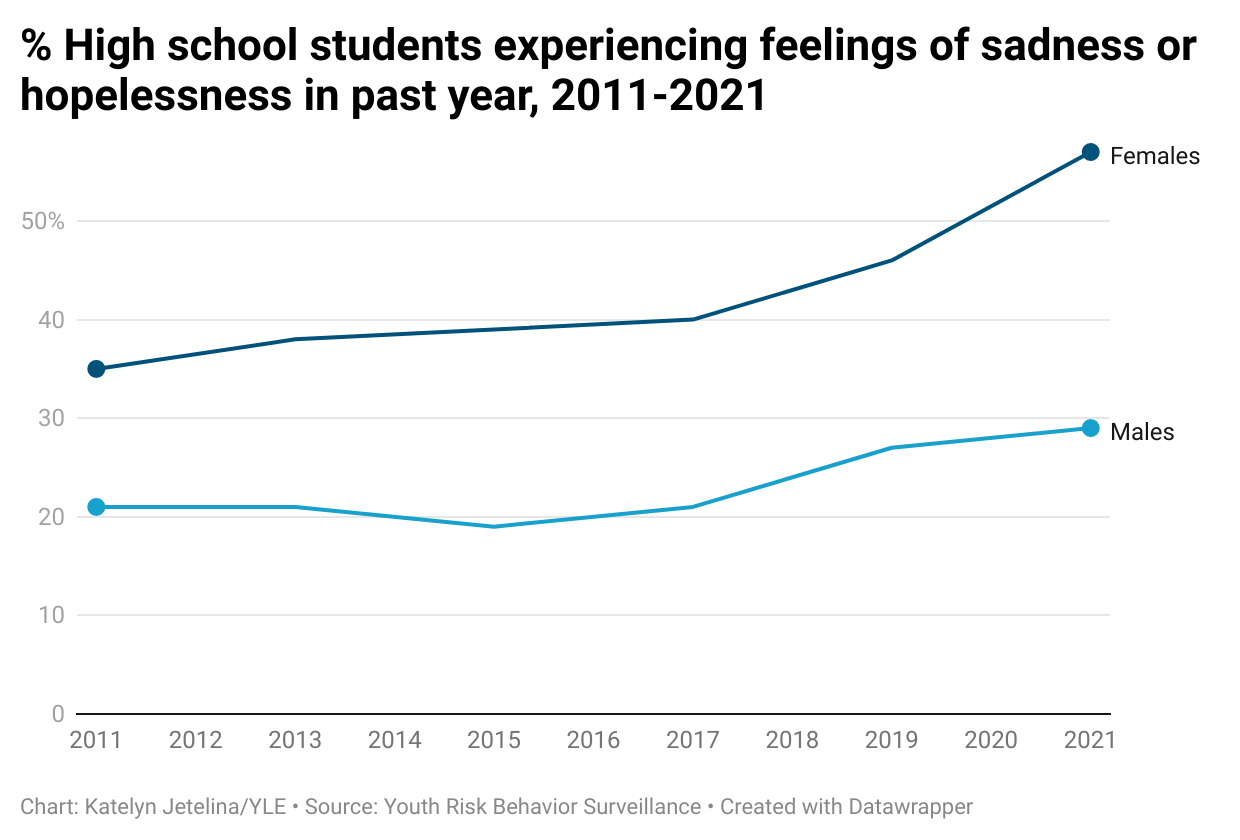
In 2021, 42% of U.S. high school students reported “persistent feelings of sadness or hopelessness,” up from 28% in 2011. The increase was especially dramatic among girls.

According to diagnostic measures (structured interviews by a trained professional), depression has increased 7.7% in U.S. teens—and 12% among girls—between 2009 and 2019.

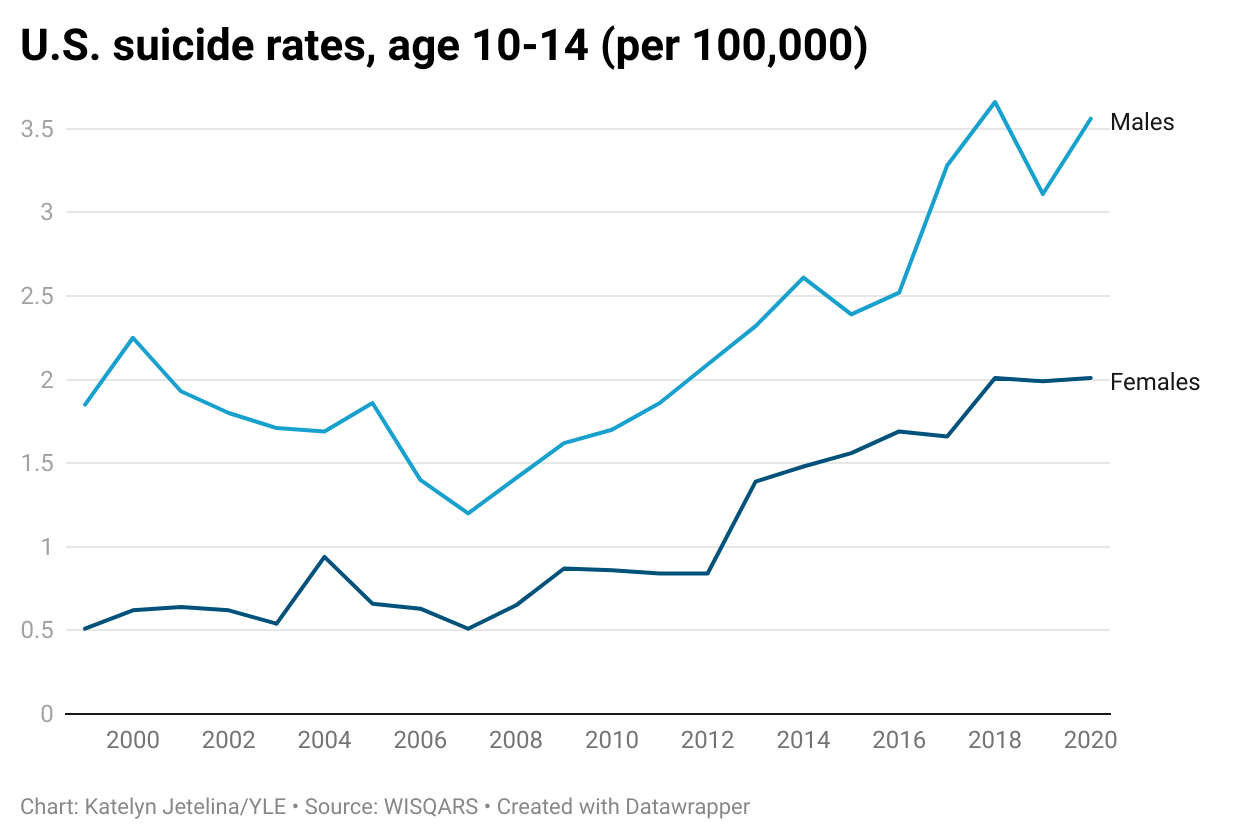
According to U.S. death certificates, suicide rates among youth ages 10-14 increased 139% for girls and 70% for boys since 2012. However, this is a bit difficult to interpret given low the rates to begin with for girls.

Is this rise due to social media? Teens use social media. A lot. Almost one in five teens use YouTube “almost constantly.” Nearly half of teens use TikTok (48%) and Snapchat (44%) several times per day. And the total hours of use have increased in recent years among teens.

But using social media doesn’t necessarily equate to mental-health problems. Correlation doesn’t always equal causation. And, to make things more complicated, there are harms and benefits of social media.

Harms of social media: We have a lot of correlational evidence, and some—but not much—causal evidence of the harms of social media on teens' mental health.

Correlational studies ask teens how much time they’re spending on social media, and ask them about mental health. In general, these point to weak but statistically relevant correlations between social media use and lower teen well-being.

In terms of causal evidence, we have a couple of studies:

Some studies randomly assigned people (both adults and teens) to stop using social media (and others not to stop) and then evaluated their well-being. The results of these studies are mixed. Variability seems to depend on the details of the design: How long did they stop using social media? Did they “detox” completely or just reduce the time spent? What are they using social media for?

Other studies have taken advantage of circumstances that naturally occurred in the world to mimic an experimental design. One study ​​looked at when Facebook was introduced on different college campuses (which varied randomly) and found that after Facebook showed up, rates of mental-health concerns increased. A few others (like this and this) look at the introduction of high-speed Internet in different areas and found associations with poorer mental health after its introduction, but these studies do not address social media specifically.

What is clear is that we need more research with more rigorous designs.

Benefits of social media: Competing with these harms are studies that show social media have benefits for mental health, too. Teens report that social media are important for:
  • Helping them stay connected with friends
  • Meeting like-minded peers
  • Exploring their interests
  • Learning
  • Discovery
These benefits can be especially important for those who may be socially vulnerable in their offline lives, such as LGBTQ+ youth.

What else could explain it? Assessing causality means understanding what other factors may also explain the rise of mental illness among teens. A few alternative explanations have been proposed:
  • Rising income inequality
  • Wars
  • Violence and access to firearms (suicides)
  • Global financial crisis
  • Racial inequality
  • Academic and social pressures
  • Political views on current events
  • Climate change
  • The opioid epidemic
  • Unhelpful narratives around mental health
Of course, many of these explanations may be intertwined with and amplified by social media, but the short answer is that we likely can’t blame social media alone. Mental health is complicated, and there is unlikely to be a single, simple explanation for a large-scale phenomenon like this one.

So, what should we do about it? We’ve got a few options:

Option 1: Do nothing until research is “settled” on the issue before taking legislative action. Unfortunately, this may require a “burden of proof” that is rarely, if ever, established in psychology research. In this case, some evidence of harm, even if imperfect, may need to be enough to drive change.

Option 2: Put it on the parents. Parents certainly play a hugely important role in teens’ relationships with social media. Evidence supports parents’ active involvement in kids’ digital lives through ongoing conversations, reasonable limits, and appropriate monitoring. But can (and should) they manage it alone? If large-scale policy changes create safer social media platforms, individual disadvantages are minimized.

Option 3: Ban it among minors. Some states, such as Arkansas and Utah, have passed bills that limit social media use. In one case (Florida), it’s banned among kids under 16.

Option 4: Put reasonable protections in place. Social media is probably more like cars than drugs. We want protections in place (seatbelts, airbags, drivers’ ed), but an outright ban may go too far. Some options include: raising the minimum age from 13 to 15 or 16; requiring age verification of some kind; limiting recommendations of harmful or problematic content; limiting overall time spent (such as via forced “breaks” or overall time limits); and limiting targeted advertising.
 
Bottom line: We have some evidence that social media is playing a role in the teen mental-health crisis, but that evidence is not definitive. And social media can play a positive role, too. It is highly unlikely that social media as a whole are the only cause of mental illness among children. We can certainly take steps to make social media a healthier place, but if we truly want to support teens’ mental health, this is only the start.

Sunday, July 9, 2023

It's time to make sure your children are up to date on vaccinations required for school; Kentucky lags behind all the states it borders

State Dept. for Public Health graphic
By Melissa Patrick
Kentucky Health News

With just a few weeks left before school starts, it's time to make sure your school-aged children are up to date on their required immunizations. It's especially important because Kentucky's children fell behind on their immunizations during the pandemic, and many of them still haven't caught up. 

"Kentucky is really low on a lot of childhood vaccines . . . and when that happens . . . when people are not vaccinated, especially children with developing immune systems, that can cause these diseases to run rampant," said Ryan Babb, manager of the University of Kentucky's retail pharmacy services.

At a recent Immunization Summit hosted by the Immunize Kentucky Coalition, State Epidemiologist Kathleen Winter said Kentucky is behind all of its bordering states in routine childhood vaccination rates and is well below the national average. 

Winter said the greatest concern right now is among kindergarteners, because their measles-mumps-rubella vaccination rate has dropped in the last two school years. 

She also noted that since 2018, fewer Kentucky children have received the DTap or Tdap vaccine against tetanus, diphtheria and pertussis (whooping cough), and this is especially true among seventh-graders. 

Also, she said only 57% of Kentucky teens have taken the human papillomavirus (HPV) vaccine that protects against more than 90% of cancers caused by it. 

Babb encouraged Kentucky parents to get their children vaccinated at their local pharmacy, noting that while all Kentucky pharmacists can offer vaccinations to children between the ages of 9 and 17, some have a  "collaborative care agreement with a pediatrician," like UK's pharmacies do, that allows them to offer them to children as young as 6 months.

"We feel like it's really important to increase access, it's much easier than to . . . walk in and get a vaccination rather than having to schedule an appointment with a provider," Babb said. 

And if your child has gotten behind on their routine vaccination schedule, there are catch-up schedules to get them up-to-date. "You can always catch up," he said. 

Babb said it's also important to remember that immunizations provide "herd immunity," which occurs when enough people have been immunized against disease to protect others who are not immunized. Some can't get vaccinations because their immune systems are too weak to allow them to get shots, or because they are too young.

Children can also get their routine vaccinations at health clinics, health departments and doctor's offices, but it's important to make those appointments soon because school typically starts in August and students are required to provide up-to-date immunization records at the beginning of each school year, unless exempted for religious or medical reasons. 

Babb cautioned people who are hesitant about vaccines to make sure they are listening to reliable sources on the subject because there is a lot of vaccine misinformation out there. 

"My recommendation to anybody is before you do a Google search or before you start checking any other social media or getting opinions based on that, just call your local pharmacist [or] . . . even a primary care provider . . .  to get the right information the first time before digging down a rabbit hole of misinformation," he said. 

Ruth Carrico, a senior research scientist with Norton Infectious Diseases Institute, talked at the summit about ways to combat vaccine hesitancy. She placed the bulk of that responsibility on health-care providers and their employees. 

"You need to be all in," she siad. "And then be honest, unashamed, and unafraid of your position. It doesn't mean that you're sanctimonious, and you're high and mighty, and you don't listen to others. .  . But the idea is, if you are all in for immunization, then that needs to be where we are heading and that needs to be the basis for our interactions as we move forward."

Further, she said health-care professionals must have a firm understanding and expertise of how vaccination and the immune system work to answer people's questions in a "truthful, credible and sustainable" way. 

"Our time to understand vaccines and promote vaccine confidence is now," she said. "We need to remember very clearly, lest we get influenced by misinformation and pushback in social media, that vaccines save lives."

Monday, July 3, 2023

DEA administrator says Congress needs to pass laws to keep social media from serving as platforms to promote, sell fentanyl

Centers for Disease Control and Prevention graph shows huge increase in fentanyl deaths.

The U.S. needs laws to force social-media companies to keep their platforms from being used to promote and sell fentanyl, DEA Administrator Anne Milgram said on NBC's “Meet The Press” Sunday, in a program that was devoted entirely to the drug and the problems it is causing. Just over half of teh 2,135 drug overdoses in Kentucky last year involved fentanyl, a very powerful opioid.

“The border’s an important part of this conversation because most of the fentanyl that we see coming into the United States is coming in through the southwest border,” Milgram said, but “Social media is also a vital part of the conversation. It is what I call the last mile. Because what the cartels need – they’re selling the deadliest poison we’ve ever seen – they need that to … be able to expand and sell more, they need to be able to reach people at massive rates. And that’s what social media’s doing,” The Daily Wire reports.

Host Chuck Todd asked Milgram asked if social-media companies were cooperating with federal law enforcement in trying to fix the problem. She said, “We have not, until recently, gotten nearly as much cooperation as we need. . . . The deputy attorney general convened all of us in April of this year and made it very clear, number one, that the companies have to comply with their own terms of service, which say, ‘This is illegal. You cannot be selling fake pills. You cannot be selling drugs on social media websites’.”

Milgam also said law enforcement needs to be able to get information from social-media companies. Asked if there was something the DEA does not have that Congress could give them that would help them address the issue, she said, “So we talk a lot with Congress about social media. We talk a lot about the need for these platforms – essentially, one of the main ways we see Americans dying right now is through social media, the purchase of pills, fake pills on social media. So, again, if we’re after, how do we stop 110,000 Americans from dying?” She said Congress was “a place to start.”

Thursday, May 25, 2023

Surgeon general issues public-health advisory that warns about the dangers of social-media use to children's mental health

CNN image
By Melissa Patrick
Kentucky Health News

Concerns about the effects of social media on youth mental health prompted America's top public-health official to issue a rare public-health advisory that calls for a multifaceted approach to find ways to minimize the harm. 

"The bottom line is we do not have enough evidence to conclude that social media is sufficiently safe for our kids. In fact, there is increasing evidence that social media use during adolescence — a critical stage of brain development — is associated with harm to mental health and well-being. In light of the ongoing youth mental health crisis, it is no longer possible to ignore social media’s potential contribution to the pain that millions of children and families are experiencing," Surgeon General Vivek H. Murthy writes in an op-ed about the advisory for The Washington Post

Social media use among teens is pervasive, with 95 percent of U.S. teenagers using the platforms and more than one-third saying they use social media "almost constantly," the report says. And this isn't just a teenage phenomenon; nearly 40% of children 8 to 12 years old use social media. 

The advisory walks through the benefits and harms of social media for children. 

It says social media may benefit children by allowing them to connect easily with friends and family or those who share abilities interests and identities, and a space to express themselves and find support when they need it. 

But it also says social media use can result in reduced sleep among youth, and expose them to extreme, inappropriate content and online bullying. One study has found that youth who spend more than three hours a day on social media face double the risk of experiencing poor mental health, including symptoms of depression and anxiety. This is of great concern because on average, one survey found that eighth and 10th graders spend about three and a half hours a day on social media, says the report.

"More research is needed to fully understand the impact of social media," says the 19-page advisory, titled "Social Media and Youth Mental Health." Current evidence "indicates that while social media may have benefits for some children and adolescents, there are ample indicators that social media can also have a profound risk of harm to the mental health and well-being of children and adolescents."

The advisory lays out steps that policymakers, technology companies, researchers, families and young people can take to make social media safer for youth. Following are some of the suggestions for various interests. 

Policymakers are encouraged to strengthen safety protections for children interacting with social media platforms and to develop age-appropriate health and safety standards. They are also called on to require higher safety standards of data privacy for children. 

Technology companies are urged to create safety standards for social media that protect youth from exposure to harmful content and online harassment. They are encouraged to limit features that manipulate youth into excessive and unhealthy use of social media. The report also calls on them to be transparent and to share their assessment findings and data with independent researchers. 

Families are asked to model responsible social-media behavior and to create a family media plan. It also asks families to create tech-free zones that encourage other activities. 

Youth are reminded that they can reach out for help if they are negatively affected by social media and to be cautious about what they share.

The American Psychological Association recently issued a health advisory on social-media use in adolescence that included 10 research-based recommendations.

Monday, May 8, 2023

American Psychological Association issues research-based recommendations for use of social media by young people

Shutterstock photo via The Conversation
The American Psychological Association has issued recommendations for adolescents' use of social media, noting that while the platforms can promote healthy socialization, young people should not use them until they have taken training in social media literacy to give them skills to have "balanced, safe and meaningful experiences," APA says.

Social media are “neither inherently harmful nor beneficial to our youth,” APA President Thema Bryant said. “But because young people mature at different rates, some are more vulnerable than others to the content and features on many social media platforms that science has demonstrated can influence healthy development. Just as we require young people to be trained in order to get a driver’s license, our youth need instruction in the safe and healthy use of social media.”

Bryant appointed an advisory panel to issue the 10 recommendations, titled the American Psychological Association Health Advisory on Social Media Use in Adolescence. It recommends psychological competencies that youth should possess before using social media, plus periodic booster training to minimize the chances for harm and maximize the benefits that social media can provide.

The advisory notes that not all findings apply equally to all youth: “Scientific findings offer one piece of information that can be used along with knowledge of specific youths’ strengths, weaknesses and context to make decisions that are tailored for each teen, family and community. Age-appropriate use of social media should be based on each adolescent’s level of maturity (e.g., self-regulation skills, intellectual development, comprehension of risks) and home environment.”

Among the report’s recommendations are:
  • Tailor social-media use, functionality and permissions to youths’ developmental capabilities; designs created for adults may not be appropriate for children.
  • Adults should monitor younger adolescents' social media use, including discussing and coaching about content. This should be balanced with youths’ appropriate needs for privacy. Autonomy may increase gradually as children age and gain more digital literacy.
  • Minimize adolescents’ exposure to social-media content that depicts illegal or psychologically maladaptive behavior, including content that instructs or encourages youth to engage in self-harm or high-risk behaviors or those that encourage eating-disordered behavior (such as restrictive eating, purging or excessive exercise).
  • Minimize adolescents’ exposure to online content that promotes discrimination, prejudice, hate or cyberbullying, especially directed toward groups targeted because of race, ethnicity, gender, sexual orientation, religion or disability status.
  • Monitor adolescents for signs of problematic social media use that can impair their ability to engage in daily roles and routines and may present risk for more serious psychological harms over time.
  • Limit social media use so as not to interfere with adolescents’ sleep or physical activity, as each is required for healthy brain and psychological development.
  • Limit adolescents’ use of social media for primarily beauty- or appearance-related content.
The report acknolwledges that it is not yet possible to determine if social media harm youth. Relatively few studies have been conducted with youth from racial, ethnic, sexual, gender, socioeconomic or differently-abled populations, and/or youth with chronic developmental or health conditions.

Researchers at Baylor University in Texas recently reported that "immersion in a world created by the social media experience drives problematic social media behaviors and addiction." The report calls for “a substantial investment in research funding” and access to more data, including data from tech companies.

“We hope these recommendations will be helpful as we all try to keep pace with the rapidly shifting social media ecosystem,” APA CEO Arthur C. Evans Jr. said. “APA will continue to keep tabs on developments within the current and future platforms, with an eye toward safeguarding our youth and enabling them to benefit from the positive aspects of social media.”

The APA said its recommendations are based on scientific research in psychology and related disciplines, conducted with thousands of adolescents who completed standardized assessments of social, behavioral, psychological and/or neurological functioning, and reported engaging with specific social media functions or content, or were observed doing so.

Sunday, October 17, 2021

Churches could be key to overcoming vaccine misinformation, resistance to perceived coercion by 'The Man' in Eastern Ky.

Pastor Billy Joe Lewis at his Leslie County church. (Kaiser Health News photo by Jessica Tezak)
The key to keeping Eastern Kentucky hospitals from being overwhelmed by Covid-19, the flu and other illnesses this winter may depend on rural churches helping vaccination campaigns, Sarah Varney reports for Kaiser Health News.

"In Leslie County, in the foothills of the rugged Pine Mountain ridge that anchors the state's eastern coalfield, gravel roads wind through thick forests blanketed with kudzu vines," Varney writes. "House by house, church by church, public health workers are trying to outsmart the fantastical tales spread on Facebook about the Covid-19 vaccines, while also helping residents overcome the everyday hurdles of financial hardship and isolation."

Leslie County has better full-vaccination rates than most counties in southeastern Kentucky: 46% of the population and 54% of the vaccine-eligible (12 and older). Clay County, to the east, has only 39% and 45%, respectively, despite special campaigns to get shots in arms. The region matches what national polls show tend to be the most adamant anti-vaccine part of the U.S. population, citing "tends to be disproportionately white, rural, evangelical Christian and politically conservative," The New York Times reports.

"Local health agencies have been eager to enroll churches in the all-hands-on-deck vaccination effort," Varney reports. "Some church leaders have refrained from encouraging vaccination, afraid of offending congregants in a state where mistrust of government intrusion runs deep."

But not Billy Joe Lewis, pastor of the Full Gospel Church of Jesus Christ on Cutshin Creek, which rises in the shadow of Pine Mountain and drains much of Leslie County.

"Lewis, who has thick silver hair and a luminous smile, spends long stretches of the day in prayer, and he says God told him to protect his flock," Varney reports. "When 'Sister Maxine' from the regional health department suggested a drop-in vaccine clinic in the church parking lot, Lewis says, he was all in favor. He promoted it from the pulpit and on the church's must-read Facebook page."

Lewis's sister in Christ is Maxine Shepherd, a regional health coordinator for the county and a member of his church since he started it in 1972. But his stand wasn't a personal favor. "We've still got to use common sense," he told Varney. "Anything that can ward off suffering and death, I think, is a wonderful thing."

He has seen both. "In recent weeks, Lewis held a funeral service for a 53-year-old unvaccinated former coal miner, suspended Sunday services after more members fell ill and, with a heavy heart, canceled Homecoming — a cherished yearly gathering of area churches that marks the fall foliage with a celebration of the gospel and shared faith," Varney writes.

Varney notes that getting people to vaccine sites in the region isn't as easy as it is in most places, because some people lack transportation. But another big obstacle is "the specter of coercion" in a region "where government directives have been met with derision," she reports.

"We do not like to be shoved," Louisa nursing-home owner David McKenzie told her. "We resent it, and we shove back."

In Lawrence County, the fully-vaccinated rates are 40% of the total and 48% of the eligible. Opposition to the vaccines there "is not overtly political so much as defiant," Varney writes.

"They're fearful of 'The Man'," McKenzie told her. "The Man could be your employer, it could be the government, it could be a newspaper reporter."

And there's another kind of fear, Varney reports, paraphrasing and quoting McKenzie: "People who boasted about refusing the vaccines cannot change their minds, or 'They'll look like they're weak, or they caved to The Man'."

Monday, September 6, 2021

Insurance companies managing Medicaid start a sweepstakes for beneficiaries to win Disney World vacations for getting vaccinated

Washington Post chart, adapted by Ky. Health News, shows the latest available vaccination data.

Kentucky's health insurers have started a sweepstakes in which Medicaid beneficiaries can win vacation packages for getting vaccinated for Covid-19.

The Kentucky Association of Health Plans sweepstakes is open to enrolled Medicaid members 21 and older who receive their first dose of vaccine between Sept. 6 and Sept. 30 -- and enter by visiting visit KAHP.org.

Twenty winners will each receive a vacation package for four including airfare, a three-night hotel stay, and three-day park passes to "the most magical place ever in Orlando," a KAHP news release said. KAHP spokesman Tyler Glick said the vacation packages are for Disney World.

"In addition to the KAHP sweepstakes, Medicaid members may also be eligible to receive an incentive offered by their health plan," the release said.

Medicaid managed-care plans have offered cash incentives for vaccination for months, with little effect. In late July, only about 27 percent of Kentucky Medicaid members had received at least one dose of vaccine, compared to 51 percent of the total population. About a third of Kentuckians are on Medicaid.

The insurers have been promoting vaccination among the total population in various ways for months, and have recently targeted their efforts. Last month in Clay County, home of state Senate President Robert Stivers, they and Volunteers of America started “Take 1 for the Team,” an outreach and incentive campaign using digital advertising with local influencers such as pastors, coaches and doctors, plus offers for free food, drawings for cash prizes, and a competition between local schools for $6,000 in sports equipment.

“We’ve had several months of very successful promotions,” KAHP Executive Director Tom Stephens said in the release. “Just being around the state at our events, I can say that it is heartening to meet so many people who decide to receive the vaccine after they hear about our various incentive programs or were touched by our outreach efforts.”

The commercial insurers and Medicaid managed-care organizations who comprise KAHP are also reaching members through their own advertising, incentives, transportation coordination, pop-up clinics (some with bilingual personnel), homebound vaccination visits, text and email campaigns, yard signs, billboards, direct mail, telephone calls, personalized assistance and follow-up on second dose-appointments based on claims data, the release said.

Sunday, September 5, 2021

Public-health director asks people in his county to respect and trust people in health care, as they did when he was growing up

Joshua Embry
By Joshua Embry


In graduate school I wrote a paper about the violence that health-care workers experience at the hands of patients. I had witnessed such behavior while working in a hospital environment. I had also heard nurses talk about patients whom had physically assaulted them, put their hands on them in inappropriate places, threw things, or made inappropriate comments. At the conclusion of the paper, I was alarmed to see the amount of disrespect that was occurring in our nation’s hospitals by the very people who nurses and doctors sacrifice so much for.

I wrote this paper in 2016. Fast forward to today, as we struggle to break free from the grip of Covid-19, we see evidence that the disrespect has grown stronger.

As a child, I was taught to respect doctors, nurses, and those in the health-care field because they were knowledgeable and caring. After all, they had sacrificed countless hours in preparation, spent thousands of dollars to attend school, and crammed for exams that were nerve-wracking. However, something has shifted in our society. As evident today, a good portion of the American population trust social media more than their medical providers. Furthermore, they value the opinions of news organizations and politicians more than they value valid medical research and proven data.

How did we get here—and where did we go wrong? The answer to that question I am unsure of, to be honest. However, I do know that the disrespect shown toward our medical professionals must change if we want to continue to thrive as a society.

I worry about what the children of today are learning. They see some adults, those whom they trust to raise them up and show them how to best thrive, refusing medical advice and life saving vaccines because of something posted on social media or something they read by an online blogger. What will this do to future generations? Will they have any respect for healthcare providers? Will they trust the facts they are taught in school such as America is a democratic nation? What information will they hold valid—and refuse to acknowledge simply because a politician tells them not to believe it?

Health-care professionals are not perfect; like any field there, are those who practice medicine for the wrong reasons. However, the field itself, the field of medicine and science, must be respected and trusted. We need to transfer that respect and trust to future generations so that they can apply medical facts to their own lives and make the best decisions related to their health.

Winston Churchill said, “We make a living by what we get, but we make a life by what we give.” Let’s give the future generations the opportunity we were given by our grandparents and parents. Let’s give them the opportunity to respect those who have given so much, in some cases their all, to provide medical care to those in need.

Joshua Embry is public health director of the Grayson County Health Department in Leitchfield. He wrote this for the Grayson County News.

Sunday, July 18, 2021

More Republicans join Biden and health experts in going after vax misinformers; McConnell is more reserved; Paul is a chief skeptic

McConnell declined to comment on GOP vaccine skeptics. (Washington Post video)

By Al Cross
Kentucky Health News

Voices are rising against misinformation and disinformation about coronavirus vaccines, even in the Republican Party, in which skepticism, hesitancy and even resistance to the vaccines is strongest.

The loudest alarms are coming from the administration of President Biden, who said Friday that social-media companies "are killing people" by not acting more forcefully against false information about vaccines.

Surgeon General Vivek Murthy issued the first-ever formal health advisory against misinformation last week, warning that it poses an “imminent and insidious threat.”

Murthy said on CNN Sunday that social-media companies "have played a major role" in that, and while they have taken "some positive steps . . . it's not enough. We are still seeing a proliferation of misinformation online, and we know that health misinformation harms people's health; it costs them their lives."

Earlier on CNN, Dr. Anthony Fauci, head of the National Institute of Allergy and Infectious Diseases and Biden's top medical adviser, said "If we had the kind of false information decades ago, I would be certain that we would still have polio in this country."

The top public-health officials spoke after three weeks in which the number of new cases in the U.S. have tripled. In Kentucky, in the seven days ending Friday, July 16, there were 88% more new cases than the previous seven.

Murthy said 99.5% of Covid-19 deaths are of unvaccinated people, so vaccination "is our fastest, most effective way out of this pandemic." Also, the unvaccinated make up 97% of Covid-19 hospitalizations.

But the assertions of public-health experts are being challenged by political figures in a way rarely if ever seen before in this country.

U.S. Sen. Rand Paul of Bowling Green, an eye doctor, has tangled repeatedly with Fauci at Senate hearings and suggested in a recent newsletter that coronavirus vaccination isn't necessary: "When you combine both natural immunity and vaccine immunity it's estimated that 80-85% of U.S. adults have Covid-19 immunity. As a result, we’ve likely already reached herd immunity, making the spread of this disease from one person to another unlikely.”

That statement is unproven, because the extent and strength of natural immunity to the virus is unknown, especially when the much more contagious Delta variant is becoming dominant. Health experts advise people who have had the virus, like Paul, to get vaccinated 90 days after the end of symptoms. He has said he won't get vaccinated because of his natural immunity.

The questions about immunity aside, Paul's assertion that spread of the disease is unlikely is disproven by the big rise in cases.

Kentucky's other senator, Mitch McConnell, has regularly advocated vaccination and did so again Tuesday when asked about senators and conservative commentators who have raised questions about the vaccines.

McConnell said, “I don't know how many times you all have heard me say this, but I'm a huge fan of vaccinations,” noting that he is a polio victim, and reiterated that he is “perplexed by the difficulty we have in finishing the job . . . We need to keep preaching that getting the vaccine is important. . . . I don't know how many times we have to keep saying it, but for myself, I intend to keep saying it over and over again.”

When a reporter said the resistance to vaccination "isn't all that perplexing" because so many Republicans are "casting doubt" and "spotlighting rare side effects" of vaccines, as Wisconsin Sen. Ron Johnson did, and asked McConnell about his conversations with Johnson and others on the subject, McConnell said, "I've already answered the question about how I feel about this. I can only speak for myself."

Earlier, McConnell called on Sen. Roy Blunt of Missouri, the current national hotspot. Blunt said the nation is "at a critical moment" because "We don't want to let this drag on here or anywhere else in the world to where a variant is developed that these vaccines aren't dealing with, and have to start back right where we are again." He added, "The whole idea of community immunity only comes when enough people step up and do what they need to do for themselves and the community they live in."

Two days later, Republican Gov. Spencer Cox of Utah was asked a similar question as McConnell, and said those who discouraging immunization are “killing people,” which Biden said the next day.

“We have these, these talking heads who have gotten the vaccine and are telling other people not to get the vaccine,” Cox said. “It’s dangerous, it’s damaging, and it’s killing people. I mean, it’s literally killing their supporters. And that makes no sense to me.”

Cox and Utah Sen. Mitt Romney said Republicans should point out that the vaccines were developed under a Republican administration. “I don’t think we can take credit for getting the vaccine and then tell people that there’s something wrong with the vaccine,” Cox said.

"Cox’s sharp words at a news conference came as some lawmakers and other prominent Republicans fan doubts about the coronavirus vaccines or speak about them with outright hostility, framing efforts to promote the shots as unwelcome incursions from big government," wrote Hannah Knowles of The Washington Post. "A host at the conservative network Newsmax this week declared vaccines “against nature' and audience members at a conservative conference cheered last weekend when a speaker said the United States missed its immunization goals."

Dr. Scott Gottlieb, former head of the Food and Drug Administration, said on CBS's "Face the Nation" that the two biggest myths are that the Pfizer and Moderna vaccines change DNA, which they do not, and the that vaccines can limit fertility, which is "discouraging a lot of young women." He said a Centers for Disease Control and Prevention registry of pregnant, vaccinated women has shown "very encouraging" results that run contrary to that belief.

Vaccination is increasingly a partisan matter, polling by the Kaiser Family Foundation shows. Through April 22, counties that voted for Biden had a 22.8% vaccination rate, close to the 20.6% in counties that voted for Trump. But by July 6, the numbers were 44.7% in Biden counties and 35% in Trump counties.

Kentucky's coronavirus vaccination rate was once about the same as the nation's, but it has declined so much that the Post estimates that 70% of the state's population won't be fully vaccinated until early December.

Meanwhile, the virus spreads and mutates, and its impact and potential aren't really known because testing has declined so much, Gottlieb said on CBS.

"This Delta wave could be far more advanced that what we're detecting right now," Gottlieb said, adding that "Quality of masks is going to make a difference with a variant that spreads as quickly as Delta does." He said people should use N95 masks, which are now much more available than several months ago.

CBS reported that coronavirus cases are getting younger, with more children in intensive care. Almost all Covid-19 patients at Vanderbilt University Medical Center in Nashville are unvaccinated people from rural counties, and Tennessee recently ended all vaccine outreach for children and fired the director of its vaccine program after complaints from Republican legislators.

Republicans also run Kentucky's legislature, but the its only recent vaccine action is a law allowing people to opt out of any vaccine made mandatory in a state of emergency, something Gov. Andy Beshear has said he would not do.
 
The chairs of the health committees in the Kentucky House and Senate are a retired nurse, Rep. Kim Moser of Taylor Mill, and a practicing physician, Sen. Ralph Alavardo of Winchester. Both have promoted vaccination.

Friday, July 16, 2021

Where in Ky. is vaccine resistance highest? New interactive tools can help communities target education and outreach efforts

Adapted screenshot of University of Washington interactive map (click here); click map to enlarge it
By Melissa Patrick
Kentucky Health News

It's easy to find your locality's coronavirus vaccination rate, but what about its vaccine hesitancy rate, or local interest in vaccination? Two new interactive tools reveal those numbers.

One uses data gathered by polling done through Facebook; the other shows the relative interest in vaccination shown by online searches. 

The Facebook-gathered data are in interactive maps from the University of Washington, showing what counties (and even what Zip codes) are most hesitant to get a shot.

The maps by the university's Institute for Health Metrics and Evaluation reflect answers to this question: "If a vaccine to prevent Covid-19 were offered to you today, would you choose to get vaccinated?" The answers are "Definitely," "Probably," "Probably not" and "Definitely not." People giving one of the last three answers are considered vaccine-hesitant.

The maps do not break down the data by individual answers, but are interactive, and can be switched to show the percentage of people saying "Probably" and "Probably not." That allows simple subtraction to produce the "Definitely not" figure for each area. 

Another tool, called Google Covid-19 Vaccination Search Insights, uses aggregated, anonymized data from Google searches about vaccination. The weekly data is available by region and by county. 

The trends reflect relative interest, broken down three ways: overall interest, vaccination intent, and safety and side effects. Click here to learn more about how the researchers process the data. 

Another tool to help communities get their people vaccinated is the Vaccine Equity Planner, designed by Ariadne Labs and Boston Children's Hospital,  to identify "vaccine desserts" where people have little or no convenient access to the Covid-19 vaccination. 

How can these tools help? 

With barely half of Kentucky's population having received at least one dose of a Covid-19 vaccine and 61% of its adults having done so, the state still has work to do to reach the 70% level, the amount generally thought necessary to create herd immunity. 

Among Kentucky's 120 counties, 31 have one-third or fewer of their residents vaccinated, and only have reached a solid 50%, according to the Centers for Disease Control and Prevention Data Tracker. The  bottom five counties are Spencer (22.6%), Christian (25.4%), Jackson (26.1%), Ballard (26.2%) and Lewis (26.2 %). 

As Kentucky health officials work to get the other half of the state vaccinated, the information gleaned in these Covid-19 vaccine hesitancy tools can provide them with information to help design and evaluate public education campaigns and outreach efforts targeted specifically to people in their communities.

Resistance falls in some places, rises in others

The Facebook survey shows that in Spencer County, which has usually raked last in Covid-19 vaccinations, 9.13% of survey respondents in January said they would definitely not get the vaccine if it was offered. The week ending July 1, that number had dropped only slightly, to 8.51%.  

(That number was calculated by subtracting the total for the somewhat-hesitant category, those who answered "Yes, probably" and "No, probably not," from the "All" category, which includes those who answered "Yes, probably," "No, probably not," and "No, definitely not.")

In the same six-month period, among the other four counties with the lowest vaccination rates, Christian County showed the greatest decrease in those who said they would definitely not get vaccinated. The figure moved from 28% in January to 12% in July. Ballard County also saw a drop, from 22.49% to 17.56%.

But on the other side of the state, in Appalachia, heavily rural Jackson and Lewis counties saw increases in the share of respondents who said they would definitely not get a vaccine. Jackson County's vaccine resistance increased from 20.9% to 24.1%, and Lewis County's rose from 21.5% to 39.6%. 

To get a broader geographic sample, Kentucky Health News checked two counties in Southern Kentucky that are part of official Appalachia but fully outside the Eastern Kentucky Coal Field.

Metcalfe County showed a huge increase in vaccine hesitancy, with the percentage of respondents who said they would definitely not get a vaccine increasing from 13% in January to 33% by July 1. 

But the next county to the east, Adair, showed a decrease in vaccine resistance, moving from 23.3% in January to 17.5% in July.

The survey found that fewer people said they were resistant to getting shot in Laurel and Clay counties too. In Laurel, that number dropped from 27.16% who said they would definitely not get a shot during the first week of January to 23.85%. In Clay, that number dropped from 23.21% to 16.42%. 
Google Covid-19 Vaccination Search Insights

The Google Covid-19 Vaccination Search Insights tool showed that Kentucky's internet searches related to the eligibility, availability and accessibility of Covid-19 vaccines were among the nation's highest in the week ending July 4. 

This surge in searches for intent to get vaccinated was likely driven by the distribution of the first lottery-style incentive for Kentuckians who had received at least one dose of a vaccine and signed up for it. The next million-dollar prize and five post-secondary scholarships will be held July 29, with the announcements made the next day. Go to shotatamillion.ky.gov for more information. 

Google graph shows searches in Spencer County June 21-28.
The Google tool also has trends for each county. For example, searches showing interest and intent to get vaccinated increased in Spencer County between June 21 and June 28. 

In the same week, Laurel County also saw a jump in general Covid-19 vaccination searches and an even bigger jump in searches for intent to get vaccinated. Searches for safety and side effects from the vaccine declined.

Adair County saw a dip in its general vaccine-information searches, but saw an increase in searches for intent to get vaccinated. 

The interactive map shows that in the week ending July 4, searches for intent to get vaccinated were highest in McLean, Marion, Washington, Boyle, Woodford, Montgomery, Nicholas and Bracken counties.

The trend-graphics for the state also show the highest and lowest Google searches for each of the three categories in each Kentucky county. For example, on June 28, searches for intent to get vaccinated were highest in Nicholas County and lowest in Christian County.

Here's a screenshot of the state's vaccination tracker map:
State Dept. for Public Health map, adapted by Ky. Health News; interactive version is here.

Sunday, April 18, 2021

'People have embraced the shift to digital health. It’s one of the silver linings of the pandemic,' Baptist Health official says

A Baptist Health drive-thru vaccination clinic
Baptist Health, Kentucky's largest hospital system, says two major changes it made to cope with the pandemic are unlikely to remain temporary.

"In-your-car health care and on-your-couch telehealth are two Covid-19 driven innovations likely to stick around at Baptist Health hospitals in some form long after face coverings are consigned to the attic," the system said in a press release.

“Medicine’s delivery of healthcare has changed forever” due to the pandemic, Baptist Health CEO Gerard Colman said. “It created the need to think very differently about the delivery of care – such as how many patients should be in a waiting room.

“Our quick pivot allowed Baptist Health to safely provide care and help patients take care of their immediate medical needs, rather than delaying care. We’ve seen that these types of solutions – particularly digital solutions -- are popular with patients. We’ll continue to use these types of solutions, and build on them, in the future.”

The news release gave several examples.

"Patients taking blood-thinning medication need regular checks to ensure their clotting ability stays within a very narrow range," the release said. Too high, and they may bleed; too low, and clots may form. This is measured by the "international normalized ratio," which requires frequent monitoring.

"With hospitals and medical offices restricting access, INR monitoring was problematic, so Baptist Health Corbin took it outside and curbside, the release says. "In just a week, pharmacists and technicians created a system to test patients who never had to get out of their vehicles."

“This was more convenient for patients, many who were high-risk for Covid-19,” pharmacist Marissa Scent said. “We also expanded our curbside service for patients wishing to pick up medications without entering the hospital.” Baptist Health Richmond and Baptist Health Louisville did likewise.

Other hospitals led in other ways. Baptist Health Floyd, in New Albany, Ind., "pioneered drive-thru vaccinations, giving more than 42,000," and was Baptist Health Louisville followed suit.

When Baptist Health doctors' offices reopened, they used geolocation to detect when a patient arrived for an appointment, sending patients a message telling them to wait in the car for further instructions or to enter and check in.

"Digital health is as convenient as the couch, easing concerns about transportation, braving bad weather and exposure to Covid-19," the release said. "For health-care providers, it’s also been convenient and maintains vital connections with their patients. On the practical side, supply costs were trimmed and some staff were able to work remotely when offices were closed."

When the pandemic hit, Baptist Health said, it moved quickly to boost its digital capabilities for video appointments.

“Without digital health, there simply would not have been access for patients and providers to connect,” said Dr. Brett Oliver, the system's chief medical information officer. “Many routine visits would have been put off for a long time. Patients and providers both were able to remain safe in their homes, during very unknown times.”

Telehealth also aided behavioral health. It "gave staff some additional insight into where patients were (literally) coming from as they could virtually 'see' the patient’s daily living and surroundings," the release said.

“In just a few months, digital health advanced by years,” said Nick Sarantis, the system's director of digital health. “People have embraced the shift to digital health. It’s one of the silver linings of the pandemic.”

Thursday, March 25, 2021

Ky. ranked 37th in protecting children in pandemic; in top 3 for hunger; 22% of families with kids said they lacked enough to eat

Chart from Page 17 of national report from Save the Children; for a larger version, click on it.

By Melissa Patrick

Kentucky Health News

Kentucky ranks 37th for how well it's protecting children and providing for them during the coronavirus pandemic, and more than one in five Kentucky families with children didn't have enough to eat in December, according to a report from Save the Children, a global children's-rights organization.

The ranking was based on four months of data from a bi-weekly Household Pulse Survey that is conducted by the Census Bureau. The researchers looked at three hardships they say make it harder for children to reach their full potential: hunger, economic hardship and lack of tools for remote learning.

A scan at the end of November and through most of December found that Kentucky was one of the top three states for hunger, and that nearly half of Kentucky families are struggling to pay their bills.

The year-end analysis found that 22 percent of Kentucky families with children under 18 said they didn't have enough to eat in the prior week; that 11% of homes with at least one school-age child lacked internet access a computer for educational purposes; and that 47% found it somewhat or very difficult to pay for usual household expenses in the prior week.

Alissa Taylor, Save the Children's director for Kentucky rural education programs, told the Public News Service that 60% of low-income students regularly logged in for online instruction in the pandemic, compared to 90% of higher-income students.  

Nationwide, the pandemic is hitting the poorest families the hardest and that because of this, "childhood equity gaps are likely to grow," the report says. "They are about 15 times as likely to struggle with hunger as the wealthiest families, four times as likely to lack internet for educational purposes and nine times as likely to have difficulty paying bills." The challenges were even higher for Black and Hispanic families. 

The analysis also found that the number of coronavirus cases and Covid-19 deaths in a state was not predictive of where a state was ranked. It concluded that what mattered more were the resources and protections that each state has, or lacks, to protect children and families.

What's Kentucky doing to address these issues?

In August, the state allocated $8 million from the federal Coronavirus Aid, Relief and Economic Security Act to help reduce the monthly cost for low-income parents to pay for internet access for K-12 children. The program runs through the school year. Kentucky is working on a statewide broadband initiative that could be paid for by the American Rescue Plan, the successor to the CARES Act. 

Kentucky has provided rent and utility assistance as well as unemployment benefits throughout the pandemic, but the unemployment process has been plagued with long waits to get claims resolved and employment is still well below pre-pandemic numbers. 

The Kentucky Center for Economic Policy reports that while the state added 4,300 jobs in February, according to the federal Bureau of Labor Statistics, it still has 90,400 fewer jobs in February 2021, than it did in February 2020, the month before the pandemic hit. 

The state's 857 Family Resource and Youth Service Centers, which serve the 1,200-plus schools that have 20% or more students who are eligible for free and reduced-price lunch, have also been able to help. The centers say they did more than 49,000 home visits during the initial closure of schools from March to June 2020. 

“During the COVID-19 pandemic, the Family Resource and Youth Services Centers across the state met the increased needs for students and their families by adapting service delivery," Melissa Goins, director of the centers said in an e-mail. " Familiar with community needs, our FRYSCs coordinated home visits, porch drop-offs, and virtual platforms to continue connecting with families during this time.”

In survey about their pandemic response in that period, 98% of the FRYSC coordinators said they had provided food assistance, 85% provided non-traditional instruction packets and educational supports, 85% had provided basic needs and essential products, 65% had made family welfare checks, 56% had provided Covid-19 prevention information, and 35% had provided information about unemployment or jobs. 

Another way the state is working to make sure it's kids are getting enough food is participating in the Pandemic Electronic Benefit Transfer program that provides funds through a benefits card to households with children eligible for free or reduced-price school meals to cover the food costs on the days they learn from home. The P-EBT program will run through the school year.

Flap over food aid to parents owing child support

Gov. Andy Beshear also recently vetoed Senate Bill 65, sponsored by Sen. Stephen West, R-Paris, which would reinstate a 2018 policy to disqualify some non-custodial parents from receiving Supplemental Nutrition Assistance Program benefits, formerly food stamps, if they owe child support. 

More broadly, the bill addresses regulations that have been found deficient after review by a legislative committee, and is meant to ensure that the legislature has ultimate control over policymaking decisions and not the governor. Beshear's administration put a halt to the policy in April 2020, citing the pandemic.

West's bill would reinstate the policy and prevent the Cabinet for Health and Family Services from issuing any similar regulation. Beshear said that would hurt more than 6,000 children in the state. 

"It is a cruel bill at any time, but certainly in a once in 100-year pandemic," Beshear said at a news briefing. "It takes food benefits away from children, and that is wrong. . . . SNAP benefits provide crucial help to so many of Kentucky's children. I'll not allow food to be taken away from children's tables simply because of actions of parents." His veto will likely be overridden by Republican supermajorities in both the House and Senate.

An analysis of the bill's effects by the Kentucky Center for Economic Policy found that the policy is ineffective at significantly increasing child-support payments and would worsen food insecurity across the state, including for kids. 

West noted at a February committee meeting that the interim health committee had asked for this policy to be reinstated because it is not fair to reward noncustodial "deadbeat parents" who haven't paid their child support and that this policy will give them an incentive to do so.