Showing posts with label lobbying. Show all posts

Tuesday, July 30, 2024

State judge dismisses constitutional challenge to anti-vaping law

Kentucky State Capitol Building
By Sarah Ladd

Kentucky Lantern

Franklin Circuit Judge Thomas Wingate has dismissed a lawsuit challenging the constitutionality of a 2024 law banning the sale of some vaping products.

Wingate sided with the lawsuit’s defendants — Allyson Taylor, commissioner of the state Department of Alcoholic Beverage Control, and Secretary of State Michael Adams — who filed a motion to dismiss. The law designates the ABC as its enforcement agency.

The Kentucky Smoke Free Association, which represents vape retailers, had argued that the law was too broad and arbitrary to be constitutional because it is titled “An act relating to nicotine products” but also mentions “other substances.” The state constitution says a law cannot relate to more than one subject.

In his opinion, Wingate said the law doesn’t violate the state constitution.

The law’s title “more than furnishes a clue to its contents and provides a general idea of the bill’s contents,” he wrote.

The law’s “reference to ‘other substances’ is not used in a manner outside of the context of the bill, but rather to logically indicate what is unauthorized,” Wingate wrote.

The lawsuit centers on House Bill 11, which passed during the 2024 legislative session and is scheduled to take effect Jan. 1. Its backers said it will curb underage vaping by limiting sales to “authorized products” or those that have “a safe harbor certification” based on their status with the U.S. Food and Drug Administration.

Opponents have said it will hurt small businesses and favor big companies, and could drive youth to traditional cigarettes.

Altria, the parent company of tobacco giant Philip Morris, lobbied for the bill and is pushing similar bills in other states. Altria, which has moved aggressively into e-cigarette sales, markets multiple vaping products that have FDA approval.

“The sale of nicotine and vapor products are highly regulated in every state, and the court will not question the specific reasons for the General Assembly’s decision to regulate and limit the sale of nicotine and vapor products to only products approved by the FDA or granted a safe-harbor certification by the FDA,” Wingate wrote in a Monday opinion. “The regulation of these products directly relates to the health and safety of the commonwealth’s citizens, the power of which is vested by the Kentucky Constitution in the General Assembly.”

Tuesday, June 11, 2024

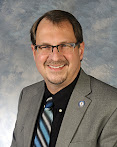
Dr. Bruce Scott, Louisville otolaryngoloist, becomes president of American Medical Association, says he's 'ready to fight' for docs

AMA President Bruce Scott, M.D.
Kentucky Health News

Dr. Bruce A. Scott, an ear, nose and throat specialist from Louisville, was sworn in Tuesday, June 11, as the 179th president of the American Medical Association, the nation’s largest organization of physicians.

“I became a physician to care for patients, and we all know that’s getting tougher every day,” Scott said in his inaugural address. “Our health-care system should help physicians provide good care, not get in the way!” He said “The AMA does for physicians and our patients what we as individual physicians cannot do.”

Scott said “two decades of spiraling Medicare payment cuts and ever-increasing administrative burdens” have increased burnout among doctors to the point that “almost two-thirds of physicians show signs of burnout. One-third plan to reduce their hours. One in five physicians are hoping to stop practicing or retire in the next two years.

“We can’t afford to lose even one more doctor! As a physician in an independent practice, I live these issues every day. I see my colleagues struggling. I feel the urgency of the moment. I will bring that urgency to my presidency. You better believe I’m ready to fight.” 

Scott has been president of his state and county medical associations and remains on their boards. "As a leader of these associations, he has fought for access to care for vulnerable populations, improvement in public health and reduction of administrative burdens in health care," an AMA news release said. He joined the AMA Board of Trustees in 2015 and was speaker of the AMA House of Delegates starting in 2019.

Board-certified in both otolaryngology and facial plastic surgery, Scott is president of Kentuckiana Ear, Nose & Throat, a six-physician independent private practice group, medical director of Premier Ambulatory Surgery Center, and holds a clinical appointment at the University of Louisville medical school.

Scott is a director of Health2047, the AMA’s Silicon Valley-based subsidiary that finds and funds tech-enabled commercial health-care enterprises. "In this role he is helping shape the future of medicine to empower patients and healthcare providers with meaningful and measurable impact," the release said.

He has written many articles for medical journals, as well as chapters in otolaryngology textbooks, He earned his undergraduate degree at Vanderbilt University, completed his education and residency at the University of Texas.

In his inaugural address, Scott told how he suffered a penetrating hand injury when he was 12 and a surgeon told his parents "that I was unlikely to ever regain normal use of my hand, and I would probably lose at least two fingers," but Dr. Joseph Kutz, Louisville's world-renowned hand surgeon, "saved my hand and spared my fingers, forever changing the course of my life -- and, although I didn’t know it at the time, putting me on the path that led to tonight. To this stage, to this incredible moment. I am a surgeon, using this very hand, because of a doctor."

Scott and his wife Christy have three adult children. He is the second Kentuckian in recent years to be AMA president; Dr. Steven Stack, the state public-health commissioner sicne January 2020, was president in 2016-17.

Tuesday, April 30, 2024

Legislative lobbying reports for last session rank pharmacy-benefit managers fifth, hospitals sixth, Altria 11th, Anthem 17th, docs 18th

The legislature meets in the Kentucky State Capitol.
By Al Cross
Kentucky Health News

The trade association for pharmacy benefit managers, which act as middlemen between drug and health-insurance companies, was the fifth largest reported spender on lobbying the state legislature in the first three months of the year, according to a compilation by the Kentucky Legislative Ethics Commission

The Pharmaceutical Care Management Association reported spending $94,694 on lobbying the General Assembly from January through March. The session began Jan. 2 and was over for most purposes by the end of March.

On March 28, the legislature gave final passage to Senate Bill 188, which is intended to keep the state's independent pharmacies from closing. It sets dispensing fees, bans PBMs from forcing patients to get their drugs through mail order, and keeps them from steering patients to pharmacies that they own. The PBMs argued that the law will cause insurance premiums to increase and its mandates in the bill won't allow businesses to gain from savings PBMs offer.

Independent pharmacies say they are losing money because of low fees paid by PBMs. The bill sets a minimum dispensing fee of $10.64 per prescription for the state's independent pharmacies until a study of dispensing costs is completed by the state Department of Insurance. This "gap-fill payment floor" will not be available to chain pharmacies. The results of the study will eventually dictate what the dispensing fee should be going forward. The study is to be repeated every two years, with fee adjustments made accordingly.

The law, sponsored by Sen. Max Wise, R-Campbellsville, also prohibits a PBM from reimbursing a pharmacy that it owns at a higher rate than a community pharmacy, or from keeping a community pharmacy from filling a 90-day prescription for a maintenance drug. And PBM will not be able to penalize a community pharmacy from sharing information with a patient on the cheapest option to pay for their medications.

Several other major lobbying interests dealt with health-care issues. The biggest spender was the Kentucky Chamber of Commerce, at $151,010, followed by the American Civil Liberties Union of Kentucky, at $139,599. Among many other things, the ACLU wants the legislature to enact exceptions to the state's near-total abortion ban.

Ranking sixth, just behind the PBM lobby, was the Kentucky Hospital Association, at $85,835. In 11th place was Altria Client Services, a cigarette company, at $73,309; it supported the successful bill to limit legal sales of vaping products to those approved by the U.S. Food and Drug Administration.

Ranking 17th was Elevance Health and Affiliates doing business as Anthem Inc., at $59,946. The health-insurance firm was followed by the Kentucky Medical Association, the main lobby for physicians, at $54,051, and the Kentucky Primary Care Association, a trade group for health clinics, at $49,416.

Overall, spending on legislative lobbying for the first three months of 2024 was a record of $9.719 million, the Ethics Commission reported Tuesday: "The previous record for the same period was $9.343 million, set last year; 933 businesses and organizations registered to lobby in Kentucky, spending $9.427 million; 727 lobbyists were paid $8.289 million in compensation, and also reported $291,942 in expenses."

Thursday, February 8, 2024

Jaime Parsons is new Ky. Rural Health Assn. executive director

Jaime Parsons
The Kentucky Rural Health Association has a new executive director.

She is Jaime Parsons, "a seasoned leader with a proven track record in healthcare administration and a deep commitment to rural health," a news release from KRHA said.

Parsons has nearly 20 years of experience in health care, "with a strong focus on improving health-care access and outcomes in rural communities," the release says. "Her extensive background includes experience in rural health clinic administration and accreditation, grant writing and management, association management, rural advocacy and community engagement.

KRHA President Amanda Dennison said in the release, “Her passion for rural health, wealth of experience and strategic vision align with the association’s mission to improve healthcare for all rural Kentuckians. As a board, we are excited to work with Jaime to further the association's reach and relationships as we work together to tackle the unique challenges faced by rural communities in Kentucky.”

Parsons said, "Rural is in my blood and I am deeply committed to issues which impact rural areas. I look forward to collaborating with the dedicated members of KRHA as well as stakeholders and community leaders from across the commonwealth to enhance health and promote the well-being of individuals in rural Kentucky."

Parsons succeeds Tina McCormick, who was executive director for more than 10 years. McCoemich said in the release, “It is with great excitement that I leave my post as the executive director to a qualified rural-health leader.”

Saturday, January 20, 2024

Ky. health-care providers lobby for bill that would ease health insurers' required prior authorization for medical procedures

OPINION by health-care provider groups listed below

It’s a situation all of us will find ourselves in at some point. You’re sick, or get diagnosed with a chronic condition, or need to have surgery. Thankfully, your physician diagnosed the issue quickly and a treatment plan was made, and you have health insurance to cover it. You should be on your way to health and healing, right?

Unfortunately, thanks to something called a “prior authorization,” there’s a good chance your care is about to get delayed or denied by your insurance company.

Prior authorization is a complicated, time-consuming, “cost-control process” utilized by health-insurance companies that requires physicians to obtain advanced approval from them before a specific service or medication is delivered. That’s right: your health plan can delay or deny the care that your physician prescribes in an effort to sway them towards a less effective treatment or service. There is no question that this negatively impacts patients and providers by leading to care delays for patients, administrative burdens for you and your physician, and increased overall costs to the health-care system.

Photo illustration from MedicalAlgorithms.com
Recent surveys and reports support the need to reform this system. A 2022 Kentucky Medical Association survey found that 82% of physicians said that issues related to the prior authorization process sometimes, often, or always lead to patients’ delays or changes to patients’ recommended course of treatment. Another national survey found that physicians spend a median of four hours per week on drug utilization management, while nurses spend 15 hours and other staff spend between 3.6 and 10 hours per physician per week. That is time that medical practices and professionals could surely put to better use on patient care.

However, the biggest impact is, of course, on the health of patients. 81% of those surveyed by KMA said the prior-authorization process delays access to necessary care for patients sometimes, often or always. One physician told of an oncology patient denied anti-nausea medication because of a required prior authorization. In the approximately three-day interval it took to get the authorization from the insurer, the patient was readmitted to the hospital with nausea, vomiting, dehydration, renal failure and electrolyte abnormalities. Another physician described a diabetic patient who did not receive their insulin as prescribed due to need for a prior authorization and had to go to the emergency department for care.

Of course, hospital admissions and visits to emergency rooms don’t save money, as prior authorizations are “intended” to do. Delaying necessary care can lead to complications and worsen the health of patients. And in the end, the vast majority of prior authorizations are approved, either initially or on appeal. This process is, therefore, unnecessary.

That’s why our organizations and thousands of our physician members across the state are calling for reform. During last year’s legislative session, KMA advocated for the passage of a bill which would have streamlined this process. The new program would ensure patients have timely access to the care they need, reduce administrative burdens for physicians, and lower healthcare costs. Together, we will be advocating for the passage of this legislation in the 2024 session.

Kentucky patients who are already suffering from chronic conditions and illnesses don’t need their care delayed by an insurance company. Let’s reform the prior authorization process to improve the health of our commonwealth.

This was written by the Kentucky Medical Association; Falls City Medical Society; Kentucky Association of Indian Physicians; Kentucky Chapter of the American College of Physicians; Kentucky Academy of Family Physicians; Kentucky Society of Anesthesiologists; Kentucky Dermatological Association; Kentucky Chapter of the American College of Cardiology; Kentucky Psychiatric Medical Association; and Kentucky Society of Addiction Medicine, via Ashley Bitters at ashley@runswitchpr.com. For a health care journalist’s guide to prior authorization, from Journalists' Resource at Harvard University, click here. The legislation, House Bill 317, was filed Thursday by Republican Reps. Kim Moser of Taylor Mill and Robert Duvall of Bowling Green. 

Sunday, July 23, 2023

Libertarians want to repeal 'certificate of need' permit process for health-care facilities; they say it needs reform, not repeal

Kentucky Health News

Should Kentucky have a permitting process for health-care facilities or allow free-market competition? Or something in between? The General Assembly has begun debating the question, amid lobbying from a national libertarian group and health-care facilities that say unfettered competition would further complicate heath care and put some of them out of business.

When stand-alone birthing centers wanted an exemption from the state's "certificate of need" law this year, the legislature said no, but created a task force to examine the law and how it works. The task force heard July 17 from lobbies for hospitals, nursing homes home-health services and hospices, who think the law should be improved but not repealed, Sarah Ladd reports for the Kentucky Lantern. (This article is based mainly on her story.)

Nancy Galvagni
Without certificate of need, some facilities could close or stop offering services that don't make money, Kentucky Hospital Association President Nancy Galvagni told the task force. She said most services “are provided at a loss and must be subsidized by the few services from which hospitals derive revenue, such as elective surgery and . . . outpatient imaging. This is how hospitals pay for services such as behavioral health, obstetrics, emergency care, trauma care, and oncology, just to name a few.”

Noting that government programs pay about three-fourths of hospital bills in Kentucky, Galvagni said that without certificate of need, “Out-of-state entities would quickly swoop in to cherry-pick the few commercially insured patients away from hospitals for the most profitable services hospitals provide. Meanwhile, Medicare and Medicaid and the uninsured would be left to the hospitals. Access would soon end because hospitals will be forced to close unprofitable services and some facilities could close entirely.”

Tim Veno, president of Leading Age Kentucky, a lobby for nonprofits that provide aging services, told lawmakers that “over-duplication of health services can have multiple negative effects” on nursing homes. Too many nursing-home beds in an area could cause a home to close, or make staffing challenges worse, he said.

Home-health services also have staffing issues the inability to compete with hourly wages offered by places like Amazon and Target, said Evan Reinhardt, executive director of the Kentucky Home Care Association.

Hospitce executive Liz Fowler said certificate of need prevents fraud in her industry, which serves people have six months or less to live, usually at home. Fowler, chief executive officer of Bluegrass Care Navigators, said “bad actors” may shortchange vulnerable patients on their benefits.

The week before the task force met, Americans For Prosperity promoted repeal of the certificate-of-need law at an event in Northern Kentucky. AFP is one of the groups funded by energy mangnate Charles Koch of Wichita, known for his spending on libertarian, conservative and Republican causes.

"Both sides of the argument — those seeking to reform or repeal certificate of need and the health care groups in favor of keeping it — have spent large sums of money lobbying Congress and the Kentucky legislature in 2023, so it could impact election and lobbying spending in Kentucky for the foreseeable future," Mark Payne reports for Link NKY (republished in the Kentucky Lantern).

AFP says it recently got the process repealed in South Carolina after 10 years of lobbying. "Kentucky is one of 35 states and the District of Columbia that operate certificate-of-need programs, which vary widely among the states, according to the National Conference of State Legislatures," Payne reports.

State Rep. Marianne Proctor
One speaker at the Northern Kentucky event was state Rep. Marianne Proctor, R-Union, who has field a bill to repeal certificate of need for Boone, Kenton and Campbell counties.

“To have competition always breeds excellence,” Proctor said. Earlier this year, she said, “In Kentucky, we have 23 regulations that require permission from the state to open such as ambulatory care services, dialysis centers, substance abuse, mental-health services.”

The lobbying groups that favor the certificate-of-need process did tell the task force that it needs changes. Galvagni suggested some, including:
  • Reform the application and appeals process to save time, allowing providers to apply at any time, and have shorter hearings.
  • In formal-review cases, require written statements saying why an application shouod be rejected.
  • In expedited-review cases, limit challenges to the issue of need and whether the applicant qualifies for expedited review.
  • Allow hospitals to provide services at an additional location in the same county without an additional certificate.
  • Allow hospitals to get expedited review for converting beds to adult psychiatric care if the county has no such hospital.
The next meeting of the task force is scheduled for 10:30 a.m. Aug. 21. It is seeking public input by Sept. 1; to submit a written statement, email DeeAnn Wenk at deeann.wenk@lrc.ky.gov.

Saturday, April 1, 2023

Legislature nixes Beshear's expansion of Medicaid dental, hearing and vision benefits; dentists' lobby says it took no stand on the bill

By Melissa Patrick
Kentucky Health News

The Republican-controlled General Assembly stood by its repeal of Democratic Gov. Andy Beshear's expansion of dental, hearing and vision benefits for 900,000 Kentucky adults on Medicaid.

Beshear expanded the benefits in October through an executive order and regulations that have been in effect since January. Senate Bill 65 declares the regulations deficient, which kills them because the legislature overrode Beshear's veto of the bill March 29 on party-line votes, 30-7 in the Senate and 75-20 in the House.

The bill allows providers to get paid for services initiated before its effective date, which was March 29 because the bill declared an emergency. Bills normally take effect 90 days after a legislative session ends.

Sen. Stephen West
While presenting SB 65 earlier in the legislative session, Sen. Stephen West, R-Paris, said the regulation was deficient because funding for it came from the $38 million in savings that came when the state moved to a single pharmacy benefit manager, a middleman between drug manufacturers and companies that manage Medicaid. West said lawmakers should  have been involved in how those savings were spent. 

Beshear's veto message said SB 65 "will harm Kentuckians and frustrate efforts to increase Kentucky's workplace," noting that research shows that on average nearly 100 million work hours are lost annually in the U.S. because of emergency dental care, that coverage of adult vision services increases a person's likelihood of working full time and that about 16% of Kentuckians have some degree of hearing loss."

Beshear wrote, "Since the regulation, more than 1,000 Kentuckians in all 120 counties have received nearly 3,330 dental services, including from a dentist in Clay County, who since January 1, 2023, has provided four sets of dentures for patients and has 44 more sets of dentures in progress." Clay County is the home of Senate President Robert Stivers, R-Manchester. 

Beshear added, "Nearly 7,000 Kentuckians have received vision services under these regulations, with nearly 43,000 services provided. And 40 Kentuckians have received hearing services with these regulations in place." He also contended that the regulation-deficiency law is unconstitutional.

Beshear said at a news conference March 23, "I believe a new regulation will allow for the continuation of vision, dental and hearing benefits." That said, SB 65 requires any new regulation to be substantially different from the original.

The Kentucky Dental Association said it took no position on the bill.

Asked if the association supported SB 65, KDA President Don Heine gave Kentucky Health News a letter to KDA members that said, "It doesn’t serve our members or their patients to opine upon the political question of whether a regulation is deficient or not. Accordingly, we took no position on that political question." 

Heine said KDA would like to see both an expansion of basic dental services in Medicaid and larger reimbursements for providers, saying, "I don't think there's been a reasonable increase in Medicaid fees in 20 years."

Low reimbursement rates are often cited as a reason dentists won't accept Medicaid patients, but Heine said, "I think we have plenty of providers." At other points in the interview, he said dental providers "will accommodate far more Medicaid patients when they're at least not losing money" and "We've got to get the legislature to work with Medicaid providers to at least make the funding where people can be seen and we can prevent them from going to the emergency room."

He cited a Texas A&M University study that found patients who go to the emergency room to treat preventable dental conditions costs U.S. taxpayers, hospitals and governments about $2 billion a year. 

Earlier, KDA Executive Director Richard Whitehouse told Kentucky Health News, "We are not opposed to expanding Medicaid services. However, to expand those services and meet the needs of that population, we need to expand the network. We believe incentivizing more providers to join that network and enabling those already in to take on more patients does that. It also lowers the cost of health care by detecting disease earlier and avoids more costly emergency room visits."

When the Senate initially passed the bill, Sen. Stephen Meredith, R-Leitchfield, said a reimbursement increase is especially needed in medically disadvantaged areas. In explaining his vote for SB 65, he also said the money could have been used to help the 5,000 children who are waiting for services from one of the state's special Medicaid waiver programs. 

In the House, as he supported Beshear's veto, Rep. Chad Aull, D-Lexington, said, "We know that Kentucky has many challenges when it comes to some of our health outcomes. Why do we continue to shoot ourselves in the foot by taking away the opportunity to pay for health care for our citizens? I do not understand this legislature's motive in trying to override this veto."

Cabinet for Health and Family Services spokeswoman Susan Dunlap told the Courier Journal in October that federal funds would cover 90% of the expansion's cost. Medicaid is primarily funded by the federal government.

Saturday, January 21, 2023

Spending reports by health-care lobbying interests reflect their success at having their way in the Kentucky General Assembly

The legislature meets in the Capitol. (State photo)
Kentucky Health News

Seven of the top eight spenders on lobbying the General Assembly last year had health-care issues in play. Most of the seven were mainly focused on health issues, and most of them were successful.

Lobbying reports to the Kentucky Legislative Ethics Commission showed the Kentucky Chamber of Commerce, which lobbies on some health issues, ranked first by spending $408,301, mainly for the 16 lobbyists it employs. The Kentucky Hospital Association was second at $304,707.

"Included in the hospital advocacy group's spending was $23,000 on digital advertising for its priority legislation that passed into law after stops and starts, loosening requirements on ambulance services to improve slow response times," notes Joe Sonka of the Louisville Courier Journal. "KHA also successfully lobbied for two bills providing incentives to attract and retain nurses and health care workers and one to expand hospitals' remote access to pharmacy databases."

The third-place spender, at $269,685, was tobacco company Altria, parent of Philip Morris USA. Altria "successfully lobbied to block a bill raising taxes on cigarettes and vaping products and another that would give local governments the ability to add extra regulations on the display of tobacco and vaping products," Sonka reports.

The fourth-ranking spender was the ACLU of Kentucky, at $195,489. Among other things, it lobbied unsuccessfully against bills to restrict abortion.

The main lobbying group for doctors, the Kentucky Medical Association, ranked fifth at $157,416. KMA spent $30,000 "for polling it commissioned late in the year to craft messaging for one of its top legislative priorities" in the session that begam Jan. 3 and will resume Feb. 5. "The KMA has a website promoting a "physician-led, team-based care model," urging people to contact legislators and oppose legislation to lift limits on services that can be provided by nurse practitioners," Sonka rpeorts.

Hospital firm HCA Healthcare, which has hospitals in Bowling Green and Frankfort, was seventh in lobbying spending at $146,548. LifePoint Health, which has hospitals in Flemingsburg, Georgetown, Lebanon, Mayfield, Maysville, Paris, Somerset, Versailles and Winchester, reported spending $110,002, ranking it 17th. 

The Pharmaceutical Care Management Association ranked eighth, at $142,257. The group represents pharmacy benefit managers, who are middlemen between drug manufacturers and insurance companies; the managers have come under much legislative scrutiny in recent years. The group successfully oppposed a bill to rein in in pharmacy benefit managers; House Bill 457 "breezed through the House by an 88-3 vote but then ground to a halt in the Senate without any readings or committee hearings — all while the association spent more than $52,000 on advertisements urging legislators to defeat the bill," Sonka writes. "Senate President Robert Stivers said the bill stalled after his caucus began to hear concerns from the business sector about the measure increasing the costs of health plans, mirroring the association's messaging."

The other lobbying group in the top eight was the Kentucky League of Cities, which ranked sixth at $151,308. Its main legislative interest, a constitutional amendment to give cities more taxing options, including sales taxes, was defeated by the No. 9 group, the Kentucky Retail Federation, which reported spending $142,237. Overall lobbying expenses hit a record $24.3 million in 2022.

Monday, January 9, 2023

Pfizer's $1 million leads big corporate givers to state Republican Party's building fund, which has no limits on contributions

The Republican Party plans to expand its headquarters into the vacant lot on Third Street in Frankfort, spokesman Sean Southard told Kentucky Health News. (Photo by Tom Loftus for Kentucky Lantern)
By Tom Loftus, for Kentucky Lantern

FRANKFORT, Ky. – In what may be the largest political contribution ever given to a political party in Kentucky, the drug maker Pfizer Inc. gave $1 million last month to the building fund of the Republican Party of Kentucky.

A report filed by the Republican Party of Kentucky Building Fund last week with the Kentucky Registry of Election Finance listed the $1 million from Pfizer along with five other big corporation contributions in the final quarter of 2022 totalling $1.65 million.

That is an extraordinarily large haul for the fund, which had raised only $6,000 during the first three quarters of 2022. The other large corporate donors to the fund in late 2022 were:
  • Metropolitan Life Insurance Co., New York, $300,000;
  • Altria Client Services LLC, of Richmond, Va., $100,000;
  • Comcast Corp., of Philadelphia; $100,000;
  • AT&T, of St. Louis; $100,000;
  • Delta Air Lines, of Atlanta, $50,000.
State and federal campaign finance laws set limits on how much a person or political action committee can give to the executive committee of a political party. A person can give no more than $15,000 per year, and corporation contributions to a party’s executive committee are prohibited.

But part of a campaign-finance bill passed by the General Assembly in 2017 allowed each party to establish a building fund that can accept contributions of unlimited amounts. It also allowed the building funds to accept contributions from corporations.

The Kentucky Democratic Party’s building fund has not yet filed a report on its contributions and expenses for the last quarter of 2022. The party has started a four-year process of selling its headquarters near the Interstate 64 and Versailles Road interchange in Frankfort.

The Republican Party's headquarters are at Capital Avenue and Third Street in Frankfort, in a building named for U.S. Senate Republican Leader Mitch McConnell.

The election registry website says that money in a party building fund “may be used for expenditures related to the purchase, construction, maintenance, renovation, and repair of the state executive committee’s main headquarters facility.”

In response to questions from Kentucky Lantern, Sean Southard, spokesman for the Republican Party of Kentucky, released a statement Monday that said in part “The Republican Party purchased the lot next door to our Frankfort headquarters and is planning an expansion project. Our current headquarters was acquired in 1974. With the growth of the Republican Party in Kentucky, we have a need for additional space.”

In response to a question about the huge size of the corporate contributions, Southard’s statement said, “As we raise funds into the building fund account, we are following both federal and state law. The funds raised into this account can only be used for certain expenditures related to the building and are not eligible to be spent on candidate or issue advocacy.”

Pfizer has long had a lobbying presence in Kentucky and for years it has retained the lobbying firm headed by John McCarthy to represent its interests in Frankfort.

McCarthy, a former chairman of the Republican Party of Kentucky and still a member of its executive committee, did not immediately return phone messages seeking comment on the Pfizer contribution.

Pfizer is a multinational pharmaceutical and biotech company based in New York; its brands include Viagra, Zoloft and Lipitor and more recently the Pfizer-BioNTech Covid-19 vaccine and the antiviral Paxlovid.

Fueled by sales of its Covid vaccine, Pfizer’s revenue doubled to $81.3 billion from 2020 to 2021. The company ranks 43rd on the Fortune 500 list. For the first three quarters of 2022, Pfizer reported $76 billion in revenues.

Pfizer announced in November that it will triple or even quadruple the price of its Covid vaccine once it goes on the commercial market next year, according to Kaiser Health News.

Pfizer is no stranger to political spending. In 2022, the company spent $11.6 million lobbying the federal government, putting it in the top dozen lobbying spenders, according to Open Secrets. Its affiliates and PAC contribute generously to federal candidates of both parties.

Altria Client Services (a subsidary of a cigarette manufacturer formerly known as Phillip Morris), AT&T, Comcast and Delta also are registered to lobby the Kentucky General Assembly. Metropolitan does not retain a lobbyist in Frankfort, according to records of the Legislative Ethics Commission.

Saturday, June 11, 2022

Pharmacy benefit managers' group ranked No. 7 in spending for lobbying the General Assembly, after laying out $53,634 for ads

Commonwealth Fund flow chart, amended by Kentucky Health News to include patients and employers
By Al Cross
Kentucky Health News

The lobbying organization for pharmacy benefit managers, the middlemen between insurance companies and drug manufacturers, spent $86,168 in its successful effort to defeat a bill in the recent legislative session that would have reined them in. They prevailed over pharmacists with the help of insurers, who argued that the bill would raise costs.

The Pharmaceutical Care Management Association ranked seventh in spending by lobbying interests in the session that ended in mid-April, mainly because it spent tens of thousands of dollars in television commercials attacking the bill. The ads started the day the bill overwhelmingly passed the House, where a pharmacist-legislator was the sponsor. PCMA said it spent a total of $53,634 on TV, internet and newspaper ads.

The bill got nowhere in the Senate, where President Robert Stivers said "When it got here, we started getting, from business sector and provider sector, various questions and comments about what the overall cost would be to various plans."

Tom Stephens, executive director of the Kentucky Association of Health Plans, cited a state Department of Insurance statement that a family of four would have paid up to $167 more a year for coverage if the bill had passed.

House Bill 457 would have ensured that patients could pick their pharmacy, instead of being required to use one affiliated with a pharmacy benefit manager; increase transparency between insurers and PBMs; and ban PBMs from retroactively denying a pharmacy claim after adjudication, commonly referred to as "clawing back." It passed the House 88-3.

The Federal Trade Commission voted Tuesday to investigate how pharmacy benefit managers affect the cost of prescription drugs and consumers' access to the drugs.

Several other health-care interests, or lobbying groups with interests in health care, were big spenders on lobbying the session, according to their post-session reports. The Kentucky Chamber of Commerce was again No. 1, spending $183,949; the Kentucky Hospital Association was second with $149,046. Third and fourth were the American Civil Liberties Union of Kentucky, whose issues include abortion rights, $128,258, and Altria Client Services (Philip Morris Cos.), $126,793. Insurer Anthem Inc. ranked 10th by spending $70,597.

Other big health spenders were the Kentucky Medical Association, 16th, at $54,044, and HCA Healthcare, 22nd at $48,832. The state Legislative Ethics Commission’s searchable register of lobbyists, employers and lobbying expenses is online at http://apps.klec.ky.gov/searchregister.asp.

Thursday, May 26, 2022

Generics are usually cheaper, but can also cost more than brand names, due to rebate deals between insurers and drug makers

By Wendell Potter

I’m not in the habit of wishing bad things to happen to anybody, but last week, when I was at the pharmacy counter, I was wishing every member of Congress would have to experience the same insanity I was experiencing. If they did, they just might do something to fix the growing crisis they helped create when they passed the so-called “Medicare Modernization Act” (MMA) in 2003.

Wendell Potter
Some background: A few days prior, I had a follow-up visit with my pulmonologist. My primary-care doctor had referred me to her some time ago when I developed a cough and laryngitis that would not go away. She prescribed a Symbicort inhaler, which despite the fact that I pay good money every month for a Medicare Part D drug plan, requires me to pay $606 out of my own pocket for a three-month supply.

During my follow-up visit, I asked her if there was a generic inhaler that would be cheaper. It turns out that there is: fluticasone propionate-salmeteroL. It isn’t a generic version of Symbicort but of a similar inhaler called Wixela Inhub. She wrote me a scrip for the generic version of the inhaler and I took it to my local Rite Aid last night.

We’ve been led to believe that generics cost us less than brand-name drugs. While it is true that the list price of generics is typically cheaper, often much cheaper, than brand-name drugs, in the illogical world of U.S. health care, you can wind up paying more out of pocket for a generic than a brand-name drug, as I found out.

You also need to know that Medicare drug plans often don’t provide any coverage for cheaper generics, thanks to secretive rebate deals, allowed if not enabled by the MMA, that insurance companies and their pharmacy benefit managers cut with drug makers. Major parts of the MMA were written by lobbyists for insurance and drug companies to ensure big profits, and those lobbyists worked overtime when the bill was being voted on to get the bill passed as they wrote it. I know this because I was at Cigna when Congress passed that bill in the middle of the night after many hours of arm-twisting by said lobbyists. One of my jobs back then was to provide Cigna’s government affairs team with talking points.

Turns out that my drug plan (marketed by WellCare, whose tagline is, “Beyond Healthcare. A Better You”) provides no coverage whatsoever for the generic inhaler my pulmonologist prescribed.

After hearing from many other folks that Medicare Part D drug plans often provide skimpy coverage for drugs they needed, I enrolled in GoodRx, which provides significant discounts for many medications. GoodRx compares drug prices and tracks down coupons that can yield significant savings. What I have come to realize is that my out-of-pocket obligation is often considerably less if I use GoodRx instead of my WellCare plan. When I was told I would have to pay the full retail price of the generic inhaler under my WellCare plan, I asked the pharmacist what the GoodRx cost would be. She told me a one-month supply of the generic would cost $102.17. I could save $20.01 per unit if I paid $286.50 for a three-month supply.
The Wixela Inhub inhaler

Just as I was about to go with the GoodRx deal, it occurred to the pharmacist to see if my plan would cover the brand-name version of the same medication. Lo and behold, WellCare does indeed cover Wixela, just not the generic. That’s undoubtedly because of the deal WellCare struck with Mylan Pharmaceutical, which makes Wixela. If I went with Wixela, I would have to pay $47 out-of-pocket for a one-month supply (but no discount for a three-month supply), which is $55.17 per unit cheaper than the GoodRx generic price.

This all took some time, as you can imagine. Meanwhile, the line behind me grew longer and longer. I cannot imagine what it is like to be a pharmacist these days.

I’m fortunate that I can afford to pay $141 for a three-month supply of Wixela, and even, albeit reluctantly, $606 for three months worth of Symbicort. Many Americans are not so fortunate. In fact, millions of us with insurance–both public, like Medicare, and private, including employer-sponsored coverage–walk away from the pharmacy counter without our often life-saving drugs because of what our insurance plans make us pay out of pocket.

Many people of course don’t have a clue that they might be able to get their medications at a lower price without using their insurance card, either through outfits like GoodRx or by using manufacturers’ coupons.

And many of us, especially those of us dealing with cancer, multiple sclerosis or other life-threatening chronic conditions, often have to spend thousands of dollars out of our own pockets before our coverage kicks in for even the drugs our insurance plans will cover. This is why so many of us with insurance get buried under mountains of debt and feel we have no alternative other than to beg for money on GoFundMe or file for bankruptcy.

Back to that so-called Medicare Modernization Act of 2003. Not only did it make the Part D drug benefit nearly impossible to figure out because of the ever-changing list of medications insurance plans will or will not cover, but it also prohibited Medicare from negotiating with drug companies for lower prices as the Veterans Administration program can do.

In Nation on the Take, the book I co-authored with Nick Penniman of Issue One, I cited the MMA as an example of how well-funded special interests are almost always able to call the shots in Washington. Here’s a paragraph from the book that provides a hint of how that industry-backed bill got across the finish line: "When asked why he thought House leaders had scheduled the vote long after most Americans had gone to bed, Rep. Dan Burton (R-Ind.), who voted against the bill, said: 'A lot of shenanigans were going on that night [that] they didn’t want on national television.' Among the shenanigans, reportedly sanctioned by House leaders: freezing C-SPAN cameras and allowing lobbyists on the House floor as the vote was being taken."

Those shenanigans have led to the financial ruin and premature death of countless Americans. But year after year, Congress has looked the other way. To change that, more than 50 organizations and businesses have come together in a coalition to demand that lawmakers take action to address what has become not only a national disgrace but a growing crisis.

The good news is that just after a few months, the Lower Out of Pockets NOW coalition is being noticed by members of Congress on both sides of the political aisle. We are determined to hold our lawmakers accountable. Some members are even talking about forming a caucus within Congress to explore solutions. You can be sure I will keep you posted at Tarbell.org.

Sunday, March 13, 2022

House passes bill to allow APRNs to prescribe controlled substances after a four-year collaborative agreement with doctor

American Association of Nurse Practitioners map, adapted by Kentucky Health News
By Melissa Patrick

Kentucky Health News

A bill to create a path for Kentucky's advanced practice registered nurses to prescribe controlled substances independently has passed the state House with only eight members voting against it. 

“We are always talking about encouraging folks to enter the health-care field; we hear discussion about a shortage of nurses that we have,” Rep. Russell Webber said while presenting the bill on the House floor. “This bill will help with that.”

House Bill 354, sponsored by Webber, would allow an APRN to prescribe controlled substances without a collaborative agreement with a physician, after practicing under such an agreement for four years and getting approval from the Kentucky Board of Nursing.

If the board decides an APRN is abusing this authority, it can require them to go back under a collaborative agreement, or it can take further action.

The latest version of the bill would hold independently prescribing APRNs to the same standard of care as other prescribers, and create a Controlled Substance Prescribing Review Panel to monitor them.

"This component adds teeth to this bill. It adds strength," said Webber, a Shepherdsville Republican. "It  may very well help us get to the bottom of some problems that are existing out there, if they are existing, but the data will certainly be worthwhile for us to have. Problems that may surface will be worthwhile for us to know."

Rep. Russell Webber

Webber was alluding to the implicit contention of the doctors' lobby, the Kentucky Medical Association, that APRNs haven't been responsible enough with their prescribing of Schedule II drugs, those with high potential for abuse, to prescribe them independently.

In Kentucky, APRNs have been able to prescribe controlled substances since 2006 under a "collaborative agreement for prescriptive authority-controlled substances," or CAPA-CS. They are allowed to prescribe a 72-hour supply of a Schedule II drug; HB 354 wouldn't change that.

The bill's primary co-sponsor, Rep. Patti Minter, a Democrat from Bowling Green, told the House that it is needed to increase health-care access in a state that has only 57 percent of the primary-care practitioners it needs and 25% of needed mental-health personnel. 

"Nurse practitioners are for many people the primary-care providers," Minter said. "They're the family doctors of the community."

Rep. Jerry Miller, R-Eastwood, said the bill would improve access to health care. "This is a good bill for the people," he said. "It may not be a good bill for the doctors, but it's a good bill for the people of Kentucky." 

House health committee Chair Kim Moser, R-Taylor Mill, a former nurse and a doctor's wife, voted no. Moser said she liked the amendments because "It's critical that all prescribers play by the same rules" but cautioned, "The only thing that we are doing by passing this bill is increasing controlled substances."

The House voted against suspending its rules to let Moser offer a floor amendment to reinstate the requirement that an APRN be licensed to practice for a year before being prescribing controlled substances, to obtain a registration certificate from the Drug Enforcement Administration and pass each component of the federal licensing exam in three attempts, just as physicians must do before prescribing controlled substances. 

Rep. Mary Lou Marzian, D-Louisville, a nurse, said the bill is needed because APRNs need a DEA number to order some diabetic and psychiatric medication, durable medical equipment, and flu and antibiotic shots.

APRNs were allowed to prescribe controlled substances without a collaborative agreement in the pandemic through an executive order that the General Assembly approved, but that ended in January when lawmakers extended the state of emergency but did not extend the APRNs' expanded authority.

Dueling numbers

A before-and-after comparison by the Kentucky Association of Nurse Practitioners & Nurse-Midwives, said there were "no significant differences in the average number of opioid prescriptions by APRNs without the CAPA-CS in place" before the emergency order was implemented and the seven quarters it was in place. Similar findings were also noted for dentists and physicians. 

The data came from the state's Kentucky All Schedule Prescription Electronic Reporting system. Other KASPER data provided by the APRN association shows that the average number of Schedule II prescriptions per APRN prescriber dropped 34.9% between 2015 and 2021. 

Webber said, "Nurse practitioners were not writing prescriptions hand over fist for controlled substances and flooding the state with opioids." 

The KMA disputed those figures before the House Licensing, Occupations and Administrative Regulations Committee on March 9.

Cory Meadows, KMA's deputy executive vice president and director of advocacy, said "We have KASPER numbers that show that they are consistently up, way up over the course of a lot of years."

KASPER data provided by the KMA, comparing the total number of prescriptions for Schedule II opioids prescribed by APRNs shows an increase in all but one year since since 2011, the year before lawmakers passed what is called the "pill-mill bill" that placed restrictions on opioid prescribing.

There are some discrepancies, many of them slight, in the year-to-year numbers provided to Kentucky Health News by the two organizations, and they measure different things. 

For example, the APRN group provided the average number of Schedule II opioid prescriptions per the number of prescribers since 2015 and for seven recent quarters, while the KMA provided year-to-year percentage changes for the total number of such prescriptions. 

KMA data shows that Schedule II opioid prescribing by APRNs went up 8.2% between 2020 and 2021, years that the CAPA-CS were no longer required, under the executive order.

The APRN data shows that the average number of Schedule II opioid prescriptions per APRN dropped from 100.68 in 2020 to 99.28 in 2021 and that their quarterly average in 2021 was 25 prescriptions. The average was 50 for physicians and 22 for dentists.

The bill passed the House 84-8 and moves to the Senate, where it will be carried by Sen. Julie Raque Adams, R-Louisville. 

The "no" votes were all Republican: Moser, Joe Fischer of Fort Thomas, Kim King of Harrodsburg, Mathew Koch of Paris, Adam Koenig of Erlanger, Sal Santoro of Union, Nancy Tate of Brandenburg and Killian Timoney of Lexington.

Friday, March 11, 2022

Latest bill to aid independent pharmacies passes first hurdle; would ban requiring or incentivizing patients to use mail order

UPDATE: On March 21, HB 457 was sent to the Senate on an 88-3 vote. 

By Melissa Patrick
Kentucky Health News

Many Kentucky lawmakers keep siding with independent pharmacies against pharmacy benefit managers, the insurance middlemen between pharmacies and drug makers. Thursday a committee approved a bill to ban requiring patients to use mail-order pharmacies or using incentives for mail order.

Rep. Steve Sheldon
"This is truly about the consumer," Rep. Steve Sheldon, R-Bowling Green, told the House Health and Family Services Committee while presenting House Bill 457. Besides Sheldon, who is a pharmacist by trade, its sponsors include 55 of the 100 House members.

Pharmacy benefit managers determine what drugs are offered in insurance plans, where and how a patient gets their drugs, how much someone pays for the drug, and how much the pharmacists are paid. 

Sheldon's bill would also ensure that patients can pick their pharmacy, instead of being required to use one affiliated with the PBM, and ban PBMs from retroactively denying a pharmacy claim after adjudication, a process commonly referred to as "clawing back."  

Sheldon said it had taken three years of collaboration to produce this bill, with upwards of 20 organizations supporting it. 

"I'm a legislator. I'm a pharmacist, I serve as a division CEO for a very large self-insured company with several thousand employees, so I'm very sensitive to that issue and how this could affect that. I'm convinced I'm doing what's right for every single one of those," he said, adding that it also addresses the issues for consumers. "I feel like this addresses all four."

The bill also includes language to increase transparency between insurers and PBMs and would halt the a practice of "white bagging," in which a medication must be prepared and distributed by a third-party specialty pharmacy, instead of allowing providers to prepare, administer and bill for the medication. 

Kentucky lawmakers have been working on PBM issues for years, most recently passing 2020 Senate Bill 50 to require the state to hire a single PBM to manage Kentucky Medicaid's prescription-drug business of more than $1 billion a year. A 2019 state analysis found PBMs made $123 million through spread pricing.

Kentucky Pharmacists Association President Cathy Hanna said Sheldon's bill would "ensure Kentuckians have safe, reliable access to the brick-and-mortar community pharmacy of their choice," adding that rural pharmacists "are often the most direct and trusted provider contact for many individuals and families." 

Hanna said requiring patients to get their drugs through mail-order or at a specific PBM-owned pharmacy has contributed to the closing of community pharmacies, saying four have closed in the past month. She cited a recent Public Policy Polling survey that found 84% of respondents did not support mandated mail order.

On the other side of the argument in committee were lobbying groups for PBMs, insurers and some employers.

Conner Rose of the Pharmaceutical Care Management Association, the PBM lobby, said PBMs strive to make drugs affordable and the bill could increase costs. For example, he said employers support "white bagging" because PBMs can provide these expensive drugs at less cost than a provider's office.

“HB 457 continues to include provisions that restrict PBM cost saving tools and therefore will increase prescription drug costs by $213 million in the first year alone," Rose said in an e-mail. 

Frank Jemley, executive director of the Kentucky Association of Manufacturers, expressed concern that the bill would increase health-care costs for Kentucky businesses and manufacturers.  

Scott Brinkman, a former House member and Cabinet secretary representing the Kentucky Association of Health Plans, targeted the contract portion of the bill: "It is invariably a very tricky proposition when government through legislation defines the terms of a contract between two private entities." 

KAHP executive director Tom Stephens said in a statement after the meeting, “I think it’s fair to say that if this government-mandated prescription-drug price-hike bill is passed, the General Assembly will be directly responsible for pricing many Kentuckians out of the market” by removing “cost containment measures that keep health coverage and prescriptions affordable.”

As for community pharmacies, Stephens said, “It’s a solution in search of a problem because Kentucky is in the top five in the nation when it comes to concentration of independent pharmacies.”

Mindy Farnsley, president of the Kentucky Association of Health Underwriters, said the bill "does nothing to address the cost of prescription drugs," would disrupt the health insurance market, and increase employer and consumer premiums.

But the Pharmacists Association said, "The committee's passage of HB 457 brings us one step closer to meaningful reforms that will put an end to PBMs' profit-driven practices that threaten the patient-pharmacist relationship."

Sunday, February 20, 2022

Health advocates say state government needs to do a lot more about tobacco, including letting local governments regulate sales

Map by Bridging Research Efforts & Advocacy Toward Healthy Environments, University of Kentucky
As the state legislature ponders allowing local governments to again regulate tobacco sales, the Lexington Herald-Leader has produced a comprehensive report showing the damage done to Kentucky's health by the crop that once accounted for almost half the state's farm income – and politicians' unwillingness to do much to limit the damage.

"The state’s response has been among the most anemic in the country, tobacco control advocates say. The state spends a fraction of what’s recommended to prevent people from starting to smoke and help smokers quit, and its tax rate on cigarettes is among the lowest in the country," Bill Estep reports.

High-school students in Kentucky smoke more than in any other state, 8.9 percent of them, according to the American Lung Association. The adult smoking rate, 21.4 percent, is the nation's second highest, trailing only West Virginia's 22.6%; the national rate is 14%. In Monroe, Metcalfe and Wolfe counties, the adult rate is 45%, 44% and 42%.

Kentucky's lung-cancer rate of 88 annual cases per 100,000 residents is the highest in nation; the U.S. rate is 57. The state also has the highest death rate from lung cancer.

The Campaign for Tobacco-Free Kids estimates that 8,900 Kentucky adults die each year due to smoking, "and that health-care costs tied to smoking total $1.92 billion a year, not counting any impact from secondhand smoke," Estep reports. "The organization said nearly $600 million of that spending is through Medicaid, a taxpayer-funded program. The state and federal tax burden per household in Kentucky from smoking is $874."

But the tobacco industry usually wins in Frankfort. In the mid-1990s, the General Assembly prohibited cities and counties "from having their own rules on the use, display, sale and distribution of tobacco products," Estep notes. "The law means communities can’t limit the visibility of cigarettes in convenience stores, for example, or prevent vape shops from locating close to schools."

Sen. Wil Schroder
The ban would be repealed by Senate Bill 166, filed by Sen. Wil Schroder, a Northern Kentucky Republican. The tobacco industry is against it. David B. Sutton, a spokesman for Altria Group, the nation's leading cigarette maker, "said the state should avoid a confusing patchwork of local rules and taxes," Estep reports. Sutton said a varying rulebook “makes operating a business more complex and confusing for retailers trying to operate within the bounds of the law.”

Last year, when two similar bills were introduced, "Supporters had counted heads and thought they had the votes to pass the bills," Estep writes. "But the bills died a quick death. They didn’t get a hearing, much less a vote. Altria, a leading tobacco company, spent $73,627 on lobbying in the first three months of the legislative session as two bills were bottled up in committee."

As in many other states, the legislature has also refused to spend more money on tobacco cessation and prevention programs, keeping the about at $2 million a year. The state gets tobacco-related revenue of almost $500 million a year, and the Centers for Disease Control and Prevention recommends that it should spend $56 million of it to help people quit and keep others from starting.

The Foundation for a Healthy Kentucky estimates the tobacco industry spent $246 million in 2020 in Kentucky promoting its products, Estep notes.

It all adds up to a need to act on many fronts, said University of Kentucky nursing professor Ellen Hahn, director of a project called BREATHE (Bridging Research Efforts and Advocacy Toward Healthy Environments) that has led anti-tobacco efforts in the state.

“Tobacco’s an addiction. It’s really rampant across Kentucky, so to fix it we need every tool in the toolbox,” Hahn told Estep. “If local communities have their hands tied and they can’t pass rules for instance that make it harder for youth to purchase tobacco products, it just limits our ability to fix the problem.”

Estep's story is accompanied by others. He has a story about the continued but slow expansion of local governments that ban smoking in workplaces and public indoor spaces, and another one about the benefits of quitting smoking and resources that are available to people who want to quit.

Alex Acquisto writes that the main battle over tobacco in Kentucky has shifted to teenagers' use of electronic cigarettes: "In 2019, the last year the data was available, more than one in four high school-aged students (over 30%) used e-cigarettes, also known as vaping, as did 20% of middle schoolers – the highest rate of any of the 11 states surveyed that year. At least 50% of high school students at each grade level admitted to ever having used tobacco products, and closer to 30% said they vaped frequently." The local-regulation bill is intended partly to enable local governments to discourage youth use of tobacco products.

Thursday, September 23, 2021

Covid-19 metrics all fall Thur., but Beshear sees 'very dangerous situation' that could worsen; hospitals seek state funds for staffing

Ky. Health News graph; daily new cases are from initial, unadjusted reports; click image to enlarge.
By Melissa Patrick
Kentucky Health News

With every metric used to measure the coronavirus in Kentucky down Thursday, Gov. Andy Beshear said it's too early to celebrate, largely because all the numbers are still too high. 

"It's overall good news, but we're still in a very dangerous situation, is how I would describe it," Beshear said at his regular Thursday news conference. "You've gotta stop growing before you can start shrinking. But we really need to start shrinking a whole lot faster." 

The state reported 4,099 new cases of the coronavirus Thursday, lowering the seven-day average to 3,569 per day, the lowest in a month and a drop of more than 200 from Wednesday's seven-day average.

The percentage of Kentuckians testing positive for the virus in the last seven days dropped for the 15th day in a row, to 11.33%. 

And all of Thursday's hospital numbers dropped. Kentucky hospitals reported 2,223 Covid-19 patients, 34 fewer than Wednesday; 625 patients in intensive care, down 26; and 424 on mechanical ventilation, down 29.

Beshear cautioned that many of the hospitals are at a breaking point, so it is imperative that the state continue on its downward trajectory, noting that other states have seen resurgences after declines, and if hospitalizations returned to an exponential increase, "every single hospital will be overrun." He said 64 of the state's 96 acute-care hospitals are reporting critical staff shortages.

On Thursday, only two of the state's 10 hospital readiness regions reported using fewer than 80% of their intensive-care beds, the northeast and easternmost regions. Beshear said the state had 130 intensive beds available; a week ago, it had fewer than 100.

On Wednesday, Nancy Galvagni, president of the Kentucky Hospital Association, told the Interim Joint Committee on Health, Welfare, and Family Services that Kentucky hospitals had added nearly 200 more intensive-care beds in the last three weeks to meet demand, and even with that, fewer are available than in August. 

Galvagni told the committee about the struggles hospitals are having with staffing and asked the lawmakers to "support an appropriation to help hospitals retain our current staff and recruit additional staff," noting that other states, like Arkansas, have already done so. 

Sen. Ralph Alvarado, R-Winchester, said some American Rescue Plan Act funds could be moved from other programs, and reiterated his plea for Beshear to call a special session to help hospitals recruit and retain staff.

Asked about that, Beshear said, "First, let me say that we all run for these jobs and in any of those elections, you know, folks win  and folks lose, and it's hard either way. I mean, I've certainly been with my family through the losses. I've been fortunate to have some wins too. What's difficult and strains relationships and abilities to work together. And sometimes the things that you'll hear and say is when it can kind of grab us and it's hard to let go of and it can, it can make working relationships difficult." 

The Democratic governor reiterated that no one has come to him personally and asked for a special session, and no one has presented him with a spending plan, which would need to be agreed on before having such a session. "Is it real, or are people pushing different things for different reasons?" he asked, without explaning.

Beshear said he would also needs more information from hospitals about how much money they need, what it would be used for and whether it would be effective.

Asked if he would consider using the state's unappropriated "rainy day" surplus to boost hospital staffing, which Sen. Robert Stivers told the Louisville Courier Journal could be an option, Beshear didn't answer directly, but noted several times that the legislature has limited his ability to make emergency use of such funds.

Beshear spoke at length about what he has done to help hospitals, including an additional $1.8 million in Medicaid reimbursements. He noted several state and federal initiatives to ease staff shortages, including deployment of 505 National Guard members to 29 hospitals; getting Federal Emergency Management Agency strike teams to help with emergency medical services, health care, and testing; allowing nursing students to provide care; and, most recently, the addition of AmeriCorps volunteers. 

He said the best way to help with hospital staffing issues is to decrease the number of patients, which could be done if more people would get vaccinated and everyone would wear a mask when indoors and away from your home. 

From March 1 to Sept. 22 in Kentucky, 86.7% of coronavirus cases, 92.1% of Covid-19 hospitalizations and 84.5% of Covid deaths in Kentucky are in people who are unvaccinated or partially vaccinated, Beshear said. He showed new graphs that showed with few exceptions, since July, most of the people who have died under the age of 49 were not vaccinated.

Washington Post chart adapted by Ky. Health News; click to enlarge
Beshear announced that 60% of Kentucky's total population has now received at least one dose of a coronavirus vaccine. Among those eligible to be vaccinated, 12 and older, 70% have received at least one dose; among those 18 and older, it's 72%. 

The governor urged those 12 to 29 to get vaccinated, noting that their vaccination rates are among the lowest and they are getting infected the most; 51% of those aged 18 to 29 have received at least one dose of a vaccine, and 47% of those 12 to 17 have. 

"We need more people to get vaccinated," Beshear said. "Remember, you can choose to get a shot that protects you, it's really safe, over half the country has already taken it. Or you can rely on infusions and potentially a machine just to help you breathe, hoping that they can keep you alive. The shot is a lot more effective, and a lot less intrusive."

Beshear said 90 acute-care hospitals in Kentucky have administered 4,385 infusions of monoclonal  antibodies, from a federal allocation of 4,950. "There’s not going to be enough," he warned. "Don’t put yourself in the position where you show up hoping to get these and we’ve run out."

More daily numbers: Kentucky has the fourth highest infection rate among the states over the last seven days, according to The New York Times. It trails Alaska, West Virginia and Wyoming. (The territory of Guam is third.)

The state reported an infection rate of 71.45 daily cases per 100,000 residents, the eighth straight day of decline. Counties with rates more than double that rate are Magoffin, 183.3; Whitley, 174.9; Harlan, 174.1; Leslie, 167.8; Rockcastle, 164.3; Barren, 160.1; Monroe, 154.3; Metcalfe, 153.2; and Owsley, 145.6.

Kentucky reported 44 more Covid-19 deaths, for a total of 8,466. Over the last seven days, the average is 37 deaths per day.

Sunday, August 8, 2021

State ranks 14th in childhood trauma; a coalition called Bloom Kentucky has formed to seek statewide policies to change that

By Melissa Patrick
Kentucky Health News

A collaboration of 31 grantmaking organizations across Kentucky have launched an initiative to focus on statewide policy changes to prevent and lessen the impacts of childhood trauma, also called adverse childhood experiences, or ACEs.

Barry Allen, president and treasurer of The Gheens Foundation, one instigator of the Bloom Kentucky coalition, said it will move grant- making organizations from across the state out of their comfort zone and into actively advocating for policy changes to prevent and reduce ACEs. 

"Each of you and your organizations, through this initiative, are giving the current and future generations of the commonwealth's children and families reasons for hope," Allen said at the Aug. 4 announcement. 

ACEs are traumatic or stressful events that occur before age 18, such as abuse or neglect, substance-use issues in the household, or separation from a parent due to incarceration. More than one in five Kentucky children, 22%, have experienced at least two ACEs, ranking the state 14th in the nation.

ACEs can have lifelong effects on health and well-being. They are linked to chronic health problems, mental illness, substance-use problems in adulthood, and can limit education, job opportunities and earning potential. 

It's easy to think that the issues impacting ACEs are just too complex to tackle, but this coalition "absolutely rejects that notion," said Terry Brooks, executive director of Kentucky Youth Advocates, the backbone organization for the Bloom Kentucky initiative.  

"ACEs can have multi-generational impacts, which means we need holistic, multi-generational solutions," Brooks said in a news release. "Systemic policy change can influence every Kentucky community to foster opportunities for kids and families to flourish. We urge our state lawmakers to think upstream and prioritize policies and investments that prevent these traumatic experiences from happening in the first place." 

Brooks stressed that the work to get these policies in place will require persistence, saying that this is not a "microwave proposition," but instead a "crock-pot effort." The organizers said they would announce its policy priorities for the 2022 General Assembly this fall.

Bloom Kentucky honored three Kentucky leaders for their historic efforts to address ACEs: Ben Chandler, president and CEO of the Foundation for a Healthy Kentucky, for "pioneering this effort;" state Health Secretary Eric Friedlander, who was the first to "pound the pulpit" on this issue; and Sen. Max Wise, R-Campbellsville, chair of the Senate Education Committee, for his efforts to bring trauma informed care into schools after the 2018 Marshall County High School shootings. 

Wise said the issues that contribute to ACEs are not defined as rural or urban, but as "commonwealth issues," and said he was committed to working with Democratic lawmakers and Gov. Andy Beshear on policies around the School Safety Resiliency Act and ACEs.