The local food movement is alive and well in Kentucky, which leads the nation in federally funded local food projects, Janet Patton reports for the Lexington Herald-Leader.
In 2014, "Local food sales topped $11.7 billion, according to the United States Department of Agriculture, which has invested more than $800 million into local food businesses and infrastructure in the last six years," Patton reports. "Kentucky leads the nation in participation in federally funded local food projects, with 1,659 projects including high tunnels that extend the growing season, microloans for smaller farmers, and direct funding for food hubs, farmers' markets and other local food enterprises."
Two communities in Kentucky, Barbourville and Hazard, were chosen to participate last year in the federal "Local Food, Local Places" initiative, which "helps communities develop action plans that use local foods to support healthy families and communities to drive downtown and neighborhood revitalization," says the website.
A second round of funding for this initiative is now available. The application deadline is Sept. 15. Click here for more information.
Kentucky has "73 farmers markets and direct-to-consumer outlets accept SNAP or food stamps now," Patton reports, with "nearly $80,000 in SNAP benefits redeemed at Kentucky's farmers markets last year, according to the USDA."
But despite this boom in the local food movement, "Kentucky joins Delaware and Rhode Island as the three most restrictive states in the country for cottage food sales," Rachel Hurd Anger reports for LEO Weekly, a Louisville publication.
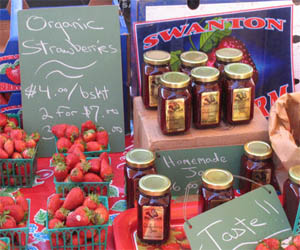
Cottage foods are produced in a person's home and are considered safe to be prepared in the average kitchen, like jams and jellies, candy, fruit butter, doughnuts, cakes and breads.
Until 2003, it was not legal for Kentuckians to sell home-processed foods, but this changed with the passage of House Bill 391, which allows farmers to grow, harvest and process food products and sell them from their homes and at approved farmers markets and farm stands. The law also requires home-based processors to register for one of two separate processing categories and follow specific kitchen guidelines.
The problem with this law, according to Anger, is that it "restricts the sale of low-risk cottage foods made in common kitchens, unless the homeowner grows the main ingredient themselves," which is "intentionally restricting skilled people from launching businesses."
As the law is written, Kentuckians who do not grow the primary ingredient in the product they wish to sell must get a Commercial Food Manufacturing permit and prepare their product in a "permitted kitchen that meets commercial food manufacturing requirements," according to the University of Kentucky Family and Consumer Sciences Extension website.
Anger also notes that this law does not apply to those who belong to Kentucky Proud, a free state marketing program for agricultural products that farmers must apply for, who "are allowed to produce and sell cottage foods from ingredients grown on their farms or elsewhere."
"Skilled Kentuckians deserve an inclusive cottage food law that allows for legal participation in the marketplace alongside our farmer friends," Anger writes. "Whether our cottage foods come from local harvests or just local hands, many gardeners, bakers, canners and other hobbyists have skills and generations of knowledge they crave to share with the community for a humble profit."
Kentucky's bipartisan nonprofit initative, Shaping Our Appalachian Region, has as one of its initiatives is "to identify local and regional food systems as opportunities to create new jobs and new entrepreneurships" in Kentucky's Appalachian counties, Agriculture Secretary Tom Vilsack noted.
Two communities in Kentucky, Barbourville and Hazard, were chosen to participate last year in the federal "Local Food, Local Places" initiative, which "helps communities develop action plans that use local foods to support healthy families and communities to drive downtown and neighborhood revitalization," says the website.
A second round of funding for this initiative is now available. The application deadline is Sept. 15. Click here for more information.
Kentucky has "73 farmers markets and direct-to-consumer outlets accept SNAP or food stamps now," Patton reports, with "nearly $80,000 in SNAP benefits redeemed at Kentucky's farmers markets last year, according to the USDA."
 |
| www.extension.org |
Until 2003, it was not legal for Kentuckians to sell home-processed foods, but this changed with the passage of House Bill 391, which allows farmers to grow, harvest and process food products and sell them from their homes and at approved farmers markets and farm stands. The law also requires home-based processors to register for one of two separate processing categories and follow specific kitchen guidelines.
The problem with this law, according to Anger, is that it "restricts the sale of low-risk cottage foods made in common kitchens, unless the homeowner grows the main ingredient themselves," which is "intentionally restricting skilled people from launching businesses."
As the law is written, Kentuckians who do not grow the primary ingredient in the product they wish to sell must get a Commercial Food Manufacturing permit and prepare their product in a "permitted kitchen that meets commercial food manufacturing requirements," according to the University of Kentucky Family and Consumer Sciences Extension website.
Anger also notes that this law does not apply to those who belong to Kentucky Proud, a free state marketing program for agricultural products that farmers must apply for, who "are allowed to produce and sell cottage foods from ingredients grown on their farms or elsewhere."
"Skilled Kentuckians deserve an inclusive cottage food law that allows for legal participation in the marketplace alongside our farmer friends," Anger writes. "Whether our cottage foods come from local harvests or just local hands, many gardeners, bakers, canners and other hobbyists have skills and generations of knowledge they crave to share with the community for a humble profit."
