Showing posts with label contagious diseases. Show all posts

Friday, May 3, 2024

Fact Check: Contrary to social-media posts, there is still no evidence that Covid-19 vaccines increase your risk of cancer

By Catalina Jaramillo
FactCheck.org

It has not been shown that Covid-19 vaccines cause or accelerate cancer. Yet opponents of the vaccines say a new review article “has found that Covid-19 mRNA vaccines could aid cancer development.” That statement is based mainly on misinterpretation of a study on mRNA cancer vaccines in mice.

Clinical trials, involving thousands of people, and multiple studies have shown that the mRNA Covid-19 vaccines from Pfizer/BioNTech and Moderna are safe. Hundreds of millions of doses have been administered under close monitoring systems that have found serious side effects are rare. Studies have also shown that the vaccines work very well in preventing severe Covid-19 disease and death, saving millions of lives across the globe.
 
There is no evidence to support a link between Covid-19 vaccines and cancer, as we’ve reported. Both the National Cancer Institute and the American Cancer Society have stated there’s no information that suggests COVID-19 vaccines cause cancer, make it more aggressive or lead to recurrence of cancer.

Yet, vaccine opponents falsely claim a review article published in April proves the contrary.

“A review in the International Journal of Biological Macromolecules has found that Covid-19 mRNA vaccines could aid cancer development,” reads an April 16 Facebook post by America’s Frontline Doctors, a group that has repeatedly spread misinformation about the pandemic -- and whose founder was sentenced to 60 days in prison for entering the U.S. Capitol during the Jan. 6 riot. Other posts made similar, baseless claims.

Messenger RNA, or mRNA, vaccines work by instructing a small number of a person’s cells to make specific proteins, which then prompt the body to mount an immune response. They use N1-methylpseudouridine, a modification naturally found in some RNA molecules, to allow the mRNA to deliver its message to the cell without being destroyed by an innate immune response.

The review paper being cited is based on other published articles and does not contain original research. Experts told us that it misleads by misinterpreting several studies and the role of N1-methylpseudouridine in vaccines. The authors also refer to an unreliable review article, written by authors known for spreading misinformation, that falsely claimed the mRNA Covid-19 vaccines impair the immune system and increase the risk of cancer, as we have explained.

One of the most important misrepresentations, and one that the authors heavily rely on, is based on the findings of a study on mRNA cancer vaccines in mice. The study looked at the efficacy of mRNA cancer vaccines with different degrees of N1-methylpseudouridine modification in a mouse melanoma model. According to the review, the study found that “adding 100% of N1-methyl-pseudouridine (m1Ψ) to the mRNA vaccine in a melanoma model stimulated cancer growth and metastasis, while non-modified mRNA vaccines induced opposite results, thus suggesting that Covic-19 mRNA vaccines could aid cancer development.”

But that’s not what the study found.

“Our results did not show, suggest or indicate that modified mRNA promotes tumor growth/metastasis,” Tanapat Palaga, professor of microbiology at the Chulalongkorn University in Thailand and the corresponding author of that study, told us in an email.

What the study actually showed is that both unmodified mRNA and modified mRNA induced immune responses against the tumor antigens, but only the unmodified mRNA reduced cancer growth and metastasis, while the modified mRNA didn’t. The study was published in 2022 and co-authored by Drew Weissman, who won the 2023 Nobel Prize with Katalin Karikó for discovering this mRNA modification that eventually led to the mRNA Covid-19 vaccines.

Dr. James A. Hoxie, an emeritus professor of medicine at the University of Pennsylvania and co-director of the Penn Institute of RNA Innovation (directed by Weissman), told us those findings are relevant for scientists who are studying ways in which mRNA cancer vaccines can elicit immune responses needed to prevent or delay cancer progression. (See “Social Media Posts Misinterpret Biden on mRNA Cancer Vaccines” for more information about mRNA cancer vaccines.)

“But that is a far cry from saying that the vaccine that was used to prevent Covid-19 disease causes cancer,” he said. Implying that by regulating the innate immune system, which is something scientists working in immunotherapies are trying to understand, “you’re leaving yourself open for cancer risk — that is ludicrous.”

Palaga told us, “I believe that the authors of this review article intentionally or [unintentionally] misinterpret our results and tried to twist the conclusion to support their agenda.”

There are no studies supporting a link between N1-methylpseudouridine and cancer in animals or mice, experts told us.

There is also no evidence mRNA Covid-19 vaccines impair, much less suppress, the immune system, as we’ve reported. In fact, the vaccines enhance immunity by teaching the immune system how to identify and fight the coronavirus.

N1-methylpseudouridine and its role in mRNA vaccines

To understand the role of N1-methylpseudouridine we have to look back at the history of mRNA vaccines.

Normally, when a cell encounters a foreign RNA, a molecule present in most living organisms and viruses, it activates a strong innate immune response against the molecule.

This was a problem for scientists trying to use mRNA as a therapeutic, since the goal was for the cell to receive the instructions carried by the mRNA and produce certain proteins. Until the mid-2000s, Karikó, Weissman and others observed that if they attached certain chemical modifications found in some kinds of natural RNA molecules, such as pseudouridine, into one of the four bases of mRNA, they could blunt that innate immune response and, at the same time, increase the mRNA’s capacity to translate its code for the cell to make the desired proteins.

Later, scientists found N1-methylpseudouridine, another modification naturally found in some kinds of RNA molecules, worked better than pseudouridine.

The modification is not “suppressing” the immune system, Hoxie told us — it just allows for certain parts of the immune system not to activate temporarily “in order to get the desired effect.”

Jordan L. Meier, senior investigator at the National Cancer Institute who has studied the role of N1-methylpseudouridine in Covid-19 vaccines, told us the authors of the review paper misrepresent what N1-methylpseudouridine, which is abbreviated as m1Ψ, does.

The review “incorrectly” confuses “m1Ψ’s ability to hide from the immune system with an ability to weaken or disable it,” he told us in an email.

To explain it, Meier compared the mRNA modification to a spy using a disguise in order to pass security guards.

“The authors are essentially suggesting that the disguise somehow makes the guards less able to do their jobs going forward,” he wrote. “In reality, once the disguised person is through, the guards remain just as vigilant and capable as before.”

The review, he added, doesn’t provide evidence that N1-methylpseudouridine “leaves the immune system any worse off for future threats.”
 
Misrepresented studies in the review paper

Similarly, the review misleads by cherry-picking or misrepresenting figures and tables of this and other papers.

For example, in the study by Palaga, Weissman and others using a mouse melanoma model (in which malignant cells from a tumor are given to a mouse), scientists found that relative to mice that received no vaccine (and instead received a saline solution) no increase in tumor growth or decrease in survival occurred when animals were vaccinated with a modified mRNA vaccine.

However, when animals received a vaccine containing unmodified mRNA, the study showed a decrease in tumor growth and an increase in survival compared with the control group that received the saline solution. In other words, the study found that the unmodified mRNA generated immune responses that decreased tumor growth and improved survival, while, similar to the control group, the modified mRNA had no effect on the tumor.

Table 1 of the review, however, incorrectly says the study found that the modified mRNA vaccine “increases tumor growth” and “decreases survival.”

Hoxie said, “This is simply not true and is a gross misrepresentation of the data that paper actually shows. The modified RNA had no effect on the tumor, and results using that vaccine were the same as using a saline solution.”

The tumor growth in mice receiving the modified mRNA was “increased relative to the unmodified vaccine, but it was identical to when there was no intervention,” Hoxie said. “Animals that received the modified mRNA vaccine died at the same rate and with the same amount of tumor as did animals that received the saline solution. The fact tumor progression in this model was reduced with the unmodified mRNA vaccine is the key point of this paper and indicated that in this model immune responses to unmodified mRNA may have anti-tumor activity, an important finding for the cancer immunotherapy field.”

The review also refers to a study that has been extensively misinterpreted to falsely claim that the Pfizer/BioNTech mRNA Covid-19 vaccine causes what vaccine opponents called “turbo cancer.” The study describes one mouse that died from a lymphoma after 14 mice were given a high dose of the vaccine. The review paper reproduces images from the study that show dissected mice and compares the organs of the mouse that died with one with a normal anatomy.

As we explained, and as the authors of that paper noted in an addendum, there is no such thing as “turbo cancer,” and, more importantly, the case report does not demonstrate a causal relationship between the lymphoma and the vaccine.

Meier told us the review also wrongly refers to a study published in 2016 to support its thesis that modified mRNA vaccines turn off an immune sensor known as RIG-I.

“In reality, this study only showed m1Y mRNAs are unable to activate RIG-I and did not test inhibition. In other words, what was shown was that m1Y is a strong camouflage, not that it is an immune suppressor,” he wrote.

FactCheck.org is a nonpartisan, nonprofit organization at the University of Pennsylvania that monitors the factual accuracy of public statements.

Monday, March 11, 2024

State health chief says measles risk stems from pandemic's anti-vaccine 'ideologies'; discusses how to lose weight, need for sleep

WKYT news anchor Bill Bryant, left, interviews state Health Commissioner Steven Stack, M.D.
This story has been updated.
By Al Cross
Kentucky Health News

In a wide-ranging TV interview, state Health Commissioner Steven Stack warned Kentuckians that not enough of them are vaccinated for measles, which he said is an outgrowth of reaction to the Covid-19 pandemic and the measures taken against it.

Stack reflected on his work in the pandemic and talked about other health concerns, including the opioid epidemic, weight-loss drugs and the need for Kentuckians to get more sleep, in an interview that aired Sunday, March 10, on WKYT's "Kentucky Newsmakers" with Bill Bryant.

As of March 7, the Centers for Disease Control and Prevention had recorded 45 cases of measles in 17 states: Arizona, California, Florida, Georgia, Illinois, Indiana, Louisiana, Maryland, Michigan, Minnesota, Missouri, New Jersey, New York, Ohio, Pennsylvania, Virginia and Washington.

Stack said measles was declared elimiated in the U.S. in 2000, but it has returned because vaccination rates have dropped to 90 percent. The disease may be the most contagious, and epidemiologists say 95 percent of a population needs to be vaccinated to protect those who can't or won't get the shot.

Stack said the measles-mumps-rubella (German measles) vaccine has been used since 1971, and is very effective. "We’ve got to get the public I hope, to accept that these tools help to prevent us from having far worse problems, like little babies who can't get vaccinated getting seriously ill." Children younger than 6 months are ineligible for vaccination.

Pew Research Center graph, based on Pew polling by party
Why have vaccination rates for contagious diseases dropped? "It's all gotten caught up in the Covid pandemic, in the narrative, in the ideologies that have unfortunately become associated with public health and medical science," said Stack, a physician.

Asked if he and Gov. Andy Beshear made the right calls in the pandemic, he said "I think we did the best we could with what we knew at the time." He said Kentucky outperformed most other states, considering its lower health status, which made it more vulnerable.

Stack said he and Beshear "balanced saving the most poeple [with] other harms that are worse than what you're trying to prevent." He said Kentucky's death toll of 20,000 was "far from what it would have been had we not intervened," noting that an intiial estimate was it could lose 1 to 2 percent of its population: 45,000 to 90,000 people.

Looking ahead, Stack said people 65 and older and those with other risk factors should get a Covid-19 booster this spring, and everyone should get an annual booster, much like has long been done for influenza.

Other health issues

Kentucky leads the nation in the percentage (about 2.1%) of population that has received a prescription for one of the new drugs created to fight obesity and diabetes, which can also aid weight loss.

"Overweight and obesity is a big problem in Kentucky," Stack said, noting that 38% of Kentuckians weigh too much. "That leads to diabetes, it increased your risk of cancer and cardiovasculat disease, like stroke and heart disease. It's really a major issue for us to address."

As for the drugs, "People are understandably desperate to find ways to get it under control," he said. "It's really too early to say what the long-term outcome of those medications will be. Some people have had wonderful benefits from it, have lost a lot of weight and improved their overall performance. Some individuals have had a difficult time tolerating it: persistent nausea, vomiting, or an unlucky small number with pancreatitis, so time will tell on those.

"Right now I think what we really need to do is try to think about ways to improve our environment so it's easier to eat healthier -- fresh fruits and vegetables -- and do mild things, like just go for a walk three or four days a week for 35 to 45 minutes; if you could do simple things like that, most of us could actually lose the small weight that we have to avoid becoming diabetic."

Kentucky is also one of the states most affected by the opioid epidemic. Stack said it has evolved because "The criminals keep getting more creative in the cocktails they put together and they're becomeing more and more lethal for people."

Speaking on the weekend that the nation moved its clocks to daylight saving time, Stack said lack of sleep is also a major health issue, especially for teens, who need more of it.

He said teens and adults "disrupt our sleep" with big and small screens, on TVs and smartphones. "We’ve got to get better sleep hygiene," he said, "and set out the time we need to get that eight hours of sleep."

Sunday, March 3, 2024

Flu shots limit infection rates, which are still elevated in Kentucky

State health department graphs, adapted by Kentucky Health News
By Melissa Patrick
Kentucky Health News

The Kentucky Department for Public Health still considers hospitalizations for respiratory illnesses high and says flu activity remains elevated. 

Health officials say the best way to protect yourself from these viruses is to stay up to date with your vaccines. 

The Centers for Disease Control and Prevention recommends that everyone 6 months old and older get the annual flu vaccine and updated Covid-19 vaccines, especially children younger than 5 or anyone at high risk for complications.

Vaccines for respiratory syncitial virus are recommended for some infants and young children, pregnant women and adults 60 and older. At some places and times, there has been a shortage of these vaccines. 

This year's "flu vaccines have worked, substantially reducing the risk of flu-related medical visits and hospitalizations across all age groups, with some estimates higher than have been previously observed, even during well-matched seasons," said a CDC report released on Feb. 29.

"Specifically, flu vaccination has reduced the risk of flu medical visits by about two-thirds and flu-related hospitalization by about half for vaccinated children and flu medical visits by half and hospitalization by about 40% for vaccinated adults."

Even though flu season usually peaks around January, it lasts until May. Health experts say that if there is any flu activity occurring, it's not too late to get vaccinated.

What the numbers say

Emergency-department visits for respiratory illness in Kentucky have stayed about the same for the last two weeks, with 3,607 visits reported in the week ended Feb. 24.

Hospitalizations for respiratory disease in that week stayed about the same as the week prior, with 491 530 hospitalizations reported in the week ended Feb. 24. 

Kentucky had 20 counties with Covid-19 hospitalizations between 10 and 19.9 hospitalizations per 100,000 people, a rate that the  CDC considers "medium." 

Those counties are Adair, Green, Russell, Taylor, Clinton, Cumberland, Lewis, Elliott, Menifee, Morgan, Rowan, Barren, Hart, Metcalfe, Monroe, Bath, Montgomery, Floyd, Johnson and Magoffin. 

Overall, there was little change in the three respiratory viruses tracked by the state health department: Covid-19, influenza and RSV, with flu continuing to drive ED visits and hospital admissions. 

The state reported 3,857 laboratory confirmed cases of the flu in the week ended Feb. 24 and 2,246 laboratory confirmed cases of Covid-19. This reflected a slight drop in flu cases and a nearly 9% drop in Covid cases.

Among children, ED visits for respiratory disease increased 12% in children four and younger, to 671, compared to the prior week, and hospitalizations for children 5 to 17 increased 50%, to 18. The increase in ED visits for younger children was driven by the flu, and hospitalizations for the older children were driven by an increase in  both flu and Covid-19.

Since the respiratory-illness season began the first week in October, 384 Kentuckians have died from Covid-19, and 51 from flu, according to the health department. One Covid-19 victim and one flu victim have been children. 

Tuesday, January 16, 2024

This looks like the year for an epidemic of measles, the most contagious disease, which can be deadly but is very preventable

New York Times chart, with CDC data, shows the risks of measles and the vaccine that prevents it.
By Katelyn Jetelina
Your Local Epidemiologist

Yesterday I got a Google news alert: “Measles.” Yes, measles. In the 21st century. At the height of winter. Measles typically spreads in spring. What’s going on?
This sure seems like a lot. Is measles increasing?

A measles case here or there is not abnormal. We see them every year. Cases typically come from international travelers, but sometimes locally acquired outbreaks emerge among unvaccinated pockets.

Cases today are still far, far, far below rates in the 1950s and ’60s thanks to vaccines. However, when we zoom into the past 10 years, we see a slow but steady rise. This shouldn’t be a surprise, given the reduction in routine vaccination coverage and the increase in vaccine exemptions.

Also, measles has epidemic cycles. It flares up every four to five years—2008, 2011, and 2019. It is exactly five years since the last flare-up, which suggests this may be a bad year. Of course, the pandemic could throw off patterns, but we aren’t off to a great start.
 
What is (and is not) a way forward?

Measles is preventable. And, in the Pennsylvania outbreak, one unvaccinated child went to daycare while infected, defying isolation.

People are disappointed and shocked that fellow parents wouldn’t vaccinate their children. People are angry that their loved ones may get exposed as a result, especially since babies under 12 months old cannot be vaccinated. I share a lot of the frustration. But I remember what Dr. Sandro Galea said during the pandemic, “We cannot finger-wag our way to a healthier world.”

As generations age, the memory of mid-20th-century diseases like measles fade. Measles is the most contagious disease, with an infected person infecting an average of 12 to 18 others (assuming no immunity in the population). In some cases, a single person has infected hundreds of people.
 
It’s not “just a fever or a rash.” While most people who get measles will recover, it can harm the body in every way possible. Measles can wipe out a huge fraction of immune memory to other diseases, causing an increase in all-cause deaths. The risks of infection far outweigh the risks of the vaccine.

One of the biggest challenges is the rise of individualism. It goes against public health’s DNA: a collective response for the good of the population. We desperately need to engage with people who find individualism increasingly important. Develop interventions with them.

Is this due to a recent and dramatic decline in trust? Let’s do something about it. Mistakes were made during the pandemic. Misinformation is supercharged by social media. Bad actors, like the disinformation dozen, drive the majority of anti-vax content. Politics are further dividing individual health. Many people talk about these challenges, but I’m getting increasingly frustrated with inaction.

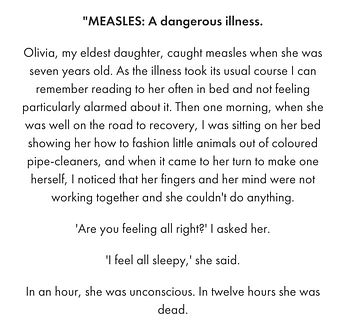
Bottom line: Unfortunately, measles is off to a great start in 2024. We expect trends to increase. We need to heed the underlying warning. A laissez-faire approach to public health, on both sides, will not work. Harrowing stories like Roald Dahl’s below will creep into the 21st century. We can do better.
A big thanks to Edward Nirenberg for his help pulling a lot of the research integrated above.

Your Local Epidemiologist is written by Dr. Katelyn Jetelina, M.P.H., Ph.D.—an epidemiologist, wife, and mom of two little girls. During the day, she is a senior scientific consultant to several organizations, including the CDC. At night, she writes this newsletter. Her main goal is to “translate” the ever-evolving public-health world so people will be well-equipped to make evidence-based decisions. This newsletter is free, thanks to the generous support of fellow YLE community members.

Thursday, September 14, 2023

Why the CDC recomends new Covid-19 boosters for everyone

Photo illustration by Waldo Sweigers, Bloomberg Creative Photos
By Arthur Allen
KFF Health News

Everyone over the age of 6 months should get the latest Covid-19 booster shot, a federal expert panel recommended Tuesday after hearing an estimate that universal vaccination could prevent 100,000 more hospitalizations each year than if only the elderly were vaccinated.

The Centers for Disease Control and Prevention’s Advisory Committee on Immunization Practices voted 13-1 for the motion after months of debate about whether to limit its recommendation to high-risk groups. A day earlier, the FDA approved the new booster, stating it was safe and effective at protecting against the covid variants currently circulating in the U.S.

After the last booster was released, in 2022, only 17% of the U.S. population got it — compared with the roughly half of the nation who got the first booster after it became available in fall 2021. Broader uptake was hurt by pandemic weariness and evidence the shots don’t always prevent Covid infections. But those who did get the shot were far less likely to get very sick or die, according to data presented at Tuesday’s meeting.

The virus sometimes causes severe illness even in those without underlying conditions, causing more deaths in children than other vaccine-preventable diseases, as chickenpox did before vaccines against those pathogens were universally recommended.

The number of hospitalized patients with covid has ticked up modestly in recent weeks, CDC data shows, and infectious disease experts anticipate a surge in the late fall and winter.

The shots are made by Moderna and by Pfizer and its German partner, BioNTech, which have decided to charge up to $130 a shot. They have launched national marketing campaigns to encourage vaccination. The advisory committee deferred a decision on a third booster, produced by Novavax, because the FDA hasn’t yet approved it. Here’s what to know:

Who should get the covid booster? The CDC advises that everyone over 6 months old should, for the broader benefit of all. Those at highest risk of serious disease include babies and toddlers, the elderly, pregnant women, and people with chronic health conditions including obesity. The risks are lower — though not zero — for everyone else. The vaccines, we’ve learned, tend to prevent infection in most people for only a few months. But they do a good job of preventing hospitalization and death, and by at least diminishing infections they may slow spread of the disease to the vulnerable, whose immune systems may be too weak to generate a good response to the vaccine.

Pablo Sánchez, an Ohio State pediatrics professor who was the lone dissenter on the CDC panel, said he was worried the boosters hadn’t been tested enough, especially in kids. The vaccine strain in the new boosters was approved only in June, so nearly all the tests were done in mice or monkeys. However, nearly identical vaccines have been given safely to billions of people worldwide.

When should you get it? The vaccine makers say they’ll begin rolling out the vaccine this week. If you’re in a high-risk group and haven’t been vaccinated or been sick with covid in the past two months, you could get it right away, says John Moore, an immunology expert at Weill Cornell Medical College. If you plan to travel this holiday season, as he does, Moore said, it would make sense to push your shot to late October or early November, to maximize the period in which protection induced by the vaccine is still high.

Who will pay for it? When the ACIP recommends a vaccine for children, the government is legally obligated to guarantee kids free coverage, and the same holds for commercial insurance coverage of adult vaccines. For the 25 to 30 million uninsured adults, the federal government created the Bridge Access Program. It will pay for rural and community health centers, as well as Walgreens, CVS, and some independent pharmacies, to provide covid shots for free. Manufacturers have agreed to donate some of the doses, CDC officials said.

Will this new booster work against the current variants of Covid-19? It should. More than 90% of currently circulating strains are closely related to the variant selected for the booster earlier this year, and studies showed the vaccines produced ample antibodies against most of them. The shots also appeared to produce a good immune response against a divergent strain that initially worried people, called BA.2.86. That strain represents fewer than 1% of cases currently. Moore calls it a “nothingburger.”

Why are some doctors not gung-ho about the booster? Experience with the Covid vaccines has shown that their protection against hospitalization and death lasts longer than their protection against illness, which wanes relatively quickly, and this has created widespread skepticism. Most people in the U.S. have been ill with covid and most have been vaccinated at least once, which together are generally enough to prevent grave illness, if not infection — in most people. Many doctors think the focus should be on vaccinating those truly at risk.

With new Covid boosters, plus flu and RSV vaccines, how many shots should I expect to get this fall? People tend to get sick in the late fall because they’re inside more and may be traveling and gathering in large family groups. This fall, for the first time, there’s a vaccine — for older adults — against respiratory syncytial virus. Kathryn Edwards, a 75-year-old Vanderbilt University pediatrician, plans to get all three shots but “probably won’t get them all together,” she said. Covid “can have a punch” and some of the RSV vaccines and the flu shot that’s recommended for people 65 and older also can cause sore arms and, sometimes, fever or other symptoms. A hint emerged from data earlier this year that people who got flu and covid shots together might be at slightly higher risk of stroke. That linkage seems to have faded after further study, but it still might be safer not to get them together.

Pfizer and Moderna are both testing combination vaccines, with the first flu-covid shot to be available as early as next year.

Has this booster version been used elsewhere in the world? No, but Pfizer’s shot has been approved in the European Union, Japan, and South Korea, and Moderna has won approval in Japan and Canada. Rollouts will start in the U.S. and other countries this week.

Unlike in earlier periods of the pandemic, mandates for the booster are unlikely. But “it’s important for people to have access to the vaccine if they want it,” said panel member Beth Bell, a professor of public health at the University of Washington.

“Having said that, it’s clear the risk is not equal, and the messaging needs to clarify that a lot of older people and people with underlying conditions are dying, and they really need to get a booster,” she said.

ACIP member Sarah Long, a pediatrician at Children’s Hospital of Philadelphia, voted for a universal recommendation but said she worried it was not enough. “I think we’ll recommend it and nobody will get it,” she said. “The people who need it most won’t get it.”

KFF Health News is a national newsroom that produces in-depth journalism about health issues and is one of the core operating programs at the Kaiser Family Foundation.

Tuesday, August 1, 2023

Covid-19 vaccines: What parents need to know now

Photo illustration via Children's Hospital Los Angeles
The Covid-19 pandemic is no longer a national emergency, but the virus that caused it isn’t gone—and neither is the risk of getting the disease, says Children's Hospital Los Angeles. It published a Q and A with Dr. Michael Smit, the hospital's medical director of infection prevention and control:

Who is eligible for the bivalent Covid-19 vaccine that was approved last fall? Everyone who is 6 months and older should get a bivalent booster dose as long as it has been at least two months since they received a monovalent vaccine dose, which was the original Covid vaccine. People who are 6 years and older and who are immunocompromised can also receive a second dose of bivalent vaccine at least two months after their first dose of the bivalent. If you have questions about the eligibility of you or your child to get the booster, you should check with your medical provider.

For children who are getting their first Covid-19 vaccine shot, will they receive the original monovalent series or the bivalent vaccine? The current Covid-19 vaccine guidelines from the Centers for Disease Control and Prevention, which were updated in May 2023, recommend that unvaccinated children 6 months and older get the bivalent vaccine.

Are children who received the original Covid vaccine series eligible for the bivalent booster? Yes. Children who already received the original vaccine series are eligible for the bivalent vaccine. The guidelines can be complicated if your child has previously received the original vaccine, so I recommend consulting public health guidelines and your medical provider.

Coronavirus cases are waning in most places in the U.S. Do you recommend getting the bivalent vaccine if you haven’t gotten it? I recommend following vaccine guidelines provided by U.S. public health agencies such as the CDC and the California Department of Public Health. Although Covid-19 cases are currently low, it is still a serious disease that can cause illness, hospitalization and death.

What does the research show about side effects of the Covid-19 vaccine in children? Side effects of the Covid-19 vaccine tend to be mild and temporary. The most common side effects for children ages 6 months to 3 years include pain on the leg or arm where the shot was given, swollen lymph nodes, irritability or crying, sleepiness and loss of appetite. For children 4 to 17, side effects also include pain at the site where the shot was given, swollen lymph nodes and fatigue. This age group can also experience headaches, chills, muscle aches and loss of appetite. In some rare cases, adolescent boys have been found to experience myocarditis, a rare inflammation of the heart, after vaccination. However, the risk of this condition is higher for children who get infected with Covid-19 than for those who have received the vaccine.

The CDC has indicated that people will get a Covid-19 vaccine shot once a year. Is that for everyone? People 65 and older can receive a dose of the bivalent vaccine at least four months after the first dose. I recommend that people discuss whether to get the additional booster with their medical provider.  The CDC has not announced a second booster shot for groups other than those who are 65 and older or people who are immunocompromised.

Can children get long Covid? Is there a way to protect against long Covid in kids or adults? Yes, children get long Covid. The best way to protect anyone against long Covid is to remain up to date on Covid-19 vaccinations. If you do not get Covid-19, you will not get long Covid. If you do get Covid-19 after being vaccinated, you are less likely to develop long Covid.

Are there medications available for adults or children if they get infected with Covid-19? Yes, there are medications available for both adults and children if they get Covid-19. These medications can have interactions with other medications or have specific indications for use based on an individual’s health status. I recommend discussing taking any Covid-19 medications with your medical provider.

What are the isolation rules today if someone is infected with Covid-19? If you test positive for Covid-19, current isolation guidelines from the CDC depend on whether or not you have symptoms. Regardless of symptoms, if you test positive you should isolate for five days. If you must be around others, you should wear a high-quality mask and avoid contact as much as possible. If you do not have symptoms, isolation is completed after day five, with day zero being the day you had a positive test. If you do have symptoms, then you may end isolation after day five as long as you are fever-free and your symptoms are improving. If you are experiencing moderate symptoms, including shortness of breath, you should isolate for 10 days. For moderate or severe cases, you should discuss specific isolation details with your medical provider.

What are the best ways to avoid Covid-19 at this point? The best way to avoid Covid-19 is to stay up to date on your vaccines. This decreases your chances of catching Covid-19, which, in turn, greatly decreases your chances of developing long Covid. You can also decrease your chances of getting Covid-19 by avoiding crowded situations where you cannot maintain physical distancing of about 3 feet—arm’s length—from others. If crowded situations cannot be avoided, then wearing a well-fitting mask may decrease your chances of getting Covid-19, but only if the mask is worn correctly and consistently.

Tuesday, April 11, 2023

Only 1 in 5 Kentuckians at risk for mpox are vaccinated for it

By Sarah Ladd
Kentucky Lantern

About one in five Kentuckians who are at risk for mpox — formerly called monkeypox — are vaccinated for it, according to Gov. Andy Beshear.

The estimated at-risk population in Kentucky is 19,344 people, Beshear said April 7. Of those, 21% got one dose of vaccine and 12% got two doses, compared to 37% and 23% nationally.

Mpox (Getty Images photo via Centers for Disease Control and Prevention)
Mpox is characterized by rashes, swollen lymph nodes, fever, cold-like symptoms and more. The disease comes from a virus in the smallpox family.

Mpox spreads through close contact with an infected person, including sex, kissing, hugging and other intimate contact.

An mpox victim is contagious until their scabs fall off and new skin forms underneath, according to the Centers for Disease Control and Prevention.

Those at higher risk for severe outcomes from mpox, according to the CDC, are those younger than 1 year old, pregnant people, the immunocompromised and people who have had atopic dermatitis or eczema.

The CDC reported that Kentucky had 104 cases as of March 29. The only neighboring state with fewer was West Virginia, with 12 cases.

“We have these (vaccine) doses available for those who are interested,” Beshear said.

For a full list of Kentucky’s health departments offering vaccines, visit: https://www.chfs.ky.gov/agencies/dph/dehp/idb/Documents/MPXVaxLocations.pdf.

The World Health Organization renamed mpox after concerns of “racist and stigmatizing language” associated with the former name.

Tuesday, March 14, 2023

Long Covid update: There's still reason to avoid Covid-19, even if you've had it already; it's 'annoyingly stubborn,' expert says

By Katelyn Jetelina
Covid-19 is not the common cold. Here’s an effort to keep you up to date on long-Covid developments.

What we knew: Long Covid after first infection was clearly a risk. The risk of long Covid after re-infection was not known.
New info: In the U.K., risk of long Covid dropped after second infections compared to first infection (4% → 2.4%). This is good and bad news: Risk drops, but risk is clearly not zero.
Why it matters: There is still reason to avoid Covid-19, even if you’ve had it already.

Metformin may work

What we knew: About 300 clinical trials are testing treatments for long Covid-19, including Metformin. Results are trickling in.
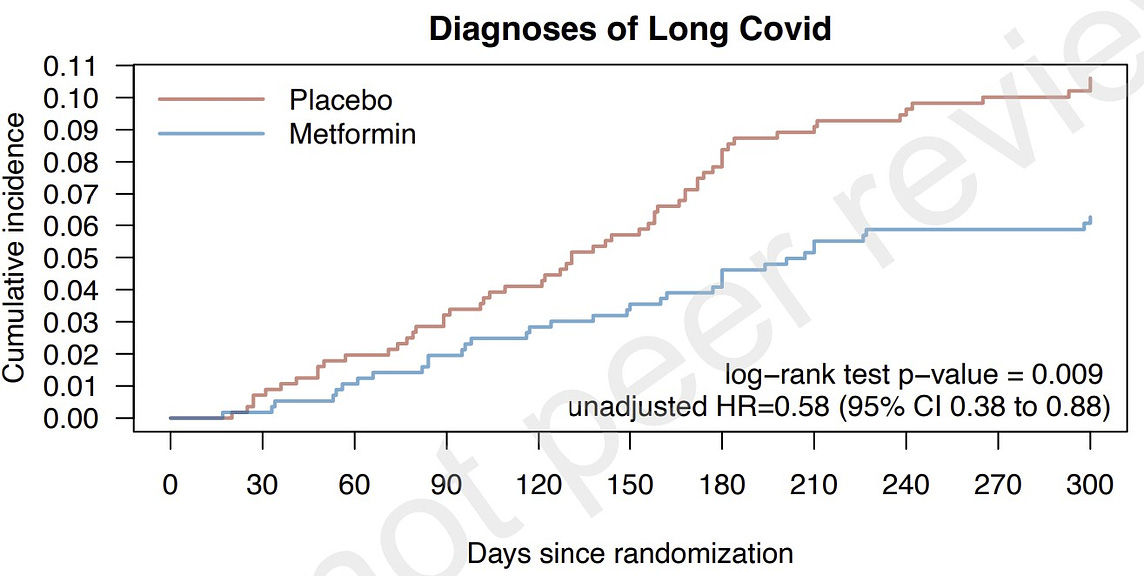
Cumulative incidence curve of long-Covid diagnoses over
10 months after randomization. Source: 
Lancet preprint.
New info: Metformin reduced long Covid in a large randomized control trial.
Metformin had a 42% reduced risk in long Covid cases compared to the placebo; 63% reduced risk if taken within four days of symptoms.
For every 100 people who took the drug, four fewer cases of long Covid nine months after infection occurred. Ivermectin and fluvoxamine had no impact.
Why it matters: People should consider Metformin, especially women who are at higher risk for long Covid. It’s best taken within four days of infection. This is a challenging timeframe in the U.S. medical care system, though.

Paxlovid may help… a little?
 
What we knew: Paxlovid helps reduce severe disease by 50-90%. We didn’t know if it helped with long Covid, though.
New info: Paxlovid reduced risk of long Covid by 26%, regardless of vaccination status and history of prior infection. We need more studies, particularly among young people, as Paxlovid’s effect will likely increase among younger people.
Why it matters: There may be small, proxy benefits from taking Paxlovid, including among younger populations that aren’t “eligible.”
 
Long Covid is annoyingly stubborn

What we didn’t know: We didn’t know the longevity of severe symptoms.
New info: Among those with long Covid, the rate in which symptoms affected daily life decreased from 45% → 25% over seven months.
Why it matters: If you get severe long Covid, there is a chance that symptoms will get better after seven months. Then again, there’s a chance that they won’t.

Still not convinced?

What we know: People living with long Covid report profound stigmatization because people disbelieve that long Covid is a “thing.”

New info: A community member of this newsletter, Dianna Cowarn (also known as Physics Babe on YouTube), was diagnosed with long Covid last summer. Her crew made a 4-minute video. Check it out here if you’re still not convinced. It’s painstaking [and is preceded by commercials].


Bottom line: Covid-19 infection is not the common cold for some. Our knowledge is inching closer to treatments. But with so much unknown, we still need to emphasize prevention—keeping Covid-19 cases low and ensuring vaccination.

Katelyn Jetelina (MPH, PhD) is an epidemiologist, data scientist, wife, and mom of two little girls. She works at a nonpartisan health policy think tank and is a senior scientific consultant to the CDC and other organizations.

Friday, March 3, 2023

A study revives debate on masks: Twitter explodes, public is 'befuddled;' prevention may depend on how they're worn

To be effective, masks need to be worn correctly. (Jacek Poblocki, Unsplash)
Haven't the questions about masking been asked and answered? "Or at least that we had all agreed to disagree, but no such luck," writes Felice J. Freyer of The Boston Globe. "The debate over whether masks limit Covid-19 transmission recently reignited after a new review of the research came out, drawing out skeptics and defenders, and — as so often happens — leaving the ordinary citizen befuddled."

How did this get started
 — again? "A British outfit known as the Cochrane Library put out a new report on masking. When the Cochrane Review, which is highly respected in medical circles, tackled the mask question, it found that "wearing a mask may make little to no difference in how many people caught a flu‐like illness/Covid‐like illness," Freyer writes. "But the review encompassed primarily studies conducted before the pandemic, which examined the spread of influenza. The flu is far less contagious than Covid-19, which could lead to underestimating the effects of masks. The review also mixed studies of health-care workers with those involving the general public, and included studies that couldn’t answer the question of whether people actually wore their masks correctly."

Who's causing the fuss? "Twitter erupted with criticisms. Then one of the Cochrane Review authors was quoted in a Substack newsletter article saying of masks, "There is just no evidence that they make any difference. Full stop." . . . The Substack interview prompted New York Times columnist Bret Stephens to scold all those who favored mask mandates, saying they owed the world an apology. That unleashed another round of social media outrage. . . . But as others have pointed out, there’s no evidence that masks don’t make a difference. The big problem is that there isn’t enough evidence, period."

Wait a minute; what do masks prevent? “We have good evidence from laboratory studies [that] if you’re wearing a mask correctly and you’re in the presence of the virus, the mask will protect you,” Jennifer Nuzzo, professor of epidemiology at Brown University School of Public Health, told Freyer. Commenting on the Cochrane Review, Freyer added, “The appropriate conclusion is, we don’t have great evidence showing that masks change infection rates in populations. But we don’t know why that is. It’s probably not to do with masks themselves, but how they’re worn.”

What did Dr. Anthony Fauci, former director of the National Institute of Allergy and Infectious Diseases, say about the Cochrane study? “It’s a meta-analysis of a very large number of studies, many of which had nothing to do with Covid, and many of which did studies with masks that were not regularly worn every day and properly,” Fauci told Freyer. “There were only two studies in that entire meta-analysis that were exclusively looking at masks with Covid.”

Could I get a straight answer? "The basic advice hasn’t changed. Wear a mask in situations where you think you’re at risk of infection, such as a crowded indoor setting, especially during a time when Covid transmission is high," Freyer reports. "The level of that risk is determined by the level of transmission in your community, your own vulnerability to severe illness, the vulnerability of people you expect to come in contact with, and your personal tolerance for risk."

Final thoughts? Fauci told Freyer, “Everyone is different. Everyone’s risk for a complication is different. So there’s no set rule.”

Sunday, February 26, 2023

With 'low confidence,' Energy Dept. says Covid-19 likely from lab; FBI confidence 'moderate;' intel panel, 4 other agencies disagree

The Wuhan Institute of Virology is located in the city where
the pandemic began. (Photo by Hector Retamal, AFP/Getty)
The Department of Energy has concluded that the Covid-19 pandemic "most likely arose from a laboratory leak, according to a classified intelligence report recently provided to the White House and key members of Congress," The Wall Street Journal's Michael Gordon and Warren Strobel report.

The department "made its judgment with 'low confidence,' according to people who have read the classified report," the Journal reports. The agency thus joins the FBI "in saying the virus likely spread via a mishap at a Chinese laboratory," the Journal notes. "The FBI previously came to the conclusion that the pandemic was likely the result of a lab leak in 2021 with 'moderate confidence' and still holds to this view. . . . While the Energy Department and the FBI each say an unintended lab leak is most likely, they arrived at those conclusions for different reasons."

Four other agencies and a national intelligence panel still judge with "low confidence" that the pandemic "was likely the result of a natural transmission, and two are undecided," the Journal reports. "The Energy Department’s conclusion is the result of new intelligence and is significant because the agency has considerable scientific expertise and oversees a network of U.S. national laboratories, some of which conduct advanced biological research."

The Journal adds, "The National Intelligence Council, which conducts long-term strategic analysis, and four agencies, which officials declined to identify, still assess with 'low confidence' that the virus came about through natural transmission from an infected animal, according to the updated report. The Central Intelligence Agency and another agency that officials wouldn’t name remain undecided . . . Despite the agencies’ differing analyses, the update reaffirmed an existing consensus between them that Covid-19 wasn’t the result of a Chinese biological-weapons program, the people who have read the classified report said."

Because no animal source for the novel coronavirus has been confirmed, and Wuhan, where the outbreak began, "is the center of China’s extensive coronavirus research, has led some scientists and U.S. officials to argue that a lab leak is the best explanation for the pandemic’s beginning," the Journal reports. "State Department cables written in 2018 and internal Chinese documents show that there were persistent concerns about China’s biosafety procedures, which have been cited by proponents of the lab-leak hypothesis."

Friday, February 24, 2023

Unvaccinated attendee of big revival has state's third case of measles in 3 months; Ky. ranks very low in measles vaccinations

An unvaccinated Jessamine County resident who attended the large, spontaneous revival at Asbury University has Kentucky's third reported case of measles in three months, the state Department for Public Health said Friday.

“Anyone who attended the revival on Feb. 18 may have been exposed to measles,” Dr. Steven Stack, the state health commissioner, said in a news release. “Attendees who are unvaccinated are encouraged to quarantine for 21 days and to seek immunization with the measles vaccine, which is safe and effective.” Citing privacy, the state said nothing more about the infected person.

Stack added, “If you may have been exposed at Asbury University’s campus and develop any symptoms, whether previously vaccinated or unvaccinated, please isolate yourself from others and call your medical provider, urgent care, or emergency department to seek testing. Please do not arrive at a health-care facility without advance notice, so that others will not be exposed.”
  
Measles is one of the most contagious diseases, and spreads through the air. Early symptoms resemble those of many upper-respiratory illnesses – fever, cough, red eyes and runny nose – "and proceed to the characteristic rash three to five days after symptoms begin," the release said.

The state says it investigates all reported cases. It said the first case in the last three months was in Christian County, and it was linked to an outbreak in Ohio. The second was reported in January in Powell County, and there were no known exposures or connections to the outbreak in Ohio," the release said. "These two previous cases were thoroughly investigated and neither presented a public-health threat."

The vaccine for measles vaccine is given in combination with those for mumps and rubella ("German measles to children at 12 to 15 months of age. A second dose is usually given at 4 to 6 years old, and is required for admission to school. Two doses of the MMR vaccine are about 97% effective at preventing measles if exposed to the virus, the state says.

The state health department is working with local departments to promote MMR vaccination in communities with low vaccine rates, the release said. Recent data released by the Centers for Disease Control and Prevention shows MMR vaccine coverage among Kentucky kindergarteners is one of the nation's lowest.

The CDC reports that the rate could be as low as 86.5 percent, which could rank it sixth lowest among the states. The national average is about 93%. Kentucky's percentage is expressed as "greater than or equal to" because the state counts some or all vaccine doses that are given outside federally recommended age and time intervals, and it does not include vaccinations at certain types of facilities, which could include kindergartens in child-care facilities, online schools, correctional facilities, or military installations.

The CDC report has a graph estimating the gap between MMR vaccination rates and the potential rates in each state, based on the percentage of unvaccinated students without a documented vaccine exemption; Kentucky's gap appears to be larger than any state but Alaska (right-click to download image):

Sunday, January 8, 2023

Flu cases are on the decline in Kentucky, but still too high and the season runs through May; it's not too late to get your flu shot

State graph, adapted by Kentucky Health News
By Melissa Patrick

Kentucky Health News 

Influenza cases in Kentucky declined in each of the last four weeks of 2022, but Gov. Andy Beshear said cases are still too high and it's not too late to get a flu shot. Flu season runs through May.

"At least eight children have passed away from the flu already this season" in Kentucky, Beshear said at his regular Thursday news conference. "Flu vaccination is the best way to prevent serious disease. The main strain of flu that's going around right now, the flu vaccine is very effective against it. . . . Go get that flu shot."

The Centers for Disease Control and Prevention recommends annual flu vaccines for everyone 6 months and older as long as flu activity continues. 

The state's latest flu surveillance report, for the week ended Dec. 31, says the flu level in Kentucky has waned to "regional," new meaning cases have been confirmed in at least two, but fewer than half, of the state's 16 regions.   

The report shows that in the week ended Dec. 31, the state confirmed 1,307 cases of the flu, down from 2,132 the week prior, a drop of 39%. The number of confirmed cases this flu season is 37,825.
 
The report said the flu has killed eight children and 106 adults this flu season, with three of the adult cases due to the flu and Covid-19 coinfection. Most flu cases continue to be in people under 20. 

Counties with the highest number of cases in the week ending Dec. 31 were Barren, with 44 cases; Boone, 67; Campbell, 37; Fayette, 57; Floyd, 39; Jefferson, 269; Kenton, 95; McCracken, 31; Morgan, 34; and Pike, 55. 

Monday, January 2, 2023

Newly dominant variant more likely to evade Covid-19 antibodies, but so far not seen as more likely to cause serious disease

Antibodies at work on the coronavirus (Illustration
by Russell Keightley, via Science Photo Library Art)
With a new subvariant of the novel coronavirus now dominant in the U.S., vaccinated people may be more likely to develop Covid-19 but still be well protected from serious disease, according to preliminary reports.

The XBB.1.5 subvariant "has raised concerns about another potential wave of Covid cases following the busy holiday travel season" but "There’s no indication it causes more severe illness than any other omicron virus, Dr. Barbara Mahon, director of CDC’s Coronavirus and Other Respiratory Viruses Division, told NBC News. . . . The CDC projected Friday that about 40% of confirmed U.S. Covid cases are caused by the XBB.1.5 strain, up from 20% a week ago."

XBB.1.5 is so new that research on it is very limited, but researchers from Columbia University recently reported in the journal Cell that sublineages of the BQ and XBB subvariants had a “dramatically increased” ability to evade antibody protection, even among those who had received the current bivalent booster. “However, it is important to emphasize that although infections may now be more likely, Covid-19 vaccines have been shown to remain effective at preventing hospitalization and severe disease even against Omicron as well as possibly reducing the risk of post-acute sequelae of Covid-19 (PASC, or long Covid),” the researchers reported.

Monday, November 14, 2022

Kentucky had many fewer new cases of Covid-19 last week, but more serious cases, and it still ranks eighth among the states

New York Times map, adapted by Ky. Health News; for interactive version with data, click here.

By Al Cross
Kentucky Health News

For every eight cases of Covid-19 that were reported in Kentucky in the first week of November, only five cases were reported last week. But the weekly rate of new cases remains high, eighth among the states.

The state Department for Public Health reported 3,570 new cases last week, or 510 per day. Those figures were 37.5 percent less than the previous week.

The weekly new-case incidence rate was 10.8 per 100,000 residents, down from 12.98. Counties with rates more than double the statewide rate were Elliott, 28.5; McLean, 27.9; Mercer, 24.4.8; and Trimble, 21.9.

The New York Times, which calculates the rates differently, says the statewide rate is 16 per 100,000 and the top counties are Leslie, 65; Cumberland, 45; Russell, 41; Simpson, 39; McCreary, Green and Knott, 38; Johnson, 36; Metcalfe and Muhlenberg, 35; Powell, 34; and Nelson, 33. It ranks Kentucky eighth among the states.

The share of Kentuckians testing positive for the coronavirus in reported tests also declined, to 7.29% last week from 8.31% the week before, the state said. The figures do not include at-home tests.

The number of Kentucky hospital patients with the virus fell last week, but the number in serious condition rose. As of midnight Sunday, there were 310 Covid-19 patients, down from 332 the previous week; 42 were in intensive care, up from 40; and 19 were on mechanical ventilation, up from 13.

Hospitals are also reporting many cases of the flu and respiratory syncytial virus (RSV), which is hardest on infants and seniors. Flu cases in the state are more than doubling each week, and if current trends continue next week, new flu cases will outnumber new Covid-19 cases. 

The state said it confirmed 47 Covid-19 deaths last week, up from 41 the week before. The state's pandemic death toll stands at 17,410.

Friday, November 4, 2022

Respiratory viruses are making many Kentuckians sick and causing schools to close for a few days; will there be a 'tridemic'?

The school boards' group said Nov. 4 that at least 19 of the 171 districts had closed or moved to non-traditional instruction days due to illness. Fayette County later said it would close Nov. 7.

This story has been updated.

By Melissa Patrick
Kentucky Health News

Lots of people are sick and schools are closing these days as cold and flu season has hit Kentucky early, and nearly 750 Kentuckians a day were diagnosed with the flu last week -- and that does not include home tests. 

"Let me just start by saying right now from a health perspective, we're dealing with a lot more than Covid," Gov. Andy Beshear said Thursday at his weekly news conference. "But right now flu, RSV and other illnesses are really hitting our population, especially our children. The report I got earlier this week is that almost every pediatric bed at our three hospitals that have pediatric beds, nearly all of them were full and pediatric ICU beds were completely full."

RSV, or respiratory syncytial virus, is a common respiratory virus that usually causes mild, cold-like symptoms. And while most people recover in a week or two, it can be serious for infants and older adults. A spokesperson for UK HealthCare said that on Nov. 3, its hospitals had 31 pediatric patients with RSV. 

Beshear urged Kentuckians to get their annual flu vaccination and the updated Covid-19 booster, and to stay home if they are sick. 

In just three weeks time, Kentucky's flu activity went from sporadic during the week ending Oct. 8 to widespread during the week ending Oct. 22, according to the state Department for Public Health's weekly flu surveillance reports. Flu activity in Kentucky remains widespread in the latest report. 

The health department considers Kentucky's flu level "widespread" when increases in cases are seen in more than half of the state's 16 health regions; that was the case with 16 regions in the latest reporting week.

This surge in flu cases across the state has been so bad that it's shutting some of Kentucky's schools down for a few days. 

On Friday, Nov, 4, the Kentucky School Boards Association said that at least 19 of the state's 171 school districts have announced closures due to illness. The districts include Ballard, McCracken, Crittenden, Owen, Scott, Bourbon, Clark, Madison, Powell, Wolfe, Magoffin, Wayne, Fleming and Carter counties, and the Berea, Jackson, Paris, Raceland and Williamstown independent districts.

Sunday, Nov. 6, Fayette County was added to the list for Monday "due to widespread illness among students and staff," the Lexington Herald-Leader reports.

Kent Koster, director for the Purchase District Health Department, which includes McCracken and Ballard counties, told Jennifer Brown of Hoptown Chronicle that the flu and RSV are affecting school districts the most. 

Koster said the common flu is expected to increase in the coming weeks and that it’s possible people’s immune systems have weakened after multiple winters of wearing masks during the Covid-19 pandemic.

“Since Covid cases have gone down and we are no longer required to wear masks, we can only expect flu cases to go up,” Koster told Brown. 

Jackson Independent Schools Supt. Wayne Sizemore told Grason Passmore of WKYT that students were coming to school with temperatures of 101 and higher and being sent home.

“Anytime we’re below 80 percent, it’s a cause for alarm. We want to make sure we’re looking at the safety of our staff, our students and the safety of our community, as well,” Sizemore said.

The latest flu report for the week ended Oct. 29 showed that Kentucky had 868 new confirmed cases of flu, up from 286 the week prior. The state has recorded 1,260 cases this season and one flu-related death, which was reported as a flu and Covid-19 co-infection.  

One reason "everyone you know is sick right now" is because people have moved away from wearing masks and other precautions to avoid Covid-19 -- efforts that also slowed the spread of flu and RSV, Dylan Scott reports for Vox. Also, people have returned to their pre-pandemic activities, which increases exposure, and because people have largely avoided the flu and RSV for two years, immunity to the viruses has waned. 

Some infectious-disease experts have called the conflation of flu, RSV and Covid-19 that is poised to threaten hospital capacity in some states the "tri-demic." Scott reports that experts are calling for a winter Covid-19 surge based on the pattern of the past two years. 

“We used to worry about a twin-demic. Now some people are worried about a tri-demic: influenza, Covid, and RSV,” William Schaffner, a Vanderbilt University professor and medical director of the National Foundation for Infectious Diseases, told Scott. “Although we worried about this in the past few seasons, people are really anticipating this may be the one where these viruses really gang up on us and together may strain the health care system.”

Experts also told Scott that the hope is that this will not be the new normal because people will get sick and develop immunity to the viruses again, anticipating that this increase in virus infections will last about two years. 

Meanwhile, we already have vaccines for flu and Covid-19 and a new RSV vaccine could be on the horizon. In addition, old-fashioned public health measures like keeping your hands washed, wearing masks, covering coughs and sneezes and staying home when you are sick also work to slow the spread of disease.