Showing posts with label transportation. Show all posts

Thursday, December 14, 2023

Travel for abortions, mainly from states like Kentucky, has doubled following Supreme Court decision, and can pose many difficulties

OPINION By Katelyn Jetelina
Your Local Epidemiologist

This week, Kate Cox got an abortion, but had to leave Texas, where she lives, to get it. She joined more than 9.3 million Americans who got a legal abortion in the past 10 years, of which 8,300 (0.9%) got one after 20 weeks of gestation. (Texas and Kentucky have similar, near-total bans on abortion.—Editor.)

I’ve seen many on social media wonder: What’s the big deal? She found the health care she needed after all; and this cross-state journey is rare, right?

Forced abortion travel has doubled following the U.S. Supreme Court's Dobbs ruling. And if you’re one of the lucky few who can travel, this journey isn’t without very real challenges that may not be apparent to the unseen eye.

The journey for an abortion looks very different depending on who you are. In general, though, many challenges could be prevented if we, as a society, accepted abortion as health care.

First, many people’s journeys stop before they begin. It can take a lot of cash—plane tickets, rental car, hotel rooms, food, and procedure. This adds up to about $10,000 to $30,000. As you can imagine, many people can’t afford this, and often, insurance doesn’t cover it. Half of all abortion seekers live below the federal poverty level—an income of less than $13,000 a year. This is especially true for adolescents and teens (who make up a big number of later abortion patients), undocumented people, and parents.

If they make the journey, it’s not without other hard realities:
  • Pain meds are available. For those later in pregnancy, though, it doesn’t do much. You may not have access to an epidural, depending on the state’s regulations, because you’re at an outpatient clinic. This is unimaginable pain—in all senses of the word.
  • Your partner can’t be there to support you during labor, like hold your hand, or coach you through pain. You can’t have a phone, either. Tight security is required at abortion clinics. In the same vein, you walk past protesters yelling at you every morning and every night for a week. You wish, with all your heart, you could enjoy the same level of ignorance.
  • Recovering in a hotel room means a cold, unfamiliar place. Without your slippers, without your bed, without your cat, and without access to the comfort food you crave. All you want to be is at home.
  • The journey means needing time off from work and getting your Family Medical Leave Act form signed by a physician in another state. All you hope is that your employer won’t ask questions because you don’t have any energy to explain.
  • The journey may include carrying the baby’s ashes on an airplane. This requires holding back a flood of emotions in public—exhaustion, grief, anxiety, pain, a strong desire for privacy.
  • People who have abortions are no more likely to struggle with mental health than the people who do not—in fact, not getting a needed abortion has been found to increase anxiety and depression in the first 12 months. But there are emotional costs in needing to travel, and much of that is driven by stigma and ostracization of abortion care. Also, recognizing when you need help (remember you don’t have a follow-up appointment with your OB) and finding the right clinician or therapist, given the unique circumstances and the trust required, is hard.
Two things help. First, confidence in making the right decision: 95% of people who have an abortion say it was the right decision for them. The most common emotion reported afterward is relief. Second, health-care workers—literally angels on earth—at the abortion clinic ensure moments of human connection, empathy, and support. You feel cared for, which helps tremendously. And the rare souls you trust with your story like family, friends, and clinicians thereafter also help tremendously.

This journey is becoming more common. Before Dobbs, 1 in 10 women having abortions had to travel. Now the rate has doubled, to 1 in 5. We see increased travel from many angles. While the number of abortions across states has greatly shifted post-Dobbs, the national average hasn’t budged.
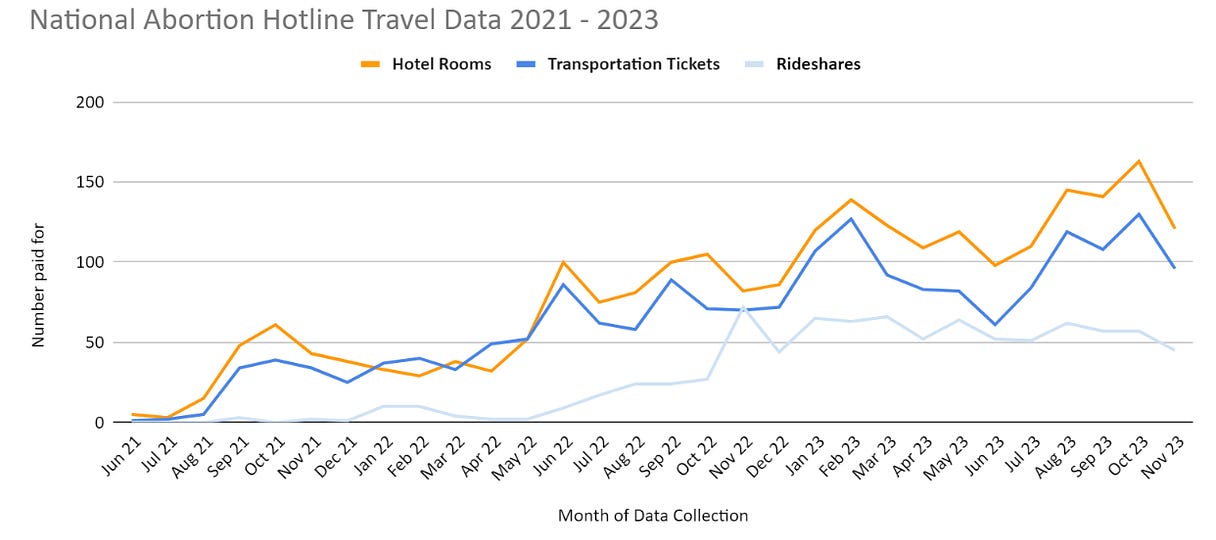
Calls to the National Abortion Hotline for travel services, like hotel rooms and plane tickets, have tripled post-Dobbs and remain high.

Map from National Abortion Federation, based on data from its National Abortion Hotline
Scientists who measured distance to abortion facilities found average travel time also tripled post-Dobbs.
This speaks to why we see increases in self-managed abortion (i.e., medication abortion). It’s also why colleagues in Latin America, for example, have been supporting people to self-manage with pills up to 24 weeks of pregnancy, which is safe and effective.

An increasing number of women are traveling out of state for reproductive health care. This journey isn’t without very real obstacles. The most tragic part is much of the associated trauma is preventable if we had access to local health care.

It may be hard to understand, but it’s harder for people to live through. Trust women. Listen to their stories. Trust their voices. It is, after all, their lives and their livelihoods.

(A big "thank you" to Dr. Heidi Moseson, a reproductive epidemiologist who helped immensely with much of this piece’s research.)

If you want to support travel for abortions, here are some great options: The Brigid Alliance supports people who are traveling for abortions at 15+ weeks. The National Network of Abortion Funds a collective of over 100 abortion funds across the U.S.

“Your Local Epidemiologist” is written by Dr. Katelyn Jetelina, MPH, Ph.D.—an epidemiologist, data scientist, wife, and mom of two little girls. During the day, she works at a nonpartisan health policy think tank and is a senior scientific consultant to a number of organizations. At night she writes this newsletter. Her main goal is to “translate” the ever-evolving public health science so that people will be well-equipped to make evidence-based decisions.

Sunday, September 24, 2023

Ky. children 10-17 have nation's 2nd highest obesity rate, 19.6%; adult rate of 37.7% is 9th highest, a slight improvement from 2021

Map from Trust for America's Health State of Obesity report

Kentucky Health News graph from state data

By Melissa Patrick
Kentucky Health News

Kentucky ties with Wisconsin for the nation's ninth-highest adult obesity rate, an improvement from second-highest last year, but Kentucky children aged 10-17 still have one of the nation's highest rates, No. 2, after ranking first last year.

The 20th annual State of Obesity report from Trust for America's Health says 37.7% of Kentucky adults are obese and nearly 72% of the state's adults are either obese or overweight, tied for sixth place with Delaware. Among the state's high-school students, 19.6% of them are obese and 16.2% are overweight.

Nationally, the report says the number of obese adults continues to rise, noting that 22 states had an 2022 adult obesity rate at or above 35%, up from 19 states in 2021. A a decade ago no state had an adult obesity rate at or above 35%, the report says.

"Since TFAH’s initial report, published in 2004, the national adult obesity rate has increased by 37 percent and the national youth obesity rate increased by 42 percent," says the report. 

The national adult obesity rate is 42% and the national rate for children ages 2 to 19 is nearly 20%, according to the report.  

The good news is that from 2021 to 2022, Kentucky's adult obesity rate declined 6.4%, or 2.6 percentage points, to 37.7% from 40.3%. But that was still above the levels of 2018, 2019 and 2020.

West Virginia (41%), Louisiana (40.1%), Oklahoma (40.0%), and Mississippi (39.5%) have the highest rates of adult obesity. The District of Columbia (24.3%), Colorado (25.0%), and Hawaii (25.9%) have the lowest adult obesity rates.

“It’s critical to recognize that obesity is a multifactored disease involving much more than individual behavior,” Dr. J. Nadine Gracia, president and CEO of Trust for America's Health, said in a news release. “In order to stem the decades-long trend of increasing obesity rates we have to acknowledge that the obesity crisis is rooted in economic, health, and environmental inequities. Ensuring all people and communities have equitable opportunity and access to healthy food and physical activity is fundamental to addressing this crisis.”

Kentucky continues to struggle with all of these conditions. It ranks fifth worst for the percentage of adults with diabetes (15%) and hypertension (40.3%), and nearly 27% of its adults are physically inactive, ninth worst. 

The report shows that more adult men than adult women are obese in Kentucky: 38.7% of men and 36.7% of women, a switch from last year's report. Kentucky's adult men have the second highest obesity rate in the nation; its women rank 18th, tied with Texas.

By age, Kentucky adults between 45 and 64 have the highest obesity rate, 42%. That's followed by those 25-44 (41.2%), 65 and older (33.7%) and 18 to 24 (24.1%). 

"Solving the nation’s obesity crisis will require addressing the economic and structural factors that impact where people live and their access to employment, transportation, healthcare, affordable and healthy food, and places to be physically active," says the report, which includes policy steps to address the crisis that they say should be taken by federal, state and local officials and stakeholders. They include: 
  • Fully fund the Centers for Disease Control and Prevention's proven chronic disease and obesity prevention programs so they reach every state.
  • Make healthy school meals available for all students and increase access to Supplemental Nutrition Assistance Program (SNAP) and other nutrition support programs.
  • Implement a mandatory front-of-package labeling system on food packaging to help consumers make informed choices.
  • Close tax loopholes and eliminate business-cost deductions for advertising unhealthy food to children.
  • Make physical activity and the built environment safer and more accessible for everyone, including by increasing federal education funding for health and physical education and investing in active transportation projects like pedestrian and bike paths.

Friday, July 15, 2022

Ky. Voices for Health sets sessions across state to give updates on policies affecting the health and well-being of Kentuckians

Kentucky Voices for Health and its Thrive KY advocacy partners are hosting regional events to provide updates on state and federal policies that impact the health and well-being of Kentuckians. 

The two-hour sessions will cover important updates on the economy, Medicaid, KCHIP, SNAP, housing, transportation, child care, public health, behavioral health, and suicide prevention, as well as new tools available to assist community members with meeting basic needs, and tips on being a more effective advocate in your community.

The first event was held July 12 in Lexington. Events are scheduled for 10 a.m. to noon local time at:

KVH says continuing education and/or professional development credit will be available and that the event is open to anyone who serves their community, including community leaders, public employees, nonprofit organizations, frontline service providers, outreach workers, educators, faith leaders and counselors.

Monday, April 18, 2022

Coronavirus cases and positive-test rate in Kentucky are rising, but deaths and hospital numbers are declining more

Kentucky Health News chart from state data
By Melissa Patrick
Kentucky Health News

Daily cases and the share of Kentuckians testing positive for the coronavirus are rising again, apparently reflecting a national trend.

The state's report for the last Monday-Sunday period showed 3,257 new cases of the virus, an average of 465 per day, up 4.5% from 445 a day the week before.  

The New York Times reports that cases are rising again in the U.S., going up 39% in the last two weeks. It notes that case numbers are likely higher than reported, because of the prevalence of home Covid-19 tests.

Kentucky Health News graph, from state data
The percentage of Kentuckians testing positive for the virus in the past seven days is 3.12%, up from 2.27%. 

The Times ranks Kentucky's infection rate 20th among the states and Washington, D.C. Of the week's new cases in Kentucky, 25% were in people 18 and younger. 

Kentucky's seven-day infection rate also showed an uptick, to to 5.63 cases per 100,000 residents from 4.09 the week before. Counties with rates more than double the latest statewide rate are Franklin, 23.5; Campbell, 11.9; and Jefferson, 11.6. Twenty of the 120 counties reported no cases last week.

While leading indicators showed more risk of infection, deaths related to Covid-19 dropped 43 percent and hospital numbers continued to decline. 

The state attributed 97 more deaths to Covid-19, an average of just under 13.9 per day. That's down from 24.6 per day the week before and 19.3 per day the week before that. All told, the state has attributed 15,297 deaths to the pandemic. 

Kentucky hospitals reported 176 patients with Covid-19, with 20 of them in intensive care and only nine on mechanical ventilation. All of these numbers are lower than last week's Monday report; hospitalizations were down 11%; intensive-care cases were down 31%.

Very few intensive-care beds in Kentucky are being used for Covid-19 patients, but six of the state's 10 hospital regions are using at least 80% of their intensive care beds. Statewide, 78.7% of the beds are in use. 

Kentuckians who are not vaccinated or boosted are still encouraged to do so. The Washington Post reports that an average of 4,753 Covid-19 vaccine doses per day were given in Kentucky last week, a 6% increase over the week before.

The numbers include second doses and booster shots. They have been increasing since late March, when a second booster shot was authorized for people 65 and older and other more vulnerable populations. But the rate of increase in Kentucky since then has not been as fast as nationwide. 

So far, 65% of the state's total population has received at least one dose of a vaccine; 57% of the total population is fully vaccinated; and 44% of those eligible have been boosted. The Post adds that nearly 61% of the state's eligible population, those 5 and older, have been fully vaccinated. 

"Let's keep going," Gov. Andy Beshear said at last week's press conference. "It's not enough." 

Travel masks out: On Monday, a federal judge in Florida struck down the federal mask mandate on airplanes and other modes of public transportation, saying it exceeds the statutory authority of the Centers for Disease Control and Prevention and violates administrative law. 

Last week, the CDC extended the public transportation mask mandate through May 3. The Biden administration has not decided on an appeal.

"White House spokesperson Jen Psaki said Monday afternoon that it was a 'disappointing' decision, and that the Department of Homeland Security and the CDC were reviewing the ruling" and that "the Justice Department will make any determinations about a legal response," CNN reports.

Tuesday, March 15, 2022

Rand Paul's resolution to end the federal mask mandate in public transit passes Senate, but not by enough to overcome a veto

The federal rule applies to transport hubs and conveyances. (Photo by Brandon Bell, Getty Images)
By Al Cross
Kentucky Health News

The U.S. Senate passed Kentucky Sen. Rand Paul's legislation to end the mask mandate in public transportation, but not by a margin large enough to overcome a threatened veto by President Biden.

Paul's resolution passed 57-40 Tuesday but it takes a two-thirds vote (67 in the Senate) to override a veto, and the Democrat-controlled House could bottle up the resolution, relieving Biden of the burden of vetoing it. The rule had been set to expire Friday, March 18, but the administration extended it to April 18.

Biden's Office of Management and Budget said requiring masks in public conveyances and in transportation hubs had prevented the spread of Covid, "saving lives." It called them "places where people across communities congregate, often for extended periods and in close quarters. The determination of the timeline and circumstances under which masks should be required in these settings should be guided by science, not politics."

Paul, in a press release, called the rule an "anti-science, nanny state requirement" that is ineffective. "As the entire world is learning to live with Covid, the federal government still uses fear mongering to stubbornly perpetuate its mandates, rather than giving clear-eyed, rational advice on how to best protect yourself from illness."

The rule was issued by the Centers for Disease Control and Prevention in January 2021. On Feb. 25, 2022, it exempted school buses, in conjunction with relaxed guidance for mask wearing in schools. "Travel contributes to interstate and international spread of Covid-19," the CDC says. "Wearing masks that completely cover the mouth and nose reduces the spread of Covid-19."

Tuesday's vote was largely along party lines. Minority Leader Mitch McConnell of Kentucky and all other Republicans except Mitt Romney of Utah voted for the resolution, as did Democrats Mark Kelly and Krysten Sinema of Arizona, Michael Bennet of Colorado, Jon Tester of Montana, Jacky Rosen of Nevada, Maggie Hassan of New Hampshire and Joe Manchin of West Virginia.

Paul and 16 other Republicans in Congress, led by Rep. Thomas Massie of Kentucky's Fourth District, are taking another tack to end the mask mandate: a lawsuit against the CDC, alleging that it lacks the authority to impose such a rule.

Friday, February 25, 2022

Under new masking guidance, CDC says people in all but 18 Kentucky counties should still wear masks in indoor public spaces

Centers for Disease Control map, adapted by Kentucky Health News; to enlarge, click on it.
By Al Cross
Kentucky Health News

The federal Centers for Disease Control and Prevention has relaxed its guidance for wearing masks to thwart the pandemic, but says infections and hospitalizations in most of Kentucky are so high that people in all but 18 of the state's 120 counties should continue to wear masks in indoor public spaces.

The new CDC system ranks the risk to each county as high, medium or low, based on new coronavirus infections, new Covid-19 hospital admissions, and the share of staffed hospital beds occupied by patients with the disease. That puts 104 Kentucky counties at high risk, invoking the masking guidance.

In the 18 counties ranked at medium risk, the CDC says residents who are immunocompromised or at high risk for severe illness should talk to a health-care provider about "additional precautions, such as wearing masks or respirators indoors in public. If you live with or have social contact with someone at high risk for severe illness, consider testing yourself for infection before you get together and wearing a mask when indoors with them."

The 18 Kentucky counties with medium risk are Fulton, Calloway, Todd, McLean, Warren, Green, Taylor, Adair, Russell, Cumberland, Clinton, Trimble, Gallatin, Owen, Pendleton, Bracken, Mason and Fleming.

No Kentucky counties are in the low-risk category. In such counties, the CDC advises, "Wear a mask based on your personal preference, informed by your personal level of risk."

The CDC also advises, "You may choose to wear a mask or respirator that offers greater protection in certain situations, such as when you are with people at higher risk for severe illness, or if you are at higher risk for severe illness. It is important to wear a mask or respirator when you are sick or caring for someone who is sick with Covid-19. When caring for someone who is sick with Covid-19, a respirator will provide you the best level of protection."

People more likely to become very sick with Covid-19 are those who are older or have certain medical conditions, or who are pregnant and have recently been pregnant. It says people at increased risk, and those who live with or visit them, should talk to a health-care provider about whether they and the people around them should wear a mask or respirator when the Covid-19 community level is medium. Wear a mask or respirator that provides them with greater protection when the Covid-19 community level is high."

For the CDC's complete guidance, including recommendations for children, travelers and disabled people, click here.

The CDC's recommendations are only that, but it has maintained its order that travelers wear masks while using public transportation and indoor transportation hubs. U.S. Sen. Rand Paul of Kentucky said Friday that he would force a vote in the Senate on his resolution to repeal that requirement.

Sunday, March 14, 2021

Bill to require Kentucky drivers to pass a vision screening exam at each driver's license renewal nears the legislative finish line

Update 4/9/2021: This story has been revised to reflect that when this law goes into effect July 2024, all drivers license and any vision testing requirements will be done through the Kentucky Department of Transportation, and not the circuit court clerks. 


By Melissa Patrick
Kentucky Health News

Kentucky is close to becoming the 43rd state to require drivers to have a vision screening every time they renew their license. The rule is in a House bill that has passed the Senate is back in the House for consideration of changes made to it in the Senate.

Photo: Depisteo
“House Bill 439 is a commonsense piece of legislation that will save lives by ensuring drivers on Kentucky roadways have the necessary visual acuity to operate a vehicle," Senate Republican Caucus Chair Julie Raque Adams of Louisville told the Senate. “Kentucky only requires a screening when you get your license the first time, even though studies show that visual acuity declines with age.”

If the bill becomes law, its effect would be delayed until July 2024 to allow circuit court clerks, who issue licenses, the Department of Transportation,  time to prepare for it.

Kentuckians would continue to have the choice of renewing their license every four or eight years, and a vision screening test would be required at each renewal. Drivers would have the choice of getting their screening at the renewal office or by a medical provider. Anyone who failed the screening would be referred to a vision specialist for further evaluation. The visual acuity standard in Kentucky is 20/40 or better. 

“It is time for us to join the 42 other states and protect Kentuckians and our roadways,” Adams said. “House Bill 439 does that and makes it convenient for the driver at renewal.”

Adams said HB 439 was supported by ophthalmologists, optometrists, nurse practitioners, transportation officials, state police, the Kentucky Medical Association and the American Automobile Association. She added that AARP didn’t oppose the bill because it does not target older drivers.

Sen. Robin Webb, D-Grayson, said that as a daughter of an optometrist, she was voting for HB 439,  but also shared some concerns. 

"I'm going to vote yes and hold my nose on this bill," she said. “This just to me comes across as another layer of bureaucracy and maybe even prompted by insurance companies, and it's going to be a hardship. There are open-ended fees and administrative allowances that I think we just have to . . . continue to monitor this program and make sure there's valid avenues for appeals." 

Sen. Ralph Alvarado, R-Winchester, noted that it had taken seven to eight years to get all of the stakeholders to agree upon the same language for the bill.

“If you are on the road having trouble reading signs, please get those exams done prior to 2024,” said Alvarado, a physician. 

When HB 439 passed out of the House on Feb. 25, on a 89-5 vote, sponsor Kim Moser, R-Taylor Mill, said the state Transportation Cabinet has said it expects any increase in fees to be "nominal" and will largely be used to cover the cost of equipment. 

Citing several studies, Moser said every state that has implemented a vision screening requirement has seen a reduction in crash-related deaths and hospitalizations.  

The bill passed the Senate 31-4 on March 12 with a committee substitute that clarifies which applicants get a vision test administered by the cabinet or the State Police. If the House approves the changes, the bill would go to Gov. Andy Beshear. If not, the Senate would have to drop the change or send the bill to a House-Senate conference committee. 

Sunday, January 31, 2021

Gray works to create high-volume regional vaccination centers in anticipation of the day when there is an abundance of supply

Transportation Secretary Jim Gray
By Melissa Patrick
Kentucky Health News  

State Transportation Secretary Jim Gray manages a $2.2 billion budget and has been president of an international construction firm, two-term mayor of Lexington and Democratic nominee for the U.S. Senate, but he says none of those responsibilities has been more important than his new one: getting coronavirus vaccines to Kentuckians.

"There's probably, arguably, nothing in my lifetime that has represented more of an important responsibility than this," Gray, 67, said in an interview Friday with Kentucky Health News. 

In his new public-health role, Gray says he hears the voice of his grandfather, Dr. Carl Clifford Howard of Glasgow, who was known as the father of Kentucky's tuberculosis hospital system and was a strong advocate for public health. 

"His voice really spoke to me when the governor asked me to take on this responsibility," Gray said. "It continues to speak to me, in terms of the urgency of this effort, the significance of this effort that impacts so many of our people." 

One side of historical marker in
Summer Shade, Howard's birthplace.
(Photo from Columbia Magazine)
Dr. C. C. Howard not only opened the first hospital and medical laboratory in Glasgow, in 1914 and 1915 respectively, but was also instrumental in developing the state TB hospital there.

Gray said his grandfather, who died in 1971, "was always interested in trying to help in other locations, to take medical care to other locations," and persuaded Gov. Ned Breathitt (1963-67) to put a health clinic in the Martin County seat of Inez, four hours by road from Glasgow, where Gray grew up.

Gov. Andy Beshear named Gray director of vaccine distribution Jan. 14, tasking him with getting regional high-volume vaccine sites evaluated and secured, in anticipation of the day when the state has enough doses of vaccine to get a shot into the arm of every Kentuckian who wants one.

Gray said the effort is part of the "largest logistical effort and project in world history," according to officials of UPS, who he said clearly understand the scale of the job. The company has a hub in Louisville and delivers vaccines from the manufacturers to all states east of the Mississippi River.

Kentucky's first four regional vaccination sites are opening this week. One, in partnership with Kroger Health, opens Tuesday, Feb. 2, at the Kentucky Horse Park's Alltech Arena. Another will open in Danville, through a partnership with Ephraim McDowell Regional Medical Center. Two will open in Paducah, through partnerships with Western Baptist Hospital and Mercy Health-Lourdes Hospital. More are in the works. 

Dept. of Public Health map; click on it to enlarge.
When Beshear asked him to take this role, Gray said, he recognized the governor's main charge to him was to support and reinforce the work of the state Department of Public Health, led by Commissioner Steven Stack.

"Dr. Stack has done a remarkable job. I say routinely that this is such a high-performance team," Gray said. "I don't think there's a better leader in the country in any state than Dr. Steven Stack." 

Gray brings private- and public-sector experience to his new role, having learned about logistics and distribution during his many years in Gray Construction and about the importance of "listening eloquently" and solving problems when he was mayor of Lexington from 2011 through 2018.  

"It's all about problem solving, putting a bear hug around a problem and wrestling it to the ground," he said. "And that, in many respects, is what a project like this represents as well." 

The big bear right now, vaccine supply, is hard to reach. Beshear has said at least 64,000 shots will be given this week, but the state could vaccinate 250,000 people a week if it could get that many doses. As supplies remain tight and demand has increased, the state has had to delay the third phase of vaccine eligibility, which includes people 60 and older.

Gray said one of the first things he did after being asked to take on this role was to establish a project management office, which is run by Mark Carter, who is also in charge of the program that traces the contacts of people infected with the virus. Carter once ran a Medicaid managed-care firm in Louisville. 

Project management is a basic approach in construction, Gray's main career. "When a project-management system functions well, when it's clear, when the organization is clear and the roles and responsibilities are clear, when the schedule is clear, and the budget is clear, then the project can be more efficiently and effectively managed," he said. "So that's exactly what we've established right out of the gate." 

Gray's other lieutenants include Jamie Emmons, his Transportation Cabinet chief of staff, and Mike Dossett, the director of the state Division of Emergency Management, who leads the team that evaluates potential sites and selects them for implementation. 

Six weeks into the project, Gray said the team has evaluated sites all over Kentucky, but not chosen them all. The ultimate goal, he said, is to make sure there are no "vaccine desserts" in the state. More sites will be announced on each of the next two Thursdays, Beshear said Thursday, Jan. 28.

Gray said his team aims for an "equitable distribution" of vaccines, just like Stack and his lieutenants do when they allocate them, considering such things as the most vulnerable populations; making sure there is vaccine access for communities of color, which have been hard hit by the virus; and ensuring that areas with large populations are covered, because this improves herd immunity, which requires at least 70% of the population to have been vaccinated. 

He said the team uses a two-page checklist to evaluate sites, answering questions such as whether the clinic will be walk-in or a drive-through, the dates of availability, whether there is access to an interstate highway, the number of doses that can be administered per hour, who will provide the workforce, whether there is access to medical-grade refrigerators and high-speed internet service, what type of security is available, and the availability of restrooms. 

"Population densities, vaccine throughput, and drive times are our main drivers," Gray said. "We're trying to avoid anyone having to drive more than one county away to get a vaccine." He added, "The most efficient vaccination system is going to be one that focuses on getting as many vaccines into arms as many shots in arms as we can as quickly [as we can].

One of Gray's memories about his grandfather was that he "often went against the grain, especially against the medical community," and was often described as a socialist because of his dedication to public health. He said his advice continues to guide him: "He would say, Jim, always remember, take care of the people, and the money will take care of itself." 

As of Jan. 29, the state has administered 382,219 doses of vaccine. Of those, 327,473 have been administered in a state program, and 54,746 have been given to residents and staff in nursing homes, through a much slower federal program run by CVS Health and Walgreens.

Both vaccines in use require a booster shot three or more weeks after the first inoculation. National vaccine trackers show 7 percent of the state's population has received at least one shot, just above the national average of 6.9%.

"We're doing, I believe, the best that can be done," Gray said. "I'm going to say more than just the best we can. I think we're doing the best that can be done to distribute the vaccine, this limited supply of vaccine. We have to [get to] as many people as we can, as quickly as we can throughout the state."

Asked about the challenges of adding this new position to his ongoing responsibilities as transportation secretary, he said, "Multi-tasking is sometimes a skill that we all need to acquire and when we're called to a duty, we need to accept that call and accept that duty."

That said, he added that  he had a "really talented team" at the transportation cabinet who came with a wealth of institutional knowledge and talent, and because of that, he was more able to take on this assignment, "which is so vital and so important."

Thursday, October 10, 2019

Medicare open enrollment begins Tuesday, Oct. 15

The open enrollment period for Medicare begins Tuesday, Oct. 15 and runs through Dec. 1. This is the period in which Medicare beneficiaries can select new health-insurance plans and adapt to changes in costs and coverage and their health-care needs. If they do nothing, their current coverage will continue in 2020.

The new year will see the end of the Medicare Part D "donut hole." Beneficiaries will pay no more than 25 percent of the cost of brand-name and generic prescription drugs after any deductible, until they reach the limit on out-of-pocket spending. Also, some Medicare Advantage (Part C) plans will offer nontraditional services, such as transportation to a doctor's office, home safety improvements, or services of nutritionists.

"Because Medicare is such a large program — serving close to 60 million or almost one in five Americans — it’s also a big target for scammers," the Danville Advocate-Messenger says in an editorial. It notes that the Kaiser Family Foundation "recommends using the Medicare.gov website or calling 1-800-MEDICARE (633-4227) to find a Medicare plan you like."

The foundation has many frequently asked questions about Medicare, with answers. It advises, “If you are covered by Medicare, and you are interested in reviewing and comparing your Medicare options, make sure the plans you are considering during the Medicare open enrollment period are Medicare plans, not Marketplace plans. Medicare plans are not sold through the federal or state Marketplace websites,” which are used to sell federally subsidized insurance under the Patient Protection and Affordable Care Act, often called Obamacare.

Friday, February 15, 2019

Some advice for rural residents about getting to physical therapy: tap into your 'sheer cussed determination'

Living in a rural area makes it much harder to access physical therapy, to the point where "sometimes it takes sheer cussed determination and good neighbors to help get us back on our feet," Donna Kallner writes for The Daily Yonder. Kallner, a fiber artist living in rural northern Wisconsin, writes that she had a hard time accessing PT after she was hit by a drunk driver in 1998.

"For many people in rural areas, reaching these services might take a longer journey than the 52-mile round trip required where I live," Kallner writes. "More than 40 percent of rural residents spend more than 30 minutes traveling to rehab, compared to 25.3 percent of urban residents. And the distance is an even greater obstacle when you can’t drive yourself."

Some rural residents give up on much-needed PT because of the logistical nightmare involved. Kallner acknowledges rural residents' tendency toward independence, or "pure cussedness," as she calls it, and advises those who need PT to consider the following questions when deciding whether or not to do it:
  • What are my options? Visiting nurses or telemedicine therapy might be available. 
  • What would be required of me and my family, medically and financially? Medicare could pay for inpatient physical therapy.
  • Is it something you want to do? Ask your doctor what the consequences will be for your quality of life if you don't do PT.
Once you commit to doing PT, Kallner advises patients to keep the following in mind:
  • Communicate your PT goals clearly to your therapists, especially if you see different ones at some appointments. 
  • Ask your physical therapist to explain if you don't understand something.
  • Be honest with your physical therapist about whether you've done assigned exercises at home; they can tell anyway, and it affects your care. Bonus: if you have been doing your homework, you might not have to come in as frequently.
  • Be realistic about what exercises you can do at home. If they've assigned you a lot of different exercises, review the whole list with your physical therapist and ask if you can discontinue some.
"Even with specialized rehabilitation services, it helps to throw some sheer, cussed determination into the mix," Kallner writes. "But that doesn’t mean you have to do it all on your own. Be honest with family, friends and neighbors about what you need, and grant them the blessing of letting them help."

Thursday, July 19, 2018

State restores dental, vision and non-emergency transportation benefits for 460,000 people covered by 2014 Medicaid expansion

Susan Wells of Louisville, who lost her dental benefits during a
series of extractions of decayed teeth, got them out at Shawnee
Christian Healthcare. (Photo: Mike Clevenger, Courier Journal)
By Al Cross
Kentucky Health News

State officials reversed course Thursday and said they would resume paying dental, vision and non-emergency medical transportation costs for 460,000 Kentuckians on expanded Medicaid.

The benefits were supposed to become optional July 1, under a new Medicaid plan in which those members could regain the benefits by participating in certain self-improvement activities, such as such as passing a GED exam, completing job training, or completing wellness activities such as stop-smoking classes, weight-loss programs or diabetes education. They could also earn credits by working; most on the expansion, which began in 2014, work.

On June 29, two days before the overall plan was to take effect, a federal judge in Washington, D.C., blocked it, and state officials said that left no way for people to earn the benefits, or for the state to keep providing them.

The abrupt change created confusion, chaos and complaints. Democrats demanded that the administration of Republican Gov. Matt Bevin restore the benefits. At 5:40 p.m. ET Thursday, the Cabinet for Health and Family Services issued a press release saying that it would.

In a statement that quoted no one directly, the cabinet said "We had hoped for a quick federal re-approval" of the plan, which it calls Kentucky HEALTH for "Helping Engage and Achieve Long-Term Health." However, this week federal officials said they would not act for at least 30 days, as they sought more public comment on the plan. That move that could allow them to submit evidence aimed at overcoming the judge's concerns that they had not addressed the state's forecast that the plan would cause tens of thousands of people to lose their medical coverage.

Since "the program will not begin as soon as we hoped," the cabinet said, "In order to mitigate the consequences of the judge’s ruling, and avoid a prolonged coverage gap prior to the re-approval of Kentucky HEALTH, we have begun the process to reinstate vision and dental coverage, as well as non-emergency transportation services, for those whose benefits were affected by the June 29 court action."

The cabinet said it had "spent the last few weeks working on a temporary solution for restored benefits to be implemented by Aug. 1," and "is close to completing a manual system work-around that will allow payment of claims incurred by any eligible Medicaid beneficiary for dental, vision, and non-emergency transportation services incurred during the month of July."

The issue arose in the latest skirmish between Bevin, who has not said whether he will seek re-election in 2019; and Democratic Attorney General Andy Beshear, who announced his candidacy for governor this month, and Beshear's father, who expanded Medicaid under the Patient Protection and Affordable Care Act when he was governor in 2014.

When Bevin doubled a $500,000 contract with a Cincinnati law firm to investigate Steve Beshear's administration, the ex-governor said Bevin “has now decided to waste another half a million dollars and another two years to continue his fruitless search. Mind you, a million dollars wasted at a time when he is ripping vision and dental care away from hundreds of thousands of Kentuckians.”

State officials have said that about 10 percent of the eligible beneficiaries use those benefits.

"Advocates were delighted with the prospect that dental benefits would be restored," Deborah Yetter reports for the Louisville Courier Journal, quoting Jennifer Hasch, manager of dental services for the Shawnee Christian Healthcare Center in West Louisville: "That is such good news. I think people are going to be thrilled. I think it's weight lifted for our office, both for our patient population and our team."

Yetter writes, "While health advocates say all three services cut—dental, vision and transportation are important—the loss of dental services were most critical because of the very poor dental health of some Kentuckians and the fact that dental abscesses and infection can be life-threatening."

The legislature's top Democrat, House Minority Leader Rocky Adkins, told the Lexington Herald-Leader, “The governor and his administration were wrong to blame this cruel action on the federal court ruling . . . but I’m glad they appear to be back on the right track. I’m hopeful that our citizens will not be faced with the devastation of losing these benefits again.”

Sunday, July 15, 2018

Medicaid dental and vision cuts worry patients and health-care providers; Democrats want answers, restoration of benefits

Kentucky Health News

Kentucky is in the third week without dental, vision or non-emergency transportation benefits for 460,000 Kentucky adults on Medicaid, and Democratic lawmakers, health advocates and dentists are continuing to voice their concerns, prompting the state health cabinet to respond online, including a Facebook video that cites "misinformation that is circulating in the media."

The 460,000 who lost their benefits are people covered by the state's 2014 expansion of Medicaid, under the 2010 Patient Protection and Affordable Care Act, to those who earn up to 138 percent of the federal poverty level.

Under a Medicaid plan that was vacated by a federal judge in Washington, this expansion group was supposed to move to a "My Rewards" program that allowed them to earn dental and vision benefits by participating in certain activities, like self-improvement classes or wellness activities or passing a GED exam. But when the plan was vacated two days before it was to take effect, the state says this left this group without any way to earn these benefits.

The abrupt removal of benefits created confusion among providers and beneficiaries, and prompted Democrats to hold news conferences questioning the reasons for the action and its legality.

Jessica Clark-Boyd, manager of the Healthy Smiles clinic in
Prestonsburg, told the Lexington Herald-Leader that half its
appointments were canceled after the state limited coverage
for some on Medicaid. (Photo by Silas Walker, Lexington Herald-Leader)
Will Wright reported for the Lexington Herald-Leader July 10 that the schedule of a Prestonsburg dentist showed five and a half hours of vacancies because more than half of her patients had lost their dental benefits.

Misty Clark, the dentist and owner of Healthy Smiles Family and Cosmetic Dentistry, told Wright that she normally has three patients per hour. The office manager, Jessica Clark-Boyd, told Wright that they have rescheduled dozens for appointments next month, hoping their insurance will be restored by then. "If not, Healthy Smiles could be in big financial trouble," he writes.

Wright also tells the story of Lynda Joseph of Pikeville, a Healthy Smiles patient who was scheduled to get a tooth pulled this month, but is one of those who lost dental benefits. Joseph wondered why the Bevin administration would cut benefits to people who are so close to the poverty level.

Joseph, who works part-time at Walmart, told Wright that she doesn't know when she'll be able to get the extraction. "I don’t mind paying the premium," she said. "Even if the premiums became higher, I wouldn’t mind that. The question is, am I going to be able to pay for it out-of-pocket?"

Democratic legislators from Eastern Kentucky, and a few others, held a news conference July 10 to "criticize both the moral and economic impacts" of these cuts, and called on Republican Gov. Matt Bevin to reinstate the benefits. The lawmakers said the cut "unnecessarily strips health-care benefits from working families and could hurt the state economy, particularly in Eastern Kentucky," Wright reports.

He adds that a report from the left-leaning Kentucky Center for Economic Policy found that the Medicaid expansion "has pumped billions of dollars into the economy and created thousands of jobs -- half of the net job growth in Kentucky since December 2007 came from the health care sector."

At a time coal has declined, "The industry that we have seen in our region that has actually been able to grow some, to be able to invest in its infrastructure, to be able to provide quality health care throughout our region, has been the health-care industry because of the expansion of Medicaid," House Minority Floor Leader Rocky Adkins said at the news conference in Pikeville.

Rep. Chris Harris of Forest Hills and other Eastern Kentucky
lawmakers, and former state auditor Adam Edelen, left, spoke
at a news conference against the cut of dental and vision cuts
to those on expanded Medicaid. (Image from WYMT-TV)
Rep. Angie Hatton of Whitesburg said, "We can't stand to lose more jobs, and our health- care industry will lose jobs because of this," reports Christina Bates of Hazard's WYMT-TV.

Bates also tells the story of Cory McCauley, who said she was one who lost her dental and vision benefits, and that she had learned about it on the news. "We got no notification in the mail whatsoever," she said. McCauley told Bates that she and her husband have relied on the program while he is in medical school.

"I actually had an appointment because I have a cavity . . . so now I can't keep that appointment because I'll have to pay for it out of pocket, which is just not realistic for us right now with no income," said Bates.

Kentucky Voices for Health has a video of the news conference, and a blog post about the recent changes, by KVH policy analyst Jason Dunn.

William E. Collins, a dentist in Pike County, wrote an opinion piece for the KVH blog that says the cuts are so harmful to "the working poor." He notes the hundreds of appointments he and his colleagues had to cancel last week because the online benefit system listed patients' benefits as "no current coverage" or "alternative benefits." But he also says that through a team effort between providers and the state, part of the eligibility issues were resolved.

"This is not about politics. This is about humanity," Collins wrote. "Placing blame seems to be necessary for some, but finding and correcting the problem is what the enrollees need."

All 37 members of the state House Democratic Caucus sent a letter July 10 to Health Secretary Adam Meier asking him to answer a long list of questions about the process used to remove the benefits; how the new benefit structure is affecting recipients and providers; the expected impact of removing the benefits; and how premiums already collected will be returned.

Democratic U.S. Rep. John Yarmuth of Louisville sent a letter to Alex Azar, secretary of the U.S. Department of Health and Human Services, that also included a list of pointed questions that asked for "clarification regarding these changes."

“Given that the federal government covers 94 percent of all Medicaid expansion costs in Kentucky, the dysfunction Gov. Bevin has brought to this critical health care system should be of great concern to you and your agency," Yarmuth wrote. "Health care coverage for the people of Kentucky is too important to be jeopardized by politics and dysfunction."

Meanwhile, the Poor People's Campaign protesters, who were finally allowed entry into the Capitol July 10 for the first time since a judge ruled police broke the law by denying them entry, delivered toothbrushes to the governor's office in protest of the dental and vision cuts, WKYT reports.

In a July 6 letter to the Centers for Medicare and Medicaid Services, three advocacy groups asked the agency to disapprove the withdrawal of dental and vision benefits, saying the state failed to comply with procedural requirements, including an appropriate public-notice period or a 30-day public comment period required by federal law. They also cite that the judge's intent was that the program remain status quo until after Azar's further review of the plan, called Kentucky HEALTH for "Helping to Engage and Achieve Long Term Health."

In a July 10 Facebook video, Kristi Putnam, deputy secretary for the health cabinet, says there has been a "good deal of confusion and misinformation" about Kentucky HEALTH since the federal judge "temporarily stopped its implementation."

Putnam who is also the program manager for Kentucky HEALTH, asks "media partners" to call the cabinet if they learn about beneficiaries or providers who are having issues, explaining that the Pikeville dentist who spoke to the Louisville Courier Journal last week had his problems resolved within two hours, but this wasn't reported in the article. "Please let us help," she said.

Putnam added that Medicaid systems have been checked and are running properly, and that eligibility was in place for pregnant women, children and foster children up to the age of 26. She said the kentuckyhealth.ky.gov website has been updated with new resource pages and the computer screens used by providers have been improved to allow for better understanding of who qualifies for dental and vision benefits and who doesn't.

Tuesday, October 24, 2017

National study finds Kentucky seniors are among biggest users of ambulances; state has a shortage of paramedics and EMTs

By Melissa Patrick
Kentucky Health News

A study aimed at providing a snapshot of how ambulance use varies between states found that Kentuckians on Medicare are among the heaviest users in the nation.

The study, conducted by the Rural and Underserved Health Research Center at the University of Kentucky, looked at Medicare beneficiaries using both ground and air ambulance services, the number of miles they were transported per year and per day, and the number of days of services they used in a year. The researchers said they used Medicare data because the benefits are the same nationwide, making it easier to make regional comparisons.

It found that Kentucky, Alabama, South Carolina, Tennessee and West Virginia were the top five states in ambulance use for all of these measures in 2012-14, with Alaska, Arizona, Colorado, Hawaii, Nevada and Utah at the bottom of the list.

Parsing data by regional census divisions, the study found found that 13 percent of Medicare beneficiaries in the East South Central division (Kentucky, Alabama, Mississippi and Tennessee) used a ground ambulance service and traveled almost 33 miles per year, on average -- the most of any division. The typical usage in the region was two days a year, with an average trip of 16 miles.

The study found that in 2014, Medicare beneficiaries in New England had the highest ground-ambulance usage and the Mountain division had the lowest. It found those in the Southeast (East South Central and South Atlantic) traveled further per year and per day, and received transportation more often than other areas of the U.S. The West North Central states (Kansas, Missouri, Iowa, Nebraska, Minnesota and the Dakotas) were transported more miles per day per beneficiary, but also traveled fewer days per year.

Air transportation was most prevalent in the West (comprising the Mountain and Pacific divisions), but the report points out that the number of people using air ambulance service was small compared to ground transportation.

The report also includes data from a 2013 Centers for Disease Control and Prevention survey that found patients 65 years and older represented almost 16 percent of emergency-room visits, but represented almost one-third of those arriving to the ER by ambulance. It also found that patients living in the South (38.3 percent) were the most likely to arrive by an ambulance, compared to the West (24.9 percent), Midwest (22 percent) and the Northeast (14.8 percent).

The researchers said they plan to do further research on the regional differences in ambulance use, noting that a quick look population, rural status, poverty and disability data didn't provide clear reasons for the regional differences.

Why does it matter?

The researchers say the study is important because it will help policy makers make better decisions about their ambulance services, which provide a vital service to communities.

"From our study, we believe policymakers and researchers need to consider differences across the regions of the U.S. when evaluating reimbursement and rules about usage," they write. "When looking at changes in the supply of ambulance services in an area, we need to consider the current rate of usage of those services. An area which relies more heavily on these services would react differently to a change in policy than an area with lesser usage."

The report notes that many ambulance services are at risk of scaling back or closing their doors because of finances. For example, they noted that Letcher County has had to reduce its ambulance service funding because of a loss of revenue from the coal severance tax.

Another challenge facing ambulance services in Kentucky is staffing. "We've got more paramedics in the state than we've ever had, but paramedics are doing more than we've ever done." Mike Poynter, the executive director of the state Board of Emergency Medical Services, told Kentucky Health News. "We're not just in the back of an ambulance anymore."

Because paramedics have so many options these days, Poynter said this has put a strain on ambulance services that are in geographic locations that are hard to staff or that can't pay a competitive salary.

For example, he said paramedics are increasingly being hired by emergency rooms, which usually offers higher wages and better benefits; that many of them are going back to nursing school because it pays more; that the influx of air-ambulances, which requires a minimum of four paramedics on board, has taken more than 200 paramedics out the traditional workforce; and that paramedics and EMTs are following the money, often living in one county, but working in another that pays a higher wage.

Kentucky news media have been reporting on these shortages. Lexington's WKYT-TV reported that the administrator of the Owen County EMS estimated a 35 percent paramedic shortage across the state. Louisville's WDRB reported that the shortage of both paramedics and EMTs has caused agencies to compete for workers, and Hardin County, which recently filled all of its positions, increased its salaries by 20 percent for part-time employees in an effort to retain more employees. The Cincinnati Enquirer reported that Northern Kentucky will need 175 new paramedics within five years, adding that the Cincinnati State Technical and Community College is launching a new training class to help meed this need. The State Journal of Frankfort reports that the city's fire-EMS agency has opened a new paramedic training program.

Poynter said one of the profession's greatest challenges is that policymakers and the public don't really know "what we do or how we do it," noting that the training to become a paramedic lasts at least 18 months, and many paramedics have advanced degrees in emergency medical care. "We've got to do better in educating the decision makers on what we actually do and how vital our role is in the community."

Tuesday, July 11, 2017

Feds give UK $4.5 million to identify, address social determinants of health in 27 Appalachian counties and parts of Louisville Metro

University of Kentucky researchers have been awarded $4.5 million to support local communities in identifying and addressing the health-related social needs of their most vulnerable patients.

These unmet social needs are often called social determinants of health and include factors that contribute to poor health outcomes. They include housing instability, food insecurity, interpersonal violence and lack of transportation.

And while needs in these areas are often met by existing community programs, many patients have difficulty accessing them, "including lack of awareness and resources to locate appropriate services, low health literacy, and even geographic and distance barriers in the Appalachian region of Kentucky," Olivia Ramirez reports in a UK news release.

"This award – and the research being done with it – will allow physicians to better address the health and social needs of the patients they serve," Mark D. Birdwhistell, vice president for administration and external affairs for UK HealthCare, said in the release. "Addressing those needs on the front lines of care will be critical for reducing the burden of health disparities, especially confronted by patients in Eastern Kentucky and Appalachia."

The $4.5 million award from the federal Centers for Medicare and Medicaid Services goes to the UK Center for Health Services Research to establish the Kentucky Consortium for Accountable Health Communities. UK is one of 32 organizations selected to participate in this five-year pilot project.

UK was chosen for the highest level of participation, which requires an emphasis on "community participation, including assistance from community members in identifying social services available in the region and training navigators who can assist patients in accessing services," says the release.

The project will partner with the Kentucky Primary Care Association, Norton Healthcare, Appalachian Regional Health and Kentucky HomePlace.

The Kentucky Consortium of Accountable Health Communities will research social determinants of
health in the areas colored blue: 27 Appalachian counties and parts of Jefferson County. (UK map)
This collaboration will work across 27 Appalachian counties and part of Jefferson County to screen Medicare and Medicaid patients for unmet social needs that impact their health, provide service referrals and offer navigation services to help patients with their identified needs – with the goal of reducing the use of healthcare services for issues that can be addressed by existing social programs.

Appalachian counties in the study include: Adair, Bell, Casey, Clay, Clinton, Cumberland, Estill, Floyd, Green, Hart, Harlan, Jackson, Knox, Lee, Leslie, Letcher, Madison, Magoffin, Martin, McCreary, Monroe, Owsley, Perry, Pike, Russell, Wayne and Whitley.

A key aspect of this pilot project is to "examine whether clinical and community service alignment at the systems level impacts health care costs, care utilization, and patient outcomes," says the release.

"Our researchers will have the opportunity to identify where gaps exist in the care that residents of Appalachia may be experiencing," Dr. Michael Karpf, UK's outgoing executive vice president for health affairs, said in the release.

Another important aspect of the project is ensuring that these communities can continue to identify social needs and link patients to appropriate services after the funding has ended.

Dr. Mark V. Williams, lead researcher and director of the consortium, said, “This isn’t money being spent solely on a research project. We want to integrate these efforts into the health care of the community and ensure sustainability,"

To learn more about the Accountable Health Communities Project, click here.