Showing posts with label death. Show all posts

Monday, June 17, 2024

Learning CPR for children and infants could help save a little life

(Photo from Prostock-Studio, via iStock/Getty Images Plus)
By Dr. Callie L. Rzasa
University of Kentucky

More than 23,000 children in the United States suffer an out-of-hospital cardiac arrest annually. Although the reported number of infant out-of-hospital cardiac arrests varies widely, only 6.5% for children less than 1 year old who experience an out-of-hospital cardiac arrest survive to hospital discharge.

According to the National Center for Injury Prevention and Control, unintentional choking and suffocation are a leading cause of all injury deaths for infants less than a year old. Nearly 3,500 infants die each year in the U.S. from sleep-related infant deaths such as suffocation, entrapment, strangulation and sudden infant death syndrome.

Make safety a habit at home by implementing safe sleep practices, such as making sure babies sleep in their own crib or bassinet on a firm, flat surface without potential suffocation hazards such as blankets, stuffed animals or crib bumpers.

New parents, grandparents, babysitters and caregivers should take the time to learn infant- and child-specific CPR (cardiopulmonary resuscitation). It’s important to remember if the child is unresponsive, not breathing or only gasping, call 911 and start CPR immediately.

For a child 1 or older:
  • Push on the middle of the chest 30 times at a depth of 2 inches with one or two hands at a rate of 100 to 120 compressions per minute.
  • Provide 30 compressions and then give two rescue breaths.
  • Repeat cycles.
For an infant younger than 1:
  • Push on the middle of the chest 30 times at a depth of 1½ inches with two fingers at a rate of 100 to 120 compressions per minute.
  • Provide 30 compressions and then give two rescue breaths.
  • Repeat cycles.
If you have access to an automated external defibrillator, use it as soon as possible. Most AEDs are equipped with child- and infant-sized pads. They can help guide CPR and provide treatment for certain heart arrhythmias. Continue compressions until emergency services arrives.

For more information about CPR for adults, children and infants, find a class or training center near you.

Callie L. Rzasa, M.D., is medical director of Kentucky Children's Hospital Congenital Heart Clinic and American Heart Association board president in Central and Eastern Kentucky.

Friday, February 9, 2024

'Momnibus' bill aimed at lowering state's maternal-mortality rate, second highest in the nation, moves to the full House for a vote

By Melissa Patrick
Kentucky Health News

A bill aimed at decreasing the state's high maternal-mortality rate was approved by the House Health Services Committee Thursday and now awaits a vote in the full House. It's been dubbed the "Momnibus" bill.

The prime sponsor, Rep. Kim Moser, R-Taylor Mill, who chairs the committee, said House Bill 10 was the result of an informal House-Senate workgroup that dug into Kentucky's maternal-mortality data over the summer to try to understand why the state has the nation's second highest rate of death in the year following a childbirth in the nation, according to the Centers for Disease Control and Prevention.

Reps. Kim Moser and Nancy Tate
presented the "Momnibus" bill
to the House Health Services
Committee. (Photo by Melissa Patrick)

“It was a bipartisan, bicameral look at what’s wrong with our maternal health in Kentucky, why are our numbers so high and what can we do about it,” she later told reporters. “So this really addresses the priorities that we thought we could tackle.”

She told the committee that the bill addresses a number of contributors to the state's high maternal-death rate. 

"Initiatives that are included in this legislation will address the high rate of substance-use disorders, which are now the number one reason that Kentucky women die in the first year following childbirth; a lack of access to prenatal care, a lack of access to mental health treatment, a lack of education and this also provides a referral to service including treatment support and follow up care," she said.

Kentucky's maternal-mortality rate is 38.4 maternal deaths per 100,000 live births, according to CDC data gathered by the Kaiser Family Foundation. This number includes the deaths of women while pregnant or within 42 days of termination of pregnancy in 2018-21. During that time, Kentucky had 81 maternal deaths.

Rep. Nancy Tate, R-Brandenburg, a co-sponsor of the bill, said 89% of the deaths could be preventable and that 54% of the deaths are related to substance-use disorder. 

Moser agreed, telling reporters, " “I mean, if we’re talking about the maternal-mortality numbers that rival a third-world country, we have got to get serious about this."

What would the bill do? 

A key part of the bill would allow a special health-insurance enrollment period for pregnancy by allowing it to be designated as a "qualifying life event." Said another way, this would allow a woman without health insurance to sign up for coverage at any time after becoming pregnant.

“We discovered that pregnancy was not considered a qualifying life event for some insurance, and we just want to close that gap and make sure that moms can get the prenatal care that they need,” said Moser. "That's the period of time when we know that any chronic disease or any health issue is picked up and can more easily be dealt with." 

It also would establish the Kentucky maternal psychiatric access program, called the "Kentucky Lifeline for Moms." 

This program would establish a dedicated hotline to allow health-care providers to connect with a psychiatrist or a psychologist as a way to help address maternal mental health issues. It would be operated by the Cabinet for Health and Family Services and open weekdays from 8 a.m. to 5 p.m.

Moser said the state has a $750,000 grant to implement this program, but it is important to codify it to make sure it is long-lasting. 

"We know that mental health is an issue that is not being adequately addressed," she told reporters. 

The bill also calls on the cabinet to establish the Kentucky maternal and infant health collaborative. A committee substitute added two additional members to the collaborative, one from the cabinet's Department for Public Health and one from a local health department. 

Moser said this collaborative will oversee the psychiatric lifeline, will collect data, monitor the program and inform future policy needs. CHFS will also study doula certification, and whether or not this is a valuable service, said Moser. 

It also amends and expands the Health Access Nurturing Development Services (HANDS) program, a voluntary home-visitation program for new or expectant parents, to require it to provide lactation counseling, education about the importance of breastfeeding and to provide information about safe sleep for babies. It would also ensure that HANDS clients can participate via telehealth if needed. 

“Telehealth has become a really common-sense way to help address some of the health situations that we’re seeing," Moser told reporters. " If there are some needs that a mom has, we were looking for any way to help her." 

The amended version of the bill also included remote patient monitoring as a billable service for prenatal care and added in-home addiction treatment as a billable service. It also changed the phrase "pregnant individual" to "pregnant woman." 

Rep. Rachel Roarx, D-Louisville, asked Moser whether a person who identifies with a "gender marker of a different sex" would be excluded from this bill. Moser said the bill would "cover anyone who is carrying that pregnancy. . . . At this point in time, women are the only persons who can conceive and carry a pregnancy to term.”

The bill passed out of the Feb. 8 committee meeting on a vote of 15-0-2, with Reps. Josh Bray, R-Mount Vernon, and Felicia Rabourn, R-Pendleton, passing. Bray said he had questions about the "defrayal" cost to the state Department of Insurance and about a possible floor amendment. 

Earlier, Moser mentioned the possibility of a floor amendment to "really target who is able to provide this open enrollment." She also noted that she had not seen this bill marked as a "cost defrayal" to the state and that it "doesn't substantially raise the rates." The department's financial-impact statement estimates that the bill would increase premiums as much as $1.42 per member per month, or might not increase them at all.

Sunday, January 14, 2024

Scott County Schools to launch pilot to support bereaved children; one in nine Kentucky children lose a parent by the age of 18

Scott County Schools will launch a pilot to support bereaved students with a Kentucky Association of Health Plans grant through the Kentucky Center for Grieving Children & Families. From left: Liz Yandell, the schools' assistant director of student services; Supt. Billy Parker; Leila Salisbury, founder and executive director of the center; and Tom Stephens, president and CEO of KAHP. (KAHP photo)
By Melissa Patrick
Kentucky Health News

The Kentucky Center for Grieving Children & Families, launched in 2021, has received a big grant that will allow it to team up with Scott County Schools for a pilot program to support children experiencing grief and bereavement, to begin later this month. 

“This initiative is a great opportunity to support the mental health and well-being of our students, a goal that is very important to our district, schools, and community," Supt. Billy Parker said in a news release

Parker told Spectrum News of a student who lost both parents to overdoses: "That was the first student I thought of when I thought about the fact we were getting this grant. Sometimes, I don't think people realize until they start digging into what the root cause of some of the issues for our students are."

The two-year, $90,000 grant is from the Kentucky Association of Health Plans, the trade group for companied offering health insiurance in the state. It will allow the center to offer 16 school-based, 11-week, facilitated grief-support groups for students at all levels in Scott County Schools. It will also include district-wide staff training on best practices for grief support in the classroom and the school setting at large, says the release. 

“Studies have connected childhood bereavement to poorer physical health outcomes (including early death), increased incidence of depression, mental health issues, and far higher levels of substance use and juvenile justice involvement,” Tom Stephens, president and CEO of KAHP, said in the release. “By providing these school-based services, the goal is to decrease the feelings of isolation in students with death losses and to provide coping skills that can help students manage the emotional distress caused by these losses.”

Bereavement is the state of having lost a significant other to death and Grief is the personal response to the loss, according to  the U.S. Department of Veteran Affairs

According to state data modeling, one in nine Kentucky children will lose a parent or sibling by the age of 18, with 25% of parental bereavements caused by overdose. "This represents more than 40,000 Kentucky children, enough to fill Rupp Arena nearly twice over," says the release. 

“We appreciate the generosity of KAHP,” Leila Salisbury, founder and executive director of the center, said in the release. “This grant helps create a service model for school districts around Kentucky.”

Salisbury, former director of the University Press of Kentucky, launched the center in 2021 with a mission of "supporting children, youth and families as they grieve and grow," according to the nonprofit's website.

The site says the center offers free school-based grief support groups in several Fayette County schools; free community-based grief support groups for children along with concurrent parent and caregiver support groups at Tates Creek Christian Church; a teen-led online peer-led grief support group for teens aged 13-18 called Peer Healing; and an online anine grief support group for young adults aged 18-30 through a partnership with Kate's Club of Atlanta. 

It also offers training and education in youth bereavement and provides community and mental health referrals for additional services and support. And, it offers a webpage that includes resources about coping with grief.

Friday, January 12, 2024

State reports two Kentucky children have died, one from flu and one from Covid-19, but hospital visits show first decline in months

By Melissa Patrick
Kentucky Health News

As the state reported the first two deaths of children from Covid-19 and influenza, Kentucky saw the first drops in emergency-room visits and hospital admissions for the diseases in more than three months.

State health department graphs, adapted by Kentucky Health News
The weekly respiratory-illness update from the state Department for Public Health showed a 21% drop in emergency-department visits for the flu, Covid and respiritory syncitial virus (RSV), and a 13% drop in related hospitalizations the week ended Jan. 6. 

The children's deaths, one from Covid and one from flu, are the first pediatric deaths from respiratory illness reported this season. Neither child was vaccinated against the viruses that killed them, the department said. The report did not include any other information about the children. 

“Influenza and Covid-19 are serious illnesses that unfortunately can be deadly for some people, including young children,” said Dr. Steven Stack, the state's public health commissioner. “It is important for people who have not been vaccinated to get their updated influenza and Covid-19 vaccines this season, along with other recommended immunizations, to protect themselves.”

The Centers for Disease Control and Prevention recommends that everyone 6 months old and older get the annual flu and Covid vaccines, especially children younger than 5 or anyone at high risk for complications.

While hospital cases of the flu, Covid and RSV declined for the first time in many weeks, they continue to be widespread across Kentucky, says the release. 

Deaths are a lagging indicator of disease. Since Oct. 1, 165 Kentuckians have died from Covid-19 and seven have died from the flu, according to the health department's weekly respiratory report. 

In the week ended Jan. 6, Kentucky reported 3,173 laboratory confirmed cases of flu, down 19% from the week prior. The state reported 3,316 laboratory-confirmed cases of Covid, down nearly 14% from the prior week. 

Covid, the flu and RSV all saw a drop in emergency department visits and hospitalizations in the week ended Jan. 6. Flu has led in emergency-department visits for weeks, but Covid-19 has been the leading cause for hospitalizations since the state starting its reporting in October. 

Among children 4 and younger, the number of respiratory-related emergency-department visits and hospitalizations also dropped in the week ended Jan. 6. Emergency visits for this age group dropped 23% from the prior week, to 1,137, and hospitalizations dropped 18%, to 102. 

They also dropped among children 5-17, with 589 respiratory-related emergency department visits reported in the week ended Jan. 6, down nearly 40% from the prior week. However, respiratory-related hospitalizations in this age group increased to 19, up from 17 the week prior. 

A CDC report for the week ended Jan. 6 showed 11 Kentucky counties with hospitalization rates above 20 hospitalizations per 100,000 people, a rate the CDC considers high. 

Boyd, Carter, Greenup, Lawrence and Martin counties had a rate of 26.6 admissions per 100,000; Pike County had 22.9; Lewis County 21.8; and Daviess, Hancock, McLean and Ohio counties had 20.3.

Thursday, September 14, 2023

Most people have end-of-life wishes, but don't talk about it; planning for death is less likely in rural areas, study finds

St. David's Foundation graph; click on it to enlarge.
As America ages, more families face end-of-life decisions, and rural Americans are less likely to have their wishes known or followed by family members, reports Liz Carey of The Daily Yonder. "A new study found that while most people have end-of-life wishes, only a little over a third of them actually get them fulfilled. That is even more true with rural residents, researchers said."

Researchers from St. David's Foundation in Texas found that when it comes to end-of-life care, most Texans want to die at home (76%) and not be a burden to their families (77%). "But only one in three people surveyed said their loved one's wishes were honored," Carey writes. "Of those who are least likely to have their end-of-life wishes followed are rural residents, the study found. . . . Only 37% of the survey respondents said their loved ones died at home. Close to half of them (47%) said their loved one faced challenges related to their care – from problems with insurance coverage to facing cultural or language barriers."

Honoring a person's wishes begins with knowing what they are. Andrew Levack, senior program officer with St. David's Foundation, told Carey: "One of the interesting things the study found was how few conversations respondents had with their doctors around plans for end of life. I think people have an idea of what they would like, but it takes some active planning and advocacy to make that happen."

Study researchers noted a common thread of disconnection across the state -- people have end-of-life care desires, but don't voice them. "Most Texans, even older adults, are unprepared for decisions about end-of-life care. The vast majority believe it is important to have their wishes in writing, yet over half have not done so. Similarly, many say they would like to discuss end-of-life planning with their health care provider if they were faced with a serious illness, yet only 17% have had a provider initiate a conversation about it."

Geographical isolation and a lack of health care access make rural populations more likely to not have end-of-life plans or discussions. Dr. Kate Tindell, medical director for Austin Palliative Care and Hospice, told Carey: "People have really disjointed health care now. We've sort of lost that sense that there is a captain of the medical ship who is aware of all the moving parts and is giving the patient that guidance. I think that really causes people to not have the kind of relationship that would allow them to have that kind of conversation (about end-of-life wishes) the way they would if they had seen the same provider every single time for 10 years."

Wednesday, May 24, 2023

Rabbi at dedication of pandemic memorial says 'Denial can never cure disease, and ... distortions can never change facts'

Rabbi David Wirtschafter
Wednesday's dedication of the state's pandemic memorial closed with a prayer from Rabbi David Wirtschafter of Lexington's Temple Adath Israel, who first read his adaptation of Archibald MacLeish's poem "The Young Dead Soliders Do Not Speak," written about World War I. MacLeish had the soldiers say, "We leave you our deaths. Give them their meaning. Wirtschafter said sculptor Amanda Matthews' work "challenges us to answer the question: 'What will these Covid deaths mean?' Whether they are for a new hope, or for nothing, is tragically not up to those who died, but it is up to us." Then he read his adaptation of MacLeish's work:

"The casualties of Covid do not speak.
Nevertheless, they are heard in the still houses. Who has not heard them?
They have a silence the speaks for them at night, and when the clock counts.
They say, 'We were your fellow Kentuckians, your neighbors, your countrymen, your co-workers, your family, your friends. We have died. Remember us.
They say, 'We weren't allowed to finish our lives. Covid finished them.
They say, 'We lost our lives, but who will bear witness to those who were lost?'
They say, 'Our deaths are not ours, they are yours. They will mean what you make them.'
They say, 'Whether our lives and our deaths will lead to real change and a new hope, or for nothing, we cannot say. It is you who must say this.'
They say, 'We leave you our deaths, Give them their meaning. We were your fellow Kentuckians, your neighbors, your countrymen, your friends, your co-workers, your family. 'We have died,' they say. 'Remember us.' "

In his closing prayer, Wirtschafter asked God to "guide our deeply divided state in the sacred cause of reclaiming our sense of common humanity. Teach us to overcome the anger, fear, hatred and recklessness that all too often made the hospitalizations and deaths higher than they had to be. Remind us that denial can never cure disease, and that distortions can never change facts."

Monday, June 13, 2022

Drug overdose deaths in Kentucky rose nearly 15% last year; fentanyl involved in 73% of deaths, methamphetamine in 48%

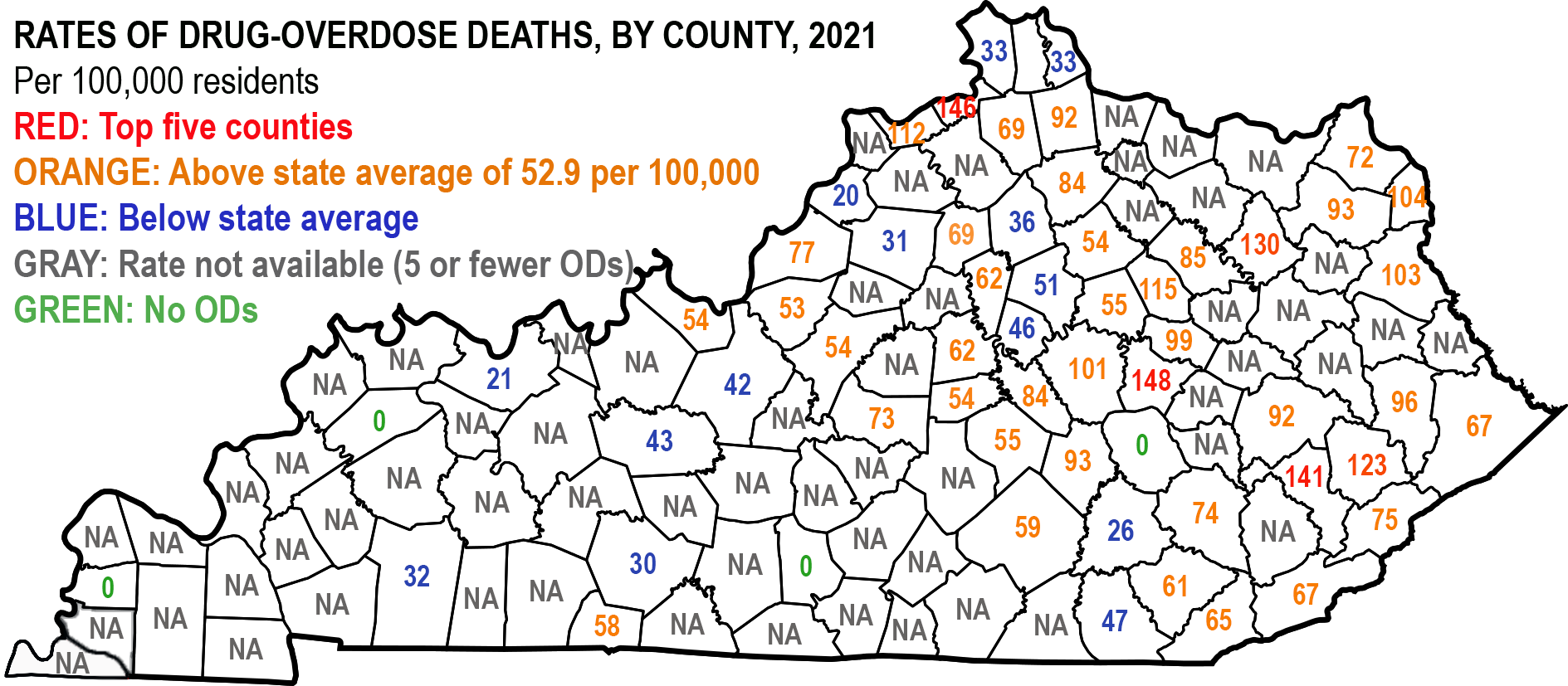
Kentucky Health News map from state data; click on it to enlarge (see note on table below)
By Melissa Patrick
Kentucky Health News

Drug-overdose deaths in Kentucky rose 14.6 percent in Kentucky in 2021, according to the state's annual report released Monday.

“The drug epidemic is not a Kentucky issue or political issue, but a nationwide issue that is affecting everyone and every state,” Van Ingram, executive director of the state Office of Drug Control Policy, said in a news release. “Our focus over this next year will be on increasing access to clinical care for those suffering from an addiction and offering more harm reduction measures.”

The state recorded 2,250 overdose deaths in 2021. That was 286 more OD deaths than the 1,964 reported in 2020, when the increase from the previous year was 54%.

The Covid-19 pandemic hit in 2020, disrupting lives and drug treatment, so it got most of the blame for that year's big increase. But the powerful opioid fentanyl was also becoming more prevalent, creating a "perfect storm" that is still being felt, Ingram said on KET's "Kentucky Tonight" Monday night. He told The Associated Press, “We’ve never seen one drug this prevalent in the toxicology reports of overdose fatalities.”

Estill County had the highest rate of fatal overdoses in 2021, 148 per 100,000 residents (adjusted for age of the population). It was followed by Gallatin, 146; Perry, 142; Rowan, 131; and Knott, 123. The report cautions that counties with fewer than 20 OD deaths per year, as was the case in all but Estill, Perry and Rowan, are unstable and should be interpreted with caution.
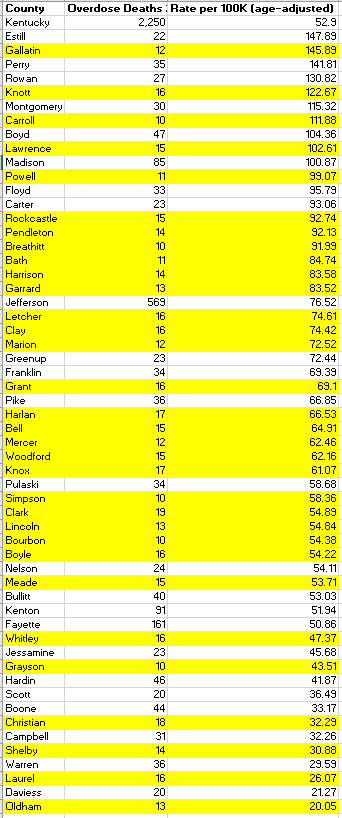
Kentucky Health News table, from state data; yellow counties
had fewer than 20 overdose deaths, so their rates are less reliable; 
rates were not released for those with fewer than 10 OD deaths.
The report does not give rates for counties with fewer than 10 overdose deaths, nor the actual number of OD deaths in counties with 5 or fewer. The number of counties with 10 or more OD deaths rose to 57 in 2021 from 44 in 2020. 

Jefferson County, the state's most populous, again had the most resident overdose deaths of any county, 569. That was an increase of 11% from the 512 recorded in 2020. The county's OD-death rate was 77 per 100,000, well above the statewide rate of 52.9 per 100,000.

Toxicology reports show that fentanyl was involved in 1,639 of the overdose deaths, or about 73% of them. That was an increase of 16% from the 1,413 overdose deaths involving fentanyl in 2020.

Methamphetamine was found in 1,075 of the overdose victims, or about 48%. This is an increase of 33% from the 809 OD deaths involving methamphetamine in 2020. 

Heroin was involved in 93 of the 2021 overdose deaths, a decrease from 191 in 2020. Also seeing decreases from the prior year were morphine, detected in 309 cases; acetyl fentanyl (256);  and alprazolam (211), among others. 

Oxycodone saw a slight decrease from the prior year, having been identified in 198 drug overdose deaths in 2021, down from 201 cases in 2020. 

Some of the drugs that saw increases from the prior year's toxicology reports were amphetamines, in 945 cases; gabapentin (503); THC (476); cocaine (300); hydrocodone (199); tramadol (129) and diazepam (85). 

The age group in which Kentucky overdose deaths are most common continues to be 35 to 44. Next is 45-54, which ranked third in the 2020 report and traded places with the 25-34 range in this year's report. Ranking fourth were the 55-64-year-olds. 

Over many years, Kentucky has supported programs, legislation and research to battle substance-use disorder, along with funding support.
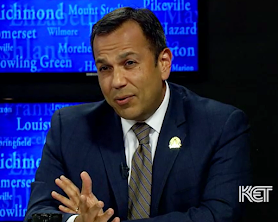
State Sen. Ralph Alvarado, R-Winchester
"This problem is like a bucket with fifty holes in it," state Sen. Ralph Alvarado, R-Winchester and a physician, said on "Kentucky Tonight," adding that it's a problem that must be addressed by all elements of society, not just government.

But progress has been made, with measures such as harm-reduction programs that include syringe exchanges, House Minority Leader Joni Jenkins of Shively said: "We can't even quantify how many lives we've saved."

The state has more syringe exchanges than any other. "We may be ground zero for this problem, but we've been ground zero for a lot of national solutions," said Tim Robinson, a recovering addict who is CEO of Addiction Recovery Care, a chain of treatment centers that try to lead drug users to careers. He said addiction often seems "daunting and hopeless" because it usually take several attempts to kick the habit, "but recovery's possible. I see it every day."
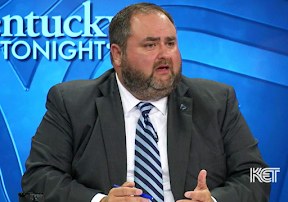
Tim Robinson, CEO, Addiction Recovery Care
Robinson said so much treatment is available in Kentucky now that "It's almost treatment on demand," but the state needs more mental-health professionals. He said methamphetamine use is harder to treat because there is no medication-assisted treatment for it, as there is for opioid use, and it can cause a psychosis that makes users difficult to evaluate when they come to treatment.

Jenkins promoted the concept of "recovery ready communities" put into law by the legislature last year. An advisory council is working with Ingram's office and Volunteers of America to develop a program for cities and counties to apply for certification by offering transportation, support groups, recovering meetings and employment services at no cost to residents seeking treatment for a drug or alcohol addiction, Gov. Andy Beshear said in a news release.

VOA President & CEO Jennifer Hancock said in the release, “We are committed to being an inclusive and collaborative leader as we create a framework that will both standardize and customize what it means to be recovery ready for every Kentucky community. Recovery Ready Communities truly has the potential to transform how Kentucky approaches the public health crisis of our generation, so it was with a sense of urgency, accountability and passion that we applied. Our team is ready to get started, inspired by the work and cannot wait to bring this initiative to life.”

Beshear said, “Here in the commonwealth, we have been fighting a long battle against the opioid epidemic. This public-health crisis has torn families apart and taken the lives of far too many Kentuckians, far too soon. Every day we must work together to fund recovery programs and treatment options so that we can continue to address this scourge and get our people the help they need.”

Data for the report was compiled with data from the state medical examiner's office, the Kentucky Injury Prevention & Research Center, and the Kentucky Office of Vital Statistics.

People who are struggling with drug abuse or who are concerned about a family member's substance use can search for treatment providers at www.findhelpnowky.org. The KY Help Call Center (1-833-859-4357) also provides information on treatment options an open slots among treatment providers. The Kentucky State Police has also launched the Angel Initiative, which allows anyone with a substance-use disorder seeking treatment to visit a KSP post where they are directed to treatment.

Wednesday, February 9, 2022

Overall, Ky. coronavirus numbers keep falling, but remain high; CDC director says it's still too early to cut prevention efforts

Graph by Kentucky Health News; click to enlarge.
By Melissa Patrick
Kentucky Health News

Despite encouraging trends in coronavirus case rates, the Centers for Disease Control and Prevention said Wednesday that it's too early to move away from preventive measures.

CDC Director Rochelle Walensky said Wednesday at a White House press briefing that nationwide hospitalizations and death rates from Covid-19 are still too high to ditch current mitigation efforts like mask-wearing. "We are not there yet," she said.

In Kentucky, positive-test rates and new cases are declining, but the virus-transmission rate remains high, sixth among the states.

"We continue to recommend masking in areas of high and substantial transmission. That’s much of the country right now, in public indoor settings," Walensky said. "And so we’re, of course, taking a close look at this in real-time, and we’re evaluating rates of transmission as well as rates of severe outcomes as we look at updating and reviewing our guidance." 

Walensky acknowledged that mitigation decisions are not made at the federal level, but CDC offers guidance, which she said is based on surveillance and data, including wastewater testing, genomic sequencing, state-level surveillance about how well vaccines are working, and hospital surveillance.

After eight days of decline, Kentucky's seven-day rolling average of new cases went up by 11, to 6,263. 
Of the 8,044 new cases reported Wednesday, 23% are in people 18 and younger. 

However, the state's daily infection rate fell slightly, to 96.28 cases per 100,000 residents. Nine counties  have rates above 200 per 100,000 people (or 2 per 1,000): Clay, 267.8; Wolfe, 267.5; Estill, 259.3; Owsley, 252.4; Lee, 239.3; Powell, 228.9; Letcher, 225.4; Leslie, 215.5; and Rockcastle, 204.5.

Every county in Kentucky is back in the red zone on the state infection map, for counties with more than 25 cases per 100,000 people, one day after Carlisle County moved out of it. Its rate is now 27. 

The New York Times ranks Kentucky's infection rate sixth among the states, with a 58% drop in cases over the last 14 days. The Times, using CDC data, ranks West Virginia third and Tennessee fourth. 

The share of Kentuckians testing positive for the virus in the last seven days fell for the 17th straight day, to 21.99%. Early in the pandemic, the goal was to get the rate below 5%. The record is 33.1%, set Jan. 23. 

Kentucky hospitals reported 2,142 Covid-19 patients, six more than Tuesday, with 399 in intensive care (down 17) and 200 on mechanical ventilation (down eight).

Eight of the state's 10 hospital regions are using at least 80% of their intensive-care beds, with five of them above 90%. The Lake Cumberland region continues to use 100% of its capacity. 

The state reported 34 Covid-19 deaths, bringing Kentucky's pandemic death toll to 13, 216. The 14-day average of reported deaths rose for the seventh straight day, to 28.5 per day. It the last seven days it has been 31.4.

Friday, February 4, 2022

Kentucky Covid-19 hospitalizations have biggest one-day drop in months; virus new-case rate keeps falling but remains 2nd in U.S.

New York Times graphs show Kentucky's new-case rate is second highest. Click on image to enlarge.
By Melissa Patrick
Kentucky Health News

New coronavirus cases, Covid-19 hospitalizations and percentage of positive tests continued dropping in Kentucky Friday, but the state's seven-day rate of new cases remained one of the highest in the nation. 

The state reported 8,376 new coronavirus cases Friday, which reduced the seven-day rolling average by more than 100, to 7,636 per day. Of those, 20% were in people 18 and younger, a drop from earlier in the week when then rate was running around 28%. 

The seven-day infection rate dropped to 135.68 daily cases per 100,000 residents, from 157.17 on Thursday. Kentucky's rate continues to rank second among the states even with a 25% drop in cases in the last 14 days, because other states' rates have declined faster, according to The New York Times. 

The share of Kentuckians testing positive for the virus in the past seven days dropped again, to 24.71%. This rate does not include any at-home tests. 

One of the best ways to see the impact of Covid-19 on a community is to look at hospitalizations, and the good news is that they are continuing to decline. 

Kentucky hospitals reported 2,345 Covid-19 patients Friday, 98 fewer than Thursday. This 4% drop is the largest one-day drop since several similar drops in late September and early October as the Delta surge waned.

Hospitals reported 422 Covid-19 patients in intensive care, only 18% of the total, the lowest in the 17 months Kentucky Health News has been tracking this metric; and 215 on mechanical ventilation. 

Nine of the state's 10 hospital regions are using at least 80% of their intensive care unit capacity, with four of them above 90%. 

Kentucky reported 37 more Covid-19 deaths, bringing its pandemic death toll to 13,063. Two of the victims were 33 and 34 years old, Gov. Andy Beshear said on Facebook. Nationwide, the pandemic death toll hit 900,000 people on Friday, less than two months after passing the 800,000 mark. 

In January, Covid-19 became the No. 2 leading cause of death in the U.S., behind heart disease, according to the Kaiser Family Foundation. Heart disease is killing an average of 2,103 people every day and Covid-19 is killing 1,905 people every day. The third leading cause of death is cancer, killing 1,642 a day. 

The best protection against hospitalization and death continues to be a vaccination and booster shot, but vaccination rates in Kentucky vary, with many counties still below 40% of residents with even one dose.

Statewide, 64% of Kentuckians have received at least one dose; 55% are fully vaccinated, not including boosters; and 42% are boosted, which provides reliable protection against the prevailing variant of the virus.

The pace of vaccinations in Kentucky has slowed for most of the last two months. The seven-day average has dropped to 5,032 per day, about half what it was two weeks ago and less than a third of what it was a month ago.

Wednesday, August 25, 2021

Today: 65 deaths reported, 2nd most of pandemic; 4,849 new cases, 3rd most; hospital and positive-test numbers at new highs

State Department for Public Health data and table, adapted by Kentucky Health News; for a larger version, click on it. Some hospitals have staffing shortages, so not all beds are available.
By Al Cross
Kentucky Health News

A huge spike in Covid-19 deaths was just one of the fast-worsening numbers of the coronavirus pandemic in Kentucky Thursday.

The state reported 65 deaths, the second most of any day in the pandemic; 4,849 new cases of the virus, the third highest; a record number of Covid-19 patients in hospitals, and the highest valid percentage yet of Kentuckians testing positive for the virus in the last seven days.

The deaths reported Thursday were just short of the previous record of 69, reported Jan. 28, and far exceeded numbers of recent weeks. Deaths are not reported immediately, and go through a confirmation process. There have been no reporting anomalies, and 57 of the 65 deaths occurred in August, said Susan Dunlap, communications director for the state health cabinet.

Some deaths are discovered through an ongoing audit of death certificates. Dunlap provided a list showing two each were in November, May, June and July. Among the August fatalities, two were in their 40s, nine in their 50s, 16 in their 60s, 21 in their 70s, five in their 80s and six in their 90s, according to the list.

Kentucky Health News graph; to enlarge, click on it.
In the two weeks ended Wednesday, the state averaged 10.5 deaths per day. The average is now 14, and the seven-day average is 19.7. The numbers prompted one of the most urgent and cutting Facebook videos yet from Gov. Andy Beshear.

"We are seeing and will see significant death moving forward, but we can do something about it," the governor said. "You know, there's a saying, when you can do something to stop devastation and you don't, that saying is about Nero fiddling while Rome burns. I'm sure there are some that would say it's Nero's individual liberty to just fiddle while everything burns down, but I think you got a responsibility to protect the people around them. So folks, get vaccinated, wear a mask, avoid large indoor gatherings. protect yourself, protect your family."

Beshear's pleas for vaccination have gone largely unheeded in the last three months. Daily vaccinations have generally increased in the last few weeks, as the threat from the virus has increased, but are still far below the levels seen in early spring, and they pale in comparison to pace of the pandemic.

"We had fewer people vaccinated during this report than we had come down with Covid," Beshear said. Today's vaccine doses will be reported tomorrow; yesterday, 12,294 doses were given. The seven-day average is 13,077 a day.

The 4,849 new virus cases raised the state's seven-day average to 3,829 per day. Thursday's number ranked behind only Jan. 6 and 7, when 5,742 and 4,911 new cases were reported. Then, about 12 percent of cases were in Kentuckians 18 and younger; they are more susceptible to the Delta variant of the virus, so now are a much bigger share of cases; their share Thursday was 31.3%.

"Today's Covid report is heartbreaking. . . . more kids testing positive now than ever before," Beshear said. "Our hospitals are overrun." 

Kentucky hospitals reported 2,074 Covid-19 patients, 60 more than Wednesday, but the number in intensive-care units fell by 40, to 549, and the number of ICU patients on ventilators remained the same, 338.

Five of the state's 10 hospital regions reported more than 80% of their ICU beds occupied; the Barren River region had the highest percentage being used for Covid-19 patients, 44%. The effective capacity is not as large as the reports indicate, because some beds are not staffed due to staffing shortages.

The University of Kentucky shut down five of its 42 operating rooms due to its Covid-19 patient load, mainly to make sure beds are staffed and the Chandler Medical Center can continue to fill its role as a major trauma center. Baptist Health Richmond stopped elective procedures for at least two weeks.

The percentage of Kentuckians testing positive for the virus in the last seven days is 13.16%, the highest since testing became readily available.

Kentucky retained the nation's fifth highest infection rate over the last 14 days, as reported by The New York Times. States with higher rates are Mississippi, Louisiana, Florida and Tennessee. The rate on the state's daily report was 79.65 per 100,000 residents; counties with rates more than double that rate were Clay, 245.5; Bell, 191.5; Whitley, 188.7; Owsley, 174.7; Jackson, 167.2; and Magoffin, 160.9. All are in Eastern Kentucky. The next six are LaRue, 156.8; Laurel, 153.2; Taylor, 149.1; Allen, 141.4; Breckinridge, 138.1; and Carroll, 137.1.

Other pandemic news: Kentucky is seeing more "breakthrough" cases among vaccinated people. Revised figures for July showed that the ratio of cases in unvaccinated people compared to those in vaccinated people was 3.7 to 1, not the 5 to 1 initially reported on Aug. 2.

State Dept. for Public Health chart; click it to enlarge.
The numbers reflect a national trend, but the vaccines still prevent serious disease and hospitalization in the great majority of cases. According to the state Department for Public Health, from March 1 through Aug, 18, Kentucky hospitals admitted 411 fully vaccinated people with Covid-19; among those not fully vaccinated, the Covid-19 admission count was 3,819. That's 9.7% to 90.3%. 

  • A new study showed that a second dose of the Johnson & Johnson one-dose vaccine significantly increases protection against the virus. Booster shots might be available next month.
  • Pfizer CEO Albert Bourla told the Fox News Channel Tuesday the company is planning for a vaccine-resistant variant to emerge: “Every time that the variant appears in the world, our scientists are getting their hands around it. They are researching to see if this variant can escape the protection of our vaccine. We haven’t identified any yet but we believe that it is likely that one day, one of them will emerge.” He said his company should be able to develop vaccines against such strains within 95 days of identification.
  • "Federal officials are admitting a hard truth: they don’t know exactly when — and how — this wave will end," The Washington Post reports. “Delta came along, and it's almost like we have a new pandemic now,” Francis Collins, head of the National Institutes of Health, told the Post. “Everything we thought we knew about covid-19 has to be revised.”
    The Post reports that projections of cases for the next month "are all over the map, and Collins conceded such models make assumptions about human behavior that researchers haven’t been good at predicting throughout the pandemic." He said, “I think we're in a world of trouble for at least the next couple of months, but exactly what the shape of that trouble looks like, I can’t tell you.”
  • Transylvania University in Lexington joined Berea College to become the second Kentucky institution of higher education to require students and employees to be vaccinated.

Friday, August 20, 2021

30% of new cases Fri. were 18 and younger; infections close schools; Ky. rate is 6th in U.S.; state's ventilator count sets record

Screenshot of interactive New York Times map shows how Kentucky's infection rate is sixth in U.S.
By Al Cross
Kentucky Health News

As the pandemic keeps accelerating in Kentucky, and almost all schools are in session, the coronavirus keeps infecting more young people. And in some places, so many are infected that schools are closing.

Kentucky reported another 3,869 cases of the coronavirus Friday, 1,158 of them in people 18 and younger. That's 29.9 percent, which appears to be the highest percentage of young victims ever on the state's daily report.

Fayette County Public Schools reported 208 cases in students through Thursday, 110 of them between ages 5 and 11, not eligible for vaccination. At the schools' request, the local health department held vaccination clinics. 

Infections force students into quarantine. The school district said Jessie Clark Middle School reported 10 students and four staff testing positive since the first day of school, leading to quarantines for 304 students, reports Valarie Honeycutt Spears of the Lexington Herald-Leader.

Spears also reports that Magoffin County Schools will be closed through Aug. 29 due to coronavirus infections and will not offer remote instruction. The district and Jenkins Independent Schools "are among the latest districts to tell kids and staff to stay out of schools for extended periods," Spears reports. "The Lee County and Knott County school districts have also canceled classes this school year for various periods as a result of the coronavirus case surge."

Kentucky's surge has given it the sixth highest infection rate among the states over the last two weeks, according to Centers for Disease Control and Prevention data analyzed by The New York Times. The states with higher rates are Mississippi, Louisiana, Florida, Arkansas and Alabama. After Kentucky, the next three states are also in the South: Georgia, South Carolina and Tennessee.  

State Dept. for Public Health graph; click to enlarge
Daily numbers: Friday's new-case number was the 16th highest daily total of the pandemic, but didn't raise the seven-day average, mainly because there was a higher number eight days earlier. However, hospital numbers, which Gov. Andy Beshear says are the most worrisome, kept rising.

Kentucky hospitals reported 1,780 Covid-19 patients, 72 more than Thursday. If just 38 more cases are reported Saturday, the state will reach a new high for hospitalizations, breaking the record of 1,817 set Dec. 17; the average daily gain this week has been 61. The state won't issue another report until Monday.

Of the 1,780 Covid-19 patients, 487 were in intensive care, the third straight record high, and 255 were on mechanical ventilation, breaking the record of 254 set on Dec. 17.

The state reported six more Covid-19 deaths, plus 34 identified through a review of death certificates received after Feb. 1, bringing the death toll to 7,517.

Yonts (Photo: Jonathan Palmer, CJ)
Ex-legislator dies of Covid-19: Former state Rep. Brent Yonts of Greenville, who had been battling Covid-19 for weeks, died of it Friday. He was 72. Friends and family said he was fully vaccinated.

"The fact that Yonts was vaccinated and still died of the coronavirus shouldn’t dissuade you from getting the vaccine," Courier Journal columnist Joe Gerth writes. "Fact is, Yonts was statistically far less likely to catch Covid and die than a 72-year-old man who was not vaccinated. He was just unlucky."

Gerth also wrote of Yonts, "He was smart. He usually seemed to have the best interests of his constituents at heart. That's a fine eulogy for any elected official. I wish it could be said of more."

Ellan Yonts Suetholz told the newspaper that her mother, Greenville Mayor Janice Yonts, is fully vaccinated and has tested negative since her husband's symptoms started. "It’s a difficult situation to understand why someone like my dad who was fully vaccinated ended up dying from the virus," she said, but the family still wants "everyone to understand that the vaccine does work."

Tuesday, August 3, 2021

Drug overdose deaths in Kentucky rose 49% in 2020; fentanyl and methamphetamine remained the biggest drivers of death


By Melissa Patrick

Kentucky Health News

Drug-overdose deaths in Kentucky rose 49% in 2020, according to the state's latest annual report

“In addition to the stress caused by the pandemic, we believe the increase in overdose deaths for 2020 is due to a rise in illicit fentanyl and its analogues within the drug supply. The problem is also exacerbated by the widespread availability of potent, inexpensive methamphetamine,” Van Ingram, Executive Director of the Kentucky Office of Drug Control Policy, said in a news release. 

The state recorded 1,964 overdose deaths in 2020, the highest number recorded to date. That was 648 more than in 2019, when 1.316 were recorded. It is also 498 more overdose deaths than in 2017, when the state recorded its last record high for overdose deaths, 1,566. 

Knott County had the highest rate of fatal overdoses in 2020, 122 per 100,000 residents. It was followed by Clark, 104; Bourbon, 98.4; Henry, 88; and Garrard, 82.3. The report cautions that counties with fewer than 20 overdose deaths per year, as was the case in all but Clark County, are unstable and should be interpreted with caution. 

The report does not give rates for counties with fewer than 10 overdose deaths, so the report only includes 44 counties. That's up from 2019, when 29 counties had 10 or more overdose deaths, and up from 23 in 2018. 

Jefferson County, the state's most populous county, had the most resident overdose deaths of any county, 512, which was an increase from 319 in 2019. 

Ky. Health News table, from state data; yellow counties
had fewer than 20 OD deaths, so rates are less reliable;
rates were not released for those with fewer than 10.
Toxicology reports show that fentanyl was involved in 1,393 of the overdose autopsies, or approximately 71% of all overdose deaths for the year. Acetylfentanyl, another version of the drug, was found in 502 of the cases. 

Heroin was involved in 191 of the 2020 overdose deaths, an increase from 166 in 2019. Also seeing increases from the prior year were morphine, detected in 504 cases; alprazolam, 237 cases; gabapentin, 390 cases; methamphetamine, 801 cases; and oxycodone, 198 cases. 

The age group in which Kentucky overdose deaths are most common continues to be 35-44. Next is 25-34, which ranked third in the 2019 report and traded places with the 45-54s in this year's report.

“Deaths attributed to overdose in 2020 are a somber reminder that the opioid epidemic continues to deeply impact our commonwealth  . . . Opioid response is complex and our success will be dependent on our willingness to unite in a shared responsibility to end the stigma and discrimination against substance use disorders and build an equitable system of care that engages and empowers individuals and their families to lead healthy, fulfilling lives," Health Secretary Eric Friedlander said in the release.

Data for the report was compiled with data from the Kentucky Office of the Medical Examiner, the Kentucky Injury Prevention & Research Center, and the Kentucky Office of Vital Statistics.

People who are struggling with drug abuse or who are concerned about a family member's substance use can search for treatment providers at www.findhelpnowky.org. The KY Help Call Center (1-833-859-4357) also provides information on treatment options an open slots among treatment providers. The Kentucky State Police has also launched the Angel Initiative, which allows anyone with a substance-use disorder seeking treatment to visit a KSP post where they are directed to treatment. 

Friday, June 18, 2021

KET program, airing Monday night and online afterward, explores how to die a better death, with a focus on palliative care

The World Health Organization describes palliative care as
"an approach that improves the quality of life of patients and
their families facing the problems associated with life-threatening
illness, through the prevention and relief of suffering by means of
early identification and impeccable assessment and treatment of
pain and other problems, physical, psychosocial, and spiritual."
A Kentucky Educational Television program will examine some moral questions surrounding death, including how to approach medical treatment when you are at the end of your life. 

The program "Horizon: How to Die a Better Death," is presented by Dr. Kevin Fong, who explores what it means to die a better death and shows how palliative care, when done right, can help individuals achieve that goal by shifting the focus from cure to care.   

Fong talks to medical professionals and people who are near the end of their lives and explores how individuals should approach medical treatment when they are dying.

The documentary will air at at 9 p.m. ET and 8 p.m. CT Monday, June 21; and 4/3 p.m. Thursday, June 24 and Sunday, June 27 at 4/3 p.m. KET program are also available at www.ket.org.

Friday, June 11, 2021

At last regular Covid-19 press briefing, Beshear says crisis is over but pandemic is not; rescinds most restrictions, reflects on fight

Gov. Andy Beshear signs an order to rescind the state's mask mandate, capacity limits and other rules. Standing, from left, are Health Secretary Eric Friedlander, Cabinet Secretary J. Michael Brown, Chief of Staff LaTasha Buckner and Health Commissioner Steven Stack. (KHN photo by Melissa Patrick)
By Melissa Patrick
Kentucky Health News

In his last regular Covid-19 press conference, Gov. Andy Beshear lifted the statewide mask mandate for most settings, ended capacity limits for businesses and venues, and ended the state's "healthy at work" requirements, citing an ever-increasing number of Kentuckians getting a coronavirus vaccine as the reason these changes could be made. 

“Let me be clear, Covid-19 remains deadly. Our war against it is not yet won,” Beshear said Friday. “But after more than 15 months of struggle and of sacrifice, we can also say this: While Covid remains a threat, we are no longer in crisis.”

Later in theafternoon, the Kentucky Department of Education said in a press release that in line with the governor's executive order, it would rescind the state's "healthy at school" guidance as well, meaning that the use of masks and social distancing is no longer mandated. 

Beshear said he has held 250 Covid-19 news conferences Since the first one on March 7, 2020. Now, he said he will shift to a weekly news conferences, but on various topics. 

His executive order says masks are still required in high-risk places, such as public transportation, heath-care settings and nursing homes., and are recommended in correctional facilities, homeless shelters, and for anyone who is immuno-compromised, exhibiting symptoms of Covid-19 or has tested positive for it in the previous 10 days.  

Beshear said any business that wants to continue requiring masks can do so, and called on Kentuckians to be patient with one another as people work through these changes. 

Beshear spent many minutes recounting the state's 15-month fight against the coronavirus ("a story of our goodness") and thanking his team and other Kentuckians for hard work and many sacrifices, saying they allowed the state to beat back three waves of infection and avoid having its hospitals overrun with Covid-19 patients. 

"We know that our actions saved thousands, likely tens of thousands, of lives," he said. Later, asked what he might have done differently, he said, "I think we've done more things right than most states."

Some Republican state senators said Thursday that Beshear should also end the state of emergency that gives him special powers. He told Louisville's WLKY-TV that he would probably maintain the emergency as long as the federal government does, to take advantage of possible federal aid.

Kentucky Health News asked Beshear what what he would say to those who think the pandemic is over. He didn't directly answer, instead thanking those who were vaccinated, saying their risk is very low. To the unvaccinated, he said the state has shared plenty of information about the vaccines and it is now up to them. 

"If you are not vaccinated, we have talked over and over and over about how to protect yourself from this virus and you've had the personal choice now either to get the protection of the vaccine, or to take the steps that we know can protect you," he said. "So to everybody out there, just do right thing." 

Health Commissioner Steven Stack reported that since vaccines became available in January, coronavirus cases have declined 93 percent, Covid-19 hospitalizations 83% and deaths 95%.

Washington Post chart, adapted by Kentucky Health News
More than 2.1 million Kentuckians have received at least one dose of a vaccine, or 47% of the total population. Centers for Disease Control and Prevention data show 55.8% of the eligible population, 12 and up, is fully vaccinated.

Last week Kentucky opened up a lottery-style incentive for people with at least one dose. It will give three Kentuckians $1 million each and 15 students higher-education scholarships. Beshear said about 370,000 people have registered for the drawings at shotatamillion.ky.gov. The first drawing will be July 1; registration covers all three drawings. 

Daily numbers: In his final such report, Beshear announced 237 new cases of the coronavirus, bringing the seven-day rolling average to 284, the lowest in just over 11 months. 

The share of Kentuckians testing positive for the virus in the past seven days is 2.05%. This week is on track to have the lowest positive-test percentage since tests became widely available in May 2020.

The statewide rate of daily new cases is 4.29 per 100,000 residents. Counties with rates more than double that level are Webster, 35.3; Mason, 14.2; Rockcastle, 12; Rowan, 11.7; Bath, 11.4; Estill, 11.1; Marion, 11.1; Franklin, 10.9; Harrison, 10.6; Allen, 10.1; Fleming, 9.8; Todd, 9.3; Green, 9.1; Hopkins, 9.0; Union, 8.9; Muhlenberg, 8.9; Knox, 8.7; and Metcalfe, 8.5.

Kentucky hospitals reported 270 Covid-19 patients, with 72 in intensive care; and 35 of those on a ventilator, continuing a long downward trend. 

Two of the state's hospital readiness regions are using at least 80% of their intensive-care beds: the easternmost, from Lee to Pike counties, at 80.15%; and Lake Cumberland, at 88.89%. 

The state reported nine new Covid-19 deaths, bringing its toll from the disease to 7,147. Beshear said one was vaccinated, roughly reflecting the vaccines' 90% or greater effectiveness. He said the larger-than-average number of deaths the last two days (12 and 17) reflected old cases that needed additional documentation for confirmation. The state is averaging about seven Covid-19 deaths per day.

Wednesday, May 26, 2021

Pandemic metrics, still tilting down, pass more milestones

State Dept. for Public Health map, relabeled by Ky. Health News; click on it to enlarge.

By Al Cross

Kentucky Health News

Measures of the pandemic passed more milestones in Kentucky Wednesday.

The percentage of Kentuckians testing positive for the coronavirus fell to 2.4%, the lowest level since testing for the virus became widely available just over a year ago.

The state reported 440 new cases of the virus, lowering the seven-day rolling average to 434 per day. It hasn't been that low since July 17, and has dropped for nine consecutive days. In the last 14 days, the daily average has dropped 22%, according to The New York Times. 

The statewide rate of daily new cases fell to the lowest level since the state began reporting it in December: 6.66 cases per 100,000 residents. The Times says the rate is 16th among the states.

Counties with rates more than double the statewide rate were Webster, 33.1; Owen, 27.5; Union, 22.8, Adair, 20.8; Robertson, 20.3; Bath, 19.4; Montgomery, 18.3; Gallatin, 17.7; Harlan, 17.6; Rockcastle, 17.1; Whitley, 16.2; Laurel, 14.8; Powell, 13.9; Bourbon, 13.7; and Knox, 13.3.

Kentucky hospitals reported 349 Covid-19 patients, 109 of them in intensive care and 50 of those on ventilators. Those figures have also trended downward; the average hospital count in the past seven days has been 352; in the previous week it was 397, so the latest weekly average was a drop of 11.3 percent. 

Two hospital regions reported more than 80% of intensive-care beds in use: Lake Cumberland, 91%, and the easternmost region, from Lee to Pike counties, 82%. In the former region, 22% of ICU beds had Covid-19 patients; in the latter, only 6% did, about average for the state other than Lake Cumberland.

The state reported 19 more Covid-19 deaths, 16 from regular health-department reports and three from an ongoing audit of death certificates. Over the last two weeks, the state has averaged 7.3 deaths per day; in the previous two weeks, it was 9.3. The state's Covid-19 death toll is 6,744.

Tuesday, May 25, 2021

Beshear says Ky. data prove vaccines work; asks younger Kentuckians, who make up most new cases, to get vaccinated

Graphic by The Washington Post is updated daily.
By Melissa Patrick
Kentucky Health News

At his only announced pandemic press briefing of the week, Gov. Andy Beshear shared Kentucky data that shows how well coronavirus vaccines work, and again implored younger Kentuckians to go get one. 

First, he showed how deaths related to Covid-19 have plummeted since Kentuckians have been able to get vaccinated, falling from a high of 1,672 deaths in December, when the first vaccines became available to some, to only 56 in May, with less than a week left in the month. 

In March and April, of the people who tested positive for the virus in Kentucky, 97.5% were not vaccinated; of those who were hospitalized, 94.3% of them were not vaccinated; and of all the Covid-related deaths, 94.4% were not vaccinated, Beshear said. 

"These things work," he said. "Yes, they are not 100% effective, but when you look at these numbers, they are much more than 90% effective. Folks, these vaccines have earned an A, and we all ought to recognize that and take them. Those are incredible numbers that show just how effective the vaccines are." 

So far, 2,006,742 Kentuckians have received at least one dose of a vaccine, which amounts to 45% of the total population or 56% of the adult population. 

Beshear said he was proud to see an increase in the number of people who got a first dose of a vaccine last week, up nearly double from the prior week, to 74,553. 

He said 23,409 12- to 15-year-olds have received at least one dose of a vaccine since it became available to them, and "You want to keep that up."

Moderna announced today that its early trials show the vaccine is 100% effective for 12- to 17-year-olds and said it will seek emergency approval from the U.S. Food and Drug Administration to expand its use in teens. Currently, the Pfizer-BioNTech vaccine is the only one approved for that age group. 

Beshear said if the Moderna vaccine is approved for this age group, it will help get them vaccinated before school starts in the fall. 

The weekly federal pandemic report for Kentucky shows its share of fully vaccinated people has dropped from 27th to 31st among the states in the last three weeks. Asked why, and what the state is doing about it, Beshear and Health Commissioner Steven Stack pointed to lack of second doses.

Stack said coming back for that second shot is "very important" in order to be fully protected and for it to last longer. He added that just because it looks like we are resuming normal activities, that doesn't mean you don't need to get that second shot. 

The Centers for Disease Control and Prevention says that as of May 21, 37% of Kentuckians are fully vaccinated. Nationwide, 50% of U.S. adults are fully vaccinated. 

Prisons: Beshear announced that the Department of Corrections and the Department of Juvenile Justice will resume in-person visitation the week of June 20. It has been stopped since the pandemic began. 

He said visitation will open by appointment to fully vaccinated family and friends of inmates. A state news release says available times will be published on the agencies' websites June 4. Beshear said 76% of adult inmates have been vaccinated, and vaccines will be offered to new inmates and those who originally declined one. 

State Dept. for Public Health graph, relabeled by Ky. Health News; click on it to enlarge.

Daily numbers:
 The share of Kentuckians testing positive for the virus in the last seven days is 2.52%. It hasn't been that low in almost a year.

Beshear announced 580 new cases of the virus, saying it was the lowest Tuesday number in three months. It lowered the seven-day rolling average by nine, to 456 down for the eighth straight day.

He said the highest new-case rate is still among 10 to 19-year-olds, closely followed by those 20-49. “Our incidence rate is much higher among younger Kentuckians than older Kentuckians,” he said. “It’s directly associated with . . . whether you’re vaccinated.”

The state reports that 81% of Kentuckians 65 and older have received at least one dose of a vaccine; 61% of people 50-64; 47% of people 40-49; 42% of people 30-39; and 31% of people 18-29. 

Kentucky has seen three straight weeks of declining cases and positive-test rates. Beshear called this yet more "real-world proof" of how effective these vaccines are. 

The statewide rate of daily new cases over the last seven days is 7.01 per 100,000 residents, down 0.42 from Monday and the lowest since the state began reporting the figure in December. Counties with rates more double the statewide rate are Owen, 27.5; Adair, 23.8; Bath, 22.9; Union, 21.9; Webster, 19.9; Rockcastle, 18; Montgomery, 16.7; Gallatin, 16.1; Bourbon, 15.2; Harlan, 14.8; Carroll, 14.8; Laurel, 14.3; Mason, 14.2; and Whitley, 14.2.

The state reported five more Covid-19 deaths, four from regular health-department reports and one from the ongoing audit of death certificates. The state's Covid-19 death toll is 6,725.

Kentucky hospitals reported 353 Covid-19 patients; 108 of them in intensive care and 49 of those on a ventilator. All hospital readiness regions are using less than 80% of their intensive-care beds. 

Beshear also acknowledged the loss of two people who he said had made an impact on his life, both of them to cancer. One was his Aunt Mary Ann Miller and the other was 9-year-old David Turner Jr., who advocated for childhood cancer research and early in the pandemic asked Kentuckians to wear a mask. 

In other pandemic news Tuesday: 
  • U.S. Sen. Rand Paul says he won't get a coronavirus vaccination until he sees that it would be more effective than the natural immunity he says he has from having been infected with the virus more than a year ago. Paul said on WABC Radio in New York, "Until they show me evidence that people who have already had the infection are dying in large numbers, or being hospitalized or getting very sick, I just made my own personal decision that I’m not getting vaccinated because I’ve already had the disease and I have natural immunity." Fox News notes, "The Centers for Disease Control and Prevention has encouraged people who have had Covid to get vaccinated because "experts do not yet know how long you are protected from getting sick again after recovering." Research says at least eight months, and the degree of immunity appears to increase with the severity of the case. Paul had a mild case.
  • "The daily vaccination rate has sunk below where the United States needs to be to meet President Biden’s July 4 vaccination goals," Paige Winfield Cunningham reports for The Washington Post. "Yet Anthony S. Fauci, director of the National Institute of Allergy and Infectious Diseases, said he thinks the targets will still be met. 'I believe we will attain' the president’s goal of having 70 percent of Americans vaccinated with at least one dose of a coronavirus vaccine, Fauci told my colleague Yasmeen Abutaleb during a Washington Post Live interview."
  • The source of the virus remains a mystery, "but in recent months the idea that it emerged from the Wuhan Institute of Virology, once dismissed as a ridiculous conspiracy theory, has gained new credence. How and why did this happen?" Glenn Kessler of The Washington Post asks and answers.
  • Experts generally believe that the pandemic has killed more people than accounted for in government lists of Covid-19 deaths, but estimates vary. Recently The Economist estimated that the global death toll is 10 million, three times the official counts; now the Institute for Health Metrics and Evaluation at the University of Washington estimates that there have been 6.9 million deaths, more than double the official toll. The estimated U.S. difference is smaller, 58% (574,043 official deaths, 905,289 estimated deaths).
  • Why do we get coronavirus shots in the arm? Because the muscles there are good at picking up antigens in the vaccine that stimulate immune responses and are close to the lymph nodes, which have more immune cells that recognize the antigens "and start the immune process of creating antibodies," Purdue University professor Libby Richards writes for The Conversation. "Muscle tissue also tends to keep vaccine reactions localized. . . . Another consideration during vaccine administration is convenience and patient acceptability. Can you imagine taking down your pants at a mass vaccination clinic? Rolling up your sleeve is way easier and more preferred."