Showing posts with label federal grants. Show all posts

Friday, June 21, 2024

Huge grant fails to reduce ODs by 40%; does show a 9% drop over four states, saving an estimated 483 lives, but few in Ky.

The National Institues of Health’sNational Institute on Drug Abuse and the Substance Abuse and Mental Health Services Administration funded the study through the NIH HEAL Initiative.
By Melissa Patrick
Kentucky Health News

A four-state, $350 million research grant that included Kentucky fell far short of its goal of reducing opioid overdose deaths by 40% over four years, instead showing an estimated 9% drop in such deaths. 

"That translates into an estimated 483 opioid-overdose deaths that were averted in the communities that received the intervention," said Patricia Freeman, part of the HEALing Communities Study research team and an associate professor of pharmacy at the University of Kentucky.  

Another model, comparing those to communities to a control group of counties with similar charcteristics, showed a 15% average reduction in opioid-overdose deaths in the intervention communities, which Freeman said was "very close to reaching statistical significance."

"It's still consequential even though it didn't reach statistical significance," said Freeman. "An estimated 483 lives were saved. And just because it didn't reach statistical significance doesn't mean that it was not a meaningful public-health impact." 

In Kentucky, there was no real difference in the adjusted rate of opioid-related overdose deaths between the intervention counties and the control-group counties, with 59.8 deaths per 100,000 residents in the intervention communities and 59.3 per 100,000 in the control communities. 

The study compared the control and intervention communities for one year, July 2021 through June 2022. 

"In retrospect, I think people will say that the 40% was a very ambitious goal," said Freeman. The researchers in the paper said likewise, adding, "The trial may have been underpowered to detect substantially smaller yet clinically meaningful differences."

An underpowered study does not have a sufficiently large sample size to answer the research question of interest,"  says the National Library of Medicine. according to L.D. Case and W.T. Ambrosius in an article titled "Power and Sample Size," published in Topics in Biostatistics.

The study, published June 16 in The New England Journal of Medicine, found no differences in estimated opioid-overdose deaths among the four states, nor any statistical differences between urban and rural communities, by age, by sex or among racial and ethnic groups. 

The research paper identifies several unforeseen challenges that likely diminished the impact of the interventions. Those include the Covid-19 pandemic, which began just two months after the start of the study’s intervention, an increase in the prevalence of fentanyl in illicit drug markets, and a 10-month implementation period, which may have been too short for communities to fully implement and see the effects of their efforts, says a UK news release.  

The four-year study, launched in 2019, included 67 communities affected by opioid abuse, including 16 Kentucky counties. UK  received $87 million from the National institutes of Health for the study, the largest competitive award UK has ever received. 

The other participants were Boston Medical Center in Massachusetts, Columbia University in New York City and Ohio State University. 

The Kentucky counties where interventions were made were Boyd, Boyle, Clark, Fayette, Floyd, Franklin, Kenton and Madison. The control-group counties were Bourbon, Campbell, Carter, Greenup, Jefferson, Jessamine, Knox and Mason.

Freeman noted that the published study results don't reflect county-level data, but the impact of the interventions in all 67 communities.  

The interventions involved increasing education about overdoses; increasing overdose-prevention education and distribution of the anti-overdose drug naloxone; increasing access to and retention of medications to treat opioid-use disorder, including methadone and buprenorphine; safer opioid prescribing, dispensing and disposal practices; and reducing the stigma of addiction.
 
"Specific efforts in Kentucky included partnering with 145 organizations to distribute more than 40,000 naloxone units," the news release says. "Strategies to help people find and stay in treatment deployed 26 peer-recovery coaches and 16 care navigators and provided $411,848 in transportation support.

"Other activities included partnering with 35 pharmacies to install permanent medication-disposal drop boxes, which has resulted in the incineration of more than 6,500 pounds of leftover medication. Efforts to reduce stigma and increase awareness of treatment resources produced 64 communication campaigns, resulting in 73 million engagements."

The study's principal investigator, Sharon Walsh, a professor in the College of Medicine and College of Pharmacy and director of the UK Center on Drug and Alcohol Research, said in the release, “Our findings demonstrate that implementing these evidence-based practices through community-engaged strategies and partnerships can make a meaningful impact on combating overdoses, even amid the rapidly evolving opioid epidemic and unprecedented disruptions like the Covid-19 pandemic,”  

Freeman said researchers are continuing to analyze the data to look at the impact of each strategy used in the study, and have written a paper that is under peer review, looking at how naloxone distribution changed in the intervention and control communities.

She said they will also continue to analyze the impact of the interventions on non-fatal overdoses, the impact on overdoses that involved opioids and other substances, since this study was specific to opioids, among other things.

Also coming are results from the control communities, which received the interventions after the comparisons between the control communities and intervention communities were complete.

"We'll be trying to really understand what were the strategies that were the most impactful in our communities," Freeman said. 

Looking forward, Freeman said she thought Kentucky could see some long-term benefits from this study because of the infrastructure, technical assistance and training that was set up with the agencies and organizations to implement the study. "I'm interested to see what's going to be a longer term impact," she said. 

The good news is that Kentucky has experienced two years of declines in overdose deaths. In  2022, it was one of only eight states that saw a decrease in drug overdose deaths, and in 2023, it saw a 10% drop in such deaths, according to the state's Office of Drug Control Policy.

Updated 06/25/24: This article has been updated to reflect the correct attribution for the definition of an "underpowered study" to be  L.D. Case and W.T. Ambrosius in an article titled "Power and Sample Size," published in Topics in Biostatistics.

Monday, October 30, 2023

UK will study the effects of newly prevalent drug xylazine ('tranq')

Terry Hinds Jr. and Cassandra Gipson-Reichardt (UK photo by Mark Cornelison)
By Elizabeth Chapin

Two University of Kentucky researchers have received a $2.65 million federal grant to study how the brain is changed by the mixture of fentanyl and xylazine, a veterinary anesthetic commonly referred to as “tranq.” It is increasingly being used to enhance the effects of fentanyl, a potent opioid that can be deadly even in small amounts. 

Cassandra Gipson-Reichardt and Terry Hinds Jr. associate professors in the College of Medicine’s Department of Pharmacology and Nutritional Sciences, received the five-year grant from the National Institute on Drug Abuse to see how the drugs change the brain’s signaling pathways.

These are the only preclinical studies now funded by NIDA to address an epidemic of xylazine-fentanyl use, and will be the first to determine neurobiological and behavioral impacts of the drug combination and identify treatment targets to reverse xylazine’s effects on fentanyl.

The combination of xylazine and fentanyl caused a 1,127% increase in xylazine-positive overdose deaths in the South in 2020-21, and other problematic health effects, including tissue death from poor circulation.

Xylazine is posing other new challenges to the fight against opioids, since it decreases the usefulness of naloxone (branded as Narcan), the drug that reverses the effects of an opioid overdose.

Gipson-Reichardt and Hinds will study the brain circuits that are changed when xylazine and fentanyl are used together and see if these changes are responsible for making naloxone less effective. They have already identified unexpected pathways controlled by the combination that may reduce the actions of naloxone. In their work, they will determine if targeting these pathways could be therapeutic.

“By studying these processes in detail, we hope to better understand the ways xylazine and fentanyl interact in the brain and how they affect behavior,” said Gipson-Reichardt. “This knowledge could lead us to new strategies for treating people who are struggling with the combined use of these substances and help make naloxone more effective in saving lives.”
 
Gipson-Reichardt and Hinds will collaborate with Kelly Dunn of Johns Hopkins University in Baltimore to translate findings to inform the public on individual factors that may lead to worse clinical outcomes during withdrawal from the xylazine-fentanyl combination.

Monday, October 23, 2023

UK's latest federal grant to increase number of primary-care doctors in rural Kentucky includes new scholarship opportunities

Medical students Katelin Maggard and Anna Cox on the College of Medicine-Bowling Green Campus, a partnership of UK, Western Kentucky University and Med Center Health. (Photo by Clinton Lewis)

By Allison Perry
The University of Kentucky College of Medicine has received a four-year, nearly $16 million grant from the federal Health Resources and Services Administration. UK will get $3.97 million a year over the next four years to support efforts to increase the number and diversity of primary-care physicians in Kentucky, with the ultimate goal of improving health-care access in underserved areas of the state.

The physician shortage is not unique to Kentucky, nor is it limited to primary care. A2021 report from the Association of American Medical Colleges estimated that national demand for all physicians will exceed the existing supply by 37,800 to as many as 124,000 by the year 2034.

In Kentucky, 61% of the greatest physician needs are in rural areas. In rural and under-served areas, primary-care physicians are often the residents’ only exposure to any health-care professional, highlighting the need to improve access to these physicians.

UK's Rural Physician Leadership Program trains students
at Morehead who are interested in practicing rural medicine.
(UK photo by Jorge Castorena)
The UK College of Medicine has worked with academic and clinical partners to meet this growing need through four regional campuses in Lexington, Morehead, Bowling Green and Northern Kentucky, and graduated the largest-ever class this past spring.

These partnerships were a key to getting the new grant, which will focus on expanding pathways to support students who are interested in medical school and providing scholarship opportunities for medical students who choose primary care as a career path.

The goal is not just to increase the number of primary care physicians in the state, but to encourage new physicians to practice in underserved communities upon graduation, said Charles “Chipper” Griffith III, M.D., dean of the College of Medicine.

“As a physician who has provided primary-care services for patients of all ages, I can tell you firsthand how important it is for people to have access to these providers,” Griffith said. “An established relationship with a primary care physician is a first line of defense against acute and chronic illness and injuries. We not only provide treatment for illness, but we actively work to help our patients prevent it by identifying risk factors and screening for disease. In a state that suffers from high rates for many chronic, preventable diseases, increasing access to primary care is a critical step in improving the health of our citizens.”

Path to primary care can start in middle school 

UK already had several programs to provide educational experiences as students navigate the pre-med journey. With help from the new grant, these programs will place a greater focus on primary care, which includes family medicine, general internal medicine, general pediatrics, or the combination of internal medicine/pediatrics commonly known as Med/Peds.

The pathway to a medical career begins years before students reach college. Educational opportunities need to begin early — ideally, by the eighth grade, says James Ballard, director of UK's Center for Interprofessional and Community Health Education.

Promising students are identified with teh help of UK’s Area Health Education Center program, a collaborative effort between UK, the University of Louisville Health Science Centers, and eight regional centers. They provide support to help students meet their goals, including assistance in planning which classes to take in high school, help with applying for college, and encouragement from health-care role models.

At the high-school level, AHEC offers two free residential summer camps at UK that will be revised and funded through the new grant. The Summer Enrichment Program, for rising high school juniors, is a residential camp that allows students to gain some early college experience by spending three weeks learning, observing, and working hands-on with UK faculty, health professionals and health professions students. The program will add more mentoring specifically from primary-care physicians to provide more specific education on what a primary-care physician can do for patients, and understand how primary-care physicians function in a collaborative system.

The Health Researchers Youth Academy takes a similar approach, but is more tailored to the research side of a medical career. The residential programs connect high-school students with researchers, teach them research methods, and give them experience working in a laboratory. At the end of the camp, students will present their findings through poster presentations. In terms of primary care, the camp will educate students more on a primary care physician’s role in translational research — in other words, how basic science at the bench ultimately becomes a part of everyday patient care.

Though the Center for Intreprofessional and Community Health Education aims to create more health professionals across all spectrums, it will extol the benefits of choosing primary care, Ballard said.

“We’ve always exposed students to a variety of professions in the past, but we want to get more specific when it comes to primary care. We want them to understand ‘This is what a primary care physician does, this is why it’s important, this is why it’s valuable to you’,” Ballard said. “It’s amazing what primary care physicians can do, especially in rural and underserved areas. We want to show them what a difference they can make in their community by choosing this as a career.”

New initiatives funded by this grant will include two post-baccalaureate programs for students who have graduated from college, to provide opportunities for students to complete prerequisites for medical school and/or receive additional support and training to improve their chances of being accepted into medical school; a pre-matriculation program to prepare incoming medical students for the rigors of the curriculum and to highlight the benefits of choosing primary care as a career path; and a primary-care scholarly concentration, which will include targeted coursework and an enhanced community clinical rotation at a rural teaching health center.

Reducing debt for future primary care physicians

Research shows that students with large college debt are less likely to choose primary-care specialties because they have lower compensation in comparison to specialty and sub-specialty practices. Also, these graduates are less likely to practice in underserved communities.

The new grant will also allow the College of Medicine to provide up to $2.88 million a year in scholarships to students with demonstrated interest in primary care.

The new scholarships are positioned to decrease the debt burden by half for 80 students, and by a quarter for an additional 32 students. By reducing this burden, the team anticipates that more students will be likely to follow their passion for rural medicine and making a difference in underserved communities.

“Investing in the education of medical students through scholarships is not just an act of philanthropy, it’s an investment in the future of health care in Kentucky,” said Dr. Stephanie White, senior associate dean in the College of Medicine. “This award will be life-changing for our students who wish to pursue a career in primary care and have the desire to make a difference in underserved communities. These scholarships won’t just alleviate financial burden — they will empower dreams and nurture the talents of our next generation of primary-care physicians.”

Saturday, October 7, 2023

UK gets $19 million to study tobacco-product markets and possible additional federal regulation of them in Kentucky

AppalTRuST draws from UK's colleges of Medicine, Nursing, Public Health, Education and Arts and Sciences, the Markey Cancer Center and Bridging Research Efforts and Advocacy Toward Healthy Environmennts (BREATHE). (Photos by Jeremy Blackburn , UK Research Communications)
Kentucky Health News


The University of Kentucky is one of seven institutions that are getting about $20 million each in federal money over the next four years to examine the potential impact of federal tobacco regulations.

The Appalachian Tobacco Regulatory Science Team, which UK has dubbed AppalTRuST, is funded by $19 million from the National Institute on Drug Abuse of the National Institutes of Health and the Food and Drug Administration Center for Tobacco Products.

"The goal of AppalTRuST is to investigate the impact of federal regulatory policies in rural communities through collaboration, education and pioneering regulatory scientific research," said a UK news release that alluded to Kentucky's longstanding health problems from using what was once its top cash crop.

“This is a state with its own struggles and health disparities associated with tobacco use, particularly in Appalachian Kentucky,” Dr. Seth Himelhoch, chair of the UK Department of Psychiatry and the grant's principal investigator, said in the release. “While America has overall reduced its use of combustible tobacco, Appalachian Kentucky, in particular, has not moved along at the same pace.”

Kentucky's adult smoking rate, 19.6% in 2021, is second only to West Virginia's.

Co-directors Teresa Waters, Seth Himelhoch and Ellen J. Hahn
“It seems very important to me that when the federal government is going to evaluate regulations for tobacco use it should certainly be doing so in a part of the country where decreasing combustible tobacco use is likely to lead to long-term health benefits including reductions in cancer and cardiovascular disease,” Himelhoch said.

UK Vice President for Research Lisa Cassis said, “Tobacco has long been an issue that challenges the health and well-being of Kentucky. It is our mission as scientists and stewards of our land-grant institution to advance the commonwealth beyond any obstacles to its public health. This award offers the team behind AppalTRuST an opportunity to lay a foundation for high-level, innovative and interdisciplinary research to make an impact on our state.”

The co-directors of AppalTRuST are Ellen J. Hahn, an endowed nursing professor and director of the Bridging Research Efforts and Advocacy Toward Healthy Environments (BREATHE), and Teresa M. Waters, dean of public health at Augusta University in Georgia, the former chair of health management and policy in the UK College of Public Health. The project involves that college and the colleges of Nursing, Medicine, Education, and Arts and Sciences, as well as the UK Markey Cancer Center.

Hahn said, “Kentuckians are at a much higher risk for heart disease, lung conditions and cancer due to high smoking rates and weak smoke-free protections. AppalTRuST will learn with and from the community to better understand their use of tobacco, retail marketing of tobacco projects, and consumer behaviors in rural communities. The health and economic burdens from tobacco use in our state is enormous, and we hope to foster sustainable change in our communities through this work.”

The project will focus on two regions — Boyd, Carter and Greenup counties in northeastern Kentucky, partly in a metropolitan area, and a more rural group of counties in southeast Kentucky: Breathitt, Knott, Leslie, Letcher and Perry.

The AppalTRuST team will start its research by looking at how people get tobacco products and provide an overview of the marketplace, including the prevalence and impact of marketing and how FDA regulations may affect tobacco use. It will also use a virtual storefront to evaluate how possible regulations would affect purchases of tobacco products.

“We hope the findings AppalTRuST produces will provide important information to the FDA as they regulate tobacco products in a way that positively impacts the health of Kentucky’s rural communities,” said Hahn, who created UK's Kentucky Center on Smoke-Free Policy.

The other six institutions awarded grants for Tobacco Centers of Regulatory Science are the University of North Carolina at Chapel Hill, the University of Michigan, Pennsylvauia State University, Ohio State University, the University of South Carolina and Yale University.

Wednesday, August 30, 2023

Clinic that serves 33 Ky. counties is first in state to get a grant from program for comprehensive drug treatment and recovery

Owensboro Hope House is one of MCCC's facilities.
Kentucky Health News

A behavioral-health clinic that serves 33 Kentucky counties is the first in the state to receive a grant from a national program that fosters comprehensive drug treatment and recovery centers with a full spectrum of treatment, harm reduction, and recovery support services, especially for people without commercial health insurance.

Mountain Comprehensive Care Center, based in Prestonsburg, is getting the $850,000 grant from the Substance Abuse and Mental Health Services Administration of the U.S. Department of Health and Human Services.

"This grant will allow us to provide treatment for substance-use disorder to persons whose insurance coverage is not sufficient for the treatment required," Promod Bishnoi, CEO of MCCC, said in a press release issued by Eastern Kentucky's congressman, Rep. Hal Rogers.

Rogers said, “This is a life-saving grant program that is needed now, more than ever before. Last year, more than 100,000 Americans died from drug overdoses, so every investment that we make into recovery programs, workforce training, counseling and other resources could mean the difference between life and death for someone.”

Rogers, a Republican from Somerset, announced the grant with Senate Republican Leader Mitch McConnell and Rep. Brett Guthrie of Bowling Green, the ranking Republican on the health subcommittee of the House Energy and Commerce Committee. The release said he recently re-introduced the Comprehensive Opioid Recovery Centers Reauthorization Act of 2023, which would extend the grant program through 2028. It was enacted in 2018.

Guthrie said, “This is welcomed news that Kentucky received its first Comprehensive Opioid Recovery Centers grant. I was proud to lead legislation establishing the Comprehensive Opioid Recovery Center program five years ago. These centers provide targeted resources to communities most impacted by the overdose crisis, including workforce training, medication assisted treatment services, recovery housing, and peer to peer counseling.”

McConnell said, “Kentucky tragically remains one of the states hardest hit by the opioid epidemic. The good news is care centers across the commonwealth are constantly stepping up and finding new ways to combat this crisis. I’m happy to see Kentucky receive its first Comprehensive Opioid Recovery Center grant, which funds crucial services to communities devastated by the opioid epidemic.”

In the eastern third of the state, MCCC has facilities in Bath, Boyd, Carter, Clay, Floyd, Greneup, Johnson, Knott, Lawrence, Lee, Leslie, Letcher, Magoffin, Martin, Mason, Morgan, Pike, Perry, Rowan and Wolfe counties. In Central Kentucky, it is in Bourbon, Clark, Fayette, Garrard, Harrison, Madison and Powell counties. In Western Kentucky, it is in Caldwell, Christian, Daviess, Hopkins, Marshall and McCracken counties.

Friday, August 18, 2023

McConnell announces another multi-million-dollar grant to former Gov. Fletcher's firm to help build housing for drug treatment

Former Gov. Ernie Fletcher
Kentucky Health News

Senate Minority Leader Mitch McConnell announced that he helped get $3.3 million for the Fletcher Group, a nonprofit founded by former Gov. Ernie Fletcher, to build housing for rural people in drug recovery.

“With the help of the Fletcher Group’s targeted prevention, treatment and enforcement programs, Kentucky’s rural communities can take a stand against addiction and save lives,” McConnell said in a news release.

However, Andrew Howard, a former McConnell aide who is the Fletcher Group’s policy director, told John Cheves of the Lexington Herald-Leader that the firm doesn't provide care or own facilities. 

“Rural communities often have capacity challenges,” Howard said. “You’ll have one kind of spark plug in the community that’s wearing multiple hats, and they don’t have that capacity to understand or to figure out or to find information about new best practices or recovery housing programs. So that’s where we come in — to be boots on the ground and walk with those community stakeholders.” 

Howard told Cheves that this latest round of funding will help the Fletcher Group and its partners to accomplish several specific projects in Kentucky, including the opening of a recovery home in Bell County for pregnant women and new mothers that will offer holistic treatment and job training and a pilot project at Southeast Kentucky Community and Technical College in Cumberland to help recruit and train certified peer support specialists. 

The Fletcher Group is one of three “rural centers of excellence” that have shared in many millions of dollars in drug-abuse grants in recent years from the Health Resources and Services Administration of the U.S. Department of Health and Human Services.

"We serve any HRSA-designated rural community in the U.S.; however, we have had a significant focus on Kentucky's rural communities," Fletcher Group CEO Dave Johnson told Kentucky Health News. "There are 103 HRSA-designated rural counties in Kentucky, of the 120 Kentucky counties. Over the past four years we have provided consultation, training, education, and research in 47." 

Cheves reports, "The Fletcher Group, founded in 2017, has locations in London and at the home of Ernie Fletcher and his wife, Glenna, near Sarasota, Fla. It employs more than 30 people working out of 13 states. From 2018 to 2021, it collected nearly $8.8 million in public funds, with steadily rising revenues, according to its most recently available tax returns."

Howard told Cheves that McConnell announced previous HHS grants for The Fletcher Group of $6.66 million in 2019, $3.33 million in 2021, and $1.68 million from the Appalachian Regional Commission in 2019. Cheves reports that the firm "has paid the Washington lobbying firm of Akin Gump Strauss Hauer & Feld at least $120,000 a year since 2018 to lobby congressional spending committees on its behalf, according to federal lobbying disclosures."

Cheves adds, "Ernie and Glenna Fletcher together collected $850,345 in compensation from The Fletcher Group during the three years from 2019 to 2021, according to the nonprofit’s tax filings. Each of them is identified as co-chair and co-founder of The Fletcher Group. Additionally, Ernie Fletcher is listed as chief medical officer." 

During his tenure as governor, in 2003-07, the Republican established a recovery housing program called "Recovery Kentucky" that continued under Steve Beshear, the Democrat who ousted him in the 2007 election. The firm's website says the program inspired Fletcher to extend this recovery model nationwide.

Monday, July 10, 2023

UK gets another 5-year grant to study major environmental health impacts on Kentuckians, keeping focus on Appalachian Kentucky

UK press release

The University of Kentucky Center for Appalachian Research in Environmental Sciences will continue its work to study major environmental health impacts on Kentuckians with a renewed award from the National Institute of Environmental Health Sciences, part of the National Institutes of Health.

The $7.4 million grant will run for the next five years. UK-CARES was established in August 2017, with an initial $7.4 million NIEHS grant, making it an Environmental Health Sciences Core Center to enhance research across all spectrums — basic, clinical, epidemiological, and translational.

UK-CARES is focused on studying environmental health effects of air and water quality that are implicated in environmentally induced disease, as well as emerging threats such as flooding and exposure to new contaminants.

Ellen J. Hahn
“Over these last five years, our commonwealth has been through one major event after another, from the Covid-19 pandemic to historic flooding and devastating tornadoes,” said Ellen J. Hahn, professor in the UK colleges of Nursing and Public Health, and director of UK-CARES. “The members of UK-CARES along with our community partners have done critical research to understand and address environmental health impactsWe will continue to learn with and from the community to tackle the environmental challenges facing the state and the health of its people, especially throughout Appalachia.”

The center provides pilot project funding, research expertise, career development, a faculty fellows program in science communication, mentorship, and community grants to facilitate innovative discovery and new understandings of environmental factors in disease initiation, progression and outcomes and their community impacts. You can learn more about those efforts here.

“The research conducted within UK-CARES is a tangible fulfillment of the University of Kentucky’s mission to serve the commonwealth, specifically the people who face the highest rates of chronic diseases and the regions that face tremendous environmental challenges,” said Lisa Cassis, UK vice president for research. “The renewal of this award will allow investigators across our institution and stakeholders in the community to continue to partner to find solutions to these pressing environmental health issues in Appalachian Kentucky and beyond.”

UK-CARES is housed in the College of Nursing, along with BREATHE (Bridging Research Efforts and Advocacy Toward Healthier Environments), which Hahn also runs. The center has an interdisciplinary team of researchers across the colleges of Medicine, Nursing, Public Health and Engineering, as well as the Gill Heart Institute, Kentucky Water Research Institute, Markey Cancer Center, the UK Center for Excellence in Rural Health and Kentucky Homeplace, and the USA Drone Port in Hazard.

The center offers different types of memberships for those interested in contributing to the breadth of environmental health research at the center. You can find more information here.

Friday, June 30, 2023

Kentucky gets $2.25 million to expand, restructure reserve corps of medical and non-medical workers who help in times of need

Kentucky Health News map from iStock base map
By Melissa Patrick
Kentucky Health News

With a $2.25 million grant, Kentucky will expand and restructure its Medical Reserve Corps to cover every county in the state.  

The corps comprises medical and non-medical personnel who volunteer their time and expertise to supplement public-health resources during emergencies and other times of community need.

Kentucky's corps supported emergency-shelter operations following storms in December 2021 in Western Kentucky; the flooding, mudslides and landslides in Eastern Kentucky last July; and during extreme weather events, such as the temperature plunge last December. Volunteers helped with testing and vaccine distribution during the pandemic, and typically provide medical support and first aid at large public gatherings such as the Kentucky Derby. 

“These volunteers have been crucial in aiding with disaster responses, and their invaluable impact has especially been felt during recent years,” Gov. Andy Beshear said in a news release. “We have faced unimaginable challenges such as natural disasters, a once-in-a-century global pandemic and so much more. With this funding, the administration will be able to provide direct financial support, technical assistance, resources and training to help our regional units and strengthen communities.”

The Medical Reserve Corps has 29 locally housed units with volunteers in 78 counties. The 42 counties not covered by the Medical Reserve Corps are Adair, Allen, Barren, Bath, Bracken, Breathitt, Butler, Calloway, Casey, Clay, Clinton, Cumberland, Edmonson, Estill, Green, Hardin, Hart, Jackson, LaRue, Laurel, Lewis, Logan, McCreary, Madison, Marion, Marshall, Meade, Menifee, Metcalfe, Monroe, Morgan, Nelson, Powell, Pulaski, Rockcastle, Rowan, Russell, Simpson, Taylor, Warren, Washington and Wayne. 

The state plans to use the grant money to restructure and consolidate the units into eight regionalized units that will cover all 120 counties. The corps will be housed under "Kentucky’s Healthcare Coalitions" in the preparedness branch of the state Department for Public Health.

“The regionalization of the Medical Reserve Corps program will provide a more robust and equitable coverage of volunteers across our commonwealth and will enhance the quantity and quality of partnerships with key stakeholders we already partner with, such as hospitals, universities and local health departments,” Cabinet for Health and Family Services Secretary Eric Friedlander said in the release. 

Of the 33 states and jurisdictions recently granted awards through the American Rescue Plan Act to strengthen the Medical Reserve Corps network across the country, Kentucky received the fourth largest. 

Deputy Health Commissioner Connie White told the legislature's Interim Joint Health Services Committee June 21 that the money will provide the funding needed to strengthen the program. 

"We're really going to work hard with our local providers to be sure that they know in case of emergency, that's not when you have a training. In case of emergency, that's when you call and say, 'Remember those desktop trainings that we did? Well, it's time to kick that into gear, because we need you.'"

Wednesday, June 28, 2023

E. Ky. clinics get $887,152 federal grant to train APRNs, clinical social workers and counselors in substance-abuse counseling

MCHC has 13 clinics in seven counties. (MCHC/KHN map)
Mountain Comprehensive Health Corp. of Whitesburg has received a federal grant of nearly $900,000, one of only 20 such grants in the nation, to improve substance-abuse treatment in Eastern Kentucky.

MCHC and the University of Louisville’s Trager Institute will "use the money for a five-year program to create training programs to increase the number of substance-use-specific treatment providers in the region and improve access to services, said a press release published by The Mountain Eagle of Whitesburg. "The grant totals $887,152 and comes from the U.S. Department of Health and Human Services Administration Bureau of Health Workforce. . . . Other recipients include Yale University, Emory University and Texas A&M University."

The program will focus on increasing the number of advance practice registered nurses, clinical social workers, and professional counselors trained in substance abuse counseling. The U of L program will have an onsite element at MCHC, adding four providers a year in southeastern Kentucky.

"MCHC has provided substance abuse treatment in Letcher and the surrounding counties since 2016," the release said. "It also serves as a training site for doctors, nurse practitioners, nurses, social workers, counselors, physician assistants, medical assistants, and advanced practice students of all healthcare professions who are working toward a career in abuse treatment."

Tuesday, May 23, 2023

U.S. Department of Agriculture gives Grace Community Health, a nonprofit, a $1 million grant to build a new clinic in Pineville

The U.S. Department of Agriculture's Rural Development program is giving $1 million to help build a medical clinic in Pineville for Covid-19 testing, treatment and vaccines, as well as integrated medical, dental, and behavioral health services.

"The pandemic created a delay in health care, and there is currently a surge in cases," USDA said in announcing the grant to Grace Community Health. It said delayed preventive health visits caused increases in uncontrolled diabetes, stress, anxiety, depression, suicide rates, and substance-use disorders.

Grace Community Health is a nonprofit organization with clinic locations in six southeastern Kentucky counties.

Sunday, October 2, 2022

Kentucky gets $3.6 million federal grant for youth suicide prevention, targets five rural counties in first round of funding

By Melissa Patrick
Kentucky Health News

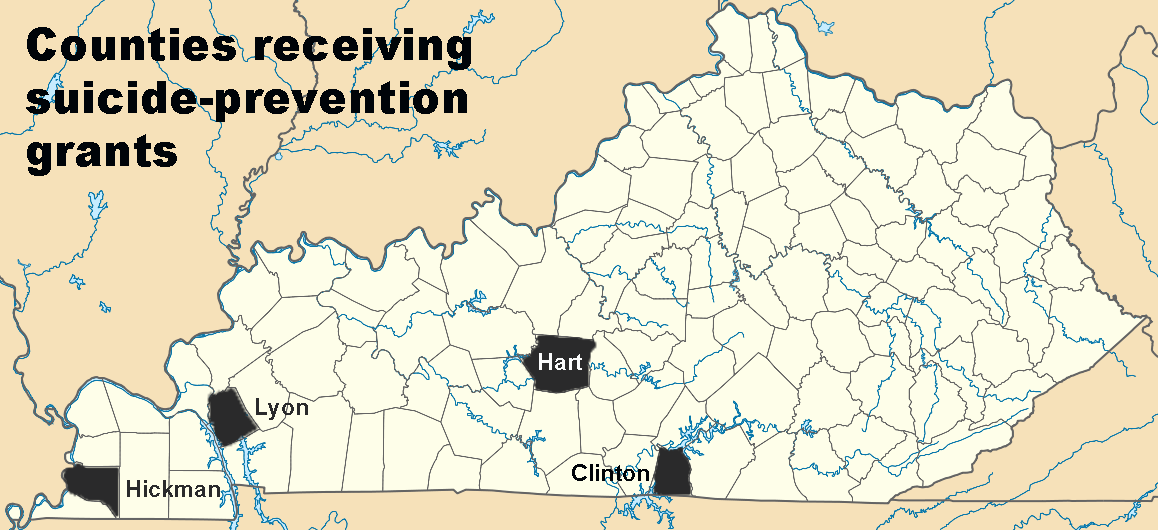
Kentucky will receive a five-year, $3,675,000 grant to help reduce suicide among Kentuckians under age 25.

Kentucky is one of 10 recipients of Garrett Lee Smith Suicide Prevention grants, from the federal Substance Abuse and Mental Health Services Administration. 

Map by Kentucky Health News from Wikipedia base map
The grant programs will begin Sept. 30 in Clinton, Hart, Hickman and Lyon counties, which were selected based on suicide-attempt rates among middle- and high- school students.

The release says additional locations will be identified in the coming years.

The award is named after the son of former Oregon Sen. Gordon Smith. Garrett Lee Smith took his own life in 2004, just before his 22nd birthday. Sen. Smith proposed the Garrett Lee Smith Memorial Act, which recognized suicide as the third-leading cause of death among youth 10 to 24.

Kentucky also received the grant in 2006, 2011 and 2015.

“My administration has always prioritized quality, accessible mental-health care,” Gov. Andy Beshear said in a news release. “The Garrett Lee Smith Suicide Prevention grant will make it easier for Kentuckians to get the help they need and deserve.”

The release says that the funding, $735,000 a year for five years, will advance the Kentucky Strategic Allies Fostering Empowerment of Today’s Youth (KY SAFETY) project. The project will help identify youth at risk for suicide and connect them with care pathways. 

KY SAFETY will also implement Youth Mental Health First Aid programs; Question, Persuade, Refer (QPR) training, and applied suicide-intervention training in agencies that serve youth. More than 5,600 staff members of youth-serving agencies are expected to be trained in the five-year grant period.

The news release says a key project component will provide first responders with internet-equipped tablets for use during behavioral-health emergencies to help ensure near-immediate access to a clinician.

“Kentucky has a long history of working to reduce suicide risk,” said Eric Friedlander, secretary of the state Cabinet for Health and Family Services. “Finding new and innovative ways to reach our youth is essential to improving access to behavioral health services. Given that many of our counties are rural, the use of tablets and telehealth services represents a creative way to provide services as quickly as possible.”
The national suicide hotline number has changed.
“The goal of the grant is to support strategies that focus on the identification of youth at risk of suicide, build capacity of clinical service providers to assess, manage and treat that risk and improve the continuity of care and follow-up of youth receiving care for their suicidality,” Patti Clark, an agency assistant director and principal investigator for the project, said in the release. 

At his Sept. 29 news conference, Beshear also encouraged Kentuckians to call the state's new, confidential 988 suicide hotline if they are experiencing a mental-health crisis or considering suicide. He said there has been a 27% increase in crisis and suicide call volume since the change, and a 10% increase in text messages. He also said calls are being answered more quickly, and the abandoned-call rate is the lowest since July 2021. 

Wednesday, July 27, 2022

State rural-health office will get $299,999 a year for the next three years to help veterans get care; one of three such grants in U.S.

The Kentucky Office of Rural Health is one of three organizations in the U.S. to receive a three-year, nearly $900,000 grant from the federal Office of Rural Health Policy to improve access to health care for veterans living in rural Kentucky and to improve the coordination of care for veteran patients. The University of Kentucky Center of Excellence in Rural Health in Hazard serves as the federally designated Kentucky Office of Rural Health.

The $899,997 grant, provided through the Rural Veterans Health Access Program, will fund a range of efforts: conducting a needs assessment focused on the resources, programs, best practices and organizations currently available to assist the state's rural veterans; establishing and regularly calling together a stakeholder advisory group to guide projects; and hosting training sessions and community health days events for veterans, their families, health-care organizations and other community members.

The Office of Rural Health will also partner with community stakeholders to support projects at the local level that address veterans' access to care. Much of the work will be focused in the 27 counties where Kentucky’s 28 critical-access hospitals — rural facilities with 25 or fewer acute care inpatient beds — operate: Allen, Breckinridge, Caldwell, Carroll, Casey, Cumberland, Estill, Fleming, Floyd, Grant, Green, Hart, Knox, Leslie, Lincoln, Livingston, Madison, Marshall, Mercer, Morgan, Ohio, Russell, Simpson, Trigg, Union, Wayne and Woodford.

“This is a project and a population that we’ve been interested in working with for some time. We’re nothing short of excited,” said KORH Director Ernie Scott. “We have a veteran on our staff, a number of veterans working at the UK Center of Excellence in Rural Health and most of us here have a direct connection to at least one veteran in our own families. Our veterans are near and dear to our heart. It’s a population with a significant presence in rural Kentucky — more than 40% of Kentucky’s veterans live in rural communities — and it’s our honor to work with them, to support them and to seek out ways we can have a positive impact on their health and their ability to navigate the health-care system.”

Scott said the project also provides an opportunity to develop a closer relationship with the Veterans Health Administration, the country’s largest integrated health system, and to encourage innovative community partnerships between the VHA’s clinics and medical centers and Kentucky health-care professionals.

“There are plenty of efforts taking place here in the commonwealth to meet the needs of our rural veterans, and we’re not here to duplicate those efforts,” Scott said. “Instead, what we hope to do is call attention to any gaps that might exist in the care being provided to veterans and work with partners to develop solutions. We also want to showcase the good that’s being done and that can be replicated in other communities. This project is a win-win for everyone involved.”

The Office of Rural Health, established in 1991, is a federal-state partnership authorized by federal legislation. It works directly with clinicians, clinic and hospital administrators, policymakers and other stakeholders to improve the accessibility of health care services for the state’s rural and under-served residents. The office connects communities and health-care organizations to local, state and federal resources while working toward long-term solutions to financial, quality improvement and workforce challenges.

Tuesday, April 19, 2022

Kentucky gets $4.19 million to expand AmeriCorps work in public health, with the hope it will funnel more people into such work


Kentucky has received nearly $4.2 million to expand the public-health role of the AmeriCorps program in the state. The grant comes from the American Rescue Plan Act, last year's pandemic relief bill.

"This funding will support the recruitment, training and development of a new generation of public health leaders,” Gov. Andy Beshear said in a news release. “The funding will support the addition of community health workers with coordination from Serve Kentucky, the agency committed to engaging Kentuckians in volunteerism and service to positively impact our communities.”

This new public health initiative is the result of a partnership between AmeriCorps and the Centers for Disease Control and Prevention. Nationwide, the initiative will fund up to 5,000 public-health positions over the next five years. 

Public Health AmeriCorps will help meet public-health needs of local communities by providing surge capacity and support while also creating pathways to public health-related careers, says the release. 

Health Commissioner Steven Stack pointed to the many public-health challenges caused by the pandemic, noting that it has been "neither easy nor without loss" to get to our current low rates of transmission. 

"This grant allows us to plan for future public health emergency responses," he said. "Creating a standing corps of public health personnel to manage surge capacity and respond to crises will enable Team Kentucky to stand ready to support Kentuckians when emergencies arise." 

Funding from the grant will  to the Kentucky Health Departments Association and Family Scholar House. 

The KHDA will get $1,367,986 to add 75 AmeriCorps members as community health workers in local health departments. They will work in programs such as the Health Access Nurturing Development Services, (HANDS), the Women, Infant and Children (WIC) program, and harm-reduction programs.

AmeriCorps members will not replace any existing health-department staffers, Susan Dunlap, spokeswoman for the Cabinet for Health and Family Services, told Kentucky Health News in an e-mail. 

"AmeriCorps members will be used to bolster the local public health workforce in Kentucky to expand the number of services delivered at local health departments currently available," Dunlap said. "Additionally, AmeriCorps members will receive training to become certified as community health workers, which are in short supply at local health departments throughout Kentucky."

Family Scholar House, which oversees the annual grant competition that awards funding to AmeriCorps State and other community service programs, says it works to provide a comprehensive, holistic continuum of care for low-income families and youth to help them reach their educational, career and family goals. It will get $2,825,124 to offer additional services.

Dunlap said, "FSH applied for the grant due to their familiarity with AmeriCorps, and because the grant will enable participants to receive training and support to enter the public-health field (in addition to the living allowance and education award) – which aligns with FSH’s priorities of health, educational support, and career pathways."

FSH's grant will allow it to leverage 200 AmeriCorps members who will provide health-care support to seniors and disabled individuals in health care facilities across Kentucky, says the news release. 

"FSH AmeriCorps member activities will include support with basic clinical assistance, activities for socialization, infection control, and dietary and patient services," said Dunlap. "FSH AmeriCorps members will develop their healthcare knowledge and complete credentialing coursework—enabling them to work in memory care, skilled nursing, assisted living, and other healthcare related environments." 

Eric Friedlander, secretary of the cabinet, which administers and oversees Serve Kentucky, said this initiative will serve as a steppingstone to get more people into the public-health field.

“After their year of service, we expect more than 200 AmeriCorps members will pursue future engagement in the public-health sector,” Friedlander said in the release. "AmeriCorps and the CDC believe that Public Health AmeriCorps provides a unique way to expose those interested in learning more about public health and its various careers.”

Joe Bringardner, executive director of Serve Kentucky, said, "Adults of all ages and education backgrounds are eligible to serve in Public Health AmeriCorps."

Thursday, February 17, 2022

Anti-overdose drug Narcan available to people under Corrections community supervision in eight counties, eight more this summer

Ky. Health News map shows counties in HEALing Communities Study
The anti-overdose drug Narcan is now available free of charge to people under community supervision by the state Department of Corrections in eight Kentucky counties, thanks to the state and a federal grant to the University of Kentucky, which is studying how to reduce overdose deaths.

Narcan is available free to supervisees, their families and and friends who live in or report to state probation-and-parole offices in Boyd, Boyle, Clark, Fayette, Floyd, Franklin, Kenton and Madison counties. Eight more counties will be added this summer: Bourbon, Campbell, Carter, Greenup, Jefferson, Jessamine, Knox and Mason.

The 16 counties are in the HEALing Communities Study (Helping End Addiction Long-term), funded by an $87 million grant, UK's largest ever. More than 500 units of Narcan have already been distributed, the state said.

“I have witnessed firsthand how Narcan can save the life of someone who has overdosed, and my administration remains committed to providing this life-saving medicine,” Gov. Andy Beshear said in the release.

People interested in getting Narcan must watch a nine-minute training video, answer a few brief questions and submit a mailing address. To receive a free dose, click here. Participation is confidential, and personal information is not shared with other agencies, the state release said.

Kentucky is one of four states in the national study funded by the National Institutes of Health and the Substance Abuse and Mental Health Services Administration to investigate how tools for preventing and treating opioid misuse and opioid-use disorder are most effective locally. A major goal of the study is to expand access to Narcan to help prevent and stop opioid overdoses, the release said.

“We appreciate this partnership with HEAL to provide life-saving medication to our clients,” said corrections department Division of Addiction Services Director Sarah G. Johnson. “This program is essential, along with making sure people have access to treatment for their opioid use disorder and are able to work toward recovery.”

HEALing Communities Study Co-Investigator Carrie Oser said, “We are grateful to DOC for their partnership in reducing opioid overdose deaths. It’s well-documented that overdose education combined with naloxone saves lives.”

The state Office of Drug Control Policy also offers free Narcan to law-enforcement agencies, and assists Kentuckians with locating a Narcan dispenser. The office's 2020 Overdose Fatality Report said more than 1,964 Kentuckians died from overdoses in 2020, a 49% increase from 2019.

For more information on the study’s research on the impact community intervention has on reducing overdose deaths in Kentucky, click here.

Saturday, December 4, 2021

Pikeville Medical Center now includes Eastern Kentucky's first hospital for children, thanks to federal grants and donors

Outpatient examination room in hospital
(Photo by Silas Walker, Lexington Herald-Leader)
Pikeville Medical Center has opened the first children's hospital in Eastern Kentucky.

The 13,400-square-foot facility, with 10 child-themed patient rooms and 13 outpatient examination rooms, is named the Drs. R.V. and Jyothi Mettu Children’s Hospital, for donors of $1.5 million to the project. Jyothi Mettu has been a pediatrician in the area for almost 30 years.

Pikeville Medical Center also received a federal-state Abandoned Mine Lands Pilot Program grant of $4.78 million and an Appalachian Regional Commission grant of $1.5 million to support the project.

PMC president and CEO Donovan Blackburn told Liz Moomey of the Lexington Herald-Leader that finding a way to serve the region’s children has long been a priority. “Our kids have to travel, it’s not right, it’s not fair,” he said. “As the largest single regional institution, we had to address that.”

"Prior to the children’s hospital opening, a child with appendicitis or a heart murmur would likely be referred to a specialist in Lexington," Moomey notes, quoting Blackburn: “A child will be able to see its extended family for support now during an overnight stay. A child will have access to urgent care instead of having delayed care when care is needed. A child will feel like they matter during some of their scariest times because of today.”

Monday, August 30, 2021

McConnell keeps urging shots, but avoids comment on others' work and won't repeat that he has 'total' confidence in Fauci

McConnell spoke at the University of Kentucky as
Dr. Mark Newman, head of the hospital, listened.
 
By Melissa Patrick and Al Cross
Kentucky Health News

At an event to announce a renewed four-year grant for the Center for Clinical and Translational Sciences at the University of Kentucky, U.S. Sen. Mitch McConnell first congratulated the center, noting that this award is "extremely difficult to get" and then spent the rest of his time talking about the need for more people to take the Covid-19 vaccine. 

"Honestly, my friends, it never occurred to me that we'd have a challenge getting people to take the vaccine, but that's where we are. Ninety percent of the people in the hospital are unvaccinated, we have a crisis of the unvaccinated. And so we're all I think perplexed as to how we tackle this problem. But clearly getting more and more Americans vaccinated is the only way to end it." 

He then went on to encourage people to collectively talk to their friends and relatives and encourage them to get vaccinated. 

Asked why he hasn't pushed back on some in his own party who have helped fuel skepticism about masks and vaccines, McConnell said it "wouldn't serve any purpose to start criticizing others" and said that he has been clear in letting people know what he thinks is the right thing to do, which is to get vaccinated.

McConnell said decisions about requiring employees to get vaccinated need to be left up to employers and school boards. "They can weigh the evidence, look at the effectiveness and make a decision," he said. 

Asked if he had had direct conversations with his fellow Republican lawmakers to nudge them to publicly support vaccinations, McConnell didn't answer directly but said he has been "quite vocal" about his opinions on this matter, so he thinks everybody knows how he feels about it.

In a later press conference at Millersburg, McConnell declined to repeat what he said on July 15, 2020, that he had "total" confidence in Dr. Anthony Fauci, director of the National Institute of Allergy and Infectious Diseases. Fauci has come under fresh attack by Sen. Rand Paul and others in recent months.

Asked the same question, his level of confidence in Fauci, McConnell replied, "Oh, look. I've said, Al, the same thing over and over and over for months. We know the vaccine works, we know this is largely a rising epidemic among the unvaccinated, and without getting into an argument about who's the best health-care adviser out there, it doesn't make any difference. We know the vaccine works, we know the people who are not vaccinated are the ones who are in the hospitals."

At UK, McConnell told reporters that "money is not the problem" when it comes to dealing with the pandemic, including the most recent surge in hospitalizations, pointing to the most recent $1.9 trillion rescue plan passed earlier this year. Instead, he said, "The reluctance of people to get vaccinated is the problem." 

This is the third time the UK center has received federal support for its research, now totaling $65.4 million since 2011. 

With a focus on Appalachia, the center provides support for all types of health research, including pilot funding, training and career development for the next generation of translational researchers, a full spectrum of research support services, community engagement resources, multidisciplinary mentors and connections to local and national research networks, a UK news release said. 

After the pandemic hit, the center established a Covid-19 biobank, launched pilot funding to address issues related to the virus and launched a "hugely successful" Johnson & Johnson vaccination trial that became the top enrolling site in the world for the final trial that led to the emergency-use authorization for the vaccine and paved the way for more Covid vaccine trials.  

Sunday, August 15, 2021

Former governor's nonprofit gets another big federal grant for its residential housing program to treat substance-use disorder

Numbered counties in red: 2, Cumberland; 3, Clinton; 10, Robertson; 13, Menifee.
A not-for-profit organization headed by former Gov. Ernie Fletcher, who was a doctor before he got into politics, is getting $3,333,333 in federal funds to support its treatment of substance-use disorder through residential housing following the Recovery Kentucky model he initiated as governor.

The grant from the Rural Communities Opioid Response Program of the Department of Health and Human Services was announced by Senate Republican Leader Mitch McConnell, who helped Fletcher get a $6.6 million grant to start the Fletcher Group Rural Center of Excellence two years ago. At that time, a McConnell press release said the center would serve 101 rural counties in eight states, 47 of them in Kentucky.

According to its website, the group now serves 10 states: Kentucky, Ohio, Tennessee, West Virginia, Georgia, Mississippi, Washington, Oregon, Idaho and Montana. It says the 2019 grant totaled $10.4 million, and the group got two other grants that year: $1.6 million from the Appalachian Regional Commission and $250,000 from the Kentucky Opioid Response Effort.

“Driven by the isolation caused by the coronavirus pandemic and the flood of dangerous fentanyl coming across our borders, this past year the commonwealth suffered one of the worst spikes in overdose deaths in the nation, McConnell said in the latest release. “With the targeted prevention, treatment, and enforcement programs at organizations like the Fletcher Group, Kentucky’s rural communities will be empowered to fight addiction and put an end to this crisis.”

Fletcher said in the release, “We thank Senator McConnell for his long-standing and steadfast support for addiction services and recovery housing for those with substance use disorders. . . . Recovery housing has successfully demonstrated positive long-term outcomes for high-risk individuals dealing with addiction.”

Friday, August 13, 2021

'Get your shot. Today!' Rep. Rogers urges at groundbreaking for hospital-linked clinic in McCreary County, which has no hospital

"Get your shot. Today!" 5th District U.S. Rep. Harold "Hal" Rogers of Somerset says in a video circulated by the Kentucky Primary Care Association. He says he tells the unvaccinated that "Vaccination is not only important to them, it's important to the rest of us," because most Covid-19 cases are among the unvaccinated, by far.

Rogers spoke after the groundbreaking for Cumberland Family Medical Center's medical facility in McCreary County, which will provide x-rays, CT scans and other medical resources in partnership with Lake Cumberland Regional Hospital in Somerset.

"In a county without a local hospital, this new facility will help save lives, offering emergency medical care after-hours and on holidays," Rogers said. The center, received a $1 million competitive federal grant in December with Rogers' support. KPCA has a video report on the project.

Saturday, August 7, 2021

Community Health Days offering screenings and coronavirus vaccines in 32 Appalachian Ky. counties through November

The first Community Health Day was held in Hindman Friday, Aug. 6. (Photos by Melissa Slone, UK)
By Melissa Patrick
Kentucky Health News

HINDMAN, Ky. — The first of 96 University of Kentucky events to offer Covid-19 vaccines and other health screenings in 32 Kentucky counties resulted in seven more Kentuckians getting a vaccine. 

The three-hour Community Health Days event, which felt like a mini-health fair, was held at the June Buchanan Clinic in Hindman Friday, Aug. 6. The next one listed on the UK Center of Excellence in Rural Health website is Aug. 20 at Topmost Baptist Church, also in Knott County. The events will continue through November and will be added to an interactive website at www.kyruralhealth.org as they are scheduled.

Robin Hensley got a shot at the first Community Health
Day from the Kentucky River District Health Department.
Robin Hensley of Clay County, who was camping in the area, was one of the seven who got vaccinated. Hensley, a registered nurse, said she was initially against taking the vaccine because "it came out too soon," but after learning more about it, decided to get a shot. 

"I think it's important to to be respectful of others' opinions if they choose not to get it, but I also have studied it enough to know that now I'm comfortable with the decision to go ahead and take it," she said. 

The coronavirus vaccines were able to be developed, tested and given emergency-use authorization in less than a year because of previous research on related coronaviruses and new technology, and federal funding by Congress and the Trump administration.

Community Health Days are funded by a $3.3 million federal grant and sponsored by the UK rural-health center, Kentucky Homeplace, USA Drone Port and a network of community partners, according to a UK news release.

Screenshot, adapted, of interactive map; it's available here.
At the request of the Health Resources and Services Administration, which made the grant, the program will also include clinics in West Virginia's Mingo and Wayne counties.

The clinics are being offered as the much more contagious Delta variant of the coronavirus surges across the state, with no real end in sight. They offer more than vaccinations.

Melissa Slone, research, interdisciplinary director at the UK center, said blood-pressure checks and screenings for diabetes and stroke risk at the events remind people to start thinking about and managing their chronic health conditions again after allowing them to worsen while vaccines were yet to come.

"We want people to get vaccinated," Slone said, "but if we can also help them with managing some of the other chronic diseases, then that's a win as well."  

Kentucky Homeplace, through its community health workers, can help people with a range of resources, whether medical, social, or environmental, like heating and air-conditioning assistance or housing needs. 

Twenty-two people were evaluated at the Hindman event, but only seven got the vaccine. 

Fran Feltner, director of the rural-health center, which is based in Hazard, said it's important to offer a range of screenings along with the coronavirus vaccines because it allows them to provide factual information about the vaccines and to answer any questions the participants may have about them, whether they choose to get vaccinated or not. 

Fran Feltner's magnets
For example, she said many people continue to think there is a microchip or a magnet in the vaccine, which is not true. To dispel that myth, she had a pack of magnets available to prove that wasn't true. 

"Our intent is to meet people where they are to work through barriers, alleviate fears, dispel myths, educate and assess any needs people may have that could be holding them back from being vaccinated," Feltner said in the news release.

Feltner said in the interview that the events are "about community members taking care of community members. The ultimate goal is to make sure that everybody has access to vaccine, whether it be the kids or the adults that need access to the vaccine. And sometimes, you bring it to them instead of them coming to you. . . . It's up to us as community members to make sure that people have the right information so that they can make the right decisions." 

Feltner said the Homeplace health workers, who know the people in their communities, have been instrumental in planning the events. She said some sites have had trouble finding local providers to administer vaccinations, and in those cases Walgreens has agreed to partner with them to give the vaccines.

Feltner wrapped up the interview by encouraging people who are hesitant to get a vaccine to seek out credible information about the vaccines and to then weigh their risk before deciding to get one or not. She said, "The more people we can get vaccinated, the more we can get back to a new normal." 

Click here for answers to frequently asked questions about the coronavirus and the vaccines.