Showing posts with label rankings. Show all posts

Tuesday, July 16, 2024

UK is again the top Ky. hospital in U.S. News rankings, followed by St. Elizabeth in Northern Ky. and Baptist Health Louisville

By Melissa Patrick
Kentucky Health News
 
Three Kentucky hospitals, in the state's three largest metripolitan areas, have been named among the nation's "Best Regional Hospitals" in the annual ranking by the U.S. News & World Report magazine. 

The No. 1 hospital in Kentucky is again the University of Kentucky hospital, followed by St. Elizabeth Healthcare in Edgewood and Covington and Baptist Health Louisville.

To make the list, a hospital must offer a full range of services; rank nationally in one of 11 measured specialties, or have seven or more high-performing rankings for procedures and conditions; and have at least three more "high performing" than "below average" rankings for procedures and conditions. 

The report offers an overview of 121 Kentucky hospitals with a breakdown of each of the measured categories, according to the services a hospital provides. 

UK HealthCare, for the ninth straight year, ranks No. 1 in the state with its Albert B. Chandler Hospital.

In cancer care, UK's Markey Cancer Center moved up to No. 36 from No. 44 last year. Markey is Kentucky's only National Cancer Institute-designated cancer center, and one of 72 in the nation. 

“Together, these recognitions firmly establish Markey among the nation's top cancer centers, affirming that patients can access world-class cancer care right here in Kentucky,” Dr. Mark Evers, director of the cancer center, said in a news release. 

UK's hospital system also ranked nationally in two other adult specialties: ear, nose and throat and obstetrics and gynecology; and three children specialties: pediatric cardiology and heart surgery, orthopedics and urology.

Six UK HealthCare adult specialties – four more than the previous year’s rankings – also received the “high performing” designation: gastroenterology and gastrointestinal surgery, geriatrics, neurology and neurosurgery, orthopedics, pulmonology and lung surgery and urology. 

The system also was rated "high performing" for 14 procedures and conditions, including heart attack, heart-bypass surgery, heart failure, colon-cancer surgery, kidney failure, back surgery (spinal fusion), stroke, gynecological-cancer surgery, leukemia, lymphoma and myeloma, hip replacement, chronic obstructive pulmonary disease (COPD), lung-cancer surgery, pneumonia and prostate-cancer surgery. 

Chandler Hospital was also named Best Regional Hospital for Equitable Access, a new category that recognizes success in caring for patients in historically underserved communities. UK HealthCare was one of 98 medical centers nationwide and the only hospital in Kentucky to receive this recognition.

“We diligently examine our data and metrics to help us identify and quantify disparities that are unique to our underserved populations. That allows us to execute targeted strategies and solutions to address these issues. We are truly the university – and the hospital – for Kentucky," Tukea Talbert, who oversees health equity efforts at UK HealthCare, said in the release.

St Elizabeth's Edgewood and Covington hospitals ranked high performing in 15 procedures and conditions: leukemia, lymphoma and myeloma, colon-cancer surgery, lung-cancer surgery, prostate cancer surgery, abdominal aortic-aneurysm repair, heart attack, heart-bypass surgery, heart failure, kidney failure, stroke, maternity care (uncomplicated pregnancy), hip replacement, knee replacement, COPD and pneumonia.

This is the 11th time that Baptist Health Louisville has ranked No. 1 or tied for that ranking in Jefferson County. The hospital ranked high-performing in nine procedures and conditions: leukemia, lymphoma and myeloma, colon-cancer surgery, abdominal aortic-aneurysm repair, heart attack, aortic-valve surgery, heart-bypass surgery, hip replacement, knee replacement and COPD. The hospital ranked below average for diabetes. 

“We’re incredibly excited to be recognized by U.S. News and World Report for being number one in metro Louisville. It’s a recognition that comes as a culmination of a lot of work from the entire team at Baptist Health Louisville who strive every single day to ensure that the care that we provide is the highest quality and the safest it possibly can be,” Dr. Jonathan Velez, president of Baptist Health Louisville, said in a news release. 

The 35th annual rankings compared hospitals in 15 specialties and 20 common procedures and conditions. Data from the report came from the Centers for Medicare & Medicaid Services, the American Hospital Association and professional organizations. This year, the report also includes Medicare Advantage data in the rankings, including risk-adjusted mortality rates for its beneficiaries in 11 adult specialties.

Nationally, the report named the top 22 hospitals to the national "Honor Roll." The top hospitals were not ranked again this year, but were instead listed in alphabetical order. Regionally, 466 hospitals were recognized as "Best Regional Hospitals." Click here for a FAQ about how and why U.S. News ranks hospitals.

Saturday, May 11, 2024

Most Kentucky hospitals in national patient-safety ratings got 'C' grades again; state is 35th in share of hospitals with 'A' ratings

By Melissa Patrick
Kentucky Health News

Most of the Kentucky hospitals graded on a nonprofit group's twice-a-year report card for patient safety again got a C in the latest report. 

The Leapfrog Group, based in Washington, D.C., rates nearly 3,000 general acute-care hospitals based on how well they protect patients. Most of Kentucky's 126 hospitals are relatively small, so they are not rated by Leapfrog; it rated 62 Kentucky hospitals.

The group does not grade small hospitals with "critical access" status because they don't have to report quality measures to the federal government; nor does it grade specialty hospitals, government hospitals, or hospitals that don't have enough publicly reported data.

Leapfrog gave 'A' ratings to 10 Kentucky hospitals; Kentucky's percentage of A grades, 16.4%, ranked it 35th among states. That was up two slots from the last report, when it ranked 37th. Leapfrog gave Bs to 19 Kentucky hospitals, Cs to 27 and Ds to 5.  

The grades are based on more than 30 measures that indicate how well hospitals protect patients from preventable errors, injuries, accidents and infections. 

The spring 2024 report showed 92% of U.S. hospitals have seen improvements in at least one of three infections associated with hospitals. Methicillin-resistant Staphylococcus aureus (MRSA) decreased by 30%, central line-associated bloodstream infections decreased by 34% and catheter-associated urinary tract infections decreased by 30%. This good news comes after a six-year high for those infections was reported in the fall 2022 report. 

"While today’s results are promising, patient safety remains a crisis-level hazard in health care. Some hospitals are much better than others at protecting patients from harm, and that’s why we make the Hospital Safety Grade available to the public and why we encourage all hospitals to focus more attention on safety,” Leah Binder, president and CEO of The Leapfrog Group, said in a news release. 

She added, "According to a summary of peer-reviewed research published in British Medical Journal, an estimated 250,000 people a year die of preventable errors and infections in hospitals, which makes patient safety problems the third leading cause of death in the United States." 

The spring 2024 report also showed some improvements on patient experience measures compared to fall 2023. The release notes that these measures worsened during the pandemic and have still not returned to pre-pandemic levels. These measures look at things that have a direct impact on patient safety outcomes, including nurse communication, doctor communication, hospital staff responsiveness, communication about medicine and discharge information. 

"Patient experience is very difficult to influence without delivering better care," Binder said, "so these findings are encouraging."

The Leapfrog site offers details on the measures for each hospital under the heading Infections. It also provides detailed information under headings titled Problems with Surgery, Practices to Prevent Errors, Safety Problems, and Doctors, Nurses and Hospital Staff. The information is provided in an easy-to-read, color-coded scale that indicates how the hospital is performing.

The report uses data from the Centers for Medicare and Medicaid Services, Leapfrog's own survey and other supplemental data sources. Leapfrog says hospitals are only graded if they have submitted adequate data for evaluation.

Top Scores

Hospitals getting As were Baptist Health La Grange, Baptist Health Lexington, Deaconess Henderson Hospital, Georgetown Community Hospital, Meadowview Regional Medical Center in Maysville, the Medical Center at Bowling Green, Saint Joseph-London, St. Elizabeth Healthcare-Edgewood, T.J. Samson Community Hospital in Glasgow, and TriStar Greenview Regional Hospital in Bowling Green.  

Screenshot of page for Georgetown Community Hospital
Georgetown Community Hospital received an A after getting six consecutive Cs.

Baptist Health Lexington has received an A grade for 13 consecutive grading periods. Deaconess Henderson moved up from a B grade in the fall 2023 report. The rest in this top group also received As in the fall. 

Shifts up and down

Four Kentucky hospitals moved down to a B after getting an A on the last report, including Norton Audubon Hospital, Norton Brownsboro Hospital, Norton Hospital and Norton Women's & Children, all in Louisville. 

Five Kentucky hospitals moved up to a B after getting a C on the last report, including Baptist Health Deaconess Madisonville, Baptist Health Richmond, Harrison Memorial Hospital in Cynthiana, Middlesboro ARH Hospital and the University of Kentucky Albert B. Chandler Hospital. 

Other hospitals with B grades are Baptist Health Louisville, Baptist Health Paducah, Clark Regional Medical Center in Winchester, Owensboro Health Muhlenberg Community Hospital in Greenville, Saint Joseph East in Lexington, St. Elizabeth Healthcare-Fort Thomas, St. Elizabeth Healthcare-Florence, U of L Health Shelbyville Hospital, UK HealthCare Good Samaritan Hospital and Blanchfield Army Community Hospital in Fort Campbell. 

Five Kentucky hospitals moved up from a D to a C: Hazard ARH Regional Medical Center, Jackson Purchase Medical Center in Mayfield, Jewish Hospital in Lexington, Kentucky River Medical Center in Jackson and UofL-Sts. Mary and Elizabeth Hospital. 

Three hospitals moved down from a B to a C: Kings Daughters Medical Center in Ashland, Monroe County Medical Center in Tompkinsville and Whitesburg ARH Hospital. 

The remaining 19 hospitals with a C all got Cs on the last report card too. 

Taylor Regional Hospital in Campbellsville moved down from a C to a D and Jennie Stuart Health in Hopkinsville moved up to a D after being the only hospital in the fall 2023 report to get an F. 

Other hospitals with D grades are Highlands ARH Regional Medical Center in Prestonsburg, Murray-Calloway County Hospital and Pikeville Medical Center. 

No Kentucky hospitals got an F on this report. 

Click here for a list of frequently asked questions about the survey. Click here to see if your hospital was graded. 

Sunday, September 24, 2023

Ky. children 10-17 have nation's 2nd highest obesity rate, 19.6%; adult rate of 37.7% is 9th highest, a slight improvement from 2021

Map from Trust for America's Health State of Obesity report

Kentucky Health News graph from state data

By Melissa Patrick
Kentucky Health News

Kentucky ties with Wisconsin for the nation's ninth-highest adult obesity rate, an improvement from second-highest last year, but Kentucky children aged 10-17 still have one of the nation's highest rates, No. 2, after ranking first last year.

The 20th annual State of Obesity report from Trust for America's Health says 37.7% of Kentucky adults are obese and nearly 72% of the state's adults are either obese or overweight, tied for sixth place with Delaware. Among the state's high-school students, 19.6% of them are obese and 16.2% are overweight.

Nationally, the report says the number of obese adults continues to rise, noting that 22 states had an 2022 adult obesity rate at or above 35%, up from 19 states in 2021. A a decade ago no state had an adult obesity rate at or above 35%, the report says.

"Since TFAH’s initial report, published in 2004, the national adult obesity rate has increased by 37 percent and the national youth obesity rate increased by 42 percent," says the report. 

The national adult obesity rate is 42% and the national rate for children ages 2 to 19 is nearly 20%, according to the report.  

The good news is that from 2021 to 2022, Kentucky's adult obesity rate declined 6.4%, or 2.6 percentage points, to 37.7% from 40.3%. But that was still above the levels of 2018, 2019 and 2020.

West Virginia (41%), Louisiana (40.1%), Oklahoma (40.0%), and Mississippi (39.5%) have the highest rates of adult obesity. The District of Columbia (24.3%), Colorado (25.0%), and Hawaii (25.9%) have the lowest adult obesity rates.

“It’s critical to recognize that obesity is a multifactored disease involving much more than individual behavior,” Dr. J. Nadine Gracia, president and CEO of Trust for America's Health, said in a news release. “In order to stem the decades-long trend of increasing obesity rates we have to acknowledge that the obesity crisis is rooted in economic, health, and environmental inequities. Ensuring all people and communities have equitable opportunity and access to healthy food and physical activity is fundamental to addressing this crisis.”

Kentucky continues to struggle with all of these conditions. It ranks fifth worst for the percentage of adults with diabetes (15%) and hypertension (40.3%), and nearly 27% of its adults are physically inactive, ninth worst. 

The report shows that more adult men than adult women are obese in Kentucky: 38.7% of men and 36.7% of women, a switch from last year's report. Kentucky's adult men have the second highest obesity rate in the nation; its women rank 18th, tied with Texas.

By age, Kentucky adults between 45 and 64 have the highest obesity rate, 42%. That's followed by those 25-44 (41.2%), 65 and older (33.7%) and 18 to 24 (24.1%). 

"Solving the nation’s obesity crisis will require addressing the economic and structural factors that impact where people live and their access to employment, transportation, healthcare, affordable and healthy food, and places to be physically active," says the report, which includes policy steps to address the crisis that they say should be taken by federal, state and local officials and stakeholders. They include: 
  • Fully fund the Centers for Disease Control and Prevention's proven chronic disease and obesity prevention programs so they reach every state.
  • Make healthy school meals available for all students and increase access to Supplemental Nutrition Assistance Program (SNAP) and other nutrition support programs.
  • Implement a mandatory front-of-package labeling system on food packaging to help consumers make informed choices.
  • Close tax loopholes and eliminate business-cost deductions for advertising unhealthy food to children.
  • Make physical activity and the built environment safer and more accessible for everyone, including by increasing federal education funding for health and physical education and investing in active transportation projects like pedestrian and bike paths.

Sunday, August 27, 2023

28% of Kentucky students were chronically absent last year, up from 18% before the pandemic; national increase was even more

By Al Cross
Kentucky Health News

Twenty-eight percent of students in Kentucky schools were chronically absent from classes during the last academic year, compared to 18 percent in the 2018-19 school year, according to a national study done at Stanford University with the help of The Associated Press.

But Kentucky's increase was less than the national increase, so much that its figure is now about the national average instead of above it.

Kentucky's rise of 10 percentage points was an increase of 56 percent. Nationally in 2018-19, 14.8 percent of students were chronically absent from school; in 2021-22, it was 28.3 percent. That increase of 13.5 percentage points was a rise of 91 percent from the last year before the pandemic.

"The large and broad increases in chronic absenteeism suggest many students are failing to re-engage in schooling as in-person instruction returned," wrote Thomas Dee, the Stanford education professor who conducted the study.

"The data from 40 states and Washington, D.C., provides the most comprehensive accounting of absenteeism nationwide," AP reports. However, Dee's statistical analyses of the data were unable to find a pattern that explained the wide differences among the states.

Dee said he tested found little if any correlation between chronic-absenteeism growth and a state's infection rate, its classroom masking policies, enrollment losses or differences in how "chronic absemteeism" is defined. Kentucky defines it as missing 10% or more of the year for any reason.

Kentucky's chronic-absentee rate in 2018-19 was higher than the national average. Last year, it was about the same as the national average. (The report gave rates in whole percentage points, not tenths of points.)

The Economist reports possible reasons for increased truancy: "Having experienced remote learning, some students — and perhaps their parents — no longer think it essential or even worthwhile to sit in a classroom. 'It’s the same thing as in the workplace,' says a teacher in New Orleans. 'Once you’ve gone down to only being there two or three days a week, coming back all five is hard.' His classrooms are especially empty on Fridays, he says, so he avoids scheduling the most important lessons then. After the pandemic, people 'started catering to their mental-health needs,' says Tieshia Robinson, a principal at Chicago Collegiate, a public charter school in the city. For parents, that might mean allowing children who are unhappy at school to skip days. Pupils have also grown used to staying at home at the slightest sign of physical illness, says Greg Frostad of New Mexico’s education department."

The highest 2021-22 chronic-absentee rates, 49% and 48%, were found in Alaska and the District of Columbia, which also had the highest rates in 2018-19, 30% and 29%, respectively. The third-highest rate, 40%, was in New Mexico; that was more than double its 2018-19 rate of 18%. Arizona's rate also more than doubled, from 13% to 34%, the eighth highest in 2021-22.

Most of those leaders have high shares of miniority populations. "The pandemic growth in chronic absenteeism exacerbated pre-existing inequalities," Dee writes, noting that the increases were larger "among economically disadvantaged students as well as Black students and Hispanic students."

Other states where the rate doubled or more than doubled were Washington, 15% to 33%; California, 12% to 30%; Mississippi, 13% to 28%; Massachusetts, 13% to 28%; Texas, 11% to 26%; Iowa, 13% to 26%; and Connecticut, 10% to 24%. Dee reports that early figures for 2022-23 from Massachusetts and Connecticut show continued high absenteeism, and The Economist reports a like pattern in England and Australia.
Graph adapted by Kentucky Health News from "Higher Chronic Absenteeism Threatens Academic Recovery from the Covid-19 Pandemic," paper published by OSF Preprints, Center for Open Science. 

Friday, August 4, 2023

UK HealthCare again top Kentucky hospital in U.S. News & World Report rankings, with four more in the state listed among the best

By Melissa Patrick

Kentucky Health News

Five Kentucky hospitals have been named among the nation's "Best Regional Hospitals" in the annual ranking by the U.S. News & World Report magazine. 

The No. 1 hospital in Kentucky is the University of Kentucky hospital, followed by St. Elizabeth Healthcare Edgewood-Covington. Tying for third place were Baptist Health Lexington, Norton Hospitals and St. Joseph Hospital-Lexington. 

To make the list, a hospital must:
  • Offer a full range of services;
  • Rank nationally in one of 11 measured specialties, or have seven or more high-performance rankings for procedures and conditions; and
  • Have at least three more "high performing" than "below average" rankings for procedures and conditions.
The report offers an overview of 121 Kentucky hospitals with a breakdown of each of the measured categories, according to the services a hospital provides.

UK HealthCare, for the eighth straight year, ranks No. 1 with its Albert B. Chandler Hospital. It also ranked in the top 50 hospitals for cancer care for the seventh straight year, ranking 44th. Its Markey Cancer Center is Kentucky's only National Cancer Institute-designated cancer center, and one of 72 in the nation.

"Excellence in health care is not merely a title to be held but a relentless pursuit to improve the lives of our patients,” Dr. Robert S. DiPaola, UK's provost and acting co-executive vice president for health affairs, said in a news release. “To be consistently ranked among the best in the nation requires a commitment to exceptional care, groundbreaking research, innovative education and compassionate service from our faculty, providers and staff across UK HealthCare as we serve Kentucky and beyond."

The evaluation of the UK hospital includes data from its Kentucky Children's Hospital and Good Samaritan Hospital. The hospital system was also nationally ranked in two other adult specialties: ear, nose and throat and obstetrics and gynecology and three children's specialties: pediatric cardiology and heart surgery, pediatric orthopedics and pediatric urology. 

It rated high-performing in the adult specialty of gastroenterology and GI surgery, and the following procedures and conditions: chronic obstructive pulmonary disease, colon cancer surgery, diabetes, heart attack, heart failure, hip replacement, kidney failure, leukemia, lymphoma and myeloma, lung cancer surgery, ovarian cancer surgery, pneumonia, stroke, and uterine cancer surgery.

St. Elizabeth ranked high-performing in these procedures and conditions: colon cancer surgery, lung cancer surgery, prostate cancer surgery, abdominal aortic aneurysm repair, heart attack, heart bypass surgery, heart failure, diabetes, kidney failure, back surgery (spinal fusion), stroke, ovarian cancer surgery, uterine cancer surgery, hip replacement, knee replacement, COPD, and pneumonia. 

Baptist Health Lexington rated high-performing for leukemia, lymphoma and myeloma, colon cancer surgery, heart attack, back surgery (spinal fusion), stroke, hip replacement and knee replacement. 

Norton Hospitals (Norton Audubon Hospital, Norton Brownsboro Hospital, Norton Healthcare Pavilion and Norton Women's and Children's Hospital) rated high-performing in prostate cancer surgery, heart attack, aortic valve surgery, heart bypass surgery, heart failure, stroke, maternity care (uncomplicated pregnancy), hip replacement and knee replacement. It ranked below average for hip fractures. 

St. Joseph Hospital-Lexington rated high-performing for colon cancer surgery, heart attack, heart bypass surgery, heart failure, kidney failure, COPD, and pneumonia. 
 
Data from the report came from the Centers for Medicare & Medicaid Services, the American Hospital Association, professional organizations and medical specialists. Ratings for procedures and conditions were based entirely on objective quality measures, the news release said.  

The 34th annual rankings compared hospitals in 15 specialties and 21 common procedures and conditions. Nationally, the report named the top 22 hospitals to the national "Honor Roll."  The top hospitals were not ranked this year, but were instead listed in alphabetical order. Regionally, 494 hospitals were recognized in 49 states and 92 metro areas as "Best Regional Hospitals." 

Click here for a list of frequently asked questions about how the magazine ranks the hospitals.

Friday, June 2, 2023

61 larger Ky. hospitals get mostly Cs in national patient-safety ratings, and one gets an F; raters warn infection rates remain high

This story has been updated to include Kentucky's healthcare-associated infection rate increases during the Covid-19 pandemic. 

By Melissa Patrick
Kentucky Health News

Most of the Kentucky hospitals graded on a nonprofit group's twice-a-year report card for patient safety again got a C.

The Leapfrog Group, based in Washington, D.C., rates nearly 3,000 general acute-care hospitals based on how well they protect patients. Most of Kentucky's 126 hospitals are relatively small, so they are not rated by Leapfrog; it rates 61 Kentucky hospitals.

The group does not grade small hospitals with "critical access" status because they don't have to report quality measures to the federal government; nor does it grade specialty hospitals, government hospitals, or hospitals that don't have enough publicly reported data.

Leapfrog gave A ratings to four Kentucky hospitals; Kentucky's percentage of A grades, 6.6%, ranked it 46th among states. That was down 10 slots from the last report, when it ranked 36th. Leapfrog gave Bs to 15 Kentucky hospitals, Cs to 31, Ds to 10 and an F to one, in Hazard.

The grades are based on more than 30 measures that indicate how well hospitals protect patients from preventable errors, injuries, accidents and infections, and whether hospitals have systems in place to prevent them.

A Leapfrog press release draws attention to a significant national increase in healthcare-associated infections, reporting that the average risk of three HAIs – Methicillin-resistant Staphylococcus aureus (MRSA), central line-associated bloodstream infections (CLABSI) and catheter-associated urinary tract infections (CAUTI) – remain high after spiking to a five-year high in hospitals during the Covid-19 pandemic.

Comparing infection data from late 2021 and 2022 to the safety grades reported in 2021, which covered the period immediately before the pandemic, Leapfrog's analysis found that CLABSI increased 60%, MRSA infections increased 37%, and CAUTI rose 19%. 

During that same timeframe, in Kentucky, the CAUTI rate increased 33.7% and its MRSA infections increased by 65.06%, according to data provided by Leapfrog. The state's CLABSI increase was not statistically significant.  

“The dramatic spike in HAIs reported in this Safety Grade cycle should stop hospitals in their track. Infections like these can be life or death for some patients,” Leah Binder, president and CEO of The Leapfrog Group, said in the release. “We recognize the tremendous strain the pandemic put on hospitals and their workforce, but alarming findings like these indicate hospitals must recommit to patient safety and build more resilience.”

The Leapfrog site offers details on the measures for each hospital under the heading Infections. It also provides detailed information under headings titled Problems with Surgery, Practices to Prevent Errors, Safety Problems, and Doctors, Nurses and Hospital Staff. The information is provided in an easy-to-read, color-coded scale that indicates how the hospital is performing.

The report uses data from the Centers for Medicare and Medicaid Services, Leapfrog's own survey and other supplemental data sources. Leapfrog says hospitals are only graded if they have submitted adequate data for evaluation.

Top Scores

Hospitals getting As were Baptist Health Lexington, Clark Regional Medical Center in Winchester, The Medical Center at Bowling Green, and St. Elizabeth Healthcare-Ft. Thomas.

The Bowling Green hospital moved up to an A after getting Cs on the last 14 reports.
Screenshot of page for The Medical Center at Bowling Green (click to enlarge)

Baptist Health Lexington has received an A grade for 11 consecutive grading periods. Clark Regional maintained its A for two consecutive grading periods and St. Elizabeth Healthcare-Ft. Thomas has maintained its grade for three reporting periods. 

Shifts up and down

Seven Kentucky hospitals moved down to a B after getting an A on the last report, including Advent Health Manchester, Deaconess Henderson Hospital and Spring View Hospital in Lebanon.  

In addition, Louisville's Norton Audubon Hospital, Norton Brownsboro Hospital, Norton Hospital, and Norton Women's & Children's Hospital all moved down to a B, after getting As for seven straight periods. 

Three hospitals moved up from a C to a to a B: King's Daughters Medical Center in Ashland, St. Elizabeth Healthcare-Florence and Three Rivers Medical Center in Louisa. 

Other hospitals with B grades are Baptist Health Louisville, Meadowview Regional Medical Center in Maysville, Owensboro Health Muhlenberg Community Hospital in Greenville, St.Elizabeth Healthcare-Edgewood and U of L Health Shelbyville Hospital. 

Three hospitals moved up from a D to a C: Flaget Memorial Hospital in Bardstown, Jackson Purchase Medical Center in Mayfield and Taylor Regional Hospital in Campbellsville. 

Baptist Health Richmond moved down to a C after receiving five straight As. 

Eleven hospitals moved down from a B to a C:Bap tist Health Corbin, Baptist Health Deaconess Madisonville, Ephraim McDowell Regional Medical Center in Danville, Middlesboro ARH Hospital, Leitchfield's Owensboro Health Twin Lakes Medical Center, Lexington's Saint Joseph East and Saint Joseph Hospital, Bowling Green's TriStar Greenview Regional Hospital, University of Kentucky Albert B. Chandler Hospital, UK HealthCare Good Samaritan Hospital, and University of Louisville Hospital.

The remaining 15 hospitals with a C list all got Cs on the last report card too. 

Two Kentucky hospitals moved down from C to a D. Kentucky River Medical Center in Jackson got a D after receiving Cs on the last three reports, and Tug Valley ARH Regional Medical Center in South Williamson got a D after receiving four Cs and one B in the last five reports. 

Other hospitals with D grades are Murray-Calloway County Hospital, Pikeville Medical Center, Saint Joseph Mount Sterling, St. Claire Regional Medical Center and UofL Health-Mary & Elizabeth Hospital. 

The only hospital that got an F was Hazard ARH Regional Medical Center, down from a D on the last report. The last time a Kentucky hospital got an F on the Leapfrog report was in the fall of 2019, when Jewish Hospital received one. It got a C on this report card. 

Click here for a list of frequently asked questions about the survey. Click here to see if your hospital was graded.

Friday, January 20, 2023

Healthgrades recognizes 3 Ky. hospitals as among America's best

By Melissa Patrick
Kentucky Health News

Saint Joseph Hospital in Lexington was the only Kentucky hospital included in the list of "America's 100 Best Hospitals" by Healthgrades, an online source for information about physicians and hospitals. This is the fifth consecutive year Saint Joseph has made the list, having previously been recognized among the Top 250 hospitals by Healthgrades, according to a hospital news release.

Anthony A. Houston, CEO of CHI Saint Joseph Health, said in the release. “It has been a challenging few years in health care; however, I remain inspired by the dedication to excellence and human kindness our caregivers demonstrate each and every day. Their commitment has allowed us to again be recognized as a leading hospital in the U.S.”

Saint Joseph Hospital was also recognized as one of the top 100 hospitals for critical care and pulmonary care. It received a "State Ranking Award" for gastrointestinal care, gastrointestinal surgery, pulmonary care and was a recipient of a "Stroke Care Excellence Award." 

Two other Kentucky hospitals were listed among Healthgrades' list of "America's 250 Best Hospitals": St. Elizabeth Edgewood Hospital and Lourdes Hospital in Paducah. All three are owned by Catholic organizations.

St. Elizabeth Edgewood was also recognized as one of the top 100 hospitals for orthopedic surgery. In addition, it received the "Cardiac Surgery Excellence Award;" a "State Ranking Award" for gastrointestinal care; a "Stroke Care Excellence Award;" and a "Surgical Care Excellence Award."

Lourdes Hospital was also recognized in the top 100 hospitals for critical care, gastrointestinal care, gastrointestinal surgery, pulmonary care and stroke care. In addition, it received the "Cranial Neurosurgery Excellence Award;" "Neurosciences Excellence Award;" and state rankings for gastrointestinal care, gastrointestinal surgery and pulmonary care. 

Healthgrades says data for the rankings come from Medicare Provider Analysis and Review (Medpar) files for 2019-2021. Healthgrades says it analyzed patient-outcomes data for 31 conditions or procedures from virtually every hospital in the country, and a hospital had to have at least 21 of the 31 procedures and conditions to be considered for the rankings. The overall performance score is based on mortality rates for each of the 31 procedures and conditions, both in hospital and 30 days post- admission, with the higher emphasis on post admission deaths. Medpar files have records for all Medicare beneficiaries who use hospital inpatient services.

Friday, November 18, 2022

Most Kentucky hospitals in national patient-safety ratings got C grades again; state ranks 36th among states in share of A ratings

By Melissa Patrick
Kentucky Health News

Most of the 60 Kentucky hospitals graded on a nonprofit group's report card for patient safety got a grade of C.

The Leapfrog Group, based in Washington, D.C., rates nearly 3,000 general acute-care hospitals based on how well they protect patients. Most of Kentucky's 126 hospitals are relatively small and are not rated.

The group does not grade small hospitals with "critical access" status because they don't have to report quality measures to the federal government; nor does it grade specialty hospitals, government hospitals, or hospitals that don't have enough publicly reported data.

Leapfrog gave A ratings to 11 Kentucky hospitals, or 18.3% of the 60 it graded; Kentucky ranked 36th among states in the percentage of A grades, about the same as 35th in the last report. It gave Bs to 16 Kentucky hospitals, Cs to 23 and Ds to 10. 

The grades are based on more than 30 measures that indicate how well hospitals protect patients from preventable errors, injuries, accidents and infections, and whether hospitals have systems in place to prevent them. 

A Leapfrog news release notes that this is the 10th anniversary of the Leapfrog Hospital Safety Grade report and that an analysis of data gathered from 2012 to 2022 suggests there has been an improvement in patient safety over time, with a 27% decrease in falls and trauma, and a nearly 29% decrease in objects being unintentionally left in bodies after surgery. Further, it found decreases in infections associated with health care.

"For five of the outcome measures that can be tracked, these improvements saved an estimated more than 16,000 lives over the 10-year period," the release says.

The report uses data from the Centers for Medicare and Medicaid Services, Leapfrog's own survey and other supplemental data sources. Leapfrog says hospitals are only graded if they have submitted adequate data for evaluation. 

The Leapfrog site offers details on a number of measures, under headings titled Infections, Problems with Surgery, Practices to Prevent Errors, Safety Problems, and Doctors, Nurses and Hospital Staff. It also includes an easy-to-read, color-coded scale that indicates how the hospital is performing.

Screenshot of Leapfrog page for AdventHealth Manchester, which moved up  to an A from a C. 

High Scores

Hospitals getting As were: Advent Health Manchester; Baptist Health Lexington; Baptist Health Richmond;  Clark Regional Center in Winchester; Deaconess Henderson Hospital; Louisville's Norton Audubon Hospital, Norton Brownsboro Hospital, Norton Hospital, and Norton Women's & Children's Hospital; St. Elizabeth Healthcare-Ft. Thomas; and Lebanon's Spring View Hospital. 

AdventHealth Manchester moved up from a C on the last report, Clark Regional Center moved up from a B on the last two, and Spring View Hospital got its first A ever. The rest maintained their A grades. 

Baptist Health Lexington has received an A grade for 10 consecutive grading periods, and and Baptist Health Richmond has received an A for five consecutive grading periods.  

This is the seventh straight grading period that all four Norton Healthcare adult-service hospitals in Louisville have received an A.

“By working together and keeping the safety of our patients — and each other — at the center of all they do, Norton Healthcare’s employees consistently do the hard work that is necessary to receive ‘A’ Leapfrog Hospital Safety Grades,” Russell F. Cox, president and CEO of Norton Healthcare, said in a news release. “Seven consecutive ‘A’ grades is no small feat, and I am honored to lead this exceptional team." 

Shifts up and down

After receiving four Cs in a row, preceded by nine Ds, University of Louisville Hospital rose to a B on the latest report.

"Improved data reporting, and other initiatives, implemented since UofL Health’s formation are beginning to show positive direction," UofL Health said in a statement. " As the first hospital in the system, UofL Hospital’s rising grade is an early indicator of more to come. . . . For our other facilities, the grades issued by Leapfrog reflect data that lags by several years and continue to include years of previous ownership groups." 

Other U of L hospitals graded by Leapfrog were UofL Health Shelbyville Hospital (B), UofL Health-Sts. Mary and Elizabeth Hospitals (C), and Jewish Hospital (C). 

Meadowview Regional Medical Center in Maysville moved up to a B after receiving two Cs in a row, as did Saint Joseph Hospital in Lexington, after getting four Cs in a row and Lexington's UK HealthCare Good Samaritan Hospital after getting five Cs in a row. 

Two Kentucky hospitals moved from an A grade on the last report to a C grade: Mercy Health Lourdes in Paducah and Monroe County Medical Center. Baptist Health Corbin moved from an A to a B.  

Baptist Health Paducah moved down to a C from a B, after having received only one C grade since fall 2018, and Owensboro Health moved down to a C after receiving only As and Bs since spring 2018. 

Other hospitals that moved from a B to a C were Frankfort Regional Medical Center and TJ Sampson Community Hospital in Glasgow. 

Five hospitals moved from a C grade down to a D grade. 

Flaget Memorial Hospital in Bardstown moved down to a D from a C, after having received all As and one B since Fall 2019. 

Harlan ARH Hospital moved down to a D after receiving seven Cs in a row, and Hazard ARH Regional Medical Center got a D after getting two Cs in a row. 

Jackson Purchase Medical Center in Mayfield moved down to a D after getting seven Cs in a row. 

The other five hospitals with D grades are Jennie Stuart Health in Hopkinsville, Murray-Calloway County Hospital, Pikeville Medical Center, St. Claire Regional Medical Center in Morehead, and Taylor Regional Hospital in Campbellsville. Each also got a D on the last report. 

Click here for a list of frequently asked questions about the survey. Click here to see if your hospital was graded.

Friday, August 12, 2022

UK HealthCare and St. Elizabeth Edgewood-Covington Hospitals tie for best Ky. hospitals in U.S. News & World Report rankings

By Melissa Patrick
Kentucky Health News

Six Kentucky hospitals have been named among the nation's "Best Regional Hospitals" in the annual ranking by U.S. News & World Report magazine. 

The No. 1 hospitals in Kentucky are the University of Kentucky hospital and St. Elizabeth Edgewood-Covington Hospitals, followed by Baptist Health Lexington, Baptist Health Louisville, Louisville's Norton Hospitals , and U of L Health-Jewish Hospital.

To make the list, a hospital must:

  • Offer a full range of services;
  • Rank nationally in one of 11 measured specialties, or have seven or more high-performance rankings for procedures and conditions; and
  • Have at least three more "high performing" than "below average" rankings for procedures and conditions.

The report offers an overview of 123 Kentucky hospitals with a breakdown of each of the measured categories, according to the services a hospital provides. 

UK HealthCare, for the seventh straight year, is No. 1 with its Albert B. Chandler Hospital. It ranked in the top 50 hospitals nationally for cancer care for the sixth straight year, ranking 33rd. Its Markey Cancer Center is Kentucky's only National Cancer Institute-designated cancer center, and one of 71 in the nation.

“In Kentucky, we have the highest rates of cancer in the country, and this issue is especially pronounced in Eastern Kentucky and Appalachia,” Dr. Mark Evers, director of UK's Markey Cancer Center, said in a news release. “Nowhere in the country is it more important for people to have access to complex and compassionate cancer care. This ranking is a testament to the hard work of Markey’s health care providers and staff, who are committed to ensuring that no patient has to travel outside the state for the care they need.”

The evaluation of the UK hospital includes data from Kentucky Children's Hospital and Good Samaritan Hospital. The hospital system was also nationally ranked as high performing in two adult specialties: gastroenterology and gastrointestinal surgery and geriatrics and two children's specialties: pediatric cardiology and heart surgery and pediatric orthopedics. 

Ten common adult procedures and treatments for conditions at UK HealthCare also received a high-performing designation: chronic obstructive pulmonary disease, colon cancer surgery, heart attack, heart bypass surgery, heart failure, kidney failure, lung cancer surgery, ovarian cancer surgery, pneumonia, and stroke.

St. Elizabeth Edgewood-Covington Hospitals, which tied for No. 1 with UK, ranked high performing in 14 procedures and conditions, including: COPD, colon cancer surgery, lung cancer surgery, abdominal aortic aneurysm repair, heart attack, heart failure, diabetes, kidney failure, back surgery (spinal fusion), stroke, hip fracture, hip replacement, knee replacement, and pneumonia.

Baptist Health Lexington, which tied for No. 3 with Baptist Health Louisville, ranked high performing in 11 procedures and conditions: COPD, colon cancer surgery, uterine cancer surgery, abdominal aortic aneurysm repair, heart attack, heart failure, kidney failure, back surgery (spinal fusion), stroke, hip fracture and hip replacement. This hospital received one below-average mark, for transcatheter aortic valve replacement. 

Baptist Health Louisville ranked high performing in 10 procedures and conditions: COPD, colon cancer surgery, abdominal aortic aneurysm repair, heart attack, aortic valve surgery, heart bypass surgery, diabetes, stroke, hip replacement and knee replacement.

Norton Hospitals (Norton Audubon Hospital, Norton Brownsboro Hospital, Norton Healthcare Pavilion and Norton Women's and Children's Hospital) ranked No. 5 in Kentucky and No. 2 in Louisville. It ranked high performing in nine procedures and conditions: COPD, heart attack, heart failure, diabetes, kidney failure, stroke, maternity care for uncomplicated pregnancies, hip replacement and knee replacement. It ranked below average for uterine cancer surgery. 

UofL Health-Jewish Hospital, which also included data from UofL Health-Frazier Rehabilitation Institute, ranked No. 6 in Kentucky and No. 3 in Louisville. It ranked high performing in seven procedures and conditions: COPD, heart attack, heart failure, diabetes, kidney failure, stroke and knee replacement. This hospital ranked below average for back surgery (spinal fusion) and hip fracture.  

The 33rd annual rankings compared hospitals in 15 specialties and 20 common procedures and conditions. This year, the survey added new cancer ratings: ovarian cancer surgery, prostate cancer surgery and uterine cancer surgery.

Of the 4,500-plus hospitals evaluated, only 164 were nationally ranked in at least one specialty, compared to 175 last year, and 493 were ranked among the Best Regional Hospitals in a state or metro area, compared to 531 last year. 

While it is not included in the rankings, the U.S. News report includes an updated health equity measure  for each hospital that features measures of racial disparities in unplanned readmission, a measure of how much charity care each hospital provides, and a measure of how well low-income patients are represented among the patients each hospital serves.

Click here for a list of frequently asked questions about how the magazine ranks the hospitals. 

Nationally, the Mayo Clinic in Rochester, Minn., claimed the No. 1 spot, followed by Cedars-Sinai Medical Center in Los Angeles, NYU Langone Hospitals in New York and Cleveland Clinic.

Monday, August 8, 2022

Kentucky children's well-being ranks 37th in U.S., foundation says

Kids Count Data Book ranks state in four domains with 16 indicators to produce an overall rank of 37.

By Melissa Patrick
Kentucky Health News

The annual Kids Count Data Book on children's well-being, released Aug. 8 by the Annie E. Casey Foundation and Kentucky Youth Advocates, again ranks Kentucky 37th in the nation for the overall well-being of its children.

The Data Book rates children's overall well-being through 16 indicators in four major domains: health, economic security, education and family and community. 

Overall, Kentucky saw improvement in 10 of the 16 indicators, did worse in four and stayed the same on one. One indicator did not show a comparison. 

"Though the commonwealth made progress on a number of indicators of child well-being over the past decade, rankings continue to show that we are not making progress as quickly as other states," KYA Executive Director Terry Brooks said in a news release. "In fact, Kentucky is in the bottom 10 of states for six of the 16 indicators."

Nearly one in four Kentuckians are children. Here is a look at each domain. 

Charts from Kids Count Data Book
Health: Kentucky's health ranking dropped for the second year in a row, with two of the indicators used to measure it worsening. This year's report ranks the state 38th, down from 35th in last year's report. The year before, Kentucky's health ranking plummeted from 25th to 42nd after Kids Count changed measured childhood obesity instead of youth alcohol and drug abuse. 

This year's report says 39% of Kentucky's children were either overweight or obese in 2019-20, up from 37% in 2016-2017. The national rate is 32%. Kentucky continues to have the highest obesity rate in the nation in children 10 to 17.  

Kentucky also saw an increase in the rate of deaths of children per 100,000 residents 19 and under. That rate increased to 35 deaths per 100,000 in 2020 from 32 per 100,000 in 2010. The national rate is 28 deaths per 100,000. 

The good news is that Kentucky continues to have a low rate of children without health insurance, 4%. The national average is 5%. 

Another indicator of children's health is the rate of babies born weighing less than 5.5 pounds. That rate was 8.5% in Kentucky in 2020, slightly lower than in recent years. 
Education: Kentucky ranked 26th in the report's Education domain, up from 30th last year. 

The good news is that 91% of the state's high-school students graduate on time, well above the national rate of 86%. 

Also, the state saw a slight decrease in the share of Kentucky eighth-graders who were not proficient in math, dropping to 71% in 2019 from 73% in 2009. And while that's good news, it still means only 29% of them are proficient in math. 

Two indicators in this domain worsened. The share of preschool-age children not in nursery school, preschool or kindergarten increased to 59% in 2016-20 from 56% in 2008-12. And the share of fourth-graders not proficient in reading inched up to 65% in 2019, from 64% in 2009.
Economic well-being: Kentucky ranks 38th in economic well-being, up from 40th in last year's report, with all four indicators showing improvement since 2008-2012. 

The percentage of children in poverty dropped to 22% in 2016-20, from 26% in 2008-12; children whose parents lacked secure employment dropped to 31% from 36%; and teens not in school and not working dropped to 8% from 10%. 

Also, the percentage of children living in households with a high housing cost burden dropped to 24% in 2016-20 from 30% in 2008-2012. A high housing-cost household is defined as one where more than 30% of monthly household pre-tax income is spent on housing-related expenses, including rent, mortgage payments, taxes and insurance.
Family and Community: Kentucky ranked 42nd in the family and community domain, up from 43rd in last year's report.

Kentucky improved in three family-and-community indicators, including children living in high poverty areas (14%), children living in families where the household head lacks a high school diploma (10%) and teen births. 

In 2020, there were 24 births per 1,000 females aged 15-19. In 2010, that number was 46 per 1,000. The current national average is 15 per 1,000. 

The percentage of children living in single-parent homes in 2016-2020 stayed the same as it was in 2008-2012, 35%. 

Focus on mental health

For the first time, the annual Data Book focuses on youth mental health, noting that the number of young people with mental-health issues was high before the pandemic, and has only gotten worse. 

"The coronavirus upended everyday life to an extent not seen since World War II," said Lisa M. Hamilton, president and CEO of The Annie E. Casey Foundation. "It is no surprise that millions of parents, caregivers and other adults are feeling overwhelmed. So are children, who face what the U.S. surgeon general has called a 'mental health pandemic' for youth." 

The Data Book reports that children across Kentucky and the nation were more likely to encounter anxiety or depression during the first year of the pandemic than they were before. 

In Kentucky,  there was a 28% increase in the number of children aged 3 to 17 who had been diagnosed with or reported to have anxiety or depression by a doctor or a health-care provider between 2016 and 2020. The share increased from 12.4% to 15.9%. 

"This increase represents 29,000 more children who are struggling to make it through the day," KYA said.

Brooks said, "The pandemic years have taken a toll on everyone — from our health professionals and educators to our families — including the rising crisis in mental health for children and youth. And, in addition to experiencing mental health challenges as a result of the pandemic, children still contend with the conditions that were making life harder well before the coronavirus — such as poverty, community violence, and hunger. Policymakers must continue to prioritize policies and investments that ease mental health burdens on children and their families — and don’t leave anyone behind." 

Call for action

KYA called on the state legislature and Congress to prioritize the basic needs of Kentucky' children, including policies to ensure financial stability for families and that ensure access to nutritious foods, stable housing and safe neighborhoods. KYA also calls on the state to ensure that every child has access to trauma-informed mental-health care that is available when and where they need it.

"All kids deserve the chance to thrive, no matter their zip code, race, or family’s income. That vision will only come to fruition when our lawmakers prioritize what’s best for all kids and families," said Brooks. "That means that Kentucky laws are written by Kentuckians and not by external national groups. That means the interests of vulnerable kids are the priority and rather than succumbing to the influence of dark money. Whether you are an elected legislative leader or a candidate for governor, there can be no more ethical priority than the interests of Kentucky's boys and girls."

The Kids Count Data Center provides current and trend data for child well-being indicators related to each of the four domains in the report, at both a state and county level. It also offers a feature to create customized tables, maps, bar charts and graphs.

Thursday, June 16, 2022

Ky. health-system performance ranked 41st, Covid-19 response 49th; highest hospitalization rate, relatively low vaccination rate

Chart from 2022 Scorecard on State Health System Performance, The Commonwealth Fund
By Melissa Patrick
Kentucky Health News

Kentucky ranks 41st among the states and Washington, D.C. in the latest ranking of states' health systems, but when it comes to how well those systems and their states' populations have handled the pandemic, Kentucky ranked 49th, ahead of only Alabama and Oklahoma.

The rankings are done annually by The Commonwealth Fund, a New York-based foundation that says it aims to promote a high-performing health-care system. In past years, the Scorecard on State Health System Performance has asked three questions: 

  • Do Americans have good access to health care? Does their health insurance enable them to get the care they need to stay healthy? Are they protected from high out-of-pocket health costs?
  • Are Americans getting the right health care, at the right time, and in the right setting? To what extent are they seeking care from emergency departments or other costly settings instead of visiting a primary care provider? Has health care use and spending gone up or down?
  • How healthy is America? How prevalent are high-risk behaviors like smoking or health conditions like obesity that put people at higher risk for poor health? What are Americans’ chances of dying early in life from preventable or treatable causes?
This year, the fund added a question: "How well has each state responded to and managed the Covid-19 pandemic?"

"Covid-19 has disrupted aspects of care and we wanted to take a closer look at how states have responded," said David Radley, senior scientist at the fund, said in an online press briefing.

To do that, the researchers used seven metrics for Covid-19 through March 2022: hospitalization rates (Kentucky was No.1), stress on intensive-care units, hospital staffing shortages, deaths in nursing homes and overall, percentage of adults vaccinated and boosted, and the number of days it took to get 70% of the state's 12-and-over population fully vaccinated. Kentucky is one of 21 states that still hasn't achieved that; the scorecard ranked it 31st in vaccination.

Graph from Scorecard on State Health System Performance; for a larger version, click on it.

While the scorecard is for state health systems, Radley acknowledged that it also reflects the choices of a state's residents. Noting Kentucky's relatively low vaccination rate, he said that even if the state made a strong effort to get Kentuckians vaccinated, "People also have to be willing to get the shot."

Overall, the scorecard evaluated states on 56 health-care indicators in seven areas: access and affordability, prevention and treatment, avoidable hospital use and cost, healthy lives, which includes things like  premature death, health status and risky behaviors, income disparity, racial and ethnic equity, and the new Covid-19 indicators. 

Kentucky's top rankings were in racial and ethnic equity (21st), prevention and treatment (22nd), and access and affordability (32nd). It ranked 43rd for income disparity, and ranked 49th in three measures: Covid-19, avoidable hospital use and cost and healthy lives. The last four are reflections of the state's low health status, which the report ranked second from the bottom.

Among indicators used to measure the above categories, Kentucky's best were its percentage of home- health patients with improved mobility, ranked 10th; the infant death rate (11th) and percentage of uninsured adults (12th). The state's expansion of Medicaid under the Patient Protection and Affordable Care Act gave it perhaps the nation's largest reduction in the percentage of residents without health insurance.

Kentucky's bottom-ranked indicators, other than worst of all in Covid-19 hospitalizations, were adults who report fair or poor health, adults without a dental visit in the past year, adults who have lost six or more teeth, adults who smoke, children who are overweight or obese (all next to last)) and preventable hospitalizations of seniors (47th, or fourth from the worst). 

In the overall ranking of health systems, Kentucky was sixth among the 12 southeastern states (Alabama, Arkansas, Florida, Georgia, Kentucky, Louisiana, Mississippi, North Carolina, South Carolina, Tennessee, Virginia and West Virginia).

Kentucky's pandemic management and outcomes

The scorecard shows the impact of the pandemic on each of the measured domains; states that entered the pandemic with stronger health status and systems fared better with the pandemic. Hawaii, Maine, Vermont, Washington, and Oregon ranked tops in handling the pandemic, while Alabama, Oklahoma, Kentucky, Mississippi, and Georgia ranked at the bottom.

Commonwealth Fund table, adapted by Ky. Health News; click it to enlarge
Among the seven indicators used to measure the Covid-19 response in states and Washington, D.C., Kentucky ranked ninth worst (43rd) for Covid-19 deaths among nursing home residents. 

And despite a huge effort by state officials to get Kentuckians vaccinated, the state ranked 34th in percentage of fully vaccinated adults who had gotten a booster shot by the end of March 2022 (31%)

Kentucky ranked 39th for three Covid-19 indicators: days of high use of intensive-care units (126 days); days of hospital staffing shortages (180); and excess deaths from February 2020 through March 2022. Excess deaths are the number above what would have been expected from historic mortality patterns; they include Covid-19 deaths.

"Because the pandemic disrupted their ability to get timely care for conditions other than Covid-19, many more people likely died sooner than they otherwise would have," says the report.

Asked if these rankings have more to do with the strength or weakness of the state's health-care systems than states' policies to address the pandemic, Sara Collins, vice-president of coverage and access for The Commonwealth Fund, said it's important to look at the whole picture to understand why Kentucky has such a low Covid-19 score.

Collins said "It is striking" that Kentucky ranked so low after expanding Medicaid and having a low uninsured rate, but it also has high Covid-19 hospitalization rates and a highly vulnerable population that has high levels of pre-existing health conditions like obesity and smoking. 

"It just goes to show you that coverage is a necessary condition for access to health care and good outcomes, but it is not a sufficient condition," she said.

The state Cabinet for Health and Family Services was asked for comment on Kentucky's ranking of 49th in handling the pandemic, but did not respond before the 12:01 a.m. Thursday time of publication.

Other indicators affected by the pandemic

The indicator that worsened most in Kentucky during the pandemic was drug-overdose deaths. Kentucky ranked third for this measure, with 49 overdose deaths per 100,000 residents, a 51% increase from 2019 to 2020. 

Graph from Scorecard on State Health System Performance; to enlarge, click on it.

"Immediately after the pandemic began, deaths spiked, as people dealt with physical isolation, disrupted addiction treatment, and a supply of deadlier drugs like fentanyl," says the report.

The latest overdose-death report in Kentucky shows  that while this rate continues to go up, it increased by much less from 2020 to 2021, when it went up 14.6%.  

Kentucky also had one of the highest rates for deaths from treatable conditions (such as heart disease and diabetes) before age 75. Kentucky ranked seventh for this indicator, with 113 premature deaths from treatable causes per 100,000 residents. This increase is largely attributed to people postponing routine health services because of Covid-19, says the report. 

Dr. David Blumenthal, president of The Commonwealth Fund, told reporters that as the U.S. faces an ongoing public-health crisis, it is important for states to prioritize policy solutions that focus on equity, safety and health. 

"Lawmakers should look for ways to ensure that people can get the health care they need, shoring up the health insurance safety net and building on coverage gains achieved during the pandemic," he said. "Finally, states need to invest in their health-care infrastructure. As the scorecard shows high performing health care systems that provide comprehensive, high quality care every day, also performed better during a pandemic. Having a strong health care system is the best preparation for any public health crisis." 

The report's findings are based on the authors’ analysis of the most recent publicly available data from federal agencies including the U.S. Census Bureau, Centers for Disease Control and Prevention, and the Centers for Medicare and Medicaid Services, as well as other data sources.    

Monday, June 13, 2022

Drug overdose deaths in Kentucky rose nearly 15% last year; fentanyl involved in 73% of deaths, methamphetamine in 48%

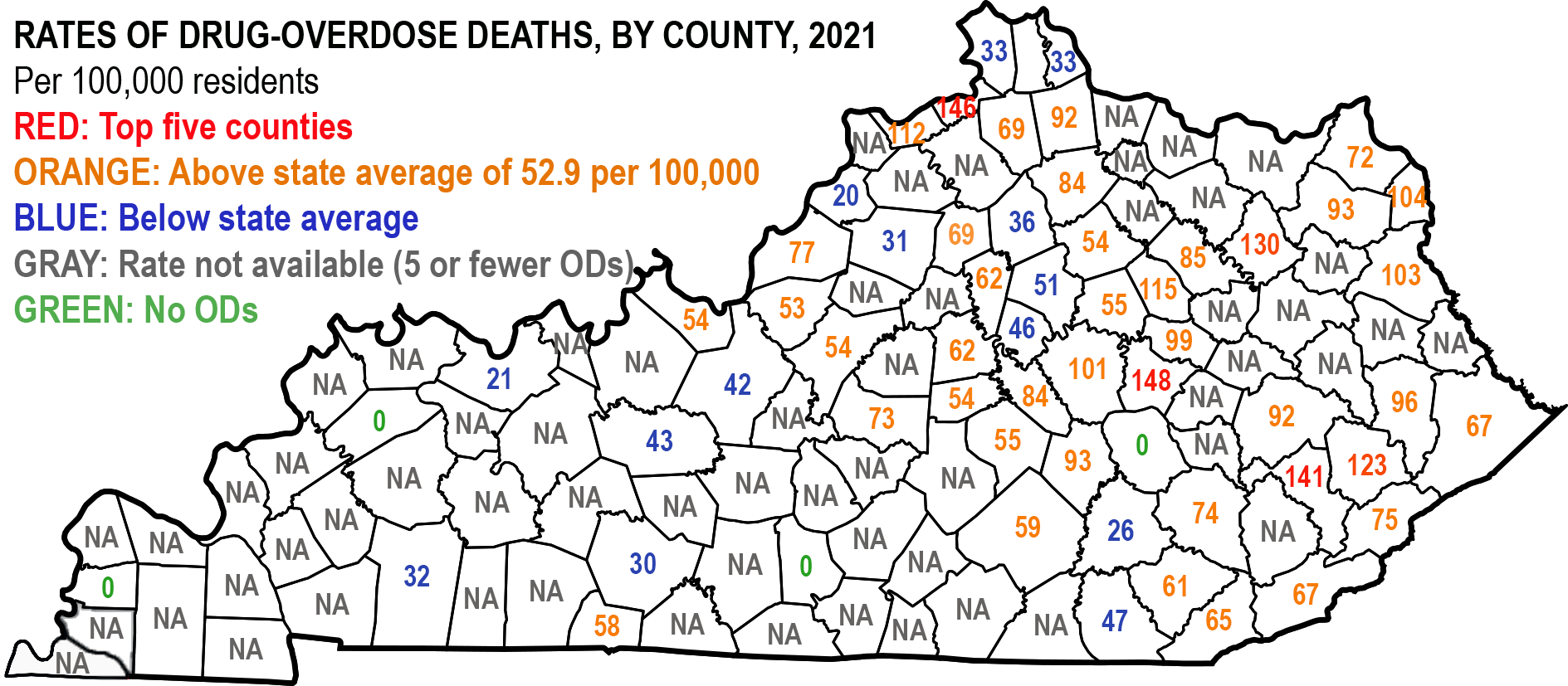
Kentucky Health News map from state data; click on it to enlarge (see note on table below)
By Melissa Patrick
Kentucky Health News

Drug-overdose deaths in Kentucky rose 14.6 percent in Kentucky in 2021, according to the state's annual report released Monday.

“The drug epidemic is not a Kentucky issue or political issue, but a nationwide issue that is affecting everyone and every state,” Van Ingram, executive director of the state Office of Drug Control Policy, said in a news release. “Our focus over this next year will be on increasing access to clinical care for those suffering from an addiction and offering more harm reduction measures.”

The state recorded 2,250 overdose deaths in 2021. That was 286 more OD deaths than the 1,964 reported in 2020, when the increase from the previous year was 54%.

The Covid-19 pandemic hit in 2020, disrupting lives and drug treatment, so it got most of the blame for that year's big increase. But the powerful opioid fentanyl was also becoming more prevalent, creating a "perfect storm" that is still being felt, Ingram said on KET's "Kentucky Tonight" Monday night. He told The Associated Press, “We’ve never seen one drug this prevalent in the toxicology reports of overdose fatalities.”

Estill County had the highest rate of fatal overdoses in 2021, 148 per 100,000 residents (adjusted for age of the population). It was followed by Gallatin, 146; Perry, 142; Rowan, 131; and Knott, 123. The report cautions that counties with fewer than 20 OD deaths per year, as was the case in all but Estill, Perry and Rowan, are unstable and should be interpreted with caution.

Kentucky Health News table, from state data; yellow counties
had fewer than 20 overdose deaths, so their rates are less reliable; 
rates were not released for those with fewer than 10 OD deaths.
The report does not give rates for counties with fewer than 10 overdose deaths, nor the actual number of OD deaths in counties with 5 or fewer. The number of counties with 10 or more OD deaths rose to 57 in 2021 from 44 in 2020. 

Jefferson County, the state's most populous, again had the most resident overdose deaths of any county, 569. That was an increase of 11% from the 512 recorded in 2020. The county's OD-death rate was 77 per 100,000, well above the statewide rate of 52.9 per 100,000.

Toxicology reports show that fentanyl was involved in 1,639 of the overdose deaths, or about 73% of them. That was an increase of 16% from the 1,413 overdose deaths involving fentanyl in 2020.

Methamphetamine was found in 1,075 of the overdose victims, or about 48%. This is an increase of 33% from the 809 OD deaths involving methamphetamine in 2020. 

Heroin was involved in 93 of the 2021 overdose deaths, a decrease from 191 in 2020. Also seeing decreases from the prior year were morphine, detected in 309 cases; acetyl fentanyl (256);  and alprazolam (211), among others. 

Oxycodone saw a slight decrease from the prior year, having been identified in 198 drug overdose deaths in 2021, down from 201 cases in 2020. 

Some of the drugs that saw increases from the prior year's toxicology reports were amphetamines, in 945 cases; gabapentin (503); THC (476); cocaine (300); hydrocodone (199); tramadol (129) and diazepam (85). 

The age group in which Kentucky overdose deaths are most common continues to be 35 to 44. Next is 45-54, which ranked third in the 2020 report and traded places with the 25-34 range in this year's report. Ranking fourth were the 55-64-year-olds. 

Over many years, Kentucky has supported programs, legislation and research to battle substance-use disorder, along with funding support.

State Sen. Ralph Alvarado, R-Winchester
"This problem is like a bucket with fifty holes in it," state Sen. Ralph Alvarado, R-Winchester and a physician, said on "Kentucky Tonight," adding that it's a problem that must be addressed by all elements of society, not just government.

But progress has been made, with measures such as harm-reduction programs that include syringe exchanges, House Minority Leader Joni Jenkins of Shively said: "We can't even quantify how many lives we've saved."

The state has more syringe exchanges than any other. "We may be ground zero for this problem, but we've been ground zero for a lot of national solutions," said Tim Robinson, a recovering addict who is CEO of Addiction Recovery Care, a chain of treatment centers that try to lead drug users to careers. He said addiction often seems "daunting and hopeless" because it usually take several attempts to kick the habit, "but recovery's possible. I see it every day."

Tim Robinson, CEO, Addiction Recovery Care
Robinson said so much treatment is available in Kentucky now that "It's almost treatment on demand," but the state needs more mental-health professionals. He said methamphetamine use is harder to treat because there is no medication-assisted treatment for it, as there is for opioid use, and it can cause a psychosis that makes users difficult to evaluate when they come to treatment.

Jenkins promoted the concept of "recovery ready communities" put into law by the legislature last year. An advisory council is working with Ingram's office and Volunteers of America to develop a program for cities and counties to apply for certification by offering transportation, support groups, recovering meetings and employment services at no cost to residents seeking treatment for a drug or alcohol addiction, Gov. Andy Beshear said in a news release.

VOA President & CEO Jennifer Hancock said in the release, “We are committed to being an inclusive and collaborative leader as we create a framework that will both standardize and customize what it means to be recovery ready for every Kentucky community. Recovery Ready Communities truly has the potential to transform how Kentucky approaches the public health crisis of our generation, so it was with a sense of urgency, accountability and passion that we applied. Our team is ready to get started, inspired by the work and cannot wait to bring this initiative to life.”

Beshear said, “Here in the commonwealth, we have been fighting a long battle against the opioid epidemic. This public-health crisis has torn families apart and taken the lives of far too many Kentuckians, far too soon. Every day we must work together to fund recovery programs and treatment options so that we can continue to address this scourge and get our people the help they need.”

Data for the report was compiled with data from the state medical examiner's office, the Kentucky Injury Prevention & Research Center, and the Kentucky Office of Vital Statistics.

People who are struggling with drug abuse or who are concerned about a family member's substance use can search for treatment providers at www.findhelpnowky.org. The KY Help Call Center (1-833-859-4357) also provides information on treatment options an open slots among treatment providers. The Kentucky State Police has also launched the Angel Initiative, which allows anyone with a substance-use disorder seeking treatment to visit a KSP post where they are directed to treatment.