Showing posts with label narcotics. Show all posts

Thursday, June 6, 2024

Drug-overdose deaths of Kentuckians fell 9.8% last year, but rate among state's Blacks increased 5%; overall U.S. decline was 3%

Graph by Kentucky Health News from state data
By Al Cross
Kentucky Health News

In 2023, 9.8 percent fewer Kentuckians died from drug overdoses than the year before, according to an annual state report released Thursday.

A preliminary report from the Centers for Disease Comtrol and Prevention last month showed a 7.9% decrease, but the CDC now includes deaths of non-residents. The state Office of Drug Control Policy says in the state report that it uses only resident deaths "to better target harm reduction and prevention activities for Kentuckians." 

The state report was funded by the CDC and prepared for the office by the Kentucky Injury Prevention and Research Center at the University of Kentucky, as an agent for the state Department of Public Health.

It said 79% of the overdose deaths involved fentanyl, a powerful synthetic opioid, and 55% involved methamphetamine, a stimulant with psychedelic properties. The numbers are based on blood tests of victims, who usually have more than one illegal drug in their bloodstream.

“Fentanyl is what’s driving this crisis. If we could ever get a handle on that I think out potential for success is unbelievable,” Van Ingram, director of the drug-control office since 2004, said at an event in the state Capitol rotunda attended by people from the treatment, recovery and law-enforcement communities.

Gov. Andy Beshear told the crowd, “Some of the best news in this report is how much better than we were than the rest of the country,” in which overdose deaths declined 3%, according to the CDC. “Today’s news follows a long list of positive actions we have taken with so many people in this room,” he said.

Earlier, Beshear said, "The sad fact is we still lost 1,984 Kentuckians." That is about the same as in 2020, and much more than 2019. And he noted that overdose deaths among African American residents of the state rose 5% in 2023, from 259 to 264, after rising 22% from 2021 to 2022. While the recent increase was much less, "That is unacceptable," he said.

The rate of drug overdose deaths among Black Kentuckians in 2023 was 68.3 per 100,000, which was 52% greater than the white rate of 45 per 100,000.

The age group with the most overdose deaths was 35-to-44-year-olds, with 571, but the number was 13.4% less than in 2022.

In that year, 2,135 Kentuckians died of drug overdoses. The decline of 9.8% “represents 151 families whose loved ones still have a chance to recover,” said Dr. Jody Jaggers, the Kentucky Pharmacy Education and Research Foundation's director of public health education.

Jaggers demonstrated how easy it is to use naloxone, which stops the effect of an overdose. "It's something that you can even teach a child to do," he said.

Known by the brand Narcan, the nasal spray is now easily available in generic form without a prescription. Jaggers said the key is getting it into the hands of people who are most likely to witness an overdose. 

The report says the state distributed 160,000 doses of Narcan in 2023, and Ingram indicated that the increased availability of naloxone was a factor in the 9.8% drop in overdose deaths. The state recently put up a website, FindNaloxoneNowKY.org, to help Kentuckians find it easily.

Among counties with 10 or more overdose deaths, for which overdose-death rates were calculated, the highest rates were in four counties that adjoin each other. Estill County had 27 overdose deaths for a top rate of 187 per 100,000 residents; second was Lee County, with 11 deaths for a rate of 155.9. Third was Breathitt County, which had 18 for a rate of 150.6. Fourth was Powell, which had 16 for a rate of 121.1. Fifth was Floyd, which nearly adjoins Breathitt; it had 35 deaths for a rate of 109.9 per 100,000.

Other counties with rates higher than 60 per 100,000 (in purple on the map below) were Bourbon, 85.9; Boyd, 94.2; Carter, 90.4; Clark, 72.9; Clay, 68.9; Franklin, 61.9; Garrard, 61.9; Jefferson, 66.3; Knott, 100; Lincoiln, 76.4; Madison, 72.1; Montgomery, 62.8; Perry, 93.3; Pike, 74.5; Rockcastle, 91.8; Rowan, 94.9; Wayne, 59.8; and Whitley, 59.3.

Counties with rates lower than those, but higher than the state average of 45.9 per 100,000, were Bell, 50.7; Boyle, 56.8; Bullitt, 51.6; Harlan, 57.3; Jessamine, 56.2; Johnson, 59.3; Laurel, 54; and Taylor, 50.1.

Map from state report, adapted by Kentucky Health News

Friday, February 23, 2024

Opioid epidemic is in a 'fourth wave,' seeing multiple substances being used at the same time, and fentanyl is the most common

A person uses fentanyl in Portland, Oregon, Jan. 23. (Photo: Patrick T. Fallon, AFP, via Getty Images and KFF)
By Colleen DeGuzman
KFF Health News

The United States is knee-deep in what some experts call the opioid epidemic’s “fourth wave,” which is not only placing drug users at greater risk but is also complicating efforts to address the nation’s drug problem.

These waves, according to a report from Millennium Health, were the crisis in prescription opioid use, followed by a significant jump in heroin use, then an increase in the use of synthetic opioids like fentanyl.

The latest wave involves using multiple substances at the same time, combining fentanyl mainly with either methamphetamine or cocaine, the report found. “And I’ve yet to see a peak,” said one of the co-authors, Eric Dawson, vice president of clinical affairs at Millennium, a specialty laboratory that provides drug-testing services to monitor use of prescription medications and illicit drugs.

The report, which takes a deep dive into the nation’s drug trends and breaks usage patterns down by region, is based on 4.1 million urine samples collected from January 2013 to December 2023 from people receiving some kind of drug-addiction care.

Its findings offer staggering statistics and insights. Its major finding is how common polysubstance use has become. According to the report, an overwhelming majority of fentanyl-positive urine samples — nearly 93% — contained additional substances. “That is huge,” said Nora Volkow, director of the National Institute on Drug Abuse at the National Institutes of Health.

The most concerning, Volkow and other addiction experts said, is the dramatic increase in the combination of methamphetamine and fentanyl use. Meth, a highly addictive drug often in powder form that poses several serious cardiovascular and psychiatric risks, was found in 60% of fentanyl-positive tests last year. That is an 875% increase since 2015.

“I never, ever would have thought this,” Volkow said.

Among the report’s other key findings:
  • The nationwide spike in methse alongside fentanyl marks a change in drug use patterns.
  • Polydrug use trends complicate overdose treatments. For instance, naloxone, an opioid-overdose reversal medication, is widely available, but there isn’t an FDA-approved medication for stimulant overdose.
  • Both heroin and prescribed-opioid use alongside fentanyl have dipped. Heroin detected in fentanyl-positive tests dropped by 75% since peaking in 2016. Prescription opioids were found at historic low rates in fentanyl-positive tests in 2023, down 89% since 2013.
But Jarratt Pytell, an addiction medicine specialist and assistant professor at the University of Colorado’s School of Medicine, warned these declines shouldn’t be interpreted as a silver lining.

A lower level of heroin use “just says that fentanyl is everywhere,” Pytell said, “and that we have officially been pushed by our drug supply to the most dangerous opioids that we have available right now.”

“Whenever a drug network is destabilizing and the product changes, it puts the people who use the drugs at the greatest risk,” he said. “That same bag or pill that they have been buying for the last several months now is coming from a different place, a different supplier, and is possibly a different potency.”

In the illicit drug industry, suppliers are the controllers. It may not be that people are seeking out methamphetamine and fentanyl but rather that they’re what drug suppliers have found to be the easiest and most lucrative product to sell.

“I think drug cartels are kind of realizing that it’s a lot easier to have a 500-square-foot lab than it is to have 500 acres of whatever it takes to grow cocaine,” Pytell said.

Dawson said the report’s drug use data, unlike that of some other studies, is based on sample analysis with a quick turnaround — a day or two.

Sometimes researchers face a months-long wait to receive death reports from coroners. Under those circumstances, you are often “staring at today but relying on data sources that are a year or more in the past,” said Dawson.

Self-reported surveys of drug users, another method often used to track drug use, also have long lag times and “often miss people who are active for substance use disorders,” said Jonathan Caulkins, a professor at Carnegie Mellon University. Urine tests “are based on a biology standard” and are good at detecting when someone has been using two or more drugs, he said.

But using data from urine samples also comes with limitations. For starters, the tests don’t reveal users’ intent.

“You don’t know whether or not there was one bag of powder that had both fentanyl and meth in it, or whether there were two bags of powder, one with fentanyl in it and one with meth and they took both,” Caulkins said. It can also be unclear, he said, if people intentionally combined drugs for an extra high or if they thought they were using only one, not knowing it contained the other.

Volkow said she wants to learn more about the demographics of polysubstance drug users: “Is this pattern the same for men and women, and is this pattern the same for middle-age or younger people? Because again, having a better understanding of the characteristics allows you to tailor and personalize interventions.”

All the while, the nation’s crisis continues. According to the Centers for Disease Control and Prevention, more than 107,000 people died in the U.S. in 2021 from drug overdoses, most because of fentanyl. In 2022 in Kentucky, 2,135 residents died from overdoses, and fentanyl was identified in more than 1,500 of the deaths, 72% of them.

Caulkins said he’s hesitant to view drug-use patterns as waves because that would imply people are transitioning from one to the next.

“Are we looking at people whose first substance use disorder was an opioid use disorder, who have now gotten to the point where they’re polydrug users?” he said. Or, are people now starting substance use disorders with methamphetamine and fentanyl, he asked.

One point was clear, Dawson said: “We’re just losing too many lives.”

KFF Health News is a national nonprofit newsroom producing in-depth journalism about health issues. 

Wednesday, November 15, 2023

Walgreens to pay state $102 million to settle opioid claims

Attorney General Daniel Cameron said Wednesday that Walgreens and its subsidiaries have agreed to pay a $102 million settlement to the state for business practices that worsened the opioid epidemic.

Walgreens will pay the money over 15 years, and has agreed to monitor, report, and share data about suspicious activity related to opioid prescriptions, under the settlement in Boone Circuit Court.

“This settlement has been a long time coming,” Cameron said in a press release. “And while nothing can truly fix what the opioid epidemic has stolen from us, this money is a glimmer of hope for Kentucky—real dollars for real recovery.”

Under state law, half of opioid settlements with drug manufacturers, distributors and retailers go to cities and counties, and half go to the state, where the money is spent by a commission staffed by the Office of the Attorney General. Cameron, who lost the governor's race to Gov. Andy Beshear, will be succeded as attorney general Jan. 1 by another Republican, former U.S. Attorney Russell Coleman.

Beshear filed the lawsuit against Walgreens when he was attorney general.

Friday, November 10, 2023

Kentucky health insurers give $750,000 to Louisville public-benefit firm to improve care for opioid-exposed infants in rural Kentucky

NAS stands for neonatal abstinence syndrome.
By Melissa Patrick
Kentucky Health News

The Kentucky Association of Health Plans, the trade group for companies selling health insurance in Kentucky, has given $750,000 to Nascend, a Louisvile-based public-benefit corporation that works to help infants with neonatal abstinence syndrome, caused by mothers using opioids during pregnancy. 

The KAHP grant will allow Nascend to extend its certification program to rural hospitals in Kentucky, to help standardize and improve care for opioid-exposed infants across the state, a news release said.

“Kentucky’s Medicaid managed-care organizations are proud to partner with Nascend . . . to show demonstrable results by eliminating care gaps and improving health outcomes for mothers and babies,” KAHP Vice President of External Affairs Katherine Kington North said in the release.

The NAS certification program is designed to help health-care providers treat substance-exposed infants more effectively and efficiently, which ultimately leads to better outcomes for the children and families as well as savings to the health care system, the release said. 

Dr. K. Dawn Forbes, founder and CEO of Nascend, said her team of neonatologists is excited about the impact that this grant will have across the state, particularly in rural areas. 

“We are going to be able to address a lack of standardized care guidelines, outdated and ineffective infant assessment tools, overused medication treatment, poor parental engagement, and insufficient nutrition," Forbes said in the release. "This is a game-changer, and we appreciate Kentucky health plans for being laser-focused on improving the social determinants of health.”

Kentucky has been particularly affected by the opioid epidemic, with NAS rates reaching 19.4 per 1,000 infants, with a peak rate of 77 per 1,000 infants in the state's Appalachian region. The national average is only 7 per 1,000.

The release says the KAHP grant will "help decrease the need to transfer infants to facilities in urban areas, better maintain patient-provider relationships, reduce family stress, and retain care and resources locally while also contributing to an estimated cost savings of at least $2.83 million annually by serving a minimum of 500 infants per year at full implementation." 

Nascend says it has trained more than 7,000 health-care providers in 38 states and improved the lives of more than 1.6 million infants. The company was recognized this year as a "Top 10 Health Education Services Provider" by Healthcare Business Review, and received the "Top Social Impact Company Award" at the 2023 Canopy Annual Good Business Summit for "aligning purpose and value with community impact," a news release said. 

Sunday, October 15, 2023

Report: Big political giver boosted stake in psychedelic research implicitly endorsed by Cameron, then funded anti-Beshear ads

Jeff Yass (Photo from MIT Sloan Sports Analytics)
Kentucky Health News

Around the time Attorney General Daniel Cameron implicitly endorsed using 5 percent of the state's opioid settlements to fund research to win federal approval of a psychedelic drug for addiction treatment, a firm owned by a major national political contributor increased its investment in such research and gave Cameron a political boost, Roger Sollenberger of the Daily Beast reports.

Jeff Yass of Philadelphia increased his investment in the second quarter of the year, and on June 8, he "gave $3 million to a super PAC that has recently pumped out at least $1.2 million worth of ads backing Cameron’s candidacy, according to Federal Election Commission filings," Sollenberger reports. "That donation has accounted for roughly 98 percent of the group’s total reported fundraising this year." Cameron is the Republican nominee for governor; the ads attacked Democratic Gov. Andy Beshear, who has criticized the plan to fund research into ibogaine, a psychedelic.

The contribution came nine days after Bryan Hubbard, a Cameron aide who heads the state Opioid Abatement Advisory Commission, proposed that the commssion put $42 million into research that would show the usefulness of ibogaine and help it win approval from the Food and Drug Administration.

Cameron appeared at the May 31 event where Hubbard issued his call, saying, "Something has to change. Obviously, we need to continue to fund the work that has been ongoing in Kentucky. We also need to explore a new approach. We have to imagine new possibilities. We have to invest in programs and potential solutions for tomorrow."

Also at the event was Ben Chandler, president and CEO of the Foundation for a Healthy Kentucky and a former Democratic attorney general and congressman. He applauded the proposal, and later endorsed it, citing the low success rate of drug treatment and recovery. Ibogaine has been reported to relieve withdrawal symptoms, but poses risks to the heart and is legal only in Mexico and New Zealand.

At a public hearing held by the commission in July, all the witnesses testified for the idea, including executives at two firms getting the investment from Yass. Sollenberger's story did not mention any attempt to reach Yass for comment.

Hubbard "declined to answer questions on the record," Sollenberger reports. "After an off-the-record phone call, Hubbard texted The Daily Beast the email address of Brett Waters, the head of a nonprofit that has been closely involved in the ibogaine project from the beginning. Waters is co-founder and executive director of Reason for Hope, a group whose CEO—a former Sen. Mitch McConnell appointee—joined Hubbard and Cameron at the May 31 press conference.

"The group has no corporate backers, Waters said. He also called Hubbard an 'incredibly positive figure' in this process, one who ensured that 'diverse voices' contributed to the discussion, including indigenous voices." He said of Hubbard, “He is genuine in his desire to help people break free of substance use disorder, and this is a brave proposal.”

Cameron's office "provided a 264-word statement expressing confidence in the commission and promoting the Kentucky Opioid Symposium," Sollenberger reports. "It did not address almost any of the detailed information and questions we provided as the focus of this article. The office did not respond when offered the chance to follow up."

However, the statement said the work on the synposium “required that certain agenda items be pushed until the commission’s November meeting.” Sollenberger writes that he asked "why the vote on the grant was pushed back to Nov. 15—a week after the election, and more than a month after the symposium."

Yass, the nation's fourth-largest political megadonor, "stands to profit massively from ibogaine, especially in the long run," Sollenberger writes. "Yass’s investment firm, Susquehanna International Group, currently holds around $5 million in ground-floor stakes with four biopharmaceutical firms focused on developing psychedelic addiction treatments. More than $4 million of it lies with two entities leading the charge on ibogaine, according to SIG’s August filing with the Securities and Exchange Commission.

SIG's total investment portfolio is $491 billion, Sollenberger reports: "If treatments like ibogaine gain traction with the public—and more importantly, with regulators—that niche market, and those holdings, will explode. As The Daily Beast previously reported, the entire purpose of the Kentucky program is to help ibogaine receive federal approval as a 'breakthrough therapy,' which would 'accelerate the regulatory pathway for legal status nationwide.'"

Witnesses from the two firms testified at the opioid commission's public hearing in July, Sollenbergher notes: "The meeting agenda published by the OAAC only discloses the corporate background of one of them—Dr. Srinivas Rao, co-founder of German biopharmaceutical firm ATAI Life Sciences. The other person in the joint venture, Dr. Deborah Mash, was only identified as professor emerita at the University of Miami School of Medicine, not in her capacity as founder and CEO of DemeRx—where ATAI holds majority control, according to SEC filings. Kentucky Health News reported that affiliation, which was included in a press release about the hearing.

Mash's ties were noted by commission member Sharon Walsh at the last meeting before she resigned from the commission. She told Hubbard, “So she’s going to come and talk to us about the development of this with it, you know, with the hope of getting money. There’s a clear conflict of interest from a person who has ownership of a company whose sole purpose is to get the drug to market. That’s why I’m asking for balance,” with contrary testimony.

"Two people familiar with the events told The Daily Beast that she stepped down in protest of funding ibogaine," Sollenberger reports. Walsh told Kentucky Health News in July that she resigned because UK's largest-ever grant, which she supervises, was extended for two years.

Sollenberger reports, "Yass has stakes in ATAI, which is heavily backed by another billionaire Republican megadonor, Peter Thiel. . . . ATAI also owns a considerable share of another one of Yass’ psychedelic investments, Compass Pathways. According to an SEC quarterly filing submitted in August, after ditching the stock entirely months earlier, Yass’ firm upped its ATAI investment significantly between April 1 and June 30. That filing also shows about $3.6 million in a company called Mind Medicine, which has been conducting ibogaine opioid abatement trials. All of these investments would stand to give SIG exponential returns if regulatory gatekeepers begin to clear the way for ibogaine development—and a partnership with a state government is a major step along that path."

Sollenberger also reports on "Rex Elsass, an influential longtime GOP strategist and media buyer who has performed millions of dollars of work for Yass-aligned groups. Elsass’ son, Reid, died tragically of an overdose, and his family created a nonprofit called the REID Foundation dedicated to recovery efforts, including emergent therapies." At the commission's Sept. 15 hearing, "Elsass, an Ohio resident, spoke movingly at a public hearing in support of ibogaine, reportedly describing himself to the commissioners as 'your neighbor next door' without apparently disclosing his long and unavoidably political background."

Sollenberger adds, "A former adviser at Elsass’ company, The Strategy Group, named Sally Hauser, now heads a group called the Kentucky Ibogaine Initiative, according to her LinkedIn. The nonprofit just registered with Kentucky this year. (Hauser’s position with the group disappeared from her LinkedIn page at some point after The Daily Beast sent out comment requests.)

"Elsass told The Daily Beast in a phone call that, to the best of his knowledge, he had never met Jeff [Yass] in person, and that he had been first tipped to Kentucky’s potential by the Etheridge Foundation, started by folk-rock LGBTQ icon Melissa Etheridge. He explained that his ibogaine advocacy—a 'miracle medicine that needs to be researched'—is rooted in deep, personal loss and a desire to help mitigate tremendous future tragedy."

Elsass told Sollenberger, “The solutions just weren’t there, and I was desperate for new methods to help my son. So we looked for other means, and as a result, he ended up in Peru” for an ibogaine treatment. “Plant medicines helped him and extended his life for several years, and left me with a mission.”

Sollenberger adds one more politician to the mix, U.S. Sen. Rand Paul. He notes that Paul and Sen. Cory Booker (D-N.J.) introduced a bill to "make it easier for patients to access controlled substances for medical treatment, starting with psilocybin and MDMA. . . . Last October, the Louisville Courier Journal said Paul was Yass’s 'favorite politician on the national scene.' The relationship also runs deep, with Yass pouring more than $15 million into the Paul-aligned Protecting Freedom super PAC since 2017, according to Federal Election Commission data. Protecting Freedom also contracts with Elsass, with one of his entities as its top vendor in the 2022 cycle, according to data compiled by the Center for Responsive Politics."

Sunday, September 17, 2023

At opioid panel's final hearing, Ben Chandler leads endorsers of funding research into psychedelic drug as treatment for addiction

By Melissa Patrick
Kentucky Health News

Twenty-three people spoke in favor of funding the development of an opioid-use disorder treatment using the psychedelic drug ibogaine with some of the state's opoid-settlement money at the Kentucky Opioid Abatement Advisory Commission's second and final public hearing on Friday, Sept. 15.

Ben Chandler (File photo)
Foundation for a Healthy Kentucky President and CEO Ben Chandler, a former Kentucky attorney general and five-term congressman, opened the meeting by saying that he had seen this problem from almost every angle.

Chandler spoke of a first cousin's addiction to opioids and other drugs and at least 15 failed attempts at recovery, having gone to "about every rehab center that you could go into of any note in this country." At age 30, the cousin "put a bullet to his head" and died. "He was like a brother to me."

Then his real remaining brother, Matthew Chandler, died of a fentanyl overdose in January. Ben Chandler said his brother sought illegal opioids to manage his pain because he wasn't able to legally obtain the pain medications he thought he needed, and he had been addicted to opioids for "probably 15 years." 

Chandler also talked about the surge of Oxycontin in Eastern Kentucky in the late 1990s, when he was attorney general, and his efforts to combat it, then about his time in Congress and the "enormous sums of money" spent to address this problem.  

"The bottom line to me is, despite the best efforts of so many people working on this problem for so many years -- and I mean that, they work their tails off, and they care deeply -- we have been unable, in my judgment, to solve this problem," he said. "It continues to be intractable, and we need as many tools as we can get.

"And I believe that a drug like ibogaine, from what I have read, it has the potential to make the difference that we need to have made, or at least a big difference. It's a tool that we can give the people who are working in the trenches, which will give them the opportunity, maybe, to break this cycle of addiction and actually save quite a number of lives. And I endorse anything that we can do to get that done." 

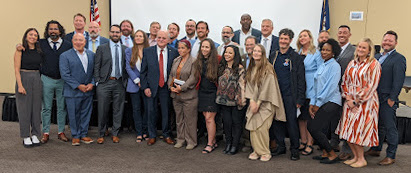
Most speakers and Opioid Abatement Advisory Commission staffers
at the Sept. 15 public hearing to discuss the psychedelic drug ibogaine
gathered for a group photo after the meeting. (Photo by Melissa Patrick)
Chandler said the proposed $42 million to fund this proposal, about 5 percent of the settlements with opioid makers and distributors, "is a drop in the bucket, compared to what has been spent over the years to try to deal with this problem. And spent quite frankly, to a large extent, unsuccessfully. We have successes, but we have a whole lot of failures. And I've seen those failures in my family, both my cousin and my brother, in and out of facilities, strong efforts to try to break the chain of addiction, both of them no longer with us." 

Ibogaine is illegal in the U.S. but has been anecdotally reported to stop the withdrawal symptoms of opioid dependence. The $42 million expenditure, to help get ibogaine federal approval in the next six years, was proposed by Bryan Hubbard, chair and executive director of the commission, which operates in the office of Attorney General Daniel Cameron, the Republican nominee for governor. 

Dr. Joseph Barsuglia, a clinical psychologist and ibogaine researcher who also provided a long list of professional connections to ibogaine, talked about the first time he witnessed an opioid detoxification with ibogaine in 2015. 

"I could not believe my eyes," he said. "To witness a patient with the most severe and chronic addiction you can imagine on death's doorstep undergo a 48-hour process and come out calm, connected, with a new radiance in their eyes and really wanting to live -- this is a miracle in the truest sense. With ibogaine, this is not a rare occurrence, this is the norm."

Barsuglia said ibogaine works for opioid-use disorder because it "rapidly alleviates opioid withdrawal and cravings and promotes lasting sobriety in a manner that is superior to opioid-maintenance therapies," and because "It induces dreamlike visions that increase insight into the causes of one's addiction, which can lead to durable psychological change." 

He said studies show that "ibogaine simultaneously targets addiction and craving to multiple substances, including alcohol, methamphetamines, cocaine and nicotine -- not just opioid use disorder," which is important because over half of opioid-use disorder patients are addicted to multiple substances.

Also, he said ibogaine is "fast acting and has durable outcomes." He said it takes 12 months to break opioid dependence with methadone and 12 hours with ibogaine. He added, "It reduces anxiety, improves mood, does not require ongoing burden on the medical system and has little potential for abuse."

The major objection to legalizing ibogaine are its risks to the heart. Barsuglia said that can be mitigated under a carefully controlled environment.

"I believe funding ibogaine research for opioid use disorder is perhaps one of the most obvious and necessary decisions that can be made in the history of addiction medicine," he said. 

Several speakers gave personal testimonies about their experience with ibogaine, with a recurring message that it not only healed them physically, but also spiritually.

Paria Zandi, a licensed marriage and family therapist in California, said she describes her life as two distinct chapters, "pre-ibogaine and post-ibogaine," and has been free of her opioid addiction for 10 years. 

"Through an intense 24-hour treatment, I emerged feeling reborn," she said. "Not only did I escape the clutches of the physical withdrawal symptoms and cravings, but I also began to relive some of the traumas in my life and gained a newfound perspective. I saw myself as someone of immeasurable worth, and a child of God. I experienced a profound sense of aliveness and connectedness that had eluded me until that moment." 

Zandi added that ibogaine is not a "cure-all" and if it is ever approved will need to be combined with social services, support systems and education. "We urgently need innovative approaches to addiction treatment, such as ibogaine," she said. 

Navy SEAL veteran and ibogaine patient Tommy Aceto told the commisison, "It wasn't just a medicinal treatment. It was a deep dive into my subconscious, self-forgiveness and most importantly, self-love."

Reed Madison, a parent of an ibogaine patient, said of his son, "The reason he went to an ibogaine clinic is because ibogaine offered him a solution for addiction interruption without withdrawals. . . . So I feel incredibly lucky that I learned about ibogaine at the time to help give my son a way out of his addiction problem before it was too late. I think there's a pretty good chance he may not be alive today had ibogaine not been available to him." 

In closing, retired Marine Corps Lt. Gen. Martin Steele, CEO of Reason for Hope and the president of the Veterans Mental Health Leadership Coalition, called on the commission to vote unanimously to fund the ibogaine initiative. 

"Our nation owes its citizens a viable alternative to something that's not working. You have it here in Kentucky, you have this moment in history, this moment in time," he said. "To conclude, I implore each and every member of the commission to support this initiative. A unanimous vote will send a message that will resonate loudly, nationwide."

Asked what was next, Hubbard told Kentucky Health News, "I think every commission member needs to take a little while to think over everything that they have heard. It's a tremendous amount of information to absorb that's been presented between May 31 and now we sit here on Sept. 15. And I think after some due diligence individually and collectively at some point, within some months, we'll be ready to put a vote on the agenda."

Tuesday, August 29, 2023

Study expands access to naloxone, which blocks drug overdose

The study includes distribution of naloxoone (brand name
Narcan) at public events. (University of Kentucky photo)
By Elizabeth Chapin
University of Kentucky

Thursday, Aug. 31, marks International Overdose Awareness Day, a time when attention is directed toward raising awareness about opioid overdose and ways to reverse the deadly effects.

One such way is naloxone, a medication that has become more available throughout Kentucky in recent years with the University of Kentucky’s HEALing Communities Study playing a significant role.

Naloxone, also known by its brand name Narcan, is a medication that when given in time can quickly reverse the effects of opioids and help restore breathing in someone who is experiencing an overdose.

Increasing access to naloxone is one of the evidence-based strategies implemented by the HEALing Communities Study to reduce opioid deaths in Kentucky. Launched in 2019, the $87 million study is focused on 16 counties hardest hit by the opioid epidemic. The goal is to develop sustainable solutions that can be scaled across the commonwealth.

So far, the study has helped thousands of Kentuckians get access to the lifesaving medication. Since the first unit of naloxone was distributed in April 2020, more than 86,000 units of naloxone have been distributed across the 16 counties participating in HEAL.

To put it into perspective: In 2019, the year before the HEAL intervention was launched, that number was just about 7,000, says Trish Freeman, a professor in the UK College of Pharmacy who leads the HEAL Prevention Team and coordinates HEAL’s naloxone education and distribution efforts.

In 2022, 2,127 Kentuckians died from a drug overdose, with 90% involving opioids. While Kentucky’s overdose death rate decreased by 5% last year, it’s still among the highest in the nation.

“No one should die from an overdose and naloxone is one of the most effective ways to intervene and save a life,” said Freeman. “By getting naloxone into the hands of more Kentuckians, we are saving lives today while informing the blueprint for the most effective way for communities to do so going forward.”

Most of the naloxone distributed by HEAL is delivered through partnerships with various community organizations and agencies including treatment, criminal legal system, social service and public health programs.

The study, which is broken down into two waves of eight counties each, has partnered with 245 agencies across all 16 counties. The HEAL Implementation Team, led by Hannah Knudsen, a professor in the UK College of Medicine, works hand in hand with partner agencies to provide the support needed to implement overdose education and naloxone distribution with their clients.

Knudsen’s team of implementation facilitators meet with a wide range of agencies to share information about HEAL’s overdose education and naloxone distribution program and then work with agencies to establish a workflow and provide technical assistance to ensure effective implementation.

The HEAL Prevention team operates a naloxone distribution hub in the Center on Drug and Alcohol Research for partner agencies that also includes training materials, because education about overdose and how to use the medication is required. Under a standing order agreement, HEAL co-investigator Michelle Lofwall, physician and professor in the College of Medicine, signs the order as the physician of record for all naloxone distributed.

The agency partnerships reach those at highest risk for overdose, especially within the criminal legal system, where HEAL has partnered with jails and prisons, drug court, pretrial services, police departments, and probation/parole programs.

The risk of overdose is increased when people are released from a correctional facility because tolerance for the drug can decrease significantly during a period of abstinence. After release, an attempt to use the same amount of opioid may lead to overdose or death, says Carrie Oser, professor in the UK College of Arts and Sciences and co-lead of the HEAL Criminal Legal System Team.

Most jails partnering with HEAL offer naloxone as part of the discharge process. Some, including the Madison County and Jefferson County detention centers, have opted to install “vending machines” in lobbies or discharge areas. The digital kiosks streamline tracking and mandatory training.

“The agencies we work with choose what works best for them given their unique staffing and organization needs. The most important thing is that people who are discharged are getting access to naloxone during this critical time,” said Oser.

Beyond agency distribution, naloxone is dispensed through the HEALing Communities Study comes from its own outreach team. HEAL prevention specialists reach people directly at venues like community events, social service agencies, businesses, schools and addiction treatment and recovery facilities.

In addition to educating people on how to recognize an overdose and properly administer naloxone, the team addresses a lot of myths and misperceptions people have.

“People need to know it’s safe to use on anyone and won’t hurt someone who isn’t overdosing,” said Gabi Deaton, a HEAL prevention-specialist coordinator. “We also talk about the Good Samaritan law, which protects people from prosecution when they report a drug overdose. Our goal is to make sure they’re confident, equipped and ready to intervene in the case of an opioid emergency if they ever need to.”

Deaton serves as the prevention specialist for Campbell County and organizes the outreach efforts of her colleagues assigned to the seven other counties in the HEAL’s second wave.

While the team generally visits locations with people at higher risk of overdose, they reach a larger cross section of the public compared to the agencies. Their visibility helps reduce the stigma surrounding opioid use disorder and ensure that more family members, friends and bystanders are carrying naloxone.

Deaton says people sometimes reach out to thank her after the naloxone she gave them is used to save a life. There are too many to remember them all, but she still keeps in touch with some who are now in recovery.

Soon, it will be easier to access naloxone nasal spray products, including brand name Narcan and its generic counterparts. These products were recently approved by the U.S. Food and Drug Administration for sale over the counter and should be available in pharmacies and other retail stores that sell OTC products by mid-October.

Overdose education and naloxone distribution by a wide range of agencies will likely still be needed to ensure that cost is not a barrier and that people learn now to effectively use naloxone to respond to an overdose.

Saturday, July 22, 2023

'Disrupting Addiction: A KET Forum' premieres Monday, July 24, to discuss the work being done to ease this public-health crisis

Kentucky Injury Prevention and Research Center map, enhanced by Kentucky Health News
Kentucky Health News

According to the state's annual Overdose Fatality Report, 2,135 Kentuckians died from a drug overdose in 2022. That was 5 percent fewer than in 2021, but many counties reported an increase in such deaths. 

Kentucky Educational Television is airing a program that includes a panel of survivors, drug-recovery experts and providers about the public-health crisis of addiction and the ongoing work to ease it. 

"Disrupting Addiction: A KET Forum" premieres Monday, July 24, at 8 p.m. ET on KET. It will be aired 21 more times on various days, times and channels through Aug. 9. To see the list of dates and times the program will air go to https:// ket.org/program/ket-forums/. It can also be viewed on the website KET.org.

The panelists include: Jimmy Cornelison, Madison County coroner; Eric Friedlander, secretary of the state Cabinet for Health and Family Services; Jennifer Hancock, president and CEO, Volunteers of America Mid-States; Bryan Hubbard, executive director and chair of the Kentucky Opioid Abatement Advisory Commission in the attorney general's office; Van Ingram, executive director of the state Office of Drug Control Policy in the Justice and Public Safety Cabinet; State Rep. Kim Moser, R-Taylor Mill, chair of the House Health Services Committee; and Dr. Devin Oller, University of Kentucky College of Medicine, primary care and addiction medicine physician. 

The program will also feature reports from Isaiah House Treatment Center; Kungu Njuguna, an attorney who is recovering from alcohol and heroin addiction; and the Estill County Health Department, which now offers a syringe-service program through a mobile clinic after being shut down for several years.

Tuesday, July 18, 2023

Advocates of using psychedelic drug ibogaine to treat addiction say its risks to the heart can be mitigated in a controlled study

The Opioid Abatement Advisory Commission held its first public hearing July 17, in Frankfort, to hear about use of the psychedelic drug ibogaine for treatment of opioid-use disorder. (Photo by Melissa Patrick)
By Melissa Patrick
Kentucky Health News

The Kentucky Opioid Abatement Advisory Commission held its first public hearing Monday, July 17, to discuss funding development of an opioid-use disorder treatment using the psychedelic drug ibogaine with some of the money the state is getting from settlements with drug makers and distributors.

The commission heard from five experts, all in favor of the idea, and two people who have successfully used ibogaine in other countries to recover from their opioid addictions. The drug is illegal in the U.S. but has been anecdotally reported to stop the withdrawal symptoms of opioid dependence.

Juliana Mulligan, a psychotherapist and ibogaine treatment specialist in New York, told the story of her opioid addiction and the seven years she spent in and out of treatment and jail. With the support of her parents, she traveled to an ibogaine clinic in Mexico, and that experience involved a "plethora of mistakes" that landed her in the hospital with cardiac issues that resulted in a heart attack.

Ibogaine's effects on the heart are a major obstacle to its use, and the commission discussed that with another expert. But Mulligan called her experience with the drug "nothing short of miraculous" and said she has not used an opioid or had a craving since November 2011.

"Despite the dramatic hospital story, the medicine did its job for me," she said. "I remember suddenly feeling with total certainty that ibogaine is the future of opioid-disorder treatment. . . . Of course, ibogaine isn't magic and it isn't a cure, but it is hands-down the best door open to the path of healing that myself and many other could find."

Jessica Blackburn of Floyd County talked about her success with ibogaine in 2008 for opioid-use disorder after many attempts at recovery. Blackburn said she relapsed, but in August will have gone eight years without using any drugs.

Blackburn said she would not be alive today "without the use of iboga," the African shrub from which the drug is produced. "No Kentuckian should have to leave the country to receive this life-saving treatment."

Drug developer calls for 'Manhattan Project'

Dr. Deborah Mash, founder and CEO of DemeRx, which wants to develop ibogaine as an addiction treatment, told the commissioners that if clinical trials are approved for it, her company would look to demonstrate that ibogaine could be used for relapse prevention. 

"This class of molecules, ibogaine in particular, opens plasticity in the brain, and this is, we believe, why we will be able to prove — in effective and well-designed clinical trials — that this drug is transformative," said Mash, an emeritus professor of neurology at the University of Miami.

Plasticity is the brain's ability to alter its connections and rewire itself to function in a way that differs from how it previously functioned.

"What we want to be able to demonstrate, working in a public-private partnership, is that this drug [will] help break the cycle of addiction and promote that transition to abstinence-based treatments," Mash said, adding later that it needs to be "a Manhattan Project," like the one that developed nuclear weapons.
 
"I think we need the best scientists, the best people who know how to do clinical trials, our academic colleagues together (with) public-private partnership, to accelerate the pace of this," she said. 

Mash said she has studied ibogaine for 30 years and her initial published research was done on the West Indies island of St. Kitts, with permission from its government, and published in 2018 in Frontiers in Pharmacology. 

She said that research of treating hard-core drug users with ibogaine "demonstrated . . . not only that it benefited people, but we also demonstrated that it could be administered safely under full medical monitor." 

Dr. Kenneth Alper, a neuropsychiatrist and visiting scientist at the Nathan Kline Institute for Psychiatric Research in Orangebrg, N.Y., said his research has found that the drug's "action is novel, which suggests that ibogaine could provide a basis for the development of fundamentally innovative pharmacotherapy."

This is important, Alper said, because while effective medications are available for addiction, "The need for innovation in the treatment of opioid-use disorder is clear" because "only a fraction of those with OUD access medication-assisted therapy, and when they do, a third or more will drop out within eight months." 

He said 20% to 60% of people in medication-assisted treatment use illicit opioids, "completion of detoxification fails one-third to one-half of the time," and even if treatment is successful, it "is followed by relapse within four to six weeks 75% to 80% of the time." 

Dr. Nolan Williams, an associate professor at Stanford University, told the commissioners that his study of veterans who have suffered from traumatic brain injury, which is under peer review for publication, is "the most comprehensive evaluation ever done" on people who have received ibogaine treatment. 

He said that while the results won't be available for about six weeks, he's let other professionals look at the data and they have said "the findings are shocking and that they've never seen a drug do this before."  

Cardiac concerns

State Rep. Danny Bentley, R-Russell, a pharmacist, asked about ibogaine's effect on the heart. Williams said that risk could be mitigated by an additional layer of controls to protect patients, such as careful screening. 

Williams said some people who take ibogaine display an electrocardiogram change called "QT prolongation" associated with a particular type of dysrhythmia that can progress into ventricular fibrillation and death. But "If you're in a supervised medical setting, there's a lot you can do about it." 

He said the deaths associated with ibogaine treatment have largely occurred in hotel rooms in other countries, and in an appropriately monitored setting, the threat would be dealt with in the same way "a lot of drugs that have QT prolongation," he said.

Mash said there have been 33 deaths from ibogaine in the published peer review literature over 20 years.  

Alper said his work in forensic toxicology, aimed at informing efforts to make ibogaine safer, found that ibogaine-related deaths often involved pre-existing medical conditions, particularly cardiac conditions. Other factors include the use of ibogaine of uncertain or impure composition or co-ingestion of substances of abuse. 

"I believe that many of these deaths were likely preventable," he said. "This highlights the need for adequate medical supervision during ibogaine treatment, minimally including cardiac monitoring." 

Federal approval process

Bryan Hubbard, chair and executive director of the commission, has asked it to consider committing $42 million of the settlement money from drug companies to help get ibogaine through the FDA approval process in the next six years.

Hubbard works for Attorney General Daniel Cameron, the Republican nominee for governor. Democratic Gov. Andy Beshear's appointees on the commission, Health Secretary Eric Friedlander and Office of Drug Control Policy Director Van Ingram, asked how long it takes to get a drug through the FDA process.

Dr. Srinivas Rao, co-founder and chief scientific officer of Atai Life Sciences, a German company. said the estimates are around 10 years at a cost of between $600 million and $800 million. Mash said it can go faster. 

"I believe the open-label data, the observational data, supports this. I believe that the regulators are going to be supportive of this," Mash said. "And certainly when you see these initiatives, these types of public-private initiatives, this will not be lost on other partners that will come. So the leadership today, even having this meeting, is really groundbreaking." 

Mash said it is time for a "pivotal, Phase II study" to demonstrate safety and efficacy of the drug. She said there have been no controlled trials but there is an abundance of observational data that show ibogaine treatments have resulted in patients having remission from addiction.

Mash said the trials would be done in a monitored, in-patient setting after the person had been screened to make sure they would be a good candidate. She said the drug would be given by tablet, and in about 45 minutes the patient would enter a deep phase of cognitive introspection for four to eight hours. She said the patient would be required to stay overnight and be released the next day. 

Why $42 million? 

Friedlander asked Hubbard why he is asking the commission for $42 million and exactly what the state would get from it.

Hubbard said the legislature gave the same amount to Senate Bill 90, a criminal-justice reform initiative related to addiction and recovery, and noted that it is 5% of the more than $900 million in settlement money that will come to the state. The commission handles half and local governments the other half. 

"If this commission can pay for a highly consequential criminal-justice reform initiative in 11 counties to the tune of $42 million over four years," he said, "then perhaps we can explore devoting $42 million, which would be matched by the participating clinical research entity for a total of $84 million over the next six years, to potentially revolutionize how we treat opioid use disorder for the people of this state, for the people of this country, and for the people of this world." 

Williams said, "It's an important point that maybe something like this wouldn't fund all of it, but if you could get some momentum going, then that's very helpful to getting other parties involved." 

The second public hearing about ibogaine will be held from  9 a.m. to 3:30 p.m. Sept. 15 in Conference Room A-125 at the Administrative Office of the Courts building, 1001 Vandalay Drive, Frankfort.

Thursday, June 22, 2023

Herald-Leader digs into idea of using a psychedelic drug to treat opioid-use disorder, talks to a Ky. woman about her use of it

The head of the Kentucky Opioid Abatement Advisory Commission has suggested using up to $42 million of the more than $900 million in settlement funds with drug companies to invest in clinical trials to study a psychedelic drug, ibogaine, as a treatment for opioid-use disorder.

Ibogaine is a powerful psychedelic that comes from a plant found in Africa that is anecdotally reported to stop the withdrawal symptoms of opioid dependence. It is not approved for use in the United States.

Jessica Blackburn
(Herald-Leader photo by Silas Walker)
Alex Acquisto and Taylor Six of the Lexington Herald-Leader tell the story of a Kentucky woman who took ibogaine for opioid-use disorder. Jessica Blackburn, 36, told the reporters that she had success taking ibogaine in her 20s to help end her addiction to OxyContin, the leading brand of oxycodone.

Blackburn, of Floyd County, recounted her struggles with addiction and attempts at recovery, including many stints at a residential treatment center, attempts with abstinence-based recovery programs, and taking buprenorphine, or Suboxone, to help wean her cravings. She also told of her repeated arrests on drug-related charges. 

"But no recovery attempts or her lengthening criminal record dissuaded her from returning to OxyContin," the Herald-Leader reports. After years of trying to stop, she said her father told her about ibogaine.

"In 2008, with roughly $6,000 in cash, Blackburn traveled alone to Jalisco, Mexico. There, in a house in a small village, she took two doses of ibogaine under the watch of strangers. The only medical device present was a battery-operated blood pressure cuff," the newspaper reports. "For the next 24 hours, Blackburn lay in a bed, largely immobile with ataxia, a side effect of the drug. She sweated, her heart rate slowed and accelerated, and she hallucinated vividly." 

“It was not a fun trip,” said Blackburn. “It was violent, like being choke-slammed by God.”

When she woke up, she no longer had a craving for oxycontin and did not have withdrawal symptoms, no longer desired cigarettes, and had lost her compulsion to bite her nails, Blackburn told the newspaper. Further, she said ibogaine changed how she viewed her addiction at an emotional and spiritual level. 

Blackburn said she had relapsed twice since taking the first ibogaine treatment, that the psychedelic worked a second time, and she has been sober for six years after being put on Vivitrol to suppress her cravings.

Bryan Hubbard, the chairman and executive direcor of the opioid commission, which operates under Attorney General Daniel Cameron, asked it to consider funding clinical research into use of ibogaine as a treatment for opioid-use disorder, with the hope of getting it approved by the Food and Drug Administration.

In June, the commission scheduled two public hearings to learn more about the drug, July 17 and Aug. 16, from 9 a.m. to 3:30 p.m. in Room A125 of the Administrative Office of the Courts Building, 1001 Vandalay Dr,, Frankfort, at the northeast quadrant of the I-64/US127 interchange.

The Herald-Leader looked at research on ibogaine research, and its risks. "Though anecdotes and case studies show ibogaine reduces withdrawals and cravings, it has also caused 'severe toxic adverse events,' detailed in the Journal of Substance Use and Addiction Treatment," the newspaper reports. "More than 30 deaths associated with ibogaine ingestion have been reported in peer-reviewed scientific literature, according to the Multidisciplinary Association for Psychedelic Studies."

The reporters add, "Ibogaine's exact impact on the brain is less clear. . .The drug does show promise for its ability to curb withdrawals and cravings, but its impact on cardiac activity is what makes it risky."

Kentucky is already part of National Institute of Health-funded research that is built on expanding existing addiction medications already approved by the FDA, and described it as "an endeavor still stymied by state policy and stigma," the reporters write.

Dr. Margaret McGladrey, a drug researcher with the University of Kentucky, told the Herald-Leader, “I feel like investing in something largely untested [in the U.S.] doesn’t make a lot of sense when we have so much effort that needs to be poured into making sure we are ensuring this kind of equitable access to the three FDA medications at our disposal.”

McGladrey is part of UK's $87 million grant-funded HEALing Communities study, which seeks to build a model to reduce opioid overdoses by 40% in 16 Kentucky counties. If successful, that model will be applied to the rest of the state.

Thursday, June 15, 2023

Kentucky had 5% fewer drug overdose deaths in 2022 than in '21 but many counties reported an increase in OD deaths

State Department for Public Health map, adapted by Kentucky Health News
By Al Cross
Kentucky Health News

Kentucky is still losing more than 2,000 citizens a year to drug overdoses, but last year's total was less than the year before, the first decline since 2018, according to the state's annual Overdose Fatality Report.

The report, issued Thursday, says 2,135 Kentuckians died from overdoses in 2022. A preliminary report had put the number at 2,127. The final figure is 5.4 percent under the final 2021 figure of 2,257.

However, many counties had more overdose deaths than in 2021, and "Addiction remains one of the most critical public health and safety issues facing the Commonwealth of Kentucky," says the report, issued by the state Office of Drug Control Policy.

The office's director, Van Ingram, said in a news release, “Over the past year, we have heavily focused on increasing access to clinical care for those suffering from addiction while offering more harm reduction measures,” including distribution of naloxone (Narcan), which blocks the effect of overdoses.

Among counties with 10 or more overdose deaths, Bath County, in east-central Kentucky, had the highest rate of overdose deaths in 2022, 18.5 per 10,000 residents. After it came Lee County, 15.1; Floyd County, 13.3; Estill County, 13; and Knott, 12.6. The state rate was 5 deaths per 10,000, down from 5.3 in 2021.

Rates for 65 of the state's 120 counties were not released because they had fewer than 10 drug overdose deaths. The actual numbers of overdose deaths in a county were not released if it had fewer than five.

Opioids were involved in 90 percent of overdose deathss, led by fentanyl with 72.5%, which was 6% less than in 2022. The number of overdose deaths "was also worsened by the widespread availability of potent inexpensive methamphetamine," the report says. Many victims had more than one drug in their system; 50.1% had fentanyl.

The Centers for Disease Control and Prevention recently released a national overdose death report, which listed Kentucky as one of only eight states to record a significant decline (at least 100) in overdose deaths, the release from Beshear's office noted. It said "Beshear has increased the number of treatment beds in the community by 50% and secured the largest number ever of corrections-based addiction treatment beds."

The release also said "A recent article from The Associated Press noted that . . . the decrease in overdose deaths is due to Kentucky’s intentional work to address addiction and offer more treatment services," but that is an overstatement. The article paraphrased Columbia University epidemiologist Katherine Keyes as saying that since Kentucky and other states with declines had high overdose-death rates during the epidemic, their declines (emphasis added) "might be a sign that years of concentrated work to address the problem is paying off. State officials cited various factors for the decline, like social media and health education campaigns to warn the public about the dangers of drug use; expanded addiction treatment — including telehealth — and wider distribution of the overdose-reversing medication naloxone."

Wednesday, May 31, 2023

Appeals court OKs plan that shields owners of Purdue Phrama from future lawsuits; they must give it up and donate billions

Purdue Pharma's headquarters in Stamford, Conn.
(Photo by Drew Angerer, Getty Images, via New York Times)
A federal appeals court has approved a settlement by Purdue Pharma, the maker of OxyContin, that protects its billionaire owners, the Sackler family, from future lawsuits. The Sacklers would give up the firm, which would take the new name Knoa, "with its profits being sent to a fund to prevent and treat addiction," reports Geoff Mulvihill of The Associated Press.

"Family members would also contribute $5.5 billion to $6 billion in cash over time, or about half of what the court found to be their collective fortune, much of it held offshore. At least $750 million of that money is to go to individual victims of the opioid crisis and their survivors. Payments are expected to range from about $3,500 to $48,000."

Tuesday’s decision by The U.S. 2nd Circuit Court of Appeals in New York also protects the family from lawsuits "over the toll of opioids, even though they did not file for bankruptcy," AP notes. "The court’s ruling reversed a 2021 ruling that found bankruptcy court judges did not have the authority to approve a settlement that would offer bankruptcy protections for those who have not filed for bankruptcy."

The deal "would end claims filed by thousands of state, local and Native American tribal governments and other entities," AP reports. "Sackler family members have been clear that without the protections, they won’t hold up their part of the deal. . . . Several states had withheld support for the plan, but after a new round of negotiations last year, all of them came on board."

The sole remaining objector was the Office of the Bankruptcy Trustee in the Justice Department, which "did not immediately say whether it would appeal Tuesday’s ruling to the U.S. Supreme Court, ask the Circuit Court to review its decision or accept the ruling as is," AP reports. "Even without an appeal, it could be months before the bankruptcy plan takes effect."

Saturday, April 1, 2023

Fentanyl test strips will no longer be drug paraphernalia under law

By Sarah Ladd
Kentucky Lantern

Fentanyl test strips will no longer be considered drug paraphernalia in Kentucky.

Gov. Andy Beshear on Friday signed a bipartisan bill decriminalizing fentanyl test strips in Kentucky after it easily passed both legislative chambers.

The state Senate passed House Bill 353 Thursday night. The House concurred unanimously in the final hours of the legislative session. It will take effect July 8, 90 days after the session's adjournment.

How one type of fentanyl test strip works
Fentanyl test strips
are paper strips that can detect the presence of fentanyl in pills and other drugs within minutes. Fentanyl is a powerful synthetic opioid that contributed to 73% of Kentucky’s 2,250 overdoses in 2021. Using the test strips can help prevent overdoses, the Centers for Disease Control and Prevention says.

“Unwitting individuals may think they are ingesting one substance and unaware that it also contains fentanyl,” Jennifer Hancock, president and CEO of Volunteers of America Mid-States, said in a statement.

“With police departments and other emergency responders already carrying and administering Narcan, a medicine used for the treatment of a known or suspected opioid overdose emergency, it makes sense to prevent these overdoses on the front end,” she said. “It may afford another day where we can get an individual into recovery.”

Saturday, March 4, 2023

Bill to exclude fentanyl test strips from legal definition of drug paraphernalia awaits initial passage by the Kentucky House

Image from Centers for Disease Control and Prevention
By Sarah Ladd
Kentucky Lantern

Fentanyl test strips would no longer be considered drug paraphernalia in Kentucky under a bipartisan bill that the House Judiciary Committee approved Wednesday, on a 17-0 vote with three passes.

A revised version of House Bill 353, sponsored by Reps. Kim Moser, R-Taylor Mill, and Rachel Roberts, D-Newport, is posted for passage by the full House.

It says “Narcotic drug testing products utilized in determining whether a controlled substance contains a synthetic opioid or its analogues shall not be deemed drug paraphernalia under this section,” unless the prioduct “is utilized in conjunction with the importation, manufacture, or selling of fentanyl or a fentanyl analogue.” It also says any such product with “residual or trace amounts of a synthetic opioid or an analogue thereof shall not be prosecuted as possession of a controlled substance.”

The Centers for Disease Control and Prevention says fentanyl test strips that can detect the presence of fentanyl in pills and other drugs within minutes, and thus help prevent overdoses.

But treating them as drug paraphernalia has dissuaded public agencies and groups that work with drug users from purchasing and distributing them, for fear that doing so would land them in legal trouble, says Kentucky Smart on Crime, a coalition working for justice reforms that address inequities and improve public health. Possession of drug paraphernalia in Kentucky is a class A misdemeanor, punishable by up to a year in jail and $500 fine.

Drug dealers mix fentanyl with other drugs, such as heroin, cocaine, methamphetamine and MDMA, because it takes very little fentanyl to produce a high, making it a cheaper option, says the National Institute on Drug Abuse. The risk of overdose increases when people don’t realize they’re taking fentanyl.

“Test strips and a strong education campaign are evidenced-based practices that can help stem the tide of deaths by fentanyl,” Jennifer Hancock, president and CEO of Volunteers of America Mid-states, said in support of the bill. “We can’t put people on the road to recovery if they’re dead.”

VOA noted that fentanyl played a role in 73% of the 2,250 overdose fatalities Kentucky recorded in 2021, the last year for which a total is available.The state has one of the nation’s worst rates of fatal overdoses.

Other steps people can take to lower overdose risk, according to the CDC, are:
  • Keep Narcan handy.
  • Do not mix drugs.
  • Don’t take drugs alone.
  • Find a treatment center near you at https://findtreatment.gov or call 800-662-4357.

Wednesday, February 15, 2023

Opioid panel head says rules Beshear signed are sufficient, and being more specific would aid 'the most powerful and privileged'

Bryan Hubbard (Photo by Melissa Patrick)
By Melissa Patrick
Kentucky Health News

The executive director of the state Opioid Abatement Advisory Commission spent a fair amount of time at its latest meeting assuring attendees, both in person and by Zoom, that there were regulations directing the grant request for the millions from settlements with drug manufacturers and distributers,  despite comments made at a prior subcommittee meeting and by the governor that suggested otherwise. 

Bryan Hubbard, who works for Attorney General Daniel Cameron, was referring to comments made by commission member Van Ingram, director of Gov. Steve Beshear's Office of Drug Control Policy. At a Jan. 10 subcommittee meeting, Ingram and other subcommittee members said they needed written guidelines to make decisions about recommendations for grant awards.  

On Jan. 12, Beshear was asked at his weekly news conference if he shared Ingram's concerns and said, among other things, that "any process where there's an application for government funds, has to have guidelines, has to have scoring criteria." He went on to say such criteria will be needed to explain why some were selected to receive the grant money and others were not. 

At the commission's Feb. 14 meeting, Hubbard, who also chairs the panel, first praised and thanked Ingram for his many years of service fighting the opioid epidemic. 

"I also want to thank you for the patient and wise counsel you have given me and my role. You are a tremendous servant of this state and a friend and colleague to me, and I am sincerely thankful for you," said Hubbard. "I'm also sorry for the way in which remarks that you made, as part of a very deliberate and thoughtful conversation in a subcommittee meeting, were parlayed to create an illusory construct of division within this commission, where none indeed exists." 

Hubbard walked through the timeline for developing the regulations that govern the commission's practices, which he said were unanimously passed by the commission and signed by Beshear Dec. 18.

"Since that time, there have been some assertions that this commission lacks criteria with which to evaluate the grant applications and to issue reports on the basis of clear standards that will govern our process," he said.  To dispute that, he read a section of the emergency regulation and referred to Beshear.

"One person who expressed concern regarding an alleged lack of criteria is the very person who signed these into law," said Hubbard. "That concern reflects either a failure to read what was signed, a failure to understand what was signed or a calculated decision to make us look bad, so that the articulator can look good."

Beshear, a Democrat, is running for re-election and Cameron is seeking the Republican nomination to oppose him.

Hubbard concluded by saying, "We will not create or utilize a complicated, inflexible scoring system, which by effect, if not design, favors the most powerful and privileged players in this state – players who have made an arc out of mastering such systems for decades. Our goal is to create as much broad-based, grassroots participation in the commission's work as possible, with modest resources being measured against monumental need and demand. Organizations and individuals who are doing the work government cannot or will not perform will be our priority. Our results will not be perfect, but they will be open, transparent and accountable. Kentuckians deserve no less." 

Other commission news

Hubbard noted that since the early December meeting, the commission has held two town-hall meetings, one in Louisville and the other in Lexington, and a public forum in Paducah, to address the impact of the opioid epidemic on African Americans.

"Fentanyl is now the second leading cause of death in African American men in our state," he said. The Operation Fight Fentanyl's website states that fentanyl was involved in over 70% of of the state's 2,250 overdose deaths in 2021. 

In addition, he said the commission participated in the Harlan County Drug Summit and provided testimony before the state House and Senate health committees, and its subcommittees have started the process of reviewing the grant applications. 

The state is getting $842 million, half of which will be allocated by the commission, with the other half going to cities and counties. Funds are to be disbursed annually, on various schedules, through 2038.

Hubbard also noted that Cameron has created "Operation Fight Fentanyl" to make it a top public-safety issue and will hold forums across the state to address the problem. 

The first forum was held in Kenton County Feb. 1. Others will be held in Pendleton County Feb. 28, Whitley County March 15, Greenup County March 22, Martin County April 10 and Leslie County April 18. Click here for more details. 

Hubbard said the commission is looking to host a statewide opioid conference in the third week of September. He said it has secured a $100,000 sponsor, who will be announced later, to help cover the cost, which is estimated at about $150,000. Hubbard said he is seeking topics that people would like to see addressed as well as suggestions for speakers.