Showing posts with label vaccines. Show all posts

Friday, June 14, 2024

Whooping cough cases keep rising in Lexington and statewide; anyone with cold-like symptoms lasting 2 weeks should get tested

By Melissa Patrick
Kentucky Health News

Fayette County continues to experience a whooping cough outbreak, part of a statewide year-to-year increase in cases of the disease that is most serious in infants, young children and those with chronic diseases.

"Lexington has more pertussis, or whooping cough, cases in the last six weeks than the previous five years combined," Kevin Hall, communications officer for the Lexington-Fayette County Health Department, said in an email. "Fayette County is now up to 27 confirmed cases reported since April 26 . . .  compared to 16 total the previous five years."

Statewide, 25 of 120 counties have reported cases, and the total (76) has almost reached last year's total (84) with more than half of the year remaining.

2024 pertussis cases by county
(Data from state Dept. for Public Health)
Whooping cough, known medically as pertussis, is a highly contagious respiratory illness spread by coughing and sneezing.  Infected people can spread the disease from the start of symptoms and at least two weeks after coughing begins. 

Early symptoms of whooping cough look like a common cold, including runny nose, sneezing, mild cough and low-grade fever. After one to two weeks, long coughing spells develop, which often occur in explosive bursts, sometimes ending with a high-pitched whoop and vomiting. This can go on for up to 10 weeks or more, according to the Centers for Disease Control and Prevention.

The best way to prevent whooping cough is through vaccination. The childhood vaccine is called DTaP. Infants should receive a series of DTaP immunizations at 2, 4, and 6 months, with boosters at 15-18 months and 4-6 years. Children should then get a single dose of the booster, called Tdap, at 11 or 12. Boosters are required every 10 years to maintain efficacy.

"Anyone with cold-like symptoms lasting a week or two should ask their provider to be tested for pertussis," said Hall. "A cough isn’t always present, and the violent cough takes a few weeks before it appears, if it happens at all."

So far in 2024, 76 confirmed cases of pertussis have been reported in Kentucky. That's up from 46 confirmed cases that were reported by the state to Kentucky Health News in mid-May. The state had 35 cases in 2022 and 84 in 2023.

Last May, State Epidemiologist Kathleen Winter said at an immunization summit that the U.S. has a spike in pertussis about every five years. She said there was a "major epidemic" in 2012 and "We are well positioned to have another one." 

Asked about this, Brice Mitchell, a spokesman for the state Department for Public Health, said in an email dated May 24 that while cases of pertussis tend to peak every three to five years, this pattern was disrupted during the Covid-19 pandemic. 

"In recent years, pertussis incidence has remained low in Kentucky. (35 cases in 2022 and 84 cases in 2023) The last major peak occurred in 2016-2017 when 463 and 449 cases were reported, respectively," he said. "There is no clear indication that Kentucky is currently headed into an elevated incidence year for pertussis, however the Kentucky Department for Public Health continues to work with local health departments to identify cases and closely monitor trends." 

Wednesday, June 5, 2024

Vaccine misinformation abounds as measles spreads; 1 in 10 cases lead to infections that can cause learing loss

Photo from iStock/Getty Images Plus via KFF Health News
By Amy Maxmen and Céline Gounder
KFF Health News

Measles is on the rise in the United States. In the first quarter of this year, the number of cases was about 17 times what it was, on average, during the same period in each of the four years before, according to the Centers for Disease Control and Prevention. Half of the people infected — mainly children — have been hospitalized.

It’s going to get worse, largely because a growing number of parents are deciding not to get their children vaccinated against measles as well as diseases like polio and pertussis. Unvaccinated people, or those whose immunization status is unknown, account for 80% of the measles cases this year. Many parents have been influenced by a flood of misinformation spouted by politicians, podcast hosts, and influential figures on television and social media. These personalities repeat decades-old notions that erode confidence in the established science backing routine childhood vaccines. KFF Health News examined the rhetoric and explains why it’s misguided:

The "No-Big-Deal" trope: A common distortion is that vaccines aren’t necessary because the diseases they prevent are not very dangerous, or too rare to be of concern. Cynics accuse public-health officials and the news media of fear-mongering about measles even as 19 states report cases.

For example, an article posted on the website of the National Vaccine Information Center — a regular source of vaccine misinformation — argued that a resurgence in concern about the disease “is ‘sky is falling’ hype.” It went on to call measles, mumps, chicken pox, and influenza “politically incorrect to get.”

Measles kills roughly 2 of every 1,000 children infected, according to the CDC. If that seems like a bearable risk, it’s worth pointing out that a far larger portion of children with measles will require hospitalization for pneumonia and other serious complications. For every 10 measles cases, one child with the disease develops an ear infection that can lead to permanent hearing loss. Another strange effect is that the measles virus can destroy a person’s existing immunity, meaning they’ll have a harder time recovering from influenza and other common ailments.

Measles vaccines have averted the deaths of about 94 million people, mainly children, over the past 50 years, according to an April analysis led by the World Health Organization. Together with immunizations against polio and other diseases, vaccines have saved an estimated 154 million lives globally.

Some skeptics argue that vaccine-preventable diseases are no longer a threat because they’ve become relatively rare in the U.S. That is true, due to vaccination, but this reasoning led Florida’s surgeon general, Joseph Ladapo, to tell parents that they could send their unvaccinated children to school amid a measles outbreak in February. “You look at the headlines and you’d think the sky was falling,” Ladapo said on a News Nation newscast. “There’s a lot of immunity.”

As this lax attitude persuades parents to decline vaccination, the protective group immunity will drop, and outbreaks will grow larger and faster. A rapid measles outbreak hit an undervaccinated population in Samoa in 2019, killing 83 people within four months. A chronic lack of measles vaccination in the Democratic Republic of the Congo led to more than 5,600 people dying from the disease in massive outbreaks last year.

The ‘You Never Know’ trope: Since the earliest days of vaccines, a segment of the public has considered them bad because they’re unnatural, compared to nature’s bounty of infections and plagues. “Bad” has been redefined over the decades. They blame vaccines for ailments ranging from attention-deficit/hyperactivity disorder to autism to immune system disruption. Studies don’t back the assertions.

Skeptics also argue that their claims remain valid because vaccines haven’t been adequately tested. In fact, vaccines are among the most studied medical interventions. Over the past century, massive studies and clinical trials have tested vaccines during their development and after their widespread use. More than 12,000 people took part in clinical trials of the most recent vaccine approved to prevent measles, mumps, and rubella. Such large numbers allow researchers to detect rare risks, which are a major concern because vaccines are given to millions of healthy people.

To assess long-term risks, researchers sift through reams of data for signals of harm. For example, a Danish group analyzed a database of more than 657,000 children and found that those who had been vaccinated against measles as babies were no more likely to later be diagnosed with autism than those who were not vaccinated. In another study, researchers analyzed records from 805,000 children born from 1990 through 2001 and found no evidence to back a concern that multiple vaccinations might impair children’s immune systems.

Nonetheless, people who push vaccine misinformation, like independent presidential candidate Robert F. Kennedy Jr., dismiss massive, scientifically vetted studies. For example, Kennedy argues that clinical trials of new vaccines are unreliable because vaccinated kids aren’t compared with a placebo group that gets saline solution or another substance with no effect. Instead, many modern trials compare updated vaccines with older ones, because doctors consider it unethical to keep children in danger by giving them a sham vaccine when the protective effect of immunization is known. In a 1950s clinical trial of polio vaccines, 16 children in the placebo group died of polio and 34 were paralyzed, said Paul Offit, director of the Vaccine Education Center at Children’s Hospital of Philadelphia and author of a book on the first polio vaccine.

The ‘Too-Much-Too-Soon’ trope: Several best-selling vaccine books on Amazon promote the risky idea that parents should skip or delay their children’s vaccines. Paul Thomas wrotes in The Vaccine-Friendly Plan that “All vaccines on the CDC’s schedule may not be right for all children at all times,” and says children who have followed “my protocol are among the healthiest in the world.”

Since the book was published, Thomas’ medical license has been temporarily suspended in Oregon and Washington. The Oregon Medical Board documented how Thomas persuaded parents to skip CDC-recommended vaccines, and reported that he “reduced to tears” a mother who disagreed. Several children in his care came down with pertussis (whooping cough) and rotavirus, diseases easily prevented by vaccines, the board said. Thomas recommended fish-oil supplements and homeopathy to an unvaccinated child with a deep scalp laceration, rather than an emergency tetanus vaccine. The boy developed severe tetanus, landing in the hospital for nearly two months, where he required intubation, a tracheotomy, and a feeding tube to survive.

The CDC's vaccination schedule is tailored to protect children at their most vulnerable points in life and minimize side effects. The combination measles,-mumps-rubella vaccine isn’t given for the first year of a baby’s life because antibodies temporarily passed on from their mother can interfere with the immune response. And because some babies don’t generate a strong response to that first dose, the CDC recommends a second one around the time a child enters kindergarten because measles and other viruses spread rapidly in group settings. Delaying MMR doses much longer may be unwise because data suggests that children vaccinated at 10 or older have a higher chance of adverse reactions, such as a seizure or fatigue.

About a dozen other vaccines have discrete timelines, with overlapping windows for the best response. Studies have shown that MMR vaccines may be given safely and effectively in combination with other vaccines.

They Don’t Want You to Know’ trope: Kennedy suggests that scientific institutions oppress dissenting voices on vaccines for nefarious reasons. His running mate, lawyer Nicole Shanahan, has campaigned on the idea that conversations about vaccine harms are censored and the CDC and other federal agencies hide data due to corporate influence.

Such claims aren’t new, but the anti-vax movement has long had an outsize voice. The most listened-to podcast in the U.S., “The Joe Rogan Experience,” regularly features guests who cast doubt on scientific consensus. Last year on the show, Kennedy repeated the debunked claim that vaccines cause autism.

Far from ignoring that concern, epidemiologists have taken it seriously. They have conducted more than a dozen studies searching for a link between vaccines and autism, and repeatedly found none. “We have conclusively disproven the theory that vaccines are connected to autism,” said Gideon Meyerowitz-Katz, an epidemiologist at the University of Wollongong in Australia. “So, the public-health establishment tends to shut those conversations down quickly.”

Federal agencies are transparent about reactions that vaccines can cause. And the government has a program to compensate individuals whose injuries are scientifically determined to result from them. About 1 to 3.5 out of every million doses of the measles-mumps-rubella vaccine can cause a life-threatening allergic reaction; a person’s lifetime risk of death by lightning is estimated to be as much as four times as high.

“The most convincing thing I can say is that my daughter has all her vaccines and that every pediatrician and public health person I know has vaccinated their kids,” Meyerowitz-Katz said. “No one would do that if they thought there were serious risks.”

Friday, May 24, 2024

Lexington has outbreak of whooping cough, which can be deadly for babies and prevented with vaccine that some adults need too

By Melissa Patrick

Kentucky Health News

An outbreak of whooping cough has been declared in Fayette County after nine cases have been confirmed by the local health department since late April.

Whooping cough, known medically as pertussis, is a highly contagious respiratory illness spread by coughing and sneezing. It affects people of all ages but can be most serious in infants, young children and those with chronic diseases.

The disease is largely preventable by vaccination, but vaccination rates for pertussis and other diseases prevalent in childhood have been declining.

"All Central Kentucky caregivers should be on the lookout for signs and symptoms of pertussis, or whooping cough, while ensuring their kids are up to date on their vaccines or fully vaccinated with the booster," the Lexington-Fayette County Health Department said in a news release. 

The latest Fayette County cases include one at Lafayette High School, one at St. Peter and Paul Catholic School and a community case involving a person in their 80s, according to the release.

Dr. Sean M. McTigue, medical director for pediatric infection prevention and control at Kentucky Children's Hospital, said symptoms of pertussis in children, adolescents and adults first look like an upper respiratory infection, including nasal congestion, runny nose and possible fever, and then lead to a "very intense and prolonged cough." 
 
"The cough is characterized by prolonged coughing fits that typically end with a loud “whoop” when catching breath afterwards," he said. "These coughing spells can be so intense that a patient may fracture ribs or rupture blood vessels in the eyes." 

The early symptoms of whooping cough can last for one to two weeks and the "coughing fits" usually last one to six weeks, but can last for up to 10 weeks, according to the Centers for Disease Control and Prevention. People are contagious from the start of symptoms and for at least two weeks after the coughing begins, says the CDC.

"Any school-age children with symptoms of pertussis should stay home from school and visit their health-care provider for evaluation, even if they have previously been vaccinated," said the release.

Some adults need vaccine boosters

While most of the Fayette County cases have been seen in adolescents, McTigue said, "Pertussis is more dangerous to young infants." 

"In young infants, pertussis more often presents with apnea," a sleeep disorder, he said. "This means that the infant stops breathing for a period of time. This can be long enough to cause severe damage or death if not noticed promptly. For this reason it is extremely important that all infants be vaccinated against pertussis." 

Between 2010 and 2020, the CDC reports, up to 20 babies died from pertussis each year in the United States.

It's recommended that pregnant women should get a single dose of the pertussis vaccine during every pregnancy, preferably at 27 through 36 weeks.

"Being vaccinated during pregnancy will allow the mother to pass antibodies along to the infant prior to delivery as another key part of prevention for the most vulnerable," said McTigue.

He added that it is also important for anyone in contact with infants to get a booster of the combined tetanus-diptheria-pertussis vaccine, known as Tdap.

"Because vaccination does not start until 2 months of life and is not completed until later, the best prevention also includes all contacts being vaccinated as well," he said. "This includes booster vaccines given every 10 years as Tdap, which has replaced the tetanus booster." 

The best way to prevent whooping cough is through vaccination. The childhood vaccine is called DTaP. Infants should receive a series of DTaP immunizations at 2, 4, and 6 months, with boosters at 15-18 months and 4-6 years. Children should then get a single dose of Tdap vaccine at 11 or 12. Boosters are required every 10 years to maintain efficacy.

"Achieving immunization rates greater than 95% is desirable to prevent the active transmission of vaccine-preventable diseases," Brice Mitchell, spokesman for the Cabinet for Health and Family Services, said in an email.

Kentucky's vaccination rates have fallen below that level.
 
Data from the School Immunizations Survey dashboard, which also includes data for each school, show that during the 2023-24 school year, 91% of the state's kindergarteners had received at least four doses of the DTaP vaccine; 85.6% of seventh graders had received at least one dose of Tdap; and 93.3% of 11th graders had received at least one dose of Tdap. 

All these rates have fallen since the Covid-19 pandemic; Kentucky seventh graders have had rates below 90% since the 2020-21 school year. 

The rates are even lower in the Kentucky Immunization Registry, which has vaccination data for residents of Kentucky counties aged 2, 6, 13, 17, and 65 or older. For 2022, the rates were:
  • 2-year-olds with 4 or more doses of DTaP: 63.9%
  • 6-year-olds with 4 or more doses of DTaP: 52.8%
  • 13-year-olds with at least one dose of Tdap: 63.4%
  • 17-year-olds with at least one dose of Tdap: 73.4%
  • Adults 65+ with at least one dose of Tdap: 31.3%
The latest available statewide vaccination rate among pregnant women was also low, Mitchell said: "During the 2021-2022 respiratory virus season, Tdap vaccination rates were 45.8% among pregnant women nationally, and 42.6% in the South region, where Kentucky is located."

So far in 2024, 46 confirmed cases of pertussis have been reported in Kentucky. Of those 46 cases, 22 have been confirmed since April 1 in the following counties: Fayette (12), and 1 case each in Boone, Boyd, Clark, Clay, Floyd, Jefferson, Jessamine, Logan, Pulaski and Warren, according to data provided by the Kentucky Department for Public Health.

Tuesday, May 21, 2024

Repeat Covid-19 shots help ward off variants, even other viruses

Photo illustration
Kentucky Health News


The virus that caused the Covid-19 pandemic is still here, sending thousands of Americans to hospitals each week and regularly spinning off new variants that can evade immune defenses, so public-health agencies recommend annual updates of vaccinations.

Some scientists have worried that the success of the first vaccines may undermine the utility of annual updates, much as the annual flu shot can interfere with immune responses in subsequent years, but a new study shows that Covid-19 vaccines don't do that, and actually "promote the development of broadly inhibitory antibodies," says a news release from Washington University School of Medicine in St. Louis, where the study was conducted.

Everyone who is 65 and over, or has medical conditions that make them more vulnerable, is advised to get a Covid-19 booster this spring.

The study, available online in the peer-reviewed scientific journal Nature, shows that people repeatedly vaccinated for Covid-19 — initially getting shots aimed at the original SARS-CoV-2 variant, followed by boosters and updated vaccines targeting variants — generated antibodies capable of neutralizing a wide range of virus variants and even some distantly related coronaviruses.

"The findings suggest that periodic re-vaccination for Covid-19, far from hindering the body’s ability to recognize and respond to new variants, may instead cause people to gradually build up a stock of broadly neutralizing antibodies that protect them from emerging SARS-CoV-2 variants and some other coronavirus species as well, even ones that have not yet emerged to infect humans," the release says.

“The first vaccine an individual receives induces a strong primary immune response that shapes responses to subsequent infection and vaccination, an effect known as imprinting,” said Dr. Michael S. Diamond, senior author of the study. “In principle, imprinting can be positive, negative or neutral. In this case, we see strong imprinting that is positive, because it’s coupled to the development of cross-reactive neutralizing antibodies with remarkable breadth of activity.”

Imprinting is the natural result of how immune-system memory works. A first vaccination triggers the development of memory immune cells. When people receive a second vaccination quite similar to the first, it reactivates memory cells elicited by the first vaccine. These memory cells dominate and shape the immune response to the subsequent vaccine.

The study suggests that regular re-vaccination with updated Covid-19 vaccines against variants might give people the tools to fight off not only the variants represented in the vaccines, but also other variants and related coronaviruses, possibly including ones that have not yet emerged.

“At the start of the Covid-19 pandemic, the world population was immunologically naĂŻve, which is part of the reason the virus was able to spread so fast and do so much damage,” said Diamond, a professor of molecular microbiology, pathology and immunology. “We do not know for certain whether getting an updated Covid-19 vaccine every year would protect people against emerging coronaviruses, but it’s plausible. These data suggest that if these cross-reactive antibodies do not rapidly wane — we would need to follow their levels over time to know for certain — they may confer some or even substantial protection against a pandemic caused by a related coronavirus.”

Sunday, May 12, 2024

Falling immunization rates pose threats to Kentucky and the rest of nation; immunization climate remains 'turbulent,' observer says

Foundation for a Healthy Kentucky photo
By Melissa Patrick
Kentucky Health News

The immunization crisis in Kentucky is not just a Kentucky issue, but is happening nationwide.

"It's not going to take long before we see the effects of falling rates of immunizations. We're seeing some decrease across the board, again, from coast to coast, border to border," said Dr. Christopher Bolling, who represented the Kentucky Chapter of the American Academy of Pediatrics on a May 8 webinar hosted by the Foundation for a Healthy Kentucky titled “Tackling the Immunization Crisis.”

Bolling said many people have a "false view" that nothing will happen because of these falling immunization rates because it's been so long since we've seen the illnesses that they protect against.

As a recent example, on May 7, the Lexington-Fayette County Health Department reported another cases of pertussis, or whooping cough. It was the city's third case since late April. Since April 1, cases have also been confirmed in Boyd, Jessamine, Logan, Pulaski and Warren counties.

Brice Mitchell, spokesperson for the state Cabinet for Health and Family Services, told Kentucky Health News that there were 84 confirmed cases of pertussis in Kentucky in 2023, and 32 confirmed so far in 2024 -- about the same rate, but dependent on confirmations that may be delayed.

Looking forward during the webinar, Bolling said it's important to not let the controversies surrounding the Covid-19 vaccine influence people's decisions to get vaccinated against other diseases.

"We really do not want to see it start affecting other vaccines as well," he said. 

Looking at Kentucky's vaccination rates, he said that with the exception of young children's diphtheria, tetanus and pertussis vaccines, Kentucky's vaccination rates are lower than the national averages. 

In particular, Bolling pointed to Kentucky's low measles-mumps-rubella vaccination rate. He said Kentucky's rate is 90.1%, the national rate is 93.1% and the level to achieve herd immunity is 95%. 

"So we are susceptible," he said. Herd immunity is the level needed to protect people who can't or won't be vaccinated for various reasons.

Bolling offered suggestions for health-care providers and others for how to talk to people about immunizations and fight misinformation. He said it's important to always remember that behavior changes must be self-motivated.

"The choices they make are going to be based on their own values, their own standards, and their own understanding," he said. "So you really want to evoke within them things that are going to help them make good decisions." 

Kelly Taulbee, director of communications and development at Kentucky Voices for Health, called the current climate around immunizations a "turbulent space." 

"Something to keep in context is you have entire families that don't talk to each other anymore, friends that have lost connection simply because of the positions they took during the pandemic on immunizations," she said. 

Taulbee stressed that the importance of keeping an eye on policies that would hurt the state's immunization rates, pointing to eight bills that were filed in the 2024 legislative session that did not pass. 

Jessy Sanders, health communicator program manager for the Kentucky Rural Health Association's Immunize Kentucky Coalition, announced their upcoming events. Symposiums will be held in Hazard May 17, Somerset Aug. 8 and Paducah Aug. 23, and the 2024 Immunization Summit will be held Oct. 9. 

Friday, May 3, 2024

Fact Check: Contrary to social-media posts, there is still no evidence that Covid-19 vaccines increase your risk of cancer

By Catalina Jaramillo
FactCheck.org

It has not been shown that Covid-19 vaccines cause or accelerate cancer. Yet opponents of the vaccines say a new review article “has found that Covid-19 mRNA vaccines could aid cancer development.” That statement is based mainly on misinterpretation of a study on mRNA cancer vaccines in mice.

Clinical trials, involving thousands of people, and multiple studies have shown that the mRNA Covid-19 vaccines from Pfizer/BioNTech and Moderna are safe. Hundreds of millions of doses have been administered under close monitoring systems that have found serious side effects are rare. Studies have also shown that the vaccines work very well in preventing severe Covid-19 disease and death, saving millions of lives across the globe.
 
There is no evidence to support a link between Covid-19 vaccines and cancer, as we’ve reported. Both the National Cancer Institute and the American Cancer Society have stated there’s no information that suggests COVID-19 vaccines cause cancer, make it more aggressive or lead to recurrence of cancer.

Yet, vaccine opponents falsely claim a review article published in April proves the contrary.

“A review in the International Journal of Biological Macromolecules has found that Covid-19 mRNA vaccines could aid cancer development,” reads an April 16 Facebook post by America’s Frontline Doctors, a group that has repeatedly spread misinformation about the pandemic -- and whose founder was sentenced to 60 days in prison for entering the U.S. Capitol during the Jan. 6 riot. Other posts made similar, baseless claims.

Messenger RNA, or mRNA, vaccines work by instructing a small number of a person’s cells to make specific proteins, which then prompt the body to mount an immune response. They use N1-methylpseudouridine, a modification naturally found in some RNA molecules, to allow the mRNA to deliver its message to the cell without being destroyed by an innate immune response.

The review paper being cited is based on other published articles and does not contain original research. Experts told us that it misleads by misinterpreting several studies and the role of N1-methylpseudouridine in vaccines. The authors also refer to an unreliable review article, written by authors known for spreading misinformation, that falsely claimed the mRNA Covid-19 vaccines impair the immune system and increase the risk of cancer, as we have explained.

One of the most important misrepresentations, and one that the authors heavily rely on, is based on the findings of a study on mRNA cancer vaccines in mice. The study looked at the efficacy of mRNA cancer vaccines with different degrees of N1-methylpseudouridine modification in a mouse melanoma model. According to the review, the study found that “adding 100% of N1-methyl-pseudouridine (m1Ψ) to the mRNA vaccine in a melanoma model stimulated cancer growth and metastasis, while non-modified mRNA vaccines induced opposite results, thus suggesting that Covic-19 mRNA vaccines could aid cancer development.”

But that’s not what the study found.

“Our results did not show, suggest or indicate that modified mRNA promotes tumor growth/metastasis,” Tanapat Palaga, professor of microbiology at the Chulalongkorn University in Thailand and the corresponding author of that study, told us in an email.

What the study actually showed is that both unmodified mRNA and modified mRNA induced immune responses against the tumor antigens, but only the unmodified mRNA reduced cancer growth and metastasis, while the modified mRNA didn’t. The study was published in 2022 and co-authored by Drew Weissman, who won the 2023 Nobel Prize with Katalin KarikĂł for discovering this mRNA modification that eventually led to the mRNA Covid-19 vaccines.

Dr. James A. Hoxie, an emeritus professor of medicine at the University of Pennsylvania and co-director of the Penn Institute of RNA Innovation (directed by Weissman), told us those findings are relevant for scientists who are studying ways in which mRNA cancer vaccines can elicit immune responses needed to prevent or delay cancer progression. (See “Social Media Posts Misinterpret Biden on mRNA Cancer Vaccines” for more information about mRNA cancer vaccines.)

“But that is a far cry from saying that the vaccine that was used to prevent Covid-19 disease causes cancer,” he said. Implying that by regulating the innate immune system, which is something scientists working in immunotherapies are trying to understand, “you’re leaving yourself open for cancer risk — that is ludicrous.”

Palaga told us, “I believe that the authors of this review article intentionally or [unintentionally] misinterpret our results and tried to twist the conclusion to support their agenda.”

There are no studies supporting a link between N1-methylpseudouridine and cancer in animals or mice, experts told us.

There is also no evidence mRNA Covid-19 vaccines impair, much less suppress, the immune system, as we’ve reported. In fact, the vaccines enhance immunity by teaching the immune system how to identify and fight the coronavirus.

N1-methylpseudouridine and its role in mRNA vaccines

To understand the role of N1-methylpseudouridine we have to look back at the history of mRNA vaccines.

Normally, when a cell encounters a foreign RNA, a molecule present in most living organisms and viruses, it activates a strong innate immune response against the molecule.

This was a problem for scientists trying to use mRNA as a therapeutic, since the goal was for the cell to receive the instructions carried by the mRNA and produce certain proteins. Until the mid-2000s, KarikĂł, Weissman and others observed that if they attached certain chemical modifications found in some kinds of natural RNA molecules, such as pseudouridine, into one of the four bases of mRNA, they could blunt that innate immune response and, at the same time, increase the mRNA’s capacity to translate its code for the cell to make the desired proteins.

Later, scientists found N1-methylpseudouridine, another modification naturally found in some kinds of RNA molecules, worked better than pseudouridine.

The modification is not “suppressing” the immune system, Hoxie told us — it just allows for certain parts of the immune system not to activate temporarily “in order to get the desired effect.”

Jordan L. Meier, senior investigator at the National Cancer Institute who has studied the role of N1-methylpseudouridine in Covid-19 vaccines, told us the authors of the review paper misrepresent what N1-methylpseudouridine, which is abbreviated as m1Ψ, does.

The review “incorrectly” confuses “m1Ψ’s ability to hide from the immune system with an ability to weaken or disable it,” he told us in an email.

To explain it, Meier compared the mRNA modification to a spy using a disguise in order to pass security guards.

“The authors are essentially suggesting that the disguise somehow makes the guards less able to do their jobs going forward,” he wrote. “In reality, once the disguised person is through, the guards remain just as vigilant and capable as before.”

The review, he added, doesn’t provide evidence that N1-methylpseudouridine “leaves the immune system any worse off for future threats.”
 
Misrepresented studies in the review paper

Similarly, the review misleads by cherry-picking or misrepresenting figures and tables of this and other papers.

For example, in the study by Palaga, Weissman and others using a mouse melanoma model (in which malignant cells from a tumor are given to a mouse), scientists found that relative to mice that received no vaccine (and instead received a saline solution) no increase in tumor growth or decrease in survival occurred when animals were vaccinated with a modified mRNA vaccine.

However, when animals received a vaccine containing unmodified mRNA, the study showed a decrease in tumor growth and an increase in survival compared with the control group that received the saline solution. In other words, the study found that the unmodified mRNA generated immune responses that decreased tumor growth and improved survival, while, similar to the control group, the modified mRNA had no effect on the tumor.

Table 1 of the review, however, incorrectly says the study found that the modified mRNA vaccine “increases tumor growth” and “decreases survival.”

Hoxie said, “This is simply not true and is a gross misrepresentation of the data that paper actually shows. The modified RNA had no effect on the tumor, and results using that vaccine were the same as using a saline solution.”

The tumor growth in mice receiving the modified mRNA was “increased relative to the unmodified vaccine, but it was identical to when there was no intervention,” Hoxie said. “Animals that received the modified mRNA vaccine died at the same rate and with the same amount of tumor as did animals that received the saline solution. The fact tumor progression in this model was reduced with the unmodified mRNA vaccine is the key point of this paper and indicated that in this model immune responses to unmodified mRNA may have anti-tumor activity, an important finding for the cancer immunotherapy field.”

The review also refers to a study that has been extensively misinterpreted to falsely claim that the Pfizer/BioNTech mRNA Covid-19 vaccine causes what vaccine opponents called “turbo cancer.” The study describes one mouse that died from a lymphoma after 14 mice were given a high dose of the vaccine. The review paper reproduces images from the study that show dissected mice and compares the organs of the mouse that died with one with a normal anatomy.

As we explained, and as the authors of that paper noted in an addendum, there is no such thing as “turbo cancer,” and, more importantly, the case report does not demonstrate a causal relationship between the lymphoma and the vaccine.

Meier told us the review also wrongly refers to a study published in 2016 to support its thesis that modified mRNA vaccines turn off an immune sensor known as RIG-I.

“In reality, this study only showed m1Y mRNAs are unable to activate RIG-I and did not test inhibition. In other words, what was shown was that m1Y is a strong camouflage, not that it is an immune suppressor,” he wrote.

FactCheck.org is a nonpartisan, nonprofit organization at the University of Pennsylvania that monitors the factual accuracy of public statements.

Sunday, March 31, 2024

State House kills bill that would have banned Covid-19 vaccine mandates, after it takes a fast, unusual trip through the Senate

Kentucky Health News

A bill that would have banned Covid-19 vaccines from being required for employment, student enrollment or activities, or medical treatment and licensing, died a quiet death in the state House after a fast and unusual trip through the Senate in the closing days of the legislative session.

The sponsor used misleading information in committee, some of her Republican colleagues made speeches on the Senate floor against it, and after it passed, her news release was changed because it cited a study that had been withdrawn from publication by a scientific journal. All in less than a week.

Sen. Lindsey Tichenor (LRC photo)
Senate Bill 295, sponsored by Sen. Lindsey Tichenor, R-Smithfield, passed the Senate 25-11 on March 26 but was never given a committee assignment in the House.

When Tichenor presented the bill to the Senate Health Services Committee, she said "mass vaccination mandates" have caused an "unprecedented rise . . . in sudden deaths among all ages" and said the number of "deaths and adverse events" reported to the federal Vaccine Adverse Event Reporting System (VAERS) "total more than all other vaccines combined" since the system started in 1990.

There have been no mass mandates ijn the U.S. for any the Covid-19 vaccines, though some employers and schools have required them. Anyone can file a report with VAERS, without any supporting documentation, and  claims are then evaluated by VAERS staff to determine if intervention is needed.

"Anti-vaccination fringe groups have attempted to spin false stories using VAERS data, adding to misinformation about the safety of Covid-19 vaccinations," reports Amy Dusto of Johns Hopkins University. The Centers for Disease Control and Prevention says:
  • The benefits of Covid-19 vaccination continue to outweigh any potential risks.
  • Severe reactions after Covid-19 vaccination are rare.
  • CDC recommends everyone ages 6 months and older get vaccinated to protect against Covid-19 and its potentially severe complications.
  • Millions of people in the United States have received Covid-19 vaccines under the most intense safety monitoring program in U.S. history.
  • CDC, the U.S. Food and Drug Administration and other federal agencies continue to monitor the safety of Covid-19 vaccines.
Nevertheless, Sen. Donald Douglas of Nicholasville, a physician, praised Tichenor for filing the bill. "This is a place where most people would want to go," he said. "They don't want to take the heat." The committee passed the bill by a vote of 8-2.

On the Senate floor, Tichenor said the bill protects “individual liberties,” but some of her colleagues said employers, especially those in health care, should be able to require vaccination.

“With passage of this legislation, we’re saying a hospital cannot require their employees to have any Covid-19 vaccine,” said Senate President Pro Tempore David Givens, R-Greensburg.

Sen. Whitney Westerfield, R-Fruit Hill (Christian County), said the bill would tie business owners’ hands. “That’s wrong,” he said. “They might want to require this. They might absolutely not require this. They should be allowed to make that decision.” He added, “We should be very careful about bills” that boost conspiracy theories.

After the bill passed the Senate 25-11, the office of the Senate Republican majority issued a press release about it, but withdrew parts of it after being told that a study it cited "had been retracted by a scientific journal," report Alex Acquisto and Austin Horn of the Lexington Herald-Leader.

In the release, "Tichenor said the vaccine was 'ineffective and dangerous' and linked to a research paper buttressing her point, saying, 'Reports supporting the need for this legislation may be found here.' But that paper had been formally retracted on Feb. 26 for drawing 'unreliable' conclusions, 'concerns with the validity of some of the cited references,' as well as a 'misrepresentation' of data," Acquisto and Horn report. "Senate GOP staff later sent a statement from Tichenor calling it a 'simple error'." She also said the authors of the paper are filing a lawsuit for "unethical retraction."

Only one of the paper's seven authors "is currently employed at an academic institution," Acqutso and Horn report, and "that author, Stephanie Seneff, has long been an anti-vaccine advocate. She has made the false claim that the measles, mumps, and rubella vaccine causes autism."

Tichenor acknowledged Thursday that her bill was dead. Asked if she had tried to attach it to another bill, in order to get it before the House, she said, "I had tagged it on, but it didn't stick."

Information for this story was also gathered by Sarah Ladd of the Kentucky Lantern.

Thursday, March 14, 2024

Physician who treats only seniors endorses CDC recommendation that everyone over 65 should get a Covid-19 booster this spring

By Laurie Archbald-Pannone
Associate professor of medicine and geriatrics, University of Virginia

In my mind, the spring season will always be associated with Covid-19.

In spring 2020, the federal government declared a nationwide emergency, and life drastically changed. Schools and businesses closed, and masks and social distancing were mandated across much of the nation.

In spring 2021, after the vaccine rollout, the Centers for Disease Control and Prevention said those who were fully vaccinated against Covid-19 could safely gather with others who were vaccinated without masks or social distancing.

In spring 2022, with the increased rates of vaccination across the U.S., the universal indoor mask mandate came to an end. In spring 2023, the federal declaration of Covid-19 as a public health emergency ended.

Photo from Senior Lifestyle
Now, as spring 2024 fast approaches, the CDC reminds Americans that even though the public-health emergency is over, the risks associated with Covid-19 are not. But those risks are higher in some groups than others. So the agency recommends that adults age 65 and older receive an additional Covid-19 vaccine, which is updated to protect against a recently dominant variant and is effective against the current dominant strain.The shot is covered by Medicare. But do you really need yet another Covid-19 shot?

As a geriatrician who exclusively cares for people over 65 years of age, this is a question I’ve been asked many times over the past few years.

In early 2024, the short answer is yes.

Compared with other age groups, older adults have the worst outcomes with a Covid-19 infection. Increased age is, simply put, a major risk factor.

In January 2024, the average death rate from Covid-19 for all ages was just under 3 in 100,000 people. But for those ages 65 to 74, it was higher – about 5 for every 100,000. And for people 75 and older, the rate jumped to nearly 30 in 100,000.

Even now, four years after the start of the pandemic, people 65 years old and up are about twice as likely to die from Covid-19 than the rest of the population. People 75 years old and up are 10 times more likely to die from Covid.

Vaccination is still essential

These numbers are scary. But the No. 1 action people can take to decrease their risk is to get vaccinated and keep up to date on vaccinations to ensure top immune response. Being appropriately vaccinated is as critical in 2024 as it was in 2021 to help prevent infection, hospitalization and death from Covid-19.

The updated Covid-19 vaccine has been shown to be safe and effective, with the benefits of vaccination continuing to outweigh the potential risks of infection.

The CDC has been observing side effects on the more than 230 million Americans who are considered fully vaccinated with what it calls the “most intense safety monitoring in U.S. history.” Common side effects soon after receiving the vaccine include discomfort at the injection site, transient muscle or joint aches, and fever.

These symptoms can be alleviated with over-the-counter pain medicines or a cold compress to the site after receiving the vaccine. Side effects are less likely if you are well hydrated when you get your vaccine.

Repeat infections carry increased risk, not just from the infection itself, but also for developing long Covid as well as other illnesses. Recent evidence shows that even mild to moderate Covid-19 infection can negatively affect cognition, with changes similar to seven years of brain aging. But being up to date with Covid-19 immunization has a fourfold decrease in risk of developing long Covid symptoms if you do get infected.

Known as immunosenescence, this puts people at higher risk of infection, including severe infection, and decreased ability to maintain immune response to vaccination as they get older. The older one gets – over 75, or over 65 with other medical conditions – the more immunosenescence takes effect.

All this is why, if you’re in this age group, even if you received your last Covid-19 vaccine in fall 2023, the spring 2024 shot is still essential to boost your immune system so it can act quickly if you are exposed to the virus.

The bottom line: If you’re 65 or older, it’s time for another Covid-19 shot.

This article was republished from The Conversation, a platform for journalism by academics.

Sunday, March 3, 2024

Flu shots limit infection rates, which are still elevated in Kentucky

State health department graphs, adapted by Kentucky Health News
By Melissa Patrick
Kentucky Health News

The Kentucky Department for Public Health still considers hospitalizations for respiratory illnesses high and says flu activity remains elevated. 

Health officials say the best way to protect yourself from these viruses is to stay up to date with your vaccines. 

The Centers for Disease Control and Prevention recommends that everyone 6 months old and older get the annual flu vaccine and updated Covid-19 vaccines, especially children younger than 5 or anyone at high risk for complications.

Vaccines for respiratory syncitial virus are recommended for some infants and young children, pregnant women and adults 60 and older. At some places and times, there has been a shortage of these vaccines. 

This year's "flu vaccines have worked, substantially reducing the risk of flu-related medical visits and hospitalizations across all age groups, with some estimates higher than have been previously observed, even during well-matched seasons," said a CDC report released on Feb. 29.

"Specifically, flu vaccination has reduced the risk of flu medical visits by about two-thirds and flu-related hospitalization by about half for vaccinated children and flu medical visits by half and hospitalization by about 40% for vaccinated adults."

Even though flu season usually peaks around January, it lasts until May. Health experts say that if there is any flu activity occurring, it's not too late to get vaccinated.

What the numbers say

Emergency-department visits for respiratory illness in Kentucky have stayed about the same for the last two weeks, with 3,607 visits reported in the week ended Feb. 24.

Hospitalizations for respiratory disease in that week stayed about the same as the week prior, with 491 530 hospitalizations reported in the week ended Feb. 24. 

Kentucky had 20 counties with Covid-19 hospitalizations between 10 and 19.9 hospitalizations per 100,000 people, a rate that the  CDC considers "medium." 

Those counties are Adair, Green, Russell, Taylor, Clinton, Cumberland, Lewis, Elliott, Menifee, Morgan, Rowan, Barren, Hart, Metcalfe, Monroe, Bath, Montgomery, Floyd, Johnson and Magoffin. 

Overall, there was little change in the three respiratory viruses tracked by the state health department: Covid-19, influenza and RSV, with flu continuing to drive ED visits and hospital admissions. 

The state reported 3,857 laboratory confirmed cases of the flu in the week ended Feb. 24 and 2,246 laboratory confirmed cases of Covid-19. This reflected a slight drop in flu cases and a nearly 9% drop in Covid cases.

Among children, ED visits for respiratory disease increased 12% in children four and younger, to 671, compared to the prior week, and hospitalizations for children 5 to 17 increased 50%, to 18. The increase in ED visits for younger children was driven by the flu, and hospitalizations for the older children were driven by an increase in  both flu and Covid-19.

Since the respiratory-illness season began the first week in October, 384 Kentuckians have died from Covid-19, and 51 from flu, according to the health department. One Covid-19 victim and one flu victim have been children. 

Sunday, February 4, 2024

Respiratory viruses keep declining in Ky. but might be headed for plateau at 'elevated' level; flu up; updated Covid-19 vaccine works

Kentucky Department for Public Health graphs, adapted by Kentucky Health News
By Melissa Patrick
Kentucky Health News

Emergency-department visits and hospital admissions for respiratory-related illness in Kentucky have declined four weeks in a row, but the state health department still considers the state's rates of influenza, Covid-19 and respiratory syncytial virus to be elevated.

Health officials say the best way to protect yourself from these viruses is to stay up to date with your vaccines. 

The federal Centers for Disease Control and Prevention recommends that everyone 6 months old and older get the annual flu vaccine and updated Covid-19 vaccines, especially children younger than 5 or anyone at high risk for complications. 

Vaccines for respiratory syncitial virus (RSV) are recommended for some infants and young children, pregnant women and adults 60 and older, although a shortage of the vaccine has been reported. 

CDC graphic; for a larger version, click on it; to download, right-click.
A report published Feb. 1 in CDC's Morbidity and Mortality Weekly Report says early estimates show that people who have gotten the updated Covid-19 vaccine saw about 54% more protection against symptomatic Covid-19 infection than those who have not gotten the updated vaccination.

"Updated Covid-19 vaccines provide protection against symptomatic infection, including against currently circulating lineages," the report says.

The report shows the updated vaccine provides protection against the JN.1 strain of Covid-19, which became predominant in January of this year, and other circulating strains of the virus. 

Respiratory viruses in Kentucky

Emergency department visits for respiratory-associated illness in Kentucky in the week ended Jan. 27  stayed about the same as the week prior, dropping 3% from the week prior, to 3,187. But that was much less than the drops of around 20% seen in the previous three weeks, and flu cases showed show a slight uptick, indicating that respiratory virus activity may be headed for a plateau at elevated levels.

Respiratory-related hospital admissions in Kentucky dropped 5% from the week prior, when they declined 23%. And just like the emergency-department visits, flu was the only one of the three respiratory diseases tracked by the state to show a slight uptick.

Even with these declines, the state Department for Public Health says hospitalizations for respiratory illnesses remain high. 

CDC map, adapted by Kentucky Health News; click it to enlarge.
None of Kentucky's counties had high rates of Covid-19 hospital admissions in the week ended Jan. 27, but 21 of them had admission rates between 10 and 19.9 per 100,000 people, which the CDC considers a "medium" rate. Counties with a medium risk of Covid-19 hospitalization are in northeastern and western areas of the state. 

In the week ended Jan. 27, the state reported 3,377 laboratory-confirmed cases of the flu, up 2.5% from the week prior. It reported 1,994 laboratory-confirmed cases of Covid-19, down 3.6% from the week prior. 

Since the first week in October, 267 Kentuckians have died from Covid-19, and 28 have died from the flu, the health departnment says. One Covid-19 victim and one flu victim were children.

Tuesday, January 16, 2024

This looks like the year for an epidemic of measles, the most contagious disease, which can be deadly but is very preventable

New York Times chart, with CDC data, shows the risks of measles and the vaccine that prevents it.
By Katelyn Jetelina
Your Local Epidemiologist

Yesterday I got a Google news alert: “Measles.” Yes, measles. In the 21st century. At the height of winter. Measles typically spreads in spring. What’s going on?
This sure seems like a lot. Is measles increasing?

A measles case here or there is not abnormal. We see them every year. Cases typically come from international travelers, but sometimes locally acquired outbreaks emerge among unvaccinated pockets.

Cases today are still far, far, far below rates in the 1950s and ’60s thanks to vaccines. However, when we zoom into the past 10 years, we see a slow but steady rise. This shouldn’t be a surprise, given the reduction in routine vaccination coverage and the increase in vaccine exemptions.

Also, measles has epidemic cycles. It flares up every four to five years—2008, 2011, and 2019. It is exactly five years since the last flare-up, which suggests this may be a bad year. Of course, the pandemic could throw off patterns, but we aren’t off to a great start.
 
What is (and is not) a way forward?

Measles is preventable. And, in the Pennsylvania outbreak, one unvaccinated child went to daycare while infected, defying isolation.

People are disappointed and shocked that fellow parents wouldn’t vaccinate their children. People are angry that their loved ones may get exposed as a result, especially since babies under 12 months old cannot be vaccinated. I share a lot of the frustration. But I remember what Dr. Sandro Galea said during the pandemic, “We cannot finger-wag our way to a healthier world.”

As generations age, the memory of mid-20th-century diseases like measles fade. Measles is the most contagious disease, with an infected person infecting an average of 12 to 18 others (assuming no immunity in the population). In some cases, a single person has infected hundreds of people.
 
It’s not “just a fever or a rash.” While most people who get measles will recover, it can harm the body in every way possible. Measles can wipe out a huge fraction of immune memory to other diseases, causing an increase in all-cause deaths. The risks of infection far outweigh the risks of the vaccine.

One of the biggest challenges is the rise of individualism. It goes against public health’s DNA: a collective response for the good of the population. We desperately need to engage with people who find individualism increasingly important. Develop interventions with them.

Is this due to a recent and dramatic decline in trust? Let’s do something about it. Mistakes were made during the pandemic. Misinformation is supercharged by social media. Bad actors, like the disinformation dozen, drive the majority of anti-vax content. Politics are further dividing individual health. Many people talk about these challenges, but I’m getting increasingly frustrated with inaction.

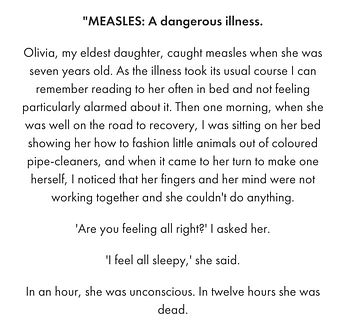
Bottom line: Unfortunately, measles is off to a great start in 2024. We expect trends to increase. We need to heed the underlying warning. A laissez-faire approach to public health, on both sides, will not work. Harrowing stories like Roald Dahl’s below will creep into the 21st century. We can do better.
A big thanks to Edward Nirenberg for his help pulling a lot of the research integrated above.

Your Local Epidemiologist is written by Dr. Katelyn Jetelina, M.P.H., Ph.D.—an epidemiologist, wife, and mom of two little girls. During the day, she is a senior scientific consultant to several organizations, including the CDC. At night, she writes this newsletter. Her main goal is to “translate” the ever-evolving public-health world so people will be well-equipped to make evidence-based decisions. This newsletter is free, thanks to the generous support of fellow YLE community members.

Friday, January 5, 2024

FDA leaders say thousands of Americans are likely to die this winter because too many of them no longer believe in vaccines

By Dr. Peter Marks and Dr. Robert Califf
Republished from the Journal of the American Medical Association

Vaccination is one of the most highly effective public-health interventions, responsible for saving millions of lives each year. In the U.S., authorized or approved preventive vaccines must be manufactured with high quality, and the effectiveness and favorable safety profile of vaccines must be demonstrated. Their safety over time is also closely and continuously monitored through multiple overlapping passive and active safety surveillance systems.

Despite the care taken in the development and deployment of vaccines and their clear and compelling benefit of saving individual lives and improving population health outcomes, an increasing number of people in the U.S. are now declining vaccination for a variety of reasons, ranging from safety concerns to religious beliefs. Setting aside for now the controversial issue of vaccine mandates at the federal, state, or local level in the U.S., which are not within the purview of the Food and Drug Administration, the situation has now deteriorated to the point that population immunity against some vaccine-preventable infectious diseases is at risk, and thousands of excess deaths are likely to occur this season due to illnesses amenable to prevention or reduction in severity of illness with vaccines.

To counter the current trend, we urge the clinical and biomedical community to redouble its efforts to provide accurate plain-language information regarding the individual and collective benefits and risks of vaccination. Such information is now needed because vaccines have been so successful in achieving their intended effects that many people no longer see the disturbing morbidity and mortality from infections amenable to vaccines. For example, smallpox has been eradicated, and polio has been eliminated from the U.S., through effective vaccination campaigns.

Measles was similarly eliminated, but imported cases remain a threat to those who are unvaccinated as well as to those who are immunocompromised. Regrettably, pediatric vaccine hesitancy now has been responsible for several measles outbreaks in the U.S., including a recent one in central Ohio involving locally acquired cases in 85 children, 36 of whom (42%) had to be hospitalized for complications. It is sobering to note that vaccine hesitancy to childhood vaccines, such as the measles, mumps, and rubella vaccine, has been found to cluster in middle- to high-income areas among parents with at least a college degree who preferred social-media narratives over evidence-based vaccine information delivered by clinicians. Anyone doubting the benefits of vaccination need only look to low-income parts of the world where measles vaccination is inaccessible, and many thousands of children continue to die each year due to preventable disease. Unfortunately, with the success of pediatric vaccination campaigns to date, increasing numbers of people have become complacent and underestimate the actual risk of forgoing vaccination.

In addition to making a difference regarding childhood immunization, communication regarding the potential benefits of vaccination can hopefully also improve the number of individuals accepting vaccination to protect against Covid-19, influenza, and respiratory syncytial virus disease (RSV). Vaccination rates against these respiratory pathogens are inadequate, and this is most distressing in older individuals in whom the benefits of vaccination in reducing hospitalization and death are eminently clear. In fact, uptake of the updated Covid-19 vaccine in the U.S. is only about 35% in those older than 65 years, which is about half the rate in this age group in the U.K.

Clinicians who provide care are most trusted information sources

What can we do to start tipping the scales in the direction of evidence-informed vaccine acceptance to reduce the risk of death and illness from diseases in which vaccines are effective? Evidence indicates that the most trusted source of information about health decisions remains clinicians who provide care. Broadly interpreted, this also includes retail pharmacists, who may serve as the only source of medical advice for the many individuals in the U.S. who lack a primary-care clinician or who are uninsured. All those working in health care, while being straightforward about the risks, need to better educate people regarding the benefits of vaccination, so that individuals can make well-informed choices based on accurate scientific evidence.

For example, contrary to a wealth of misinformation available on social media and the internet, data from various studies indicate that since the beginning of the Covid-19 pandemic tens of millions of lives were saved by vaccination. The benefits of these vaccines in prevention were largest in older individuals. However, studies show that people of all ages who are up to date on vaccination benefit and have a lower risk of developing long Covid.

FDA graph from CDC data, adapted by Kentucky Health News; click image to enlarge it.
During the Covid-19 pandemic, vaccine effectiveness appeared to be higher against the original strain of SARS-CoV-2 than against later variants. Nonetheless, since the introduction of the Covid-19 vaccines, in absolute terms vaccination has been associated with notably fewer deaths across the age range. A similar trend was seen in 2021 and 2023, even though the total number of deaths from Covid-19 have decreased more recently (note the order of magnitude difference on the scale). Those up to date on Covid-19 vaccination had notably lower numbers of deaths per million individuals than those who were unvaccinated. The benefits were apparent across the entire age range early on, and more recently following the exposure of a larger number of individuals to natural infection with one of the SARS-CoV-2 variants, with 16.5-fold and 3.6-fold reductions in death, respectively. 

And although the argument is sometimes made that Covid-19 is not a serious illness in younger individuals, those who received at least one dose of any Covid-19 vaccine had a notably reduced risk of dying from this disease compared with those who had never been vaccinated. Comparing 11.71 million unvaccinated individuals with 9.9 million individuals who had received at least one dose of a Covid-19 vaccine, the risk of death was 2.46 times higher in the unvaccinated group. And this finding is not an outlier; other studies report equal or greater benefit. The message from the data on vaccination status and serious illness, subsequent hospitalization, and death is clear, and this can be communicated in verbal or visual terms to individuals contemplating vaccination.

It is often difficult for a person to take action when the individual risk of an outcome is relatively low, even when the consequences of complications are high, and the population effects are substantial. In situations such as with seat belts, however, the discussion ultimately has led to almost uniform use, and vaccination use had similarly been almost uniformly accepted. The current reversal of vaccine acceptance has already resulted in hundreds of thousands of excess deaths from Covid-19 and concern about the re-emergence of previously conquered infectious diseases.

We believe that the best way to counter the current large volume of vaccine misinformation is to dilute it with large amounts of truthful, accessible scientific evidence. To reduce deaths, hospitalization, and the burden on families and the health care system, all those directly interacting with individuals in a health care setting, ranging from front office staff to retail pharmacists to primary-care physicians, need to focus at every appropriate opportunity on helping to ensure that individuals have the necessary information to make informed choices regarding vaccination, considering the benefits and risks. By doing so, we can both help prevent pediatric infectious diseases and dramatically reduce the harm from pathogens such as Covid-19, influenza, and respiratory syncytial virus disease before we have another large wave of any of these vaccine-preventable illnesses.

Peter Marks is director of the Center for Biologics Evaluation and Research at the U.S. Food and Drug Administration; Robert Califf is FDA commissioner.