Showing posts with label schools. Show all posts

Monday, July 22, 2024

Messaging campaign to encourage back to school vaccines is underway; Kentucky vaccination rates are below U.S. average

Lexington-Fayette County Health Department graphic
By Melissa Patrick
Kentucky Health News

With just weeks left before school starts, it's time to make sure your school-aged children are up to date on required immunizations.  

Toward this effort, the Kentucky Association of Health Plans, the trade group for health insurers in the state, and Kentucky Voices for Health, a coalition of health advocacy groups, have partnered to roll out a messaging campaign to help educate families and improve student immunization rates. The partnership involves a 3-year, $360,000 grant from KAHP to be used toward building a stronger safety net in Kentucky.

"This back-to-school season is the perfect opportunity to talk to a provider and ensure that your family is caught up on recommended immunizations. If you or someone in your family has fallen behind, trust me, you are not alone," Kelly Taulbee, director of communications and development at KVH, said at a press conference to announce the partnership. " We encourage families today to work with providers and get the additional resources and an immunization schedule that's right for you and your children." 

Taulbee said the messaging campaign will involve TV commercials, radio ads and occasionally print. Asked if they would be targeting any certain region of the state, Taulbee said, " It's a relatively equal approach across the board as far as how we're messaging." 

Many Kentucky children are still catching up with routine vaccinations that were missed during the pandemic. The state's vaccination rates remain below the national average. 

"That puts our children at unnecessary risk and it strains our healthcare system," Tom  Stephens, president and CEO of KAHP, said at a press conference. 

Stephens noted that the recent outbreak of whooping cough in Lexington "underscored the urgency of this issue."  Last week, the state Department for Public Health reported 138 cases of whooping cough, known medically as pertussis, and said this level of infection had not been seen in Kentucky since 2016-17. 

"This outbreak is a stark reminder of what can happen when immunization rates fall," Stephens said. "It's not just about individual protection. It's about community immunity."

"Community immunity" occurs when enough people have been immunized against a disease to protect others who are not immunized. Some can't get vaccinations because their immune systems are too weak to allow them to get vaccinated, or because they are too young. 

Children can get their routine vaccinations at health clinics, health departments, pharmacies and doctor's offices, but it's important to make those appointments soon because school typically starts in August and students are required to provide up-to-date immunization records at the beginning of each school year, unless exempted for religious or medical reasons.

Taulbee noted that a law passed during the last legislative session allows pharmacists to continue administering immunizations down to the age of 5. "It's such a simpler access point that we want families to keep in mind," she said. 

Families can find a provider, including those that offer free immunizations through the Vaccines for Children program, by calling the Kentucky Infectious Disease & Vaccine Call Center at 855-598-2246, Monday-Friday, 8 a.m. to 5 p.m. ET 

Asked about vaccine hesitancy, which has been fueled by the Covid-19 vaccine, Taulbee and Stephens both encouraged families to talk to their provider if they have any questions or concerns about immunizations. 

A recent Pew Research Center survey of more than 10,000 adults found that 88% of Americans believe the overall benefits of the measles, mumps and rubella vaccine outweighs the risks, compared to 62% who believed the Covid-19 vaccine benefits outweigh the risks. Further, the survey found a drop in support for vaccine requirements for healthy children in schools, with 70% of those surveyed supporting the requirement, down from 82% in 2019 and 2016. 

Data from the School Immunizations Survey dashboard, which includes data for each school, show that during the 2023-24 school year, nearly 85% of kindergartners were up to date with all vaccines, 80% of seventh graders were, and nearly 54% of 11th graders were. 

The KAHP-KVH partnership will also focus on keeping children signed up for Medicaid as Medicaid renewals resume for them.  

"The renewal process is going to begin soon for the first time in four years for our children," Taulbee noted. "We encourage families to take this very seriously. Check your mail, watch and make sure you understand eligibility standards and keep your children covered." 

Friday, May 10, 2024

17 Ky. schools have free online mental health wellness course

Kentucky Health News map; for a larger version, click on it
More than 1,500 students in 17 Kentucky schools recently gained access to a free digital course on mental wellness, provided by the Medicaid program of Anthem Inc., one of the health insurers that manages the federal-state health program in Kentucky.

"The announcement comes during Mental Health Awareness month and as more adolescents, especially girls, report depressive symptoms," notes Sarah Ladd of the Kentucky Lantern.

The 17 schools in the program are Clay County Middle School, Daviess County High School, Estill County High School, Grant County Middle School, Graves County High School, Grayson County Middle School, Hazard Middle School, Henderson County High School, Bazzell Middle School in Allen County, Jenkins Independent School in Letcher County, Lewis County Central Elementary School, Marion County High School, Murray Middle School in Calloway County, Ohio County Middle School, Owensboro Middle School, Russell High School in Greenup County and Webster County High School.

The program has been launched in these schools and will continue into the 2024-25 academic school year, according to Quin Welch, media contact for Anthem Medicaid.

“Understanding Mental Wellness” is a course for students in grades 8, 9 and 10. It has six 15-minute lessons, according to Blackbaud, the digital-services firm that designed the course. 

Anthem says the course exposes students “to the experiences of others in order to develop awareness and empathy, reduce stigma, and provide facts on the prevalence and symptoms of mental health conditions.”

Students then “explore their own mental health, identify challenges they may face, and develop concrete strategies for managing those challenges while increasing their awareness of resources and empowering them with the knowledge, skills, and language necessary to identify and support a peer in need or at risk.”

Ladd reports, "Online previews of the course show a tour of mental health through the program, starting with a lesson on what mental health is and ending with the chance to create a personal wellness plan.

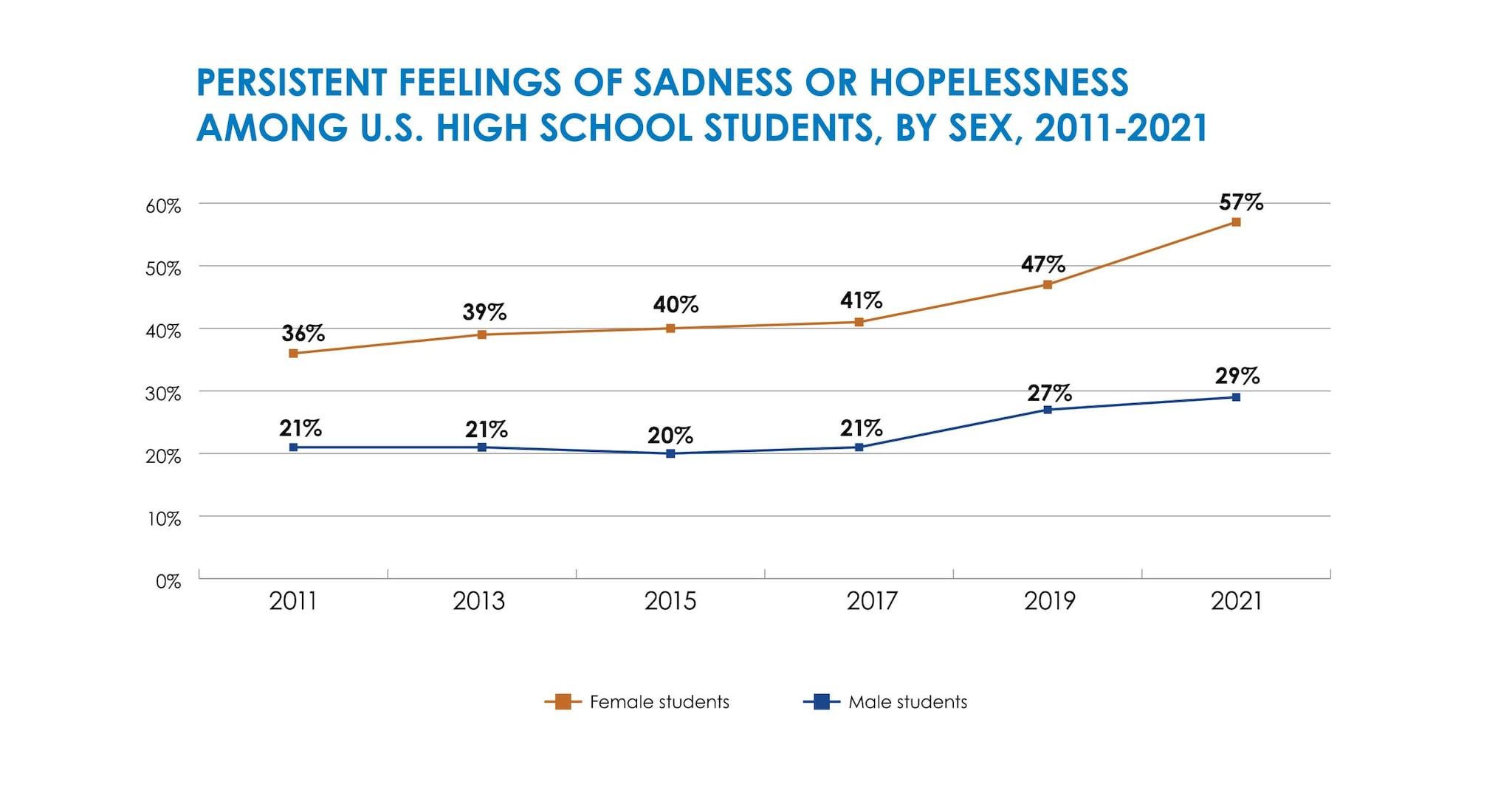
"Since the onset of Covid-19, mental health has worsened. In 2021, the Centers for Disease Control and Prevention found that sadness and hopelessness had increased from pre-pandemic levels, especially for teen girls. In 2017, 41% of female high school students and 21% of male high school students felt sad or hopeless. By 2021, those statistics were at 57% and 29%, respectively."

“Young people need resources and education from trusted sources to protect their mental health,” said Leon Lamoreaux, market president for Anthem Medicaid. He said the program “will help us reach students from all over the Commonwealth and equip them with tools and strategies that will make a positive difference in their lives for years to come.”

Tom Davidson, the CEO of Everfi, said the goal of the program is to help “those who are impacted by mental-health challenges, those who want to build and maintain positive mental health and those who have the opportunity to positively impact the mental health of a friend or peer.”

Sunday, April 28, 2024

Vaping and substance use in Kentucky schools has spiked in the last five years, especially in the younger grades; up 147% overall

Kentucky Department of Education graph from Infinite Campus data; the overall increase was 147%.
By Melissa Patrick
Kentucky Health News

The number of drug, alcohol and tobacco events recorded by schools have increased in schools at all levels across Kentucky, according to data collected by Infinite Campus, an online student information tracking system.

A look at the data from 2017-28 through 2022-23 found that Kentucky's elementary schools saw a 475% increase in drug, alcohol and tobacco events, from 140 events to 805. Kentucky middle schools saw a 281% jump, from 2,336 to 8,912. High schools saw a 107% increase, from 8,995 to 18,651. 

"The biggest increases are with the younger students. So it tells us like forecasting ahead, what we need to be thinking about as we develop the guidance that goes around this," said Florence Chang, with the Kentucky Department of Education's Division of Student Success. "Parallel with this, it would be irresponsible to not also mention that correlated and associated with the increase in substance abuse and vaping that there's also been this increase in psychological distress." 

The data were shared at an April 24 Education Department Student Advisory Council meeting, where students discussed the increase in substance use and what they thought were reasons for it. One said that the real vaping numbers are likely higher because many incidents or events are not recorded.

Department of Education graph from Kentucky
Incentives for Prevention survey of students
Information from the latest Kentucky Incentives for Prevention survey shows an association between serious psychological distress and substance abuse. The study found that students who experienced and reported having psychological stress were 2.5 times more likely to vape, 2.5 times more likely to use cannabis, 2.2 times more likely to binge drink and 3 times more likely to use cigarettes. 

The students suggested several reasons beyond psychological distress for the increases in vaping, including peer pressure, an increase in use of social media among elementary students, and easy accessibility to the products. 

Another student suggested it was a learned behavior. “We see a lot of adults in our lives, said Ava Benson, a senior at Henderson County High School. “They've had a rough day at work, so they're going to have a glass of wine or they smoke cigarettes because of stress." 

Judi Vanderhaar of the Education Department's Division of Student Success said the department's recommendations for districts and schools include implementing prevention efforts, supportive responses for students and updating school policies.

During its recent session, the General Assembly passed House Bill 142, which requires school districts to adopt specific policies that penalize students for possession of "alternative nicotine products, tobacco products or vapor products" and report nicotine-related incidents to the Education Department. Senate language, adopted by the House, allows schools and governing bodies to apply for grants related to nicotine usage and remove the requirement that schools suspend students with a third possession violation.

London police told Phil Pendleton of WKYT that they have been called to schools to investigate serious situations because of vaping. “We have had several instances where EMS was called to schools, and it came out as an overdose, but it turned out it was more to do with vaping,” London Officer Hobie Daugherty told Pendleton.

Friday, April 19, 2024

Lottery system will determine who gets 48 licenses for retailers and 10 for processors of medical cannabis in 11 Kentucky regions

By Melissa Patrick
Kentucky Health News

Gov. Andy Beshear gave an update on the medical cannabis licensing program Thursday, after signing this year's medical cannabis bill into law the day before.

"We have worked hard to create a safe system that limits or eliminates abuse while still providing relief to that veteran suffering from PTSD or individual suffering from unbearable epileptic seizure after epileptic seizure," Beshear said during his weekly news conference.

Rep. Jason Nemes presents Senate changes to HB 829
on the House floor Monday, April 15. (Legislative photo)
House Bill 829
, sponsored by Rep. Jason Nemes, R-Middletown, has been described as a "clean-up" bill for Senate Bill 47, the measure that legalized medical cannabis during the 2023 session under the sponsorship of Sen. Stephen West, R-Paris. 

"In essence, all 829 does is set up the Office of Medical Cannabis and carries out the provisions of SB 47 as was passed last year," West said while presenting the bill on the Senate floor.

The final version of HB 829 will allow Kentucky to start issuing medical cannabis licenses to businesses in July in hopes that the product will be available to dispensaries in January 2025, when the program is set to go into effect. 

“It does allow these businesses — the growers especially — to get up and running, start growing product so there's actually something there to sell January 1,” West explained at the April 12 meeting of the Senate State and Local Government Committee.

It also allows cities to opt out of the medical cannabis program before Jan. 1, 2025, even if a licensee has been approved before that date. 

"Cities and counties have the opportunity to take a local vote. They can also pass ordinances that prohibit implementation," West said while presenting the bill on the Senate floor. "If someone is licensed before that time, it's buyer beware; they will have to take that into account as they apply for the license."

On Thursday, April 18, Beshear and Sam Flynn, executive director of the Kentucky Medical Cannabis Program in the state health cabinet described how the licensing would work under a regulation filed that day.

The new regulation will allow businesses to apply for a cannabis business license from July 1 through Aug. 31. Beshear said 10 licenses will be available across the state for processors, and 48 for dispensaries, the retail outlets. All their cannabis must be cultivated, processed and produced in Kentucky.

Flynn said the program has created 11 licensing regions to ensure Kentuckians with qualifying conditions have access to the product.

Beshear also announced that the state, in partnership with the Kentucky Lottery Corp., will issue the medical cannabis licenses using a lottery system. The first lottery will be held in October.

"This is what states are moving towards," said Beshear. "It reduces or eliminates litigation and it creates a more fair process, not one where people bid against each other and only then the big companies can be a part of it, but one that provides at least a chance for everyone who can meet the criteria." 

Flynn said the licensing process is designed to ensure that the industry is "stable and sustainable" with a focus on "small business" and meeting demand from people who have cards enabling them to buy medical cannabis.  

And, he said, each region will have at least four dispensary licenses available per region, with no more than one dispensary located in each county, with the exception of the state's two largest counties - Jefferson and Fayette - which are allowed two each. 

HB 829 also allows public and private schools to opt out of the program and requires public school boards to establish medical-cannabis policies by Dec. 1. The policies must prohibit the use of medicinal cannabis on school property, or allow use with several options for administration.

The legislature did not expand the list of conditions that would make Kentucky residents eligible for medical cannabis beyond what was allowed in HB 47. In January, Beshear asked lawmakers to add 15 more medical conditions to the list, and West filed a bill to increase the list from seven to 21 conditions. West's SB 337 died in its assigned Senate committee, having never been called up for a hearing. 

The eligible conditions in the current law, passed by the legislature in 2023, are cancer, multiple sclerosis, muscle spasms or spasticity, chronic pain, epilepsy, chronic nausea and post-traumatic stress disorder.

Saturday, March 16, 2024

Medical-cannabis 'cleanup' bill passes House; critics disappointed more qualifying conditions not added and say it increases hurdles

By Melissa Patrick
Kentucky Health News

In what the sponsor calls a bill to "clean some things up," more restrictions are being added to the state's medical-marijuana law and provisions were added to allow local school districts to opt out.

State Rep. Jason Nemes
One of the key provisions in House Bill 829, sponsored by Rep. Jason Nemes, R-Middletown, would allow public and private schools to opt out of the program.

Public school boards are required to establish policies related to the use of medical cannabis no later than Dec. 1, 2024. The policies must either prohibit the use of medicinal cannabis on school property, or permit the use with several options for administration, as outlined in the bill. 

The measure would also allow local governments to apply a small local fee to compensate for any additional costs caused by the operation of cannabis businesses; prioritize Kentucky hemp businesses for state contracting; and clarify the powers that the state Cabinet for Health and Family Services has when it comes to inspection. 

It would also abolish the provisional license, which allows someone who makes an application for a license to sell medical marijuana to get the product while the application is pending. Nemes said this "put the cart before the horse."

When the House passed the bill 66-30 on March 12, it allowed the state to move the dates up for licensing, which would allow product to be obtained when the program starts Jan. 1, 2025. 

A floor amendment, filed at the request of the Kentucky League of Cities, was approved to allow cities to be able to opt out of the medical cannabis program before Jan. 1, 2025, even if a licensee had been approved before that date.

The committee substitute for the bill would require a patient to consult with a pharmacist annually to make sure the medical cannabis does not have a negative interaction with the patient's other prescriptions.

That  prompted several Democrats to object in the floor debate, saying the new requirement , with a potential cost of up to $40, imposes another hurdle in accessing medical cannabis.

"It seems like we're adding even more hurdles to make this medicine harder to receive, more expensive for folks to access. . . . I really wish we were back here today to make this medicine more accessible to the people of Kentucky who have been asking us to do this for years," said Rep. Rachel Roberts, D-Newport. 

Rep. Rachel Roarx, D-Louisville, said allowing public school districts to opt out "puts barriers in place" for students who benefit from medical cannabis for conditions such as epilepsy. 

Rep. Josh Bray, R-Mount Vernon, disagreed and supported the opt-out provision for schools, saying that he recognizes the need for this because some schools are concerned about the liability of administering a drug that is not authorized by the U.S. Food and Drug Administration.  

Rep. Cherlynn Stevenson, D-Lexington, said she was disappointed that the bill wouldn't expand the list of qualifying conditions that could be treated with medical cannabis, as was recommended by at "statutory advisory board of doctors and nurses appointed by the state licensing boards."

Stevenson said she hoped these conditions would be added in the Senate, where the bill has not been assigned to a committee.

Sunday, January 14, 2024

Scott County Schools to launch pilot to support bereaved children; one in nine Kentucky children lose a parent by the age of 18

Scott County Schools will launch a pilot to support bereaved students with a Kentucky Association of Health Plans grant through the Kentucky Center for Grieving Children & Families. From left: Liz Yandell, the schools' assistant director of student services; Supt. Billy Parker; Leila Salisbury, founder and executive director of the center; and Tom Stephens, president and CEO of KAHP. (KAHP photo)
By Melissa Patrick
Kentucky Health News

The Kentucky Center for Grieving Children & Families, launched in 2021, has received a big grant that will allow it to team up with Scott County Schools for a pilot program to support children experiencing grief and bereavement, to begin later this month. 

“This initiative is a great opportunity to support the mental health and well-being of our students, a goal that is very important to our district, schools, and community," Supt. Billy Parker said in a news release. 

Parker told Spectrum News of a student who lost both parents to overdoses: "That was the first student I thought of when I thought about the fact we were getting this grant. Sometimes, I don't think people realize until they start digging into what the root cause of some of the issues for our students are."

The two-year, $90,000 grant is from the Kentucky Association of Health Plans, the trade group for companied offering health insiurance in the state. It will allow the center to offer 16 school-based, 11-week, facilitated grief-support groups for students at all levels in Scott County Schools. It will also include district-wide staff training on best practices for grief support in the classroom and the school setting at large, says the release. 

“Studies have connected childhood bereavement to poorer physical health outcomes (including early death), increased incidence of depression, mental health issues, and far higher levels of substance use and juvenile justice involvement,” Tom Stephens, president and CEO of KAHP, said in the release. “By providing these school-based services, the goal is to decrease the feelings of isolation in students with death losses and to provide coping skills that can help students manage the emotional distress caused by these losses.”

Bereavement is the state of having lost a significant other to death and Grief is the personal response to the loss, according to  the U.S. Department of Veteran Affairs. 

According to state data modeling, one in nine Kentucky children will lose a parent or sibling by the age of 18, with 25% of parental bereavements caused by overdose. "This represents more than 40,000 Kentucky children, enough to fill Rupp Arena nearly twice over," says the release. 

“We appreciate the generosity of KAHP,” Leila Salisbury, founder and executive director of the center, said in the release. “This grant helps create a service model for school districts around Kentucky.”

Salisbury, former director of the University Press of Kentucky, launched the center in 2021 with a mission of "supporting children, youth and families as they grieve and grow," according to the nonprofit's website.

The site says the center offers free school-based grief support groups in several Fayette County schools; free community-based grief support groups for children along with concurrent parent and caregiver support groups at Tates Creek Christian Church; a teen-led online peer-led grief support group for teens aged 13-18 called Peer Healing; and an online anine grief support group for young adults aged 18-30 through a partnership with Kate's Club of Atlanta. 

It also offers training and education in youth bereavement and provides community and mental health referrals for additional services and support. And, it offers a webpage that includes resources about coping with grief.

Saturday, November 18, 2023

Ky. kindergarteners' vaccination rates rose last year, but remained below the national average and were short of 'herd immunity' level

Graph by Kentucky Department for Public Health from state and CDC data; schools have local data.
By Al Cross
Kentucky Health News

More Kentucky children are getting their basic vaccinations, after three years of decline, but the state remains below the national average, and below the level needed to protect the whole population.

In the 2022-23 school year, at least 90.1 percent of Kentucky kindergarteners received the combined vaccination against measles, mumps and rubella ("German measles"). That was a big improvement from the 86.5% recorded in 2021-22, which followed two years of decline, but it still wasn't as high as the 93.4% in 2018-19. Percentages for other childhood vaccines were about the same as MMR.

The state's MMR vaccination rate remained below the national rate of 93.1%, which is almost two percentage points below the 95% that epidemiologists say is needed to provide "herd immunity," which also protects those who are not vaccinated by limiting spread of the viruses.

State law has long required the two-dose MMR vaccination for children entering school for the first time. A 2020 law allows several exemptions from vacicne mandates for "any child or adult" on religious grounds, medical reasons or a "conscientiously held belief." According to the Centers for Disease Control and Prevention, such exemptions were claimed for 1.7% of Kentucky children in 2022-23, an increase the 1.3% recorded in 2021-22.

The reported vaccination percentages may have been slightly higher because data wasn't available for about 3% of kindergarteners. At the same time, the reported figures could overstate immunity because the state counted some or all vaccine doses even if not administered at the age and time intervals the CDC recommends.

The increase in vaccination rates could be a result of extra efforts by the state and the Kentucky Rural Health Association, which created the Immunize Kentucky Coalition in cooperation with the state in 2022. The coalition says it aims "to increase immunization rates and prevent disease by fostering a partnership of Kentucky parents, patients, businesses, healthcare organizations, and others by promoting health equity that supports the delivery of safe and effective immunizations through stronger community buy-in and public health education."

The state Department for Public Health "is working closely with local health departments across the state to promote MMR vaccination in communities that have low vaccine uptake," spokesman Brice Mitchell said in an email. "While rates have not returned to pre-pandemic levels yet, vaccination coverage in Kentucky is increasing. This highlights the need for continued education and enforcement of school and child care vaccination requirements in Kentucky to ensure the health and safety of all children. . . . Vaccination is a simple, safe and effective​ way to protect against harmful diseases."
Graph by Your Local Epidemiologist from CDC data, adapted by Ky. Health News; click to enlarge.

Monday, October 23, 2023

Beshear defends pandemic work as Cameron cites learning loss, makes false claim about founder of Planned Parenthood

Candidates' supporters at KET Monday night (Kentucky Lantern photo by Matthew Mueller)
By Al Cross
Kentucky Health News

In their next-to-last debate before the Nov. 7 election, Gov. Andy Beshear defended his response to the Covid-19 pandemic against criticism from Republican Attorney General Daniel Cameron. Appearing for an hour on KET, the candidates also debated each other's positions on abortion, and Cameron made  a false claim about the founder of Planned Parenthood.

Moderator Renee Shaw opened the "Kentucky Tonight" forum by asking Cameron how he would have handled the pandemic that hit the state in March 2020. He said he would have "done like other red-state governors" and tried to get businesses "open as quickly as possible."

Asked if he would have shut down schools at any point, he did not say, but said "I wouldn't have infringed on your constitutional rights." That was a reference to court decisions, some successfully sought by Cameron, that said a few of Beshear's state-of-emergency restrictions went too far.

Beshear was asked if he had any misgivings about the strength and duration of his restrictions, specifically the application on Easter Sunday of his ban on mass indoor gatherings.

He did not address that specific point, but said, "This is about leadership. I showed people during the pandemic I was willing to make the hard decisions, even if it cost me. I put politics out the window, and I made the best decisions I could to save as many lives as possible.”

Asked if he would do it all over again the same way, Beshear didn't answer directly, but said "I believe we made the best decision we did with the information we had," and said he was the first governor to prioiritized teachers for immunizations when vaccines for Covid-19 became available.

Cameron claimed that Beshear "said he had no regrets," and said he would not admit regret "because of pride."

Noting repeatedly that Beshear closed schools, Cameron said "Your kids are behind because of this short-sighted decision," and noted his "catch-up plan" to help them.

Beshear, asked if he has a strategy for that, said he does, but tried to spread blame to the Republican-controlled legislature: "This is something that was happening before the pandemic, primarly because of not enough educators," due to low pay causing teacher shortages.

He also shifted blame when asked if he would take responsibility for the huge backlog in unemployment claims during the pandemic. He noted the downsizing of the agency under his GOP predecessor and said "If we'd had the resources that were there in the last administraton we could have done much better."

Abortion

Cameron has said that if the legislature sent him a bill to put rape and incest exceptions into the state's abortion ban, he would sign it. Asked to say "yes or no" if he personally favors such exceptions, he repeatedly declined to answer, and made a false claim about the founder of Planned Parenthood.

Cameron, an African American, noted the organization's strong support of Beshear, and said its founder, Margaret Sanger, favored the extermination of his race. This claim has been made and debunked several times, but Cameron said Sanger "said I didn't deserve to live." UPDATE, Oct. 25: In a debate Tuesday night, Cameron put it another way: "Margaret Sanger wanted to destroy the Black community," and said 79% of abortion clinics are in Black neighborhoods. 

Sanger believed in eugenics, which taught white superiority and discouraged reproduction of races and ethnicities it deemed inferior. In 1939 she started a project to expand birth-control services for African Americans in the South. In a letter, she told a director of the program that it should hire African American doctors and ministers to gain trust in Black communities because “We do not want word to go out that we want to exterminate the Negro population ...”

That was “inartfully written” but was “frequently taken out of context to suggest Sanger was seeking to exterminate blacks,” The Washington Post reported in 2015. The Reuters news service said in a fact check last year, "Sanger’s concern was to avoid a suspicion that the program’s objective was to stop Black people having babies, which having white people in charge could create."

Sanger's full quote was, “We do not want word to go out that we want to exterminate the Negro population, and the minister is the man who can straighten out that idea if it ever occurs to any of their more rebellious members.”

During the debate on abortion, Shaw noted that Cameron and 18 other attorneys general signed a letter in June opposing a proposed federal privacy rule that would keep state officials from getting information on any reproductive health-care services that in-state residents obtained outside the state, and asked if he wants to criminalize women seeking abortions.

"Absolutely not," Cameron replied, returning to the attack: "Andy Beshear is trying to gaslight you tonight. . . . He wants no limits on abortion." Not so, Beshear said.

Asked if a woman be allowed to terminate a pregnancy at any point, Beshear said his long-held position is that "I am in favor of reasonable restrictions on abortion, especially late-term abortions. . . . He signed a letter saying that he should be able to come after your medical record if you go out of state for care."

On another hot-button social issue, Beshear was asked about an early campaign commercial in which he said that transgender surgeries are not performed on minors in Kentucky. A letter from UK HealthCare, written in March but not released by state Rep. James Tipton, R-Taylorsville, until August, said UK had “a small number of non-genital gender reassignment surgeries on minors, such as mastectomies for older adolescents.”

Shaw asked Beshear if he knew that when he made the ad. He said, "No, I didn't know."

Numerous pro-Cameron commercials have used the ad and the letter to argue that Beshear was lying. Immediately after Beshear answered, Cameron claimed, "The governor just told you a lie," because Beshear vetoed this year's Senate Bill 150, which banned transition surgeries for minors after the legislature overrode the veto.

Beshear said the bill "had a lot more in it" than the ban, but "Our parents should be able to make complicated medical decisions, rather than the government . . . This was all passed just for political points."

The candidates' final debate is scheduled for 7 p.m. ET Tuesday on Lexington's WKYT-TV and on sister Gray Television stations in Evansville, Ind., and Bowling Green.

Wednesday, October 18, 2023

Election prompts a look at Beshear's pandemic restrictions, and Cameron's challenges to them; Kentucky fared better than feared

Gov. Andy Beshear, right, and Dr. Steven Stack, the state’s public-health commissioner, at a news conference in the governor's Capitol suite in May 2020. (Photo by Sarah Ladd, Kentucky Lantern)
By Sarah Ladd
Kentucky Lantern
     
On March 6, 2020, a Kentuckian tested positive for the novel coronavirus, Covid-19, and Gov. Andy Beshear declared a state of emergency.

The United States had been under a public health emergency for more than a month by then. Five days after Kentucky’s first confirmed case, the World Health Organization said COVID-19 was officially a pandemic.

The NCAA canceled March Madness rather than “contribute to spread” of the virus. The Metropolitan Museum of Art and the Museum of Modern Art shuttered temporarily. NASCAR suspended racing.

We had entered a time like nothing Americans had experienced since the flu epidemic of 1918. In other words, it was “uncharted territory,” said Dr. Paul McKinney, the University of Louisville’s interim dean of the School of Public Health and Information Sciences, in a September interview with the Kentucky Lantern.

Over the next three years, around 2 million Covid-19 tests came back positive in Kentucky. More than 19,000 Kentuckians died.

Beshear issued more orders, including restricting mass gatherings, closing schools and releasing some medically at-risk prisoners.

Now some Republicans are urging Kentuckians to make Beshear a one-term governor based on his handling of the Covid-19 pandemic.

“Andy Beshear has failed us,” says an ad by Republican nominee and Attorney General Daniel Cameron. “He locked our schools and unlocked our jails. We can do better.”

A pro-Cameron PAC is running ads accusing a “criminal coddling governor” of having unleashed dangerous criminals on Kentuckians.

To help voters navigate the criticisms, the Lantern is looking back at the pandemic, a time of economic upheaval, rapidly changing guidance and rampant misinformation.

‘Flying blind’

At the beginning, the response to Covid-19 was “a blunt instrument,” said UofL’s McKinney, “because what could we do at that point? We had no antiviral medications to use, we didn’t have a vaccine. We didn’t have adequate testing; we didn’t have enough (personal protective equipment) to go around. All we had was basically the ability to trace contacts of people who were exposed and to … implement social distancing.”

Tim Veno, CEO of an organization of nursing homes and assisted living facilities in Kentucky, agreed.

“We were pretty well flying blind,” he said. “We had no test or any way to determine who may or may not have had Covid.”

Until the science caught up, social mitigation was the only option.

In March 2020, Beshear, who had been governor three months, issued a variety of recommendations and orders based on guidance from public-health authorities, meant to slow the virus’ spread.

Almost as quickly, Attorney General Cameron began challenging some of the orders in court.

Not all of Beshear’s orders were restrictive. He streamlined the process for out-of-state nurses to work in Kentucky, suspended evictions and expanded eligibility for unemployment benefits.

The unemployment system was quickly overwhelmed by the influx of applications, and people waited months for help. Meanwhile, Louisville’s WDRB reported that Lt. Gov. Jacqueline Coleman texted the head of the Office of Unemployment Insurance to get attention to her hairdresser’s application, as well as that of a “friend of a friend.” The administration maintained that there was no abuse of power.

Beshear also began holding daily, virtual news conferences, broadcast across the state, to share information about the virus. Health experts praised this move, but it rankled some of his political opponents.

And, he encouraged Kentuckians to light their homes green in memory of those lost to Covid-19.

Spring 2020: A ‘somber’ experience

When Beshear recommended that schools close for a few weeks, Louisville high-school freshman Spandana Pavuluri, now 18, remembers thinking the time would be “just like an extended spring break.” Two weeks to catch up on homework, nothing more.

Before the end of March, though, the virus closed all public-school buildings in the U.S., according to Education Week.

The extended remote learning and loss of social connections in a pivotal time of her life “hit me like a truck,” Pavuluri said, describing the time as “somber.”

Her bedroom, where she did school, became a “place of … stress,” not relaxation. The “really social person” was suddenly very alone, a sentiment reflected back to her from other students in research she helped conduct with the Kentucky Student Voice Team.

On top of school closures, in April 2020, Beshear halted elective surgeries so medical staff and supplies could be fully employed in addressing Covid-19. He closed the Natural Bridge and Cumberland Falls state resort parks and suspended overnight stays at other resort parks.

When several individuals sued the state challenging Beshear’s restrictions on interstate travel, Cameron took their side in court. A federal judge in a different case ruled that parts of the travel order were unconstitutional. Beshear lifted it before Memorial Day.

The state shut down visits to nursing homes except in end-of-life situations. Leaders feared that visitors would bring Covid-19 to the most vulnerable.

“That, of course, was devastating to some families,” said Veno, president and CEO of LeadingAge Kentucky.

“After that, we mobilized very quickly in setting up remote communication, iPads and other connected devices so that we could immediately, at least, at the very minimum, allow residents and families to talk via the internet,” Veno said. “Those were all very difficult decisions to make.”

Despite “some political blowback” from those moves, Veno said, “in my view, that action saved lives.”
 
On churches, did the governor go too far?

After Beshear banned gatherings of more than 10 people, and a religious revival in Hopkins County was linked to at least 28 cases of the virus and two deaths, some churches kept holding in-person services.

Maryville Baptist Church in Bullitt County gathered on Easter Sunday despite the order. The pastor found nails in the parking lot before the service. And attendees found notices placed by state troopers on their windshields telling them to quarantine.

The church and Tabernacle Baptist Church in Nicholasville sued Beshear. As attorney general, Cameron joined their lawsuits.

Two federal district judges ruled that Beshear’s ban on religious gatherings was unconstitutional and that the churches could hold in-person services while observing precautions against spreading the virus. But the 6th Circuit U.S. Court of Appeals disagreed, allowing the restriction on in-person services to stand. The appeals court did block Beshear’s ban on drive-in services.

By then Beshear had agreed to allow places of worship to gather. But many chose to wait. The Rev. Kent Gilbert, pastor of historic Union Church in Berea, told the Lexington Herald-Leader at the time, “No pastor wants to race back to church to do more funerals.”

Todd Gray, the executive director of the Kentucky Baptist Convention, told the Lantern that the denomination’s pastors and church leaders “made their own decisions” about protecting congregants. They “sought to be good citizens working in cooperation with recommendations from the Centers for Disease Control and from Frankfort,” he said.

The theological belief that Christians must gather together also factored into some congregations coming back to in person services “as quickly as possible,” said Gray.

“While most Kentucky Baptist churches sought to cooperate with the governor’s recommendations as much as they could,” Gray said, “most, if not all, believed the governor went too far when he specifically targeted churches while some businesses such as liquor stores remained open.” Beshear's order did not mention churches.

Politicizing a pandemic

In May 2020, angered over the shutdowns, protesters opposed to Covid-19 restrictions hanged Beshear in effigy outside the state Capitol and marched to the governor’s mansion demanding he resign.

Attached to the effigy was a sign with the words “sic semper tyrannis,” Latin for “thus ever to tyrants,” the motto of Virginia, which John Wilkes Booth famously said after shooting President Abraham Lincoln.

Republicans and Democrats alike decried those actions. Secretary of State Michael Adams, a Republican, tweeted at the time that “The words of John Wilkes Booth have no place in the Party of Lincoln.”

There were other protests of the shutdowns and social-distancing and masking measures. Misinformation was rampant, including a claim that the pandemic itself was a hoax. The politicization of the pandemic made it harder for health care workers do their jobs, they said.

“It was extremely difficult for hospitals,” said Deborah Campbell, the vice president for clinical strategy and transformation at the Kentucky Hospital Association.

In early 2021, when vaccines became available, Kentucky gave first priority to health care workers and staff in long-term care and assisted-living facilities followed by those over 70, first responders, K-12 school personnel and child care workers.

Many, including some health care workers, refused vaccination against the virus. Once vaccines were mandated by the Center for Medicare and Medicaid Services, those who refused the shots could no longer work in hospitals, Campbell said.

“It was terribly painful. It was painful for the staff, it was painful for the hospital leadership,” Campbell said,  but precautions did save lives. They also kept hospitals running better than if no mitigation measures had been in place.

Fewer sick people “means more staff were not sick and able to take care of patients in the hospital, which means they got better care, which means they did better,” she said.

Still, health-care workers often bore the brunt of people’s anger.

Some hospital visitors and even patients treated health care workers in a “demoralizing” way, said Campbell. They spit on and cursed them.

“People were threatened. Workplace violence increased in our hospitals, particularly around visitation, and any personal-freedom restrictions,” Campbell said. “Those visitation restrictions were heart-wrenching. But at some point … I think it was pretty clear it was the right thing to do.”

Veno said that in his 20 years working in health care, “I’ve never seen this kind of public reaction, anti-vaccination reaction as I saw with Covid.”

All of this helped feed burnout and exacerbated an already worsening medical workforce crisis.
 
On the economy

About 18% of Kentucky’s businesses had to close because of a government mandate during 2020, according to the U.S. Bureau of Labor Statistics. That’s similar to the nationwide share of about 19%.

The state designated workers as “essential” and “nonessential” to determine which employers could stay open with more flexibility. Grocery workers, for example, were deemed essential. Jewelry and clothing stores were not.

The designations remain a sore spot for some. Cameron has said he wants to make Beshear “not essential” come Election Day.

The Kentucky Center for Economic Policy reported in May that the state lost 294,900 jobs in just the first two months of the pandemic. Businesses permanently closed left and right. Thousands across the country shuttered.

“In the three years since, Kentucky has experienced a remarkable recovery,” Kentucky Policy said. It reported Kentucky had 53,800 more jobs than before Covid-19 hit the state.

Cameron said in October that, had he been governor at the time, he would not have closed small businesses and health spaces like chiropractor’s offices. He criticized what he called “inconsistency” in Beshear’s decisions.

“There are a lot of small businesses right now that have not been able to recover,” Cameron said. “Several of them closed their doors for good.”

Prisons: a ‘public health failure’

Among other steps to stifle Covid-19’s spread, Beshear closed restaurants to in-person traffic, suspended out-of-state travel for state employees, and stopped prison visits.

Beshear commuted the sentences of 1,870 inmates who were medically vulnerable and who had not been convicted of violent or sexual offenses and were withing six months of their release date.

Cameron and his allies have criticized Beshear’s pre-release vetting. They’ve cited data from the Administrative Office of the Courts that shows about half of 1,700 commutation recipients were charged with another crime by July 2023.

The Courier Journal of Louisville and the Herald-Leader have reported, though, that many of those re-offenders would have been free to commit their alleged subsequent crimes because their original prison sentences would have expired by then anyway. Beshear says they were "the vast majority."

Prison Policy Initiative, a Massachusetts-based national nonprofit that researches criminalization in the United States, reported in April that Kentucky’s overall incarceration population decreased 13% from January 2020 to December 2021. The national average in that perios was 15%.

Wanda Bertram, a communications strategist with Prison Policy Initiative, says the real mistake by Kentucky and most states was not releasing more prisoners — despite warnings that prisons would become “hotbeds for coronavirus spread” and “endanger not just people who are inside and people who are working inside but also the entire community that surrounds the prison.”

Kentucky, like most states, continued to imprison people for technical violations of probation and parole, Bertram said. “We actually did prove that mass incarceration probably added at least half a million Covid cases nationwide in the summer of 2020 alone,” she said.

In 2021, Bertram's group gave states letter grades based on their treatment of incarcerated populations during the pandemic. Kentucky, along with many others, received an F.

“Beshear’s commutations of 1,800 incarcerated people is a bright spot in what, otherwise, I would consider to be a complete public health failure when it comes to protecting incarcerated people and the communities that surround prisons,” Bertram said.

Kentucky had the nation’s third highest rate of Covid infections and deaths among prisoners from March 2020 to June 2021, according to the Marshall Project, which collaborated with The Associated Press to keep track. The numbers are an undercount because inconsistent testing caused infections to go undiagnosed, especially early in the pandemic, according to the report.

During those 15 months, Kentucky prisons recorded 7,909 cases — 6,503 cases per 10,000 prisoners, lower than only Michigan and Arkansas — and 48 deaths, or 39 per 10,000, lower than only Nevada and New Mexico.

Eight state prison staff in Kentucky died of Covid-19, the Department of Corrections said earlier this month.

Learning loss

By the start of the 2020-21 academic year, four states had ordered schools to open in person, but in Kentucky most schools continued remote learning. In November, a deadly “third wave” struck and Beshear announced that public and private K-12 schools would close.

Danville Christian Academy and Cameron challenged the school closing order and won before U.S. District Judge Gregory Van Tatenhove. But the Sixth Circuit U.S Court of Appeals upheld Beshear’s order, saying it treated all schools, religious or otherwise, the same.

The appeals court took note of one of Beshear’s justifications: “Kentucky leads the nation in children living with relatives other than their parents — including grandparents and great-grandparents, who are especially vulnerable” to the virus. The U.S. Supreme Court refused to hear the case.

By early 2021, a year into the pandemic, most Kentucky schools had returned to in-person instruction.

Some research suggests school closures helped keep Covid-19 transmission lower than if the doors had stayed open, but children suffered from the disruption in their education.

Many children suffered learning loss during remote and hybrid classes in 2020 and 2021 across the country, according to a 2022 study at Harvard University’s Center for Education Policy Research.

In Kentucky, reading and math proficiency dropped during the pandemic when comparing 2018-19 assessments with 2021-22 data.

At the time of that October 2022 report, Education Commissioner Jason Glass said “The Covid-19 pandemic has had a profound impact on our students and our schools as they continue to recover from the interrupted learning that occurred over the past two years.”

Cameron has said that should he be elected governor, he will institute a “catch-up” plan with tutoring to bring kids up to speed.

Looking back at her high-school experience, Pavuluri, now a piublc-policy student at Vanderbilt University, says that despite the disruptions in her education, school closures and other restrictions were worth it.

Because her mother is a geriatrician who works with older adults, she felt more empathy toward people at higher risk. “That was always in my mind and Covid was something I feel like I took pretty seriously,” she said. “I didn’t necessarily have someone very … immunocompromised in my family. (But) I think I really … empathize with the students who do.”

“There was obviously … negatives to the experience,” she added, “but I think just the massive negative would have been to … lose someone.”

In 2021, Harvard Medical School researchers found that while most children who contracted Covid-19 were only mildly symptomatic or had no symptoms at all, they could still carry the virus on to others. 

How did Kentucky compare to other states?

Kentucky is famously one of the sickest states — ranked third most unhealthy by Becker’s Hospital Review in January ahead of only West Virginia and Mississippi.

“Everyone had a reason to expect that we would be absolutely devastated” by Covid, said UofL’s McKinney.

Kentuckians suffer high rates of heart disease, diabetes and cancer. And the state’s population is shifting older. All these factors mean a lot of Kentuckians went into the pandemic with at least one “comorbidity” — a pre-existing condition putting them at higher risk for Covid-19 complications and death.

“Among our neighbor states, we were much more vulnerable than almost all of them,” said McKinney.

And yet CDC mortality data, which only includes 2020 and 2021, shows Kentucky’s death rate was lower than Tennessee’s and West Virginia’s, and higher than those of Indiana, Ohio and Virginia.

McKinney credits measures “implemented by the leadership and state” for saving Kentucky lives.

A study published in April in the international medical journal The Lancet took into account age and health when comparing states. and found that Kentucky’s death rate was lower than the national average.

Kentucky’s unadjusted Covid-19 death rate from January 2020 through July 2022 was 472 deaths for every 100,000 residents, higher than the national average. After adjusting for age and comorbidities, the rate was 341 deaths per 100,000 population, lower than the national rate of 372.

The state with the lowest adjusted death rate was Hawaii (147 per 100,000 residents). The highest was Arizona (581 per 100,000).

In April 2020, professors in the University of Kentucky's Gatton College of Business and Economics released research estimating that the state would have been much worse off without social-distancing measures early in the pandemic.

UK did not make those researchers available to the Lantern for this story. At the time, they estimated Kentucky would have had 45,000 Covid-19 cases by April 25, 2020, had the state not closed communal businesses like gyms and restaurants. Instead, the state had around 4,000.

The researchers also estimated that, a month into the pandemic, those actions saved about 2,000 lives.

A more comprehensive study by The Royal Society in London examined the effectiveness of non-pharmaceutical interventions like social distancing and mask wearing during across the globe.

The August 2023 report found that social strategies like mask wearing and physical distancing helped reduce virus spread. However, scientists found that this was most true when powerful variants like Delta and Omicron, which were particularly good at evading protective barriers, weren’t spreading.

McKinney asked, “Could they have … relaxed restrictions more rapidly? Could they have … let us get to a normal life faster? That’s a tough call. You have to play it a little bit by ear. And, again, you’re trying to probably err on the side of protection of human life.”

He added, “Everything’s clearer in hindsight. . . . I think that the leadership of both the commissioner of public health and the governor, who worked closely together in implementing policy, the primary concern was preservation of lives.

“Freedom of the population is very important. But if you’re dead, you can’t be free. So if you preserve life first, and then . . . worry about how tight the controls have to be later. I think that was the general plan: to be as tight as possible to hopefully stop the progress of the virus.” 

Lessons for the future

Kentucky’s response to Covid-19 wasn’t perfect, experts say, and there is much the state can learn from it for the future.

For example, Kentucky needs more vigorous respiratory-virus surveillance, automated data reporting and well-maintained stockpiles of personal protective equipment.

The ability to produce vaccines quickly will ease government reliance on social mitigation measures as well, McKinney said.

Kentucky — and the nation — will need to guard against complacency, McKinney said. Although “hopefully” there won’t be another pandemic in the near future, “there’s no guarantee.”

Kentucky also must rebuild its health-care workforce. The pandemic “taxed” health care workers “beyond belief,” said Veno, with LeadingAge. And the staffing challenges this caused continue.

Pavuluri said leaders must keep in mind that students need social connections, mentorship and relationships. Many lacked that during NTI learning and will need it for the next public health crisis, she said.

And, even though the emergency years of the Covid-19 have ended, “staffing remains a huge problem,” said Campbell, with the state hospital association.

“We are incredibly concerned as hospitals and the hospital association about trying to increase the pipeline and retain the staff that we have,” she said.

Before the pandemic hit, she said, there was already a concerning trajectory of an aging nursing workforce. “Then we had Covid, which caused burnout.”

Looking to the future, climate change is a concern.

“Warming of the climate will affect … a lot of disease transmission,” McKinney said. “If winter weather that wipes out the mosquito population every year did not do so, and they survived and thrived and carried something like malaria … throughout that time, it would be … a big concern, obviously, for the nation.”

Covid-19 is shifting more into an annual flu-like nuisance, public health experts have said. People will still get sick, but the science is there to manage large waves.

For now, many facilities are still using universal precautions–like wearing personal protective equipment–during outbreaks. They also use screening tools to keep the spread low.

“Make no mistake about it,” said Veno, of LeadingAge. “We’re still dealing with Covid, and we’re going to be dealing with Covid for quite some time.”

Jamie Lucke and McKenna Horsley contributed to this story.

Saturday, September 9, 2023

Opinion: Misinformation, inaction and politics seem to be limiting Kentucky schools' response to recent increase in Covid-19 cases

By Kevin Kavanagh

As Kentucky’s fall school year commences it has achieved another first in the nation, first to have two school district closings associated with Covid-19. Politics, inaction and disinformation seem to have paralyzed our Covid response and placed children and teachers in harm’s way.

The myth that children do not have to worry about Covid and other respiratory diseases is firmly rooted in our society, planted there by many of our leaders who have based their guidance on misinformation.

Kevin Kavanagh, M.D.
There have been multiple studies which have found that children readily spread the disease, placing susceptible family members and teachers at grave risk of becoming infected and developing "long Covid." Sweden is often used as the poster child for Covid minimizers, but during the first week in December 2020 (the last available data) 70% of public environment (non-health-care related) Covid-19 outbreaks in Sweden were in preschools, primary and grammar schools.

Primary school teachers were 67% more likely to develop Covid-19 than the average occupation, higher than nurses and doctors. Secondary-school teachers were at a 48% higher risk.

Children are also at risk for long-term disabling effects. 12 to 16% of children had "long Covid" three to six months after infection. Covid-19 in children also almost doubles the risk of developing Type I diabetes, and there is also the risk of widespread organ system damage from Multisystem Inflammatory Syndrome (MIS-C). Post-Covid immune dysfunction is probably responsible for the large waves of RSV infections our children are experiencing. Covid minimizers need to internalize that Sweden, a country with little masking, also experienced large RSV spikes, thus, public-health interventions are not to blame.

No one truly knows the extent of the virus’s long-term effects and lately there has been little good news in this regard.

Source control is effective in preventing infections and involves both masking and high-quality ventilation.

Two-way masking is highly effective but also highly politicized. Masking can reduce indoor aerosols (i.e., viral particles) in schools by 69%. A healthy wearer of a mask is not fully protected, since they can still be exposed to viral particles through their eyes, but a mask on an asymptomatic carrier will interact with almost all of the exhaled viral particles. Well-fitted N95 or KN95 masks are much more effective than cloth masks.

Improving ventilation is less controversial than masking. Inadequate ventilation not only spreads disease but also affects students’ school performance. CO2 levels can be used as a screening tool for adequate ventilation. Outdoors, CO2 levels are below 500 ppm. Indoors, they should be below 870 ppm (preferably below 700 ppm). At higher CO2 levels there is an increased risk of contracting airborne diseases. Above 1000 ppm, decreased mental performance occurs which can affect a child’s learning in school, along with the performance of teachers.

Portable CO2 monitors can be purchased online and help parents identify safe indoor settings for their children.

Unfortunately, too many of our schools have unhealthy buildings with outdated HVAC systems. This will adversely impact our children’s learning, along with placing them at risk for acquiring respiratory diseases (RSV, flu and even colds). I felt the spending of Covid funds on outdoor sports and running tracks, as opposed to improvements in indoor air quality and Covid mitigation strategies, exemplified Kentucky’s embrace of disinformation and inability to safeguard the lives and well-being of our children.

Let’s make Kentucky the national leader in providing a safe educational environment for our children. The first and easiest steps will be to upgrade school ventilation and to respect parents who are masking their children.

Kevin Kavanagh of Somerset is a retired physician and chairman of Health Watch USA, a group concerned with infection control. This was first published in the Louisville Courier Journal.

Sunday, September 3, 2023

Ky. Covid hospitalizations more than double, and exceed U.S. rate, but hospitals say they have been small and 'manageable'

CNN photo
By Melissa Patrick

Kentucky Health News

Kentucky has seen an uptick in Covid-19 cases, and local outbreaks, along with other illnesses, have shut down several school districts. This has also been reflected in hospital admissions, which is considered one of the most reliable indicators for tracking the virus since the end of the public-health emergency on May 11.

In the first two full calendar weeks of August, the latest period for which figures are available, Kentucky saw a 110% increase in daily Covid hospital admissions, with an average of 28 patients per day, according to the Covid-19 tracker of The New York Times, which uses Centers for Disease Control and Prevention.

During that two-week period, Kentucky had 20 hospital admissions per 100,000 people, which was 25% higher than than the national rate of 15 per 100,000.

More recently, several of the larger hospitals in Kentucky said the uptick has continued, while noting that the increases have been small. 

Data provided by UK HealthCare show that through mid-June, the hospital system was taking care of at least 15 to 20 Covid-19 patients each week. That dropped to between eight and nine in mid-July, then started to slowly increase until it reached 19 to 29 Covid patients the week of Aug. 21. The next week, it was 26 to 27.

These numbers reflect the number of people with an active Covid-19 infection at UK HealthCare and also those who came in with an active infection, but were still in the hospital when they were no longer infectious, UK HealthCare spokeswoman Allison Perry said.

Dr. Nicholas Van Sickels, an infectious disease physician and the interim director for UK HealthCare Infection Prevention and Control, said in an email that this small uptick in Covid cases is "largely driven by the newer EG.5 variant of Covid."

He added, "With schools starting back, seeing an increase in Covid-19 and other respiratory viruses isn’t unusual. As we move into the colder season and people begin spending more time indoors, we would also anticipate seeing additional increases in the prevalence of these viruses." 

Van Sickels offered suggestions for how to thwart the virus. 

"You can help prevent the spread of these viruses by practicing good handwashing hygiene; staying up to date on the latest available vaccines for Covid-19, flu and RSV; and wearing a mask if you are experiencing any symptoms of respiratory illness when you are around others," he said. "This is especially important for people who are at a higher risk for developing severe complications from viruses including Covid-19, flu, RSV and more.”

RSV is respiratory syncytial virus, which is a common virus that usually causes mild, cold-like symptoms, but can be serious, especially for infants and older adults. 

Baptist Health said its nine hospitals started seeing an uptick in Covid-19 cases in early August. 

"For most of the summer, Baptist Health hospitals were seeing averaging four to five Covid hospitalizations a week in total at our nine hospitals. An uptick started the first week of August and began dropping off this week," Kit Fullenlove Barry, director of public relations at Baptist Health, said in an email. 

Calling them "rough numbers," Fullenlove Barry said the Baptist system had 15 to 20 Covid-19 inpatients the first week of August; 20 to 25 the week of Aug. 6; 30 to 35 the week of Aug. 13; and 60 to 65 the week of Aug. 20. Interviewed with two more days left in the week of Aug. 27, she said the system had between 50-55 inpatients with Covid-19. On Aug. 31, the nukber was 52, with only one or two of them in intensive care and none on ventilators, she said.

"We are adhering to all CDC policies and procedures using established, evidence-based practices and appropriate infection control measures (as we did during the course of the pandemic) in managing confirmed and exposed patients," Fullenlove Barry said. "The uptick is manageable." 

CHI Saint Joseph Health did not provide case numbers but said it had seen a small uptick in Covid cases at its hospitals in Lexington, Bardstown, Berea, London and Mount Sterling. Dr. Dan Goulson, the group's chief medical officer, said in an email, "We will continue to monitor cases within the communities we serve and will make adjustments if warranted. We recommend individuals who are eligible to stay up to date on vaccinations, and to adjust habits based on their comfort level. If you are feeling sick, get tested and treated as needed."

Sunday, August 27, 2023

28% of Kentucky students were chronically absent last year, up from 18% before the pandemic; national increase was even more

By Al Cross
Kentucky Health News

Twenty-eight percent of students in Kentucky schools were chronically absent from classes during the last academic year, compared to 18 percent in the 2018-19 school year, according to a national study done at Stanford University with the help of The Associated Press.

But Kentucky's increase was less than the national increase, so much that its figure is now about the national average instead of above it.

Kentucky's rise of 10 percentage points was an increase of 56 percent. Nationally in 2018-19, 14.8 percent of students were chronically absent from school; in 2021-22, it was 28.3 percent. That increase of 13.5 percentage points was a rise of 91 percent from the last year before the pandemic.

"The large and broad increases in chronic absenteeism suggest many students are failing to re-engage in schooling as in-person instruction returned," wrote Thomas Dee, the Stanford education professor who conducted the study.

"The data from 40 states and Washington, D.C., provides the most comprehensive accounting of absenteeism nationwide," AP reports. However, Dee's statistical analyses of the data were unable to find a pattern that explained the wide differences among the states.

Dee said he tested found little if any correlation between chronic-absenteeism growth and a state's infection rate, its classroom masking policies, enrollment losses or differences in how "chronic absemteeism" is defined. Kentucky defines it as missing 10% or more of the year for any reason.

Kentucky's chronic-absentee rate in 2018-19 was higher than the national average. Last year, it was about the same as the national average. (The report gave rates in whole percentage points, not tenths of points.)

The Economist reports possible reasons for increased truancy: "Having experienced remote learning, some students — and perhaps their parents — no longer think it essential or even worthwhile to sit in a classroom. 'It’s the same thing as in the workplace,' says a teacher in New Orleans. 'Once you’ve gone down to only being there two or three days a week, coming back all five is hard.' His classrooms are especially empty on Fridays, he says, so he avoids scheduling the most important lessons then. After the pandemic, people 'started catering to their mental-health needs,' says Tieshia Robinson, a principal at Chicago Collegiate, a public charter school in the city. For parents, that might mean allowing children who are unhappy at school to skip days. Pupils have also grown used to staying at home at the slightest sign of physical illness, says Greg Frostad of New Mexico’s education department."

The highest 2021-22 chronic-absentee rates, 49% and 48%, were found in Alaska and the District of Columbia, which also had the highest rates in 2018-19, 30% and 29%, respectively. The third-highest rate, 40%, was in New Mexico; that was more than double its 2018-19 rate of 18%. Arizona's rate also more than doubled, from 13% to 34%, the eighth highest in 2021-22.

Most of those leaders have high shares of miniority populations. "The pandemic growth in chronic absenteeism exacerbated pre-existing inequalities," Dee writes, noting that the increases were larger "among economically disadvantaged students as well as Black students and Hispanic students."

Other states where the rate doubled or more than doubled were Washington, 15% to 33%; California, 12% to 30%; Mississippi, 13% to 28%; Massachusetts, 13% to 28%; Texas, 11% to 26%; Iowa, 13% to 26%; and Connecticut, 10% to 24%. Dee reports that early figures for 2022-23 from Massachusetts and Connecticut show continued high absenteeism, and The Economist reports a like pattern in England and Australia.
Graph adapted by Kentucky Health News from "Higher Chronic Absenteeism Threatens Academic Recovery from the Covid-19 Pandemic," paper published by OSF Preprints, Center for Open Science.