Showing posts with label school health. Show all posts

Sunday, July 9, 2023

It's time to make sure your children are up to date on vaccinations required for school; Kentucky lags behind all the states it borders

State Dept. for Public Health graphic
By Melissa Patrick
Kentucky Health News

With just a few weeks left before school starts, it's time to make sure your school-aged children are up to date on their required immunizations. It's especially important because Kentucky's children fell behind on their immunizations during the pandemic, and many of them still haven't caught up. 

"Kentucky is really low on a lot of childhood vaccines . . . and when that happens . . . when people are not vaccinated, especially children with developing immune systems, that can cause these diseases to run rampant," said Ryan Babb, manager of the University of Kentucky's retail pharmacy services.

At a recent Immunization Summit hosted by the Immunize Kentucky Coalition, State Epidemiologist Kathleen Winter said Kentucky is behind all of its bordering states in routine childhood vaccination rates and is well below the national average. 

Winter said the greatest concern right now is among kindergarteners, because their measles-mumps-rubella vaccination rate has dropped in the last two school years. 

She also noted that since 2018, fewer Kentucky children have received the DTap or Tdap vaccine against tetanus, diphtheria and pertussis (whooping cough), and this is especially true among seventh-graders. 

Also, she said only 57% of Kentucky teens have taken the human papillomavirus (HPV) vaccine that protects against more than 90% of cancers caused by it. 

Babb encouraged Kentucky parents to get their children vaccinated at their local pharmacy, noting that while all Kentucky pharmacists can offer vaccinations to children between the ages of 9 and 17, some have a  "collaborative care agreement with a pediatrician," like UK's pharmacies do, that allows them to offer them to children as young as 6 months.

"We feel like it's really important to increase access, it's much easier than to . . . walk in and get a vaccination rather than having to schedule an appointment with a provider," Babb said. 

And if your child has gotten behind on their routine vaccination schedule, there are catch-up schedules to get them up-to-date. "You can always catch up," he said. 

Babb said it's also important to remember that immunizations provide "herd immunity," which occurs when enough people have been immunized against disease to protect others who are not immunized. Some can't get vaccinations because their immune systems are too weak to allow them to get shots, or because they are too young.

Children can also get their routine vaccinations at health clinics, health departments and doctor's offices, but it's important to make those appointments soon because school typically starts in August and students are required to provide up-to-date immunization records at the beginning of each school year, unless exempted for religious or medical reasons. 

Babb cautioned people who are hesitant about vaccines to make sure they are listening to reliable sources on the subject because there is a lot of vaccine misinformation out there. 

"My recommendation to anybody is before you do a Google search or before you start checking any other social media or getting opinions based on that, just call your local pharmacist [or] . . . even a primary care provider . . .  to get the right information the first time before digging down a rabbit hole of misinformation," he said. 

Ruth Carrico, a senior research scientist with Norton Infectious Diseases Institute, talked at the summit about ways to combat vaccine hesitancy. She placed the bulk of that responsibility on health-care providers and their employees. 

"You need to be all in," she siad. "And then be honest, unashamed, and unafraid of your position. It doesn't mean that you're sanctimonious, and you're high and mighty, and you don't listen to others. .  . But the idea is, if you are all in for immunization, then that needs to be where we are heading and that needs to be the basis for our interactions as we move forward."

Further, she said health-care professionals must have a firm understanding and expertise of how vaccination and the immune system work to answer people's questions in a "truthful, credible and sustainable" way. 

"Our time to understand vaccines and promote vaccine confidence is now," she said. "We need to remember very clearly, lest we get influenced by misinformation and pushback in social media, that vaccines save lives."

Tuesday, May 30, 2023

Lt. Gov. Jacqueline Coleman announces $40 million in federal funds for Kentucky schools to provide mental-health services

Lt. Gov. Jacqueline Coleman (Image from Facebook)
Lt. Gov. Jacqueline Coleman announced $40 million in federal funding is coming to Kentucky schools to support and expand access to school-based mental health services, Tom Latek reports for Kentucky Today. 

Coleman said this is important because "Students are six times more likely to access mental-health services when they are offered in schools." 

Coleman was speaking May 30 in the Capitol rotunda, where she and and other advocates gave an update on the student mental-health initiative that she began nearly two years ago. 

Coleman said the plan is for regional educational cooperatives, comprising school districts, to give the money to "major universities" in their area to be used to recruit, train and educate mental health professionals for grade school children in each region, Munashe Kwangwari reports for WLKY.

"We are building the workforce while providing services to the kids who do not have access right now," Coleman said, adding that the issue remains important in Kentucky and across the rest of the nation. She pointed to several studies to back up this claim, Latek reports, quoting her at length:

“A Pew Research internet poll reported earlier this year, 40% of U.S. parents of children under 18 say they are extremely or very worried that their children may struggle with anxiety or depression, while 36% indicated they were somewhat worried about this," Coleman said. 

She also quoted from a 2021 Kentucky Incentives for Participation program survey: “Twenty-two percent of the students in grades 6, 8, 10, and 12, reported serious psychological distress in the past 30 days. In a 2021 Kentucky Youth Behavior Risk survey, 9.8% of Kentucky middle school students, and 9.5% of Kentucky high school students attempted suicide, over the previous 12 months.”

The issue of youth mental health is so prevalent that U.S. Surgeon General Vivek Murthy issued a public-health advisory in December 2021 that said there is an urgent need to address a mental-health crisis among the nation's youth. In may, he issued another advisory drawing attention to the dangers of social-media use to children's mental health. 

Coleman also noted that all three branches of state government have put forth initiatives to prioritize student mental health, including a three-day mental health summit held by the Kentucky Supreme Court this week, Latek reports. 

Coleman added, “Now is the time to act. It is incumbent upon all of us to work together on this critically important issue, the number one issue here and across the country. This isn’t about right or left, it’s about doing what’s right, to make sure no student gets left behind.”

Monday, October 3, 2022

New Covid-19 cases in state fell by almost half last week, but over half were among youth, and Ky. has the top rate among the states

New York Times map, adapted by Ky. Health News; for the interactive version, with data, click here.
By Melissa Patrick
Kentucky Health News

New coronavirus cases plummeted in Kentucky last week, but for the first time, cases in people 18 and younger were more than half of a week's total. And Kentucky's new-case rate remains first among the states.

The state's report for the Monday-to-Sunday reporting period said there were 3,979 new coronavirus cases, or 568 per day. That's 46% less than the 1,057 daily average and total of the week before. 

However, 2,168 of those new cases were among Kentuckians 18 and younger, making up 54% of the total and marking the first time this age group has represented the majority of new cases in the state.

Kentuckians in that age group are back to school, and vaccination rates in school-aged youth are among the state's lowest. State data shows these rates of full vaccination: 47% of those 16 and 17; 43% of those 12 to 15; 20% of those 5 to 11; and 2% of those 6 months to 4 years old.

The share of Kentuckians testing positive for the coronavirus in the last seven days was 7.7%, the lowest rate reported since the end of May. The figure does not include at-home tests. 

Hospital numbers also dropped again in this week's report. Kentucky hospitals reported 327 patients with Covid-19, down 71 from the week before; 39 Covid-19 patients in intensive care, down 23; and 20 of them on mechanical ventilation, down four. 

The statewide rate of new cases was 11.85 cases per 100,000 residents, down from 14.4 a week earlier. The top 10 counties on the state report were Letcher, 61.6 per 100,000; Knott, 49.2; Leslie, 49.2; Perry, 39.4; Owsley, 32.4; Green, 22.2; Marion, 21.5; Floyd, 20.5; Livingston, 20.2; and Washington, 20.1.

The New York Times ranks Kentucky's infection rate first among the states, showing a 5% increase in cases in the last 14 days. (Puerto Rico's rate is just slightly higher.) The Times says Wayne, Perry and Powell counties had the highest case rates in the nation in the last seven days. (The Times's figures differ from state figures because of differences in data gathering and processing.) 

The state attributed 61 more deaths to Covid-19 last week, pushing the the state's death toll above 17,000. The new total is 17,030.

Monday, May 2, 2022

All key metrics to measure the coronavirus in Ky. are creeping up, as state slips to 37th in the share of population fully vaccinated

Map by The Washington Post; for a larger version, click on it.
By Melissa Patrick
Kentucky Health News

Even as the national Covid-19 risk map shows low risk of community transmission in all but four Kentucky counties, all the metrics used to measure the coronavirus in Kentucky went up last week.

The state's report for the last Monday-to-Sunday reporting period showed 3,394 new cases of the virus, an average of 485 per day, up 13 percent from 428 cases per day the week before. 

Of this week's new cases, 22% were in people 18 and younger. 

The share of Kentuckians testing positive for the virus during the week is 5.67%, an increase from 4.35% the week before and up from a low of 1.97% four weeks ago. The figures do not include results of at-home tests. 

The statewide seven-day infection rate also continues to creep up. That rate is 9.65 daily cases per 100,000 residents, up from 6.49 in the prior week's report. The only two counties with rates more than double that rate are Jefferson (23.8) and Caldwell (21.3). 

And as the infection rate goes up, the number of counties with no daily cases drops. Only 10 counties had none in the latest report, and 110 did. The week prior, 100 had cases. 

The New York Times ranks Kentucky's infection rate 26th among the states and Washington, D.C., with an 11% increase in cases over the last 14 days. 

The state attributed 156 more deaths to Covid-19 last week, an average of 22.3 per day. The week before, it was 16.6 per day. The state's pandemic death toll is now 15,568. 

Kentucky hospitals reported 187 Covid-19 patients on Monday, with 31 in intensive care and 13 on mechanical ventilation. Again, all of these numbers are more than the prior week. 

Last week, the Centers for Disease Control and Prevention reported that nearly 60% of Americans, including 75% of children, had been infected with the coronavirus, a rate that increased dramatically from December to February.

That's still no reason for people with detectable antibodies from a previous infection to pass up getting a Covid-19 vaccination, said the CDC director, Dr. Rochelle Walensky: "We do know that reinfections happen, so that's important in terms of thinking forward."

The Washington Post reports that in the week ended May 2, an average of 3,453 doses of the Covid-19 vaccine were given per day in Kentucky, an 11% decrease over the week before, So far, 61% of Kentucky's eligible population, 5 and older, have been fully vaccinated and 44.3% of the fully vaccinated people have received a booster shot.

In percentage of the full population vaccinated, Kentucky has slipped just behind West Virginia in the national rankings, 57.4% to 57.6%, and ranks 37th in the nation. Among the other adjoining states, three are lower than Kentucky and three are higher; Ohio ranks just ahead of West Virginia, and Illinois and Virginia are above the national average of 66.2%.

On that front, Valarie Honeycutt Spears of the Lexington Herald-Leader reports, "A McCracken County High School teacher has been temporarily suspended with pay following an allegation that they created fraudulent Covid-19 vaccine cards for six students to use during a recent field trip."

Jayme Jones, director of public relations for the school district, told the Herald-Leader that the district could not elaborate on specific personnel actions or situations, and "The teacher has been temporarily suspended with pay pending the results of the ongoing investigation."

Tuesday, March 8, 2022

House sends Senate bill for opt-out from mask mandates, testing and vaccines, ban of mandates in public colleges and universities

By Melissa Patrick
Kentucky Health News

A bill to allow parents and guardians to opt their children out of mask mandates in public schools, and ban general mask mandates at public colleges and universities, passed the state House 56-35 Tuesday. 

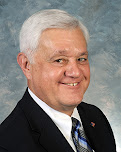
Rep. Lynn Bechler
House Bill 51, sponsored by Rep. Lynn Bechler, R-Marion, would allow a parent or guardian to opt out of any masking, testing or vaccination requirements imposed in response to the coronavirus. 

Colleges and universities would be able to require masks only for delivery of medical or dental services or to the integrity of clinical research.

“This legislation doesn’t outlaw mask wearing,” Bechler said during a debate that lasted almost an hour. “It simply makes mask wearing optional from preschool through college.”  

The bill would have allowed a parent to refuse facial coverings for children in a child-care facility. That was removed by a floor amendment, but it would still prohibit the state from penalizing a child-care center for not requiring facial coverings in response to the Covid-19 pandemic. 

The action came after most Kentucky school had already dropped their masking requirements. The University of Kentucky did so, effective Wednesday.

The Centers for Disease Control and Prevention recently released new masking guidance that encourages more schools to drop masks, but still recommends they require them in areas with high virus transmission -- including 64 of the state's 120 counties, most in Eastern Kentucky.

As the House gathered Tuesday, the CDC published research showing that Arkansas schools that required masks had 23 percent fewer coronavirus cases than those that didn't.

Legislators from both parties pointed out that the General Assembly voted last year to end the statewide mask mandate and to give local school boards the authority to require masks.

Rep. Adam Koenig, R-Erlanger, spoke in favor of local control and then asked his fellow Republicans how they feel when the federal government takes power from the state: "What is the difference?"

"I'm not excited about sending power six months ago to the locals and then saying, 'You know what? You're not doing it right. We're gonna take it back,'" he said. 

Rep. Jim DuPlessis, R-Elizabethtown, voted no after saying he was torn over his vote, said he had concerns over how the bill would affect schools if the state faced with another deadly variant of the virus.

“If we choose to take away a local school board’s ability to mandate an N-95 mask, which we admit works, they can shut the school down for a couple of weeks, or three weeks or four weeks. They can do NTI, which doesn't work,” DuPlessis said, referring to non-traditional, or remote, instruction. “We’re going to do something that could cause an unforeseen circumstance . . .” 

Bechler, asked how schools would deal with a new variant, said, "I believe most parents would make the intelligent decision for the health of their children. I want to point out that as I said earlier, that unless someone is wearing an N-95 mask properly, the masks do not prevent Covid from spreading." 

Asked to be more specific, he said, “The lever is the school board, the superintendent, the principals talking to the parents. If they are as good as I’ve heard they are today, then they can make the case the masks are in fact necessary." 

Bechler's assertion about masks conflicts with the new CDC study, which did not differentiate among types of masks, and a CDC list of studies that show masks slow the spread of the coronavirus.

One study, released Feb. 11, found that consistent use of a face mask or respirator (KN95 or N95) in indoor public settings was associated with the lowest odds of getting Covid-19, and that cloth and surgical masks also offered protection. 

Among the 534 study participants who reported the type of mask they used, cloth masks offered 56% more protection than wearing no mask; surgical masks offered 66% more; and respirator masks offered 83% more.

Rep. Lisa Willner, D-Louisville, said the bill, which now goes to the Senate, would present challenges for medically fragile students and infringe on their right to attend school safely: "We are all tired of the pandemic. We are all tired of the masks. . . . But the fact is that it is not over and why we would take away such a simple and useful tool in our public schools is simply beyond me." 

In a news release, the American Civil Liberties Union of Kentucky said, "HB 51 would force some students with disabilities to choose between their health and their education [and] force educational institutions to neglect their responsibilities under federal law to ensure equal access for students with disabilities."

Rep. Jason Nemes, R-Louisville, spoke for the bill, saying it is what his constituents have been asking for: “What we’re doing here today is we're removing governmental control over that decision and putting it again to the most local level, which is their parents.”

Rep. Felicia Rabourn, R-Turners Station, also spoke in favor of the bill. 

"My vote sends a strong message to parents, teachers and students," she said. "It sends a message that I hear them loud and clear and I support the parents' decision to make the best decision for their child based on their individual needs."

Tuesday, February 15, 2022

Bill to prohibit schools from requiring masks passes first hurdle

By Melissa Patrick
Kentucky Health News

A bill to prohibit public schools, colleges and universities from requiring masks has passed out of committee and is on its way to the full House. 

Rep. Lynn Bechler
House Bill 51
, sponsored by Rep. Lynn Bechler, R-Marion, would prohibit mask requirements "on any public school premises," school-sponsored transportation and at school-sponsored events. It would also ban requirements at public colleges and universities, and allows parents of children enrolled in publicly funded child-care facilities to refuse masking for their children without any retribution. 

The bill conflicts with a Centers for Disease Control and Prevention order that required students and drivers to wear masks on buses, regardless of their vaccination status. The rule applies to all public transportation conveyances. 

The bill, with a committee substitute that drops references to viruses other than Covid-19, passed out of the House Education Committee on a 12-7 vote, with Republicans Adam Koenig of Erlanger and Killian Timoney of Lexington voting "no" with the Democrats. 

Explaining his "no" vote, Timoney, who works in the Fayette County Public Schools, said his constituents are asking him to do what it takes to keep kids in school rather than at home with non-traditional instruction.

"So for me, this is a mask versus an NTI," he said. "And all the evidence about mask wearing and harms, it's anecdotal. What's not anecdotal is NTI being a detriment. So that's why I'm a no vote today. To keep local control and . . . making sure that we're keeping kids in person." 

The General Assembly removed the governor's authority to issue mask mandates during the 2021 special legislative session, allowing those decisions to be made at a local level.

Koenig said he voted "no" because local school officials should decide. He said each of the superintendents in the three school districts he represents is handling the issue differently, and "I respect their understanding of their school district, and their ability to do what they feel like is best for their districts."

Rep. Tina Bojanowski, D-Louisville, said, "Again and again during this special session, members of this body spoke about the importance of local control. With this bill, we are taking away local control and jeopardizing a mitigation strategy that is endorsed by the American Academy of Pediatrics."

When asked about the issue of local control, Bechler said, "I don't know of anything that more local than a parent making the decision whether or not their child should have to wear a mask." In a news release, he said, “Giving local control is ultimately about giving people a choice in what impacts them the most. . . . Parents can make their own informed decision when it comes to this, and college students should be able to do the same. I look forward to seeing all the smiles on children’s faces.”

Earlier, Bechler offered a long list of what he said are "problems brought on by mask wearing," including an increase in suicides among youth; that masks don't allow people to fully communicate with others because they block facial expressions; that they can make it hard for children to learn phonics, that they cause asthma and breathing issues, and that they create an environment prone to grow yeast, thus increasing acne. He cited no specific evidence for his assertions. 

State and federal public health officials have strongly recommended universal masking in schools as part of a holistic strategy to decrease the spread of Covid-19 and to keep students in the classroom.

One of those officials is Dr. Lindsay Ragsdale, interim chief medical officer at Kentucky Children’s Hospital. 

"During this pandemic, we have relied on the best evidence for protection and safety against coronavirus and the recommendations by the American Academy of Pediatrics and the CDC which recommend vaccinations for children that are eligible as well as an emphasis on hand-washing and mask wearing. The best mask choice during this recent surge has been a multi-layered medical grade mask that fits closely to the face," Ragsdale said in an e-mail. 

Rep. Attica Scott, D-Louisville, asked Bechler why he was proposing a bill that removes protections from "our most vulnerable, our children." He answered, "Because masks don't work." Scott replied, "That's not true." 

Rep. Mark Hart, R-Falmouth, asked for studies showing masks work, saying "doctors and reputable people" testified in other committees that they don't.

Rob Weber, communications and policy director at the Kentucky Academy of Science, the largest organization of scientists in the state, with over 4,000 members, said he would send committee members a study published in the Journal of the American Medical Association, and told Kentucky Health News later that his group would gather other studies to send them as well.

He told the committee, "House Bill 51 would remove the ability of colleges and schools to be guided by science when decisions are made on masking policies."

The CDC has compiled a list of studies that show how the use of masks control the spread of Covid-19. Most recently, a CDC study, released Feb. 11, found that consistent use of a face mask or respirator (KN95 or N95) in indoor public settings was associated with lower odds of getting Covid-19.

Among the 534 study participants who reported the type of mask they used, cloth masks offered 56% more protection against the virus than wearing no mask indoors; surgical masks offered 66% more; and respirator mask, such as N95 or KN95, offered the most additional protection, 83%.

Kristen Worthen, an Oldham County mother of three, one a 4-year-old who is medically fragile and still too young to get vaccinated, urged the committee to defeat the bill, saying community spread of the virus is still so high that masks are still needed. Oldham County Schools recently went mask-optional.

"To take away this protection from my family, to take away my children's ability to attend school by advocating for this bill -- you're actively advocating against medically fragile kids and their families," Worthen said. 

The American Civil Liberties Union of Kentucky also spoke to the needs of people with disabilities in a letter to the members of the committee urging them to vote against HB 51. It wrote, "HB 51 undermines the rights of all Kentuckians, especially Kentucky kids, with disabilities. By denying local institutions the right to put in place reasonable accommodations for children with disabilities, as it relates to masking, you undermine the fundamental rights afforded to people with disabilities under federal law and the Constitution."

Thursday, November 4, 2021

'Orange is still a bad color,' Beshear says, urging schools to keep mask mandates until students can get fully vaccinated

Ky. Dept. for Public Health map, adapted by Ky. Health News; for a larger version, click on it.
By Melissa Patrick
Kentucky Health News

Gov. Andy Beshear and his public-health chief are urging Kentuckians to get vaccinated, get their Covid-19 booster shots and get their children vaccinated against the disease, as the pandemic in Kentucky remains on a rough plateau but conditions grow more favorable for spread of the coronavirus.

"Please don't let your guard down," Health Commissioner Steven Stack said. "Temperatures are getting colder, the end-of-the-year holidays are coming up. The best way for us to enjoy the holidays and be safe with each other and enjoy and celebrate these holidays in the presence of those we love and care about is for all of us to be vaccinated and be safe."

Stack reminded Kentuckians that children between the ages of 5 and 11 are now eligible for the Pfizer-BioNTech Covid-19 vaccine, which he said will not only protect children, but also the adults around them. He said it would also keep children in the classroom if they've been exposed, since vaccinated children with no symptoms don't have to quarantine.

Stack said anecdotal evidence is that initial demand for the vaccine is higher than was expected. He encouraged people to be patient as they try to get their children vaccinated, and that while everyone can't get vaccinated on the same day, there will be plenty of vaccine for everyone that wants it. 

"These vaccines are very safe," he said, noting that the clinical trials included more than 3,000 children with serious adverse effects, including myocarditis, a heart condition that has been found in mostly young, vaccinated males, and is treatable. Stack said children had fewer side effects, like soreness at the injection site and fatigue, than adults. 

Stack acknowledged that children don't suffer hospitalizations and death anywhere near the rate of adults, but that doesn't mean they aren't affected. He said the U.S. population under 18 has had more than 6 million children infected with Covid-19, with more than 8,300 of them hospitalized and at least 745 deaths. 

At a 90% effectiveness rate, 670 of those 745 children would have likely been spared if they had received the vaccine. "No preventable death in a child is an acceptable death," he said. 

The governor gets his booster. (State photo)
Beshear said his daughter Lila would get the vaccine Monday. He and his wife Britainy got their booster shots during his press conference. Stack also encouraged eligible Kentuckians to get a booster.

The governor again encouraged Kentuckians to get vaccinated, noting that between 1,200 and 3,000 shots are being given daily and "We'd like to have a lot more than that."

Stack pointed to a graph that showed the risk of death for middle-aged people who don't get vaccinated. As of Nov. 3, of the 406 Kentuckians between 50 and 59 who have died from Covid-19, 94%, or 381, were not vaccinated. Among the 197 deaths among those 40 to 49, 98%, or 194, were not vaccinated. 

"It is, in a way, a tragic and optional death," Stack said. "That is, an option that was chosen because one chose not to get vaccinated."

Schools and masks: As Kentucky schools lift their mask mandates, Beshear reminded them that fewer than half of children between 12 and 17 are vaccinated, and younger kids have just become eligible. 

Children who have had the virus still need to get the vaccine, Beshear said: "The science is very clear that if you have had Covid, you still need to get vaccinated. The level of immunity provided by the vaccine is so much higher than anything you would get by having Covid."

Asked what threshold schools should use for lifting mask mandates, Beshear said this day was coming,  but first, it is important to allow time for students to get fully vaccinated. That requires two shots, three weeks apart. 

"To say we've got a vaccine for kids now, so we're going to drop masks before they can get the immunity that the vaccines would offer would be a mistake," he said. "Continuing universal masking in schools right now maximizes the chance for our kids to be in and stay in school, each and every day." 

Beshear said "orange is still a bad color" and schools should get in the yellow or green on the state's infection map before removing mask mandates. The state uses orange for counties that have between 10 and 25 daily cases per 100,000 residents, which is considered to be "substantial" transmission of the virus. On Thursday, 63 of 120 counties were in this zone. Most others were in red, with over 25 daily cases per 100,000.

Daily numbers: The seven-day infection rate is 21.56 daily cases per 100,000, the lowest since July 27 but not that much different from the last week. Counties with rates more than double that rate are Green, 71.8; Russell, 63; Clinton, 58.7; Jackson, 52.5; Powell, 47.4; Adair, 46.9; Trimble, 45.5; Martin, 44.7; and Lee, 44.4. The New York Times ranks Kentucky's rate 25th among the states. 

Kentucky reported 1,398 new cases Thursday, lowering the seven-day average by 45, to 1,167 per day. Beshear said Kentucky's weekly case numbers are tracking slightly lower than last week.

The percentage of Kentuckians testing positive for the virus in the last seven days is 5.03%, a slight dip from 5.05% the last two days. 

Beshear said 100% of the virus in Kentucky right now is the highly contagious Delta variant, even though there have been reports of the Lambda variant in Louisville wastewater. 

Kentucky hospitals reported 765 Covid-19 patients, three more than Wednesday; 219 in intensive care, down 13; and 133 on mechanical ventilation, down four.  Beshear said hospital numbers could also be approaching a plateau. Six of the state's 10 hospital regions are using at least 80% of their intensive-care beds, but none are above 90%.

The state reported 30 more Covid-19 deaths on Thursday, bringing the pandemic's death toll to 9,886. Stack cautioned that Covid-19 deaths, the most lagging indicator of the virus, will continue to be high, likely through year's end. Beshear said, "We have yet to see the true toll on human life."

Federal vaccine mandates: Attorney General Daniel Cameron filed a lawsuit Thursday with his Ohio and Tennessee counterparts, also Republicans, arguing that the Biden administration's new vaccine-or-testing mandate for federal contractors is federal overreach and is unconstitutional.

Beshear, who is a Democrat, a lawyer and a former attorney general, said he hadn't yet read the lawsuit and wasn't aware of its "nuances," but said, "The Supreme Court and most of the federal circuit courts have been supportive of the constitutionality of different vaccine programs."

Unlike some governors (all of them Republicans) Beshear said his occupational safety and health agency would enforce federal mandates: "In the end, we've got to follow the laws . . . so we will prepare to comply with anything that's out there. And if a court tells us differently, then we'll look at our options then."

Joe Sonka of the Louisville Courier Journal explains: "The legal action comes in advance of the Jan. 4 deadline for federal contractors and employees at facilities that treat Medicare and Medicaid patients to be fully vaccinated against Covid-19. . . . A separate Occupational Safety and Health Administration rule requires workers at companies with more than 100 employees to either be fully vaccinated by that same date or face regular testing going forward — a rule expected to apply to many governmental entities across the country."

Wednesday, October 6, 2021

Suicide, ideas of it, depression, and anxiety have affected more Kentucky students since the Covid-19 pandemic began

Kentucky Youth Advocates image
By Melissa Patrick
Kentucky Health News

Kentucky's students are experiencing more anxiety, depression and ideas of suicide in the pandemic, and schools need more resources to help them, mental-health experts told state legislators Oct. 5. 

Before the Interim Joint Committee on Education, they called for putting more mental-health professionals in schools, giving teachers more first-aid training in mental health, and programs that would help students be more resilient and keep them from taking their own lives, an increasing problem.

“The needs are many, but the resources are few,” Marsha Duncan, a social-emotional learning specialist for LaRue County Schools, told the committee.

Among Kentuckians under 25, deaths by suicide increased 11% in 2020, according to state-provided data. Emergency-room visits related to self-harm were 5% below historical averages last year, but hospitalizations for self-harm rose 8%. Figures for 2021 are not yet available. 

One three-month period in the last year had a youth suicide rate 57% higher than the previous year, said Linda Tyree, crisis response director for the Green River Regional Educational Cooperative, which serves 45 school districts.

The Bowling Green-based co-op has crisis teams that are typically called in when there is a death or serious injury of a student or staff member, but during the pandemic they've been called in for issues of anxiety, depression and having ideas of suicide, Tyree said.
 
"When students transitioned to remote learning, we know there was a lot of exposure to trauma, to stress, family stress, even exposure to pornography when they're learning online," she said. "So all of these things just compound the problems of adolescence that are just part of normal growing up." 

Amy Riley, a school counselor in Mercer County, told the legislators, "The isolation of the Covid pandemic has had a profound effect on the mental health of my students and students across the state."

In her Mercer County Intermediate School in Harrodsburg, "There were weeks this past spring, shortly after returning from virtual learning, that we would assess two to three students a day for viable suicidal threats," Riley said. "Just this morning, I had to do a suicide risk assessment on a 9-year-old in my school before I came to this hearing today."

She said the reasons for these suicidal threats include unmanageable anxiety, home problems and often loneliness. 

Duncan, of LaRue County, added grief to the list of things students are dealing with, and not just for those who have died of Covid-19. 

"Grieving for these students has taken on a grief of the loss of the normal … fun, activities and programs that are offered and provided at the schools," Duncan said. "Dealing with the lack of consistent routines has been detrimental to the mental health of our students."

Similar issues are reported around the world. A global analysis of 29 studies that included more than 80,000 youth, published in JAMA Pediatrics, found that anxiety and depression has doubled in children and adolescents over the course of the pandemic. It also found they occurred more later in the pandemic, in older adolescents and in girls. 

Duncan said it has been "impossible" to meet students' mental-health needs during remote learning and "extremely difficult" under the hybrid model. She said access to mental-health professionals in her small, rural community is limited, as are the funding sources to pay for it, which makes school-based mental-health care vital. 

In a survey conducted by The Prichard Committee Student Voice Team, Kentucky students expressed a desire for increased access to mental-health services. 

Asked open-ended questions about what challenges they were facing in the pandemic, 15% of the students reported a concern related to mental health. Among that group, 35% said they wanted mental-health services but did not have access to them. That's 5% of the total. The share of students who wanted but lacked access to mental-health services was 15% during the pandemic and 10% before it.

Another indicator that young people are struggling with their mental health is the increase in mental-health screenings done by youth at MHAScreening.org. 

According to data provided by Mental Health America of Kentucky, there has been a 191% increase in  voluntary mental-health screenings among the state's 4- to 10- year-olds, from 23 done in the first half of 2020 to 67 in the first half of 2021. Among 11-to-17-year-olds, the increase was 231%, from 1,077 to 3,562.  

"These screening increases reflect anecdotal evidence that our children and youth have been negatively affected by the pandemic," Marcie Timmerman, executive director of MHA, said in an e-mail. 

Rep. Shane Baker, R-Somerset, asked what parents, educators and the community could do. Riley said all students should receive support through a "tier one" program, and Tyree agreed. 

"We don’t want to be reactive. We want to be proactive," Tyree said. "Tier one means that every single student, every kindergartner, every first grader that comes in the door, before they ever show any kind of problems or at-risk behavior, we’re already talking about articulating their feelings, how to be socially acceptable with the way that they address those feelings, how they can regulate themselves and have social regulation."

Riley wrapped up her prepared comments with a plea for more mental-health professionals in schools.

“It is my earnest plea that when making crucial funding decisions, you not forget the mental health needs of Kentucky students,” she said. “Any money and resources spent on mental health needs in Kentucky schools is money that will have an infinite return for the investment.”

If you or someone you know may be considering suicide, contact the National Suicide Prevention Lifeline at 1-800-273-8255.

Thursday, September 16, 2021

Beshear says school officials who don't require masks are making 'an inexcusable decision' and making themselves liable; health commissioner says misinformation spreaders 'are killing people'

By Melissa Patrick
Kentucky Health News

Top state officials' pleas to get a Covid-19 vaccine, and for universal masking in schools, were as urgent as they have ever been Thursday, when the state reported 62 more Covid-19 deaths and intensive-care beds remained in short supply.

"The situation continues to be dire," Gov. Andy Beshear said at his weekly general press conference, again dominated by the pandemic. "We need for people to continue to do their very best to protect themselves and their families." 

Beshear said the state has only 93 adult intensive-care beds available and 66 of the state's 96 acute- care hospitals report critical staffing shortages.

Kentucky Department for Public Health chart
At the press conference, hospital leaders told how the more contagious Delta variant of the virus is killing younger people in their care, and Beshear showed charts illustrating the trend: Over half of Covid-19 deaths are now among people under 50, and 12 percent are among those under 30.

“It’s one thing to have an end-of-life conversation with someone who’s had time to live and prepare. It’s a very different conversation to have when you’ve having this with a 20-, 30- or 40-year-old," Josh Bryant, an osteopath at Kings Daughters Medical Center in Ashland, said in a pre-recorded video. 

Dr. Traci Sanchez of Kings Daughters said in another video, “We’ve been seeing 20-year-olds and 30-year-olds and 50-year-olds come in and within 24 hours, 48 hours, die. Families are angry. They’re lost. Patients are lost because they know they’re dying. It’s hard to tell someone who is 40 years old that they’re going to be dead within 24 hours and there’s nothing we can do.”

Beshear said, “The number one thing that we can do to get through this is to get vaccinated. Now by percentage, about 90-plus percent of folks that end up hospitalized are unvaccinated. So how do we not overrun our hospitals? We get vaccinated."

Dept. for Public Health table shows rates
of Covid-19 vaccination by age group.
From March 1 to Sept. 15, 87.1% of coronavirus cases, 92.1% of Covid-19 hospitalizations, and 84.6% of Covid-19 deaths have been among unvaccinated or partially vaccinated Kentuckians, the state says.

"These are people who are getting sick and dying fast," Public Health Commissioner Steven Stack said. "It's a bad disease. . . . "If we don't want it to get even worse still, we've all got to get vaccinated."

After pointing to a Lexington Herald-Leader article about a 29-year-old teacher who died from Covid-19 after not getting vaccinated due to an unfounded fear about a side effect, Stack said, "I've said before, people who spread misinformation about these vaccines are killing people."

Stack, a physician, added later, "There's some who have tuned out when someone like me shares that message. It's a fact. And if it gets worse, and the next version is even more deadly, let's hope we don't have to get to the point where people are burying whole households in order to internalize this message that the vaccines can keep us safe and that's what we've got to come to accept."

School masks: Beshear also used sharp language to urge schools that haven’t instituted a mask mandate to do so, ahead of Friday's expiration of the Kentucky Board of Education’s school masking requirement.

"If you are a school district that is not requiring universal masking, you are directly endangering the children, the staff, the faculty, everybody who is in each of your buildings, and it is an inexcusable decision," Beshear said. "Every single public-health agency, every one, has said the universal masking is the only way to keep kids in school. We have seen story after story after story of dead administrators and teachers, and it shouldn't take that."

Beshear, who is a lawyer, added, "Anyone who is making those decisions is facing huge personal liability in the future, because once they make a decision that is against all science, that is against all evidence, that is against all advice and somebody gets hurt, they ought to expect to pay, one way or another."

Most districts are masking up. Olivia Krauth reports for the Louisville Courier Journal, "As of Thursday morning, at least 139 of Kentucky’s 171 school districts have said they will continue to require universal masking in classrooms. About 90% of Kentucky's public school students attend class in those districts. Three districts — Burgin Independent, Science Hill Independent and Gallatin County — have said they will make masks optional once the statewide mandate is lifted."

Last week, Gallatin County became one of the many districts to suspend classes due to high numbers of coronavirus cases. Its school board is scheduled to meet at 6 p.m. Tuesday, Sept. 21. For a report published in the Sept. 15 Gallatin County News, click here.

Science Hill Supt. Jimmy Dyehouse, who called Beshear a "liberal lunatic" for imposing a school mask mandate Aug. 11, told Lexington's WKYT-TV that his board's unanimous decision was based on a survey of parents, 90 percent of whom opposed a mandate.

Amanda Nutt
Beshear honored the life of Amanda Nutt, a 36-year-old teacher with Caverna Independent Schools in Hart and Barren counties, who died from Covid-19.

“We’ve all had teachers that have made a huge impact on us, I remember them, the ones who we credit for our success. Amanda was that teacher to so many. Tonight, as we light our homes up green, let us lift Amanda’s family and the entire Caverna school district up in prayer," said Beshear.  

Daily numbers: The state reported 4,891 new coronavirus patients Tuesday, bringing the seven-day rolling average to 4,218 per day. That is down 51, or 1%, from Wednesday, indicating that the state remains on a rough plateau of daily new cases. Of today's cases, 1,416, or 29%, were in people 18 and under.

The state reported its daily infection rate over the last seven days to be 84.69 cases per 100,000 residents, down 2.42 from Wednesday. Counties with rates more than double that rate are Rockcastle, 208.8; Powell, 204.6; Whitley, 204.5; Monroe, 202.5; Knox, 192.2; Wolfe, 183.6; and Perry, 173.6.

The New York Times ranks Kentucky's infection rate third in the nation, following West Virginia and Tennessee. 

The share of Kentuckians testing positive for the virus in the last week dropped for the eighth day in a row, to an even 13%. Beshear has said that this trend could be the result of more testing. 

Hospitals reported 2,453 Covid-19 patients (down 40 from yesterday), 667 of them in intensive-care patients (up 19) and 25 of them children. The 448 patients on mechanical ventilation was up 12 and equaled the record set Friday, Sept. 10. 

Only one of the state's hospital-readiness regions is not using at least 80% of its intensive-care beds: the easternmost region, from Lee to Pike counties. The northern region is using 100% of its ICU beds. 

The addition of 62 more Covid-19 deaths brings the state's toll to 8,206. The seven-day death average is 33.6, up from 29.9 yesterday. 

Deaths are the main lagging indicator of the pandemic, and Beshear indicated that they will remain high for a while. "Once we have all those big cases, the death follows," he said. "It's going to be a tough period of time."

Flu coming: In addition to getting vaccinated for Covid-19, Stack encouraged Kentuckians to get the influenza vaccine to help lessen the strain on hospitals.

“In a typical winter, flu always drives up the number of people in the hospital," he said. "In bad years . . . hospitals really get strained or taxed with the number of influenza patients who fill them. The flu vaccine . . . does protect large numbers of people and prevents substantial burden to the hospitals. So if we all get immunized for the flu, we can keep the hospitals with more capacity and more able to care for Covid patients and other patients as well.”

Stack's advice for people as they head to outdoor social and sports events this weekend: "If you are at a large event outside, you should wear a mask. . . . I get that it's outside, but with that many people that close together, I would just suggest to each person for your personal safety and [to protect] those at home to put on that mask when you are in the seats surrounded by that many folks." 

Thursday, September 9, 2021

General Assembly leaves masking authority to school districts; Republicans block votes on Democrats' amendments

Photo by Mary Altaffer, The Associated Press
By Al Cross and Melissa Patrick
Kentucky Health News

The Kentucky House and Senate gave final passage Thursday night to a bill eliminating the state's requirement to wear masks in schools and giving that authority back to local school districts.

Democratic Gov. Andy Beshear quickly vetoed the mask-mandate parts of the bill but the Republican-controlled legislature overrode him just as quickly, and adjourned the special session he had called in the wake of a state Supreme Court decision upholding laws the legislature passed last winter to limit the governor's emergency powers.

"This bill will also nullify, null and void the Kentucky Board of Education's mandated masking protocol," said. said Sen. Max Wise, R-Campbellsville, the sponsor of Senate Bill 1. "This bill will give local control back to the districts, not mandating they do, not mandating they don't. They make the decision of what they think is best for their constituents and their communities."

Democrats in both chambers said some districts wouldn't impose mask mandates, raising the threat of the coronavirus not only in schools but the general population, leading to more deaths from Covid-19.

"The global pandemic is ravishing Kentucky, and yet we're sending our kids into the lion's den," said Rep. Pamela Stevenson of Louisville. "Many of our students will not be protected."

Wise acknowledged that the bill is not a perfect bill, but called it a "tactical approach for the now," designed to keep students in the classroom. 

SB1 would guarantee school funding, which is normally based on average daily attendance; address staffing shortages; set rules for how school districts can manage in-home learning; and require the state Department for Public Health to develop an optional "test-to-stay" model to avoid quarantines for students who have been exposed to the virus but test negative and have no symptoms. Students would be tested for a period of days to see if they can remain in the classroom or be quarantined. 

The bill passed the Senate 28-8 and the House 70-25, largely along party lines. The Senate overrode the veto 21-6, and the House did likewise 69-24. Both Republican floor leaders said the veto was unconstitutional because the bill is not an appropriations bill, but Democrats said it was such a bill because it has an appropriation.

Education Commissioner Jason Glass, who was hired by the state school board that Beshear appointed, said in a Twitter statement that the law does not go far enough in providing the flexibility that schools need.

“Further, the politically motivated effort to remove masking requirements in public schools weakens our virus mitigation efforts as a state at the very time they are needed most,” Glass said. “We will be working with Kentucky's school districts as they continue to try to keep students in school safely and do our best to manage the consequences of the decisions made by our legislature in this special session.”

Sen. Gerald Neal, D-Louisville, said the bill needed to give Glass authority to deal with unforeseen issues. "We don't know what's going to happen between here and the next time we come back" in January, he said. 

Neal spoke at length about how the process used during the special session to pass bills at such a rapid pace did not allow amendments to be considered. Rep. Al Gentry, D-Louisville, voted against the bill after saying "I cannot support a rushed, partisan process that doesn't allow sensible amendments."

Gentry's statement was read by Rep. Angie Hatton, D-Whitesburg, who said she trusts her school districts to make the right decisions, but voted for the bill "very reluctantly" because it goes in the wrong direction.

"We went from being a model . . . to an example of how it shouldn't be handled," Hatton said of the pandemic. Earlier, she said people in some school districts listen too much to "politics or to a vocal minority. . . . We have school boards in this state that have refused to meet in person because they've been threatened."

The most popular amendment in the House was offered by Rep. Ashley Tackett Lafferty of Prestonsburg, to allow former health-department workers to return to work to relieve staffing shortages and help with the test-to-stay option, which her local health department said it couldn't help with because of limited staffing and test materials. He motion was favored 27-11, but was defeated by Republicans who didn't vote; suspending the rules requires a majority of House members.

Democrats said the bill flies in the face of science.

"Why do we refuse to listen to science and experts on such a deadly virus, and think we can handle it better?" asked Rep. Mary Lou Marzian of Louisville. "Masks are not that difficult,"
 
Rep. Tina Bojanowski of Louisville cited several studies showing that masks can prevent the spread of disease, and said Republicans had presented no research showing "local control as the best way to manage a viral pandemic." She said they were making "a value-based decision rather than a scientific-based decision. . . . I carry the weight of each child's heath on my shoulders."

Sen. Reggie Thomas, D-Lexington, called it a "life and death bill" and noted that school mask mandates are recommended by the U.S. Centers for Disease Control and Prevention and the American Academy of Pediatrics. "If we eliminate mask mandates, then we are putting all children and all school personnel at severe risk, and I cannot tolerate that," Thomas said.

Rep. Rachel Roberts of Newport told the story of a toddler who died of Covid, then warned, "If we get this wrong, another . . . may die for lawmakers waiting to leave their egos behind." Rep. Josie Raymond of Louisville gave a similar warning and said, "This bill takes masks off of kids when Covid is at its most dangerous."

That was challenged by one of the relatively few House Republicans who spoke, Rep. John Blanton of Salyersville.  "We are not taking masks away from your children today," he said, while giving schools the tools they need, such as 20 days of remote learning.

McGarvey said he agreed with much of the bill, but said there were two main points of contention, masks and the lack of local control over days used for non-traditional instruction. Pointing to the recent surge in Covid-19 cases, especially among children, most of whom are not eligible to be vaccinated,  McGarvey said, "It's irresponsible of us to take away the ability to protect our kids." 

But Sen. Danny Carroll, R-Benton, said, "I have complete faith in our local school districts to make the decisions related to Covid. . . . These are the people that see the kids every day. They live next to their parents, to their families. They are responsible every day for these kids. They will go through great pains to make sure that the decisions that they make in every area of the Covid response for their school district is in the best interest of their employees." 

Rep. Cherlynn Stevenson of Lexington said her constituent messages were 10 to 1 in favor of universal masking in schools, and said people from all over the state come to Lexington daily, so "If everybody's not doing their part, It's all going to fall apart."

Beshear reiterated before yesterday's legislative action that masks are essential to keeping children in school.

"Now, thankfully, I think most superintendents know that now, even the ones who didn’t think it was true in the beginning," he said. "There’s also the question of how many people at this point would be foolish enough — because that’s what it would be — would put that many kids in danger by not requiring masking in schools."

Friday, November 8, 2019

Kentucky schools can tap federal money to provide more school-based health services for students enrolled in Medicaid

Kentucky school districts can now use federal Medicaid funding to expand school-based health services, the state announced Friday.

“The Medicaid state plan amendment will allow school districts to use federal funding to expand access to qualifying physical- and mental-health services for students enrolled in Medicaid,” Kristi Putnam, deputy secretary of the Kentucky Cabinet for Health and Family Services, said in the news release.

Examples of services that could now be covered include physical and behavioral health screenings, immunizations, dental care, speech therapy supports, and mental health counseling, says the release.

Historically, schools could only bill Medicaid for students who were disabled or met other limited criteria. The Centers for Medicare and Medicaid Services changed that in December 2014 to let states provide school-based health services to any student enrolled in Medicaid, and get federal reimbursement for it.

More than two in five Kentucky children are covered by Medicaid, but the state just recently decided to seek the money, a decision that seems largely driven by an increase in behavioral-health issues in schools.

“Approval of this amendment is a game-changer,” Health Secretary Adam Meier said in the release. “This will provide additional resources to support increased access to mental health services for students using money already being spend by school districts."

Putnam pointed out that the additional funding will help support the School Safety and Resiliency Act, or Senate Bill 1, that calls for one trained school resource officer in every school and one guidance counselor for every 250 students by July 1, 2021, or as funds and qualified personnel become available. School-based mental-health providers fall under a subsection of the guidance-counselor requirements and are listed as optional. The bill has no funding attached to it.

It's important to note that Medicaid will only pay for licensed mental-health providers, not guidance counselors, unless they have a special certification, which most of them don't, Eva Stone, district health coordinator for the Jefferson County Public Schools, told Kentucky Health News in April.

Terry Brooks, executive director of Kentucky Youth Advocates, applauded the decision to take advantage of this previously untapped funding, especially for the purposes of funding SB 1.

"The importance of preventive health and behavioral health services is undeniable as is the insight to provide them in schools to maximize students access," Brooks said in a prepared statement. "Ensuring children have these services not only positively impacts health, it is a catalyst to better academic achievement and even better school environment."

Being able to treat children in schools will also reduce many of  the barriers parents have to get their children health care, such as lack of transportation, non-flexible work schedules, or finding a provider who accepts Medicaid, the state news release says.

The release says the change to Medicaid will be phased in, and approval for reimbursements to school districts is retroactive to August 1, 2019.

Tuesday, January 22, 2019

Is this the year Ky. lawmakers throw tobacco and e-cigarettes out of schools? Advocates see more hope, and rally for their bill

Rep. Kim Moser spoke at the tobacco-free-schools rally.
(Photo by Charles Bertram, Lexington Herald-Leader)
At a Jan. 22 rally in the state Capitol, students, educators and health advocates asked Kentucky lawmakers to pass a law to make all schools in the state 100 percent free of tobacco and electronic cigarettes.

Terry Brooks, executive director of Kentucky Youth Advocates, said passing such a law should be a "no-brainer" for state elected officials who are committed to kids.

"Many issues that confront the Kentucky General Assembly are complex and complicated; the issue of tobacco-free schools is not one of them," Brooks said in a news release."Every young person deserves protections against exposure to secondhand smoke and to the dangerously high nicotine levels of e-cigarettes. Strong school campus policies on a statewide basis deliver those kinds of safeguards for all kids in every school."

Kentucky's high-school students smoke at a much higher rate than their peers across the nation, 14.3 percent compared to 8.8 percent. Almost as many, 14.1 percent, use e-cigarettes, which is a bit above the 13.2 percent nationally, according to the 2017 Youth Risk Behavior Survey, a national poll.

Health experts have warned that the e-cigarette rates are probably higher now because Juul sales have surged since the survey. A federal report released in November found that in 2018, one in five high school students and one in 20 middle school students are now using e-cigarettes in the U.S, representing a a 78 percent increase for high schoolers and a 48 percent increase among middle schooers in less than a year.

Passing a statwide tobacco-free school law could stop nearly one in three Kentucky students from smoking, according to the advocates. "This is an issue that should move ahead with speed, ease and consensus," Brooks said. "There is no excuse or rationale for any other outcome."

Two bills have been filed to make all Kentucky schools tobacco-free: House Bill 11, sponsored by Rep. Kimberly Moser, R-Taylor Mill, and Senate Bill 27, sponsored by Sen. Ralph Alvarado, R-Winchester and co-sponsored by Sen. Stephen Meredith, R-Leitchfield. Both would bar the use of tobacco products, including e-cigarettes, on all school properties and at all school events that are on school-owned property.

"Tobacco-free schools policies set a healthy example for students by de-normalizing tobacco use at school, where our children and teens spend a third of their waking hours," said Moser. "In one Juul we have about the same amount of nicotine as one pack of cigarettes. That is crazy."

Alvarado, a physician, said, "Most tobacco use starts while kids are still school-aged, a time when their brains are still developing and nicotine can hinder that development and cause lasting damage."

He added, “The tobacco-free schools bill we’ve introduced is all about prevention,” stating that 90 percent of tobacco use starts before the age of 18, reports The Lane Report.

Fewer than half of Kentucky school districts have enacted such policies. As of July, 72 of the 173 districts had adopted 100 percent tobacco-free school policies, covering 734 schools and 57 percent of the state's students. Federal law only prohibits smoking inside schools that receive federal funding.

In past legislative sessions, bills to require all school properties and school events to be tobacco-free have gained little to no traction. Two were introduced in the last session, but were not called up in the legislature's education committees. The Senate passed one in 2017, but it died in the House.

Prospects look better this year. The House version of the bill has already been posted in the House Health and Family Services Committee, which Moser chairs. The bill also has the "newfound support" of the The Kentucky School Boards Association and the Kentucky Association of School Superintendents, says the news release.

"We have cautiously waited to see how effective and workable these policies have been in the numerous districts that have adopted them. We believe the policies are working because enforcement has been crafted to fit each district's needs, an approach which will continue with HB 11 and SB 27," Kerri Schelling, executive director of the school boards association, said in the release.

Such a bill also has the support of 87 percent of Kentucky adults, according to the most recent Kentucky Health Issues Poll, which has shown consistent support for such policies since 2013.

And it also has the lobbying support of the Coalition for a Smoke-Free Tomorrow, which is made up of about 180 organizations across the state. The coalition has made a statewide tobacco-free school law its highest priority this year, says the release.

Ben Chandler, the coalition's chair and the president and CEO of the Foundation for a Healthy Kentucky, stressed that it's important to pass this law now to recover the progress that has been made in reducing teen tobacco use that is steadily being lost because of the explosion in teen vaping.

"We're coming up on half of Kentucky's school districts that already have enacted these policies to reduce tobacco use by teens and to protect them from the significant health dangers of secondhand smoke and e-cigarette aerosol," he said in the release. "Now is the time to extend those protections statewide, before we lose any more ground."

Friday, December 14, 2018

If Ky. teenagers' use of e-cigarettes continues at its current pace, look for a new generation of adult smokers, conference is told

By Melissa Patrick
Kentucky Health News

Kentucky teachers have plenty to keep up with in the schools, which can cause an issue like teenagers' vaping of electronic cigarettes to get lost in the shuffle, but health advocates warn that if we don't get in front of this uptick in e-cigarette use, a new generation of adult smokers is on the horizon -- along with all of the health issues that come with it.

Eric Kennedy of the Kentucky School
Boards Association ( Foundation for a
Healthy Kentucky photo )
At a Dec. 10 Coalition for a Smoke-Free Tomorrow conference in Louisville, Eric Kennedy, chief lobbyist for the Kentucky School Boards Association, said KSBA offers districts a model policy for 100 percent smoke-free schools that includes e-cigarettes, and encourages them to adopt it. However, despite the e-cig epidemic in schools, it hasn't offered any specific guidance on the topic of e-cigs or Juul, a wildly popular e-cig that looks like an oversize USB drive and comes in popular flavors.

"I think there is a lot coming at classroom teachers on this and every issue, and it's not as streamlined as it needs to be, and that is a big part of what the coalition is working on," he said. "We're almost at a level of being overwhelmed, if not already beyond that point. . . . It's unfortunate that it's easy for an issue like this to get lost in the shuffle of the massive amounts of information coming at classroom teachers and superintendents and everyone else in the district. So I think that's something that we will keep working on, but that's always going to be part of the problem."

Many new school board members will take office in January.

Ben Chandler, president and CEO of the Foundation for a Healthy Kentucky and chair of the coalition, told the conference, "The enormity of this . . . surge is a recent phenomenon, so I don't think anybody has realized just how dire this issue is and how quickly it has become so."

Some may question the use of the word "dire," but teen use of e-cigarettes has become so prevalent that the U.S. Food and Drug Administration has called it an epidemic. Federal research shows that high-school students who reported being current e-cig users increased 78 percent between 2017 and 2018, exceeding 3 million. The same report showed use by middle schoolers increased 48 percent.

In Kentucky, about the same number of high-school students smoke cigarettes as use e-cigs, 14 percent. But health advocates at the conference warned that e-cig use is likely much higher among the state's youth because the survey was taken before the introduction of Juul and Juul-like products.

To get a more current understanding of what is going on in Kentucky, the foundation and Kentucky Youth Advocates conducted focus-group discussions in October with 35 Kentucky teens in Campbell, Clay, Jefferson, McCracken and Monroe counties about their knowledge, perception and usage of e-cigarettes in their schools.

"The kids asserted educators and parents were clueless about their use," said Terry Brooks, executive director of KYA. "And checking with parents and educators, they confirmed they were clueless. So, we've got a real adult/kid knowledge gap."

Catie Kelly, senior at Martha Layne Collins
High School, talked about e-cig use by teens.
(Foundation for a Healthy Kentucky photo)
Catie Kelly, a senior at  Shelby County's Martha Layne Collins High School, who was not part of the focus groups, told conference attendees that the flavors were the main reason kids are using e-cigarettes, and that most kids don't realize they are harmful or have nicotine in them. In fact, a Juul can have as much nicotine as a pack of cigarettes.

"It is so easy to use in school because it's so small and is really easy to hide. Most of my friends, they'll just put their head down and put it under their sleeve and then blow the smoke into their sweatshirt," she said. "People you wouldn't think would use a Juul would use a Juul." The device has 75 percent of the e-cigarette market.

Chandler offered four policy suggestions toward decreasing e-cigarette use among teens, including making sure e-cigs are included in all local ordinances and school policies; an excise tax parallel to regular cigarettes; the prohibition of flavors in e-cigs; and allowing cities and counties to enact stricter tobacco control policies than at the state level.

Asked why a statewide smoke-free school law wasn't listed as a policy priority on the news release, Chandler said it had inadvertently been left off. "One hundred percent smoke-free schools is what we intend to do," he said. "This whole boom of e-cigarette use I think has made this tobacco-free schools issue much more important and timely right now."

As of July, 72 of the state's 173 school districts (42 percent) have 100 percent smoke-free schools, covering 57 percent of the state's students. However, many of these districts still need to update their policy to meet new standards for e-cigarettes.

Rep. Kim Moser, R-Taylor Mill, said she also thought the surge in e-cigarette use among Kentucky's youth could spur the passage of a statewide tobacco-free school bill this year. Moser is the new chair of the House Health and Family Services committee and said she plans to file a bill for such a law.

But Sen. Ralph Alvarado, R-Winchester, new chair of the Senate Health and Welfare committee, said he wasn't so sure the epidemic would change things. "It's not a guarantee, but I'm hoping that with the new leadership in the House this coming year that this will loosen the tobacco policy up a little bit," he said.

Alvarado's tobacco-free school bill passed the Senate in 2017 but died in the House. Two such bills were introduced in the last session, but were not called up in the legislature's education committees.

Alvarado, a physician, said he will file the legislation again, but added that no matter how much science and data he has presented in the past to show the harms of smoking, it hasn't outweighed the philosophical argument for many that the government shouldn't be telling people what to do.

The KSBA's Kennedy said parental support for such policies to include e-cigs is vital, because many parents still "don't think they are a big deal" and often ask that their child not be reprimanded for using them. He said the problem is so rampant that it's not possible to suspend all student violators.

He said, "It's almost in some ways too late to get out in front of it, but of course that can't stop us from trying to do everything that we possibly can."

Other points from the conference:
  • 80 percent of children are exposed to e-cigarette advertising.
  • 85 percent of youth who use e-cigs report using flavored varieties.
  • 40 percent of 18- to 24-year-olds who vape report never smoking a regular cigarette.
  • One-third of youth who have ever used e-cigs report also using marijuana.
  • Nine out of 10 adult smokers started smoking before they turned 18.
  • 99 percent of e-cigs have nicotine; the rest are typically found in vape shops.
  • The adolescent brain is "uniquely vulnerable" to nicotine addiction, meaning youth become addicted more quickly and smaller amounts of nicotine can create addiction.
  • Nationwide, nearly 3 percent of adults use e-cigarettes and 21 percent of youth do; adult e-cig use in Kentucky is higher, 5.9 percent; 24.6 percent of Kentucky adults smoke.
  • Research has not proven that e-cigs help smokers quit smoking.
  • Research shows that kids who use e-cigs are more likely to smoke.
  • E-cigs create secondhand aerosols with potentially harmful ingredients, including volatile organic compounds, ultrafine particles, heavy metals and potential cancer-causing agents.

Sunday, April 9, 2017

With pushes from Obama administration, Kentucky schools focused more on health; example: less junk food is available

Lexington Herald-Leader file photo
Sugary drinks, fatty snacks and chocolate candy are becoming harder to buy in Kentucky schools, which are paying more attention to health issues, according to the latest survey by the federal Centers for Disease Control and Prevention.

The CDC's latest biennial School Health Profiles for 2014 found big declines in the availability of junk food since 2014. Here are the specifics:
  • Chocolate candy: 7.8 percent in 2016, down from 22.6 percent in 2014
  • Salty snacks that are not low in fat: 13.7 percent in 2016, down from 26.1 percent.
  • Cookies, crackers or other baked goods that are not low in fat: 12.0 percent in 2016, down from 24.1 percent.
  • Soda or fruit drinks that are not 100 percent juice: 15.7 percent in 2016, down from 33.1 percent in 2014.
There was also a big increase last year in the number of Kentucky schools that banned less nutritious foods and beverages from being sold in fundraising, up to 36 percent from 23 percent in 2014, a news release from the state Department of Education said.

Schools are systematically paying more attention to health issues. The survey found that 66 percent have used the CDC’s School Health Index or another self-assessment tool to evaluate them in the areas of physical activity (66 percent in 2016, 56 percent in 2014), nutrition (62 percent in 2016, 53 percent in 2014) and asthma (35 percent in 2016, 21 percent in 2014).

More schools are offering opportunities for students to participate in physical activity before the school day through organized activities or access to facilities or equipment: 29.4 percent in 2016, up from 19.3 percent in 2014.

"Nearly three-fourths of schools have one or more groups such as a school health council, committee or team that offers guidance on the development of policies or coordinates activities on health topics," the release said. "There were such groups in 74.7 percent of schools in 2016, up from 63.8 percent in 2014."

The department and the Kentucky School Nutrition Association attributed the improvements to the Healthy, Hunger-Free Kids Act that Congress passed 2010, the U.S. Department of Agriculture’s "Smart Snacks in School" regulation of 2014 and a review of the state education department’s Practical Living Career Studies program.

Janet Tietyen Mullins, a University of Kentucky extension professor of food and nutrition, said the improvements are encouraging, "because they can help Kentucky students reduce their risk of developing diabetes and other chronic diseases," Valarie Honeycutt Spears writes for the Lexington Herald-Leader.

Mullins told Spears, “These changes in the school food environment are a positive way to help students choose more nutritious foods. Everyone benefits from an environment where healthy foods are readily available, and the changes could also benefit school staff and guests.”

Read more here: http://www.kentucky.com/news/local/education/article143288254.html#storylink=cpy