Showing posts with label contagious diseases. Show all posts

Thursday, June 6, 2024

Kentucky is seeing an 'unusually high uptick' in pertussis, known as whooping cough; Lexington outbreak grows to 24 cases

Kentucky doctors and the state Department for Public Health "are seeing an unusually high uptick in whooping cough," or pertussis, Louisville's WDRB reports. "Immunity for vaccination or natural infections wanes over time, so people who are fully vaccinated can still get whooping cough. Doctors said the vaccine lessens the severity and will likely keep someone out of the hospital."

Kentucky had 84 confirmed cases of pertussis in 2023, and 66 confirmed so far in 2024, said Brice Mitchell, spokesman for the department. That works out to just under two cases a week last year, and just under three cases a week so far this year. 

Seven more cases of pertussis were confirmed in Lexington last week, bringing the total to 21 since April 26. The Lexington-Fayette County Health Department declared a pertussis outbreak on May 20. UPDATE, June 9: The department confirmed three more cases, bringing the total to 24.

Most of Kentucky's cases have been in school-age children, but some been in infants and adults, WDRB reports.

"It's not unusual to actually see whooping cough; however, the numbers that are being seen, that is definitely unusual, " Dr. Mark Burns of the University of Louisville told WDRB. "It's usually not that prevalent as it is right now."

The state is part of a spotty national trend. Clusters of pertussing cases have also been reported in Oregon and wetsren Pennsylvania. Through May, about 5,000 cases had been reported in the U.S., more than double the number for the same five months in 2022.

"Rates of whooping cough, like those of some other infectious diseases, declined soon after the start of the pandemic, as people wore masks and practiced social distancing, precautions that many have ceased," The Washington Post reports, quoting experts. "But during the early months of the pandemic, when people feared being exposed to the coronavirus in a doctor’s office, some children may have missed vaccination appointments, leaving them vulnerable to future infections."

C. Buddy Creech, director of the Vanderbilt University Vaccine Research Program and a pediatric infectious-disease researcher for 20 years, told the Post, “This is still a terrible, terrible disease, one we’d do well to protect against.”

The Centers for Disease Control and Prevention says pertussis cases are returning to “pre-pandemic patterns,” more than 10,000 cases a year. The Post reports, "From January 2023 through May 25, 2024, whooping cough caused 15 deaths in the United States, though the CDC declined to say how many of those deaths occurred this year," indicating that the number is less than 5.

"England has also reported a substantial increase in whooping cough cases in the first three months of 2024, including the deaths of five infants," the Post reports. "Although the disease is best known for its toll on babies, the infection can cause serious illness in people older than 65, including rib fractures and significant pneumonia, Creech said."

Tuesday, May 21, 2024

Repeat Covid-19 shots help ward off variants, even other viruses

Photo illustration
Kentucky Health News


The virus that caused the Covid-19 pandemic is still here, sending thousands of Americans to hospitals each week and regularly spinning off new variants that can evade immune defenses, so public-health agencies recommend annual updates of vaccinations.

Some scientists have worried that the success of the first vaccines may undermine the utility of annual updates, much as the annual flu shot can interfere with immune responses in subsequent years, but a new study shows that Covid-19 vaccines don't do that, and actually "promote the development of broadly inhibitory antibodies," says a news release from Washington University School of Medicine in St. Louis, where the study was conducted.

Everyone who is 65 and over, or has medical conditions that make them more vulnerable, is advised to get a Covid-19 booster this spring.

The study, available online in the peer-reviewed scientific journal Nature, shows that people repeatedly vaccinated for Covid-19 — initially getting shots aimed at the original SARS-CoV-2 variant, followed by boosters and updated vaccines targeting variants — generated antibodies capable of neutralizing a wide range of virus variants and even some distantly related coronaviruses.

"The findings suggest that periodic re-vaccination for Covid-19, far from hindering the body’s ability to recognize and respond to new variants, may instead cause people to gradually build up a stock of broadly neutralizing antibodies that protect them from emerging SARS-CoV-2 variants and some other coronavirus species as well, even ones that have not yet emerged to infect humans," the release says.

“The first vaccine an individual receives induces a strong primary immune response that shapes responses to subsequent infection and vaccination, an effect known as imprinting,” said Dr. Michael S. Diamond, senior author of the study. “In principle, imprinting can be positive, negative or neutral. In this case, we see strong imprinting that is positive, because it’s coupled to the development of cross-reactive neutralizing antibodies with remarkable breadth of activity.”

Imprinting is the natural result of how immune-system memory works. A first vaccination triggers the development of memory immune cells. When people receive a second vaccination quite similar to the first, it reactivates memory cells elicited by the first vaccine. These memory cells dominate and shape the immune response to the subsequent vaccine.

The study suggests that regular re-vaccination with updated Covid-19 vaccines against variants might give people the tools to fight off not only the variants represented in the vaccines, but also other variants and related coronaviruses, possibly including ones that have not yet emerged.

“At the start of the Covid-19 pandemic, the world population was immunologically naïve, which is part of the reason the virus was able to spread so fast and do so much damage,” said Diamond, a professor of molecular microbiology, pathology and immunology. “We do not know for certain whether getting an updated Covid-19 vaccine every year would protect people against emerging coronaviruses, but it’s plausible. These data suggest that if these cross-reactive antibodies do not rapidly wane — we would need to follow their levels over time to know for certain — they may confer some or even substantial protection against a pandemic caused by a related coronavirus.”

Wednesday, May 15, 2024

As new Covid-19 variants become dominant and boosters are needed, vaccine misinformation continues; here are the facts

Photo from Getty Images via Kentucky Lantern
By Sarah Ladd
Kentucky Lantern

In the last month, new Covid-19 variants emerged as the dominant strain in the United States.

Covid-19 vaccines are still recommended for protection against the virus, and everyone who is 65 and over, or had medical conditions that make them more vulnerable, is advised to get a Covid-19 booster this spring.

The Cabinet for Health and Family Services says the KP.2 variant has already been confirmed in the state. Kentucky does not have any KP1.1 cases, cabinet spokesman Brice Mitchell said. These variants are in a group called FLiRT, after letters in the names of the individual mutations.

“These variants are not thought to cause more severe disease but do have some mutations in the spike protein that may make them more resistant to immunity conferred by vaccines and prior infections,” Mitchell said.

Kentucky has low levels of emergency-department visits and hospitalizations for Covid-19, but Mitchell said the state Department for Public Health “continues to recommend that all Kentuckians six months of age and older remain up-to-date with their Covid-19 vaccinations.”

A spokesperson for the Centers for Disease Control and Prevention told the Lantern that the CDC “continues to encourage Americans to get vaccinated, as the Covid-19 vaccination continues to be the best way to protect against serious illness.”

Despite that advice, not everyone is convinced. In the fourth year of Covid-19 — and about three and a half years since the vaccines arrived — misinformation about them persists, even among elected officials.

During the 2024 legislative session, vaccine misinformation — specifically around the Covid-19 shots — found its way onto the Kentucky Senate floor and into committee meetings. The Lantern consulted the CDC, the Food and Drug Administration and other sources in response to several vaccine claims made by lawmakers this year:
 
Claim: “The deaths and adverse events recorded to the Vaccine Adverse Events Report System that are submitted to this (Covid) vaccine total more than all other vaccines combined, since the CDC implemented the reporting system in 1990.”

Response: This claim has been debunked multiple times by multiple sources.

After Covid-19 vaccines became available, adverse reactions reported to the Vaccine Adverse Event Reporting System did increase, the CDC says, in part because so many people — more than 80% of Americans — received the shot. The 675 million doses of Covid-19 vaccine that have been administered in the U.S. are more than other types of vaccines. Also, under the emergency authorization for the Covid-19 vaccine, the FDA required health-care providers to report any adverse reaction in a patient even if it’s unclear the vaccine was the cause.

The Vaccine Adverse Event Reporting System is a voluntary early-warning system. Anyone may enter information about side effects or other adverse reactions after a vaccine; the reports are not verified, but scientists use the data to spot worrisome patterns that merit investigation.

"Anti-vaccination fringe groups have attempted to spin false stories using VAERS data, adding to misinformation about the safety of Covid-19 vaccinations," says the Johns Hopkins Bloomberg School of Public Health.

study published in the Journal of the American Medical Association in March found that the more likely a state was to vote Republican, the more likely its vaccine recipients or their clinicians reported adverse effects from Covid-19 vaccines. These results suggest that either the perception of vaccine effects or the motivation to report them was associated with political inclination.

Claim: “Covid-19 vaccines caused “unprecedented rise in sudden cardiac events, miscarriages and stillbirths, blood clots, myocarditis in youth, and sudden deaths among all ages.”

Response: Receiving the shot does not increase the risk of death from non-Covid causes. That conclusion is based on safety monitoring after more than 675 million doses of vaccine have been administered.

Covid-19 vaccination during pregnancy is safe and not linked to an increased risk of miscarriage or stillbirth, according to CDC safety monitoring and research. It has identified four rare but serious types of adverse events following Covid-19 vaccination. Two of them — thrombosis and Guillain-Barré Syndrome — were associated with vaccines that have been discontinued in the U.S. and are no longer available.

About 5 people per 1 million doses of vaccine have experienced anaphylaxis, a severe, potentially life-threatening allergic reaction that requires immediate emergency medical treatment. It can occur after any medication or vaccination.

Also, an increased risk of myocarditis – inflammation of the heart – is associated with the Pfizer and Moderna vaccines. Varying by age and sex, the rates of myocarditis after vaccination range from zero to 188 per 1 million doses. Research has found that the risk of myocarditis is higher following a Covid infection than after a Covid vaccine, according to the CDC.

CDC and FDA have detected no unusual or unexpected patterns indicating Covid-19 vaccines are causing or contributing to any other serious medical conditions.

Vaccination against Covid-19 reduces the risks of dying from Covid and suffering long Covid. The most common vaccine side effects are usually mild, such as soreness in the area where the shot was given.

Claim: “Pet vaccines are actually safer than people vaccines.”

Response: Animal and human vaccines undergo different approval processes. The U.S. Department of Agriculture’s Animal and Plant Health Inspection Service regulates veterinary vaccines and the Food and Drug Administration regulates human vaccines.

According to a 2014 paper in the National Library of Medicine, the two “differ markedly.” Vaccine effectiveness is more highly studied in human vaccines than in animal ones, that study found.

What the FDA says: The FDA “takes its responsibility for ensuring the safety, effectiveness and manufacturing quality of all vaccines approved or authorized for emergency use in the U.S. very seriously,” a spokesperson said.

All ingredients in new vaccines are looked at for safety and effectiveness. The “rigorous and extensive” approval process includes lab work, animal studies and human clinical trials.

“Highly trained FDA scientists and physicians thoroughly evaluate the information in a marketing application,” the FDA said, before ever approving shots for public distribution. Both pet and human vaccines are safe.

Monday, April 29, 2024

Measles, which can lead to complications and even death, threatens to come back; vaccine is 97% protective against it

Photo by Pro-Stock Studio, iStock/Getty Images
By Dr. Nicholas Van Sickels
University of Kentucky

Over two decades ago, measles – a highly contagious and potentially deadly childhood disease – was declared eliminated in the United States. As of April 18, at least 125 measles cases have been recorded nationwide this year – more than double the amount of cases observed in all of 2023.

Measles most commonly affects unvaccinated children, and 20 to 40% of infected children require hospitalization. Ear infections, pneumonia, long-term neurologic issues and even death can occur. In general, most will recover, but some will have complications from the infection.

The sharp increase in cases is due to:
  • A national and international decline in measles vaccination rates.
  • International travel to areas with active outbreaks.
  • The extreme contagiousness of the measles virus. On average, one infected person can infect nine to 10 other people, if unvaccinated.
Experts still consider measles to be eliminated in the U.S. but that could change if we don’t continue to take proper preventative measures. In response to the increase in cases, the Centers for Disease Control and Prevention has issued warnings to health professionals and the general public throughout the spring.

How do I protect myself from measles?

Fortunately, the best tool for preventing a measles infection is still highly effective. Measles is almost entirely preventable through vaccination. One dose of measles, mumps, and rubella (MMR) vaccine is 93% protective. Two doses – the recommended number – are 97% protective against the disease.

Because of the inherent contagiousness of measles, 95% or more of a population needs to be vaccinated for the entire population to be protected from an outbreak. Currently the U.S. has 93.1% vaccination coverage.
 
Kentucky has 91.6% coverage (of greater than one dose of MMR vaccine).

This last week of April is World Immunization Week – a good opportunity to discuss the importance of measles vaccination with family and friends, especially those who are planning to travel internationally or to parts of the U.S. where a measles outbreak is active. The latest tracking of measles cases and more information about the disease can be found on the CDC’s measles webpage.

What are the symptoms of measles?
  • Measles symptoms typically include: Fevers (can be very high)
  • Cough
  • Runny nose
  • Red eyes
After the above symptoms, the characteristic red rash appears, starting from the head and spreading downward.

People with measles are thought to be contagious from about four days prior to developing the rash to four days after the onset of the rash (with the onset being day zero).

What to do if you think you’ve been exposed: If you’re concerned you or your child have been exposed to measles, contact your health care provider immediately.

Many of us, fortunately, have never seen a case of measles in our lifetime. With a renewed focus on prevention, hopefully, we never will.

Nicholas Van Sickels, M.D., is infectious-disease specialist and director of infection prevention and control at UK HealthCare.

Wednesday, March 20, 2024

UK wants your ticks: dead, dry and properly packaged

Getty Images via UK
By Jordan Strickler
University of Kentucky

The Kentucky Tick Surveillance Project is now accepting tick-testing submissions from Kentucky residents. This project, produced by the University of Kentucky Martin-Gatton College of Agriculture, Food and Environment, aims to improve knowledge about where ticks are found and the diseases they might carry.

The results help further public health research at the state level and alleviate concerns for citizens worried about tick-borne illnesses.

To ensure the safety and integrity of the samples, and to comply with postal regulations, participants are urged to follow strict guidelines when preparing ticks for submission:
  • Do not mail live ticks: Ensure that ticks are not alive when sent.
  • Avoid liquid alcohol: Do not send samples in containers of liquid rubbing alcohol.
  • Proper packaging: Avoid using only paper envelopes for mailing ticks as they may get damaged in mail processing machines.
  • Avoid taping ticks: Do not place ticks between pieces of tape.
Participants must complete a submission form before sending their tick sample. This form is crucial for processing and can be found at https://bit.ly/49SixpO. Samples without a completed form will not be accepted. Detailed instructions for preparing the tick sample, including necessary supplies and packaging steps, ensure samples arrive in good condition for testing.

Important Considerations:
  • Selective Testing: Ticks will not be tested for all possible pathogens. The project focuses on gathering data for surveillance purposes.
  • Notification Process: Submitters will only be contacted if their submissions test positive for pathogens. There will be no notification of negative results.
  • Backlog and Time: Due to the project's volunteer nature, there is a testing backlog. Participants should expect delays.
  • Not a Substitute for Medical Care: If a tick has bitten you and has symptoms, seek immediate medical attention. Do not rely solely on submitting the tick for health decisions.
"Community involvement is the backbone of the Kentucky Tick Surveillance Project," Larson said. "Every tick submitted is a piece of the puzzle in understanding our state's tickborne disease landscape. We thank everyone who participates for their contribution to this important work."

Please send all ticks to: Tick Surveillance Program, c/o Subba Palli, Department of Entomology,
S-225 Ag Science Center North, Lexington KY 40546-0091.

For more information, visit https://entomology.ca.uky.edu/ticksurveillance2022.

Thursday, March 14, 2024

Physician who treats only seniors endorses CDC recommendation that everyone over 65 should get a Covid-19 booster this spring

By Laurie Archbald-Pannone
Associate professor of medicine and geriatrics, University of Virginia

In my mind, the spring season will always be associated with Covid-19.

In spring 2020, the federal government declared a nationwide emergency, and life drastically changed. Schools and businesses closed, and masks and social distancing were mandated across much of the nation.

In spring 2021, after the vaccine rollout, the Centers for Disease Control and Prevention said those who were fully vaccinated against Covid-19 could safely gather with others who were vaccinated without masks or social distancing.

In spring 2022, with the increased rates of vaccination across the U.S., the universal indoor mask mandate came to an end. In spring 2023, the federal declaration of Covid-19 as a public health emergency ended.

Photo from Senior Lifestyle
Now, as spring 2024 fast approaches, the CDC reminds Americans that even though the public-health emergency is over, the risks associated with Covid-19 are not. But those risks are higher in some groups than others. So the agency recommends that adults age 65 and older receive an additional Covid-19 vaccine, which is updated to protect against a recently dominant variant and is effective against the current dominant strain.The shot is covered by Medicare. But do you really need yet another Covid-19 shot?

As a geriatrician who exclusively cares for people over 65 years of age, this is a question I’ve been asked many times over the past few years.

In early 2024, the short answer is yes.

Compared with other age groups, older adults have the worst outcomes with a Covid-19 infection. Increased age is, simply put, a major risk factor.

In January 2024, the average death rate from Covid-19 for all ages was just under 3 in 100,000 people. But for those ages 65 to 74, it was higher – about 5 for every 100,000. And for people 75 and older, the rate jumped to nearly 30 in 100,000.

Even now, four years after the start of the pandemic, people 65 years old and up are about twice as likely to die from Covid-19 than the rest of the population. People 75 years old and up are 10 times more likely to die from Covid.

Vaccination is still essential

These numbers are scary. But the No. 1 action people can take to decrease their risk is to get vaccinated and keep up to date on vaccinations to ensure top immune response. Being appropriately vaccinated is as critical in 2024 as it was in 2021 to help prevent infection, hospitalization and death from Covid-19.

The updated Covid-19 vaccine has been shown to be safe and effective, with the benefits of vaccination continuing to outweigh the potential risks of infection.

The CDC has been observing side effects on the more than 230 million Americans who are considered fully vaccinated with what it calls the “most intense safety monitoring in U.S. history.” Common side effects soon after receiving the vaccine include discomfort at the injection site, transient muscle or joint aches, and fever.

These symptoms can be alleviated with over-the-counter pain medicines or a cold compress to the site after receiving the vaccine. Side effects are less likely if you are well hydrated when you get your vaccine.

Repeat infections carry increased risk, not just from the infection itself, but also for developing long Covid as well as other illnesses. Recent evidence shows that even mild to moderate Covid-19 infection can negatively affect cognition, with changes similar to seven years of brain aging. But being up to date with Covid-19 immunization has a fourfold decrease in risk of developing long Covid symptoms if you do get infected.

Known as immunosenescence, this puts people at higher risk of infection, including severe infection, and decreased ability to maintain immune response to vaccination as they get older. The older one gets – over 75, or over 65 with other medical conditions – the more immunosenescence takes effect.

All this is why, if you’re in this age group, even if you received your last Covid-19 vaccine in fall 2023, the spring 2024 shot is still essential to boost your immune system so it can act quickly if you are exposed to the virus.

The bottom line: If you’re 65 or older, it’s time for another Covid-19 shot.

This article was republished from The Conversation, a platform for journalism by academics.

Sunday, March 10, 2024

Emergency-room visits for respiratory illness keep declining, but flu activity remains elevated, and hospital admissions for it are up

State Department for Public Health graphs, adapted by Kentucky Health News
By Melissa Patrick
Kentucky Health News

Kentucky's influenza levels remain elevated and hospitalizations for respiratory illness remain high, even though emergency-department visits for respiratory illness have stayed on a rough plateau since mid-January, according to the state Department for Public Health.

In the week ended March 2, Kentucky saw a 13% drop in emergency-department visits for respiratory illness, to 3,175. Flu continues to be the driver for this high number.

Hospitalizations for flu increased slightly, but overall admissions for the three respiratory diseases tracked by the state dropped 7%, to 491. In addition to flu, the state tracks Covid-19 respiratory syncytial virus (RSV).

Letcher County is the only Kentucky county to have a high rate of Covid-19 hospital admissions in the week ended March 2, with 23.2 admissions per 100,000 people, according to the Centers for Disease Control and Prevention. 

Sixteen Kentucky counties had a hospital-admission rate between 10 and 19.9 per 100,000 people, considered "medium" by the CDC. That included Pike County, just north of Letcher. The others are in Western Kentucky: Union, Ohio, McLean, McCracken, Marshall, Lyon, Livingston, Hickman, Henderson, Hancock, Graves, Daviess, Crittenden, Carlisle and Ballard counties. 

For two weeks in a row, ED visits for respiratory illness have declined in children aged 5 to 17, dropping to 723 in the week ended March 2. Like adults, these visits have been driven by the flu. This age group had 14 hospital admissions in the week, 12 for flu and two for Covid-19. 

The state reported 3,603 laboratory-confirmed cases of the flu in the week ended March 2 and 1,983 lab-confirmed cases of Covid-19. Both of these numbers have dropped for three weeks in a row. 

Since the flu season began in October, the state has recorded 414 Covid-19 deaths and 97 flu deaths, 75 of the latter since the first week of January. One Covid-19 victim and one flu victim have been children.

Saturday, March 2, 2024

State's health chief urges parents to get kids vaccinated against measles, the most contagious disease, which can do great harm

By Melissa Patrick

Kentucky Health News

A highly contagious childhood disease that was declared eliminated in the United States in the year 2000 is making a comeback, largely driven by a declining vaccination rate in the country.  

"Unfortunately, as the measles vaccination rate has decreased, it's just one of those things where folks are opting out of vaccination more often, we're starting to see the increase of measles in the United States," Dr. Steven Stack, commissioner of the Kentucky Department for Public Health, said at a Feb. 29 press conference. 

In Kentucky, about 90% of the state's kindergarteners are vaccinated for measles, mumps, and rubella "and that has to be 95% or higher to stop transmission," said Stack. 

Stack spent the bulk of his time talking about a disease that he said most people in our country, including health-care providers, have never seen. Further, he said, it is a disease that is "virtually, entirely vaccine-preventable." 

"If you are vaccinated, you almost certainly will get no symptoms from measles," he said. "In fact, the vaccine is so effective, you won't get sick at all and you don't transmit the virus." 

Stack said symptoms of measles include a cough, congestion, fever that may go up to 104 degrees, and a full-body rash. The Centers for Disease Control and Prevention also mentions sore, red eyes that may be sensitive to light; watery or swollen eyes; small greyish-white spots in the mouth, and a loss of appetite. 

"You feel miserable," said Stack, adding, "In the unlucky ones, the complications are pneumonia, diarrhea, ear infections, and even sometimes brain swelling that can lead to things like seizures, developmental disabilities and other permanent brain damage."

Among the unvaccinated population, Stack said more than one in five measles victims are hospitalized and one in 20 get pneumonia, which is the most common cause of death. 

"The most common age of death is under 5,  those are the individuals hurt the most by this disease if you're unvaccinated," he said. "And for the really unlucky, one in one thousand can get a permanent brain injury from the brain swelling that I talked about." 

Dr. Steven Stack with Gov. Andy Beshear (File photo)
Because measles is a highly contagious virus that is spread through the air, with an incubation period of 10 to 12 days, it is easy to spread it unknowingly. Stack said a person is contagious for four days before the rash and four days after the rash, which is why it is recommended for anyone who has been exposed to measles or who has it to stay at home for 21 days to avoid spreading the disease. 

"Measles is probably the most contagious viral disease on planet Earth at present. The only thing that could maybe compete with it is Covid," he said. "In this room, all of us in this press conference for a period of 40 to 60 minutes, if one person had measles in this room and we were unvaccinated, nine out of 10 of us would become infected with measles in about 10 to 12 days." 

As of Feb. 29, the CDC reported there had been 41 measles cases reported in 16 states, none in Kentucky.  

"This is becoming more common and because people travel a lot and are portable in ways that weren't possible . . . in the prior century, it spreads too easily and can cause too many problems," said Stack. "Everybody please go get yourselves and your children vaccinated if you are not already vaccinated."

Florida, with its many airports and a regular vacation spot for many Kentuckians, is one of the states with a recent outbreak. Of concern to public health officials is a letter issued by the Florida State Health Department that does not urge parents of unvaccinated children at that school to get vaccinated or to quarantine. Instead, it leaves these decisions up to parents.

These recommendations go against well-established public health guidelines that call for unvaccinated people or those with no prior immunity to isolate for 21 days after exposure and for unvaccinated children to get vaccinated within 72 hours of exposure, which allows them to return to school as long as they don't develop symptoms,  Katelyn Jetelina and Dr. Kristen Panthagani, write in their Your Local Epidemiologist newsletter.

Asked about what precautions Kentuckians should take if they are traveling through the Florida airports or spending time in the state, Brice Mitchell, spokesperson for DPH said a person's level of concern should be determined by whether they are vaccinated or not.  

"If you are vaccinated for measles, there are no special precautions necessary. If you are unvaccinated for measles, the Kentucky Department for Public Health urges that you get vaccinated," he said in an email. "For further information, please review the Centers for Disease Control and Prevention guidance." 

Dr. Sean McTigue, interim chief of infectious disease at Kentucky Children's Hospital agreed.

"Anyone who is up to date with this vaccine is protected against measles infection and would not need to take any additional precautions when traveling to Florida or through Florida airports," McTigue said in an email. "If planning a trip to Florida and one or more travelers are not already up to date with MMR vaccine, then now would be an excellent time to be vaccinated." 

Two doses of measles, mumps and rubella (MMR) vaccine are recommended to children starting at 12 months. Adults can also be vaccinated. 

McTigue called this measles outbreak and others a "wake-up call" for those who are not protected and provides an opportunity for parents to protect their children against measles. 

"Because the MMR also protects against mumps and rubella, it is also an excellent way to protect against mumps which can cause testicular infection and sterility in males and against rubella which can cause severe birth defects if a pregnant woman is infected during her pregnancy," he said. 

Stack also pointed to the protections provided by the vaccine, saying in a news release, "Two doses of MMR vaccine are 97% effective at preventing measles and provides lifelong protection if exposed to the virus. Even if exposed to measles, vaccinated persons may continue routine activities.”

The CDC says that while detectable antibodies generally appear within just a few days after getting the measles vaccination, it takes about two or three weeks to be fully protected. Ideally, the CDC says a person should be fully vaccinated at least two weeks before they travel.

More information can be found in a Los Angeles Cedars-Sinai Hospital blog post, "Measles Makes a Comeback: What Parents Need to Know." It says measles cases worldwide increased 79% in 2023, according to the World Health Organization. In 2022, the WHO estimated that measles killed more than 130,000—most of them children.

“Measles is a huge concern and directly related to declining measles vaccination rates,” said Dr. Priya Soni, a pediatric infectious-disease specialist with Cedars-Sinai Guerin Children’s Hospital. “Vaccine hesitancy, fueled during the pandemic by the anti-vaccine movement, has affected vaccination rates nationwide. In addition, because children were quarantined during the pandemic, many missed out on well-child visits and didn’t catch up on their vaccines. That has meant 61 million fewer doses distributed nationwide between 2020 and 2022.”

Although the first dose of the MMR vaccine is traditionally given to infants 12-15 months of age, and the second around a child’s fifth or sixth birthday, Soni said infants as young as 6 months can receive the first vaccine if they are traveling to areas where the measles infection rate is high.

Friday, March 1, 2024

CDC shortens Covid-19 isolation advice to match other viruses

Centers for Disease Control and Prevention photo
By Melissa Patrick
Kentucky Health News

The Centers for Disease Control and Prevention has updated guidance for how long people need to isolate when they get Covid-19, to match the guidance for dealing with other viruses. 

"While every respiratory virus does not act the same, adopting a unified approach to limiting disease spread makes recommendations easier to follow and thus more likely to be adopted and does not rely on individuals to test for illness, a practice that data indicates is uneven," the CDC said in a news release.

As of March 1, people who test positive for Covid-19 no longer need to stay isolated for five days, but instead can return to their regular activities if their symptoms are mild and improving and they have been fever-free for 24 hours without the use of a fever-reducing medication. 

"This advice is similar to what has been recommended for flu for decades and will help reduce the spread of Covid-19 and other respiratory viruses during the most contagious period after infection," says a separate advisory. 

Once people get back to their normal activities, the CDC acknowledges that some people may still be contagious. Because of this, it calls on people to take additional precautions for the next five days, such as gathering outdoors when possible, practicing good hygiene, keeping a distance from others and wearing a well-fitting mask. 

The CDC says it is making updates to the recommendations now because the U.S. is seeing far fewer hospitalizations and deaths associated with Covid-19 and because there are more tools than ever to combat flu, Covid and respiratory syncitial virus (RSV). 

“Today’s announcement reflects the progress we have made in protecting against severe illness from Covid-19,” Dr. Mandy Cohen, the CDC director, said in the release. “However, we still must use the commonsense solutions we know work to protect ourselves and others from serious illness from respiratory viruses—this includes vaccination, treatment, and staying home when we get sick.”

This updated guidance is intended for community settings only. There are no changes to guidelines for nursing homes and health-care facilities.

Saturday, December 30, 2023

Rising flu cases drive continued increases in emergency-room visits and hospital admissions for respiratory illnesses in Kentucky

State graphs, adapted by Kentucky Health News
By Al Cross
Kentucky Health News

A big jump in influenza cases more than outweighed small declines in Covid-19 and respiratory syncitial virus as Kentuckians headed into the holidays, according to the state's latest respiratory-illness update.

The report for the week ended Dec. 23 shows the three illnesses accounted for 4,431 Kentucky emergency-department visits, an increase of 10.3 percent from the week before. That was driven entirely by a 30 percent increase in flu cases, from 2,109 to 2,737.

Covid-19 cases declined from 1,107 to 1,080 during the week, and RSV cases dropped from 802 to 614, a decline of 31 percent, accoridng to the report from the state Department for Public Health.

Kentucky hospital admissions for the three diseases rose only 3.3 percent, from 670 to 692, while admissions for the flu rose 36 percent, from 144 to 196.

Covid-19 admissions declined from 339 to 329, and RSV admissions declined from 187 to 167 during the week ended Dec. 23.

CDC map, adapted by Ky. Health News; click on any image to enlarge it.
The week saw the development of a new hotspot for Covid-19 hospital admissions, in far western Kentucky and two nearby Illinois counties. The rate of Covid-19 hospital admissions was 23.1 per 100,000 residents in Ballard, Carlisle, Hickman, Graves, Livingston, Lyon, McCracken and Marshall counties.

That list incudes all the counties in the Jackson Purchase except Calloway, which had a very low Covid-19 hospital-admission rate of 0.9 per 100,000, according to the Centers for Disease Control and Prevention, which considers rates above 20 to be high and below 10 to be low.

Parts of Kentucky's notheastern quadrant remained hotspots for Covid-19 hospital admissions. Greenup, Boyd, Carter and Martin counties had rates of 23.4 per 100,000. Pike County's rate was 20.3, and the rate in Fleming, Mason and Bracken counties was 20, according to the CDC.

Doctors say the best way to prevent hospitalization for Covid-19, the flu and RSV is immunization. Vaccines are readily available for the flu and Covid-19. The RSV vaccines for infants and people over 60 are in shorter supply, so experts advise you to check with your doctor or nurse practitioner.

Saturday, December 16, 2023

Flu, Covid-19 and RSV rates are so high that the CDC has issued a health advisory urging more Americans to get vaccinated

State graphs, adapted by Kentucky Health News
By Melissa Patrick

Kentucky Health News

As illness from the three respiratory viruses tracked by Kentucky health departments — influenza, Covid-19 and respiratory syncytial virus (RSV) — continue to pile up, the Centers for the Disease Control and Prevention has issued a health advisory urging more Americans to get vaccinated.  

"Low vaccination rates, coupled with ongoing increases in national and international respiratory disease activity caused by multiple pathogens, including influenza viruses, SARS-CoV-2 (the virus that causes Covid-19), and RSV, could lead to more severe disease and increased healthcare capacity strain in the coming weeks," says the advisory, which also reported a rise in multisystem inflammatory syndrome in children following Covid-19 infection. 

The advisory says there is an urgent need to increase immunization for the flu, Covid-19, and RSV, along with the use of authorized and approved therapeutics this winter. 

The need for more people to get vaccinated holds true in Kentucky. 

As of Sept. 18, 58% of the state's total population was considered fully vaccinated for Covid-19, and 41% had received an additional dose, according to the state's Covid-19 dashboard

During the 2022-2023 flu season, 40.1% of Kentuckians got a flu vaccine. Among children, that rate was 47.1%, and among adults, it was 35.8%, according to the Kaiser Family Foundation.

And it appears there aren't enough of the recently approved RSV vaccines to go around, according to reporting by Louisville's WDRB on Dec. 6. 

Dr. Michael Kuduk, president of the Kentucky Medical Association, told Molly Jett of WDRB that the children's RSV antibody injection is "pretty much not available" and the vaccine for pregnant women is "really hard to find."

"Manufacturers can't keep up with the demand," Kuduk said. "It's not going to help anybody this year in the middle of RSV season."

The state Department for Public Health's latest weekly respiratory-illness report shows Covid-19 and RSV activity is high; flu activity is increasing; and hospitalizations for RSV are increasing. 

In the week ended Dec. 9, Kentucky reported 3,144 laboratory-confirmed cases of Covid-19, down from 3,907 the week prior. The state reported 1,109 laboratory-confirmed cases of the flu, up from 866 the prior week. 

In the week ended Dec. 9, emergency-department visits for the three respiratory illnesses in Kentucky remained high, but dropped a bit, to 3,383 visits, down from 3,631 the week prior. 

Of the week's cases, 1,661 were for flu, up from 1,650 the week prior; 1,070 were for Covid-19, down from 1,183 the week prior; and 753 were for RSV, down from 798 the week prior. 

This week's dashboard breaks children's cases into two age categories, 0 through 4 and 5 through 17. 

Among children 4 and younger, there were 1,201 emergency-department visits for respiratory illness. Of those, 548 were for RSV, down from 597 the week prior; 496 were for flu, down from 522 the week prior; and 157 were for Covid-19, down from 184 the week prior. 

Among children 5-17, there were 614 emergency-department visits for respiratory illness. Of those, 472 were for flu, up from 393 the week prior; 79 were for Covid-19, up from 54 the week prior; and 63 were for RSV, down from 72 the week prior. 

Overall hospitalizations for respiratory illness also dropped a bit, to 577, down from 584 the week prior. Of those, 310 were for Covid-19, down from 320 the week prior; 172 for RSV, up from 159; and 95 for flu, down from 105 the week prior. 

Among children 0-4, there were 103 hospitalizations for respiratory illness, down from 127 the prior week. Of those, 93 were for RSV, up from 92; seven were for flu, down from 18; and three were for Covid-19, down from 17. 

Among children 5-17, there were nine hospitalizations for respiratory illness in the week ended Dec. 9, down from 11 the prior week. Of those, four were for flu, down from five; four were for RSV, up from three; and one was for Covid-19, down from three.

Ranges of Covid-19 hospitalization rates for the week ended Dec. 9
Red indicates a high rate; yellow, medium; and green, low. (CDC)
A CDC report for the week ended Dec. 9, showed that Covid-19 hospitalization rates in 10 Kentucky counties were above 20 hospitalizations per 100,000 people, which the CDC considers high. 

Letcher County continues to stand out with a rate of 41.8 Covid-19 hospitalizations per 100,000 residents. The previous week, that rate was 74.2. Other counties with the "high" designation were Pike, with a rate of 23.8 per 100,000; Martin (20.2); Magoffin (20); Lawrence (20.2); Johnson (20); Greenup (20.2); Floyd (20); Carter (20.2); and Boyd (20.2). 

Deaths: Since Oct. 1, the state health department has attributed 99 deaths to Covid-19, six to flu and none to RSV. No deaths were reported during the week ended Dec. 8. 

Respiratory-related deaths on the state's weekly dashboard are reported according to when they occur, which sometimes leads to a delay between the actual date of death and the submission to the department. 

Thursday, November 16, 2023

A warning for the holidays: The risk of getting Covid-19 in a crowded indoor setting is still very high, state health chief says

The novel coronavirus, Covid-19, is not so novel anymore, but it remains the fifth leading cause of death in the United States and will be a threat as families gather indoors on what is forecast to be a cold Thanksgiving weekend, says Kentucky's public-health commissioner.

Dr. Steven Stack (WEKU photo)
Dr. Steven Stack says Kentuckians should keep practicing what he calls “the golden rule”: If you’re sick, stay home. And remmeber that even if you are up to date on your vaccinations, the risk of getting Covid in a crowded indoor setting is still very high.

“Since we’re standing close in the shopping line now, if you have people over for parties, if you go to a restaurant and you sit in a packed restaurant. It’s loud where people are talking and laughing and having a good time,” Stack told Stu Johnson of WEKU. “If you do that stuff on and off over a week you should just assume you’re being exposed multiple times to Covid.”

The disease doesn’t carry near the impact it once did, because of vaccinations and immunity from past infections, but Stack said it still serious, "especially for the medically frail, with more than 40 deaths a week" in Kentucky, Johnson reports.

"For the very young, vaccine availability can be an issue. Stack said most pediatricians can’t afford to have a large inventory of the costly vaccine, since it has a relatively short shelf life."

Stack said, “There have been some challenges for the youngest children because the only folks that would likely vaccinate really young children are pediatricians or clinics or doctors' offices that routinely take care of children.” In such cases, Stack suggests a commercial retail pharmacy, health department, or university medical center. Covid vaccinations are suggested for babies at six months of age.

State graphs, adapted
by Kentucky Health News
Weekly respiratory illness update


The state Department for Public Health's weekly respiratory illness update, released Nov. 16, shows that Covid-19 activity remains moderate, but influenza and respiratory syncytial virus are increasing. And, hospitalizations for Covid-19 and flu are low, but increasing and RSV hospitalizations in children continue to increase.

The report shows that in the week ended Nov. 5, emergency-department visits for respiratory illness in Kentucky increased again, to 2,811. Of those, 1,202 were for flu, 1,105 were for Covid-19 and 504 were for RSV.

Among children, ED visits increased to 1,302, up from 975 the prior week. Of those, 691 were related to flu, 450 for RSV and 161 for Covid-19.

Hospitalizations for respiratory illness in Kentucky for the week ended Nov. 5 also increased, to 420, up from 318 the prior week. Of those, 278 were related to Covid-19, 84 for RSV and 58 for flu.

Among children, hospitalizations for respiratory illness also increased, to 86, up from 60 the week prior. Of those, 65 were for RSV, up from 45 the prior week; 11 were for flu, down from 13; and 10 were for Covid-19, up from two.

In the week ended Nov. 5, Kentucky reported 3,064 laboratory-confirmed tests for Covid-19, up from 2,430, and 332 positive laboratory tests for the flu, up from 187 the prior week.

Deaths:  In the week ended Oct. 15, the state reported three Covid-19 deaths and in the week ended Oct. 22, the state reported three Covid-19 deaths.

Friday, September 22, 2023

The pandemic is over; now Covid-19 is endemic, but is still a leading cause of death. When we will stop treating it differently?

Many resist wearing masks, but they work. (CBC photo)
As new coronavirus variants make the headlines and Covid-19 hospitalizations are are on the rise, experts told Carolyn Y. Johnson of The Washington Post that this is the new normal in a world where Covid is now considered an endemic disease. 

This, Johnson writes, is prompting people to ask when we can stop treating the novel coronavirus differently from other common respiratory diseases. 

Experts in Kentucky and elsewhere say the answer will vary, "depending on people’s individual tolerance for risk and the changing landscape of variants and boosters," Johnson reports. 

"Doctors have little to offer people who are stricken by the constellation of lingering symptoms known as long covid. Vigilance is still required to protect high-risk people, including those who are older or who have compromised immune systems." 

Covid-19 was the No. 4 cause of death in the U.S. in 2022, behind heart disease, cancer and unintentional injury. And many Americans and Kentuckians continue to suffer from "long Covid," lingering effects of the disease.

“The newer people [just diagnosed] with long Covid are really angry,” Hannah Davis, a co-founder of the Patient-Led Research Collaborative, who has long Covid, told Johnson. “Everyone’s been told the pandemic is basically over, the risk is basically over if you are vaccinated.”

All that said, public-health experts told Johnson that there is a middle ground between living in fear of the virus and ignoring its existence. And, she writes, this is especially true since we have widespread immunity, and tools such as masks, testing, treatments, updated boosters and improved ventilation. 

Also, she writes, "Many public-health experts also hope that our concept of normalcy will shift, and that habits people learned to guard against Covid — such as staying home when sick and putting on a mask in high-risk situations — will become muscle memory," done with little thinking. 

One challenge is that with the end of the public-health emergency in May, federal policies that had made Covid markedly different from other diseases — such as the government footing the bill to buy vaccines, tests and treatments for everyone — ended, Johnson notes. And with reporting requirements fading away, cases have become harder to track. Instead, experts look to other metrics, like wastewater sampling and hospitalizations, which have been rising since July. 

Scott Lockard
Johnson spoke with Scott Lockard, health director for the Kentucky River District Health Department, which serves seven counties, about the increase of Covid in Eastern Kentucky. 

Lockard said he’s seen a jump in employers calling for guidance when a worker tests positive for Covid, and noted thatg Lee County schools shut down for a few days in August because they were seeing so many absences due to respiratory illness. And the disease is even hitting Lockard's staff.

“Pretty much, my message is: If you’re in a mass gathering, you’re likely to come in contact with someone who has Covid right now in our area,” he said. “So protect yourself accordingly.”

Lockard went on to encourage eligible people get a booster shot, and he advised people to stay home when sick, and test when they have symptoms. He also acknowledged "a great reluctance" to use masks, but reminded people that they work, generally preventing severe Covid and hospitalzation.

Johnson writes, "Even as health experts urge people to stay calm but alert, many argue that we need to continue to treat Covid differently from seasonal flu or the common cold for a few reasons." But others told her that we still don't know what to expect from the virus so it's important to remain cautions. Added to that concern, one expert told Johnson that as we become more complacent about Covid-19, we may have lost "our barometer" for knowing when to worry.

At the time Johnson wrote the article, the White House had not announced that it was relaunching its free Covid-19 test program, allowing every household to order up to four free tests through the mail. Orders can be placed at COVIDTests.gov starting Sept. 25. The tests will be delivered without charge.


Federal government relaunches free, at-home Covid-19 tests, to be available Monday, Sept. 25, for up to 4 tests per household

CDC photo
Kentucky Health News

The Biden administration announced Wednesday that it is providing $600 million to make new at-home tests for Covid-19 and relaunch the program that allows Americans to order up to four free tests per household through the mail.  

The Department of Health and Human Services says in a news release that orders can be placed at COVIDTests.gov starting Sept. 25. The tests will be delivered for free by mail.

"These tests will detect the currently circulating COVID-19 variants, are intended for use through the end of 2023, and will include clear instructions on how to verify extended expiration dates," says the release.

The funding will go to 12 manufacturers in seven states that will produce 200 million new over-the-counter Covid-19 tests. 

“Manufacturing Covid-19 tests in the United States strengthens our preparedness for the upcoming fall and winter seasons, reduces our reliance on other countries, and provides good jobs to hardworking Americans,” Assistant Secretary for Preparedness and Response Dawn O’Connell said in the release. The Administration for Strategic Preparedness and Response's "investments in these domestic manufacturers will increase availability of tests in the future.”

HHS Secretary Xavier Becerra added that this investment will address "vulnerabilities in the U.S. supply chain by reducing our reliance on overseas manufacturing" and will "help mitigate the spread of the virus." 

The initiative follows four previous rounds of free tests where federal officials and the U.S. Postal Service provided more than 755 million tests for free to homes nationwide.

Covid-19 cases and hospitalizations have been on the rise in Kentucky and the U.S. since July, though the numbers are far below where they were during the peak of the pandemic.

Kentucky had 54 Covid hospital admissions per 100,000 residents in the last seven days and 10 reported deaths during the week of Sept. 3 to Sept. 9, according to The New York Times Covid-19 tracker, which uses Centers for Disease Control and Prevention data. 

O'Connell told Will Weissert of The Associated Press that home testing remains a key way to slow the spread of new cases. 

“Whether or not people are done with it, we know the virus is there, we know that it’s circulating. We know, if past is prologue, it’ll circulate to a higher degree and spread, and cases will go up in the fall and winter seasons,” O’Connell said. “Anticipating that that would be true again, or something similar, we want to make sure the American people have these tools.”

O’Connell told Weissert that the website is scheduled to receive orders through the holidays, but could stay open longer if there is an increase in cases. "At this point, our focus is getting through the holidays and making sure folks can take a test if they’re going to see Grandma for Thanksgiving," she said. 

Weissert reports, "It is also meant to complement ongoing federal efforts to provide free Covid tests to long-term care facilities, schools, low-income senior housing, uninsured individuals and underserved communities which are already distributing 4 million per week and have distributed 500 million tests to date, the department said."

Tuesday, October 25, 2022

For the first time, hospitals are dealing with three virus outbreaks: Covid-19, the flu and RSV, which can be rough on young children

Louisville-area hospitals "are dealing with a trio of viruses this fall," reports Dakota Sherek of WDRB. "While fall typically marks the start of flu season, health officials are also dealing with Covid-19 and Respiratory syncytial virus, which can put young children into intensive care.

"Norton Children's Hospital reported more than 200 RSV cases in early October, and two weeks later another 312 RSV cases were reported across the entire system," Sherek reports. Baptist Health Floyd, in New Albany, Ind., reported an uptick of flu and RSV cases.  

"Most people recover from RSV in a week or so, but the respiratory virus can be serious for infants and older adults, according to the Centers for Disease Control and Prevention," Sherek notes. "RSV is the most common cause of bronchiolitis and pneumonia in children less than a year old."

"Seeing some RSV in the fall is not totally unusual," said Dr. Emily Volk of Baptist Health. "The fact that we've got kids back at school at a rate we haven't seen since 2019, before the pandemic, may be playing into this increase in RSV."

Children's Hospital of Los Angeles chart via WKYT-TV
Charlotte Ipsen of Norton Healthcare told Sherek that health-care workers haven't dealt with a "true combination" of Covid-19, the flu and RSV, so "We're seeing an already busy hospital even busier."

"The more people who receive vaccinations, the less of a burden hospitals have to bear," Sherek notes. "Covid-19 vaccination protects adults against severe illness from the virus, including hospitalizations and death. The CDC reported rates were 12 times higher among adults who were unvaccinated compared to adults who received a booster or additional doses.

"The more people who get the flu vaccine, the Covid-19 bivalent booster, the fewer patients will need to come into the hospital for care," Volk said. She encourages people who aren't fully immunized to get vaccinated for protection against a variety of viruses.

"We are seeing signs of polio back in the United States," Volk said. "These diseases that we thought were gone forever, it turns out they're not. These immunizations we took for granted, are still very effective and keep you from dying from these diseases."

Social distancing and masking are also important to help curb the spread of viruses, and when someone doesn't feel well, they should stay home, health officials told Sherek.

In Lexington, “I think we’re seeing a little bit of an RSV surge right now in kids, Dr. Jeff Fox told WKYT-TV. “I think we’re starting to see the flu. Covid is anybody’s guess, but if the predictions are true, November and December could be a pretty tough couple of months.”

Fox said the viruses are unique, but may not seem like it, since they are all respiratory. “Pay attention to how you’re breathing, if you’re labored at all,” he said. “See if you’re dehydrated. What’s your mental state? And, if all of those factors are getting worse, then go see a doctor.”

Sunday, September 4, 2022

Monkeypox cases in Ky. remain low, but keep inching up slowly; vaccine is available for those at high risk of getting the disease

By Melissa Patrick
Kentucky Health News

Even as new cases of monkeypox inch up in Kentucky, overall cases remain low. On Sunday, when the Centers for Disease Control and Prevention had confirmed 19,962 cases nationwide, 33 had been confirmed in the state. 

That's two more than had been reported by Thursday, Sept. 1, when the state put out its latest weekly report, showing Kentucky had 31 cases in nine counties. Of those, 18 owere in Jefferson County, three in Fayette, three in Warren, two in Christian, and one each in Barren, Kenton, McCracken, Montgomery and Oldham counties. 

The state report also shows 23 of the 31 cases were in people between the ages of 30 and 64. eight were in those aged 18 to 29, and all but one were male. 

Men who have sex with men represent most of the cases, according to the CDC, but anyone can contract monkeypox. It is not a sexually transmitted disease. It can be spread through close, personal contact, often skin-to-skin; by touching objects and surfaces that have been used by someone who has the virus; and through contact with respiratory secretions.

The risk of children getting infected with monkeypox is low, according to the American Academy of Pediatrics. As of Aug. 21, AAP reports that 17 cases have been reported in U.S. children younger than 15, and 134 cases have been reported in those aged 16 to 20.

Monkeypox is a viral disease that is part of the same family of viruses as smallpox that causes flu-like symptoms and a rash. It is not related to chickenpox.

Symptoms can include chills, fever, body aches, swollen lymph nodes, headache, respiratory symptoms and a rash. The CDC says you may experience all or only a few of these symptoms.

The rash may be located on or near the genitals or anus, and could be on other areas like the hands, feet, chest, face or mouth. The rash initially looks like pimples or blisters and may be painful or itchy.

Symptoms usually start within three weeks of exposure to the virus and the illness typically lasts two to four weeks.

Individuals are infectious from the time the symptoms start until the rash has completely healed, meaning that every scab has fallen off and a fresh layer of skin has formed.

If you have symptoms of monkeypox or have had close personal contact with someone who has it, talk to your health-care provider about testing and treatment options. 

Currently, only people at highest risk of getting monkeypox can get vaccinated for it. As more doses of the vaccine become available, eligibility criteria may change to allow for more widespread distribution. Click here to see who is eligible to get vaccinated. 

The vaccine is given in two doses at least four weeks apart. Vaccine recipients are considered to have best immunity two weeks after the second dose. The vaccine helps prevent getting monkeypox and makes it less severe if you do contract the disease.

To find a location that offers the monkeypox vaccine, go to the state Cabinet for Health and Family Services monkeypox website and find the link to Monkeypox Vaccination Locations.

Monkeypox is rarely fatal.  According to the CDC, “Over 99% of people who get this form of the disease are likely to survive. However, people with weakened immune systems, children under 8 years of age, people with a history of eczema, and people who are pregnant or breastfeeding may be more likely to get seriously ill or die.”

That said, on Aug. 30, state health officials with the Texas Department of State Health Services reported the first death of a person who had been diagnosed with monkeypox. They noted that the  patient, who was not identified, was an adult resident of Harris County (Houston) who was severely immunocompromised. The news release said the case is under investigation to determine what role monkeypox played in the death. 

Saturday, January 15, 2022

Flu cases in Kentucky remain steady, but cases are increasing in most counties; season runs through May, so shots still help

U.S. Department for Health and Human Services
By Melissa Patrick
Kentucky Health News

For the second week in a row, state data shows flu cases are increasing in most Kentucky counties, but the weekly number of new, lab-confirmed influenza cases in Kentucky remained below 300.

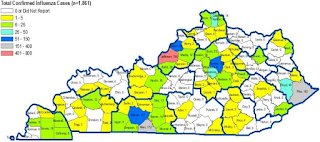
The latest weekly report from the state Department for Public Health shows that in the week ended Jan. 1, Kentucky counted 258 new flu cases. The state has recorded 1,861 cases this season and not reported any flu-related deaths. 

Most lab-confirmed flu cases continue to be in people between 1 and 30, with the highest rate among those 11 to 20. 

Health officials continue to encourage everyone six months and older to get a flu shot, because it's the best defense in fighting the flu. 

It's also important to  remember that it takes about two weeks after vaccination for antibodies to develop in the body to provide protection against the flu virus, which is why it's important to get vaccinated before the virus starts to spread in your community. 

A 2021 National Foundation for Infectious Diseases survey, of 1,126 adults last August found that the top reason they cited for not getting a flu shot was that they thought it doesn't work very well. 

Effectiveness of the flu vaccine varies from year to year depending on whether the circulating strain of the virus is a good "good match" with the composition of the flu vaccine, but the Centers for Disease Control and Prevention says it's still important to a shot each year because it prevents millions of illnesses and studies show it reduces severity of illness and reduces the risk of being hospitalized. 

Survey respondents also said they would not get a flu shot because they never get the flu; had concerns about side effects; did not think the flu caused serious illness; and worried about getting flu from the vaccine. 

"A flu vaccine cannot cause flu illness," says the CDC. That's because the vaccines are either made with an inactivated, non-infectious virus or with proteins from a flu virus.

Side effects from a flu vaccine are usually mild and short, and include soreness or redness at the injection site, mild headache, fever, muscle aches, nausea and fatigue. 

Influenza is worse. It may cause bad cold-like symptoms, like sore throat, runny nose, sneezing, hoarseness, and cough. But it can also lead to more serious illness and even death. 

State Department for Public Health map; click to enlarge
The CDC's 2021-22 preliminary in-season flu burden estimates, which run from Oct. 1 through Jan. 8, show that the U.S. has had between 16,000 and 33,000 flu hospitalizations and between 970 and 2,900 flu deaths.

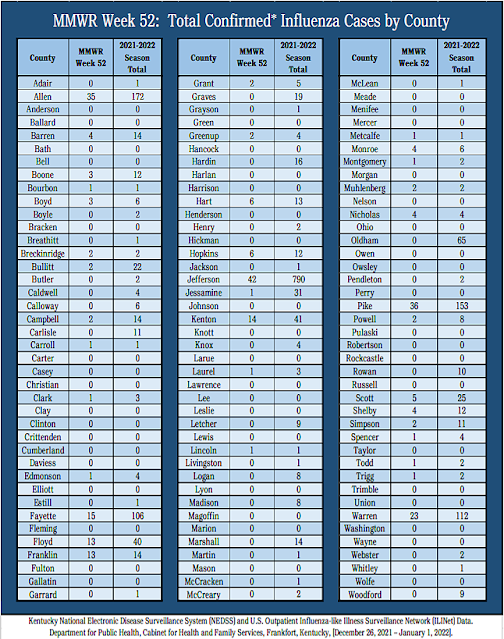
Jefferson County, Kentucky's most populous, typically has the most new cases each week. It reported 42 in the week ended Jan. 1. Other counties with significant numbers of cases that week were Pike, 36; Allen, 35; Warren, 23; Fayette, 15; Kenton, 14; Floyd, 13; and Franklin, 13. 

The flu is considered to be widespread in Kentucky, a classification that is applied when increases in flu cases have been confirmed in at least half of the state's 16 regions. In the week ended Jan. 1, the flu had been detected in 12 of the state's 16 regions. Flu season runs through May.
State table via Morbidity and Mortality Weekly Report from the CDC