Events, trends, issues, ideas and independent journalism about health care and health in Kentucky, from the Institute for Rural Journalism at the University of Kentucky
Wednesday, July 17, 2024
As part of resetting its relationship with rural hospitals, UK will not build a new hospital at interstate junction in southeast Lexington
Monday, July 8, 2024
Coleman reappoints two members to state opioid commission
Attorney General Russell Coleman has reappointed two members to the state opioid commission, thus not changing the balance of votes on the issue of syringe-exchange programs, which he says he opposes.
Those members are Jason Roop, an assistant professor of business and theology at Campbellsville University, who represents victims of the opioid crisis, and Van Ingram, who works for Gov. Andy Beshear as executive director of the Kentucky Office of Drug Control Policy and fills a slot representing the drug treatment and prevention community. Each of their terms expires in 2026.
The Kentucky Opioid Abatement Advisory Commission has nine voting and two non-voting members. The legislature created the commission in 2021 to distribute the state's portion of the $900 million in settlements with opioid manufacturers and distributors, with half of the money going to the state and the other half going to local governments.
The money is provided in installments and so far, the state has awarded 110 grants worth more than $55 million for treatment, prevention and recovery.
![]() |
| Attorney General Russell Coleman |
In passing, Evans said Coleman doesn't support the exchanges. Coleman, a Republican who was elected in November, later said that was especially the case for programs that are not limited to one-for-one exchanges. His spokesman said Coleman would not base commission appointments on the issue.
As of February, 41 Kentucky counties had syringe-exchange programs that operate under a one-to-one rule and 24 counties have needs-based exchanges, according to the state Department for Public Health. It estimates that the overall return rate of syringes is 85% to 90%.
Syringe exchanges are supported by research. The Centers for Disease Control and Prevention says injection drug users who have access to exchanges are five times more likely to get treatment than those who don’t. Another study says the exchanges do not encourage drug use or increase the frequency of drug use among current users.
Exchanges were authorized by the state's 2015 anti-heroin law, in an effort to thwart the spread of HIV and hepatitis C, which are commonly spread by the sharing of needles among intravenous drug users.
They also work to reduce overdose deaths by distributing naloxone; reduce medical harms such as skin, blood stream, and heart valve infections that severely injure substance users and incur large health care costs for society; and connect substance users to treatment and recovery supports in order to achieve sustained abstinence.
Patricia Freeman, a University of Kentucky pharmacy professor, has also been reappointed to the commission – by UK as a representative of the HEALing Communities study team, which is working on reducing drug-overdose deaths. Her term will expire in 2026.
Two new non-voting members have also been appointed. State Rep. Chris Fugate, R-Chavies (Perry County), was appointed by House Speaker David Osborne to replace retiring Rep. Danny Bentley, R-Russell. Karen Kelly, chief of staff to U.S. Rep. Hal Rogers, R-5th District, was appointed by Senate President Robert Stivers to replace Carlos Cameron.
Other members of the commission are Republican state Treasurer Mark Metcalf, who also passed on the Boyle County vote; Cabinet for Health and Family Services Secretary Eric Friedlander, who works for Beshear; Von Purdy, a vice president of Simmons College in Louisville, representing citizens at large; Darren "Foot" Allen, a retired state trooper, representing law enforcement; and Karen Butcher, representing citizens at large.
Tuesday, July 2, 2024
Recovering alcoholic built Kentucky's largest substance-use treatment provider, which has 1,800 beds and 1,350 employees
![]() |
| Map from Addiction Recovery Care website, via Kentucky Lantern, adapted by Ky. Health News |
Kentucky Lantern
LOUISA, Ky. — Around the office at Addiction Recovery Care, Vanessa Keeton is still known as “Client One” — marking her status as the first client of the first recovery center ARC opened as a group home in Lawrence County.
But her official title is vice president of marketing, where she has worked since 2012, a little more than a year after she entered the program known as Karen’s House — choosing it over jail for a string of drug and alcohol-related offenses.
![]() |
| Vanessa Keeton (Lantern photo by Matthew Mueller) |
ARC, too, has changed dramatically since it started as a treatment home for women run by volunteers, based largely on Bible study and prayer.
It now operates as a for-profit company paid $130 million last year by Medicaid, the federal-state health plan which in 2014 expanded access to addiction treatment, or substance-use disorder, as it’s now known.
Gov. Andy Beshear has praised ARC for helping Kentucky — ravaged in recent years by addiction and overdose deaths — become the state with the most treatment beds per resident in the nation, according to an East Tennessee State University study.
“With the help of organizations like ARC, we are working to build a safer, healthier commonwealth for our people,” Beshear said, speaking at an ARC ribbon-cutting for a new facility in March.
Owned by founder and CEO Tim Robinson and his wife, Lelia, the company provides the couple an annual income of about $533,400, according to a 2022 tax-filing by Odyssey Inc., a non-profit affiliated with ARC.
![]() |
| Tim Robinson (Lantern photo by Matthew Mueller) |
“We took a lot of risks,” said Robinson, 48, a lawyer and recovered alcoholic who says he has been sober since 2006 — two years before he started building the faith-based treatment business that would become ARC. “I’m living the American dream. I’m doing better than I ever thought I could be doing financially.”
Kentucky’s largest provider
The fast-growing company is by far the state’s largest substance-use treatment provider, with 1,800 residential beds in 24 Kentucky counties, and reaches hundreds more clients through outpatient services. ARC, which estimates it provides 75% of treatment beds in Kentucky, also is planning programs in Ohio and Virginia.
Earlier this year, ARC opened a 40-bed behavioral health unit with plans to expand to 300 at the former Our Lady of Bellefonte Hospital in Ashland, which closed in 2020. In 2020, ARC opened its largest center — with a capacity for 700 — on the campus of St. Catharine College in Springfield, which closed in 2016.
ARC is no longer simply a treatment organization, said Matt Brown, a former ARC client who overcame addiction and now serves as ARC’s chief administrative officer and president of ARC Healthcare. “We view ourselves as a behavioral health system,” Brown said.
While Christian faith remains at the heart of its mission, ARC relies on professional therapists, medical specialists including nurses and doctors, a structured treatment program and medication such as Suboxone to reduce the cravings of some patients for drugs and help them maintain sobriety, Robinson said.
Its religious component — which includes tracking how many clients decide “to follow Christ” (1,320 in 2023) — is strictly voluntary, according to Robinson, who said he was able to get sober in 2006 with the help of a local pastor and friend who “led me to the Lord.”
More importantly, he said, is that the number of clients who agree to stay in long-term treatment up to six months has increased steadily, which he thinks is the best indicator of effectiveness of the program.
Medicaid, which funds the majority of substance treatment, doesn’t require programs to measure outcomes.
But ARC measures its own outcomes, which it reports to Medicaid quarterly, Robinson said. That includes a retention rate of around 70% of its clients in treatment for up to six months and even longer through periodic contact with a case manager.
“I’ve been in this a long time,” Robinson said. “Long-term residential treatment is the reason people recover.”
As an indicator of success in addressing addiction, the Beshear administration points to the decline, for the second year in a row, of overdose deaths in Kentucky.
The state’s latest overdose report, released in June, shows a decrease in deaths to 1,984 from 2,200 the year before, a decline of 9.8%.
Last year, ARC received about $130 million in payments from Kentucky’s Medicaid program — more than double the amount of its closest competitor, Spero Health, a Nashville- based company that received $60 million in Kentucky Medicaid funds in 2023, according to the Cabinet for Health and Family Services, which licenses and oversees treatment facilities and Medicaid.
ARC accepts private insurance, but Robinson and Brown said almost all of the company’s revenue is from Medicaid, since their clients generally have lost jobs and any health insurance because of addiction.
The state spent $1.2 billion on substance-use-disorder services in the fiscal year that ended June 30, 2023, with most funds coming from the federal government, according to the cabinet.
Robinson, a former county prosecutor who started his business from a home office in Louisa, has emerged as a major political donor and well-connected business leader who recently joined the Kentucky Chamber of Commerce board.
Beshear singled out Robinson for recognition in his State of the Commonwealth speech in January, calling him “an essential partner in our fight against addiction.”
Robinson, a lifelong Republican, is effusive in praise for Beshear, a Democrat, in part because of the governor’s emphasis on addiction treatment and the governor’s frequent references to his own religious faith.
“I’ve never been for anybody like I’ve been for Andy Beshear,” Robinson said. “I hope he runs for president.”
‘Treatment on demand’
ARC employs 1,350 people, 500 at its headquarters in Louisa, population 2,600, perched above the forks of the Big Sandy River, across from West Virginia. The company is Lawrence County’s largest employer, even more than the school system.
About 40% of its workers are “graduates” of its treatment program, Robinson said, and most of its upper management — himself included — are in recovery from addiction.
ARC promises “treatment on demand,” and operates a 24-hour hotline people can call to identify help within 15 minutes, including transportation, if needed, to one of its centers. Last year it served more than 12,000 individuals from 119 of Kentucky’s 120 counties.
![]() |
| Tim Robinson in front of one of his buildings in downtown Louisa (Lantern photo by Deborah Yetter) |
It offers clients a chance to get certification toward a trade and get college credit for some training.
ARC owns a pharmacy used to provide medication to clients, a laboratory for medical testing and operates a health clinic in Louisa. Also, Tim and Lelia Robinson founded the private Millard School, a Christian academy in Louisa attended by some children of their employees.
Vanessa Keeton and her husband James live in Louisa and their son attends the Millard School. James, a 2011 ARC graduate, manages the Second Chance garage which repairs and restores vehicles for the public as well as maintaining an ARC fleet of about 200. “We restore cars and we restore lives,” he said.
ARC runs a sophisticated marketing program complete with a website, billboards, television and radio commercials, a social media presence, sponsorships and news releases, contracting with the Louisville-based public relations firm, RunSwitch. Scott Jennings, a CNN commentator and Republican political consultant, is one of RunSwitch’s founding partners. ARC spends about 4.5% of its revenue, or about $5.8 million a year on marketing.
Vanessa Keeton said the marketing is important to promote awareness of its services to those in need, “to meet people where you are.”
‘Dangerously brilliant’?
Some outsiders criticize ARC for its rapid growth, its size and Robinson’s political giving, including Mark La Palme, the founder and former CEO of Isaiah House, a treatment program based in Harrodsburg.
La Palme, now retired, said he worked with Robinson on a project in the mid-2000s but parted ways over disagreement with practices including designating clients as “interns” in ARC programs for low pay while in treatment, saving the company the cost of paying a regular employee.
He calls ARC “huge,” has called it a “bully” in a social media post and questions its rapid expansion. La Palme also questions the prolific giving of Robinson and ARC entities, which rank among the state’s major political contributors.
“It seems like you’re buying political influence,” he said.
But he acknowledges that Robinson has been highly effective in building ARC into the state’s largest treatment system: “He’s dangerously brilliant.”
Robinson said he considered La Palme a friend and colleague but they parted ways after a proposed collaboration fell through. Robinson said ARC’s programs meet all state standards, are accredited and the company works to provide high quality care.
He said internships are a way of introducing people to job skills they will need to succeed once they leave treatment and interns in various job training programs receive a paycheck either through ARC or an outside employer.
Robinson said he doesn’t apologize for political giving, seeing it as a way to support causes and politicians he believes in.
And he doesn’t think ARC is too big, saying that the company had to expand to remain viable within the constraints of Medicaid reimbursement, which pays for most of its clients. “We had to grow to survive,” he said.
The Robinson employees who spoke with Kentucky Lantern, including Brown, are highly enthusiastic about the boss.
Brown, trained as a physical therapist, battled addiction for 18 years before coming to ARC as a patient and remaining as an employee.
Robinson is “a visionary,” Brown said during a tour of ARC properties in Louisa, “He sees things in people before they see it in themselves.”
Robinson said he grew up in adjoining Martin County, in “the poorest part” of a poor county. His introduction to business came from his grandfather who owned a country store. “He put me on a pop carton to run the cash register,” he said. “Papaw taught me about business.”
Another boyhood business venture of Robinson’s — selling baseball cards — would provide a life-changing entrée into college and law school, when he was befriended by Inez banker and businessman Mike Duncan, a former Republican national chairman and mentor to many young people in Martin County.
Robinson said he and Duncan crossed paths when he began selling baseball cards to Duncan's son, Robert M. “Rob” Duncan, who was appointed U.S. attorney for Eastern Kentucky under Donald Trump. Duncan is now the top deputy to state Attorney General Russell Coleman.
Robinson said he considers both Duncans friends but remains closest to Mike Duncan, a trusted friend and adviser. He said Mike Duncan, showed interest in his boyhood baseball-card venture and became a mentor, encouraging Robinson to go to college — a prospect he hadn’t considered.
“Nobody in my family ever went to college,” Robinson said.
But with Duncan’s encouragement, Robinson graduated from the University of the Cumberlands in Williamsburg, earned a law degree from the University of Kentucky and was elected student body president at both institutions.
Good times and bad times
“He helped me through the good times and the bad times,” Robinson said.
Among the worst times: Robinson’s 2003 indictment for felony vote fraud while he was student body president at UK, after some 750 voter registration cards collected during a student government drive were never turned in. Apparently forgotten, they were later found in a student-government office, according to a 2003 Lexington Herald-Leader story.
“It was devastating,” Robinson said. “I thought my whole life was over.”
Instead, with the help of his lawyers, Robinson pleaded guilty to a lesser misdemeanor charge of failing to turn in the registration cards and paid $90 restitution. Robinson said he dropped out of law school during the legal case, but was readmitted and graduated.
But that ordeal, plus the death of his mother while he was at UK, “finished my mental health off,” Robinson said. He returned home to Eastern Kentucky to work but alcohol by then had a powerful hold on his life.
Back in Lawrence County, Robinson joined in law practice with a friend and became an assistant county attorney but by then said he had become a “raging alcoholic” though still somehow able to perform his job.
He would drink on weekends, come to work on Mondays hung over and avoid alcohol on days he had to be in court. Toward the end of the week, Robinson said, he’d resume drinking and stay drunk till the following Monday. “I was leading kind of a double life,” he said.
That continued until a deputy sheriff at the courthouse where Robinson worked intervened. The deputy, also a pastor and a recovering alcoholic, helped Robinson stop drinking through prayer and support — taking him with him to nightly events where he would preach and play Bluegrass music.
Though Robinson said he knew nothing about treatment or programs such as Alcoholics Anonymous, he decided he needed to expand services in the region that in the mid-2000s offered little.
“I was convinced God was calling me to stop practicing law and start a recovery center,” Robinson said.
So he did, leaving his law job and starting out of a home office on Nov. 3, 2008.
Robinson got help from Rev. Ralph Beiting, a Catholic priest who founded the Christian Appalachian Project. Together they opened a recovery house for women in Lawrence County called Karen’s House.
It was a makeshift operation run by volunteers with donated goods, including some old Army cots. Meanwhile, Robinson was taking men to the closest treatment center, Chad’s Hope in Clay County, getting occasional funding from Operation UNITE, launched in 2003 by U.S. Rep. Hal Rogers to help Kentucky battle rising addiction — in particular the tide of opioid pain pills engulfing the state.
But broke and discouraged, Robinson was close to quitting when he contacted a consultant who suggested he expand by opening a second recovery center for men. He located a site in Fleming County and in 2013, Belle Grove Springs was opened by the company that would become ARC.
Brown, now ARC’s chief administrative officer, was among the first clients admitted to the men’s center.
The following year, under the expansion authorized by the Patient Protection and Affordable Care Act, Medicaid began funding substance use disorder services and a reliable funding stream opened. Kentucky was among the first states to include addiction as a service covered by Medicaid.
While the income was welcome, it wasn’t enough to finance ARC’s operation and Robinson said the company’s only choice was to expand and recoup more money through a higher volume of clients. “People thought we were growing because we were booming but we had to grow to survive,” he said. “You cannot make it on a couple of small facilities.”
ARC didn’t show a positive cash flow until 2019, he said.
‘Take our time’
While ARC expansion has slowed, Robinson said the company is still looking at other opportunities, including expansion into Virginia, which has far fewer treatment beds than Kentucky. “We’re going to take our time,” he said.
ARC also was flagged in a budget item this year by the state General Assembly with a $12 million allocation over two years directed to the Life Learning Center in Covington, an organization aimed at helping people develop skills to improve their lives “through gainful employment.”
The budget line says the funds are to be distributed to the center to support “treatment, rehabilitation, and community reintegration in partnership with Odyssey Inc.,” the non-profit arm affiliated with ARC.
Robinson said he expects Odyssey to submit a proposal as treatment provider for a program the center plans to establish in Somerset.
And while his work has expanded statewide and beyond, Robinson said he’s committed to staying in Louisa and keeping his company headquartered there.
“I’m where I’m going to be,” he said. “This is my adopted hometown.”
Monday, July 1, 2024
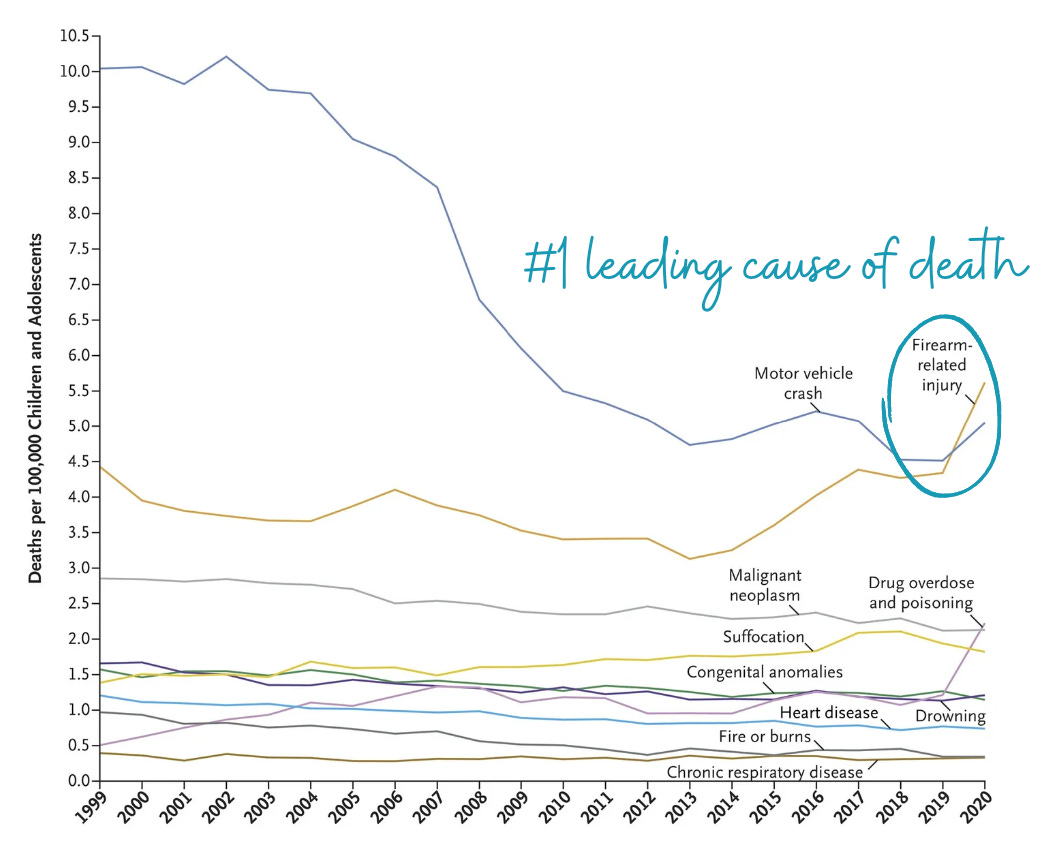
Your Local Epidemiologist says gun violence is public-health issue
![]() |
| Graph from New England Journal of Medicine; Annotated by Your Local Epidemiologist |
Your Local Epidemiologist
On June 24, U.S. Surgeon General Vivek Murthy declared gun violence a public-health crisis. Many narratives immediately pushed back that this isn’t public health’s lane.
Let me say this loud and clear: Gun violence is absolutely in the purview of public health. And until society accepts it as such, we will continue to lose tens of thousands of Americans annually, leaving behind massive ripples in the community. Thankfully, momentum is changing.
What is public health? It’s broader than you might think. Public health—also called population health—came into the limelight with Covid-19, but it’s much broader than a pandemic or infectious diseases. It is the science of protecting and improving the health of people and their communities.
Public health is everywhere—think seatbelts, non-smoking areas, vaccines, airbags, clean drinking water, cleaner indoor air, food security, and cancer prevention. Experts are in health departments, nonprofits, government agencies, academic institutions, and the private sector. That’s because public health is most effective when combining science, education, policy, advocacy, and innovation.
Epidemiology, one subset of public health, is charged with finding patterns: Who is impacted? What predicts certain health outcomes? Because if it’s predictable, it’s preventable.
Violence epidemiology was born out of a case study a few decades ago, which showed that clusters of cholera in Bangladesh mirrored clusters of gun violence in Chicago. This meant gun violence wasn’t random; certain factors predispose a person or community. The field has grown to study suicide, child abuse, domestic violence, and, yes, gun violence.
Gun violence patterns—who are being impacted, where, and why—have slowly emerged, providing hints about tangible and effective public health solutions. For example:
- Firearm injuries are the leading cause of death in children. It surpassed motor vehicle crashes in 2020 for the first time.
- 2 out of 5 homes have at least one firearm.
- 4.6 million kids live with unlocked, loaded gun.
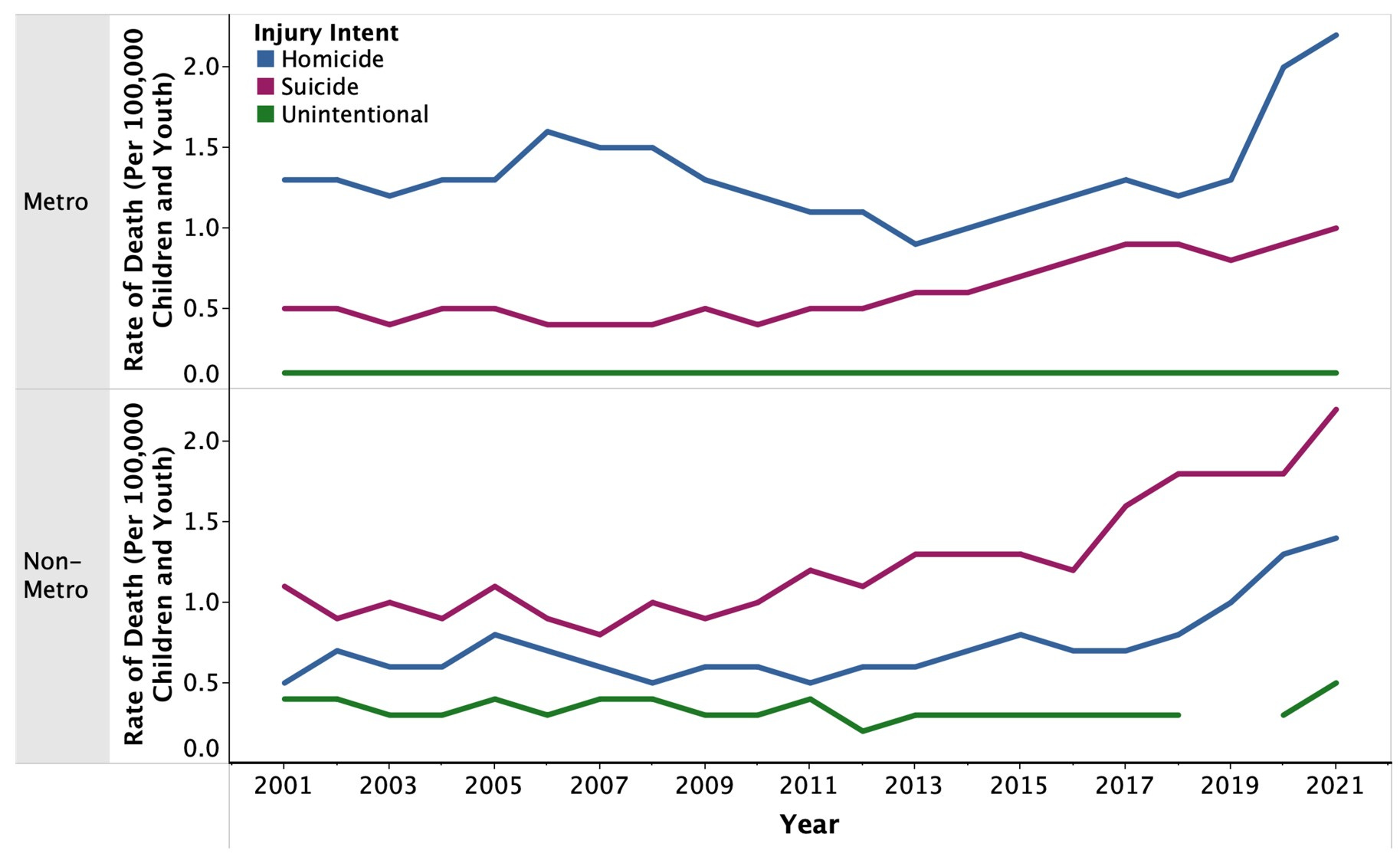
- 1 in 3 youth suicides and unintentional deaths can be prevented by securing guns.
- 8 out of 10 children that used a firearm say it belonged to a family member.
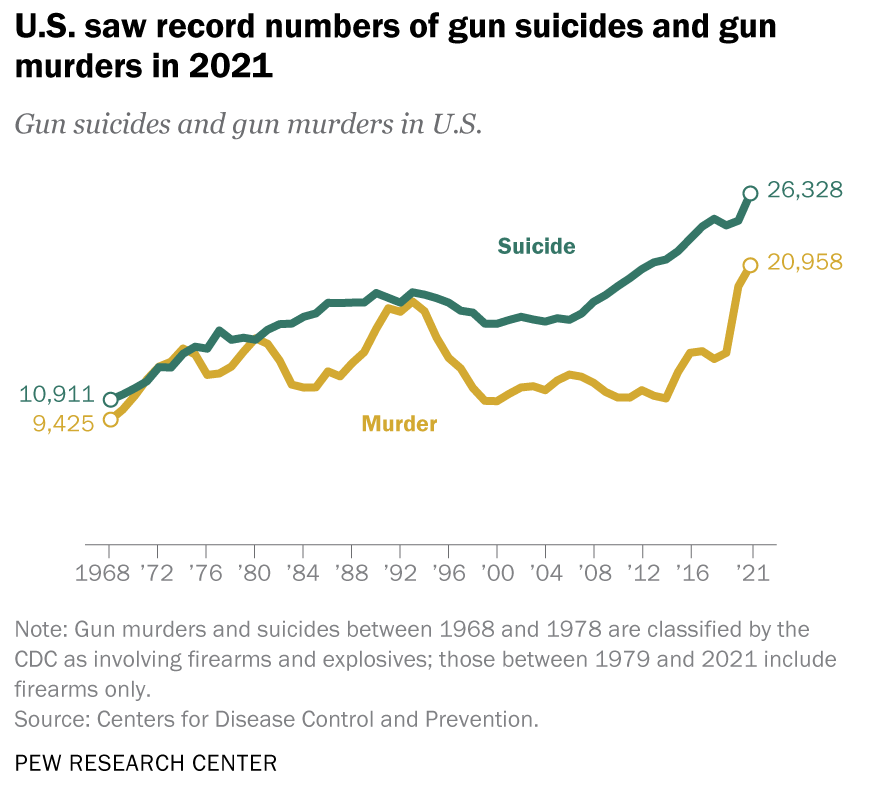
Suicides account for most gun deaths, followed by homicides. This is why some states have passed bipartisan legislation, like red-flag laws, to temporarily remove firearms from people who have been deemed a threat to themselves. It’s estimated one suicide is prevented for every 10–20 red flag orders issued.
Cause and risk are not uniform. Gun injuries and deaths differ by race/ethnicity, physical location, age, and many other factors. This suggests who and how we engage with matters to make an impact.
There are ripple effects. A single neighborhood murder can impact as many as 200 people in a community. Randomized control studies have shown that community-level interventions, like replacing vacant spaces with green spaces, break cycles of violence.
Finding answers has been a slow crawl. Although we’ve found some patterns, we’ve only scraped the surface. Progress has been plagued by an unfortunate series of events.
Rewind to 1993. A famous study published in the New England Journal of Medicine found that having a gun in the home increased the risk of homicide in the home. This set off a political domino effect, and three years later, Congress inserted the Dickey Amendment into the CDC spending bill. The provision stated, “None of the funds made available for injury prevention and control at the Centers for Disease Control and Prevention may be used to advocate or promote gun control.” The language was unclear; the epidemiologist on the 1993 study famously said, “Precisely what was or was not permitted under the clause was unclear. However, no federal employee was willing to risk his or her career or the agency's funding to find out. Extramural support for firearm injury-prevention research quickly dried up.”
This set gun violence research back decades, as it was completely reliant on nonprofits and philanthropy support. This is helpful but not enough to match the scope of the problem.
- Engagement from the bottom up. A plethora of public-health experts have partnered with groups directly impacted by gun violence. For example, working with gun owners and gun ranges to curb suicide or communities (see Cure Violence) to build solutions.
- Funding for research. In 2020 —for the first time in 25 years—our federal budget included $25 million for the CDC and NIH to research reducing gun-related deaths and injuries. This is a start, but to be clear, it’s estimated that we need $1.4 billion to curb this epidemic. (For context, NIH gets $6.56 billion allocated for cancer research.)
- State and federal initiatives. For example, the Office for Violence Prevention was established in 2023 to focus on key legislative actions. You may be surprised to hear that many policies have bipartisan support. Earlier this month, the office hosted 160 hospital executives and leaders to discuss the importance of using health system data to better understand patterns.
Saturday, June 22, 2024
FDA OKs menthol e-cigs made by firm Altria recently bought, thus supporting its smoking-cessation claims; health advocates object
Associated Press
The Food and Drug Administration on Friday authorized the first menthol-flavored electronic cigarettes for adult smokers, acknowledging that vaping flavors can reduce the harms of traditional tobacco smoking.
![]() |
| Njoy menthol product |
The decision lends new credibility to vaping companies’ longstanding claim that their products can help blunt the toll of smoking, which is blamed for 480,000 U.S. deaths annually due to cancer, lung disease and heart disease. E-cigarettes have been sold in the U.S. since 2007 but in recent years their potential benefits for smokers have been overshadowed by their use by adolescents and teens.
Parents and anti-tobacco groups immediately criticized the decision, which follows years of advocacy efforts to keep menthol and other flavors that can appeal to teens off the market.
“This decision could mean we’ll never be able to close the Pandora’s box of the youth vaping epidemic,” said Meredith Berkman, co-founder of Parents Against Vaping E-cigarettes. “FDA has once again failed American families by allowing a predatory industry to source its next generation of lifetime customers — America’s children."
Youth vaping has declined from all-time highs in recent years, with about 10% of high schoolers reporting e-cigarette use last year. Of those who vaped, 90% used flavors, including menthol.
In Kentucky polling in 2021, 45% of high-school students said they had used an electronic vapor product, 22% were current users, 8% were frequent users, and 7% used the products daily. Among Kentucky middle-school students, 24% said they had used an electronic vapor product, 11% said they were current users, nearly 3% said they were frequent users, and 2% said they used daily.
All the e-cigarettes previously authorized by the FDA have been tobacco, which isn't widely used by young people who vape.
Njoy is one of only three companies that previously received FDA's OK for vaping products. Two of the four FDA-approved products are "sealed, pre-filled, non-refillable pods that are used with a previously authorized Njoy device, and two are disposable e-cigarettes with a prefilled, non-refillable e-liquid reservoir," reports Jessica Karins reports of Inside Health Policy.
Most teens who vape use disposable e-cigarettes, including brands like Elf Bar, which come in flavors such as watermelon and blueberry ice.
Altria's data showed Njoy e-cigarettes helped smokers reduce their exposure to the harmful chemicals in traditional cigarettes, the FDA said. The agency stressed the products are neither safe nor “FDA approved,” and that people who don’t smoke shouldn’t use them.
Friday’s action is part of a sweeping FDA review intended to bring scientific scrutiny to the multibillion-dollar vaping market after years of regulatory delays. The U.S. market includes thousands of fruit- and candy-flavored vapes that are technically illegal but are widely available in convenience stores, gas stations and vape shops.
The FDA faced a self-imposed court deadline at the end of this month to wrap up its yearslong review of major vaping brands, including Juul and Vuse.
Those brands have been sold in the U.S. for years, awaiting FDA action on their scientific applications. To stay on the market, companies must show that their e-cigarettes provide an overall health benefit for smokers, without significantly appealing to kids.
“Based upon our rigorous scientific review, in this instance, the strength of evidence of benefits to adult smokers from completely switching to a less harmful product was sufficient to outweigh the risks to youth,” said Matthew Farrelly of FDA’s Center for Tobacco Products.
Richmond-based Altria previously took a $13 billion stake in Juul in 2018, when the brand controlled most of the U.S. vaping market. But Juul's value plummeted after it was hit with lawsuits and investigations over its role in sparking a national spike in underage vaping.
American Lung Association CEO Harold Wimmer wrote, “The tobacco industry has been using menthol and other flavors to attract kids for decades - this opens up a legal pathway for Njoy to market their highly addictive products.”
Lisa Lacasse, president of the American Cancer Society Cancer Action Network, noted that the move comes less than two months after the Biden adminisration announced an indefinite delay in FDA’s proposed rule to ban menthol cigarettes and flavored cigars, which had bene pending for two years.
Under the FDA rule, Njoy may not "use most advertising methods," and ads "cannot include cartoon images, images of food or fruit, or depictions of people who appear to be younger than 45," Karins reports. "Retailers must place Njoy products only in non-self-service areas of stores."
Friday, April 26, 2024
Biden administration indefinitely postpones ban on menthol cigarettes amid election-year pushback from Black voters, others
By Matthew Perrone and Zeke Miller
President Joe Biden’s administration is indefinitely delaying a long-awaited menthol cigarette ban, a decision that infuriated anti-smoking advocates but could avoid a political backlash from Black voters in November.
In a statement Friday, Biden’s top health official gave no timeline for issuing the rule, saying only that the administration would take more time to consider feedback, including from civil rights groups.
“It’s clear that there are still more conversations to have, and that will take significantly more time,” Health and Human Services Secretary Xavier Becerra said in a statement.
The White House has held dozens of meetings in recent months with groups opposing the ban, including civil-rights organizers, law-enforcement officials and small business owners. Most of the groups have financial ties to cigarette companies.
The announcement is another setback for Food and Drug Administration officials, who drafted the ban and predicted it would prevent hundreds of thousands of smoking-related deaths over 40 years. The agency has worked toward banning menthol across multiple administrations without finalizing a rule.
“This decision prioritizes politics over lives, especially Black lives,” said Yolonda Richardson of the Campaign for Tobacco-Free Kids, in an emailed statement. “It is especially disturbing to see the administration parrot the false claims of the tobacco industry about support from the civil rights community.”
Richardson noted that the ban is supported by groups including the NAACP and the Congressional Black Caucus.
Previous FDA efforts on menthol have been derailed by tobacco industry pushback or competing political priorities. With both Biden and former President Donald Trump vying for the support of Black voters, the ban’s potential impact has been scrutinized by Republicans and Democrats heading into the fall election.
Anti-smoking advocates have been pushing the FDA to eliminate the flavor since the agency gained authority to regulate certain tobacco ingredients in 2009. Menthol is the only cigarette flavor that wasn’t banned under that law, a carveout negotiated by industry allies in Congress. But the law instructed the FDA to continue studying the issue.
More than 11% of U.S. adults smoke, with rates roughly even between white and Black people, but about 80% of Black smokers smoke menthol, which the FDA says masks the harshness of smoke, making it easier to start and harder to quit. Also, most teenagers who smoke cigarettes prefer menthols.
For decades, cigarette companies focused menthol advertising and promotions in Black communities, sponsoring music festivals and neighborhood events. Industry documents released in litigation show companies viewed menthol cigarettes as a good “starter product” because they were more palatable to teens.
The FDA released its draft of the proposed ban in 2022. Officials under Biden initially targeted last August to finalize the rule. Late last year, White House officials said they would take until March to review the measure. When that deadline passed last month, several anti-smoking groups filed a lawsuit to force its release.
“We are disappointed with the action of the Biden administration, which has caved in to the scare tactics of the tobacco industry,” said Dr. Mark Mitchell of the National Medical Association, an African American physician group that is suing the administration.
Separately, Rev. Al Sharpton and other civil rights leaders have warned that a menthol ban would create an illegal market for the cigarettes in Black communities and invite more confrontations with police.
The FDA and health advocates have long rejected such concerns, noting FDA’s enforcement of the rule would only apply to companies that make or sell cigarettes, not to individuals.
An FDA spokesperson said Friday the agency is still committed to banning menthol cigarettes. “As we’ve made clear, these product standards remain at the top of our priorities,” Jim McKinney said in a statement.
Smoking can cause cancer, strokes and heart attacks and is blamed for 480,000 deaths each year in the U.S., including 45,000 among Black Americans.
The Associated Press Health and Science Department receives support from the Howard Hughes Medical Institute’s Science and Educational Media Group. The AP is solely responsible for all content.
Tuesday, April 2, 2024
Republicans talk about making Obamacare better, not repealing it, so it is 'becoming a politically untouchable part' of the safety net
![]() |
| Washington Post graph from Kaiser Family Foundation polling data |
Nationally, "More than 45 million people now rely on the ACA and its provisions for health coverage, according to a federal report released last week, and the law’s protections for people who have pre-existing conditions have transformed many Americans’ experience of health care. Yet for nearly a decade, Republicans like Trump successfully ran on pledges to 'repeal Obamacare' — and Democrats sometimes ran from it, scarred by the law’s bumpy rollout, the constant political attacks and the struggle to communicate its benefits," Diamond notes. "But when Trump and his Republican allies nearly repealed the ACA — falling one senator short in July 2017 — it sparked passionate efforts to defend it and catalyzed new, long-lasting support."
| As Sen. Mitch McConnell watched, Sen. John McCain turned thumbs down and voted "no" on the bill. |
Wednesday, March 13, 2024
Contrary to Trump's musings, McConnell says efforts to repeal the 2010 Patient Protection and Affordable Care Act are 'largely over'
Obamacare, now into its second decade, is pretty much here to stay.
So says Senate Republican Leader Mitch McConnell of Kentucky, contradicting former President Trump’s comments that he is still looking at ways to repeal and replace the 2010 law.
“We had a fight over that a few years ago,” McConnell told reporters Tuesday, referring to how Republicans fell short of doing that in 2017 because a few of them opposed the reversal.
“If he can develop a base for revisiting that issue, obviously we’d take a look at it, but it seems to me that’s largely over,” McConnell said of the repeal-and-replace effort, which never had a replacement measure.
McConnell's statement "gave voice to the view shared by many Republican senators that the Affordable Care Act, also known as Obamacare, will be the law of the land for the foreseeable future," writes Alexander Bolton of The Hill.
McConnell endorsed Trump last week, despite their serious differences over more than three years. He said Tuesday, “I’m going to leave the issue development in the presidential campaign up to the campaign.”
Trump said he is “seriously looking at alternatives” if he is elected and Republicans keep control of the House and regain control of the Senate.
“The cost of Obamacare is out of control, plus, it’s not good Healthcare. I’m seriously looking at alternatives,” Trump wrote on his Truth Social site last year. “We had a couple of Republican senators who campaigned for six years against it, and then raised their hands not to terminate it. It was a low point for the Republican Party, but we should never give up!”
Trump exaggerated or misstated the campaign positions of Sens. Susan Collins (R-Maine), Lisa Murkowski (R-Alaska) and the late Sen. John McCain (R-Ariz.), who "voted with Democrats to defeat a narrowed-down proposal to repeal the Affordable Care Act without putting a new health care subsidy program into effect," Bolton notes.
President Biden defended the law during last week's State of the Union speech.
“Over 100 million of you can no longer be denied health insurance because of a preexisting conditions. But my predecessor and many in this chamber want to take — the prescription drug away by repealing the Affordable Care Act. I’m not going to let that happen. We stopped you 50 times before, and we’ll stop you again.”
The main impact of the law in Kentucky has been the expansion of Medicaid to households with annual incomes up to 138 percent of the federal poverty threshold. In February, 1.56 million Kentuckians, more than a third of the state's population, were enrolled in the federal-state program. For details, with county-by-county numbers, go to https://www.chfs.ky.gov/agencies/dms/stats/KYDWMMCC20240215.pdf.
Monday, March 11, 2024
Poll: 12% of U.S. voters say abortion is their top voting issue
About one in eight voters said in a national poll last month that abortion will be the most important issue influencing their votes this year, and most opposed the 16-week abortion ban that former president Donald Trump has reportedly discussed endorsing.
Most voters who say abortion is the most important issue to their vote say abortion should be legal in all cases. "This is a significant shift from elections prior to the Supreme Court’s decision to overturn Roe v. Wade, when abortion voters were largely those who identified as pro-life," says the Kaiser Family Foundation, which sponsored the poll.
The national poll found Americans largely supportive of abortion rights. Examples include:
- 66% support a federal guarantee of abortion rights.
- 86% of adults, including large majorities of Democrats, independents, and Republicans, said they would allow abortion in pregnancy-related emergencies such as miscarriages.
- More tahn 60% oppose making it a crime for health-care providers to mail abortion pills to patients in states where abortion is prohibited, and policies that prohibit clinics that receive federal funds from providing abortions or referring patients to abortion providers.
"Many voters, especially Democrats, see the 2024 election as a high-stakes election for determining the future of access to abortion and contraception," the pollsters said. Half of voters say they think the elections for president, Congress, and state legislatures will have a 'major impact' on access to abortion." That view is driven by Democratic voters (about two-thirds) and those who say abortion is their most important voting issue (about 70%).
Tuesday, February 27, 2024
Bryan Hubbard, who wanted Ky. to help finance research into psychedelic for drug treatment, takes his cause to State of Ohio
![]() |
| Bryan Hubbard (Herald-Leader photo by Alex Acquisto) |
The man who wanted Kentucky to use some of its opioid-settlement money for research that could lead to legalizing a psychedelic drug to treat addiction, but lost his job when a new attorney general was elected last fall, is taking his cause to the State of Ohio.
"Bryan Hubbard, former executive director of the Kentucky Opioid Abatement Advisory Commission, has signed a contract with the State of Ohio," report Alex Acquisto and Austin Horn of the Lexington Herald-Leader. "His job: To help build public-private partnerships for potential projects 'related to the treatment of traumatic brain Injury, post-traumatic stress disorder and other related and unrelated mental-health and substance-use conditions,' according to a spokesperson in the office of Ohio Treasurer Robert Sprague. . . . Hubbard will be paid $45,000 for his independent contracting services, according to his contract, which was reviewed by the Herald-Leader."
Brittany Halpin, Prague’s press secretary, told the newspaper in an email, “In part, the work is set to assist the treasurer’s office with determining the feasibility of potential solutions with ResultsOhio and other pay-for-success models.” ResultsOhio uses public and private funding to address Ohio’s “most pressing social and public health challenges,” according to the treasurer’s website.
Hubbard told the Herald-Leader that as he works with the state to “deliver novel treatment access and research opportunities for veterans and opioid dependent individuals,” he is partnering with an Ohio-based foundation to “create the framework for ibogaine clinical trials in Ohio.”
Ibogaine is a psychedelic derived from the African iboga plant. It is illegal everywhere except Mexico and New Zealand and has been reported to reduce or eliminate drug-withdawal symptoms while posink risks to the heart. Hubbard wanted the Kentucky commission to spend $42 million, 5 percent of what the state had received in lawsuit settlements from drug makers and distributors, to help fund research that could lead to legalization of the drug as a treatment for addiction.
Hubbard's boss was then-Attorney General Daniel Cameron, who countenanced Hubbard's advocacy but did not endorse it outright as he ran for governor. He was succeeded by Russell Coleman, a former U.S. attorney who was not keen on ibogaine or Hubbard, and asked him to resign.
Hubbard told the Herald-Leader that he was “saddened that a lack of courage and vision from [Coleman] has deprived Kentucky of its opportunity to lead the nation in the development of ibogaine’s revolutionary therapeutic potentials. However, I am strongly encouraged that genuine leaders exist across the river to ensure that ibogaine’s promise has an opportunity to be fulfilled for all who may choose to seek it.” Coleman’s office did not respond to emailed questions from the Herald-Leader.
Hubbard is part of a broader ibogaine effort. Last week, the REID (Reaching Everyone in Distress) Foundation announced that he would “research and raise awareness for emerging therapies such as ibogaine as potential breakthrough treatments for PTSD and opioid addiction in Ohio.”
"The REID Foundation was created by Rex Elsass, who lost his son to addiction in 2019," the Herald-Leader reports. "Elsass is also one of the nation’s premier Republican operatives. In 2016, GQ magazine dubbed him “The Most Powerful Man in the GOP (And You’ve Never Heard Of Him).” His political media and consulting firm is called The Strategy Group. Elsass has been close to Kentucky Sen. Rand Paul, serving as a key adviser in Paul’s 2016 bid for president. As senator, Paul has spearheaded efforts into seeking alternative therapies to treat addiction. A donor with close connections to Paul, Jeff Yass, was the primary funder of outside groups" that helped Cameron's challenge to Democratic Gov. Andy Beshear. "Elsass’ political firm has performed work for those groups."
Yass’ investment firm "has some interest in biopharmaceutical companies with a focus on psychedelic addiction treatments like ibogaine," the Herald-Leader notes. "Elsass’ advocacy for ibogaine can be traced back to Hubbard’s time in Kentucky." He did that at an opioid-commission meeting, and "a former executive assistant at his political operation started a group called the Kentucky Ibogaine Initiative. Elsass and the current president of The Strategy Group, Ryan Rodgers, are still listed as directors" with the Kentucky secretary of state.
Wednesday, January 31, 2024
House has passed Guthrie's bills to increase health-care price transparency, allow inmates to file for Medicaid before release
![]() |
| U.S. Rep. Brett Guthrie (BG Daily News photo by Jack Dobbs) |
“We want to engage these big employer groups so that they can drive the market to get control of the cost, because the costs keep getting passed on to the point where it's just unsustainable,” Guthrie said.
Dobbs writes, "The act would also require any rebates be returned to a patient rather than absorbed by an insurance company’s profit. Guthrie said this was a policy passed during the Trump administration but undone through the Inflation Reduction Act.
The House has also sent to the Senate a Guthrie-sponsored reauthorization of the SUPPORT (Substance Use-Disorder Prevention that Promotes Opioid Recovery and Treatment) for Patients and Communities Act. The current law was passed in 2018.
The reauthorization bill would allow inmates to pre-file for Medicaid benefits when they know their release date. “So on day one, they qualify for Medicaid when they walk out of the jail and can go right into a treatment program,” Guthrie said.
"Guthrie said he wants to see more continuing services readily offered, such as sober living facilities or halfway houses, to remove people with addictions from environments that put them at risk," Dobbs reports. "He added that employment training adds another layer to treatment by removing individuals from harm and encouraging stability. It’s a win-win both for those in recovery and businesses needing employees, Guthrie said."
The reauthorization bill would also put on the federal controlled-substances list Xylazine, an animal sedative that is known as "Tranq" and sometimes mixed with drugs like fentanyl for illicit use. "Guthrie said Xylazine is particularly dangerous because Narcan can not revive someone who has overdosed on it," Dobbs reports.
“There are experts saying 250,000 people in five to seven states are going to determine who the next president is,” Guthrie told Dobbs. “I think Republicans need to get together and know that that we offer a better solution than where we are today.”
Wednesday, January 24, 2024
Lt. Gov. Coleman reflects on her preventive double mastectomy
![]() |
| Lt.Gov. Jacqueline Coleman (KL photo by Sarah Ladd) |
Kentucky Lantern
Kentucky Lt. Gov. Jacqueline Coleman knew for a long time that one day she might learn cancer was at her door.
Her family history put her on heightened alert; her mother, aunt and cousin all had breast cancer. So she “wasn’t shocked” when, in September, a routine mammogram — her first — concerned her health-care provider.
She went for more tests, including magnetic resonance imaging and biopsy. After the biopsy she learned she needed surgery, either way. Her doctors were concerned about several areas in her breasts, and she was facing “biopsy and remove, biopsy and remove, times four.”
She knew immediately: “I don’t want to live like that.” Without the mastectomy, she faced “scans and screens and biopsies every six months for the rest of my life.”
“In a way, it was almost like I was waiting for this news,” she told the Kentucky Lantern during a sit-down interview in her Capitol office on Jan. 23. She would eventually undergo a double mastectomy on Dec. 18.
But as she wrapped up the last leg of a statewide re-election campaign with Gov. Andy Beshear, Coleman found herself in medical limbo. Screenings and tests defined her personal October and November, even as she debated her opponent on KET, traveled the state meeting voters and celebrating on election night.
“I’m going through the end of a campaign, which is … the most intense time, and I have all these questions,” she said. “And it was really hard to not know what was going to happen.”
The tests “just kind of get a little bit more invasive each time,” said Coleman, 41. “And of course, it takes time to … do the test, to have them read, to schedule the next one. It’s a frustrating process because you have more questions than answers, it seems, the entire time. But you’re also grateful that your doctors are being so thorough, and making sure to cover all the bases.”
In early December, Coleman was “relieved” to learn she could get a double mastectomy at Baptist Health in Lexington.
“I felt it would be irresponsible to have a three-year-old, and to not be as aggressive as I could be,” she said.
Coleman did not have cancer, but she didn’t know that until after her surgery, when her pathology results came back clean. “The one place that was a great concern came back benign, but had malignant potential,” she said. “And so I felt like I got ahead of it. And I feel like I made the right decision.”
Coleman says she's “not the best person about going to the doctor,” but “I also know that being preventative gives you a chance.”
“When you’re reactive, you’re at the mercy of … It could be a disease,” she said.
Still, medical issues wait for no one.
“You’re fighting for your life, and you still have to pick the kids up, and you still have to go to the grocery, and you still have to go to work,” Coleman said. “The world doesn’t stop.”
If anything, she said, the whole experience left her with less patience for what she called “petty politics.”
“There are real problems in the world,” she said. “I think about the importance of women being empowered to protect their own health, to be trusted.”
Not alone
“It was a message of: ‘You’re not alone’,” she said. “But it was also a message of reassurance. And it was remarkable.”
Coleman said she finally feels like herself again, and is looking forward to getting back out in communities across Kentucky. And she plans to keep using her story to encourage others to seek preventive care — and to know there is a community of Kentuckians who relate to their journeys.
“I know how alone I felt when I got the news and when I tried to find my way and what was the right path for me,” she said. “And I don’t want other women to feel that way.”
Friday, January 19, 2024
Bipartisan 'momnibus' bill aims to improve health of mothers, kids
![]() |
| State Rep. Kim Moser, a Republican from Taylor Mill in Northern Kentucky, spoke with other female legislators at a press conference Wednesday to announce their "Momnibus" bill. (Legislative photo) |
"Addressing Kentucky's high maternal mortality rate and saving mothers and babies is obviously a priority for all of us," Moser said at a Wednesday press conference. Kentucky had the nation's sixth highest maternal death rate, 38.4 deaths per 100,000 live births, from 2018 through 2021. The national rate for that period was 23.5 per 100,000.
Moser, a mother of five who was a neonatal intensive-care nurse, spoke from her own experiences: “I’ve really worked with mothers and babies and sick newborns, in their newborn phase, oftentimes through their first year, and I was able to really see some of the reasons for poor health disparities, especially in our poor areas of our state.”
Citing the advocacy group Every Mother Counts, Moser said “The leading causes of maternal death in the U.S. [are] lack of access to health care, including a shortage of caregivers, a lack of insurance, inadequate postpartum supports and certainly socioeconomic disparities, including the stress of racism and discrimination.” In Kentucky, she added, the risks are greater because of the prevalence of heart disease and diabetes.
HB 10 would:
- Add pregnancy to the list of "qualifying life events" that allow people to get health-insurance coverage outside normal enrolment, which could encourage more prenatal care.
- Create the Lifeline for Moms Psychiatry Access Program, for which Kentucky has received a $750,000 grant. Moser said she will also ask for an appropriation in the state budget “to make sure that’s a sustainable program.” It would be required to operate a hotline from 8 a.m. to 5 p.m. Mondays through Fridays.
- Expand the HANDS (Health Access Nurturing Development Services) home-visitation program for new and expectant parents to include breastfeeding counseling and assistance, education on safe sleep, as well as expanding the program to include telehealth, which Moser said she believes will help “reach moms in underserved areas or areas where she may have a transportation issue.”
- Require the Cabinet for Health and Family Services to study and make recommendations about the role of doulas, who provide assistance with the birth experience.
- Strengthen an advisory council that provides policy guidance to increase collaboration, improve data collection, and suggest additional improvements.
Some Kentucky Republican legislators began paying more attention to such issues after the U.S. Supreme Court eliminated the federal right to abortion, activating a state "trigger law" that bans abortion except to save the mother's life or prevent permnent damage to a life-sustaining organ.
"The wide gulf between abortion-rights and anti-abortion lawmakers was felt when Moser invited Addia Wuchner, executive director of the Kentucky Right to Life Association, to speak at the end of the press conference," reports Rebecca Grapevine of the Courier Journal. "That prompted most of the assembled Democratic lawmakers . . . to quietly walk out of the room."
![]() |
| State Rep. Sarah Stalker |
Information for this story was also provided by the Kentucky Lantern.