Showing posts with label telehealth. Show all posts

Tuesday, July 16, 2024

Study to help reduce risk of heart disease and diabetes, to be done via Zoom, is looking for participants in 16 Kentucky counties

Kentucky Health News map
By Gia Mudd-Martin
University of Kentucky

Heart disease and Type 2 diabetes are often preventable, but Kentucky has the nation’s ninth-highest rate of heart disease and the fifth highest rate of diabetes. Plus, many Kentuckians have pre-diabetes but don’t know they have it.

A team of at the University of Kentucky is leading a health study called “Heart of the Family” to help people learn to reduce their risk for these illnesses, and the team is inviting participants to join.

What do participants get?  
  • “Heart of the Family” participants receive eight one-on-one, personalized health education sessions based on their risk factors and health. The sessions are over Zoom — no travel required.
  • Free screenings to check health measurements such as blood pressure and cholesterol; these can be done in your home community (team members can come to you) or at an off-campus UK office
  • Gift card for participation
Who can join? You may be eligible to participate if you are:
  • At least 18 years old
  • Do not have heart disease or diabetes
  • Live in one of these Kentucky counties: Anderson, Bourbon, Boyle, Casey, Clark, Franklin, Garrard, Harrison, Jessamine, Lincoln, Madison, Marion, Mercer, Pulaski, Scott, Woodford
  • Have two or more of these risk factors: family history of heart disease or diabetes; personal history of gestational diabetes or polycystic ovarian syndrome; little or no exercise; unhealthy diet; high blood pressure; high cholesterol; elevated blood sugar; stress; depression; overweight; cigarette smoker
Some participants will be invited to have a friend or family member join with them as a “study buddy,” so make sure you have someone willing to participate with you. They can participate even if they have diabetes or heart disease. Study buddies will receive the same benefits listed above.

What is required of participants? Participants should be willing to complete eight virtual health-education sessions, share health information with the study team, and have blood drawn. All your information will be kept completely confidential, just like in regular medical care.

How can I get involved? If you’re interested in learning more or joining, contact Emily Cravens at emcravens@uky.edu or 859-218-6827. Learn more about participating in research at UKClinicalResearch.com.

Wednesday, April 10, 2024

Guthrie warns making telehealth expansion permanent must be paid for; costs uncertain, but projected to be several billion dollars

Kentucky Health News

If telehealth services are to remain expanded as they were in the pandemic, Congress must offset the cost, U.S. Rep. Brett Guthrie of Bowling Green said in opening a House subcommittee hearing Wednesday.

“Virtually overnight, our health-care system underwent a significant transition,” said Guthrie, a Republican who represents the 2nd Congressional District and chairs the health subcommittee of the House Energy and Commerce Committee, according to a press release from the committee.

“Seniors were allowed to use telehealth across the country and could now access their health-care providers from the comfort of their home. Additionally, the number of health care services Medicare would cover if performed through telehealth increased from 118 to over 260.

“Restrictions such as requiring seniors to have an established pre-existing relationship with a health-care provider to receive mental health services through telehealth were waived. Allowing patients to consult with a provider through a simple audio-only phone call if an audio-visual connection wasn’t available.”

All those things were a big help to rural communities, Guthrie said, so Congress has extended them through Dec, 31. But he added that before they can be extended again or made permanent, some problems need to be addressed.

“I want to remind my colleagues that the previous extension was estimated by the Congressional Budget Office to increase costs to the Medicare program by over $2 billion,” Guthrie said. “Making these authorities permanent is likely to cost much more than a short-term extension, and we want to make sure that whatever we move out of committee is paid for and is delivering the best value for seniors. I think that this committee can work together, to move legislation making sure seniors have access to telehealth when they want it while also including appropriate program integrity measures, addressing the costs of such access to the program.”

Politico Pulse reports, “Generally, lawmakers seemed willing to accept higher costs to expand access to virtual care.” Rep. Cathy McMorris Rodgers (R-Wash.), chair of the full committee, said extending telehealth rules would be a “significant investment” but “We can’t afford to go backwards.” Pulse notes, "Harvard researcher Ateev Mehrotra told lawmakers that expanded telehealth is associated with a 'modest' increase in spending but also improved outcomes, particularly in mental health."

Guthrie largely dismissed concerns about increases in waste, fraud, and abuse from telehealth. “It appears that telehealth can be used to deliver care without actually raising those serious concerns. According to the Office of Inspector General, of the over 700,000 providers they studied who provided telehealth care during the pandemic, less than 2,000 warranted further scrutiny resulting from their telehealth billing practices, and mostly because they charged facility fees and for the actual telehealth visit.”

The full committee's ranking Democrat, Rep. Frank Pallone of New Jersey, acknowledged the budget implications of extending telehealth, but noted that the CBO has not estimated the cost yet. "I would like to better understand the offsets for these proposals," he said, "and want to ensure that it would not result in significant funding cuts to the Medicare program or raise health care costs for seniors."

Pallone also said, "I believe that any further expansions of telehealth flexibilities in Medicare must meaningfully increase patient access to care and ensure high quality care for seniors.  . . . Congress must ensure that additional expansions of telehealth policies do not limit access to in-person care. It is important that we preserve patient choice and that Medicare beneficiaries continue to have access to high quality in-person care and robust consumer protections, including network adequacy standards."

The top-ranking Democrat on the subcommittee, Rep. Anna Eshoo of California, voiced concern about the health-care industry “gaming” telehealth to make it into a “cash cow.”

Friday, February 9, 2024

'Momnibus' bill aimed at lowering state's maternal-mortality rate, second highest in the nation, moves to the full House for a vote

By Melissa Patrick
Kentucky Health News

A bill aimed at decreasing the state's high maternal-mortality rate was approved by the House Health Services Committee Thursday and now awaits a vote in the full House. It's been dubbed the "Momnibus" bill.

The prime sponsor, Rep. Kim Moser, R-Taylor Mill, who chairs the committee, said House Bill 10 was the result of an informal House-Senate workgroup that dug into Kentucky's maternal-mortality data over the summer to try to understand why the state has the nation's second highest rate of death in the year following a childbirth in the nation, according to the Centers for Disease Control and Prevention.

Reps. Kim Moser and Nancy Tate
presented the "Momnibus" bill
to the House Health Services
Committee. (Photo by Melissa Patrick)

“It was a bipartisan, bicameral look at what’s wrong with our maternal health in Kentucky, why are our numbers so high and what can we do about it,” she later told reporters. “So this really addresses the priorities that we thought we could tackle.”

She told the committee that the bill addresses a number of contributors to the state's high maternal-death rate. 

"Initiatives that are included in this legislation will address the high rate of substance-use disorders, which are now the number one reason that Kentucky women die in the first year following childbirth; a lack of access to prenatal care, a lack of access to mental health treatment, a lack of education and this also provides a referral to service including treatment support and follow up care," she said.

Kentucky's maternal-mortality rate is 38.4 maternal deaths per 100,000 live births, according to CDC data gathered by the Kaiser Family Foundation. This number includes the deaths of women while pregnant or within 42 days of termination of pregnancy in 2018-21. During that time, Kentucky had 81 maternal deaths.

Rep. Nancy Tate, R-Brandenburg, a co-sponsor of the bill, said 89% of the deaths could be preventable and that 54% of the deaths are related to substance-use disorder. 

Moser agreed, telling reporters, " “I mean, if we’re talking about the maternal-mortality numbers that rival a third-world country, we have got to get serious about this."

What would the bill do? 

A key part of the bill would allow a special health-insurance enrollment period for pregnancy by allowing it to be designated as a "qualifying life event." Said another way, this would allow a woman without health insurance to sign up for coverage at any time after becoming pregnant.

“We discovered that pregnancy was not considered a qualifying life event for some insurance, and we just want to close that gap and make sure that moms can get the prenatal care that they need,” said Moser. "That's the period of time when we know that any chronic disease or any health issue is picked up and can more easily be dealt with." 

It also would establish the Kentucky maternal psychiatric access program, called the "Kentucky Lifeline for Moms." 

This program would establish a dedicated hotline to allow health-care providers to connect with a psychiatrist or a psychologist as a way to help address maternal mental health issues. It would be operated by the Cabinet for Health and Family Services and open weekdays from 8 a.m. to 5 p.m.

Moser said the state has a $750,000 grant to implement this program, but it is important to codify it to make sure it is long-lasting. 

"We know that mental health is an issue that is not being adequately addressed," she told reporters. 

The bill also calls on the cabinet to establish the Kentucky maternal and infant health collaborative. A committee substitute added two additional members to the collaborative, one from the cabinet's Department for Public Health and one from a local health department. 

Moser said this collaborative will oversee the psychiatric lifeline, will collect data, monitor the program and inform future policy needs. CHFS will also study doula certification, and whether or not this is a valuable service, said Moser. 

It also amends and expands the Health Access Nurturing Development Services (HANDS) program, a voluntary home-visitation program for new or expectant parents, to require it to provide lactation counseling, education about the importance of breastfeeding and to provide information about safe sleep for babies. It would also ensure that HANDS clients can participate via telehealth if needed. 

“Telehealth has become a really common-sense way to help address some of the health situations that we’re seeing," Moser told reporters. " If there are some needs that a mom has, we were looking for any way to help her." 

The amended version of the bill also included remote patient monitoring as a billable service for prenatal care and added in-home addiction treatment as a billable service. It also changed the phrase "pregnant individual" to "pregnant woman." 

Rep. Rachel Roarx, D-Louisville, asked Moser whether a person who identifies with a "gender marker of a different sex" would be excluded from this bill. Moser said the bill would "cover anyone who is carrying that pregnancy. . . . At this point in time, women are the only persons who can conceive and carry a pregnancy to term.”

The bill passed out of the Feb. 8 committee meeting on a vote of 15-0-2, with Reps. Josh Bray, R-Mount Vernon, and Felicia Rabourn, R-Pendleton, passing. Bray said he had questions about the "defrayal" cost to the state Department of Insurance and about a possible floor amendment. 

Earlier, Moser mentioned the possibility of a floor amendment to "really target who is able to provide this open enrollment." She also noted that she had not seen this bill marked as a "cost defrayal" to the state and that it "doesn't substantially raise the rates." The department's financial-impact statement estimates that the bill would increase premiums as much as $1.42 per member per month, or might not increase them at all.

Friday, November 10, 2023

Telehealth helps people stay in drug treatment, UK study finds

Photo by mapo, iStock/Getty Images Plus
By Rachel Evans and Elizabeth Chapin
University of Kentucky

Drug users getting buprenorphine treatment for opioid-use disorder through telehealth are slightly more likely to stay in treatment longer than those who start treatment without telehealth, according to a new University of Kentucky study analyzing Medicaid data from 2019-2020 in Kentucky and Ohio.

Published in the American Medical Association journal JAMA Network Open, these findings add to a growing body of evidence demonstrating positive outcomes associated with the use of telemedicine for treatment of opioid-use disorder.

In Kentucky, 48% of those who started buprenorphine treatment via telehealth remained in treatment for 90 continuous days, compared to 44% of those who started treatment in non-telehealth settings. In Ohio, the corresponding figures were 32% and 28%.

“Our study suggests that people who have access to telehealth treatment for addiction seem to do better than those who do not. Our hope is that these findings can help inform future policy,” said Lindsey Hammerslag, an assistant professor in the UK College of Medicine’s Department of Internal Medicine and lead author of the study.

“The findings also emphasize that the benefits of telehealth are not reaching all populations equitably. As we continue to integrate telehealth into standard care, we must also investigate and address the barriers that are preventing people from accessing this helpful and effective form of treatment for opioid use disorder.”

The research was conducted as part of the federally funded HEALing Communities Study by UK and three other universities, the largest addiction prevention and treatment implementation study ever conducted.

Before 2020, people with opioid-use disorder were required to meet in person with a health-care provider to start treatment with buprenorphine. After the onset of the Covid-19 pandemic, the federal government allowed clinicians to remotely prescribe buprenorphine to new patients via telehealth without conducting in-person examinations, as well as expanding payment for telehealth services.

To investigate the impact of these changes on patient outcomes, researchers led by a UK team analyzed Medicaid claims and enrollment data from November 2019 through December 2020, in Kentucky and Ohio. They found that nearly 92,000 people aged 18 to 64 had a buprenorphine prescription in at least one quarter of 2020, and that nearly 43,000 of them started treatment in 2020. They also found significant increases in telemedicine delivery of buprenorphine following the more permissive telehealth flexibilities implemented during the Covid-19 pandemic.

Because starting treatment with buprenorphine via telehealth was rare prior to and during the first quarter of 2020, researchers then looked at a smaller subset of data from individuals who started treatment with buprenorphine in either the second or third quarter of 2020, (including 9,172 people in Kentucky and 12,328 people in Ohio). In both states, starting treatment via telemedicine was associated with higher likelihood of staying on treatment for a continuous 90 days.

The authors also found that receiving buprenorphine treatment via telehealth was not associated with an increased likelihood of nonfatal overdose, providing additional evidence to suggest that patients were not harmed by having increased access to buprenorphine treatment through telemedicine.

Importantly, some groups were less likely to receive treatment for opioid use disorder via telehealth and were less likely to remain in treatment through the continuous 90-day period. These included non-Hispanic Black individuals, men, and those who had experienced a prior overdose involving opioids.

The authors note that additional research is needed to continue to examine the impact of telehealth on patient outcomes, beyond the Medicaid populations in Kentucky and Ohio, and beyond the year 2020.

Tuesday, October 31, 2023

Kynect website opens Wednesday, Nov. 1, for shopping and enrollment in federally subsidized health-insurance plans

Kynect home page
Kentuckians can shop and enroll for federally subsidized health-insurance coverage on the state-based marketplace, Kynect, starting Wednesday, Nov. 1.

Enrollment will be open through Jan. 16. Coverage for those who sign up on or before Dec. 15 will start Jan. 1, 2024. Those who sign up in the following month will get coverage starting Feb. 1.

Kentuckians who don’t have coverage through an employer, Medicare, Medicaid, the Kentucky Children’s Health Insurance Program, or the Pentagon's Tricare program can shop for individual coverage on Kynect.

All plans offered on the marketplace cover 10 essential health benefits, including emergency services, hospitalization, lab services, prescription drugs and certain no-cost preventive services.

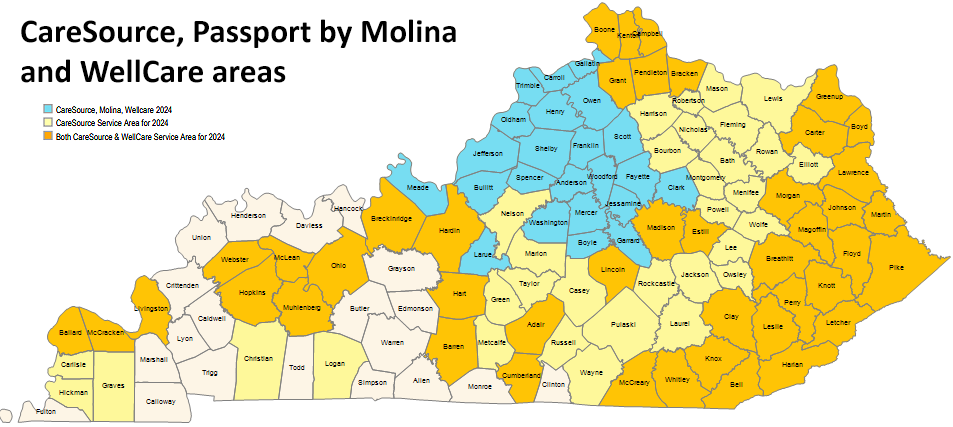
State Cabinet for Health and Family Services maps; click to enlarge
Four carriers offer health-insurance plans through Kynect: CareSource, Passport by Molina Healthcare, WellCare of Kentucky and Anthem.

All counties have at least two carriers to choose from, with most counties having three carriers and many with four. Since last year, Passport has grown by 22 counties, and WellCare by 26. 

98 of Kentucky's 120 counties have a choice of dental plans.
Under the qualified health plans offered on Kynect, no one can be dropped from coverage or have their premiums increased because of health issues.

More plans have been certified for 2024 than for 2023, and Anthem and Best Life will offer dental plans. 

Not all plans are the same, noted Carrie Banahan, deputy secretary of the state Cabinet for Health and Family Services, who encouraged consumers to visit kynect.ky.gov for details. “There’s more to plans than the monthly premium,” she said in a press release. “Make sure your doctors and other clinicians are in their network. Check out whether your favorite pharmacy is among their preferred.”

Some plans new features or benefits, including enhanced diabetes coverage, fitness memberships and vision benefits. Telehealth is covered by all plans at differing out-of-pocket costs. Kentuckians still have access to the more generous financial assistance originally made available as part of the American Rescue Plan passed as a result of the pandemic.

Open enrollment in a qualified health plan overlaps with other annual enrollment periods, including Medicare. Medicare beneficiaries may make changes through Dec. 7 and enrollment choices take effect Jan. 1.

For enrollment assistance, visit kynect.ky.gov or call 855-459-6328. You may also get help at your local Department for Community Based Services office, from a kynector or a licensed health-insurance agent.

Wednesday, January 4, 2023

FDA expands availability of abortion-inducing medication

Women who want to use a pill to end their pregnancy in the first 10 weeks will now be able to get it directly from health-care providers and pharmacies. The move by the U.S. Food and Drug Administration expands options for women in Kentucky, where almost all abortions are currently illegal. The state Supreme Court, in a pending case, could change that.

The FDA announced the new rules for the abortion-inducing drug mifepristone Tuesday night. The drug is already used in more than half of the abortions in the United States.

"Prior to this announcement, mifepristone could only be dispensed by some mail-order pharmacies, or in person by specially certified providers," MedPage Today notes. "This week's decision will allow patients to pick up the abortion pill at brick-and-mortar locations, including local drugstores or chain pharmacies like CVS or Walgreens." Those chains said they would sell the drug. Rite Aid said it was reviewing the FDA's action, USA Today reports.

Last year, the FDA allowed the drug to be obtained by mail, but the Kentucky General Assembly banned that in a wide-ranging anti-abortion bill. FDA proposed the changes in December 2021, "six months before the Supreme Court overturned Roe v. Wade and left abortion policy up to individual states," notes Beth Wang of Inside Health Policy. In Kentucky, the decision activated a "trigger law" that bans abortion except to save the woman's life.

The changes announced Tuesday allow pharmacies that go through a certification process, still not specified, to dispense the drug directly to patients who have a prescription from a certified prescriber who has an agreement with the certified pharmacy, Wang reports.

UPDATE, Jan. 5: "Legal scholars slammed FDA’s certification requirements for pharmacies to dispense the abortion pill, mifepristone, saying they’re unnecessary and not based in science, and the experts called on FDA to get rid of the prescribing and dispensing restrictions altogether," Wang reports.

"FDA also has permanently removed the requirement that patients see a health-care provider in person before being prescribed the drug," Wang notes. "That requirement was temporarily removed during the Covid-19 public health emergency." However, Kentucky law bans the use of telemedicine to get a mifepristone prescription.

Tuesday, June 28, 2022

In Morehead is an example of what the pandemic taught hospitals

St. Claire Regional Medical Center in Morehead
With the pandemic no longer stressing them, rural hospitals in Kentucky are reflecting on what it taught them. Liz Carey of The Daily Yonder reports on St. Claire Regional Medical Center in Morehead, which at the height of the pandemic had 160 Covid-19 patients and four temporary intensive-care units in its parking lot.

“One of the biggest lessons we learned was that we need to be more flexible and adapt more quickly,” CEO Donald Lloyd told Carey. “We had to learn how to be nimble and how to be innovative, and gained the ability to develop, test, and implement procedures quickly.”

Lloyd also said the hospital will continue to rely more on telemedicine, or telehealth. "Before the pandemic, telehealth visits weren’t common at his hospital," Carey reports. Now telemedicine accounts for 18% of clinic visits and more than 80% of behavioral-health visits, Lloyd said. Carey writes, "Telehealth is more convenient for rural residents who might have transportation issues, but it helps with rural hospitals’ labor shortage as well, he said."

Speaking of labor, “One of the big positives that has come from this very unfortunate thing is a recognition of the resiliency of our workforce,” Lloyd said. “We have to be more cognizant of the impact that so much trauma has on our health-care workers. Those doctors and nurses train to deal with death, but I don’t think anyone has trained for a disaster that has lasted for more than two years.”

Sunday, April 18, 2021

'People have embraced the shift to digital health. It’s one of the silver linings of the pandemic,' Baptist Health official says

A Baptist Health drive-thru vaccination clinic
Baptist Health, Kentucky's largest hospital system, says two major changes it made to cope with the pandemic are unlikely to remain temporary.

"In-your-car health care and on-your-couch telehealth are two Covid-19 driven innovations likely to stick around at Baptist Health hospitals in some form long after face coverings are consigned to the attic," the system said in a press release.

“Medicine’s delivery of healthcare has changed forever” due to the pandemic, Baptist Health CEO Gerard Colman said. “It created the need to think very differently about the delivery of care – such as how many patients should be in a waiting room.

“Our quick pivot allowed Baptist Health to safely provide care and help patients take care of their immediate medical needs, rather than delaying care. We’ve seen that these types of solutions – particularly digital solutions -- are popular with patients. We’ll continue to use these types of solutions, and build on them, in the future.”

The news release gave several examples.

"Patients taking blood-thinning medication need regular checks to ensure their clotting ability stays within a very narrow range," the release said. Too high, and they may bleed; too low, and clots may form. This is measured by the "international normalized ratio," which requires frequent monitoring.

"With hospitals and medical offices restricting access, INR monitoring was problematic, so Baptist Health Corbin took it outside and curbside, the release says. "In just a week, pharmacists and technicians created a system to test patients who never had to get out of their vehicles."

“This was more convenient for patients, many who were high-risk for Covid-19,” pharmacist Marissa Scent said. “We also expanded our curbside service for patients wishing to pick up medications without entering the hospital.” Baptist Health Richmond and Baptist Health Louisville did likewise.

Other hospitals led in other ways. Baptist Health Floyd, in New Albany, Ind., "pioneered drive-thru vaccinations, giving more than 42,000," and was Baptist Health Louisville followed suit.

When Baptist Health doctors' offices reopened, they used geolocation to detect when a patient arrived for an appointment, sending patients a message telling them to wait in the car for further instructions or to enter and check in.

"Digital health is as convenient as the couch, easing concerns about transportation, braving bad weather and exposure to Covid-19," the release said. "For health-care providers, it’s also been convenient and maintains vital connections with their patients. On the practical side, supply costs were trimmed and some staff were able to work remotely when offices were closed."

When the pandemic hit, Baptist Health said, it moved quickly to boost its digital capabilities for video appointments.

“Without digital health, there simply would not have been access for patients and providers to connect,” said Dr. Brett Oliver, the system's chief medical information officer. “Many routine visits would have been put off for a long time. Patients and providers both were able to remain safe in their homes, during very unknown times.”

Telehealth also aided behavioral health. It "gave staff some additional insight into where patients were (literally) coming from as they could virtually 'see' the patient’s daily living and surroundings," the release said.

“In just a few months, digital health advanced by years,” said Nick Sarantis, the system's director of digital health. “People have embraced the shift to digital health. It’s one of the silver linings of the pandemic.”

Monday, March 22, 2021

Governor signs 13 health-related bills into law, including one that caps co-payment for insulin at $30/month for an estimated 22,000

Reps. Minter and Bentley, Beshear and interpreter Virginia Moore
By Melissa Patrick
Kentucky Health News

Gov. Andy Beshear signed 13 health bills into law Monday, highlighting one that caps insulin costs for about 30 percent of Kentuckians who need the life-preserving hormone. 

The limit is $30 for a 30-day supply. "This is the right thing to do and it's a game changer for those who rely on insulin to live," Beshear said. "Until now, a single dose of insulin which cost between $2 and $7 to manufacture could sell for an average wholesale price of around $300 per vial."

Beshear noted that in a lawsuit he filed against insulin companies while attorney general over their "unconscionable overpricing," revealed that over 10 years, the price of one insulin product went up 311%, and another rose 285%, including a rise from $325 per package in 2011 to $530 in 2017. 

"While these companies work to increase bottom lines and sustain market shares," he said. "Kentucky families hit hardest by this price gouging can be paying more than $1,000 a month on insulin just to stay alive."

House Bill 95, co-sponsored by Reps. Danny Bentley, R-Russell, and Patti Minter, D-Bowling Green,  will cap the monthly out-of-pocket cost for a 30-day supply of insulin at $30 for Kentuckians covered by state-regulated employer health plans or plans purchased on the marketplace exchange. 

Minter, whose son has Type 1 diabetes, has said the bill will cover about 30% of insulin-dependent Kentuckians. It doesn't cover Medicare, Medicaid or self-funded employer plans except the one for state employees.

"I want to be very clear, this is only a first step," Minter said. "There is much more work to do. . . but today is a very big deal. It will save lives and it will give people hope." She said that for many families, it will make the difference between bankruptcy and keeping a child alive.

In a video, Angela Lautner, Kentucky #insulin4all legislative lead, expressed her gratitude to the lawmakers for the bill, but she too warned that more work needs to be done, saying it will help about 22,000 people. 

"Much more has to be done, but HB 95 is a step forward,” said Lautner, "My chapter is here for insulin for all and that's why we must continue this momentum into the next session with urgency, with priority." 

More than half a million Kentuckians have diabetes, and Kentucky ranks seventh-highest in the U.S. for diabetes prevalence. Lautner said more than one in four insulin-dependent people ration insulin due to cost. 

The price cap will apply regardless of the amount or type of insulin the person with diabetes needs.

In addition to capping the price, HB 95 requires health plans to provide the equipment, supplies and outpatient training and education needed to help diabetics stay healthy, and forbids any reductions from this coverage by others involved in coverage.

The fiscal impact statement attached to the bill says it will increase premiums for health benefit plans, not including the state employee plan, by about 80 cents a month. 

Bentley said that's a small price to pay to make sure diabetics keep getting their insulin, because without it they can suffer amputations, loss of vision, neuropathy, ketoacidosis and even death. "The costs on the medical side is much more than the cost that we're going to have by helping people with insulin," he said. 

Beshear also signed bills addressing these health topics:

Telehealth: HB 140, sponsored by Rep. Deanna Frazier, R-Richmond, will permit telehealth services that were allowed to expand due to the pandemic to remain in place. The bill requires reimbursement for telehealth to be equivalent to reimbursement for the same service provided in person. "I think it's one of the most important bills that have been passed," Beshear said. 

Substance-use disorder: HB 219, sponsored by Bentley, allows pharmacies to sell hypodermic syringes and needles without a prescription. The aim is to increase access to clean supplies for people who inject drugs, which will help to decrease the risk of blood-borne diseases such as hepatitis C and HIV/AIDS.

Medicaid and hospitals: SB 55, sponsored by Sen. Stephen Meredith, R-Leitchfield, abolishes co-payments required by Medicaid.

HB 183, sponsored by Rep. Brandon Reed, R- Hodgenville, will allow Kentucky hospitals to get more money from Medicaid, based on an "average commercial rate" instead of the current Medicaid rate, which is often below that amount. The program would not cost the state anything, because Kentucky's hospitals have agreed to cover the cost. To get the money, hospitals will have to abide by higher quality standards that are still being decided by the Kentucky Hospital Association and the Cabinet for Health and Family Services. The bill is expected to help many of the state's rural hospitals; a recent report shows that 16 of them are at risk of closing. 

Colon cancer and genetic testing: HB 108, sponsored by Melinda Gibbons Prunty, R-Belton (Muhlenberg County), codifies current Medicaid coverage of colorectal cancer, including screenings starting at 45 for most people and genetic cancer-risk testing, to align Medicaid and commercial coverage.

Mental health parity: HB 50, sponsored by Rep. Kim Moser, R-Taylor Mill, will make health-insurance plans comply with a 2008 federal law that requires them to treat mental-health conditions and substance-use disorders the same as physical health. It also requires health insurers to file annual reports with the state to show how they are complying with the federal law.

Workforce: HB 276, sponsored by Moser, allows Kentuckians trained as temporary Covid-19 personal-care attendants under an executive order to apply their supervised training toward their Registered Nurse Aide certification. About 300 personal-care attendants work in Kentucky long-term care facilities, Moser said while presenting the bill to the House in February.

SB 154, by Sen. Tom Buford, R-Nicholasville, lets advanced practice registered nurses and physician assistants prescribe and supervise home-health services, as federal law has allowed them to do in the pandemic. An emergency clause ensures there would be no gap in care if the federal rule ended.

HB 448, sponsored by Rep. Bill Wesley, R-Ravenna, expands the definition of "qualified mental-health professional" so that it fits the state's juvenile code, allowing those who work in private agencies to testify in child-welfare hearings, especially around issues of emotional injury.

Alzheimer's Disease: SB 74, by Sen. Ralph Alvarado, R-Winchester, creates but does not not fund a dementia services coordinator in the heath cabinet to manage the Alzheimer’s Disease and Related Disorders Council, the state plan to address Alzheimer’s in Kentucky, and apply for federal funding.

Living organ donors: HB 75, sponsored by Rep. Shawn McPherson, R-Scottsville, prohibits insurance companies from increasing rates on organ donors or dropping their coverage. It would also encourage the cabinet to develop educational materials relating to organ donation.

Charitable care: SB 163, sponsored by Sen. Alice Forgy Kerr, R-Lexington, expands the definition of "charitable health care provider" to include those that provide invasive or surgical procedures. This change was needed to allow the non-profit surgery program "Surgery on Sunday" in Lexington to be reimbursed for liability insurance premiums. 
 
Beshear also vetoed five bills that would strip power from the governor or the executive branch. None were related to health. 

Friday, March 19, 2021

Several health bills passed by the General Assembly deal with insurance coverage: insulin costs, telehealth and more

By Melissa Patrick
Kentucky Health News

A number of insurance-related bills on the governor's desk deal with a wide range of topics including diabetes, telehealth, mental-health parity, co-payments for both private and public health insurance, and payments to cover the expanding role of pharmacists.

The one getting the most attention during the session would cap the monthly out-of-pocket cost for a 30-day supply of insulin at $30 for Kentuckians covered by state-regulated, comprehensive, private health insurance plans and the state employee health plan. It would not apply to Medicare, Medicaid or self-funded health plans.

The bill would cover about 30 percent of insulin-dependent Kentuckians, Rep. Patti Minter, D-Bowling Green, told The Associated Press. She is a primary sponsor of the bill, with Rep. Danny Bentley, R-Russell.

Rep. Danny Bentley (LRC photo)
House Bill 95
 won final passage after the Senate agreed to drop the changes it made, which would have increased the monthly co-pay to $35 and made the bill effective immediately upon becoming law. The original and current versions of the bill make it effective Jan. 1, 2022.

"Kudos to Rep. Danny Bentley for his leadership on this bill to reduce the out-of-pocket costs for Kentuckians who are dependent on insulin," Ben Chandler, president and CEO of the Foundation for a Healthy Kentucky, said in a news release. "It's an important first step to reduce costs that currently add up to as much as several thousand dollars every month. The next step is to extend the price cap to all Kentuckians who need insulin to live."

The price cap would apply regardless of the amount or type of insulin the person with diabetes needs.

Angela Lautner, with Kentucky #Insulin4All, also expressed her gratitude to Bentley for his work on the bill, noting that outside federal action to limit the "unjust list price of insulin," state action is necessary to help Kentuckians who depend on insulin to live, while at the mercy of the manufacturers. 

"When it may cost no more than $6.16 to make 1 vial of insulin, the prices that many of us pay, or have paid, for insulin is cruel and wrong," Lautner said in an e-mail.

She called on legislators to pass a more encompassing measure, like "Alec's Bill" that Minnesota passed last year to honor the life of  Alec Smith, who was unable to afford the $1,300 monthly cost of his insulin and diabetes supplies and died rationing them after aging out of his parents' insurance. 

Alec's Bill would "guarantee insulin to uninsured Kentuckians and assist those whose prescribed insulin has been removed from insurance coverage without begging for our very lives through patient assistance programs or coupons that aren't always available to us when needed," Lautner said. 

Lautner said at her last count Kentucky is the 13th state to limit insulin copayments, and the first in the tri-state region of Kentucky, Ohio and Indiana. She said several states are working on similar bills.

According to the 2020 Kentucky Diabetes Fact Sheet, 13.7% of Kentuckians have been diagnosed with diabetes, and an estimated 158,200 adults have the disease, but are undiagnosed. Not all use injectable insulin.

Co-pay accumulators: SB 45, sponsored by Sen. Ralph Alvarado, R-Winchester, would limit the use of health plans' copay-accumulator programs, which prevent cost-sharing paid on behalf of enrollees from counting toward their out-of-pocket limits.

In short, SB 45 would require health insurers to count all payments made by patients directly or on their behalf toward their overall deductibles and maximum out-of-pocket costs, unless a generic drug is available. It would not apply to the Kentucky Employees Health Plan.

Insurance payments: SB 44, by Alvarado, ensures that any insurance payments made on behalf of an individual by a nonprofit are counted just as if the patient made it themselves. 

The Senate agreed to House changes in SB 44 that updates a sunset clause in another bill that requires health-care providers to tell women whose mammograms show dense breast tissue that such tissue is not abnormal, but slightly increases the risk for developing breast cancer until 2025. That same legislation asks providers to encourage "digital mammography" that provides a three-dimensional image of the breast. Another change ensures that the insured is responsible for payment, even if made by someone else; and bans providers from paying premiums for their patients.

Medicaid co-pays: SB 55, sponsored by Sen. Stephen Meredith, R-Leitchfield, would get rid of all co-pays required by Medicaid. 

Telehealth: HB 140, sponsored by Rep. Deanna Frazier, R-Richmond, would permit telehealth services that were allowed to expand due to the pandemic to remain in place. The bill requires reimbursement for telehealth to be equivalent to reimbursement for the same service provided in person. 

The bill would ensure that Medicaid and its managed-care organizations don't deny telehealth reimbursement "based on quality-of-care protocols established by health care facilities," and that reimbursements paid to rural health clinics and other facilities include a supplemental reimbursement. 

The House agreed to Senate changes that say certain regulations for telehealth be no more restrictive than for in-person services and allows Medicaid, its managed-care organizations and other insurers to negotiate lower reimbursement rates for telehealth services with providers. 

Pharmacy reimbursements: HB 48, by Bentley, a retired pharmacist, would allow commercial insurance to reimburse pharmacists for providing medical care that other health-care providers typically bill for, such as a rapid flu test, smoking-cessation counseling or immunizations. Beshear signed the bill March 18.

A fiscal impact statement says HB 48 will increase premiums and health-care costs about 20 cents a month for commercial insurance customers. 

Mental health: HB 50, sponsored by Moser, would make health plans comply with a 2008 federal law that requires them to treat mental-health conditions and substance-use disorders the same as physical conditions, and file annual reports to show how they are complying. Beshear signed this bill March 12.

“Mental health and substance use disorders are often treated differently than other health conditions by insurers, but there is no health care without mental health care,” Alvarado said in presenting HB 50 to the Senate. “When there is a disparity in treatment, it causes harm. Many people go without treatment for years with disparities worsening by the day. There is an average delay of 11 years between the onset of mental illness symptoms and the time most people access treatment.”

Living organ donation: HB 75, sponsored by Rep. Shawn McPherson, R-Scottsville, would keep insurance companies from increasing rates on organ donors or dropping their coverage. It would also encourage the cabinet to develop educational materials relating to organ donation.

Sunday, February 21, 2021

25% of Ky.'s community-health-center visits are via telehealth; bill would codify some temporary telehealth rules, such as audio visits

This story has been updated to report that HB 140 passed the House. 

By Melissa Patrick
Kentucky Health News

A  bill to codify telehealth provisions that were put into place during the pandemic to temporarily relax some of the regulations has passed out of the House and now moves to the Senate for consideration. 

Rep. Kim Moser, R-Taylor Mill, who is the co-sponsor of House Bill 140, told Kentucky Health News that it is very important for this telehealth bill to pass. 

Rep. Kim Moser
"I think that it's critical," she said. "We know that we have a healthcare access problem in Kentucky and this directly impacts and improves access to care."

She called the relaxation of the rules during the pandemic "a real godsend" and said going forward, it will continue to increase access to care for Kentuckians, especially for those with health care disparities, like transportation and poverty.

Moser said a key component of the bill is that it continues to allow audio-only visits, which she said is imperative because the state has many places without broadband and many patients who are not adept at using the technology.

The bill also requires parity of payment for services that are delivered in a like manner to an office visit, and allows licensing boards of each profession to have input around what types of visits would be conducive to telehealth services.

"The utilization of telehealth has been one of the shining moments of hope throughout the pandemic," Rep. Deanna Frazier, R-Richmond, said at the Feb. 4 House Health and Family Services Committee meeting, where the bill passed unanimously. 

Frazier, who is the primary sponsor of the bill, added that during the interim, the committee heard testimony that more than 70% of Kentucky physicians have used telehealth during the pandemic.  

Among the state's community health centers, that number amounts to about one in four, or 25.3%, according to data provided by the Kentucky Primary Care Association. 

The association has reported that such centers, which are located in medically underserved communities, provide the medical home for one in eight Kentuckians, more than 550,000 people.

Nationwide, that amount of telehealth use is a bit higher among such centers, 30.2%, or nearly one in three, according to a recent report from the Centers for Disease Control and Prevention

The CDC report analyzed data from 245 community health centers that provided data about their telehealth visits from June to November. It found that centers in the South and in rural areas consistently reported the lowest use of telehealth. The South, which includes Kentucky, had a weekly telehealth-visit rate of 20.4%, or about one in five.

The report said, "Telehealth is critical to improving access to health care, especially among populations with limited access to care, and to enhancing the U.S. health care system’s capacity to continue to respond to the pandemic."

The Primary Care Association, which includes federally qualified health centers, commonly known as community health centers, rural health clinics and others, said in an email that it supports legislation that "reduces health disparities and provides patients with additional treatment options." 

"The new legislation creates a successful and forward thinking telehealth infrastructure for the future," David Bolt, CEO of the association, said in an email. "This will become an essential component of increasing access to quality primary health care, which will improve health outcomes for all residents of the state.” 

Click here for a video from the association about how one of its community health clinics has prioritized telehealth.

Wednesday, September 16, 2020

Baptist Health Corbin gets $1 million grant to help fight substance abuse by pregnant women and youth in Whitley, Knox counties

Baptist Health Corbin has received a $1 million grant from the U.S. Department of Health and Human Services to fight opioid and substance abuse, mainly among pregnant women, in Whitley and Knox counties.

The three-year grant, which launched Sept. 1, will also help youth and people seeking emergency treatment for conditions related to substance abuse-related conditions, a news release said. The effort will include Cumberland River Behavioral Health, a long-time partner of the hospital.

“With the pandemic, more people than ever are susceptible to overdose deaths and suicide,” Chris Holcomb, Baptist Health's assistant vice president of behavioral health and former executive director of behavioral health at Baptist Health Corbin, said in the release.

“Substance abuse, particularly opioid abuse, has skyrocketed in the communities we serve,” Holcomb said. “Overdoses that involve opioids have more than tripled in the last 20 years. The overdose rate by county in this area is nearly three times higher than the national average. We want to use our resources to support patients with education, prevention and treatment.”

Baptist Health CEO Gerard Colman said the nine-hospital group "has long had a focus on behavioral health and planned to intensify those efforts even before the covid-19 pandemic compounded other major life stressors that make the vulnerable even more at risk of turning to drug use to overcome anxiety."

The chain has expanded its telehealth program, which can be especially helpful for patients with transportation issues or other barriers to seeking treatment. The program consists primarily of videoconferencing sessions between a health-care or mental-health professional and a patient.

"Baptist Health Corbin was an early telehealth pioneer, starting in 2016, as transportation and the geography of the region are considered barriers to accessing care,' the release says. "The service area is mountainous and navigating secondary roads is difficult and time consuming. Inclement weather conditions in the winter frequently force the closing of local schools due to road conditions."

Morehead hospital says covid-19 surge came from patients who delayed treatment for other conditions; telehealth is here to stay

St. Claire Regional Hospital (Youtube photo, from The Daily Yonder)
At the end of 2019, St. Claire Regional Healthcare System restructured its finances after finishing the fiscal year about $9 million in the red. In March, the novel coronavirus hit and basically brought the hospital to a standstill and forced it to make even more changes, Liz Carey reports for The Daily Yonder.

Headquartered in Morehead, St. Claire provides services to eight Eastern Kentucky counties. in addition to its hospital, it hascclinics in Frenchburg, Olive Hill, Owingsville and Sandy Hook. It also provides mental and behavioral health services, palliative care, aesthetics care, dental care, and pharmaceuticals. 

Donald H. Lloyd, II, the hospital system's president and CEO, told Carey that the restructuring had resulted in a positive cash flow by February, but then the pandemic hit Kentucky and Gov. Andy Beshear banned elective surgeries, which account for 90 percent of those at the hospital. This forced them to make more personnel changes, including furloughs.

The first case of covid-19 showed up in Rowan County in March. By then the hospital had been converted into two separate areas, a hot zone for patients suspected of covid-19, and a cool zone for all the rest, Carey reports.  

“You would walk down a corridor and you would see this huge barrier that you had to don and doff protective equipment and then zip through a series of barrier walls in order to enter where the actual patients were,” Lloyd told Carey. “It was just so surreal. It was like from a science-fiction movie.”

Lloyd and his staff found that patients with heart attacks weren't coming into the hospital's emergency room, Carey writes.

“On the video calls with my colleagues, not only here in the commonwealth but across the United States, we were all asking ourselves ‘Where are the heart attacks, where are the strokes?’ We all thought the coroners must be extremely busy,” he said. “My chief medical officer and myself had numerous conversations with our coroners and a realization came that if we did begin to see a spike in deaths in the general population that our coroners would actually be the first to observe them.” 

This realization set the hospital into action to find high-risk patients and a way to care for them. “We aggressively worked to contact these patients, especially those that we knew have chronic conditions, and reminded them that it was imperative that you know they needed their conditions to be monitored and managed,” Lloyd said, estimating that they reached out to more than 25,000 of their 200,000 patients. 

It turned out that the surge caused by covid-19 was indirect: untreated chronic conditions caused by fear of infection. When those patients finally sought medical attention, they had "acute exacerbations," Lloyd said.

This also led to a move toward telehealth, and that led to the realization that many patients did not have access to high-speed internet. So, Carey reports, the hospital set up an area in its empty parking lot where patients could park, use the hospitals' tablet computers, access its wi-fi and visit their health-care provider through telehealth. 

“Our patients have really embraced that, and we perceived that people that, you know, that maybe live at the margins, or that maybe have a lower education level, would be intimidated by the use of that technology. On the contrary, they have embraced it,” Lloyd told Carey. “Many of our patients (in outlying counties) can’t afford to travel to Morehead or they have very limited transportation ability. It is amazing to me how effective this technology and the use of telemedicine has been for us to connect with them now.” 

Since mid-May, Lloyd said, the hospital has started to come back to normal, but telehealth is here to stay. He said, “I think [telehealth] is part of the new reality going forward in the way we deliver care and that there is going to be, for Saint Claire Healthcare and our enterprise, at least 25 percent of our future patient encounters will be virtual."

Thursday, June 18, 2020

Baptist Health gets pandemic-relief money to expand telehealth

Baptist Health has received $873,982 from the Coronavirus Aid, Relief and Economic Security Act to expand telehealth services at its hospitals. It can use the money for technology, software and network upgrades to help provide health care to at-risk patients, according to a press release from Senate Majority Leader Mitch McConnell.

Dr. Brett Oliver, chief medical information officer for Baptist Health, said in the release, “This award helps us fund digital efforts to safely connect our patients and our providers. Now, each of our medical group providers in all specialties can see their own patients. In some of our rural areas of the commonwealth, the availability of providers for certain medical sub-specialties is limited. The video options allow us to spread the care in certain specialties to a broader patient population without the risk of exposure to covid-19.”

Baptist Health has hospitals in Corbin, La Grange, Lexington, Louisville, Madisonville, Paducah and Richmond, and is acquiring Hardin Memorial Hospital in Elizabethtown.

Tuesday, June 16, 2020

Beshear reports 203 new coronavirus cases and 7 more deaths; guidance up for pools and gatherings up to 50, allowed June 29

As news develops about the coronavirus and its covid-19 disease, this item may be updated. Official state guidance is at kycovid19.ky.gov

By Melissa Patrick
Kentucky Health News

After announcing 203 new coronavirus cases today, Gov. Andy Beshear reminded Kentuckians in a news release that there are three things they can do to slow the spread of the virus.

“No. 1: Socially distance, wash your hands and wear a mask; that’s critically important. No. 2: Make sure you regularly get tested for covid-19. We need that all over the commonwealth. And No. 3: If you’re contacted by one of our contact tracers, make sure you talk to them. That’s how you protect yourself and everybody around you. If we can do those three things, we can continue to reopen Kentucky, to do it safely and to protect one another.”

The new cases raised the state's total to 12,829. The daily report shows that 395 people are currently hospitalized with the virus, 69 are in intensive care and 3,431 have recovered from it.

Jefferson County had the highest number of new cases Tuesday, 54. That was followed by Fayette, with 28; Warren with 15, and Laurel with 9.

Beshear, who has begun holding covid-19 briefings only three days a week, reported seven new deaths from the disease Tuesday, raising the state's death toll to 512.

The fatalities were a 72-year-old man from Allen County; a 43-year-old man and a 68-year-old woman from Boone County; a 77-year-old woman from Green County; an 80-year-old woman from Hardin County; and two women, 74 and 89, from Jefferson County.

In long-term care facilities, 14 more residents and eight more staff tested positive for the virus, bringing those totals up to 1,530 and 732 respectively, according to the daily report. The report shows one additional resident death, bringing the death totals to 323 confirmed resident deaths, four probable resident deaths and three staff deaths.

The state has updated its guidance for reopening of public pools and gatherings of up to 50 people, both of which will be allowed on June 29.

The guidance for gatherings of up to 50 cautions that anyone who has a condition that puts them at a higher risk for getting the virus, or is over 65, should remain "healthy at home."

The guidance says groups holding gatherings "must" ask those who are sick to stay home, maintain social distancing and have all wear masks if they will be closer than six feet apart, with exceptions for those in the same household; ensure appropriate hand hygiene; screen and exclude those with a fever, symptoms of covid-19 or direct exposure to the virus; and to not share food, drinks or utensils.

The four-page pool guidance offers requirements for social distancing, cleaning and disinfecting, personal protective equipment, and training and safety.

Some pools, such as those in Lexington, have already announced they will not open this summer.

In other covid-19 news Tuesday:
  • Some rural Kentucky counties seeing a spike in coronavirus cases, largely caused by complacency and churches reopening, Bill Estep reports for the Lexington Herald-Leader. 
  • A British organization that specializes in medical detection dogs is training six dogs to screen people for covid-19, the Herald-Leader reports. If successful, they could be deployed in places like airports or large sporting events to screen large numbers of people.
  • The Herald-Leader offers safety tips on how to travel during the coronavirus pandemic. 
  • As of 9 p.m. on June 15, Covidexitstrategy.org has Kentucky listed as "making progress" on a map that tracks states as they make progress towards a new normal. The site looks at how the disease is spreading, whether the hospitals can handle the load and if the state's testing is robust enough. More than half the states are "trending poorly." 
  • "A cheap, readily available steroid drug reduced deaths by a third in patients hospitalized with covid-19 in a large study, the first time a therapy has been shown to possibly improve the odds of survival with the condition in the sickest patients," Mathew Herper reports for Stat. Full data from the study have not been published or peer reviewed, but experts have embraced the "top-line results," he writes. The drug is dexamethasone, which is used to treat rheumatoid arthritis, asthma, and some cancers. 
  • A group of bipartisan senators, led by Sen. Brian Schatz (D-HI), want telehealth provisions included in previous covid-19 emergency legislation to be made permanent, Inside Health Policy reports. "The letter asks for provisions allowed during the pandemic to be made permanent, including: allowing community health centers and rural health clinics to provide distant site telehealth services, and allow telehealth to be used for face-to-face visits to certify a patient’s eligibility to enter hospice care,"" Chelsea Cirruzzo reports.

Saturday, June 13, 2020

Study cites benefits of telehealth; commentary says mental telehealth services are 'clinically equivalent to in-person care'

As people across the nation have been asked to shelter in place because of the novel coronavirus, never before has the importance of telehealth, especially for mental-health care, become more evident, says a commentary in The Journal of Rural Health. 

The authors assert that mental-health therapy over video platforms "has been demonstrated as clinically equivalent to in-person care." 

Before the pandemic, they write, video-to-home telehealth services for mental-health care was not uniformly offered, but has since gained some traction, especially in rural areas where mental-health provider shortages are great.

The authors note that telehealth visits have ensured continuity of care during stay-at-home orders, all while minimizing physical contact to keep both patients and providers safe.

But they also recognize that this type of care also comes with many challenges, including overburdened networks, poor internet bandwidth, inconsistent internet service, a lack of equipment,  billing and scheduling challenges, and usability issues for both providers and patients. These challenges have resulted in some providers conducting phone-only visits, especially after federal rules were relaxed to allow reimbursement for such visits.

But the authors say that in this time where "the loss of in-person contacts has never been more pronounced," phone-call appointments, while efficient, don't offer the same connection that video-based meetings do.

"During this pandemic, we believe that visual contact remains crucial; thus institutions that work to facilitate the availability of [video-to-home] visits will significantly benefit both patients and providers,"  they write. "Robust telehealth programs require a significant commitment of time and resources, and large health care organizations with the foresight to invest in telehealth are poised to transition [mental health] care from in-person to virtual visits."

The authors say they regularly collect patient input through interviews about virtual appointments, and have found that many patients say the video connection makes it more personal and that seeing their provider during the therapy session is "very important." Further, patients have told them that they are more comfortable getting their mental-health care at home.

"We believe that prioritizing video over phone-only calls will help maintain the integrity of [mental health] care by maintaining important social rhythms, supporting rapport, and offering a more patient-centered care approach," they write.

They add that such visits allow for the re-establishment of "social rhythms" that many patients prefer, and let the patient and the provider see nonverbal communication cues that would otherwise be missed. It also allows the provider a window into their patient's physical space, the authors write.

Video-to-home "may help patients share more with their provider within the context of therapy by enhancing the therapeutic relationship and allowing providers to establish connections that could never be achieved over the phone," they write.

The authors conclude that video-to-home "will become part of the new normal in the post-pandemic period" and say that now is the time to build competency and capacity for it.

In particular, they note that video-to-home care has been quite successful in rural Veterans Health Administration treatment centers.

A study, also published in The Journal of Rural Health and named article of the year, found that over  a six-year period, 2009 to 2015, use of clinical video telemedicine grew from 30 to 124 encounters per 1,000 veterans, with faster growth among rural veterans than urban ones.  It also found that more than 50 percent of the telehealth visits were for mental-health care.

The study adds that in fiscal year 2015, the last year of the study, 3.2% of urban and 7.2% of rural veterans used telemedicine for nearly 725,000 clinical encounters.

The authors said vets were more likely to use telemedicine if they had a "younger age, longer driving distance to VHA facilities," or multiple medical conditions.

The study concludes that the availability of telemedicine "has likely increased access to care for rural veterans, especially for mental-health care."

Tuesday, May 12, 2020

Pandemic has made telehealth necessary, easier to get, and sure to continue as is; 7 to 8 years' worth of progress, official says

By Melissa Patrick
Kentucky Health News

Federal officials on a rural health webinar applauded the federal government's efforts to expand telehealth during the coronavirus pandemic, and predicted its uptick will continue long after the crisis is over.

Rural Health Information Hub graphic
"I can tell you from personal experience that we are never going back," said Dr. Jeff Colyer, a surgeon who chairs the National Advisory Committee on Rural Health and Human Services. "I've seen the majority of my patients via telehealth, and they like the convenience and the access that it gives them. And so we are going to see those changes continue on in the future."

Bette Brand, deputy undersecretary for Rural Development in the Department of Agriculture, said, "The coronavirus has made the need for telehealth even more urgent. Its life-saving convenience is now underscored by its lifesaving ability to limit travel and unnecessary exposure."

USDA has invested more than $751 million on its program to bring broadband to the 21 million Americans who lack high-speed internet access, 80 percent of whom are in rural areas, Deputy Secretary Stephen Censky said. He added that broadband is especially important as people are being asked to socially distance, and lets Americans "continue to access critical medical services remotely using telemedicine from their homes."

Censky pointed to a USDA summary of recent changes to the program by the Department of Health and Human Services. Deputy HHS Secretary Eric Hargan called the changes "historic" and said they include, among other things, eliminating some barriers to Medicare reimbursement, enabling waivers or reductions of cost sharing, and allowing the use of everyday technologies, like FaceTime and Skype, in health care.

"In just about a month and a half, I think we've seen about seven or eight years worth of progress on telehealth," Hargan said. "Really, it's a revolution provoked by necessity. I'm excited to see what the future looks like based on getting patients and providers acclimated to the idea of telehealth in this way," he said. "What sounds to many like dry, obscure flexibilities in regulations and reimbursement is translating into millions of Americans getting access to healthcare more safely."

Tom Morris, associate HHS administrator for rural health, said telehealth resource centers have seen a tremendous increase in use: "You would not believe the volume increase that they have had. . . . The increase in their volume was well more than 1,000 percent of this time a year ago. And so the funding will better help them respond to that moving forward."

The webinar was sponsored by the Rural Health Information Hub. Click here to learn more about Kentucky's telehealth program.

Two analysts and a fellow at the Brookings Institution came to many of the same conclusions after taking a detailed look at telehealth regulations and recent changes. They write:
Telehealth has proven itself a viable supplement to an already strained health-care system, where both medical providers and patients are seeking timely, effective, and robust tools for early detection, primary care, and long-term evaluation. While progress was being made before the coronavirus outbreak to adopt telehealth in states, the pandemic not only demonstrated its worth but also proved it necessary to avert larger meltdowns in hospital systems and among medical professionals—even those whose work was stopped due to social distancing.
The world will probably not return to the normalcy it once experienced before covid-19—and neither should health care. As Congress is charged with re-evaluating the leniencies permitted to health-care providers during this crisis, federal lawmakers should also see the benefits. The same holds true for states that will need to reconsider lifting boundaries on telehealth services to accelerate its transformational capabilities for patients and doctors.

Thursday, April 23, 2020

'Your business cannot look the same,' officials tell health-care providers; 'Expect masks to be a greater part of your life'

A slide of Owensboro Health employees was displayed at Gov. Andy Beshear's daily briefing.
As news develops about the coronavirus and its covid-19 disease, this item may be updated. Official state guidance is at kycovid19.ky.gov.

By Al Cross and Melissa Patrick
Kentucky Health News

State officials detailed their plans for reopening some health-care providers, saying Thursday that the process will be their "proof of concept" for opening other businesses and warning that "Your business cannot look the same."

That's what Gov. Andy Beshear said after Health Commissioner Steven Stack laid out protective measures to be followed Monday by medical offices, clinics, chiropractors, optometrists, physical therapists and, especially, dentists.

Addressing dentists, Stack said, “You are constantly spraying oral secretions, so there’s probably gonna have to be extra protections. . . . You have unique challenges that have to be addressed.” He asked them for suggestions.

Stack said officials still want health-care providers to use telehealth when possible, and screen all arrivals for temperature and symptoms of covid-19. "You can expect masks to be a greater part of your life," he said.

Beshear said health-care workers should be most aware of the need to use personal protective equipment and follow other safety procedures, but suggested they need to do better than they did when he recommended they stop elective procedures. He said he had to make that mandatory because a few wouldn’t go along.

"Just a couple of folks not doing it right can ruin it for everybody else, and spread the virus … and set our timetable back," he warned, adding later, "We gotta prove we can do this and we can do it the right way . . . These aren’t going to be suggestions; they’re going to be requirements."

He said as more businesses are allowed to reopen, the Labor Cabinet and local officials will enforce restrictions he will put in his emergency orders. "We’re gonna reopen this economy," he said. "We’re gonna be the smartest; not the fastest, but the smartest."

Patsy Carol Stith of Kenton County
was spotlighted Thursday. Beshear
said "she seemed to be recovering
but declined," then rallied and went
off ventilator; "too much damage
had been done and she passed
away about two days later."
Beshear announced nine more covid-19 deaths in Kentucky long-term-care facilities, for a total of 86. That is 45 percent of the state's overall death toll of 191. That total grew by only six yesterday; Beshear said some reports from the facilities are delayed.

Acting Health Secretary Eric Friedlander said, "We are working very hard to address the issues we've seen in long-term-care facilities. . . . This is not an area were talking about opening. This is an area where we're talking about giving greater scrutiny."

Friedlander said the health cabinet has been testing all residents of some facilities, starting with those that need the most help, and works with all facilities (53 as of Tuesday) that have a case. Beshear announced positive tests for 32 residents and 27 staff members, bringing those totals to 530 and 251, respectively.

He said the cabinet has provided staffing support to several facilities, and referred to "communication problems," reminding the facilities that they need to make daily reports, including data on personal protective equipment.

In other covid-19 news Thursday:
  • The House passed and sent to President Trump a $484 million package of funding for small-business loans and health-care providers, including coronavirus testing. "Many lawmakers wore masks on the House floor, some even speaking through face coverings as they delivered impassioned remarks," The Washington Post reports. Republican Rep. Thomas Massie of Kentucky's Fourth District was one of five members who voted no.
  • Beshear said state and local governments must get aid in the next relief package or "We will be hit with a rougher recession . . . We will have to cut vital services . . It’ll hit public safety in a really significant way." Asked about Senate Majority Leader Mitch McConnell's suggestion that states could take bankruptcy, Beshear said he has been in touch with McConnell's office but the last time the two spoke was a week ago. He said bankruptcy "puts a judge in a place to potentially raise taxes."
  • Researchers at the University of Kentucky and the University of Louisville are working on rolling out coronavirus-antibody blood tests for clinical trials, Alex Acqisto reports for the Lexington Herald-Leader. Researchers say they hope to determine who is immune to the virus as well as to locate plasma donors, which is used to help treat covid-19 patients.
  • UK announced that it is furloughing 1,700 workers, 1,500 of them in UK HealthCare, but hopes the furloughs will be short as hospitals are allowed to resume elective procedures.
  • Target workers are planning a sickout in protest of unsafe work conditions during then pandemic, Dawson White reports for the Herald-Leader. “The foot traffic and guest behavior have been atrocious, putting us at needless risk when greater safety measures are required to ensure social distancing,” the group wrote online. “Workers nor guests have been required to wear masks.”
  • Andrew Wolfson reports in detail for the Louisville Courier Journal about the poor conditions at  Green River Correctional Complex in Central City, where 32 inmates have tested positive for the virus. Five have been hospitalized and one has died. Beshear said Justice Secretary Mary Noble would make a report on the prison system Friday.