Showing posts with label dental care. Show all posts

Wednesday, June 5, 2024

Remote Area Medical to offer free medical services, inlcuding dental and vision care, at clinic near Hazard Saturday and Sunday

Kentucky Health News

Remote Area Medical
, a nonprofit group that provides free medical care, including dental and vision care, will hold a clinic Saturday and Sunday at East Perry Elementary School, 301 Perry Circle Road, Hazard, in collaboration with the University of Kentucky Center for Excellence in Rural Health.

The clinic will be open from 6 a.m. to 5 p.m. Saturday, 6 a.m. to 12:00 p.m. Sunday. The patient parking lot will open no later than 11:59 p.m. Friday night, June 7, and remain open. As patients arrive at the parking lot, they will be given information about the clinic.

Patients should be prepared with their own food, water, medicines, and clothing when arriving early. Bathrooms will be provided.

Health services are provided on a first-come, first-served basis. Due to time constraints, attendees should be prepared to choose between detal and vision services. Medical services are offered to every patient. All services are free and open to the public. No identification is required.

Given the possibility of inclement weather, volunteer cancellations, or other circumstances outside of RAM’s control, RAM encourages everyone who would like services, especially dental services, to arrive as early as possible. The clinic closing time may vary based on each service area’s daily capacity. Please check RAM’s clinic FAQ page for more information.

UK College of Dentistry faculty, residents, and dental students will provide serves including dental exams and cleanings, fillings, and extractions. The college has previously supported the dental care needs of Kentuckians at other RAM event locations, including Mayfield, Hazard, and Bowling Green.

Founded in 1985, RAM has treated more than 940,000 individuals with $200 million worth of free health-care services. More than 212,000 volunteers – licensed dental, vision, medical and veterinary professionals, as well as general support staff – have supported RAM’s mission.

Friday, February 9, 2024

Kentucky water plants would no longer have to add tooth-protecting fluoride to water, under bill approved by a committee

By Liam Niemeyer
Kentucky Lantern

Kentucky water utilities would no longer be required to add or adjust fluoride in tap-water supplies — a state requirement since the mid-20th century aimed at improving dental health — under a bill a legislative committee approved Thursday, Feb. 8.

House Bill 141 is the latest effort by Rep. Mark Hart, R-Falmouth, to remove the state requirement for water utilities serving populations larger than 3,000 to add or adjust fluoride levels in drinking water systems to “protect the dental health of the people served.”

Rep. Mark Hart, R-Falmouth
(Ky. Lantern photo by Liam Niemeyer)
Hart, a legislator since 2017, was the only sponsor of making drinking-water fluoridation optional when he filed the first such bill in 2018. The legislation has gained Republican co-sponsors as it has been filed several times over past legislative sessions.

The House State Government Committee heard the proposal for the first time Thursday and approved it 16-1. The bill now goes to the House floor for consideration.

Republicans who voted for the bill, and advocates for the legislation who joined Hart, characterized the bill as providing “local control” for utilities to choose whether or not to fluoridate their water. Those advocating the bill included representatives of Morehead’s municipal utility, Irvine’s municipal utility and the Grayson County Water District.

Some advocates for the bill questioned the efficacy of adding fluoride to tap water and its potential side effects.

“Honestly, it is forced medication,” said Rep. William Lawrence, R-Maysville, a co-sponsor of HB 141. “Whether you’re for or against fluoride, this bill has nothing to do with that. This is a local control — let the local water districts decide what’s best for their district.”

The Centers for Disease Control and Prevention considers community water fluoridation to be one of the 10 greatest public health achievements of the 20th century. The federal public-health agency also has found no “convincing scientific evidence” linking fluoridation to “any potential adverse health effect or systemic disorder.”

Groups representing dentists, oral-health advocates and the dental insurer Delta Dental strongly opposed the bill, saying it would increae tooth decay, particularly among children. Kentucky already ranks among the highest for the number of adults with no teeth.

“We have reached the point where it’s not about the science, it’s about the emotion,” Stephen Robertson, executive director of the Kentucky Dental Association, told the Lantern after the committee approved the bill. “No matter what your position is, you can find something out there that’s going to validate your position.”

Jack Kall, a Louisville dentist and supporter of the bill, showed lawmakers cited graphs from a 2016 magazine article by the Harvard T.H. Chan School of Public Health that questioned the efficacy and safety of fluoridation. That article was strongly criticized by the American Dental Association, saying it relied on a report that was a “biased misinterpretation,” and the dean of the Harvard School of Dental Medicine at the time called for the article to be rescinded.

Kall, citing the graphs, asserted that countries that don’t fluoridate water have had a similar decline in tooth-decay rates as countries that do. He told the Lantern that fluoride can lower intelligence in children; a federal court case is litigating whether the mineral has an effect on brain development.

“It’s a hot topic and science continues to evolve,” Kall said. “We should constantly be reviewing things.”

Robertson said there are studies regarding fluoride that need to be verified and that improvements in nutrition and personal dental hygiene also could improve dental health in Kentucky. But fluoride in drinking water, he said, is a “program that works.” He asked, “Are we willing to take the risk of removing fluoride and seeing what happens?”

Tuesday, October 31, 2023

Kynect website opens Wednesday, Nov. 1, for shopping and enrollment in federally subsidized health-insurance plans

Kynect home page
Kentuckians can shop and enroll for federally subsidized health-insurance coverage on the state-based marketplace, Kynect, starting Wednesday, Nov. 1.

Enrollment will be open through Jan. 16. Coverage for those who sign up on or before Dec. 15 will start Jan. 1, 2024. Those who sign up in the following month will get coverage starting Feb. 1.

Kentuckians who don’t have coverage through an employer, Medicare, Medicaid, the Kentucky Children’s Health Insurance Program, or the Pentagon's Tricare program can shop for individual coverage on Kynect.

All plans offered on the marketplace cover 10 essential health benefits, including emergency services, hospitalization, lab services, prescription drugs and certain no-cost preventive services.

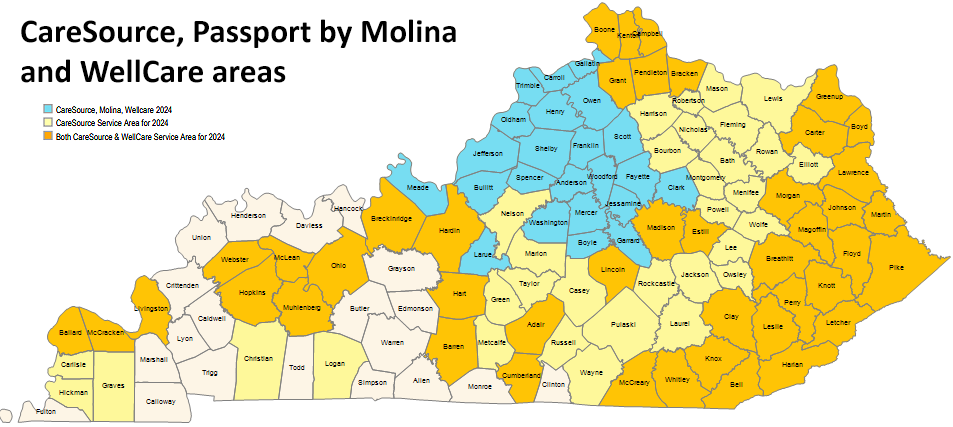
State Cabinet for Health and Family Services maps; click to enlarge
Four carriers offer health-insurance plans through Kynect: CareSource, Passport by Molina Healthcare, WellCare of Kentucky and Anthem.

All counties have at least two carriers to choose from, with most counties having three carriers and many with four. Since last year, Passport has grown by 22 counties, and WellCare by 26. 

98 of Kentucky's 120 counties have a choice of dental plans.
Under the qualified health plans offered on Kynect, no one can be dropped from coverage or have their premiums increased because of health issues.

More plans have been certified for 2024 than for 2023, and Anthem and Best Life will offer dental plans. 

Not all plans are the same, noted Carrie Banahan, deputy secretary of the state Cabinet for Health and Family Services, who encouraged consumers to visit kynect.ky.gov for details. “There’s more to plans than the monthly premium,” she said in a press release. “Make sure your doctors and other clinicians are in their network. Check out whether your favorite pharmacy is among their preferred.”

Some plans new features or benefits, including enhanced diabetes coverage, fitness memberships and vision benefits. Telehealth is covered by all plans at differing out-of-pocket costs. Kentuckians still have access to the more generous financial assistance originally made available as part of the American Rescue Plan passed as a result of the pandemic.

Open enrollment in a qualified health plan overlaps with other annual enrollment periods, including Medicare. Medicare beneficiaries may make changes through Dec. 7 and enrollment choices take effect Jan. 1.

For enrollment assistance, visit kynect.ky.gov or call 855-459-6328. You may also get help at your local Department for Community Based Services office, from a kynector or a licensed health-insurance agent.

Monday, October 30, 2023

Sugar season has started, so brush your teeth twice a day, floss daily, and drink plenty of water, UK dental-school dean advises

Photo illustration by Viktoriia Hnatiuk, iStock/Getty Images Plus
By Jeff Okeson, D.M.D.
Professor and dean, University of Kentucky College of Dentistry

From Halloween through New Year's, holiday parties and family events are filled with gifts and delicious treats. Kids go trick-or-treating, pies are baked and cookies are decorated. It’s the time of year that brings everyone together.

But with all the sugary treats, increased potential for cavities can be a concern. Cavities are small holes in the teeth caused by tooth decay. Eating sugar without proper dental hygiene can lead to plaque buildup on teeth, which can dissolve the enamel on teeth and eventually cause cavities.

It’s important to pay attention to holiday favorites like sugary baked goods, candied nuts and candy canes that contain a lot of added sugar which can lead to tooth decay. It’s also easy to forget that holiday drinks like apple cider and cocktails can be acidic leading to tooth erosion.

While sweet treats can be enjoyed, as we head into the fall and winter months it is important to stay on top of your oral health to ensure your dental visits are cavity-free. Here's how to do that:

Brush your teeth properly. Adults and children alike should brush their teeth twice daily with fluoride toothpaste for a full two minutes. Divide the mouth into four sections, top right, top left, bottom right, bottom left and brush each section for 30 seconds. Gently rotate the toothbrush bristles in circles, being careful not to irritate the gums. Rinse the mouth to wash out all toothpaste.

Floss daily. Flossing is equally as important as brushing. Flossing cleans hard-to-reach areas between the teeth and below the gum line. One of the most common places for a cavity to form is between the teeth, which is why flossing is necessary when cleaning the entire mouth. Adults and children should floss their teeth at least once a day, ideally at night before bed.

Drink plenty of water. Staying hydrated is beneficial for overall health, but drinking water is also one of the easiest ways to help prevent cavities. Water containing fluoride strengthens teeth and prevents decay. Water also washes away leftover food and residue that can lead to cavity-causing bacteria.

Visit the dentist regularly. Adults and children should visit the dentist for routine check-ups every six to 12 months. Visiting the dentist regularly lets people know if they are at risk for cavities. Once a patient is seen, dentists can understand which treatments might be needed or what changes in oral hygiene or diet might help reduce their risk of tooth decay.

While these tips can help prevent tooth decay, even the most diligent brushers can still get a cavity. There are a few telltale signs that indicate a dental visit is needed. Contact a dentist or health care provider if you experience any of the following symptoms:
  • Toothache or pain
  • Sensitivity to heat or cold
  • Tooth discoloration
  • Swollen gums
Holiday sweets and drinks are something to look forward to and may be hard to avoid completely. Instead of worrying about what isn’t okay to eat, focus on consuming in moderation. Drinking plenty of water and keeping up on your brushing and flossing are some of the best ways to take care of oral health.

Friday, September 29, 2023

Legislators waive chance to set up repeal of expanded Medicaid services, and are talking with administration officials about it

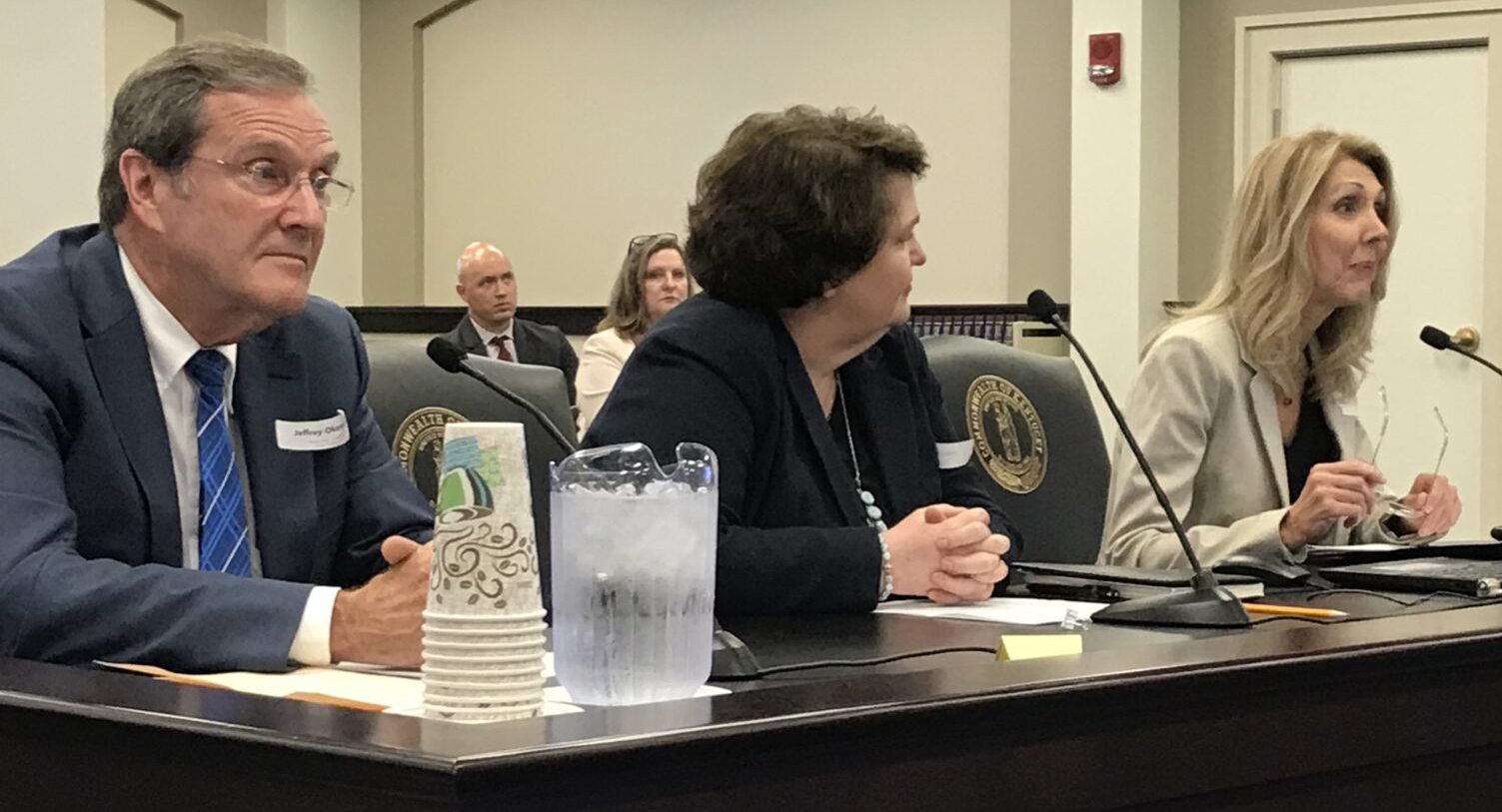
University of Kentucky dental Dean Jeffrey Okeson, left, spoke to
a legislative committee in August unsupport of expanded Medicaid
dental services along with Dr. Margaret Hill 
center, dental dean at
the University of Louisville, and Dr. Pamela Stein, dental dean at
the University of Pikeville. 
(Kentucky Lantern photo by Deborah Yetter)
By Deborah Yetter
Kentucky Lantern

Around 400 patients every week, most covered by Medicaid, flood the University of Kentucky’s dental clinic seeking care they can’t find elsewhere for advanced tooth decay or other oral disease.

Some are in such critical condition they must be airlifted to UK, Dr. Melvyn Yeoh, the university’s chairman of oral-health science, recently told state legislators. Swelling from dental infection threatens some patients’ airways, leaving them unable to survive an hours-long ambulance ride to Lexington from rural Kentucky.

Others arrive with advanced oral cancers that could have been detected and treated sooner with regular dental care.“Bad teeth cause life-threatening infections,” said Yeoh, who testified Sept. 12 before a legislative committee in support of expanded Medicaid dental benefits.

“With late-stage oral cancer diagnosis, people can die,” Yeoh added, noting that Kentucky has the nation’s second highest rate of oral cancer. It ranks 49th in overall oral health.

Some patients wind up in intensive care for days or weeks, Yeoh said, and such cases run up hundreds of thousands of dollars in medical bills, often paid by Medicaid, in cases that might have been addressed earlier at far less cost in a dentist’s office.

“It’s actually driving up the costs of health care,” he said.

Yeoh was one of the latest health professionals to speak on behalf of expanded Medicaid dental services, as well as broader hearing and vision care, introduced this year by Gov. Andy Beshear.

“I am extremely excited about it,” Yeoh told the committee. “We think it can do a lot for us as providers of dentistry in Kentucky.”

But the Democratic governor's changes have run into a wall of opposition from Republican legislators who control the General Assembly and claim he usurped their authority by expanding care through executive order.

Legislators can’t take any action to override the expanded benefits until they meet in the next legislative session in January, but some continue to blast Beshear, who is seeking a second term in the Nov. 7 election.

‘At home on their couch’


An outspoken critic, Rep. Randy Bridges, R-Paducah, said at the Sept. 12 hearing that Beshear’s effort was “a loophole or political move” to avoid going through proper legislative channels.

Senate Majority Floor Leader Damon Thayer complained that Medicaid — which covers health care for some 1.6 million low-income Kentuckians, about one-third of the state’s population — has grown too large and includes enrollees simply unwilling to work.

“When I continue to see these stories about 18- to 34-year-old white men who’d rather sit at home on their couch with their Netflix remote and their DoorDash, it really aggravates me that they are living on the taxpayers’ money when they are able-bodied and should be out there working,” Thayer said.

Thayer didn’t cite any source for that claim, and Medicaid money goes to providers, not patients. Advocates who spoke that day said his characterization was inaccurate because most Medicaid beneficiaries who are not disabled work at low-wage jobs that don’t include health coverage. 

To get better jobs, they need better health benefits, which may help them get into the labor market, advocates said.

“We’re talking about workforce readiness here,” said Sheila Schuster, executive director of the Kentucky Mental Health Coalition. “If we want people to get back, as Senator Thayer has suggested, into the real workforce, the full-time workforce, we need to make sure they can see and hear and are not suffering from dental pain.”

The expanded benefits include services such as dentures, fillings, root canals, and crowns not previously covered by Medicaid, which for years covered only one annual checkup and tooth extraction for adults.

A shortage of dentists, and Medicaid's low reimbursement rates, causing many dentists to opt out of the federal-state health plan, has created an oral health crisis in Kentucky, they say. Even with the expanded benefits introduced this year, patients can’t find providers who take Medicaid.

“It’s an enormous problem that we have here and it’s not getting any better,” Dr. Jeffrey Okeson, dean of the UK dental school, told lawmakers at a hearing in August before the Administrative Regulation Review Subcommittee.

Okeson was joined by the deans of the University of Louisville dental school, and a new one in development at the University of Pikeville, in urging support for the expansion of Medicaid dental services.

One patient ‘alive today’

Meanwhile, advocates say such services are especially needed for vulnerable adults struggling to escape circumstances including domestic violence and addiction.

Ann Perkins, executive director of Safe Harbor of Northeast Kentucky, one of the state’s 15 regional domestic-violence shelters, said dental as well as vision and hearing services are essential for clients who need them to succeed in school, job training and employment.

“This is how our state can actually do something productive,” Perkins told legislators. “Your money will never be better spent.”

She said some of her clients are in dire situations, including a woman suffering from lung cancer who could not undergo chemotherapy until she got treatment for abscessed, infected gums. The client had called every dentist in the region but none who accepted Medicaid could fit her in, Perkins said.

Perkins used $500 in Safe Harbor funds to pay for the dental treatment, which the woman later repaid, she said. “She’s doing great,” Perkins said. “She’s just one example of how important dental care was for her to be alive today.”

John Bowman, Kentucky coordinator for Dream.org, a national non-profit that works for criminal-justice reform, said such benefits are “huge” for people recovering from addiction, including himself.

“It gives people a sense of self-worth,” he said. “If we want people to be productive members of society, we need to back them with these services.”

‘To us, it was a win’

Legislators took no action on the regulations expanding Medicaid benefits at the Sept. 12 meeting. They could have found them “deficient,” setting them up to be voted down when the legislature next meets. So iIt appears that an effort is uderway to keep the benefits in place.

Rep. Derek Lewis, R-London, co-chair of the committee, said discussions have begun with Beshear administration officials, following complaints by lawmakers they had not been consulted. Lewis said he and co-chair Sen. Stephen WestR-Paris, were contacted recently by Eric Friedlander, secretary of the Cabinet for Health and Family Services, and Medicaid Commissioner Lisa Lee, to discuss the issue.

“I think that goes a long way toward working this out,” Lewis said.

Rather than voting to disapprove the regulations on Sept. 12, the commitete sent them for further review to the joint Health Services Committee, which is unlikely to take them up for several months.

Yeoh, the UK dental official, said he views it as a good sign the committee didn’t reject them outright.

“To us it was a win,” he said. “We’re extremely happy about that.”

Friday, August 11, 2023

Legislators insist on 'procedure' as dental-school deans plead for approval of expansion of dental benefits in Kentucky Medicaid

Dr. Pamela Stein, right, dean of the University of Pikeville dental school, spoke in Frankfort Tuesday about the need for expanded Medicaid dental benefits, joined by Dr. Margaret Hill, interim dean of the University of Louisville dental school, and Dr. Jeffrey Okeson, dean of the University of Kentucky dental school. (Kentucky Lantern photo by Deborah Yetter)
By Deborah Yetter
Kentucky Lantern

Working at a public “safety net” dental clinic in rural Western Kentucky, Dr. Pamela Stein routinely saw a heartbreaking sight.

“It was not unusual at 6 o’clock in the morning to see 10 or 15 people standing in line waiting to get in because they had tooth aches, because they couldn’t find anyone else to care for them,” said Stein, appointed last year as dean of a new dental school being formed at the University of Pikeville.

Some patients at the Marshall County clinic were in tears after having diseased, throbbing teeth removed at the clinic operated by the University of Kentucky, she said.

“People would actually cry, they were so relieved,” Stein said, speaking before a legislative committee Tuesday in Frankfort.

She and others spoke in support of the state’s recently expanded Medicaid dental services for adults to include dentures, fillings, root canals and crowns. Medicaid previously paid only for one annual cleaning and tooth extractions for adults though children get a full range of services.

Stein joined the deans of dental schools at the universities of Kentucky and Louisville to urge continuation of the dental services authorized by Gov. Andy Beshear that have ignited a partisan political fight in Frankfort.

Republicans who control the General Assembly are seeking to block Beshear, a Democrat, from expanding Medicaid dental coverage, as well as vision and hearing benefits, arguing he usurped power that rests with lawmakers.

Officials with the Beshear administration disagree, saying they had the authority because the $39 million expansion is paid for through savings in Medicaid and doesn’t require allocation of new money. The federal government covers 85% of the costs.

But the dental school deans, as did other witnesses who appeared, avoided politics, instead focusing on Kentucky’s abysmal oral health — it ranks 49th in the nation — as well as low reimbursement rates that keep many dentists from treating Medicaid patients.

As a result, many patients living with untreated dental disease can’t find a dentist, especially in rural areas, or often find long waiting lists. And oral infection is linked to a host of other health problems that plague Kentucky, including heart disease, stroke, diabetes and premature births.

“It’s an enormous problem that we have here and it’s not getting any better,” said Dr. Jeffrey Okeson, the UK dean. Okeson said Medicaid doesn’t cover costs of dental care.

For example, he said, UK last year billed Medicaid $14.2 million to treat 37,000 patients but was reimbursed only $4.1 million, about 30% of its costs. UK makes up the difference but can’t do so indefinitely if it begins cutting into the academic budget, he said.

His counterpart at U of L agreed, noting that together UK and U of L treat around 90,000 Medicaid dental patients a year, many of whom can’t find care elsewhere.

“These folks would probably not be able to receive dental care if it wasn’t for dental schools acting as a safety net,” said Margaret Hill, interim dean of U of L’s dental school.

“Today we are here before you, speaking on behalf of our patients and our students who would like to do the right thing, and ask that the Medicaid expansion of dental services continue and that rates of reimbursement be more reasonable,” Hill added.

Several witnesses described the enormous suffering of patients who previously lacked dental coverage and now, even if covered under the expanded benefits, can’t find a dentist.

“I don’t mean to tug on your heart strings but I really hope that I do,” said Tiffani Hays, a social worker who works with cancer patients in Winchester, many in dire need of dental treatment. “Oral health is probably one of the most common problems in our patients.”

It was the first opportunity for public comment on the dental benefits expansion enacted by Beshear in April after the lawmakers voted down his first, Jan. 1 expansion in the 2023 legislative session. Beshear reinstated them, with some changes, after lawmakers adjourned.

The stop and start nature of the expanded benefits has patients scared, said Missy Newland, a Louisville woman who gets health coverage through Medicaid and needs ongoing dental care.

“The political tug of war has always had me worried about staying eligible,” said Newland, who works cleaning homes and testified by video. “I fear my access to health care will be taken away and with my health issues, that’s scary.”

The current benefits — which also include expanded benefits for items such as eyeglasses and hearing aids — are good through the end of the year. While Republican lawmakers have objected, they don’t have the power to block them till they meet in 2024 in the next legislative session.

Meanwhile, tens of thousands of Kentuckians have received benefits such as dentures, crowns, fillings, hearing aids and eyeglasses, said Emily Beauregard, executive director of Kentucky Voices for Health, a coalition of health advocacy groups.

“These services are life-changing for people,” said Beauregard, adding that with better vision, hearing and teeth, people are more likely to find jobs.

But GOP legislators object even as some acknowledge the benefits are sorely needed for the about 900,000 adults who get health coverage from Medicaid, a federal-state health plan for low income and disabled individuals.

Rep. Randy Bridges, R-Paducah, and a vocal critic of Beshear’s expanded Medicaid services, accused officials with the Cabinet for Health and Family Services of making “end runs” around lawmakers who, he argued, hold the sole power to fund such programs through its budget committee.

“To come in here and pull at our heartstrings, to say we are the keepers of the purse — we aren’t the keeper of the purse,” he said of the Administrative Regulation Review Subcommittee holding Tuesday’s hearing.

“You’re doing end runs and you want to make us appear to be the villains and we’re not,” Bridges added. “We just want to do it in the proper manner.”

But Sen. David Yates, a Louisville Democrat, argued it’s the health needs of constituents rather than legislative procedure that should matter.

“It did in fact pull on my heartstrings as it should any Kentuckians,” Yates said. “Forget the partisan politics and political games, I think everyone agrees that something has to be done.”

Bridges also complained that witnesses who appeared in support of the expanded benefits were misled by state officials about the legislative process.

“I feel like you have inappropriately led them with some wrong ideas on how this works,” Bridges said.

That prompted a heated retort from Lisa Lee, state Medicaid commissioner, who also spoke Tuesday.

“I have never, ever misled anyone in my 23 years in Medicaid and I will not do so,” Lee told Bridges. “And I really don’t appreciate the fact that you indicated that we have been misleading people.”

As for the witnesses who spoke, Lee said, “They are here because they are concerned that people are going to lose their benefits.”

They included Dr. Bill Collins, a dentist at the Red Bird Mission dental clinic in Clay County who said he constantly seeks grants to cover the costs of dental care for patients Medicaid doesn’t fully cover.

Kentucky has one of the highest rates in the nation of adults with no teeth and patients are flocking to get dentures newly covered under the expanded Medicaid rates, Collins said.

But Medicaid covers only about half the costs, he said.

“When the grant money runs out it has to stop,” he said.

Collins was among witnesses urging lawmakers to continue expanded services and increase payments to dentists. “You can make it a reality,” he said. “That’s what I beg you to do.”

The committee took no action Tuesday. It already has found the regulations Beshear issued to enact the expansion “deficient,” meaning lawmakers could strike them down when they meet next year.

But Rep. Derek Lewis, R-London, committee co-chair, ended the meeting on a conciliatory note, saying he’s willing to work with everyone involved to find a solution.

“I know we’re in an election year,” Lewis said, alluding to the fact Beshear is seeking a second term as governor. “What I don’t want to see is this made to be a political football, I don’t want to poison the well and leave patients and providers holding the bag.”

“I think we can make a difference,” he said. “We need to make a difference.”

Tuesday, April 25, 2023

Beshear administration issues regulations to restore expansion of Medicaid dental, vision and hearing benefits legislature nixed

Family Health Centers in Louisville serves many
Medicaid patients. (FHC Louisville website photo)
By Melissa Patrick
Kentucky Health News

Gov. Andy Beshear has again proposed regulations to expand dental, vision and hearing benefits for  Kentucky adults on Medicaid, after the legislature found similar regulations deficient, thus ending the benefits. 

Each regulation says why it is "substantially different" from the original regulation. Most of the reasons have to do with changes in the services offered under the original and new regulations. This language was necessary because the bill that quashed Beshear's original regulation to expand dental, vision and hearing services for Medicaid adults requires any new regulation to be "substantially different."

The bill had an emergency clause, so it became law as soon as the legislature overrode Beshear's veto. But it also told the Medicaid program to reimburse health-care providers "for services rendered or initiated prior to the effective date of this act," which was March 29.

The proposal is open for public comment through the end of May. 

"The legislature needs to hear from people about whether dental, vision and hearing services do make a difference in their life, if in the past there have been times when they needed additional hearing care or hearing aids or additional dental work," Cara Stewart, policy-advocacy director for Kentucky Voices for Health, which favors expansion of such benefits, told Kentucky Health News.

Anyone interested in participating in a Zoom hearing at 9 a.m. ET May 22 should notify the Cabinet for Health and Family Services in writing by May 15.  Those who have made this request will have a Zoom invitation emailed to them the week before the scheduled hearing. If no requests to attend the public hearing are received by May 15, the hearing may be canceled. 

The cabinet is accepting written comments on the regulations until May 31. Comments should be sent to Krista Quarles, Policy Analyst, Office of Legislative and Regulatory Affairs, 275 East Main Street 5 W-A, Frankfort KY 40621. Her phone number is 502-564-6746; her fax is 502-564-7091; and her email is CHFSregs@ky.gov.

Kentucky Voices for Health will also be collecting comments from anyone who would like to make a public comment on these regulations, as they have done before for other rules.  Stewart said KVH will include these comments in their written public comment submission to the health cabinet. 

Stewart said the purpose of their easy-to-use comment collector is to be able to hear people's "real voices" tell what these policies mean in their "real lives because that's what matters most." 

Each of the new regulations addressing expanded dental, vision and hearing services for adults on Medicaid starts by giving reasons they are needed, including concern that failure to implement these services, which have gained federal approval, could result in the loss of federal funds. 

They say the regulations are needed to be able to pay providers for these services, and as a way to ensure that appropriate services are being offered in appropriate settings, instead of emergency rooms. 

Stewart also noted that it is especially important for people to get dental care from an appropriate provider because dental pain in the emergency room is a gateway "to addiction to pain medication." 

"Offering better and more comprehensive dental services is a way to stop that," Stewart said. "So literally, it's a way to save lives and save suffering." 

The regulations say these services will help more than 900,000 Medicaid recipients in Kentucky who are 21 and older return to the workplace.

The governor's veto of Senate Bill 65 said the dental expansion had served "more than 1,000 Kentuckians in all 120 counties" with "nearly 3,330 dental services, including from a dentist in Clay County, who . . . has provided four sets of dentures for patients and has 44 more sets of dentures in progress." Clay County is the home of Senate President Robert Stivers, R-Manchester.

Beshear added, "Nearly 7,000 Kentuckians have received vision services under these regulations, with nearly 43,000 services provided. And 40 Kentuckians have received hearing services with these regulations in place."

Stewart said that having access to dentures and hearing aids will make the biggest difference because many of the managed care organizations already offer glasses as an extra benefit, but not the others. As an example, she noted that many domestic-violence survivors and crime victims have lost teeth and need access to dentures.

"And that really affected their recovery and their ability to feel great about themselves," she said. "And also, every time they open their mouths to smile, they have memories of being abused. . . . There are so many populations for where this is a really big deal." 

State Sen. Stephen West, R-Paris, the sponsor of the bill, has not responded to a request for comment. Legislators complained that Beshear, without consulting them, funded the expansion through savings that Medicaid achieved by having only one pharmacy benefit manager, a middleman between drug manufacturers and the managed-care organizations that deal with Medicaid beneficiaries.

UPDATE, April 26: In a statement to Kentucky Health News, the heath cabinet said the bill affected Medicaid members treated by providers that the state reimburses through fees for services. "Managed-care organizations have the flexibility to continue to provide the extra dental, hearing and vision services referenced in Senate Bill 65 as a value-added benefit to plan enrollees," the cabinet said.

Thursday, March 23, 2023

Legislature takes away Medicaid dental, vision and hearing benefits Beshear granted; he indicates he will do it another way

By Melissa Patrick
Kentucky Health News

In October, Democratic Gov. Andy Beshear announced the expansion of dental, vision and hearing benefits for 900,000 Kentucky adults on Medicaid. On March 16, 2023, the Republican-controlled General Assembly took a final vote to take those benefits away, calling the regulation used to install them deficient. Beshear said Thursday that he will find a way to keep them in place.

Sen. Stephen West, R-Paris
In presenting Senate Bill 65, Sen. Stephen West, R-Paris, said the regulation Beshear issued to expand these services was deficient because the funding came from the $38 million in savings that came when the state moved to a single pharmacy benefit manager, a middleman between drug manufacturers and companies that manage Medicaid.

West said using these savings amounted to the governor "appropriating money" and that lawmakers should have been involved in how it was spent.  

"It was a huge change, really that should have been done through, we felt, through statute through involving the legislature," West said at the Feb. 15 Senate State and Local Government Committee meeting.

In October, Cabinet for Health and Family Services spokeswoman Susan Dunlap told the Courier Journal that federal funds would cover 90% of the expansion's cost. She said the state's move to one pharmacy-benefits manager last year "has resulted in significant ongoing savings to the Medicaid program that will provide enough funding for this program moving forward."

As SB 65 went through the legislature, it was amended to extend dental, vision and hearing services through June 30 to allow people already getting the services to receive them and allow providers to be paid. 

The amendment also says nothing in the bill should be construed to prohibit the state Medicaid department from increasing reimbursement rates, long a goal of health-care providers. The Kentucky Oral Health Coalition says Medicaid's dental provider rates have been stagnant for more than 20 years.

Sen. Stephen Meredith, R-Leitchfield, said a rate hike is especially needed in medically disadvantaged areas. In explaining his vote for SB 65, he also said the money could have been used to help the 5,000 children who are waiting for services from one of the state's special Medicaid waiver programs. 

"I just want to remind folks that what we're asking here is for some involvement from the legislature," Meredith said. "Talk to us. Let us have some input in this." 

What's next? 

Before the expansion of these services, they were offered on a limited basis. 

Dental services for adults were limited to an annual cleaning and extractions linked to certain medical conditions. Adult fillings were not covered. The expansion allowed coverage for fillings, dentures, implants, root canals, extractions, restorations, periodontics and an additional cleaning each year.

Also, under the old rules, a Medicaid enrollee could be evaluated for hearing loss only on referral from their primary-care doctor; and glasses and contact lenses were not covered, though exams were. Some managed-care firms offered some of these services as an incentive to get people to enroll with them.

Asked at his weekly news conference Thursday if there is a way to maintain the benefits, Beshear said, "I believe a new regulation will allow for the continuation of vision, dental and hearing benefits. The expansion of those benefits, the funding coming from the federal government is an executive branch function. But even at the hearing, I believe . . .  one of the legislators said it looks like you'll need a new regulation."

SB 65 requires any new regulation to be substantially different from the original. If Beshear vetoes the bill, the legislature could easily override the veto.

Beshear called the need for dental, vision and hearing benefits for people on Medicaid a "no-brainer" because "This is what gets people back to work." He elaborated:

"There's a study that talks about over 100 million work hours lost due to dental, emergency dental procedures that if you have coverage you avoid. Now there are studies out there about the number of people that can't go to work because we don't cover getting them a pair of glasses. And then think about safety on the job site. You know a ton of Americans . . . suffer from hearing loss. And to be able to get to the job and to do it correctly, you need to have that type of coverage. Again, if we care about the workforce, right, let's take the basic steps to get more people healthy [and] back to work." 

Access to providers

West also argued that health-care providers tell lawmakers that even if these services are permitted in Medicaid, the program's reimbursements are so low that it will be hard for the patients to find providers. 

That said, the health cabinet says thousands of Kentuckians on Medicaid have already taken advantage of these services since they became available Jan. 1.

"As of Feb. 22, more than 8,000 Kentuckians – across all 120 counties – have already received dental, vision, and hearing services they need under these regulations," the cabinet said. "More than 1,000 Kentuckians received nearly 3,330 dental services under these regulations – in all 120 Kentucky counties – including from a dentist in Clay County who since Jan. 1, 2023, had provided four sets of dentures for patients and has 44 more sets of dentures in progress."

Clay County is the home of Senate President Robert Stivers, R-Manchester.

The cabinet added, "Nearly 7,000 Kentuckians have received vision services under these regulations, with nearly 43,000 services provided. And 40 Kentuckians have received hearing services with these regulations in place. . . . Providers have received over $1 million in reimbursement for the services."

Health advocates push back 

Health advocates were disappointed in the bill's passage and called for legislators to reinstate thes services. 

"The genesis of this unfortunate piece of legislation is a raw partisan battle between the General Assembly and the governor," said Terry Brooks, executive director of Kentucky Youth Advocates. "Both branches of our government should be holding each other accountable when one thinks the other overstepped its bounds. Yet, there should also be no doubt that neither providers nor Kentucky families should pay the price for a political food fight. SB 65 has providers left holding the bag with more Kentuckians losing dental benefits than the total population of Alaska. It's as unwise as it is unfair." 

In a statement about the passage of SB 65, the Oral Health Coalition cited the great need for comprehensive dental services in Kentucky, noting that the state ranks among the bottom five states on several oral-health indicators and has more seniors with no natural teeth than any other state. 

"While it was a worthy debate about the process to expand services, the reality now is that 900,000 low-income, disabled, and other vulnerable Kentucky adults must once again go without critical dental care," the coalition said. "By no means is this expansion the answer to the growing oral health crisis in Kentucky, but it can offer a first step toward providing comprehensive dental care for Kentuckians. The Department for Medicaid Services and the General Assembly must reach an agreement in the immediate aftermath of the legislative session so our Commonwealth can be back on track to providing folks with the health care they need to be healthy, work, and thrive." 

Emily Beauregard, executive director of Kentucky Voices for Health, an advocacy group, told Kentucky Health News in an e-mail, "Regardless of the politics, it's clear that Kentuckians don't have enough access to the dental, vision, and hearing care they need to be healthy. We've made progress in recognizing that mental health is health and we need to do the same for our mouths, eyes, and ears."  

She added, "Whether it's through regulation or legislation, we need policymakers to increase access to these services to improve population health and build a stronger workforce," she added. With the passage of SB 65, "I hope legislators will take action to increase services through legislation instead."

Tuesday, October 4, 2022

Poor oral health in children is not just from too many sugary foods; education, income and environment all play roles

CDC photo
While brushing your teeth is important to maintaining good oral health, dental-health experts say it's not the only thing responsible for poor oral health, especially when it comes to children in Appalachia, where sugar is usually blamed.

"It’s a common misconception that consuming sugary foods and beverages is the only cause of tooth decay. While that is undoubtedly a problem, there’s much more to good oral health," Daniel W. McNeil and Mary L Marazita write for The Conversation, a site for journalistic writing by academics. "It includes consistent brushing and flossing; eating healthy foods, like fresh fruits and vegetables; avoiding tobacco products; and wearing mouth guards while playing certain sports. Regular visits for dental care are also critical, as they provide an opportunity for cleanings and preventive care." 

McNeil and Marazita, who run the University of Pittsburgh's Center for Oral Health Research in Appalachia, say the region's poor oral health stems from a combination of factors beyond tooth brushing and other personal hygiene.

Poor oral health, they write, is more common among "people who have less formal education or lower incomes, marginalized ethnic and racial groups and those living in more rural areas, such as Appalachia," which has one of the highest rates of oral health problems in the nation. And among these groups, oral health issues tend to show up at younger ages. 

Other than education, behavioral and social influences, reasons for poor oral health can include genetic influences that dictate a preference for sweet foods, mouth bacteria that can lead to oral diseases, environmental factors such as air quality, access to healthy foods, the cost of dental care, access to transportation to and from the dentist, access to school-based programs, water quality and whether one lives in a community with fluoridated water, which can keep cavities from forming.

McNeil and Marazita note that cavities are the most common chronic disease in children, despite being preventable and that "more than 40% of children have tooth decay when they start kindergarten. . . . Dental problems in kids can lead to missed school, pain and embarrassment about visible decay, and missing or crooked teeth." 

They write that parental and caregiver role modeling can greatly influence children's oral health habits. Examples include drinking water instead of sugary beverages, eating a healthy diet, practicing good dental hygiene habits and expressing a positive attitude about going to the dentist. 

The article offers several other suggestions to improve oral health, saying one of the best things parents or caregivers can do is to take their child to the dentist.  

"The American Academy of Pediatric Dentistry and other professional health organizations recommend that children see an oral health care provider before age 1 or at the emergence of the first tooth," they write. "Access to dental treatment, especially preventive care, has been shown to improve oral health in families and their communities."

McNeil and Marazita also call for system-level changes that ensure routine dental care is affordable and accessible to everyone. They also call for integrating oral health practices into schools and educational programs, saying this will benefit all children regardless of their family's socioeconomic status.

Friday, June 3, 2022

Free dental, health and vision clinic comes to Hazard June 11-12

Free dental, vision and medical care will be provided in Hazard on a first-come, first-served basis on the second weekend in June.

The clinic will open at 6 a.m. Saturday, June 11 and Sunday, June 12 at East Perry Elementary School at 301 Perry Circle Rd. in Hazard. The clinic's closing time may vary, based on the service area’s daily capacity.

All of the services are free and no identification is required, but patients will be required to wear a face covering and must undergo a Covid-19 screening before entering the clinic. Patients are also asked to bring a list of their medications, or pictures of the bottles with the label visible, and to take their medications on the morning of the clinic as directed. 

The patient parking lot will open no later than midnight on Friday night, June 10, and remain open for the duration of the clinic. Once in the parking lot, additional information will be provided regarding next steps.

Photo provided
RAM encourages everyone who would like services, especially dental services, to arrive as early as possible. 

Due to time constraints, patients should be prepared to choose between dental or vision services. Medical services will be offered free to every patient attending the clinic. 

"Services include dental cleanings, dental fillings, dental extractions, dental x-rays, eye exams, glaucoma testing, eyeglass prescriptions, eyeglasses made on-site, women's health exams, general medical exams and mental health services. Free take-home colon cancer screening test kits will also be available," says the news release. 

The clinic is sponsored by Remote Area Medical Volunteer Corps, a nonprofit provider of free pop-up health clinics, and the Hazard-based University of Kentucky Center for Excellence in Rural Health. 

For more information or to donate or to volunteer, please visit www.ramusa.org or call 865-579-1530. Click here for RAM's webpage of frequently asked questions. 

Thursday, May 12, 2022

University of Pikeville says it will build Kentucky's third dental school with a $25 million gift from an anonymous donor

University of Pikeville website logo
The University of Pikeville plans to create Kentucky's third dental school with a $25 million gift from an anonymous donor's family foundation, the largest in the school's 133-year history.

UPike President Burton Webb announced the gift last Saturday during the private university's health-professions commencement.

“The foresight of a generous family giving to a university to establish a dental school is special,” Webb said. “This is another example of challenges being met and solved right here by those who call this area home. It’s also incredible that the university, this family and now a dental school will each have their roots right here in these mountains. It’s a great day to be a Bear!” The university's mascot is a bear.

Webb told the Appalachian News-Express of Pikeville that the proposed school would go through an accreditation process, similar to that for its Kentucky College of Osteopathic Medicine and Kentucky College of Optometry, which will determine the project's timeline and size.

“Sometime before we started the optometry college, the university had done a feasibility study on the need for more dentists in Appalachia,” Webb told the newspaper. “At the behest of the family foundation we refreshed that study and it showed continued need. The gift is generous and we are deeply grateful.”

Kentucky's dental colleges are at the University of Kentucky and the University of Louisville. Pikeville is the seat of Pike County, Kentucky's easternmost, and is nearer to Charleston, W.Va. That state has one dental school, at West Virginia University in Morgantown, and Virginia has one, at Virginia Commonwealth University in Richmond. Lincoln Memorial University in Harrogate, Tenn., just south of Cumberland Gap and Kentucky's southeast corner, is scheduled to open a dental school this fall.

Terry Dotson, chair of UPike's Board of Trustees, said in a news release, “The founding of a dental program in these mountains will lead to better healthcare outcomes for a historically medically underserved population. This institution, its students, faculty and staff are a driving force for health education in the commonwealth. The dental school will complete the circle of medical services for the region and the immediate area. The economic impact with the addition of more professional students will grow businesses throughout the entire community and the region. This will be a project that will take the time and talents of many partners locally and statewide.”

Vice President for Advancement and Alumni Relations David Hutchens said the anonymous donor “has a deep love for Appalachia and a passion for improving healthcare in our region. Their generosity will reverberate for generations, impacting not only the graduates of the program but also profoundly benefitting the lives of the countless patients they will serve for generations to come. This is a transformative gift, an act of deep love and devotion for this region. We are humbled by this generosity, thrilled to have this opportunity and ecstatic about this vision.”

Sunday, July 11, 2021

'Back to normal' should include 'Back to the dentist," and remind us of oral health's importance to overall health, providers say

iStock photo via Getty Images
By Stephanie and Linda Poynter


Like many Kentuckians, we are eager for a summer of “back-to-normal” activities — backyard barbecues with neighbors, family trips to our favorite state parks, and evenings at the county fair.

One big “back-to-normal” activity for families across the commonwealth this summer is reviewing that ever-growing back-to-school checklist. As a dentist and dental hygienist and committed members of the Kentucky Oral Health Coalition, we are encouraging you to make sure scheduling a dental check-up for you and your family is at the top of that list!

With Covid-19 guidelines shifting, many dental practices are back up and safely running as usual, though some are currently serving a lower patient volume than prior to the pandemic. Whether you are looking for a new dental provider or returning to your community dentist, now is the time to schedule a check-up. Not only will the provider examine your teeth, gums, and mouth for any concerns, they will advise on preventive practices, screen for oral cancer, and recommend treatment for any dental problems.

Caring for your teeth and having routine dental check-ups are critical for optimal oral health and overall health — for those little ones celebrating their first tooth to those older adults mitigating tooth loss. In fact, oral health is often described as the gateway to overall health as gum disease is linked with other health problems, such as cardiovascular disease and diabetes, for example. And for children, a healthy, pain-free mouth makes it easier to focus and listen, play and learn, and grow and thrive.

You and your family can practice preventive dental care at home between check-ups by:
  • Brushing your teeth for two minutes, twice a day.
  • Flossing your teeth once a day.
  • Limiting sugary drinks and choosing fluoridated tap water.
  • Replacing your toothbrush every three or four months and after an illness.
While this checklist may seem simple, a reality remains in which disparities persist throughout the oral health system. Factors like cost barriers to accessing care, utilization of dental care, and the racial makeup of the dental workforce impact the oral health outcomes – and daily lives – of many Kentuckians, especially for our communities of color. The American Dental Association findings show that 15 percent of those in need of dental care did not obtain it citing financial and insurance coverage reasons as the top barriers.

To support student oral health, many school districts in Kentucky partner with their local health departments to provide school-based oral health education and preventive dental services right in the schools. These services are normally provided at no cost to the families who qualify, and the programs work directly with the schools and local dental providers to ensure that needed dental treatment is done and your child’s good oral health restored.

Ensuring equitable access to dental care, health coverage, safe drinking water, and nutritious food are at the bedrock of improving the oral health of every Kentuckian. We are reassured in these efforts as we’ve seen new investments being made both federally and at the state level to expand access to safe drinking water and nutritious food across the commonwealth through the American Rescue Plan Act dollars allocated to Kentucky.

We must continue to strengthen investments and programming that support optimal oral health, including oral health education campaigns, regular collection of state and county-level oral health data, and adequately funding Medicaid to ensure all Kentuckians can access the oral health and preventive healthcare they need.

Back-to-normal should include back-to-the-dentist. It should also include a refreshed look at the vital importance oral health is to the overall health and well-being of our children, communities, and ourselves.

Dr. Stephanie Poynter is the dental director at Family Health Centers in Louisville and chair of the Kentucky Oral Health Coalition. Linda Poynter is a public-health dental hygienist and oral health manager at the Northern Kentucky Health Department.

Saturday, February 27, 2021

It's National Children's Dental Health Month, time to think about improving the poor oral health of Kentucky's children

By Stephanie Poynter
Chair, Kentucky Oral Health Coalition

It is no secret that Kentucky has historically had a poor reputation when it comes to our dental health. In a recent study ranking states with the best and worst dental health, the state ranked 41st in the nation in indicators of dental wellness. We have among the lowest dentists per capita, highest sugar-sweetened beverages consumption, and highest percentage of adult smokers – all contributing factors to poor oral health outcomes.

This is a reality that dental providers and advocates have grappled with for decades. And this is the reality that motivates the Kentucky Oral Health Coalition and its diverse membership in its collaborative oral health campaign designed to educate parents, activate policymakers, and inspire health professionals, as well as engage the public to create optimal oral health for all.

February is National Children’s Dental Health Month – a time when dental health providers and advocates promote the importance of establishing good oral hygiene habits early in life, needs around access to dental care and coverage, and ways to improve health outcomes across the lifespan.

Dr. Stephanie Poynter
Now, many of us have likely experienced some sort of tooth pain in our life – think back to how distracting or limiting that pain was for your daily life.

For children, when experiencing prolonged and persistent dental pain, it is difficult for them to develop the skills they need to learn. Once in school, students with poor dental health are three times more likely to be absent than other students. Additionally, children with poor oral health care experience higher rates of emergency room visits and have less promising job prospects as adults compared to children who receive appropriate oral health care.

The bottom line: when teeth are healthy and pain-free, it is easier for children to focus and listen, play and learn, and grow and thrive.

A recent survey of Kentucky parents and oral health, primary care, and school professionals conducted by KOHC indicated that the Commonwealth needs increased education around dental care early in a child’s life from pediatricians, school professionals, and parents as well as improved access to affordable dental care across the state for there to be real progress in health outcomes. Here are a few urgent recommendations for action in the statehouse to the schoolhouse to your house:

• Promoting oral health literacy campaigns to teach the basics of oral health.

• Integrating oral health services into doctor’s visits to prevent cavities in children, pregnancy complications in women, and oral health infection in adults.

• Ensuring all children entering Kindergarten have a dental screening/exam.

• Establishing school-based health programs and utilizing the Expanded Care Services policy in schools to increase access to care for children right where they are learning.

• Increasing access to care in rural and urban communities by leveraging tele-dentistry to detect oral health concerns – a practice that has increased in use during the Covid-19 pandemic.

• Sustaining state funding for Medicaid and Kentucky Children’s Health Insurance Program (KCHIP), and prioritizing investments focused on closing the remaining gap in child health coverage.

Oral health is much more than a bright, beautiful smile.

It takes establishing good brushing and flossing routines early in life and maintaining regular dental check-ups across the lifespan. It takes more equitable access to dental care right in our communities. It takes a commitment from state leaders to allocate funds for Medicaid and KCHIP programs and to address persistent racial disparities in coverage and access so that every child and their family can access the health care they need. It requires healthy foods and safe drinking water in every neighborhood and county.

It takes all of us to recognize that oral health IS health and that it must be prioritized in our homes, in our communities, and in our state budget. Only then will we see progress in that poor oral health ranking that has burdened Kentucky for far too long.

Dr. Stephanie Poynter is dental director at Louisville-based Family Health Centers Inc.

Sunday, December 13, 2020

With first vaccinations expected Monday, but only the beginning of long rollout that will run well into summer, Beshear urges caution

A container with insulated boxes of vaccine is rolled into the UPS
Worldport in Louisville. (Photo provided by governor's office)
By Al Cross

Kentucky Health News

As the first shipments of coronavirus vaccine arrived in Kentucky, and the pandemic's advance remained steady, Gov. Andy Beshear again asked Kentuckians to "remain vigilant," said a press release from his office.

The state reported 2,454 new cases of the virus, more than 100 fewer than last Sunday, and its seven-day rolling average of new cases dropped to 3,228. During that time, the state saw 1,235 fewer cases than the previous week, and the share of Kentuckians testing positive continued to fall.

The current seven-day positivity rate is 8.52%, 1.23 percentage points below where it was last Sunday, 9.75%. That's a decrease of 12.6%. The rate, which Health Commissioner Steven Stack has called a "leading indicator" suggestive of future trends in cases, has declined for 10 consecutive days.

“We are seeing good trends and getting great news in our battle against Covid-19,” Beshear said in the release. “Now we are less than 24 hours from the true beginning of the end of this virus,” with the arrival of vaccine.

The first plane from the Pfizer Inc. plant in Michigan arrived at the United Parcel Service hub in Louisville at 12:06 p.m., reports Lucas Aulbach of the Courier Journal. The shipments are being sorted "and shipped out the same day to destinations across the eastern U.S.," he writes.

Beshear said in another news release that he expects the first Kentucky vaccinations Monday -- at 11 strategically selected hospitals that can maintain ultra-cold storage of the vaccine -- and nursing homes, where pharmacy chains CVS and Walgreens have federal contracts to vaccinate residents and staff.

One of the first boxes that arrived at the UPS Worldport was headed to a nearby hospital and another was going to an undisclosed Kentucky site, NBC reported.

Health Commissioner Steven Stack said in the release, “Early doses will be limited in supply and immunization will begin with nursing-home residents and frontline health-care workers. From there, as vaccine shipments continue, Kentucky will immunize all health-care (including oral-health) workers and first responders, followed by the K-12 education community, to get our children and educators safely back to school.”

Beshear said, “Our community doctors and nurses, as well as long-term care residents and staff, are preparing to do their part first. We will all get a turn. When it is your turn, I strongly encourage you to get vaccinated so you can do your part to protect yourself, your family and our entire state.”

Stack said the state is awaiting more guidance from federal officials on who will come next. He added, “Having vaccines this quickly is a modern medical miracle. Having patience in the months ahead is essential, though, as vaccine supplies increase and hopefully all interested persons have access to vaccination by the end of summer 2021.”

The 11 hospitals expected to get 12,675 doses of the vaccine are in Louisville, Paducah, Bowling Green, Madisonville, Pikeville, Corbin, Lexington and Edgewood. Another 25,350 are going to CVS and Walgreens for nursing homes.

The vaccine developed by Moderna, which does not require ultra-cold storage, is expected to get federal approval next week. Between the two, Kentucky could get 150,000 doses this month, Beshear said. Both require second doses, which will come in later shipments. 

"The immediate goal is reducing Covid-19 deaths," the release said. "With 66% of the deaths coming from long-term care facilities, vaccines could help significantly decrease Kentucky’s Covid-19 death toll beginning in January. Also, because long-term care residents tend to require the most care, vaccinations in these facilities will help reduce Covid-19’s burden on Kentucky’s health-care system."

Sunday's 15 Covid-19 fatalities, which raised the state's toll to 2,207, were a 75-year-old Bell County woman; two women, 65 and 58, from Boone County; an Caldwell County man, 85; two Daviess County women, 65 and 74; a woman, 82, and a man, 79, from Hopkins County; a Jefferson County man, 83; a Kenton County man, 85; a Lawrence County woman, 58; an Oldham County man, 56; two Pulaski County women, 89 and 50; and a Taylor County man, 76. 

In other coronavirus news Sunday:

  • Counties with 10 or more new cases were: Jefferson, 446; Fayette, 165; Boone, 115; Pulaski, 111; Kenton, 106; Mercer, 79; Hardin, 75; McCracken, 61; Harlan, 52; Campbell, 48; Boyle, 44; Bullitt, 39; Warren, 39; Russell, 36; Carter, 34; Laurel, 33; Daviess, 32; Taylor, 30; Whitley, 30; Boyd, 29; Scott, 29; Jessamine,  27; McCreary, 26; Franklin, 24; Madison, 23; Letcher, 22; Bell, 21; Christian, Greenup, Lincoln and Wayne, 19; Grant and Perry, 18; Adair, Henderson, Nelson and Oldham, 17; Breckinridge and Pike, 16; Calloway, Floyd, Shelby and Spencer, 15; Meade and Trimble, 14; Casey, Graves and Harrison, 13; Bracken, Grayson and Green, 11; and Allen, Estill, Logan and Monroe, 10.
  • Hospitalizations for Covid-19 remained steady, at 1,712, with 434 of them in intensive care and 224 of those on ventilators. The share of intensive-care patients on ventilators is 52%, which is the average for the past month. 
  • The Centers for Disease Control and Prevention approved the Pfizer vaccine for use in 16- and 17-year-olds. The Food and Drug Administration approval Friday was for adults.
  • Extension volunteers in northeastern Kentucky made 250 surgical gowns for employees at Primary Plus, which has 10 clinics in the region and was having difficulty getting protective gear to do coronavirus testing, Katie Pratt reports for the University of Kentucky.
  • "A bipartisan group of senators is expected to introduce a $908 billion coronavirus relief bill as soon as Monday, with a twist: The deal is expected to be split into two pieces," Politico reports, citing "two people familiar with the negotiations. One would be a $748 billion piece of coronavirus relief with less controversial items like schools and health care; the other would marry $160 billion in money for local governments with a temporary liability shield. Those two components have been the toughest part of the negotiation so far, and Senate Majority Leader Mitch McConnell has suggested dropping them and concentrating on the less divisive areas. McConnell had long called a liability shield from coronavirus legislation his 'red line,' while congressional Democrats say the money for states and cities is their top priority. Some Republicans from states with hard-hit budgets like Sen. Bill Cassidy (R-La.) also are pushing for local aid, but many conservatives don’t want to send money to states. Splitting the bill could make it more likely that a relief package can be finalized before Congress leaves for the holidays — something deemed essential with 12 million Americans set to lose unemployment benefits in the coming weeks."

Saturday, April 25, 2020

Dentists and state officials scramble to set rules for reopening dental offices; Beshear says they won't reopen Monday, but soon

About 15 motorists, most honking their horns, circled the Capitol about 15 minutes before Gov. Andy Beshear's briefing, conducted in the white-curtained room at the building's southeast corner. State police have restricted access to the area near the room, but provided an area for protesters to park. The yellow sign says "The cure is worse than the virus;" the white one says "Gov. Andy, you lied; every life matters," apparently referring to Beshear's veto of a bill that would have required medical care for a baby born alive after an attempted abortion. He said existing law provides full protection in such cases.
As news develops about the coronavirus and its covid-19 disease, this item may be updated. Official state guidance is at kycovid19.ky.gov.

By Al Cross
Kentucky Health News

Gov. Andy Beshear said Saturday that dentists' offices won't be able to open Monday because they and state officials haven't agreed on rules for it, but suggested that other businesses might reopen on a regional basis.

Beshear had planned to allow reopening of medical, dental and other health-care providers Monday, but said “Dentists aren’t gonna be ready to reopen on Monday because there isn’t agreed-upon guidance. . . . We have to make sure were doing it right, given how those oral secretions happen in a dentist’s office.”

He said in response to a question at his 5 p.m. briefing, “Before a dentist’s office can reopen we need agreed-upon rules. . . . “We think that the guidelines will come together fairly quickly.” He said they will leave “some risk, but we believe we will have mitigated that risk.”

Sharon Turner, secretary-treasurer of the Kentucky Dental Association, said in an email at 7 p.m. that KDA, the Kentucky Board of Dentistry, the Kentucky Dental Hygenists Association and the Kentucky Oral Health Coalition "all agreed on a plan today. It will be filed later today."

She said acceptance of the plan is still up to Health Commissioner Steven Stack, "but we worked with the state director of public health dentistry, Dr. Julie McKee. We tried to address each bullet point that Stack provides in terms of his concerns needing to be addressed. We have scientific evidence behind recommendations."

Turner said in a telephone interview that KDA cited research from the University of Washington about what sort of personal protective equipment is appropriate for the wide range of procedures that dentists, hygenists and oral surgeons perform. She said rubber mouth dams, which neither providers or patients like, are likely to be used more, as well as high-powered suction.

She said some dentists may not be ready to reopen, or may want to test patients for the coronavirus before treating them, and the proposed plan allows room for professional judgment. "We hope it'll be accepted," she said. "If it's not, it will only be around what's enhanced aerosol protection." The virus travels on droplets that are so tiny they remain suspended in the air.

Turner, former dental dean at the University of Kentucky, added that KDA "heard about the need for the filing of the plan Thursday evening," when Stack issued a call for help during Beshear's briefing. "I think we have done a remarkable job of getting consensus from a large group of divergent stakeholders pretty darn quick."

On Friday, Beshear dismissed the idea that other relaxation of social-distancing rules could occur on a county-by-county basis, as some officials in Clark and Jessamine counties requested. Saturday, he opened the door to the possibility of regional differences, but remained cautious.

Asked about those requests, he said, "If a county makes the wrong decision and causes an outbreak, that sets the whole state back." Then he added that there could come a time when reopenings could be done by region, but “It’ll still have to have a lot of thought.”

At the start and end of his daily briefing, Beshear kept urging Kentuckians to stick with his emergency restrictions.

“Today, I'm tired, just like I know so many of you are, but every day we’ve got to bring it,” he said at the start. “We have to be strong, we have to be patient, we have to be resilient.” At the end, he said, “Let’s not be the generation that got halfway through meeting covid-19 and then just decided it was gonna be too hard. . . . There is hope, there is light, but we gotta do it the right way; we have sacrificed too much … to not finish it out the right way.”

Some protesters returned to the Capitol to protest restrictions, circling the Capitol and honking their horns before the briefing, and chanting during it. Without referring to them directly, Beshear said, “We might have some out there that are anxious but I believe we are more united than we have ever been.”

In other covid-19 news Saturday:
  • The governor reported 171 new coronavirus infections in Kentucky, for a corrected total of 3,905. The number was lower than the previous two days; he said that could be a result of some labs not reporting on Saturdays, “but we still think we are plateaued, or we’re somewhere in the very top part of that curve.” He said the state “could be potentially starting our decline” needed for major reopenings, but several more days would be needed to confirm that.
  • Beshear corrected some news-media reports that major reopenings can't occur unless the number of new cases decline every day for 14 days. “We just have to have a declining rate for 14 days; one day we may have a little more,” he said.
  • The number of deaths reported daily declined for the third day, to five, and Beshear said he thought all were “in senior-living settings.” They were an Adair County woman, 79; a Graves County woman, 92; and three Jefferson County women, 87, 88 and 93. He said 17 percent of the deaths have been of African Americans, twice their percentage of the state's population.
  • Counties with more than five new cases were Jefferson, 33; Graves, 20; Warren, 19; and Fayette, 9.
  • Long-term-care facilities added 24 residents and five employees to the list of those testing positive, for a total of 602 and 273, respectively. Of the 205 covid-19 deaths in Kentucky, 94, or 46 percent, have been in such facilities. The state is issuing a daily report on each facility with a case.
  • Beshear cited the number of cases in Warren County as he announced that a planned three days of testing next week at South Warren High School would be expanded to four days and the following week. He said labs have processed 46,558 tests, and “Our testing capacity is significantly increased; we need to do a lot more.”
  • Of the approximately 3,900 Kentuckians who have been identified as having the virus, 1,266 have been hospitalized, and 301 remain so, Beshear said; 605 have been in intensive care and 164 still are; and 1,501 have recovered.

    Read more here: https://www.kentucky.com/news/coronavirus/article242296216.html#storylink=cpy
  • After some recovered patients retested positive, a three-county health department has adopted a stricter definition for being free of the virus. The Wedco District Health Department, which serves Harrison, Nicholas and Scott counties, said 41 people thought to be recovered were retested and 11 tested positive for the virus. Now the department considers patients to be recovered and able to stop quarantine only after they have tested negative and have had the disease for at least 14 days, with seven of those days symptom-free, including at least three without fever. "The decision is crucial to determining who no longer quarantines to prevent spreading the virus, Rick Childress reports for the Lexington Herald-Leader. "There is no indication other counties are following Wedco’s lead." Harrison County had Kentucky's first covid-19 case.
  • Emergency-room use at the University of Kentucky hospital has dropped by more than half in the last month, UK officials said. The likeliest explanation? "People are avoiding hospitals — even when they really need to go — because they’re scared of catching the novel coronavirus from patients who are infected, John Cheves of the Herald-Leader reports. "Similar no-show stories are being repeated at hospital emergency rooms around the country, worrying doctors who say people could be putting their lives at risk by not seeking health care right away for serious ailments."