Showing posts with label misinformation. Show all posts

Saturday, July 6, 2024

Debunking myths, misconceptions and misinformation about sunscreens: no evidence they cause cancer, but they do expire

Photo illustration from M.D. Anderson Cancer Center
By Gina Van Thomme and Kellie Bramlet Blackburn
MD Anderson Cancer Center

Sunscreen is a hot topic – and not just because it’s a summertime staple!

There are also many myths and misconceptions surrounding sunscreen’s safety, effectiveness and usefulness.

So, if you’ve ever been confused about when – or if! – to use sunscreen, you’re not alone.

We asked MD Anderson Cancer Center dermatologist Anisha Patel about common sunscreen myths. Read on for her answers.

Myth 1: All sunscreens work the same way.
False. Sunscreens can prevent sunburn in different ways:
  • Chemical sunscreens: The active ingredients in chemical sunscreens absorb ultraviolet (UV) rays as they hit the skin, Patel explains.
  • Physical blocker sunscreens: Physical sunscreens, which are also called mineral sunscreens or sun blocks, use ingredients such as zinc oxide and titanium dioxide to form a barrier on the skin’s surface that reflects UV rays.
Not sure whether to use a chemical or physical sunscreen? Hybrid sunscreens contain both chemical absorbers and physical blockers.

When selecting a sunscreen, Anderson dermatologists recommend choosing a broad-spectrum product with at least sun protection factor (SPF) 30. 'Broad spectrum' means the product protects from both UVA and UVB rays which can lead to sun damage and skin cancer. SPF refers to the amount of UVB rays it blocks.

Myth 2: It doesn’t matter what kind of sunscreen I choose.
False. While wearing sunscreen is always a good choice, each type of sunscreen has instructions that must be followed to ensure your skin is protected.

Sunscreen comes in formats including cream, lotion, spray, powder and stick.

Each type of sunscreen has benefits and limitations. For example, many spray sunscreens are clear and absorb into the skin quickly, but this feature can make it challenging to see if you’ve missed a spot.

Overwhelmed by options? Anderson dermatologists recommend physical blocker sunscreens. Patel says this is because they have the broadest range of UVA and UVB protection.

Whatever type of sunscreen you choose, always review its instructions for information on how – and how frequently – to apply and reapply.

Myth 3: Sunscreen causes cancer.
False. There is no medical evidence that sunscreen causes cancer. However, there is a lot of evidence that UV rays from the sun and tanning beds do.

In the past, some sunscreens were recalled for being contaminated with a chemical called benzene. Benzene is not normally found in sunscreen. This recall doesn’t mean you should stop wearing sunscreen, dermatologists say.

Still, some may feel more comfortable using sunscreens that don't absorb into the skin – that is, those physical blockers sunscreens described above.

Additionally, sunscreen isn’t the only way you can practice sun safety. “There are a lot of sun protective options outside of just the creams and sprays,” Patel says.

Other ways to protect yourself from sun damage include:
  • Wearing protective clothing that is dark and tightly woven, with ultraviolet protection factor (UPF) 50+
  • Wearing a wide-brimmed hat
  • Wearing sunglasses with UVA and UVB protection
  • Seeking shade between 10 a.m. and 4 p.m. when sun rays are strongest
Myth 4: I have dark skin. I don’t need to wear sunscreen.
False. Dark skin is susceptible to sun damage.

It takes more sun exposure for darker skin types to get sun damage, Patel says. She explains this is because melanin, which gives skin its color, provides DNA with a small amount of sun protection. Still, this small amount of protection doesn’t prevent sun damage altogether.

“Darker-skinned people can still get a sunburn, still get skin cancers and definitely still get photoaging from UV exposure,” Patel says.

Regardless of your skin color, apply sunscreen liberally 30 minutes before going out in the sun, and don’t forget to reapply every two hours or after swimming or sweating.

Myth 5: My sunscreen is waterproof, so I don’t need to reapply it after swimming or sweating.
False. According to the Food and Drug Administration, there is no such thing as waterproof sunscreen.

There is, however, water-resistant sunscreen. The FDA says these products offer water-resistant sun protection according to the time and SPF level specified on each product.

Heading for a beach day or outdoor workout? Choose a water-resistant sunscreen and follow the product instructions on how often to reapply.
 
Myth 6: My sunscreen is SPF 50, so I don’t need to apply it as often.
False. No matter the SPF number, chemical absorber sunscreens only work for about two hours and should be reapplied after swimming or sweating.

Regardless of the SPF level you choose, you need to reapply with the same frequency, Patel says.

If you have trouble remembering to reapply, Patel suggests using a physical blocker sunscreen. These products don’t rub in or disappear into the skin, so it is easy to determine when to reapply.

“If you can see the white on your face, it's still working,” she says.

Myth 7: There is SPF in my makeup. I don’t need to wear sunscreen.
False. While Patel says that sunscreen in makeup counts, it usually doesn’t provide the recommended SPF levels.

“It's typically only 5 to 15 SPF, and we recommend 30,” she says.

Check that your makeup offers at least 30 SPF, and supplement with additional sunscreen as needed. Finally, don’t forget to apply sunscreen to other exposed areas of your body, and make sure you reapply sunscreen as directed throughout the day.

Myth 8: I only need sunscreen when it is sunny.
False. Sunburn and sun damage may be associated with hot, sunny weather, but they can also occur in cold, cloudy conditions.

“Even when it's cold, sun is getting through the clouds,” Patel says.

While clouds filter some UVB rays, they don’t block UVA rays which are a risk factor for melanoma, she adds.

So even if it’s cloudy or cold, you need to apply your sunscreen the same way you would if it were a warm sunny day.

Myth 9: Sunscreen doesn’t expire.
False. “You cannot rely on expired sunscreen,” Patel says. “Nothing bad is going to happen if you use an expired one in terms of increased toxicity. It just won't work.”

It is also important to store sunscreen properly. Specific storage instructions can be found in the product’s ‘Drug Facts’ section.

For example, if you store your sunscreen in a hot car or in direct sunlight, Patel says the product could degrade earlier than its expiration date.

"You have to look at the storage recommendations. Sunscreen will only last until the expiration date if you keep it within those temperature ranges," she says. "If you go outside of those temperature ranges, the molecules that are protecting your skin will degrade faster.”

Wednesday, June 26, 2024

Supreme Court allows government efforts against controversial social-media posts, saying plaintiffs lack standing to sue

U.S. Supreme Court (Photo by Andrew Harnik, Getty Images)
By Mark Sherman
Associated Press

The Supreme Court on Wednesday sided with the Biden administration in a dispute with Republican-led states over how far the federal government can go to combat controversial social media posts on topics including Covid-19.

By a 6-3 vote, the justices threw out lower-court rulings that favored Louisiana, Missouri and other parties in their claims that officials in the Democratic administration leaned on social-media platforms to unconstitutionally squelch conservative points of view.

Justice Amy Coney Barrett wrote for the court that the states and other parties did not have the legal right, or standing, to sue. Justices Samuel Alito, Neil Gorsuch and Clarence Thomas dissented.

The decision should not affect typical social media users or their posts.

The case is among several before the court this term that affect social media companies in the context of free speech. Earlier cases over state laws and the one that was decided Wednesday are variations on the same theme, complaints that the platforms are censoring conservative viewpoints.

The states had argued that White House communications staffers, the surgeon general, the FBI and the U.S. cybersecurity agency are among those who applied “unrelenting pressure” to coerce changes in online content on social media platforms.

The justices appeared broadly skeptical of those claims during arguments in March and several worried that common interactions between government officials and the platforms could be affected by a ruling for the states.

The Biden administration underscored those concerns when it noted that the government would lose its ability to communicate with the social media companies about antisemitic and anti-Muslim posts, as well as on issues of national security, public health and election integrity.

White House press secretary Karine Jean-Pierre said the court reached the right outcome because “it helps ensure the Biden Administration can continue our important work with technology companies to protect the safety and security of the American people, after years of extreme and unfounded Republican attacks on public officials who engaged in critical work to keep Americans safe.”

Louisiana Attorney General Liz Murrill said the decision “gives a free pass to the federal government to threaten tech platforms into censorship and suppression of speech that is indisputably protected by the First Amendment. The majority waves off the worst government coercion scheme in history.”

The justices did not weigh in on the substance of the states’ claims or the administration’s response in their decision Wednesday.

“We begin — and end — with standing,” Barrett wrote. “At this stage, neither the individual nor the state plaintiffs have established standing to seek an injunction against any defendant. We therefore lack jurisdiction to reach the merits of the dispute.”

In dissent, Alito wrote that the states amply demonstrated their right to sue. “For months, high-ranking government officials placed unrelenting pressure on Facebook to suppress Americans’ free speech. Because the court unjustifiably refuses to address this serious threat to the First Amendment, I respectfully dissent.”

Nina Jankowicz was named in the original lawsuit after being appointed in 2022 to lead a new board in the Department of Homeland Security to tackle disinformation. The board was dissolved within weeks, amid conspiracy theories and criticism from Republicans and conservative activists who saw the effort as a political tool to regulate free speech.

Jankowicz, an expert in disinformation, said the Supreme Court had done what she had expected, but she said the damage from the lawsuit is not easily fixed.

“Unfortunately, there is an entire class of people that now believes the government, in coordination with independent researchers, is censoring some part of the American population,” she said. “I don’t think that’s going to go away anytime soon.”

The decision comes as many social media companies have removed guardrails against hate and disinformation. The platform X, owned by Elon Musk, has restored the accounts of conspiracy theorists and extremists who were previously banned. It also has gutted teams that once fought misinformation on the platform, leaving the community of users to moderate itself.

Meta, which owns Facebook and Instagram, no longer emphasizes news and political content on its platforms after facing years of accusations that it mishandles misinformation and contributes to political polarization.

The decision means that the Food and Drug Administration "can continue coordinating directly with social-media platforms," reports Jessica Karins of Inside Health Policy.

"The justices said the plaintiffs lacked standing to sue because they could not show the removal of their social-media content or bans on their accounts were undertaken as the result of government pressure. Rather, the removal was the result of an independent decision-making process that considered government feedback — even if strongly worded — as one of many factors."

The dissenters argued "that the government undertook a major campaign of censorship and that the majority is allowing a significant restriction on free speech to remain in place," Karins reports.

The decision "says the plaintiffs’ allegations of injury depend on actions taken by the social-media platforms, but instead of suing the platforms, the plaintiffs sought to enjoin government agencies and officials from communicating with platforms on misinformation," Karins notes. "Barrett wrote that this contradicts the principle that courts cannot redress injury caused by a third party not before the court."

In friend-of-the-court briefs, the American Academy of Pediatrics, the American Medical Association, the American Academy of Family Physicians and other health organizations "emphasized the government’s compelling interest in fighting misinformation about vaccination, since many of the social media posts at issue were about Covid-19 vaccines," Karins reports.

Wednesday, June 5, 2024

Vaccine misinformation abounds as measles spreads; 1 in 10 cases lead to infections that can cause learing loss

Photo from iStock/Getty Images Plus via KFF Health News
By Amy Maxmen and Céline Gounder
KFF Health News

Measles is on the rise in the United States. In the first quarter of this year, the number of cases was about 17 times what it was, on average, during the same period in each of the four years before, according to the Centers for Disease Control and Prevention. Half of the people infected — mainly children — have been hospitalized.

It’s going to get worse, largely because a growing number of parents are deciding not to get their children vaccinated against measles as well as diseases like polio and pertussis. Unvaccinated people, or those whose immunization status is unknown, account for 80% of the measles cases this year. Many parents have been influenced by a flood of misinformation spouted by politicians, podcast hosts, and influential figures on television and social media. These personalities repeat decades-old notions that erode confidence in the established science backing routine childhood vaccines. KFF Health News examined the rhetoric and explains why it’s misguided:

The "No-Big-Deal" trope: A common distortion is that vaccines aren’t necessary because the diseases they prevent are not very dangerous, or too rare to be of concern. Cynics accuse public-health officials and the news media of fear-mongering about measles even as 19 states report cases.

For example, an article posted on the website of the National Vaccine Information Center — a regular source of vaccine misinformation — argued that a resurgence in concern about the disease “is ‘sky is falling’ hype.” It went on to call measles, mumps, chicken pox, and influenza “politically incorrect to get.”

Measles kills roughly 2 of every 1,000 children infected, according to the CDC. If that seems like a bearable risk, it’s worth pointing out that a far larger portion of children with measles will require hospitalization for pneumonia and other serious complications. For every 10 measles cases, one child with the disease develops an ear infection that can lead to permanent hearing loss. Another strange effect is that the measles virus can destroy a person’s existing immunity, meaning they’ll have a harder time recovering from influenza and other common ailments.

Measles vaccines have averted the deaths of about 94 million people, mainly children, over the past 50 years, according to an April analysis led by the World Health Organization. Together with immunizations against polio and other diseases, vaccines have saved an estimated 154 million lives globally.

Some skeptics argue that vaccine-preventable diseases are no longer a threat because they’ve become relatively rare in the U.S. That is true, due to vaccination, but this reasoning led Florida’s surgeon general, Joseph Ladapo, to tell parents that they could send their unvaccinated children to school amid a measles outbreak in February. “You look at the headlines and you’d think the sky was falling,” Ladapo said on a News Nation newscast. “There’s a lot of immunity.”

As this lax attitude persuades parents to decline vaccination, the protective group immunity will drop, and outbreaks will grow larger and faster. A rapid measles outbreak hit an undervaccinated population in Samoa in 2019, killing 83 people within four months. A chronic lack of measles vaccination in the Democratic Republic of the Congo led to more than 5,600 people dying from the disease in massive outbreaks last year.

The ‘You Never Know’ trope: Since the earliest days of vaccines, a segment of the public has considered them bad because they’re unnatural, compared to nature’s bounty of infections and plagues. “Bad” has been redefined over the decades. They blame vaccines for ailments ranging from attention-deficit/hyperactivity disorder to autism to immune system disruption. Studies don’t back the assertions.

Skeptics also argue that their claims remain valid because vaccines haven’t been adequately tested. In fact, vaccines are among the most studied medical interventions. Over the past century, massive studies and clinical trials have tested vaccines during their development and after their widespread use. More than 12,000 people took part in clinical trials of the most recent vaccine approved to prevent measles, mumps, and rubella. Such large numbers allow researchers to detect rare risks, which are a major concern because vaccines are given to millions of healthy people.

To assess long-term risks, researchers sift through reams of data for signals of harm. For example, a Danish group analyzed a database of more than 657,000 children and found that those who had been vaccinated against measles as babies were no more likely to later be diagnosed with autism than those who were not vaccinated. In another study, researchers analyzed records from 805,000 children born from 1990 through 2001 and found no evidence to back a concern that multiple vaccinations might impair children’s immune systems.

Nonetheless, people who push vaccine misinformation, like independent presidential candidate Robert F. Kennedy Jr., dismiss massive, scientifically vetted studies. For example, Kennedy argues that clinical trials of new vaccines are unreliable because vaccinated kids aren’t compared with a placebo group that gets saline solution or another substance with no effect. Instead, many modern trials compare updated vaccines with older ones, because doctors consider it unethical to keep children in danger by giving them a sham vaccine when the protective effect of immunization is known. In a 1950s clinical trial of polio vaccines, 16 children in the placebo group died of polio and 34 were paralyzed, said Paul Offit, director of the Vaccine Education Center at Children’s Hospital of Philadelphia and author of a book on the first polio vaccine.

The Too-Much-Too-Soon’ trope: Several best-selling vaccine books on Amazon promote the risky idea that parents should skip or delay their children’s vaccines. Paul Thomas wrotes in The Vaccine-Friendly Plan that “All vaccines on the CDC’s schedule may not be right for all children at all times,” and says children who have followed “my protocol are among the healthiest in the world.”

Since the book was published, Thomas’ medical license has been temporarily suspended in Oregon and Washington. The Oregon Medical Board documented how Thomas persuaded parents to skip CDC-recommended vaccines, and reported that he “reduced to tears” a mother who disagreed. Several children in his care came down with pertussis (whooping cough) and rotavirus, diseases easily prevented by vaccines, the board said. Thomas recommended fish-oil supplements and homeopathy to an unvaccinated child with a deep scalp laceration, rather than an emergency tetanus vaccine. The boy developed severe tetanus, landing in the hospital for nearly two months, where he required intubation, a tracheotomy, and a feeding tube to survive.

The CDC's vaccination schedule is tailored to protect children at their most vulnerable points in life and minimize side effects. The combination measles,-mumps-rubella vaccine isn’t given for the first year of a baby’s life because antibodies temporarily passed on from their mother can interfere with the immune response. And because some babies don’t generate a strong response to that first dose, the CDC recommends a second one around the time a child enters kindergarten because measles and other viruses spread rapidly in group settings. Delaying MMR doses much longer may be unwise because data suggests that children vaccinated at 10 or older have a higher chance of adverse reactions, such as a seizure or fatigue.

About a dozen other vaccines have discrete timelines, with overlapping windows for the best response. Studies have shown that MMR vaccines may be given safely and effectively in combination with other vaccines.

They Don’t Want You to Know’ trope: Kennedy suggests that scientific institutions oppress dissenting voices on vaccines for nefarious reasons. His running mate, lawyer Nicole Shanahan, has campaigned on the idea that conversations about vaccine harms are censored and the CDC and other federal agencies hide data due to corporate influence.

Such claims aren’t new, but the anti-vax movement has long had an outsize voice. The most listened-to podcast in the U.S., “The Joe Rogan Experience,” regularly features guests who cast doubt on scientific consensus. Last year on the show, Kennedy repeated the debunked claim that vaccines cause autism.

Far from ignoring that concern, epidemiologists have taken it seriously. They have conducted more than a dozen studies searching for a link between vaccines and autism, and repeatedly found none. “We have conclusively disproven the theory that vaccines are connected to autism,” said Gideon Meyerowitz-Katz, an epidemiologist at the University of Wollongong in Australia. “So, the public-health establishment tends to shut those conversations down quickly.”

Federal agencies are transparent about reactions that vaccines can cause. And the government has a program to compensate individuals whose injuries are scientifically determined to result from them. About 1 to 3.5 out of every million doses of the measles-mumps-rubella vaccine can cause a life-threatening allergic reaction; a person’s lifetime risk of death by lightning is estimated to be as much as four times as high.

“The most convincing thing I can say is that my daughter has all her vaccines and that every pediatrician and public health person I know has vaccinated their kids,” Meyerowitz-Katz said. “No one would do that if they thought there were serious risks.”

Wednesday, May 29, 2024

UK has a new group to research infectious diseases, including treatment and prevention through community engagement

By Lindsay Travis
University of Kentucky

A new partnership between researchers at the University of Kentucky will combat the threat of infectious diseases through research directed at prevention and treatment.

The CURE-KY team: Front row left to right: Vincent Venditto,
Steven Van Lanen, Ilhem Messaoudi, Rebecca Dutch. Back
row: Feng Li, David Burgess, Beth Garvy, Richard Greenberg.
Not pictured: Krystle Kuhs. (UK photo by Jeremy Blackburn)
The Consortium for Understanding and Reducing Infectious Diseases in Kentucky (CURE-KY) will foster multidisciplinary collaborations to address the burden of infectious diseases in the state and beyond.

“I am thrilled by the boundless possibilities our collaborative efforts promise at the University of Kentucky,” said Ilhem Messaoudi, founder of CURE-KY and chair of the Department of Microbiology, Immunology, and Molecular Genetics in the College of Medicine. “With a steadfast commitment to advancing knowledge and fostering transdisciplinary alliances, we aim to propel infectious-disease research to new heights, creating a healthier Kentucky and nurturing future scientific leaders.”

She added, “We have an excellent team of scientists here at UK and on our leadership team. Together we can tackle infectious diseases from an array of perspectives to make a difference in the health of our community.”

CURE-KY grew from, and took most of its acronym from, UK’s Covid-19 Unified Research Experts Alliance. It has experts from the College of Medicine, College of Public Health, College of Pharmacy, Martin-Gatton College of Agriculture, Food and Environment and the Markey Cancer Center.

It will focus on research in five areas: microbial pathogenesis; vaccines, therapeutics and antimicrobial resistance; public health and community engagement; animal health; and engineering and systems. IT will also work to address vaccine hesitancy and misinformation to foster trust between Kentuckians and the scientific community.

“From studying prevention, control and understanding transmission dynamics to assessing risk, promoting health equity and engaging communities in disease-control efforts, this work is critical toward our goal of creating a healthier Kentucky,” said Public Health Dean Heather Bush.

Dr. B. Mark Evers, Markey director, said “Kentucky is home to the highest cancer rates in the country, including several cancers caused by infectious diseases such as HPV and hepatitis C. . . . By better understanding and combating diseases that can lead to cancer, CURE-KY will contribute to this mission and make progress toward our ultimate goal of conquering cancer in the commonwealth.”

More information about CURE-KY and upcoming events is on on its website.

Wednesday, May 15, 2024

As new Covid-19 variants become dominant and boosters are needed, vaccine misinformation continues; here are the facts

Photo from Getty Images via Kentucky Lantern
By Sarah Ladd
Kentucky Lantern

In the last month, new Covid-19 variants emerged as the dominant strain in the United States.

Covid-19 vaccines are still recommended for protection against the virus, and everyone who is 65 and over, or had medical conditions that make them more vulnerable, is advised to get a Covid-19 booster this spring.

The Cabinet for Health and Family Services says the KP.2 variant has already been confirmed in the state. Kentucky does not have any KP1.1 cases, cabinet spokesman Brice Mitchell said. These variants are in a group called FLiRT, after letters in the names of the individual mutations.

“These variants are not thought to cause more severe disease but do have some mutations in the spike protein that may make them more resistant to immunity conferred by vaccines and prior infections,” Mitchell said.

Kentucky has low levels of emergency-department visits and hospitalizations for Covid-19, but Mitchell said the state Department for Public Health “continues to recommend that all Kentuckians six months of age and older remain up-to-date with their Covid-19 vaccinations.”

A spokesperson for the Centers for Disease Control and Prevention told the Lantern that the CDC “continues to encourage Americans to get vaccinated, as the Covid-19 vaccination continues to be the best way to protect against serious illness.”

Despite that advice, not everyone is convinced. In the fourth year of Covid-19 — and about three and a half years since the vaccines arrived — misinformation about them persists, even among elected officials.

During the 2024 legislative session, vaccine misinformation — specifically around the Covid-19 shots — found its way onto the Kentucky Senate floor and into committee meetings. The Lantern consulted the CDC, the Food and Drug Administration and other sources in response to several vaccine claims made by lawmakers this year:
 
Claim: “The deaths and adverse events recorded to the Vaccine Adverse Events Report System that are submitted to this (Covid) vaccine total more than all other vaccines combined, since the CDC implemented the reporting system in 1990.”

Response: This claim has been debunked multiple times by multiple sources.

After Covid-19 vaccines became available, adverse reactions reported to the Vaccine Adverse Event Reporting System did increase, the CDC says, in part because so many people — more than 80% of Americans — received the shot. The 675 million doses of Covid-19 vaccine that have been administered in the U.S. are more than other types of vaccines. Also, under the emergency authorization for the Covid-19 vaccine, the FDA required health-care providers to report any adverse reaction in a patient even if it’s unclear the vaccine was the cause.

The Vaccine Adverse Event Reporting System is a voluntary early-warning system. Anyone may enter information about side effects or other adverse reactions after a vaccine; the reports are not verified, but scientists use the data to spot worrisome patterns that merit investigation.

"Anti-vaccination fringe groups have attempted to spin false stories using VAERS data, adding to misinformation about the safety of Covid-19 vaccinations," says the Johns Hopkins Bloomberg School of Public Health.

study published in the Journal of the American Medical Association in March found that the more likely a state was to vote Republican, the more likely its vaccine recipients or their clinicians reported adverse effects from Covid-19 vaccines. These results suggest that either the perception of vaccine effects or the motivation to report them was associated with political inclination.

Claim: “Covid-19 vaccines caused “unprecedented rise in sudden cardiac events, miscarriages and stillbirths, blood clots, myocarditis in youth, and sudden deaths among all ages.”

Response: Receiving the shot does not increase the risk of death from non-Covid causes. That conclusion is based on safety monitoring after more than 675 million doses of vaccine have been administered.

Covid-19 vaccination during pregnancy is safe and not linked to an increased risk of miscarriage or stillbirth, according to CDC safety monitoring and research. It has identified four rare but serious types of adverse events following Covid-19 vaccination. Two of them — thrombosis and Guillain-BarrĂ© Syndrome — were associated with vaccines that have been discontinued in the U.S. and are no longer available.

About 5 people per 1 million doses of vaccine have experienced anaphylaxis, a severe, potentially life-threatening allergic reaction that requires immediate emergency medical treatment. It can occur after any medication or vaccination.

Also, an increased risk of myocarditis – inflammation of the heart – is associated with the Pfizer and Moderna vaccines. Varying by age and sex, the rates of myocarditis after vaccination range from zero to 188 per 1 million doses. Research has found that the risk of myocarditis is higher following a Covid infection than after a Covid vaccine, according to the CDC.

CDC and FDA have detected no unusual or unexpected patterns indicating Covid-19 vaccines are causing or contributing to any other serious medical conditions.

Vaccination against Covid-19 reduces the risks of dying from Covid and suffering long Covid. The most common vaccine side effects are usually mild, such as soreness in the area where the shot was given.

Claim: “Pet vaccines are actually safer than people vaccines.”

Response: Animal and human vaccines undergo different approval processes. The U.S. Department of Agriculture’s Animal and Plant Health Inspection Service regulates veterinary vaccines and the Food and Drug Administration regulates human vaccines.

According to a 2014 paper in the National Library of Medicine, the two “differ markedly.” Vaccine effectiveness is more highly studied in human vaccines than in animal ones, that study found.

What the FDA says: The FDA “takes its responsibility for ensuring the safety, effectiveness and manufacturing quality of all vaccines approved or authorized for emergency use in the U.S. very seriously,” a spokesperson said.

All ingredients in new vaccines are looked at for safety and effectiveness. The “rigorous and extensive” approval process includes lab work, animal studies and human clinical trials.

“Highly trained FDA scientists and physicians thoroughly evaluate the information in a marketing application,” the FDA said, before ever approving shots for public distribution. Both pet and human vaccines are safe.

Friday, May 3, 2024

Fact Check: Contrary to social-media posts, there is still no evidence that Covid-19 vaccines increase your risk of cancer

By Catalina Jaramillo
FactCheck.org

It has not been shown that Covid-19 vaccines cause or accelerate cancer. Yet opponents of the vaccines say a new review article “has found that Covid-19 mRNA vaccines could aid cancer development.” That statement is based mainly on misinterpretation of a study on mRNA cancer vaccines in mice.

Clinical trials, involving thousands of people, and multiple studies have shown that the mRNA Covid-19 vaccines from Pfizer/BioNTech and Moderna are safe. Hundreds of millions of doses have been administered under close monitoring systems that have found serious side effects are rare. Studies have also shown that the vaccines work very well in preventing severe Covid-19 disease and death, saving millions of lives across the globe.
 
There is no evidence to support a link between Covid-19 vaccines and cancer, as we’ve reported. Both the National Cancer Institute and the American Cancer Society have stated there’s no information that suggests COVID-19 vaccines cause cancer, make it more aggressive or lead to recurrence of cancer.

Yet, vaccine opponents falsely claim a review article published in April proves the contrary.

“A review in the International Journal of Biological Macromolecules has found that Covid-19 mRNA vaccines could aid cancer development,” reads an April 16 Facebook post by America’s Frontline Doctors, a group that has repeatedly spread misinformation about the pandemic -- and whose founder was sentenced to 60 days in prison for entering the U.S. Capitol during the Jan. 6 riot. Other posts made similar, baseless claims.

Messenger RNA, or mRNA, vaccines work by instructing a small number of a person’s cells to make specific proteins, which then prompt the body to mount an immune response. They use N1-methylpseudouridine, a modification naturally found in some RNA molecules, to allow the mRNA to deliver its message to the cell without being destroyed by an innate immune response.

The review paper being cited is based on other published articles and does not contain original research. Experts told us that it misleads by misinterpreting several studies and the role of N1-methylpseudouridine in vaccines. The authors also refer to an unreliable review article, written by authors known for spreading misinformation, that falsely claimed the mRNA Covid-19 vaccines impair the immune system and increase the risk of cancer, as we have explained.

One of the most important misrepresentations, and one that the authors heavily rely on, is based on the findings of a study on mRNA cancer vaccines in mice. The study looked at the efficacy of mRNA cancer vaccines with different degrees of N1-methylpseudouridine modification in a mouse melanoma model. According to the review, the study found that “adding 100% of N1-methyl-pseudouridine (m1Ψ) to the mRNA vaccine in a melanoma model stimulated cancer growth and metastasis, while non-modified mRNA vaccines induced opposite results, thus suggesting that Covic-19 mRNA vaccines could aid cancer development.”

But that’s not what the study found.

“Our results did not show, suggest or indicate that modified mRNA promotes tumor growth/metastasis,” Tanapat Palaga, professor of microbiology at the Chulalongkorn University in Thailand and the corresponding author of that study, told us in an email.

What the study actually showed is that both unmodified mRNA and modified mRNA induced immune responses against the tumor antigens, but only the unmodified mRNA reduced cancer growth and metastasis, while the modified mRNA didn’t. The study was published in 2022 and co-authored by Drew Weissman, who won the 2023 Nobel Prize with Katalin KarikĂł for discovering this mRNA modification that eventually led to the mRNA Covid-19 vaccines.

Dr. James A. Hoxie, an emeritus professor of medicine at the University of Pennsylvania and co-director of the Penn Institute of RNA Innovation (directed by Weissman), told us those findings are relevant for scientists who are studying ways in which mRNA cancer vaccines can elicit immune responses needed to prevent or delay cancer progression. (See “Social Media Posts Misinterpret Biden on mRNA Cancer Vaccines” for more information about mRNA cancer vaccines.)

“But that is a far cry from saying that the vaccine that was used to prevent Covid-19 disease causes cancer,” he said. Implying that by regulating the innate immune system, which is something scientists working in immunotherapies are trying to understand, “you’re leaving yourself open for cancer risk — that is ludicrous.”

Palaga told us, “I believe that the authors of this review article intentionally or [unintentionally] misinterpret our results and tried to twist the conclusion to support their agenda.”

There are no studies supporting a link between N1-methylpseudouridine and cancer in animals or mice, experts told us.

There is also no evidence mRNA Covid-19 vaccines impair, much less suppress, the immune system, as we’ve reported. In fact, the vaccines enhance immunity by teaching the immune system how to identify and fight the coronavirus.

N1-methylpseudouridine and its role in mRNA vaccines

To understand the role of N1-methylpseudouridine we have to look back at the history of mRNA vaccines.

Normally, when a cell encounters a foreign RNA, a molecule present in most living organisms and viruses, it activates a strong innate immune response against the molecule.

This was a problem for scientists trying to use mRNA as a therapeutic, since the goal was for the cell to receive the instructions carried by the mRNA and produce certain proteins. Until the mid-2000s, KarikĂł, Weissman and others observed that if they attached certain chemical modifications found in some kinds of natural RNA molecules, such as pseudouridine, into one of the four bases of mRNA, they could blunt that innate immune response and, at the same time, increase the mRNA’s capacity to translate its code for the cell to make the desired proteins.

Later, scientists found N1-methylpseudouridine, another modification naturally found in some kinds of RNA molecules, worked better than pseudouridine.

The modification is not “suppressing” the immune system, Hoxie told us — it just allows for certain parts of the immune system not to activate temporarily “in order to get the desired effect.”

Jordan L. Meier, senior investigator at the National Cancer Institute who has studied the role of N1-methylpseudouridine in Covid-19 vaccines, told us the authors of the review paper misrepresent what N1-methylpseudouridine, which is abbreviated as m1Ψ, does.

The review “incorrectly” confuses “m1Ψ’s ability to hide from the immune system with an ability to weaken or disable it,” he told us in an email.

To explain it, Meier compared the mRNA modification to a spy using a disguise in order to pass security guards.

“The authors are essentially suggesting that the disguise somehow makes the guards less able to do their jobs going forward,” he wrote. “In reality, once the disguised person is through, the guards remain just as vigilant and capable as before.”

The review, he added, doesn’t provide evidence that N1-methylpseudouridine “leaves the immune system any worse off for future threats.”
 
Misrepresented studies in the review paper

Similarly, the review misleads by cherry-picking or misrepresenting figures and tables of this and other papers.

For example, in the study by Palaga, Weissman and others using a mouse melanoma model (in which malignant cells from a tumor are given to a mouse), scientists found that relative to mice that received no vaccine (and instead received a saline solution) no increase in tumor growth or decrease in survival occurred when animals were vaccinated with a modified mRNA vaccine.

However, when animals received a vaccine containing unmodified mRNA, the study showed a decrease in tumor growth and an increase in survival compared with the control group that received the saline solution. In other words, the study found that the unmodified mRNA generated immune responses that decreased tumor growth and improved survival, while, similar to the control group, the modified mRNA had no effect on the tumor.

Table 1 of the review, however, incorrectly says the study found that the modified mRNA vaccine “increases tumor growth” and “decreases survival.”

Hoxie said, “This is simply not true and is a gross misrepresentation of the data that paper actually shows. The modified RNA had no effect on the tumor, and results using that vaccine were the same as using a saline solution.”

The tumor growth in mice receiving the modified mRNA was “increased relative to the unmodified vaccine, but it was identical to when there was no intervention,” Hoxie said. “Animals that received the modified mRNA vaccine died at the same rate and with the same amount of tumor as did animals that received the saline solution. The fact tumor progression in this model was reduced with the unmodified mRNA vaccine is the key point of this paper and indicated that in this model immune responses to unmodified mRNA may have anti-tumor activity, an important finding for the cancer immunotherapy field.”

The review also refers to a study that has been extensively misinterpreted to falsely claim that the Pfizer/BioNTech mRNA Covid-19 vaccine causes what vaccine opponents called “turbo cancer.” The study describes one mouse that died from a lymphoma after 14 mice were given a high dose of the vaccine. The review paper reproduces images from the study that show dissected mice and compares the organs of the mouse that died with one with a normal anatomy.

As we explained, and as the authors of that paper noted in an addendum, there is no such thing as “turbo cancer,” and, more importantly, the case report does not demonstrate a causal relationship between the lymphoma and the vaccine.

Meier told us the review also wrongly refers to a study published in 2016 to support its thesis that modified mRNA vaccines turn off an immune sensor known as RIG-I.

“In reality, this study only showed m1Y mRNAs are unable to activate RIG-I and did not test inhibition. In other words, what was shown was that m1Y is a strong camouflage, not that it is an immune suppressor,” he wrote.

FactCheck.org is a nonpartisan, nonprofit organization at the University of Pennsylvania that monitors the factual accuracy of public statements.

Sunday, March 31, 2024

State House kills bill that would have banned Covid-19 vaccine mandates, after it takes a fast, unusual trip through the Senate

Kentucky Health News

A bill that would have banned Covid-19 vaccines from being required for employment, student enrollment or activities, or medical treatment and licensing, died a quiet death in the state House after a fast and unusual trip through the Senate in the closing days of the legislative session.

The sponsor used misleading information in committee, some of her Republican colleagues made speeches on the Senate floor against it, and after it passed, her news release was changed because it cited a study that had been withdrawn from publication by a scientific journal. All in less than a week.

Sen. Lindsey Tichenor (LRC photo)
Senate Bill 295, sponsored by Sen. Lindsey Tichenor, R-Smithfield, passed the Senate 25-11 on March 26 but was never given a committee assignment in the House.

When Tichenor presented the bill to the Senate Health Services Committee, she said "mass vaccination mandates" have caused an "unprecedented rise . . . in sudden deaths among all ages" and said the number of "deaths and adverse events" reported to the federal Vaccine Adverse Event Reporting System (VAERS) "total more than all other vaccines combined" since the system started in 1990.

There have been no mass mandates ijn the U.S. for any the Covid-19 vaccines, though some employers and schools have required them. Anyone can file a report with VAERS, without any supporting documentation, and  claims are then evaluated by VAERS staff to determine if intervention is needed.

"Anti-vaccination fringe groups have attempted to spin false stories using VAERS data, adding to misinformation about the safety of Covid-19 vaccinations," reports Amy Dusto of Johns Hopkins University. The Centers for Disease Control and Prevention says:
  • The benefits of Covid-19 vaccination continue to outweigh any potential risks.
  • Severe reactions after Covid-19 vaccination are rare.
  • CDC recommends everyone ages 6 months and older get vaccinated to protect against Covid-19 and its potentially severe complications.
  • Millions of people in the United States have received Covid-19 vaccines under the most intense safety monitoring program in U.S. history.
  • CDC, the U.S. Food and Drug Administration and other federal agencies continue to monitor the safety of Covid-19 vaccines.
Nevertheless, Sen. Donald Douglas of Nicholasville, a physician, praised Tichenor for filing the bill. "This is a place where most people would want to go," he said. "They don't want to take the heat." The committee passed the bill by a vote of 8-2.

On the Senate floor, Tichenor said the bill protects “individual liberties,” but some of her colleagues said employers, especially those in health care, should be able to require vaccination.

“With passage of this legislation, we’re saying a hospital cannot require their employees to have any Covid-19 vaccine,” said Senate President Pro Tempore David Givens, R-Greensburg.

Sen. Whitney Westerfield, R-Fruit Hill (Christian County), said the bill would tie business owners’ hands. “That’s wrong,” he said. “They might want to require this. They might absolutely not require this. They should be allowed to make that decision.” He added, “We should be very careful about bills” that boost conspiracy theories.

After the bill passed the Senate 25-11, the office of the Senate Republican majority issued a press release about it, but withdrew parts of it after being told that a study it cited "had been retracted by a scientific journal," report Alex Acquisto and Austin Horn of the Lexington Herald-Leader.

In the release, "Tichenor said the vaccine was 'ineffective and dangerous' and linked to a research paper buttressing her point, saying, 'Reports supporting the need for this legislation may be found here.' But that paper had been formally retracted on Feb. 26 for drawing 'unreliable' conclusions, 'concerns with the validity of some of the cited references,' as well as a 'misrepresentation' of data," Acquisto and Horn report. "Senate GOP staff later sent a statement from Tichenor calling it a 'simple error'." She also said the authors of the paper are filing a lawsuit for "unethical retraction."

Only one of the paper's seven authors "is currently employed at an academic institution," Acqutso and Horn report, and "that author, Stephanie Seneff, has long been an anti-vaccine advocate. She has made the false claim that the measles, mumps, and rubella vaccine causes autism."

Tichenor acknowledged Thursday that her bill was dead. Asked if she had tried to attach it to another bill, in order to get it before the House, she said, "I had tagged it on, but it didn't stick."

Information for this story was also gathered by Sarah Ladd of the Kentucky Lantern.

Monday, March 11, 2024

State health chief says measles risk stems from pandemic's anti-vaccine 'ideologies'; discusses how to lose weight, need for sleep

WKYT news anchor Bill Bryant, left, interviews state Health Commissioner Steven Stack, M.D.
This story has been updated.
By Al Cross
Kentucky Health News

In a wide-ranging TV interview, state Health Commissioner Steven Stack warned Kentuckians that not enough of them are vaccinated for measles, which he said is an outgrowth of reaction to the Covid-19 pandemic and the measures taken against it.

Stack reflected on his work in the pandemic and talked about other health concerns, including the opioid epidemic, weight-loss drugs and the need for Kentuckians to get more sleep, in an interview that aired Sunday, March 10, on WKYT's "Kentucky Newsmakers" with Bill Bryant.

As of March 7, the Centers for Disease Control and Prevention had recorded 45 cases of measles in 17 states: Arizona, California, Florida, Georgia, Illinois, Indiana, Louisiana, Maryland, Michigan, Minnesota, Missouri, New Jersey, New York, Ohio, Pennsylvania, Virginia and Washington.

Stack said measles was declared elimiated in the U.S. in 2000, but it has returned because vaccination rates have dropped to 90 percent. The disease may be the most contagious, and epidemiologists say 95 percent of a population needs to be vaccinated to protect those who can't or won't get the shot.

Stack said the measles-mumps-rubella (German measles) vaccine has been used since 1971, and is very effective. "We’ve got to get the public I hope, to accept that these tools help to prevent us from having far worse problems, like little babies who can't get vaccinated getting seriously ill." Children younger than 6 months are ineligible for vaccination.

Pew Research Center graph, based on Pew polling by party
Why have vaccination rates for contagious diseases dropped? "It's all gotten caught up in the Covid pandemic, in the narrative, in the ideologies that have unfortunately become associated with public health and medical science," said Stack, a physician.

Asked if he and Gov. Andy Beshear made the right calls in the pandemic, he said "I think we did the best we could with what we knew at the time." He said Kentucky outperformed most other states, considering its lower health status, which made it more vulnerable.

Stack said he and Beshear "balanced saving the most poeple [with] other harms that are worse than what you're trying to prevent." He said Kentucky's death toll of 20,000 was "far from what it would have been had we not intervened," noting that an intiial estimate was it could lose 1 to 2 percent of its population: 45,000 to 90,000 people.

Looking ahead, Stack said people 65 and older and those with other risk factors should get a Covid-19 booster this spring, and everyone should get an annual booster, much like has long been done for influenza.

Other health issues

Kentucky leads the nation in the percentage (about 2.1%) of population that has received a prescription for one of the new drugs created to fight obesity and diabetes, which can also aid weight loss.

"Overweight and obesity is a big problem in Kentucky," Stack said, noting that 38% of Kentuckians weigh too much. "That leads to diabetes, it increased your risk of cancer and cardiovasculat disease, like stroke and heart disease. It's really a major issue for us to address."

As for the drugs, "People are understandably desperate to find ways to get it under control," he said. "It's really too early to say what the long-term outcome of those medications will be. Some people have had wonderful benefits from it, have lost a lot of weight and improved their overall performance. Some individuals have had a difficult time tolerating it: persistent nausea, vomiting, or an unlucky small number with pancreatitis, so time will tell on those.

"Right now I think what we really need to do is try to think about ways to improve our environment so it's easier to eat healthier -- fresh fruits and vegetables -- and do mild things, like just go for a walk three or four days a week for 35 to 45 minutes; if you could do simple things like that, most of us could actually lose the small weight that we have to avoid becoming diabetic."

Kentucky is also one of the states most affected by the opioid epidemic. Stack said it has evolved because "The criminals keep getting more creative in the cocktails they put together and they're becomeing more and more lethal for people."

Speaking on the weekend that the nation moved its clocks to daylight saving time, Stack said lack of sleep is also a major health issue, especially for teens, who need more of it.

He said teens and adults "disrupt our sleep" with big and small screens, on TVs and smartphones. "We’ve got to get better sleep hygiene," he said, "and set out the time we need to get that eight hours of sleep."

Tuesday, January 16, 2024

This looks like the year for an epidemic of measles, the most contagious disease, which can be deadly but is very preventable

New York Times chart, with CDC data, shows the risks of measles and the vaccine that prevents it.
By Katelyn Jetelina
Your Local Epidemiologist

Yesterday I got a Google news alert: “Measles.” Yes, measles. In the 21st century. At the height of winter. Measles typically spreads in spring. What’s going on?
This sure seems like a lot. Is measles increasing?

A measles case here or there is not abnormal. We see them every year. Cases typically come from international travelers, but sometimes locally acquired outbreaks emerge among unvaccinated pockets.

Cases today are still far, far, far below rates in the 1950s and ’60s thanks to vaccines. However, when we zoom into the past 10 years, we see a slow but steady rise. This shouldn’t be a surprise, given the reduction in routine vaccination coverage and the increase in vaccine exemptions.

Also, measles has epidemic cycles. It flares up every four to five years—2008, 2011, and 2019. It is exactly five years since the last flare-up, which suggests this may be a bad year. Of course, the pandemic could throw off patterns, but we aren’t off to a great start.
 
What is (and is not) a way forward?

Measles is preventable. And, in the Pennsylvania outbreak, one unvaccinated child went to daycare while infected, defying isolation.

People are disappointed and shocked that fellow parents wouldn’t vaccinate their children. People are angry that their loved ones may get exposed as a result, especially since babies under 12 months old cannot be vaccinated. I share a lot of the frustration. But I remember what Dr. Sandro Galea said during the pandemic, “We cannot finger-wag our way to a healthier world.”

As generations age, the memory of mid-20th-century diseases like measles fade. Measles is the most contagious disease, with an infected person infecting an average of 12 to 18 others (assuming no immunity in the population). In some cases, a single person has infected hundreds of people.
 
It’s not “just a fever or a rash.” While most people who get measles will recover, it can harm the body in every way possible. Measles can wipe out a huge fraction of immune memory to other diseases, causing an increase in all-cause deaths. The risks of infection far outweigh the risks of the vaccine.

One of the biggest challenges is the rise of individualism. It goes against public health’s DNA: a collective response for the good of the population. We desperately need to engage with people who find individualism increasingly important. Develop interventions with them.

Is this due to a recent and dramatic decline in trust? Let’s do something about it. Mistakes were made during the pandemic. Misinformation is supercharged by social media. Bad actors, like the disinformation dozen, drive the majority of anti-vax content. Politics are further dividing individual health. Many people talk about these challenges, but I’m getting increasingly frustrated with inaction.

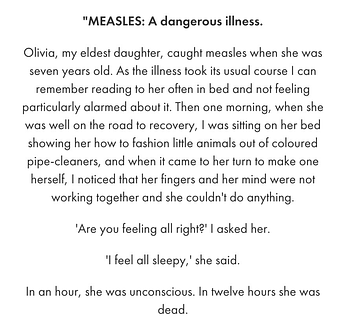
Bottom line: Unfortunately, measles is off to a great start in 2024. We expect trends to increase. We need to heed the underlying warning. A laissez-faire approach to public health, on both sides, will not work. Harrowing stories like Roald Dahl’s below will creep into the 21st century. We can do better.
A big thanks to Edward Nirenberg for his help pulling a lot of the research integrated above.

Your Local Epidemiologist is written by Dr. Katelyn Jetelina, M.P.H., Ph.D.—an epidemiologist, wife, and mom of two little girls. During the day, she is a senior scientific consultant to several organizations, including the CDC. At night, she writes this newsletter. Her main goal is to “translate” the ever-evolving public-health world so people will be well-equipped to make evidence-based decisions. This newsletter is free, thanks to the generous support of fellow YLE community members.

Friday, January 5, 2024

FDA leaders say thousands of Americans are likely to die this winter because too many of them no longer believe in vaccines

By Dr. Peter Marks and Dr. Robert Califf
Republished from the Journal of the American Medical Association

Vaccination is one of the most highly effective public-health interventions, responsible for saving millions of lives each year. In the U.S., authorized or approved preventive vaccines must be manufactured with high quality, and the effectiveness and favorable safety profile of vaccines must be demonstrated. Their safety over time is also closely and continuously monitored through multiple overlapping passive and active safety surveillance systems.

Despite the care taken in the development and deployment of vaccines and their clear and compelling benefit of saving individual lives and improving population health outcomes, an increasing number of people in the U.S. are now declining vaccination for a variety of reasons, ranging from safety concerns to religious beliefs. Setting aside for now the controversial issue of vaccine mandates at the federal, state, or local level in the U.S., which are not within the purview of the Food and Drug Administration, the situation has now deteriorated to the point that population immunity against some vaccine-preventable infectious diseases is at risk, and thousands of excess deaths are likely to occur this season due to illnesses amenable to prevention or reduction in severity of illness with vaccines.

To counter the current trend, we urge the clinical and biomedical community to redouble its efforts to provide accurate plain-language information regarding the individual and collective benefits and risks of vaccination. Such information is now needed because vaccines have been so successful in achieving their intended effects that many people no longer see the disturbing morbidity and mortality from infections amenable to vaccines. For example, smallpox has been eradicated, and polio has been eliminated from the U.S., through effective vaccination campaigns.

Measles was similarly eliminated, but imported cases remain a threat to those who are unvaccinated as well as to those who are immunocompromised. Regrettably, pediatric vaccine hesitancy now has been responsible for several measles outbreaks in the U.S., including a recent one in central Ohio involving locally acquired cases in 85 children, 36 of whom (42%) had to be hospitalized for complications. It is sobering to note that vaccine hesitancy to childhood vaccines, such as the measles, mumps, and rubella vaccine, has been found to cluster in middle- to high-income areas among parents with at least a college degree who preferred social-media narratives over evidence-based vaccine information delivered by clinicians. Anyone doubting the benefits of vaccination need only look to low-income parts of the world where measles vaccination is inaccessible, and many thousands of children continue to die each year due to preventable disease. Unfortunately, with the success of pediatric vaccination campaigns to date, increasing numbers of people have become complacent and underestimate the actual risk of forgoing vaccination.

In addition to making a difference regarding childhood immunization, communication regarding the potential benefits of vaccination can hopefully also improve the number of individuals accepting vaccination to protect against Covid-19, influenza, and respiratory syncytial virus disease (RSV). Vaccination rates against these respiratory pathogens are inadequate, and this is most distressing in older individuals in whom the benefits of vaccination in reducing hospitalization and death are eminently clear. In fact, uptake of the updated Covid-19 vaccine in the U.S. is only about 35% in those older than 65 years, which is about half the rate in this age group in the U.K.

Clinicians who provide care are most trusted information sources

What can we do to start tipping the scales in the direction of evidence-informed vaccine acceptance to reduce the risk of death and illness from diseases in which vaccines are effective? Evidence indicates that the most trusted source of information about health decisions remains clinicians who provide care. Broadly interpreted, this also includes retail pharmacists, who may serve as the only source of medical advice for the many individuals in the U.S. who lack a primary-care clinician or who are uninsured. All those working in health care, while being straightforward about the risks, need to better educate people regarding the benefits of vaccination, so that individuals can make well-informed choices based on accurate scientific evidence.

For example, contrary to a wealth of misinformation available on social media and the internet, data from various studies indicate that since the beginning of the Covid-19 pandemic tens of millions of lives were saved by vaccination. The benefits of these vaccines in prevention were largest in older individuals. However, studies show that people of all ages who are up to date on vaccination benefit and have a lower risk of developing long Covid.

FDA graph from CDC data, adapted by Kentucky Health News; click image to enlarge it.
During the Covid-19 pandemic, vaccine effectiveness appeared to be higher against the original strain of SARS-CoV-2 than against later variants. Nonetheless, since the introduction of the Covid-19 vaccines, in absolute terms vaccination has been associated with notably fewer deaths across the age range. A similar trend was seen in 2021 and 2023, even though the total number of deaths from Covid-19 have decreased more recently (note the order of magnitude difference on the scale). Those up to date on Covid-19 vaccination had notably lower numbers of deaths per million individuals than those who were unvaccinated. The benefits were apparent across the entire age range early on, and more recently following the exposure of a larger number of individuals to natural infection with one of the SARS-CoV-2 variants, with 16.5-fold and 3.6-fold reductions in death, respectively. 

And although the argument is sometimes made that Covid-19 is not a serious illness in younger individuals, those who received at least one dose of any Covid-19 vaccine had a notably reduced risk of dying from this disease compared with those who had never been vaccinated. Comparing 11.71 million unvaccinated individuals with 9.9 million individuals who had received at least one dose of a Covid-19 vaccine, the risk of death was 2.46 times higher in the unvaccinated group. And this finding is not an outlier; other studies report equal or greater benefit. The message from the data on vaccination status and serious illness, subsequent hospitalization, and death is clear, and this can be communicated in verbal or visual terms to individuals contemplating vaccination.

It is often difficult for a person to take action when the individual risk of an outcome is relatively low, even when the consequences of complications are high, and the population effects are substantial. In situations such as with seat belts, however, the discussion ultimately has led to almost uniform use, and vaccination use had similarly been almost uniformly accepted. The current reversal of vaccine acceptance has already resulted in hundreds of thousands of excess deaths from Covid-19 and concern about the re-emergence of previously conquered infectious diseases.

We believe that the best way to counter the current large volume of vaccine misinformation is to dilute it with large amounts of truthful, accessible scientific evidence. To reduce deaths, hospitalization, and the burden on families and the health care system, all those directly interacting with individuals in a health care setting, ranging from front office staff to retail pharmacists to primary-care physicians, need to focus at every appropriate opportunity on helping to ensure that individuals have the necessary information to make informed choices regarding vaccination, considering the benefits and risks. By doing so, we can both help prevent pediatric infectious diseases and dramatically reduce the harm from pathogens such as Covid-19, influenza, and respiratory syncytial virus disease before we have another large wave of any of these vaccine-preventable illnesses.

Peter Marks is director of the Center for Biologics Evaluation and Research at the U.S. Food and Drug Administration; Robert Califf is FDA commissioner.

Friday, December 22, 2023

Fact-checkers at Politifact say RFK Jr.'s presidential campaign of conspiracy theories, mainly about health topics, is 'Lie of the Year'

Robert F. Kennedy Jr. is an independent candidate
for president. (Associated Press photo by Meg Kinnard)
Politifact is a fact-checking service of The Poynter Institute, a foundation for journalism that says it is "an instructor, innovator, convener and resource for anyone who aspires to engage and inform citizens."

By Madison Czopek and Katie Sanders, Politifact

As pundits and politicos spar over whether Robert F. Kennedy Jr.’s presidential campaign will factor into the outcome of the 2024 election, one thing is clear: Kennedy’s political following is built on a movement that seeks to legitimize conspiracy theories.

His claims decrying vaccines have roiled scientists and medical experts and stoked anger over whether his work harms children. He has made suggestions about the cause of Covid-19 that he acknowledges sound racist and antisemitic.

Bolstered by his famous name and family’s legacy, his campaign of conspiracy theories has gained an electoral and financial foothold. He is running as an independent — having abandoned his pursuit of the Democratic nomination — and raised more than $15 million. A political action committee pledged to spend between $10 million and $15 million to get his name on the ballot in 10 states.

Even though he spent the past two decades as a prominent leader of the anti-vaccine movement, Kennedy rejects a blanket “anti-vax” label that he told Fox News in July makes him “look crazy, like a conspiracy theorist.”

But Kennedy draws bogus conclusions from scientific work. He employs “circumstantial evidence” as if it is proof. In TV, podcast and political appearances for his campaign in 2023, Kennedy steadfastly maintained that:
  • Vaccines cause autism.
  • No childhood vaccines “have ever been tested in a safety study pre-licensing.”
  • There is “tremendous circumstantial evidence” that psychiatric drugs cause mass shootings, and the National Institutes of Health refuses to research the link out of deference to pharmaceutical companies.
  • Ivermectin and hydroxychloroquine were discredited as Covid-19 treatments so Covid-19 vaccines could be granted emergency use authorization, a win for Big Pharma.
  • Exposure to the pesticide atrazine contributes to gender dysphoria in children.
  • Covid-19 is “targeted to attack Caucasians and black people. The people who are most immune are Ashkenazi Jews and Chinese.”
For Kennedy, conspiracies aren’t limited to public health. He claims “members of the CIA” were involved in the assassination of his uncle, John F. Kennedy. He doesn’t “believe that (Sirhan) Sirhan’s bullets ever hit my father,” Sen. Robert F. Kennedy. He insists the 2004 presidential election was stolen from Democrat John Kerry.

News organizations, including PolitiFact, have documented why those claims and many others are false, speculative or conspiracy-minded. PolitiFact did not receive a response from Kennedy’s campaign for this story. Kennedy has sat for numerous interviews and dismissed the critics, not with the grievance and bluster of former President Donald Trump, but with a calm demeanor. He amplifies the alleged plot and repeats dubious scientific evidence and historical detail.

Four of Kennedy’s siblings called Kennedy’s decision to run as an independent “dangerous” and “perilous” to the country. “Bobby might share the same name as our father, but he does not share the same values, vision or judgment,” the group wrote in a joint statement.

Kennedy brushes it off, saying he has a large family, and some members support him.

On her “Honestly” podcast in June, Bari Weiss asked whether Kennedy worried his position on autism and vaccines would cloud his other positions and cost him votes. His answer ignored his history: “Show me where I got it wrong,” he said, “and I’ll change.” In a campaign constructed by lies, that might be the biggest one. (Read more)