Showing posts with label epidemiology. Show all posts

Wednesday, June 19, 2024

Curious about new, popular weight-loss drugs? Here's a lowdown

Axios Visuals map adapted by Ky. Health News; click to enlarge
Editor's note: At the end of 2023 Kentucky led the nation in the percentage of state residents, 2.1%, who had received the new class of diabetes and weight-loss drugs.

By Katelyn Jetelina
Your Local Epidemiologist

You’ve probably heard of Ozempic by now. It is everywhere. Sales are up more than 300% and research studies are coming out like a firehose, but future population-level implications are unknown. Here, we catch you up on the science and what it may mean for you.

Ozempic (one brand name for the substance semaglutide) is one of many medications under the umbrella of “GLP-1 receptor agonists.” Others are Trulicity (dulaglutide), Wegovy (semaglutide) and Mounjaro (tirzepatide).

GLP stands for glucagon-like peptide 1. GLP-1 is a hormone produced in the intestinal system and released when you eat food. It is a natural signal saying you have eaten enough food. Naturally occurring GLP-1 comes and goes in a few minutes.

These medications mimic this natural process but for longer. Ozempic, for example, stays in our system for an entire week. It also slows down gastric emptying, thereby slowing down digestion.

How effective are these drugs? Very. The original clinical trials that supported initial FDA approval for patients with diabetes blew expectations out of the water. It improved:
  • Blood sugar control (A1c reduction)
  • Weight loss (average 15 pounds)
  • Unexpected positives, like reduced kidney disease (24% less likely to experience kidney failure and death due to kidney complications)
Since the first clinical trials, studies have tested its use in non-diabetic individuals, and its is effective in weight loss. A meta-analysis of eight studies found a significant decrease (about 10% of body weight). None saw an increase. Also, it has protective effects on the heart, such as reduced blood pressure and triglycerides.
 
What happens if you stop taking it? Unfortunately, weight (and other outcomes) rebound. As shown below, after the original clinical trial (68 weeks), people who stopped taking it regained their weight.

The use of GLP-1’s as a motivating tool for sustained change has been less studied. Will these be lifetime drugs like other medications (e.g., statin drugs for heart disease) or a tool to titer up or down in times of need? This is a big unanswered question.

While obesity often involves an energy imbalance where calories consumed exceed those expended, it’s influenced by genetics, socioeconomic status, environmental factors, and mental health. These factors contribute to a complex web of challenges that may extend beyond individual choices alone.

What about kids? Ozempic isn’t officially approved by the FDA for children (but can be used off-label), but Wegovy is approved. In 2023 alone, about 31,000 children aged 12 to 17 and 162,000 aged 18 to 25 used these medications.

A recent meta-analysis found treatments led to modest reductions in body weight and improved glycemic control in children with insulin resistance.

Ozempic babies? The term refers to a recent phenomenon where women are reporting unplanned pregnancies. This has sparked discussions on social media and in the medical community about the potential impact of these drugs on fertility. Why could this be happening? Two hypothesized pathways:
  • 1. These drugs delay gastric emptying, which can impact the effectiveness of oral birth control by slowing down the rate of absorption
  • 2. Weight loss enhances fertility, making it easier for women to become pregnant. This is particularly true for women with Polycystic Ovarian Syndrome, in which weight loss is known to boost fertility significantly.
However, it’s recommended to stop the medication two months before trying to get pregnant (see more below).
 
Datawrapper graph by YLE; data from Ghusn et al., JAMA
Are there downsides to the meds?
Like any medication, there are side effects and risks, some known and some theoretical, and many with mixed study results. Individuals must weigh the risks of obesity with the small but meaningful risks of the medication.
 
Many people experience side effects, particularly nausea and diarrhea. A recent analysis from an insurance agency found that 6 in 10 people who start the drugs quit before they see benefits because of side effects. These tend to go away after a few weeks, but they can substantially impact the quality of life until then.

Muscle loss: Most (60-75%) weight loss is from fat, but some is from non-fat, including muscle. This could lead to a rare condition called sarcopenia—loss of muscle mass and strength where you can’t do much because you’re physically weak. Research is mixed, though, on how often this happens, and it may be minimal when combined with exercise and adequate protein intake.
 
Increased risk of thyroid cancer. A small French case-control study found an elevated risk of thyroid cancers (58% elevated relative risk) and medullary thyroid cancer (78% elevated relative risk) after GLP-1’s. However, another study in Scandinavia with more than 400,000 people found no risk of thyroid cancer after 3 years. Regardless, the potential increase in absolute risk is very small.

Mental health. There is a big debate on what is happening in the brain. GLP-1 is not only produced in the gut but in the brain as well. Some evidence has correlated the usage of GLP-1 medications with suicidal ideation. However, recent evaluations by regulatory agencies found no substantial evidence after extensive review. Some studies have even suggested a potential decrease in the likelihood of anxiety and depression.

Eating disorders. It is a growing concern that GLP-1s may increase the risk of disordered eating, particularly among those who are high-risk (e.g., prior history of eating disorders).
 
Pregnancy. Pre-clinical trials on rats found GLP-1s are more likely to have offspring with birth deformities, so it’s not recommended to take during pregnancy.

While these new drugs have a strong safety profile based on available data, human studies are only about 5 years old. This means the long-term effects are not yet fully understood. However, we do have data from drugs in the same class that started testing in 2006, showing a consistent safety profile. Continued monitoring and research are essential to determine whether theoretical risks are real in light of new data.

This means decisions today must be made based on what is available and in the context of individual risk factors. For example, if you have a history of eating disorders, the risks of taking the medication may outweigh the benefits.

What does the future look like? After a century of fad diets and weight loss gimmicks, people are tired: some from fighting stigma and others from trying to lose weight unsuccessfully. These medications have proven to work, and the market shows it: GLP-1 prescriptions have increased by over 300% since 2020. A recent poll indicates that nearly half of adults express interest. But there’s no sugarcoating it: It’s expensive, about $1,000 per month without insurance. The price should decrease dramatically in about 8 years once the patent expires and the generic version comes to market.

On a population level, these drugs will likely have widespread impacts, just like the iPhone, which can be good or bad, depending on who you ask. Given the massive impact obesity has had on health in the past two decades, this could be extraordinary for lifespan and quality of life. It could also have ripple effects on the fast-food industry and save millions of dollars in health care costs.

But it could further widen health disparities, given the cost, and hurt body positivity, losing much ground gained. We also cannot ignore that these drugs benefit a billion-dollar pharmaceutical industry when underlying societal causes should be addressed for prevention. And, the fact there are numerous other benefits to a healthy lifestyle.
Bottom line

GLP-1 drugs offer much-needed hope to individuals, and a flood of studies show their effectiveness. However, there are both demonstrated and theoretical risks to consider. Regardless, obesity deserves compassion, and perhaps 21st-century tools can help foster a supportive environment that promotes lasting progress.

Tuesday, June 11, 2024

National Institutes of Health boss, at UK, says U.S. is better set for next pandemic but needs more 'really snappy real-time data'

National Institutes of Health Director Dr. Monica Bertagnolli spoke at UK. (WUKY photo by Josh James)
Kentucky Health News

The new director of the National Institutes of Health said at the University of Kentucky on June 10 that the U.S. hasn’t fully recovered from the Covid-19 pandemic, and long Covid remains a problem, but the nation is readier for the next pandemic than it was for the last one.

"We're better prepared, but we're not at all complacent about how awful pandemics are and the great suffering that comes from this, and the need to be constantly ready to spring into action," Dr. Monica Bertagnolli told Josh James of WUKY.

"We really hadn't before had a good, real-time feedback link with really snappy real-time data," she said, noting that she is starting a new reporting network for doctors to share such information.

"That data – both its reliability and collection – was one of the themes of Bertagnolli’s talk at UK," James reports. "She said the pandemic showed medical officials the necessity of creating a more responsive data ecosystem running all of the time, not just during major health emergencies."

Asked about efforts to combat distrust toward medical authorities, Bertagnolli said part of the solution is delivering tangible results for patients. She pointed to recent polling from the Pew Research Center about who people trust the most when it comes to medical information.

"The very highest trust was with their primary-care providers," she said, "which is why we're launching this new primary-care research network, because we want to put the research into the hands of people who are trusted, so that everybody can have the benefit."

Saturday, March 18, 2023

Vast majority of Kentucky continues to have low risk of Covid-19

Centers for Disease Control and Prevention maps, adapted by Kentucky Health News
By Melissa Patrick
Kentucky Health News

All but 10 of Kentucky's 120 counties have a low risk of Covid-19 infection on the latest federal risk map, and Menifee County is the only one considered to have a high risk.

The Centers for Disease Control and Prevention risk map, which considers both new cases and Covid-19 hospital numbers, shows Menifee as the only high-risk county, in orange. Counties with a medium risk of transmission are in yellow, and those with a low risk are in green.

Counties with medium risk are Harrison and Robertson; Elliott, Morgan and Rowan (the latter two border Menifee); and Clay, Knox, Laurel and Whitley.

In high-risk counties, the CDC continues to recommend that you wear a well-fitting, high-quality mask in public indoor spaces, and if you are at high risk of getting very sick, consider avoiding non-essential indoor activities in public where you could be exposed.

If you live in a medium or high-risk county, the CDC advises those who are at high risk of getting very sick to wear a well-fitting mask when indoors and in public and to consider getting tested before having social contact with someone at high risk for getting very sick and consider wearing a mask when indoors when you are with them.

In the last seven days, The New York Times ranks Kentucky's new-case rate 13th among the states, with a 41% drop in cases in the last two weeks. The Times has Menifee County's rate at 6.6 per 10,000 residents and the state's rate at 0.9 per 10,000 (or 9 per 100,000).

To enlarge any image, click on it; to download, right-click.

The CDC also provides a community transmission level map, largely used by researchers and health-care facilities, that shows the level of virus in each county, at one of four levels. The map shows six counties with low levels of transmission and 62 with a medium level; the rest have either substantial or high risk.

Tuesday, March 14, 2023

Long Covid update: There's still reason to avoid Covid-19, even if you've had it already; it's 'annoyingly stubborn,' expert says

By Katelyn Jetelina
Covid-19 is not the common cold. Here’s an effort to keep you up to date on long-Covid developments.

What we knew: Long Covid after first infection was clearly a risk. The risk of long Covid after re-infection was not known.
New info: In the U.K., risk of long Covid dropped after second infections compared to first infection (4% → 2.4%). This is good and bad news: Risk drops, but risk is clearly not zero.
Why it matters: There is still reason to avoid Covid-19, even if you’ve had it already.

Metformin may work

What we knew: About 300 clinical trials are testing treatments for long Covid-19, including Metformin. Results are trickling in.
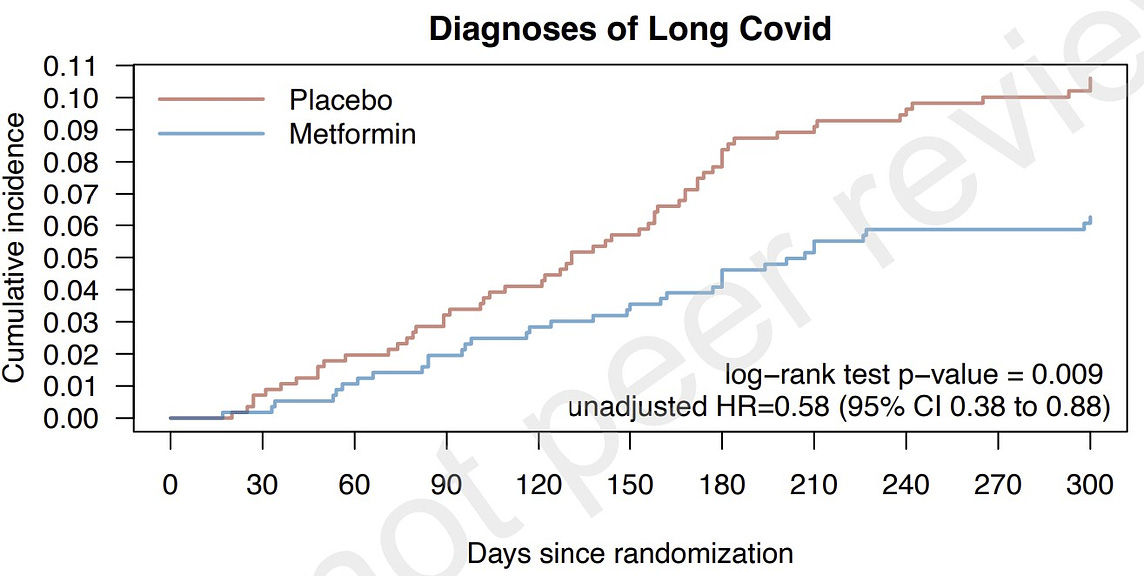
Cumulative incidence curve of long-Covid diagnoses over
10 months after randomization. Source: 
Lancet preprint.
New info: Metformin reduced long Covid in a large randomized control trial.
Metformin had a 42% reduced risk in long Covid cases compared to the placebo; 63% reduced risk if taken within four days of symptoms.
For every 100 people who took the drug, four fewer cases of long Covid nine months after infection occurred. Ivermectin and fluvoxamine had no impact.
Why it matters: People should consider Metformin, especially women who are at higher risk for long Covid. It’s best taken within four days of infection. This is a challenging timeframe in the U.S. medical care system, though.

Paxlovid may help… a little?
 
What we knew: Paxlovid helps reduce severe disease by 50-90%. We didn’t know if it helped with long Covid, though.
New info: Paxlovid reduced risk of long Covid by 26%, regardless of vaccination status and history of prior infection. We need more studies, particularly among young people, as Paxlovid’s effect will likely increase among younger people.
Why it matters: There may be small, proxy benefits from taking Paxlovid, including among younger populations that aren’t “eligible.”
 
Long Covid is annoyingly stubborn

What we didn’t know: We didn’t know the longevity of severe symptoms.
New info: Among those with long Covid, the rate in which symptoms affected daily life decreased from 45% → 25% over seven months.
Why it matters: If you get severe long Covid, there is a chance that symptoms will get better after seven months. Then again, there’s a chance that they won’t.

Still not convinced?

What we know: People living with long Covid report profound stigmatization because people disbelieve that long Covid is a “thing.”

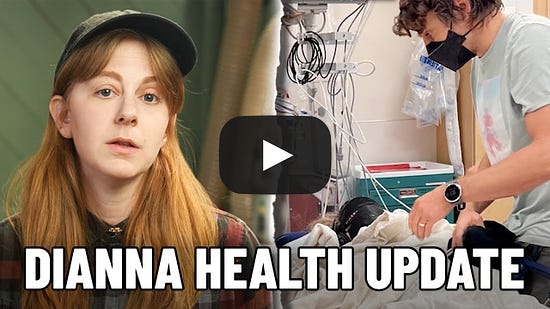
New info: A community member of this newsletter, Dianna Cowarn (also known as Physics Babe on YouTube), was diagnosed with long Covid last summer. Her crew made a 4-minute video. Check it out here if you’re still not convinced. It’s painstaking [and is preceded by commercials].


Bottom line: Covid-19 infection is not the common cold for some. Our knowledge is inching closer to treatments. But with so much unknown, we still need to emphasize prevention—keeping Covid-19 cases low and ensuring vaccination.

Katelyn Jetelina (MPH, PhD) is an epidemiologist, data scientist, wife, and mom of two little girls. She works at a nonpartisan health policy think tank and is a senior scientific consultant to the CDC and other organizations.

Monday, March 13, 2023

New coronavirus cases dropped in Ky. last week but Covid-19 deaths increased; N.Y. Times ranks new-case rate 2nd in nation

New York Times map reflects the paper's ranking of Florida and Kentucky as 1-2 in new-case rates.
By Melissa Patrick
Kentucky Health News

Kentucky reported a 46 percent drop in new coronavirus cases last week, but its rate of new infections remained among the highest in the nation. 

The state Department for Public Health reports that there were 2,572 new cases of the coronavirus last week, or 367 cases per day. That's down 45.6% from the 4,736 cases reported in the prior week's report. 

The weekly new-case rate was 6.39 cases per 100,000 residents, down from 7.99 the week prior and 9.23 the week before that. The top 10 counties were Bath, 18.29 cases per 100,000; Adair, 17.86; Rockcastle, 17.11; Clinton, 16.78; Webster, 12.14; Morgan, 11.81; Rowan, 11.68; Floyd, 11.64; Russell, 11.16; and Montgomery, 11.16.

Despite the continued decline on the state report, The New York Times ranked Kentucky's seven-day new-case rate second in the nation, behind Florida. The Times reports that Kentucky has seen a 41% increase in cases in the last two weeks. The discrepancy could stem in part from Union County, which the Times says has a rate of 81 per 100,000. The county is home to a federal Job Corps center, and federal facilities generally do not report Covid-19 cases to the state.

The state attributed 47 more deaths to Covid-19 last week, up from 13 the week prior. The state's pandemic death toll is now 18,177.

Thursday, March 9, 2023

CDC: 83% of Ky. counties have low risk of Covid-19 transmission

Centers for Disease Control and Prevention map
By Melissa Patrick
Kentucky Health News

Most of Kentucky again has a low risk of Covid-19 transmission on the Centers for Disease Control and Prevention risk map, but when it comes to having the most new coronavirus cases per capita in the last seven days, The New York Times ranks Kentucky second in the nation, following Florida. 

The CDC determines risk by considering both new cases and Covid-19 hospital numbers in each county, while the Times ranking is based solely on new cases per 100,000 residents in the last seven days. 

The CDC risk map shows 100 Kentucky counties with a low risk of Covid-19 transmission, shown in green, and 20 with a medium risk, shown in yellow, 10 fewer than last week. 

In counties at medium risk, the CDC continues to advise that those who are at high risk of getting very sick to wear a well-fitting mask when indoors and in public and to consider getting tested before having social contact with someone at high risk for getting very sick and consider wearing a mask when indoors when you are with them.

CDC map
The CDC also provides a community transmission level map, largely used by researchers and health-care facilities, that shows the level of virus in each county, at one of four levels. The map shows two counties with a low levels of transmission, Robertson and Fulton, and 50 with moderate risk, up from 28 in the prior weeks report. The rest have either substantial or high risk.

Sunday, February 26, 2023

With 'low confidence,' Energy Dept. says Covid-19 likely from lab; FBI confidence 'moderate;' intel panel, 4 other agencies disagree

The Wuhan Institute of Virology is located in the city where
the pandemic began. (Photo by Hector Retamal, AFP/Getty)
The Department of Energy has concluded that the Covid-19 pandemic "most likely arose from a laboratory leak, according to a classified intelligence report recently provided to the White House and key members of Congress," The Wall Street Journal's Michael Gordon and Warren Strobel report.

The department "made its judgment with 'low confidence,' according to people who have read the classified report," the Journal reports. The agency thus joins the FBI "in saying the virus likely spread via a mishap at a Chinese laboratory," the Journal notes. "The FBI previously came to the conclusion that the pandemic was likely the result of a lab leak in 2021 with 'moderate confidence' and still holds to this view. . . . While the Energy Department and the FBI each say an unintended lab leak is most likely, they arrived at those conclusions for different reasons."

Four other agencies and a national intelligence panel still judge with "low confidence" that the pandemic "was likely the result of a natural transmission, and two are undecided," the Journal reports. "The Energy Department’s conclusion is the result of new intelligence and is significant because the agency has considerable scientific expertise and oversees a network of U.S. national laboratories, some of which conduct advanced biological research."

The Journal adds, "The National Intelligence Council, which conducts long-term strategic analysis, and four agencies, which officials declined to identify, still assess with 'low confidence' that the virus came about through natural transmission from an infected animal, according to the updated report. The Central Intelligence Agency and another agency that officials wouldn’t name remain undecided . . . Despite the agencies’ differing analyses, the update reaffirmed an existing consensus between them that Covid-19 wasn’t the result of a Chinese biological-weapons program, the people who have read the classified report said."

Because no animal source for the novel coronavirus has been confirmed, and Wuhan, where the outbreak began, "is the center of China’s extensive coronavirus research, has led some scientists and U.S. officials to argue that a lab leak is the best explanation for the pandemic’s beginning," the Journal reports. "State Department cables written in 2018 and internal Chinese documents show that there were persistent concerns about China’s biosafety procedures, which have been cited by proponents of the lab-leak hypothesis."

Friday, February 17, 2023

Even with 76% of Kentucky counties at low risk of coronavirus transmission, state ranks first in nation for new cases in last week

Centers for Disease Control and Prevention maps
By Melissa Patrick
Kentucky Health News

Three-fourths of Kentucky counties have a low risk of Covid-19 transmission, and only two of the 120 counties are at high risk, according to the Centers for Disease Control and Prevention's weekly risk map.

But the risk has been declining nationally, so on Feb. 17 Kentucky's new-case rate over the previous seven days was first in the nation, according to The New York Times. Fayette, Clark and Greenup counties ranked fourth, fifth and sixth in the nation for new cases in the last seven days, according to the Times.

The CDC's risk map is based not just on new cases, but on the number of patients in hospitals with Covid-19. It shows 91 Kentucky counties at low risk, shown in green, and 27 at medium risk, shown in yellow. The two high-risk counties, shown in orange, are Greenup and Elliott. 

Even as the risk of Covid-19 transmission decreases, the CDC continues to offer the same recommendations for medium and high-risk counties. 

In high-risk counties, the CDC recommends that you wear a well-fitting, high-quality mask in public indoor spaces, and if you are at high risk of getting very sick, consider avoiding non-essential indoor activities in public where you could be exposed.

If you live in a medium or high-risk county, the CDC advises those who are at high risk of getting very sick to wear a well-fitting mask when indoors and in public and to consider getting tested before having social contact with someone at high risk for getting very sick and consider wearing a mask when indoors when you are with them.

The CDC also provides a transmission level map, largely used by researchers and health-care facilities, that shows the level of the virus spread in each county, at one of four levels.

For the first time in a while, the map shows two counties with a low level of transmission: Ballard and Robertson. Thirteen counties had a medium level of transmission, and the rest had either substantial or high levels of transmission, showing that the virus continues to be widespread.

Friday, February 10, 2023

Bird-flu impact may go beyond eggs, birds; experts call for more surveillance as the virus appears able to spread among mammals

Centers for Disease Control and Prevention chart; for a larger version, click on it.

The U.S. is experiencing a record outbreak of bird flu, a virus that is currently deemed a low risk to humans, but has hiked prices of eggs and poultry. The Biden administration is weighing whether to vaccinate poultry against the disease and it appears that the virus can spread among mammals. 

"Egg prices are up 60%, which means we are paying upwards of $5-7 for a dozen eggs. That is if you can find them," reports epidemiologist Katelyn Jetelina in her newsletter titled Your Local Epidemiologist. "Why? A constellation of reasons, but there is one we can’t ignore: the avian flu is hammering poultry farmers." 

The U.S. Department of Agriculture reported in December: "As a result of recurrent outbreaks, U.S. egg inventories were 29 percent lower in the final week of December 2022 than at the beginning of the year. By the end of December, more than 43 million egg-laying hens were lost to the disease itself or to depopulation since the outbreak began in February 2022. . . . The average shelf-egg price was 267 percent higher during the week leading up to Christmas than at the beginning of the year and 210 percent higher than the same time a year earlier." 

USDA adds that egg prices are expected to decrease as flocks are replenished. 

Bird flu spread among minks at a farm in Spain. (Nature photo) 
Another concern is that that virus appears capable of spreading among mammals, including humans.  

"The virus is primarily a threat to birds," reports The New York Times' Emily Anthes, "but infections in mammals increase the odds that the virus could mutate in ways that make it more of a risk to humans, experts say."

Anthes reports that a new variant of the H5N1 virus has "taken an unusually heavy toll on wild birds and repeatedly spilled over into mammals, such as foxes, raccoons and bears, that might feed on infected birds." 

More recently, it has infected farmed minks, which scientists describe as a "new and troubling development," pointing to an outbreak in Spain where the virus appeared to spread from mink to mink and had an unusual mutation that might be a sign of adaptation to mammals, Anthes reports, adding that experts say the mink outbreak is no cause for panic, but highlights the need for more proactive surveillance.  

Michael Osterholm, director of the University of Minnesota’s Center for Infectious Diseases Research and Policy, also told Stat in April 2022 that the presence of bird flu in the U.S. calls for heightened surveillance. Jetelina reports that "from 2003-2021 there have been very few human cases worldwide: 864. But, among these cases, 456 died—a 53% mortality rate." 

Jetelina also notes that the risk of bird flu in humans is "currently very low," citing research from the Centers for Disease Control and Prevention, which tracked the health of more than 5,190 people who have been exposed to infected birds in 2022 and only one human case was reported. The Times reports "fewer than 10 known cases in people since December 2021, and there have been no documented instances of human-to-human transmission, according to the CDC."

Federal scientists are gearing up to test the first vaccines in poultry against the bird flu as a way to counter the growing oubreak, Alexander Tin reports for CBS News. The Biden administration has not yet greenlighted the use of these vaccines. Officials told Tin that one of the concerns about issuing these vaccines is that it could make it harder to export American poultry products. 

"A record 58 million birds — mostly commercially-raised poultry — have died in the outbreak so far, according to figures tallied by the USDA's Animal and Plant Health Inspection Service — either killed by the virus itself or put down in efforts to quash its transmission. Every state has detected the virus spreading among wild birds and 47 have spotted them in poultry," Tin reports.

The virus is spread from an infected bird's nasal secretions, saliva and feces. The USDA says properly prepared and cooked poultry and eggs should pose no risk to consumers. 

"Right now you don’t need to do anything, unless you’re in close contact with birds. A person’s level of risk is dependent on duration and intensity of exposure. In other words, a person with one chicken in their backyard is at much lower risk than someone at a poultry farm," Jetelina writes. 

She adds, "Those around wild birds, such as at parks, lakes, rivers, or other waterways, need to exercise caution, including wearing PPE, washing hands, and changing clothes. If you have backyard poultry, wear a mask and wash your hands. Also, monitor the health of your flock, especially if they come in contact with other wild birds."

Sunday, January 8, 2023

Opinion: Covid-19 is mutating and apparently winning, so we need to take preventive measures well beyond vaccinations

Graphs by the New York Times, adapted by Kentucky Health News
By Kevin Kavanagh


There is no such thing as “herd immunity” for Covid-19. In this context it is a concept as antiquated as “the Earth is flat.”

The theory was based upon the work of William Farr in 1840 who proposed a bell-shaped curve which illustrated the body’s ability to mount a lasting response to an unchanging pathogen. As stated by one “herd immunity” supporter in the comments section of my previous article on this point, “The disease dies out because enough people have been exposed and developed relative immunity or died that the disease has no means of propagating itself on a large scale.”

That concept was formulated before science knew what viruses and mutations were, and that many biological systems are highly dynamic and constantly adapting. This is eloquently described in Steffanie Strathdee and Thomas Patterson’s book The Perfect Predator. It describes the biological dance between viral phages and their bacterial prey, each one adapting and re-engaging in a duel, the outcome of which is uncertain. With the exception of smallpox, no pathogen has ever been eradicated from the earth and with smallpox, eradication was achieved with a highly effective long-lasting vaccine.

With mutating RNA viruses such as SARS-CoV-2 (which causes Covid-19), “herd immunity” is an extinct construct. Unlike the relatively stable DNA virus of smallpox, RNA viruses have a much higher mutation rate.

The U.S. epidemiological curve of SARS-CoV-2 is a colliding roller coaster and nowhere near a bell curve. We have been hit with variant after variant; Delta infections transitioned to Omicron; and now we are struck by a soup of variants, composed of pathogens harboring a plethora of different immune-avoiding mutations, making the concept of “herd immunity” next to useless.

Unfortunately, SARS-CoV-2 appears to be the most adaptive and dynamic foe we have ever faced. Hoping that the antiquated concept of “herd immunity” will save the day, causing SARS-CoV-2 to “miraculously (go) away,” is just pure fantasy.

SARS-CoV-2’s high mutation rate is amplified by its extremely high infectivity. The CDC estimated that the Delta variant was as infectious as chickenpox, which has an R0 of 10 to 12. That means an average person infected with Delta infected 10 to 12 other people. Newer variants have evolved into some of the most infectious pathogens known to man. As the virus spreads it mutates. And as it mutates, it increases its ability to infect, evade our immunity and even attack our immune system.

Evidence is mounting regarding the immune dysfunction caused by SARS-CoV-2. We are seeing a dramatic rise in hospitalizations for the seasonal flu, respiratory syncytial virus (RSV) and even scarlet fever. The increase in RSV hospitalizations has been blamed on immunological weakening during the pandemic due to preventive measures such as masking. However, through November, the United States had correspondingly fewer RSV infections than in 2021, when an RSV surge was also seen. Germany also had a surge in RSV hospitalizations last winter, and now is seeing overwhelming RSV hospitalizations.

Not only does SARS-CoV-2 evade and attack our immunity, but the immunity is fleeting. The virus also resides in a variety of animal hosts where it can mutate and then reinvade the human population. Transmission of a mutated virus from whitetail deer to humans has been documented and there is evidence that Omicron originated in rodents then jumped to humans in South Africa.

The dangers of long Covid, persistent cardiovascular disease, blood clots and a plethora of mental problems caused by Covid-19, are real, and are adversely affecting the health of our workforce and our communities.

Our goal must be to decrease pathogen spread so society can function, with infections decreasing to a level that we can live with the virus. In this regard, it appears the virus is currently winning.

We need to embrace vaccinations, the use of N95 masks in crowded venues, along with home delivery, curbside pickup and outside dining. Indoor air quality must be improved to the point where it is safer indoors than it is outdoors.

If we continue to be a society focused on individualism rather than community or public health, I am afraid we will lose this fight. We need a paradigm shift in the way we strategize to control Covid-19, away from “herd immunity” and towards adapting our lives to live with this highly dynamic and constantly adapting foe.

Kevin Kavanagh is a retired physician from Somerset and chairman of Health Watch USA. This is an edited version of his original article, published in the Courier Journal.

Monday, January 2, 2023

Newly dominant variant more likely to evade Covid-19 antibodies, but so far not seen as more likely to cause serious disease

Antibodies at work on the coronavirus (Illustration
by Russell Keightley, via Science Photo Library Art)
With a new subvariant of the novel coronavirus now dominant in the U.S., vaccinated people may be more likely to develop Covid-19 but still be well protected from serious disease, according to preliminary reports.

The XBB.1.5 subvariant "has raised concerns about another potential wave of Covid cases following the busy holiday travel season" but "There’s no indication it causes more severe illness than any other omicron virus, Dr. Barbara Mahon, director of CDC’s Coronavirus and Other Respiratory Viruses Division, told NBC News. . . . The CDC projected Friday that about 40% of confirmed U.S. Covid cases are caused by the XBB.1.5 strain, up from 20% a week ago."

XBB.1.5 is so new that research on it is very limited, but researchers from Columbia University recently reported in the journal Cell that sublineages of the BQ and XBB subvariants had a “dramatically increased” ability to evade antibody protection, even among those who had received the current bivalent booster. “However, it is important to emphasize that although infections may now be more likely, Covid-19 vaccines have been shown to remain effective at preventing hospitalization and severe disease even against Omicron as well as possibly reducing the risk of post-acute sequelae of Covid-19 (PASC, or long Covid),” the researchers reported.

Monday, December 19, 2022

Ky. Covid-19 cases up 22% last week; flu kills 31 more, including several kids; doctors worry about diseases and weakened seniors

Dr. Dan Goulson
By Melissa Patrick
Kentucky Health News

As Covid-19 cases in Kentucky rose 22 percent last week and influenza killed 31 more Kentuckians, including three more children, physicians encouraged Kentuckians to follow tried and true public-health measures and to get their annual flu vaccine and updated Covid-19 booster shots.

The doctors from Lexington's three largest hospitals urged people to protect themselves and others during the holidays, with a special warning to protect the elderly, who are being affected differently from Covid-19 these days.

"It's not too late," said Dr. Dan Goulson, chief medical officer for CHI St. Joseph Health. "You can see some benefit from the vaccine within a few days. And so, if people are questioning whether they want to get the vaccine, they should get it and not convince themselves that it's too late."

Dr. Mark Spanier
Dr. Mark Spanier, chief of emergency medicine at Baptist Health Lexington, said about Covid,  "We're seeing a lot more generalized weakness in the elderly . . . profound weakness leading to falls, leading to hip fractures, leading to just generalized stability, which can lead to other infections, pneumonia, urinary tract infections, and other more serious things for the elderly."

Spanier encouraged seniors who are getting progressively weaker to get tested for these diseases, even if they don't have respiratory symptoms. "If you get in that shape, make sure you seek medical care," he said.

Goulson said it's important to remember that flu, Covid-19 and respiratory syncytial virus (RSV), which is most dangerous to seniors and infants, are spread by droplets produced when we talk, cough, laugh and sing.

"That means that if you’re sick, the best thing to do to help keep other people from getting sick is to either mask or to isolate or both … and if you’re not sick and need to protect yourself, the best thing to do is to mask and to maintain social distancing,” Goulson said. 

Dr. Gena Cooper
Dr. Gena Cooper added frequent hand washing to that list, for both adults and children. "Those are all the things that still make the biggest difference, and are often the things you can individually control," said Cooper, emergency medical director at Kentucky Children’s Hospital at the University of Kentucky, 

Goulson acknowledged that vaccines don't keep everyone from getting sick, and that sometimes creates skepticism, but said it's still important to get the shots because they keep people from getting sick enough to require hospitalization. 

He pointed to two Centers for Disease Control and Prevention studies, released last week, that found the new bivalent Covid booster shots are more effective at reducing risk of hospitalization than boosters of the original version. The updated booster targets both the Omicron variants and the original virus strain to offer broader protections. 

One of the studies showed a  45% lower risk of hospitalization among people who had gotten the updated booster, compared with people who received two to four doses of the original vaccine and received their last shot 11 or months earlier. The other study showed a 73% reduction in hospitalization among people 65 and older who had gotten the latest, updated booster, compared to those who had gotten two to four doses of the original vaccine.

Studies have also found that the flu vaccine prevents severe illness for both adults and children, with a recent study showing that it reduces children's risk of severe life-threatening flu by 75%. 

Cooper, of the children's hospital, noted that while RSV rates are declining in Kentucky, the virus is still infecting Kentucky's children and most strongly affects those younger than 2. 

She said she calls  RSV "the mucus monster" because it creates so much mucus, which young children especially have trouble clearing from their respiratory system. She encouraged parents to use a bulb syringe after inserting a drop or two of nasal saline in each nasal cavity to help suction the mucus at home, especially before meals and at bedtime.  

She added that cases of flu and RSV had "almost flip-flopped" at the children's hospital, which is good news because there is a vaccine to protect children against the flu. 

The three physicians said their hospitals are almost full, but said that shouldn't deter a person from seeking medical care if they need it, recognizing that there may be increased wait times or the possibility of being cared for temporarily from the lobby or in a hallway. 

Spanier encouraged Kentuckians to seek care for minor illnesses, such as cold symptoms, at their doctor's office and to seek care in an emergency room "if you have any doubt that you might have something more serious going on." He noted that emergency rooms are generally less busy in the morning.

He also encouraged Kentuckians to us a pulse oximeter at home to assess their oxygen level and to help determine if they need emergent care: "If you're getting down to 90 [percent] or below, you definitely need to be seen in an emergency department."  

Flu deaths spike; six children die recently
        
The state's latest flu report shows that flu activity in Kentucky remains high, but decreased 13% from the prior week's report.

State Department for Public Health graph
In the week ended Dec. 10, the state reported 6,240 confirmed cases of the flu, down from 7,192 the prior week. The total number of confirmed cases this flu season is 29,341. Most cases continue to be in people 20 and younger. 

The report said the flu has killed at least 57 Kentuckians this season, three of them children. Of those deaths, 28 were reported in week ended Dec. 10 (27 adults and one child).

Since that report was compiled, the state has "reported six new, flu-related pediatric deaths, including three in the past week," said a press release from Gov. Andy Beshear late Monday afternoon. "This toll already meets the prior record for the highest number of pediatric influenza deaths ever reported in Kentucky in a single flu season. The prior record was established during the 2019-2020 flu season, when six children died of influenza."

As of Dec. 20, the state reports that six children total have died from the flu during the current 2022-2023 flu season. 

The state Department for Public Health said none of the children who have died this season had received a flu shot. “We are urging our families to get vaccinated as soon as possible to get protected from contracting the flu and Covid,” Beshear said.

Health Commissioner Steven Stack said, “This current flu season is on track to be the worst in Kentucky in at least 10 years. The flu vaccine is the single best way to protect you and your loved ones against the flu and reduces the risk of becoming dangerously ill or spreading disease. Unfortunately, fewer than 40% of Kentucky children have received their flu shot this season. It is imperative that every Kentuckian take the essential steps to protect themselves, their loved ones and their communities.”

Several Kentucky counties saw 100 or more confirmed cases in the week ending Dec. 10, including Barren, 169; Boone, 413; Boyd, 109; Campbell, 220; Daviess, 171; Fayette, 276; Floyd, 184; Grant, 162, Jefferson, 1,170; Kenton, 573; Muhlenberg, 100; Perry, 116; Pike, 318; Warren, 122; and Whitley, 111. 

Covid cases up 22%, but hospital numbers stable 

In the week ended Dec. 19, the state Department for Public Health reported 6,376 new coronavirus cases, an average of nearly 911 per day. That's 22% more than the week before, when the state was averaging 745 per day. Of last week's cases, 13% were in people 18 and younger. 

The state attributed 45 more deaths from Covid-19, bringing the state's pandemic death toll to 17,625. 

The share of Kentuckians testing positive for the virus in the last seven days was 9.85%, up more than a percentage point from the prior week's rate of 8.63%. The figures do not include at-home tests. 

Covid-19 hospitalizations have been stable for two weeks in a row. Hospitals reported 370 patients with Covid-19 Monday morning, a decrease of 18 over the prior Monday; 42 were in intensive care, down three; and 20 were in need of mechanical ventilation, up one. 

The weekly new-case incidence rate was 16.08 cases per 100,000 residents, up from 15.82 the week before. The top 10 counties are Calloway, 37.7 per 100,000; Crittenden, 37.3; Caldwell, 37; Monroe, 30.9; Leslie, 30.4; Carlisle, 30; Lyon, 29.6; Simpson, 29.2; Spencer, 27.3; and Powell, 26.6.

The New York Times ranks Kentucky's incidence rate 31st among the states, with a 21% increase in cases in the last two weeks.

Sunday, November 13, 2022

Flu off to fast start in Kentucky, as cases keep more than doubling each week; flu, Covid-19 and RSV threaten a 'triple-demic'

State Dept. for Public Health map, adapted by Ky. Health News; county figures are online here.
Last week's cases will
be reported on Friday.
By Al Cross
Kentucky Health News

Influenza is spreading quickly in Kentucky, raising the threat of a "triple-demic" of flu, Covid-19 and respiratory syncytial virus (RSV).

The state Department for Public Health's most recent report says 2,082 flu cases were confirmed during the week that ended Nov. 5. That was 140 percent more the the previous week, and case numbers the week before were more than triple the previous week. All told, 3,342 cases have been confirmed, and that does not include at-home tests.

Most of the cases have been in Kentuckians 20 and younger. Many school districts have closed schools or moved to nontraditional instruction for a few days.

Kentucky Department for Public Health graphs
Last Monday, 25 of the 171 public districts did; the following day was Election Day, when most were scheduled to be closed anyway for voting.

"More than 100,000 Kentucky students have been sent home this month, and health professionals are warning more closures are likely, saying there is a strong possibility of a "tripledemic" this winter," reports Krista Johnson of the Louisville Courier Journal. "For the past two years, safety measures related to Covid-19 have kept influenza and RSV case numbers low, but hospitalizations due to these viruses are increasing."

The state has confirmed one death from the flu, in an adult.

The flu is getting off to a faster start than usual. The percentage of clinic visits resulting in reports of influenza-like illnesses is higher than it has been in any of the last four years, according to a health department graph.

ILI means influenza-like illnesses; MMWR is the CDC's Morbidity and Mortality Weekly Report 


Thursday, September 15, 2022

Covid-19 map for Kentucky shows 41 counties with less risk than last week, but Eastern Coal Field remains almost fully high-risk

CDC map, adapted by Kentucky Health News; click on it to enlarge.
By Al Cross
Kentucky Health News

The weekly Covid-19 risk map for Kentucky took a solid turn for the better Thursday, as more than a third of the state's counties had a lower risk level than a week earlier.

Only two counties, Barren and Trigg, showed a higher level of risk on the three-level scale of the federal Centers for Disease Control and Prevention. Barren rose to high risk, shown in orange, and Trigg rose to medium, shown in yellow.

Thirty-six counties dropped one risk level. Five dropped two levels, from high to low risk, which the map shows in green. Those five were Butler, Warren, Franklin, Bourbon and Harrison.

The CDC rated 31 counties at low risk, more than two and a half times the 12 rated low a week earlier. It rated 44 at medium risk and 45 at high risk, well below the 70 rated high the previous week.

Amid all those changes, one aspect of the map looked pretty much the same: Every county that lies completely in the East Kentucky Coal Field remained at high risk, except McCreary, which fell to medium. Many Central Kentucky counties remained at high risk, but several had less risk.

The risk map is based on new coronavirus cases, hospital admissions and hospital capacity. In high-risk counties, the CDC recommends that you wear a well-fitting mask in public indoor spaces, and if you are at high risk of getting very sick, consider avoiding non-essential indoor activities in public where you could be exposed.

If you live in a medium or high-risk county, the CDC advises wearing a well-fitting mask when indoors and in public and to consider getting tested before having social contact with someone at high risk for getting very sick and consider wearing a mask when indoors when you are with them.

The CDC says the risk map is designed to determine the impact of Covid-19 on communities and to guide their residents' preventive measures. The CDC also does a Transmission Levels map that describes the Covid-19 spread in each county. "Health-care facilities use transmission levels to determine infection control interventions," the agency says.

The transmission map has four levels, from high to low. It shows every county in Kentucky with high transmission, except Calloway and Lyon counties in West Kentucky.