Showing posts with label teenagers. Show all posts

Friday, May 31, 2024

Today is World No Tobacco Day; youth group coordinated by UK pharmacy student aims for tobacco-free future for Kentucky

Members of the #iCANendthetrend Youth Advistory Board and
and UK coordinator Griffin Nemeth pose with Gov. Andy Beshear
outside the state Capitol. (UK College of Pharmacy photo)
By Rosa Mejia-Cruz
University of Kentucky

On this World No Tobacco Day, May 31, the importance of educating and engaging youth in tobacco use prevention cannot be overstated. The theme of this year's observance, "Protecting children from tobacco industry interference," emphasizes the vital role young people play in promoting healthier lifestyles and positive community change.

According to the World Health Organization, an estimated 37 million youths aged 13–15 use tobacco globally, with children surpassing adults in elecgtronic-cigarette usage in all regions. 

Griffin Nemeth, a student at the University of Kentucky College of Pharmacy and coordinator for the #iCANendthetrend Youth Advisory Board, exemplifies the significant impact young people and pharmacists can have in this public-health mission.

Nemeth's involvement in tobacco prevention began his sophomore year of undergraduate studies through his role as a college facilitator with #iCANendthetrend, a youth e-cigarette prevention and empowerment initiative. Project Director Melinda Ickes, a professor in the UK College of Education, worked with students to bring a near-peer prevention approach to decrease initiation of tobacco use by youth, support those who are already dependent on tobacco, and ensure that student voices are at the forefront of prevention and policy advocacy.

Since 2019, the team has reached more than 20,000 Kentucky youth. The advisory board, a group of 10 high school advocates from across Kentucky, fosters a generation of changemakers dedicated to educating peers, community members and policymakers about the negative health outcomes of vaping and tobacco use.

“I am thrilled to see young people engage in something they traditionally haven't been involved in, especially in the policy sphere,” said Nemeth. “Witnessing our Youth Advisory Board advocate for their communities and interacting with local leadership is immensely rewarding."

A key element of Nemeth's work is the comprehensive, yearlong training program he helps coordinate for younger Kentuckians. Each summer, new members of the Youth Advisory Board gather at UK for an in-person training session, followed by bimonthly virtual meetings throughout the year. This training includes online modules, skill-building opportunities and sessions led by near peers who are part of #iCANendthetrend. Each year, the Youth Advisory Board selects a project to work collaboratively on throughout the year to equip them with the knowledge, skills and confidence to effectively support their goals.

The #iCANendthetrend program's efforts have earned significant recognition. The Campaign for Tobacco-Free Kids named the board the 2024 Group Advocates of the Year, highlighting the critical contributions of youth in tobacco prevention and the necessity for ongoing support.

Pharmacists are uniquely positioned to support tobacco cessation efforts. With most people in the U.S. living within five miles of a pharmacy, trained pharmacists can bridge the gap in treatment resources, particularly in rural areas.

"Even if patients are unsure they want to begin treatment, pharmacists can ask, advise and refer, which can make a significant difference for a patient who might otherwise continue to smoke for years until a severe health condition develops,” Nemeth said. “Pharmacists can play a crucial role in early intervention.”

As Nemeth advances in his pharmacy studies, he remains committed to advocacy. He envisions a future where his role as a pharmacist intersects with his passion for public health. "There's a significant health disparity in tobacco prevention and use, especially in Kentucky. Learning about the science and treatment in pharmacy school has further prepared me as an advocate," Nemeth explained.

For those looking to reduce or quit tobacco use, pharmacists offer invaluable support. Many pharmacies provide resources and counseling for smoking cessation, including nicotine replacement therapies and other medications to manage withdrawal symptoms. Pharmacists can also offer personalized advice and support, making it easier for individuals to navigate their cessation journey.

World No Tobacco Day 2024 is a call to action for health care providers, communities and individuals to support tobacco prevention and cessation efforts. By combining the power of youth advocacy, the accessibility of pharmacists and the collaboration of health-care providers, educators, policymakers and community leaders, Kentucky can move toward a tobacco-free future. This comprehensive approach, which includes prevention, education, policy advocacy and accessible treatment resources, is essential for ensuring healthier lives for generations to come.

Thursday, May 30, 2024

Expert panel finds screen use impairs the sleep health of youth; National Sleep Foundation offers advice to reduce impact

Getty Images photo via Stony Brook University
Kentucky Health News

An expert look at research around screen use at bedtime, which has ballooned since the emergence of smartphones in 2007, found that pre-bedtime use of the devices impairs the sleep health of children and adolescents. 

The international panel of sleep experts, led by Professor Lauren Hale of Stony Brook University in New York, were selected by the National Sleep Foundation. After assessing 574 peer-reviewed published studies on screen time and its effects on children, adolescent and adult sleep, the panel created a consensus statement about digital screen use and sleep, says a university news release. 

The consensus statement, titled “The Impact of Screen Use on Sleep Health Across the Lifespan: A National Sleep Foundation Consensus Statement,” is published in Sleep Health, the journal of the NSF. 

The release said the consensus found that "on general, screen use impairs sleep health among children and adolescents; the content of screen use before sleep impairs sleep health of children and adolescents, and behavioral strategies and interventions may attenuate the negative effects of screen use on sleep health." 

“Upon review of the current literature, our panel achieved consensus on the importance of reducing pre-bedtime digital media to improve sleep health, especially for children and adolescents,” Hale said in the release. “We also identified the gaps in the literature and the need for future research.”

The NSF offers recommendations for best practices to reduce the impact of screen use on sleep, including: 
  • Near bedtime, avoid material thay is stimulating or upsetting
  • Have early, regular, and relaxing bedtime routines without screens
  • Set time limits on screen use, especially in evening and at night
  • Talk with kids about how using tech and screens can impact sleep
  • Model appropriate nighttime screen use for children

Saturday, April 20, 2024

UK hosts national meeting to raise immunization rate for vaccine against cervical and other HPV cancers, in which Ky. leads U.S.

Kentucky Department for Public Health illustration
By Melissa Patrick
Kentucky Health News

Kentucky leads the nation in the rate of cases of and deaths from cervical cancer, a disease that is largely preventable by a vaccine.

The vaccine targets the human papillomavirus, which can cause cancers of the cervix, genitals, anus, neck and head. Kentucky also leads the nation in cancers caused by the HPV.

"The good news is that the HPV vaccine can prevent the vast majority of those cancers, but not everybody knows about it," said Pamela Hull, associate director of population science and community impact for the University of Kentucky's Markey Cancer Center. 

Between the HPV vaccine and cervical screening, cervical cancer could be virtually eliminated, Hull said. The combination wouldn't prevent all cases, she said, but "Within the next few decades, we can eliminate cervical cancer as a public-health threat in this country." 

Cervical cancer screening is done through a pap smear, which looks for cancerous cells on the cervix, which connects the uterus and vagina. It can also find precancerous changes that have not yet developed into cancer. Screenings usually begin at age 21 or three years after the first sexual intercourse.

The HPV vaccine protects against six cancers: cervical, anal, penile, vaginal, vulvar and head or neck. According to the Centers for Disease Control and Prevention, it can prevent over 90% of sexually transmitted cancers caused by the HPV from ever developing, 

Hull said these cancers cause 36,000 new cancer cases every year in the U.S. in men and women, but only about half of Kentucky teenagers have received it because state law does not require it.

The vaccine's greatest obstacle appears to be that that it is associated with a sexually transmitted disease. Researchers have said improving the vaccination rate depands on changing the perception that the vaccine is something that prevents STDs to the knowledge that it primarily prevents cancer.

Conference discusses anti-HPV strategies

Raising awareness about the importance of HPV vaccination was the focus of a national conference held in Lexington on April 16-17 by the Markey center and the National Cancer Institute. 

Hull, who spke with reporters before the conference, said researchers all over the country are collectively working to answer this question: "How can we work with health-care providers and community organizations and parents to make sure more and more kids get vaccinated to protect them from cancer as they grow older?" 

A "social organization" program called "Operation WIPE OUT Cervical Cancer Alabama" aims to do just that through a program that involves a number of community partners, Isabel Scarinci of the University of Alabama at Birmingham told attendees at the conference in Lexington. 

Scarinci said the program first engaged the support of the Rotary Club of Birmingham and the state health department. Together, they launched a program to increase HPV vaccination rates in the Alabama county that had the highest rates of cervical cancer in the state.

She said through the involvement of groups in the county and the local school superintendent, they started an education program in the school system that resulted in the students organizing an HPV vaccination campaign, which has become part of an official plan for the state. 

Scarinci said there is no official funding for the program because they "want this to belong to everybody." Thus, funding comes from a number of sources. 

According to a post on the Alabama health department website, the program offers free HPV immunizations for children and adults; provides free cervical cancer screenings for low-income and uninsured women; and provides follow-up tests for those who need it. All services are offered through county health departments.   

HPV vaccines and Kentucky

While the HPV vaccine is not required in Kentucky, it is given around the time students enter middle school and are required to get an initial vaccine for meningitis and a booster for diphtheria, tetanus and pertussis (more commonly known as whooping cough), collecitvely called TDaP.

The timing of the two required vaccines and the HPV vaccine create a good opportunity to include it in the children's immunizations. "Even though it's not required," Hull said, "we really, really strongly encourage it because it's one tool that parents can use to prevent cancer for their children."  

Two doses of the HPV vaccine are recommended for all 11- and 12-year-olds, but the series can begin at 9. It is also recommended for those 13 to 26 if unvaccinated; three doses are recommended for people who get their first dose at 15 or later, and for people with certain conditions that weaken immunity.

In addition, it is also recommended that anyone between 27 and 45 who is not vaccinated should talk to their health-care provider about their risk of infection and the benefits of getting vaccinated.

Asked why boys and girls as young as 9 should get the vaccine, Hull said they have a better immune response than older chuildren. As a person gets older, she said, they need an extra dose of the vaccine for protection against the cancers because it takes more of the vaccine to build up their immunity.

"We really want to see our rates of HPV vaccination go up in Kentucky," Hull said. "Right now, just over half of teenagers have gotten the vaccine, all the doses of the vaccine, and we really want to get that up to, closer to, 80% or even higher." 

In 2022, Kentucky ranked 44th in HPV vaccination, with only 55% of teens 13-17 having received all recommended doses, according to America's Health Rankings. That was a decline from the 57% reported in 2021 and well below the national average of 63%.

"What I like to explain to a parent is . . . you're not going to put your seatbelt on after you get in a car accident, you have to have it on before," Hull  said. "So age for the vaccine is really important to get it early, build up the body's defenses so then one day when the body is exposed to the virus, it is ready to fight it." 

Hull said there is an emphasis on getting more people vaccinated in rural areas because HPV vaccination rates are lower in rural areas, and they have higher rates of HPV cancers.

Monday, April 15, 2024

Legislature rejects pleas, cuts tobacco-prevention spending; passes vape bill that some say could spur youth smoking

Letter requesting much more state funding of tobacco prevention
UPDATE, April 16: Senate President Robert Stivers and Majority Floor Leader Damon Thayer told Kentucky Health News that no one spoke to them about more money for tobacco prevention, and they had no duscussions with the tobacco industry during the session.

By Sarah Ladd
Kentucky Lantern

In a year when the American Cancer Society asked the Kentucky legislature to greatly increase spending on tobacco prevention, lawmakers cut it and passed an anti-vaping bill that some say could increase cigarette use in the state.

The allocation for tobacco prevention in the next two-year state budget — about $8 million shy of advocates’ ask — “certainly is not” enough to combat use in the state, said Doug Hogan, the government relations director in Kentucky for the cancer society and its Cancer Action Network.

The cancer society and others — including the Kentucky Hospital Association, Foundation for a Healthy Kentucky and the Kentucky Chamber of Commerce — signed onto a letter in January asking for a $10 million investment in the state’s Tobacco Prevention and Cessation Program.

Also writing in support of the $10 million for prevention and cessation were Dr. B. Mark Evers, director of the Markey Caner Center at the University of Kentucky, and Jason Chesney, director of the Brown Cancer Center at the University of Louisville.

“A well-funded fact-based tobacco control program is needed to counteract the $251 million per year that tobacco companies are spending to market their deadly and addictive products in Kentucky,” that letter stated. “As Big Tobacco has been working hard to addict future generations with e-cigarettes and other tobacco products, the need for more funding for tobacco prevention programs has never been greater.”

According to that letter, Kentucky sees $55 savings for every $1 it spends on tobacco control programs.

This session, lawmakers passed a bill touted as a way to curb underage vaping. The bill limits vaping products that can be sold in Kentucky to those that have approval from the U.S. Food and Drug Administration, have applied for FDA approval or are challenging denial of FDA approval.

Advocates said that by limiting available vaping products, the bill could result in more Kentuckians turning to cigarettes. Tobacco cigarettes are worse for bodily health.

Vaping has eclipsed traditional smoking among Kentucky youth, advocates say, though Kentucky’s rates for both are higher than the national average.

“The only effective strategy is to adequately fund evidence-based programs,” the Cancer Society’s Hogan said, “that have a meaningful, measurable track record of success.”

Alicia Whatley, policy and advocacy director for Kentucky Youth Advocates, said the state needs a “comprehensive” battle against nicotine use in general. The roughly $2 million going toward cessation is “not nearly enough” to accomplish that goal.

“​​We don’t just want a database of who’s selling vape products,” she said. “We want something comprehensive that tells us who’s selling any of those products” — traditional cigarettes, chew tobacco, nicotine patches, vapes, she said.

Under a new law, the Kentucky secretary of state is required to keep a list of retailers that sell vaping products. That law, HB 11, is meant to curb underage vaping by limiting sales to “authorized products” or those that have “a safe harbor certification” based on their FDA status.

In the final days of the session, this bill absorbed Senate Bill 344, which created an e-cigarette registry. The combined bill was signed into law by Gov. Andy Beshear on April 5. It goes into effect Jan. 1.

“It really should be more comprehensive, but I did not see that that was the case this year,” Whatley said. “I saw a lot of people just talking about vaping.”

Another new law, HB 142, directs boards of education to distribute tobacco prevention and cessation materials to students every year. It also requires schools to confiscate tobacco and vaping products and allows them to suspend students for subsequent violations of the ban on smoking and vaping on school property. It was delivered to Beshear in late March and he signed it on April 9. 

What’s in the state budget for tobacco prevention?

The legislature’s two-year budget slightly cut funding for tobacco control in 2025, according to Cara Stewart, the director of policy advocacy at Kentucky Voices for Health. The funding then flattens out in 2026.

Right now, there’s about $2 million per year set for tobacco prevention efforts, said Hogan. That number drops by about $130,000 for the first year of the new budget. Then, for 2025-2026, it is restored to $2 million.

“Quite frankly, it’s outrageous that lawmakers ignored the urgent need for a significant investment in tobacco prevention and cessation,” Hogan told the Lantern in early April. “Lives are at stake. The health of our next generation is at stake with e-cigarettes and other products.”

Citing Centers for Disease Control and Prevention data, Stewart said Kentucky should be putting closer to $56.4 million every year into tobacco control, considering the state’s population and smoking rate.

Two bills that did not advance this session — HB 813 and SB 335 — would have assisted that goal by moving Juul settlement dollars from the General Fund to the Department for Public Health to support the Smoking and Vaping Cessation Program. Both were dead on arrival.

Public health advocates think that money should indeed be spent on tobacco prevention.

“Tobacco use is our number one preventable cause of disability, disease and death,” said Stewart. “Every single county in the state has a smoking rate above the national average.” 

‘All smokers want to quit’

The CDC reports that “most” vaping products have nicotine in them, an “addictive” chemical that is “toxic to developing fetuses.”

Vaping products can also harm lungs and brain development in youth, the CDC says. E-cigarettes are not safe, the CDC says, though they’re safer than smoking traditional cigarettes, which the CDC reports is a leading cause of preventable death in the country.

Some research suggests vaping can help people quit traditional smoking. That hope helped push Louisville businessman Troy LeBlanc into the vape business.

About 11 years ago, it worked in getting — and keeping — him off cigarettes.

“All smokers want to quit,” LeBlanc said. “I went through Chantix. I did the gum. I did the patches. I did cold turkey. I did all these different things that never worked. Well, you know what did work? Vaping.”

“The whole point of electronic cigarettes” is to get people weaned off, he said, by tapering down their intake over time, eventually stopping.

“I cannot say that every person that walks into my store is doing it with this specific plan to quit vaping,” he said. But he has seen “multiple people quit vaping completely.”

LeBlanc told a legislative committee that the new law’s limits on vaping products “is essentially creating a monopoly for Juul,” an e-cigarette company. 

Will anti-vape bills help public health?

It remains to be seen what effect anti-vaping legislation like HB 11, which takes effect Jan. 1, will have on public health.

Some in the vaping industry say it will drive consumers back to traditional tobacco products — an assertion buttressed by reports from Altria, the parent company of tobacco giant Phillip Morris USA, the leading manufacturer of cigarettes in the United States.

Altria is lobbying legislatures around the country to enact laws like the one Kentucky just passed. Altria also has moved aggressively into marketing its FDA-approved e-cigarette products.

In a February earnings call. Altria CEO Billy Gifford said that “illicit e-vapor” sales last year reduced Phillip Morris cigarette sales by 1.5% to 2%.

The February earnings report said a successful clampdown on disposable e-cig growth could increase Altria’s earnings per share between 5 cents and 15 cents, according to an analyst for Barclays, “if cigarette volumes improve and e-cigs decline or remain steady.”

Since January 2022, Altria has spent more than $500,000 lobbying the Kentucky legislature, according to reports filed with the Legislative Ethics Commission.

“To the extent that this drives people back to smoking, how does this help public health?” said Greg Troutman, a lawyer for the Kentucky Smoke Free Association, which represents vape retailers.

Troutman said the new law will “blackmarket” vape products that have unknown ingredients.

People who smoke increase their risks of heart disease and strokes, according to the CDC. But it doesn’t hurt just them. Nonsmokers who breathe secondhand smoke are much more likely — 20% to 30% — to end up with heart disease or stroke, the CDC says. Kentucky already has dismal rates of heart disease mortality and stroke.

In 2021, a California-based study found that when flavored e-cigarettes were banned, minors turned to traditional cigarettes. At that time, researchers foundthat “reducing access to flavored electronic nicotine delivery systems may motivate youths who would otherwise vape to substitute smoking.”

At the time of publication, study author and assistant professor of health policy at Yale School of Public Health Abigail Friedman, urged caution when passing legislation attacking vapes only.

“While neither smoking cigarettes or vaping nicotine are safe per se, the bulk of current evidence indicates substantially greater harms from smoking, which is 
responsible for nearly one in five adult deaths annually,” said Friedman. “Even if it is well-intentioned, a law that increases youth smoking could pose a threat to public health.”

Friday, April 12, 2024

Kentucky's rate of teenagers having children is fourth in nation

Centers for Disease Control and Prevention chart, adapted by Kentucky Health News
By John McGary, WEKU

Kentucky has the fourth-highest teenage birth rate in the U.S., according to the latest figures from the Centers for Disease Control and Prevention, which show Kentucky’s teen birthrate to be 38 percent higher than the U.S. average.

At the same time, teen-birth rates are declining in Kentucky and the nation. The state's rate was 22.8 per 1,000 females aged 15 to 19 in 2019-21, down from 31.7 in 2014-16. This rate has decreased steadily since 2014-16 when that rate was 31.7 teen births per 1,000 females 15-19.

In 2020, Christian County had Kentucky's highest rate of birth to teens, 55 per 1,000 females aged 15-19. County-by-county teen birth rates since 2003 are available at https://www.cdc.gov/nchs/data-visualization/county-teen-births/.

Tamarra Wieder, state director for Planned Parenthood Alliance Advocates, said what children don’t learn in school is one reason Kentucky ranks high in teen births: “We're not having conversations around comprehensive sex education, and empowering our youth to know that they can say no to sex, that they can empower them to talk to their providers around birth control.”

Wieder said another reason for the high teen birthrate is a lack of proper medical care in many areas. She said 73 of the state's 120 counties have no practicing obstetrician-gynecologists, and "When you're already not having the these conversations in the classroom, and then you don't have access to providers, this is a huge problem for the commonwealth.”

Wieder said surveys show 83 percent of Kentuckians support comprehensive sex education supported by science and legitimate groups like the American College of Obstetricians and Gynecologists.

Sunday, March 24, 2024

State Senate weakens bill to curb underage vaping and sends it to the House with just days left in the legislative session

By Melissa Patrick
Kentucky Health News

A bill set up a regulatory framework to curb underage vaping passed out of the Senate on Thursday, March 21, but hasn't yet been assigned to a committee in the House, with only a few days left in the legislative session.

State Sen. Brandon Storm
Senate Bill 344, sponsored by Sen. Brandon Storm, R-London, passed 29-8-1 with a floor amendment that reduced the civil penalties in the original bill and made some technical changes. 

Storm said the goal of the bill is to clean up the illicit market in electronic vaping devices. He said it would require an e-vapor manufacturer to certify to the state that the products it sells comply with federal regulations. 

It would also require the state to publish a list of compliant products in a directory, which would allow manufacturers, distributors and retailers to know exactly which products could be sold in Kentucky. "Today, there is ambiguity," he said.

"This solution will improve how these products are distributed and sold and will reduce underage exposure and use while also providing adult smokers access to less harmful smoke free alternatives," said Storm.

The bill also includes a list of terms that couldn't be used to "advertise, distribute, market, offer for sale, or sell a vapor product," including "cake," "candy," "cupcake," "pastry," or "pie." It also states that any "advertising, design, marketing, packaging, or trade dress" cannot include a food or symbol that is marketed to minors, or be advertised on school supplies primarily used by minors. 

As amended, the bill would impose a civil penalty of $250 for each product offered for sale in violation of the rules until the product is removed from inventory or until the offending product is properly listed in the directory. The second violation at the same location within a 12-month period would be $500 per product. The third violation would be $1,000 per product and the fourth or subsequent violation would be $1,500 per product.

The original bill included an initial penalty of $500 per day, with a second violation in a year bringing a 14-day suspension of the store's business license. The third violation would have resulted in a 60-day suspension subsequent violations would result in a one-year suspension. 

Sen. David Yates, D-Louisville, said the way to decrease e-cigarette access to young people is to restrict their sales in convenience stores and to only put it in stores that allow people who are 21 and older. And, he said, it's imperative to have strong enforcement laws. 

"If you do have someone that's selling to children, we hit them with these monster fines and penalties that have been recommended and couldn't pass today. You shut them down. You hold them accountable," he said. "But instead, what we're going to do is we're going to protect a monopoly and ultimately allow tobacco sales to increase." 

Yates also noted that the U.S. Court of Appeals for the Fifth Circuit has ruled that the FDA process in approving which products can be sold is "arbitrary and capricious," and the case is going to the U.S. Supreme Court.

"So with our passage today, we know if anything, we're going to cost our taxpayers a whole lot of money in litigation," he said. "But let's do that, because we're being lobbied by a very, very strong group." 

According to the 2021 Youth Behavioral Risk Factor Surveillance System data, 45% of Kentucky's high-school students said they had used an electronic vapor product, 22% were current users, 8% were frequent users, and 7% used the products daily. Asked how they got them, 12% said they usually bought them at a convenience store, supermarket, discount store or gas station.

Among Kentucky middle-school students, 24% said they had used an electronic vapor product, 11% said they were current users, nearly 3% said they were frequent users, and 2% said they used the products daily.

A floor amendment filed by Sen. Jimmy Higdon, R-Lebanon, that would have required retail establishments that sell vapor products to be licensed and much more stringent penalties for violations, among other things, was withdrawn. Higdon said he didn't have the votes to pass it. 

A floor amendment filed by Sen. Adrienne Southworth, R-Lawrenceburg, failed to pass. It would have exempted from the "vapor products" definition those with 20 milligrams of nicotine per milliliter or less and those used in an open vaping system.

A bill similar to SB 344, House Bill 11, passed the House on March 11 and has been assigned to the Senate Licensing and Occupations Committee, but has not yet been heard.

The legislature, which can meet for only 60 days, must finish by April 15, unless the governor calls a special session. This session has six days left: Monday through Thursday of this week for passage of bills, followed by a recess during which the governor can sign or veto bills, then two days for legislators to reconsider vetoed bills. Those days are Friday, April 12, and Monday, April 14.

Saturday, March 9, 2024

Bill is moving to create database (but not licensing) of vape retailers, raise fines and bring state law in line with FDA rules

A customer vapes at a shop in Richmond, Va. (Associated Press file photo by Steve Helber)
By Melissa Patrick
Kentucky Health News

A bill to create a statewide database of retailers that sell vaping products, and align state law with federal restrictions on the products, is moving through the Kentucky General Assembly.

House Bill 11, sponsored by Republican Rep. Rebecca Raymer of Morgantown, was approved with a committee substitute by the House Health Services Committee on March 7 and was posted for possible action by the House starting Monday, March 11. 

After nearly an hour of discussion, HB 11 was approved 14-1-3, with Rep. Felicia Rabourn, R-Pendleton (Henry County), voting no and Democratic Reps. Adrielle Camuel of Lexington, Rachel Roarx of Louisville and Lindsey Burke of Lexington passing. 

Rep. Rebecca Raymer

Raymer said she began working on the bill after learning that most items confiscated in Kentucky schools are flavored and disposable vapes,and “I found out that these vapes are not even supposed to be offered for sale,” under rules of the U.S. Food and Drug Administration.

She said opponents would say that the bill will all such products off the shelf, but “That is simply not true. There are other states that have used the same definitions that we are using. I think Alabama is one of the states and they have about 1,600 products on their registry of things that can still be sold.”

Raymer said Congress is lobbying the FDA to create a concise list of what is legal and not legal, and “We are not the regulatory authority over these products. We don't get to decide what is legal and illegal.”

Dr. Britt Anderson, a pediatric emergency-medicine physician and vice-president of the Kentucky Chapter of the American Academy of Pediatrics, told the committee that she sees children come into emergency rooms addicted to nicotine and unable to stop vaping, which makes them cough and wheeze and be unable to exercise.

Vaping has become much more common among Kentucky schoolchildren than smoking. While the long-term effects of vaping on young people's health are unknown, Anderson said what we do know about vaping and nicotine use in youth is not "cutting-edge science." 

"We do know that they cause lung injury and changes to brain development during a crucial stage of life," she said. "And it's not just the nicotine. The complete ingredient list may contain fine particles and other carrier solvents that are unhealthy as well."

Mallory Jones, a junior at George Rogers Clark High School in Winchester, told the legislators that high schoolers can easily purchase vaping products despite the age restrictions.

"Once one person in a friend group starts using e-cigarettes, word gets around of where you can buy these products illegally, and it spreads like a domino effect," she said.

Jones lauded the bill, saying, "Addressing the source of these products is critical to reducing youth access and initiation of nicotine, but the rules are only as good as the enforcement that we put behind them."

Griffin Nemeth, coordinator of the #iCANendthetrend Youth Advisory Board at the University of Kentucky, noted that while HB 11 does not allow Kentucky to join the 40 other states that have some form of comprehensive tobacco retail licensure, it does allow the state to have a better understanding of the retail environment.

But he added that alone is not enough to make a difference: "It is with, and only with, the three combined elements of a retailer database, compliance checks and stiff penalties for violations that we can implement comprehensive prevention at the point of sale." 

Opponents of the bill

Troy LeBlanc, a retailer and manufacturer of vape products, said he supports efforts to decrease youth use of them, but said this bill won't do that because the bulk of the products approved by the FDA are sold in convenience stores and that's where most of the bad actors are when it comes to selling these products to youth.

"I urge you to change this bill to put these products in 21-and-over stores and have them policed by the ABC and have them fined with major fines . . . Make sure that the fine hurts enough to where people will not do it," he said. 

LeBlanc also said this bill would eliminate access to low-nicotine products while allowing sale of high-nicotine products made by large companies. 

He said the average nicotine level of products sold in vape shops is 3 milligrams per milliliter, while the large companies like Altria (formerly Philip Morris), make products with a much higher nicotine content.

"I don't believe it's the right bill because all it's going to do is to make sure that Altria is the main seller in every convenience store . . . . Juul is going to be all over the state," he said. "Juul also does not offer any nicotine product that's lower than 30 milligrams per milliliter." 

LeBlanc also pushed back on Raymer's claim that Alabama allows 1,600 products on their shelves, saying that after dissecting the list, "There are only eight brands on there of flavored nicotine." 

Mike Reichert of Campbell County, who said he owns two vape shops in Northern Kentucky, said this bill would likely cause his shops to close. 

"Most of the products that I sell would be banned as this bill is currently written," he said. "It would almost certainly cause my stores to close." 

Reichert said he got into the business to help people quit smoking, making that possible by selling the lower-nicotine products that can be tapered down to zero nicotine in his store. He agreed with LeBlanc that sales should be limited to 21-and-older stores, with higher fines to keep the bad actors out. 

Tommy Wilson of Pulaski County, who said he owns two vape stores, also pushed for such a move, which he said would likely make this issue go away. 

Wilson said he had helped thousands of people get off nicotine via combustible cigarettes and move to a lower-dose vaping product. 

“We too don't want youth vaping," he said. "But that said, we feel like it’s an adult’s choice to be able to find something that they deem is less harmful to their body. . . . Is it perfect? Maybe not, but is it better than 3,000 chemicals and burning smoke going into your lungs? I feel it is." 

The committee chair, Rep. Kim Moser, R-Taylor Mill, asked the opponents of HB 11 to keep talking to the bill sponsor to see if any tweaks can be made. 

"No one wants to do anything that is going to put anyone out of business," she said. "That's not our goal." 

Legislators' concerns

Rep. Josh Bray, R-Mount Vernon, asked the vape-shop owners if they're selling products that are not FDA-approved, prompting them to walk through the history of vaping products in the U.S., the ongoing methodology challenges to get products approved by the FDA and the legal challenges surrounding this issue. 

Earlier in her remarks, Raymer noted that she understands that those in opposition of this bill don't like the FDA process for regulating these products, but the bottom line is that the FDA has that authority. 

"And so we, as a state, have an obligation to offer some protection to our citizens," she said. "If we know these products are not authorized, they are not legal per the FDA, we shouldn't have them."

Roarx, one of the Louisville Democrats, said she appreciates the bill’s goal to keep Kentucky youth away from nicotine products, but said she has concerns that the bill might have unintended consequences on the tobacco and e-cigarette industry by creating a monopoly.

“I hope we can continue to make progress to make sure that we’re not just giving a couple of brands a monopoly on the entire industry,” Roarx said. 

The bill would take effect Jan. 1, 2025. Among other things, it would:
  • limit the sale of products to those authorized by the FDA and would punish retailers who sell unauthorized products to anyone under 21 years of age;
  • require businesses that sell vaping products to acknowledge that in their annual business filings with the secretary of state;
  • require the secretary of state to create a list of the businesses and share it monthly with the ABC and the state Department of Revenue;
  • require the ABC to create and maintain a tobacco database and reporting system, to be published monthly;
  • set rules around how manufacturers, wholesalers and retailers sell and distribute the products;
  • establish fines for manufacturers, wholesalers and retailers for noncompliance; and
  • allow police officers and ABC investigators to issue a uniform citation for any violation of the law. The citations would then be reported to and enforced by the ABC.
What are the fines? 

The bill would require any manufacturer of products covered by the federal Tobacco Control Act to sell authorized products to wholesalers and retailers. A manufacturer that violates this section would be subject to a fine of $25,000 for a first violation, $50,000 for a second violation and $75,000 for third and subsequent violations.

It would ban a wholesaler from selling unauthorized products and from selling authorized products to a retailer until it verifies that the retailer is not in the tobacco non-compliance database and reporting system. Violators would be subject to a $5,000 fine for the first violation, and $15,000 for the second and subsequent violations.

State law already bans sales to minors, with a fine of $100 to $500 for the first violation and $500 to $1,000 for the second violation. The bill would require the second-violation fine to be $1,000 and set a $5,000 fine for a third violation. A retailer with a fourth violation in two years would be banned from selling vapes. That would also apply to retailers who don't pay fines within 60 days.

Thursday, February 1, 2024

There is evidence that social media hurt teens' mental health, but it's not definitive; what limits would be reasonable? Some ideas.

Meta CEO Mark Zuckerberg speaks to the audience of a Senate Judiciary Committee hearing on the dangers of child sexual exploitation on social media. (Photo by Anna Moneymaker, Getty Images)

By Katelyn Jetelina and Jacqueline Nesi
Your Local Epidemiologist

Strong bipartisan statements came out of a congressional hearing yesterday about the harms of social media use among children and teens. Parents of kids harmed by social media showed up in immense force.

“You have blood on your hands.”— Sen. Lindsey Graham to five social media CEOs.

“I’m sorry for everything you have all been through.”— Mark Zuckerberg to parents in the audience.

Is social media dangerous for children and teens? And, if so, what are our options?

Here is the nuanced public health data that (hopefully) congressmen/women are using to (hopefully) make meaningful and needed change. But, as we know by now, policy isn’t always based on science.

This was published eight months ago, and some things have changed since. As a parent, I still root for Option #4.

This post contains sensitive information, including a discussion of suicide. If you are in need of help, there is an abundance of resources on the National Suicide Prevention Hotline website, which includes an anonymous chat function and a direct line at 988.

Protecting youth from the potential negative mental-health effects of social media is front and center in the mass media, in conversations around dinner tables, and in federal- and state-level bills.

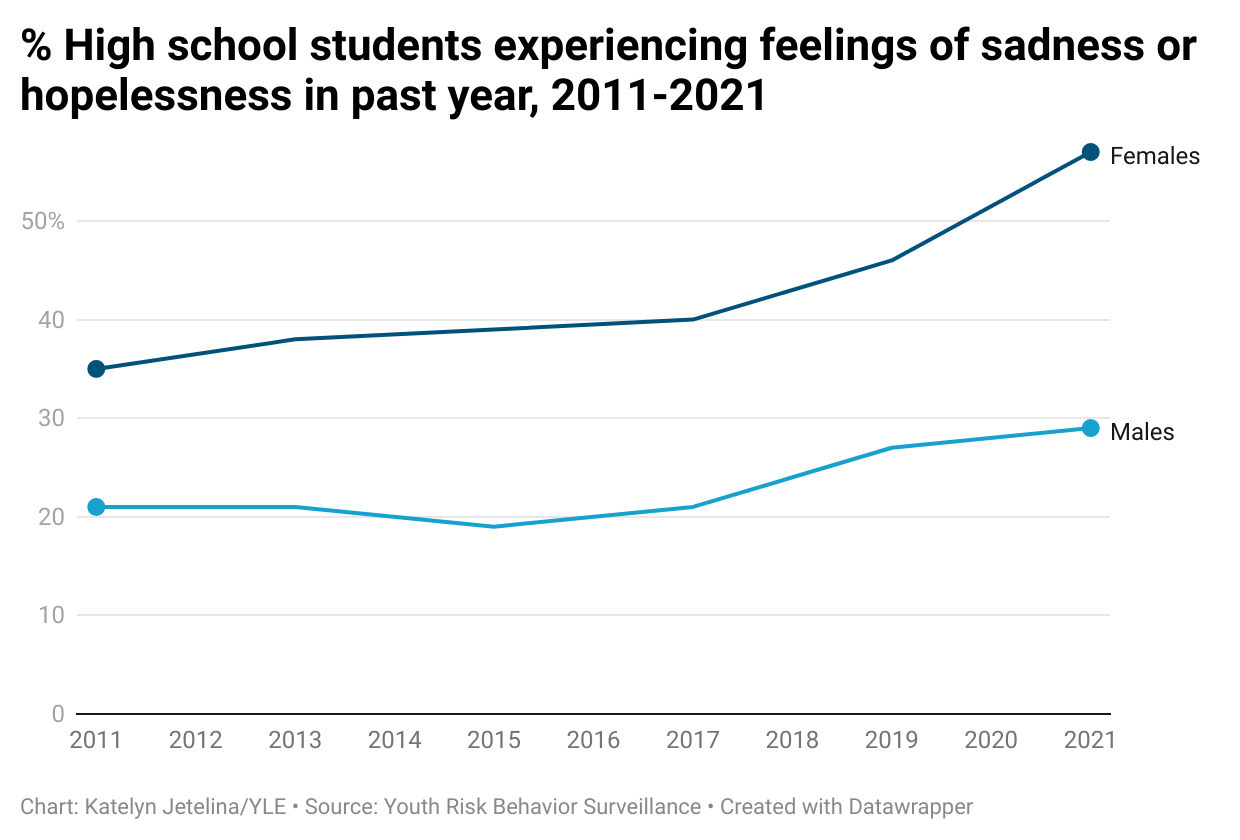
Is the teen mental health crisis a real thing? Yes. Rates of mental health problems have continually increased among young people over the past 15 years, regardless of how you measure it:

In 2021, 42% of U.S. high school students reported “persistent feelings of sadness or hopelessness,” up from 28% in 2011. The increase was especially dramatic among girls.

According to diagnostic measures (structured interviews by a trained professional), depression has increased 7.7% in U.S. teens—and 12% among girls—between 2009 and 2019.

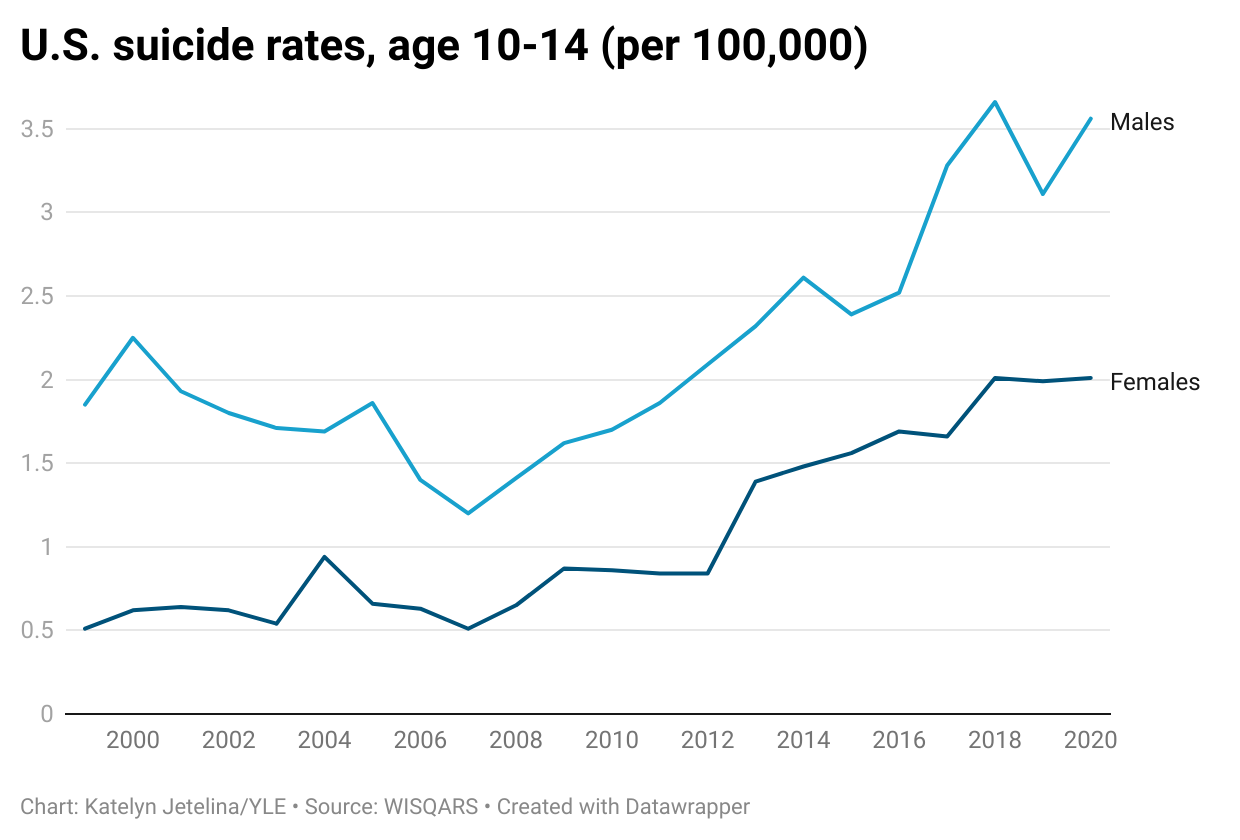
According to U.S. death certificates, suicide rates among youth ages 10-14 increased 139% for girls and 70% for boys since 2012. However, this is a bit difficult to interpret given low the rates to begin with for girls.

Is this rise due to social media? Teens use social media. A lot. Almost one in five teens use YouTube “almost constantly.” Nearly half of teens use TikTok (48%) and Snapchat (44%) several times per day. And the total hours of use have increased in recent years among teens.

But using social media doesn’t necessarily equate to mental-health problems. Correlation doesn’t always equal causation. And, to make things more complicated, there are harms and benefits of social media.

Harms of social media: We have a lot of correlational evidence, and some—but not much—causal evidence of the harms of social media on teens' mental health.

Correlational studies ask teens how much time they’re spending on social media, and ask them about mental health. In general, these point to weak but statistically relevant correlations between social media use and lower teen well-being.

In terms of causal evidence, we have a couple of studies:

Some studies randomly assigned people (both adults and teens) to stop using social media (and others not to stop) and then evaluated their well-being. The results of these studies are mixed. Variability seems to depend on the details of the design: How long did they stop using social media? Did they “detox” completely or just reduce the time spent? What are they using social media for?

Other studies have taken advantage of circumstances that naturally occurred in the world to mimic an experimental design. One study ​​looked at when Facebook was introduced on different college campuses (which varied randomly) and found that after Facebook showed up, rates of mental-health concerns increased. A few others (like this and this) look at the introduction of high-speed Internet in different areas and found associations with poorer mental health after its introduction, but these studies do not address social media specifically.

What is clear is that we need more research with more rigorous designs.

Benefits of social media: Competing with these harms are studies that show social media have benefits for mental health, too. Teens report that social media are important for:
  • Helping them stay connected with friends
  • Meeting like-minded peers
  • Exploring their interests
  • Learning
  • Discovery
These benefits can be especially important for those who may be socially vulnerable in their offline lives, such as LGBTQ+ youth.

What else could explain it? Assessing causality means understanding what other factors may also explain the rise of mental illness among teens. A few alternative explanations have been proposed:
  • Rising income inequality
  • Wars
  • Violence and access to firearms (suicides)
  • Global financial crisis
  • Racial inequality
  • Academic and social pressures
  • Political views on current events
  • Climate change
  • The opioid epidemic
  • Unhelpful narratives around mental health
Of course, many of these explanations may be intertwined with and amplified by social media, but the short answer is that we likely can’t blame social media alone. Mental health is complicated, and there is unlikely to be a single, simple explanation for a large-scale phenomenon like this one.

So, what should we do about it? We’ve got a few options:

Option 1: Do nothing until research is “settled” on the issue before taking legislative action. Unfortunately, this may require a “burden of proof” that is rarely, if ever, established in psychology research. In this case, some evidence of harm, even if imperfect, may need to be enough to drive change.

Option 2: Put it on the parents. Parents certainly play a hugely important role in teens’ relationships with social media. Evidence supports parents’ active involvement in kids’ digital lives through ongoing conversations, reasonable limits, and appropriate monitoring. But can (and should) they manage it alone? If large-scale policy changes create safer social media platforms, individual disadvantages are minimized.

Option 3: Ban it among minors. Some states, such as Arkansas and Utah, have passed bills that limit social media use. In one case (Florida), it’s banned among kids under 16.

Option 4: Put reasonable protections in place. Social media is probably more like cars than drugs. We want protections in place (seatbelts, airbags, drivers’ ed), but an outright ban may go too far. Some options include: raising the minimum age from 13 to 15 or 16; requiring age verification of some kind; limiting recommendations of harmful or problematic content; limiting overall time spent (such as via forced “breaks” or overall time limits); and limiting targeted advertising.
 
Bottom line: We have some evidence that social media is playing a role in the teen mental-health crisis, but that evidence is not definitive. And social media can play a positive role, too. It is highly unlikely that social media as a whole are the only cause of mental illness among children. We can certainly take steps to make social media a healthier place, but if we truly want to support teens’ mental health, this is only the start.

Sunday, October 1, 2023

Studies show that comprehensive smoke-free laws and tobacco taxes are associated with lower rates of youth smoking

Kentucky Health News

Tobacco-control policies such as taxes and comprehensive smoke-free laws are associated with lower rates of youth smoking, according to recent studies. 

The purpose of the first study, published in Sage Journals, was to determine whether the presence and strength of local smoke-free ordinances was associated with cigarette and smokeless tobacco use among high school students in Kentucky, and whether use varied by urban/rural location.

The researchers used data from more than 353,000 10th and 12th graders in the 2004-2018 biennial Kentucky Incentives for Prevention Survey. The smoke-free ordinance data came from the Kentucky Center for Smoke-Free Policy at the University of Kentucky.

The center said in a news release that UK researchers "found that high-school students living in Kentucky counties with a comprehensive smoke-free law are 23% less likely to smoke cigarettes and 16% less likely to use smokeless tobacco compared to those living in counties with a partial smoke-free law or no law." 

Also, "Students in counties with moderate/weak laws did not differ in likelihood of use for either product, compared to those in counties without a law." 

Comprehensive smoke-free laws prohibit smoking inside all workplaces and public places.

The study also found that rural youth may be more likely to smoke. 

"Students in urban counties were 14% less likely to smoke, but there was no difference in likelihood of smokeless use by urban/rural location," says the report.

In conclusion, the researchers write, "Given that nearly half of U.S. youth are not protected by smoke-free laws, advocacy for comprehensive smoke-free workplace laws in all states and municipalities may be an important component in reducing the prospect of youth cigarette and smokeless tobacco use." 

In Kentucky, nearly 5% of high-school students smoke cigarettes and nearly 22% of them use electronic cigarettes, according to data from the Campaign for Tobacco-Free Kids. 

A separate study, published in the American Journal of Preventive Medicine, that looked at how changes in state tobacco-control policies impacted youth e-cigarette use in 2013-19. It found that adolescents were 55% less likely to use e-cigarettes following the enactment of a statewide comprehensive smoke-free law than before the state had a law.
 
The researchers then compared this to the impact of age-of-purchase laws and e-cigarette excise taxes and found that comprehensive smoke-free laws had the biggest impact on youth vaping. 

"Youth were 21% less likely to use e-cigarettes when their state had a minimum age-of-purchase law than when they did not," says the release. 

In addition, the study found that "while changes in tobacco excise taxes did not have a statistically significant impact, adolescents who lived in states with higher average cigarette excise taxes were more likely to use e-cigarettes." 

"This suggests that states need to consider parity and tax all tobacco products including e-cigarettes at the same rate," says the release. "These findings indicate that comprehensive smoke-free laws, tightening restrictions on youth access, and enforcing existing age-of-purchase laws can reduce the likelihood of e-cigarette use among youth."

Friday, June 23, 2023

E-cigarettes get bigger and badder: Sales up rose 47% in last 3 years, nicotine content up 76% in last 5; FDA struggles to regulate

Disposable e-cigarette sales soared after the Food and Drug Administration banned fruity and minty flavors in cartridge-based devices such as Juul. (Centers for Disease Control graph; click to enlarge)

By Liz Szabo

When the Food and Drug Administration first asserted the authority to regulate electronic cigarettes in 2016, many people assumed the agency would quickly get rid of vapes with flavors like cotton candy, gummy bears, and Froot Loops that appeal to kids.

Instead, the FDA allowed all e-cigarettes already on the market to stay while their manufacturers applied for approvals to market them. Seven years later, vaping has ballooned into an $8.2 billion industry, and manufacturers are flooding the market with thousands of products — most sold illegally and without FDA permission — that can be far more addictive.

Sales of e-cigs have risen almost 47 percent in the last three years, according to the Centers for Disease Control and Prevention, and their nicotine content has gone up 76% over five years.

“The FDA has failed to protect public health,” said Eric Lindblom, former senior adviser in the FDA’s Center for Tobacco Products. “It’s a tragedy.”

The FDA isn’t the only entity that has tolerated the selling of vapes to children. Many players have declined to act, tied the agency’s hands, or neglected to provide the FDA with needed resources. Barack Obama and Donald Trump both prevented the FDA from broadly banning candy-flavored vapes.

Meanwhile, today’s vapes have become “bigger, badder, and cheaper” than older models, said Robin Koval, CEO of the Truth Initiative, a tobacco-control advocacy group. The enormous amount of nicotine in e-cigarettes can addict children in a matter of days, Koval said.

“We really don’t know the long-term health implications,” said Matthew Myers, president of the Campaign for Tobacco-Free Kids.

E-cigarettes in the U.S. now contain nicotine concentrations that are, on average, more than twice the level allowed in Canada and Europe. The U.S. sets no limits on the nicotine content of any tobacco product.

Elijah Stone of California was 19 when he tried his first e-cigarette at a party. He was a college freshman, grappling with depression and attention-deficit/hyperactivity disorder, and “looking for an escape.” Store clerks never asked for his ID. Stone said he was “hooked instantly.”

“The moment I felt that buzz, how was I supposed to go back after I felt that?” asked Stone, now 23.

The e-cigarette industry says higher nicotine concentrations can help adults who smoke heavily switch from combustible cigarettes to vaping products, which are relatively less harmful. The FDA has approved high-nicotine, tobacco-flavored e-cigarettes for that purpose, said April Meyers, CEO of the Smoke-Free Alternatives Trade Association.

“The goal is to get people away from combustible products,” said Nicholas Minas Alfaro, CEO of Puff Bar, one of the most popular brands with children last year. “These products are addictive products; there’s no hiding that.”

E-cigarettes don’t produce tar like combustibles, but contain harmful chemicals such as formaldehyde. The surgeon general has warned that vaping poses significant risks, including damage to the heart, lungs, and brain parts that control attention and learning, plus higher risk of addiction to other substances.

More than 2.5 million children used e-cigarettes in 2022, including 14% of high school students, according to the Centers for Disease Control. Most teen vapers in the U.S. begin puffing within an hour of waking up, according to a survey of e-cigarette users ages 16 to 19 presented at the Society for Research on Nicotine and Tobacco in March.

The potential for profits — and lax enforcement of vaping laws — has led to a gold rush. The number of unique vaping products, as measured by their bar codes, quadrupled in just one year, rising from 453 in June 2021 to 2,023 in June 2022, according to a Truth Initiative review of U.S. retail sales data.

FDA officials say they’ve been overwhelmed by the volume of e-cigarette marketing applications — 26 million in all.

“There is no regulatory agency in the world that has had to deal with a volume like that,” said Brian King, who became director of FDA’s Center for Tobacco Products in July 2022.

The agency has struggled to stop e-cigarette makers who continue selling vapes despite the FDA’s rejection of the products, as well as manufacturers who never bothered to apply for authorization, and counterfeiters hoping to earn as much money as possible before being shut down.

In 2018, public-health groups sued the agency, charging that the delay in reviewing applications put children at risk. A court ordered the FDA to finish the job by September 2021, but the FDA missed that deadline. An estimated 1.2 million people under the legal age of 21 began vaping in the next year, says a study published in May in the American Journal of Preventive Medicine.

The FDA recently said it has made decisions on 99% of applications, had rejected millions and authorized only 23. All authorized products have traditional tobacco flavors, and were deemed “appropriate for the protection of public health” because tobacco-flavored products aren’t popular with children but provide adult smokers with a less dangerous alternative, King said.

However, the agency has yet to make final decisions on the most popular products. Those applications are longer and need more careful scientific review, said Mitch Zeller, former director of the Center for Tobacco Products.

The FDA said it would not complete reviewing applications by the end of June, as it previously forecast, but would need until the end of the year.

Before the FDA can announce new tobacco policies, it needs approval from the president, and the White House doesn’t always agree with the FDA’s priorities.

Obama rejected FDA officials’ proposal to ban kid-friendly flavors in 2016, and in 2020, Trump backpedaled on his own plan to pull most flavored vapes off the market. Instead of banning all fruit and minty flavors, the administration banned them only in “cartridge-based” devices such as Juul. The flavor ban didn’t affect vapes without cartridges, such as disposable e-cigarettes.

The result was predictable, Zeller said. Teens switched in droves from Juul to brands that weren’t affected by the ban, including disposable vapes such as Puff Bar, which were allowed to continue selling candy-flavored vapes.

After receiving its own warning letter from the FDA last year, Puff Bar now sells only zero-nicotine vapes, Alfaro said.

When the FDA does attempt bold action, legal challenges often force it to halt or even reverse course.

The FDA ordered Juul to remove its products from the market in June 2022, but Juul sued and federal judges temporarily stayed the FDA’s order. Within weeks, the FDA announced it would hold off on enforcing the order because of “scientific issues unique to the Juul application that warrant additional review.”

E-cigarette makers Logic and R.J. Reynolds Vapor Co. both sued the FDA after the agency ordered them to stop selling menthol vapes, which are popular with teens. In both cases, court-imposed stays halted the FDA’s orders pending review and the companies’ menthol products remain on the market.

Under the Biden administration, the FDA has stepped up enforcement efforts. It fined 10 e-cigarette manufacturers more than $19,000 each, and issued more than 1,500 warning letters to manufacturers. It also issued warnings to 120,000 retailers for selling illegal products or selling to customers under 21, King said.

Five companies that received warning letters made vapes decorated with cartoon characters, such as Minions, or were shaped like toys, including Nintendo Game Boys or walkie-talkies.

In October, the Justice Department for the first time filed lawsuits against six e-cigarette manufacturers on behalf of the FDA, seeking “to stop the illegal manufacture and sale of unauthorized vaping products.” In May, the FDA put Elfbar and other unauthorized vapes from China on its “red list,” which allows FDA agents to detain shipments without inspection at the border.

Some lawmakers say the Justice Department should play a larger role. “There are more than six e-cigarette manufacturers selling without authorization on the market,” Senate Majority Whip Dick Durbin of Illinois said in a March letter. Children are “vaping with unauthorized products that are on store shelves only because FDA has seemingly granted these illegal e-cigarettes a free pass.”

KFF Health News, formerly known as Kaiser Health News, is a national newsroom that produces in-depth journalism about health issues and is one of the core operating programs at the Kaiser Family Foundation — the independent source for health-policy research, polling, and journalism.

Thursday, May 25, 2023

Surgeon general issues public-health advisory that warns about the dangers of social-media use to children's mental health

CNN image
By Melissa Patrick
Kentucky Health News

Concerns about the effects of social media on youth mental health prompted America's top public-health official to issue a rare public-health advisory that calls for a multifaceted approach to find ways to minimize the harm. 

"The bottom line is we do not have enough evidence to conclude that social media is sufficiently safe for our kids. In fact, there is increasing evidence that social media use during adolescence — a critical stage of brain development — is associated with harm to mental health and well-being. In light of the ongoing youth mental health crisis, it is no longer possible to ignore social media’s potential contribution to the pain that millions of children and families are experiencing," Surgeon General Vivek H. Murthy writes in an op-ed about the advisory for The Washington Post. 

Social media use among teens is pervasive, with 95 percent of U.S. teenagers using the platforms and more than one-third saying they use social media "almost constantly," the report says. And this isn't just a teenage phenomenon; nearly 40% of children 8 to 12 years old use social media. 

The advisory walks through the benefits and harms of social media for children. 

It says social media may benefit children by allowing them to connect easily with friends and family or those who share abilities interests and identities, and a space to express themselves and find support when they need it. 

But it also says social media use can result in reduced sleep among youth, and expose them to extreme, inappropriate content and online bullying. One study has found that youth who spend more than three hours a day on social media face double the risk of experiencing poor mental health, including symptoms of depression and anxiety. This is of great concern because on average, one survey found that eighth and 10th graders spend about three and a half hours a day on social media, says the report.

"More research is needed to fully understand the impact of social media," says the 19-page advisory, titled "Social Media and Youth Mental Health." Current evidence "indicates that while social media may have benefits for some children and adolescents, there are ample indicators that social media can also have a profound risk of harm to the mental health and well-being of children and adolescents."

The advisory lays out steps that policymakers, technology companies, researchers, families and young people can take to make social media safer for youth. Following are some of the suggestions for various interests. 

Policymakers are encouraged to strengthen safety protections for children interacting with social media platforms and to develop age-appropriate health and safety standards. They are also called on to require higher safety standards of data privacy for children. 

Technology companies are urged to create safety standards for social media that protect youth from exposure to harmful content and online harassment. They are encouraged to limit features that manipulate youth into excessive and unhealthy use of social media. The report also calls on them to be transparent and to share their assessment findings and data with independent researchers. 

Families are asked to model responsible social-media behavior and to create a family media plan. It also asks families to create tech-free zones that encourage other activities. 

Youth are reminded that they can reach out for help if they are negatively affected by social media and to be cautious about what they share.

The American Psychological Association recently issued a health advisory on social-media use in adolescence that included 10 research-based recommendations.

Sunday, March 5, 2023

Bill would create phone app for confidential mental-health texting for Ky. youth; 9.5% of Ky. high-schoolers have attempted suicide

Photo from Parenting Teens & Tweens
By Melissa Patrick
Kentucky Health News

A bill to create a free mobile-phone application for confidential crisis intervention for Kentucky youth, parents and their teachers is poised to pass the House and go to the Senate Tuesday, March 7. 

"This is really dynamic, and I think pretty much of a needle mover when it comes to helping our kids out when they come across a very significant crisis situation," Rep. Ken Fleming, R-Louisville, told the House Health Services committee before it approved the bill March 2. It passed without dissent, so it was put on the consent calendar, for non-controversial bills that are passes as a group. 

The need for this service is great. In December 2021, the U.S. Surgeon General sounded an alarm about youth mental health by issuing a 53-page health advisory, and the 2021 Kentucky Youth Risk Behavior Survey found that 19% of Kentucky's high-school students seriously considered attempting suicide in the 12 months prior to the survey, 15% of them had made a plan about how they would attempt it, and 9.5% of them actually attempted it. 

The survey also found that 39.2% of the state's high school students said they felt sad or hopeless almost every day for two weeks or more in a row, such that the stopped doing some of their usual activities. 

The 2021 survey asked the state's middle schoolers if their mental health was most of the time or always not good, including stress, anxiety and depression, during the 30 days before the survey and found that 21.9% responded that it was. 

House Bill 196, sponsored by Fleming, would establish the Kentucky Mental Health Protection Center within the UofL Health hospital system to create and maintain the mental-health app. The program is modeled after a similar program in Utah and would be called SafeKY. The app will be available to all students, parents, and teachers.

Fleming said the plan is to do a pilot project with the app in the next year and then offer it statewide.

Liz McCune, vice president and chief operations officer at UofL Health, emphasized that the SafeKY phone app will connect youth with a licensed counselor via text, which she said is the preferred form of communication among young people. She said 89 percent of teens carry a cell phone. 

She said text conversations would be anonymous, but the licensed provider can connect the texter with law enforcement, school officials, a trusted adult or a parent "so that they can help in resolving the crisis situation." In addition to mental-health crisis, the app can also be used by students, parents and school officials if they become aware that a student has a weapon on campus.

"This is meant to be an extension of school personnel and an extension of emergency services in getting these kids connected in order to prevent any major catastrophic event," McCune said.

She said the Utah program "that we've been working with handles about 32,000 inquiries a year in which they have worked to reduce acts of suicide, as well as become aware of weapons and hopefully present prevented any catastrophic events." 

Fleming called the bill "monumental" and said the bill is "very important for the life of our kids," noting that many of the Utah texts have come in between 11 p.m. and 3 a.m.

Fleming said the SafeKY program would complement 988, the new, easy-to-remember suicide and crisis lifeline that is available nationwide.

McCune said  988 representatives in the state told her that Kentucky has 10 call centers that answer 988 calls but only one or two of them can take texts. SafeKy is designed to primarily be a text-and-chat app, and if needed, would be able to loop into 988 or 911 services.