Showing posts with label food. Show all posts

Wednesday, May 22, 2024

Hospital association, state Department of Agriculture start 'Food is Medicine' effort to get more local food into Kentucky hospitals

Logo of the program
Kentucky Health News

The Kentucky Hospital Association and the state Department of Agriculture have started an effort to get more local food into Kentucky hospitals.

"A recent survey completed by representatives of 50 hospital systems across the state found that only about 2 percent of the hospital’s budget is spent on local food," a department news release said. "The overall average percentage of local food being served at these same hospitals was 15 percent."

In their “Food is Medicine” campaign, the department, KHA, eight health systems and other organizations "will study how hospitals can play a key role in prescribing food as medicine to patients by creating more access to healthier and local foods," the release said. They will:
· Look at the food a hospital is serving to patients;
· Create partnerships between hospitals and local farmers;
· Connect patients with resources to a consistent healthy food resource;
· Reach out to patients who need a special diet, such as diabetes patients, and who could benefit from having a resource to fresh food.

“Access to nutritious food is critical to maintain a healthy lifestyle,” Agriculture Commissioner Jonathan Commissioner Shell said. “Advocating that connection between food and health is essential to meeting the goal of less chronic disease and longer lifespans. But it’s more than a message about choosing the right foods, it’s also a message about expanding our food distribution networks within the agriculture industry.”

KHA President and CEO Nancy Galvangni said, "Kentucky’s hospitals work every day to improve the health of our citizens and this new collaboration between KHA and the Department of Agriculture will elevate ways in which hospitals throughout Kentucky can address the social drivers of health facing our commonwealth.”

Hollie Harris, president and CEO of Appalachian Regional Healthcare, said "As the largest provider of care in southeastern Kentucky, our responsibility goes beyond treating illness. We want to help people live healthier lives, and that starts with access to healthy foods. . . . We can create partnerships to address our state’s troubling health statistics and make fresh, locally grown foods more available in our communities."

Monday, May 13, 2024

Food-as-medicine effort at UK gets a boost from new endowment

Alison Gustafson (UK photo by Sabrina Hounshell)
By Christopher Carney

One of the first two Gatton Foundation endowed professors at the University of Kentucky is Alison Gustafson, who directs the Food as Health Alliance. The endowment, from a $100 million gift by the late Bill Gatton, will provide funds to developing and expanding food-as-medicine programs across the state.

The money will help build capacity for health-care providers to get key services for diet-sensitive patients who are at risk of food insecurity. Gustafson is also developing and expanding community partnerships, offering approved food-as-medicine programs to those who qualify, and building a referral and network hub that will give patients a connection to services regardless of location. 

“Our team will be conducting expansion efforts for screening and referral, capacity building among community groups, outreach, UK Cooperative Extension training and research projects to better serve Kentuckians experiencing food insecurity,” Gustafson said. 

Gustafson is a professor in the Department of Dietetics and Human Nutrition in the Martin-Gatton College of Agriculture, Food and Environment and the College of Nursing. Under terms of the gift from the Bill Gatton Foundation, distinguished faculty get resources to continue meaningful research, extension and instructional programs related to advancing UK’s land-grant mission. 

The Food as Health Alliance was launched at UK in 2023 to boost health and well-being in the state through the combined application of agricultural, medical, and nutritional resources. Gustafson works to bring together clinical and community research to address the dual challenges of food insecurity and diet-related chronic diseases that many Kentuckians face.

Gustafson earned a doctoral degree in nutrition epidemiology from the University of North Carolina and a master's degree in public health from Boston University. As a master's student, she spent a year in Zimbabwe working with AIDS orphans. She has worked in local and state health departments, focusing on community health for disadvantaged populations. 

The other Gatton endowed chair, Tiffany Messer, will get support for student training and success, water-quality needs assessments, and low-cost water-quality treatment options. She is an associate professor of biosystems and agricultural engineering in the college.

Monday, February 19, 2024

Heart Association gives UK grant to spur 'food as medicine' effort

By Grace Sowards
University of Kentucky

The Food as Health Alliance at the University of Kentucky has received a grant from the American Heart Association. UK is among the first recipients of AHA’s Health Care by Food Initiative awards.

Alison Gustafson (UK photo by Sabrina Hounshell)
FAHA director Alison Gustafson is a faculty member in the University of Kentucky Martin-Gatton College of Agriculture, Food and Environment. She will use the $386,000 grant over the next year and a half to see how a user-centered design program can improve screening, referral enrollment and engagement in food-as-medicine programs for adults with food insecurity and high blood pressure or other diet-sensitive chronic diseases.

This grant also involves UK HealthCare and Appalachian Regional Healthcare, with key partnerships from Instacart, Kroger Health with Soda Health, Mom’s Meals and Food City.

“We are looking forward to working with our partners across the state to improve screening, referral and enrollment practices to improve patient outcomes,” said Gustafson, a professor in UK's Department of Dietetics and Human Nutrition.  She has partnered with Instacart, Mom’s Meals and Food City on current pilot projects across Kentucky to help develop the infrastructure for patients receiving food-as-medicine programs.

The grant team is developing a referral hub for health-related social needs with key organizations in Kentucky. FAHA is bringing together diverse health-care, managed-care, non-profit and industry collaborators to facilitate screening, referral and enrollment to identify the most suitable and effective model(s) in the short term, while considering design for long-term sustainability.

FAHA seeks to bring together clinical and community research spanning across agriculture, food, health care and nutrition to address food insecurity and diet-related chronic disease. Researchers, community partners, food commodity producers, health care partners and students will explore innovative strategies to improve patient clinical outcomes and Kentuckians’ health.

“This award is an acknowledgment of the tremendous work the Food as Health Alliance has already been doing to address inequities related to food insecurity and chronic disease across Kentucky,” said Carolyn Lauckner, assistant professor in the Department of Behavioral Science at the UK College of Medicine and co-principal investigator on the grant with Gustafson.

“The grant demonstrates an investment in our efforts to use food as medicine to improve individuals’ health by targeting the link between food insecurity and cardiovascular disease,” Lauckner said. “I am thrilled to be working with this outstanding group of scholars and practitioners committed to using innovative, community-engaged research methods to improve the health of all Kentuckians.”

For more information on FAHA, visit https://foodashealthalliance.ca.uky.edu. For more information about the American Heart Association’s Health Care by Food Initiative, visit https://healthcarexfood.org.

Tuesday, December 5, 2023

Meat-heavy diet raises risk for Alzheimer's disease, study finds, predicting U.S. cases of the disease will grow 50% by 2038

Researcher Steve Blake diagrammed how different foods create greater risk for Alzheimer's disease (AD). AGEs are compounds formed in the body when proteins react with sugar; they increase the risk of many diseases.
Kentucky Health News

Americans' meat-rich diets make them more vulnerable to Alzheimer's disease, according to a study published in the peer-reviewed Journal of Alzheimer's Disease. "Diets that are more plant-based, like the Mediterranean diet and traditional diets in China, Japan, and India, are shown to reduce risk, especially when compared to the Western diet," says a press release about the study by nutrition scientists.

"Alzheimer’s disease rates rise in these countries as they make the nutrition transition to the Western diet," the release notes. "This study identifies dementia risk factors including higher consumption of saturated fats, meat (especially red meat such as hamburgers and barbeque) as well as processed meats such as hot dogs, and ultra-processed foods high in sugar and refined grains.

The study also helps explain why certain foods increase or reduce the risk of Alzheimer’s. "Meat raised risk of dementia the most by increasing risk factors such as inflammation, insulin resistance, oxidative stress, saturated fat, advanced glycation end products, and trimethylamine N-oxide," the release says. The study identified several foods that protect against Alzheimer’s, such as nuts, omega-3 fatty acids, whole grains, green leafy vegetables, colorful fruits and vegetables, and beans and other legumes (plants that fix nitrogen).

Ultra-processed foods can increase the risk of obesity and diabetes because they lack the ingredients found in whole plant foods that deter dementia away, such as anti-inflammatory components and antioxidants. Ultra-processed foods make poverty is an important driver of Alzheimer’s disease, because they are usually cheaper sources of energy than fruits, vegetables, whole grains, and other more nutritious foods.

"The paper also suggests that Alzheimer’s disease rates in the U.S. are projected to increase by 50% from 2018 levels by 2038," the release saus. "This calculation is based on comparing trends of obesity in the U.S. with Alzheimer’s disease trends. This comparison shows a 20-year lag between obesity rates and Alzheimer’s disease rates. This estimate is very close to the estimate published by the Alzheimer’s Association in 2018, an estimate of a 56% increase."

The researchers said, "Our estimate suggests that the rising trend of obesity, due to consumption of meat and ultra-processed foods, is the force driving dementia. Although our personal risk of Alzheimer’s disease can be reduced with diet, it is expected that those who continue to eat the Western diet will continue to have a higher risk."

The study, a review of other published research, was conducted by Steven Blake of the Maui Memory Clinic in Hawaii and William Grant of San Francisco's Sunlight, Nutrition and Research Center. It was endorsed by other experts.

“Grant and Blake comprehensively review and synthesize the role of dietary factors in Alzheimer’s disease,” said Dr. Edward Giovannucci, a professor of utrition and epidemiology at Harvard University. “Evidence from diverse perspectives support that a diet that emphasizes fruits, vegetables, legumes, nuts, whole grains, and … de-emphasizes meat, especially red meat, saturated fats, and ultra-processed foods is associated with lower risk of Alzheimer’s disease. Physical inactivity and obesity also contribute to higher risk.”

Monday, November 27, 2023

Over the holidays, encourage picky eaters to try something new

Photo illustration from PureWow.com
By Dr. Rhya Strifling
UK HealthCare

During the holiday season, there are all kinds of foods on the table. But for parents and caregivers, even the most joyous of family gatherings can be stressful when you're dealing with a picky eater.

Sometimes what parents think is picky eating isn't actually picky eating. Some parents might be under the impression that their kids are picky eaters if they don't eat much, but children ages 2 to 5 have a slower rate of growth and therefore have smaller appetites.

It's normal for children to eat small amounts of food at one meal — sometimes just a few bites — and then a larger amount at a later meal or the next morning. They learn to regulate how much to eat and won't starve themselves. If they are growing well on their growth curves, don't worry about how much they are eating.

Keep mealtimes relaxed. The best way to prevent a child from becoming a picky eater is to make mealtimes enjoyable with a variety of small portions of healthy foods. Mealtimes should be relatively short, and children should not be made to "clean their plates." Some children will exert their independence by refusing to eat if you force them, punish them or bargain with them. The more you make them eat, the more they might begin to refuse.

Provide your child with a variety of healthy food choices in small, tablespoon-sized portions, then relax and focus on your own meal. The less focus you put on what your kid eats, the better they will eat. If they say they don't like what you have prepared, tell them that's OK and give them the same food options as the rest of the family, then return to your own meal. They will either eat, or catch up at the next meal.

Encourage your child to try new foods. A child might try a new food 10 to 15 times before realizing they actually like it. Don't be afraid to try new foods, but don't get frustrated if your child rejects them. The best way to get children to try new foods is to eat them yourself. Be sure to give them lots of praise and encouragement for taking even the smallest bite of a new food.

To help children eat better at mealtimes, follow some of these tips:
  • Try to limit beverages prior to meals.
  • Schedule snack time instead of letting them "graze" throughout the day.
  • Serve as a role model, because children learn to feed themselves by experimenting with new foods.
  • Sit at the table as a family to demonstrate healthy eating choices and habits.
Rhya Strifling, M.D., is a physician at Kentucky Clinic South.

Monday, November 6, 2023

'Toddler formulas' for infants and young children offer little nutritional benefit, writes a UK specialist in pediatric digestion

Photo by tun723, iStock/Getty Images Plus via UK
By George J. Fuchs III, M.D.
University of Kentucky

A recent report from the American Academy of Pediatrics as part of my work on the AAP Committee of Nutrition addresses the claims made by the manufacturers of so-called “toddler formulas," purporting to bolster the immune system and improve brain development. Simply put, a nutritionally complete super formula that gives your child a brain boost and protects them from diseases is too good to be true.

Nutrition is integral to a child’s cognitive and physical development, especially in the first years of their life. Additionally, these years represent a narrow window of time during which nutritional status and the right nutrients at the right time are primary determinants of health and risk of obesity, diabetes and other diseases in childhood and through adulthood.

While the benefits of breastfeeding in the first six months of life are well-documented, there are numerous reasons why some infants must subsist on iron-fortified formulas. The composition of infant formulas is standardized and regulated by the Food and Drug Administration per the Infant Formula Act of 1980 and the manufacturing facilities are regularly inspected.

Recently, liquid nutritional products referred to as “formulas” have been developed for the older infant and toddler and increasingly promoted by manufacturers. Older infant-young child formulas (OIYCF) are marketed under identities such as “transition formulas,” “toddler formulas” or “growing-up milks." These formulas are not to be confused with medical or therapeutic formulas for conditions such as chronic gastrointestinal diseases, metabolic disorders or food allergy, the use of which are prescribed and monitored by pediatric specialists.

Unlike infant formulas, there are no standard criteria for the composition of OIYCFs. Some of these formulas have been criticized as having elements considered to be unnecessary or potentially detrimental, including high or low protein, and higher sodium content relative to cow milk and added sweeteners. OIYCFs are considered by some to be “sugar-sweetened drinks” and have been associated with greater intakes of sweetened beverages as well as sweetened dairy products, such as fruit yogurts and cream cheese desserts.

Advertisement practices for OIYCFs often convey them as a necessary “next stage” or “next step” for optimal nutritional intake. Manufacturers of OIYCF make claims that are not required to be based on scientific evidence or be reviewed or approved by the FDA. Claims of improved brain development or immune function have incorrectly shown to influence parents’ belief that OIYCFs are healthier than breast milk or cow milk. OIYCFs are not nutritionally complete and are marketed to parents of healthy children as a replacement or substitute for cow’s milk.

The diets of young children are generally adequate for most micronutrients, although possible gaps exist, especially for vitamins D and E and fiber. Nearly all store-purchased cow milk in the United States is fortified with vitamin D, thus eliminating the need for a supplemental formula. Additionally, OIYCFs are considerably more expensive than cow milk and can represent a significant cost burden to families, especially when consumed daily. Parents and caregivers are advised to provide nutritionally balanced diets that include fortified foods; children consuming a diet of solid foods that provide sufficient iron and vitamin content have no need for supplemental formulas.

If you are concerned about your child’s nutritional intake, ask their pediatrician for recommendations for a balanced, nutrient-rich diet to help ensure proper cognitive and physical development during formative early years.

Dr. George Fuchs is a pediatric gastroenterologist at Kentucky Children’s Hospital and a professor in the UK Colleges of Medicine and Public Health.

Saturday, November 4, 2023

At upcoming holiday celebrations, focus on social connections, not on the food; eat mindfully to avoid celebration guilt

Photo by iStock from "How to eat healthy during a holiday celebration," by Hola 
By Patty Craig
Beech Tree News, Morgantown

We will soon enter the holiday celebration season. Our culture promotes celebrating with food – despite staggering obesity statistics. Anticipating those celebrations, how might health-minded people celebrate?

First, carrying extra weight is a real problem. The Centers for Disease Control and Prevention website reports: “The obesity prevalence was 39.8% among adults aged 20 to 39 years, 44.3% among adults aged 40 to 59 years, and 41.5% among adults aged 60 and older.”

Obese children may have to deal with psychological problems such as anxiety and depression, low self-esteem and lower self-reported quality of life, social problems such as bullying and stigma, and obesity as adults.

Obese adults face high blood pressure and high cholesterol, Type 2 diabetes, breathing problems, joint problems, gallstones and gallbladder disease. Additionally, “adults with obesity have higher risks for stroke, many types of cancer, premature death, and mental illness such as clinical depression and anxiety.”

Patty Craig
Why, then, is food a part of life’s celebrations? The Cultural Awareness International website says: “Conceivably it (food) is the most significant commonality that humanity shares. Whatever shape, form, flavor, or seasoning food may take around the world, people eat. More than that, across the world, people enjoy eating.”

Food is a way to show hospitality, and it provides an opportunity to make connections. Food is generally provided with celebrations throughout the life cycle – from birth to death, including many holidays.

How can we find a healthy balance? In a Film Daily article by Samantha Williams ("Healthy Celebrations: Striking a Balance between Indulgence and Wellness"), the author discussed how to be mindful and still savor a celebration. Two of her points resonated with me:

Set Realistic Expectations: Understand that celebrations are exceptions, not the norm. Don’t expect to maintain your usual dietary and fitness routines during every celebration. Instead, aim for balance over time.

Focus on Social Connection: Celebrations are about connecting with others and making memories. Shift your focus from food to the people and experiences around you.”

By eating mindfully, a balance between indulgence and wellness can be achieved, ridding us of celebration guilt.

I’ve read that health is an investment, not an expense. The Roman poet Virgil said, “The greatest wealth is health.” And I agree.

So what about those holiday celebrations on the horizon? I say yes, let’s provide the food, but not push anyone to eat or drink what’s being served. After all, we may not understand their situation, and we don’t want to be stumbling blocks to their health goals.

Patty Craig of Morgantown is a mother, grandmother and retired educator.

Thursday, October 5, 2023

Nonalcoholic fatty liver disease now common in children; experts at UK and elsewhere say causes include diet and lack of exercise

Dr. Samir Softic (Washington Post photo by Drea Cornejo)
Kentucky Health News

For uncertain reasons, nonalcoholic fatty liver disease has become more common in American children, especially in Kentucky, and “It’s the worst disease you’ve never heard of,” said Samir Softic, a pediatric gastroenterologist at the University of Kentucky Children’s Hospital, who specializes in the disease.

Softic is a main focus of a long story in The Washington Post about the disease, which is estimated to affect 5 to 10 percent of U.S. children, "making it about as common as asthma, Post reporter Ariana Eunjung Cha writes. A video with the story says Kentucky's rate "is believed to be among the highest."

Cha reports, "The crisis is especially acute in swatches of the Southeast, where rates of pediatric obesity are highest," including Appalachian Kentucky. "But obesity is only part of the puzzle. Scientists have been surprised to find that not all kids with obesity have fatty liver, and not all kids who have fatty liver disease struggle with weight."

Softic runs UK's pediatric fatty liver clinic, which this spring was "often fully booked two to six months in advance," Cha reports. The disease often has few symptoms until it becomes serious, at which point it can cause weakness, severe tiredness, weight loss, yellowing of the skin or eyes, spiderlike blood vessels on the skin and long-lasting itching," says Johns Hopkins Medicine.

"For Softic, the fatty liver crisis is as much about policy as science. He has collected a stack of letters from insurers refusing to cover some patients’ treatment with a new generation of weight-loss drugs known as semaglutides, sold under brand names including Ozempic and Wegovy. The companies say the medications are not yet proven to help with fatty liver.

"While Softic believes that fundamental changes in how we eat and exercise are needed in the long term, he said lives could be saved in the short term if these drugs were widely and cheaply available. He’s lobbying state and federal regulators to help pay for the treatments — which can cost upwards of $1,300 a month — for patients younger than 18, who arguably have the most to gain because they have more of their lives ahead of them.

Washington Post graphic frrom Trilliant Health analysis of claims
"Liver transplants in children diagnosed with fatty liver disease remain rare, but Softic recently referred a 6-year-old for a transplant evaluation. There has been a clear rise in transplants for fatty liver in people in their 20s and 30s, meaning if he can’t help his pediatric patients now, they may soon face a transplant."

Softic told Cha the disease “goes unnoticed and unrecognized, and over time it catches up. For a good number of these young transplant patients, the disease process started in childhood,” he said. “On so many levels, we are not prepared to deal with this disease in children.”

A seven-minute video with the story includes the case of Sydney Woods, a Kentucky 15-year-old with fatty liver disease who improved her liver function by "cutting out soda and making other changes to her diet . . . but it's not as easy for most families to buy less procesed food." That's especially true in rural areas, said her mother, Angela Woods, a physician's assistant.

Softic says in the video, "Eating healthy requires time, it requires money, and not everyone has those resources."

Cha reports, "Many doctors believe that our modern lifestyle — diet, the increase in sedentary activities related to technology and environmental exposures — is to blame. One of the liver’s jobs is to filter toxins, and when something in the body is out of balance, the organ can become damaged and fail. Some pediatric experts theorize there’s a mismatch between our genetics and the highly processed and sugary foods that have come to dominate childhood diets," including some types of infant formula. The video says 67% of children's diets consist of ultra-processed foods.

"It's a major problem, and it's been exacerbated by diet and inactivity," Simon Fisher, director of UK's Barnstable Brown Diabetes Center, says in the video.

Cha reports, "The escalation of pediatric fatty liver cases has unfolded in tandem with the presence among the young of other conditions once viewed as almost exclusively adult diseases: high blood pressure, high cholesterol, diabetes, even gallstones."

Sunday, September 24, 2023

Ky. children 10-17 have nation's 2nd highest obesity rate, 19.6%; adult rate of 37.7% is 9th highest, a slight improvement from 2021

Map from Trust for America's Health State of Obesity report

Kentucky Health News graph from state data

By Melissa Patrick
Kentucky Health News

Kentucky ties with Wisconsin for the nation's ninth-highest adult obesity rate, an improvement from second-highest last year, but Kentucky children aged 10-17 still have one of the nation's highest rates, No. 2, after ranking first last year.

The 20th annual State of Obesity report from Trust for America's Health says 37.7% of Kentucky adults are obese and nearly 72% of the state's adults are either obese or overweight, tied for sixth place with Delaware. Among the state's high-school students, 19.6% of them are obese and 16.2% are overweight.

Nationally, the report says the number of obese adults continues to rise, noting that 22 states had an 2022 adult obesity rate at or above 35%, up from 19 states in 2021. A a decade ago no state had an adult obesity rate at or above 35%, the report says.

"Since TFAH’s initial report, published in 2004, the national adult obesity rate has increased by 37 percent and the national youth obesity rate increased by 42 percent," says the report. 

The national adult obesity rate is 42% and the national rate for children ages 2 to 19 is nearly 20%, according to the report.  

The good news is that from 2021 to 2022, Kentucky's adult obesity rate declined 6.4%, or 2.6 percentage points, to 37.7% from 40.3%. But that was still above the levels of 2018, 2019 and 2020.

West Virginia (41%), Louisiana (40.1%), Oklahoma (40.0%), and Mississippi (39.5%) have the highest rates of adult obesity. The District of Columbia (24.3%), Colorado (25.0%), and Hawaii (25.9%) have the lowest adult obesity rates.

“It’s critical to recognize that obesity is a multifactored disease involving much more than individual behavior,” Dr. J. Nadine Gracia, president and CEO of Trust for America's Health, said in a news release. “In order to stem the decades-long trend of increasing obesity rates we have to acknowledge that the obesity crisis is rooted in economic, health, and environmental inequities. Ensuring all people and communities have equitable opportunity and access to healthy food and physical activity is fundamental to addressing this crisis.”

Kentucky continues to struggle with all of these conditions. It ranks fifth worst for the percentage of adults with diabetes (15%) and hypertension (40.3%), and nearly 27% of its adults are physically inactive, ninth worst. 

The report shows that more adult men than adult women are obese in Kentucky: 38.7% of men and 36.7% of women, a switch from last year's report. Kentucky's adult men have the second highest obesity rate in the nation; its women rank 18th, tied with Texas.

By age, Kentucky adults between 45 and 64 have the highest obesity rate, 42%. That's followed by those 25-44 (41.2%), 65 and older (33.7%) and 18 to 24 (24.1%). 

"Solving the nation’s obesity crisis will require addressing the economic and structural factors that impact where people live and their access to employment, transportation, healthcare, affordable and healthy food, and places to be physically active," says the report, which includes policy steps to address the crisis that they say should be taken by federal, state and local officials and stakeholders. They include: 
  • Fully fund the Centers for Disease Control and Prevention's proven chronic disease and obesity prevention programs so they reach every state.
  • Make healthy school meals available for all students and increase access to Supplemental Nutrition Assistance Program (SNAP) and other nutrition support programs.
  • Implement a mandatory front-of-package labeling system on food packaging to help consumers make informed choices.
  • Close tax loopholes and eliminate business-cost deductions for advertising unhealthy food to children.
  • Make physical activity and the built environment safer and more accessible for everyone, including by increasing federal education funding for health and physical education and investing in active transportation projects like pedestrian and bike paths.

Saturday, July 29, 2023

Study finds eating ultra-processed foods boosts calories and weight; manufacturers say they make food more affordable

Everyday Health photo illustration
Kentucky Health News

"Would you eat food that's been pre-digested?"

That's how The Washington Post opened a story that digs deep into how industrial processing changes the structure of food in such a way that it is essentially like eating predigested food. And this, experts say, affects how much we eat, how much our body absorbs, increaring our weight and our risk for chronic disease.

"A growing body of research suggests that the extent of industrial processing that your food undergoes can alter its effects on your body, determining its impact on your appetite, hormones, weight gain, and likelihood of developing obesity and chronic diseases," report Anahad O'Connor and Aaron Steckelberg of the Post. 

Scientists call this type of food u"ltra-processed." The Post offers a detailed example that involves two foods made from corn: canned corn and an ultra-processed snack, corn chips.

The graphics show that by the time both foods go through the packaging process, the canned corn has an "intact food matrix," which means its internal structure, which influences the nutrition provided by the product, remains the same. But the chips have a "broken food matrix," meaning that their nutritional value has been degraded, which affects how our bodies use the food and whether we feel full after eating it.

“Ultra-processing breaks the links between nutrients; it creates new links that our bodies may not recognize, and by doing this it disturbs the digestive process,” Anthony Fardet, a nutrition scientist at the French National Institute for Agriculture, Food, and Environment who studies the effects of food processing on health, told the Post. 

The reporters write that ultra-processed foods make up 58 percent of the calories Americans consume, and that government experts are examining the link between the foods and obesity. Their findings could result in the U.S. following the guidance of countries that have urged people to not eat ultra-processed foods. 

NPR reports that ultra-processed foods make up nearly 70% of what children eat. A separate NPR article notes that "a recent analysis by the Access to Nutrition Initiative finds about 70% of food products sold in the U.S. are unhealthy, and much of the food can be classified as ultra-processed." 

Supporters of the packaged-food industry push back on the idea that ultra-processed foods are bad for you, telling the Post that they are an essential part of the food supply. 

“Processed foods in general help create a more affordable, available, and accessible food environment,” Bryan Hitchcock, chief science and technology officer for the Institute of Food Technologists, told the Post in an email. “Processing technologies, particularly at the industrial scale, add value, safety and nutrition while reducing costs and food loss and waste.”

Chart of Nova analysis for processed foods, from Current Obesity Reports; to enlarge, click on it.
Carlos Monteiro, a nutrition professor at the University of São Paulo, has developed a system to identify ultra-processed foods, called Nova. Its four categories are unprocessed or minimally processed foods, such as an apple; processed culinary ingredients, such as home-baked apples; processed foods, such as packaged applesauce cups; and ultra-processed foods, like packaged apple puff snacks. 

Hitchcock told the Post that not all processed foods are bad for you and that the Nova system "does not capture the nuance" of such foods: "Clarifying which to include more often, and which to reserve for occasional consumption, is essential." Rick Mattes, a nutrition scientist at Purdue University, is a "prominent critic of the Nova system" who says more research is needed before telling people to avoid a broad category of foods, the Post reports. 

The Post also writes about a small study led by Kevin Hall, a nutrition and metabolism scientist at the National Institutes of Health, that recruited 20 men and women to live in a lab and eat a mostly ultra-processed food diet for two weeks, and then a mostly unprocessed food diet for two weeks that was matched for nutrients like salt, sugar, fat and fiber.

The participants could eat all they wanted on both diets. They found that people eating the ultra-processed diet consumed about 500 more calories a day. They also ate the ultra-processed meals faster, at a rate of about 50 calories per minute, compared to 30 calories a minute on the unprocessed diet. 

Those who maintain there is a place for ultra-processed foods in our diets applauded the research, but said more research is needed. 

Allison Aubrey of NPR talked to Dr. Chris van Tulleken, the author of Ultra-Processed People, who made himself a test subject for a one-month experiment that swapped his normal, healthy diet full of non-processed foods to one that mostly came from "packages, boxes and bottles." Tulleken told NPR that about 80% of his calories came from ultra-processed foods during the experiment. 

During the experiment, Tulleken measured his weight and his gut hormones, which send signals to stop eating. He said ultra-processed foods interfere with gut hormones. 

"I became very unwell very quickly. I felt terrible. I stopped sleeping, I developed anxiety and became very unhappy . . . .  So at the end of a meal, my hunger hormones would still be sky high," he said. 

Asked why he thinks the ultra-processed foods left him wanting to eat more, even though he'd had sufficient calories, he first noted that the food is energy dense, so you consume calories at a much higher rate than you would while eating whole foods. 

He also noted that it could because this food "may be being absorbed in a different part of the gut than the part that releases the fullness signal. So I suspect you're eating this food faster than your body's ability to send a signal to the brain saying, 'I'm done now'."

Tulleken told NPR that the U.S. should follow Chile's lead and "put a black hexagon label on the packages of ultra-processed food. So governments shouldn't ban it, or tax the food, because it's the only affordable food for many people. But governments can start to warn people that it has negative health outcomes strongly associated with it." 

The New Yorker also took a deep dive into Tulleken's book. Writer Adam Gopnik notes, "The book isn’t just a chronicle of his diet-induced damage; page after exhausting page is given over to the foundations of nutritional science." 

The Economist also writes about the issue, pointing out that Tulleken draws a distinction between ultra-processed food and processed food, while noting that almost everything people consume is processed in some form. Further, The Economist writes that Tulleken points out that the "cocktail of additives and preservatives in ultra-processed foods harm people in ways both known and unknown."

Friday, June 2, 2023

As a whole, Kentucky seniors are the third most unhealthy in the nation, ranking better than only Louisiana and Mississippi

Photo from Getty Images via Kentucky Lantern
By Sarah Ladd
Kentucky Lantern

New data shows Kentucky among the worst states for key health points among senior citizens, including tooth extractions, food insecurity, insufficient sleep and more.

The statistics, published in the America’s Health Rankings Senior Report in May, show Kentucky seniors have the most tooth extractions.

As a whole, Kentucky seniors rank second for insufficient sleep, exercise and cognitive difficulties; third for food insecurity, and sixth for obesity.

As a whole, Kentucky seniors are the third most unhealthy, healthier only than their counterparts in Louisiana and Mississippi.

Dr. Michael Stockman, a geriatric physician based in Minnesota, said there is a “bright side” of the report: Older Kentuckians, generally, don’t drink too much or have severe housing insecurities, and they consume sufficient fruits and vegetables.

For older Kentuckians not to drink excessively “is great because excessive drinking can lead to things like liver disease, diabetes,” said Stockman, who works for UnitedHealthcare. “It can also interfere with the medications that people are taking as well.”

The United Health Foundation released the report, which examines the health of older adults with 52 measures including social and economic status, physical environment, clinical care, behaviors and more. The rankings are based on data available up to March 8.

Kentucky had higher rates of physical inactivity than the national average, the report showed, which Stockman said can itself lead to poor health.

Nationally, 31% of seniors 65 and older are physically inactive, while the number jumps to 37% in Kentucky.

“It’s important to do those simple daily things like walking 30 to 45 minutes a day to really make a positive impact on overall health and well being,” Stockman explained.

Exercises like walking, stretching, yoga and tai chi can all help strengthen the body and prevent falls, which can lead to fractures, he said.

Social isolation

Kentucky seniors are at high risk of social isolation, the report says, a fact exacerbated by the Covid-19 pandemic. The report ranks Kentucky ranks fifth in social isolation among older adults.

“The pandemic did really create a social isolation amongst all of us. I think seniors were disproportionately affected and it … worsened during that pandemic,” Stockman said. “Being socially isolated puts people in a very vulnerable situation, particularly as they’re going through stressful life events common with aging, such as losing maybe a close friend or a family member, or as they move into retirement. Being socially isolated can lead to, really, a decline in a person’s cognitive functioning. It can increase the risk of depression and decrease the overall quality of life of older adults.”

The bright side to that point, though, is that there are more households now with access to high-speed internet than in 2019. The internet can help seniors gain access to telehealth appointments, stay in contact with family and friends and participate in social activities.

Kentucky seniors seem to be closing the gap in high-speed internet. From 2019 to 2021, 9 percent more of them used broadband, while the national increase was 7 percent.

Sunday, May 7, 2023

UK's new Food as Health Alliance will look at ways to use food to improve patient outcomes and Kentucky's overall health

The University of Kentucky Food as Health Alliance celebrated its official launch April 27 with a $200,000 contribution from the Kentucky Association of Health Plans, the trade group of insurance companies operating in the state.

The alliance, formed by UK's College of Agriculture, Food and Environment, will work with clinical, community, academic and industry leaders to improve the state's programs that use diet and nutrition to improve patient outcomes and the overall health of Kentuckians.

The association's gift will fund four research pilot projects in urban and rural communities by the college's Department of Dietetics and Human Nutrition. The projects will work with partners to develop cost-effective and clinically meaningful food-delivery programs, such as prescriptions for groceries or medically tailored meals.

The projects will also measure clinical outcomes, along with impacts on health-care costs among food-insecure adults who are diagnosed with type 2 diabetes, gestational diabetes or heart disease.

One project will partner with Instacart, an online grocery-delivery service, to analyze the benefits of using food as medicine via prescriprions for groceries. It was noted in a White House announcement in March.

The alliance has produced 10 nutrition-focused cooking videos, made internal grants at UK, and developed plans for videos to train clinicians. Its director, Alison Gustafson, said in a news release, "I am so moved by the array of individuals and organizations across our state that are devoted to reducing food insecurity and improving the health of our residents."

Sunday, March 12, 2023

With pandemic benefits long gone, and inflation pushing up food prices, lines for free food can stretch for a mile in Hazel Green

By arriving at 4 a.m., Danny and Flora Blair got the first spot in the line at the Hazel Green Food Project. The line became a mile long. (Photos by Reshma Kirpalani, The Washington Post)
By Tim Craig
The Washington Post, March 4

HAZEL GREEN, Ky. — As he claimed the first spot in a mile-long line for free food in the Appalachian foothills, Danny Blair vividly recalled receiving the letter announcing that his pandemic-era benefit to help buy groceries was about to be slashed.

Kentucky lawmakers had voted to end the state’s health emergency last spring, which by default cut food stamp benefits created to help vulnerable Americans like Blair weather the worst of Covid-19. Instead of $200 a month, he would get just $30. He crumpled up the letter and threw it on the floor of his camper.

“I thought, ‘Wow, the government is trying to kill us now,’” said Blair, 63, who survives on his Social Security disability check and lives in a mobile home with his wife after their house burned down five years ago. “They are going to starve us out.”

Blair and his wife hop into their truck twice a month at 4 a.m. to ensure they get a few staples at the Hazel Green Food Project’s giveaway. On a recent Friday, they waited nine hours until local prisoners on work duty started loading bags of meat and vegetables, potato chips and cookies into vehicles in one of the nation’s most impoverished communities.

Hazel Green is in Wolfe County. (Wikipedia map)
From the front to the back of the line, the sea of despair and hardship along this desolate Kentucky highway foreshadowed what may be in store for millions of Americans as the federal government ended the remaining pandemic increase in monthly food stamp benefits this week.

The latest cuts to one of the nation’s vital social- safety-net programs will limit how much food an estimated 31 million Americans will be able to afford each month, testing whether the Biden administration and state leaders can take away assistance without exacerbating a growing food insecurity crisis.

Over the past year, 18 states, including Kentucky, ended official states of emergency and rescinded the Covid food benefit. For the other 32 states as well as the District of Columbia, the U.S. Virgin Islands and Guam, Congress mandated in December that the extra help sunset in March.

The pullback of federal Supplemental Nutrition Assistance Program benefits [formerly called food stamps] is part of a broader effort by the government to unwind some of the billions of dollars spent to help protect jobs or boost incomes for Americans during the pandemic. Over the past 18 months, the federal government has halted enhanced unemployment benefits and ended pandemic-era child tax credits. It is in the process of rolling back an adjustment to Medicaid that boosted enrollment, putting millions of Americans at risk of losing coverage.

Collectively, the return to pre-pandemic policies could pose a setback to President Biden’s efforts to slash poverty while building a healthier and more sustainable middle class.

“We saw positive benefits from this and less hardship, including for families with children,” said Dottie Rosenbaum, a senior fellow at the nonpartisan Center on Budget and Policy Priorities, who noted there was a steep decline in childhood poverty rates in 2021. “We can expect that to reverse now.”

For those waiting in line for food in Kentucky, the last year has been jarring. Some said they can now only afford to eat once a day. Others limit expensive items like meat for specific family members like growing teenage boys. All described feeling hunger.

‘Could not be coming at a worse time’

Authorized by Congress in the early months of the Covid crisis, the emergency SNAP allotments allowed 41 million recipients to receive an increase in food stamp benefits, helping families at a time when businesses were shuttering, schools closed and uncertainty abounded.

The extra cash for groceries varied based on considerations such as income level and amount of aid received before the pandemic hit, but all were entitled to the maximum allowance for their particular situation. For many families, that translated to significantly fuller grocery carts. Even recipients receiving the largest monthly benefit available before the pandemic were granted an extra $95 a month.

Many senior citizens on food stamps in Kentucky saw their monthly food benefit drop from $281 to $22 last year after the state emergency ended in May, according to Feeding Kentucky, a network of local food banks.

With Kentucky serving as a warning beacon, social services agencies and charities across the country are now preparing for a summer of misery as food prices continue to soar due to inflation.

“We are bracing, and our agencies, member food banks, food pantries and soup kitchens are not prepared for what is about to hit them,” said Lisa Hamler-Fugitt, executive director of the Ohio Association of Foodbanks, which includes about 3,600 charities. “This reduction, and end of the public health emergency, could not be coming at a worse time.”

In Kentucky, Republican lawmakers in the state House and Senate argued in March 2022 that the immediate impacts of the pandemic had waned and that it was time for a return to normal. Democratic Gov. Andy Beshear vetoed the measured to end Kentucky’s Covid emergency, saying it would effectively “take food off the table” for more than a half-million people. But Republicans, who hold a majority in both chambers, voted to override his opposition.

The sponsor of the resolution, Sen. Donald Douglas of Nicholasville, did not return a request for comment, but contended during debates that it was not practical to live “under a constant state of emergency.”

“Let’s ask yourself, should SNAP benefits be a way of life?” he asked. "Now we know it is for some. Should it be a way of life for adults?”

A sudden surge in need

In a state that has been hit particularly hard by the collapse of the coal industry, entrenched poverty and hunger have been generational problems that state and federal officials have struggled for decades to address.

But during the pandemic, state officials and charities say the influx in federal assistance for the poor — including expanded unemployment benefits, stimulus checks, child tax credits and an increase to maximum SNAP benefit allotments — helped lift scores of families out of hardship.

Federal data shows about two-thirds of SNAP recipients are families with children. More than 41 percent are working households. The gross monthly income to qualify in 2022 was at or below $2,379 for a three-person family.

In Fayette County, Kentucky’s second-most populous, the number of individuals and families seeking assistance from food pantries declined during the height of the pandemic even as unemployment soared, said Michael J. Halligan, chief executive of God’s Pantry Foodbank, which operates in 50 counties in Central and Eastern Kentucky.

But since Kentucky halted its emergency SNAP benefits in May, Halligan said food pantries in the state have seen about a 20 percent increase in need. God’s Pantry Foodbank now distributes or serves the equivalent of 100,000 meals per day, Halligan said.

“The message I have shared with colleagues all across the country is here’s what we experienced when the emergency health declarations were rescinded,” Halligan said. “You should expect the same thing. You will see it within 30 to 60 days after those benefits sunset.”
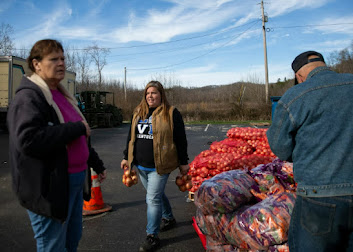
Nicky Stacy, left, runs the Hazel Green Food Project.
Nicky Stacy initially launched the Hazel Green Food Project in February 2021 in response to a series of devastating flash floods in Eastern Kentucky.

A town of just a few hundred residents, Hazel Green was a hub of commerce and tourism in the early 20th century as people flocked to bottle mineral water from natural springs believed to have therapeutic benefits. Today, Hazel Green and the surrounding parts of Wolfe County — where 30 percent of residents live in poverty — mostly consists of agricultural land and weather-worn farmhouses.

After Kentucky’s emergency food benefits expired, Stacy said interest in the Hazel Green Food Project’s bimonthly giveaways soared as residents from Wolfe County and surrounding communities realized they had less money to buy food.

“They never even gave these people any warning,” Stacy said. “It was just like, ‘Damn, it’s gone.’”

Memories of ice cream

At the food giveaway on Feb. 24, the mile-long line of vehicles snaked down Kentucky Route 205, a stretch of highway that also includes a Dollar Store, Uncle Sam’s Gun & Pawn Shop and Bites and Bargains homestyle restaurant.

Inside many of the vehicles, motorists blamed the reduction in SNAP benefits for their desperation. Further down the line from the Blairs, Elizabeth Conley sat coughing in a rusted truck where the gas pedal was wrapped in duct tape and wires dangled from the dashboard. She said her monthly SNAP benefit was cut from $398 to $84 last year. Conley, 45, also receives $914 in Social Security disability benefits because she suffers from lupus and fibromyalgia.

The mother of three — a 21-year-old son in college and two teenagers at home — recounted how quickly she spent her February SNAP benefits.

“I went to the store and I come [home] with like five items — milk, cereal, eggs and some meat that the kids will eat,” Conley said.

“I have teenage boys,” Conley added, her voice rising with exasperation. “People don’t understand boys eat quite a bit, especially teenage boys, and I am not going to let the kids starve.”

Three days after Conley went to the grocery store, the food was gone.

“That is when we knew we needed to come here,” said Conley, who was joined by her boyfriend, who has two teenage boys and saw his monthly SNAP benefits reduced from $396 to $228 last year. “We just need food, and we don’t have any.”

A few cars away, Courtney and Beatty Stone parked in the line around 10 a.m. and settled in for a three-hour wait.

Courtney, 68, and Beatty, 64, were both hooked up to mobile oxygen tanks and said their monthly food stamp benefit dropped last year from $350 to $140.

As they puffed on cigarettes and their oxygen machines chirped with each breath, the former tobacco farmers recalled how the increased benefits during the pandemic allowed them to occasionally buy some comfort food.

“When we had $350, we could buy some ice cream sometimes. And some pop and chips,” said Courtney Stone, referring to a slang for soda.
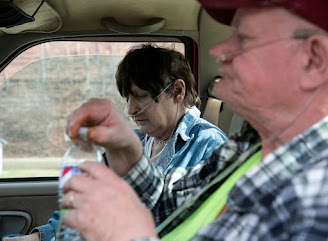
Betty and Courtney Stone arrived at 10 and waited three hours.
Now, the couple said they struggle to afford even their monthly supply of what they consider to be staple foods.

“By the time you buy your mayonnaise, ketchup, salt and pepper and eggs, oh the [price of] eggs, they went crazy … we might have only $5 left on our SNAP card,” Beatty Stone said.

As the couple passed the time by listening to a Christian radio station, Courtney Stone said he feels betrayed by the government. The couple — each of whom also collect $680 a month in Social Security benefits — said they are most upset about not being able to go to church as often because they cannot afford the price of gas.

“How can you give something and then take it away?” he asked. “They didn’t lower taxes. They didn’t lower the price of everything else.”

But as he took another hit of his cigarette, Courtney said he was slowly coming to accept his predicament.

“The thing is, you were born to die,” he said.

Ryan Quarles, a Republican who serves as Kentucky’s agriculture commissioner, also hopes Congress weighs in on ways to alleviate hardship, although he added he’s not ready to endorse a return to pandemic-era benefit amounts.

“Food insecurity in Kentucky has reached catastrophic levels,” said Quarles, a candidate for the GOP nomination for governor. “There is no excuse for a state that produces so much food to have any Kentuckian go to bed hungry.”

But outside the Hazel Green Volunteer Fire Station last week, the line for free food kept growing. The number of people in line easily eclipsed the total population of Hazel Green before the pantry opened, reflecting how the donation program has become a source of food for people throughout western Kentucky.

As 74-year-old Martha Miller and her daughter, Mary, waited in line, they said they’ve started using centuries old Appalachian Mountain cooking tips to save on food costs.

If a recipe calls for eggs, use shortening instead. A can of cream and two cups of water can make the equivalent of 1 percent milk. And save bacon grease to use later as shortening.

“I don’t buy fresh vegetables anymore. I can’t afford them,” Martha Miller said. “I don’t buy eggs anymore. I can’t afford them.”

But for some people in line, even food conservation is not enough to keep them fed all month.

About an hour after the 1 p.m. food giveaway began, Henry Tolsen pulled his 30-year-old pickup truck to the back of the line. He settled in for an anxious three-hour wait, worrying whether any food would be left for him.

Tolsen, a tobacco and corn farmer who went bankrupt after a flood took out his crops in 1997, saw his monthly food stamp benefit reduced last year from $240 to $30 a month.

He also receives $1,000 a month in Social Security benefits to help pay his bills and keep gas in his truck. But Tolsen, 58, who is divorced and lives alone with his pet chiweenie, said he’s starting to eat just one meal a day.

“Yesterday, I only ate a bowl of cereal and a can of peaches,” said Tolsen, as he turned off his truck to save gas until the line started moving again. “I would like to be able to eat bacon and eggs, biscuits and gravy for breakfast, a decent lunch, and a homegrown supper like I used to.”

Although the Hazel Green Food Project hands out food until they run out, there is usually little to offer those at the back of the line, which was not lost on Tolsen.

“If they run out, I go home empty-handed,” Tolsen said. “Let’s just pray and thank the good Lord I will get my disability check.”

At about 5 p.m., Tolsen reached the front of the line. Volunteers handed him three venison steaks, two heads of cabbage and three bags each of potatoes, carrots and fried pork rinds.

Although Tolsen had food again, he drove away questioning whether his government really cared about him.

“I know everyone was happy to get that stimulus, but they didn’t realize there is going to be a payday, and we are paying for it now,” he said. “How did the government give us anything when they let inflation get so high we can’t live and we are going to starve out?”

Sunday, January 15, 2023

Study: If you're obese or diabetic, and get over 20% of calories from fast food, you're more likely to get a deadly liver disease

Photo from WomenFitness.net
People who are obese or diabetic and get 20 percent or more of their calories from fast food are more likely to get non-alcoholic fatty liver disease, a potentially life-threatening condition, says a new study from the University of Southern California.

The study, published in the peer-reviewed journal Clinical Gastroenterology and Hepatology, "gives people extra motivation to reduce fast-food consumption," a USC news release said. The study found that beyond the obese and diabetic, "The general population has moderate increases of liver fat when one-fifth or more of their diet is fast food."

“Even a moderate increase in fat can lead to non-alcoholic fatty liver disease,” said  Dr. Ani Kardashian, a USC hepatologist and lead author of the study. “The severe rise in liver fat in those with obesity or diabetes is especially striking, and probably due to the fact that these conditions cause a greater susceptibility for fat to build up in the liver.”

Obesity and diabetes are big health issues in Kentucky. The state ranks first in obesity among childen aged 10 to 17, third in percenatge of the population considered obese, and seventh in percentage with diabetes.

Earlier research has shown links between fast food and obesity and diabetes, but this is one of the first studies to demonstrate the negative impact of fast food on the liver, Kardashian said.

“If people eat one meal a day at a fast-food restaurant, they may think they aren’t doing harm,” said Kardashian. “However, if that one meal equals at least one-fifth of their daily calories, they are putting their livers at risk.”

Nonalcoholic fatty liver disease, also known as liver steatosis, can lead to cirrhosis, or scarring of the liver, which can cause liver cancer or failure, USC says. Liver steatosis affects over 30% of the U.S. population.

The study was based on the nation’s largest annual nutrition poll, the National Health and Nutrition Examination Survey. It characterized fast food as meals, including pizza, from either a drive-through restaurant or one without wait staff. It looked at about 4,000 adults whose fatty-liver measurements were included in the survey and compared these measurements to their fast-food consumption.

"Of those surveyed, 52% consumed some fast food. Of these, 29% consumed one-fifth or more daily calories from fast food. Only this 29% of survey subjects experienced a rise in liver fat levels," USC says.

"The association between liver steatosis and a 20% diet of fast food held steady for both the general population and those with obesity or diabetes even after data was adjusted for multiple other factors such as age, sex, race, ethnicity, alcohol use and physical activity."

Kardashian said, “Our findings are particularly alarming, as fast-food consumption has gone up in the last 50 years, regardless of socioeconomic status. We’ve also seen a substantial surge in fast-food dining during the Covid-19 pandemic, which is probably related to the decline in full-service restaurant dining and rising rates of food insecurity. We worry that the number of those with fatty livers has gone up even more since the time of the survey.”

Kardashian said she hopes the study will encourage health-care providers to offer patients more education about nutrition, especially to those with obesity or diabetes ,who are at higher risk of developing a fatty liver from fast food. The only known way to treat liver steatosis is through an improved diet.

Friday, December 23, 2022

Kentucky again 43rd in America's Health Rankings, scoring lowest in behavior and health outcomes, high in having a care provider

By Melissa Patrick
Kentucky Health News

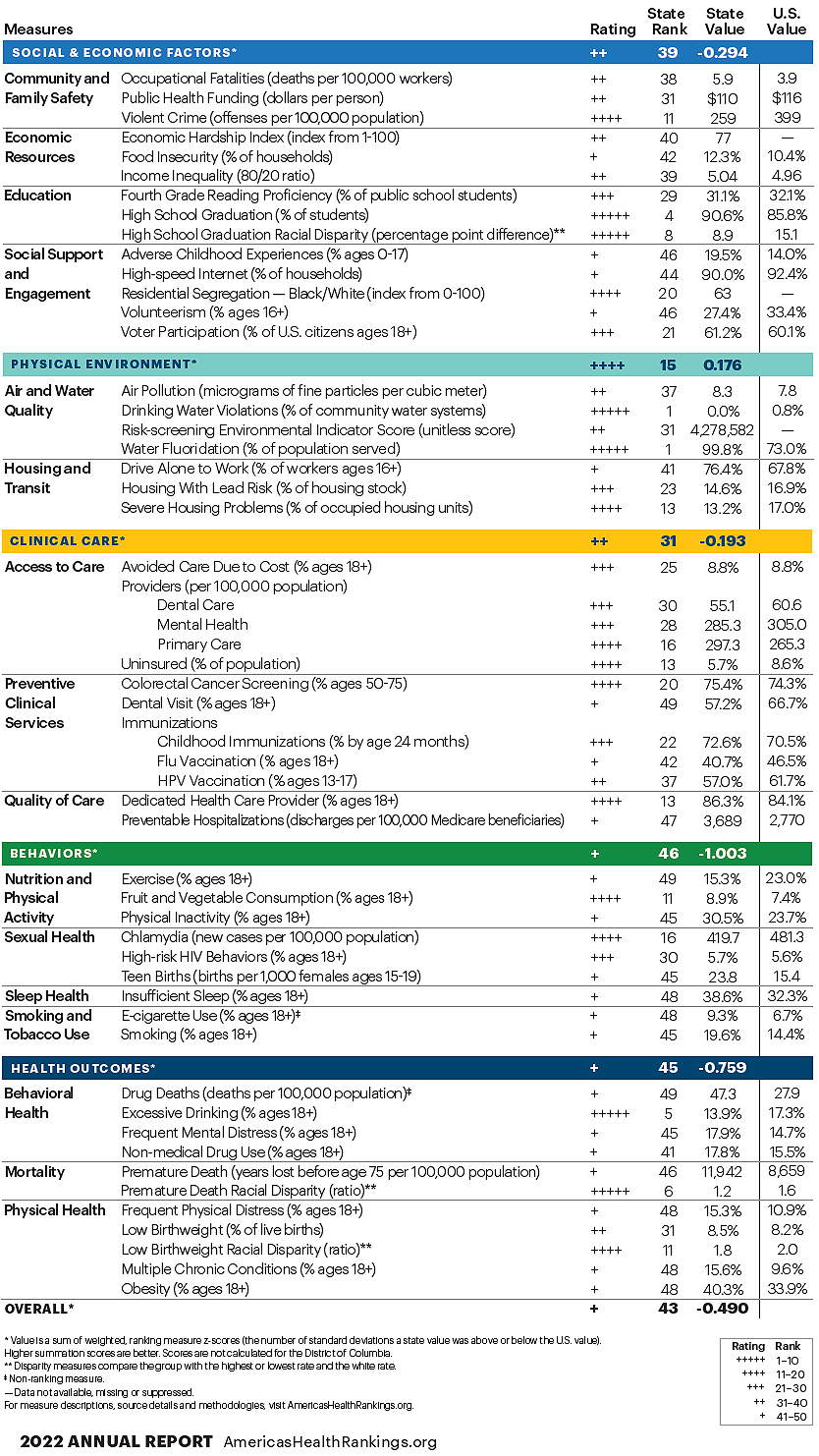
After not ranking states for two years due to the pandemic, America's Health Rankings again placed Kentucky among the 10 unhealthiest states, ranking its healthiness 43rd, the same slot it had in the last rankings, in 2019. 

Kentucky has found itself among the bottom 10 unhealthiest states since the rankings were first released in 1990, with the exception of 2008, when it ranked 39th. 

The rankings by the United Health Foundation are meant to help state leaders determine health benchmarks that can help them inform actions as they work to improve the health of their communities. 

The report examines a number of measures that influence health, broken into four categories: social and economic factors, physical environment, clinical care, behaviors, and health outcomes. 

Kentucky ranked lowest, 46th, among states in the behaviors category. 

Two measures in this category show that Kentucky adults don't get enough exercise, with only 15.3% of them saying they meet the federal guidelines for exercise in the past 30 days and 30.5% saying they didn't get any physical activity beyond their regular job in the past 30 days. For these measures, Kentucky ranked 49th and 45th, respectively. 

In the same category, Kentucky continues to have some of the highest teen birth rates in the nation at 23.8 teen births per 1,000 females aged 15 to 19; the national average is 15.4. In rankings that put the highest numbers at the bottom, Kentucky ranked 45th for this measure. 

Likewise, the state also continues to be a national leader in vaping and smoking, ranking 48th for adult use of electronic cigarettes and 45th for cigarettes (again, with higher numbers at the bottom). The rankings say 9.3% of Kentucky adults reported using e-cigarettes and 19.6% said they are regular smokers. 

Kentucky also ranked 48th in sufficient sleep, with 39.6% of adults reporting that they get, on average, fewer than seven hours of sleep in a 24-hour period. 

One of the Kentucky's better rankings in the behavior category was 11th for fruit and vegetable consumption.

In the health outcome category, Kentucky ranked 45th. With higher numbers at the bottom, it scored in the bottom 10 states for drug deaths (49th), frequent mental distress (45th), non-medical drug use (41st), premature death (46th), frequent physical distress (48th), multiple chronic conditions (48th) and obesity (48th). 

Though Kentucky ranked among the worst states in health outcomes, it does have a low prevalence of excessive drinking (fifth, with lower numbers at the top) and a low racial disparity in premature death (sixth). 

In social and economic factors, the state ranked 39th, with some of its worst scores in food insecurity (42nd), adverse childhood experiences (46th), access to high-speed internet (44th) and volunteerism (46th). 

The good news in this category is that Kentucky ranks fourth in the percentage of students who graduate from high school in four years and eighth in the difference between the high school graduation rates of white students and the racial/ethnic group with the lowest rate. 

In the clinical-care category, where it ranked 31st, Kentucky was in the bottom 10 states for dental visits (49th), flu vaccinations (42nd) and preventable hospitalizations (47th). 

Kentucky did not get any top-10 rankings in clinical care, but got top-20 rankings for its number of primary-care providers (16th), percent of uninsured population (13th), colorectal-cancer screenings (20th) and having a dedicated health care provider (13th). 

The physical environment category was the state's highest ranking, 15th, largely because it ranked first in two categories: drinking water violations and water fluoridation.


Sunday, October 2, 2022

Kentucky adults have second highest obesity rate in nation, and children 10-17 in state have the top U.S. rate for that age group

By Melissa Patrick
Kentucky Health News

A new report says Kentucky has the second highest adult obesity rate in the nation, and Kentucky children aged 10 to 17 have the nation's highest rate for that age group.

The Trust for America's Health 19th annual report says four of every 10 Kentucky adults are obese. And 72.3 percent are either obese or overweight, third in the nation. Among the state's high-school students, 18.4% are obese and another 17.8% are overweight.

The report says the national adult obesity rate keeps rising, with 19 states having a rate over 35%, up from 16 in 2021. The report notes that a decade ago, no state had an adult obesity rate at or above 35%.

Map from Trust for America's Health report; click it to enlarge
From 2020 to 2021, Kentucky's adult rate increased 10 percent, 3.6 percentage points, from 36.6% to to 40.3%.

Kentucky's rate is just a bit lower than West Virginia's 40.6%. Alabama ranks third at 39.9%. The District of Columbia, Hawaii and Colorado have the lowest rates, ranging from 24.7% to 25.1%.

"These persistent increases in obesity rates underscore that obesity is caused by a combination of factors including societal, biological, genetic, and environmental, which are often beyond personal choice," says a news release from Trust for America's Health. "The report’s authors conclude that addressing the obesity crisis will require attending to the economic and structural factors of where and how people live.

Obesity is associated with a many different health conditions and is estimated to increase U.S. health-care spending by $170 billion every year, the Trust for America's Health report says. 

"Obesity increases the risk of a range of diseases for adults—including higher rates of complications and serious illness from Covid-19, as well as type 2 diabetes, high blood pressure, heart disease, stroke, arthritis, depression, sleep apnea, liver disease, kidney disease, gallbladder disease, pregnancy complications, and many types of cancer—and an overall risk of higher mortality," the report says. 

Kentuckians struggle with all of these conditions. Nearly 14% of the state's adults are diagnosed with diabetes and 40.3% are diagnosed with hypertension, ranking Kentucky fifth for both conditions. 

The report says Kentucky women's obesity rate is 40.9%, while men's rate is 39.8%, plus or minus 2.7 percentage points.

Obesity rates by county in 2018-20, the latest range available, are published by the Foundation for a Healthy Kentucky at kyhealthfacts.org.

Child obesity: When it comes to age, Kentuckians between 45 and 64 have the state's highest obesity rate, 46.2%. That's followed by those 25 to 44 (42.5%), 65 and older (35.3%), and 18 to 24 (28.2%). 

The rate for Kentuckians 10 to 17 is 23.8%, the nation's highest. Nationwide, nearly 20% of children between the ages of 2 to 19 are obese. "These rates more than tripled since the mid-1970s," the release says. "Black and Latino youth have substantially higher rates of obesity than do their white peers." 

Getty Images photo via University of Missouri
One way to help children and their families address childhood obesity is through an electronic health records that help doctors monitor body-mass index, the basic measure of obesity, according to a University of Missouri School of Medicine study.

The three-year study found that a tool called FitTastic was an effective in decreasing BMI in children, especially young children. It works by helping health-care providers communicate with families about five daily lifestyle behavior goals: At least one hour per day of physical activity, limiting screen time to two hours a day or less, three daily servings of low-fat milk or calcium, at least four servings of water instead of sugary drinks, and at least five servings of fruits and vegetables. 

“We found a nearly 20% more favorable BMI pattern in the FitTastic group compared to the control group when looking specifically at children who were either overweight or obese,” said the principal investigator, Dr. Amy Braddock. “The data was especially favorable for younger children, between the ages of 2 and 5 years old.”

Body mass index is calculated by dividing a person's weight in pounds by their height in inches times two, and then multiplied by 703. An adult is considered obese if their BMI is 30 or higher, and is considered severely obese if that level is 40 or above. Children's BMI are compared to other children of the same age and sex, since there are fluctuations in their growth and development. 

The Trust for America's Health report includes a detailed list of recommended policy actions to address the social and economic drivers that contribute to obesity. The actions can be implemented at the federal, state and local levels. They include:
  • Advance health equity by strategically dedicating federal resources to the efforts that reduce obesity-related disparities;
  • Decrease food insecurity while improving nutritional quality of available foods;
  • Change the marketing and pricing strategies that lead to health disparities;
  • Make physical activity and the built environment safer and more accessible for all;
  • Work with the healthcare system to close disparities and gaps from clinic to community settings
“The continued increase in rates of obesity across all population groups is alarming,” Dr. J. Nadine Gracia, president and CEO of Trust for America’s Health, said in the release. “Policies and programs to reduce obesity need to be implemented at a systems level. We must advance policies that address the community, institutional, and structural factors that are barriers to healthy eating and physical activity and that exacerbate health inequities.”

Data for the report is based in part on the Centers for Disease Control and Prevention's Behavioral Risk Factors Surveillance System, a continuous national poll.