Showing posts with label dental health. Show all posts

Friday, February 9, 2024

Kentucky water plants would no longer have to add tooth-protecting fluoride to water, under bill approved by a committee

By Liam Niemeyer
Kentucky Lantern

Kentucky water utilities would no longer be required to add or adjust fluoride in tap-water supplies — a state requirement since the mid-20th century aimed at improving dental health — under a bill a legislative committee approved Thursday, Feb. 8.

House Bill 141 is the latest effort by Rep. Mark Hart, R-Falmouth, to remove the state requirement for water utilities serving populations larger than 3,000 to add or adjust fluoride levels in drinking water systems to “protect the dental health of the people served.”

Rep. Mark Hart, R-Falmouth
(Ky. Lantern photo by Liam Niemeyer)
Hart, a legislator since 2017, was the only sponsor of making drinking-water fluoridation optional when he filed the first such bill in 2018. The legislation has gained Republican co-sponsors as it has been filed several times over past legislative sessions.

The House State Government Committee heard the proposal for the first time Thursday and approved it 16-1. The bill now goes to the House floor for consideration.

Republicans who voted for the bill, and advocates for the legislation who joined Hart, characterized the bill as providing “local control” for utilities to choose whether or not to fluoridate their water. Those advocating the bill included representatives of Morehead’s municipal utility, Irvine’s municipal utility and the Grayson County Water District.

Some advocates for the bill questioned the efficacy of adding fluoride to tap water and its potential side effects.

“Honestly, it is forced medication,” said Rep. William Lawrence, R-Maysville, a co-sponsor of HB 141. “Whether you’re for or against fluoride, this bill has nothing to do with that. This is a local control — let the local water districts decide what’s best for their district.”

The Centers for Disease Control and Prevention considers community water fluoridation to be one of the 10 greatest public health achievements of the 20th century. The federal public-health agency also has found no “convincing scientific evidence” linking fluoridation to “any potential adverse health effect or systemic disorder.”

Groups representing dentists, oral-health advocates and the dental insurer Delta Dental strongly opposed the bill, saying it would increae tooth decay, particularly among children. Kentucky already ranks among the highest for the number of adults with no teeth.

“We have reached the point where it’s not about the science, it’s about the emotion,” Stephen Robertson, executive director of the Kentucky Dental Association, told the Lantern after the committee approved the bill. “No matter what your position is, you can find something out there that’s going to validate your position.”

Jack Kall, a Louisville dentist and supporter of the bill, showed lawmakers cited graphs from a 2016 magazine article by the Harvard T.H. Chan School of Public Health that questioned the efficacy and safety of fluoridation. That article was strongly criticized by the American Dental Association, saying it relied on a report that was a “biased misinterpretation,” and the dean of the Harvard School of Dental Medicine at the time called for the article to be rescinded.

Kall, citing the graphs, asserted that countries that don’t fluoridate water have had a similar decline in tooth-decay rates as countries that do. He told the Lantern that fluoride can lower intelligence in children; a federal court case is litigating whether the mineral has an effect on brain development.

“It’s a hot topic and science continues to evolve,” Kall said. “We should constantly be reviewing things.”

Robertson said there are studies regarding fluoride that need to be verified and that improvements in nutrition and personal dental hygiene also could improve dental health in Kentucky. But fluoride in drinking water, he said, is a “program that works.” He asked, “Are we willing to take the risk of removing fluoride and seeing what happens?”

Tuesday, October 31, 2023

Kynect website opens Wednesday, Nov. 1, for shopping and enrollment in federally subsidized health-insurance plans

Kynect home page
Kentuckians can shop and enroll for federally subsidized health-insurance coverage on the state-based marketplace, Kynect, starting Wednesday, Nov. 1.

Enrollment will be open through Jan. 16. Coverage for those who sign up on or before Dec. 15 will start Jan. 1, 2024. Those who sign up in the following month will get coverage starting Feb. 1.

Kentuckians who don’t have coverage through an employer, Medicare, Medicaid, the Kentucky Children’s Health Insurance Program, or the Pentagon's Tricare program can shop for individual coverage on Kynect.

All plans offered on the marketplace cover 10 essential health benefits, including emergency services, hospitalization, lab services, prescription drugs and certain no-cost preventive services.

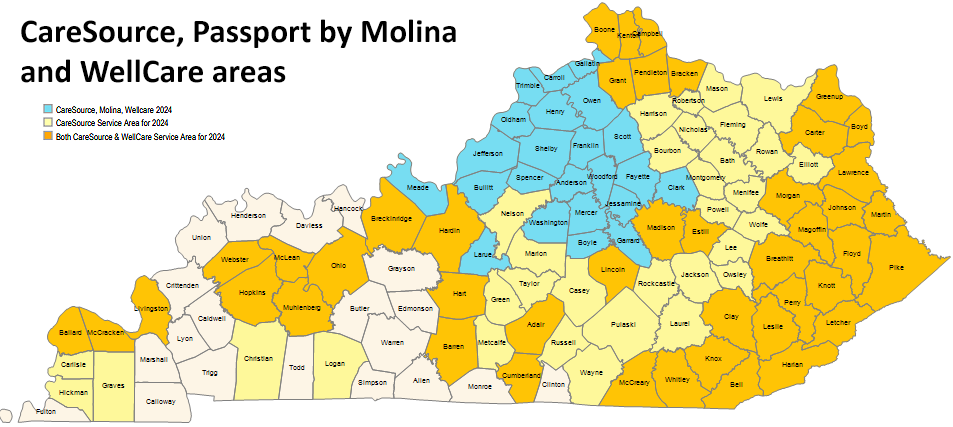
State Cabinet for Health and Family Services maps; click to enlarge
Four carriers offer health-insurance plans through Kynect: CareSource, Passport by Molina Healthcare, WellCare of Kentucky and Anthem.

All counties have at least two carriers to choose from, with most counties having three carriers and many with four. Since last year, Passport has grown by 22 counties, and WellCare by 26. 

98 of Kentucky's 120 counties have a choice of dental plans.
Under the qualified health plans offered on Kynect, no one can be dropped from coverage or have their premiums increased because of health issues.

More plans have been certified for 2024 than for 2023, and Anthem and Best Life will offer dental plans. 

Not all plans are the same, noted Carrie Banahan, deputy secretary of the state Cabinet for Health and Family Services, who encouraged consumers to visit kynect.ky.gov for details. “There’s more to plans than the monthly premium,” she said in a press release. “Make sure your doctors and other clinicians are in their network. Check out whether your favorite pharmacy is among their preferred.”

Some plans new features or benefits, including enhanced diabetes coverage, fitness memberships and vision benefits. Telehealth is covered by all plans at differing out-of-pocket costs. Kentuckians still have access to the more generous financial assistance originally made available as part of the American Rescue Plan passed as a result of the pandemic.

Open enrollment in a qualified health plan overlaps with other annual enrollment periods, including Medicare. Medicare beneficiaries may make changes through Dec. 7 and enrollment choices take effect Jan. 1.

For enrollment assistance, visit kynect.ky.gov or call 855-459-6328. You may also get help at your local Department for Community Based Services office, from a kynector or a licensed health-insurance agent.

Friday, August 11, 2023

Legislators insist on 'procedure' as dental-school deans plead for approval of expansion of dental benefits in Kentucky Medicaid

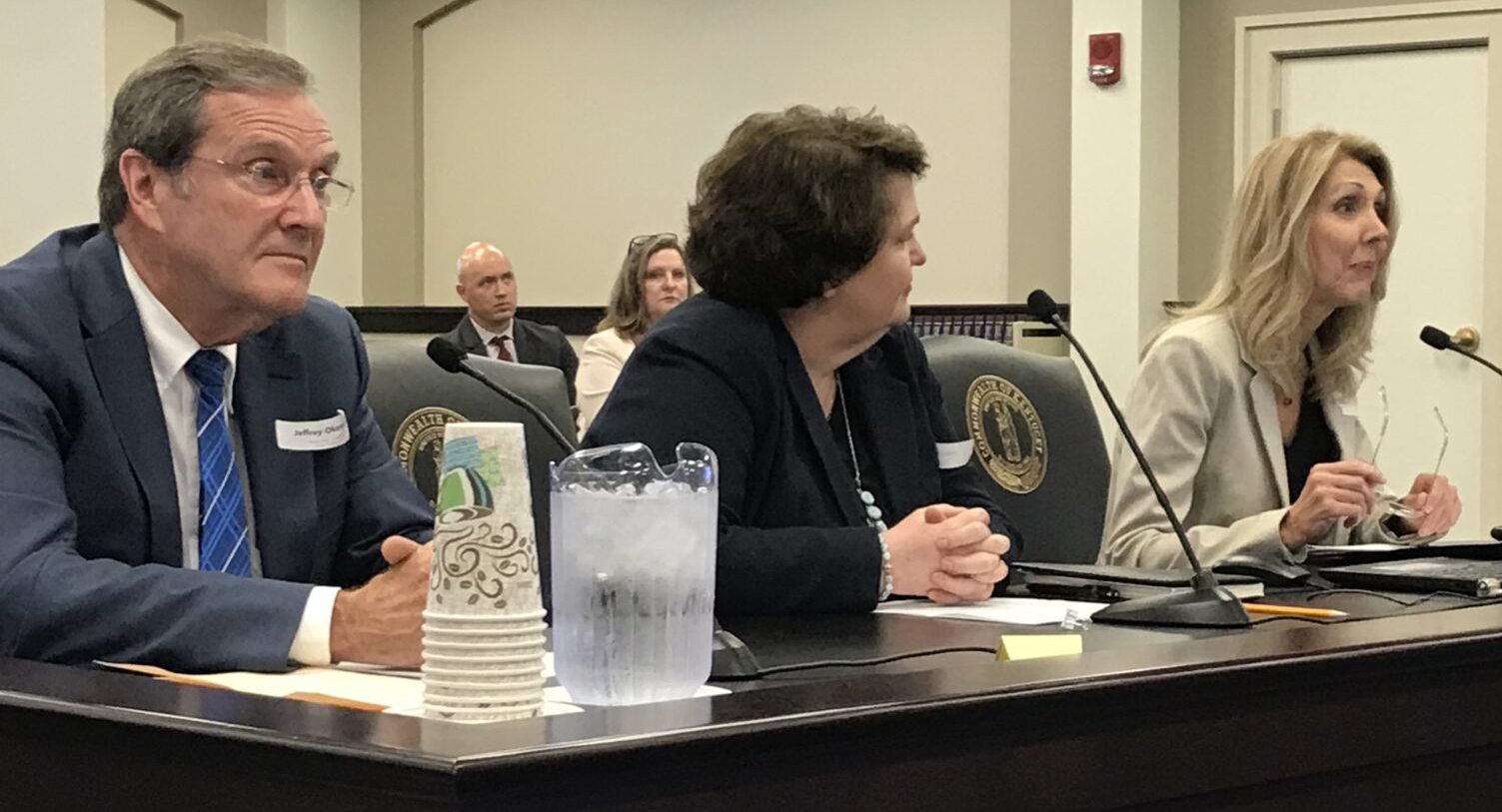
Dr. Pamela Stein, right, dean of the University of Pikeville dental school, spoke in Frankfort Tuesday about the need for expanded Medicaid dental benefits, joined by Dr. Margaret Hill, interim dean of the University of Louisville dental school, and Dr. Jeffrey Okeson, dean of the University of Kentucky dental school. (Kentucky Lantern photo by Deborah Yetter)
By Deborah Yetter
Kentucky Lantern

Working at a public “safety net” dental clinic in rural Western Kentucky, Dr. Pamela Stein routinely saw a heartbreaking sight.

“It was not unusual at 6 o’clock in the morning to see 10 or 15 people standing in line waiting to get in because they had tooth aches, because they couldn’t find anyone else to care for them,” said Stein, appointed last year as dean of a new dental school being formed at the University of Pikeville.

Some patients at the Marshall County clinic were in tears after having diseased, throbbing teeth removed at the clinic operated by the University of Kentucky, she said.

“People would actually cry, they were so relieved,” Stein said, speaking before a legislative committee Tuesday in Frankfort.

She and others spoke in support of the state’s recently expanded Medicaid dental services for adults to include dentures, fillings, root canals and crowns. Medicaid previously paid only for one annual cleaning and tooth extractions for adults though children get a full range of services.

Stein joined the deans of dental schools at the universities of Kentucky and Louisville to urge continuation of the dental services authorized by Gov. Andy Beshear that have ignited a partisan political fight in Frankfort.

Republicans who control the General Assembly are seeking to block Beshear, a Democrat, from expanding Medicaid dental coverage, as well as vision and hearing benefits, arguing he usurped power that rests with lawmakers.

Officials with the Beshear administration disagree, saying they had the authority because the $39 million expansion is paid for through savings in Medicaid and doesn’t require allocation of new money. The federal government covers 85% of the costs.

But the dental school deans, as did other witnesses who appeared, avoided politics, instead focusing on Kentucky’s abysmal oral health — it ranks 49th in the nation — as well as low reimbursement rates that keep many dentists from treating Medicaid patients.

As a result, many patients living with untreated dental disease can’t find a dentist, especially in rural areas, or often find long waiting lists. And oral infection is linked to a host of other health problems that plague Kentucky, including heart disease, stroke, diabetes and premature births.

“It’s an enormous problem that we have here and it’s not getting any better,” said Dr. Jeffrey Okeson, the UK dean. Okeson said Medicaid doesn’t cover costs of dental care.

For example, he said, UK last year billed Medicaid $14.2 million to treat 37,000 patients but was reimbursed only $4.1 million, about 30% of its costs. UK makes up the difference but can’t do so indefinitely if it begins cutting into the academic budget, he said.

His counterpart at U of L agreed, noting that together UK and U of L treat around 90,000 Medicaid dental patients a year, many of whom can’t find care elsewhere.

“These folks would probably not be able to receive dental care if it wasn’t for dental schools acting as a safety net,” said Margaret Hill, interim dean of U of L’s dental school.

“Today we are here before you, speaking on behalf of our patients and our students who would like to do the right thing, and ask that the Medicaid expansion of dental services continue and that rates of reimbursement be more reasonable,” Hill added.

Several witnesses described the enormous suffering of patients who previously lacked dental coverage and now, even if covered under the expanded benefits, can’t find a dentist.

“I don’t mean to tug on your heart strings but I really hope that I do,” said Tiffani Hays, a social worker who works with cancer patients in Winchester, many in dire need of dental treatment. “Oral health is probably one of the most common problems in our patients.”

It was the first opportunity for public comment on the dental benefits expansion enacted by Beshear in April after the lawmakers voted down his first, Jan. 1 expansion in the 2023 legislative session. Beshear reinstated them, with some changes, after lawmakers adjourned.

The stop and start nature of the expanded benefits has patients scared, said Missy Newland, a Louisville woman who gets health coverage through Medicaid and needs ongoing dental care.

“The political tug of war has always had me worried about staying eligible,” said Newland, who works cleaning homes and testified by video. “I fear my access to health care will be taken away and with my health issues, that’s scary.”

The current benefits — which also include expanded benefits for items such as eyeglasses and hearing aids — are good through the end of the year. While Republican lawmakers have objected, they don’t have the power to block them till they meet in 2024 in the next legislative session.

Meanwhile, tens of thousands of Kentuckians have received benefits such as dentures, crowns, fillings, hearing aids and eyeglasses, said Emily Beauregard, executive director of Kentucky Voices for Health, a coalition of health advocacy groups.

“These services are life-changing for people,” said Beauregard, adding that with better vision, hearing and teeth, people are more likely to find jobs.

But GOP legislators object even as some acknowledge the benefits are sorely needed for the about 900,000 adults who get health coverage from Medicaid, a federal-state health plan for low income and disabled individuals.

Rep. Randy Bridges, R-Paducah, and a vocal critic of Beshear’s expanded Medicaid services, accused officials with the Cabinet for Health and Family Services of making “end runs” around lawmakers who, he argued, hold the sole power to fund such programs through its budget committee.

“To come in here and pull at our heartstrings, to say we are the keepers of the purse — we aren’t the keeper of the purse,” he said of the Administrative Regulation Review Subcommittee holding Tuesday’s hearing.

“You’re doing end runs and you want to make us appear to be the villains and we’re not,” Bridges added. “We just want to do it in the proper manner.”

But Sen. David Yates, a Louisville Democrat, argued it’s the health needs of constituents rather than legislative procedure that should matter.

“It did in fact pull on my heartstrings as it should any Kentuckians,” Yates said. “Forget the partisan politics and political games, I think everyone agrees that something has to be done.”

Bridges also complained that witnesses who appeared in support of the expanded benefits were misled by state officials about the legislative process.

“I feel like you have inappropriately led them with some wrong ideas on how this works,” Bridges said.

That prompted a heated retort from Lisa Lee, state Medicaid commissioner, who also spoke Tuesday.

“I have never, ever misled anyone in my 23 years in Medicaid and I will not do so,” Lee told Bridges. “And I really don’t appreciate the fact that you indicated that we have been misleading people.”

As for the witnesses who spoke, Lee said, “They are here because they are concerned that people are going to lose their benefits.”

They included Dr. Bill Collins, a dentist at the Red Bird Mission dental clinic in Clay County who said he constantly seeks grants to cover the costs of dental care for patients Medicaid doesn’t fully cover.

Kentucky has one of the highest rates in the nation of adults with no teeth and patients are flocking to get dentures newly covered under the expanded Medicaid rates, Collins said.

But Medicaid covers only about half the costs, he said.

“When the grant money runs out it has to stop,” he said.

Collins was among witnesses urging lawmakers to continue expanded services and increase payments to dentists. “You can make it a reality,” he said. “That’s what I beg you to do.”

The committee took no action Tuesday. It already has found the regulations Beshear issued to enact the expansion “deficient,” meaning lawmakers could strike them down when they meet next year.

But Rep. Derek Lewis, R-London, committee co-chair, ended the meeting on a conciliatory note, saying he’s willing to work with everyone involved to find a solution.

“I know we’re in an election year,” Lewis said, alluding to the fact Beshear is seeking a second term as governor. “What I don’t want to see is this made to be a political football, I don’t want to poison the well and leave patients and providers holding the bag.”

“I think we can make a difference,” he said. “We need to make a difference.”

Friday, June 2, 2023

As a whole, Kentucky seniors are the third most unhealthy in the nation, ranking better than only Louisiana and Mississippi

Photo from Getty Images via Kentucky Lantern
By Sarah Ladd
Kentucky Lantern

New data shows Kentucky among the worst states for key health points among senior citizens, including tooth extractions, food insecurity, insufficient sleep and more.

The statistics, published in the America’s Health Rankings Senior Report in May, show Kentucky seniors have the most tooth extractions.

As a whole, Kentucky seniors rank second for insufficient sleep, exercise and cognitive difficulties; third for food insecurity, and sixth for obesity.

As a whole, Kentucky seniors are the third most unhealthy, healthier only than their counterparts in Louisiana and Mississippi.

Dr. Michael Stockman, a geriatric physician based in Minnesota, said there is a “bright side” of the report: Older Kentuckians, generally, don’t drink too much or have severe housing insecurities, and they consume sufficient fruits and vegetables.

For older Kentuckians not to drink excessively “is great because excessive drinking can lead to things like liver disease, diabetes,” said Stockman, who works for UnitedHealthcare. “It can also interfere with the medications that people are taking as well.”

The United Health Foundation released the report, which examines the health of older adults with 52 measures including social and economic status, physical environment, clinical care, behaviors and more. The rankings are based on data available up to March 8.

Kentucky had higher rates of physical inactivity than the national average, the report showed, which Stockman said can itself lead to poor health.

Nationally, 31% of seniors 65 and older are physically inactive, while the number jumps to 37% in Kentucky.

“It’s important to do those simple daily things like walking 30 to 45 minutes a day to really make a positive impact on overall health and well being,” Stockman explained.

Exercises like walking, stretching, yoga and tai chi can all help strengthen the body and prevent falls, which can lead to fractures, he said.

Social isolation

Kentucky seniors are at high risk of social isolation, the report says, a fact exacerbated by the Covid-19 pandemic. The report ranks Kentucky ranks fifth in social isolation among older adults.

“The pandemic did really create a social isolation amongst all of us. I think seniors were disproportionately affected and it … worsened during that pandemic,” Stockman said. “Being socially isolated puts people in a very vulnerable situation, particularly as they’re going through stressful life events common with aging, such as losing maybe a close friend or a family member, or as they move into retirement. Being socially isolated can lead to, really, a decline in a person’s cognitive functioning. It can increase the risk of depression and decrease the overall quality of life of older adults.”

The bright side to that point, though, is that there are more households now with access to high-speed internet than in 2019. The internet can help seniors gain access to telehealth appointments, stay in contact with family and friends and participate in social activities.

Kentucky seniors seem to be closing the gap in high-speed internet. From 2019 to 2021, 9 percent more of them used broadband, while the national increase was 7 percent.

Thursday, October 20, 2022

Beshear announces initiative that will expand Medicaid dental, vision and hearing benefits for more than 900,000 Ky. adults

Dept. for Medicaid Services graphic
By Melissa Patrick
Kentucky Health News

Pitching it as a way to expand the state's workforce, Gov. Andy Beshear announced Thursday the expansion of dental, vision and hearing benefits for 900,000 Kentucky adults on Medicaid.  

"One of the major obstacles in getting some people into the workforce is they're simply not healthy enough to do it. Challenges in their health are preventing them from either looking for or securing a job," Beshear said at his weekly news conference.

"These are really basic things, folks. If  you can't see, it's really hard to work. If you can't hear the instructions that you're getting, it's really hard to work. If you have massive dental problems that are creating major pain or other complications, it's really hard to work.. . . Today, we're announcing that for many Kentuckians, we're removing the roadblocks that they face in accessing dental, vision and hearing care." 

Beshear said the vast majority of the program will be paid by the federal government and the rest of it will be absorbed into the existing Medicaid budget. "It will require no changes to our budget in this next session," he said. "In other words, it is easily affordable, which means we absolutely should do it."  

Susan Dunlap, spokeswoman for the  Cabinet for Health and Family Services, told the Louisville Courier Journal that federal funds would cover 90% of the estimated $36 million annual cost for the expansion, with the state covering the rest. She added that the state's move to one pharmacy benefit manager last year "has resulted in significant ongoing savings to the Medicaid program that will provide enough funding for this program moving forward."

Medicaid is a state-federal program that provides health insurance for low-income adults and pregnant women, the disabled, and families with incomes at or below 138% of the federal poverty level, which amounts to about $18,700 per year for an individual or $38,200 for a family of four. Youth 21 and under who are enrolled in Medicaid already qualify for dental, vision and hearing services.

Kentucky adults on Medicaid already have access to some dental and vision benefits; the hearing benefits are very limited. Starting on Jan. 1, those benefits will be greatly expanded.

For example, the only dental services Medicaid now covers for adults are an annual cleaning a year and extractions based on certain medical conditions. Dunlap said fillings are not covered for adults, but the expansion will add coverage for fillings, dentures, implants,  root canals, extractions, restorations, periodontics and an additional cleaning each year. 

Dunlap said the new hearing benefits will cover screening tests and hearing aids for adults. Now an adult can be evaluated only if they had a referral from their primary doctor. 

The vision changes will cover eyeglasses and contacts for adults. Now, vision exams are covered by Medicaid, but glasses and contact lenses are not. 

Managed-care organizations, which provide care for Kentuckians on Medicaid, were already offering some of these services as extra benefits to incentivize beneficiaries to choose their company. 

Ben Chandler, president and CEO of the Foundation for a Healthy Kentucky, applauded Beshear's decision to expand benefits, noting the value of employment as one of the most important "social drivers of health." 

“All of the data shows that when you work, you've got a much better chance of having good health," he said. "So, it's a circular thing. You have to have good health to be able to work and you have to be able to work to have good health.”

One of the challenges that people on Medicaid already have when it comes to getting dental care is that there aren't enough dentists who will accept Medicaid insurance, mainly because the rates are so low. 

Asked about this, Beshear said, "We are going to have to make sure that there is access all across Kentucky," he said. "When you think of health care, it has to be affordable. . . . So it's going to be hard work. We're going to see what those barriers are, but it's about commitment and being intentional to make sure we get health care to those folks. " 

Dunlap said Kentucky is submitting the state Medicaid plan amendment to make these changes to the Centers for Medicare and Medicaid Services and that they do not anticipate any issues with approval. 

Open enrollment for Medicaid members runs through Dec. 1 for coverage beginning Jan. 1. Medicaid open enrollment gives Medicaid members a chance to change the insurance company that manages their care.  Medicaid members who chose to not participate in open enrolment will keep the same managed care organization, or MCO, that they are currently enrolled in.

Tuesday, October 4, 2022

Poor oral health in children is not just from too many sugary foods; education, income and environment all play roles

CDC photo
While brushing your teeth is important to maintaining good oral health, dental-health experts say it's not the only thing responsible for poor oral health, especially when it comes to children in Appalachia, where sugar is usually blamed.

"It’s a common misconception that consuming sugary foods and beverages is the only cause of tooth decay. While that is undoubtedly a problem, there’s much more to good oral health," Daniel W. McNeil and Mary L Marazita write for The Conversation, a site for journalistic writing by academics. "It includes consistent brushing and flossing; eating healthy foods, like fresh fruits and vegetables; avoiding tobacco products; and wearing mouth guards while playing certain sports. Regular visits for dental care are also critical, as they provide an opportunity for cleanings and preventive care." 

McNeil and Marazita, who run the University of Pittsburgh's Center for Oral Health Research in Appalachia, say the region's poor oral health stems from a combination of factors beyond tooth brushing and other personal hygiene.

Poor oral health, they write, is more common among "people who have less formal education or lower incomes, marginalized ethnic and racial groups and those living in more rural areas, such as Appalachia," which has one of the highest rates of oral health problems in the nation. And among these groups, oral health issues tend to show up at younger ages. 

Other than education, behavioral and social influences, reasons for poor oral health can include genetic influences that dictate a preference for sweet foods, mouth bacteria that can lead to oral diseases, environmental factors such as air quality, access to healthy foods, the cost of dental care, access to transportation to and from the dentist, access to school-based programs, water quality and whether one lives in a community with fluoridated water, which can keep cavities from forming.

McNeil and Marazita note that cavities are the most common chronic disease in children, despite being preventable and that "more than 40% of children have tooth decay when they start kindergarten. . . . Dental problems in kids can lead to missed school, pain and embarrassment about visible decay, and missing or crooked teeth." 

They write that parental and caregiver role modeling can greatly influence children's oral health habits. Examples include drinking water instead of sugary beverages, eating a healthy diet, practicing good dental hygiene habits and expressing a positive attitude about going to the dentist. 

The article offers several other suggestions to improve oral health, saying one of the best things parents or caregivers can do is to take their child to the dentist.  

"The American Academy of Pediatric Dentistry and other professional health organizations recommend that children see an oral health care provider before age 1 or at the emergence of the first tooth," they write. "Access to dental treatment, especially preventive care, has been shown to improve oral health in families and their communities."

McNeil and Marazita also call for system-level changes that ensure routine dental care is affordable and accessible to everyone. They also call for integrating oral health practices into schools and educational programs, saying this will benefit all children regardless of their family's socioeconomic status.

Sunday, July 11, 2021

'Back to normal' should include 'Back to the dentist," and remind us of oral health's importance to overall health, providers say

iStock photo via Getty Images
By Stephanie and Linda Poynter


Like many Kentuckians, we are eager for a summer of “back-to-normal” activities — backyard barbecues with neighbors, family trips to our favorite state parks, and evenings at the county fair.

One big “back-to-normal” activity for families across the commonwealth this summer is reviewing that ever-growing back-to-school checklist. As a dentist and dental hygienist and committed members of the Kentucky Oral Health Coalition, we are encouraging you to make sure scheduling a dental check-up for you and your family is at the top of that list!

With Covid-19 guidelines shifting, many dental practices are back up and safely running as usual, though some are currently serving a lower patient volume than prior to the pandemic. Whether you are looking for a new dental provider or returning to your community dentist, now is the time to schedule a check-up. Not only will the provider examine your teeth, gums, and mouth for any concerns, they will advise on preventive practices, screen for oral cancer, and recommend treatment for any dental problems.

Caring for your teeth and having routine dental check-ups are critical for optimal oral health and overall health — for those little ones celebrating their first tooth to those older adults mitigating tooth loss. In fact, oral health is often described as the gateway to overall health as gum disease is linked with other health problems, such as cardiovascular disease and diabetes, for example. And for children, a healthy, pain-free mouth makes it easier to focus and listen, play and learn, and grow and thrive.

You and your family can practice preventive dental care at home between check-ups by:
  • Brushing your teeth for two minutes, twice a day.
  • Flossing your teeth once a day.
  • Limiting sugary drinks and choosing fluoridated tap water.
  • Replacing your toothbrush every three or four months and after an illness.
While this checklist may seem simple, a reality remains in which disparities persist throughout the oral health system. Factors like cost barriers to accessing care, utilization of dental care, and the racial makeup of the dental workforce impact the oral health outcomes – and daily lives – of many Kentuckians, especially for our communities of color. The American Dental Association findings show that 15 percent of those in need of dental care did not obtain it citing financial and insurance coverage reasons as the top barriers.

To support student oral health, many school districts in Kentucky partner with their local health departments to provide school-based oral health education and preventive dental services right in the schools. These services are normally provided at no cost to the families who qualify, and the programs work directly with the schools and local dental providers to ensure that needed dental treatment is done and your child’s good oral health restored.

Ensuring equitable access to dental care, health coverage, safe drinking water, and nutritious food are at the bedrock of improving the oral health of every Kentuckian. We are reassured in these efforts as we’ve seen new investments being made both federally and at the state level to expand access to safe drinking water and nutritious food across the commonwealth through the American Rescue Plan Act dollars allocated to Kentucky.

We must continue to strengthen investments and programming that support optimal oral health, including oral health education campaigns, regular collection of state and county-level oral health data, and adequately funding Medicaid to ensure all Kentuckians can access the oral health and preventive healthcare they need.

Back-to-normal should include back-to-the-dentist. It should also include a refreshed look at the vital importance oral health is to the overall health and well-being of our children, communities, and ourselves.

Dr. Stephanie Poynter is the dental director at Family Health Centers in Louisville and chair of the Kentucky Oral Health Coalition. Linda Poynter is a public-health dental hygienist and oral health manager at the Northern Kentucky Health Department.

Saturday, February 27, 2021

It's National Children's Dental Health Month, time to think about improving the poor oral health of Kentucky's children

By Stephanie Poynter
Chair, Kentucky Oral Health Coalition

It is no secret that Kentucky has historically had a poor reputation when it comes to our dental health. In a recent study ranking states with the best and worst dental health, the state ranked 41st in the nation in indicators of dental wellness. We have among the lowest dentists per capita, highest sugar-sweetened beverages consumption, and highest percentage of adult smokers – all contributing factors to poor oral health outcomes.

This is a reality that dental providers and advocates have grappled with for decades. And this is the reality that motivates the Kentucky Oral Health Coalition and its diverse membership in its collaborative oral health campaign designed to educate parents, activate policymakers, and inspire health professionals, as well as engage the public to create optimal oral health for all.

February is National Children’s Dental Health Month – a time when dental health providers and advocates promote the importance of establishing good oral hygiene habits early in life, needs around access to dental care and coverage, and ways to improve health outcomes across the lifespan.

Dr. Stephanie Poynter
Now, many of us have likely experienced some sort of tooth pain in our life – think back to how distracting or limiting that pain was for your daily life.

For children, when experiencing prolonged and persistent dental pain, it is difficult for them to develop the skills they need to learn. Once in school, students with poor dental health are three times more likely to be absent than other students. Additionally, children with poor oral health care experience higher rates of emergency room visits and have less promising job prospects as adults compared to children who receive appropriate oral health care.

The bottom line: when teeth are healthy and pain-free, it is easier for children to focus and listen, play and learn, and grow and thrive.

A recent survey of Kentucky parents and oral health, primary care, and school professionals conducted by KOHC indicated that the Commonwealth needs increased education around dental care early in a child’s life from pediatricians, school professionals, and parents as well as improved access to affordable dental care across the state for there to be real progress in health outcomes. Here are a few urgent recommendations for action in the statehouse to the schoolhouse to your house:

• Promoting oral health literacy campaigns to teach the basics of oral health.

• Integrating oral health services into doctor’s visits to prevent cavities in children, pregnancy complications in women, and oral health infection in adults.

• Ensuring all children entering Kindergarten have a dental screening/exam.

• Establishing school-based health programs and utilizing the Expanded Care Services policy in schools to increase access to care for children right where they are learning.

• Increasing access to care in rural and urban communities by leveraging tele-dentistry to detect oral health concerns – a practice that has increased in use during the Covid-19 pandemic.

• Sustaining state funding for Medicaid and Kentucky Children’s Health Insurance Program (KCHIP), and prioritizing investments focused on closing the remaining gap in child health coverage.

Oral health is much more than a bright, beautiful smile.

It takes establishing good brushing and flossing routines early in life and maintaining regular dental check-ups across the lifespan. It takes more equitable access to dental care right in our communities. It takes a commitment from state leaders to allocate funds for Medicaid and KCHIP programs and to address persistent racial disparities in coverage and access so that every child and their family can access the health care they need. It requires healthy foods and safe drinking water in every neighborhood and county.

It takes all of us to recognize that oral health IS health and that it must be prioritized in our homes, in our communities, and in our state budget. Only then will we see progress in that poor oral health ranking that has burdened Kentucky for far too long.

Dr. Stephanie Poynter is dental director at Louisville-based Family Health Centers Inc.

Saturday, September 28, 2019

Bevin wants 'inaccurate and defamatory' Democratic ad taken down; Frankfort paper finds it lacks context, but isn't baseless

Gov. Matt Bevin has asked TV stations to take down what his campaign calls a "factually inaccurate and defamatory" commercial that says Bevin has tried to take health care away from children and people with pre-existing conditions.

The Bluegrass Values ad, funded by the Democratic Governors Association, features Hoppy Henton, a Democratic activist fromVersailes, who says Bevin has tried "to take away health-care coverage, including vision and dental, from children" and has sued "in court to take away protection now that people have for preexisting conditions."

Davis Paine, Bevin’s campaign manager, said in a press release, “A look at the facts shows that every claim made in this ad is false,”

However, The State Journal of Frankfort reports, "Several claims made in the ad lack context, but they are not baseless."

The crux of the matter is Bevin's efforts to change Medicaid to require, among other things, "able-bodied" adults who are not primary caregivers to work, attend school, take job training, search for a job or volunteer 80 hours a month, if they don't qualify for an exemption or are in drug treatment. The plan has been blocked twice by a federal judge in Washington, D.C.; his rulings will be considered by three appellate judges on Oct. 11.

After the plan was vacated the first time, the Bevin administration moved to end free dental and vision benefits from about 460,000 Medicaid patients who gained their health insurance through the expansion of Medicaid to those with incomes up to 138 percent of the federal poverty line.

The cuts did not apply to pregnant women or children, but for several weeks in July 2018, "The new system — reportedly through a glitch — also led to multiple children and pregnant women being denied vision and dental care, as reported by several independent news outlets," Emily Laytham writes for The State Journal.

The Bevin administration eventually restored dental and vision benefits to the expansion population, as well as those unintentionally affected by the system glitch.

In its press release, the Bevin campaign does not mention the events of last summer, but cites a November letter from the U.S. Department of Health and Human Services saying: “Beneficiaries receiving state plan benefits will continue to receive covered vision services, dental services, and over-the-counter medications . . . all beneficiaries under 21 years of age receiving services through the demonstration will continue to receive all early and periodic screening, diagnostic, and treatment services.”

The ad also suggests that Bevin is suing to “take away protections … for pre-existing conditions.”

In June, Bevin and 14 other state officials appealed a federal judge's decision that limited access to association health plans, a type of insurance that makes it easier for small employers to band together, free of many of the requirements of the Patient Protection and Affordable Care Act. Such plans are intended to reduce small business owners' cost of providing coverage.

The U.S. Department of Labor says association plans "may not charge higher premiums or deny coverage to people because of pre-existing conditions," but Laytham reports, "Workarounds exist."

According to the American Medical Association, “There is a significant risk that AHPs could disproportionately impact individuals with pre-existing conditions” by charging “based on factors that are not explicitly defined in terms of health or medical conditions, but that closely track those forbidden factors."

The AMA notes that association plans are permitted to vary premiums by age, gender, industry and geography, factors that can be used to predict or anticipate pre-existing conditions.

Bevin’s campaign did not respond to The State Journal's request for comment.

Attorney General Andy Beshear, the Democrat running against Bevin in the Nov. 5 gubernatorial election, says he would immediately rescind Bevin's Medicaid plan if elected.

Thursday, February 21, 2019

Poll finds those with dental insurance are more likely to visit the dentist, and insurance often depends on income

Nearly 60 percent of Kentucky adults saw a dentist in the past year, but 26 percent said they delayed dental care because it cost too much, according to the latest Kentucky Health Issues Poll.

"Good dental health is about more than an attractive smile; taking care of your teeth and gums and seeing a dentist regularly can help prevent a whole host of diseases that affect the entire body," Dr. Laura Hancock Jones, a Morganfield dentist, said in a news release from the Foundation for a Healthy Kentucky, a co-sponsor of the poll.

Jones, a member of the foundation's Community Advisory Council, also said, "Health policies that make comprehensive dental care affordable and otherwise improve access are critical to improving overall health in Kentucky."

The poll, taken Aug. 26 through Oct. 21, also found that people with higher incomes were more likely to have dental insurance, and those with dental insurance were more likely to have visited a dentist.

Of the 60 percent of Kentucky adults who reported having dental insurance, the poll found that 73 percent had household incomes greater than 200 percent of the federal poverty level; 55 percent had an income between 138 percent and 200 percent of the federal poverty level; and 41 percent had an income less than 138 percent of the federal poverty level.

It may be interesting to see what happens in next year's poll, after Kentucky moves to its new Medicaid plan on April 1. Right now everyone on Medicaid who earns up to 138 percent of the federal poverty level has access to dental care, but after April 1 everyone except children and those on Medicaid who are not part of the new plan will be required to accrue "virtual dollars" to use for dental-care benefits by completing certain qualifying activities.

While the poll found that fewer Kentucky adults who saw a dentist had dental insurance in 2018 than in 2012, the last time the poll asked this question, the conclusion remains the same -- people who have dental insurance are more likely to go to the dentist.

In 2018, 73 percent of the adults who had gone to the dentist reported they had dental insurance, compared to 27 percent who did not. In 2012, those numbers were 63 percent and 36 percent respectively.

Some good news is that the number of Kentucky adults who delayed or skipped dental care because of cost has dropped over the years, to 26 percent in 2018 from 37 percent in 2012 and 43 percent in 2009.

Ben Chandler, president and CEO of the foundation, pointed out that this is another example of how insurance coverage, which is known to improve overall health outcomes, is often not accessible to those with lower level incomes.

"This KHIP report shows that the people who can least afford dental screenings and other preventive care, let alone treatment for gum disease and other oral health issues, are also the least likely to have insurance to help cover the cost of that care," Chandler said in the release.

The poll is co-sponsored by Interact for Health, a Cincinnati area foundation. It surveyed a random sample of 1,569 adults via landline and cell phone. Its margin of error is plus or minus 2.5 percentage points.

Monday, January 7, 2019

UK professor who won whistleblower settlement for loss of post-retirement job returns to run an oral health program for 18 months

Raynor Mullins
When he retired from the University of Kentucky dental school several years ago, Raynor Mullins, now 74, continued working for UK on efforts to improve oral health in the state, especially in rural areas.

When he lost that job, he alleged in a lawsuit that it was retribution for his criticism of Gov. Matt Bevin's removal of dental care as a basic benefit for the working poor in Medicaid. Last month, as the case was about to go to trial, the university agreed to pay him $620,000 and rehire him.

His new job will be director of a new Oral Health Innovation Initiative in the College of Public Health, with the first big goal developing a strategic plan for the initiative. It will receive $100,000 in start-up funding and "Mullins will be paid $52,800 for working 40 percent of a full-time job" for 18 months, and hold the rank of professor, Linda Blackford reports for the Lexington Herald-Leader.

His attorney, Joe Childers, told Blackford, “Dr. Mullins is excited to lead this new Oral Health Innovation Initiative, and believes it will lead to long-term gains for the health of Kentuckians. It is truly a win-win for both Dr. Mullins and the University of Kentucky.”

In settling the lawsuit, "UK did not admit that College of Dentistry Dean Stephanos Kyrkanides had pushed Mullins out for his comments, despite numerous depositions from witnesses who heard Kyrkanides say that Mullins had to go," Blackford notes. "In agreeing to allow the lawsuit to go to trial, U.S. District Judge Robert Weir called the case 'the epic story of academic intrigue and the place of free speech.'" Mullins' post-retirement job did not have traditional tenure protection.

In his lawsuit, Mullins said Kyrkanides had told him that he needed to stay "off radio" on the matter, and "communicated that this direction came from 'up top'." The first named defendant in the suit was Mark Birdwhistell, the UK HealthCare vice president and former state Medicaid director who helped Bevin's staff draft the proposed changes. Mullins claimed Kyrkanides was acting at the direction of Birdwhistell, who was acting at the behest of Bevin or his agents. The other defendant was "John Doe," identified only as a member of the governor's administration. They were dismissed from the case several months ago, after Mullins amended his complaint to exclude them. Bevin's office denied any interference, and Birdwhistell testified in a deposition that he had no discussions with anyone in Frankfort about Mullins' comments and never discussed Mullins with Kyrkanides (who testified likewise).

Monday, December 3, 2018

UK College of Dentistry fighting oral cancer in Eastern Ky. with help of $1 million grant from United Health Foundation

Getty Images
"The University of Kentucky’s College of Dentistry is launching a project to eradicate oral cancer in Eastern Kentucky," Dr. Stephanos Kyrkanides, dean of the college, writes in an op-ed for the Lexington Herald-Leader. "It’s an initiative that will address, head-on, barriers impacting oral health in the region — namely, a lack of awareness regarding oral health risks, and lack of access to opportunities for early diagnosis, dental care and treatment."

The project is funded partly with a $1 million grant from the United Health Foundation, which targets "the high prevalence of oral cancer in Harlan, Letcher and Pike counties," Kyrkanides writes.

The overall three-year program aims to create a better understanding among Eastern Kentuckians about "the symptoms of oral cancer, as well as raising awareness of the links between heavy alcohol and tobacco use and oral cancer," the dean says. "It also will implement about 1,000 oral cancer screenings at local health departments, help connect patients who need additional care to cancer specialists in Lexington, and aid in their travel to Lexington."

Sunday, September 30, 2018

Red Bird dental clinic fixes teeth of people in drug treatment, preparing them for work and cutting need for painkillers

Dr. Bill Collins works on a patient. (Photo by Deborah Yetter)
A dental clinic in southeastern Kentucky, with help from dental-school students, is pulling teeth and providing dentures for residents of drug-treatment centers "in hopes of building their self-confidence and putting them in a better position to get jobs," Deborah Yetter reports for the Louisville Courier Journal.

"In a state that already suffers from high poverty and poor dental health, addiction is adding to the toll on teeth — and that is holding back some people in drug treatment programs," Yetter writes, quoting Dr. Bill Collins, dental director at the Red Bird Mission of the United Methodist Church: "People do well when they complete treatment. But when they smile and they have no teeth, it's hard for them to get employment. And if they can't find work, they go back to drug use."

Students from the state's two dental schools are helping. "The Red Bird dental clinic shows what institutions of higher education should do," University of Louisville President Neeli Bendapudi said at an open house at the clinic, in far southern Clay County.

Sharon Turner, retired dental dean at the University of Kentucky, who volunteers at the clinic, "said it's important to treat all patients with respect and provide quality dental care she said is offered at Red Bird," Yetter reports.

Turner said there's another reason to fix the teeth of people coming out of drug treatment, Yetter writes: "Chronic pain from untreated dental problems can lead people to resort to painkillers, causing them to relapse."

Patients pay only $25 a visit for treatment, "which can run up to five visits for cases that require extraction of all teeth and having dentures made," Yetter reports. "The actual costs of dentures is about $2,000, Collins said. The clinic works with people who can't pay, and Collins said several outside grants help cover costs for low-income and uninsured patients and the mobile services." The grants are $50,000 from Delta Dental, an insurance company; $37,250 from the Methodist Church's Good Samaritan Foundation; and $20,000 from Avesis, a dental managed-care company.
"The best part for everyone is the reaction of patients they've helped, such as a woman's exclamation of delight recently when staff at the clinic handed her a mirror to admire her new dentures," Yetter reports, quoting Turner: "It's changing their world."

Saturday, July 14, 2018

New oral-health plan includes expanded role for hygienists, soft-drink tax to fund loans to get more dentists in under-served areas

The plan was completed in December 2017 but just released.
By Melissa Patrick
Kentucky Health News

Kentucky's new plan for oral health calls for the state to expand the role of public-health hygienists, find other ways to expand the dental workforce in under-served areas, and raise dentists' Medicaid fees. And to pay for part of the plan, it calls for a tax on soft drinks that cause tooth decay.

The challenge is that all of these suggestions require action by the Kentucky General Assembly.

The Strategic Plan on Oral Health was assembled after more than 120 stakeholders and oral-health advocates attended a two-day summit and small-group meetings to set the state's oral health priorities. The last plan was released in 2006.

One key strategy would require lawmakers to expand the scope of practice for public-health dental hygienists in Kentucky.

Current law says public-health hygienists have to be employed or contracted by a public health department. The state has only 18 hygenists, working in 10 programs in 33 counties. They largely provide preventive care, patient assessment and referrals for under-served children in public schools.

The plan calls for the hygienists to be allowed to practice in more settings, such as nursing homes, group homes, juvenile justice facilities and some correctional facilities, and to let them apply silver diamine fluoride, a liquid that stops tooth decay and reduces pain until the patient can see a dentist.

Map shows share of third- and sixth-graders with untreated dental cavities, by region;
Appalachian Kentucky is colored light purple. (Lexington Herald-Leader map)
The proposals are aimed at the widespread tooth decay in Kentucky children. A 2016 study by Delta Dental and Kentucky Youth Advocates found that two out of five Kentucky third and sixth graders have untreated cavities, and the problem is "significantly greater" in Appalachian Kentucky, where more than half of the children in the study had untreated cavities.

The plan also calls for allowing public-health hygienists to use tele-dentistry, which would allow them to see more patients in a more timely fashion.

“To expand the ‘scope of practice’ would allow public-health hygienists to assist in arresting disease and pain, while still focusing on getting them care by a dentist," Julie Watts McKee, dental director for the state Department of Public Health, said in an email. "It improves access. And access improves health."

Expanding the scope of practice for public-health hygienists was widely supported at the two oral health summits, but a survey before the events found that only 24 percent of the dentists in the poll supported expanding hygenists' scope of practice, compared to 97 percent of hygienists. The poll surveyed 64 dentists and 67 hygenists among 474 people defined as interested in Kentucky's oral health.

Another goal of the plan is to find ways to entice dentists to practice in Kentucky's under-served areas, such as tax incentives, educational debt reimbursement and increasing Medicaid fees.

The plan stresses that better data collection is needed to support its goals. It says one dentist who is listed as taking Medicaid patients made only 14 Medicaid claims in one year, indicating that the need for access to dental care is greater than is being reported. "Data drives good policy," McKee said at an October health committee meeting about the report.

Kentucky offers the Kentucky State Loan Repayment Program, which is funded though the National Health Service Corps and administered by the Kentucky Office of Rural Health. However, such loans are offered to only a dozen or so Kentuckians each year, and are available to not only dentists, but to other health-care providers willing to work two years at an "eligible site."

The strategic plan calls for a state-funded repayment program for new dentists who agree to practice in limited-access or under-served areas, a budget decision for the General Assembly. The report points out that Kentucky likely has enough dentists overall, but instead has a "maldistribution" problem: not enough of them in too many places.

Richard Whitehouse, executive director of the Kentucky Dental Association, said in an email that KDA supports the debt-relief proposal, and has lobbied the federal government for such funding, but "This is a difficult sell at this time."

Whitehouse wrote, "A properly run program of debt forgiveness or loan repayment would greatly expand access to care. I have heard of studies suggesting that if a provider establishes a practice for at least three years, they are likely to remain. So, this investment could have a lasting effect on improving access to care and oral health outcomes."

The plan notes that Kentucky Medicaid's low reimbursement for dental services is a huge challenge in getting dentist to work in under-served areas. The plan calls for the state to compare current Medicaid fees to the regional "usual and customary rates" and adjust them accordingly, a suggestion made by a Medicaid official at the summit.

Whitehouse said Medicaid usually pays 30 to 40 percent of what is considered a "usual and customary rate." He added that a practice can break even if its Medicaid patient base is below 25 percent of its total, but above that, "the dentist is actually losing money and the practice begins to suffer." He added, "This accounts for why it is difficult to encourage new dentists with $250,000 of student debt to start a practice in areas of greatest need."

Figures are as of May 2017; map is from state Oral Health Plan. For a larger version, click on the map.
UPDATE, July 27: A rural health center in Todd County now has a dental clinic that accepts Medicaid.
The report says slightly more than a third of dentists in Kentucky do not accept Medicaid, and one in five report that fewer than a third of their patients are covered by Medicaid. Ten Kentucky counties, mostly in Western Kentucky, have no dentist who cares for Medicaid patients.

To help fund the loan-repayment program, the plan calls for the state to implement a soft-drink tax. This idea was referred to the nongovernmental Kentucky Oral Health Coalition, which said in an email that its members would discuss the proposal and determine if it's a priority they want to tackle.

Whitehouse said KDA is in full support of a soft-drink tax, and has found a lot of stakeholder interest in it, but no support in Frankfort for it.

"Because of the correlation between soda and oral decay, this seems an appropriate response in order to improving oral health in Kentucky," he said. "Earmarking the revenue from such a tax to loan repayment or increasing Medicaid reimbursement would also expand access to care. We believe, if we can get off the bottom of national rankings relating to oral health, this will also have an economic benefit in terms of our workforce and tax base."

The report also calls for the Kentucky Oral Health Coalition to lead the effort in finding ways to improve the oral health literacy of non-dental health professionals, the general population and especially policy makers.

Thursday, July 5, 2018

Patients confused, providers worried, Democrats and advocates upset over decision to limit Medicaid dental and vision benefits

The end of dental and vision benefits for 460,000 Kentuckians on Medicaid caused some pregnant women and children to be denied care because of a reported glitch in the system. It also prompted complaints from Democrats and others that the move violated federal law.

The Bevin administration blamed the cuts on a federal judge's ruling that vacated the state's new Medicaid program, which was to launch July 1. Judge James Boasberg of Washington, D.C. sent the plan back to the U.S. Department for Health and Human Services for review, ruling that Secretary Alex Azar had not fully considered the state's projection that in five years the Medicaid rolls would have 95,000 fewer people with the plan than without it.

The state's action mainly affects Kentuckians who gained access to Medicaid when then-Gov. Steve Beshear, a Democrat, expanded it in 2014 to those who earn up to 138 percent of the federal poverty level, under the 2010 Patient Protection and Affordable Care Act.

Deborah Yetter of the Louisville Courier Journal reports, "Dentists have been forced to turn away children and other patients who are mistakenly showing up in the state's computer system as having lost coverage," including pregnant women and disabled adults who are clearly exempt from the cutoffs.

Yetter offered examples, including a Floyd County dentist who said he turned away at least 10 children since Monday for lack of Medicaid coverage; another in Louisville who said her patients were coming in for appointments with no idea they had lost their coverage and couldn't pay the $30 required for those without insurance; and another in Pikeville who said he had had to cancel multiple appointments for people who had lost coverage but should have been exempt.

The Kentucky Oral Health Coalition says that they too have heard from multiple KOHC dental providers across the state that the state's changes to the dental program have resulted in the denial of routine dental care to eligible children and pregnant women. 

"Due to a shortage of dentists who accept Medicaid in Kentucky, particularly in rural areas, we know that some families travel several hours just to get to a dental appointment," KOHC writes in a statement, adding that summer vacation is typically a prime time for caregivers to schedule these visits. "This timing adds to the urgency. We cannot allow families to show up only to be turned away and miss their opportunity to access the dental care they need to stay healthy." 

Doug Hogan, spokesman for the state Cabinet for Health and Family Services, told Yetter that he needed more specifics to determine if people were being wrongly classified or if providers had gotten incorrect information. "According to system checks, eligibility is being correctly applied to children and pregnant women," he said, adding that those with concerns can call 1-800-635-2570.

Dental providers who serve the poor are worried

Jennifer Hasch, a dental hygienist at the Shawnee Christian Healthcare Center, which serves people regardless of income in west Louisville, at a July 2 news conference in Louisville with local Democrats, said that 70 percent of their patients were on Medicaid, with an estimated half of those in the expansion population, Joe Sonka reports for Insider Louisville.

Photo from Family Health Centers website
Hasch added that when poor people can't see a dentist, they go to the emergency room, which she said was at least three times as expensive as a normal dental visit. She later told Sonka that the abrupt end of dental benefits for so many had created much uncertainty about who did or did not still have dental coverage.

Bill Wagner, CEO of Family Health Centers, federally qualified clinics that treat patients regardless of income, told Louisville's Metro Council last month that the center feared 8,400 of their patients could lose Medicaid coverage over the next five years under the plan.

"Wagner added that with the dramatic increase in patients covered by Medicaid expansion over the last five years, the city has lowered its annual amount payments to the center for uncompensated care by roughly $1.1 million," Sonka reports.

While speaking at the news conference, Wagner  said that the clinics likely will have to start charging a basic fee of $30 per visit, an amount some can't afford, Yetter reports.

On Thursday, July 5, the Kentucky Rural Health Association sent out a list of codes from the state Department for Medicaid Services that are to be used for Medicaid members who are listed under the "Alternative Benefit Plan" created for the expansion population.


What's it all about?

Medicaid is a joint state and federal health insurance program that spends $11 billion a year to cover about 1.4 million Kentuckians, more than 600,000 of them children. Before the expansion, it was mainly limited to very poor pregnant women and children, disabled people and low-income elderly in nursing homes.

Bevin and his administration have long argued that any money spent on the "able-bodied" expansion population takes money away from those who are truly in need. Others, including Judge Boasberg, hold that "where Medicaid's fundamental purpose and statutory protections are concerned, expansion beneficiaries stand on equal footing with 'traditional' populations," Sara Rosenbaum writes for The Commonwealth Fund.

The plan, called Kentucky HEALTH for "Helping to Engage and Achieve Long-Term Health," included requirements for work, volunteering, job training or drug treatment; monthly reporting; lock-out periods for failure to comply; and small premiums and co-payments based on income.

Under Kentucky HEALTH, people covered by the Medicaid expansion were to earn dental and vision benefits by participating in certain activities, such as accessing preventive-care services or participating in job training. (Most people on the expansion work.)

Separately, the state moved to end the free benefits for the expansion population starting July 1 because of Boasberg's ruling.  "There is no longer a funding mechanism in place to pay for dental and vision services," the health cabinet said in a statement. 

MaryBeth Musumeci, associate director for Medicaid and the uninsured at the Kaiser Family Foundationtold Lisa Gillespie of Louisville's WFPL that it’s perfectly legal for the state to limit dental and vision benefits, but that it could also restore them.

“The court’s decision is not prohibiting Kentucky from continuing to offer vision and dental as they have prior to the waiver,” Musumeci told Gillespie. “Those benefits continue to be optional and they could include them in the benefit package, or not.”

State officials said they limited the benefits to reduce expenses in Medicaid, but that was illogical, the Lexington Herald-Leader said in an editorial, "because emergency-room visits for dental problems will increase," and are three times as expensive as a dental visit. The editorial noted that administration "officials have said they can’t say how much eliminating the dental and vision benefits would save or cost and that fewer than 10 percent of Medicaid recipients use those benefits."

The elimination of vision and dental coverage does not apply to pregnant women, children, individuals who are considered medically frail, former foster youth up to age 26, and groups covered by Medicaid before the expansion, including parents who make below 28 percent of the federal poverty limit, Gillespie notes.

Louisville Democrats voice outrage over cuts

Democratic politicians gathered Monday at a news conference in Louisville to blast the Bevin administration's handing of the matter.

At a news conference, U.S. Rep John Yarmuth of Louisville called Kentucky HEALTH illegal, and said it was driven by Bevin's "ideological motivations," Sonka reports.

“Medicaid is not a work program," Yarmuth said. "It is not a program designed to familiarize people with commercial health insurance, as the governor has said. It is a program to provide medical coverage to the poor and working poor."

Rep. John Yarmuth and other Democrats spoke against the
Bevin administration's cuts to dental and vision benefits for
some on Medicaid. (Photo by Joe Sonka, Insider Louisville)
Yarmuth added that if Bevin ends the expansion, as he has said he would do if courts ultimately block the plan, it would cost the state an estimated $30 billion in economic activity for hospitals and providers over the next 10 years, while the state would pay only 10 percent of that, because the federal government covers the rest of the expansion costs, Sonka reports.

Yarmuth told Nick Storm that he had asked the Centers for Medicare and Medicaid Services on July 2 if Kentucky had cut off these dental and vision benefits legally, and they told him they didn't know.

Nick Storm of Spectrum News reports that former state auditor Adam Edelen, who is considering the 2019 race for governor, also spoke at the news conference, saying “What we need is leadership in Frankfort that understands it’s not that the poor are not working hard enough, it’s that the work they’re doing doesn’t pay enough.”

Rep. Joni Jenkins suggested that patients with unresolved dental pain created a "gateway to addiction," which is "like throwing gasoline on our opioid epidemic here in Kentucky."

Sen. Gerald Neal said that he and Sen. Morgan McGarvey plan to file a bill in next year’s legislative session to require that all Medicaid recipients in the state have dental and vision benefits.

So what's next?

While the state and federal governments have been expected to appeal the court decision, Rosenbaum reports that the Trump administration could also decide to rework Kentucky's plan, which she writes "would seem to be the prudent choice, since the decision leaves open the door to Medicaid work experiments, and since multiple state proposals are potentially waiting in the wings."

Eight other states with Republican governors (Arkansas, Arizona, Indiana, Kansas, Maine, New Hampshire, Utah and Wisconsin) and one state with a Democratic governor (North Carolina) have asked the Trump administration for the green light to enact similar requirements as had been requested in Kentucky HEALTH.

The Associated Press sums up the judge's fundamental question as this: "Are poverty programs meant to show tough love or to help the needy?"

Local coverage

Bobbie Curd of The Advocate Messenger in Danville offers an example of how to localize this story. She notes that Boyle County has 5,700 people on Medicaid, equal to 20 percent of the county's population. (County totals of people on Medicaid, the expansion and other categories are at http://www.uky.edu/comminfostudies/irjci/MedicaidenrollmentbycountyJune%202017.xlsx.)

The director of the Boyle County Health Department, Brent Blevins, told Curd that he, and many others weren't told of the limitation of dental and vision benefits.

“If we don’t have a good program or option for those people to pick up quickly, you’ll have people going without coverage for extensive lengths of time,” Blevins said.

Blevins added that it "would be a significant issue in our community" if 1,000 or even 500 people in Danville lose their ability to afford dental and vision care.