Showing posts with label disabilities. Show all posts

Saturday, March 2, 2024

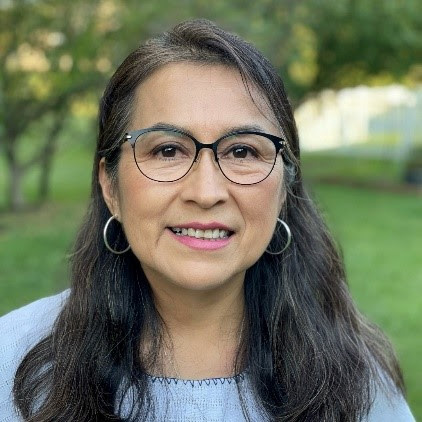
UK doctor points to treatment for 'hidden disability' of hearing loss

Hearing loss is so often an invisible disability
with treatment options that should be more well
known, said Dr. Beth McNulty, UK HealthCare
neurotologist. (Photo provided by McNulty)
By Rick Childress
Forty years ago, there was no effective treatment for deafness.

Now, a nine-month-old infant can get a cochlear implant — a procedure that first got Food and Drug Administration approval in 1984.

“In my opinion, it is one of the greatest achievements of modern medicine,” said Dr. Beth McNulty, a UK HealthCare neurotologist — a doctor who specializes in the ears, nose and throat, commonly known as an ENT.

In the inner ear, a cochlear implant converts acoustic energy into electric energy, stimulating the auditory nerve electrically. It may restore hearing in those born with congenital deafness, as well as patients with slowly progressive hearing loss for whom hearing aids no longer work.

“Cochlear implants are performed on infants up to 103-year-olds,” McNulty said. "I always counsel patients that there's no age limit. We treat each patient individually as far as candidacy for surgery.”

The sense of sound can help a deaf mother hear her crying infant, or help a baby born deaf learn to speak. In honor of World Hearing Day Sunday, March 3, McNulty wanted to highlight how the gift of hearing can connect people and change lives.

“As the hearing loss progresses to the point of cochlear implantation, a lot of patients feel isolated, they feel like they have no hope,” McNulty said. “Communication is what ties you to the world.”

World Hearing Day brings awareness for hearing loss — so often an invisible disability. That became particularly apparent during the Covid-19 pandemic and patients who were hard of hearing couldn’t read the lips of masked people.

“It caused frustration for them, for those trying to communicate with them, like, ‘Why can't you get this?’” McNulty said. “Because they don't have a sign on their forehead that says, ‘I have hearing loss’ or ‘I have deafness.’”

Many of McNulty’s patients are in their mid-life and have had hearing loss that has progressed to where their hearing aids are no longer effective. Sadly, in some places in Kentucky, those individuals aren’t referred for cochlear implantation because of a lack of awareness of the treatment options.

“Through World Hearing Day we want to bring awareness to hearing loss as a disability, an often hidden disability, and bring awareness to the fact that nowadays we have options for treatment,” McNulty said.

Starting in 2019, the surgery can also be performed on those who are deaf in one ear.

Candidates for the surgery often score less than 50% of word understanding during audiology testing. After the surgery, average word recognition increases to 70-80%.

Before surgery, McNulty speaks directly and slowly or uses dictation software when talking with a patient. On activation day, she loves to “test the water” and speaks normally to see if the patient responds. While speech clarity may take time, often, they do respond and describe hearing sounds they haven’t heard in years.

“It’s opening closed doors for patients, bringing back the connection to their loved ones, their friends and family,” McNulty said. “It is such a rewarding part of my job.”

An infant who is born deaf would start with hearing aids by the time they’re six months old, then get a cochlear implant before their first birthday.

“If we do all those things, they will have speech,” McNulty said. “They will be in a regular classroom and may progress like nothing ever happened.”

Few in Kentucky perform the surgery; the state has only six neurotologists. Four work at UK, which also has pediatric otolaryngologists who perform cochlear implants on children, as well as audiologists who are specially trained for cochlear implantation. The audiologists are key members of the team.

“This is their passion,” McNulty said. “They work with these individuals about once a month for a whole year, programming and reprogramming to try to get this to sound just right.”

The team also consists of two cochlear-implant coordinators who help schedule appointments, answer questions and are adept at working with deaf individuals and their families.

McNulty recommends considering getting your hearing checked starting at age 50 — based off data that shows getting hearing loss treated at that age can help slow the onset or progression of dementia.

Other reasons to get your hearing checked:
  • Family history of hearing loss
  • History of noise exposure like in construction or the military
  • Asking people to repeat themselves
  • Struggling with background noise
  • Tinnitus (Hearing ringing, buzzing, crickets in your ears)
Cochlear implants are a treatment option for nerve hearing loss, but hearing loss may also be conductive, or due to a mechanical problem such as a hole in the eardrum, or a bad infection. Sometimes this can also be treated surgically and reversed.

Sunday, October 1, 2023

Kentucky Justice Commission on Mental Health to hold five more town-hall meetings; the next one is set for Oct. 11 in Lexington

Kentucky Health News


The Kentucky Judicial Commission on Mental Health is hosting nine town hall meetings across the state through Nov. 29 to garner input for changing how the justice system addresses people with challenges involving mental illness, substance use and/or intellectual and developmental disabilities. Four of the town halls have already taken place, with five remaining.  

"The commission wants to hear from people and/or their families with lived experience in this area as well as business owners, civic leaders and anyone else with an interest," says a news release. "The findings will be used to help guide the work of the commission and associated groups and to design training for the state court system and its justice partners." 

Those who are unable to attend, but want to share their experiences of navigating the courts or the behavioral health system can do so by emailing JCMH@kycourts.net. ASL interpreters will be provided and those with other language or accessibility needs should email JCMH@kycourts.net.

The first four town halls were held in Owensboro, Covington, Ashland and London.

All of the meetings take place from 6 to 8 p.m. local time. Dates and locations for the remaining town halls are as follows: 
  • Oct. 11 – Lexington, Central Bank Center, 430 W. Vine St.
  • Oct. 25 – Paducah-McCracken County Convention & Expo Center, 415 Park Ave.
  • Nov. 8 – Louisville, Kentucky International Convention Center, 221 S. 4th St.
  • Nov. 15 – Pikeville, Appalachian Wireless Arena, 126 Main St.
  • Nov. 29 – Bowling Green, Sloan Convention Center, 1021 Wilkinson Trace
The Kentucky Judicial Commission on Mental Health was established in August 2022 and is charged with exploring, recommending and implementing transformational changes to improve systemwide responses to justice-involved people with mental health challenges, substance use issues and/or intellectual and developmental disabilities. ​

Toward this end, the commission held its first Mental Health Summit in Louisville on May 31 through June 2, with more than 1,000 people in attendance. The town halls are expected to build on this success, says the release. 

Monday, June 19, 2023

'Understanding autism: A KET Forum' premieres June 27

Autism, which is a complicated and often misunderstood neurological and developmental disorder, will be the subject of a forum on KET at 8 p.m. ET Tuesday, June 27 and on KET2 at 9 p.m. ET Thursday, June 29. The program will be available on demand at KET.org and the PBS app.

Kelsey Starks will host "Understanding Autism: A KET Forum" with experts including doctors, therapists and those affected by what some call "a neuro-difference" to help viewers understand how individuals with autism learn and interact with the world around them. They will also discuss education opportunities and the need for early intervention, and suggest ways to navigate the resources available. The studio guests will be:

• Dr. Gregory Barnes, director of the Norton Children’s Autism Center in Louisville and chair of the Kentucky Advisory Council on Autism

• Dr. Marisa Toomey, developmental pediatrics specialist at UK Children’s Hospital in Lexington

• Melanie West, executive director of Families for Effective Autism Treatment of Louisville

• State Rep. Tina Bojanowski, a special-education teacher in Jefferson County Public Schools and parent of a child with autism

• Scott Brinkman of Louisville, attorney and parent of a child with autism, and former state representative and state Cabinet secretary

• Susan Mills of Lexington, founder and executive director of the nonprofit My Autism Tribe and parent of child with autism

• Tanya Sturgill, autism resource specialist with the Fayette County Public Schools.

The program will also include recorded interviews with Kentuckians who live with autism or work in the field:

• Donovan Blackburn, director of the Appalachian Valley Autism Center in Pikeville

• Cody Clark, Louisville-based autistic adult/creator of “Cody Clark Magic”

• Mary & Kris Vaughn of Prospect, parents of a 16-year-old son with autism

• Patrick Elias, a Western Kentucky University senior and participant in the university’s Kelly Autism Program

• Michelle Elkins-Burckhard, director of WKU’s Kelly Autism Program

• Drew Hardison, participant in the LifeWorks transitional program at WKU

• Joy McAlpine, participant in LifeWorks

• Sarah Webb, participant in LifeWorks

• David Wheeler, executive director of LifeWorks

Monday, March 13, 2023

Legislature passes bill to keep Kentuckians' disabilities from being sole cause of discrimination in allocating organs for transplant

Centers for Disease Control graphic
By Melissa Patrick
Kentucky Health News

A bill to ensure that Kentuckians with disabilities are not discriminated against when being considered for an organ transplant has passed both houses of the General Assembly and is on its way to the governor's desk.

House Bill 238, sponsored by Rep. Wade Williams, R-Earlington, would prohibit a health-care provider from discriminating against an individual who has a disability, based solely on the disability, when determining their eligibility for an organ transplant.

Williams told the House Families and Children Committee March 2 that HB 238 doesn't tell providers that they can't consider the disability at all for an organ transplant, but that they can only consider it if it is "medically significant."

The bill also directs health-care providers to consider a person's personal-care support when making a decision about organ transplants. It also allows a person with a disability to file suit for relief via an injunction if they believe that a provider has violated the legislation.

On March 13, Morgan Elliston of Frankfort, told the Senate Families and Children Committee that her daughter Quinn, 11, has a rare genetic disorder, Wolfe-Hirschhorn Syndrome, that has caused  growth and intellectual disabilities, epilepsy and chronic kidney disease.

Elliston said Quinn's kidneys are functioning at 30 percent and chances are slim that she will not need a kidney transplant in the future.

"All across the commonwealth, individuals like Quinn may someday need an organ transplant," said Elliston. But as written, she said, current guidelines offer no protections for people with disabilities. She quoted from them:  "Allocation of a deceased donor organ must not be influenced positively or negatively by political influence, national origin, ethnicity, sex, religion or financial status -- no mention of disabilities."

Elliston said 37 states have passed similar legislation. "With the passing of House Bill 238, you will be giving individuals with disabilities the same rights as every other individual that needs a transplant," she said.

The House bill passed the bill 98-0 March 7; the Senate passed it March 13 on the consent calendar, which is used for bills that are unanimously approved in committee.

Monday, August 22, 2022

Seven Healthy Kentucky Champions named by Foundation for a Healthy Kentucky; finalists for Friedell Award to be given Oct. 17

The Foundation for a Healthy Kentucky has announced its 2022 class of Healthy Kentucky Champions. The awards recognize individuals dedicated to improving the health of Kentuckians at a community level or state level; they are finalists for a statewide award to be announced in October.

“These seven Healthy Kentucky Champions are an inspiration to all working to better the health of our state,” said Ben Chandler, president and CEO of the foundation. “We owe them much gratitude for their dedication to addressing some of the health challenges Kentuckians face. The commonwealth is better because of these Healthy Kentucky Champions.”

The seven Healthy Kentucky Champions are nominees for the 2022 Gil Friedell Memorial Health Policy Champion Award, which comes with a $5,000 grant from the foundation to a Kentucky-based nonprofit of the winner’s choice. This year’s Friedell Award winner will be announced at the Howard L. Bost Memorial Health Policy Forum Oct. 17. The forum will focus upstream the social determinants of health on the connection between educational opportunities and health outcomes of Kentuckians. To learn more and register for this free, virtual event, click here.

The Healthy Kentucky Champions are Dr. Patricia Bautista-Cervera of Louisville, Eric Crawford of Maysville, Terry Gehrke of Louisville, Denise Hall of Trimble County, Michelle Howell of Scottsville, Dr. Patrick Kitzman of the University of Kentucky and Mark Thomas of Todd County.

Dr. Patricia Bautista-Cervera
Dr. Patricia Bautista-Cervera is a pediatrician and pediatric allergist at the La Casita Center, an organization dedicated to enhancing the well-being of Louisville’s Latinx and immigrant community. As health empowerment coordinator, Bautista-Cervera works to promote health through workshops, informational videos, one-on-one communications, and other various means. During the COVID-19 pandemic, she delivered important information to the Spanish-speaking community through the online video series, “Consejos de Salud con la Dra. Paty.” She also was instrumental in developing virtual forums with stores and restaurants to educate the Hispanic community about the virus and promote preventive measures and vaccination. In 2020 she supported 994 Covid-19-positive patients, offering medical guidance and, through an empowering model, connecting them to LCC’s wrap-around services and other resources in the community.

Eric Crawford
Eric Crawford, a Maysville native, joined Kentuckians for Medicinal Marijuana in 2013. Crawford’s education in the endocannabinoid system and cannabis, as well as his experience as a quadriplegic, has fueled his passion for advocating for the legalization of medical marijuana in Kentucky. He has been involved in crafting legislation and has testified at the state Capitol about how cannabis improves his quality of life. He is a member of the Governor’s Medical Cannabis Advisory Committee and has also traveled the state with Kentuckians for Medicinal Marijuana for more than 50 medical cannabis educational seminars. Crawford remains active in the Maysville community by serving on the Lions Club and volunteering at a nursing home. He is a Finis Davis Fellowship recipient through the Kentucky Lions Eye Center and a past member of Kentucky Partners in Policymaking through the Commonwealth Council for Developmental Disabilities.

Terry Gehrke
Terry Gehrke has been in the fitness-wellness industry for more than 30 years. She founded Balanced Wellness LLC in 1999 in Jefferson County and still leads the organization as president and wellness consultant/health educator. Gehrke joined the Kentucky Diabetes Network in 2019 as executive director and has guided the organization to promote better health for Kentuckians at-risk for and living with diabetes. She leads KDN’s symposium committee each year to offer the largest professional education opportunity for diabetes training in the state, the Kentucky Diabetes Symposium. Gehrke’s background includes teaching in the University of Louisville Health and Sport Sciences Department and working with Southeast Christian Church’s Sports & Fitness Ministry. Gehrke is a member of several organizations including the National Wellness Institute, the National Physical Activity Society, and Exercise is Medicine.

Denise Hall
Denise Hall of Trimble County began working in the substance use prevention field in 1998 at Seven Counties Services. In 2003, she became coordinator for Trimble County Family Resource and Youth Services Center before writing two Drug Free Communities grants and directing them. The DFC grant is now in its 10th and final year. Hall’s work includes implementing a Drug Education Series in Trimble County and a Sources of Strength group at Trimble County Junior/Senior High School. She administers a survey to middle and high schoolers to understand the needs for substance-misuse prevention. Hall was crucial in getting vape detectors installed at the high school and is managing director of the Trimble CARES Coalition.

Michelle Howell
Michelle Howell co-owns Need More Acres Farm in Scottsville with her husband Nathan. She has an agriculture degree from Western Kentucky University and previously worked for University of Kentucky Cooperative Extension assisting tobacco farmers as they transitioned to fruit and vegetable production. She collaborates with local and state partners to increase equitable opportunities for farmers. Howell has also been involved in writing grants worth more than $2.4 million to benefit food access, women’s life courses, and urban-rural development. Need More Acres co-founded the Community Farmers Market in Bowling Green, which piloted several Supplemental Nutrition Assistance Program incentives. CFM was essential to growing Kentucky Double Dollars into a statewide program and CFM is one of the organization's pilots of the Fresh Rx MOMs program for expecting mothers on Medicaid. Both programs help under-resourced Kentuckians access fresh, healthy food from farmers markets. Additionally, Howell partners with UK, WKU and Kentucky State University for interactive professional development on diversity and inclusion.

Patrick Kitzman
Dr. Patrick Kitzman is a professor in the University of Kentucky Department of Physical Therapy. He’s also founding director of the Kentucky Appalachian Rural Rehabilitation Network, a team that develops strategies to reduce disability and improve the quality of life for individuals with neurological impairments living in underserved rural Appalachian counties. Kitzman and his team established projects CARAT and CARAT-TOP. In CARAT (Coordinating and Assisting the Reuse of Assistive Technology) students learn to refurbish used medical equipment and donate it to those in need in the community. CARAT-TOP (Coordinating and Assisting the Reuse of Assistive Technology- Together One Priority) is a training program created through a partnership with the UK Center of Excellence in Rural Health. It brings together community members and high-school students of all abilities to learn new skills to help individuals and communities affected by disability.

Mark Thomas
Mark Thomas, Todd County Schools superintendent, was instrumental in establishing the AXIS Program: Centering All Services in the district. In partnership with the Todd County Health Department, the program addresses students’ social and emotional well-being through mental-health case management. The program also assists with basic needs such as nutrition, clothing, toiletries, housing, transportation, and treatment for substance use disorder. Thomas played a crucial role in gaining needed buy-in of the program from staff and the community. Through his support, the program is expanding services to include parenting classes, prenatal classes, and mental health awareness programs for students and staff. Thomas began his career in Shelby County in 1996 as a middle school teacher. He has served in a number of school and district administrative roles across Kentucky before starting his current position in 2020.

Thursday, March 10, 2022

Senate passes its version of state budget with many health items; $100 million would 'support a response to the nursing shortage'

By Melissa Patrick
Kentucky Health News

The state Senate passed its version of a two-year state budget by a 30-6 vote Wednesday, the same day it passed out of committee. The bill will soon head to a House-Senate conference committee that will write the final version.

The Senate-revised House Bill 1 has a number of health provisions, with some variations from the House version and Gov. Andy Beshear's proposals.

The Republican-controlled chambers and the Democratic governor have three different approaches to addressing the nursing shortage, which has been exacerbated by the coronavirus pandemic. 

Photo from American Nurses Association
The Senate allocated $100 million of federal relief money in the first year of the budget, starting July 1, "to support a response to the nursing shortage," without giving any details. The House included no money for the retention and recruitment of nurses.

Beshear, who said Thursday that the focus needs to be on retention, called for $6 million each year from the General Fund for nursing scholarships; and from relief funds, $5 million a year for five years to create a new student loan-forgiveness program and $2 million for a marketing and outreach campaign.

The House budget and Beshear's budget both include $17.7 million in the first fiscal year and $19 million in the second fiscal year to cover the costs of local health departments required services, but the Senate's budget only allocated money for the second fiscal year in the amount of $19 million. 

Randy Gooch, executive director of the Jessamine County Health Department, said the Kentucky Health Department Association isn't sure why the Senate would have left out an allocation for fiscal year 2023 and Sen. Chris McDaniel, R-Ryland Heights, who crafted the Senate budget has not yet returned a call for clarification. 

The Senate budget includes Beshear's wish for for 500 new Michelle P. waiver program slots for people with intellectual or developmental disabilities; the House provided for 100. The Senate added 200 slots to the Supports for community Living waiver program for similar beneficiaries, double what Beshear and the House proposed. Both programs have thousands of Kentuckians on their waiting lists.  

The Senate agreed with the House on extra funding for domestic-violence shelters, rape crisis centers and child-advocacy centers, allocating $500,000 more for each in each fiscal year. Beshear proposed a 36% increase each year for each type of organization: $2.5 million, $1.78 million and $1.3 million, respectively.

And while the Senate and House budgets both would fund 200 more social workers, Beshear's budget proposal would have funded an additional 350. 

To implement the new 988 suicide hotline, a three-digit number set to replace the National Suicide Prevention Lifeline in July 2024, the Senate budgeted $3.37 million in the first year and $9.9 million in the second, the amounts Beshear recommended. The House allocated much more: $12.4 million in the first year and $17.6 million in the second, but directed that the money also be used to create more mobile crisis units. 

The Senate allocated $500,000 in each year for the Lung Cancer Screening Program that would be established with the passage of HB 219. The bill passed the House in late January and in the Senate Appropriations and Revenue Committee, which wrote the revised budget. 

The Senate budget also says that each Medicaid managed-care organization that has a participating contract with Kentucky in the next contract renewal will cover lung-cancer screenings.  

Here are some other health-related provisions in the Senate budget. 

From the Tobacco Settlement Fund:
  • $500,000 in each fiscal year to support the Kentucky Rural Mental Health, Suicide Prevention and Farm Safety Program, titled the "Raising Hope Initiative."
  • $1.4 million each year for substance-abuse prevention and treatment for pregnant women with a history of substance-use disorders;
  • $7 million each year for the Health Access Nurturing Development Services Program (HANDS) for poor families with young children;
  • $900,000 per year for the Healthy Start initiatives;
  • $900,000 a year for early-childhood mental health;
  • $900,000 a year for early-childhood oral health;
  • $2 million a year for smoking cessation. Advocates have long asked for more smoking cessation funding, asking recently on a Kentucky Educational Television lung-cancer forum that this amount, at minimum, go back to the pre-pandemic level of $3.3 million.

From the General Fund:

  • $6.25 million in each fiscal year for cancer research and screening to be equally shared by the University of Kentucky and the University of Louisville;
  • $500,000 in the first year and $493,500 in the second year for spinal-cord and head-injury research (an amount that was previously taken from the Tobacco Settlement Fund); 
  • $93,700 in each year for grants to the Brain Injury Association of America, Kentucky Chapter and the Epilepsy Foundation of Kentuckiana to help veterans who have experienced brain trauma;
  • $500,000 each year for the Kentucky Colon Cancer Screening Program;
  • $100,000 per year for The Hope Center of Lexington for addiction recovery;
  • $900,000 a year for The Healing Place, a Louisville recovery program;
  • $1,495,000 a year to support the Lee Specialty Clinic, which provides specialty medical services for individuals with moderate developmental and intellectual disabilities living in residential and community settings. 
  • $7.2 million in the first year and $14.48 million in the second fiscal year to expand the senior citizens' meal program. The appropriation will come from federal relief funds. 
  • $1 million in the first year to support external performance reviews of substance-use treatment programs administered or funded by the health cabinet. 
  • $2.5 million in each year to the Kentucky Pediatric Cancer Research Trust Fund; Beshear's proposal provided $3.75 million in each fiscal year. 
  • $750,000 per year for the Kentucky Poison Control Center, unless federal emergency relief funds become available;
  • $1 million a year for the Ovarian Cancer Screening Outreach Program at the University of Kentucky; the House budget had $500,000 a year. 
  • Federal and state funds are allocated in both years to maintain the pandemic-elevated reimbursement of $29 per day per Medicaid patient in nursing homes.
  • Money is provided to support expansion of of a pilot program for Tim's Law to additional locations as a way to ensure statewide access. Tim's Law allows judges to order assisted outpatient treatment for people who have been involuntarily hospitalized, aimed at stopping the revolving door them going in and out of jails and state psychiatric hospitals.

Thursday, January 7, 2021

Beshear's proposed budget provides money for many, including health departments and their pensions, pay raises and broadband

Gov. Andy Beshear gave his budget speech via video. (Image screenshot from KET)
By Melissa Patrick
Kentucky Health News

The state budget Gov. Andy Beshear's proposed Thursday would provide additional money to support the work of health departments, and much-needed pension relief for the departments and community mental-health centers. 

Beshear outlined the proposal in a speech presented via video during a joint session of the House and Senate, rather than in person, "to set an example of how we fight the Covid-19 pandemic," he said. It was televised on Kentucky Educational Television, which elicited reactions from legislators.

The budget would also provide funding for 76 more social workers and full-time mental-health staff based at schools, and increase slots for helping people with intellectual or developmental disabilities. 

It is uncertain what portions of the Democratic governor's state budget will pass, since he faces Republican 3-to-1 super-majorities in each chamber of the General Assembly, but "It's going to be hard for the majority to say no to a lot of those things," House Democratic Leader Joni Jenkins said.

The budget is more generous than most close observers expected at first, and Senate President Robert Stivers attributed that to an economy and state coffers fueled by pandemic relief funds from Congress.

Stivers said that means revenue sources will have to be examined. He and House Speaker David Osborne cautioned that Kentuckians should expect a more conservative approach in the final budget. 

"I think that you will tend to see us take a very, very conservative approach," Osborne said. "And we'll still have a very lean budget going forward." 

Broadband: The proposal also includes $50 million to fund "last mile" broadband coverage, which has become even more important during the pandemic as many Kentuckians have sought health care via telehealth.

"We used to think of broadband in terms of just business," Beshear said. "But now we know it touches every part of our lives: the education of our kids, how we receive health care. This is the most important infrastructure of the future."

Beshear said it would be "the first time state dollars have been used to invest in expanding broadband," which probably raised eyebrows among legislators, who have wrestled for years with the Kentucky Wired project started by the governor's father, Steve Beshear, and U.S. Rep. Hal Rogers, R-Somerset.

The state has had to put millions of extra dollars into the project, but not for the "last mile," the extension of fiber-optic cables to homes and businesses. Kentucky Wired is a high-speed network into which any internet service provider, including local governments and businesses, can tap into.

Big picture: Beshear called the budget "fiscally responsible" and stressed that it does not rely on new taxes, the passage of new revenue measures or spending cuts. The Lexington Herald-Leader reports that Kentucky has cut more than $2.3 billion in state spending since the Great Recession in 2008-09.

Among the broad major proposals in the budget were a 1 percent pay raise for state employees and a $1,000 pay hike for every school employee. Osborne and Stivers sounded skeptical of giving raises to state and school workers when many in Kentucky are unemployed and still waiting for benefits.

The governor urged lawmakers to work together in support of all Kentucky families, to take the coronavirus seriously and to set politics aside. He did not refer to bills moving quickly through the legislature that will reduce his powers, but to conflicts in general.

“Let me be clear: Every moment in this short session we spend fighting is a loss for our Kentucky families," he said. "Such fighting will leave us empty-handed and further behind those states that recognize this moment and this opportunity. Our goal should be to act swiftly and with wisdom on behalf of the people of the commonwealth."

Action on the budget will be swifter than usual, because Beshear presented it early and legislative leaders plan to start picking it apart and negotiating changes during the recess that will run through Feb. 1. The leaders decided Thursday to delay the start of the recess from Saturday to next Thursday, apparently to complete work on bills now moving. 

The budget is for the fiscal year that begins July 1. The state usually has a two-year budget, but because of the uncertainty of pandemic expenses it opted for one-year budget in the last legislative session.

What's in it for health? 

Medicaid: Beshear's proposal would fully fund the program that provides health care for a third of Kentuckians. The budget summary notes a rise in enrollment during the pandemic, and anticipates a 14% enrollment increase in the current fiscal year and a decline in the new fiscal year. The summary notes that due to the pandemic, Congress has boosted states' Medicaid funding 6.2% through June 30. The federal government normally pays about three-fourths of Medicaid costs.

Medicaid waivers: The proposal would provides $3.5 million for 250 more slots in the "Michelle P." waiver program and 50 slots in the Supports for Community Living waiver program, both of which help people with intellectual or developmental disabilities. Thousands of Kentuckians are on waiting lists.

Social workers: Beshear's plan would provide $7 million to add 76 social workers for children's protective services, for a new total of 1,401, with $1 million to discourage them from leaving their jobs.

Health departments: The plan would double the state's financial support to local health departments, to $24 million, to improve their capacity for epidemiology and clinical care. 

The proposal also provides pension relief to the state's quasi-governmental agencies, which includes all health departments except the one in Jefferson County and 13 community mental-health centers. 

The groups are facing increased expense of about $60 million to meet their a new pension-financing rate, 85% of payroll costs. The budget's summary says it would support their transition from the Kentucky Employment Retirement System non-hazardous plan to a fixed allocation, or prorated amount of the actuarially accrued liability for each employer, as proposed in House Bill 8, co-sponsored by Rep. Jim DuPlessis, R-Elizabethtown, and Rep. Steve Sheldon, R-Bowling Green. A similar bill passed out of the House last year, but was not heard in the Senate.

"The governor’s budget adds $33.5 million each year for the health departments and $18.8 million each year for the Community Mental Health Centers from the General Fund to fund 100% of the additional cost of employer contributions for these critical health providers," the budget summary says. 

In prepared statements, Sara Jo Best, health director of Lincoln Trail District Health Department and president of the state health-department association, called the pension funding "crucial." Steve Shannon, executive director of  the Kentucky Association of Regional Programs, applauded the financial support in the proposed budget for community mental health centers.

"The additional funding assistance for the escalating public pension costs permits the CMHCs to continue operating as the behavioral health public safety net for all Kentuckians," he said. "Thank you, Gov. Beshear!”

Thursday, February 28, 2019

Guthrie tries to preserve funding for Medicaid program that gets beneficiaries out of facilities and into community-based support

U.S. Rep. Brett Guthrie is working to find money to save a program aimed at moving Medicaid beneficiaries, mainly those with disabilities, out of facilities and into community-based, long-term support services they can get at home.

The "Money Follows the Person" demonstration program got only three months of funding in the latest appropriations bill because of its cost, reports Michele Stein of Inside Health Policy. Guthrie and his Democratic counterpart are co-sponsoring a bill for a five-year extension.

Guthrie (Ft. Collins Coloradoan photo)
Guthrie is from Bowling Green and represents the Second Congressional District. His role in the issue stems from his top rank among Republicans on the Oversight and Investigations Subcommittee of the House Energy and Commerce Committee.

The demonstration program began in 2007, and was funded by the 2010 Patient Protection and Affordable Care Act through September 2016. "While no additional funding was provided for the demo after September 2016, states could continue to use unspent funds," Stein reports. "A 2017 evaluation found the program to be popular and said [it] provided strong evidence that beneficiaries’ quality of life improves when transitioned back to the community."

The evaluation said the program had transitioned 71 older Kentuckians, 137 Kentuckians with physical disabilities, and 90 with intellectual or developmental disabilities. It reduced expenses for all three categories of beneficiaries, but the vast majority of the savings came in the third category.

But the program's cost is a challenge. Because of that, the Energy and Commerce Committee considered a one-year extension, rather than a five-year extension that had been proposed, and then the partial government shutdown intervened; new committee Chair Frank Pallone (D-N.J.) "said he didn’t want the program to be collateral damage from the shutdown," Stein reports.

On Feb. 25, Guthrie and subcommittee Chair Debbie Dingell (D-Mich.) introduced a bill to fund the program for five years, drawing endorsements from advocates for the poor and elderly.

“Money Follows the Person has been one of the most effective disability rights programs of the twenty-first century," said Vania Leveille, senior legislative counsel for the American Civil Liberties Union. "It offers people with disabilities a meaningful alternative to institutionalization and helps safeguard their autonomy, liberty and self-determination."

Matt Salo, executive director of the National Association of Medicaid Directors, said five-year funding has bipartisan support, and time to get through Congress, Stein reports: "He expressed hope the legislation would pass if lawmakers agree on how to pay for it."

Wednesday, October 31, 2018

Agreement signed to help Kentuckians with severe mental illness transition out of institutional care to community housing

The state has reached an agreement with an independent agency that advocates for people with disabilities that should allow more people with severe mental illness to get out of institutional care an into community housing.

The agreement allows the Cabinet for Health and Family Services and Kentucky Protection and Advocacy to address many of the concerns identified in a 2012 P&A report about personal-care homes, which are long-term facilities that provide care for people who don't need full-time nursing care, but need some assistance.

The disability advocates have long argued that personal-care homes run counter to the Americans with Disabilities Act and a court decision saying that disabled patients should live in the "most integrated setting." That is defined as one "that enables individuals with disabilities to interact with non-disabled persons to the fullest extent possible," Kentucky Health News reported in 2012.

“The latest agreement shows that the cabinet recognizes that recovery is possible and that the best place for recovery to occur is in the community,” Jeff Edwards, director of P&A, said in the state news release. “The expectation is for Kentuckians with mental illness to receive services and supports that allow them to live fully included lives.”

The news release notes that P&A was prepared to file a federal lawsuit to ensure compliance with the Americans with Disabilities Act and other court decisions in August 2013, but instead, along with the health cabinet, made an agreement to address the many issues found in the 2012 P&A report. An amended agreement was signed in 2015.

And while the "full vision" of both of these earlier agreements has not been met, the release says that both agencies have agreed to renegotiate terms "that represent more objective, measurable goals for meeting the needs of these individuals."

"Today, more than 925 individuals with a serious mental illness are living successfully in the community with full tenancy rights, having received supported housing assistance and other supports and services from the cabinet under the terms of the prior agreements," says the release.

Sunday, April 15, 2018

Legislature tosses health departments and mental-health centers a budget lifeline; bills on disposal of opioids become law

By Al Cross
Kentucky Health News

FRANKFORT, Ky. – As it wrapped up its business, the Kentucky General Assembly threw a financial lifeline to health departments and mental-health centers, passed a telehealth bill without an amendment favored by insurance companies, and overrode the governor's veto of a drug-disposal bill.

Budget: In a revision of the budget it passed earlier, the legislature froze for one year the pension contributions of health departments and 11 of the state's 14 community mental health centers, which were facing increases in pension payments of 49.5 to 83.4 percent, averaging 69 percent.

That would have been a double whammy with the 6.25 percent across-the-board cut proposed by Gov. Matt Bevin and included in the budget, which is likely to force cuts in personnel and services.

Bevin could veto the revision bill, but he suggested Friday evening that it was making the budget better. And he indicated that he would still have to make cuts because the budget will be unbalanced. Legislative leaders have disputed that.

Home care for the disabled: In a rare gain among programs, the budget adds $10.5 million to the General Fund to generate an extra $24.6 million in federal Medicaid money each fiscal year for the Supports for Community Living program, which enables developmentally and intellectually disabled Kentuckians to receive care in homes rather than health-care facilities.

The money will "raise reimbursement rates to SCL service providers who have not seen an increase since 2004, even as costs have risen 27 percent through inflation since that time," says the Kentucky Center for Economic Policy. "The stagnant payment rates have contributed to a 45 percent turnover rate among providers and a 41 percent decrease in services offered to intellectually and developmentally disabled Kentuckians."

Telehealth: By a vote of 65-20, he House gave final passage to SB 112aimed at increasing access to health care and saving money by requiring the state to develop policies on health care by telecommunication –including a reimbursement model, with similar expectations for the public insurance market. The House did not consider an insurance-company floor amendment filed by Rep. Jim Gooch, R-Providence, that would have removed a key provision, requiring telehealth visits to be paid for at same level as regular visits unless otherwise negotiated. Bevin could still veto the bill.

Drug disposal: The legislature overrode Bevin's veto of House Bill 148, sponsored by Rep. Addia Wuchner, R-Florence, to shift ownership of controlled substances from deceased hospice patients to the hospice for disposal. Bevin's veto message said the bill was contrary to federal law and U.S. Drug Enforcement Agency policy, but Senate President Robert Stivers cited a DEA memo that cleared the way for the bill.

Bevin allowed to become law without his signature Senate Bill 6, sponsored by Sen. Alice Forgy Kerr, R-Lexington, to make pharmacists tell customers how to safely dispose of unused opioids and other controlled substances, and either provide or offer to sell them a product designed to neutralize drugs for disposal, or provide on-site disposal. More than 70 percent of all opioid addictions result from misuse of prescription drugs.

Other health bills: In the days before the legislature reconvened to consider vetoed bills and pass others, Bevin signed several health-related bills into law, including:

SB 5, sponsored by Sen. Max Wise, R-Campbellsville, to put the Medicaid program in charge of reimbursement rates for pharmacists. Rates are now set by pharmacy benefit managers, firms hired by managed-care organizations (mainly insurance-company subsidiaries). The bill sets reporting requirements for PBMs and MCOs and the $1.7 billion a year they get from the state. It also would allow the Medicaid program to approve contracts and fees between MCOs, PBMs and pharmacists.

HB 463, sponsored by Rep. Michael Meredith, R-Brownsville, to prohibit PBMs from requiring clients to make a co-payment that is higher than a lesser cash-payment amount, and keep them from penalizing a pharmacy for telling patients if that option is available. It is called the "clawback" bill, because PBMs "claw back" the difference between the higher co-pay and the lower price of the drug.

SB 71, sponsored by Sen. Steve Meredith, R-Leitchfield, would require the inclusion of abstinence only education in any sex-ed classes taught in Kentucky. Kentucky has no comprehensive sexual health education standards; the state Department of Education is reviewing proposed rules.

Failed bills: Health-related bills that were poised for passage but did not make it included SB 95, sponsored by Kerr, to require health insurers to cover standard fertility preservation services for patients who have become infertile by means of surgery, radiation, chemotherapy or any other medical treatment affecting reproductive organs and processes; and SB 149, sponsored by Sen. Julie Raque Adams, R-Louisville, chair of the Senate Health and Welfare Committee, to establish an advisory council for palliative care, given to make patients with incurable illnesses more comfortable.

Kentucky Health News is an independent news service of the Institute for Rural Journalism and Community Issues, based in the School of Journalism and Media at the University of Kentucky, with support from the Foundation for a Healthy Kentucky.

Saturday, March 10, 2018

Committee hears but doesn't vote on bill that would ban women from having an abortion if fetus has Down syndrome

By Melissa Patrick
Kentucky Health News

FRANKFORT, Ky. -- A bill to prohibit abortion of a fetus that may have Down syndrome was heard by the House Health and Family Services Committee in a specially called March 8 meeting that included several other bills, but no vote was taken on the abortion measure. Only Republican legislators attended.

The day before, the House Judiciary Committee passed House Bill 454, an abortion bill to ban the most common method of second-trimester abortion, known as dilation and evacuation, or D&E, after roughly 11 weeks of pregnancy except in medical emergencies. That bill is sponsored by Rep. Addia Wuchner, R-Florence, who chairs the health committee.

At the end of the discussion, Wuchner called abortions of Down syndrome fetuses "modern eugenics," but said a vote would not be taken so the subject could be further explored.

Rep. Melinda G, Prunty
House Bill 455, sponsored by Rep. Melinda Gibbons Prunty, R-Greenville, would prohibit an abortion if the pregnant woman is seeking the abortion, in whole or in part, due to a diagnosis of Down syndrome or a test result indicating it, or any other reason to believe that the child has Down syndrome.

The bill would require physicians to certify in writing a lack of knowledge of such circumstances. Abortion providers found in violation would have their licenses revoked and would also be guilty of a felony that carries a prison sentence. The woman undergoing the procedure would not be prosecuted.

Prunty told committee members that the bill is about protecting the rights of the disabled. “House Bill 455 is simply an anti-discrimination, anti-human rights piece of legislation,” she said. Prunty is opposed for re-election by ex-Rep. Brent Yonts of Greenville, whom she ousted with 57 percent of the vote in 2016.

The four people who spoke in opposition to the bill were given 10 minutes to make their case.

Joan Kofodimos, mother of a developmentally disabled daughter, contrasted Prunty's mention of ethical human treatment to cuts in programs that support people with disabilities.

“If you’re not supporting the lives of people with disabilities who are born, who are living, then this bill is really about something else," Kofodimos said. "And to me what it's about is an effort to restrict women's ability to make their own legal choice to access a safe abortion by planting the seed that women need to justify their reasons for an abortion, and you do that by exploiting folks with Down syndrome and people's sympathy for them."

Dr. Kenny Zegart, a retired obstetrician-gynecologist, said patients need providers who will give them “unbiased, medically accurate information without the legislative bully pulpit hanging over them. . . . This bill is about instilling fear in physicians and their patients.”

Friday, October 13, 2017

State says number of Kentuckians getting disability benefits has exploded since 1980; rates are highest in Eastern Kentucky

By Melissa Patrick and Al Cross
Kentucky Health News

The number of Kentucky adults and children receiving disability benefits has increased in "staggering proportions," since 1980, and the Social Security disability system needs "radical reform, says a report from the state Disability Determination Services agency.

The report says that from 1980 to 2015, while Kentucky’s population grew by 21 percent, its combined disability enrollment grew by 249 percent. In the same 35 years, the national increase was 211 percent, so Kentucky's rolls were growing faster than the nation's.

By 2015, the report says, 11.2 percent of Kentuckians were receiving some form of disability benefit payment, higher than any state but West Virginia. It has held second place since the ranking were compiled, the report says.

Disability is prevalent in Central Appalachia. Twelve adjoining Eastern Kentucky counties had the state's top shares of the population receiving disability benefits in 2015, the report says: Wolfe, 24.9 percent; Owsley, 24.6; Breathitt, 23.8; Clay, 22.9; Magoffin, 22.3; Floyd, 21; Lee, 20.2; Leslie, 20; Martin, 19.3; Harlan, 18.9; Perry, 18.8; and Bell, 18.4 percent.

The report said that as the number of disability enrollees increased, so did prescriptions for controlled substances. Counties in the top 12 of disability and opioid use in 2015 (in alphabetical order) were Bell, Breathitt, Clay, Floyd, Lee, Leslie, Owsley, Perry and Wolfe.

Owsley County was in the top 12 for psychotropic drugs such as Xanax in 2001, 2005, 2010 and 2015, all the years surveyed for the report. Owsley and Clay counties were in the Top 12 for disability and opioids per person in 2001, 2005 and 2010.

Opioid prescriptions among those receiving disability payments rose from 48 doses per person in 2000 to 147 doses in 2015, an increase of 210 percent. Nationally, the use of opioids increased due to a greater emphasis on the treatment of pain and aggressive marketing by opioid manufacturers, especially in Central Appalachia, which ranks high in the share of the population on disability.

Central Appalachia has a relatively large percentage of workers who did not graduate from high school, worked in manual labor, and when injured found it difficult to get other work. Most of Kentucky's disability recipients have diseases of the musculoskeletal system and connective tissue (33.4 percent) or a mental disorder (32.8 percent), the report says. Other conditions included diseases of the circulatory, nervous and respiratory systems. National figures are similar.

Most of the state's disabled children (70 percent) are enrolled for mental disorders. Those who got Supplemental Security Income benefits or were in Medicaid had a 168 percent increase in psychotropic prescriptions from 2000 to 2015, from 273 doses per person to 457 doses.

The report's main author, Bryan Hubbard, acting commissioner of the state Department for Income Support, said in a news release, “The explosive growth of benefit dependence over the past 35 years has been fueled by a multitude of factors which are completely unrelated to the mitigation or treatment of hardship borne of genuine disability.”

A 2014 Center on Budget and Policy Priorities report said the number of disabled workers collecting monthly benefits tripled from 1980 to 2013, from 2.9 million to 8.9 million. It cited four factors for most of the increase: population growth, an aging population; growth in women's labor-force participation; and later retirements. It also offers results from several other studies with similar conclusions.

Adapted chart from Kentucky Center for Economic Policy
The liberal-leaning Kentucky Center for Economic Policy replied to the state report with similar points, noting that the share of Kentuckians aged 50 to 64 has increased by half, from 13.6 percent in 1990 to 20.2 percent in 2016, and that three-fourths of Kentuckians on disability are 50 or older. Now that baby boomers are retiring, Kentucky's disability enrollment "has dropped every year since 2013."

The state report suggests another reason for the growth in disability benefits. It says the federal Social Security Administration's culture is an obstacle to change because it is motivated to protect and expand enrollment for disability benefits in order to maintain its budget. The report says SSA administrative law judges award disability benefits "at rates substantially higher" than the state's Disability Determination Services, and it gives a list of the judges and their award rates.

The report calls for "radical reform," including making it a requirement that "objective medical evidence" be used to determine eligibility; removing all "subjective non-severe conditions" from the list of eligible conditions; and allowing the judges only to correct errors by state disability determiners. The report is available in PDF, with an accompanying PowerPoint presentation.

The report has language remarkable for a government document. After identifying politicians, lawyers, judges and doctors as obstacles to change, it says "There are individuals and institutions which exploit and derive power from an ever-expanding dependency class populated by desperate but functional people. These actors promote a dependence system which often functions as an apparatus of state sponsored suicide – anesthetizing and euthanizing its victims – a disproportionate number of whom are either young, poor, or both."

The Kentucky Center for Economic Policy said in its reply, "Concerns that DI in Kentucky is being overused reflect a fundamental misunderstanding about the program. It is actually very difficult to be approved for DI — in Kentucky as well as nationally. . . . Fewer than one in four applicants for DI receive it after an initial request in Kentucky. Ultimately, after two rounds of appeals, a total of 28.3 percent of Kentucky applicants receive DI benefits, which is below the net approval rate nationally of 32.1 percent in 2015." And it called the benefits "modest," saying "The median monthly benefit for a DI recipient in Kentucky was $1,055 per month in 2016," or $12,660 a year, "barely above the poverty line."
Research shows that disability rates are higher in more rural areas, ranging from 11.7 percent in the most urban areas to 17.7 percent in the most rural counties, according to the University of Montana Research and Training Center on Disability in Rural Communities.

The report speculates that rural rates are higher because rural populations are older. The share of people 65 and older in urban areas was 13.6 percent, compared to 18 percent in the most rural counties. The center has county disability data at http://rtc.ruralinstitute.umt.edu/resources/disability-counts-data-finder/.

Saturday, July 16, 2016

House Task Force on Vulnerable Kentuckians hears complaints about proposed changes to Medicaid program

By Melissa Patrick
Kentucky Health News

BEATTYVILLE, Ky. – Several speakers at the July 15 meeting of the House Task Force on Vulnerable Kentuckians said Gov. Matt Bevin's proposed changes to the Medicaid program would be too complicated for the most vulnerable Kentuckians and will create barriers to care on several fronts.

Mary Mead-McKenzie, executive director of the Kentucky River Community Center, which offers behavioral and addiction services to eight of Kentucky's poorest counties, said the work-or-volunteer requirements for able-bodied adults who aren't primary caregivers of dependents are not feasible in areas where there are no jobs. "Are we going to say that we are going to punish you because of the economy?" she asked.

Mead-McKenzie also opposed the proposed monthly premiums for most Medicaid recipients that would initially range from $1 to $15 per person. She painted a picture of what coming up with an extra dollar means for many of the families she serves.

"A dollar is a lot to some people," she said. "Look at people who have to dig in their cushions to get enough money to buy one gallon of gas to get to work and back . . . and then you add on a $5 premium. . . . Yes, it does impact people and these are the most vulnerable people in our state."

The bipartisan task force, formed by House Speaker Greg Sumbo, D-Prestonsburg, will hold meetings in each of the state's six congressional districts this year to study issues facing the state's poorest citizens and make recommendations to the 2017 legislative session. The first meeting was held in Louisville and focused on the lack of affordable housing.

Mary Lee Underwood of the Commonwealth Council on Developmental Disabilities voiced concern about how the plan, for a waiver of normal Medicaid rules, would impact those with disabilities.

She said some individuals with disabilities and their families under the new plan will be considered able-bodied because they don't receive any Social Security or disability benefits and have been able to get health insurance only through the expansion of Medicaid eligibility to those with incomes up to 138 percent of the federal poverty level. She said one-third of Kentucky adults with disabilities live in poverty.

"We can guarantee that there will be a disparate impact on people with disabilities and their family members because they are so highly represented in the population of people who are living at or near the poverty level," Underwood said.

Underwood also noted that while those who are deemed "medically frail" are "somewhat protected" from the proposed changes, they will have to pay premiums and are subject to the penalties associated with the plan if they don't. She said that the "scary part" is that managed-care organizations, which have a "history of inconsistent application of standards with other Medicaid waivers," will decide who is medically frail.

She and other speakers stressed that the proposal is too complicated. "That complexity will create barriers, especially to those with disabilities who are already struggling to understand multiple systems and to comply with the demands that those systems place on them," Underwood said.

Democratic Rep. Terry Mills of Lebanon said he spent 35 years processing Social Security and disability claims, and "We need to acknowledge that able-bodied is so subjective, it can be dangerous." He also said,  "I sort of formed an opinion during that time that if you want to keep people from asking, make it so complex that barriers are created."

Bill Dolan and Kevin Fleming, lawyers from Kentucky Protection and Advocacy, a government-sponsored group that serves people with disabilities, said they were aggressively seeking clarification from the Cabinet for Health and Family Services to determine which disabled populations would be covered and which would be exempt.

Dolan did offer one of the few positive comments at the meeting, saying that the increased funding for inpatient substance-abuse treatment was a "great thing."

Emily Beauregard, executive director of Kentucky Voices for Health, disputed Health Secretary Vickie Yates Brown Glisson's assertion that the expansion has done nothing to improve the health of Kentuckians.

"It is worth remembering that in 2014 alone, preventive screenings for diabetes and cholesterol doubled, trips to the emergency room decreased, tens of thousands more Kentuckians invested in early detection, treatment and disease management – and that's good for all of us," she said.

Rep. Cluster Howard, D-Jackson, acknowledged surveys that show most Kentuckians want to keep the expansion as it is, but noted that Bevin won by a "substantial margin" in the district he represents and  clearly campaigned on changing Medicaid. "Where did the disconnect occur?" he asked.

Cara Stewart of the Kentucky Equal Justice Center said people vote on more than one issue, and won a laugh when she said, "Also, a lot of people don't pay attention to what people say when they are running."

Beauregard said, "I remember clearly during the election that Governor Bevin said no one is going to lose their coverage. ... When you hear that you feel comfortable, you feel secure with your coverage and you go on to worrying about other things in life."

Rep. Darrell Owens, D-Louisville, passionately pointed out that 70 percent of registered voters did not vote in the governor's race. "The reality is that citizens went to sleep," he said. "So it's an indication to me that we need to be a little more concerned about voting and understanding the issues."

Owens said he thinks the federal government will reject this proposal as it stands now, and Bevin will do what he said he would do: end the expansion, leaving more than 400,000 Kentuckians without health insurance, which is "more folks than voted for him."

Mahak Kalra and Stephen Lin of Kentucky Youth Advocates were glad to see that the plan would not directly affect children and pregnant women, but voiced concerns about parents and children having different benefit packages. "We believe that parents may become confused about the differences in requirements and also the coverage for themselves and their children," Kalra said.

Nicole Huberfeld, a University of Kentucky associate law dean, discussed findings from her paper, "Health Care and the Myth of Self Reliance," which explains why Americans believe what they do about health care access to the poor, and why a single government program for the poor would be more economically and administratively efficient. A report on her views will appear later.

Wednesday, May 18, 2016

Feds strengthen anti-discrimination health rules

Photo from mdxipe.wordpress.com
By Danielle Ray
Kentucky Health News

The Department of Health and Human Services issued rules Friday in an effort to ensure equality in health care for women, the disabled and people who speak English as a second language.

The new provisions protect women from discrimination not only in the health coverage they obtain but in the health services they seek from providers. They also prohibit denial of health care or health coverage based on a person's sex, including discrimination based on pregnancy, gender identity and sex stereotyping.

The rule also requires providers to take reasonable steps to provide communication access to people with limited English proficiency. In addition, it requires that providers make electronic information and newly constructed or altered facilities accessible to individuals with disabilities, including providing auxiliary aids and services.

HHS Secretary Sylvia Burwell called the rule "a key step toward realizing equity within our health care system." She said in an agency news release that it reinforces the central goal of the Patient Protection and Affordable Health Care Act, to improve access to quality health care.

The rule covers any health program or activity that receives federal funding, such as providers who accept Medicare or Medicaid; any health program that HHS administers; and federal- and state-based health insurance marketplaces and insurers that participate in them.

The new rule implements Section 1557 of the 2010 health-reform law, which is the first federal civil-rights law to prohibit discrimination based on sex in federally-funded health programs. Previously, civil rights laws enforced by the agency's civil rights office barred discrimination based only on race, color, national origin, disability, and age.

The rule does not resolve whether discrimination on the basis of an individual’s sexual orientation status alone is a form of sex discrimination under the reform law. However, the provisions leave room for the agency's civil-rights office to evaluate complaints that allege sex discrimination related to a person’s sexual orientation to determine if they can be considered sex stereotyping, which the rule prohibits. In cases where religious freedom would be violated, health-care providers are not required to follow the regulation.

A summary of the new rule can be accessed here.

Thursday, October 29, 2015

Mentally ill in personal-care homes, or at risk of going there, will have increased access to behavioral health care in Kentucky

The state Cabinet for Health and Family Services is extending an agreement that provides housing assistance and services to people with serious mental illness has been extended through Septemnber 2018, and is expanding it to provide increased access, according to a state news release

The agreement is with Kentucky Protection and Advocacy, an independent state agency that advocates for the rights of persons with disabilities. Its services are available to those with serious mental illness who reside, or are at risk of residing, in a personal-care home. Such facilities are long-term care facilities that provide care for persons who do not require hospital or nursing-home care, but who do require care beyond solely room and board.

The initial agreement only allowed the 14 regional community mental health centers to provide these services to individuals in their regions, but now they can serve individuals outside their service area. In addition, other behavioral health providers will now be able to provide services to these individuals.

The extended agreement also says that a regulation must be put into place that requires the use of these services to be a routine part of the Department for Behavioral Health, Development and Intellectual Disabilities protocols for those who reside in personal-care homes.

Services provided under the agreement include basic physical and behavioral health and health-related services, personal care services, residential care services, supported employment, case management, peer support services and social and recreational activities.

The extended agreement is expected to help avoid litigation under the Americans with Disabilities Act, which requires providing services to persons with disabilities in the most integrated setting.

It is estimated there are some 2,300 Kentuckians, most with serious mental illness, receiving the state supplement and residing in personal-care homes, according to the release.

Monday, June 23, 2014

AARP ranks Kentucky last in the nation for long-term care and support for aging, disabled and family caregivers

Kentucky ranks last in the nation in its long-term care services and support for seniors, people with disabilities and family caregivers according to a report compiled by AARP, formerly the American Association of Retired Persons. The state ranked 46th in the last study, in 2011.

Long-term services and support, which includes home-care services, family-caregiver supports and residential services such as nursing homes, were evaluated in five different areas with a total of 26 indicators.

Kentucky ranked 51st in affordability and access, 50th in choice of setting and providers, 50th in quality of life and quality of care, 46th in support for family caregivers and 42nd in effective nursing-home transitions.

“The vast majority of older Kentuckians want to live independently, at home, as they age – most with the help of unpaid family caregivers,” Jim Kimbrough, state president of AARP Kentucky, said in the group's online newsletter. “Even facing tight budgets following the Great Recession, most states made clear progress to help older residents achieve that goal. It’s time for Kentucky to step up to the plate, and this Scorecard shows what we have to do.”

The highest ranked states – Minnesota, Washington, Oregon and Colorado – have implemented laws and policies that build stronger Medicaid programs and support family caregivers, AARP said. These states show a decreased use of nursing homes and a minimized disruption in the transition between health care settings.

The report said Kentucky spends 81 percent of its funds aging and physical disability on institutional care, and only 19 percent on community-based care. In addition, waiting list for many programs at the Department of Aging and Independent Living are as long as five years.

AARP reports that more than 730,000 Kentuckians are considered unpaid family caregivers often because the cost of long-term care remains unaffordable for most middle-income families.

Since 2011, 24 states increased the percentage of Medicaid funds that support home- and community-based services. Kentucky did not, and ranks 50th among the states and the District of Columbia.

"Marsha Hockensmith, executive director of Kentucky Protection and Advocacy, a state agency that advocates for Kentuckians with disabilities, said many people who end up in a long-term-care facility can often be cared for adequately at home if they had access to the services they need," Mike Wynn of The Courier-Journal reports.