Showing posts with label agriculture. Show all posts

Wednesday, May 22, 2024

Hospital association, state Department of Agriculture start 'Food is Medicine' effort to get more local food into Kentucky hospitals

Logo of the program
Kentucky Health News

The Kentucky Hospital Association and the state Department of Agriculture have started an effort to get more local food into Kentucky hospitals.

"A recent survey completed by representatives of 50 hospital systems across the state found that only about 2 percent of the hospital’s budget is spent on local food," a department news release said. "The overall average percentage of local food being served at these same hospitals was 15 percent."

In their “Food is Medicine” campaign, the department, KHA, eight health systems and other organizations "will study how hospitals can play a key role in prescribing food as medicine to patients by creating more access to healthier and local foods," the release said. They will:
· Look at the food a hospital is serving to patients;
· Create partnerships between hospitals and local farmers;
· Connect patients with resources to a consistent healthy food resource;
· Reach out to patients who need a special diet, such as diabetes patients, and who could benefit from having a resource to fresh food.

“Access to nutritious food is critical to maintain a healthy lifestyle,” Agriculture Commissioner Jonathan Commissioner Shell said. “Advocating that connection between food and health is essential to meeting the goal of less chronic disease and longer lifespans. But it’s more than a message about choosing the right foods, it’s also a message about expanding our food distribution networks within the agriculture industry.”

KHA President and CEO Nancy Galvangni said, "Kentucky’s hospitals work every day to improve the health of our citizens and this new collaboration between KHA and the Department of Agriculture will elevate ways in which hospitals throughout Kentucky can address the social drivers of health facing our commonwealth.”

Hollie Harris, president and CEO of Appalachian Regional Healthcare, said "As the largest provider of care in southeastern Kentucky, our responsibility goes beyond treating illness. We want to help people live healthier lives, and that starts with access to healthy foods. . . . We can create partnerships to address our state’s troubling health statistics and make fresh, locally grown foods more available in our communities."

Sunday, June 25, 2023

Kentucky farmers deal with uncontrollable stressors; there's a mental-health coalition that helps them

Sarah Jones poses for a photo a flock of her sheep at he family's Red Hill Farms, which straddles the state line in Allen County and northern Tennessee. (Photo by Austin Anthony for the Kentucky Lantern)
By Sarah Ladd
Kentucky Lantern

This story discusses suicide and mental health among farmers. If you or someone you know is contemplating suicide, please call or text the National Suicide Prevention Lifeline at 988. You can also text “KY” to 741741.

A thousand hungry mouths must be fed before farmer Sarah Jones can eat.

Seven days a week — sometimes during 100-hour work weeks — Jones and her family tend their land and animals in southern Kentucky and northern Tennessee.

They put the earth, their animals and hired hands before themselves. Finding time for self-care when your job is a 24/7 lifestyle is nearly impossible.

That’s why experts say farmers face unique mental health challenges that a coalition called Raising Hope, out of the Kentucky Department of Agriculture, is aiming to address. Staff know of at least four people who are alive today because of the coalition’s efforts. It was established in 2021.

Stressors stretch beyond the hours of labor the Jones family puts into Red Hill Farms, though finding laborers “willing to smell like a pig” and put in long hours has become more challenging with time.

The availability and affordability of land, too, is a challenge for farmers looking to start or expand. They’re often up against developers. Weather is unpredictable. Everything – from labor to feed – costs more now.

And, Jones said, it’s concerning when members of the public don’t understand what farmers do.

“That’s changed dramatically as more and more people are more and more generations removed from agriculture and the farming lifestyle,” she said. Many “really don’t understand where their food comes from.”

Elizabeth Gordon, who does marketing work with Raising Hope, said the coalition’s mission is twofold. It seeks to decrease mental health stigma and suicide rates among farmers, which may be worse than numbers show thanks to underreporting in rural areas. But it also exists to educate non-farmers about the farming lifestyle.

“It’s hard to appreciate when you don’t understand,” said Gordon.

In addition to destigmatizing mental health, she said, Raising Hope staff also try to destigmatize the farmers themselves.

“They don’t stand in a field with pitchforks,” she said. “They’re … very technologically advanced.”
 
The needs: more access to mental health resources, less stigma

In 2020, someone in America died by suicide every 11 minutes, the Centers for Disease Control and Prevention found. Rates were worse in rural areas, yet rural folks tend not to get mental health help as frequently as those in urban areas, according to the National Library of Medicine.

The University of Kentucky said in 2022 that at least 109 farmers in Kentucky died by suicide between 2004 and 2017. Farmers 64 and older were at higher risk. From 2012 to 2015, male farmers were twice as female farmers likely to take their lives.

Farms make up a massive chunk of the commonwealth’s land, according to Kentucky AgriTech.

In 2022, there were more than 73,000 farm operations in the state, according to the State Agriculture Review. Chickens, calves and cows were the biggest livestock productions reported in that data. Kentucky produces the most beef of any state east of the Mississippi River, making it a massive contributor to the food supply.

The lifestyle comes with a measure of independence, experts said, that can make reaching out difficult.

Cheryl Witt, a researcher and sixth generation farmer from central Kentucky, said stigma and cultural differences sometimes keep farmers from getting help.

“In the general population, there’s high rates of stigma seeking help for mental health,” said Witt, whose doctoral dissertation was on depression rates among female farmers in Kentucky and Tennessee.

“But when you deal with a farming population, particularly men, you have that masculine, highly independent, self-reliant, male attitude or cultural beliefs … you just don’t do that. That’s just not something you do,” she added. “You can handle it, or you’re going to handle it yourself.” 

And often, they must handle it alone because the public doesn’t understand what they face – and not all health care providers are culturally competent enough to understand their unique challenges.

Jeanne Ward, whose passion for mental health advocacy grew during her Ph.D. research into rural health disparities, said it’s crucial that health-care providers understand those specific stressors in order to best treat the whole farmer.

“When you go to the fair, you see the shiniest stuff,” the former nurse explained. “You see the beautiful animals and that happy version of farmers that we’re used to.”

But behind the scenes, in the day-to-day, she said, “farmers are really faced with a lot of uncertainty that makes the occupation more challenging.”

They are, Ward said, disproportionately affected by suicide as a result.
 
Raising Hope – one coin and conversation at a time

Raising Hope got its start in 2021 and is a holistic, multi-faceted approach to improving Kentucky farmers’ wellbeing.

Sarah Jones holds her Raising Hope challenge coin.
(Photo by Austin Anthony for the Kentucky Lantern)
Coalition members go to farming events around the state and do physical health screenings. They also educate non-farmers about farming.

The physical screenings are important because poor physical health can contribute to poor mental health – and many in rural communities live far from primary care. Driving to a doctor may take too long, causing a to-do list to grow even longer. Telehealth helps, but isn’t always possible or applicable.

Staff also distribute mental health challenge coins and have passed out more than 1,300 since Raising Hope launched.

The coins are small, physical tokens meant to remind farmers that they and their work are appreciated. They also encourage them to reach out for help when they need it. 

Jones keeps her challenge coin in her wallet. It is, she said, “a continuous reminder that … I’m not alone. That there is somebody that understands and … has an appreciation … to what I might be experiencing.”

Beyond individual help, the coins can help build connectedness among farmers, which Ward said is a “protective factor against suicide.”

“Self compassion is really important too. We want people to understand that we’re all imperfect, and everybody has mental health challenges,” she said. “We want to normalize it and get people talking about it versus facing these problems alone, which often doesn’t have a very good ending.”

On top of the coins, the coalition puts out ads about mental health and sets up booths at farming events. The digital side of the coalition is huge, Ward said.

“With the stigma of suicide and mental health issues, not everybody wants to come up to us at a booth at an event,” she explained. “So that’s why these digital campaigns are so powerful, because we are actually able to confidentially serve farmers and the farm communities.”

Witt, the researcher, said primary coping mechanisms for farmers that she’s found include faith, prayer and social interaction with likeminded people.

Staff will also distribute small bluetooth speakers for farmers whose trucks or tractors don’t have radios, Gordon said.

A good podcast or music can “free their mind a little bit so they don’t just worry all the time,” she said. 
Other interventions include teaching nursing students how to interact with and treat farmers in a culturally competent way, as well as providing farmers the option when calling 988 to identify as a farmer and get specialized help.

These interventions take money, which is why Raising Hope staff want to move toward forming a nonprofit. Doing so would allow it to accept donations.

A health care workforce that understands farming is important, though. Without it, Jones said, stigma worsens.

“We make up such a small percentage of the population. There are very, very few people that can even fathom the stress and the workload that I have,” she said.

Talking about it is nothing to be ashamed of, she said.

“Farmer mental health is an issue and it’s not something to keep a secret. It’s okay to share,” she said. “It’s normal for farmers to feel stress…it’s normal for farmers to feel defeated. And so if you’re having those thoughts, there are other people that have had those thoughts too.”

Just “take care of those thoughts,” she said. And: Have a conversation with someone about how you’re feeling. You’re not alone.

Friday, February 10, 2023

Bird-flu impact may go beyond eggs, birds; experts call for more surveillance as the virus appears able to spread among mammals

Centers for Disease Control and Prevention chart; for a larger version, click on it.

The U.S. is experiencing a record outbreak of bird flu, a virus that is currently deemed a low risk to humans, but has hiked prices of eggs and poultry. The Biden administration is weighing whether to vaccinate poultry against the disease and it appears that the virus can spread among mammals. 

"Egg prices are up 60%, which means we are paying upwards of $5-7 for a dozen eggs. That is if you can find them," reports epidemiologist Katelyn Jetelina in her newsletter titled Your Local Epidemiologist. "Why? A constellation of reasons, but there is one we can’t ignore: the avian flu is hammering poultry farmers." 

The U.S. Department of Agriculture reported in December: "As a result of recurrent outbreaks, U.S. egg inventories were 29 percent lower in the final week of December 2022 than at the beginning of the year. By the end of December, more than 43 million egg-laying hens were lost to the disease itself or to depopulation since the outbreak began in February 2022. . . . The average shelf-egg price was 267 percent higher during the week leading up to Christmas than at the beginning of the year and 210 percent higher than the same time a year earlier." 

USDA adds that egg prices are expected to decrease as flocks are replenished. 

Bird flu spread among minks at a farm in Spain. (Nature photo) 
Another concern is that that virus appears capable of spreading among mammals, including humans.  

"The virus is primarily a threat to birds," reports The New York Times' Emily Anthes, "but infections in mammals increase the odds that the virus could mutate in ways that make it more of a risk to humans, experts say."

Anthes reports that a new variant of the H5N1 virus has "taken an unusually heavy toll on wild birds and repeatedly spilled over into mammals, such as foxes, raccoons and bears, that might feed on infected birds." 

More recently, it has infected farmed minks, which scientists describe as a "new and troubling development," pointing to an outbreak in Spain where the virus appeared to spread from mink to mink and had an unusual mutation that might be a sign of adaptation to mammals, Anthes reports, adding that experts say the mink outbreak is no cause for panic, but highlights the need for more proactive surveillance.  

Michael Osterholm, director of the University of Minnesota’s Center for Infectious Diseases Research and Policy, also told Stat in April 2022 that the presence of bird flu in the U.S. calls for heightened surveillance. Jetelina reports that "from 2003-2021 there have been very few human cases worldwide: 864. But, among these cases, 456 died—a 53% mortality rate." 

Jetelina also notes that the risk of bird flu in humans is "currently very low," citing research from the Centers for Disease Control and Prevention, which tracked the health of more than 5,190 people who have been exposed to infected birds in 2022 and only one human case was reported. The Times reports "fewer than 10 known cases in people since December 2021, and there have been no documented instances of human-to-human transmission, according to the CDC."

Federal scientists are gearing up to test the first vaccines in poultry against the bird flu as a way to counter the growing oubreak, Alexander Tin reports for CBS News. The Biden administration has not yet greenlighted the use of these vaccines. Officials told Tin that one of the concerns about issuing these vaccines is that it could make it harder to export American poultry products. 

"A record 58 million birds — mostly commercially-raised poultry — have died in the outbreak so far, according to figures tallied by the USDA's Animal and Plant Health Inspection Service — either killed by the virus itself or put down in efforts to quash its transmission. Every state has detected the virus spreading among wild birds and 47 have spotted them in poultry," Tin reports.

The virus is spread from an infected bird's nasal secretions, saliva and feces. The USDA says properly prepared and cooked poultry and eggs should pose no risk to consumers. 

"Right now you don’t need to do anything, unless you’re in close contact with birds. A person’s level of risk is dependent on duration and intensity of exposure. In other words, a person with one chicken in their backyard is at much lower risk than someone at a poultry farm," Jetelina writes. 

She adds, "Those around wild birds, such as at parks, lakes, rivers, or other waterways, need to exercise caution, including wearing PPE, washing hands, and changing clothes. If you have backyard poultry, wear a mask and wash your hands. Also, monitor the health of your flock, especially if they come in contact with other wild birds."

Monday, August 22, 2022

Seven Healthy Kentucky Champions named by Foundation for a Healthy Kentucky; finalists for Friedell Award to be given Oct. 17

The Foundation for a Healthy Kentucky has announced its 2022 class of Healthy Kentucky Champions. The awards recognize individuals dedicated to improving the health of Kentuckians at a community level or state level; they are finalists for a statewide award to be announced in October.

“These seven Healthy Kentucky Champions are an inspiration to all working to better the health of our state,” said Ben Chandler, president and CEO of the foundation. “We owe them much gratitude for their dedication to addressing some of the health challenges Kentuckians face. The commonwealth is better because of these Healthy Kentucky Champions.”

The seven Healthy Kentucky Champions are nominees for the 2022 Gil Friedell Memorial Health Policy Champion Award, which comes with a $5,000 grant from the foundation to a Kentucky-based nonprofit of the winner’s choice. This year’s Friedell Award winner will be announced at the Howard L. Bost Memorial Health Policy Forum Oct. 17. The forum will focus upstream the social determinants of health on the connection between educational opportunities and health outcomes of Kentuckians. To learn more and register for this free, virtual event, click here.

The Healthy Kentucky Champions are Dr. Patricia Bautista-Cervera of Louisville, Eric Crawford of Maysville, Terry Gehrke of Louisville, Denise Hall of Trimble County, Michelle Howell of Scottsville, Dr. Patrick Kitzman of the University of Kentucky and Mark Thomas of Todd County.

Dr. Patricia Bautista-Cervera
Dr. Patricia Bautista-Cervera is a pediatrician and pediatric allergist at the La Casita Center, an organization dedicated to enhancing the well-being of Louisville’s Latinx and immigrant community. As health empowerment coordinator, Bautista-Cervera works to promote health through workshops, informational videos, one-on-one communications, and other various means. During the COVID-19 pandemic, she delivered important information to the Spanish-speaking community through the online video series, “Consejos de Salud con la Dra. Paty.” She also was instrumental in developing virtual forums with stores and restaurants to educate the Hispanic community about the virus and promote preventive measures and vaccination. In 2020 she supported 994 Covid-19-positive patients, offering medical guidance and, through an empowering model, connecting them to LCC’s wrap-around services and other resources in the community.

Eric Crawford
Eric Crawford, a Maysville native, joined Kentuckians for Medicinal Marijuana in 2013. Crawford’s education in the endocannabinoid system and cannabis, as well as his experience as a quadriplegic, has fueled his passion for advocating for the legalization of medical marijuana in Kentucky. He has been involved in crafting legislation and has testified at the state Capitol about how cannabis improves his quality of life. He is a member of the Governor’s Medical Cannabis Advisory Committee and has also traveled the state with Kentuckians for Medicinal Marijuana for more than 50 medical cannabis educational seminars. Crawford remains active in the Maysville community by serving on the Lions Club and volunteering at a nursing home. He is a Finis Davis Fellowship recipient through the Kentucky Lions Eye Center and a past member of Kentucky Partners in Policymaking through the Commonwealth Council for Developmental Disabilities.

Terry Gehrke
Terry Gehrke has been in the fitness-wellness industry for more than 30 years. She founded Balanced Wellness LLC in 1999 in Jefferson County and still leads the organization as president and wellness consultant/health educator. Gehrke joined the Kentucky Diabetes Network in 2019 as executive director and has guided the organization to promote better health for Kentuckians at-risk for and living with diabetes. She leads KDN’s symposium committee each year to offer the largest professional education opportunity for diabetes training in the state, the Kentucky Diabetes Symposium. Gehrke’s background includes teaching in the University of Louisville Health and Sport Sciences Department and working with Southeast Christian Church’s Sports & Fitness Ministry. Gehrke is a member of several organizations including the National Wellness Institute, the National Physical Activity Society, and Exercise is Medicine.

Denise Hall
Denise Hall of Trimble County began working in the substance use prevention field in 1998 at Seven Counties Services. In 2003, she became coordinator for Trimble County Family Resource and Youth Services Center before writing two Drug Free Communities grants and directing them. The DFC grant is now in its 10th and final year. Hall’s work includes implementing a Drug Education Series in Trimble County and a Sources of Strength group at Trimble County Junior/Senior High School. She administers a survey to middle and high schoolers to understand the needs for substance-misuse prevention. Hall was crucial in getting vape detectors installed at the high school and is managing director of the Trimble CARES Coalition.

Michelle Howell
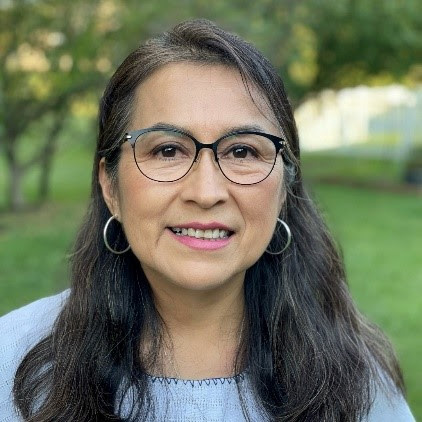
Michelle Howell co-owns Need More Acres Farm in Scottsville with her husband Nathan. She has an agriculture degree from Western Kentucky University and previously worked for University of Kentucky Cooperative Extension assisting tobacco farmers as they transitioned to fruit and vegetable production. She collaborates with local and state partners to increase equitable opportunities for farmers. Howell has also been involved in writing grants worth more than $2.4 million to benefit food access, women’s life courses, and urban-rural development. Need More Acres co-founded the Community Farmers Market in Bowling Green, which piloted several Supplemental Nutrition Assistance Program incentives. CFM was essential to growing Kentucky Double Dollars into a statewide program and CFM is one of the organization's pilots of the Fresh Rx MOMs program for expecting mothers on Medicaid. Both programs help under-resourced Kentuckians access fresh, healthy food from farmers markets. Additionally, Howell partners with UK, WKU and Kentucky State University for interactive professional development on diversity and inclusion.

Patrick Kitzman
Dr. Patrick Kitzman is a professor in the University of Kentucky Department of Physical Therapy. He’s also founding director of the Kentucky Appalachian Rural Rehabilitation Network, a team that develops strategies to reduce disability and improve the quality of life for individuals with neurological impairments living in underserved rural Appalachian counties. Kitzman and his team established projects CARAT and CARAT-TOP. In CARAT (Coordinating and Assisting the Reuse of Assistive Technology) students learn to refurbish used medical equipment and donate it to those in need in the community. CARAT-TOP (Coordinating and Assisting the Reuse of Assistive Technology- Together One Priority) is a training program created through a partnership with the UK Center of Excellence in Rural Health. It brings together community members and high-school students of all abilities to learn new skills to help individuals and communities affected by disability.

Mark Thomas
Mark Thomas, Todd County Schools superintendent, was instrumental in establishing the AXIS Program: Centering All Services in the district. In partnership with the Todd County Health Department, the program addresses students’ social and emotional well-being through mental-health case management. The program also assists with basic needs such as nutrition, clothing, toiletries, housing, transportation, and treatment for substance use disorder. Thomas played a crucial role in gaining needed buy-in of the program from staff and the community. Through his support, the program is expanding services to include parenting classes, prenatal classes, and mental health awareness programs for students and staff. Thomas began his career in Shelby County in 1996 as a middle school teacher. He has served in a number of school and district administrative roles across Kentucky before starting his current position in 2020.

Wednesday, February 2, 2022

Kentucky farmers, often beset by circumstances, can take advantage of a new program to support their mental health

The following story is from The Goldenrod, which normally covers rural Eastern and Central Kentucky. Editor Sarah Baird writes, "If you live in a farming community—or are part of a farming family—I’d ask you to share Michelle’s piece with a friend or loved one this week. It could help save a life."

By Michelle Eigenheer

As dawn broke in the early morning hours of Dec. 11, 2021, residents and aid workers began to get a clearer view of the damage caused by a late-night tornado that left nearly 200 miles of wreckage across 11 counties in Western Kentucky. The EF-4 tornado—one in an outbreak of over 60 that caused $5 billion in estimated damage across six states—killed at least 77 people and sent more than double that number to emergency rooms.

Logo of the program, which began in 2020
Among the neighbors and rescue workers who poured into communities like Mayfield to help pull people from the rubble and offer hot meals in the December cold were Dr. Cheryl Witt and Dale Dobson, who met with farmers to take stock of their unique needs. Witt and Dobson are members of a campaign called Raising Hope, a coalition including the Kentucky Department of Agriculture and Cabinet for Health and Family Services, the Southeast Center for Agricultural Health and Injury Prevention and a number of state universities that formed in 2020 to offer critical resources and education to support the mental health of Kentucky farmers and their families.

Along the tornado’s path, farmers found their buildings demolished, equipment missing or damaged, and livestock killed by the destruction, debris and devastating winds. An estimated 30 poultry barns were leveled in the night; a hatchery and the 8 million eggs inside were destroyed; grain mills and silos were toppled or torn apart, exposing the livestock feed inside to the storm’s rain and rendering it unsafe for consumption. Hundreds of cattle and other livestock were injured and killed, sometimes even carried away by the 190-mph winds. Total estimates for damages and losses are still being assessed, over a month after the supercell storm.

“We’ve had two tornadoes come through . . . and laid flat [farmers’] whole livelihood, just laying there on the ground to pick up and rebuild, and then the snowstorm…you have tragedies,” says Dobson, a KDA farm safety officer and Hodgenville-area farmer who has taught farm safety for 20 years. He joined Witt—a sixth-generation farmer and nurse who teaches at the University of Louisville in addition to serving as the Raising Hope project manager—with the intention of expanding ideas of farm safety to include mental health and physical wellness.

The devastating storms are the latest in a series of acute struggles that farmers across Kentucky and the nation have faced since the start of the pandemic, adding to a growing list of stressors that have negatively impacted the mental health of farmers and their families for decades.

Farmers and agricultural workers have among the highest reported rates of suicide across all occupational groups, according to studies from the CDC. With this in mind, Raising Hope formed and outlined immediate goals: reducing the stigma of mental healthcare among farming communities; increasing education and awareness around mental health; showing farmers appreciation from their communities; and using data collection methods to get a better view of the issue.

State Rep. Brandon Reed's Twitter post about the program
Support from state Rep. Brandon Reed, a Hodgenville Republican, secured funding from the legislature, providing $500,000 for 2020 and again in 2021. The group worked quickly, enacting programs to improve existing infrastructure and build a network of crisis and risk assessment training access throughout the 56 Kentucky counties that showed the highest number of indicators for crisis.

They began QPR training—a method of crisis response that follows a directive of Question, Persuade, Refer, to identify and interrupt a mental health crisis so that the subject can be directed to care—and educated 57 QPR trainers across the state who, in turn, trained 450 key community members on how to recognize and aid those who may be considering self harm or ending their own life.

They invited doctors and nurses to the annual Farm Machinery Show and offered health checkups for attendees. Partnering with Western Kentucky University, they developed a rural suicide prevention training that focuses on “response measures for farmers in crisis and the application of cultural sensitivity and humility.” CRUSHing Farmer Suicide—Cultural Respect, Understanding, Sensitivity, and Humility—is currently available for healthcare professionals in the form of a free, one-hour continuing education program.

They then turned to the state’s crisis hotline. Backup call centers were located in Miami and New York at the time, creating unneeded confusion and complications during critical conversations with rural populations.

“During that time, you want to be able to talk to somebody who understands and can connect and relate to you,” Witt explains, giving examples of how different accents and lack of knowledge about stressors, like those specific to rural or farm life, can be obstacles between the person in crisis and the one who answers the call. “You don’t need a communication barrier at that time.”

Now, at least 95 percent of all in-state calls to the National Suicide Prevention Lifeline (1-800–273-8255) are answered by someone within one of the commonwealth’s own call centers. Callers are now also asked, as part of the existing call intake process, if they’re a farmer or member of a farming family. This was added as part of a data gathering effort to better understand the mental health crisis.

“Because we used our original money to build and expand our projects, that really gave us a lot of ammunition, if you will, to put in for federal funds and be awarded them,” Witt explains. In December 2021, the federal government issued a $500,000 grant to the Department of Agriculture to further expand Raising Hope’s projects and partnerships.

The additional funding has allowed Raising Hope and partners to implement a farmer appreciation grant program. It is also funding the development of a mental health curriculum specifically for rural youth aged 9-12, as well as a peer-to-peer mobile app similar to those used in veterans groups that will center “mental health and wellbeing-focused online interventions” and include access to just-in-time telehealth services. The curriculum is slated to pilot in fall 2022, while the app is entering user testing in the coming weeks.

This grant is part of a nearly $25 million investment by USDA’s National Institute of Food and Agriculture to 50 state-level projects in an effort to expand or create mental health and stress management resources for farmers and ranchers across the country.

The list of stressors and potential crisis factors for farmers is long: they are isolated within the acres of land that they farm; their income is greatly affected by fluctuating commodities pricing and supply chain failures; their crops and livestock are subject to damage or ruination from factors out of their control like climate change and natural disaster; even exposure to insecticides has been linked to higher rates of depression. Farmers are also more likely to suffer chronic pain from a lifetime of manual labor, and have increased access to lethal means, such as firearms and heavy machinery. A number of studies on farmer mental health note that reported rates of suicide are likely low because deaths can easily be misreported or mistaken as farming accidents.

The pandemic compounded many of these stressors. Ongoing tariffs in the trade war with China hit U.S. agriculture hard. And 2020 payments to compensate for those financial losses largely missed small producers and family farms: CNBC reports that two-thirds of the $28 billion Market Facilitation Program went to the top 10 percent of recipients. The report outlines the disparity: companies at the top received an average of $164,814 per payment, while the bottom half of recipients received, on average, less than $2,500 per payment. Meanwhile, bankruptcy rates for farms in the Midwest, including Kentucky, rose 23 percent from June 2019 to June 2020.

In financial turmoil, many small-scale and family farm operations are not facing just a loss of income: losing the farm can also mean losing the house, losing an identity, or failing a family tradition.

Dr. Cheryl Witt on her farm (Photo from Ky. Dept. of Agriculture)
Witt explains: “I farm—six generations now. You talk about something you’re passionate about, it’s all those internalized feelings and attachment to the land. That’s me. I live it every day. Because farming is such an identity, as farmers age and are unable to [continue working], that also mentally affects a lot of farmers. Farmers will define good health by their ability to get up and work. So when they can’t do that, it absolutely does a number on their psyche.”

Dobson’s explanation is more succinct: “Everything is tied into one thing: If I lost my job [at KDA] today, I’ve still got my home and my farm to go to and work. [If] I lose my farm, I lose my home. My living. My identity. My everything.”

When Dobson began mental health outreach with farmers in the communities where he teaches farm safety, he used challenge coins as a prop to turn everyday conversations toward oft-stigmatized mental health subjects. Turning the coin in his hands gave him an opening to incite a promise from those he works with, he explained.

“When you shake my hand and take my coin, you take my challenge,” he tells them. “You give me your word that if you feel down, you’ll call somebody. You call me, you call the 800-number on the back, anytime. You find somebody.”

Breaking through the barrier to a discussion about mental health opens a door for stories and disclosures that may otherwise be withheld for years, even decades. He tells them, “I’m not saying anyone is suicidal, I’m saying some of us have good and bad days.”

“I had one farmer, we’ve been friends for 30 years. We shook hands, he held my hand and says, ‘You been involved in suicide?’” Dobson recounts.

Dobson, who has encountered a number of cases of self harm, including the loss of his best friend, says that the farmer then shared that his first wife had taken her own life in front of their young son—and for 35 years had never said a word about it to Dobson or most others.

He points to this disclosure as a sign that things are changing for the better.

“Raising Hope is going to change the world,” Dobson declared on a phone call from Atlanta, where he was attending a farm safety training. “We ain’t never had a program before that dealt with rural mental health, or mental health, period, out here. There’s a stigma about it, there’ve been no conversations about it. And farmers, some of them, are starting to talk about the bad days and the gloom and doom.”

Dobson continued, “Everyone’s had to go pick up a friend or neighbor and know somebody that took their lives. The world’s changing on that part for the good, because we’re communicating.”

If you’re in crisis, there are options available to help you cope. You can call the National Suicide Prevention Lifeline at any time to speak to someone and get support. For confidential support available 24/7 call 1-800-273-8255 or visit https://go.usa.gov/xftYC.

Sunday, September 19, 2021

Kentucky is investing in several initiatives to address farmer suicide; National Suicide Prevention Day is Wednesday

By Melissa Patrick
Kentucky Health News

Kentucky is investing in efforts to prevent farmer suicide, including a program to teach people in farming communities how to recognize warning signs of suicide and how to head it off; expanding the state's suicide-prevention call center; funding to collect more data; and an initiative that asks people to reach out to someone if they are feeling "down-and-out, lonesome or blue."

National Suicide Prevention Day is Wednesday, Sept. 22. 

Dale Dobson, farm and home safety program administrator with the state Department of Agriculture, told legislators at the Sept. 16 Tobacco Settlement Agreement Fund Oversight Committee about the "challenge coin initiative" that he said was instigated by youth who are part of the Dixie Ag Safety Team, located in the Hardin and LaRue counties. 

The program involves a handshake, a coin and a pledge made by the person accepting the coin to reach out to someone if they are depressed or have suicidal ideation. Calling the coin an icebreaker, Dobson said he is training young people across the state to share these coins and its message. 

Screenshot of Sen. Robin Webb, D-Grayson, taking
the "challenge coin initiative" from Dale Dobson
 
Several lawmakers came forward to take the pledge. It was emotional at times, as Dobson shook their hands and said if they accepted the coin, then they would need to give him their word that if they ever felt "down-and-out, lonesome or blue" that they would find a friend or call somebody. 

"This is your coin to keep, but not to take to your grave," he said. "This is how we are going to save lives. One person at a time." 

Another initiative, led by the Southeast Center for Agricultural Health and Injury Prevention in partnership with the state, is a program to provide suicide-prevention training to a diverse group of community members who largely interact with farmers. The trained community members then go back into their communities and train others. 

The training is called Agricultural Community QPR, which stands for "question, persuade, refer" and is designed to teach people how to recognize the warning signs of suicide, how to offer hope and how to get help for that person. The agricultural focus of the program involves information specific to the culture of farming as a way to help people understand the stressors unique to farmers and their families and provides customized resources. 

University of Kentucky professor Joan Mazur, deputy director of the center, explained some of the many stressors that come with farming, many of them involving "the unpredictability of multiple factors." 

"The unpredictability of the weather, the unpredictability of the crop yields, the unpredictability of the markets, financial losses that can accrue. . . . The whole idea of loss is it's very prominent, you know,  in causing depression and just hopelessness," she said. 

Mazur stressed how important it is for people who work with farmers' finances, like those at Farm Credit, to take QPR training because they are often the first outsiders to know that a farm is in financial trouble.

The initial phase of the program supported the training for 17 trainers, who went on to train 415 others from last fall to March 2021, said Carolyn Oldham, who is director of continuing education for the Central Appalachian Regional Education and Research Center and works with Mazur. She said the trainings took place across the nation and in Kentucky.

More recently, she said state appropriations have allowed 40 more Kentuckians to get trained and that this cohort has already initiated 300 more trainings. "And they are just getting started, she said.  

In addition to the trainings, the latest state appropriations will be used to train more QPR trainers and to develop a peer-to-peer mobile app for farmers, said Mazur. 

Kentucky appropriated $500,000 in each of the last two budgets from its Tobacco Settlement Fund for a mental-health and suicide prevention program aimed at farmers.

Mazur praised the support of the agriculture department and the General Assembly. "Not every state enjoys this kind of support from state offices and state legislature," she said. "So I think it's unique and I think it's very forward thinking and a real tribute to a legislature that understands they are representing a largely rural state." 

Dave Morris, the deputy executive director of marketing for the department, told the oversight committee that the state has received a $500,000 grant from the U.S. Department of Agriculture that will be used to supplement the initiative, called "Raising Hope." 

Cheryl Witt, assistant professor at the University of Louisville School of Nursing and the project manager for the pilot, told the lawmakers that the program had prioritized its areas of focus by applying a formula based on the number of farmers in a county, the suicide-attempt and suicide rate, resulting in 56 Kentucky counties being included in the pilot. 

Oldham said that talking about suicide is not something most people are comfortable doing and said the QPR training helps with that, noting that a "Willingness to Intervene Survey" that is done both pre- and post-training found that individuals said they were twice as willing to intervene as a result of the program. 

One of the many trainers is Kristie Guffey, an assistant professor and a graduate coordinator for the Hutson School of Agriculture at Murray State University. 

Guffey said she was first asked to be part of this training to bring the program to the western part of the state, but it has since become something she is "called to do" after the March suicide of a "very prominent farmer" that she had known for more than 20 years and her families experience with a nephew who is a suicide survivor. 

"In our farm communities, we have to do something," she said. "We have to step up and we have to speak up and we've got to talk about a topic that no one wants to talk about. And if we don't rip the band aid off, then we're going to continue to visit funeral homes throughout the commonwealth and throughout our farming communities. . . . It's a stigma that we don't want to talk about, but if we don't talk about it, nothing will ever change." 

Guffey said she had received a "phenomenal" response from this grassroots effort from her trainees, many of whom said that before the training they thought they couldn't talk to people about suicide because it might give them the idea to do so. She said  research has proven that this is not true. 

"My message of hope is pretty much that I want individuals to take this seriously," she said. "I want them to understand that they don't have to be a licensed practitioner and they do not have to be a board certified counselor or anything like that, all they have to be is a concerned friend that wants to help them through a tough time and so everybody can do that."  

Knowing exactly how many farmers die by suicide is a challenge because farming is so dangerous and what may look like an accident could sometimes be a suicide, said Mazur. 

A 2020 Morbidity and Mortality Weekly Report from the Centers for Disease Control and Prevention looked at 2016 suicide rates by industry and occupation in 32 states and found that the suicide rate among male farmers and ranchers was 43.2 per 100,000, compared to 27.4 per 100,000 among working-age men in all occupations.

In an effort to collect better data, when a person calls the suicide prevention hotline in Kentucky, which is a national hotline but is answered by someone in Kentucky, they are asked if they are a farmer or a member of a farm family.

Witt added that the state pilot increased the call centers capacity, which has seen an 8% increase in calls from January 2019 to June 21. Further, she said the pilot has funded a data-collecting system that allows it to obtain weekly data from hospitals on rural suicide attempts at both a state and county level and in working with its partners has been able to "clean up" existing data. 

"And that results in more accurate information for our statewide database," she said. "And Kentucky is also one of the,  amongst the very few states in our nation utilizing this data for behavioral health." 

Suicide is the 11th leading cause of death in Kentucky, with an average of one person dying by suicide every 11 hours in the state, according to the American Foundation for Suicide Prevention.

Kentucky is home to about 76,000 farms, and most are small. The average farm in Kentucky has 171 acres, much smaller than the national average of 444 acres. In Kentucky, the industry is dominated by small family farms and about 50,000, or two-thirds, have annual sales of less than $10,000.
 
To get involved with the Agriculture Community QPR program, go to www.uky.edu/scahip or reach out via e-mail to Oldham at carolynoldham@uky.edu or Mazur at jmazur@uky.edu. 

National Farm Safety and Health Week is Sept. 19 through Sept. 25. Click here for a list of daily AgriSafe webinars, including one Wednesday, Sept. 22 at 1 p.m. Eastern Daylight Time (all times on the graphic are Central Daylight Time) titled "Developing and Implementing a Pilot Agricultural Community Suicide Prevention Program for Farmers and Farm Families." 

The Southeast Center has created a video for the National Center for Ag Safety's Farmer Health and Safety Week that features the impact of the Agriculture Community QPR trainings.

If you or someone you know may be considering suicide, contact the National Suicide Prevention Lifeline at 1-800-273-8255.


Sunday, September 20, 2020

Ky. efforts at farmer suicide prevention are a national model, UK professor says; Farmer Suicide Prevention Day is Wed., Sept. 23

By Melissa Patrick
Kentucky Health News

Kentucky farmers, like those across the nation, work tirelessly to stay afloat amid plummeting farm incomes, market instabilities, extreme weather conditions, few safety nets and now, a global pandemic. And sometimes those stressors add up, leading some to consider suicide, and others to die by it.

To bring awareness to this issue, the General Assembly passed House Bill 59, sponsored by Rep. Brandon Reed, R-Hodgenville, during the last legislative session to designate the Wednesday of National Farm Safety and Health Week, which is the third week of September, as "Farmer Suicide Prevention Day." This year that date falls on Sept. 23.   

Photo from Talk Business & Politics

"There are significant stress factors across rural America and it's important to know that it's okay for farmers to ask for help," said state Agriculture Commissioner Ryan Quarles. "And one of the more unfortunate issues here is that the farm community is one of the last communities to reach out for help and so we've got to make sure that farmers know that there are resources available if they need to talk with someone."

Quarles pointed to several stressors that are unique to the farming community, including the extended stress that comes with only getting one or two paychecks a year, working under risky market conditions, and not having access to benefits or health insurance through an employer.   

Farmers also worry about losing the family farm, said University of Kentucky professor Joan Mazur. She is deputy director of the Southeast Center for Agricultural Health and Injury Prevention, which has received a $48,000 federal grant to work on suicide prevention.

"No farmer wants to be the person that loses the multi-generational farm, sometimes in the family for decades and decades," Mazur said. "And that can cause huge depression. . . .  Nobody would want  to lose their home, but the additional burden on a farm family ... really can be catastrophic. "

Deborah Reed, a professor of nursing and agricultural health at UK, added that she knows anecdotally and through her own research that farmers also feel "very unappreciated and persecuted by the public."  

One goal of suicide awareness is to reduce the stigma of asking for help, Mazur said: "We know it's hard to ask for help. People talk about physical complaints all the time but it's very difficult for them to talk about any mental health issues that they are having." 

But even though it's hard, she urged anyone thinking about suicide to seek help. 

"Suicide is preventable, it's not inevitable," Mazur said. "That message has to get out to the general public and it has to get out to the farming community as well, and to  farm families so that people can get the help that they need. That's the point of the USDA grant that we have." 

She added, "We can't keep ignoring this. Stress, mental health, depression, suicide are real issues nationwide, and in particular in our farming community, which is our focus." 

2018 Farm Bill spurs action

Mazur said the 2018 Farm Bill has been instrumental to addressing mental health in agriculture, because for the first time it had money included to address the issue. The bill appropriated $50 million over five years for mental-health work with people in agriculture-related occupations, but the impact went beyond money.

"It said to all the farming community, this is a conversation we can have," she said. "You can't overstate enough how important it was that there were mental health components in that 2018 Farm Bill. That was huge." 

Kentucky has also appropriated $500,000 from its Tobacco Settlement Fund for a mental-health and suicide-prevention program. The pilot program brings together a wide range of agencies to focus on increasing awareness of resources, increasing behavioral health care providers in rural areas, increasing  intervention training in communities, and increasing surveillance. It will also create and disseminate a Kentucky farmer cultural humility training for healthcare providers. 

"The concerted effort in Kentucky is remarkable," Mazur said, adding later, "This is really unprecedented nationally to have a state that is so committed to this kind of an issue, to preventing farmer suicide and farmer mental health issues. . . . It's really a model, a national model for how to address an issue."  

Farmer suicide prevention in Kentucky

With its Farm and Ranch Stress Assistance Network grant, Mazur said, the center has created a pilot program to provide suicide-prevention training to a diverse group of community members who largely interact with farmers, such as people from Farm Credit, ministers, Extension agents and their families. The trained community members then go back into their communities and train others. 

The training is called QPR, which stands for "question, persuade, refer," and is designed to teach people how to recognize the warning signs of suicide, how to offer hope and how to get help and save a life. 

Joan Mazur (UK photo)
Mazur said they have enhanced the QPR program with information specific to the culture of farming to help people understand the stressors unique to farmers, their families and their workers. 

As of Aug. 1, she said in the center's annual report, 18 people had completed the training and made a commitment to deliver at least two trainings. She said they expect 100 people to be trained by mid-November.

Mazur said the center is also working with the Suicide Prevention Hotline to help its workers better understand the culture of farming. 

For example, she said, if someone calls the hotline and says it's been a rainy spring and they couldn't plant their crops, the person on the other end of that hotline needs to understand the full implications of what that means to a farmer: "That can be financially devastating and provoke the kinds of situations that cause depression and stress and lead to, that are run-ups to suicide."

Quarles also spoke to the importance of making sure hotline workers understand the "lingo of agriculture" since a farmer's message may get lost in the translation. 

Reed said it's also a problem when health-care providers don't understand farming, because that is who a farmer is likely to see first, given the poor access to mental-health care in most rural areas. 

Reed said farmers have told her "over and over again" that when they actually decide to seek help for their depression or anxiety or mental-health issue, the provider doesn't understand their world: They can't take medicine that makes them sleepy and also work on farm equipment, and can't take time off for therapy. Mazur said efforts are in motion to also work on educating providers about farm culture. 

Prior to the pandemic, Reed said she offered evidence-based community theater programs across Kentucky that focused on health and agriculture safety, including mental health. 

"We're trying to start to move the conversations to where the farm communities themselves will talk about this issue. I think we're having some success," she said, noting that farmers showing up at Extension events that focus on stress, and she is often asked to talk to farm groups about it. 

"What I've seen working with our farmers across the nation, and particularly ones in Kentucky, is they have become much more receptive," she said. "They will attend programs on stress and how to manage their behavioral or mental stress, if you will, now where before they they would not have done that." 

Reed also noted the value of letting farmers know they are appreciated, pointing to the "Heart to Heart Program" at UK where students write letters to farmers expressing their gratitude for what they do. 

"We hear farmers actually say, 'Well, I'd like to get one of those letters,'" she said. "Everybody wants to be thanked so that's an easy step that everyone can do."

"We're really a lot more active on this issue than we have been in years past and I think that is a good thing," said Quarles. 

More data needed

Another challenge is the need for more information about farmer suicides. 

"We don't really understand what the baseline is, that we still are trying to better understand exactly what Kentucky's farmers in rural areas are experiencing right now," Quarles said. 

Mazur said farm suicides are often listed as an accident on death certificates, and reporting systems differ among states. She said through the grant, a doctoral student is working to get better data, including possible factors that contributed to suicide, to guide intervention.  

"We do know that suicide rates have increased among working-age people from 2000 to 2016 by 34 percent," she said. "And rural areas in states with high agricultural populations and small farms like Kentucky are over-represented in that sample."

A 2020 Morbidity and Mortality Weekly Report from the Centers for Disease Control and Prevention looked at 2016 suicide rates by industry and occupation in 32 states and found that the suicide rate among male farmers and ranchers was 43.2 per 100,000, compared to 27.4 per 100,000 among working-age men in all occupations. 

Ty Borders, director of the Rural and Underserved Health Research Center, along with fellow University of Kentucky faculty member Kathi Harp, recently published a study that found, nationwide, rural residents experienced suicide ideation, planning and attempts at a higher rate than those in urban areas.

The study also found that the risk of dying by suicide is greater among lesser educated farmers and at times of economic depression, especially in rural areas that are heavily dependent on a single industry, like farming. Death by suicide is also higher among men.

Borders said that when worked at the federal level on this issue, it became clear that for decades, the national government has needed a better plan to address rural suicide because most suicide-prevention programs have been designed for urban communities and may not be applicable to rural communities. 

The Borders-Harp study calls for new suicide prevention interventions targeted to the unique needs of rural residents.  

Suicide is the 11th leading cause of death in Kentucky, with an average of one person dying by suicide every 12 hours in the state, according to the American Foundation for Suicide Prevention. 

Kentucky is home to about 76,000 farms, and most are small. The average farm in Kentucky has 171 acres, much smaller than the national average of 444 acres. In Kentucky, the industry is dominated by small family farms and about 50,000, or two-thirds, have annual sales of less than $10,000.

If you’re thinking about suicide, are worried about a friend or loved one, or would like support, the Suicide Prevention Lifeline is available 24/7 at 1-800-273-8255.

Thursday, July 9, 2020

Webinar Friday at 10 a.m. ET will explore a Kentucky farmer's response to the pandemic, food justice and community health

Kentucky farmer Michelle Howell will share her work on covid-19 responses, including delivery of medically tailored meals for patients and farmers' market safety, in a free webinar at 10 a.m. Friday, July 10. Howell will discuss areas that require a creative response such as farm to school, home deliveries, chronic hunger, and food justice. To register, click here.

Nathan and Michelle Howell of Need More Acres Farm in Scottsville met at Western Kentucky University where they pursued degrees in agriculture. Nathan had grown up on a farm in Hart County, where he and his family grew corn, wheat, cattle. Michelle's food story began when experiencing hunger motivated her to consider ways a community could feed itself. After college the University of Kentucky hired them to help tobacco farmers transition to fruit and vegetable production.

In April 2013 Nathan and Michelle, along with their four children, began farming full time and they are currently growing fruits and vegetables, combining them with meat, milk, cheese, eggs and bread from other farms to provide a multi-farm Community Supported Agriculture service, co-founding Community Farmers Market in Bowling Green, selling to schools, food pantries and restaurants.

Nathan and Michelle want to combine their love for Kentucky farms with the realization that our food system didn't change overnight. With grace and patience, they are working towards a healthier lifestyle for their own family and hope to do the same for others. Community organizing, public speaking, policy change and storytelling is now weaved through their everyday life on the farm.

For questions about registration, contact Rachelle Seger at rseger@healthy-ky.org.