Showing posts with label health care costs. Show all posts

Sunday, March 24, 2024

Health insurers again win lobbying battle with doctors and hospitals over prior authorization of procedures, treatments

By Melissa Patrick
Kentucky Health News

A bill to exempt health-care providers who have 90% or more of their claims approved from health-insurance companies' requirements for prior authorization of ceratin treatments has failed again. 

"Unfortunately House Bill 317 looks like it's dead," said its sponsor, state Rep. Kim Moser. "We tried in good faith to work out a compromise and we did not have the same reciprocation. And so, you know,  I'm not exactly sure why it didn't get a hearing." 

HB 317 was placed in House Banking and Insurance Committee and had two of its three required readings to be heard on the House floor, but it was never called up for a hearing. The last regular day for final passage of a bill is Thursday, March 28.

Moser said her bill is important because it would ensure timely treatment and care that has been prescribed by a person's health care provider. 

Rep. Kim Moser
"It's really about making sure that patients get the care that they need when they need it," she said. "I think that there is a way to find a process that expedites the care that patients can get – and this is it." 

Asked what concessions she had made with the insurance companies, Moser said, "We removed Medicaid, which was huge." 

That only left the 450,000 patients on the state-regulated plans, which would have provided a snapshot of whether the change would work, she said. 

"We weren't calling it a pilot, but you know, it would allow us to really look at how this helped, or if it didn't help at all," she said. " And, you know, that's all we wanted was to be able to see how it works and see if this is a process that, like I said, (would) expedite the care that patients can receive." 

Physicians say the system undermines their medical judgement, and increases their administrative costs. 

“The current prior authorization process leads to delays for patients, administrative burdens for physicians, and increased costs,” KMA President Dr. Michael Kuduk said in a Feb. 21 news release.  “It’s time for us to pass a common-sense solution that doesn’t harm our patients or overburden our healthcare system.”

Allowing exemptions based on past performance has been dubbed a "gold carding program." KFF Health News reported Feb. 12 that five states have passed some form of it: Louisiana, Michigan, Texas, Vermont and West Virginia, and the American Medical Association is tracing active gold-carding bills in 13 states. 

Kentucky won't be one of them, at least this year, despite the strong lobbying efforts of the Kentucky Hospital Association and the Kentucky Medical Association. Moser said this is the third year she has worked on this effort. 

Asked about the bill's failure, Cory Meadows, KMA's deputy executive vice-president and director of advocacy, issued a statement saying the groiup "is extremely disappointed by HB 317's failure to pass during the 2024 legislative session. KMA members expressed the need for changing the prior-authorization process used by insurers that limits, and in some cases prevents necessary health care to Kentuckians. Throughout these past several months, citizens from around the commonwealth also shared their own stories of how the prior-authorization system impacted their lives, clearly showing that nearly everyone except insurance companies see the need to change this system.

"We're encouraged by the overwhelming bipartisan support the measure received and remain extremely optimistic that with continued advocacy from our members and the public, as well as collaboration with lawmakers, this critical legislation, which proposes to streamline the prior authorization process and ensure patients have timely access to care will soon be enacted. Otherwise, insurers will continue to pocket the money that could make Kentuckians healthier."

The hospital association also expressed its disappointment. 

"Prior authorization is a huge burden on physicians and nurses at our hospitals. And you know, it's contributing to burnout. And so we definitely support legislation that would minimize that burden, as many as has been passed in other states, and we would love to see a pass here," KHA President and CEO Nancy Galvagni told Kentucky Health News. 

Health insurers say prior authorization prevents unnecessary care and ensures that the care meets the standards of best practice. 

The Kentucky Association of Health Plans, the trade group for companies selling health insurance in Kentucky, issued a one-pager in opposition to HB 317 that said, "Prior authorization stops inappropriate care and procedures and heads off dangerous drug interactions and duplicative or inconsistent care, providing a whole-person approach to each plan member’s care needs. Plans help protect against predatory behavior."

Asked about the bill's demise, Tyler Glick, KAHP spokesman, issued this statement: "The health mandate statement generated by the Department of Insurance says the bill would cost up to an additional $11.29 in health-insurance premiums per member per month. That means a family of four would pay an additional $541.92 a year. How is saddling taxpayers (Medicaid), state employees and teachers (Kentucky Employees Health Plan), and everyone else in the commercial insurance market with these costs sound policy? Kentuckians deserve better."

Glick added, "KAHP will continue working with all members of the General Assembly to promote affordability, expose waste and fraud, and provide safeguards to patients."

Moser said she's not giving up on this effort and will likely work on it during the interim.

"The burdens of prior authorization are not going away anytime soon," said Galvagni. "And I'm sure the issue will be back. And, you know, we look forward to continuing to work on that."

Saturday, February 10, 2024

Bill to ban cost-sharing fees on cancer screenings clears panel

By Melissa Patrick
Kentucky Health News

A bill aimed to ban cost-sharing for preventive cancer screenings in certain types of health-insurance plans passed unanimously out of a House committee and awaits a vote in the full chamber. 

Asked why the bill was important, its sponsor, Rep. Deanna Frazier Gordon, said cost is often a barrier for people when it comes to preventive screenings, especially if they don't have any symptoms.

Rep. Deanna Frazier Gordon
"I think the cost is a barrier for people," said Frazier Gordon, R-Richmond. "You know, a lot of health-care plans have $1,000, $2,000 deductibles. And so when you're asking asymptomatic people to go get screening for a condition that they might not have,  I think . . . a fear of that cost is a factor" in deciding to do it or not. 

House Bill 52 says cancer screenings, test or procedures performed for the purpose of detecting cancer "shall not be subject to . . .  any deductible, coinsurance, copayment or other cost-sharing requirement." 

The House Health Services Committee approved the bill 16-0 on Feb. 8. The bill has had two of its three required readings and is in the House Rules Committee. 

Frazier Gordon said the bill would only impact certain insurance plans. The bill's summary says it will "require limited health service benefit plans, Medicaid, self-insured employer group plans provided by the governing board of a state postsecondary education institution and the state employee health plan to comply with the cancer coverage requirement." 

The state Department of Insurance financial-impact statement for the bill says it is "not expected to materially increase premiums," nor is it expected to increase administrative costs. Further, it notes there is a potential for long-term savings due to early detection of cancer.

Tuesday, February 6, 2024

Resorting to crowdfunding to pay medical bills has become so routine, in some cases health professionals recommend it

Photo illustration from Oprah.com
Kentucky Health News

Crowdfunding started as a way to finance ideas and, as a founder of GoFundMe put it, "life’s important moments" such as honeymoons. But now the site "has become a go-to for patients trying to escape medical-billing nightmares," Elizabeth Rosenthal reports in The Atlantic.

"One study found that, in 2020, the number of U.S. campaigns related to medical causes—about 200,000—was 25 times higher than the number of such campaigns on the site in 2011. More than 500 campaigns are currently dedicated to asking for financial help for treating people, mostly kids, with spinal muscular atrophy, a neurodegenerative genetic condition." Medical causes also dominate the sites YouCaring and Generosity by Indiegogo, Oprah.com reports.

Rosenthal, a physician turned health-care journalist, reports that crowdfunding is being integrated into the health-care system: "Resorting to GoFundMe when faced with bills has become so accepted that in some cases, patient advocates and hospital financial-aid officers recommend crowdfunding as an alternative to being sent to collections. . . . Ari Romio, a spokesperson for the company, said that 'medical expenses' is the most common category of fundraiser it hosts. But she declined to say what proportion of campaigns are medically related, because people starting a campaign self-select the purpose of the fundraiser. They might choose the family or travel category, she said, if a child needs to go to a different state for treatment."

Crowdfunding may sound like a great boon to people whose health insurance is inadequate, but Rosenthal reports that it doesn't necessarily help the working poor: "In many respects, research shows, GoFundMe tends to perpetuate socioeconomic disparities that already affect medical bills and debt. If you are famous or part of a circle of friends who have money, your crowdfunding campaign is much more likely to succeed than if you are middle-class or poor."

And it is far from a panacea, Rosenthal reports: "Most campaigns generate only a small fraction of the money owed. Almost all of the medical-expense campaigns in the U.S. fell short of their goal, and some raised little or no money, a 2017 study from the University of Washington found. The average campaign made it to just about 40 percent of the target amount, and there is evidence that yields—measured as a percent of their target—have gotten worse over time."

Wednesday, January 31, 2024

House has passed Guthrie's bills to increase health-care price transparency, allow inmates to file for Medicaid before release

U.S. Rep. Brett Guthrie (BG Daily News photo by Jack Dobbs)
Kentucky Health News

Second District U.S. Rep. Brett Guthrie of Bowling Green told his hometown newspaper that the House has passed his bills to increase transparency in medical costs and allow inmates to pre-file for Medicaid benefits before they are released.

The Lower Costs, More Transparency Act is intended to "drive prices down organically rather than through direct congressional action," Jack Dobbs of the Bowling Green Daily News reports. "Guthrie said the bill requires medical providers to offer quotes for procedures and medications before taking action, allowing both individual patients and employers to know how much they will pay beforehand.

“We want to engage these big employer groups so that they can drive the market to get control of the cost, because the costs keep getting passed on to the point where it's just unsustainable,” Guthrie said.

Dobbs writes, "The act would also require any rebates be returned to a patient rather than absorbed by an insurance company’s profit. Guthrie said this was a policy passed during the Trump administration but undone through the Inflation Reduction Act.

The House has also sent to the Senate a Guthrie-sponsored reauthorization of the SUPPORT (Substance Use-Disorder Prevention that Promotes Opioid Recovery and Treatment) for Patients and Communities Act. The current law was passed in 2018.

"The act, in part, creates grant opportunities that help states bolster substance abuse treatment capabilities. It also offers substance abuse treatment coverage for children in foster care," Dobbs reports. "Guthrie said jail is no solution to addiction issues, but many who suffer from addiction end up incarcerated anyway."

The reauthorization bill would allow inmates to pre-file for Medicaid benefits when they know their release date. “So on day one, they qualify for Medicaid when they walk out of the jail and can go right into a treatment program,” Guthrie said.
 
If someone on Medicaid is jailed, the federal-state program no longer covers their expenses and the state government picks up all the cost. Guthrie told Dobbs that it can take up to 30 days to reapply for Medicaid, posing risks to those in need of substance-abuse intervention.

"Guthrie said he wants to see more continuing services readily offered, such as sober living facilities or halfway houses, to remove people with addictions from environments that put them at risk," Dobbs reports. "He added that employment training adds another layer to treatment by removing individuals from harm and encouraging stability. It’s a win-win both for those in recovery and businesses needing employees, Guthrie said."

The reauthorization bill would also put on the federal controlled-substances list Xylazine, an animal sedative that is known as "Tranq" and sometimes mixed with drugs like fentanyl for illicit use. "Guthrie said Xylazine is particularly dangerous because Narcan can not revive someone who has overdosed on it," Dobbs reports.

Politics: Guthrie, a relatively moderate Republican, told Dobbs that he plans to support former President Trump if he is nominated and thinks “the primaries are over” but former South Carolina Gov. Nikki Haley is “a good candidate and would be a good president.”

Despite Guthrie's equivocation, he posted on X (formerly Twitter) Jan. 22 that he had endorsed Trump.

“There are experts saying 250,000 people in five to seven states are going to determine who the next president is,” Guthrie told Dobbs. “I think Republicans need to get together and know that that we offer a better solution than where we are today.”

Friday, October 13, 2023

Medicare open enrollment runs through Dec. 7; your advantage isn't always with Advantage; use caution when choosing a plan

AARP graphic
By Melissa Patrick
Kentucky Health News

Open enrollment for Medicare occurs each year from Oct. 15 through Dec. 7, with new coverage starting Jan. 1. During this period you can change your choice of health coverage or add, drop, or change Medicare drug coverage.

People with Medicare can get coverage through either original Medicare or one of the Medicare Advantage plans, which are private insurance offerings under contract with the federal government to provide Medicare-covered benefits.

It is often reported that one of the biggest pitfalls of Advantage plans, which manage the care for most Medicare beneficiaries, is that they often have a limited network of doctors and hospitals and often charge more to see out-of-network providers, if a person is allowed to see them at all. In other words, a person doesn't have the same level of choice as they would with an original Medicare plan. Also, Advantage plans are reported to require a high number of prior authorizations that can lead to denial of coverage.  

Longtime health journalist Trudy Lieberman has often written about the challenges of Medicare Advantage plans, noting that the lure of low premiums and added benefits like dental care and gym memberships seems great when you are well, but it's important to remember that these plans may not offer what you need if you get sick. 

Lieberman reminds you to see what an Advantage plan offers if you get sick or get a get a serious illness, including your out-of-pocket maximums, and what the rules are if you switch back to an original Medicare plan; if you developed a health condition while on Advantage, it could be hard to switch back. 

The rationale for Advantage plans is the flat fee they get for each enrollee and their management of the enrolleees' care to limit claims for care. Writing for Jacobin, which calls itself "a leading voice of the American left," Matthew Cunningham-Cook and Lucy Dean Stockton call the approach an incentive to "ration care, leading to high rates of wrongful claim denials, worse health outcomes, and costly administrative headaches for providers."

The writers note that research by the Medicare Payment Advisory Council, an independent agency that advises Congress on Medicare, shows that the program has not yielded savings in the two decades since it was established, despite proponents' claims that it would do so. A report by Physicians for a National Health Program says Advantage plans overcharge $88 billion to $140 billion a year.

The report "identified four major ways that private insurers systematically exploit the publicly funded national health insurance program while denying care to the nation’s most vulnerable patients," the Jacobin article says. The four ways are favorable selection and deselection, which causes Advantage clients to use fewer services than those on original Medicare; upcoding, which makes patients appear sicker than they are; quality benchmarks and county bonuses that "fail to capture savings for the Medicare program [according to MedPAC]; and induced utilization, an assumption that Advantage plans provide more care than they actually do, so they get paid more. 

Lieberman, noting that the federal government continues to move away from traditional Medicare to some version of privatized managed care, like Medicare Advantage, Lieberman concludes her story for the USC Annenberg Center for Health Journalism by asking, "Will this latest Medicare experiment, which brings in more private equity firms that want a piece of the program, really solve Medicare’s cost problem, or will it simply hand over more of the program to private companies seeking to grow their profits? Is this solution really in the best interest of America’s seniors and their health, or another clever instance of American companies mining the health-care system for fresh profits?"

Thursday, July 27, 2023

Tips on managing the costs of cancer treatment

CDC graphic
By Charles McCann 
University of Kentucky

Managing the financial burden of cancer treatment can add to the already challenging physical and emotional journey for patients and their families. However, there are resources available that can help ease the stress. Here are some tips to help navigate the costs:

See a patient financial counselor: Cancer patients and their families should take advantage of financial counseling available through cancer treatment centers, which can help manage treatment expenses and connect patients to resources for financial assistance. Your cancer doctor or nurse can help connect you to the financial assistance offered at your care center.

Understand your insurance coverage: Because insurance, managed care, or public health care programs pay most of the costs of cancer treatment, it’s important to contact your health insurance company to understand your benefits. This includes your deductible and out-of-pocket maximum costs, as well as prescription drug coverage. Also, be sure to ask your doctor if a generic version of a name-brand medicine is an option and inquire about discount drug programs.

Seek financial assistance programs: There are several government and privately-funded financial assistance programs that can cover both medical and non-medical expenses, like travel costs related to treatment.

UK HealthCare, for example, has its own financial assistance program that can cover up to 100% of medical expenses not covered by insurance. This program can cover inpatient stays, outpatient appointments (Markey visits included) and emergency room visits at any UK medical facility. Most medically necessary procedures are covered by the financial assistance, but there are a few exclusions that may apply. Patients should not be deterred by any active balances, because approved financial assistance will backdate and cover ANY active balances not gone to collection. Interested patients can access the financial assistance application via their MyChart account or the UK HealthCare website.

Many other financial assistance programs are privately funded through organizations dedicated to certain types of cancer, so a quick internet search for financial help based on your diagnosis should provide even more options. At Markey, social workers can also connect patients with these programs.

Taking time off work: Cancer treatment often requires time off from work. Check if your employer offers long-term and short-term disability benefits. The Family Leave Medical Act guarantees 12 weeks of unpaid leave per year, along with job and health insurance security for employees who have worked for their employer for 12 months or 1,250 hours. FMLA is also available for caregivers. Additionally, your employer may provide short-term disability insurance, which pays a portion of your salary if you are temporarily unable to work.

Charles McCann is oncology patient navigator at the UK Markey Cancer Center and a former patient financial counselor.

Friday, May 5, 2023

Young Ky. woman battles two extremely rare health conditions

Brayli Steberl (Photo from GoFundMe page)
A young Kentucky woman is facing an uphill battle to fight two extremely rare health conditions, one affecting her blood and the other her liver,  Phil Pendleton reports for Lexington's WKYT-TV.

Pendleton reports that Brayli Steberl, a 21-year-old student at Campbellsville University, was sick for four years before they figured out that she had a blood disorder called paroxysmal nocturnal hemoglobinuria, which causes part of her own blood to attack her, and Budd-Chiari syndrome, a liver condition that causes the veins in her liver to be blocked by blood clots. 

Both conditions are extremely rare, and it’s even more rare to have both together -- and, they are also extremely expensive to fight. Steberl has a  GoFundMe page to help her pay medical costs. 

Steberl's mother, Kathy Long, told Pendleton that treatments cost hundreds of thousands of dollars, and insurance co-payments cost $80,000. She has seen doctors in Kentucky, Ohio and Tennessee and will likely face more travel in the future. 

Long also told Pendleton that her daughter's faith is so strong. She said, “Her desire is to just truly serve the Lord. She said this isn’t going to stop me. It is going to be part of the journey." 

Sunday, April 2, 2023

Guthrie, new chair of House health subcommittee, calls for more price transparency by pharmacy benefit managers and hospitals

By Melissa Patrick
Kentucky Health News

U.S. Rep. Brett Guthrie of Bowling Green is playing a priominent role as Congress investigates the role of pharmacy benefit managers in the growing cost of drugs.

PBMs are middlemen that negotiate drug prices with drug manufacturers and pharmacies, and design prescription drug benefits for health plans. 

On March 28, the House Energy and Commerce Committee's Subcommittee on Health, which Guthrie began chairing when Republicans took over the House in January, discussed the role that transparency and competition can play to help make health care more accessible and affordable.

Rep. Brett Guthrie (screenshot from March 28 committee meeting) 
"We are holding a bipartisan hearing to examine the rising costs of health care for patients and their families," Guthrie said in his opening remarks. "Rising cost of care for individuals is one of the single greatest threats to the overall economic security of Americans."

The hearing touched on some hidden aspects of the health-care system that Guthrie said drive up consumer costs, including hospital consolidation, lack of competition and practices of PBMs, which have been a hot topic in Kentucky for many years. 

Guthrie noted that the three largest PBMs have more than 80% of the market and have merged with insurance companies, specialty pharmacies, retail pharmacies, and even drug distributors.

“We should build on our bipartisan work to make pharmacy benefit managers be more transparent and ensure patients as well as employers are getting the best possible deal on their prescription drug benefits," he said. "This could also lead to greater access to biosimilars and generics when they come to market. Shining a light on middlemen who are making prescriptions more expensive is one important step to bolster competition and lower prices."

One focus of the meeting was "lack of compliance with two Trump-era rules created to require that hospitals and insurers follow through on various price transparency requirements," reports Gabrielle Wanneh of Inside Health Policy. One rule "requires hospitals to make their standard charges public through machine-readable files and make their payer-specific negotiated charges, including those for cash-paying patients, public for 300 shoppable services."

Another rule "requires insurance companies to disclose several machine-readable files, including a file on in-network rates for all covered services with in-network providers, a file containing allowed amounts and billed charges from out-of-network providers, and a file that covers the historical net price of covered prescription drugs, Inside Health Poliocy reports.

Guthrie said, “It is imperative for the Biden administration to conduct greater enforcement efforts on these rules to better serve patients with clear and actionable price information, ”Guthrie said. “It is also crucial for Congress to codify and strengthen these important transparency rules to support a more efficient price transparency regulatory environment.”

The day before Guthrie's committee met, Politico published a short primer that looked at the PBM issue from several angles. It noted that PBMs say they've been misunderstood, while Health and Human Services Secretary Xavier Becerra has said, "There is a growing concern that the middlemen … are skimming off a good deal of the money. We’re going to try to move to make sure that if there’s a middleman … that it’s done efficiently.”

Senate committees are also working on the issue, and the House Oversight and Accountability Committee has launched an investigation into the industry's effect on patients. The House Oversight committee is chaired by another Kentucky congressman, Rep. James Comer of the First District.

Kentucky lawmakers have been working on PBM issues for years, most recently passing 2020 Senate Bill 50 to make the state hire a single PBM to manage Kentucky Medicaid's prescription-drug business of more than $1 billion a year. Kentucky has saved at least $38 million from this move to one PBM. A 2019 state analysis found PBMs made $123 million through spread pricing.

That said, companion PBM bills were introduced in the House and Senate during the most recent legislative session and neither one of them were heard in their respective committees.

Saturday, March 18, 2023

George Rawlings, who founded industry that recovers health-care costs from patients who get settlements or judgments, dies at 77

George Rawlings
George Rawlings, who made a fortune by starting an industry that recovers health-care providers' costs of caring for patients who later get settlements or verdicts for injuries from accidents and defective products, died Thursday of the blood cancer multiple myeloma. He was 77.

"His foundation’s tax records show he and his company gave away millions to both sectarian charities and evangelical causes, including youth camps in 13 underdeveloped countries and to the late Rev. Jerry Falwell’s Liberty University, where the divinity school is named for the Rawlings family," reports Andrew Wolfson of the Courier Journal. "He also gave generously to local causes, including $1 million to Baptist Hospital in La Grange and $100,000 apiece to the city of La Grange and Oldham County, when both were experiencing budget troubles."

In a 2018 profile, Wolfson described Rawlings as “probably the richest Kentuckian you never heard of.” His company, the Rawlings Group, is based in LaGrange and employs 1,600 people. Its customers pay it 20 percent of the amount recovered in a process known as subrogation. "Critics have called the subrogation practice cruel because severely injured people can lose most or even all of a settlement — money they counted on to defray lost wages or to compensate for pain and suffering," Wolfson writes. "Rawlings has said the recoveries his firm made reduced health-insurance costs."

UPDATE, March 24: Celebrations of Rawlings' life were held March 23 and 24 in La Grange. Memorial gifts may be made to the Rawlings Foundation, PO Box 794, La Grange KY 40031.

Thursday, March 2, 2023

Comer says his panel will investigate pharmacy benefit managers

Rep. James Comer chairs the Oversight Committee.
As chair of the House Oversight and Accountability Committee, Republican U.S. Rep. James Comer of Kentucky's First District is launching an investigation into pharmacy benefit managers and how they affect health-care costs. 

PBMs manage prescription-drug benefits for public and commercial insurers, acting as middlemen between them and drug companies. Comer said PBMs drive up drug prices, an assertion the industry disputes.

Comer, R-Frankfort and Tompkinsville, is asking the three largest PBMs, CVS Caremark, Express Scripts and OptumRx, to provide "documents, communications, and information related to their practices that are distorting the pharmaceutical market and limiting high-quality care for patients" by March 15.

When The Washington Post asked the companies for comment, they handed off to the Pharmaceutical Care Management Association, their main lobby. It issued a statement saying, “While we appreciate — and share — the committee’s concern around drug pricing and existing gaps in affordability, we strongly urge members of the committee and Congress to stay focused on real solutions that are proven to reduce prescription-drug costs.” It said they “have a proven track record of reducing prescription-drug costs in federal programs.”

Comer is also seeking information from the Office of Personnel Management, the Centers for Medicare and Medicaid Services and the Defense Health Agency to determine PBMs’ impact on federal health-care programs.

One of Comer's political allies, state Sen. Max Wise, R-Campbellsville, until recently led efforts in the state legislature to more tightly regulate PBMs.

Wednesday, March 1, 2023

Lilly says it will cut prices of 2 old insulin products 70% this year, and immediately cap the cost of another one at $25 per vial

Eli Lilly & Co. announced Wednesday that it will cut the prices of some of its older insulin products this year "and immediately expand a cap on costs insured patients pay to fill prescriptions," The Associated Press reports.

That will provide "critical relief to some people with diabetes who can face annual costs of more than $1,000 for insulin they need in order to live," AP's Tom Murphy writes. "Lilly’s changes also come as lawmakers and patient advocates pressure drugmakers to do something about soaring prices."

Lilly said it will cut by 70 percent the list prices for its most-prescribed insulin, Humalog, and for another one, Humulin, in the fourth quarter of the year, which starts in September. "The drugmaker didn’t detail what the new prices would be," Murphy notes. "List prices are what a drugmaker initially sets for a product and what people who have no insurance or plans with high deductibles are sometimes stuck paying."

Stacie Dusetzina, a health policy professor at Vanderbilt University who studies drug costs, told Murphy that the changes probably won’t affect Indianapolis-based Lilly much financially because the two insulins already have competition.

The authorized generic version of another Lilly insulin, Humalog, will be cut to $25 a vial starting in May. "The cost of a prescription for generic Humalog ranges between $44 and close to $100 on the website GoodRx," Murphy notes.

Lilly's Indianapolis headquarters (Photo by Darron Cummings, AP)
Lilly CEO David Ricks said in a press release that it will take some time for insurers and the pharmacy system to implement the price cuts, so the company will immediately cap monthly out-of-pocket costs at $35 for people who are not covered by Medicare’s prescription-drug program. It said the cap applies to people with commercial coverage and at most retail pharmacies.

Medicare started applying that cap in January, as part of recent legislation.

"Aside from Eli Lilly and the French drugmaker Sanofi, other insulin makers include the Danish pharmaceutical company Novo Nordisk," Murphy reports. "Lilly also is launching in April a biosimilar insulin to compete with Sanofi’s Lantus."

Insulin is an essential hormone that converts food into energy. "People who have diabetes don’t produce enough insulin," Murphy notes. "People with Type 1 diabetes must take insulin every day to survive. More than 8 million Americans use insulin, according to the American Diabetes Association. Research has shown that prices for insulin have more than tripled in the last two decades, and pressure is growing on drugmakers to slow the increases."

Drug manufacturer may be seeing “the writing on the wall that high prices can’t persist forever,” said Larry Levitt, an executive vice president with the nonprofit Kaiser Family Foundation, which studies health care, told Murphy. “Lilly is trying to get out ahead of the issue and look to the public like the good guy.”

Lilly was the first company to commercialize insulin in 1923, "two years after University of Toronto scientists discovered it," Murphy notes. "The drugmaker then built its reputation around producing insulin even as it branched into cancer treatments, antipsychotics and other drugs."

Thursday, February 2, 2023

Norton Healthcare makes more families eligible for financial aid

Norton Healthcare, which has five hospitals in Louisville and is building another, it making more families eligible for its financial assistance program, raising the income limit from 300% of the federal poverty threshold to 350% That extends eligibility to families of four with a household income up to $105,000.

"Additionally, individuals now can apply in advance to participate in the expanded financial assistance program," Norton said in a news release. "By completing the qualification process ahead of time, it will remove the barrier that some experience when asked to discuss financial status matters at the point of care. Previously, families would complete an application after receiving treatment. . . . For those with income that excludes them from this program, Norton Healthcare has additional resources available to financially assist patients."

Application can be made at NortonHealthcare.com/FinancialAssistance or by a paper application, available by calling 502-479-6300. Approval is valid for one year, and those eligible can re-apply each year.

“By providing this proactive approach to our Financial Assistance Program, families across the region can put their health first without the burden of worrying about the financial aspects at the point of care,” Norton President and CEO Russell F. Cox said. “Everyone in our community deserves access to quality health care. We are committed to creating initiatives and programs that remove barriers and work toward eliminating challenges for those seeking care.”

Wednesday, November 2, 2022

The share of Kentuckians with diabetes has increased 28% in Kentucky since 2011, the fifth highest increase in the nation

Centers for Disease Control and Prevention map, adapted by Ky. Health News; click on it to enlarge
By Melissa Patrick
Kentucky Health News

The number of people living with diabetes in Kentucky has increased 28 percent since 2011, the fifth largest increase among the states, according to an analysis of Centers for Disease Control and Prevention data.

The report by Quote Wizard is based on the CDC's Behavioral Risk Factor Surveillance System, which askes adults if they have ever been told by a doctor that they have diabetes. In 2011, 10.8% of Kentucky respondents answered yes; in 2021, that number increased to 13.8%, an increase of 28%.

Nationwide, the report says there has been a 15% increase in the number of Americans with diabetes, with nearly 40 million people, or one in 10, having it. Another 100 million, or one in three, are estimated to be pre-diabetic.

The numbers are likely much larger. According to the American Diabetes Association, 101,000 people in Kentucky have diabetes, but don't know it, and 1.2 million Kentuckians have prediabetes. "Every year an estimated 31,090 people in Kentucky are diagnosed with diabetes," says the association. 

Why does it matter? Diabetes is the nation's No. 7 cause of death and the No. 1 cause of kidney failure, lower-limb amputations and adult blindness, according to the CDC.

The report also looked at the cost of diabetes in each state, including the average cost of insulin per year and the average diabetic's healthcare costs in each state.

"From 2012 to 2017, the direct medical cost for diabetes went from $245 billion to $327 billion a year. On average, diabetics spend more than $6,700 a year on medical care — twice as much as non-diabetics," says the report. "The price of insulin is also a major factor in the cost of diabetes. Insulin prices are up 600% in the last 20 years."

The American Diabetes Association reports that diabetes costs among Kentuckians who have been diagnosed with the disease costs an estimated $5.2 billion a year. 

Quote Wizard estimates that Kentucky diabetics' average annual cost for insulin is $584 and their average health-care costs are $6,266. Nationwide, the average insulin cost is $572 a year.

Monday, October 24, 2022

New group says its online survey finds 2/3 of Kentucky adults favor a national health plan, citing costs as their main reason

By Melissa Patrick
Kentucky Health News

Two-thirds of Kentucky adults favor a government health plan that would provide health insurance for everyone, according to an online survey by the Asclepius Initiative, a new Kentucky-based health-care advocacy group. Asclepius (Uh·sklee·pee·uhs) was the Greek god of medicine and healing.

Graph from Asclepius Initiative survey report; click on it to enlarge.
The Asclepius Initiative says 67% of the respondents to the survey said they "strongly favor" or "somewhat favor" a national government health plan, 23% of them either "somewhat oppose" or "strongly oppose" it, and 10% said they did not have a strong opinion about it.  

“The results of this survey clearly indicate there is a desire for systemic change in the current healthcare system,” said Dr. Susan Bornstein of Louisville, founder and CEO of Asclepius, a said in a news release.

Three-fourths of those surveyed feel health care is a basic human right, while 11% disagreed with this premise and 14% were neutral.

The survey, conducted online via Qualtrics software between April and May, asked 1,000 Kentucky adults about their attitudes and beliefs about the U.S. health-care delivery system and their willingness to entertain alternative financing models. The survey sample was matched to demographics: gender, race/ethnicity, urban/rural and insurance status (uninsured, insured through employer, Medicaid, Medicare, non-group).

Of those who said they supported a national health plan, the main reason was cost, with 61% of those respondents saying it would make health care more affordable and 39% of them saying it would not. 

Asked if they supported the idea because having everyone on the same plan would be more efficient for patients and providers, about half said it would and half said it would not. 

Only a fourth of national-plan supporters said it would make getting care less complicated, with three-fourths saying it would not. And only 35% said it would increase the quality of care, while 65% said it would not. 

Among those who said they oppose a national plan, the top three reasons were that they do not believe the government should run it (75%), that it would be too expensive (53%) and it would increase health-care costs worse (54%). Only 38% of this group thought a national plan would limit competition, and 34% worried that they would not be able to see their doctors. 

The survey also found that four in 10 Kentucky adults said they would make lifestyle changes if they did not have to worry about health coverage, including things like going back to school (15%), changing their job or starting a new career (20%), retiring (7%) or leaving a domestic situation (6%). 

Graph from Asclepius Initiative survey report; click on it to enlarge.
Medical costs also affect whether a person does the things necessary to take care of themselves, like going to the doctor or taking their medications. 

The survey found that as a result of medical costs: 59% of Kentuckians said they had avoided going to the doctor; 53% said they had skipped or stopped follow-up care; 43% said they skipped or stopped medication; 31% were unable to purchase food; and 10% declared bankruptcy.

Grouped by type of insurance, 62% of those on commercial plans said they had skipped or stopped medical care or medications due to cost, while 76% on Medicaid and 61% on Medicare said they had.

And when it came to skipping or stopping medical care or medications due to cost, more Kentuckians who lived in rural areas said they had (71%) compared to those who lived in metropolitan areas (61%). 

“This survey shows that problems exist among both urban and rural residents that prevent them from receiving basic ongoing health care,” said Dr. Kevin Pearce, a family physician and and Asclepius Initiative board member. “Providing proper care early can protect people from enormous medical bills and reduce the risk of suffering or disability from serious illness.”

The survey found that 25% of respondents spent more than $1,000 in out-of-pocket costs for health care in 2021 and 42% spent over $500. 

Bornstein said, “What this survey demonstrates is clear. We must start moving now toward a better way of taking care of all Americans. The Asclepius Initiative will be a driving force to encourage changes which make health care accessible for everyone.”

Tuesday, August 2, 2022

The debt crisis sick Kentuckians can’t avoid: health-care bills. State's rate of medical debtors is 11th, but average debt is low.

Kaiser Health News chart, adapted by Kentucky Health News
By Elisabeth Rosenthal

President Joe Biden’s campaign promise to cancel student debt for the first $10,000 owed on federal college loans has raised debate about the fairness of such lending programs. While just over half of Americans surveyed in a June poll supported forgiving that much debt incurred for higher education, 82% said that making college more affordable was their preferred approach.

But little public attention has been focused on what is — statistically, at least — a bigger, broader debt crisis in our country: An estimated 100 million people in the U.S., or 41% of all adults, have health-care debt, compared with 42 million who have student debt.

Kentucky ranks high in percentage of residents having medical debt in the collection process, at 18.1%, which is 11th among the states, but the average debt is one of the lower, $520.

The millions under the weight of medical debt deserve help, both because medical debt is a uniquely unfair form of predatory lending and because of its devastating ripple effects on American families.

Unlike college tuition or other kinds of debt, outlays for medical treatments are generally not something we can consider in advance and decide — yes or no — to take on. They are thrust upon us by illness, accident, and bad luck. Medical treatment generally has no predictable upfront price and there is no cap on what we might owe. And, given our health system’s prices, the amount can be more than the value of the family home if incurred for a hospital stay.

When it was time for my kids to choose a college, I knew in advance almost exactly what it would cost. We could decide which of the different tuitions was “worth it.” We made a plan to pay the amount using bank accounts, money saved in college savings plans, some financial aid, a student job, and some money loaned by a grandparent. (Yes, we had enough resources to make a financially considered choice.)

Think about how different educational debts are from those incurred in health care. In one case, profiled by KHN, the parents of twins, who were born at 30 weeks, faced out-of-pocket bills of about $80,000 stemming from charges in neonatal intensive care and other care that insurance didn’t cover. In another case, a couple ended up owing $250,000 when one spouse went to the emergency room with an intestinal obstruction that required multiple surgeries. They had to declare bankruptcy and lost their home. Even smaller bills lead to trashed credit ratings, cashing in retirement accounts, and taking on second jobs; in surveys, half of adults in the U.S. say they don’t have the cash to pay an unexpected $500 medical bill.

In “taking on” medical debt, patients sign only the sort of vague financial agreement that has become ubiquitous in American health care: “I agree to pay for charges my insurance doesn’t cover,” presented on the stack of forms to sign on arrival at an emergency room or a doctor’s office. But no one can fully consider options or say “no” to care while in pain or medical distress or even properly agree to pay an unknown amount.

Student debt causes hardships because it hits people who’ve just started careers, with salaries at the bottom of the pay scale, forcing them to delay life choices, like purchasing a home or starting a family. But medical debt often comes with all that plus medical woes: In a KFF poll, 1 in 7 people with health care debt said they’d been denied care by a provider because of unpaid bills. Sometimes a bill for as little as a few hundred dollars can turn into a collections nightmare.

Already, the federal government is stepping in to assist student loan borrowers. It has paused student debt payments during the pandemic, and the Biden administration has announced that it would forgive student debt for tens of thousands of public sector workers. Late last year, the Department of Education announced that it would no longer contract with outside debt collectors but would instead deal with loan defaults and potential defaults itself to better “support borrowers.”

Medical debt collection has typically been outsourced to aggressive private agents and the for-profit medical debt collection industry; there are few guardrails. Recently, consumer credit reporting agencies have said they will no longer put small medical debts on credit reports and remove medical debts that have been paid. For many people, that will take years. Some 18% of Americans with health care debt said they never expect to be able to pay off their debt.

The irony here is that medical debt is sometimes discharged in bulk by charities, like RIP Medical Debt and church groups, which will pay pennies on the dollar to make patients’ outstanding medical debt disappear. The absurdity of this fix was shown when the comedian John Oliver, in a late-night stunt, cleared $15 million of Americans’ debt after buying it for $60,000.

But medical debt isn’t a joke and now harms a broad swath of Americans. The government could act in the short term to relieve this uniquely American form of suffering by buying the debts for a modest price. And then, it needs to tackle the underlying cause: a health care system that denies millions of people adequate care while still being the most expensive in the world.

Kaiser Health News is a national newsroom that produces in-depth journalism about health issues. Along with Polling and Policy Analysis, KHN is one of the three major operating programs at the Kaiser Family Foundation, an endowed nonprofit organization providing information on health issues.

Thursday, April 28, 2022

OPINION: Insurers say killing bill hospitals, pharmacists backed against pharmacy benefit managers saved Kentuckians money

By Tom Stephens
Executive Director, Kentucky Association of Health Care Plans

Pocketbook issues were front and center in this most recent session of the Kentucky General Assembly as runaway inflation at the national level continues to outpace wage gains. Lawmakers and the governor worked to ease inflationary burdens for working families by offering relief on hefty vehicle property tax increases caused by a pandemic surge in used car values. The General Assembly also moved to lower the personal income tax to keep more dollars in taxpayer wallets.

Tom Stephens
There were encouraging policy moves in health care as well. One driver of cost increases are government health-benefit mandates, which can add as much as 5 percent to coverage premiums. Kentucky has more healthcare mandates than the national average, but with a few exceptions, legislators largely resisted pressure from powerful lobbying groups to add more in 2022. This was a big win for Kentucky businesses and employees.

One group, the Kentucky Pharmacists Association, worked with an independent pharmacist in the General Assembly to introduce HB 203, a lengthy mandate bill that would have added a minimum $10.64 dispensing fee (5 times the current rate) to Kentuckians’ prescription drugs. The legislation also would have ended quality-driven, pay-for-performance contracts, significantly limiting the ability of companies and health plans to negotiate better pharmacy prices for their employees and members. This would have created a guaranteed payday for high-cost pharmacists. To further tip the scales in their favor, a pharmacist-controlled board would have been established to set future policies on prescription drugs.

As part of their legislative strategy, the pharmacists worked to broaden support for HB 203 and ratchet up pressure by allowing lobbyists for certain hospital systems to insert monopolistic provisions on specialty drugs (medications administered by a provider through injection or infusion typically, in a hospital outpatient setting or a provider’s office). This measure effectively banned a successful innovation known as “white bagging” or “alternate sourcing,” whereby health plans and businesses fight hospital price gouging by using specialty pharmacies to safely distribute these drugs.

Sensing a growing concern over the costs and complexity of the bill, proponents quickly pulled HB 203 before an official Kentucky Department of Insurance cost assessment could be posted. A Pharmaceutical Care Management Association analysis estimated that HB 203 would have increased prescription drug costs by a staggering $5 billion over the next decade. (Editor's note: PCMA lobbies for pharmacy benefit managers, firms that are middlemen between insurance and drug companies, determining what drugs are offered, at what price, and how much pharmacists are paid.)

Immediately upon withdrawing HB 203, a slightly revised bill, HB 457, was introduced. It also drew heavy opposition from multiple Kentucky employers, including the Kentucky Association of Manufacturers, General Electric, Mercer and dozens of other Kentucky employers. The Kentucky Association of Health Underwriters rang the alarm: “This bill does nothing to address the cost of prescription drugs, it’s going to do the opposite.” The Kentucky Association of Health Plans pointed to the negative impacts by reminding legislators that the Department of Insurance statement showed a family of four would have paid up to $167 more a year for health coverage.

Fortunately for Kentucky businesses and individuals, HB 457 was not enacted into law. Senate President Robert Stivers illuminated HB 457’s potential effects in an end-of-session press conference when he said, “we started getting, from the business sector and the provider sector, comments and questions about what the overall cost would be to various plans because it would have cost impact on various health insurance plans, including potential fiscal impact to the state employees’ health plan.”

Kentucky businesses would be wise to stay vigilant and continue to raise their voices against expensive health care mandates and disruptions in the healthcare marketplace through legislation that does not have broad support from all stakeholders.

KAHP Executive Director Tom Stephens can be reached at tom@kahp.org.

Thursday, January 20, 2022

CBO report issues report Yarmuth requested on health-care costs; he says Congress must do more to ease the burden

Yarmuth (WBKO image)
The Congressional Budget Office has issued a report requested by Democratic Rep. John Yarmuth of Louisville on the major drivers of increases in health-care spending and the variation in health-care prices and costs. It is stull working on a study Yarmuth sought of mechanisms to hold down growth in spending.

The report, “The Prices That Commercial Health Insurers and Medicare Pay for Hospitals’ and Physicians’ Services,” examines potential reasons that the prices paid by commercial health insurers for hospitals’ and physicians’ services are higher, rise more quickly, and vary more by area than the prices paid by the Medicare fee-for-service program, Yarmuth's office said in a press release.

Yarmuth said in the release, “We know that our country and our economy are stronger when every American has access to quality, affordable health care. But CBO’s report finds that inefficiencies in our health-care system and market consolidation are driving up prices, forcing Americans to either forgo necessary coverage or face higher premiums and out-of-pocket costs, reduced benefits, or lower wages. Congress must do more to reduce this unacceptable burden on American families.”

Earlier, the CBO issued Yarmuth-requested reports on "Policies to Achieve Near-Universal Health Insurance Coverage" and "Key Design Considerations for Establishing a Single-Payer Health Care System."

Monday, July 12, 2021

Biden signals he will enforce Trump rule requiring hospitals to post their prices, including rates negotiated with insurers

President Biden signaled Friday that he will enforce the Jan. 1 Trump administration rule that makes hospitals post the prices they charge cash-paying customers and the rates they negotiate with insurers, "figures that were largely obscured from public scrutiny," reports Alexandra Ellerbeck of The Washington Post.

In an executive order, Biden told his health secretary to “support existing price transparency initiatives for hospitals” and any future requirements for transparency. "The Department of Health and Human Services began in April to send letters to hospitals that weren’t complying with the rule and indicated it plans to audit a sample of hospitals. . . . Recent studies have found that many hospitals aren’t complying with the rule."

"Until now, it was unclear exactly how the Biden administration would approach the Trump-era rules, even as advocates and some lawmakers urged stronger enforcement amid signs of widespread noncompliance," Ellerbeck writes. The order "signaled that the new administration views the transparency rules as valuable, even if they ultimately don’t pack as much of a punch as former president Donald Trump had claimed."

Ellerbeck explains: "Many Americans are insulated from the direct cost of treatment because their insurance picks up the tab, and even those patients who pay directly may have a hard time wading through hundreds of pages of complex pricing documents. Even when hospitals do post their prices, many Americans don’t know to look for them. Fewer than 1 in 10 Americans say they are aware that hospitals are required to post their prices, according to a recent Kaiser Family Foundation poll."

Sunday, April 18, 2021

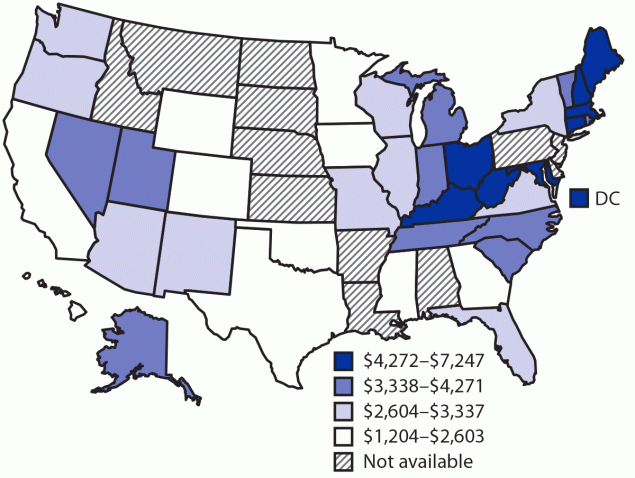
Study: Kentucky ranks fourth, among 38 states studied, in per-resident costs of opioid-use disorder and deaths resulting from it

Map from CDC report
By Melissa Patrick
Kentucky Health News

Kentucky ranked fourth in cost of opioid-use disorder and deaths from it, adjusted for population, in a report that shows the economic impact of the opioid epidemic across most of the nation.

The Centers for Disease Control and Prevention report found Kentucky's combined per-resident costs from opioid-use disorder and its resulting deaths in 2017 was $5,491, including $3,007 for OUD deaths.  

The study covered the 38 states that had sufficiently specific data. Only West Virginia, Ohio and New Hampshire spent more per person because of OUD and its deaths than Kentucky. Kentucky ranked second for per-resident cost of OUD, after Nevada, and 10th for per-resident spending on OUD deaths.  

Nationwide, the combined economic cost of opioid-use disorder and OUD deaths in 2017 was about $1 billion, trillion, including $471 billion for OUD and $550 billion for its deaths. The combined cost varied substantially, ranging from $985 million in Wyoming to $72 billion in Ohio. 

In Kentucky, that cost was about $24.5 billion, including about $11 billion for opioid-use disorder and $13.4 million billion for OUD deaths. Kentucky ranked 13th in costs without regard to population.

Costs of opioid-use disorder and fatal overdoses include the costs of health care, substance-use treatment, criminal justice, lost productivity, reduced quality of life, and the value of statistical life lost. 

"Reduced quality of life was the largest component of the cost of opioid-use disorder, and the value of statistical life lost was the largest component of the cost of fatal opioid overdose," says the report. "These two components together accounted for approximately 84% of combined costs, followed by lost productivity." 

The report estimated that Kentucky had 50,000 people with an opioid-use disorder and 1,160 opioid related deaths in 2017.

Opioid epidemic worsens during pandemic

And while the study looked at 2017, likely the most recent year with enough data, it's important to note that the opioid epidemic hasn't gone away and has gotten worse since the beginning of the pandemic, suggesting the cost associated with OUD and its deaths has likely gone up since then.  

A study published in the journal Drug and Alcohol Dependence found that the daily number of Kentucky ambulance runs for opioid overdose, in the 52 days before and after a state of emergency was declared March 6, rose 17 percent for runs to an emergency department, 71% for runs "with refused transportation, and a 50% increase in runs for suspected opioid overdoses with deaths at the scene." 

Further, "In 2019, Kentucky recorded 1,316 drug overdose deaths. In 2020, from January to September, the state reported 1,454 drug overdose deaths, according to the Kentucky Cabinet for Health and Family Services," Spectrum News reports. 

Also, provisional data from the CDC shows that drug-overdose deaths in the U.S. are at their highest on record, soaring to more than 87,000 deaths in the 12 months period ending in September 2020. 

Strategies for improvement

The report offers a list of effective strategies to improve opioid prescribing, treat OUD and prevent fatal overdose, including pain-clinic laws, state monitoring of drug prescriptions, medication-assisted therapies for OUD, overdose education and distribution of naloxone, which counters overdose.

Kentucky has implemented all of these measures and more. The General Assembly passed several laws during the recently completed legislative session to improve addiction care for Kentuckians. 

One bans the requirement of prior authorization for any prescription drug now approved for  treatment of alcoholism or opioid-use disorder and that contains methadone, buprenorphine or Naltrexone. The bill also has provisions to examine prescribing practices to see if providers also prescribe concurrent counseling.  

Another law creates written recommendations for distribution of information to individuals who suffer from substance-use disorder to help them get treatment. And another allows pharmacies to sell hypodermic syringes and needles without a prescription, with no questions asked. 

The study report does not mention harm-reduction programs, more commonly known as syringe-exchange programs, as an effective strategy to treat OUD and prevent fatal overdose. 

These programs are designed to prevent outbreaks of HIV and hepatitis C, which are commonly spread by needle sharing among IV drug users. They also provide health screenings and vaccines, and connect drug users to treatment. They are allowed by a 2015 state law that requires approval by the county health board, the fiscal court and the city where the exchange is to be located.

Kentucky has the third largest number of counties in the nation and leads the country in the number of syringe exchange programs. As of Feb. 25, it has 74 operational programs in 63 of the state's 120 counties, with one more approved but not yet operational. 
 
The report acknowledges several limitations to the study: 12 states were omitted; the cost of OUD was measured for a single year, rather than a lifetime; the estimated case counts likely underrepresent the true prevalence of OUD; and national cost estimates were used to calculate state costs.

For help in finding treatment for substance-use disorder for yourself, a friend, or loved one, the state has a website: findhelpnowky.org.