Showing posts with label exercise. Show all posts

Monday, March 11, 2024

State health chief says measles risk stems from pandemic's anti-vaccine 'ideologies'; discusses how to lose weight, need for sleep

WKYT news anchor Bill Bryant, left, interviews state Health Commissioner Steven Stack, M.D.
This story has been updated.
By Al Cross
Kentucky Health News

In a wide-ranging TV interview, state Health Commissioner Steven Stack warned Kentuckians that not enough of them are vaccinated for measles, which he said is an outgrowth of reaction to the Covid-19 pandemic and the measures taken against it.

Stack reflected on his work in the pandemic and talked about other health concerns, including the opioid epidemic, weight-loss drugs and the need for Kentuckians to get more sleep, in an interview that aired Sunday, March 10, on WKYT's "Kentucky Newsmakers" with Bill Bryant.

As of March 7, the Centers for Disease Control and Prevention had recorded 45 cases of measles in 17 states: Arizona, California, Florida, Georgia, Illinois, Indiana, Louisiana, Maryland, Michigan, Minnesota, Missouri, New Jersey, New York, Ohio, Pennsylvania, Virginia and Washington.

Stack said measles was declared elimiated in the U.S. in 2000, but it has returned because vaccination rates have dropped to 90 percent. The disease may be the most contagious, and epidemiologists say 95 percent of a population needs to be vaccinated to protect those who can't or won't get the shot.

Stack said the measles-mumps-rubella (German measles) vaccine has been used since 1971, and is very effective. "We’ve got to get the public I hope, to accept that these tools help to prevent us from having far worse problems, like little babies who can't get vaccinated getting seriously ill." Children younger than 6 months are ineligible for vaccination.

Pew Research Center graph, based on Pew polling by party
Why have vaccination rates for contagious diseases dropped? "It's all gotten caught up in the Covid pandemic, in the narrative, in the ideologies that have unfortunately become associated with public health and medical science," said Stack, a physician.

Asked if he and Gov. Andy Beshear made the right calls in the pandemic, he said "I think we did the best we could with what we knew at the time." He said Kentucky outperformed most other states, considering its lower health status, which made it more vulnerable.

Stack said he and Beshear "balanced saving the most poeple [with] other harms that are worse than what you're trying to prevent." He said Kentucky's death toll of 20,000 was "far from what it would have been had we not intervened," noting that an intiial estimate was it could lose 1 to 2 percent of its population: 45,000 to 90,000 people.

Looking ahead, Stack said people 65 and older and those with other risk factors should get a Covid-19 booster this spring, and everyone should get an annual booster, much like has long been done for influenza.

Other health issues

Kentucky leads the nation in the percentage (about 2.1%) of population that has received a prescription for one of the new drugs created to fight obesity and diabetes, which can also aid weight loss.

"Overweight and obesity is a big problem in Kentucky," Stack said, noting that 38% of Kentuckians weigh too much. "That leads to diabetes, it increased your risk of cancer and cardiovasculat disease, like stroke and heart disease. It's really a major issue for us to address."

As for the drugs, "People are understandably desperate to find ways to get it under control," he said. "It's really too early to say what the long-term outcome of those medications will be. Some people have had wonderful benefits from it, have lost a lot of weight and improved their overall performance. Some individuals have had a difficult time tolerating it: persistent nausea, vomiting, or an unlucky small number with pancreatitis, so time will tell on those.

"Right now I think what we really need to do is try to think about ways to improve our environment so it's easier to eat healthier -- fresh fruits and vegetables -- and do mild things, like just go for a walk three or four days a week for 35 to 45 minutes; if you could do simple things like that, most of us could actually lose the small weight that we have to avoid becoming diabetic."

Kentucky is also one of the states most affected by the opioid epidemic. Stack said it has evolved because "The criminals keep getting more creative in the cocktails they put together and they're becomeing more and more lethal for people."

Speaking on the weekend that the nation moved its clocks to daylight saving time, Stack said lack of sleep is also a major health issue, especially for teens, who need more of it.

He said teens and adults "disrupt our sleep" with big and small screens, on TVs and smartphones. "We’ve got to get better sleep hygiene," he said, "and set out the time we need to get that eight hours of sleep."

Wednesday, February 14, 2024

It's Heart Month, which confronts the leading killer in the U.S.; here are five ways to keep your heart healthy or make it healthier.

University of Florida illustration
Kentucky Health News

February is American Heart Month, which focuses on the fact that heart disease is the leading cause of death in the U.S., and ways to lower your risk for heart disease. Here are five ways to boost your heart health, from the Centers for Disease Control and Prevention:

Exercise regularly. Maintaining a healthy weight is an important part of heart disease prevention, and regular exercise is one way to achieve this. The surgeon general recommends that adults get two and a half hours of moderate physical activity like walking or biking weekly. Children and adolescents should aim for an hour of physical activity every day.

Eat healthy. Establishing healthy eating habits is another way to maintain a healthy weight. Avoid foods that are high in saturated fat and trans fat. Opt for foods that are high in fiber and low in saturated fat, trans fat and cholesterol to help prevent high cholesterol. Foods with lower sodium can help lower your blood pressure, and consuming foods with less sugar can help keep your blood sugar under control.

Set limits. Limiting your alcohol intake and avoiding smoking can also help you prevent heart disease. Knowing your limits and setting boundaries can help you stay disciplined, which is another vital part of lowering your risk for heart disease.

Monitor health conditions. If you struggle with high blood pressure or high cholesterol or have diabetes, managing these conditions is a key part of preventing and lowering your risk for heart disease. Consult with doctors and other members of your health team to see what their recommendations are for managing existing medical conditions. They may prescribe medicines to help manage your blood pressure, cholesterol or blood sugar, along with lifestyle changes to help.

Work with a team. It's important to work with your health care team if any of your conditions change, if your family has a history of any of these medical conditions or if you suspect you might be at risk for them. Consult your doctor if you’ve already had a heart attack or if you struggle with mental-health issues. Create a treatment plan that works for you and discuss it regularly, making adjustments when necessary. Don’t stop taking any prescribed medicines before talking to your doctor.

Prioritizing heart health is critical for preventing and lowering your risk for heart disease. For more tips to boost heart health, visit cdc.gov/heartdisease/prevention.htm.

Saturday, November 11, 2023

Any activity – even sleeping – is better for your heart than sitting

CDC photo
Replacing sitting with as little as a few minutes of moderate exercise a day can improve heart health, according to new research from University College London and the University of Sydney.

“We already know that exercise can have real benefits for your cardiovascular health and this encouraging research shows that small adjustments to your daily routine could lower your chances of having a heart attack or stroke," James Leiper, associate medical director at the British Heart Foundation, said in a news release. "This study shows that replacing even a few minutes of sitting with a few minutes of moderate activity can improve your BMI [body mass index], cholesterol, waist size, and have many more physical benefits." 

The study, funded by the British Heart Foundation and published in the European Heart Journal, is the first to assess how different movement patterns during daily activities are linked to heart health. 

The researchers analyzed data from six studies of more than 15,000 participants from five countries to see how movement behavior across the day is associated with hearth health. The participants wore  wore a device on their thigh to measure their activity throughout the day. 

They found that moderate-to-vigorous activity provided the most benefit to heart health, followed by light activity, standing and sleeping, compared to sitting still (sedentary behavior).

Replacing sedentary behavior with as little as five minutes of moderate-vigorous activity had a noticeable effect on heart health, the stuidy found. 

“The big takeaway from our research is that while small changes to how you move can have a positive effect on heart health, intensity of movement matters," said Dr. Jo Blodgett, first author of the study. "The most beneficial change we observed was replacing sitting with moderate to vigorous activity – which could be a run, a brisk walk, or stair climbing – basically any activity that raises your heart rate and makes you breathe faster, even for a minute or two.”

Further, the researchers note that those who are least active were also found to gain the greatest benefit from changing from sedentary behaviors to more active ones.

They also noted several suggestions, such as using a standing desk for a few hours a day instead of a sitting desk.

Heart disease is the leading cause of death in Kentucky, according to the Centers for Disease Control and Prevention. "Cardiovascular disease, which refers to all diseases of the heart and circulation, is the number one cause of mortality globally," the news release said. "In 2021, it was responsible for one in three deaths, with coronary heart disease alone the single biggest killer. Since 1997, the number of people living with cardiovascular disease across the world has doubled and is projected to rise further."

Thursday, September 28, 2023

Ga. professor develops model to show how much you need to walk each day to achieve a specific reduction in your weight

Step counts and weight loss have an inconsistent relationship.
(Photo by Jose Carlos Cedeno Martinez, Getty Images)
By Bob Buresh
The Conversation

Over the last decade, smartphones have become ubiquitous not just for sending texts and staying abreast of news, but also for monitoring daily activity levels.

Among the most common, and arguably the most meaningful, tracking method for daily physical activity is step counting.

Counting steps is far more than a fad. The U.S. Department of Health and Human Services dedicated a sizable portion of its most recent physical activity guidelines to documenting the relationship between daily step counts and several chronic diseases.

Unfortunately, the guidelines have little to say about how step counts might be used to aid in weight management, an outcome of critical importance given the high rates of overweight and obesity in the U.S.

In the early 1980s, fewer than 14% of adults in the U.S. were classified as having obesity. Today, just over 40 years later, the prevalence of obesity is greater than 40% in the adult population, and current trends suggest that almost half of adults in the U.S. will be obese by 2030.   

I am a professor of exercise science at Georgia's Kennesaw State University, and our lab has been conducting studies examining relationships among step counts and a number of health outcomes.

While the evidence is clear that increasing numbers of adults are living in a chronic energy surplus that leads to weight gain, a key question is – why? What has changed so dramatically since 1980 that could explain why obesity rates have tripled?

Although the American diet is likely a key contributor, a wealth of research points to a reduction in physical activity as a major culprit behind the expanding waist lines – and step counts are an excellent indicator of physical activity.
 
Step counts may – or may not – lead to weight loss

A number of recent studies have looked at whether increasing step counts can lead to weight loss over a certain period of time. One large-scale study called a meta-analysis concluded that increasing physical activity by way of step counts was effective for attaining modest weight loss. However, many if not most studies examining the effect of exercise on weight loss report modest outcomes, with results that are variable and often disappointing.

That may be in part because the step count targets used in many weight management studies are most often set in an arbitrary manner, such as targeting 10,000 steps per day. Or, if they’re individualized at all, they’re based on initial behavioral characteristics, like adding a given number of steps to what a person is already accumulating in a typical day. Rarely, if ever, are the step targets in research studies based on any physical attributes of the participants.

My team’s research has compiled weight, body-fat percentages and average step counts for large numbers of adults between 19 and 40 years of age. From that data, we have identified a way to determine specific step count goals based on key physical attributes – namely, baseline body weight and composition, and the desired body composition.

When it comes to health, it is important to remember that body weight does not tell the whole story. In fact, body composition is much more predictive of health status than body weight. Someone who weighs more than another person may be in better health if they have more muscle mass and a lower percentage of body fat than the other person who weighs less but has a higher proportion of body fat.

Parsing the numbers

We have used our data to develop a model that predicts average daily step counts per unit of fat mass from body-fat percentage. We believe that this model can be used to determine how much people would need to walk to achieve a specific amount of weight and body fat reduction.

Take, for instance, a man who weighs 175 pounds (80 kilograms), of which 25% is fat. Our model suggests that he walks an average of 10,900 steps a day. Then consider another man who weighs 220 pounds (100 kilograms), of which 20% is fat. Although they have different amounts of lean mass, both men have about 44 pounds (20 kilograms) of fat. So our model predicts that the heavier man walks an average of 15,300 steps a day. In other words, the heavier person has a lower percentage of body fat and walks more to maintain that leaner body composition.

A person’s body fat percentage is every bit as important as their weight. That’s because how much muscle you have affects how hungry you get, as well as how many calories you burn. Muscle mass requires energy to maintain, and this requirement leads to increased appetite, which means taking in more calories. In this example, the heavier man probably eats more than the lighter man in order to maintain his lean muscle mass, and he must walk more to maintain his lower body fat percentage.

If you want to lose body fat, and therefore weight, you basically have two choices: You can eat less, or you can move more. Eating less means you’ll be hungry a lot, and that’s uncomfortable, unpleasant and, for most people, not sustainable. Moving more, on the other hand, can allow you to eat until you’re full and keep body fat off – or even lose it.

Therefore, we wanted to know how much a person who eats until they’re full might have to move to offset the calories they’re eating.

It’s easy to add in extra steps – for example, park a little farther from the grocery store or take an extra trip to the mailbox.

Step counts for weight loss

Currently, our model applies to young adults, but we are now collecting data for middle-aged and older adults too. To use this model, you need to first have your body composition determined, a service that is being offered by increasing numbers of fitness centers and medical practices. With our model, you must determine your body weight and fat weight in kilograms – to do this, simply divide your weight in pounds by 2.2.

With this information in hand, our model can provide a step count target that is specific to a person’s current body weight and body fat percentage, and their goal for fat loss and weight reduction.

For example, our model predicts that a woman weighing 155 pounds (70 kilograms) with 30% body fat currently accumulates an average of about 8,700 steps per day. If she wants to lose about 10 pounds and reach a body fat percentage around 25%, she could consult the model and discover that people who maintain that body composition accumulate an average of about 545 steps per kilogram of fat per day. Since she currently has about 46 pounds (21 kilograms) of fat, her goal would be to accumulate a total of 11,450 steps per day.

While that may seem at first glance to be a sizable increase in daily steps, most people can accumulate 1,000 steps in 10 minutes or less. So even with a comfortable pace, this additional daily dose of walking would take fewer than 30 minutes. Furthermore, steps can be accumulated throughout the day, with longer or more frequent trips, or both, to restrooms, vending machines and the like.

While steps certainly can be accumulated in dedicated walking sessions, such as a 15-minute walk during lunch hour and another 15-minute walk in the evening, they can also be accumulated in shorter, more frequent bouts of activity.

Researchers have learned a great deal in the past 70 years about appetite and energy expenditure: Appetite imposes a drive for food based largely on our fat-free mass, no matter how active or inactive we are, and we must accumulate enough physical activity to counter the calories that we take in through our diet if we want to maintain an energy balance – or exceed our intake to lose weight.

The Conversation is a platform for journalism by academics.

Monday, September 25, 2023

'The only way we can take care of others is if we first take care of ourselves," UK President Eli Capilouto says in a health message

Kentucky Health News

Before he became an academic and a university administrator, Eli Cailouto was a public-health dentist. He returned to his roots in his latest campus-wide message as University of Kentucky president, promoting preventive measures as the weather cools, we spend more time inside and viruses circulate more. It's aimed at the UK campus but is generally applicable to everyone.

Dr. Eli Capilouto
By Eli Capilouto

As we continue to settle into the academic year, I encourage you to prioritize taking care of yourself.

Be healthy.

Listen to your body. Pay attention when you don’t feel well or when something doesn’t seem right — when in doubt, check it out. We have an outstanding, world-class health care system that is here to take care of you.

Get outdoors. Visit a garden, go to the park, take a walk. Exercising outdoors can help reduce stress and anxiety, improve sleep and ease your mind. The arboretum — open daily from dawn until dusk — has beautiful gardens, a two-mile paved path and a half-mile trail through its woods.

Prepare yourself. Vaccines are safe, effective and an important way to stay healthy. Employees have access to multiple pharmacies and clinics that offer flu, Covid-19, RSV and other vaccines. Flu shots are also available to UK students at University Health Service, UK retail pharmacies and various on-campus flu shot clinics. Find more information here.

The only way we can take care of others is if we first take care of ourselves.

I hope you will join me in making every effort to stay healthy this fall and winter season.

Sunday, September 24, 2023

Ky. children 10-17 have nation's 2nd highest obesity rate, 19.6%; adult rate of 37.7% is 9th highest, a slight improvement from 2021

Map from Trust for America's Health State of Obesity report

Kentucky Health News graph from state data

By Melissa Patrick
Kentucky Health News

Kentucky ties with Wisconsin for the nation's ninth-highest adult obesity rate, an improvement from second-highest last year, but Kentucky children aged 10-17 still have one of the nation's highest rates, No. 2, after ranking first last year.

The 20th annual State of Obesity report from Trust for America's Health says 37.7% of Kentucky adults are obese and nearly 72% of the state's adults are either obese or overweight, tied for sixth place with Delaware. Among the state's high-school students, 19.6% of them are obese and 16.2% are overweight.

Nationally, the report says the number of obese adults continues to rise, noting that 22 states had an 2022 adult obesity rate at or above 35%, up from 19 states in 2021. A a decade ago no state had an adult obesity rate at or above 35%, the report says.

"Since TFAH’s initial report, published in 2004, the national adult obesity rate has increased by 37 percent and the national youth obesity rate increased by 42 percent," says the report. 

The national adult obesity rate is 42% and the national rate for children ages 2 to 19 is nearly 20%, according to the report.  

The good news is that from 2021 to 2022, Kentucky's adult obesity rate declined 6.4%, or 2.6 percentage points, to 37.7% from 40.3%. But that was still above the levels of 2018, 2019 and 2020.

West Virginia (41%), Louisiana (40.1%), Oklahoma (40.0%), and Mississippi (39.5%) have the highest rates of adult obesity. The District of Columbia (24.3%), Colorado (25.0%), and Hawaii (25.9%) have the lowest adult obesity rates.

“It’s critical to recognize that obesity is a multifactored disease involving much more than individual behavior,” Dr. J. Nadine Gracia, president and CEO of Trust for America's Health, said in a news release. “In order to stem the decades-long trend of increasing obesity rates we have to acknowledge that the obesity crisis is rooted in economic, health, and environmental inequities. Ensuring all people and communities have equitable opportunity and access to healthy food and physical activity is fundamental to addressing this crisis.”

Kentucky continues to struggle with all of these conditions. It ranks fifth worst for the percentage of adults with diabetes (15%) and hypertension (40.3%), and nearly 27% of its adults are physically inactive, ninth worst. 

The report shows that more adult men than adult women are obese in Kentucky: 38.7% of men and 36.7% of women, a switch from last year's report. Kentucky's adult men have the second highest obesity rate in the nation; its women rank 18th, tied with Texas.

By age, Kentucky adults between 45 and 64 have the highest obesity rate, 42%. That's followed by those 25-44 (41.2%), 65 and older (33.7%) and 18 to 24 (24.1%). 

"Solving the nation’s obesity crisis will require addressing the economic and structural factors that impact where people live and their access to employment, transportation, healthcare, affordable and healthy food, and places to be physically active," says the report, which includes policy steps to address the crisis that they say should be taken by federal, state and local officials and stakeholders. They include: 
  • Fully fund the Centers for Disease Control and Prevention's proven chronic disease and obesity prevention programs so they reach every state.
  • Make healthy school meals available for all students and increase access to Supplemental Nutrition Assistance Program (SNAP) and other nutrition support programs.
  • Implement a mandatory front-of-package labeling system on food packaging to help consumers make informed choices.
  • Close tax loopholes and eliminate business-cost deductions for advertising unhealthy food to children.
  • Make physical activity and the built environment safer and more accessible for everyone, including by increasing federal education funding for health and physical education and investing in active transportation projects like pedestrian and bike paths.

Monday, April 3, 2023

Foundation for a Healthy Kentucky and state agency start effort to encourage Kentuckians to improve immunity and overall health

One of the graphics used to promote the campaign
A new campaign encourages Kentuckians to boost their overall health and immunity to combat chronic conditions and Covid-19, the effects of which are still being felt across the state.

“Raise Your Guard, Kentucky” is a partnership between the Foundation for a Healthy Kentucky and the state Cabinet for Health and Family Services to encourage Kentuckians to adopt habits that will improve their health and reverse negative health impacts.

Since the pandemic began about three years ago, chronic conditions such as diabetes, obesity and cardiovascular disease have increased in Kentucky, especially among African Americans. 

“Kentuckians have long struggled with chronic conditions, but the pandemic has certainly made it worse,” said Ben Chandler, president and CEO of the foundation. “We don’t have to accept this as status quo. We can take action to help our bodies be in better condition to fight off the next virus – whether that’s a new Covid-19 variant, the flu, or another illness, as well as combat chronic disease.”

“Raise Your Guard, Kentucky” encourages people to:
  • Eat well: Emphasize fruits and vegetables, lean protein, whole grains and low-fat or fat-free dairy. Limit saturated fats, cholesterol, salt and added sugars.
  • Move more. Physical activity is one of the most important aspects of overall health.
  • Stay up to date on all immunizations. Children and adults need protection from vaccine-preventable diseases including measles, shingles, flu, and Covid-19.
  • Schedule annual check-ups and screenings: Preventive check-ups with your health-care provider and dentist can catch potential issues in the early stages. Get recommended screenings, including mammograms, colonoscopies, bone density and lung cancer screenings.
  • Maintain a healthy weight: Excess weight can affect how your body functions. It can also lower vaccine effectiveness for numerous diseases including influenza, hepatitis B and tetanus.
  • Drink lots of water: Getting enough water every day is important to prevent dehydration, a condition that can cause unclear thinking, mood change, your body to overheat, and lead to constipation and kidney stones.
  • Get enough sleep: Studies show not getting enough sleep can negatively affect the immune system and is linked with many chronic diseases and conditions.
  • Quit smoking and vaping. They harm the immune system and can make the body less able to fight off disease.
  • If you drink alcohol, drink in moderation. Over time, excessive alcohol use can weaken the immune system and lead to various short- and long-term health impacts such as heart disease, cancer, and increased risk of getting sick from a cold or virus.
  • Try to minimize stress. Long-term, stress promotes inflammation and an imbalance of immune cell function. Learning to cope with everyday stressors and challenges is vital for success in life, school and work.
  • Wash your hands. Good personal hygiene can prevent the spread of infection.
“Small healthy choices add up to a big positive impact to ensure that every Kentuckian has the opportunity to reach their full human potential,” said Dr. Steven Stack, commissioner of the state Department for Public Health. “Working together, we can create the conditions that enable every Kentuckian to thrive.”

The “Raise Your Guard, Kentucky” campaign includes a video series featuring everyday people from across the state who share why and how they stay healthy:
  • Lacretia Dye, an associate professor at Western Kentucky University, hosts a community yoga class each week.
  • Fannie Callahan, a Beattyville retiree, walks every day to prevent diabetes and improve her overall health.
  • Kota Young, the Caldwell County judge-executive, has a passion for his community. He shares how he stays healthy so he can better serve.
  • Harlan Holmes, a Bowling Green man who learned at 25 that his blood pressure was alarmingly high. He began a “couch to 5K” program, reduced his blood pressure to healthy levels, and has continued running to maintain his health.
  • Bethany Pratt of Louisville, an urban farmer, teaches others how to grow their own food, even with limited space.
  • Mike Wilkinson of Lexington visits Red River Gorge to climb and hike for physical and mental stress relief.
Kentucky organizations are encouraged to download the videos, graphics, and other educational materials to share with their contacts and use on social media. Materials may be downloaded for free here. Additional videos will be added.

The foundation says it has engaged with nearly 2,000 Kentuckians through focus groups, surveys and polls to learn their perspectives on Covid-19 vaccines and boosters, as well as the pandemic, in general. “Raise Your Guard, Kentucky” messages and delivery vehicles reflect the insights gleaned from this input and are culturally relevant and responsive to the audience. The campaign's resources are available in English, Spanish and Swahili. Learn more at RaiseYourGuardKY.org.

Monday, March 20, 2023

How to create a successful fitness plan this spring

Photo from PeopleImages | iStock / Getty Images Plus
By Dr. Robert G. Hosey
University of Kentucky

Scientists have found that regular participation in aerobic exercise has been shown to decrease levels of stress, stabilize mood, improve sleep and improve self-esteem. Just five minutes of aerobic exercise can help alleviate and stimulate anti-anxiety effects. Here are some tips to create a successful fitness plan this year.

Preliminary checks: Before you start working up a sweat, schedule a visit to your doctor to gauge on your overall health. Discuss any aches, pains or limitations that might impact your plans to get active. Your doctor can also assess your cardiovascular health and help you understand how and when to increase your exercise intensity.

Make a plan: Exercise should be planned for a time in the day when you feel rested and have the most energy. If you are planning to exercise outside, avoid extreme temperatures (warmer than 85 degrees F or colder than 32 degrees F). Remember to dress appropriately for the weather and wear comfortable, supportive footwear. An indoor contingency plan for exercise can help you stay active even during spring showers.

Don’t forget to warm up and cool down: Aerobic exercise, such as walking or biking, is recommended for those getting started with a new routine. Your exercise session should start with a warm-up period of slow walking or low-resistance bicycling and end with a cool-down segment at similar intensity.

At the end of exercise, stretch the major muscle groups used by holding each stretch for 20-30 seconds. This can minimize injury and fatigue and increase flexibility.

Make it manageable: Begin your exercise routine with an amount of time that is manageable, something as short as a five-minute walk around the neighborhood. Once you’re comfortable exercising for that long, slowly increase the duration of your sessions.

Don’t push yourself too hard, either. You should be able to maintain a conversation at all times of exercise without experiencing breathlessness.

Hydrate, hydrate, hydrate: Drinking water is important, especially when you’re exercising more. Staying hydrated helps your muscles work more efficiently and helps your heart pump blood more easily. Make sure to drink plenty of water before you exercise — it’ll help your body perform at its best.

Buy a durable water bottle and carry it with you at work and when you run errands. Having a water bottle by your side will remind you to drink throughout the day.

Have fun: Exercise shouldn’t be a slog, so make sure you’re doing something that you enjoy and makes you feel good. A successful start of a new routine will keep you motivated to continue and progress.

Fitness trackers and fitness apps are additional options to stay engaged and monitor progress. Enlisting a companion for exercise will add an element of support and keep the activity enjoyable.

Robert Hursey, M.D., is physician with UK HealthCare Orthopaedic Surgery and Sports Medicine and professor of family and community medicine in the UK College of Medicine.

Thursday, February 23, 2023

American Heart Month and Black History Month are the same month, and are related; Blacks are likelier to have heart disease

By Dr. Daniel Brunner

In February, we commemorate both American Heart Month and Black History Month, which presents an opportunity for us to raise awareness about cardiovascular health, remember the contributions of African Americans who helped shape the nation and reflect on the continued struggle to overcome disparities. As February ends, I urge everyone to commit to mind the teachings of American Heart Month and Black History Month throughout the year. That’s because a particular disparity that impacts the African American community is heart disease – the leading cause of death for African Americans and all adults across the U.S.

Daniel Brunner, M.D.
According to the Centers for Disease Control and Prevention, more than 20 million U.S. adults — approximately 7% of the U.S. population — have heart disease. The disparity lies in the fact that nearly 48% of African American women and 44% of African American men have some sort of heart disease. This is a lot higher than the 36% of white, non-Hispanic adults in the U.S. who have heart disease. In Kentucky, where heart disease is the commonwealth’s leading cause of death, 11.8% of the African American population has been diagnosed with a cardiovascular disease — higher than the national average of 9%.

While many factors contribute to their increased risk, what matters is that heart disease is killing Black Americans at a higher rate than any other group in the U.S., and the best way to fight this disparity is to successfully treat the risk factors.

Here is what people need to know:

Screening: Getting screened by a medical professional will help identify risk factors for heart disease early enough to treat it. Medical screening will identify if there are genetic risks or if factors such as weight, environment and habits are putting a person at higher risk of disease and death. Getting screened at least once a year is crucial for all adults.

Medication management: It’s not only important for people to take prescribed medication as directed for heart disease and other conditions that cause heart disease (such as diabetes, high cholesterol and high blood pressure), but is also important to communicate with a doctor to help manage conditions and adjust medication when required.

Staying active: Staying physically active reduces and helps manage weight. It may reverse early diabetes and cut cholesterol levels. It can even help control stress and hypertension. All it takes is 30 minutes a day, at least five days a week of exercise that is enjoyable, like walking, running, swimming, cycling, dancing, playing a sport or anything that gets the heart pumping.

Diet: It is extremely important to watch your diet to help maintain a healthy weight and heart. Certain ethnic food or diets and sugar-sweetened beverages are widely embraced in many communities. Some diets may be associated with a significantly increased risk of heart disease. With risk factors as high as they are, it is critical to be diligent with limiting foods that are rich in sugar, fat, calories and sodium.

Lifestyle choices: While it is not possible to change genes that are inherited, it is possible to make lifestyle changes that can influence heart health. Cutting smoking, getting six to eight hours of quality sleep at night and refraining from overeating could make a positive difference in heart health. Also important is cutting stress, since stress can increase hormones that elevate blood pressure. If stress continues long-term, it can lead to permanent hypertension, an irregular heart rhythm or a permanent heart condition.

Fighting back against heart disease doesn’t have to be undertaken alone. It’s obvious that people need their doctors to help, but in many cases, people can also turn to their health insurer for support. Many health plans offer special assistance in the form of case managers who work with patients and providers to determine a course of action that best serves a patient’s needs.

Accessing no-cost screenings, managing medication, and utilizing benefits designed to help members stay active or access diet programs are key to ensuring a healthy life. Reach out to your health plan to manage the thing that is most important – your health.

Daniel Brunner, M.D., is medical director for Anthem Blue Cross and Shield Medicaid in Kentucky. He is an emergency medicine physician based in Northern Kentucky.

Friday, December 23, 2022

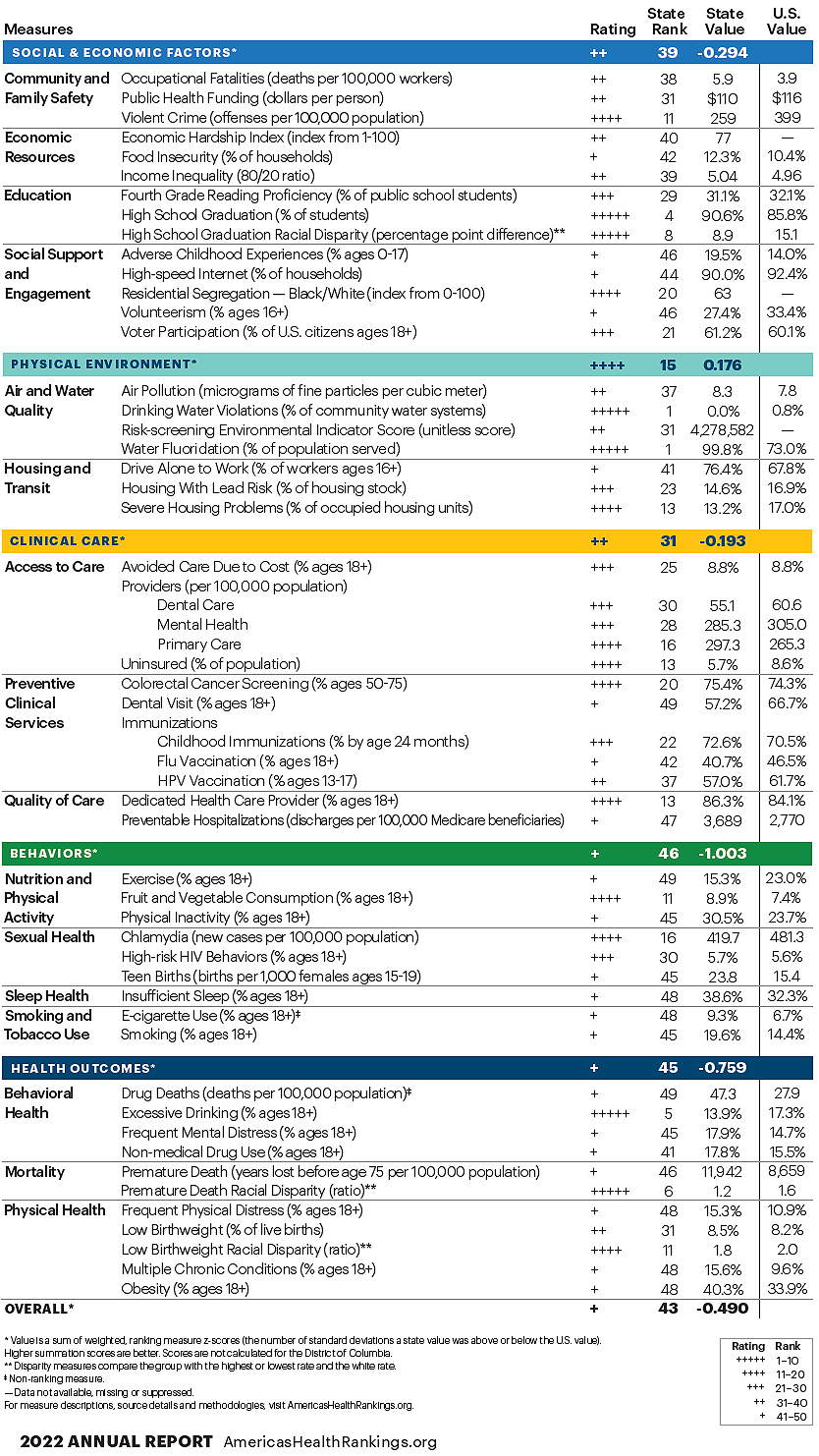
Kentucky again 43rd in America's Health Rankings, scoring lowest in behavior and health outcomes, high in having a care provider

By Melissa Patrick
Kentucky Health News

After not ranking states for two years due to the pandemic, America's Health Rankings again placed Kentucky among the 10 unhealthiest states, ranking its healthiness 43rd, the same slot it had in the last rankings, in 2019. 

Kentucky has found itself among the bottom 10 unhealthiest states since the rankings were first released in 1990, with the exception of 2008, when it ranked 39th. 

The rankings by the United Health Foundation are meant to help state leaders determine health benchmarks that can help them inform actions as they work to improve the health of their communities. 

The report examines a number of measures that influence health, broken into four categories: social and economic factors, physical environment, clinical care, behaviors, and health outcomes. 

Kentucky ranked lowest, 46th, among states in the behaviors category. 

Two measures in this category show that Kentucky adults don't get enough exercise, with only 15.3% of them saying they meet the federal guidelines for exercise in the past 30 days and 30.5% saying they didn't get any physical activity beyond their regular job in the past 30 days. For these measures, Kentucky ranked 49th and 45th, respectively. 

In the same category, Kentucky continues to have some of the highest teen birth rates in the nation at 23.8 teen births per 1,000 females aged 15 to 19; the national average is 15.4. In rankings that put the highest numbers at the bottom, Kentucky ranked 45th for this measure. 

Likewise, the state also continues to be a national leader in vaping and smoking, ranking 48th for adult use of electronic cigarettes and 45th for cigarettes (again, with higher numbers at the bottom). The rankings say 9.3% of Kentucky adults reported using e-cigarettes and 19.6% said they are regular smokers. 

Kentucky also ranked 48th in sufficient sleep, with 39.6% of adults reporting that they get, on average, fewer than seven hours of sleep in a 24-hour period. 

One of the Kentucky's better rankings in the behavior category was 11th for fruit and vegetable consumption.

In the health outcome category, Kentucky ranked 45th. With higher numbers at the bottom, it scored in the bottom 10 states for drug deaths (49th), frequent mental distress (45th), non-medical drug use (41st), premature death (46th), frequent physical distress (48th), multiple chronic conditions (48th) and obesity (48th). 

Though Kentucky ranked among the worst states in health outcomes, it does have a low prevalence of excessive drinking (fifth, with lower numbers at the top) and a low racial disparity in premature death (sixth). 

In social and economic factors, the state ranked 39th, with some of its worst scores in food insecurity (42nd), adverse childhood experiences (46th), access to high-speed internet (44th) and volunteerism (46th). 

The good news in this category is that Kentucky ranks fourth in the percentage of students who graduate from high school in four years and eighth in the difference between the high school graduation rates of white students and the racial/ethnic group with the lowest rate. 

In the clinical-care category, where it ranked 31st, Kentucky was in the bottom 10 states for dental visits (49th), flu vaccinations (42nd) and preventable hospitalizations (47th). 

Kentucky did not get any top-10 rankings in clinical care, but got top-20 rankings for its number of primary-care providers (16th), percent of uninsured population (13th), colorectal-cancer screenings (20th) and having a dedicated health care provider (13th). 

The physical environment category was the state's highest ranking, 15th, largely because it ranked first in two categories: drinking water violations and water fluoridation.


Sunday, October 2, 2022

Kentucky adults have second highest obesity rate in nation, and children 10-17 in state have the top U.S. rate for that age group

By Melissa Patrick
Kentucky Health News

A new report says Kentucky has the second highest adult obesity rate in the nation, and Kentucky children aged 10 to 17 have the nation's highest rate for that age group.

The Trust for America's Health 19th annual report says four of every 10 Kentucky adults are obese. And 72.3 percent are either obese or overweight, third in the nation. Among the state's high-school students, 18.4% are obese and another 17.8% are overweight.

The report says the national adult obesity rate keeps rising, with 19 states having a rate over 35%, up from 16 in 2021. The report notes that a decade ago, no state had an adult obesity rate at or above 35%.

Map from Trust for America's Health report; click it to enlarge
From 2020 to 2021, Kentucky's adult rate increased 10 percent, 3.6 percentage points, from 36.6% to to 40.3%.

Kentucky's rate is just a bit lower than West Virginia's 40.6%. Alabama ranks third at 39.9%. The District of Columbia, Hawaii and Colorado have the lowest rates, ranging from 24.7% to 25.1%.

"These persistent increases in obesity rates underscore that obesity is caused by a combination of factors including societal, biological, genetic, and environmental, which are often beyond personal choice," says a news release from Trust for America's Health. "The report’s authors conclude that addressing the obesity crisis will require attending to the economic and structural factors of where and how people live.

Obesity is associated with a many different health conditions and is estimated to increase U.S. health-care spending by $170 billion every year, the Trust for America's Health report says. 

"Obesity increases the risk of a range of diseases for adults—including higher rates of complications and serious illness from Covid-19, as well as type 2 diabetes, high blood pressure, heart disease, stroke, arthritis, depression, sleep apnea, liver disease, kidney disease, gallbladder disease, pregnancy complications, and many types of cancer—and an overall risk of higher mortality," the report says. 

Kentuckians struggle with all of these conditions. Nearly 14% of the state's adults are diagnosed with diabetes and 40.3% are diagnosed with hypertension, ranking Kentucky fifth for both conditions. 

The report says Kentucky women's obesity rate is 40.9%, while men's rate is 39.8%, plus or minus 2.7 percentage points.

Obesity rates by county in 2018-20, the latest range available, are published by the Foundation for a Healthy Kentucky at kyhealthfacts.org.

Child obesity: When it comes to age, Kentuckians between 45 and 64 have the state's highest obesity rate, 46.2%. That's followed by those 25 to 44 (42.5%), 65 and older (35.3%), and 18 to 24 (28.2%). 

The rate for Kentuckians 10 to 17 is 23.8%, the nation's highest. Nationwide, nearly 20% of children between the ages of 2 to 19 are obese. "These rates more than tripled since the mid-1970s," the release says. "Black and Latino youth have substantially higher rates of obesity than do their white peers." 

Getty Images photo via University of Missouri
One way to help children and their families address childhood obesity is through an electronic health records that help doctors monitor body-mass index, the basic measure of obesity, according to a University of Missouri School of Medicine study.

The three-year study found that a tool called FitTastic was an effective in decreasing BMI in children, especially young children. It works by helping health-care providers communicate with families about five daily lifestyle behavior goals: At least one hour per day of physical activity, limiting screen time to two hours a day or less, three daily servings of low-fat milk or calcium, at least four servings of water instead of sugary drinks, and at least five servings of fruits and vegetables. 

“We found a nearly 20% more favorable BMI pattern in the FitTastic group compared to the control group when looking specifically at children who were either overweight or obese,” said the principal investigator, Dr. Amy Braddock. “The data was especially favorable for younger children, between the ages of 2 and 5 years old.”

Body mass index is calculated by dividing a person's weight in pounds by their height in inches times two, and then multiplied by 703. An adult is considered obese if their BMI is 30 or higher, and is considered severely obese if that level is 40 or above. Children's BMI are compared to other children of the same age and sex, since there are fluctuations in their growth and development. 

The Trust for America's Health report includes a detailed list of recommended policy actions to address the social and economic drivers that contribute to obesity. The actions can be implemented at the federal, state and local levels. They include:
  • Advance health equity by strategically dedicating federal resources to the efforts that reduce obesity-related disparities;
  • Decrease food insecurity while improving nutritional quality of available foods;
  • Change the marketing and pricing strategies that lead to health disparities;
  • Make physical activity and the built environment safer and more accessible for all;
  • Work with the healthcare system to close disparities and gaps from clinic to community settings
“The continued increase in rates of obesity across all population groups is alarming,” Dr. J. Nadine Gracia, president and CEO of Trust for America’s Health, said in the release. “Policies and programs to reduce obesity need to be implemented at a systems level. We must advance policies that address the community, institutional, and structural factors that are barriers to healthy eating and physical activity and that exacerbate health inequities.”

Data for the report is based in part on the Centers for Disease Control and Prevention's Behavioral Risk Factors Surveillance System, a continuous national poll.

Monday, September 19, 2022

Here are some simple tips to help you stay healthier as you age: Keep your mind and body active, keep exploring . . .

Photo illustration from iStock/Getty Images Plus
By Kelly Parsons
University of Kentucky

What goes up and never comes down? Your age!

September is Healthy Aging Month, an observance designed to celebrate the positive aspects of growing older.

Keeping in touch with your neighbors, community and world around lowers the risk of dementia. Staying social and engaged improves your brain health. There are many ways you can engage in activities, including programs at your local senior center, the Silver Sneakers program and volunteering.

Aging can be filled with opportunities for self-growth and exploration of the world around us. Healthy Aging Month reminds us that engaging in social and productive activities has been shown to lower blood pressure, improve mood and live longer.

We experience significant changes as we age: retirement, moving to a new area, changes in health status or mobility can all impact our ability to stay connected. These events can result in a loss of connection which can cause you to become isolated and/or feel lonely.

Here are five ways to celebrate Healthy Aging Month and promote healthy aging in your life:

Get active: The body is the vessel of the soul. That is why taking care of it is one of the most important elements of healthy aging. When it comes to exercising, keeping a routine is key. Finding a workout partner, joining a dance class, or getting outside and enjoying some fresh air are all great ways to stay active and have fun while doing it! Sooner than you know it you’ll be looking forward to your next workout. (Research on chimpanzees suggests it's physical inactivity that makes us frail, National Geographic reports.)

Keep your mind sharp: Keeping your mind active will allow you to stay as mentally sharp as you’ve ever been. Learning new recipes, playing word or number games, learning to play a musical instrument or joining a book club are fun ways to exercise your mind.

Keep exploring: Keep your life exciting by visiting new places, volunteering and traveling. Local libraries, senior centers and universities have programs for all interests. For example, the University of Kentucky has the Office of Lifelong Learning (OLLI) program, which offers educational and enrichment opportunities for people age 50 and older.

Stay on top of your health status: Over time, it can be easy to lose track of routine doctors' visits, but as we age it is more important than ever to stay on top of our health. Make this September the month to re-up on annual shots and checkups. Remember, Medicare will pay for your annual wellness visit. Keeping up with your health conditions can help prevent serious health issues.

Stay motivated: Sometimes, getting older can take a toll on your mental and emotional health. Know that you are not alone. Finding a community can help to keep you motivated.

Whether you're in your 40s or in your 80s, it's never too soon (or too late) to begin your journey of healthy aging. Celebrate Healthy Aging Month by making the choice to take care of yourself for yourself.

Monday, August 22, 2022

Seven Healthy Kentucky Champions named by Foundation for a Healthy Kentucky; finalists for Friedell Award to be given Oct. 17

The Foundation for a Healthy Kentucky has announced its 2022 class of Healthy Kentucky Champions. The awards recognize individuals dedicated to improving the health of Kentuckians at a community level or state level; they are finalists for a statewide award to be announced in October.

“These seven Healthy Kentucky Champions are an inspiration to all working to better the health of our state,” said Ben Chandler, president and CEO of the foundation. “We owe them much gratitude for their dedication to addressing some of the health challenges Kentuckians face. The commonwealth is better because of these Healthy Kentucky Champions.”

The seven Healthy Kentucky Champions are nominees for the 2022 Gil Friedell Memorial Health Policy Champion Award, which comes with a $5,000 grant from the foundation to a Kentucky-based nonprofit of the winner’s choice. This year’s Friedell Award winner will be announced at the Howard L. Bost Memorial Health Policy Forum Oct. 17. The forum will focus upstream the social determinants of health on the connection between educational opportunities and health outcomes of Kentuckians. To learn more and register for this free, virtual event, click here.

The Healthy Kentucky Champions are Dr. Patricia Bautista-Cervera of Louisville, Eric Crawford of Maysville, Terry Gehrke of Louisville, Denise Hall of Trimble County, Michelle Howell of Scottsville, Dr. Patrick Kitzman of the University of Kentucky and Mark Thomas of Todd County.

Dr. Patricia Bautista-Cervera
Dr. Patricia Bautista-Cervera is a pediatrician and pediatric allergist at the La Casita Center, an organization dedicated to enhancing the well-being of Louisville’s Latinx and immigrant community. As health empowerment coordinator, Bautista-Cervera works to promote health through workshops, informational videos, one-on-one communications, and other various means. During the COVID-19 pandemic, she delivered important information to the Spanish-speaking community through the online video series, “Consejos de Salud con la Dra. Paty.” She also was instrumental in developing virtual forums with stores and restaurants to educate the Hispanic community about the virus and promote preventive measures and vaccination. In 2020 she supported 994 Covid-19-positive patients, offering medical guidance and, through an empowering model, connecting them to LCC’s wrap-around services and other resources in the community.

Eric Crawford
Eric Crawford, a Maysville native, joined Kentuckians for Medicinal Marijuana in 2013. Crawford’s education in the endocannabinoid system and cannabis, as well as his experience as a quadriplegic, has fueled his passion for advocating for the legalization of medical marijuana in Kentucky. He has been involved in crafting legislation and has testified at the state Capitol about how cannabis improves his quality of life. He is a member of the Governor’s Medical Cannabis Advisory Committee and has also traveled the state with Kentuckians for Medicinal Marijuana for more than 50 medical cannabis educational seminars. Crawford remains active in the Maysville community by serving on the Lions Club and volunteering at a nursing home. He is a Finis Davis Fellowship recipient through the Kentucky Lions Eye Center and a past member of Kentucky Partners in Policymaking through the Commonwealth Council for Developmental Disabilities.

Terry Gehrke
Terry Gehrke has been in the fitness-wellness industry for more than 30 years. She founded Balanced Wellness LLC in 1999 in Jefferson County and still leads the organization as president and wellness consultant/health educator. Gehrke joined the Kentucky Diabetes Network in 2019 as executive director and has guided the organization to promote better health for Kentuckians at-risk for and living with diabetes. She leads KDN’s symposium committee each year to offer the largest professional education opportunity for diabetes training in the state, the Kentucky Diabetes Symposium. Gehrke’s background includes teaching in the University of Louisville Health and Sport Sciences Department and working with Southeast Christian Church’s Sports & Fitness Ministry. Gehrke is a member of several organizations including the National Wellness Institute, the National Physical Activity Society, and Exercise is Medicine.

Denise Hall
Denise Hall of Trimble County began working in the substance use prevention field in 1998 at Seven Counties Services. In 2003, she became coordinator for Trimble County Family Resource and Youth Services Center before writing two Drug Free Communities grants and directing them. The DFC grant is now in its 10th and final year. Hall’s work includes implementing a Drug Education Series in Trimble County and a Sources of Strength group at Trimble County Junior/Senior High School. She administers a survey to middle and high schoolers to understand the needs for substance-misuse prevention. Hall was crucial in getting vape detectors installed at the high school and is managing director of the Trimble CARES Coalition.

Michelle Howell
Michelle Howell co-owns Need More Acres Farm in Scottsville with her husband Nathan. She has an agriculture degree from Western Kentucky University and previously worked for University of Kentucky Cooperative Extension assisting tobacco farmers as they transitioned to fruit and vegetable production. She collaborates with local and state partners to increase equitable opportunities for farmers. Howell has also been involved in writing grants worth more than $2.4 million to benefit food access, women’s life courses, and urban-rural development. Need More Acres co-founded the Community Farmers Market in Bowling Green, which piloted several Supplemental Nutrition Assistance Program incentives. CFM was essential to growing Kentucky Double Dollars into a statewide program and CFM is one of the organization's pilots of the Fresh Rx MOMs program for expecting mothers on Medicaid. Both programs help under-resourced Kentuckians access fresh, healthy food from farmers markets. Additionally, Howell partners with UK, WKU and Kentucky State University for interactive professional development on diversity and inclusion.

Patrick Kitzman
Dr. Patrick Kitzman is a professor in the University of Kentucky Department of Physical Therapy. He’s also founding director of the Kentucky Appalachian Rural Rehabilitation Network, a team that develops strategies to reduce disability and improve the quality of life for individuals with neurological impairments living in underserved rural Appalachian counties. Kitzman and his team established projects CARAT and CARAT-TOP. In CARAT (Coordinating and Assisting the Reuse of Assistive Technology) students learn to refurbish used medical equipment and donate it to those in need in the community. CARAT-TOP (Coordinating and Assisting the Reuse of Assistive Technology- Together One Priority) is a training program created through a partnership with the UK Center of Excellence in Rural Health. It brings together community members and high-school students of all abilities to learn new skills to help individuals and communities affected by disability.

Mark Thomas
Mark Thomas, Todd County Schools superintendent, was instrumental in establishing the AXIS Program: Centering All Services in the district. In partnership with the Todd County Health Department, the program addresses students’ social and emotional well-being through mental-health case management. The program also assists with basic needs such as nutrition, clothing, toiletries, housing, transportation, and treatment for substance use disorder. Thomas played a crucial role in gaining needed buy-in of the program from staff and the community. Through his support, the program is expanding services to include parenting classes, prenatal classes, and mental health awareness programs for students and staff. Thomas began his career in Shelby County in 1996 as a middle school teacher. He has served in a number of school and district administrative roles across Kentucky before starting his current position in 2020.