Showing posts with label farmers' markets. Show all posts

Sunday, June 19, 2022

Program to get low-income seniors free fruits, vegetables at Ky. farmers' markets, which usually starts June 1, delayed to July 1

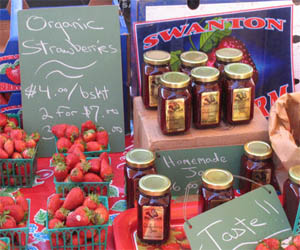
Photo illustration from Northern Kentucky Tribune
Low-income seniors who are at risk of poor nutrition have been unable to get free fruits and vegetables from Kentucky farmers’ markets this month, but the state Department of Agriculture says it will get the program going again July 1, Jack Brammer reports for the Northern Kentucky Tribune.

The Senior Farmers Market Nutrition Program normally begins June 1 but has been delayed because the bank the department used "no longer processes paper vouchers and the department had to find a new way for the payments," Brammer reports, citing Kirk Hilbrecht, spokesman for Agriculture Commissioner Ryan Quarles. "Hilbrecht said the delay was due to a need to switch payments to participants this year from paper vouchers to electronic cards with a QR code or an app on a smart phone."

The federally funded program covers about 12,500 Kentuckians and 103 farmers’ markets in the state. To participate, a person must have passed their 60th birthday and must meet income guidelines listed on the department’s website at https://www.kyagr.com/consumer/senior-farmer-market.html. The site also lists products that can be bought at the farmers’ markets .

Tyler Offerman, food justice fellow for the Kentucky Equal Justice Center in Lexington, told Brammer that he has “heard from several program participants that the changes caught them by surprise and communication about delays has been confusing.”

Thursday, July 9, 2020

Webinar Friday at 10 a.m. ET will explore a Kentucky farmer's response to the pandemic, food justice and community health

Kentucky farmer Michelle Howell will share her work on covid-19 responses, including delivery of medically tailored meals for patients and farmers' market safety, in a free webinar at 10 a.m. Friday, July 10. Howell will discuss areas that require a creative response such as farm to school, home deliveries, chronic hunger, and food justice. To register, click here.

Nathan and Michelle Howell of Need More Acres Farm in Scottsville met at Western Kentucky University where they pursued degrees in agriculture. Nathan had grown up on a farm in Hart County, where he and his family grew corn, wheat, cattle. Michelle's food story began when experiencing hunger motivated her to consider ways a community could feed itself. After college the University of Kentucky hired them to help tobacco farmers transition to fruit and vegetable production.

In April 2013 Nathan and Michelle, along with their four children, began farming full time and they are currently growing fruits and vegetables, combining them with meat, milk, cheese, eggs and bread from other farms to provide a multi-farm Community Supported Agriculture service, co-founding Community Farmers Market in Bowling Green, selling to schools, food pantries and restaurants.

Nathan and Michelle want to combine their love for Kentucky farms with the realization that our food system didn't change overnight. With grace and patience, they are working towards a healthier lifestyle for their own family and hope to do the same for others. Community organizing, public speaking, policy change and storytelling is now weaved through their everyday life on the farm.

For questions about registration, contact Rachelle Seger at rseger@healthy-ky.org.

Thursday, June 6, 2019

Valerie Horn of Whitesburg is latest Healthy Ky. Policy Champion, for increasing access to healthy foods in Letcher County

The Foundation for a Healthy Kentucky has named Valerie Horn, a retired school counselor from Whitesburg who helps low-income residents in Letcher County gain access to healthier foods, as the latest Healthy Kentucky Policy Champion.

Horn chairs the Whitesburg/Letcher County Farmers Market and directs the local Grow Appalachia program for the Cowan Community Action Group.

She has also served as county director for Appal-TREE (Appalachians Together Restoring the Eating Environment), a Community Farm Alliance program that includes a summer food service for area children, classes in healthy cooking, and a campaign that encourages middle- and high-school students to choose water over sugary drinks.

Horn was nominated by Mike Caudill, the CEO of Mountain Comprehensive Health Corp. in Whitesburg. He said Horn was the inspiration for the clinic's "Farmacy" program, which allows doctors to prescribe fresh fruits and vegetables to the clinic's patients so that they can get them at the farmers' market for free.

"The Farmacy program has directly benefited several thousand people in our area and has contributed over $500,000 to the local economy," Caudill said in a news release. "Thanks to Mrs. Horn's hard work and passion, this program has continued to be a success and has even been replicated in other communities and is a best practice."

Jared Arnett, executive director of Shaping Our Appalachian Region, which promotes economic development in Appalachian Kentucky, also praised Horn's efforts.

"Mrs. Horn understands the impact food has on the culture of a community, and strives to bring healthy food into people's homes," Arnett said in the release. "She is not afraid of a challenge and works hard to meet people where they are, so that she can help meet the needs of her community."

The award was presented by foundation CEO Ben Chandler at a regional community health forum at Community Agricultural and Nutritional Enterprises in Whitesburg.

"The policy changes that Valerie Horn has championed and helped implement are giving the people of her home community the opportunity to eat and live healthier," Chandler said. "She is also working to bring together people representing various sectors: farmers, community health-care and cultural organizations and schools, to ensure that Letcher County residents can bring home and use fresh produce and other healthy foods. These cross-sector coalitions are key to improving health in a community."

Horn is now eligible for the Gil Friedell Policy Champion Award, which comes with a $5,000 grant from the foundation to a Kentucky-based nonprofit of the winner's choice. The winner will be announced at the foundation's annual health policy forum Sept. 23 in Lexington.

Monday, June 11, 2018

Farmers' market in Columbia expects to serve 2,500 children at Hungry Kids Café on Saturdays this summer

Kasey Blue “KB” Kessler, Emma Burton, and sisters Kennedy and Cadence Booth, inspect tomatoes at the D&D Longview Angus booth at the farmers' market. (Kentucky Living photo by Joe Imel)

The farmers' market in Columbia has created a Hungry Kids' Cafe that expects to serve more than 2,500 meals on Saturdays this summer, Sharon Burton reports for Kentucky Living magazine, published by the Kentucky Association of Electric Cooperatives.

"The vision of serving free breakfast and lunch to children came about three years ago when market coordinators noticed two little boys who frequented the market and sampled all the free food vendors made available," Burton reports. "They wondered if the boys had food on other days when the market wasn’t open."

“We have so many kids who really rely on school meals during the year,” says café coordinator Lois Cunningham told Burton. “We would see these kids who would walk around and they couldn’t buy anything.”

Burton reports, "Volunteers started out working with federal programs, but quickly learned they had their own ideas and began asking the local community to help fund the café. Now, the program relies completely on local donations." This year the café got its new name and "went from a mobile trailer to a permanent building in the corner of a city parking lot where the market is held," at the corner of Campbellsville and Merchant streets from 8 to 1 on Saturdays and 1 to 5 on Wednesdays.

The market participates in the federal nutrition programs for seniors, mothers and children, and offers "Kids Bucks," giving children $4 in coupons to buy fruits or vegetables. Market coordinator Donna Jones says the market is offering several social functions this year, including two days of “Meet the Candidates” in local elections.

Burton, editor and publisher of the Adair County Community Voice and The Farmer's Pride, the statewide agricultural newspaper, reports that the market "is as much an entertainment destination as it is a place to find fresh food. It’s been compared by some with markets in large metropolitan areas because of its variety and atmosphere. . . . The market is the center of social gatherings during the summer, even for young marketgoers."

Information on farmers' markets in Kentucky is at www.kyagr.com/marketing/farmers-market.html. Fresh produce and other foods are also available at Kentucky Certified Roadside Farm Markets; information on them is at www.kyfb.com/federation/markets.

Wednesday, August 16, 2017

Foundation for a Healthy Kentucky calls for statewide smoking ban, pushing people to quit by raising tobacco tax $1 a pack

Ben Chandler
Kentucky's poor health is hurting its economy, and the state needs a smoking ban and a big increase in its cigarette tax to prevent disease, Foundation for a Healthy Kentucky President Ben Chandler told a legislative committee Wednesday.

"The poor health of the commonwealth is one of the main things that's holding our economy back," Chandler said, telling the Interim Joint Committee on Health and Welfare that among the 50 states, Kentucky's population is 26th but its economy is 45th.

"The single most effective policy changes we can make to improve the health of Kentuckians are changes that will reduce our smoking rates and exposure to secondhand smoke," Chandler said. "Passing smoke-free laws and raising the tobacco tax by $1 or more per pack will help reduce smoking, save health care costs, and won't cost the state a dime."

Kentucky has a relatively low cigarette tax, 60 cents a pack, and the highest smoking rate in the nation, 26 percent of adults, as well as the highest death rate from cancer. "If there's anything that needs dealing with, it's that," Chandler said. "Doing something about this smoking problem is absolutely critical to the future of this state . . . . Businesses are not going to locate here if they don't have a healthy workforce."

Republican Sen. Tom Buford of Nicholasville called for a larger increase than Chandler, "Even to a $1.60 a pack is probably not going to provide us the result that we would like to have," Buford said. But he added, "I don't know if the will is there." Alluding to the late-January filing deadline for legislative elections, he said, "I can tell you February the first if there's a chance for tax reform."

Critics of a tobacco-tax increase have said it would penalize lower-income people, who are more likely to smoke. Chandler told the House-Senate committee that a big increase is needed to push them into quitting.

"You have to raise the tax by $1 or more to get the health benefits," he said. "Otherwise, it's just an added tax burden on the poor." He said cigarette companies would counter an increase of 30 to 40 cents a pack with discount coupons.

Asked where he would spend the money, Chandler, a former congressman and state attorney general, said some should be spent to discourage Kentuckians from smoking.

"We have a very good, in many respects, health-care system, but it's a rescue system," he said. "And people don't want to talk about this, but . . . we spend money largely, for the most part, on health care, to rescue people who are already sick. And we ought to spend a bigger portion . . . on health, as opposed to health care."

Referring to a smoking ban, which she supports, Sen. Julie Raque Adams of Louisville, the committee co-chair, said, "It's not really a freedom issue because every one of us pays out of pocket for those costs."

Chandler told the committee, "We have to focus on promoting policy changes that lead to healthier outcomes by addressing the things that cause poor health in the first place. . . . now have a rescue system."

Appalachian Kentucky continues to be the least healthy region of the state, and the disparity is increasing, Chandler said.

"While all of Kentucky lags behind the nation as a whole, it's generally people living in more rural Eastern counties with more challenging health issues," he said. "The latest numbers show that the health disparities between Central Appalachia and the rest of the nation, or even the rest of Appalachia, are large. And they're continuing to grow."

For example, he said the national death rate from heart disease "declined nearly 58 percent from 1980 to 2014, but not in Eastern Kentucky. In Owsley County, cardiovascular disease mortality actually increased over that 34-year period."

Another big Kentucky health problem is obesity. Chandler said, "Some of the evidence-based programs that help reduce obesity include making the healthy choice the easiest choice by replacing sugary drinks and snacks in school and government vending machines with healthier options, such as fruit and water; increasing the tax on sugary drinks; passing policies that require new streets to be walkable and bikeable; building sidewalks, walking trails, playgrounds and other places where residents can safely engage in physical activity; and adopting policies that enable farmers' markets to thrive."

A video of Chandler's testimony is on the KET website.

Friday, July 21, 2017

Introduction to adult food can be a big turning point in a child's nutritional health; program in 22 counties helps poor get local food

By Melissa Patrick
Kentucky Health News

Taste preferences are established early, and that's why those early bites of ice cream matter.
A program that helps low-income families who use food-assistance programs to get locally produced food gets additional funding.
A group in Louisville is working on opening a community-owned grocery store.

These were just some of the topics discussed during the July 12 "Food in Kentucky" webinar, sponsored by the Foundation for a Healthy Kentucky.

Ana Chang, founder of Concept Hatchery, a California consultancy, opened the webinar with findings from her company's research with the 1,000 Days project, which looks at the nutritional health of mothers and their children during the 1,000 days from pregnancy to a child's second birthday.

Chang said her research involved 19 mothers from Kentucky, California and Mississippi, with varying levels of income levels. The study looked at what the children ate and how the mothers decided what to feed them, through food journals and in-person evaluations during meal and snacks.

All of the children started out on equal footing because they were all fed either formula or breast milk, Chang said, but the nutritional value of their food changed quickly when they started eating adult food.

"The first taste of food that babies get are really often what the family eats; they are not specialized for babies. And so the taste preferences are established really early. Even as young as four months or younger, babies might be given a finger that's been dipped in soup that the family is having, or a lick of ice cream," she said. "So how well that family ate, that's how well that baby is going to eat as it starts growing up."

Chang noted that one of the Kentucky families in the study was part of a diabetes-prevention program that provided fresh produce to the whole family, even though only one family member had been diagnosed with the disease. "That is the kind of intervention that we need to start thinking about," she said, "because once food is brought into a family kitchen, it becomes available for everybody."

Chang noted some nutrition challenges for the low-income families in the study, including: lack of access to fresh fruits and vegetables, transportation barriers, lack of a safe place to store foods, and a lack of a cooking space. She said almost every family in the study struggled with food bounty and scarcity issues which were tied to the arrival of their paychecks and food stamps.

Martin Richards, executive director of the Community Farm Alliance, said his 32-year-old group focuses on agriculture and family farming policy because policy can affect the most people, but also supports non-legislative initiatives that reinforces the bills they are trying to pass.

Click on the image to view a larger version.
One of those projects is Kentucky Double Dollars, a program that allows low-income families who use food-assistance programs to double their purchasing power at participating farmers' markets and retail stores in 22 Kentucky counties.

The program allows those on food stamps (now called the Supplemental Nutrition Assistance Program) or the Women, Infants and Children program to double the value of their SNAP or WIC dollars to buy Kentucky-grown produce, meats, eggs and dairy products. The double dollars program is also available to seniors who are part of the Senior Farmers Market Nutrition Program for Kentucky-grown produce only.

"We saw the huge amount of money that comes into Kentucky from federal food nutrition programs and we saw this as a way to get that money to support local and regional food systems," Richards said, adding that the program recently received an additional $1.4 million from federal, state and private-sector funding to help sustain it. (The program was formerly called "Double Dollars," but recently changed its name to Kentucky Double Dollars after it merged with the Bluegrass Farm to Table and the "Bluegrass Double Dollar" programs in Lexington.)

This season, 27 Kentucky farmers’ markets, 12 Fresh Stop Markets in Lexington and Louisville, and Good Foods Co-op in Lexington and Lexington Market East End, are participating in Kentucky Double Dollars.

Other CFA initiatives include a program that gives children vouchers to use at participating farmers' markets; a program that allows health-care providers to prescribe fruits and vegetables as part of a treatment plan; a program that provides food to children in the summer; a walking program that links farmers' market vouchers to community exercise goals; a school-based program that encourages students to drink water; and healthy cooking classes.

The CFA also offers technical and financial support through a 50-50 cost-sharing arrangement to communities that want to create a farmers' market. "When a farmers' market has somebody dedicated to help making that market run, even if it is just part time and seasonal, it makes a huge difference to that market," Richards said.

In another part of the webinar, Cassia Herron of the Louisville Food Co-op said her group is working to open a community-owned grocery store in one or more of the neighborhoods in Louisville's urban core. She said this group is working to hire a project manager who will lead and launch a capital campaign for this project, which they hope will come to fruition within the next two years.

Tuesday, August 9, 2016

Program to double purchasing power of federal nutrition programs at Kentucky farmers' markets expands; now at 27 locations

Kentuckians receiving government nutritional assistance can double their spending power, up to $10 a day, if they shop at one of 25 local farmers' markets or two Fresh Stops Markets in Lexington that are participating in the “Double Dollars” program for those in the Supplemental Nutrition Assistance Program (formerly food stamps), the Women, Infants and Children program or the Senior Farmers Market Nutrition Program.

Warren Beeler, center, executive director of the Governor's Office
of Agricultural Policy, presents a proclamation from Gov. Matt Bevin
declaring Aug. 7-13 Farmers’ Market Week in Kentucky. Also pictured
are, from left: Kelly Munson, senior vice president, WellCare Health Plans;
Dr. Connie White, deputy commissioner, state Department for Public Health;
Agriculture Commissioner Ryan Quarles; Carol Baumann, chair of the
Community Farm Alliance board; CFA executive director Martin Richards;
and John Johnson, USDA. (Kentucky Department of Agriculture photo)
The state Agricultural Development Board recently authorized more than $78,000 to support the Community Farm Alliance, which administers the Double Dollars program and funds on-site managers for the state’s farmers markets. WellCare Health Plans of Kentucky donated $6,000 and the state Cabinet for Health and Family Services contributed an additional $5,500.

The program began with six markets in 2014. Surveys of users showed that people using the program felt they were eating a lot more fruits and vegetables and felt more educated about healthy eating. CFA's Martin Richards said it has been popular with both the markets and families using it.

“In many rural Kentucky communities, 25 percent of the population participates in these nutritional programs,” Richards said in a news release. “Double Dollars helps draw these people to the wholesome, fresh food of farmers markets, which is good for them and good for our farmers.”

Kelly Munson, senior vice president of WellCare, said, “We know healthier people not only save money on health care but are better able to obtain or retain employment. This program helps Kentucky families in the most straightforward way possible – by putting healthy food on the table.”

Double Dollars are available at the following markets: Bardstown Road Farmers Market, Louisville; Berea Farmers Market Cooperative, South Point Farmers Market, Louisville; Bounty of the Barrens Farmers Market, Glasgow; Boyle County Farmers Market; Community Farmers Market, Bowling Green; Cumberland County Farmers Market, Farmers Market on the Square, Columbia; Franklin County Farmers Market; Gateway Farmers Market (SoKY Marketplace), Bowling Green; Gray Street Farmers Market, Louisville; Jackson County Farmers Market; Knox County Farmers Market; Magoffin County Farmers Market; Metcalfe County Farmers Market; Owen County Farm and Craft Market; Perry County Farmers Market; Phoenix Hill-NuLu Farmers Market, Louisville; Winchester-Clark County Farmers Market; Whitesburg-Letcher County Farmers Market; Downtown Richmond Farmers Market; and five Lexington Farmers Market locations.

For more information about Kentucky’s farmers markets, visit the Kentucky Department of Agriculture at kyagr.com/marketing/farmers-market.html. For more information about the Double Dollar Program visit the Community Farm Alliance at cfaky.org/what-we-do/fmsp/

Monday, June 13, 2016

Wellness coalition in Perry County, where life expectancy is state's lowest, gets funding from Foundation for a Healthy Ky.

The Foundation for a Healthy Kentucky has funded the Perry County Wellness Coalition's three-year plan to encourage fitness and better nutrition in school-age children, "Kids on the Move!"

The wellness coalition will receive $144,450 from the foundation this year, matched by $124,944 from the community, to increase access to physical activity and provide healthier food options and nutrition education. Perry County has the lowest life expectancy in Kentucky.

"Our children are the most valuable resource we have," said Gerry Roll, executive director of the Foundation for Appalachian Kentucky, which is serving as fiscal agent for the coalition. "It's the best investment we can make as a community partner."

The health coalition will work with local schools to implement physical activity and nutrition-policy changes, collaborate with local farmers' markets for a strong farm-to-school component, and coordinate with other community agencies to create a lasting and collective impact.

The project also will implement best-practices nutrition and exercise programs in schools, support community gardens, summer feeding programs, and a "Farmacy" program to increase the purchase of healthier produce at farmers' markets and local grocery stores, among other changes to be coordinated by the agencies in the coalition.

The Appalachian Regional Healthcare hospital in Hazard will be the administrative hub for the coalition, providing leadership and sharing its expertise in promoting community health. "We have already begun these efforts by providing fitness fairs and health screenings to over 20 schools in our service area and reaching a little more than 2,500 middle school and high school age kids this year alone," said Hazard ARH Community CEO Dan Stone said.

The coalition is among seven Kentucky communities funded by the foundation's "Investing in Kentucky's Future" initiative, which is spending $3 million over five years to fund communities working to improve the health of their school-aged children. The other groups are in Breathitt, Clinton, Grant, Jefferson and McLean counties, and in Boyd and Greenup counties. Perry County was in the original announcement and recently completed its detailed plan. It shares with Breathitt and Wolfe counties the state's lowest life expectancy, 70 years.

Thursday, August 6, 2015

Kentucky's local food movement is booming, but some say home-processing laws places undue burden on qualified entrepreneurs

The local food movement is alive and well in Kentucky, which leads the nation in federally funded local food projects, Janet Patton reports for the Lexington Herald-Leader.

In 2014, "Local food sales topped $11.7 billion, according to the United States Department of Agriculture, which has invested more than $800 million into local food businesses and infrastructure in the last six years," Patton reports. "Kentucky leads the nation in participation in federally funded local food projects, with 1,659 projects including high tunnels that extend the growing season, microloans for smaller farmers, and direct funding for food hubs, farmers' markets and other local food enterprises."

Kentucky's bipartisan nonprofit initative, Shaping Our Appalachian Region, has as one of its initiatives is "to identify local and regional food systems as opportunities to create new jobs and new entrepreneurships" in Kentucky's Appalachian counties, Agriculture Secretary Tom Vilsack noted.

Two communities in Kentucky, Barbourville and Hazard, were chosen to participate last year in the federal "Local Food, Local Places" initiative, which "helps communities develop action plans that use local foods to support healthy families and communities to drive downtown and neighborhood revitalization," says the website.

A second round of funding for this initiative is now available. The application deadline is Sept. 15. Click here for more information.

Kentucky has "73 farmers markets and direct-to-consumer outlets accept SNAP or food stamps now," Patton reports, with "nearly $80,000 in SNAP benefits redeemed at Kentucky's farmers markets last year, according to the USDA."

www.extension.org
But despite this boom in the local food movement, "Kentucky joins Delaware and Rhode Island as the three most restrictive states in the country for cottage food sales," Rachel Hurd Anger reports for LEO Weekly, a Louisville publication.

Cottage foods are produced in a person's home and are considered safe to be prepared in the average kitchen, like jams and jellies, candy, fruit butter, doughnuts, cakes and breads.

Until 2003, it was not legal for Kentuckians to sell home-processed foods, but this changed with the passage of House Bill 391, which allows farmers to grow, harvest and process food products and sell them from their homes and at approved farmers markets and farm stands. The law also requires home-based processors to register for one of two separate processing categories and follow specific kitchen guidelines.

The problem with this law, according to Anger, is that it "restricts the sale of low-risk cottage foods made in common kitchens, unless the homeowner grows the main ingredient themselves," which is "intentionally restricting skilled people from launching businesses."

As the law is written, Kentuckians who do not grow the primary ingredient in the product they wish to sell must get a Commercial Food Manufacturing permit and prepare their product in a "permitted kitchen that meets commercial food manufacturing requirements," according to the University of Kentucky Family and Consumer Sciences Extension website.

Anger also notes that this law does not apply to those who belong to Kentucky Proud, a free state marketing program for agricultural products that farmers must apply for, who "are allowed to produce and sell cottage foods from ingredients grown on their farms or elsewhere."

"Skilled Kentuckians deserve an inclusive cottage food law that allows for legal participation in the marketplace alongside our farmer friends," Anger writes. "Whether our cottage foods come from local harvests or just local hands, many gardeners, bakers, canners and other hobbyists have skills and generations of knowledge they crave to share with the community for a humble profit."

Sunday, February 1, 2015

Appalachians Together Restoring the Eating Environment to help Eastern Kentucky communities develop local, healthy foods

A new project searches for ways to increase access to healthy foods in Eastern Kentucky and looks to communities to find these solutions.

Appalachians Together Restoring the Eating Environment, or Appal-TREE, is a collaborative project between the Community Farm Alliance and the University of Kentucky. It is based in Whitesburg and funded by a grant from the National Institutes of Health. Other partners include Grow Appalachia, the Cowan Community Center and the Mountain Garden Initiative.

"This project is unique in that the community got to determine the pathway and the goal of the grant funding," Valerie Horn, director of the project, told the UKNow news service. "We wanted to talk to the people who have the most influence about food issues, as well as those people who are most affected by those decisions."

About one in six Kentuckians, or 16.4 percent, struggles with food insecurity in Kentucky, according to the U.S. Department of Agriculture. Food insecurity is defined as the lack of reliable access to a sufficient amount of affordable, nutritious food.

Horn has worked with several grass-roots efforts in Appalachia to combat food insecurity: Grow Appalachia, local farmer's markets, local food pantries, summer feeding programs for country children, weekend backpack programs and a free meal program at the weekend farmer's market for children. She told UKNow that these grassroots efforts represent a "growing awareness about local, healthy foods in Eastern Kentucky over the last several years."

The first year of the project was spent gathering community input about the topic. "The problems related to nutrition are ones that can be solved locally and they're not insurmountable, said Mark Swanson, associate professor in UK's College of Public Health and principal investigator on the grant. "We have solutions in the communities. It's neat when UK can help communities solve their own problems. We don’t know the solution — they do. It's the idea of pairing academic knowledge with local expertise."

The next two years of the grant will focus on several key projects, two of which focus on schools. The first is a "water first" campaign to encourage middle- and high-school students to choose water over sugary drinks, and the second will focus on increasing healthy options in school concession stands in Letcher County.

"We'd like to work with the schools to help them see that at a ball game, you can still make money selling snacks that are less harmful," Horn said.

Appal-TREE will organize free cooking classes throughout Letcher County. Each program will include six sessions that emphasize healthy food on a budget.

Nearby, the Clay County Cooperative Extension Service has also promoted food security through community cooking classes, teaching families how to can their own food and helping to start Clay County's first farmers market last summer, UKNow reports.

"Food is tied to so many things here -- when there's a funeral, dining room tables are covered with cakes and dumplings and just the best of food. We have wonderful cooks here," Horn said. "I say that it's like being a talented musician and learning another instrument — it's just learning another way to make food."

Friday, April 4, 2014

'Stars are aligned' for making Ky. healthier, and let's start with schools, health commissioner tells County Health Rankings event

Kentucky is poised to make itself healthier, and one key push needs to be making schools smoke-free, the two top officials in charge of the effort told a gathering of state and local health leaders and activists in Frankfort on Wednesday.

Mayfield
"We know our health statistics are bad, but the stars are aligned for Kentucky, and the time to get healthy is now," Dr. Stephanie Mayfield, the state commissioner of public health, said at a gathering held to highlight "Signs of Progress" in conjunction with the national release of the fifth annual County Health Rankings.

"We're seeing changes that we haven't seen in a generation or multiple generations," Mayfield said, such as the expansion of Medicaid under federal health reform; the enrollment of almost 400,000 Kentuckians in the program or private coverage through the state insurance exchange, Kynect; and a coordinated effort by state agencies to make specific improvements in Kentucky's health statistics.

"I can't stop smiling about this," Mayfield said of the effort, called Kyhealthnow. "This is public health at its best," using accountable strategies to reach measurable goals. "These are strategies we need to implement across our state," she said, "but we need to do it in a  way that's not condemning to people and helps them make healthy choices."

Mayfield is co-chair of the effort, headed by Lt. Gov. Jerry Abramson under appointment from Gov. Steve Beshear. Both of them said it must include a stringer effort to ban smoking on school grounds.

Abramson (cn|2 image)
"Only 33 of our 173 school districts have tobacco-free policies," Abramson said with a touch of incredulity, repeating the line for impact. "We have areas where the government has stepped up [with a smoking ban] and the school districts haven't; we have areas where the school districts have stepped up and the governments haven't; and unfortunately, we have lots of areas throughout the commonwealth of Kentucky where neither has occurred"

Mayfield said, "It is disgraceful that all of our schools are not smoke-free. . . . We need to target our children," because the tobacco companies are.

In a national County Health Rankings video, Grant County School Supt. Sally Skinner said, "We have for some time realized the connection between healthy students and strong academic results." Grant County was recognized nationally for focusing on its health ranking as a motive for improvement, and for raising it from 89th to 60th out of 120 counties.

The program also featured videos of three other counties (Floyd, Franklin and Todd) that have used the rankings and associated data to motivate their efforts. The counties are representative of many others "that are doing something" to improve community health, said Dr. Connie White, clinical director for the state Department of Public Health.

Floyd County was recognized for its work against diabetes; Franklin County was noted for its creation of smoke-free environments; and Todd County was recognized for starting a farmers' market to make more fresh produce available.

"There are so many exciting efforts under way in Kentucky," said Katie Wehr of the Robert Wood Johnson Foundation, which funds the County Health Rankings and Roadmaps. She praised the three health departments that have won national accreditation: Franklin County, Three Rivers and Northern Kentucky. "You are demonstrating to the rest of the nation what's possible."

The foundation held similar events in Rockingham County, North Carolina, and Amherst, N.Y., a Buffalo suburb, to mark the fifth anniversary of the rankings and the importance of the roadmaps, which give communities guidance on campaigns to improve community health.

"The rankings are the starting point for the conversation," said Kitty Jerome, director of the Roadmaps to Health Action Center at the University of Wisconsin. "The number is not as important as the people in this room."

Abramson said it's unfortunate that so many Kentucky counties are chronically at or near the bottom of the rankings. "Many areas simply aren't getting the message," he said, "and anything we can do to spread that message and beat that drum is very important. . . . "We've got to do something in a coordinated, collaborative way to bring about an enhanced environment of health for our citizens."

"We are all on the same page," said Jane Chiles, chair of the Friedell Committee for Health System Transformation, which co-sponsored the event and is working with other groups on a statewide, county-by-county campaign to improve the state's health. "It is a winning collaboration going forward that will result in a healthier Kentucky."

Former University of Kentucky president Lee Todd, who emceed the event, said the state needs to declare war on what he calls "Kentucky's uglies" to get citizens and communities motivated to improve their health. He acknowledged that the term "war" is "a little tough-sounding, but I think it's time we get mad enough about some of the statistics. . . . If we had one one-hundredth the interest in moving our health rankings as we do our basketball rankings, we would be a top-ten state."