Showing posts sorted by relevance for query Westerfield. Sort by date Show all posts

Friday, December 15, 2023

Bipartisan bill would allow guns to be taken from people judged to be at risk of hurting themselves or others; opposition voiced

This story mentions suicide. If you or someone you know is contemplating suicide, please call or text the National Suicide Prevention Lifeline at 988.

By Sarah Ladd
Kentucky Lantern

A Republican-backed draft bill aimed at temporarily removing firearms from Kentuckians at risk of harming themselves or others garnered mixed reactions from the Interim Joint Committee on Judiciary Friday morning.

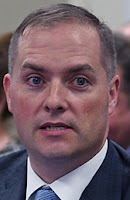
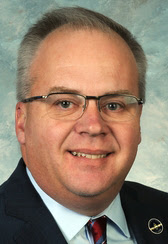
State Sen. Whitney Westerfield (Legislative photo)
Republican Sen. Whitney Westerfield of Christian County said he will introduce t​he Crisis Aversion and Rights Retention Orders bill, or CARR, because of shootings that left children dead and people injured.

“The law has to allow us to protect people,” Westerfield told the House-Senate committee Friday. “I feel like it’s my obligation, and though I can’t speak for you, I believe it is your obligation, to not be afraid to have difficult conversations about the toughest issues that people of Kentucky face.”

Such laws have been enacted in 19 states, Louisville's WDRB reports. The nonprofit Whitney/Strong, formed by a Cincinnati woman to fight gun violence, says CARR generally works like this: 
  • A concerned community member brings evidence about potential harm to one’s self or others, and law enforcement can then file a legal petition to remove that person’s guns temporarily.
  • A judge will “approve or deny the temporary transfer petition after conducting a strict, independent judicial review.”
  • If the judge grants the petition, guns belonging to the person in question are handed over temporarily to law enforcement or “a trusted person outside of the owner’s household.”
  • A hearing is then held to determine next steps, which may include “identifying opportunities for important support services for the individual in crisis.”
  • Once the person is not in crisis, the guns are returned.
It’s unclear what Kentucky’s specific legislation would look like. Westerfield is working on two draft options, he said, which may “change a lot.”

One version of the bill includes the option for law enforcement to approach the person in question and tell them someone brought concerns forward about their safety or the safety of others.

“It gives the respondent the option,” Westerfield explained. “You can have a hearing within X number of hours, near immediate. Keep your guns until then, not keep your guns — that’s up in the air. Or, you can give us your guns now, and we’ll have a hearing in a week.”

“The respondent has the burden of defending that in that particular case,” he said. Timelines are adjustable, he added, since there may be practical problems getting a hearing so soon.

There are other potential problems, Westerfield said.

“If you tell someone that you fear has … a mental-health issue, or a trauma, something that you’re worried they’re about to break, and then you don’t act with some near immediacy, you might actually provoke the act,” he said. “That’s the concern. And you’re balancing that risk and that concern with the Second Amendment right that they have and no one disputes that they have.”

The second version of Westerfield's proposal includes an ex parte hearing, in which the judge would hold without the gun owner present.

This version “still has the law-enforcement steps,” Westerfield said. “So, it’s not just anybody on a whim asking for a judge to get your guns. There has to be some articulated, specific reasons” for the move.

Westerfield said whatever version of bill he files will be “meaningfully different in a couple of ways” from so-called “red flag” laws. “First of all, the timelines are shorter,” he said. “The burden of proof is going to be higher.”

State Rep. Savannah Maddox (Legislative photo)
Rep. Savannah Maddox, R-Dry Ridge, reiterated her “longstanding opposition to this proposal” and concern that it has the potential to violate constitutional rights such as due process and protection against government search and seizure.

“When law enforcement comes to seize the firearms, do they automatically know where to find them?” she asked. “Are they told where to find them? Do they dig through the entirety of the house?” She said this could lead to a registry of some kind.

Westerfield said he isn’t proposing any kind of “search” or “ransacking of a home,” and “I think it’s on the honor system.”

Maddox said, “We must fervently resist any effort to pass gun-control legislation. And we must be serious about analyzing the data and putting a stop to these ineffective policies that put innocent citizens in harm’s way. And we have to encourage privately held entities to do the same.”

Whitney Austin, who co-founded Whitney Strong after surviving a mass shooting in Cincinnati, told the panel that “we know that misuse of firearms is not tied to law-abiding, mentally well gun owners. CARR was not created for them. CARR was created to surgically identify the small subset of gun owners, including those in lawful possession of a firearm, who are on the brink of misusing their guns to harm themselves or others.”

Sheila Schuster, a licensed psychologist and executive director of the Kentucky Mental Health Coalition, told the Lantern that she supports CARR, but “The truth is that people with a mental illness are 10 times more likely to be a victim of violent crime than to be a perpetrator.”

She explained, “At the point that someone commits an act, particularly hurting someone else, it’s very likely that they are suffering with rage, with paranoia and in terms of feeling like somebody has done something to wrong them and they’re gonna (get) revenge.”

Schuster added that suicidal people taking their lives happen at an “astronomical percentage higher if there’s a gun within reach than if there’s not.”

In a written statement to the lawmakers, Schuster said: “As a psychologist and mental health advocate, I am painfully aware of the stigma of mental illness and the confusion in the minds of many people that mass shooters are undoubtedly mentally ill. This is not the case and the CARR legislation does a very good job of not adding to nor reinforcing that false narrative.”

Kentucky has a law that requires mental-health professionals to warn potential victims if a client makes a threat to someone’s safety. Kentuckians who are mentally ill and at risk of harming themselves or others and can benefit from treatment can be involuntarily hospitalized if that's the least restrictive mode of treatment available.

Support at the committee meeting came mainly from Jefferson County. Westerfield's intended co-sponsor is Sen. David Yates, D-Louisville. Rep. Pamela Stevenson of Louisville, this year's Democratic candidate for attormney general, endorsed CARR, saying “with every right there’s a responsibility. . . . We’ve got to be brave enough to not let people just die nilly-willy.”

Jeffersontown Police Chief Richard Sanders endorsed CARR, saying police are “faced with things today that I’ve never seen before. . . . One of the biggest problems we face in law enforcement is people suffering from mental illness.” Some people, he said, “shouldn’t have access to a weapon.”

Wednesday, May 1, 2024

Does Ky. law protect in vitro fertilization? Depends on who's asked

State Rep. Lindsey Burke, D-Lexington, whose son was born through in
vitro fertilization, said state law doesn't protect the procedure. (LRC photo) 
By Sarah Ladd
Kentucky Lantern

None of the bills to explicitly protect in vitro fertilization in Kentucky got a hearing this legislative session, making them effectively dead on arrival.

With roughly eight months until the next session, some lawmakers and attorneys disagree on what protections exist for IVF under current Kentucky law.

Republican Sen. Whitney Westerfield — who has children thanks to IVF — believes there is an appetite in the General Assembly to pass specific IVF protections. The failure to do so, he said, was probably “a function of time.”

Westerfield filed a bill to protect the process on the filing deadline for Senate bills. His House and Senate colleagues who filed similar bills also did so right before or on the filing deadlines.

The issue, he noted, wasn’t on “anybody’s radar” until an Alabama Supreme Court decision — which came down right before the deadline to file Kentucky bills — seemingly complicated the treatment.

Westerfield, of Fruit Hill in Christian County, announced before the legislative session began that he would not seek re-electin this year.
 
‘They should always be preserved’

Westerfield and his wife, Amanda, are expecting triplets this summer. The three, as well as their 6-year-old son, were adopted as embryos — the result of someone going through IVF and donating eggs. The Westerfields also have a daughter who joined their family as a “traditional domestic adoption.” They have another embryo they are paying around $500 annually to preserve.

“I think they should always be preserved,” Westerfield said. “But I also understand not everybody holds that view. My son is one of those that was preserved, thankfully. These boys that are on the way were preserved.”

The Westerfields chose to have children this way because, had they gone through IVF themselves, “We were worried that we might have more than we could try to transfer on our own,” Westerfield said.

“We didn’t want to have so many left over that we couldn’t … bring to full-term birth ourselves and give a home to. And then you worry about making sure they end up in a home somewhere because we don’t want them destroyed. Not everybody wants to adopt an embryo and be pregnant. Some people do, thankfully.”

Even though the legislature didn’t pass the IVF-specific bills this year, it did pass House Bill 159, which Gov. Andy Beshear then signed into law. It gives health-care providers immunity from criminal charges for medical mistakes.

On the day HB 159 passed the Senate, Westerfield said he believed it would protect IVF by default because it broadly protects “providers.”

The law states: “A health-care provider providing health services shall be immune from criminal liability for any harm or damages alleged to arise from an act or omission relating to the provision of health services.”

Westerfield, who is also a lawyer, said this is “more comprehensive” than what he proposed to specifically protect IVF. “It covered everything mine covered and then some,” he said.

Ben Potash, a lawyer representing three Jewish women who are suing over Kentucky’s abortion law, believes HB 159 does not protect IVF since discarding extra eggs in the IVF process is a willful act.

HB 159 says “Nothing … limits any liability for gross negligence or wanton, willful, malicious, or intentional misconduct.”
 
‘No one really knows what the law is’

Potash believes the two topics — abortion and IVF — are too closely related to be separated. Going through IVF in Kentucky right now is “precarious,” he said. “No one really knows what the law is.”

Kentucky Attorney General Russell Coleman has called IVF “an incredible blessing for so many seeking to become parents,” and said “The plain language of Kentucky’s laws makes it clear that neither IVF nor the disposal of embryos created through IVF and not yet implanted are prohibited.”

But Potash says, “Making it civil, secular law that life begins at conception introduces all kinds of complications to IVF, to motherhood in general, to parenthood in general.”

Kentucky’s “Human Life Protection Act” — the trigger law that went into effect after the U.S. Supreme Court overturned Roe v. Wade in 2022 — states that an embryo is an “unborn human being” from egg fertilization to birth.

The 1973 Roe v. Wade decision established abortion as a constitutional right. Once that federal protection was gone, Kentucky’s law updated to all but ban abortion entirely, except in rare and life-threatening situations

Judith Daar, dean of Northern Kentucky University’s Chase College of Law and a legal expert on reproductive assistance, said that while “Many states have language in their statutes regarding abortion that declare life begins at conception or fertilization,” those laws also link abortion to pregnancy, which “is defined as an attachment of the embryo inside the mom.”

That is the case in Kentucky. The law states that “‘pregnant’ means the human female reproductive condition of having a living unborn human being within her body throughout the entire embryonic and fetal stages.”

“To the extent that all the abortion laws tether and condition the conduct on the existence of a pregnancy, then IVF really does escape application of the abortion laws, at least in the preimplantation stage when the embryos are still in the laboratory,” Daar explained. “That is not, per se, a pregnancy because it doesn’t meet the definition of the attachment of the embryo into the uterus.”

Because of this, Daar said, Kentucky doesn’t necessarily need to pass an explicit bill on IVF at this time: “There’s nothing that I’m aware of … that suggests that any aspect of IVF practice is illegal under Kentucky law.”
 
The IVF process

Dr. Sigal Klipstein, chair of the Ethics Committee of the American Society for Reproductive Medicine, said people need IVF for many reasons. Some seek it because of infertility — a man has little to no sperm or a woman does not ovulate, for example. Same-sex couples may undergo IVF as a way to have biological children, she said, or uncoupled people may seek that service for themselves.

“In a typical IVF cycle, a woman might take about 10 days of injections,” Klipstein explained. These are “little, under the skin injections, kind of like insulin needles.”

“They sort of bypass the system,” she said. “So instead of having enough hormone to release one egg, you might release five or 10 or 20 eggs.”

A final shot at the end of those 10 days triggers ovulation, Klipstein said. The patient then undergoes anesthesia and eggs are removed with a needle that enters through the vagina under ultrasound guidance.

Eggs are then mixed with sperm in a lab and grown for five to six days. The best one is then implanted into the uterus.

Usually, there are extra eggs leftover, Klipstein said. They can be donated, stored, discarded, or be placed in the uterus during a time that won’t result in pregnancy. This is called “compassionate transfer,” Klipstein explained. In this process, “you’re sort of more physiologically, more naturally, allowing the embryos to reabsorb into the body.”

Potash said the “routine” extra eggs make the process complicated if they are considered human beings by law. The Alabama Supreme Court set the precedent for that complication when it ruled in mid February that frozen embryos are children.

“It’s unrealistic and cost prohibitive, as well as I think a little cruel,” Potash said, “to make those mothers keep those fertilized ova on ice, essentially, forever.”

Klipstein agreed, and asked: What happens if someone stops paying or a storage facility closes? “Do you require them to have more babies than they want? I mean, I don’t think you can compel someone to get pregnant against their will to prevent them from discarding those embryos.”

“It would be nice if we had one embryo for one baby, and we could do it as a one to one ratio,” she added. “But, you know, medicine doesn’t work that way. And IVF doesn’t work that way.”

Westerfield has a different perspective. “It’s hard for me to imagine someone going into that process without an awareness of the cost,” he said.

IVF can cost between $15,000 and $30,000 per cycle, according to a 2023 article in Forbes. Storage can cost from $350 to $600 per year as well, the magazine reported.

“I don’t think anybody goes into that without knowing whether or not they either can afford it, or have insurance to cover it, or what have you,” Westerfield said.

He and his wife wouldn’t have adopted as many embryos as they did, he said, “if we thought we couldn’t afford to keep this one on ice, frozen.”

“We wouldn’t have done more than what we could transfer at a time,” he said. “We wouldn’t have adopted three; we would have adopted one or maybe two.”

Providers, parents in ‘limbo’

Sen. Cassie Chambers Armstrong, D-Louisville, filed one of several unsuccessful bills to protect IVF this session. She said she is “disappointed” that no specific protections passed.

It might be plausible, she said, that HB 159 “does provide protection to IVF.” But, she said: “I don’t think that it’s decisive.”

The new law deals with criminal and not civil prosecution. That makes it unlikely to be applied to IVF, NKU’s Daar said.

“Instances of physicians acting in a criminal manner in the IVF setting is virtually non-existent,” Daar said. “I’m not saying it never happens, but it’s very, very rare. So a bill that generalizes criminal immunity … would not have a tremendous impact, if any impact, on IVF because that conduct just doesn’t occur.”

For now, Chambers Armstrong is particularly worried about how providers view the law. She wants to spend the interim talking to those people ahead of the next session.

“If IVF providers feel as though they have protection and this bill gives that to them, they will continue to offer services,” she said. “If they are concerned that they’re going to be subject to criminal liability for just doing their jobs, I’m worried that we’re going to see a chilling of making those services available.”

Meanwhile, she does think the state should “repeal … language that people believe could give embryos rights,” she said. But: “I don’t believe this General Assembly is going to do that anytime soon. I hope that people are correct when they say that we can provide some level of protection to IVF with those statutes on the books.”

Rep. Daniel Grossberg, D-Louisville, said the legislature has left “women and medical professionals” in “limbo”. He filed one of the unsuccessful bills to protect the process, and the only one in the House.

“The message that (this) sends,” he said, “is that women in Kentucky don’t have control over their reproductive choices.”
 
‘Let’s be proactive’

Rep. Lindsey Burke, D-Lexington, has openly discussed her journey with assault, infertility, IVF, miscarriage and abortion. She told the Lantern she doesn’t believe IVF is truly protected under current law.

“As long as fetal personhood is enshrined in Kentucky law, IVF is at risk,” said Burke, who is an attorney and mother of a son whom she had after undergoing IVF.

She is also paying $100 per month to store an embryo, as she hopes for another child someday.

Burke would like to file legislation to get “better insurance coverage for reproductive care” next year. She went into debt around $60,000 to have her son, she said. And: “I don’t think that anybody should have to do that.”

Chambers Armstrong, who is also a lawyer, said “I’m not sure that we’re going to get an answer as to whether this bill provides the type of protection for IVF that we’re hoping (for) unless and until it is challenged in court and we get a decision from the court.” But she doesn’t want to wait on litigation.

“Let’s be proactive. Let’s go ahead and pass a law that is very clear that it’s protecting IVF services and make sure that folks know that they can continue to receive the care that they have been seeking,” Chambers Armstrong said.

That must wait until at least 2025.

Friday, January 26, 2024

Bill filed in Kentucky that would allow judges to temporarily take guns from those at risk of harming themselves or others

Sen. Whitney Westerfield (Legislative photo)
By Sarah Ladd
Kentucky Lantern

Admitting it faces a “tough uphill climb,” Republican state Sen. Whitney Westerfield filed a bill Jan. 25 that would allow judges to temporarily remove firearms from Kentuckians at risk of harming themselves or others.

“There is more support for it than you hear,” Westerfield said of his measure, which he calls the Crisis Aversion and Rights Retention Orders bill, or CARR.

Westerfield, of Christian County, said Senate Bill 13 is the “cleanest” version and comes after feedback from his colleagues during a December interim hearing before the Joint Committee on Judiciary.

Draft language of the bill says:

  • Law enforcement cannot enter a person’s home “or interior premises” to gather their guns unless that person needs and requests assistance in doing so.
  • Police must give a receipt to the respondent detailing what guns were taken.
  • While the CARR order is in effect, the respondent cannot possess or buy guns.
  • The court must tell the respondent that they are not being charged with a crime and that they have the right to rebuttal. 
“We don’t want to take away guns from people who are law-abiding citizens,” Westerfield said Thursday to a supporter rally. “We want to step in temporarily to keep people safe. We don’t want it to be abused. We want to do something responsible, constitutional, to keep people safe. That’s what CARR does.”

The bill has four co-sponsors, all Democrats, led by Sen. David Yates of Louisville. He says judges who are entrusted with complicated child-custody situations can also be trusted to know when people can’t be trusted to have guns.

“This is not a gun-grabbing bill,” said Yates. “Public safety has got to be a top priority. And right now, we are in a crisis.”

The other Democratic sponsors are Sens. Carrie Chambers Armstrong and Denise Harper Angel of Louisville and Reginald Thomas of Lexington.

Sheila Schuster, a licensed psychologist and the executive director of the Kentucky Mental Health Coalition, previously told the Lantern that “People with a mental illness are 10 times more likely to be a victim of violent crime than to be a perpetrator.”

She also said suicidal people taking their lives happens at an “astronomical percentage higher if there’s a gun within reach than if there’s not.”

The nonprofit Whitney Strong, which works to end gun violence, reports that a majority of gun deaths in Kentucky were suicide in 2021 — 534 compared to 364 homicides. That same year, there was a suicide by firearm every 16 hours in Kentucky, according to Whitney Strong data shared Thursday. The National Suicide Prevention Lifeline is 988.

Westerfield called his bill “constitutionally sound” and said he hopes it gets a hearing this session. As of Friday, Jan. 26, the bill was still in the Senate Committee on Committees, made up of the chanber's leaders. Westerfield is chairman of the Judiciary Committee.

Thursday, January 23, 2020

First abortion bill of session clears committee; 2 more in hopper; Beshear administration lets Planned Parenthood apply for clinic

By Melissa Patrick
Kentucky Health News

A bill to require health care providers to do everything possible to save the life of a baby who is born alive has passed out of committee and now heads to the full Senate, where it is expected to pass.

Sen. Whitney Westerfield
The sponsor, Sen. Whitney Westerfield, R-Hopkinsville, paraphrased several Bible passages in his opening remarks, including one in which the prophet Jeremiah quotes God as telling him that "Before I formed you in the womb I knew you; before you were born I set you apart; I appointed you as a prophet to the nations."

Westerfield said, "Before we had a window into the womb through ultrasound, the Lord told us what was happening to that growing life -- for those who believe and follow God's word."

His Senate Bill 9 would require health-care providers give "medically appropriate and reasonable life-saving and life-sustaining medical care and treatment" to any infant born alive, including after a failed abortion, and would make it a felony for not doing so.

The bill, called the "Born Alive Infant Protection Act," passed Jan. 23 out of the Senate Veterans, Military Affairs and Public Protection Committee on a 9-0 vote, with all but one of them, Sen. Dennis Parrett, D-Elizabethtown, Republicans. None of the committee's Democrats were present. The other three Democrats on the committee were not present. 

Westerfield filed a similar bill last year that passed the Senate, but ran out of time in the House. Eighteen of the 38 senators are sponsoring this year's bill; one, Sen. Johnny Ray Turner, R-Prestonsburg, is a Democrat.

Westerfield told reporters after the committee meeting that he was not aware of any instances in which an infant was born alive in Kentucky from a failed abortion and that the measure is needed to "prevent it from ever happening," Bruce Schreiner reports for The Associated Press.

Westerfield added that he's concerned about situations such as late-term abortions that are allowed in some states where an infant might survive, Deoborah Yetter reports for the Louisville Courier Journal. Kentucky law prohibits abortions after 20 weeks, before a fetus is considered viable.

In a letter to members of the committee, Kate Miller, advocacy director of the American Civil Liberties Union Foundation of Kentucky, called the bill an "unnecessary and dangerous piece of legislation" that "has nothing to do with how abortion care actually works and is based on false claims. Bills like these perpetuate myths and lies about abortion care, patients who receive this care, and the doctors who care for them."

Westerfield told the committee that he hopes Democratic Gov. Andy Beshear would sign the bill or let it become law without his signature, but if he vetoes it, "I look forward to overriding that veto." Gubernatorial vetoes can be overridden by majorities in each chamber, and Republicans have supermajorities in both.

Two other anti-abortion bills have been filed in the legislative session that began Jan. 7.

House Bill 67, sponsored by Rep. Joseph Fischer, R-Ft. Thomas, would amend the state constitution to specify that it includes no protection for abortion rights. It has been assigned to the House Elections, Constitutional Amendments & Intergovernmental Affairs Committee.

House Bill 142, sponsored by Rep. Lynn Bechler, R-Marion, would prohibit public money from going to any entity that performs, induces, refers for or counsels in favor of abortions. It has been assigned to the House Appropriations and Revenue Committee.

Last year, the Republican-led General Assembly passed four anti-abortion bills. Two have been delayed by legal challenges, including one that bans abortion once a heartbeat is detected (usually around six weeks of pregnancy) and one banning abortion due to gender, race or disability of a fetus.

A law that bans the most common second-trimester abortion procedure is also being challenged in the courts. This law was struck down by a federal judge, a decision that was appealed by the administration of then-Gov. Matt Bevin, a Republican.

In a Jan. 3 letter, the Beshear administration informed Planned Parenthood of Indiana and Kentucky that it could apply for a license to provide abortions at its clinic in downtown Louisville, Deborah Yetter reports for the Courier Journal.

That would be the second abortion provider in the state, in addition to EMW Women's Surgical Center in Louisville. An abortion clinic in Lexington closed  in 2016 after enforcement action by Bevin's administration -- which also denied Planned Parenthood's application and accused it in court of providing 23 illegal abortions.

“Gov. Beshear’s administration recognized that our license had been wrongfully denied and that the previous administration didn’t follow the proper process," said Hannah Brass Greer, chief legal counsel for Planned Parenthood.

Planned Parenthood has denied that it provided illegal abortions, saying it was acting on instructions of the former administration led by then-Gov. Steve Beshear, Andy Beshear's father, who advised it to offer the procedure in order to be inspected for final action on the license.

The current Beshear administration has dropped the lawsuit, stating there was no failure to comply with the law, Yetter reports.

Sunday, March 20, 2022

Senate sends House a bill to create a pilot program for treatment of offenders with mental-health or substance-use disorders

By Melissa Patrick
Kentucky Health News

A bill moving through the state legislature would create a pilot program to divert some qualifying low-level offenders away from jail and into treatment for substance-use disorder or mental-health issues.

State Sen. Whitney Westerfield
While getting his bill through the Senate March 18, Judiciary Committee Chair Whitney Westerfield said he had been working on the problem for several years when he realized, at an unrelated meeting about bail issues, that everyone there recognized the need to address behavioral-health issues among prisoners. 

"The long and short of it is this," he told his colleagues. "Everyone in the room, the most hard-nosed prosecutor, the most soft-hearted defense attorney, every judge at every level, everyone agrees that the vast majority of our prison population could benefit from some sort of behavioral-health intervention."

Westerfield's Senate Bill 90 would create a pilot program in at least 10 counties, determined by the state Supreme Court, that would require a mental-health and substance-use disorder assessment for low-level offenders.

If an offender qualified for the new Behavioral Health Conditional Dismissal Program, the prosecution and the defense attorney must agree for the offender to join it.

Charges against the offender would be deferred, meaning that the prosecution would be "set on the shelf," Westerfield said. Those who successfully complete the program would have their charges dismissed. 

To qualify, offenders can't be charged with a felony higher than Class D (punishable by one to five years in prison), and can't have a previous conviction for a higher felony. Also, those charged with violent offenses or sex offenses, among others, would not be eligible.

In addition to treatment, the program would have educational, vocational and recovery-housing supports. Westerfield said it's been said over and over that getting someone a job is the single most effective thing we can do to prevent offenders from committing another crime: "If we can keep them from coming back, we've saved us all a bunch of trouble and we've saved a future victim."

With some exceptions, the program must last at least a year and cannot exceed the person's maximum incarceration time unless the defendant agrees in writing to extend the treatment period. 

That's important, said Senate President Robert Stivers, a co-sponsor of the bill, who said he had also been working on the problem for several years.

"Every study you will read will say that a person is less likely to be a recidivist or a relapser once you get beyond a year," he said. "If you get them . . . some type of skills and training and a job, your likelihood of relapsing or recidivism even drops greater than that." 

Stivers added, "I don't know if it goes far enough or too far. But truly, if we're thinking about getting into changing the trajectory of people's lives, getting people back to work, getting them off the welfare rolls, medical assistance, Medicaid, this is an alternative that I believe we should try."

Sen. David Yates, D-Louisville, said the program has the potential to be "transformative to the Commonwealth of Kentucky," because a tough-on-crime approach often does not work for people with mental health or substance-use disorder issues. Yates is a lawyer, as are Westerfield and Stivers. 

"This is just an excellent step in the right direction to get people out of jail, into the workforce, into our economy and stopping this terrible cycle that we hear over and over again," Yates said. 

Sen. Robin Webb, D-Grayson, a lawyer who voted against the bill, asked who would have access to the mental-health evaluation that is taken within 72 hours of intake, often before the offender has an attorney. 

Westerfield said that would be medical information, so only the medical provider would have access to it unless the offender committed a crime during the assessment. He said he would be willing to adjust the bill in the House to ensure that the commonwealth's attorney does not have access to the assessment. 

SB 90 passed the Senate 27-4. In addition to Webb, Republicans Chris McDaniel of Ryland Heights, John Schickel of Union and Majority Floor Leader Damon Thayer of Georgetown voted no.

The bill is now in the House. It has a data-collection component to help determine its effectiveness. The program would begin in October and last four years unless extended or limited by the legislature.

Monday, March 25, 2024

Legislature sends Beshear bill decriminalizing medical mistakes; some in vitro fertilization advocates say bill will protect it

By Sarah Ladd
Kentucky Lantern

A bill giving Kentucky’s health-care providers criminal immunity for medical mistakes — which one lawmaker thinks will enshrine protections for in vitro fertilization by default — is on its way to Gov. Andy Beshear’s desk.

House Bill 159, which would decriminalize medical mistakes made by health care providers, passed the House in February by a vote of 94-0. On Friday it cleared the Senate — also without dissent.

The bill follows a 2022 Tennessee case in which a nurse was found guilty after a patient died from a medical mistake. The conviction led to protests and resignations within the health care community, KFF Health News has reported.

The Kentucky Nurses Association says that if medical mistakes are criminalized, providers are less likely to report them.

“I’m all for responsibility for medical errors,” said Sen. Phillip Wheeler, R-Pikeville, who carried the bill to the Senate floor on the 54th day of the 60-day legislative session. “I think that that is an appropriate domain for civil justice and not for the criminal justice system.”

State Sen. Whitney Westerfield
Republican Sen. Whitney Westerfield, who in February filed a bill seeking to protect access to in vitro fertilization in Kentucky, said he believes HB 159 will accomplish his goal by default. His colleague, Sen. Cassie Chambers Armstrong, D-Louisville, filed a similar bill to protect IVF.

“Neither of our bills have advanced,” Westerfield said while voting in favor of HB 159, which he said will cover IVF access because of its “broad” definition of the word “providers.”

The criminal-liability bill, sponsored by Rep. Patrick Flannery, R-Olive Hill, protects “a person providing health services” who is appropriately licensed and/or certified.

Bills to protect access to IVF, which is used to treat infertility and can help other people trying to get pregnant to do so, came this session in response to a ruling from the Alabama Supreme Court stating that frozen embryos are children.

The ruling led to concerns that it could deter people in Alabama from attempting to conceive children via IVF, which sometimes involves freezing embryos for future attempts at insemination. Several clinics in Alabama, including the University of Alabama Birmingham, paused IVF treatments and embryo transfers in response to the ruling.

Westerfield, of Christian County, said House Bill 159 will protect IVF.

“I think this bill accomplishes that and does so without necessary amendments or changes,” Westerfield said. “And so as a proud father of now four IVF children, I’m proud to see this bill make final passage and head to the governor.”

Thursday, March 12, 2020

Three anti-abortion bills advance in General Assembly

Rep. Joseph Fisher
The Kentucky House of Representatives passed two anti-abortion bills March 10, one to amend the state constitution to say that it grants no right to abortion, and another to expand the power of the Kentucky attorney general to regulate abortion facilities.

House Bill 67, sponsored by Rep. Joseph Fischer, R-Fort Thomas, would have the constitution say, "To protect human life, nothing in this Constitution shall be construed to secure or protect a right to abortion or require the funding of abortion."

The bill went to the Senate on a vote of 71-21. If approved there and by voters this fall, it would be effective only if the U.S. Supreme Court overturned its 1973 Roe v. Wade decision. He said it would "end the slaughter of unborn children in Kentucky," Joe Sonka reports for the Louisville Courier Journal.

Several Democratic legislators spoke against the bill, reading the testimony of opponents who were cut off by the committee chairman after only seven minutes when the bill was in committee.

Rep. Patti Minter, D-Bowling Green, called Fischer’s bill “blatantly unconstitutional” and a “grave violation of individual liberty.” She noted that the bill has no exceptions for “victims of rape, for those who have survived incest, [or] to save the life of the mother.” To pass such an amendment, she said, is “exceptionally cruel." Fisher said the legislature could provide exceptions by law.

House Bill 451, sponsored by Rep. Stan Lee, R-Lexington, would expand the power of the attorney general to regulate abortion facilities, including bringing injunction relief as well as civil or criminal penalties for violations. This bill went to the Senate on a 70-23 vote.

Current law only allows the attorney general this power if action is requested by the Cabinet for Health and Family Services, which licenses and inspects health facilities. But for the first time ever, the executive branch is run by Democrats and the attorney general is a Republican: Daniel Cameron, who opposes abortion rights.

Rep. Stan Lee
Lee said his bill “simply allows the attorney general to step in and act as a special prosecutor as his office does all over the state currently in any number of cases.”

Rep. Mary Lou Marzian, D-Louisville, called the bill a “power grab,” saying Kentucky women “do not need a special prosecutor to come at them for myriad reasons that will, in the end, be very political ones . . . not connected to our health,” Alex Acquisto reports for the Lexington Herald-Leader. Lee countered that a special prosecutor was needed to protect the “unborn babies that are killed,” Sonka reports.

The next day, a Senate bill, called the "Born Alive Infant Protection Act," to require health care providers to do everything possible to save the life of a baby who is born alive, was approved by the House Judiciary Committee. It is posted for passage in the full House.

Senate Bill 9, sponsored by Sen. Whitney Westerfield, R-Hopkinsville, would require health-care providers to give "medically appropriate and reasonable life-saving and life-sustaining medical care and treatment" to any infant born alive, including after a failed abortion, and would make not doing so a felony. The bill was amended to remove any reference to research, so it would not inhibit ongoing research.

Sen. Whitney Westerfield
Westerfield said the bill is not specifically tailored to abortion, but Jackie McGranahan of the American Civil Liberties Union of Kentucky said it "does not accurately reflect how abortion works and it's based on false claims. . . . This bill perpetuates stereotypes about abortion, the women who receive abortions and the doctors who care for them."

Rep. Maria Sorolis, D-Louisville, said she was "really troubled" by the bill. "We have laws in this state that prevent killing anything that breathes on its own, they call it murder," she said. "So we don't need this bill; it's already on the books, because the minute a pregnancy ends and a human being is born, they have all the full protections of this state."

Further, she said the bill doesn't account for palliative care and would strip away the rights of parents to make difficult palliative decisions when they are told that their infant will not live or will not have quality of life. "I am appalled that you would try to do this to an infant," she said.

Asked why he didn't think our current laws were sufficient, Westerfield said this bill wasn't about whether such a situation has ever happened, but about its possibility. He said a constituent told him they had to argue with their physician to have their premature child cared for.

Sorolis asked what the parameters of the bill were, noting that the bill doesn't define care.

"This bill doesn't just provide food, water, the things that are basic human needs. This provides that the parents totally lose their right to make a decision about what is best for their child," she said. "And how do we extrapolate that when we have parents, for example, who refuse medical care based on religious principles? How do we decide for them that the state gets to usurp your religious convictions and require that you do these extreme measures?"

Westerfield said he didn't think his bill strips parents of their rights, "except to the extent that they can't have their child killed." He said the bill does not change the standard of care, but only requires that care be provided. It cleared the committee 16-4, with two members passing.

Sunday, May 12, 2019

In May 21 Democratic primary for governor, Beshear talks most about health care, but Edelen questions his past contributors

L-R: Former state auditor Adam Edelen, state House Minority Leader Rocky Adkins and Attorney General Andy Beshear answered questions from Matt Jones at a debate in Lexington April 24. (Associated Press photo by Timothy D. Easley)
By Al Cross
Kentucky Health News

If health issues matter when it comes to your vote for governor in the May 21 primary election, the candidates have given you a few things to think about.

In the Democratic primary, Attorney General Andy Beshear has cast himself as the main defender of the 2010 Patient Protection and Affordable Care Act, which his father, then-Gov. Steve Beshear, used to expand Medicaid to many more of the state's working poor.

State House Minority Leader Rocky Adkins and former state auditor Adam Edelen also support the Medicaid expansion, and oppose Gov. Matt Bevin's plan, twice blocked by a federal judge, to require "able bodied" Medicaid beneficiaries to work, volunteer or perform other "community engagement."

Bevin's leading Republican primary foe, state Rep. Robert Goforth of Laurel County, favors the expansion and Bevin's plan to change it, said his campaign manager, T. J. Litafik.

All three Democrats have endorsed the legalization of medical marijuana, but Edelen also calls for decriminalization of possession of a half-ounce or less, to reduce jail costs and fund drug treatment, and he has criticized Beshear's plan to tax medical marijuana as part of a plan to shore up state revenues and pensions.

Edelen is attacking Beshear for the campaign help he got in 2015 from Altria Group, the nation's largest tobacco-products manufacturer, and Purdue Pharma, the maker of Oxycontin, the painkiller that primarily fueled the nation's opioid epidemic. At the time, Beshear was in a law firm that represented Purdue Pharma, but has said he took no part in its cases.

On Oct. 19, 2015, Purdue Pharma gave $100,000 to the Democratic Attorneys General Association, which was supporting Beshear in the nation's only fully competitive race for attorney general. On the same day, the DAGA got its second $25,000 contribution of the year from Altria, the tobacco firm that makes Marlboro cigarettes and now owns 35 percent of Juul Labs, maker of the most popular form of electronic cigarette.

Also on Oct. 19, DAGA sent $250,000 to groups in Kentucky running ads attacking Beshear's opponent, Republican state Sen. Whitney Westerfield of Hopkinsville. All told, it spent $1 million to help Beshear, who beat Westerfield by only 2,201 votes, 0.2 percent of the total. The Republican Attorneys General Association spent more than twice as much to help Westerfield.

Just before Beshear took office, Attorney General Jack Conway settled for $24 million a lawsuit that his predecessor, Greg Stumbo, had filed against Purdue Pharma in Pike County for its role in the opioid epidemic. After Beshear became attorney general, Purdue got Circuit Judge Steven Combs to seal the case file, including the only known deposition from a member of the family that owns the company. Stat, the medical-and-science publication of The Boston Globe, asked the judge to unseal the file, and Beshear's office took no position on the issue.

The judge unsealed the file, and the Court of Appeals upheld him, but Purdue has appealed to the state Supreme Court. The deposition of Richard Sackler, then head of the company, includes emails in which he endorses a lieutenant's recommendation that Purdue not "correct the false impression among doctors that OxyContin was weaker than morphine, because the myth was boosting prescriptions — and sales," Stat reported in February, after the deposition was leaked to ProPublica.

Beshear has responded to Edelen's attack with an ad noting that he has filed nine lawsuits against drug makers over the epidemic, and “won’t take their money.”

Beshear has emphasized health care more than any other candidate, calling for "lowering the cost of prescription drugs and holding pharmaceutical companies accountable" and putting a cap on Medicaid drug spending. He has published a plan on the issue that largely supports the provisions of the federal Patient Protection and Affordable Care Act.

Beshear said in his first ad that he is "helping lead a national effort to protect coverage for pre-existing conditions," the most popular feature of the act. He is among 16 Democratic attorneys general fighting a ruling by a federal judge in Texas that declared the act unconstitutional. On Twitter immediately after the ruling, he said, “I will lead the fight to overturn” it, but at a news conference said he would be "as vocal if not more vocal" than the others.

Ads from Beshear and Edelen both criticize Bevin on health care. Edelen claims the governor "sold out to the insurance companies, let them jack up premiums and kick thousands off their health care."

Asked how Bevin sold out, Edelen spokesman Matt Erwin said in an email, "Matt Bevin supports the elimination of the ACA in its entirety. Nobody would benefit more . .. than the big insurance companies who could return to denying coverage for those with preexisting conditions and offering plans that don't even provide coverage for basic health care services." He said Bevin's Medicaid plan would "cause tens of thousands of Kentuckians, if not more, to lose coverage."

Bevin's plan estimates that after five years, Kentucky's Medicaid rolls would have 95,000 fewer beneficiaries than without the plan, in large measure for failing to comply with its community-engagement and reporting rules. Tens of thousands of Kentuckians go on and off Medicaid each month as their eligibility changes. About 1.4 million Kentuckians are on the program, more than 400,000 through the expansion.

Adkins has stayed out of the Beshear-Edelen fray, hoping to be the alternative, and emphasizes education and economic development. His website notes that he and his running mate for lieutenant governor, Stephanie Horne, "are both cancer survivors and know the pain and cost of unexpected illness, and that's why they want to make sure every Kentuckian has access to health care."

Wednesday, January 7, 2015

Hopkinsville newspaper says it's time for legislators to capitalize on strong public support for a statewide smoking ban

Noting the results of a poll that show two-thirds of Kentuckians support a statewide ban on smoking in public places, the Kentucky New Era of Hopkinsville said in an editorial, "It is time to capitalize on the public’s support for smoke-free legislation."

The locally owned daily, in a town where tobacco remains influential, said "Kentucky lawmakers — especially those from rural areas where tobacco interests have political influence and where residents value private property rights — have been reluctant to expose themselves to any backlash from opponents of smoke-free laws. Unfortunately, this kind of political calculation ignores the heavy toll of tobacco on Kentucky’s health."

The paper noted that a smoking-ban bill "died in the Senate Judiciary Committee, chaired by Sen. Whitney Westerfield, R-Hopkinsville. Obviously, Senate leaders expected Westerfield to let the bill languish. The appropriate assignment for the bill would have been the Senate Health and Welfare Committee, chaired by a supporter of the legislation. If the bill does land in Westerfield’s committee again, we hope he will ensure the measure advances to a floor vote."

Friday, March 11, 2022

Medical marijuana appears to have more traction than ever in Ky.

UPDATE: The House sent the bill to the Senate March 17 by a vote of 59-35.

Rep. Jason Nemes (CJ photo by Joe Sonka)
Kentucky looks closer than ever to joining the 37 states that allow prescriptions for marijuana, or cannabis.

Thursday evening a state House committee approved a bill that would allow doctors to prescribe cannabis to people who have certain ailments, "along with a new bureaucracy to strictly regulate it from plant to processor to dispensaries," which sponsor Jason Nemes, a Louisville Republican, says will be the strictest medical program in the country," Joe Sonka reports for the Courier Journal.

The ailments are cancer, "chronic, severe, intractable, or debilitating pain; epilepsy or any other intractable seizure disorder; multiple sclerosis, muscle spasms, or spasticity; and nausea or vomiting." Nemes said he will support a floor amendment by Rep. Rachel Roberts, D-Newport, to add post-traumatic stress syndrome.

"A similar medical cannabis bill led by Nemes easily cleared the House chamber for the first time in 2020 with 65 votes, but stalled in the Senate because of the Covid-shortened session" and lack of support by Republican leaders, Sonka notes. "However, medical marijuana advocates are now optimistic," due to new support from Senate Judiciary Committee Chairman Whitney Westerfield, "who met many times with Nemes over the past year to amend it into legislation he could back."

Sen. Whitney Westerfield
(Legislative staff photo)
"You can't overestimate how important he is," Nemes said after the House Judiciary Committee approved House Bill 136 15-1. Voting no was Rep. Kim Moser, R-Taylor Mill, who cited opposition from doctors, including concerns about the lack of guidelines for prescribing and dosing cannabis.

Westerfield, a Republican from Crofton in Christian County, said he still has concerns about youth access to cannabis, but “I’ve heard too many stories in my district, and out, from those long suffering, and their loved ones left behind, that marijuana brought comfort and relief when nothing else worked.”

Nemes said "I feel good about where we are in the Senate," but Sonka reports that to pass, the bill would need a majority of the 30 Republicans in that chamber, and the top two Republicans, "Senate President Robert Stivers and Majority Floor Leader Damon Thayer, have both expressed skepticism about medical marijuana in the past and said more research was needed, though the legislation has never received a thorough debate within the chamber's GOP caucus room." Those debates are private.

The bill would allow county governments to impose fees on cannabis businesses "to compensate for any additional public safety impact" and prohibit medicinal cannabis sales by voter referendum, but if a county's voters did so, city governments could exempt themselves from the prohibition.

The bill also includes a 12 percent tax on cannabis sold to dispensers, mainly to cover the costs of regulating it; 13.75% of the revenue would be returned to dispensaries to subsidize purchases of cannabis by those who can't afford it.

Saturday, January 9, 2021

2 anti-abortion bills are sent again to Beshear, who vetoed them last year as time ran out; opponents still say neither is necessary

By Melissa Patrick
Kentucky Health News

Two abortion-related bills are on their way to Gov. Andy Beshear's desk. One would require "medically appropriate and reasonable life-saving and life-sustaining medical care and treatment" be provided to any infant born alive, including after a failed abortion. The other gives anti-abortion Attorney General Daniel Cameron new power to provide oversight of abortion care providers. 

Similar measures were in a single bill that passed in the last legislative session, but was vetoed by Beshear. Legislators were unable to override him because they passed it too late in the legislative session, but made the legislation a priority in the first week of this session.

Rep. Joseph Fischer
House Bill 2
, sponsored by Rep. Joseph Fischer, R-Ft. Thomas, would give the attorney general concurrent authority, along with the Cabinet for Health and Family Services, to enforce the state's abortion laws. 

It also says that under any state of emergency declared by the governor in response to the novel coronavirus, the state cannot deem an abortion to be an "emergent or urgent medical procedure," as the cabinet has done. 

Fisher told the Senate Judiciary Committee Jan. 8 that the measure is necessary because Beshear showed no interest in enforcing the state's abortion laws when he was attorney general, vetoed the bill once and allowed abortions during the pandemic, while suspending some other medical procedures. 

"In recent years the General Assembly has passed some of the strongest pro-life legislation in the nation, but unless we have someone to defend and enforce those laws, they are meaningless," Fischer said. 

The American Civil Liberties Union of Kentucky opposed the bill at both judiciary committee meetings, and said in a news release that it is not about improving health and safety, since it only gives the attorney general authority over abortion providers and none of the others regulated by the cabinet. 

"Abortion providers are heavily regulated in the state," ACLU-KY Reproductive Freedom Project strategist Jackie McGranahan told the House Judiciary Committee Jan. 7. "This bill is a blatant power grab and an obvious attempt to enact the General Assembly's and the attorney general's anti-abortion agenda." 

After the bill's final passage, Tamarra Wieder, state director for Planned Parenthood Advocates of Indiana and Kentucky, said the Republican "supermajority’s unprecedented attempt to shift control out of the Cabinet for Health and Family Services, and place health-care decisions under someone without a medical background, is a dangerous game to play with people who are already trying to survive the economic, social and racial issues compounded by Covid-19."  

HB 2, which has an emergency clause, was the first bill to gain approval in the legislative session. It passed the House 75-18 on Jan. 7 and the Senate 30-5 on Jan. 9. 

Sen. Whitney Westerfield
Senate Bill 9
, sponsored by Sen. Whitney Westerfield, R-Crofton, would require that an infant born alive be given medically appropriate care. Health-care providers who fail to do so could have their licenses revoked or face a felony charge.

During the Jan. 7 Senate floor vote, Sen. Karen Berg, D-Louisville, said she was concerned that the bill would tie the hands of medical providers during miscarriages, forcing them to try to save an infant not mature enough to survive. 

“As a practicing physician who understands better than most in this room the limits of what medicine can and cannot do,” she said. “I cannot vote for a bill that requires for a physician to do something that is not doable.”

The next day, at the House Judiciary Committee meeting, Dr. Brittany Myers, an obstetrician-gynecologist in Louisville, testified "strongly against" the bill on behalf of the ACLU, explaining that it would only apply to miscarriages in Kentucky, since abortions can't be performed after 20 weeks of pregnancy. Before that, a fetus is not viable, she said. 

She added that there are already standards of care for physicians to follow to care for a child that is born prematurely. 

“The biggest takeaway I want you all to have from this is that this bill does not address any real-world problem in the setting of abortion care in the state of Kentucky. . . . This bill’s intent, I believe, is to shame patients and threaten providers and further limit access to abortion care, but I actually think what it will ultimately end up doing is changing the practice and handcuffing both general OB-GYNs and neonatologists and pediatricians by forcing them to intervene and resuscitate what this bill is calling a born-alive infant, but in actuality in what is medical terms is referred to as a non-viable fetus.” 

Westerfield said, "“We’re not asking for extraordinary measures. We are asking for medically appropriate and reasonable measures.”

During the Jan. 9 House floor vote, Rep. Kimberly Moser, R-Taylor Mill, who was a neonatal intensive-care nurse for many years, said that in her experience it was not possible to know if an infant was non-viable until after it is born, and that a decision to try to save that child needed to be made at that time, as opposed to making that determination based on an estimated gestational age. 

"This legislation is not a requirement that medical procedures which are considered extraordinary are undertaken, but the infant should be given the appropriate medical care for the circumstances and be given a chance at life," she said. 

SB 9 passed the Senate 32-4 on Jan. 7 and the House 76-18 on Jan. 9. It also would become effective immediately upon becoming law.

Beshear has 10 days to sign the bills into law, allow them to become law without his signature, or veto them. The House and Senate can override a veto with a vote of the majority of members in each chamber. The House has 75 Republicans and 25 Democrats, and the Senate is 30-8 Republican.

Saturday, September 12, 2020

Health chief goes another round with legislators, pushing back on data questions and answering queries on schools, other topics

By Al Cross
Kentucky Health News

FRANKFORT, Ky. – Republican legislators kept up their questioning of the state's coronavirus data Thursday, and the state health commissioner and Democratic lawmakers pushed back.

Sen. Danny Carroll
Sen. Danny Carroll of Paducah, co-chair of the Program Review and Investigations Committee, was the leading questioner and most outspoken legislator, just as he was at the panel's Aug. 13 meeting, when the committee heard from Dr. Steven Stack, commissioner of the Department for Public Health, and Doug Thoroughman, the state's acting chief epidemiologist.

Carroll kept relying Thursday on Thoroughman's tacit acknowledgement, in response to a Carroll question last month, that the positive-test rate that the state reports daily is not accurate, because of imperfect state and federal reporting systems. Thoroughman also said that the rate is useful for comparison over time because its method of calculation remains the same.

Thursday, Carroll noted that some test results have been delayed for weeks, and asked, "How can we have faith in daily numbers?" He said Democratic Gov. Andy Beshear never includes a disclaimer when giving the figure.

Dr. Steven Stack
Stack replied that while the data is "imperfect," it is "incredibly valuable. He noted that the state's daily report has an asterisk leading to a long footnote explaining how the rate is calculated.

He noted that the rate is an average over the previous seven days, and “I believe it becomes a very useful and accurate measure” for seeing trends. He said his department has undertaken "an unprecedented process" to get enough data for rates for about 80 counties.

Carroll replied, "The public sees the governor on TV talking about cases and positive rate" that changes from day to day . . . There is a stress that is put on our people as a result of these numbers." He quoted Thoroughman as saying that the numbers are not accurate, and said. "From an ethical standpoint, I struggle with the comfort level of putting this information out on a daily basis."

Stack replied, "I’m sorry you have such low confidence . . . " and Carroll interjected, "It’s not me. I hear it from my constituents daily. They’re mad about this."

Stack said he hears from others who are grateful for the information, and "It's possible for people to reach different conclusions from same information."

He added, "I don’t feel my ethics are compromised or challenged. . . . The metrics we use and the way we create them are consistent with the state of the art as best as public-health professionals can do it." He said President Trump uses weekly data on positive tests, and told Carroll, "Your concern might be that the president of the United States is misleading the public."

At another point, Carroll noted that the committee had also asked to hear again from Thoroughman, and asked why he wasn't present. Stack replied, "I’ve got him doing a lot of other work and I’m the commissioner," the person ultimately responsible for answering questions about the department.

Carroll said that was "disappointing . . . were it not for Dr. Thoroughman, I’m not sure we would know now that our positivity rates were off."

Toward the end of the meeting, after he and Stack went back and forth about a medical waiver to exempt a special-needs student from the mask mandate, Carroll boiled over.

He said of the state's reporting, "It’s being used to manipulate our people, to make our people scared, to control our people. It’s not accurate and its portrayed as being accurate."

Essentially repeating what he said at the last meeting, Carroll said, "Half of this state does not believe a word that you all say when it comes to the data." He said "All of this could have been avoided had the administration reached out" to leaders of the legislature's Republican majority about pandemic matters.

Sen. Karen Berg, M.D.
Earlier, Democratic Sen. Karen Berg of Louisville, a physician, complimented state health officials' work and said, “They need us to understand it and trust it” so legislators can tell constituents “We have got our best minds working on it . . . It will never be perfect. . . . My constituents have different reactions from Senator Carroll’s. . . . Our responsibility is to get on board and let’s do the best we can.”

Apparently addressing her colleagues, Berg said health-care providers are scared of the virus, and “You all need to understand . . . this is not the flu, this is not a hoax, this has nothing to do with politics or how you want it to be.”

Rep. Adam Koenig
A moderate voice: Rep. Adam Koenig, R-Erlanger, said health-care providers “deserve more thanks than they’re getting,” but “There’s nothing wrong with asking difficult questions.” He told Stack, “It’s been a wonderful opportunity for you to dispel misinformation. . . . No one up here thinks this is a hoax; this is not a political witch hunt; these are questions we get; there’s a lot of frustration.”

Earlier, Carroll had asked Stack, "Why do we not react the same way to these other diseases that we do to covid-19?"


Stack replied, "It's much more dangerous, everybody’s susceptible, and the sheer numbers . . . It's killing a lot more people," and there is no treatment that works on most patients. "There’s over 190,000 Americans who have died in six months. That way outstrips influenza." 

He said that the ultimate mortality rate for covid-19 will probably be about 1 percent, and if only one-third of Kentuckians got infected in a year's time, and 1% died, "That’s 15,000 Kentuckians. . . . That’s why it’s getting so much attention."

Death data: Rep. Lynn Bechler, R-Marion, the other co-chair, asked Stack about the recent notice from the Centers for Disease Control and Prevention that only 6 percent of covid-19 fatalities had no other health conditions that could have contributed to their deaths.

"I didn’t think it was newsworthy, quite frankly," Stack said, "because what we have said all along is that the most vulnerable population is people over 60 or 65 and with chronic medical conditions."

Bechler asked if it was "reasonable to suspect that 94 percent of deaths in Kentucky have underlying conditions." Stack said, "It could be even higher," since Kentucky ranks very high in chronic medical conditions.

Sen. Steve West, R-Paris, told Stack that "a lot of Kentuckians are wondering" about the death rate.

Stack replied, "The question is, how do we assign the immediate cause of death?" He said it's possible that people who have died of covid-19 "would have died in six months anyway" from another condition, but the state "follows the long-established norms we use for any other disease case."

In one of his written responses to questions asked at the last meeting, Stack said, "For death certificates for which the cause of death is not clear as to the contribution of covid-19, or appears to incorrectly include or exclude covid-19 as contributory to the cause of death, the committee reviews patient medical records, discusses the information available, and reaches consensus opinion on whether covid-19 is appropriate for inclusion or exclusion." 

He said the committee had reviewed 41 deaths through Sept. 8 and found that 17 had been removed from the covid-19 list. Through that date, the state had reported just under 1,000 covid-19 deaths.

Sen. Whitney Westerfield
In another written response, to a question posed by Sen. Whitney Westerfield, R-Hopkinsville, Stack said the positive-test rate "is more challenging to make precise due to variable timing of sample collection vs. test-result reporting and due to longstanding limitations in test-reporting policies, processes, and technologies. However, when these limiting variables stay constant, and data are averaged over a period of time, this metric is very helpful for trending purposes."

Asked how long health officials keep contact-tracing data, and whether it is being used for any purpose other than to trace contacts, Stack said, "Basic information is gathered; name, address, phone number, e-mail, etc. Local health departments and Department for Public Health epidemiologists, disease investigators and limited supervisory personnel have access to this. This data is not used for any other purpose other than to trace contacts. Privacy and data security standards are well established and maintained."

Schools: Westerfield asked Stack if he had "any information indicating a return to in-person schooling" before Sept. 28, the date Beshear has recommended.

Stack said they are sticking to that date, and wanted the extra time to learn from the experience of other states. He said he and Beshear are "working on number of things to announce Monday." They have indicated that will include county-level data to guide local decisions.

He said fans are being allowed in stadiums, with strict limits, because "the public demands to be in those stadiums. . ..  Going into a stadium in the middle of an epidemic is not a good idea." He said one stadium wanted 18,000 fans, "which means 600 infected people, shouting and screaming," and people in VIP suites. He estimated that could result in nine to 20 hospitalizations per game, and two deaths.

“We certainly can’t live in fear and not get back to some activities, but we can’t be reckless and careless about it, Stack said. “You could just turbocharge an epidemic,” especially in a major city like Louisville.

In a written question from the last meeting, Westerfield asked if "school data related to abuse/dependency/neglect referrals, substance use [and] behavioral health referrals [is] weighed against covid data when making the recommendations and orders related to schools."

Stack replied in writing, "These are all public-health issues. Social-emotional status of students, food insecurity, drug overdoses, child abuse, etc. all weigh on the minds of public health. Balancing these issues with the effects of a deadly virus that spreads so rapidly presents challenges. However, death or long-term health impacts on individuals from this virus cannot be reversed. Currently, these unintended consequences of managing covid-19 are not contemporaneously measureable as [are] individuals diagnosed with covid and any associated deaths. Data is being collected on abuse/neglect as well as for overdose deaths and other behavioral health impacts. The use of medication-assisted therapy, telehealth and other tele-visitation put in place since the very early stages of covid-19’s entrance into Kentucky has been very helpful. The assessment of the full consequences of covid-19 and impact of the measures taken to minimize the impact on individuals and the economy will be measured and studied for years to come."

A video of the committee meeting is on the KET website.