Monday, January 17, 2011

State legislator wants to mandate drug testing for recipients of Medicaid, food stamps and other entitlements

A Republican legislator wants to make recipients of government entitlement programs, including Medicaid, take random drug tests in order to keep getting help.
House Bill 208, which proposes the drug screening, was introduced Jan. 7 by state Rep. Lonnie Napier, R-Lancaster, left. "I'm not a hard-hearted guy," he told the Lexington Herald-Leader's Jack Brammer. "I believe there is a need for public assistance for those who need it, but I understand some are using these funds to buy drugs."

Napier said he wants the Kentucky Cabinet for Health and Family Services to do random drug and urine testing for any Kentucky resident over the age of 17 who gets Medicaid, food stamps or welfare benefits. Those failing the test would lose their benefits until they passed drug testing at a later date.

The cost of the proposal is unknown. Napier said there are more than 600,000 Kentucky adults on welfare, and a drug test costs about $30, resulting in a $18 million price tag, plus the likely larger cost of expanding drug treatment programs -- a point made by conservative WHAS Radio talk-show host Mandy Connell in opposing the bill this morning.
Sheila Schuster, who helps advocate for disabled Kentuckians, said the bill "fans the flames of people who misunderstand the plight of those who receive assistance and would put more negative connotation on them." (Read more)

Wednesday, January 12, 2011

Fort Campbell soldier who went AWOL, and says his Kentucky PTSD treatment was inadequate, is set to return to Afghanistan

A Fort Campbell-based soldier who went absent without leave because of alleged post-traumatic stress disorder will return to finish his tour in Afghanistan.

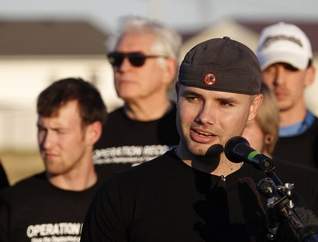
"My family doesn't want me to go, but I am not disobeying a command order," Spc. Jeff Hanks, 30, told Kristin M. Hall of The Associated Press. Hanks, right, said his mental health issues date back to a 2008 deployment in Iraq. Last year, he spent six months in Afghanistan, during which he sustained a concussion when a mortar landed near him. Since turning himself in on Nov. 11, 2010, he said he has been treated for nightmares and headaches and was told to get counseling when re-deployed. Hanks told the AP he does not feel his PTSD has been treated adequately.

Hanks, a married father from North Carolina, said he will likely serve another four months in the country to complete his one-year tour. He has committed to serve in the Army another two and a half years. A Fort Campbell spokeswoman told the AP that Hanks is scheduled to re-deploy in the coming days. (Read more)

Hanks was deployed overseas in May 2010 and did not return after a mid-tour leave in October, reports Jake Lowary of The Leaf-Chronicle in Clarksville, Tenn. After turning himself in on Veterans Day, the Army opted to send Hanks for treatment at a facility in Hopkinsville, Ky., rather than send him back to Afghanistan. (Read more)

UK scientists discover a clue to treating diseases like 'mad cow'

University of Kentucky scientists may be a step closer to finding a way to treat diseases related to prion proteins, including bovine spongiform encephalitis, or mad-cow disease. They've learned that plasminogen, a protein used to bust blood clots in the body, increases the speed at which prion diseases progress.

"Since prion diseases can lay undetected for decades, delaying the ability of the disease-associated prion protein to replicate by targeting the cofactor of the process could be a monumental implication for treatment," said Chongsuk Ryou, right, senior author of the study.

Prion diseases are rare, fatal diseases characterized by oddly-shaped protein molecules in the brain. Besides mad-cow, they include Creutzfeldt-Jakob disease in humans; scrapie in sheep; and chronic wasting disease in deer and elk, UK's news source UKNow reports. The study was published by the Federation of American Societies of Experimental Biology in the December issue of The FASEB Journal.

Scientists used test tube reactions to multiply disease-associated proteins, UKNow reports. The reactions were done with and without plasminogen present. "By showing how prions hijack our own clot-busting machinery, this work points to a new target for anti-prion therapy," said Dr. Gerald Weissman, editor-in-chief of the journal. (Read more)

Kentucky gets 'F' for tobacco control, but expansion of cessation programs in Medicaid should raise grade

As a proposed statewide smoking ban continues to be debated, Kentucky and Indiana have received dismal grades from the American Lung Association's recently released State of Tobacco Control 2009 report. But it's 2011, and parts of the report are already out of date.

Kentucky received an "F" in all four assessed categories, including tobacco prevention and spending; smoke-free air; cigarette taxes; and cessation coverage. On the latter point, the state Medicaid program only provided coverage for smoking-cessation medication in 16 of 120 counties, but Gov. Steve Beshear announced in October 2010 that all Kentucky Medicaid patients are now eligible for nicotine- replacement therapy (NRT) products and tobacco-cessation medications. Under the program, the recipient is assessed by a physician, nurse practitioner or physician assistant. The recipient then chooses a smoking program in which to enroll and NRT or stop-smoking medications will be prescribed by the provider as needed. For more information about the program, click here.

Comprehensive smoking bans in Louisville, Lexington, Frankfort and other communities were commended in the report. For a report from Louisville's WDRB-TV, click here.

Tuesday, January 11, 2011

General revenues up, cigarette tax revenues down as tax is up

New numbers show revenues to Kentucky's General Fund, which pays for most state services besides roads, increased 5.4 percent since July 1, but money from the state's cigarette tax declined by 3.9 percent, perhaps in part because higher tobacco taxes have prompted some people to quit smoking.

Roger Alford of The Associated Press reports cigarette tax revenues dropped to $135 million, from $141 million in 2009. Gov. Steve Beshear acknowledged that cigarette tax revenue would decline when he pushed a 30-cent-per-pack increase in the tax two years ago. "Beshear said raising the cigarette tax would result in fewer smokers, which would translate into healthier Kentuckians and lower health care costs," Alford reports. (Read more)

Number of U.S. adults treated for diabetes more than doubled in a decade; it's a big problem in Kentucky

Diabetes, a bigger problem in Kentucky than in most states, is exploding nationally. The number of U.S. adults treated for the disease more than doubled between 1996 and 2007, the federal Agency for Healthcare Research and Quality has estimated. About 19 million adults said they had been treated for the disease in 2007, up from 9 million in 1996, AHRQ reports. And the figures don't include perhaps millions of pre-diabetics who haven't been treated or even diagnosed.

Newswise, a news service about research, reports the AHRQ numbers also show:
• Costs for outpatient care doubled nationwide from about $5 billion to about $10 billion.
• Total prescription costs jumped from $4 billion to $19 billion. Patients paid an average of $1,048 for prescription meds in 2007, compared to $495 in 1996. (Read more)

Kentucky's trends are also alarming. In 2009, Kentucky was ranked fourth highest in the nation in prevalence of diabetes. A fact sheet from the state Diabetes Prevention and Control Program shows 8 percent of Kentuckians aged 35 to 44 were diagnosed with the disease. In 2000, less than 2 percent in the same age category had it. Prevalence is also increasing in seniors. In 2000, 14 percent of seniors 65 and older had diabetes. In 2009, 22 percent did.

The impacts of the disease are significant, the fact sheet indicates. In 2007, diabetes accounted for about 18 percent of hospitalizations in Kentucky, or almost 120,000 hospitalizations.

Why is diabetes increasing? Officials with the state diabetes program blame high obesity rates (30 percent of Kentucky adults), low rates of physical activity (30 percent of are considered inactive), and large shares of the population with high blood pressure (38.5 percent) and high cholesterol (30 percent).

The federal Centers for Disease Control also assess the ramifications of the disease. For a county-by-county estimate of diabetes diagnoses, go here.

Adair County Community Voice newspaper, local health department sponsor Community Health Challenge

Residents of Adair County should be getting more fit in the new year, thanks to community-wide competition sponsored by the local health department and one of the Columbia newspapers.

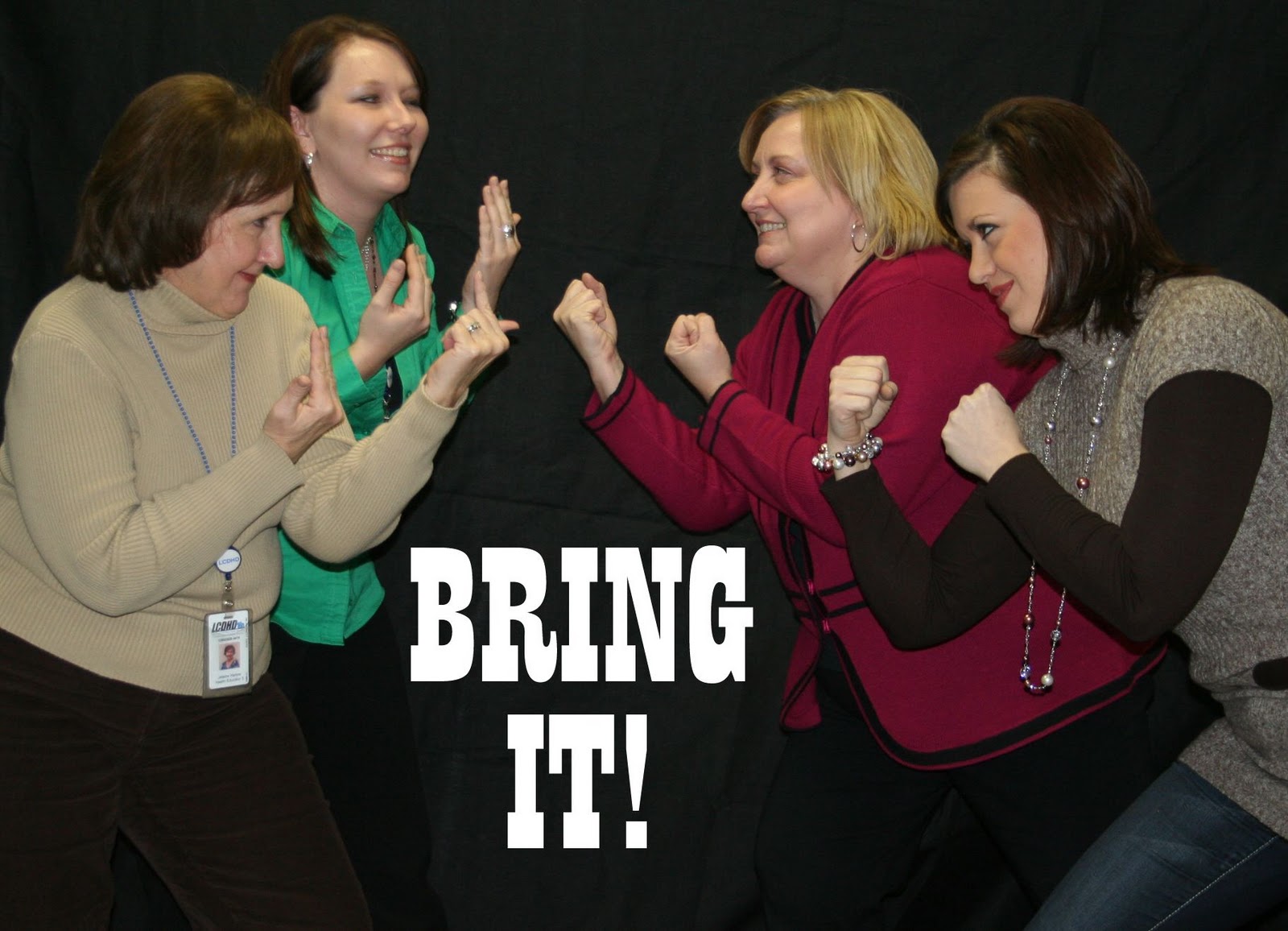
The Adair County Community Voice and the Lake Cumberland-Adair County Health Department are promoting the Adair County Community Health Challenge, in which teams of two or more get daily points for drinking water, eating vegetables and exercising. The Community Voice ran this photo illustration on its front page last week; from left are Jelaine Harlow and Destiny Burton of the health department and Sharon Burton and Christy Marr of the Voice.

The competition operates on the honor system. Each participant puts $5 into a pot, and the team with the most points takes home the winnings. The challenge will begin Jan. 24 and last for eight weeks. Team rankings will be published in the Community Voice each week. The goal of the competition is to achieve "total health." (Read more)

Monday, January 10, 2011

Rural teens more likely to abuse prescription meds; Operation UNITE launches 'Accidental Dealer' to guard medicine cabinets

A University of Kentucky study has shown rural teenagers in Kentucky are 26 percent more likely to abuse prescription drugs than those living in urban areas, the Lexington Herald-Leader's Mary Meehan reports. The study concludes 13 percent of teenagers living in rural areas have said they used prescription drugs recreationally. Only 10 percent of urban youths have tried them.

Dr. Jennifer Havens, right, spearheaded the study. She is a professor of epidemiology at UK's Department of Behavioral Science in the College of Medicine. "This is one of the first studies to show that hard data," she said.
Karen Kelly, director of Operation UNITE, a federally funded anti-drug program for Eastern Kentucky, said she was pleased to have the data. "We were excited when we heard about those numbers," she said. "A lot of times in small communities, people don't think there is anything to be concerned about."

The study looked at data from 17,872 participants ages 12 to 17 in the 2008 National Survey on Drug Use and Health. It showed teens are getting pills from medicine cabinets in their home, which has prompted UNITE to launch "Don't Be an Accidental Drug Dealer. The program, which Meehan reports started in Knox, Clay and Wolfe counties last week, will inform communities about prescription drug abuse through town hall-style meetings and public service announcements. (Read more)

The program has also started in Breathitt County, with a training meeting last Thursday to make volunteers and key personnel "aware about keeping the lid locked on prescription and over-the-counter medications," Jeff Noble reports for the Jackson Times-Voice. "For some that attended, the session was more than just basic information – it was an eye-opener that mirrored their concerns," Noble writes, citing a statement from Kelly: “In Eastern Kentucky, the average age of first-time drug abuse is 11 years old, so this is a particularly critical issue.” Karen Bunn, chair of the Breathitt UNITE Coalition, told Noble that the program needs volunteers to work. (Read more)

Dental tech firm wins $10,000 and free office in Kentucky Highlands' statewide business competition

A Louisville-based company, Inven, will receive $10,000 and free office space for a year to develop dental health technology. Inven won first place in a statewide business competition hosted by the Business Innovation & Growth Center at Kentucky Highlands Investment Corp. in London.

Inven will develop a tool used in root canals that saves time and poses a lower risk to patients.
The company's founders, Alex Frommeyer, Dan Dykes and Alex Curry, are graduates of the University of Louisville's J.B. Speed School of Engineering.

Second place went to Awesome Touch of Lexington, whose founders have created optical touch screen technology. Old Kentucky Logs of Corbin earned third place for its concrete logs made to look hand-hewn.

FactCheck.org: Health reform does not 'kill jobs'; GOP disagrees

In their report released last week, Republicans in the U.S. House said the new health reform law will be "job-killing," but FactCheck.org has concluded that is not necessarily the case.

The Republican report, released Jan. 6 and entitled "Obamacare: A Budget-Busting, Job-Killing Health Care Law," cites a study predicting 1.6 million lost jobs, but "fails to mention that the study refers to a hypothetical employer mandate that is not part of the new law," FactCheck reports. It says the report also fails to mention that the same study predicts a gain of 890,000 jobs in hospitals, doctors' offices and insurance companies.

"There's little doubt that the new law will likely lead to somewhat fewer low-wage jobs," FactCheck reports. "That's mainly because of the law's requirement that, generally, firms with more than 50 workers pay a penalty if they fail to provide health coverage for their workers." John Sheils of The Lewin Group said that loss would be between 150,000 and 300,000 jobs. But that loss would be partly offset by job growth in the health-care industry, says FactCheck, a service of the University of Pennsylvania's Anneneberg Public Policy Center. (Read more)

However, Republicans like U.S. Rep. Ed Whitfield of Kentucky's First District, right, say the new health law will have fiscal and economic consequences. Their reports says it "contains a number of provisions that will eliminate jobs, reduce hours and wages, and limit future job creation." It further contends that studies show it will "cost taxpayers more than originally estimated and may exacerbate the nation's dire fiscal condition."

Whitfield said in a statement on Jan. 7, "We must repeal the job-killing Obamacare health bill and enact solutions that lead to quality care without costing much needed jobs or placing onerous burdens on America's small business owners." Whitfield is the new chairman of the Energy and Environment Subcommittee of the House Energy and Commerce Committee.

Flu is now widespread in Kentucky

Flu activity is now widespread in Kentucky, WKYT-TV reports.

"It has just reached the category of widespread," Kentucky Health Commissioner Dr. William Hacker told the Lexington station. "It can be a problem until April or May. So I still recommend a flu vaccine for those who have not had one." (Read more)

Friday, January 7, 2011

Local ordinances have set the stage for statewide smoking-ban legislation, advocates say; poll shows a clear majority support it

By Tara Kaprowy
Kentucky Health News

Though advocates of anti-smoking laws don't believe a statewide smoking ban will pass in the General Assembly this year, they see public support for it and have come to the conclusion that it's time to get the discussion started.

"This will get the ball rolling at the state level," said Dr. Ellen Hahn, left, a nursing professor at the University of Kentucky and director of the Kentucky Tobacco Policy Research Program. "We know the best comprehensive laws won't happen overnight. We really need to start somewhere."

On Wednesday, state Rep. Susan Westrom, D-Lexington, filed House Bill 193, which would prohibit cigarette use in all enclosed public places and enclosed places of employment, including restaurants and bars. It also bans smoking within a "reasonable" distance outside of public places and work places.

Hahn, who has been reluctant to support a statewide ban, said Westrom's move is timely. Dozens of organizations now publicly support "smoke-free" laws, and 29 communities have enacted local smoke-free ordinances. "We're getting more ready every day because local leadership has shown the way," Hahn said. For a list of the communities and more details, click here.

As of now, 32 percent of Kentuckians are covered by smoke-free laws, and those numbers are growing, thanks, in part, to Campbell County's recent ordinance (though a new Fiscal Court is moving to repeal it before it takes effect). "I think the movement in Northern Kentucky has helped," Hahn said. "That's kind of the last urban area anywhere. Bans have also gone into effect in Bardstown and Glasgow. We've had some key places in the state if you look at the map. We're starting to fill in some areas."'

Hahn is the leading advocate for smoke-free ordinances in the state, but has long been reluctant to push for a statewide ban. "My hesitation was that we would end up with something bad, a law that would tie the hands of local government," she said. "And we didn't want something that was carved up with loopholes."

But the tide has turned, Hahn said. "I've said all along everyone deserves protection, everywhere. I don't think we'll ever see local ordinances in every locale in the state. In some ways, it's got to start some time and we're on first base. It's a process."

Jim Waters of the Bluegrass Institute for Public Policy Solutions, a free-market think tank in Bowling Green, replied to the developments this way: "Ironically, state politicians who loathe interference from Washington seem want to impose Frankfort's will on local communities. Some local communities like Bowling Green have had their own hard-fought, emotional battles over the smoking-ban issue. It would be outrageous for Frankfort now to come swooping in and possibly override their decisions."

Waters has branded Hahn "the smoking nanny" and debated her in a series of "Sorting Through the Smoke" seminars for journalists held by Kentucky Youth Advocates and the Institute for Rural Journalism and Community Issues, another UK-based center that publishes Kentucky Health News. For video of one encounter they had, in Danville, click here.

Hahn said it takes an average of two and a half to five years for Kentucky communities to pass smoke-free ordinances. As for enacting statewide bans, "It really varies across the country," she said, adding that she's willing to wait. "We don't want them to do something until they're ready," she said. "It's going to take a while for state legislators to study the science. They haven't done it before. We haven't asked them to do it."

What's important, Hahn said, is to wait until legislators are ready to pass a comprehensive law, not one subject to exemptions such as private clubs or nightclubs. Amy Barkley, a director for the Campaign for Tobacco-Free Kids, agreed. "Here's what's important: We don't want to settle for a half-baked law," Barkley said. "This is not an area that can be compromised."

Exemptions to the law lead to complications, Barkley said. "First, they mean that certain employees are not protected," she said. "If the intent of the bill is to protect people, why are some people more important than others?" Second, laws with exceptions are more difficult to enforce. "With a comprehensive law, everyone knows if you're indoors you can't smoke," Barkley said. "These things are very self-enforcing the more clear, concise and comprehensive they are."

Thirdly, exemptions can result in legal challenges," Barkley said, citing an example in Louisville when its smoking ordinance exempted Churchill Downs from being subject to it. "There was a lawsuit over that and the ordinance could not be put into effect while it was pending," she said.

Ultimately, both Hahn and Barkley are willing to bide their time. They both stressed the importance for local governments to continue their smoke-free efforts in the meantime. "These local officials shouldn't wait," Hahn said.

Poll shows clear support for statewide ban

A poll released Thursday by supporters of a statewide ban shows that a majority of Kentucky adults favor it, that opinions on both sides are strong, and that local communities should have the option of passing additional restrictions on smoking in public places and workplaces.

The telephone survey was taken Dec. 12-14 by Public Opinion Strategies, a well-regarded national firm that gave Kentucky Health News its questionnaire and the number of adults it called in each county. The poll asked, "Would you favor or oppose a state law in Kentucky that would prohibit smoking in most public places, including workplaces, public buildings, offices, restaurants and bars?" Then they were asked if they felt strongly about their opinion or were "just somewhat" in favor or opposed.

The results: 44 percent said they strongly favored such a law, while 15 percent said they were somewhat in favor of it, for a total of 59 percent. The opposition totaled 39 percent: 14 percent said they were somewhat opposed to the law, and the strongly opposed were 25 percent, the same percentage of adult Kentuckians who said they smoke. The strong opinions on both sides totaled 69 percent, a very high figure. The margin of error for the poll of 500 adults was plus or minus 4.38 percentage points for each figure, so a clear majority favors a statewide smoking ban.

Among smokers, 31 percent said they favored the law and 68 percent opposed it. Among the three-fourths of Kentuckians who don't smoke, the figures were virtually a mirror image: 69 percent in favor, 29 percent opposed. (The figures for smokers come from an interview by Kentucky Health News with Glen Bolger, a partner in the Arlington, Va.-based polling firm.)

Statistically, the poll found no difference among Democrats, Republicans, independents and tea-party supporters, with 55 to 60 percent identifying with each label saying they support a statewide ban.

While both leading candidates for governor, Democratic Gov. Steve Beshear and Republican state Senate President David Williams, have said they favor a statewide ban, neither has emphasized it, and there is skepticism among state legislators that it would be a deciding issue for voters. However, the poll found that 34 percent of voters said they would be "much more likely" to vote for a candidate for state office who supports the law, and 21 percent said they would be "somewhat more likely" to do so, for a total of 55 percent. On the other side, a total of 36 percent said they would be less likely to vote for a supporter of the law (20 percent much more likely and 16 percent somewhat). Only 6 percent said the candidate's position would make no difference.

The question initially described two alternative, unnamed candidates in terms of positions on the issue and asked, "For which of these candidates would you vote?" Even 31 percent of smokers said they would be more likely to vote for a candidate who supports a statewide ban.

Then the survey asked which is more important, the rights of smokers and of restaurant and bar owners, or the rights of employees and customers to breathe clean air in such establishments. (The alternatives were rotated, as were those on other questions.) A majority said employees' and customers' rights were more important, 53 percent much more so and 15 percent only somewhat. The poll did not differentiate between the rights of smokers and business owners or those of employees and customers.

Waters said, "Just because a majority of people in some poll say they want more government nanny-ism doesn't make it the right, or constitutional, action to take. The last time I checked, restaurant and bar owners' constitutionally protected private property rights are not subject to polling. In fact, the constitution exists for the express purpose of protecting those rights from some popular movement such as that being pushed by Kentucky's health nannies who want to deny Kentuckians their individual liberty to make their own decisions regarding smoking, eating and other lifestyle choices."

The main medical reason for smoking bans is research showing that second-hand smoke causes cancer and other diseases, and Kentuckians seem to accept those findings. Almost half, 48 percent, said exposure to second-hand smoke is a serious health hazard, while 28 percent said the hazard is moderate, 17 percent said it is minor, 5 percent said it is not a health hazard at all and 2 percent declined to say.

Many smokers acknowledged their risky behavior; 24 percent said second-hand smoke is a serious health hazard, while 35 percent said the hazard is moderate and 28 percent said it is minor. Only 10 percent said it is not a health hazard.

The poll found that regardless of what happens at the state level, 76 percent of Kentucky adults think local communities "should continue to have the option of passing additional restrictions on smoking in public places and workplaces." Fifty percent strongly agreed with the statement, and 26 percent agreed somewhat. Most of the 22 percent who disagreed did so strongly, again revealing the depth of feeling about the issue.

Waters said the Bluegrass Institute favors local control. "Even though we vehemently disagreed with the smoking bans implemented by Louisville, Lexington and other communities," he said, "we would be absolutely opposed to Frankfort overriding those local communities' decisions."

The poll also illustrated the precipitous decline of tobacco as a political force in Kentucky since repeal of the federal quota and price-support program in 2004. Only 6 percent of respondents said they grow tobacco or own land on which it is grown. For the poll questionnaire and results, click here.