Tuesday, April 19, 2011

Drug czar offers plan to cut abuse of oxycodone, related drugs

The White House drug czar announced today he wants to cut misuse of oxycodone and other opioid drugs by 15 percent in the next five years, and revealed his strategy for how to make that happen.

Gil Kerlikowske, the national drug policy director, wants to see a national education campaign, stepped-up law enforcement and pill-tracking databases in all 50 states, "with particular emphasis on Florida, where 85 percent of all oxycodone pills in the nation are prescribed," Curt Anderson of The Associated Press reports. The strategy also calls for more training for the more than 1 million doctors who are authorized to prescribe the drugs, though that move would need to be approved by Congress.
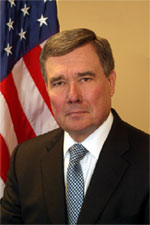
Details of the strategy come just a few months after Kerlikowske, right, visited Kentucky and surrounding states to assess the problem. His visit was preceded by in-depth reports on prescription pill abuse by The Courier-Journal and The Lexington Herald-Leader. Kentucky legislators, including U.S. Rep. Harold "Hal" Rogers, spoke to Kerlikowske candidly about the problem during his visit and voiced their displeasure about plans to nix a monitoring database in Florida. Florida Gov. Rick Scott has since reversed course and will support the implementation of a drug monitoring problem in his state.

Though a 15 percent cut seems like a small goal, Letcher County Sheriff Danny Web supports the move. "Anything would help, because we're drowning in it up here in Eastern Kentucky," he said. Overdose deaths from painkillers have risen from under 4,000 in 2000 to more than 11,000 in 2007, Centers for Disease Control and Prevention numbers show. In Kentucky, more people die from prescription drug overdoses than traffic accidents. Nationally, the total exceeds that for fatal gunshots. (Read more)

High use of meds earns Louisville bad name for allergies, which are becoming more common as pollination periods expand

Louisville is the second worst American city for spring allergy sufferers, based on use of allergy medicine, says the Asthma and Allergy Foundation of America. Though the city has only an average pollen score and an average number of board-certified allergists, it has an above average number of patients who use allergy medicine, the Spring Allergy Capitals 2011 survey concluded.

Only Knoxville, Tenn., ranked higher than Louisville. Charlotte, N.C., came in third, followed by Jackson, Miss., and Chattanooga, Tenn. "The worst cities are always in the South, where the temperatures are warmer and the plant life flowers earliest," Dr. Joseph Leija, an allergist who performs the Gottlieb Allergy Count, told research-reporting service Newswise.

Louisville ranked second last year as well, first in 2009, and 21st in 2008. In the past nine years the survey has been conducted, pollen concentrations have increased. "There's a lot of evidence that trees, grasses and weeds are pollinating more, said Mike Tringale, vice president for external affairs at the foundation. There is also evidence that the pollination season is lengthening, starting 10 to 15 days sooner and lasting 10 to 15 days longer.

As a result, more people are suffering. "Allergy prevalence has more than doubled in the past 30 years," Tringale said. "No one is really sure why. One of the leading theories is global warming." Today, between 12 to 14 percent of people have nasal allergies.

As for why some cities are affected more than others, Tringale said he didn't have an answer. Researchers will be looking at patterns and correlations next year in time for the 10th year of the study.

The study looked at the number of prescriptions that are written and refilled for all allergy medications, "whether eye drops, nasal sprays or oral pills," Tringale said. It also looked at all of the over-the-counter versions of allergy medicines that are sold at pharmacy counters, which account for about 20 percent of all over-the-counter sales. Medications sold at regular check-out aisles and at grocery stores were not accounted for, nor were medicines sold at Walmart. "Walmart doesn't give out data," Tringale said. Though Tringale acknowledged the low percentage of OTC sales tracked is a weakness of the study, he said it was done in this way "to standardize the data between cities."

Pollen counts were collected weekly "from thousands of different stations," Tringale said. The American Board of Medical Specialties provided the data regarding the number of board-certified allergists. (Read more)

Most Kentuckians in favor of banning cell phone use while driving

Though three of four Kentuckians admit to talking on the phone while driving, just as many would support a law banning cell phone use while operating a vehicle, the Kentucky Health Issues Poll has found.

"Although most Kentucky adults use their cell phones while driving, interestingly, they seem to recognize that this isn't a safe behavior," said Dr. Susan Zepeda, CEO of the Foundation for a Healthy Kentucky, which co-sponsored the poll. "Research has shown that drivers who are talking on a cell phone perform similarly to drivers who are legally drunk."

The poll found that more than 80 percent of Kentucky adults have a cell phone. Nearly 30 percent said they never use their cell phone when behind the wheel; 25 percent said they almost never do; 30 percent said they occasionally talk on the phone while driving; 10 percent said they talk on the phone almost every time they're in the car and 6 percent said they make calls every time.

While they do use their cell phones to talk, 8 out of 10 Kentucky adults do not text while driving, which is banned in Kentucky. Just 1 in 7 Kentucky adults said they occasionally or rarely use their cell phone to text or write emails when driving. Another 2 percent said they text every time they drive.

The U.S. Department of Transportation has identified texting as the most alarming road distraction and attributed 5,500 deaths on American roads to distracted driving in 2009. About 200 of those deaths happened on Kentucky roads.

The poll, conducted annually by the Institute for Policy Research at the University of Cincinnati, is jointly funded by the foundation and The Health Foundation of Greater Cincinnati. Its statewide sample of 1,677 results in a maximum margin of error of plus or minus 2.4 percentage points; regional samples are smaller and have higher error margins, around 5 percentage points. The foundation is the principal funder of Kentucky Health News. Other poll results can be found by clicking here.

U of L physician groups tied to Passport Health Plan must release salary and expense records, attorney general rules

Two groups representing University of Louisville's faculty physicians have been deemed public agencies and are subject to open records laws, Kentucky Attorney General Jack Conway has ruled. The groups therefore violated the Kentucky Open Records Act when they denied a request by The Courier-Journal's Tom Loftus for five years' worth of records showing employee salaries, sources of income and expenses. U of L doctors have a majority on the board of Passport Health Plan, which manages the Medicaid program for Jefferson and 15 surrounding counties.

The matter concerns the University Physicians Association and the University of Louisville Physicians. In December, Loftus requested the salary and expense documents after state Sen. Tim Shaughnessy of Louisville, right, asked the Kentucky Health and Family Services Cabinet to "examine the flow of Medicaid funds from the state through Passport to UPA," Loftus writes. State Auditor Crit Luallen did not look into the issue in her November report, which pointedly criticized Passport for excessive spending and conflicts of interest.

Though the physician groups contended they were non-profit corporations, Conway said UPA is a public agency "because it was established and created, and is controlled, by the University of Louisville School of Medicine," Conway concludes. "In all material respects, ULP mirrors UPA in the manner of its establishment, creation and control ... We are not prepared to casually dismiss these facts as 'coincidence born of practicality,' and instead find that ULP and the School of Medicine 'act as one and the same.'"

In its articles of incorporation, UPA says its mission is "to further the research mission and teaching of the praction of medicine at the University." Moreover, UPA and ULP were established and continue to be run by U of L medical school administrators, department chairs and professors. "We agree with The Courier-Journal that the suggestion that these physician administrators and/or professors, each the chair or interim chair of their respective medical school departments, came together of their own accord, and as private actors to establish and create UPA defies logic."

Shaughnessy was impressed with the findings. "It causes me to ask: How could they think they are not a public entity? What remains to be seen is whether the university accepts this ruling or continues its arguments that it is not subject to public openness." (Read more)

Monday, April 18, 2011

Number of HIV/AIDS cases is increasing in Louisville area

The number of newly diagnosed AIDS and HIV cases in Louisville is increasing even as the fear of the deadly disease wanes. The number of newly diagnosed cases in Jefferson County rose from 80 in 2005 to 107 cases in 2008, The Courier-Journal's Laura Ungar reports. The number of new HIV cases increased from 136 cases to 154 in the same period.

"People think it's a disease of the past. Unfortunately it's very much alive," said Janet Mann, director of program development for AIDS Interfaith Ministries of Kentuckiana.

"People think: All I have to do is take a few pills every day. But it still kills people ... and it affects quality of life," said Bobby Edelen (left, by C-J's Kylene Lloyd). Edelen has lived with the disease that causes AIDS for 21 years. "Every day is not a picnic."

Complacency, drug use and lack of education are causing the numbers to increase, health officials say. But while numbers rise, there is less money to deal with the growing need. HIV/AIDS funding to the Kentucky Department of Public Health dropped from $11 million in 2008 to $9.4 million in 2010.

There is still no cure for HIV/AIDS, but there is medicine that can "keep people somewhat healthy by preventing the virus from reproducing or by blocking it from entering cells," Ungar reports. But people respond to medicine in different ways. "Taking meds for HIV is similar to cancer patients taking chemotherapy. Some are able to take it. Some are deathly sick," Edelen said. (Read more)

Appalachian Health Summit to be held in Lexington Thursday

Focusing on obesity, a topic that affects most adult Kentuckians, the Appalachian Health Summit will be held Thursday in Lexington. The meeting is designed for clinicians and researchers, but will also be a place for journalists interested in the issue to find story ideas and sources.

The first session of the gathering will focus on health disparities and health behaviors in Appalachia. Topics include "Socioeconomic status and its impact on health in Appalachia," "Culture of Choice and Culture of Care in Appalachia" and "Lessons Learned from the Appalachia Community Cancer Network."

The keynote address will discuss federal, state and local initiatives that address the obesity epidemic. It will be given by Dr. William Dietz, director of the Division of Nutrition, Physical Activity and Obesity with the Center for Chronic Disease Prevention and Health Promotion.

Concurrent sessions will discuss childhood obesity, food and nutrition; research networks and collaboratives; social networking for energy balance; and the link between obesity and cancer.

The summit is sponsored by the University of Kentucky, The Ohio State University, the University of Cincinnati, Marshall University, the Pikeville College of Osteopathic Medicine and the Appalachian Regional Commission.

The summit will be held from 8 a.m. to 5 p.m. on the third floor of the Lexington Convention Center. For more information, click here.

Switch to electronic medical records not without concerns

Though touted as a way to improve patient care and supported by federal funding, Kentucky physicians have concerns about switching to electronic medical records. Doctors are worried about cost, lost productivity, the possibility that the technology becomes obsolete and that systems can't share information, The Courier-Journal's Laura Ungar reports.

"The main reason is financial. It's just so expensive," Dr. Emily Johnson of Kaplan Barron Pediatric Group, told Ungar. "Also, we'd have to take time out of the day and do training. It would be expensive to learn this new thing." Johnson's group plans to stick with its paper-based patient charts (Photo: Rebecca Dorwart, medical receptionist and recordkeeper, by C-J's Matt Stone)

But the Obama administration and health professionals say EHRs will "help reduce costs and make health care safer by avoiding such problems as duplicate medical tests and allergic reactions to medications," Ungar notes. The new health law will pay $20 billion in incentives to eligible doctors and hospitals who make the switch. Thoe who don't will get smaller Medicare and Medicaid reimbursements.

Last year, a Kentucky Medical Association survey of rural doctors (left) showed 45 percent didn't have an EHR system, and about half said they had no plans to have one. "The most frequently cited barriers to e-record adoption were lack of initial capital for software and training, concerns about loss of productivity and lack of technical support within the practice," Ungar reports. (Read more)

Friday, April 15, 2011

Kenton County goes it alone with smoking ban in Northern Ky.

Kenton County's smoking ban took effect today, making it the first county in Northern Kentucky "to ban smoking in most public places," Cindy Schroeder reports for The Kentucky Enquirer. "The controversial ordinance approved by the outgoing Kenton Fiscal Court in December requires offices and public establishments such as restaurants, churches, bowling alleys, bingo halls and retail stores to go smoke-free. Private clubs and 'drinking establishments' that meet certain requirements can apply for an exemption." (Enquirer photo by Patrick Reddy: Richard Gordon of Florence, in Boone County, lights up at the Super Bowl in Erlanger, in Kenton County.)

The urban counties on either side of Kenton have no smoking bans. Advocates of a ban tried to get all three counties to adopt the same legislationm, but Boone County rejected the idea, and a newly elected fiscal court in Campbell County repealed a ban that was enacted by the former court last year and had not gone into effect. Now Kenton County businesses fear the sole ban in the region will drive customers to other counties, and "Both opponents and supporters of smoke-free legislation agree that Kenton County's partial ban allowing exemptions for some, but not all public places, is confusing and will be difficult to enforce," Schroeder writes. Still, "People on both sides of the issue say it's only a matter of time, however, before all of Kentucky goes smoke-free, just as Ohio and 22 other states have done." (Read more)

Thursday, April 14, 2011

Fla. governor agrees to implement prescription drug monitoring

"Florida Gov. Rick Scott reversed course Thursday and said he will allow a prescription drug monitoring program that Kentucky officials have demanded to help block the flow of illegal prescription drugs coming from the Sunshine State," the Lexington Herald-Leader reports.

The recently elected Republican said during a congressional hearing that private companies will fund the program for two years. Democratic Gov. Steve Beshear, who also testified at the hearing, said he was "very excited and pleased" at Scott's announcement.

"It was a rare moment of unity for the two governors," Halimah Abdullah writes for McClatchy Newspapers. "Their previous ideological differences on whether Florida should implement a prescription drug monitoring program to help stem the flow of drugs led to a tense standoff. Scott previously objected to such a program, citing privacy concerns, and turned down a $1 million donation from pharmaceutical giant Purdue Pharma, the maker of OxyContin, meant to help pay for a prescription database." (Read more)

Wednesday, April 13, 2011

State gives six residential substance-abuse centers federal money for operating costs

First Lady Jane Beshear Tuesday presented $1.5 million in funding for six Recovery Kentucky substance-abuse centers, further securing the program started in Republican Ernie Fletcher's administration, and attending a ceremonial opening of the center in Paducah, which was completed in December.

The six residential centers each getting $250,000 in federal community development block grants from the state for continued operational costs are in Erlanger, Evarts, Florence, Henderson, Hopkinsville and Richmond. Besides those cities and Paducah, centers are also in Morehead, Owensboro and Campbellsville. Four more are to be built in the next four years.

Recovery Kentucky is an initiative to help Kentuckians recover from substance abuse, which often leads to chronic homelessness. Construction of the facilities, five for men and five for women, was financed in part through the state-controlled Kentucky Housing Corp.

About 4,000 Kentuckians have received treatment in the centers since the first one opened four years ago, but Beshear noted that more than 44,000 Kentuckians over 26 are dependent on drugs and alcohol. “Recovery Kentucky centers are vital for the state to be able to assist individuals suffering from this disease,” she said.

Tuesday, April 12, 2011

Most Ky. communities not friendly to walkers, joggers, cyclists

Few Kentuckians live in walkable communities, according to the latest Kentucky Health Issues Poll for the Foundation for a Healthy Kentucky. Only 32 percent of Kentucky adults said there are a number of destinations within an easy walking distance from their home, and only 47 percent said they live in communities with sidewalks or shoulders on streets that allow for safe walking, jogging or biking.

"Walkable communities aren’t just safe for walkers, but cyclists, joggers and those engaging in other forms of recreation as well," the foundation said in a news release. It noted that the results varied regionally, with 60 percent of Northern Kentucky residents and 63 percent in the Lexington area saying they have safe places for walkers, joggers and and cyclists. Eastern Kentucky reported the least access, with 28 percent. Louisville and Western Kentucky fell in the middle at 49 percent and 47 percent, respectively.

“The good news is that we’re seeing more local governments finding innovative ways to support healthier lifestyles with small policy changes, like re-striping a country road to provide clear paths for walkers and bikers,” said Dr. Susan Zepeda, CEO of the foundation. “While we’re not surprised by the results, the foundation is concerned about the lack of walkable communities, considering the obesity epidemic we’re facing in Kentucky.”

According to Walk Score, a website dedicated to promoting walkable neighborhoods, communities that provide more safe walking options have healthier residents, less pollution and higher property values than more sprawling areas. Residents of walkable communities have places to go within an easy distance of their home, and can often make quick trips or run errands without using a car or public transportation.

The poll, conducted annually by the Institute for Policy Research at the University of Cincinnati, is jointly funded by the foundation and The Health Foundation of Greater Cincinnati. Its statewide sample of 1,677 results in a maximum margin of error of plus or minus 2.4 percentage points; regional samples are smaller and have higher error margins, around 5 percentage points. The foundation is the principal funder of Kentucky Health News.

Monday, April 11, 2011

Fellowships of $10,000 available for reporting on mental health

Each year the Carter Center Mental Health Program awards six Rosalynn Carter Fellowships for Mental Health Journalism to six American journalists. They get a stipend of $10,000 to report on a mental health topic of their choice. "The fellowships are designed to increase accurate reporting on mental health issues and decrease incorrect, stereotypical information," says a release from the center founded by former president Jimmy Carter.

The deadline to apply is Monday, April 18. Applicants must have at least three years of professional experience in print or electronic journalism, submit an application packet and attend orientation and presentation meetings in September at the beginning and end of the fellowship year. Fellows are not required to leave their current employment. Awards will be announced July 15, 2011. For more about the program and an application packet, click here.