Tuesday, December 28, 2021

With few 5-to-11-year-olds vaccinated against Covid-19, public-health workers say kids will have to get sick to motivate parents

By Sarah Baird, The Goldenrod

Over the summer — during that fleeting window of time before the Delta variant hit when we believed Covid-19 might be evaporating into a gauzy nightmare of a memory — I interviewed a woman for a story who had lied about her 11-year-old son’s age in order to receive the Covid vaccine, which was then only approved for ages 12 and up.

Sarah Baird (NYT photo)
In my story for the Romper, the mom described the very involved lengths she and her husband went to in order to cook up a false birthday for their child:

"In Kamin’s case, the mental and logistical gymnastics did turn out to be, well, a lot. Kamin’s son’s birthday was in August, so they decided on a fake March birthday to tell the nurse at the medical clinic. (The thought process behind this? Turning the 3 on the vaccine card into an 8 later on would be relatively easy as to not muddle his long-term medical records.) What’s more, as a faux 12-year-old, her son was capable of — and expected to — tell the vaccine administrator his birthdate himself, so Kamin and her husband “drilled” him on his new, false birthday for days leading up to the event and in the car on the way to the appointment."

This astounded me. Is it even ethical? What does that teach the kid? But what confounds me even more is the overwhelming majority of parents in Central and Eastern Kentucky who are choosing not to vaccinate their children at all. This is evident when you look at the data for 5-to-11-year-olds, a group for whom a Covid vaccine was approved in late October, and see that most parents are foregoing the shots entirely for their kids as part of a worrying trend.

We’re looking at the data for fully vaccinated 5-to-11-year-olds as of Sunday, Dec. 26. There’s been quite a bit of reshuffling generally as to what “fully vaccinated” means in the wake of the Omicron variant and the third “booster” dose for adults, but for now — following the guidelines set by the Kentucky Department for Public Health — kids with two shots but no booster are considered completely vaccinated in this breakdown.

A few key takeaways from The Goldenrod's coverage area (Bracken, Harrison, Scott, Franklin, Anderson, Mercer, Boyle, Casey, Taylor, Green, Adair and Cumberland counties and those east of them in Kentucky):
  • Only seven counties — Rowan, Franklin, Scott, Woodford, Fayette, Boyle and Jessamine — in the coverage area have a double-digit percentage of 5-to-11-year-olds who have been fully vaccinated. The rest are hovering well below 10 percent.
  • Three counties in the area — Clinton, Martin and Robertson — have zero fully vaccinated 5-to-11-year-olds. (A handful have now received the first dose in each of these counties, which is somewhat heartening.)
  • The number of fully vaccinated 5-to-11-year-olds in Leslie, Casey, Green, Owsley, Wolfe and Clay Counties is under 100 children, combined.
  • Even in Perry County, where 92% (!) of people age 65-74 are fully vaccinated, only 3 percent of 5-to-11-year-olds have received both shots so far.
These astoundingly low vaccination rates coupled with Omicron knocking on the door in Kentucky means the potential for serious Covid outbreaks when in-person school restarts in January. For example, there are 1,315 kids enrolled across two elementary schools in McCreary County. With only 30 children from 5 to 11 fully vaccinated countywide, that’s a 2.2% vaccination rate for the students in these schools. (It’s even lower if a few of those vaccinated youngsters are either still in preschool, enrolled in private school or already in middle school.)

What do on-the-ground public-health workers think?

Despite several local school districts shuttering early for winter break due to spiking Covid numbers and the Omicron variant causing widespread infection among children nationally — there are currently 1,987 confirmed or suspected pediatric Covid-19 patients hospitalized across the country, according to The Washington Post — rural public-health officials across Central and Eastern Kentucky say there’s little interest in, or urgency from, parents when it comes to vaccinating their vulnerable 5-to-11-year-olds.

“People are still afraid of [the vaccine] even if they get it,” says Kathy Slusher, a community health worker with Kentucky Homeplace in Bell County. “They are afraid to give it to their children. I think as more children get it, more people will come around.”
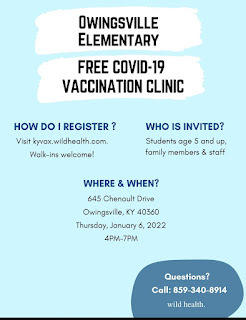
The Goldenrod's story is illustrated with
this notice of a school vaccination clinic.
But what the tipping point might be that will finally push that first, significant wave of families to get their elementary school-aged kids the vaccine remains to be seen in most counties.

Is it striking just the right chord with a public education campaign? Probably not.

Could it be setting up more vaccination sites with dedicated transportation? Doubtful, because public health officials are currently even willing to make house calls (seriously!) to deliver shots to kids.

Or will it come down to the most tragic possibility of all: Parents will have to watch children in their towns fall severely ill—and perhaps die—before they believe in the vaccine for their own offspring?

Greg Brewer of Gateway District Health Department, which serves Rowan, Bath, Menifee, Morgan and Elliot counties, thinks so. “I guess parents haven’t seen enough school-aged kids get sick around them. They just think it’s a runny nose, so it’s not enough to make them concerned and get the vaccine for their kids. That’s the only thing I can think of.”

When I asked if he thought parents were wholly against the vaccine, he said no. “I don’t think they’re antivaxxers, necessarily, but parents are so divided, and they’re just not concerned about their kids getting Covid. They’re going to have to see kids get really sick before they’ll get concerned.”

When I mused that parents might be scared of the vaccine, like Slusher suggested, Brewer didn’t miss a beat. “I don’t think people are scared, because if they were actually scared, they’d get the vaccine. Covid is a lot scarier.”

There was a sense of exasperation in his voice as he rattled off a fairly exhaustive list of ways local health departments in his region had tried to get the vaccine to community members, including those in the 5-11 age group: “We’re making vaccines available any way we can. We’ve talked to schools; set up clinics; we’ll come to your house to vaccinate your family; we’ll do anything you need us to do. We need kids to get the shot. It’s not going to cost you anything, all we need is your arm.”

The school-based vaccine clinic hosted last week in Menifee County, however, drew little participation. “The schools will do anything to get the shots to kids—they’ve been so good about helping with everything like masks and social distancing—but the people just won't do it,” Brewer said.

Health educator Shirley Roberson Daulton with the Lake Cumberland District Health Department agrees: “The urgency isn’t there. I feel like parents, as humans, sometimes listen to all of this misinformation out there. Also, because of events cancelling, we haven’t been able to be out in the community as much to tell people how important it is to get their kids vaccinated. But we’ve been trying to tell every family that comes into the clinic.”

Of course, just like the Anna Karenina principle — all happy families are alike; each unhappy family is unhappy in its own way — every Central and Eastern Kentucky county struggling with vaccination rates for its youngest eligible citizens has a unique set of hurdles, barriers and misbeliefs to counterbalance before rates among 5-11 year-olds start to climb.

How soon that will be—and how many people will have to face infection, illness or even death before that happens—remains to be seen.

The state health department says 16% of Kentucky children age 5 to 11 are vaccinated, and vaccines are available at primary-care providers and pharmacies in every county.

For a list of the 64 counties sorted by percentage of vaccination, go here.

Monday, December 27, 2021

Beshear urges that children be tested, vaccinated for Covid-19 before resuming school; gives advice for safe New Year's events

Kentucky Health News graph from state data
By Melissa Patrick
Kentucky Health News

As Kentucky's children enjoy the holiday break, Gov. Andy Beshear encouraged schools and parents to get them tested for Covid-19 before they return to class, and said schools should have universal masking. 

"Set up a program where you can test as many kids before they come back or as parents take on that responsibility. That's something that we're going to do," Beshear said. "You've got to have universal masking in schools. I get that there's pressure, and some folks out there might not like it, but it is basic science. . . . If you truly want your kid to be and to stay in school, this is just something that we have to do."

Beshear added that schools without universal masking are at increased risk of closing because the spread of the highly contagious Omicron variant of the coronavirus is doubling every two days. Federal officials have said the variant is dominant in the U.S.; Beshear said it will be in Kentucky if it isn't already.

At his only scheduled news conference of the week, Beshear said he was proud to see a 10% increase in testing during the week before Christmas, indicating that people are really heading the advice to get tested before attending indoor social events.

If you are attending an indoor New Year's event, Beshear said, make sure you do at least two of three things: get vaccinated or boosted; get a Covid-19 test as close to the event as possible; and wear a masks. 

"You pick two of those three -- and I know two of them could provide a lot more fun than the others," the governor said, emphasizing vaccination.

"If you haven't gotten vaccinated," he said, "please talk to someone who has that you love and care about. Nobody's trying to make your choices for you. Nobody's trying to bully you into getting things. We just care about you. We know they work. We've seen too many people die or suffer long-term impacts that could have been avoided. Your family members that are pushing you to get it done are doing it because they love you. That's the only reason." 

Beshear again stressed that many more Kentuckians are choosing to get vaccinated than not, with 73% of Kentucky adults having received least one dose of a vaccine. He accentuated the positive; 57% of the vaccine-eligible population has been fully vaccinated, and only 34% of the vaccinated have received a booster shot.

Kentucky's supply of monoclonal antibodies, only one of which is effective against Covid-19 patients infected by the Omicron variant, was outstripped by demand last week for the first time in a while, Beshear said, suggesting that the state is seeing more severe illness.

Two anti-viral pills to treat Covid-19, which need to be taken as soon as possible once symptoms appear, have been given emergency-use authorization by the Food and Drug Administration. 

Beshear said Kentucky will get only 720 Pfizer pills over the next two weeks, and cautioned that anyone considering the Merck pill should talk with their health-care provider about potential side effects and effectiveness. 

Daily report: Since Dec. 22, the date of the state's last report, Kentucky reported 9,994 new coronavirus cases. That lowered the seven-day rolling average to 2,210, a decline of 2.6% from Dec. 22. The daily average for December so far is 2,254. For the last 30 days it is 2,181.

Beshear said case numbers have been high but "pretty stable" over the last three weeks, but when the Omicron variant hits, the state can expect numbers to increase precipitously, as they have in other parts of the nation.

"So, we'll really need to watch carefully and we really need to be careful as we move forward," he said. "Obviously the best thing you can do to protect yourself from Omicron, to keep our kids in school to keep everything thriving, not just open, is get vaccinated and get your booster. All the studies have shown that that holds up really, really well against this variant."

The share of Kentuckians testing positive for the virus in the past seven days is 11.8%. Five days earlier, it was 9.61%. Beshear said the jump in is likely driven by the Omicron variant. "There's no reason to think that any changes that we are seeing aren't' driven by Omicron." 

He added that an increasing positive-test rate driven by Omicron is better than one driven by the previously dominant Delta variant because so far, Omicron is causing less severe illness than Delta. 

The state's daily infection rate is 45.13 cases per 100,000 resident. Only one county has a rate more than double that rate, Wolfe, at 97.8. The New York Times ranks Kentucky's infection rate 42nd among states, with a 44% drop in case rate in the last two weeks -- the biggest drop of any state during the period. 

Asked what could have caused the drop, Beshear said it could be a reflection of the number of Kentuckians who are fully vaccinated and boosted, which he said are better than many places in the country. 

So far, 2.76 million Kentuckians have received at least one dose of a Covid-19 vaccine, or 62% of the total population; 2.4 million, or 54% of the total population, are fully vaccinated; and 823,318, or 19% of the total population, have been boosted.

The full-vaccination total is 2.41 million, covering 57.4% of the eligible population and 54.0% of the entire population. Among the fully vaccinated, 811,039 have received a booster shot, or 33.6% of that group.

Beshear urged parents and guardians of children 5 and older to get them vaccinated, pointing out that while most in this age group have mild cases of the disease, some of them do have severe cases and they can also infect others who are more vulnerable to it, like their grandparents. So far, only 16% of this age group have been vaccinated. 

Kentucky hospitals reported 1,226 Covid-19 patients on Monday, 348 in intensive care and 205 on mechanical ventilation. Eight of the state's 10 hospital regions are using at least 80% of their intensive-care capacity, with five of them over 90%; Beshear said the numbers are largely holding steady, and no hospitals are sounding an alarm. 

The state reported 156 more Covid-19 deaths since Dec. 22. That brought Kentucky's pandemic death toll to 12,074. Beshear said four of the newly reported fatalities were in their 40s.

Sunday, December 26, 2021

As nation sees a surge in cases from Omicron variant, Kentucky's new-case rate falls more than any other state's in last 2 weeks

By Al Cross
Kentucky Health News

As the United States sees the highest number of new cases of the coronavirus since the surge in late summer, Kentucky is an outlier.

In the last two weeks, the nation has averaged more than 200,000 new cases per day, a 69 percent jump during the period, but Kentucky's new-case rate has dropped 39%, more than any other state, according to The New York Times.

Kentucky's new-case rate over the last seven days ranks 39th among the states, the Times reports. Citing Centers for Disease Control and Prevention data, the newspaper says Kentucky's new-case average over the last seven days is 1,383 per day. That's 39% lower than the 2,270 average calculated from the state's last public report on Dec. 22, four days before the Times report.

The difference could be driven by more limited testing and reporting in Kentucky over the Christmas holidays, and maybe by geography. The states with low new-case rates tend to have large rural populations and lie in the interior of the country, while most of the states with big increases are along the coasts.

Examples include Florida, 818%; Georgia, 299%; and Louisiana, 243%. Virginia's rate has risen 106% and California's has gone up 90%. One other state that borders Kentucky is above the 69% national increase: Illinois, at 75%. Other gains among bordering states are Ohio, 61%; Tennessee, 57%; and West Virginia, 12%. Indiana is down 8% and Missouri is down 3%.

Kentucky officials will resume their daily release of coronavirus data on Monday, but the more telling day is likely to be Tuesday, reflecting testing, reporting and hospitalizations on the first day after the holidays.

Gov. Andy Beshear has said the state will see a surge in cases from the highly contagious Omicron variant of the virus, which could be limited if more Kentuckians would get vaccinated against the virus or get a booster shot. Medical experts say vaccinated people without boosters are not well protected against Omicron.

Only 33.6% of the state's "fully vaccinated" residents have received a booster, according to CDC data compiled by The Washington Post; it says 57.4% of Kentucky's vaccine-eligible population, 5 and older, and 54% of the entire population, are fully vaccinated, a term that does not include booster shots.

Because vaccination rates are higher in more populous counties, only 14 of the 120 counties are above the statewide 54%-of-population figure: Fayette and Woodford, 63%; Jefferson, 61%; Campbell, 60%; Boone and Perry, 59%; Franklin, 58%; Hardin and Kenton, 57%; Hancock and Lyon, 56%; and Floyd, Fulton and Oldham, 55%.

Friday, December 24, 2021

Trump promotes coronavirus vaccines and booster shots, still opposes Biden's vaccine-or-testing mandates

Trump at an Aug. 21 rally in Cullman, Ala., where he was booed
after encouraging vaccination for the coronavirus. (Photo by Chip
Somodevilla, Getty Images, via The Wall Street Journal)
Kentucky Health News

Former President Trump is promoting coronavirus vaccines, saying he has received a booster shot, but still opposes vaccine-or-test mandates like those President Biden is still trying to get through the courts.

In two interviews this week, Trump endorsed the vaccines and their booster shots, which experts say are key to thwarting widespread illness and death from the highly contagious Omicron variant of the virus.

"Some in and around Trump’s orbit have long pleaded with him to get behind vaccination pushes, if for no other reason than to remind Americans of the scientific achievements that advanced during his presidency," including rapid development of the vaccines, Rick Klein writes for ABC News.

Trump revealed Sunday, Dec. 19, that he had received a booster shot. At the Dallas stop of a speaking tour with Bill O'Reilly, the former talk-show host said they both “are vaxxed” and asked Trump, “Did you get the booster?”

“Yes,” Trump said. O'Reilly replied,  “I got it too,” Mr. O’Reilly said. Many boos were heard, and Trump waved his arms, saying, “Don’t, don’t, don’t, don’t,” and pointing to what he called “a very tiny group over there.”

Shortly before that exchange, Trump said his supporters should get vaccinated "because, he suggested, unwillingness to do so represented a victory for liberals," The New York Times reports. He said, “You're playing right into their hands.”

In a later interview with conservative commentator Candace Owens on the Daily Wire, Trump said the vaccine development “was one of the greatest achievements; we did it in less than nine months. . . . Some people aren't taking it; the ones that get very sick and go to the hospital are the ones that don't take the vaccine, but it's still their choice. And if you take the vaccine, you're protected.”

"This is good news that Donald Trump is delivering this message to his followers," USA Today Washington Bureau Chief Susan Page said Friday night on PBS's "Washington Week." Polls have shown lower vaccination rates in states and counties Trump carried; he beat Biden by 29 percentage points in Kentucky.

Trump spoke about vaccines after Owens cast doubt on them by saying that fewer people died of Covid-19 last year than this year, when they became available. By far, most Covid-19 deaths have been among the unvaccinated, and ABC notes that the vaccines were not "widely available until early spring 2021, after Biden had already assumed the presidency. . . . Other factors such as the end of masking and social distancing mandates in many local jurisdictions, as well as new variants of the virus, have contributed to Covid-19 deaths in 2021."

ABC adds, "Both Trump and Owens expressed their continued opposition to vaccine and mask mandates, and Trump also claimed that prior infection from Covid-19 protects in a similar way to the vaccine. That claim is disputed by medical experts who say that the protection from the vaccine and a booster shot is stronger than protection from prior infection."

Trump "has previously encouraged his supporters to get vaccinated," notes The Wall Street Journal. He was briefly booed at a rally in Alabama in August after urging attendees to get a Covid-19 shot. “You got to do what you have to do, but I recommend: Take the vaccines,” he said. “I did it. It’s good.” In September, he told the Journal that he probably wouldn't get a booster shot. But that was before the Omicron variant appeared.  

Thursday, December 23, 2021

As federal rule allows mail-order abortion pill without telehealth, Ky. (which requires telehealth for it) may ban the practice entirely

By Melissa Patrick
Kentucky Health News

As part of a larger anti-abortion bill, some Kentucky lawmakers are working to make mail-order abortion medication illegal in Kentucky, even as a new federal rule permanently allows the practice.  

The the rule allows patients to receive medication by mail after a telemedicine appointment, instead of requiring an in-person visit, as was required before the pandemic hit. The Food and Drug Administration lifted that requirement by a temporary rule during the pandemic, and has now made the rule permanent. 

An abortion by medication involves taking two drugs, misoprostol and mifepristone, and can be done up to the 10th week of pregnancy. Misoprostol, which causes contractions to empty the uterus, has long been available with a prescription. Mifepristone blocks progesterone, a hormone necessary for a pregnancy to develop. The new rule allows it to be mail-ordered after a telehealth visit.  

About half of the 4,104 abortions performed in Kentucky in 2020 were medication abortions, according to the state Annual Abortion Report for 2020, the most recent available.

The new rule will have little impact in Kentucky because the state already has laws in place that require a patient to see a health-care provider in person to obtain such medicine. 

Even so, a group of state legislators, led by Republican Rep. Nancy Tate  of Brandenburg, are working on a bill that, among other things, would ban mail order of the abortion medication in Kentucky. 

The "Humanity in HealthCare Act 2022" was referred to as a "pro-life omnibus bill" at the October meeting of the Veterans, Military Affairs and Public Protection Committee. It was presented in detail but has not yet been filed. 

Other parts of the bill would strengthen parental-consent requirements; call for individual cremation of aborted fetuses, not to be treated as medical waste; update the reporting requirements for pregnancy-termination statistics, ban tax dollars from being used for abortions; and let medical providers refuse to do procedures that "violate their conscience."  

At the Dec. 15 meeting of the Joint Committee on Health, Welfare, and Family Services, Kentucky Right to Life Association Executive Director Addia Wuchner, obstetrician-gynecologist Ingrid Skop and Tate said taking these drugs without a doctor's supervision is dangerous for the patient. 

Dr. La-Tisha Frazier, an ob-gyn resident, disagreed, telling lawmakers, "We know without a doubt that medication abortion is a safe, effective option that gives patients more control over their own health care. For many patients, using medications to end a pregnancy is safer and medically preferable." 

Tate told the health committee that the bill will not include exemptions for rape or incest. "From my perspective, it would be heinous for us who actually kill that child because of a crime," she said. "What I would like to see is where if it is rape or incest, where those individuals are incarcerated." 

Working with Tate are Reps. Danny Bentley of Russell, Melinda Gibbons Prunty of Belton and Lynn Bechler of Marion and Sens. Stephen Meredith of Leitchfield and Robby Mills of Henderson, all Republicans.

The federal decision to allow mail delivery for the abortion pill comes as the Supreme Court considers abortion cases that could overturn Roe v. Wade, the landmark 1973 decision that established a constitutional right to abortion.

If it were overturned, decisions about abortion rights would shift to individual states, and Kentucky has  already passed a "trigger law" to outlaw abortion if that happens. 

Click here for more information from the FDA about mifepristone. Click here for the Humanity in HealthCare Act slide presentation from the joint health committee meeting. 

Health reporter writes 'Five things about Omicron that I want my friends and family to know'

Dan Diamond, a health reporter for The Washington Post, recently posted a Facebook thread about the Omicron variant of the coronavirus. It went viral, so he turned it into a story for the newspaper. He makes five points:

For the unvaccinated, Omicron might not be mild: "Reports of it being 'milder' appear mostly based on the generally mild breakthrough cases in vaccinated and previously infected people. If you've been vaccinated and boosted, there's reason to expect your omicron infection will lead to minimal symptoms. If you haven’t previously been infected, and you haven’t been vaccinated, there’s no reason yet to expect a 'mild' case." 

Daniel Ryan of Washington, D.C., wore a surgical mask
under a cloth mask early this year to provide greater
protection. (Washington Post photo by Sarah Voisin)
Brace yourself for a positive test: Omicron is one of the most contagious viruses ever found, so "Many, many people who are vaccinated or previously infected are going to test positive in the next few weeks . . . While earlier forms of the virus got stopped at your body’s front door if you were 'fully vaccinated' or previously infected, omicron can get inside. Still, vaccines and boosters hold the power to defang the worst consequences of omicron and fight off infections. It’s possible that some folks reading this have omicron right now and don’t know it because their immune system is doing such a good job containing the infection and the symptoms are small or nonexistent."

This variant is exactly what boosters are for: Booster shots of a vaccine bring "your antibodies back to a level where there are enough of them, like bouncers at a club, to often keep omicron from getting inside." They are one of the best defenses against the Omicron variant.

Hospitals will be pushed to their limits: New coronavirus cases are already setting records, and health experts say new records will keep getting set well into January. "Even if only a small percentage of those people need hospital care, it will tax a health system that is already straining under pandemic fatigue and treating cases linked to the older Delta variant. It’s also going to be a psychological blow after the past two years of fighting the pandemic, and businesses, families and others will surely be racing to adjust plans."

Upgrade your mask and think twice about taking risks. This month will be crucial.
"The next month in America could rival the worst days of the pandemic, as a sheer wave of cases crashes into our country. Every expert I spoke to is cutting back on scheduled plans, and several urged: Don’t take risks that could land you in a doctor’s office or hospital emergency room at a moment when demand on our health-care system is going to surge. . . . I’m going to make sure I’ve always got a high-quality mask with me to navigate crowds and indoor spaces. Even if infections are inevitable, I don’t want to help omicron along, especially until we get more data in the coming weeks. And I don’t want to unwittingly get sick and carry an infection to family members this holiday season."

Wednesday, December 22, 2021

At-home pill for Covid-19 is approved but supply is limited; Kentucky’s positive-test rate nears 10%; case rate stable

By Melissa Patrick
Kentucky Health News

The good news about the pandemic Wednesday was that the first antiviral pill to treat Covid-19 was granted emergency-use authorization. The bad news was that initially the supply will be limited at a time when demand is expected to soar. 

The Washington Post reports, "The Pfizer pill regimen could help meet some of that demand, but it is estimated there will be enough medication through the end of the year for only 180,000 patients, and it is unclear how many of those doses are destined for the United States." 

On Wednesday, the Food and Drug Administration authorized Pfizer's antiviral pill, Paxlovid, to treat mild-to-moderate Covid-19 in high-risk individuals 12 and older who weigh at least 88 pounds. This five-day treatment is the first antiviral Covid-19 pill authorized to be taken at home. The drug needs to be administered as soon as possible after diagnosis, and within five days of the start of symptoms.

“Today’s authorization introduces the first treatment for Covid-19 that is in the form of a pill that is taken orally — a major step forward in the fight against this global pandemic,”  Dr. Patrizia Cavazzoni, director of the FDA’s Center for Drug Evaluation and Research, said in the news release. “This authorization provides a new tool to combat Covid-19 at a crucial time in the pandemic as new variants emerge and promises to make antiviral treatment more accessible to patients who are at high risk for progression to severe Covid-19.”

"Last week, Pfizer released updated results that showed the treatment cut the risk of hospitalization or death by 89% if given to high-risk adults within a few days of their first symptoms. If given within the first five days of symptoms, the efficacy was similar: 88%," CNN reports.

Merck has also requested emergency-use authorization for its antiviral pill, molnupiravir, but the FDA has not yet authorized the treatment. 

At a Saturday news conference, state Health Commissioner Steven Stack cautioned Kentuckians to not count on such treatments to protect them against Covid-19, pointing to an expected limited supply of the antiviral pills that will also come with restrictions. Instead, he said, the best plan to protect yourself against Covid-19 right now is to get a vaccine or booster as soon as you are eligible. 

So far, 2.7 million Kentuckians, or 62% of the total population, has received at least one dose of a vaccine; 2.4 million, or 54% of the total population, are fully vaccinated; and 788,022, or 18% of the total population, has been boosted. 

Daily report: Kentucky reported 2,913 more coronavirus cases Wednesday, raising the seven-day average unchanged at 2,270 per day. The share of Kentuckians testing positive for the virus in the last seven days continues to rise, to 9.61%. That's up from 9.33% Tuesday and 8.77% a week ago.

Kentucky hospitals reported 1,210 Covid-19 patients; 327 of them in intensive care; and 185 on mechanical ventilation. 

Nine of the state's 10 hospital readiness regions are using at least 80% of their intensive care unit capacity, with six above 90%. 

The state's daily infection rate is 45.57 cases per 100,000 residents. Counties with rates more than double that rate were Wolfe, 129.7; and Lewis, 97.9. Kentucky's infection rate ranks 20th among the states, according to The New York Times. 

Ninety percent of the state's counties are red on the state infection map, for counties with more than 25 cases per 100,000 people, considered a high level of transmission. 

The state reported 36 more Covid-19 deaths, bringing its pandemic death toll to 11,918. 


Social media data show Americans pay little attention to Omicron variant even though it's one of most contagious viruses ever found

Graphs by Axios; to enlarge, click on the image.
"New data shows that the Omicron variant is not jumpstarting Americans' engagement in Covid news, despite indications that it may be one of the fastest-spreading variants to date," Sara Fischer and Neil Rothschild report for Axios. That matters because "a lack of widespread appreciation of the threat could hamper the response."

Americans' social-media interactions on news articles about the coronavirus have fallen from an average of 1,171 per article in March 2020 to 326 in December 2020, to 108 over the past three weeks. Engagement spiked when the Delta variant was first identified, but that hasn't happened with the Omicron variant yet, Fischer and Rothschild report.

The decline in news interactions likely stems from pandemic fatigue, and a perception that Omicron is no more dangerous than previous variants, University of New Haven political science professor Chris Haynes told Axios.

The reasons for not paying attention vary: Vaccinated people may believe there's not much more they can do or need to learn, while unvaccinated people may believe the coronavirus isn't a threat or is inevitable, Annenberg Public Policy Center director Kathleen Hall Jamieson told Axios.

But, Fischer and Rothschild note, "as the Omicron variant spreads, interest in Covid news could start to spike in coming weeks, especially as it pertains to holiday travel."

Why it's important for children to be up to date on vaccinations

By the Kentucky Department for Public Health

Immunization is one of the greatest public-health achievements, preventing tens of thousands of deaths, millions of cases of disease, and saving billions of dollars each decade.

Immunization is a safe, effective way to protect children from disease, including some cancers, as well as hospitalization, disability, and death. It is especially important during a pandemic or other public-health emergency to maintain routine immunizations to prevent further outbreaks.

Pediatricians play a crucial role in immunizing children and are a trusted source for vaccine information. Vaccine conversations with parents should begin as early as possible – at prenatal visits/interviews, ideally – as families often make immunization decisions during pregnancy through the first two months of a baby’s life.

On-time vaccination throughout childhood is essential because it helps provide immunity before children are exposed to potentially life-threatening diseases. Vaccines are tested to ensure they are safe and effective for children to receive at the recommended ages.

Immunity is the body’s way of preventing disease. When a baby is born, its immune system is not fully developed, which can put the infant at greater risk for infections. Vaccines reduce a child’s risk of infection by working with his or her body’s natural defenses to help safely develop immunity to disease.

Children are exposed to thousands of germs every day in their environment. This happens through the food the child eats, the air the child breathes, and things the child puts in his or her mouth.

Babies are born with immune systems that can fight most germs, but there are some deadly diseases they can’t handle. That’s why they need vaccines to strengthen their immune system.

Vaccines use very small amounts of antigens to help a child’s immune system recognize and learn to fight serious diseases. Antigens are parts of germs that cause the body’s immune system to go to work.

​To simplify the decision-making process for parents and families, we’ve compiled five reasons you should make sure your children are up to date on their vaccination schedules.

Vaccines can save your children’s lives: Some of the deadliest diseases targeting children have been eliminated through vaccines. For example, polio paralyzed and killed thousands of children yearly until a vaccine was created in the early 1950s. As a result of this adding this vaccine to the childhood vaccination schedule, no new cases of polio have been reported for more than 42 years.

Vaccinations are safe and effective: Vaccines are not created overnight and only are administered to the public after a long and careful review process by scientists and doctors. Vaccines are constantly tested and monitored even after initial approval. They may cause slight discomfort, pain or redness at the site of injection, but these side effects are small compared to the diseases they were specifically designed to prevent.

Immunization protects others you care about: Children too young to be vaccinated are most vulnerable when it comes to contracting vaccine-preventable diseases. In the last 10 years, we’ve seen resurgence of several diseases that affect children, like measles and whooping cough. In the U.S., about 10–20 babies die each year from whooping cough because they are too young to receive the vaccine and contract the disease from someone who was not vaccinated against it.

Immunizations can save your family time and money: Children without up-to-date immunization records can be denied admission to schools or child care. Your children are exposed to millions of germs through their day-to-day interactions and the only way to fight these germs is to ensure your children are up to date on their vaccinations. Over time, vaccine-preventable diseases become expensive to treat compared to the short time spent at the doctor’s office getting your children their shots. Immunization vaccines typically are covered by insurance, making them inexpensive or free methods to protect your kids from deadly diseases.

Immunization protects future generations: Vaccines have eliminated several deadly diseases in recent years. For example, smallpox was eradicated worldwide by a vaccine. As a result, children no longer receive the vaccination for smallpox. Continuing to follow the immunization schedule set for your children can help the community further eliminate harmful or deadly diseases for future generations.

What vaccines are required for children?

In Kentucky, to enter kindergarten, all children at least 5 years of age must have:
  • Five doses of DTaP or DTP (diphtheria, tetanus, pertussis) or combinations of the two vaccines.
  • Four doses of IPV or OPV (polio) or combinations of the two vaccines.
  • Three doses of hepatitis B.
  • Two doses of MMR (measles, mumps, rubella).
  • Two doses of varicella (chickenpox), unless a health-care provider states that the child has had a diagnosis of typical varicella disease or verification of a history of varicella disease by a health-care provider or a diagnosis of herpes zoster disease or verification of history of herpes zoster disease by a health-care provider.
For sixth grade entry, age 11 or older, a child is required to have:
  • One dose of Tdap (diphtheria, tetanus, pertussis) if it has been at least 2 years since the administration of the last dose of tetanus-containing vaccine.
  • Two doses of varicella, unless a health-care provider states that the child has had a diagnosis of typical varicella disease or verification of a history of varicella disease by a health-care provider or a diagnosis or herpes zoster disease or verification of a history of herpes zoster disease by a health-care provider.
  • One dose of MCV or MPSV (meningococcal vaccine).
In addition to the required vaccines, the Centers for Disease Control and Prevention recommends these vaccines for children and adolescents:
  • Rotavirus (RV)
  • Haemophilus influenzae type b (Hib)
  • Pneumococcal conjugate (PCV13)
  • Influenza
  • Hepatitis A
  • Meningococcal
  • Pneumococcal polysaccharide (PPSV23)

Experts urge respect, plain facts when talking to rural, conservative coronavirus vaccine skeptics


Rural Virginia couple Everett and Kristin Jiles got Covid-19 in July; only she was vaccinated. After he had a much harder time with it, the conservative Christian couple became crusaders for vaccines. They tell their story in this video.

"Many people in rural and conservative areas remain frustratingly resistant to vaccination, challenging public health officials to come up with more convincing — and sensitive — approaches to promoting greater vaccine uptake," Beth Howard reports for the Association of American Medical Colleges. "It’s not enough to refute misinformation, experts say. To reach the vaccine-hesitant, public health officials urge a combination of approaches, from connecting with local physicians to having respectful conversations."

The problem is persistent: a recent University of Pittsburgh study shows that, although overall vaccine confidence rates have increased nationwide since the vaccines became available early this year, the same percentage of people who strongly opposed vaccination in January felt the same way in May. And even after adjusting for other factors like age, sex, race, employment status and education, people in very rural counties were 23 percent more likely to be vaccine hesitant than city dwellers.

Partisanship is also strongly correlated with attitudes toward coronavirus vaccination. "People in counties with the highest support for former President Donald Trump in the 2020 presidential election were 44% more likely to be vaccine hesitant," Howard reports. "Those living in a state with a Republican governor were 34% more likely to be hesitant than people living in a state with a Democratic governor."

Rural emergency medicine doctor Edwin Leap, who grew up in West Virginia, told Howard that the pandemic has exposed cultural rifts that go back generations. Because of that, mandates won't work, he said: "People in rural America are a culture. They tend to be fiercely independent ... The very last way you’ll get them to comply is by telling them they better do what’s right. They’re not going to have you tell them what to do."

Health and communications experts suggest the following approaches to increase rural coronavirus vaccination rates:
  • Just provide the facts. Rural Americans resist mandates because they want to make their own decisions. So providing unbiased, basic information that will help them make an informed decision is the way to go.
  • Leave politics at the door. The coronavirus has been deeply politicized, so it's important to avoid saying anything even remotely political in discussion vaccination. One expert told Howard that, if the subject of politics comes up, the best way to respond is something along the lines of "This virus does not care who you are or what you believe." That removes the discussion from politics and enables you to address the other person's concerns.
  • Ally with community influencers. Rural Americans trust local health-care professionals much more than outsiders, so they're more likely to listen to fact-based vaccine recommendations from a community doctor, nurse, pharmacist or community health worker.
  • Don't refute false claims about the vaccines. By bringing up misinformation, even if you do so to disprove it, you end up reinforcing the belief in the person's mind. So don't repeat falsehoods when providing vaccine information. "For instance, if someone says that vaccines give you Covid-19, you don’t have to say they don’t give you Covid-19," Howard reports. "Instead, provide an answer that addresses the vaccine’s overall safety — why and how they’re safe."
  • Treat people with care and respect. Regardless of what someone believes, take their concerns seriously and treat them with respect. Don't talk down to people or make them feel judged or shamed.
  • Be prepared to play the long game. It will likely take more than one conversation to change someone's mind about vaccination. When you're wrapping up a discussion about vaccination, "give them a call to action, such as offering additional resources to learn about the efficacy of the vaccine and inviting them to come back and talk about it more so that you can answer any other questions," Howard reports.

Health-insurance companies' group makes 27 grants of up to $25,000 each to improve vaccination rates in Kentucky

The Clinton County News got a grant for four-color
ads spotlighting offices with 100% vaccination.
The Kentucky Association of Health Plans, which represents companies offering health insurance in Kentucky, has awarded 27 grants aimed at increasing acceptance of vaccines, especially those for Covid-19.

The grants of up to $25,000 will help various organizations "pursue efforts toward improving vaccination rates through outreach, communication, education, training, transportation, and/or support," KAHP said in a news release.

“For many months now, we have been partnering with various groups across the commonwealth and have had a lot of success in our vaccination efforts,” KAHP Executive Director Tom Stephens said. “We applied some of what we learned in that programming to launch a broader grant initiative that we think is quite impactful because we are really leveraging local organizations who know their communities best. It’s great to see so many different populations served. We certainly aren’t letting up because vaccines are the best defense against hospitalization and death.”

The Institute for Rural Journalism and Community Issues at the University of Kentucky, which publishes Kentucky Health News, obtained a $25,000 grant for the Kentucky Press Association to subsidize publication of special vaccination sections in newspapers that will be delivered to every household in some low-vaccination counties.

The Clinton County News received a grant that Editor-Publisher Alan Gibson said will be used for four-color advertising to recognize local employers that have 100 percent vaccination rates, modeled after the "house ad" that he ran about his own business.

Other grants have gone to the Lawrence County Health Department, the Lewis County Health Department, the Louisville Jefferson County Metro Government Department of Public Health and Wellness, Jefferson County Public Schools, St. Joseph Children's Home, Boulware Mission, Americana Community Center, Family Scholar House, Lexington Community Radio, Presbyterian Child Welfare Agency, Owensboro Health Twin Lakes Medical Center, Owensboro Health Muhlenberg Community Hospital, the Hopkinsville-Christian County NAACP, Appalachian Early Childhood Network, Mark 12 Ministries, the Kentucky Pharmacists Association, the Kentucky YMCA Youth Association, Maysville Community and Technical College, the Casey County Public Library, the University of Louisville, Presentation Academy, The People's Clinic, Operation Warm and the KCEOC Community Action Partnership, which serves 16 counties in Eastern and Central Kentucky.

"Some organizations like the Newcomer Academy at Jefferson County Public Schools have already initiated programming, conducting vaccine outreach and a clinic for English as a Second Language families," the release says.

"In September, KAHP completed a Disney trip sweepstakes for 20 grand prize winners who received their shots during the month of September. In August, in partnership with Volunteers of America Mid-states, KAHP launched 'Take 1 for the Team,' a hyper-local, targeted vaccine outreach and incentive campaign in Clay County, which combines heavy digital advertising featuring local influencers like pastors, coaches, doctors, and others, as well as offers for free food, free drawings for cash prizes, a free professional wrestling match, and a competition between local schools for $6,000 in sports equipment.

"The program has steadily raised vaccination rates, and building on this success, the two organizations launched a parallel effort in the West End of Louisville called 'Healthy West Lou.' KAHP provided an unlimited ride wristband and $20 gift card to all individuals who received the vaccine at the Kentucky State Fair.

"In June, KAHP visited Mercer, Montgomery, Estill, Nicholas, and Rockcastle counties for a 'Hottest Concerts' ticket giveaway at county health departments. KAHP visited the Lee, Owsley, Breathitt, Magoffin, and Leslie County health departments and gave away $100 Visa gift cards to those who received the shot. KAHP also held a “Shots Across the Bluegrass” live broadcast and pop-up vaccination clinic tour with Kentucky Sports Radio, with stops in Barren, Green, McCracken, Clay, and Laurel counties. . . . 

"Kentucky’s Medicaid managed-care organizations and commercial insurers are reaching their members through digital and radio ads, robust cash incentives, transportation coordination, pop-up clinics, clinics staffed by bilingual personnel, homebound vaccination visits, text and email campaigns, yard signs, billboards, outbound calls to members prioritized by risk tier, personalized assistance from advocates with sign-ups and digital site navigation, direct mail, and follow-up on second dose appointments based on claims data."

Tuesday, December 21, 2021

Biden to get free, at-home Covid-19 test to Americans in January; metrics in Ky. are high but mostly stable; positive-test rate is up

A rapid test kit for the coronavirus
By Melissa Patrick
Kentucky Health News

As health officials predict a "national surge" in Omicron cases, President Joe Biden on Tuesday announced plans to distribute a half-billion free, at-home Covid-19 tests and provide more help for strained hospitals.

Biden assured Americans that despite this latest surge of variant, the nation is more prepared that it was last March. 

"This is not March of 2020," he said. "Two hundred million people are fully vaccinated. We're prepared. We know more."

In Kentucky, 2.7 million Kentuckians, or 62% of the total population, have received at least one dose of a vaccine; 2.4 million, or 54% of the total population, are fully vaccinated; and 784,270 people, or 18% of the total population, have received booster shots  

Biden’s plan also aims to expand access to vaccination sites across the nation. The president told unvaccinated Americans that they have an obligation to get vaccinated, calling it a "patriotic duty" and "an obligation to your country." 

"If you're not fully vaccinated, you have good reason to be concerned" about the Omicron variant, he warned.

The federal government will start delivering the free, rapid Covid-19 tests to homes next month and a website will be set up for Americans to order them, according to a statement.

Gov. Andy Beshear and Health Commissioner Steven Stack have both encouraged Kentuckians to do a rapid Covid-19 test at home or to go get tested just before attending indoor events or traveling this holiday season, but at-home tests are often scarce and are generally expensive, with one report finding  they cost upwards of $25 for a pack of two tests in some locations. 

The Centers for Disease Control and Prevention has reported that the Omicron variant now accounts for 73% of all new coronavirus cases in the United States. 

Kentucky reported 2,566 new coronavirus cases Tuesday, bringing the seven day average to 2,270, up one from Monday. Of today's cases, 19.6% of them are in people 18 or younger. 

The share of Kentuckians testing positive for the virus in the last seven days is 9.33%, up from 9.2% on Monday. 

Hospitals reported 1,205 Covid-19 patients, down one from Monday, with 328 in intensive care (up three) and 174 of them on mechanical ventilation (down two). 

Eight of the state's 10 hospital readiness regions are using at least 80% of their intensive care capacity, with six above 90%. The Barren River and Lake Cumberland regions are using the most, at 96.15% and 96.36% respectively. Northern Kentucky dropped from 100% to 92.86%. 

Biden's plan also increases support for hospitals in hard-hit areas to ensure that they will have the personnel, beds and supplies they need to face rising Omicron hospitalizations, which is largely occurring among the unvaccinated. 

Beshear said Monday that with the exception of a hospital hit by the biggest tornado that ravaged Western Kentucky last week, he had not heard of any Kentucky hospitals eliminating elective procedures due to an influx of Covid-19 patients. 

The state's seven-day daily infection rate is 45.02 cases per 100,000 residents. Counties with rates more than double that rate were Wolfe, 137.7; Menifee, 107.9; Union, 101.3; Lewis, 101.2; Carroll, 94.1; and Trimble, 92.8. Kentucky's infection rate ranks 21st among the states and Washington, D.C., according to The New York Times. 

As we head into the holidays, 87.5% of the state's counties are in red on the state infection map, representing those with more than 25 daily cases per 100,000 people, considered a high level of transmission. 

The state reported 35 more Covid-19 deaths, bringing the pandemic death toll to 11,882. The seven-day death average is 29.