Tuesday, September 19, 2023

90% of for-profit nursing homes would need more staff to meet proposed rules; 60% of others would, KFF Health News estimates

KFF Health News graph; individual estimates for staffing by RNs and aides are in the story.
Kentucky Health News

For-profit nursing homes would have to hire more staff to meet proposed federal rules than other nursing homes would, according to an analysis by KFF Health News, a service of the Kaiser Family Foundation.

"90% of for-profit facilities would need to hire additional nursing staff, compared with 60% of non-profit and government facilities," says the analysis by Alice Burns, Priya Chidambaram, Tricia Neuman and Robin Rudowitz.

In Kentucky, about two-thirds of nursing homes are for profit, and only 21% of all homes meet the proposed standard, which is about the same as the national figure of 19%, KFF Health News estimates.

The Centers for Medicare and Medicaid Services has proposed that nursing homes employ registared nurses for at least 0.55 hours per resident per day, and nurses' aides for at least 2.45 hours per resident per day. The rule would also require facilities to have an RN working at all times.

"CMS is seeking comment on several alternatives to the proposed rule, one of which would require facilities to comply with requirements that were adjusted to reflect the health and frailty of nursing facility residents," KFF Health News notes. "Assuming this alternative was implemented using CMS’ existing approach for adjusting staff hours for resident health and frailty, virtually all facilities would need to hire new staff to meet the requirements."

Nursing homes say some of them might have to go out of business because they already have big problems finding enough nurses and nurses' aides. To address that concern, the rules would be phased in, with some differences for rural and urban nursing facilities.

The first phase, starting 60 days after publication of the final rule, would require facilities to "assess the needs of each resident, include input from nursing facility staff and residents’ families or legal representatives, and develop a plan to meet required staffing levels given residents’ needs," KFF notes.

Two years after publication, urban nursing homes would need round-the-clock RNs. For rural nursing homes, that would occur three years after publication. After that, the rules for number of nursing hours per resident day would kick in.

The proposed rule would allow nursing hoems to have less staffing if they are "at least 20 miles from the nearest nursing facility, or in an area with workforce unavailability (defined as having a provider to population ratio that is at least 20% lower than the national average)," KFF notes. "Nursing facilities would also have to demonstrate good faith efforts to hire and retain staff and a financial commitment to staffing by reporting the total amount of money spent on direct care staff." They could not get such exemptions "if they had any staffing-related violations" or had been designated as a Special Focus Facility "with a history of serious quality issues."

KFF explains, "Nearly half of facilities meet the RN requirement (52%) but only 28% meet the nurse aide requirement. . . . When looking at ownership of facilities that meet the RN requirement, a larger share of non-profit facilities would meet the 0.55 standard than for-profit and government facilities (75%, 44%, and 61%, respectively). When looking at nurse aides, about half of non-profit and government facilities meet the minimum staffing levels, compared with only 20% of for-profit facilities."

However, "If the proposed staffing levels were enforced after accounting for resident health and frailty, virtually no nursing facilities would meet the requirements in the proposed rule," KFF estimates.

And what about the workforce shortage? "As of June 2023, employment levels were still more than 11% below pre-pandemic levels for workers in skilled nursing care facilities and 3% below pre-pandemic levels for workers in elderly care facilities," KFF reports. "Although fewer facilities would need to hire new RNs, those that do may find it difficult to compete with hospitals, many of which are also trying to increase the number of RNs they employ. To the extent that many nursing facilities receive hardship exemptions on account of workforce shortages, the effects of the proposed rule on minimum staffing levels will be muted."

CMS estimates that the proposed rules would cost nursing homes $40 billion in the first 10 years after the final rule takes effect. "Such costs are likely to be passed on to public and private payers for nursing facility services, including residents and their family members who paid $45 billion in out-of-pocket costs for care in nursing homes" and other long-term care in 2020. "Medicaid spent nearly $53 billion in that year, about twice the amount ($26 billion) that traditional Medicare spent on skilled nursing facilities in 2020, and although Medicaid financing is shared by the state and federal governments, all states except for Vermont must meet balanced budget requirements."

Monday, September 18, 2023

Changing positions, Cameron says he would sign legislation to add rape and incest exceptions to Ky.'s near-total ban on abortion

By McKenna Horsley
Kentucky Lantern

Republican gubernatorial nominee Daniel Cameron said Monday that he would sign legislation allowing exceptions to Kentucky’s near-total abortion ban in cases of rape and incest — a departure from his past statements about the law.

“If our legislature was to bring legislation before me that provided exceptions for rape and incest, I would sign that legislation. There’s no question about that,” Cameron said on the "Tony & Dwight" show on WHAS Radio.

Daniel Cameron (File photo)
It’s the first time Cameron, Kentucky’s attorney general, has publicly expressed support for adding any exceptions to the abortion ban.

During a Republican primary debate in Louisville, Cameron was among candidates who signaled support for the law that bans abortions up to six weeks of pregnancy. Another law bans all abortions except in cases of threat to the woman's life. The laws took effect last summer when the U.S. Supreme Court overturned its 1973 Roe v. Wade decision that created a constitutional right to abortion.

The attorney general’s website says: “General Cameron is a fearless advocate for the unborn because every life is worth protecting. Inside the courtroom and outside of it, Daniel Cameron is the tip of the spear in the fight to preserve a pro-life Kentucky.”

A spokesperson for the Beshear campaign, Alex Floyd, issued this statement: “Throughout his time in office, even before this campaign began, Daniel Cameron has made it clear that he supports Kentucky’s extreme abortion ban with no exceptions for survivors of rape or incest. He has repeated that position in public statements, questionnaires, press interviews, and debates. As attorney general, Cameron repeatedly defended this extreme law with its lack of exceptions in front of multiple courts, including the Kentucky Supreme Court. Either recent polling numbers have changed Cameron’s core beliefs, or he is lying to Kentuckians now that he is seven weeks from an election.”

Also on the radio show, Cameron pushed back at a Behsear attack ad that faults Cameron’s previous stance on abortion. The TV spot features a Jefferson County prosecutor who claims Cameron believes nine-year-old rape victims “should be forced to give birth.” Cameron said the ad was part of a “smear campaign.”

Nine was the age of the two youngest abortion recipients in Kentucky in 2021 and 2022. In 2021 in Kentucky, 34 girls ages 15 or younger received abortions,

Beshear generally favors abortion rights but says the ban should have exceptions for pregnancies resulting from rape and incest. In a December interview with the Kentucky Lantern, he said the Republican-dominated General Assembly had “given rapists more rights than their victims.”

Republican  Rep. Jason Nemes of Louisville filed a bill in the last legislative session to put rape and incest exceptions in the law. The bill was never assigned to a committee in the House, where he is majority whip, or assistant floor leader.

A spokesperson for the Beshear campaign said of Cameron’s latest comments.“Either recent polling numbers have changed Cameron’s core beliefs, or he is lying to Kentuckians now that he is seven weeks from an election.”

The WHAS interview also touched on Cameron's response to a Northern Kentucky Right to Life questionnaire earlier this year, to which he said “yes” to all questions including: “Will you actively support (and if in a position to do so, sponsor and vote for) legislation which prohibits all use of local, state, federal, and/or Medicare or Medicaid funds for abortion (including chemical abortions, such as RU-486, or the so-called “morning after pill,” Norplant, Depo Provera, or the so-called “standard birth control pill”)?”

Cameron said on the radio he supports birth control and contraception and wrote off the idea of him not supporting either as “completely absurd.”

Sunday, September 17, 2023

At opioid panel's final hearing, Ben Chandler leads endorsers of funding research into psychedelic drug as treatment for addiction

By Melissa Patrick
Kentucky Health News

Twenty-three people spoke in favor of funding the development of an opioid-use disorder treatment using the psychedelic drug ibogaine with some of the state's opoid-settlement money at the Kentucky Opioid Abatement Advisory Commission's second and final public hearing on Friday, Sept. 15.

Ben Chandler (File photo)
Foundation for a Healthy Kentucky President and CEO Ben Chandler, a former Kentucky attorney general and five-term congressman, opened the meeting by saying that he had seen this problem from almost every angle.

Chandler spoke of a first cousin's addiction to opioids and other drugs and at least 15 failed attempts at recovery, having gone to "about every rehab center that you could go into of any note in this country." At age 30, the cousin "put a bullet to his head" and died. "He was like a brother to me."

Then his real remaining brother, Matthew Chandler, died of a fentanyl overdose in January. Ben Chandler said his brother sought illegal opioids to manage his pain because he wasn't able to legally obtain the pain medications he thought he needed, and he had been addicted to opioids for "probably 15 years." 

Chandler also talked about the surge of Oxycontin in Eastern Kentucky in the late 1990s, when he was attorney general, and his efforts to combat it, then about his time in Congress and the "enormous sums of money" spent to address this problem.  

"The bottom line to me is, despite the best efforts of so many people working on this problem for so many years -- and I mean that, they work their tails off, and they care deeply -- we have been unable, in my judgment, to solve this problem," he said. "It continues to be intractable, and we need as many tools as we can get.

"And I believe that a drug like ibogaine, from what I have read, it has the potential to make the difference that we need to have made, or at least a big difference. It's a tool that we can give the people who are working in the trenches, which will give them the opportunity, maybe, to break this cycle of addiction and actually save quite a number of lives. And I endorse anything that we can do to get that done." 

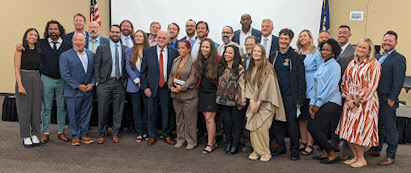
Most speakers and Opioid Abatement Advisory Commission staffers
at the Sept. 15 public hearing to discuss the psychedelic drug ibogaine
gathered for a group photo after the meeting. (Photo by Melissa Patrick)
Chandler said the proposed $42 million to fund this proposal, about 5 percent of the settlements with opioid makers and distributors, "is a drop in the bucket, compared to what has been spent over the years to try to deal with this problem. And spent quite frankly, to a large extent, unsuccessfully. We have successes, but we have a whole lot of failures. And I've seen those failures in my family, both my cousin and my brother, in and out of facilities, strong efforts to try to break the chain of addiction, both of them no longer with us." 

Ibogaine is illegal in the U.S. but has been anecdotally reported to stop the withdrawal symptoms of opioid dependence. The $42 million expenditure, to help get ibogaine federal approval in the next six years, was proposed by Bryan Hubbard, chair and executive director of the commission, which operates in the office of Attorney General Daniel Cameron, the Republican nominee for governor. 

Dr. Joseph Barsuglia, a clinical psychologist and ibogaine researcher who also provided a long list of professional connections to ibogaine, talked about the first time he witnessed an opioid detoxification with ibogaine in 2015. 

"I could not believe my eyes," he said. "To witness a patient with the most severe and chronic addiction you can imagine on death's doorstep undergo a 48-hour process and come out calm, connected, with a new radiance in their eyes and really wanting to live -- this is a miracle in the truest sense. With ibogaine, this is not a rare occurrence, this is the norm."

Barsuglia said ibogaine works for opioid-use disorder because it "rapidly alleviates opioid withdrawal and cravings and promotes lasting sobriety in a manner that is superior to opioid-maintenance therapies," and because "It induces dreamlike visions that increase insight into the causes of one's addiction, which can lead to durable psychological change." 

He said studies show that "ibogaine simultaneously targets addiction and craving to multiple substances, including alcohol, methamphetamines, cocaine and nicotine -- not just opioid use disorder," which is important because over half of opioid-use disorder patients are addicted to multiple substances.

Also, he said ibogaine is "fast acting and has durable outcomes." He said it takes 12 months to break opioid dependence with methadone and 12 hours with ibogaine. He added, "It reduces anxiety, improves mood, does not require ongoing burden on the medical system and has little potential for abuse."

The major objection to legalizing ibogaine are its risks to the heart. Barsuglia said that can be mitigated under a carefully controlled environment.

"I believe funding ibogaine research for opioid use disorder is perhaps one of the most obvious and necessary decisions that can be made in the history of addiction medicine," he said. 

Several speakers gave personal testimonies about their experience with ibogaine, with a recurring message that it not only healed them physically, but also spiritually.

Paria Zandi, a licensed marriage and family therapist in California, said she describes her life as two distinct chapters, "pre-ibogaine and post-ibogaine," and has been free of her opioid addiction for 10 years. 

"Through an intense 24-hour treatment, I emerged feeling reborn," she said. "Not only did I escape the clutches of the physical withdrawal symptoms and cravings, but I also began to relive some of the traumas in my life and gained a newfound perspective. I saw myself as someone of immeasurable worth, and a child of God. I experienced a profound sense of aliveness and connectedness that had eluded me until that moment." 

Zandi added that ibogaine is not a "cure-all" and if it is ever approved will need to be combined with social services, support systems and education. "We urgently need innovative approaches to addiction treatment, such as ibogaine," she said. 

Navy SEAL veteran and ibogaine patient Tommy Aceto told the commisison, "It wasn't just a medicinal treatment. It was a deep dive into my subconscious, self-forgiveness and most importantly, self-love."

Reed Madison, a parent of an ibogaine patient, said of his son, "The reason he went to an ibogaine clinic is because ibogaine offered him a solution for addiction interruption without withdrawals. . . . So I feel incredibly lucky that I learned about ibogaine at the time to help give my son a way out of his addiction problem before it was too late. I think there's a pretty good chance he may not be alive today had ibogaine not been available to him." 

In closing, retired Marine Corps Lt. Gen. Martin Steele, CEO of Reason for Hope and the president of the Veterans Mental Health Leadership Coalition, called on the commission to vote unanimously to fund the ibogaine initiative. 

"Our nation owes its citizens a viable alternative to something that's not working. You have it here in Kentucky, you have this moment in history, this moment in time," he said. "To conclude, I implore each and every member of the commission to support this initiative. A unanimous vote will send a message that will resonate loudly, nationwide."

Asked what was next, Hubbard told Kentucky Health News, "I think every commission member needs to take a little while to think over everything that they have heard. It's a tremendous amount of information to absorb that's been presented between May 31 and now we sit here on Sept. 15. And I think after some due diligence individually and collectively at some point, within some months, we'll be ready to put a vote on the agenda."

Annual health-policy forum Oct. 11 in Lexington will focus on health-care workforce shortage; discount hotel rate expires Mon.


A strong and robust health-care workforce is fundamental to ensuring access to high-quality care, but  many areas of Kentucky have a shortage of this vital resource. Kentucky's health-care workforce shortage will be the focus of the Foundation for a Healthy Kentucky's 2023 Howard L. Bost Memorial Health Policy Forum, to be held at the Griffin Gate Marriott in Lexington from 9 a.m. to 4 p.m. Oct. 11. Doors will open at 8:15. 

The forum will highlight factors contributing to the health-workforce shortage and explore potential solutions. Presenters and panelists will discuss ways to better support health-care providers, optimize use of resources and explore ways to sustain the current workers.

The forum is free of charge. Register here. Hotel rooms are available at a discounted rate through Monday, Sept. 18, for the night before and after for those who are interested. Book here.

The forum will open with the presentation of the Gil Friedell Award, the annual winner of which is selected from among the foundation's Healthy Kentucky Champion honorees.

The morning sessions will include a presentation from Kevin McAvey, director of Manatt Health Strategies, on "How States Are Investing in their Systems of Health to Meet the Needs of a Data-Driven Future."

This will be followed by TED-talk-style presentation by Dr. Stephen Houghland, chief medical officer of the Kentucky Primary Care Association and Tiffany Taul Scruggs, patient-service outreach manager for Sterling Health and a certified community health worker.

Sen. Stephen Meredith
The keynote address, "How Do You Fix an Irretrievably Broken Health-Care System," will be given by state Sen. Stephen Meredith, a Republican from Leitchfield.

Meredith spent decades as a leader in health-care administration before being elected to the Senate in 2016. When he retired from Twin Lakes Regional Medical Center, the hospital was one of the four financially strongest hospitals with under 100 beds in Kentucky. He was also CEO of the Grayson County Hospital Foundation, which employed most of the local medical practitioners and managed their practices.

Meredith is chair of the Senate’s Health Services Committee, co-chair of the Government Contract Review Committee, and a member of other committees, including the recently formed Family and Children Committee.

David Gross
Afternoon segments will offer choices of panel sessions. 

"Finding Funding and Preparing the Pipeline" will address how rural health providers can pursue state funding to address the workforce shortage. It will also address how the next generation of providers is being strengthened. The panelists for this session are from area health education centers: David Gross, director of the northeast center; Michael Gayheart, the southeast director; Catherine Malin, south-central director; and Missy Stokes of Purchase AHEC.  

The segment's other session is "Streamlining the Process," about licensing, accreditation and certification. This panel will focus on the importance of data sharing and making credentialing more manageable.

Emily Beauregard
Panelists include Emily Beauregard, executive director of Kentucky Voices for Health; Rosmond Dolen, associate vice president for payer relations and health policy finance at the Kentucky Hospital Association; and Jeffrey Talbert, professor at the University of Kentucky and division chief of biomedical informatics in its College of Medicine. The moderator will be Angela Carman, associate professor in the Health, Behavior & Society Department of the UK College of Public Health.

The afternoon's second segment also offers two options. 

"Closing the Gaps: Meeting the Needs of the Underserved," will discuss policies and programs to get providers to work where they are needed most. 

Matt Coleman
Panelists will be Matt Coleman, director of the Kentucky Office of Rural Health; Frances Feltner, director of the UK Center of Excellence in Rural Health; state Rep. Ken Fleming, R-Louisville; Dr. Donald Neel of Louisville, a leading pediatrician; and Pam Sparks Stein, dean of the dental college being created at the University of Pikeville. The moderator for this session will be Dr. Laura Hancock Jones, a Morganfield dentist.

"Helping Providers Survive and Thrive" will focus on how workplace and community support can help beat the burnout for the healthcare workforce.

Panelists will be Charles Aull, executive director of the Kentucky Chamber of Commerce Center for Policy & Research; Delanor Manson, CEO of the Kentucky Nurses Association; and Eric Russ,  executive director of the Kentucky Psychological Association. The moderator will be Tim Marcum, associate vice president of planning at Baptist Health.

Saturday, September 16, 2023

One case among thousands, highlighted at UK event, helps illustrate why Kentucky needed a comprehensive cancer center

Cancer survivor and medical student Anna Cox gets applause
at Friday's announcement; at right is Dr. Mark Evers, director
of the Markey Cancer Center. (University of Kentucky photo)
By Sarah Ladd
Kentucky Lantern

Anna Cox had just graduated from the University of Kentucky when she was diagnosed with blood cancer in 2018. She first sought emergency care for a “wrenching abdominal pain.” It turned out to be related to stage four diffuse large B-cell lymphoma, a type of non-Hodgkin lymphoma.

Cox was treated at the university’s Markey Cancer Center, which made history Friday by announcing it is recognized by the National Cancer Institute as a “comprehensive” cancer center — the only one in Kentucky.

“I had never been sick before, and I did not even have a primary-care doctor,” Cox said Friday at the Gatton Student Center, where she joined politicians and university staff to to announce the honor. “With a Stage 4 diagnosis, naturally I was scared of what was to come. But my team at Markey was with me every step of the way.”

Markey is now one of 56 comprehensive cancer centers in the United States. The designation goes to institutions that conduct in-depth research, among other things.

Because of the “compassionate” care she received there, the now cancer-free Cox returned to UK to pursue a medical degree.

“What started with time as a cancer patient led me to innovative cancer research and into medical school as a future physician — all at one institution,” Cox said. “This is what being a comprehensive cancer center is all about.”

State Senate President Robert Stivers, a Republican from Manchester, praised the “added value” the state will enjoy with the new designation.

“This is not a football school; this is not a basketball school,” Stivers said in Lexington. “This is a school that will be known as a center of excellence for cancer research and giving hope for a cure to those who fight this with their family and friends.”

Also on hand for the announcement were UK President Eli Capilouto, Democratic Gov. Andy Beshear, U.S. Rep. Andy Barr, R-Lexington, and others. In a pre-recorded video, U.S. Sen. Mitch McConnell said the honor paves the way “for even more groundbreaking research in the fight against cancer and ensuring that Kentucky’s communities will receive the gold standard of cancer care.”

In 2021, more than 10,000 Kentuckians died with cancer, according to the Centers for Disease Control and Prevention, making it one of the more deadly states for cancer patients. Almost all of Markey’s patients come from Kentucky, UK said in a press release.

Markey patients now have “access to new drugs, treatment options and clinical trials offered only at NCI-designated centers,” UK said in a statement. 

Barr said, “It means that we can attract the best clinicians, the best researchers, more research dollars, better clinical trials. And that means better outcomes. And, boy, do we need it in the Commonwealth of Kentucky.”

Op-ed looks at ways to address loneliness, which is linked to a number of health conditions; Ky. is above average for loneliness

Kentucky ranks in the top 20 states for loneliness, which can involve far more than feelings of sadness from being alone. Research shows it is linked to strokes, heart disease, dementia, inflammation and suicide.

"It breaks the heart literally as well as figuratively," opinion columnist Nicholas Kristof writes for the New York Times as part of a series titled "How America Heals," aimed at finding ways to fix this problem. 

The physical and societal harms that come from loneliness are so bad that America's top public-health official, Surgeon General Vivek H. Murthy, issued a rare advisory with a framework to rebuild social connection and community in the U.S. in May.

Graph from surgeon general's advisory,
"Our Epidemic of Loneliness and Isolation"
 
Loneliness is as deadly as smoking 15 cigarettes a day and more lethal than consuming six alcoholic drinks a day, according to Murthy. It is also more dangerous than physical inactivity, obesity and air pollution, he says. 

Research also shows America has been growing lonelier. A majority of adults (58 %) report experiencing loneliness, according to a Morning Consult survey commissioned by The Cigna Group, a health-insurance company.

An Aging In Place study found that Kentucky tied with Arkansas for loneliness at 18th among states, with scores of 5.16 on a 10-point scale. Maine was first at 7.6, and Utah was best off, at 0.72. The study noted that more than half of Utahns identify as Mormons, which "may contribute to the low numbers of divorce and single-person households."

The study looked at a range of factors, including the percentage of single-person households, number of people widowed, number of people divorced, searches for dating apps per 10,000 people and searches for friendship apps per 10,000 people, to determine which states struggle the most with loneliness.

Kristof writes that there are ways to build connections that bind us together and writes about some of those approaches taken by the United Kingdom, which he says "is the pioneer of these efforts, having established the post of minister for loneliness in 2018. Britain oversees public-private partnerships that collectively knit millions of people together with programs like nature walks, songwriting workshops and community litter pickups." And, he adds, other countries have followed suit.  

"That’s because if the researchers are correct, social isolation probably kills far more people in the West each year than terrorists and murderers, and it costs the public enormous sums in unnecessary health costs," Kristof writes. "Countermeasures can make a huge difference: One review of 148 studies concluded that social connections increase the odds of an individual’s surviving over roughly the next seven years by about 50 percent." 

Kristof says he writes from troubles he's witnessed: "More than one-quarter of the children who rode the No. 6 school bus with me in Yamhill, Oregon, have died from drugs, alcohol, suicide and other so-called deaths of despair. These pathologies are linked to social isolation." 

However, he notes that despite the economic devastation of during the Great Depression, mortality then didn’t rise but actually fell." He attributes this to the "strength of community institutions -- like churches, men's and women's clubs and extended families -- that existed during that time." 

Ninety-odd years later, "Those community institutions have frayed," he writes. "Now we’re on our own, and perhaps that’s why so many are also dying alone." 

Kristof says he recognizes that it's not easy to rebuild such networks, but says we have to try, and offers some suggestions. 

"The steps to tackle loneliness aren’t grand, high-tech or expensive. In fact, one of the strategies is simply to get people back into old-fashioned patterns like eating meals together, holding parties and volunteering to help one another out," he writes.

He notes that the U.K. ministry has spent "some $100 million" to address loneliness since 2018, often to support local initiatives. One of those is a local, weekly family-style luncheon for women and children, many of them immigrants who struggle with English. 

He says decline of religious attendance has left a gap in community building, but "church buildings can still provide a physical architecture for connections, even if the faith architecture has eroded." 

He also points to several community-wide events to combat loneliness, including an event held for King Charles's coronation in May called “The Big Help-Out” to encourage people to come together and volunteer, and 6 million people, almost a tenth of the nation's population, did so. "The response was so impressive that this may become an annual event," he writes.

Why did loneliness increase? Kristof says the trends toward larger homes and longer working hours has left less time to share meals, and he notes studies that show social media has led to people being more lonely. Pets and talking robots have been suggested as solutions, he writes, but "It seems that there’s something to be said for friends who are living, breathing human beings." 

In his advisory, Surgeon General Murthy offered a strategy to address loneliness that begins with building up infrastructure that enables social connection: physical infrastructure such as parks and libraries, and social infrastructure to weave together volunteers or enthusiasts with similar interests.

Britain can serve as a model for this, Kristof writes. He points to a town that has has trained more than 1,100 volunteers to be “community connectors" who engage people and encourage them to join events or participate in programs. He also points to the idea of a "chatty bench" adopted in the U.K., Sweden and Australia, a bench with a sign encouraging strangers to talk to each other. 

"Solutions to loneliness are like that — little nudges to encourage us to mingle the way we evolved to," Kristof writes, suggesting that government do more: "President Biden, how about creating a senior government post analogous to a minister for loneliness? And mayors and governors, how about some chatty benches in American parks, along with volunteers deputized to bring us out for nature walks and sing-alongs?"

Friday, September 15, 2023

UK cancer center gets top U.S. designation, shared by 55 others

UK wasted no time promoting the new designation Friday on its
Cornerstone display on Limestone Street. (Photo by Al Cross)
Kentucky Health News

The University of Kentucky's cancer center has received the highest designation from the National Cancer Institute, making it the first such center in Kentucky, it announced Friday. The United States has 56.

In 2013, the Markey Cancer Center received its initial NCI designation, held by 72 centers in the nation. It worked for a decade to get the higher designation, based on research, treatment, diagnosis and prevention.

“It’s really the gold standard of clinical care, research and community outreach,” said Dr. Mark Evers, who has been director of the center since 2009, when the university started trying for NCI designation.

UK President Eli Capilouto said, “To truly be the University for Kentucky, we raised the stakes and decided that UK will continue to be a leader in cancer research by becoming a comprehensive cancer center.”

That required hundreds of millions of dollars in investment from UK and the state legislature, which put in $135 million in 2013 and another $20 million this year, state Senate President Robert Stivers said.

Kentucky has the nation's third highest rate of death from cancer, behind West Virginia and Mississippi, and cancer is the state's second most common cause of death, next to heart disease. 

The closest comprehensive cancer center to Lexington is nearly 200 miles away, a UK press release noted without mentioning the one at Vanderbilt University in Nashville, which competes with UK for patients living in Western Kentucky. Indiana University has a comprehensive cancer center in Indianapolis.

"The elevation to an NCI-designated comprehensive cancer center will further enhance Markey's ability to attract top-tier researchers and clinicians, secure additional research funding, collaborate with national and international partners, and give patients access to leading-edge treatments and clinical trials – resulting in better patient care and health outcomes for Kentuckians," the release said. "Numerous studies show that patients treated at NCI-Comprehensive Cancer Centers have better survival and recovery rates."

In addition to the comprehensive designation, NCI awarded the center $13.5 million through a five-year renewal of its grant for research programs, shared equipment and resources.

Since 2013, more than 100 cancer researchers have been recruited to UK and external funding to Markey researchers has more than doubled, the release said. Markey’s outpatient visits have increased by 69% and the number of new patients has gone up 75%.

The center's growth prompted UK to start work on a new treatment center and advanced ambulatory complex that will bring Markey's outpatient services under one roof. It is expected to open in 2027.

Thursday, September 14, 2023

Most people have end-of-life wishes, but don't talk about it; planning for death is less likely in rural areas, study finds

St. David's Foundation graph; click on it to enlarge.
As America ages, more families face end-of-life decisions, and rural Americans are less likely to have their wishes known or followed by family members, reports Liz Carey of The Daily Yonder. "A new study found that while most people have end-of-life wishes, only a little over a third of them actually get them fulfilled. That is even more true with rural residents, researchers said."

Researchers from St. David's Foundation in Texas found that when it comes to end-of-life care, most Texans want to die at home (76%) and not be a burden to their families (77%). "But only one in three people surveyed said their loved one's wishes were honored," Carey writes. "Of those who are least likely to have their end-of-life wishes followed are rural residents, the study found. . . . Only 37% of the survey respondents said their loved ones died at home. Close to half of them (47%) said their loved one faced challenges related to their care – from problems with insurance coverage to facing cultural or language barriers."

Honoring a person's wishes begins with knowing what they are. Andrew Levack, senior program officer with St. David's Foundation, told Carey: "One of the interesting things the study found was how few conversations respondents had with their doctors around plans for end of life. I think people have an idea of what they would like, but it takes some active planning and advocacy to make that happen."

Study researchers noted a common thread of disconnection across the state -- people have end-of-life care desires, but don't voice them. "Most Texans, even older adults, are unprepared for decisions about end-of-life care. The vast majority believe it is important to have their wishes in writing, yet over half have not done so. Similarly, many say they would like to discuss end-of-life planning with their health care provider if they were faced with a serious illness, yet only 17% have had a provider initiate a conversation about it."

Geographical isolation and a lack of health care access make rural populations more likely to not have end-of-life plans or discussions. Dr. Kate Tindell, medical director for Austin Palliative Care and Hospice, told Carey: "People have really disjointed health care now. We've sort of lost that sense that there is a captain of the medical ship who is aware of all the moving parts and is giving the patient that guidance. I think that really causes people to not have the kind of relationship that would allow them to have that kind of conversation (about end-of-life wishes) the way they would if they had seen the same provider every single time for 10 years."

Some rural hospitals are fighting Medicare Advantage; more than half of Kentuckians on Medicare have the private plans

Medicare Advantage plans may offer more benefits but also
have rules
that can limit patients' choices. (Anthem website)
A hospital system in central Oregon has "threatened to cut ties with all Medicare Advantage plans next year, a move that would leave an estimated 26,000 local beneficiaries without access to a hospital less than 100 miles away," Nona Tepper reports for Modern Healthcare.

St. Charles Health System CEO Steve Gordon said last month that Meedicare Advantage, "a program intended to promote seamless and higher quality care, has instead become a fragmented patchwork of administrative delays, denials and frustrations." More than half of Kentuckians on Medicare have private Medicare Advantage plans.

Tepper reports, "Health systems nationwide appear to share Gordon's consternation, especially those similarly located in rural areas. Rural health-care providers tend to be disproportionately affected by factors such as reimbursement cuts or denied and delayed payments from Medicare Advantage plans because Medicare enrollees make up most of their patient populations. Cutting off Medicare Advantage plans, or at least declaring that to be a possibility, is a response to the growing market power these carriers have, especially over rural providers."

Tepper notes, "Rural Medicare Advantage enrollment is growing faster than overall enrollment: Since 2010, the share of rural beneficiaries who choose private plans over the traditional program has more than quadrupled, to 40% from 11%, according to Kaiser Family Foundation survey results published this month.

"Among the 58 publicly known contract disputes between insurers and providers this year, 35—more than half—involved Medicare Advantage carriers, according to data compiled by FTI Consulting.  Most conflicts center on how health insurance companies do business more than on reimbursements, said FTI Consulting Managing Director Adam Broder."

Tepper adds: "At Aspirus Health, some Medicare Advantage insurers deny as many as 35% of claims, said Matthew Heywood, CEO of the Wausau, Wisconsin-based nonprofit health system. In response, the 17-hospital chain is renegotiating contracts to include provisions regarding prior authorizations and claims processing times, he said."

Why the CDC recomends new Covid-19 boosters for everyone

Photo illustration by Waldo Sweigers, Bloomberg Creative Photos
By Arthur Allen
KFF Health News

Everyone over the age of 6 months should get the latest Covid-19 booster shot, a federal expert panel recommended Tuesday after hearing an estimate that universal vaccination could prevent 100,000 more hospitalizations each year than if only the elderly were vaccinated.

The Centers for Disease Control and Prevention’s Advisory Committee on Immunization Practices voted 13-1 for the motion after months of debate about whether to limit its recommendation to high-risk groups. A day earlier, the FDA approved the new booster, stating it was safe and effective at protecting against the covid variants currently circulating in the U.S.

After the last booster was released, in 2022, only 17% of the U.S. population got it — compared with the roughly half of the nation who got the first booster after it became available in fall 2021. Broader uptake was hurt by pandemic weariness and evidence the shots don’t always prevent Covid infections. But those who did get the shot were far less likely to get very sick or die, according to data presented at Tuesday’s meeting.

The virus sometimes causes severe illness even in those without underlying conditions, causing more deaths in children than other vaccine-preventable diseases, as chickenpox did before vaccines against those pathogens were universally recommended.

The number of hospitalized patients with covid has ticked up modestly in recent weeks, CDC data shows, and infectious disease experts anticipate a surge in the late fall and winter.

The shots are made by Moderna and by Pfizer and its German partner, BioNTech, which have decided to charge up to $130 a shot. They have launched national marketing campaigns to encourage vaccination. The advisory committee deferred a decision on a third booster, produced by Novavax, because the FDA hasn’t yet approved it. Here’s what to know:

Who should get the covid booster? The CDC advises that everyone over 6 months old should, for the broader benefit of all. Those at highest risk of serious disease include babies and toddlers, the elderly, pregnant women, and people with chronic health conditions including obesity. The risks are lower — though not zero — for everyone else. The vaccines, we’ve learned, tend to prevent infection in most people for only a few months. But they do a good job of preventing hospitalization and death, and by at least diminishing infections they may slow spread of the disease to the vulnerable, whose immune systems may be too weak to generate a good response to the vaccine.

Pablo Sánchez, an Ohio State pediatrics professor who was the lone dissenter on the CDC panel, said he was worried the boosters hadn’t been tested enough, especially in kids. The vaccine strain in the new boosters was approved only in June, so nearly all the tests were done in mice or monkeys. However, nearly identical vaccines have been given safely to billions of people worldwide.

When should you get it? The vaccine makers say they’ll begin rolling out the vaccine this week. If you’re in a high-risk group and haven’t been vaccinated or been sick with covid in the past two months, you could get it right away, says John Moore, an immunology expert at Weill Cornell Medical College. If you plan to travel this holiday season, as he does, Moore said, it would make sense to push your shot to late October or early November, to maximize the period in which protection induced by the vaccine is still high.

Who will pay for it? When the ACIP recommends a vaccine for children, the government is legally obligated to guarantee kids free coverage, and the same holds for commercial insurance coverage of adult vaccines. For the 25 to 30 million uninsured adults, the federal government created the Bridge Access Program. It will pay for rural and community health centers, as well as Walgreens, CVS, and some independent pharmacies, to provide covid shots for free. Manufacturers have agreed to donate some of the doses, CDC officials said.

Will this new booster work against the current variants of Covid-19? It should. More than 90% of currently circulating strains are closely related to the variant selected for the booster earlier this year, and studies showed the vaccines produced ample antibodies against most of them. The shots also appeared to produce a good immune response against a divergent strain that initially worried people, called BA.2.86. That strain represents fewer than 1% of cases currently. Moore calls it a “nothingburger.”

Why are some doctors not gung-ho about the booster? Experience with the Covid vaccines has shown that their protection against hospitalization and death lasts longer than their protection against illness, which wanes relatively quickly, and this has created widespread skepticism. Most people in the U.S. have been ill with covid and most have been vaccinated at least once, which together are generally enough to prevent grave illness, if not infection — in most people. Many doctors think the focus should be on vaccinating those truly at risk.

With new Covid boosters, plus flu and RSV vaccines, how many shots should I expect to get this fall? People tend to get sick in the late fall because they’re inside more and may be traveling and gathering in large family groups. This fall, for the first time, there’s a vaccine — for older adults — against respiratory syncytial virus. Kathryn Edwards, a 75-year-old Vanderbilt University pediatrician, plans to get all three shots but “probably won’t get them all together,” she said. Covid “can have a punch” and some of the RSV vaccines and the flu shot that’s recommended for people 65 and older also can cause sore arms and, sometimes, fever or other symptoms. A hint emerged from data earlier this year that people who got flu and covid shots together might be at slightly higher risk of stroke. That linkage seems to have faded after further study, but it still might be safer not to get them together.

Pfizer and Moderna are both testing combination vaccines, with the first flu-covid shot to be available as early as next year.

Has this booster version been used elsewhere in the world? No, but Pfizer’s shot has been approved in the European Union, Japan, and South Korea, and Moderna has won approval in Japan and Canada. Rollouts will start in the U.S. and other countries this week.

Unlike in earlier periods of the pandemic, mandates for the booster are unlikely. But “it’s important for people to have access to the vaccine if they want it,” said panel member Beth Bell, a professor of public health at the University of Washington.

“Having said that, it’s clear the risk is not equal, and the messaging needs to clarify that a lot of older people and people with underlying conditions are dying, and they really need to get a booster,” she said.

ACIP member Sarah Long, a pediatrician at Children’s Hospital of Philadelphia, voted for a universal recommendation but said she worried it was not enough. “I think we’ll recommend it and nobody will get it,” she said. “The people who need it most won’t get it.”

KFF Health News is a national newsroom that produces in-depth journalism about health issues and is one of the core operating programs at the Kaiser Family Foundation.

Sunday, September 10, 2023

Study says 'long Covid' symptoms linger even after two years in both people who had severe and mild cases of the disease

CDC illustration of the novel coronavirus
A recent study highlights the burden of Covid-19 that continues to affect millions of people, showing that  patients who were hospitalized with the disease are especially vulnerable to a long list of health problems and death two years after the initial infection, and that those with mild or moderate infections have an elevated risk of two dozen medical conditions, Amy Goldstein reports for The Washington Post.

The study, published in the journal Nature Medicine, looked at the risk of death, hospitalizations and 80 conditions that are typical of "long Covid" in people who had had severe Covid-19 as well as those with milder infections. The study followed the patients for two years after infection. The analysis was based on electronic medical records from the Department of Veterans Affairs database of nearly 139,000 veterans diagnosed with Covid from March 2020 through the end of that year. They were compared to nearly 6 million veterans not known to be infected with Covid during that time. 

The Kaiser Family Foundation says the working definition of long Covid is "signs, symptoms and conditions that continue or develop after initial Covid-19 or SARS-CoV2 infection." 

“A lot of people think, ‘I got Covid, I got over it and I’m fine,’ and it’s a nothingburger for them. But that’s not everything,” the study’s senior author, Ziyad Al-Aly, a clinical epidemiologist at Washington University School of Medicine in St. Louis, told Goldstein.

After a couple of years, “maybe you’ve forgotten about the SARS-CoV-2 infection … but Covid did not forget about you. It’s still wreaking havoc in your body,” said Al-Aly, chief of research for the VA in St. Louis.

The study is believed to be the first to document such data beyond the one-year mark, Goldstein reports.   "According to Al-Aly, just two other known studies have used two-year time horizons, but they focused on a narrow group of symptoms, such as effects on the nervous system," she writes. 

Estimates of how many people develop long Covid vary, Goldstein points to an analysis of nearly 5 million U.S. patients who had it between early 2020 and January 2022, based on a collaboration between the Post and electronic health records company Epic, that found about 7 percent of those patients sought care for long-Covid symptoms within six months of their acute illness.

"At the time, about 200 million people in the United States were known to have had Covid, according to federal estimates, so that percentage translated into about 15 million with symptoms typical of long Covid," she writes. 

"For the relatively small share of Covid survivors who had been hospitalized, they had a heightened risk two years later of death, subsequent hospitalization and two-thirds of the medical conditions included in the analysis. Among those conditions: cardiovascular issues, blood clotting trouble, diabetes, gastrointestinal problems and kidney disorders," Goldstein writes. 

Al-Aly told her that the survivors and the uninfected started out in similar health, which suggest the virus is what produced the heightened risk of lingering medical problems. 

Goldstein adds that the bulk of the survivors in the study with milder Covid had fewer long-term risks, but they still had some. 

"By six months after having tested positive, they were no more likely to die than people uninfected by Covid," she writes. "And their elevated risk had virtually disappeared by then for two-thirds of the conditions measured in the study, though they still displayed greater odds after two years of medical problems involving some organ systems, including cardiovascular and gastrointestinal trouble and blood clotting, along with diabetes, fatigue and lung issues." 

Francesca Beaudoin, an emergency-room physician and clinical epidemiologist who directs Brown University’s long-Covid initiative, told the Post that the findings “capture what we are hearing at the narrative level from patients — that . . . the systems [affected after recovery from Covid’s acute phase] are varied, that it results in loss of quality of life, loss of work and school.” Beaudoin added that patients send her updates, reporting they still cannot walk one block without becoming worn out.

Goldstein writes that the report recognizes that the analysis is not entirely representative of who is most likely to develop long Covid, noting that nine out of 10 of patients in the study are men, while women account for more than half of long-Covid patients in the general population.

The VA funded the study. Al-Aly told Goldstein that he and co-authors are working on a three-year analysis and plan to assess the same patients five years and a decade after they first developed Covid.

As Kentucky's near-total abortion ban largely eliminates the procedure in the state, Kentuckians go to other states for it

From January to July of this year, the Kentucky Cabinet for Health and Family Services received reports of 13 abortions in the state, compared to 2,591 in the same time frame in 2021, showing the impact of state laws that were invoked when the U.S. Supreme Court nullified the right to abortion in late June 2022, Alex Acquisto reports in an in-depth article for the Lexington Herald-Leader. 

Acquisto writes, "The marked cliff is a direct result of Kentucky’s trigger law and six-week ban," which legislators passed in hope of such a ruling. "The trigger law bans all abortions except when a pregnant person’s life is immediately threatened, and the six-week ban, or fetal-heartbeat law, outlaws abortions after fetal cardiac activity develops ... usually around six weeks gestation."

The trend is mirrored in more than a dozen states that have enacted similar policies since the decision in Dobbs v. Jackson Women's Health Organization, according to estimates from the Guttmacher Institute, a policy research center that supports abortion rights. However, "In states that have preserved access, like Illinois, demand for the medical procedure has ballooned," Acquisto writes. 

"From January to June of this year, the number of abortions provided in Illinois grew by an estimated 69% (from 26,000 to roughly 45,000) compared with 2020, according to Guttmacher’s report. Across the board, states without abortion bans saw similar increases. Abortions in Virginia increased by 60%."

Southern Illinois has the closest abortion access to Western Kentucky; the closest to Eastern Kentucky is in Bristol, Virginia.

Acquisto notes that these estimates are  based on abortions reported by providers working in brick-and-mortar clinics and doctor’s offices, so "The true figures are likely even higher, since an estimated increase in abortion medication received by mail is not factored" into the estimates. 

The Guttmacher Institute report did not include numbers from Kentucky. Acquisto got them through an open records request. She writes that the health cabinet is expected to publish its annual abortion report for 2022 this month; state law requires it to be published by Sept. 30 of each year.

Acquisto writes that before the state's near-total abortion ban, "in a given month in Kentucky, between 300 and 400 abortions were provided, state data from recent years shows. . . . Most of the 13 were medication abortions, and most occurred in the second trimester, the latest being 21 weeks."

She adds that the cabinet did not release the ages of the individuals who received abortions in Kentucky so far this year, stating that doing so could create an "unwarranted invasion of personal privacy" because so few abortions were reported. Historically, this information has been public. 

Acquisto reports that piecemeal data provides some insight into how many Kentuckians are traveling out of state for this type of medical care. 

"Before Indiana’s near-total abortion became law in August, state data showed 340 Kentuckians had traveled to the Hoosier state for abortions between January and March, representing roughly 90% of all abortions provided to non-residents," she writes. " In 2022, a total of 950 Kentuckians got abortions in Indiana, WFPL reported in June." 

That shows many people will continue to seek such care despite state bans, Tamarra Wieder, Kentucky state director of Planned Parenthood Alliance Advocates, told Acquisto.

“Kentuckians didn’t stop needing abortions, they’ve just been forced to go elsewhere,” Wieder said. “Those who had the means and the ability to leave the state are leaving the state for that type of care.”

Organizations that help women travel across state lines for reproductive health care say the demand for their help is not letting up, Acquisto reports: "Kentucky Health Justice Network, which offers assistance to people who need help paying for their abortion, fielded more than 500 calls from January to July of this year (421 received donations from KHJN to pay for their abortions)." 

Savannah Trebuna, co-director of KHJN’s abortion support fund, told Acquisto that before August, when Indiana banned abortion, 44% of people who the network's hotline traveled to Indiana for abortions, and since then, KHJN has sent nearly 30 callers to Illinois.

Acquisto also notes the challenges Kentucky women face when they need a medically necessary abortion but their life is not immediately threatened, a situation that current law doesn't allow a doctor to address. 

Trebuna told Acquisto, “There have been cases where we’ve had callers who would have died had they continued their pregnancy, but because they weren’t actively dying in front of a doctor, they were still referred out of state.”