Monday, June 20, 2022

Covid-19 cases in Kentucky dropped 41% last week, after two weeks of steep increases; hospitalizations and deaths remain low

By Melissa Patrick
Kentucky Health News

After two weeks of new Covid-19 cases increasing by more than 37% each week, new cases in Kentucky dropped 41% last week. Other key Covid-19 metrics show that the share of Kentuckians testing positive for the coronavirus increased, as did hospitalizations, but fewer deaths were reported. 

The state's weekly report shows 7,927 new coronavirus cases, an average of 1,132 per day. That's 41% fewer than the week before, when the rate was 1,928 per day.

Over the last two weeks, The New York Times ranks Kentucky's infection rate sixth among the states, with a 91% increase in cases. The Times says daily new infections nearly doubled this month in Kentucky, and cases and hospitalizations are increasing substantially in the South and West. 

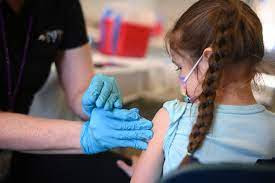
Children continue to get infected with the virus; of last week's new cases, 16% were in people 18 and younger. Now everyone older than 6 months can get a vaccine, which is considered the best way to protect yourself and your children against the disease.

On Saturday, the Centers for Disease Control and Prevention gave final approval for Covid-19 vaccinations for children aged 6 months to 5 years.

The vaccines could be available in some Kentucky locations this week.  The state has an estimated 246,000 children 6 months to 4 years old who will be newly eligible to receive a Covid-19 vaccine, according to the state Department for Public Health.

Ilhem Massaoudi, chair of immunology in the University of Kentucky College of Medicine, said on KET's "Kentucky Tonight" that she would tell doubtful parents that "Covid-19 is amongst the five leading causes of childhood death" in the U.S. "We're taking a lot of risks; it's not worth it," said the mother of children 5 and 2½.

The share of Kentuckians testing positive for the virus in the Monday-to-Sunday reporting period increased to 12.45%.  up from 12.07% the prior week. Eleven weeks ago, this rate was at a low of 1.97%. 

The statewide incidence rate was nearly the same this week as last week, decreasing 0.01, to 24.41 cases per 100,000 residents.

Three Kentucky counties have rates more than double that rate: Lyon, 66.1; Wolfe, 57.9; and Livingston, 51.3. The other top-10 counties were Breathitt, 39.6; Hickman, 39.1; Boyd, 36.7; Montgomery, 36.5; Woodford, 35.3; Perry, 34.9; and Henry, 33.7.

The state reported 51 more Covid-19 deaths last week, an average of 7.3 per day. That's down from 8.4 per day the previous week. The state's pandemic death toll is now 16,114. 

Kentucky's Covid-19 hospitalization numbers remain low, but have been creeping up a bit. Kentucky hospitals reported 369 patients with Covid-19 Monday, up from 352 a week ago, with 48 in intensive care (down two) and 25 on mechanical ventilation (no change). 

"Even though the numbers are sky-high we don't have that many critically ill patients in the hospital," Dr. Mark Dougherty of Baptist Health said on KET. "I really don't think we're going to get the point where we're going to be overwhelmed any more. . . . We're in a big transition."

Those case numbers are much lower than the actual numbers, Dougherty said: "We are probably undercounting by an order of magnitude of 10 or 20," because people are testing at home or not getting tested at all. Home test results don't show up in the positive-test rate.

The latest CDC national Covid-19 risk map, which measures cases and hospital capacity, shows 19 Kentucky counties with a high level of coronavirus transmission and 29 with a medium level of risk. The map is updated on Thursday evenings.

Town halls to discuss medical cannabis in Kentucky scheduled, one in Pikeville and one in Frankfort; two more are to be set

By Melissa Patrick
Kentucky Health News

The newly appointed 17-member Team Kentucky Medical Cannabis Advisory Committee met for the first time Monday in Frankfort, where it reviewed Gov. Andy Beshear's expectations and set dates and locations for the first two of four planned town-hall forums.

The first is scheduled July 6 at the University of Pikeville's Health Professions Education Building; the second is scheduled July 19 at the Transportation Cabinet in Frankfort. The town halls are expected to last 90 minutes and two others will be held in Western Kentucky and Northern Kentucky.

In forming this committee, Beshear has said that he is looking for ways to bring medical marijuana to Kentucky by executive action. Legislators have said he lacks the power to do that, but Co-Chairman Kerry Harvey, secretary of the Justice and Public Safety Cabinet, told reporters, “It’s time to advance this debate; 37 or 38 other states have acted on this.”

In the meeting, Harvey stressed that everyone is encouraged to express their opinion on this issue, whether via a town-hall meeting or online, regardless of whether that opinion is for medical cannabis or against it. "We're going to do our best to provide an uncluttered, clear line of communication between all of you all who have a great deal of experience and expertise, as well as all the people of the Commonwealth of Kentucky who are interested in this issue," he said, adding later, "We will make sure your voice is heard."

Harvey, a former United States attorney, also talked about what the advisory committee is not. 

"This is not about recreational" marijuana, he said. "This will not be a debate or a discussion of recreational. What this is about, is exploring whether there is a safe and effective way that we're not now employing to alleviate the suffering of a lot of our fellow citizens." 

Beshear is running for re-election in 2023, but Harvey said, "This is not a partisan political issue. If we look at the public polling in Kentucky, medical cannabis enjoys widespread support of Kentuckians, whether Republicans, Democrats or independents."

The committee's website, medicalcannabis.ky.gov, was launched on Friday and has already received 738 comments about medical cannabis in Kentucky, with only 10 of them opposed to it, said Co-Chairman Ray Perry, secretary of the Public Protection Cabinet.

UK to host retreat Saturday and Sunday for people who lost someone close to them to suicide more than three years ago

If you lost to suicide someone who was close to you, more than three years ago, the Suicide Prevention and Exposure Lab at the University of Kentucky College of Social Work has a two-day retreat for you this weekend.

The retreat, which is being offered in collaboration with the Kentucky Interagency Council on Suicide Prevention, the Eastern Kentucky University Psychology Clinic and Brother’s Run, will be held on the UK campus Saturday and Sunday, June 25-26. It The will be led by prominent experts, including three past presidents of the American Association of Suicidology.

“Suicide-loss survivors often receive services in the days and weeks after their loss, but not in the years that follow,” said Dr. Julie Cerel, director of the Suicide Prevention and Exposure Lab. “This retreat is specifically designed to help long-term survivors integrate their grief into the life they continue to build. Suicide loss can be felt by anyone close to the person that died, regardless of their actual relationship.”

Participants in the retreat will create a timeline of their loss and determine what’s next; explore growth after loss and planting a seed of hope; and craft a personal metaphor for their loss and their life after that loss. Suicide-prevention resources available across the state will also be discussed. Participants will also have the opportunity to support future suicide-loss survivors by helping guide the focus of future research, prevention, and service.

Suicide-loss survivors interested in participating in the retreat can register online at https://ceu.uky.edu/product/suicidesurvivorretreat/. Registration is free, but space is limited.

Sunday, June 19, 2022

Booster needed to protect against Omicron variant; infection may provide as much immunity, but doctors say a booster is better

If you haven't gotten a booster shot following your "full vaccination" with the Moderna or Pfizer-BioNTech vaccines against Covid-19, you probably are not protected against getting sick from the Omicron variant of the coronavirus, says a study in the New England Journal of Medicine.

The study found that "Two shots of Covid-19 vaccine without an additional booster offer essentially no lasting protection against infection with Omicron, and a coronavirus infection is as effective as a recent booster shot in preventing a new Omicron-fueled illness," reports Corinne Purtill of the Los Angeles Times.

"At the same time, any immunity to the highly contagious variant, either from infection or vaccination, appears to offer significant and lasting protection against serious illness, hospitalization and death, the researchers found. And if you haven’t had either the virus or the vaccine, doctors urged, it’s better to get the jab."

Dr. Jeffrey Klausner, an infectious disease specialist at the University of Southern California, “It’s definitely much, much safer to get vaccinated than to get infected. The vaccine is only presenting a small piece of the virus. The whole virus, if you get infected, is going to spread throughout the body, it’s going to cause different symptoms in different body parts and increase your risk for long Covid or a prolonged duration of illness.”

The study shows that we are going to be able to live with Covid-19, said Laith Jamal Abu-Raddad, an infectious-disease epidemiologist at Weill Cornell Medicine-Qatar and a co-author of the study, which was conducted in the small Middle East nation that has just under 3 million people but expatriates from 150 other countries.

“Covid-19 is going to stay with us essentially forever. It’s not really going to disappear,” Abu-Radded said. “But the question will be: Will we be able to live with it somehow? And the initial results we are getting are actually very encouraging.”

The study found that people without booster shots "had essentially no protection against a mild to moderate case of Covid-19," Purtill writes. "Six months after their last shot, they were just as susceptible to a positive test and disease symptoms as anyone else — but still showed strong resistance to severe illness."

Also, "A prior infection was about 46% effective at preventing a symptomatic infection. Being fully vaccinated and boosted was about 52% effective. And having natural immunity from a prior infection as well as immunity from a vaccine and booster was the most effective of all, reducing Covid-19 risk by 77%." That is much less than the initial 94% to 95% effectiveness of vaccines, but as the virus "accumulates mutations, the vaccines become less effective at recognizing the virus and blocking infections," Purtill explains.

“The immune evasion is so much higher” with Omicron, Abu-Raddad said. It is “essentially a new virus.”

Dr. Robert “Chip” Schooley, an infectious disease specialist at the University of California-San Diego, told Purtill that the Qatari researchers have done “a much better job of understanding the decay of the immune response over time than we have” in the U.S.

“Getting Covid right now — if you’re vaccinated up and you’re reasonably healthy — is more of a nuisance than it is a life-threatening event for most people,” Schooley said. “It’s a very different disease from two years ago, when we had a largely non-immune human population, and a virus that was going at you for the first time. Now we have a virus that many of us have either seen through vaccination, or through infection, or a combination of both. The playing field is much more level.”

Program to get low-income seniors free fruits, vegetables at Ky. farmers' markets, which usually starts June 1, delayed to July 1

Photo illustration from Northern Kentucky Tribune
Low-income seniors who are at risk of poor nutrition have been unable to get free fruits and vegetables from Kentucky farmers’ markets this month, but the state Department of Agriculture says it will get the program going again July 1, Jack Brammer reports for the Northern Kentucky Tribune.

The Senior Farmers Market Nutrition Program normally begins June 1 but has been delayed because the bank the department used "no longer processes paper vouchers and the department had to find a new way for the payments," Brammer reports, citing Kirk Hilbrecht, spokesman for Agriculture Commissioner Ryan Quarles. "Hilbrecht said the delay was due to a need to switch payments to participants this year from paper vouchers to electronic cards with a QR code or an app on a smart phone."

The federally funded program covers about 12,500 Kentuckians and 103 farmers’ markets in the state. To participate, a person must have passed their 60th birthday and must meet income guidelines listed on the department’s website at https://www.kyagr.com/consumer/senior-farmer-market.html. The site also lists products that can be bought at the farmers’ markets .

Tyler Offerman, food justice fellow for the Kentucky Equal Justice Center in Lexington, told Brammer that he has “heard from several program participants that the changes caught them by surprise and communication about delays has been confusing.”

Saturday, June 18, 2022

Covid-19 vaccines for children 6 months to 5 years old get final approval; shots could be available in Ky. as early as next week

NPR photo
By Melissa Patrick
Kentucky Health News

Covid-19 vaccinations for children between the ages of 6 months to 5 years were finally approved Saturday. This was the only age group left in the U.S. that are not eligible for Covid-19 vaccinations, other than infants.

The approval by Centers for Disease Control and Prevention Director Rochelle Walensky means that the shots could be available in Kentucky as early as next week.

Walensky's approval followed recommendations of panels of independent advisers to the CDC and the Food and Drug Administration that both Moderna and Pfizer Covid-19 vaccines for children be approved. On Friday, the FDA authorized emergency use of the vaccines.

"I'm not going to say that this is the day that so many parents have been waiting for," Dr. Kristina Bryant, an infectious-diseases specialist with Norton Children's Hospital in Louisville, said in an online news conference. "I think that day is the day their kids actually get vaccinated against Covid-19."

The vaccines will be available through doctors' offices, clinics and pharmacies. Children under the age of three must get their vaccine at a clinic or doctor's office since pharmacies can only administer vaccines to children 3 years of age or older. 

There are an estimated 246,000 children 6 months to 4 years of age in Kentucky that will be newly eligible to receive the Covid-19 vaccine, according to the state Department for Public Health.

Most pre-ordered vaccine doses for younger children are expected to arrive Wednesday and Thursday, June 22 and 23, but may not be widely available  until early July because providers may need time to adjust their policies and procedures to accommodate this new patient group, KDPH said in an e-mail.

The two-dose Moderna vaccine is for children 6 months to 5 years of age and the three-shot Pfizer vaccine is for children 6 months to 4 years. The vaccines are the same as the adult vaccines, but will be given in smaller doses.

Which one should you choose? The Associated Press reports, "In a call with reporters earlier this week, vaccine experts noted that the shots haven’t been tested against each other, so there’s no way to tell parents if one is superior."

Asked if one was better than the other, Bryant said if federal health officials determine that both of these vaccines are equally beneficial, "I would encourage parents to do what they normally do with other vaccines, and that is to get whatever vaccine their pediatrician offers." 

To parents who say that their child doesn't need a vaccine because most children who get the virus have mild cases or are  asymptomatic, Bryant said some otherwise healthy children get very sick and are hospitalized or even die. Others, she said, get a condition called multisystem inflammatory syndrome in children, or MIS-C, and others get "long Covid." And even if they get a mild case, she said, they can still be pretty miserable for a week or so.

"For parents, you don't know which group your child is going to be in. Is your child going to be one of the ones who has mild disease or is your child going to be one of the ones who get sick. . . . There's just no way to predict," she said. "Vaccination is the best way to protect your child against Covid." 

She added that side effects from the vaccine have been "mild to moderate" and include fever, fatigue and soreness at the injection site.

It is uncertain how many Kentucky parents will get their young children vaccinated against Covid-19 since the pediatric Covid-19 vaccination rate for children 5-11 remains below the national average. 

"Only 23% of Kentucky children 5-11 years of age and 49% of children 12-15 years of age have received at least one dose of Covid-19 vaccine, compared to national averages of 29.4% and 59.7%, respectively," the state health department said.

"I think we need to get the message out that yes, these vaccines are beneficial," said Bryant. "Vaccines have been recommended for kids 5 and above for some months now and millions of kids have safely received these vaccines and been protected." 

Once they become available, go to vaccines.gov to find a provider that offers these vaccines to children under 5.

This is an updated version of a story that appeared earlier this week.

Beshear appoints panel to advise him on how to make medical cannabis available; it will meet Monday, June 20, in Frankfort

Logo from Beshear administration
By Melissa Patrick
Kentucky Health News

Gov. Andy Beshear has appointed a committee to advise him on how to provide access to medical cannabis for Kentuckians suffering from chronic pain and other medical conditions despite state law that legislators prevents such executive action.

The first Medical Cannabis Advisory Committee meeting will be at 2:30 p.m. Monday, June 20, at the Mayo-Underwood Building, 500 Mero St., Frankfort. It will be on the state's Public Protection Cabinet's YouTube channel: https://www.youtube.com/channel/UCzxEnHV5g-O3czdNjVRX5hA.

The 17-member committee plans to travel the state and listen to Kentuckians’ views on medical cannabis and provide that feedback to the governor.

Beshear has launched a new website, medicalcannabis.ky.gov, where Kentuckians can learn more about the work of the advisory committee and submit their own feedback. 

“Polling suggests 90% of Kentucky adults support legalizing medical cannabis, while at the same time, far too many in our state who could benefit from it are suffering. It is simply time that something more is done,” Beshear said in a news release. “I want to make sure every voice is heard as I am weighing executive action that could provide access to medical cannabis in the commonwealth.”

The 17 committee members come from a range of backgrounds, including health care, treatment of opioid use disorder and other diseases of addiction, law enforcement, criminal justice and advocacy for medical cannabis. They include: 
  • Co-chairman Ray Perry, secretary of the Public Protection Cabinet;
  • Co-chairman Kerry Harvey, secretary of the Justice and Public Safety Cabinet;
  • Julie Cantwell of Rineyville, with Kentuckians for Medical Marijuana;
  • Jennifer Cave of Louisville, member, Stites and Harbison law firm;
  • Eric Crawford of Maysville, listed only as "advocate";
  • Cookie Crews of Frankfort, commissioner of the Department of Corrections;
  • Dr. John Farmer of Louisville, OB/GYN and medical director of Solid Ground Counseling and Recovery, addiction treatment provider in Louisville, Morehead and Hazard;
  • Dr. Jonathan Hatton of Whitesburg, family medicine, Mountain Comprehensive Health;
  • Brian Jointer of Jeffersonville, Ind., certified public-health worker in Louisville;
  • Dr. Nick Kouns of Lexington, internal medicine, Clark Regional Medical Center; Winchester;
  • Alex Kreit of Cincinnati, director of the Chase Center on Addiction Law and Policy at Northern Kentucky University;
  • Dr. Linda McClain of Louisville, OB/GYN, Commonwealth Counseling Center;
  • Andrew Sparks of Lexington, former assistant U.S. attorney;
  • Dee Dee Taylor of Louisville, chief executive officer, 502 Hemp Wellness Center;
  • Julie Wallace of Morganfield, Union County attorney; and
  • Kristin Wilcox of Beaver Dam, co-founder of Kentucky Moms for Medical Cannabis.
The news release notes that 38 states – including neighboring Illinois, Missouri, Ohio, Virginia and West Virginia – allow cannabis for medical use when prescribed by qualified individuals to help provide treatment for such medical conditions as cancer; epilepsy and seizures; Parkinson’s disease; Crohn’s disease; multiple sclerosis; ALS (Lou Gehrig’s disease); severe and chronic pain, and post-traumatic stress disorder.

The state House passed medical cannabis bill for the second time this year, but it again died in the Senate, where President Robert Stivers has long said that he believes more research is needed before such a bill should pass. Stivers has said Beshear, who is running for re-election in 2023, "simply can’t legalize medical marijuana by executive order … because it’s a constitutional separation-of-powers violation." 

The Republican-controlled legislature did pass a bill to create a cannabis research center at the University of Kentucky, which will get $2 million in the fiscal year that begins July 1. The Democratic governor vetoed parts of the bill, largely to eliminate language that limited the purpose of the center and restricted appropriations. The legislature was unable to override the veto because it passed the bill on the last day of its session.

Friday, June 17, 2022

UK buying site on I-75 for an additional hospital and other facilities

Looking south-SE: The blue-shaded tract UK plans to buy adjoins a Baptist Health facility being built.
The University of Kentucky announced Friday morning that it plans to buy about 27 acres at Winchester Road and Interstate 75 in southeast Lexington for an additional hospital. The UK Board of Trustees approved the $20.3 million purchase agreement that afternoon.

A UK news release said "The property is anticipated to be a future home for a medical campus that could include a regional hospital facility, a medical office building and/or other clinical facilities." The property adjoins the new Baptist Health Lexington campus that is under construction.

Dr. Mark Newman, UK's executive vice president for health affairs, "was asked about potential competition between the two facilities" at a meeting of the trustees' health-care committee, the Lexington Herald-Leader reports. "Newman said the two hospitals will have different focuses, with Baptist more focused on cancer treatment and UK focused on short-term and outpatient care, reducing competition between the two. . . . The new facility will increase capacity for UK HealthCare, allowing some shorter-term patients to move from the Chandler Medical Center. That will in turn open up space for patients in need of longer-term care from Chandler, Newman said."

Newman said in the news release, “We recognize the need to make health care more geographically accessible for our patients in Lexington as well as across Central and Eastern Kentucky. Not only will this location be more convenient for many of our patients, it will support our continued growth in outpatient services and create more capacity for essential clinical programs.”

UK HealthCare offers outpatient services at Albert B. Chandler Hospital, Kentucky Children’s Hospital and pediatric clinics, Good Samaritan Professional Arts Center, the Lexington Surgery Center and other facilities at Turfland, the Polk-Dalton Clinic, Physical Medicine and Rehabilitation at Cardinal Hill Rehabilitation Hospital, and the Lucille Parker Markey Cancer Center, which will be moving to a new building across South Limestone Street from Chandler Hospital. It also operates Good Samaritan Hospital, which it classifies as an inpatient facility.

Thursday, June 16, 2022

CDC says the Covid-19 risk level is high in 19 Kentucky counties and medium in 29; transmission levels are high in 111 counties

Centers for Disease Control and Prevention map, adapted by Kentucky Health News

By Melissa Patrick
Kentucky Health News

This week's federal Covid-19 community levels map shows a slightly increased risk of the disease across Kentucky. 

Nineteen Kentucky counties are red on the latest Centers for Disease Control and Prevention Covid-19 risk map, indicating a high level of coronavirus risk. That's the same number as last week. 

Twenty-nine counties are yellow, indicating a medium level of risk. Last week, 28 were yellow. The rankings are based on new virus cases, hospital admissions and hospital capacity. 

The red counties are McCracken, Livingston and Lyon in West Kentucky; Hardin, Woodford, Fayette and Clark in Central Kentucky; Greenup, Carter, Boyd, Lawrence in the northeast; and Rowan, Menifee, Morgan, Wolfe, Breathitt, Perry, Leslie, and Martin in Eastern Kentucky. 

All but Hardin, Rowan, Menifee and Morgan counties were red on last week's map. Moving from red to yellow were Ballard, Crittenden, Pike and Knott counties. The other yellow counties are Carlisle, Hickman, Graves, Marshall, Muhlenberg, Monroe, Grayson, Breckinridge, Meade,  Larue, Jefferson, Robertson, Harrison, Scott, Jessamine, Madison, Lewis, Bath, Powell, Lee, Owsley, Elliott, Johnson, Magoffin and Floyd. 

In red counties, state guidelines call for wearing masks in indoor public spaces, limiting in-person gatherings, limiting the size of gatherings, and social distancing.

The CDC says people in yellow counties who are immunocompromised, or at high risk for severe illness from the virus, should talk to a health-care provider about whether they need to wear a mask or take other precautions.

Centers for Disease Control and Prevention map
Another CDC map shows high levels of coronavirus transmission in all but 11 of Kentucky's 120 counties, and a similar pattern in surrounding states. State officials say the map estimating risk is the better guidance for response to the virus.

Kentucky's weekly report, released on Monday, showed the state had an average of 1,928 new cases a day last week, up 38% from the week before. The weekly Covid-19 death rate stayed the same as the week before, and hospitalizations were up a bit. The positive-test rate dropped to 12.07%, from 12.42% the week prior.

Ky. health-system performance ranked 41st, Covid-19 response 49th; highest hospitalization rate, relatively low vaccination rate

Chart from 2022 Scorecard on State Health System Performance, The Commonwealth Fund
By Melissa Patrick
Kentucky Health News

Kentucky ranks 41st among the states and Washington, D.C. in the latest ranking of states' health systems, but when it comes to how well those systems and their states' populations have handled the pandemic, Kentucky ranked 49th, ahead of only Alabama and Oklahoma.

The rankings are done annually by The Commonwealth Fund, a New York-based foundation that says it aims to promote a high-performing health-care system. In past years, the Scorecard on State Health System Performance has asked three questions: 

  • Do Americans have good access to health care? Does their health insurance enable them to get the care they need to stay healthy? Are they protected from high out-of-pocket health costs?
  • Are Americans getting the right health care, at the right time, and in the right setting? To what extent are they seeking care from emergency departments or other costly settings instead of visiting a primary care provider? Has health care use and spending gone up or down?
  • How healthy is America? How prevalent are high-risk behaviors like smoking or health conditions like obesity that put people at higher risk for poor health? What are Americans’ chances of dying early in life from preventable or treatable causes?
This year, the fund added a question: "How well has each state responded to and managed the Covid-19 pandemic?"

"Covid-19 has disrupted aspects of care and we wanted to take a closer look at how states have responded," said David Radley, senior scientist at the fund, said in an online press briefing.

To do that, the researchers used seven metrics for Covid-19 through March 2022: hospitalization rates (Kentucky was No.1), stress on intensive-care units, hospital staffing shortages, deaths in nursing homes and overall, percentage of adults vaccinated and boosted, and the number of days it took to get 70% of the state's 12-and-over population fully vaccinated. Kentucky is one of 21 states that still hasn't achieved that; the scorecard ranked it 31st in vaccination.

Graph from Scorecard on State Health System Performance; for a larger version, click on it.

While the scorecard is for state health systems, Radley acknowledged that it also reflects the choices of a state's residents. Noting Kentucky's relatively low vaccination rate, he said that even if the state made a strong effort to get Kentuckians vaccinated, "People also have to be willing to get the shot."

Overall, the scorecard evaluated states on 56 health-care indicators in seven areas: access and affordability, prevention and treatment, avoidable hospital use and cost, healthy lives, which includes things like  premature death, health status and risky behaviors, income disparity, racial and ethnic equity, and the new Covid-19 indicators. 

Kentucky's top rankings were in racial and ethnic equity (21st), prevention and treatment (22nd), and access and affordability (32nd). It ranked 43rd for income disparity, and ranked 49th in three measures: Covid-19, avoidable hospital use and cost and healthy lives. The last four are reflections of the state's low health status, which the report ranked second from the bottom.

Among indicators used to measure the above categories, Kentucky's best were its percentage of home- health patients with improved mobility, ranked 10th; the infant death rate (11th) and percentage of uninsured adults (12th). The state's expansion of Medicaid under the Patient Protection and Affordable Care Act gave it perhaps the nation's largest reduction in the percentage of residents without health insurance.

Kentucky's bottom-ranked indicators, other than worst of all in Covid-19 hospitalizations, were adults who report fair or poor health, adults without a dental visit in the past year, adults who have lost six or more teeth, adults who smoke, children who are overweight or obese (all next to last)) and preventable hospitalizations of seniors (47th, or fourth from the worst). 

In the overall ranking of health systems, Kentucky was sixth among the 12 southeastern states (Alabama, Arkansas, Florida, Georgia, Kentucky, Louisiana, Mississippi, North Carolina, South Carolina, Tennessee, Virginia and West Virginia).

Kentucky's pandemic management and outcomes

The scorecard shows the impact of the pandemic on each of the measured domains; states that entered the pandemic with stronger health status and systems fared better with the pandemic. Hawaii, Maine, Vermont, Washington, and Oregon ranked tops in handling the pandemic, while Alabama, Oklahoma, Kentucky, Mississippi, and Georgia ranked at the bottom.

Commonwealth Fund table, adapted by Ky. Health News; click it to enlarge
Among the seven indicators used to measure the Covid-19 response in states and Washington, D.C., Kentucky ranked ninth worst (43rd) for Covid-19 deaths among nursing home residents. 

And despite a huge effort by state officials to get Kentuckians vaccinated, the state ranked 34th in percentage of fully vaccinated adults who had gotten a booster shot by the end of March 2022 (31%)

Kentucky ranked 39th for three Covid-19 indicators: days of high use of intensive-care units (126 days); days of hospital staffing shortages (180); and excess deaths from February 2020 through March 2022. Excess deaths are the number above what would have been expected from historic mortality patterns; they include Covid-19 deaths.

"Because the pandemic disrupted their ability to get timely care for conditions other than Covid-19, many more people likely died sooner than they otherwise would have," says the report.

Asked if these rankings have more to do with the strength or weakness of the state's health-care systems than states' policies to address the pandemic, Sara Collins, vice-president of coverage and access for The Commonwealth Fund, said it's important to look at the whole picture to understand why Kentucky has such a low Covid-19 score.

Collins said "It is striking" that Kentucky ranked so low after expanding Medicaid and having a low uninsured rate, but it also has high Covid-19 hospitalization rates and a highly vulnerable population that has high levels of pre-existing health conditions like obesity and smoking. 

"It just goes to show you that coverage is a necessary condition for access to health care and good outcomes, but it is not a sufficient condition," she said.

The state Cabinet for Health and Family Services was asked for comment on Kentucky's ranking of 49th in handling the pandemic, but did not respond before the 12:01 a.m. Thursday time of publication.

Other indicators affected by the pandemic

The indicator that worsened most in Kentucky during the pandemic was drug-overdose deaths. Kentucky ranked third for this measure, with 49 overdose deaths per 100,000 residents, a 51% increase from 2019 to 2020. 

Graph from Scorecard on State Health System Performance; to enlarge, click on it.

"Immediately after the pandemic began, deaths spiked, as people dealt with physical isolation, disrupted addiction treatment, and a supply of deadlier drugs like fentanyl," says the report.

The latest overdose-death report in Kentucky shows  that while this rate continues to go up, it increased by much less from 2020 to 2021, when it went up 14.6%.  

Kentucky also had one of the highest rates for deaths from treatable conditions (such as heart disease and diabetes) before age 75. Kentucky ranked seventh for this indicator, with 113 premature deaths from treatable causes per 100,000 residents. This increase is largely attributed to people postponing routine health services because of Covid-19, says the report. 

Dr. David Blumenthal, president of The Commonwealth Fund, told reporters that as the U.S. faces an ongoing public-health crisis, it is important for states to prioritize policy solutions that focus on equity, safety and health. 

"Lawmakers should look for ways to ensure that people can get the health care they need, shoring up the health insurance safety net and building on coverage gains achieved during the pandemic," he said. "Finally, states need to invest in their health-care infrastructure. As the scorecard shows high performing health care systems that provide comprehensive, high quality care every day, also performed better during a pandemic. Having a strong health care system is the best preparation for any public health crisis." 

The report's findings are based on the authors’ analysis of the most recent publicly available data from federal agencies including the U.S. Census Bureau, Centers for Disease Control and Prevention, and the Centers for Medicare and Medicaid Services, as well as other data sources.    

Tuesday, June 14, 2022

Cameron sues state health cabinet, saying it's failed to implement parts of new anti-abortion law; cabinet calls it a political stunt

By Melissa Patrick
Kentucky Health News

Attorney General Daniel Cameron has filed suit against Gov. Andy Beshear's administration, saying it is failing to implement parts of the state's latest anti-abortion law, which a federal judge has blocked at least temporarily.

Cameron said in a news release that the law requires the Cabinet for Health and Family Services to take numerous steps to implement it, including creating and distributing various reporting forms within 60 days of the bill’s effective date, which was April 13; to issue regulations governing distribution and dispensing of abortion-inducing drugs; and to aid in the interment of fetal remains.

Atty. Gen. Daniel Cameron
“Gov. Beshear has a duty to faithfully execute the law, but he has failed to implement important provisions of House Bill 3. . . Failure to act is not an option," Cameron said in the release.

The release adds that the "federal court has explicitly stated that even though parts of the law are temporarily halted while the litigation proceeds, that does not relieve the cabinet of its obligation to act to fulfill its statutory responsibilities." 

The cabinet said it has not refused to comply with any requirements that are not blocked in court. 

"This lawsuit is a baseless and blatant political stunt," cabinet spokeswoman Susan Dunlap said in an e-mail. "The cabinet has not refused to comply with any requirements and has told the attorney general that it will work through the federal court that has jurisdiction over this matter and which has issued an injunction in this case. In response, the attorney general sent threatening letters to the cabinet asking us to ignore the court’s orders and today defied the federal court by trying to go around it."

Cameron is running for the Republican nomination to oppose Beshear, a Democrat, in the fall 2023 election. The named defendant in the lawsuit is Health Cabinet Secretary Eric Friedlander, in his capacity as secretary. View Cameron's lawsuit here and his motion for a temporary injunction here.

The law, which was passed over Beshear's veto, bans mailing of medications that have become the means for most abortions in Kentucky, strengthens parental-consent rules, increases reporting requirements, requires aborted fetuses to be cremated or buried, and bans abortion after the 15th week of pregnancy, mirroring a Mississippi law that is awaiting a decision from the U.S. Supreme Court.

All that said, if Supreme Court overturns Roe v. Wade, the landmark 1973 ruling that has guaranteed the constitutional right to an abortion until a fetus can live outside the womb, roughly 23 to 24 weeks, all of this becomes a moot point. A leaked draft opinion from the court indicates that is likely, and Kentucky has a "trigger law" that will immediately make all abortions in Kentucky illegal, with some medical exceptions.

UK study could help Type 2 diabetics who have high blood pressure that doesn't keep the normal rhythm of falling at night

If you're a Type 2 diabetic and have a problem with high blood pressure at night, you might be able to control it by limiting your eating to to a specific window of time during each day. So suggests a study on mice at the University of Kentucky College of Medicine.

The study, published in the Proceedings of the National Academy of Sciences, was conducted by Ming Gong, a professor in the UK Department of Physiology, and Zhenheng Guo, a professor in the Department of Pharmacology and Nutritional Sciences.

“We are excited about these findings and the implications they could have in future clinical studies," Guo said in a UK news release. “In addition to lifestyle changes like diet and exercise, time-restricted eating could have a healthy impact on people with Type 2 diabetes.”

Blood pressure is normally low at night, but that doesn't happen in some people with hypertension and Type 2 diabetes, and is associated with heart and vascular disease.

The study found that imposing time-restricted feeding kept diabetic mice from developing the problem, and restored blood-pressure rhythm in mice that already had the problem.

"Researchers restricted the mice's access to food to eight hours during their typical active awake times every day," the UK release said. "When food availability was increased to 12 hours, the practice was still effective in preventing and treating nondipping blood pressure. Guo says this is evidence that the effects were caused by the timing of feeding and not calorie restriction."