Thursday, December 14, 2023

Travel for abortions, mainly from states like Kentucky, has doubled following Supreme Court decision, and can pose many difficulties

OPINION By Katelyn Jetelina
Your Local Epidemiologist

This week, Kate Cox got an abortion, but had to leave Texas, where she lives, to get it. She joined more than 9.3 million Americans who got a legal abortion in the past 10 years, of which 8,300 (0.9%) got one after 20 weeks of gestation. (Texas and Kentucky have similar, near-total bans on abortion.—Editor.)

I’ve seen many on social media wonder: What’s the big deal? She found the health care she needed after all; and this cross-state journey is rare, right?

Forced abortion travel has doubled following the U.S. Supreme Court's Dobbs ruling. And if you’re one of the lucky few who can travel, this journey isn’t without very real challenges that may not be apparent to the unseen eye.

The journey for an abortion looks very different depending on who you are. In general, though, many challenges could be prevented if we, as a society, accepted abortion as health care.

First, many people’s journeys stop before they begin. It can take a lot of cash—plane tickets, rental car, hotel rooms, food, and procedure. This adds up to about $10,000 to $30,000. As you can imagine, many people can’t afford this, and often, insurance doesn’t cover it. Half of all abortion seekers live below the federal poverty level—an income of less than $13,000 a year. This is especially true for adolescents and teens (who make up a big number of later abortion patients), undocumented people, and parents.

If they make the journey, it’s not without other hard realities:
  • Pain meds are available. For those later in pregnancy, though, it doesn’t do much. You may not have access to an epidural, depending on the state’s regulations, because you’re at an outpatient clinic. This is unimaginable pain—in all senses of the word.
  • Your partner can’t be there to support you during labor, like hold your hand, or coach you through pain. You can’t have a phone, either. Tight security is required at abortion clinics. In the same vein, you walk past protesters yelling at you every morning and every night for a week. You wish, with all your heart, you could enjoy the same level of ignorance.
  • Recovering in a hotel room means a cold, unfamiliar place. Without your slippers, without your bed, without your cat, and without access to the comfort food you crave. All you want to be is at home.
  • The journey means needing time off from work and getting your Family Medical Leave Act form signed by a physician in another state. All you hope is that your employer won’t ask questions because you don’t have any energy to explain.
  • The journey may include carrying the baby’s ashes on an airplane. This requires holding back a flood of emotions in public—exhaustion, grief, anxiety, pain, a strong desire for privacy.
  • People who have abortions are no more likely to struggle with mental health than the people who do not—in fact, not getting a needed abortion has been found to increase anxiety and depression in the first 12 months. But there are emotional costs in needing to travel, and much of that is driven by stigma and ostracization of abortion care. Also, recognizing when you need help (remember you don’t have a follow-up appointment with your OB) and finding the right clinician or therapist, given the unique circumstances and the trust required, is hard.
Two things help. First, confidence in making the right decision: 95% of people who have an abortion say it was the right decision for them. The most common emotion reported afterward is relief. Second, health-care workers—literally angels on earth—at the abortion clinic ensure moments of human connection, empathy, and support. You feel cared for, which helps tremendously. And the rare souls you trust with your story like family, friends, and clinicians thereafter also help tremendously.

This journey is becoming more common. Before Dobbs, 1 in 10 women having abortions had to travel. Now the rate has doubled, to 1 in 5. We see increased travel from many angles. While the number of abortions across states has greatly shifted post-Dobbs, the national average hasn’t budged.
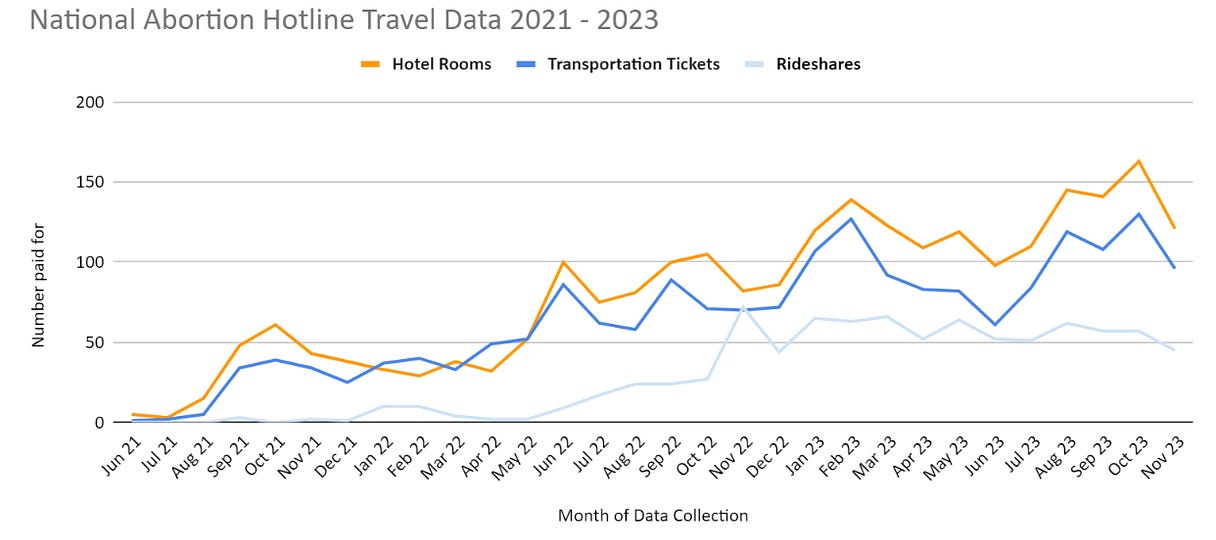
Calls to the National Abortion Hotline for travel services, like hotel rooms and plane tickets, have tripled post-Dobbs and remain high.

Map from National Abortion Federation, based on data from its National Abortion Hotline
Scientists who measured distance to abortion facilities found average travel time also tripled post-Dobbs.
This speaks to why we see increases in self-managed abortion (i.e., medication abortion). It’s also why colleagues in Latin America, for example, have been supporting people to self-manage with pills up to 24 weeks of pregnancy, which is safe and effective.

An increasing number of women are traveling out of state for reproductive health care. This journey isn’t without very real obstacles. The most tragic part is much of the associated trauma is preventable if we had access to local health care.

It may be hard to understand, but it’s harder for people to live through. Trust women. Listen to their stories. Trust their voices. It is, after all, their lives and their livelihoods.

(A big "thank you" to Dr. Heidi Moseson, a reproductive epidemiologist who helped immensely with much of this piece’s research.)

If you want to support travel for abortions, here are some great options: The Brigid Alliance supports people who are traveling for abortions at 15+ weeks. The National Network of Abortion Funds a collective of over 100 abortion funds across the U.S.

“Your Local Epidemiologist” is written by Dr. Katelyn Jetelina, MPH, Ph.D.—an epidemiologist, data scientist, wife, and mom of two little girls. During the day, she works at a nonpartisan health policy think tank and is a senior scientific consultant to a number of organizations. At night she writes this newsletter. Her main goal is to “translate” the ever-evolving public health science so that people will be well-equipped to make evidence-based decisions.

Wednesday, December 13, 2023

If subpoenaed, pharmacy chains hand over customers' private medical information; lawmakers say warrants should be required

ECommerce360 graphic; other chains are involved.
"The nation’s largest pharmacy chains have handed over Americans’ prescription records to police and government investigators without a warrant, a congressional investigation found, raising concerns about threats to medical privacy," reports Drew Harwell of The Washington Post. "Though some of the chains require their lawyers to review law enforcement requests, three of the largest — CVS Health, Kroger and Rite Aid, with a combined 60,000 locations nationwide — said they allow pharmacy staff members to hand over customers’ medical records in the store."

Sen. Ron Wyden of Oregon and Reps. Pramila Jayapal of Washington and Sara Jacobs of California, all Democrats, revealed the policy in a letter Monday to Health and Human Services Secretary Xavier Becerra. They investigated the practice "after the Supreme Court’s decision last year in Dobbs v. Jackson Women’s Health Organization ended the constitutional right to abortion," Harwell reports. In Kentucky, the legislature has banned abortion except to save the woman's life or prevent serious imparment of a life-sustaining organ.

"Pharmacies’ records hold some of the most intimate details of their customers’ personal lives, including years-old medical conditions and the prescriptions they take for mental health and birth control," Harwell notes. "Because the chains often share records across all locations, a pharmacy in one state can access a person’s medical history from states with more-restrictive laws. Carly Zubrzycki, an associate professor at the University of Connecticut law school, wrote last year that this could link a person’s out-of-state medical care via a 'digital trail' back to their home state."

Officials with eight large pharmacy chains — Walgreens Boots Alliance, CVS, Walmart, Rite Aid, Kroger, Cigna, Optum Rx and Amazon Pharmacy — told congressional investigators that they required only a subpoena from law enforcement, not a warrant issued by a judge, to share the records. The lawmakers said employees face “extreme pressure to immediately respond.” Harwell notes, "To obtain a warrant, law enforcement must convince a judge that the information is vital to investigate a crime."

The senators and representatives asked Becerra to strengthen HIPAA’s rules and make pharmacies insist on a warrant, noting that the tech industry did likewise a decade ago.

The companies told the investigators that they get "tens of thousands of legal demands every year, and that most were in connection with civil lawsuits," Harwell reports. "It’s unclear how many were related to law enforcement demands, or how many requests were fulfilled. Only one of the companies, Amazon, said it notified customers when law enforcement demanded its pharmacy records unless there was a legal prohibition, such as a gag order, preventing it from doing so, the lawmakers said."

The Health Insurance, Portability and Accountability Act allows Americans to ask drug companies if they’ve disclosed their information, "but very few people do," Harwell reports. "CVS, which has more than 40,000 pharmacists and 10,000 stores in the United States, said it received a 'single-digit number' of such consumer requests last year."

CVS, the largest pharmacy chain by prescription revenue, told Harwell that most subpoenas include a directive that the information remain confidential, and if it does not, the company considers “on a case-by-case basis whether it’s appropriate to notify the individual.”

"A Walgreens spokesman said the company’s law enforcement process follows HIPAA and other applicable laws," Harwell reports. "A Walmart spokeswoman said the company takes its 'customers’ privacy seriously as well as our obligation to law enforcement.' An Amazon spokeswoman said that the company cooperates with law enforcement requests as required. . . . Rite Aid declined to comment. The other companies did not respond to requests for comment."

Carmel Shachar, a Harvard Law School professor who studies health law and policy, said pharmacies have a “ton of sensitive data” and pharmacists are likely not trained to "evaluate the merits or validity of a police request — or to turn an officer down," as Harwell put it. Shachar said, “These need to go to someone who understands privacy law for review. probably feels very nerve-racking to get a subpoena and tell the person who gave it to you, ‘Oh, you’ll have to wait.’”

Harwell writes, "The pharmacy data could be especially concerning for the nearly one in three women ages 15 to 44 who a Post analysis found live in states where abortion is fully or mostly banned," including Kentucky. "In Texas, Attorney General Ken Paxton has warned pharmacies they could face criminal charges for providing women with 'abortion-inducing drugs'," which are used for most abortions in the U.S.

Norton Healthcare says it will alert 2.5 million patients whose personal information may have been compromised by cyberattack

Image from Spectrum News
About two and a half million people may have been affected by a ransomware attack on Norton Healthcare, the Louisville hospital company said Tuesday. It said they will get letters soon, alerting them that the attack "exposed a wide array of sensitive information," Valerie Chinn of WDRB reports.

The attack occured May 7-9. Norton spokeswoman Renee Murphy declined to tell WDRB how the incident was resolved. She said "We did not make any ransom payment" but would not say whether "the stolen information was returned as a result of an insurance claim," WDRB reports.

Last week, for the first time, Norton said it was the victim of a ransomware attack, had notified federal law enforcement officials and was "working with a respected forensic security provider to investigate and terminate the unauthorized access." It said its medical-record system and MyChart system for patients were not violated.  

However, Norton said the accessed files included personal information "primarily" about patients, employees and dependents. "Impacted information varied from person to person, and may have included name, contact information, Social Security number, date of birth, health information, insurance information, and medical identification numbers, Norton said. Driver's license numbers and other government ID numbers, financial account numbers or digital signatures may have also been included in the data," WDRB reports.

Norton said "Individuals whose information may have been impacted can sign up for two years of credit monitoring by following the instructions in written notification letters that are being mailed." It urged them to "remain vigilant and continue reviewing account statements for unusual activity."

Adrian Lauf, a computer science and engineering professor at University of Louisville, told WDRB that the compromised information suggested that insurance fraud is a possible threat, so past Norton patients shoulkd watch out for fraudulent insurance claims.

"Lauf also said to err on the side of caution, and suggests contacting a national credit bureau to either submit a fraud alert and/or initiate a credit freeze," WDRB reports. "He also suggests to verify or double-check and unknown numbers or emails that contact you."

Norton said the incident's "nature and scope . . . required time to analyze, a process that was substantially completed in mid-November."

A federal class-action lawsuit filed against Norton July 21 by employees and patients whose personal information was stolen from Norton's servers alleges that the company failed to notify those affected or the attorneys general of Kentucky and Indiana. A similar lawsuit was filed Dec. 14 "on behalf of Margaret Garrett of Crestwood and others nationwide who are or were patients or were affiliated with Norton," WDRB reports. Murphy told the station, "We take safeguarding personal information seriously and plan to vigorously defend ourselves in any litigation associated with the ransomware attack."

WDRB notes, "A hacker group called BlackCat claimed responsibility for the attack and leaked files as proof. . . . Employees' names, social security numbers and birth dates as well as patients' personal information, credit card numbers and medical history are contained in documents obtained by WDRB News and available publicly on the dark web, a corner of the internet accessible via specialized web browsers. They had not been redacted, and appear to be authentic.

"The documents appeared to show a large amount of Norton's financial information, including operating accounts and payroll accounts with a balance of tens of millions of dollars, credit card information, confidentiality agreements, patient imaging orders, vendor and bank information and business invoices. Norton serves about 600,000 patients a year with nearly $5 billion in assets."

Tuesday, December 12, 2023

Abortion-rights lawsuit needs a new plaintiff, ACLU of Ky. says

UPDATE, Dec. 18: The ACLU of Kentucky, lacking a plaintiff, has dismissed its lawsuit.

Abortion-rights advocates are seeking a new plaintiff for their Kentucky class-action lawsuit because the plaintiff, who was eight weeks pregnant, "learned her embryo no longer had cardiac activity," the American Civil Liberties Union of Kentucky and affiliated groups said in a news release Tuesday.

ACLU Reproductive Freedom Project Deputy Director Brigitte Amiri, attorney for the plaintiff identifed only as Jane Doe, said in the release, “We encourage others in Kentucky who are currently pregnant and seeking abortion to reach out to us if they are interested in joining the case—call or text us at (617) 297-7012. We will do everything we can to restore abortion access in Kentucky.”

The lawsuit was filed Friday in state court at Louisville. It alleges that Kentucky's near-total abortion ban of abortion violates privacy and self-determination rights that the state constitution gives the plaintiff and other persons similarly situated, qualifying the case for class-action status.

"Jane Doe sought an abortion in Kentucky, and when she could not get one, she bravely came forward to challenge the state’s abortion ban," Amiri said. "Although she decided to have an abortion, the government denied her the freedom to control her body. Countless Kentuckians face the same harm every day as the result of the abortion ban."

Earlier this year, the Kentucky Supreme Court refused to act against the ban and another outlawing abortion after the sixth week of pregnancy, saying the abortion-clinic plaintiffs didn't have the right to sue on behalf of women, leaving unresolved the constitutional questions about abortion in Kentucky.

The ACLU, Planned Parenthood and other activists said Friday that they had been searching for a plaintiff ever since that February ruling.

The near-total ban was passed in 2019 and took effect when Roe v. Wade was overturned in 2022. It bans abortions except when carried out to save the life of the patient or to prevent disabling injury. It does not include exceptions for cases of rape or incest, which Gov. Andy Beshear used to his advantage in his re-election campaign.

Kentucky voters last year rejected a ballot measure that would have denied any constitutional protections for abortion, but abortion-rights supporters made no inroads in the Republican-controlled legislature's 2023 session in chipping away at the state's anti-abortion laws.

Health Commissioner Stack, master of ceremonies for Beshear's private swearing-in, praises him as he recalls pandemic work

Gov. Andy Beshear took the oath from Court of Appeals Judge
Paula Goodwine as his family held a Bible. (Associated Press photo)
By Al Cross
Kentucky Health News

State Public Health Commissioner Steven Stack was master of ceremonies for Gov. Andy Beshear's private swearing-in ceremony as Tuesday began, providing a platform for him to reflect on his and Beshear's work during the pandemic, work that won public approval and set Beshear up for re-election.

Taking the lectern in the Capitol rotunda after Land Office Director Kandie Adkinson rang bells to start the ceremony, Stack noted that Adkinson had done likewise in the rotunda for each victim of the pandemic. Then he addressed Beshear, recalling their first meeting after his first election in November 2019.

“We could scarcely have anticipated the . . . journey we would soon share," Stack said, alluding to the March 2020 beginning of the pandemic and Beshear's daily news briefings, where Stack usually spoke.

Stack made a point at a briefing as Beshear listened.
(File photo by Matt Stone, Louisville Courier Journal)
“Through thick and thin you supported science” and health professionals, Stack said. Despite criticism of his emergency orders resticting businesses, schools and other activities, polls early in the pandemic showed Beshear with high approval ratings for his work on it, and that was later reflected in his overall job-approval ratings, which remained positive this year despite millions of dollars of attack ads aimed at him.

The private swearing-in is held at midnight because the state Constitution says the governor and lieutenant governor's terms begin on the day five weeks after the election. After Beshear took the oath of office, emphasizing with a smile that “I have NOT fought a duel with deadly weapons,” he said "We will continue our record-breaking economic win streak," reward educators and get "high-speed internet to every home."

He said the state has faced tests from the pandemic, natural disasters and the continuing opioid epidemic, and one of its most difficult challenges is the increased toxicity of politics and governance, with political attacks "turning people against their neighbors just to have one more elected leader with a certain letter after their name." He said he hoped that Kentucky could be "a moral leader for this country."

Stack, returning to the lectern, said people will forget what you say and do, but "People will never forget how you made them feel," and they "don’t care how much you know until they know how much you care." He told Beshear, "The people of Kentucky know how much you care."

After taking her oath, Lt. Gov. Jacqueline Coleman said Beshear "treats every Kentucky family like his own."

In the benediction, the Rev. David Snardon asked, “May we abandon the ideology of separation, seeing ourselves as red or blue, black or white, wealthy or poor.”

Monday, December 11, 2023

UK team promotes proper use of antibiotics to help thwart development of bacteria that are resistant to antibiotics

Graphic from The Conversation
By the Antimicrobial Stewardship Team
UK HealthCare Pharmacy Services

In the U.S., more than 2.8 million antimicrobial-resistant infections occur each year. Antimicrobials — a group of essential medications including antibiotics, antivirals, antifungals and antiparasitics — are used to prevent and treat infections in humans, animals and plants.

Antimicrobial resistance happens when germs like bacteria evolve to defeat the drugs that have been designed to kill them. Resistance has the potential to affect people at any stage of life, as well as health care, veterinary and agriculture industries. This makes antimicrobial resistance one of the world’s most urgent public health problems. Antibiotics can save lives when used appropriately to fight off bacterial infections, but they are not always the answer.

Here is some important information about responsible antibiotic use:
  • Antibiotics do NOT treat viruses, like those that cause colds, flu, respiratory syncytial virus (RSV) or Covid-19. Other medications, like antivirals, can treat viruses.
  • Antibiotics are only needed for treating certain infections caused by bacteria, but even some bacterial infections get better without antibiotics.
  • When antibiotics aren’t needed they won’t help you and the side effects could still cause harm.
  • If you need antibiotics, take them exactly as prescribed. Talk with your health care providers if you develop side effects or have questions about your antibiotics.
  • Do your best to stay healthy and keep others healthy. This helps reduce antibiotic use and fights antimicrobial resistance.
What should you do when you feel sick?
  • Contact your primary care provider.
  • If you have been prescribed an antibiotic, take it the way it has been prescribed to you.
  • Keep yourself and others around you healthy by washing your hands with soap and water for at least 20 seconds or using hand sanitizer containing at least 60% alcohol, covering your mouth and nose with a tissue when you cough or sneeze, staying home when you are feeling under the weather, and getting all recommended vaccines like the yearly flu vaccination.
For more information, follow the Centers for Disease Control and Prevention’s initiative, Be Antibiotics Aware: Smart Use, Best Care at www.cdc.gov/antibiotic-use/index.html.

About UK HealthCare's antimicrobial stewardship

At UK HealthCare, a dedicated team of pharmacists and physicians are fighting the battle against drug-resistant infections every day. The antimicrobial stewardship team is committed to overseeing the type, dose and duration of antimicrobials our patients receive to ensure the best possible clinical outcomes.

The mission of UK HealthCare’s antimicrobial stewardship program is to optimize antimicrobial use to improve clinical outcomes and decrease the spread of resistance.

“The antimicrobial stewardship team is on clinical services, so we evaluate patients and provide guidance on the right dose and duration of antibiotics through the ID-consult service,” said Donna Burgess, pharmacy coordinator of the antimicrobial stewardship program. “If antibiotics are not needed, we are able to discontinue use in order to decrease antibiotic resistance and protect patients from potential side effects.”

Cigna Group pulls plug on its planned merger with Humana Inc.

Photo illustration by Modern Healthcare
Kentucky Health News

The Cigna Group has pulled the plug on its planned merger with Louisville-based Humana Inc., which would have created a huge health-insurance company.

"The companies couldn’t come to agreement on price and other financial terms, according to people familiar with the matter," reports Lauren Thomas of The Wall Street Journal. "Cigna would have been acquiring Humana in a cash-and-stock transaction with a large stock component, the people said. Shareholders reacted coolly, with Cigna stock dropping nearly 10% since the talks surfaced as questions swirled about the wisdom of using the company’s stock as currency, among other concerns."

Thomas's sources told her that Cigna still believes in a merger with Humana, creating a company that would focus on improving access to care and lowering costs for consumers. Humana announced in February that it planned to concentrate on Medicare Advantage plans and sell its purely commercial lines of insurance, while expanding home-health and primary-care businesses, which it says support Advantage customers.

Humana has been the object of suitiors for years and "is in the midst of a succession handoff—often an opportune time for would-be acquirers to pounce," Thomas writes. "Humana said in October that Jim Rechtin—previously chief executive of Envision Healthcare—would take over as president and chief operating officer, effective Jan. 8. Rechtin was then to take over as CEO from Bruce Broussard in the back half of 2024."

Sunday, December 10, 2023

As respiratory illnesses keep rising in Ky. by double digits weekly, another one, with a long-lingering cough, is also circulating

State graphs, adapted by Kentucky Health News; click to enlarge
By Melissa Patrick
Kentucky Health News

As illness from the three respiratory viruses tracked by the state — influenza, Covid-19 and respiratory syncytial virus (RSV) — continue to increase in Kentucky, another one with a lingering cough that can last for months is spreading over much of the country, including the Bluegrass State. 

“We have been seeing an unusually large number of patients who had typical viral upper-respiratory infections, but have had a lingering cough that has lasted weeks to months,” Dr. Scott Braunstein, a double board-certified internal- and emergency-medicine physician and the national medical director of urgent-care chain Sollis Health told Julia Ries of HuffPost.

In the week ended Nov. 26, Kentucky reported 3,881 laboratory-confirmed cases of Covid-19, up from 2,998 the prior week, an increase of 29 percent. The state reported 703 laboratory-confirmed cases of the flu, up from 570 the prior week, an increase of 23 percent.

The Kentucky Department for Public Health's latest weekly respiratory-illness report shows Covid-19 and RSV activity is high, influenza activity is increasing, and hospitalizations for RSV and flu are increasing. 

In the week ended Nov. 26, emergency-department visits for respiratory illnesses in Kentucky increased again, to 4,061, an increase of 8% over the prior week, when the state reported 3,747 such visits. This number has gone up every week since the state started reporting the data Oct. 1. 

Of the week's cases, 1,737 were for flu, up from 1,524 the prior week; 1,426 were for Covid-19, up from 1,380; and 898 were for RSV, up from 843.

Among Kentucky children, emergency-room visits for respiratory illness also increased again, to 1,906, up from 1,794 the prior week. Of those, 934 were for flu, up from 880; 719 were for RSV, up from 710; and 253 were for Covid-19, up from 204.

Hospitalizations for respiratory illness in Kentucky increased to 577 in the week ended Nov. 26, up 12% from the prior week, when that number was 513.

Of those, hospitalizations for Covid-19 increased to 314, up from 295 the prior week; hospitalizations for RSV increased to 157, up from 137 the prior week; and hospitalizations for flu increased 30%, to 106, up from 81 the week prior.

Among children, hospitalizations for respiratory illness increased nearly 28% in the week ended Nov. 26, to 142. That's up from 111 the prior week.

Of those, 98 were for RSV, up from 84; 24 were for flu, up from 20 the week prior; and 20 of them were for Covid-19, up from 7 the week prior.

Ranges of Covid-19 hospitalization rates for week ended 
Dec. 2. (CDC map and data adapted by Kentucky Health News)
A more recent report, by the Centers for Disease Control and Prevention for the week ended Dec. 2, shows that Covid-19 hospitalization rates in 12 Kentucky counties were above 20 hospitalizations per 100,000 people, which the CDC considers high.

Letcher County stood out with a rate of 74.2 hospitalizations per 100,000 residents. Other counties with the "high" designation were Pike, with a rate of 29.1 per 100,000; Lewis, 22.8; Boyd, Carter, Greenup, Lawrence and Martin, 21.7; and Daviess, Hancock, McLean and Ohio, 20.9. Another 24 counties (yellow on the CDC map) had rates between 10 and 20 per 100,000.

That thing that's going around: "Dr. Janet O’Mahony, an internal medicine physician at Mercy Medical Center in Baltimore, said many of her patients have recently come into her practice with a nasty cough that’s lingered for two weeks or so," Ries reports. "Some people have also had sinus congestion, a sore throat and post-nasal drip."

O'Mahony told Ries, “This chest cold has a real junky and persistent cough,” and her patients aren’t responding to antibiotics, which suggests it’s “purely viral,” but they have tested negative for the flu and Covid-19. Experts think the illness is probably caused by one of many adenoviruses.

Braunstein, of Sollis Health, "said the persistent cough is most likely due to prolonged inflammation in the airways — even after the virus is gone, the body continues to produce mucus and have bronchospasms, which is when the muscles in the airways tighten and cause a cough," Ries reports. "For some people, this inflammation can persist anywhere from two weeks to two months, he explained.

"As is the case with Covid, after 10 days, it’s believed people aren’t contagious anymore, Braunstein added. Some individuals may be infectious for longer. For example, people with weakened immune systems, can shed adenoviruses for months, despite being asymptomatic."

Wastewater warns: The Wall Street Journal reports that wastewater monitoring is warning about Covid-19 this holiday season, showing a national rise in the levels of the virus and a new variant, JN.1.

The CDC's National Wastewater Surveillance System report shows that in the week ended Dec. 2, Kentucky's wastewater activity level was 3.2, well under than the national level of 7.7 and the regional level of 8.4.

Wastewater is used to detect traces of infectious diseases circulating in a community, even if people don't have symptoms. These data can serve as early warning that infection may be increasing or decreasing in a community.

Deaths: Susan Dunlap, spokesperson for the health department, said respiratory-related deaths on the state's weekly dashboard are reported according to the week they occur, which sometimes leads to a delay between the actual date of death and the submission to the deaprtment.

Since Oct. 1, the department has reported six deaths related to the flu, with one of those reported in the week ended Nov. 26. Since Oct. 1, the state has reported 80 deaths related to Covid-19, with no deaths reported in the week ended Nov. 26. All of the flu- and Covid- related deaths have been adults.

When it comes to Covid-19 deaths in Kentucky, Dunlap said, the health department "is reporting on average 13 to 16 new Covid-19 related deaths per week."

Friday, December 8, 2023

Unidentified pregnant woman in Ky. sues for right to get abortion

Abortion-rights supporters chanted April 13 on the second floor of the
state Capitol, where the state Supreme Court meets, one floor below
the legislature. (Associated Press Photo by Bruce Schreiner)
By Bruce Schreiner & Kimberlee Kruesi
A pregnant woman in Kentucky filed a lawsuit Friday demanding the right to an abortion, the second legal challenge in days to sweeping abortion bans that have taken hold in more than a dozen U.S. states since Roe v. Wade was overturned last summer.

The suit, in state court in Louisville, says Kentucky's near-total ban of abortion violates the plaintiff's rights to privacy and self-determination under the state constitution.The plaintiff, identified as Jane Doe, is about eight weeks pregnant and wants to have an abortion in Kentucky but cannot legally do so because of the state's ban, the suit said. She is seeking class-action status to include other Kentuckians who are or will become pregnant and want to have an abortion.

“I am a proud Kentuckian and I love the life my family and I have here, but I’m angry that now that I’m pregnant and do not want to be,” the plaintiff said in a statement released by the American Civil Liberties Union, one of the groups backing her challenge. “The government is interfering in my private matters and blocking me from having an abortion. This is my decision, not the government or any other person’s."

State Attorney General Daniel Cameron's office said it is reviewing the suit but offered no other comments. Cameron, a Republican who lost last month's race for governor to Democratic Gov. Andy Beshear, has defended the state's anti-abortion laws in other court proceedings.

The lawsuit came a day after a judge in Texas gave a pregnant woman whose fetus has a fatal diagnosis permission to get an abortion. The restraining order issued Thursday stopped Texas from enforcing the state’s ban on the mother of two, who is 20 weeks pregnant. Late Friday, the court stayed the ruling, pending closer consideraiton of the case. UPDATE, Dec. 11: The woman, citing the delay, said she was leaving Texas to get an abortion in another state.

Unlike the Texas case, little is known about the Kentucky plaintiff or her pregnancy. Legal challenges across the nation have largely highlighted stories from women who were denied abortions while facing harrowing pregnancy complications. But in Kentucky, the plaintiff's attorneys insisted they would fiercely protect their client's privacy, stressing that Jane Doe believes “everyone should have the right to make decisions privately and make decisions for their own families,” said Amber Duke, the ACLU of Kentucky's executive director.

Earlier this year, the Kentucky Supreme Court refused to halt the state's near-total abortion ban and another outlawing abortion after the sixth week of pregnancy. The justices focused on a narrow legal issue, saying an abortion clinic didn't have the right to sue on behalf of women, but didn’t resolve larger constitutional questions about whether access to abortion should be legal in the Bluegrass State.

The ACLU, Planned Parenthood and other activists say they've been searching for a plaintiff ever since that February ruling. The suit filed Friday marks the launch of their new assault against the state's abortion bans.

“These bans have harmed countless Kentuckians since going into effect last year, and we are relieved to be back in court to try to restore abortion access in Kentucky,” Brigitte Amiri, deputy director of the ACLU Reproductive Freedom Project, said in the news release.

The lawsuit says Kentucky women are suffering “medical, constitutional and irreparable harm” by being denied the right to obtain abortions.

“Abortion is a critical component of reproductive healthcare and crucial to the ability of Kentuckians to control their lives,” the suit says. “Whether to take on the health risks and responsibilities of pregnancy and parenting is a personal and consequential decision that must be left to the individual to determine for herself without governmental interference.”

Kentucky voters last year rejected a ballot measure that would have denied any constitutional protections for abortion, but abortion-rights supporters have made no inroads in the Republican-controlled legislature in chipping away at the state's anti-abortion laws.

The legal challenge revolves around Kentucky’s near-total trigger law ban and a separate six-week ban — both passed by Republican lawmakers. The trigger law was passed in 2019 and took effect when Roe v. Wade was overturned in 2022. It bans abortions except when carried out to save the life of the patient or to prevent disabling injury. It does not include exceptions for cases of rape or incest, which Beshear used to his advantage in the race with Cameron.

Thursday, December 7, 2023

UK has $3 million grant to study impact of mothers' opioid use on babies; Ky. 3rd in rate of babies with opioid-withdrawal syndrome

Photo: healthychildren.org
By Lindsay Travis

University of Kentucky

A team of researchers at the University of Kentucky is working to better understand the impact of opioid-use disorder on mothers and babies.

Every 24 minutes in the United States, a baby is born with neonatal opioid withdrawal syndrome (NOWS) after being exposed via  a mother with opioid-use disorder.

In Kentucky, about 2 percent of babies born in 2020 had symptoms of NOWS — the third-highest rate in the U.S. In Appalachia Kentucky, that frequency increases to 7.7 percent — 77 of every 1,000 babies.

Early delivery can complicate pregnancies with opioid-use disorder and give children an increased risk of impaired neural development, including cognitive, motor, social and emotional abilities.

UK’s research team wants to understand how inflammation and dysregulation in the placenta caused by opioid use are linked to negative cognitive consequences in the baby.

The study titled “POPI: Placenta, Opioids and Perinatal Implications” is funded by a $3 million grant from the National Institute on Drug Abuse, part of the National Institutes of Health. Additional funding is possible, pending progress with the research.

Part of the research team, led by Ilhem Messaoudi, left
center
 (University of Kentucky photo by Jorge Castorena)
“This study is going to have a tremendous impact on Kentuckians, many of whom know first-hand the profound devastation opioid use has on the overall health of the commonwealth,” said Ilhem Messaoudi, chair of the Department of Microbiology, Immunology and Molecular Genetics in the College of Medicine and a principal investigator on the grant.

“NIDA specifically called for research on the placenta-brain axis — the idea that what happens during pregnancy and the placenta’s health will have long-term ramifications on the offspring, including brain development,” said Messaoudi. “The team assembled to find answers for our smallest Kentuckians all bring a variety of expertise to this study including to maternal-fetal medicine, pathology, neuroscience and neonatology.”

Pregnant women who seek care at UK HealthCare’s Perinatal Assistance and Treatment Home (PATHways) program will be eligible to enroll in the study. PATHways, a comprehensive treatment program, is designed to help pregnant and postpartum mothers who are living with substance use disorders.

“Kentucky has one of the highest maternal mortality rates in the country combined with a high rate of opioid use disorder. PATHways provides us a unique opportunity to support pregnant mothers and invest in those lives through this kind of project that blends a variety of scientific specializations,” said Dr. John O’Brien, chief of the Division of Maternal-Fetal Medicine at UK HealthCare, a professor in the Department of Obstetrics and Gynecology in the College of Medicine and co-principal investigator on the grant.

As part of the study, researchers will collect ultrasound data, blood samples, the placenta and umbilical cord blood and conduct neurodevelopment assessment on babies for one year after birth. The data will help them determine the impact of maternal opioid use disorder on both the health of the placenta and the baby’s brain.

“In previous studies, using a rat model, we’ve learned maternal opioid use disorder increases inflammation in the brain and alters microglia — cells that are like the housekeepers of the brain,” Messaoudi said. “The alteration can affect the way the brain continues to develop.”

Investigators can measure that change in the brain through another type of immune cells found in the blood, called monocytes. The team will track neurobehavioral outcomes through a series of assessments in the newborn period and at age 3, 6 and 12 months.

O'Brien said, “Our hope is this research project will provide health-care professionals the knowledge and evidence necessary to improve the care of pregnant mothers with opioid use disorder, reduce risks and optimize neonatal outcomes.”

The study also includes researchers in the College of Medicine’s departments of Pediatrics and Pathology and Laboratory Medicine, as well as the Spinal Cord and Brain Injury Research Center and the Dr. Bing Zhang Department of Statistics in the College of Arts and Sciences.

If you or someone you know is pregnant and dealing with substance-use disorder, contact UK's Polk-Dalton Clinic at 859-218-6165 to make an appointment for prenatal care.

Wednesday, December 6, 2023

Biden administration again delays menthol-cigarette ban as Black support for Biden drops; anti-smoking advocates push back

Photo from ash.org
Kentucky Health News

The Biden administration has again delayed issuing a decision to eliminate menthol cigarettes, with plans to finalize the final rule next March, according to an updated regulatory agenda posted online by the White House Office of Management and Budget. 

Administration officials told The Washington Post that the delay comes after "fierce lobbying from critics who warn that a prohibition could anger some Black smokers who favor the product and could hurt President Biden's reelection prospects." Biden's support among Black voters has dropped about 20 percentage points in the past year, NBC News reports.

Four other officials told the Post, on the condition of anonymity, that the process could be delayed even further. 

The delay follows intense pressure from tobacco lobbyists, HealthDay reports.

Yolonda C. Richardson, president and CEO of the Campaign for Tobacco-Free Kids, said in a statement that it was "disturbing that this delay comes just two weeks after the tobacco industry and its army of lobbyists met with top officials at the White House." Further, she says the delay "allows the tobacco industry to continue profiting at the expense of Black lives." 

Richardson added, "The scientific evidence shows that menthol cigarettes are more addictive, easier for kids to start smoking and harder for smokers to quit. For decades, the tobacco industry has marketed these products to Black communities, causing devastating and disproportionate harm to the health of Black Americans. . . . Research shows that prohibiting menthol cigarettes will save up to 654,000 lives within 40 years, including the lives of 255,000 Black Americans."

When added to cigarettes and cigars, menthol’s minty taste and cooling effect limit throat irritation, making the products more appealing — especially new and young smokers — and it interacts with nicotine to enhance its addictive effects and makes quitting smoking harder, according to the Centers for Disease Control and Prevention.

According to research published earlier this year in the journal Nicotine and Tobacco Research, 43% of adults who smoked cigarettes in the past month in 2020 used menthol, with use most common among Black adults, at 80%. 

Prior to the announcement of the delay, the rule was widely expected to be published in late 2023 or early January, although it was likely be further delayed by legal challenges.  

The delay set in motion a string of statements from anti-smoking advocates calling on the Biden administration to issue the final rule by the end of this year. 

"Ending menthol cigarettes is pivotal to eliminating the dramatic health inequities in who uses tobacco products in the United States and who is most affected by tobacco-caused disease and death, said Harold Wimmer, president and CEO of the American Lung Association.

"Tobacco use is the number one cause of preventable death in the U.S. and claims 45,000 lives every year among Black Americans alone. A recent study quantified the disproportionate harms from menthol cigarettes to Black Americans, finding that menthol cigarettes were responsible for 1.5 million new smokers, 157,000 smoking-related premature deaths and 1.5 million life-years lost among Black Americans from 1980 to 2018. Halting the sale of menthol cigarettes lays the groundwork for reversing decades of disparities in tobacco use, disease and death in Black and Brown communities." 

Dr. Karen E. Knudsen, CEO of the American Cancer Society Cancer Action Network, noted that the Food and Drug Administration has had authority to ban menthol cigarettes and flavored cigars for 14 years and that any delay in doing so "only benefits the tobacco industry at the expense of public health. Tobacco is a primary driver of all cancer disparities, and the number one cause of cancer deaths nationwide, and flavors like menthol have been proven to make it easier to start and harder to quit using deadly products. There is no scientific rationale for permitting any flavored tobacco product to remain on the market. FDA stated that a comprehensive end to the sale of menthol cigarettes is projected to result in 324,000 to 654,000 fewer smoking related deaths." 

The FDA is also pursuing a ban on flavored cigars and new limits on nicotine in cigarettes, although the process of finalizing those rules is to be delayed until at least March as well, the Post reports. 

Nancy Brown, CEO of the American Heart Association, also issued a statement of concern, urging the administration to issue "strong final rules without delay." She said, "Each day we wait for the final rules to be released is another day Big Tobacco will hook new users and target communities with menthol cigarettes and flavored cigars."

Tobacco companies continue to oppose the ban, "insisting science shows menthols pose no greater risk than other cigarettes," the Post reports. "R.J. Reynolds, which makes Newport, the nation’s top-selling menthol brand, said in a statement Tuesday that a ban would hurt small businesses, dent tax revenue and contribute to a dangerous illegal market."

Tuesday, December 5, 2023

Meat-heavy diet raises risk for Alzheimer's disease, study finds, predicting U.S. cases of the disease will grow 50% by 2038

Researcher Steve Blake diagrammed how different foods create greater risk for Alzheimer's disease (AD). AGEs are compounds formed in the body when proteins react with sugar; they increase the risk of many diseases.
Kentucky Health News

Americans' meat-rich diets make them more vulnerable to Alzheimer's disease, according to a study published in the peer-reviewed Journal of Alzheimer's Disease. "Diets that are more plant-based, like the Mediterranean diet and traditional diets in China, Japan, and India, are shown to reduce risk, especially when compared to the Western diet," says a press release about the study by nutrition scientists.

"Alzheimer’s disease rates rise in these countries as they make the nutrition transition to the Western diet," the release notes. "This study identifies dementia risk factors including higher consumption of saturated fats, meat (especially red meat such as hamburgers and barbeque) as well as processed meats such as hot dogs, and ultra-processed foods high in sugar and refined grains.

The study also helps explain why certain foods increase or reduce the risk of Alzheimer’s. "Meat raised risk of dementia the most by increasing risk factors such as inflammation, insulin resistance, oxidative stress, saturated fat, advanced glycation end products, and trimethylamine N-oxide," the release says. The study identified several foods that protect against Alzheimer’s, such as nuts, omega-3 fatty acids, whole grains, green leafy vegetables, colorful fruits and vegetables, and beans and other legumes (plants that fix nitrogen).

Ultra-processed foods can increase the risk of obesity and diabetes because they lack the ingredients found in whole plant foods that deter dementia away, such as anti-inflammatory components and antioxidants. Ultra-processed foods make poverty is an important driver of Alzheimer’s disease, because they are usually cheaper sources of energy than fruits, vegetables, whole grains, and other more nutritious foods.

"The paper also suggests that Alzheimer’s disease rates in the U.S. are projected to increase by 50% from 2018 levels by 2038," the release saus. "This calculation is based on comparing trends of obesity in the U.S. with Alzheimer’s disease trends. This comparison shows a 20-year lag between obesity rates and Alzheimer’s disease rates. This estimate is very close to the estimate published by the Alzheimer’s Association in 2018, an estimate of a 56% increase."

The researchers said, "Our estimate suggests that the rising trend of obesity, due to consumption of meat and ultra-processed foods, is the force driving dementia. Although our personal risk of Alzheimer’s disease can be reduced with diet, it is expected that those who continue to eat the Western diet will continue to have a higher risk."

The study, a review of other published research, was conducted by Steven Blake of the Maui Memory Clinic in Hawaii and William Grant of San Francisco's Sunlight, Nutrition and Research Center. It was endorsed by other experts.

“Grant and Blake comprehensively review and synthesize the role of dietary factors in Alzheimer’s disease,” said Dr. Edward Giovannucci, a professor of utrition and epidemiology at Harvard University. “Evidence from diverse perspectives support that a diet that emphasizes fruits, vegetables, legumes, nuts, whole grains, and … de-emphasizes meat, especially red meat, saturated fats, and ultra-processed foods is associated with lower risk of Alzheimer’s disease. Physical inactivity and obesity also contribute to higher risk.”