Saturday, May 26, 2018

Operation UNITE uses comprehensive approach to keep Appalachian kids off drugs; experts say it could be replicated

Preventing kids from falling into addiction is a major goal for Operation UNITE, a nonprofit serving 32 counties in Eastern Kentucky -- a region where the average age for first drug use is 11, Laura Ungar reports for the Louisville Courier Journal.

"Experts say UNITE’s approach — encompassing families, schools and communities — is supported by research and could work anywhere," Ungar writes.

“If it could be copied and replicated in other areas of the country, that would be fantastic,” Linda Richter, director of policy research and analysis at the New York-based Center on Addiction, told Ungar. Research shows “there’s no simple way to prevent substance abuse.You really need a comprehensive solution.”

This comprehensive approach includes summer camps, school-based service clubs and community events that feature real-life stories of addictions, all with the end goal of keeping children off drugs. writes that the message is always the same: "Drugs can destroy their future."

Ungar writes about the "real-life" story of Kayla McClure of Rockcastle County, who was addicted to heroin, but is now in recovery. At the community's annual celebration of Operation UNITE in Mount Vernon, McClure shared her "cautionary tale" of addiction and recovery.

Jamie Cromer, one of McClure's three daughters, told Ungar that she still checks her mom’s arms for fresh needle tracks, which she said is a "lingering habit" from the days when her mom used to shoot up heroin.

“I’m proud of her,” her daughter Kenya told Ungar, who, at age 13, is part of a UNITE anti-drug club at the same age her mom started popping pills. “I don’t want to end up like her.”

Jaime, Kenya and their 16-year-old sister, Gracelynn, who were raised by McClure’s parents, told Ungar that they had all three pledged  never to try drugs.

Ungar writes about several Rockcastle County Unite programs, one that teaches fourth- and fifth- graders at Mount Vernon Elementary School about wellness, healthy choices and how to plan for the future and another highly popular event called the UNITE Bowl Football game that collects toilet paper for drug treatment centers. She also writes about an outdoor activity program called Impact Outdoors in Manchester that is funded by UNITE.

The UNITE website says UNITE has 127 registered clubs in 23 counties, with 9,718 members. “We’re starting early enough to build the foundation,” said UNITE CEO Nancy Hale, whose son battled a painkiller addiction.“The earlier you start, the more you develop hope."

Since its inception in 2003, UNITE leaders told Ungar, they estimate the organization and its community coalitions have reached more than a million children through prevention and education activities. The state provides $2 million and another $1.3 million comes from other sources, such as private donations and the federal AmeriCorps program for public-service work.

A 2017 U.S. Centers for Disease Control and Prevention survey found that about one in eight Kentucky 12th graders reported abusing pain medicines at some point, nearly half said they’d smoked pot and about one in 60 said they’d injected illegal drugs at least once.

UNITE, which was launched by Fifth District U.S. Rep. Hal Rogers, R-Somerset, is an acronym for Unlawful Narcotics Investigations, Treatment and Education. Ungar notes that just over half of the organization’s budget goes to prevention and education.

Rogers told Ungar that keeping kids off drugs is crucial to the future of the region and “UNITE has been reasonably successful at that.”

CEO Hale told Ungar that while researchers at the University of Kentucky are studying the prevention outcomes, anecdotally, she said, “Young people in college and the workforce often tell us they’re there because of UNITE.” Recently Hale said she had fielded calls from Maryland, Tennessee, Ohio and other states asking about replicating UNITE.

How to get help: Operation UNITE is one of several partners of FindHelpNowKY.org, a real-time substance use disorder treatment locator and information center for Kentucky. To find the closest treatment facility near you or a loved one visit the site; call toll-free at 833-8KY-HELP (833-859-4357); or text HOPE to 96714.

Friday, May 25, 2018

State urges hepatitis shots for everyone in 10 counties with outbreaks; also: keep hands washed, but not with gels

Acting Health Commissioner Dr. Jeffrey Howard (left) and
Cabinet for Health and Family Services spokesman Doug Hogan
talked about the hepatitis A outbreak in a Facebook Live event.
By Melissa Patrick
Kentucky Health News

As the number of hepatitis A cases continues to rise in Kentucky -- up to 629 this week -- and the number of counties with an outbreak has increased by four, the state's top health official encouraged Kentuckians to be aware and take precautions against the highly contagious liver disease -- but to keep calm.

"I don't think there is a necessity to panic, but people do need to be aware that there is an outbreak going on in the state and take appropriate precautions," Dr. Jeffrey Howard, acting commissioner of the Department for Public Health, said during a May 24 Facebook Live event.

Howard offered these suggestions to protect yourself from the disease, which is typically caused by ingesting food or drink that is contaminated with fecal matter: avoid hand-to-mouth contact, get vaccinated and wash your hands with soap and water.

"The most important thing that someone can do in the state of Kentucky right now is wash your hands appropriately," Howard said, which he said means washing your hands with soap and water for at least 20 seconds and then drying them off.

He added, "Hand gels are not an alternative. They do not kill hepatitis A."

Howard also advised anyone living in Boyd, Bullitt, Carter, Greenup, Hardin, Jefferson, McCracken, Meade, Montgomery and Warren counties, where outbreaks have been identified, to get vaccinated. Immunization requires two vaccines, six months apart.

McCracken, Meade, Montgomery and Warren counties are new to the list this week. Each of these counties have had four or more cases reported, according to the health department.

Howard announced that the department will provide each of the local departments in the 10 counties with money to buy an additional 1,000 doses of the vaccine, a total of 10,000 doses.

He urged vaccination for anyone at high risk for getting the disease: people who use illegal drugs, are homeless or have unstable housing; men who have sex with men; people recently in jail or prison; and people with underlying liver disease.

Howard also advised anyone who works with any of these high-risk populations to get vaccinated, including health care workers, church or ministry workers and volunteers.

To the concerns of some about whether they should eat out or not, Howard said, "We've had zero cases related to a food worker," and the virus in this outbreak is spreading "via contaminated environments," at least for now. The department's website says the increase in cases have primarily been among the homeless and drug users.

Howard added that Kentucky hasn't singled out food workers to get vaccinated, as West Virginia has, because the state's recommendation is for everyone in an outbreak area get vaccinated, which includes food workers.

He encouraged people with insurance to go to their health-care provider or a local pharmacist to get vaccinated, and for those without insurance or in one of the high-risk categories to go to their local health department.

The most common symptoms of hepatitis A are fatigue, low-grade fever, loss of appetite, joint pain, sudden nausea and vomiting, yellow eyes or skin, abdominal pain, pale stools and dark urine. A person with the virus is contagious for up to two weeks before showing symptoms and one week after. Symptoms usually last less than two months, but 10 percent to 15 percent of victims remain sick for up to six months.

Howard noted that hepatitis A is "a very rare disease," and that the state normally only has about 20 cases a year. He added that the U.S. Centers for Disease Control and Prevention is working to figure out why this outbreak is occurring across the country.

Grant program for children's health enters final year; foundation hopes seven local projects can be replicated statewide

As a five-year, $3 million grant that focuses on children's health moves into its final year, the Foundation for a Healthy Kentucky is gearing up to share the seven grantees stories as a way to help other communities do the same.

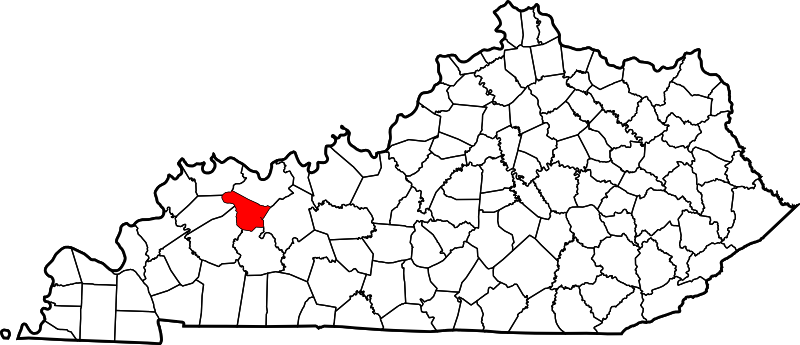
Most recently, foundation President and CEO Ben Chandler visited McLean County to review the progress of the "Partnership for a Healthy McLean County," part of the "Investing in Kentucky's Future" program. The initiative is intended to reduce the risk that today's school-aged children will develop debilitating chronic diseases as adults.

The McLean partnership used its five-year, $260,000 grant, and nearly $134,000 in local funds, to combat childhood obesity. It led to several new programs along the way.

The efforts included improving facilities to encourage more outdoor activity, adding programs in local schools to increase classroom movement, expanding nutrition programs, and supporting policy changes that ensure better nutrition and more physical activity in the daily lives of students, with the help of new physical-education equipment.

Wikipedia map
"I have seen first-hand the joy and excitement on the students' faces when they were given the new PE equipment," Brook Fogle, a program specialist with the Green River District Health Department, said in a foundation news release. "I have heard nothing but praise from the teachers that because of the new PE curriculum, they have been given the opportunity to teach kids that physical fitness can be fun."

Fogle said the local health coalition has added new partners since its inception, all while growing and strengthening the existing ones. "All in all, the grant has been beneficial in a multi-level way," she said.

One vision of the "Investing in Kentucky's Future" initiatives is that the programs could be replicated across the state. To that end, the foundation says it will create a video and other materials that can be shared in other communities.

"The next step is to take this . . . and other IKF case studies on the road, sharing and expanding what has been learned here to benefit even more residents of McLean County and other Kentucky communities," Chandler said in the release. "We'll also be making the connections between experienced coalition managers like Brooke Fogle with motivated leaders in other Kentucky communities who want to replicate the success of McLean County."

Six of the seven grantees, including McLean County, chose childhood obesity prevention as their focus. The other chose to address adverse childhood experiences. In addition to the funding, the foundation also provided training and technical assistance throughout the grant period.

"The foundation designed these grants to create lasting change," Chandler said."While we won't necessarily see changes of obesity rates in just a few years, we do expect to see an increase in the exercise and dietary behaviors that research shows will lead to healthier weight down the line."

The other grantees are: Purchase Area Connections for Health (McCracken County), Fitness for Life Around Grant County, the Breathitt County Health Planning Council for Children, the Perry County Wellness Coalition, the Clinton County Healthy Hometown Coalition, and the Bounce Coalition in Jefferson County.

Later this year, the foundation will start a final evaluation of the IKF initiative, which will be shared publicly.

As black lung surges in Appalachia, so do lung transplants

A new study published in the American Journal of Industrial Medicine shows that, as black-lung cases have surged in the Central Appalachian coalfield, so have lung transplants. The expensive surgery can be risky, and most transplant recipients die within five years. The study, conducted by researchers from the National Institute for Occupational Safety and Health, "found that 62 black lung patients had lung transplant surgery over the past two decades, and most of the miners lived in Kentucky, Virginia, and West Virginia," Benny Becker reports for Ohio Valley ReSource. "The study also found that more than two dozen patients were placed on a wait list for transplants. Of those, 11 died while waiting."

The study's lead author, David Blackley, said that the rate of lung transplants for black-lung patients increased nearly threefold in the last decade. "That suggested pretty strongly to us that this is a problem that's getting worse," he told Becker.

Insurance from coal companies and other private sources paid for about one third of the lung transplants. Nearly two-thirds were paid for with public insurance, including 26 percent paid for by Medicare and up to 24 percent paid for by the federal Black Lung Disability Trust Fund. "That fund has paid more than $45 billion to cover benefits for miners who can’t seek benefits from their employer, because the responsible company has either gone bankrupt or can’t be identified," Becker reports. A federal study is looking into how long the fund can stay solvent given the rise in cases.

The researchers who conducted the study had also recently discovered that the spike in late-stage black lung in Central Appalachia is the largest cluster of the disease ever recorded.

Thursday, May 24, 2018

Pharmacists play major role in getting rural seniors vaccinated for pneumonia, but shots for the disease are less likely in rural areas

WebMD photo
By Melissa Patrick
Kentucky Health News

Pharmacists play a significant role in getting rural people vaccinated for pneumonia, and presumably other diseases, more so than in urban areas, according to a study by the Rural and Underserved Health Research Center at the University of Kentucky.

The study found pneumonia immunization is less common among seniors in rural areas, and pharmacists could play a major role in closing that gap, the owner of a small pharmacy chain told Kentucky Health News.

Rosemary Smith, a co-owner of six Jordan Drug stores in Eastern Kentucky, said in a telephone interview that the vaccination rate in rural areas is probably lower because they have fewer health-care providers and most of "our people" are not "wellness oriented" -- but almost every community has access to a pharmacist.

"The key is that we see these patients," Smith said. "They may go to their physician two or three times a year, but we see them two or three times a month sometimes. So we are very accessible to them,  especially independents."

The study notes that all 50 states and Washington, D.C. allow pharmacists to provide pneumonia vaccines, and that 93 percent of all Americans live within five miles of a community pharmacy.

Using 2014 data from the Medicare Physician and Other Supplier Public Use Files, the study looked at the rural and urban differences in pneumonia vaccine rates for people 65 and older, and then assessed the impact of pharmacies as an alternative to primary-care providers.

The study found that of the 1.4 million fee-for-service Medicare patients who had received a pneumonia vaccine, 72.5 percent got their vaccine from a primary-care provider and 22.2 percent got it from their pharmacist.

It also found that pharmacists delivered a "significantly greater proportion" of the pneumonia vaccines in rural areas than in urban ones: 29.4 percent and 21.1 percent, respectively. The results suggest that pharmacists could play a major role in increasing vaccination rates in rural areas, especially if they are actively encouraged to do so.

There is a need to do that. The study points out that vaccination rates for pneumonia are 40 percent lower in rural communities than in urban areas: 2.81 percent and 4.66 percent, respectively.

Kentucky's overall pneumonia vaccination rate for seniors was 3.8 percent, with 3.1 percent of the state's eligible population getting the vaccine in rural areas and 4.9 percent in urban areas.

The national rate was 4.26 percent, ranging from 6.3 percent in Colorado to 1.1 percent in Maine.

Why is it important for seniors to get vaccinated for pneumonia? The researchers note that the death rate from pneumonia for seniors doubles, from 20 percent to 40 percent, between the ages of 65 and 85, and despite the recommendation that everyone 65 and older get vaccinated for the disease, fewer than two-thirds do so.

In the interview, pharmacist Smith said patient education and encouragement are important in getting people vaccinated, noting that the Jordan Drug store that provides the most pneumonia vaccines is in a town where the physicians at the local clinic strongly recommend it to their patients.

"The opportunities are there to really move the needle on these vaccinations," said Smith, a founding member of the Kentucky Independent Pharmacist Alliance, which says it represents more than 500 independent pharmacists, with members in all 120 counties.

Smith said she thought pneumonia vaccination rates in pharmacies are likely higher than they were in 2014, since more pharmacies now offer them and people are getting used to the idea that they can go to the pharmacy for them, she said there is room to do more. Jordan Drug didn't start offering vaccinations until 2015.

"I had no idea there was such a difference in the vaccination rate between urban and rural," she said. "So I think we can do more and I think as an independent pharmacy group across the state, being the most accessible health care provider, that we will do more and we will take this study to heart."

Many local, independent pharmacies in Kentucky say they're at risk of closing because they are paid such low dispensing fees by pharmacy benefit managers hired by the managed-care organizations that handle Medicaid. A hard-fought bill to address this issue will go into effect July 1. The new law will put the state Medicaid department in charge of setting reimbursement rates for pharmacists, and require the  pharmacy benefit managers to be more accountable for how they spend the $1.7 billion a year they get to process prescriptions. The bill was sponsored by Sen. Max Wise, R-Campbellsville.

The UK study also measured county-level characteristics associated with pneumonia vaccination and found it more likely with "increasing age of residents, greater proportion of female residents, and availability of inpatient hospital services," and less likely in rural and poor areas.

"Given that over 50 percent of the nation’s primary-care health-professional shortage is in rural areas," the study said, limited access to primary-care providers may limit vaccinations, "resulting in a shift to service delivery in pharmacies, as shown in this study."

The study team was led by UK pharmacy professor Jeff Talbert, director of the UK College of Pharmacy's Institute for Pharmaceutical Outcomes and Policy and associate director of the UK Center for Clinical and Translational Science.

Wednesday, May 23, 2018

Tick season has arrived in Ky.; here are the most common ticks in our state and how to keep from getting the diseases they carry

By Melissa Patrick
Kentucky Health News

Kentuckians are finally heading outdoors to enjoy the warm weather, but the higher temperatures also means that it's tick season again, which lasts through August in Kentucky.

Mosquito Squad of Louisville graphic; click on it for larger version
“In tick-prone areas, check yourself, children and other family members every two hours, and very thoroughly after returning home from hikes and other outdoor activities,” Lee Townsend, extension entomologist in the University of Kentucky College of Agriculture, Food and Environment, said in a news release. “Common places to find ticks are behind the knees, around the waist, under arms, neck and head.”

Tick-prone areas include wooded areas; the boundaries between woods and fields; tall grass; low-hanging tree limbs; underneath leaves, plants, and ground cover; and around stone walls and woodpiles that are home to mice and other small mammals that have ticks.

The state health department recommends that Kentuckians remember four steps when it comes to protecting themselves from ticks: Protect, Check, Remove and Watch.

Protect: To protect yourself from tick bites, avoid tick-prone areas, but if you are going to be in those areas use a tick repellent that has 20 percent DEET,  picardin, IR3535 or lemon eucalyptus. Wear light-colored, long-sleeved shirts and pants tucked into socks. Use permethrin-based clothing sprays, unless you have cats, which find it toxic.

Check: After you've spent time outdoors, do a head-to toe check for ticks using a hand-held or full-length mirror. Parents should check children. It is also important to check your gear and pets for ticks. If possible, change your clothes and shower after going outdoors. To kill ticks on dry clothes, put them in a dryer on high heat for 10 minutes. If clothes require washing, use hot water.

CDC photo
Remove: Remove an embedded tick as soon as possible by grasping it as close to the skin as possible with tweezers and pulling straight out with gentle, even pressure. Do not jerk or twist the tick. Wash your hands with soap and water after the tick is removed. Apply an antiseptic to the bite site. Do not use alcohol, matches, liquid soap or petroleum jelly to remove a tick. Dispose of the tick by submersing it in alcohol, placing it in a sealed bag or container, wrapping it tightly in tape or flushing it down the toilet. Never crush a tick with your fingers.

Watch: Watch for symptoms of tick-borne illness, including sudden fever and rash, severe headache, muscle or joint aches, nausea, vomiting, and diarrhea. Symptoms can arise within several weeks of removing a tick. Contact your healthcare provider if symptoms occur.

Overall, the incidences of tick-borne diseases remain low in Kentucky, but that doesn't mean you shouldn't take precautions to protect yourself.

The most common tick species in Kentucky are the American dog tick and an aggressive biter called the lone star tick. Bites from these ticks typically just cause local irritation and itching, but a small percentage carry diseases.

In particular, the adult female lone star tick, which has a white spot on its back and is about the size of a pencil eraser, can carry erlichiosis, a Lyme-like disease that can cause fever, headache, chills, muscle pain and in some cases a rash. It can also cause some people to develop an allergy to red meat.

American dog ticks, which are reddish-brown with mottled white markings on their backs and also about the size of a pencil eraser, have the potential to carry Rocky Mountain spotted fever, which usually begins with a sudden onset of fever and headache that appears from two to 14 days after being bitten by an infected tick. The fever can be fatal if not treated correctly.

A much smaller tick that is becoming more common in Kentucky is the blacklegged tick, also known as the deer tick. It carries Lyme disease, symptoms of which can range from mild to severe, including fever, headache, fatigue and a skin rash that looks like a bull's-eye, although not everyone gets the rash.

In 2016, Kentucky had 16 confirmed cases of Lyme disease, and 17 probable cases, according to the federal Centers for Disease Control and Prevention.

The news release also notes a recent confirmation of tularemia, a bacterial disease that can be transmitted by tick bites, in a captive wild rabbit in Butler County. Tularemia can be life threatening, but most infections can be treated successfully with antibiotics, according to the CDC.

The state Cabinet for Health and Family Services is hosting a Facebook Live event to discuss tick awareness and prevention at 1 p.m. ET June 4. It can be found at facebook.com/kychfs. Questions can be emailed in advance to chfs.communications@ky.gov or posed in the comments section during the event.

Sunday, May 20, 2018

Obese kids in rural Ky. are heavier than obese kids in urban Ky.

By Melissa Patrick
Kentucky Health News

LEXINGTON – Obese children and adolescents in rural Kentucky weigh more than their obese counterparts in the state's urban areas.

That was one of the research findings reported at the eighth annual Barnstable Brown Diabetes Center Research Day at the University of Kentucky, where researchers from UK and other regional institutions shared their latest research on obesity and diabetes.

Previous studies have found that obesity is more prevalent in rural areas. In the UK study of Kentucky children, the average weight in the rural group was nearly 186 pounds, with a body-mass index of 35.56. In urban areas, the average weight was nearly 166 pounds, with a BMI of 32.19.

BMI is a ratio of height to weight and is used as a screening tool to indicate whether a person is underweight, a healthy weight, overweight or obese. A healthy weight score ranges from 18.5 to 24.9, with higher figures considered overweight and 30 the threshold for obesity.

Other studies have shown that pediatric obesity is higher among low-income families, and nearly one-fourth of Kentucky's children live below the poverty line in rural areas and the Appalachian region, noted Dr. Aurelia Radulescu, medical director of the Kentucky Children's Hospital Pediatric High BMI Clinic.

Nearly one in three Americans from age 10 through 17 is overweight or obese, according to the State of Obesity report. Kentucky's rate of 33.5 percent ranks it 14th among the states.

The study looked at 629 Kentucky children, 2 to 18, with a BMI greater than or equal to the BMI of 95 percent of those of the same age and sex.

The study found that the rural children had higher lipid profile, or cholesterol, levels and higher liver-enzyme levels than the urban children, which Radulescu said put them at a higher risk of heart disease and fatty liver disease, respectively.

The researchers also reported that "a high proportion" of the obese youth had pre-diabetes and were short of vitamin D, which facilitates the body's absorption of certain minerals.

Radulescu said the results are important because they support early screening for these "metabolic abnormalities," which can provide an important tool to discuss the effects of obesity and weight gain in children, and be used as a way to motivate families to change lifestyles that lead to obesity.

Radulescu noted that the study did not consider family history or other social determinants of health. Other researchers in the study were Dr. Hong Huang, Mary Killian, Dr. Carmel Wallace and Dr. Henrietta Bada.

Poll: 72% of Ky. adults had problems paying for health care last year; lawmakers show bipartisan agreement on some approaches

By Melissa Patrick
Kentucky Health News

LEXINGTON – After learning that nearly three-fourths of Kentucky adults reported having had one or more problems affording health care in the past year, two Democrats and one Republican in the legislature found they had much to agree on when it came to finding ways to address this problem.

Rep. Kim Moser, Rep. Wilson Stone, Sen. Morgan McGarvey
and Sheila Schuster (L-R) at the May 14 forum:, titled "The
 State of (Un)Affordable Healthcare in Kentucky" 
The lawmakers were part of a legislative panel at a Kentucky Voices for Health forum to discuss the results of the new health-care affordability survey  The forum was held May 14 in Lexington, with nearly 50 health advocates in attendance.

When the legislators were asked what they'd do if they could wave a magic wand to improve Kentucky health care, Sen. Morgan McGarvey, D-Louisville, said he would have raised the cigarette tax $1, not the 50-cent hike that passed in the last legislative session.

He noted that research indicates a 50-cent increase will not significantly reduce the state's smoking rate or have any impact on the its health because cigarette companies will offer rebates to make up the difference. McGarvey said he knew a House member who has already received a 50 cent rebate in the mail, though the increase hasn't taken effect.

Rep. Wilson Stone, D-Scottsville, offered several ways to improve the health of Kentuckians by making it more affordable, including stabilizing the individual market; improving "high-quality job procurement," meaning skilled, high-paying jobs that offer good health insurance; allowing health coverage across state lines; and allowing associations to offer group health plans.

The only Republican on the panel, Rep. Kim Moser of Taylor Mill said, "I don't disagree with either of my colleagues here."

Moser, who is also the director of the Northern Kentucky Office of Drug Control Policy, added that it's important to address the many issues around addiction in Kentucky.

"Until we really invest in early childhood learning, early prevention, and early identification of those individuals who are at risk, whether it's because of a mental health issue or their family situation -- whatever it is that places them at risk -- I think we need to really hone in on that," she said.

Survey finds "deep bipartisan support for change"

The panel's bipartisan agreement was supported by the affordability survey, which found "deep bipartisan support for change," according to Lynn Quincy, an official of Altarum, the company that conducted the study.

For example, 74 percent of participants said they agreed with the statement, "The U.S. health-care system needs to change," there was little difference among Republicans, Democrats and those who said they identified with neither party.

And when asked about the "major reasons" for the high cost of care, such as drug makers, hospitals and insurance companies charging too much money, or support for specific changes such as making it easier to switch insurers if your health plan drops your doctor, there was also bipartisan agreement.

One attendee suggested a #WeAgree campaign to inform people that when it comes to health-care affordability burdens and solutions, there is little partisan divide. Quincy agreed.

"We need to agree and come together as consumers to counteract extremely powerful stakeholders elsewhere in the system," Quincy said. "We've got to give our elected representatives cover, and I think with this false narrative of division they don't have that cover."

Emily Beauregard, executive director for Kentucky Voices for Health, charged the policymakers to find ways to align the state's health-care system with the needs of Kentuckians.

"As health advocates, we believe that it is critical that Kentucky policy makers understand the high cost on their constituents and work toward policy solutions that will bring relief," she said.

Insurance and care are expensive; collection agencies contacted 1/4 in poll

The survey also found that the 72 percent of Kentucky adults who struggled to pay for health care in the past year reported that their affordability issues largely centered around not being able to afford insurance, delaying or foregoing care because of cost, and struggling to pay medical bills. One in four participants said they had been contacted by a collection agency.

The regional results showed that 80 percent of adults in Eastern Kentucky said they had had affordability burdens in the past year, the highest rate of any region.

Kentucky adults worry about their health care; 71 percent said they worried that they will be unable to afford medical costs when they become elderly; 69 percent worried about the cost of a serious illness or accident; and 59 percent worried about the cost of prescription drugs.

Real stories about health-care costs

The forum also included a panel of four Kentuckians who told about how they or their small businesses had struggled with health-care costs.

Kristi Roberts said she works for a small business that has provided health insurance for its employees since 1948. She told the group that their health-coverage costs have been increasing yearly for some time, but that this year's 27 percent increase has put them in danger of dropping insurance.

Debbie McAfee, who has been diagnosed with multiple sclerosis and works as an advocate for those with the disease, said the cost of treatment has jumped from $8,000 per year to upwards of $90,000 a year, between 1993 and 2017, with no major modifications to the drug.

Jane Harrod, a Lexington farmer, said she didn't have health insurance when she suffered an accident that required emergency surgery, but she was able to find a surgeon who offered a discount and allowed her to pay out of pocket. She said that since she's been off work she's been on Medicaid, but after she goes back to work she'll be without insurance again because she won't be able to afford it.

Megan Naseman of Berea said she had been recently hospitalized for sepsis and had paid $4,500 for medical expenses since January. She told about her choice to delay emergency room care at 2 a.m. for what could have been a recurrence of the disease because the Anthem nurse couldn't promise her that the visit would be covered if she went to the emergency room.

"What would it be like if when you get sick you just have to worry about getting well?" she asked. "If you didn't have to worry about what is this going to cost me."

The survey, taken Feb. 7 to Feb. 23, included more than 900 Kentucky adults and was conducted by Altarum Healthcare Value Hub, with support from the Robert Wood Johnson Foundation.
__________

OTHER COMMENTS FROM LEGISLATORS

Stone noted some of the largely bipartisan measures the legislature has passed in recent years, such as expanding the scope of care by advanced-practice registered nurses, pharmacists, physical therapists and physician assistants; increasing access to colon and breast cancer screenings; requiring insurers to cover autism; and funding major research with funds from the 1998 settlement with cigarette makers.

"When you expand the availability of health care you just by definition make it certainly more available and hopefully more affordable," Stone said.

McGarvey said, "I think when you talk about it as cost, we do ourselves a disservice, because it's not a cost when you talk about health care; at a basic level you are talking about justice or injustice. . . . You shouldn't be threatened with your home, with your life because you did everything right and the hospital didn't tell you in advance that the doctor working that day wouldn't be covered by your insurance, even though you thought they would. It's not rich or poor, smart or dumb. I don't know the person who could figure that out in real time at that moment. Or have any choice about it."

Referring to the state's changes in Medicaid, McGarvey said, "We had the best model for delivering healthcare in the country, and since it wasn't broke we decided to fix it. There is absolutely nothing that shows a costs savings in real dollars. In particular, in human costs and justice to people. . . . I'm seeing a little bit more bipartisanship in some of these conversations when we talk about data and research and take the politics out of it."

Moser said of the changes, "I think it's very important to put things in place that don't create barriers for individuals to get treatment, but at the same time we do need to find a sustainable model. We can't just keep paying for things that don't necessarily work."

She noted a bill that recently became law that focuses on addiction treatment and bases payment on following best-practice standards to get paid. "We're really paying attention to what works and what we can afford," she said, "because we have to do both."

Saturday, May 19, 2018

As hepatitis A outbreak continues in Kentucky, health officials say vaccine is best way to protect yourself; and wash those hands!

By Melissa Patrick
Kentucky Health News

Since state officials declared an outbreak of hepatitis A in November, Kentucky has had 577 confirmed cases of it. That's almost 30 times the state's average of about 20 cases a year, and five of those 577 people have died from the liver disease.

The most common prescription for preventing hepatitis is hand washing, but the absolute best way to avoid the highly contagious disease is vaccination, which requires two shots, six months apart.

The first dose provides more than 90 percent immunity, but getting both shots offers lifelong protection, Louisville health officials told Darcy Costello of the Louisville Courier Journal.

State health officials have advised anyone living in Jefferson, Bullitt, Hardin, Greenup, Carter and Boyd counties, where the outbreak has been concentrated, to get a vaccination.

Officials also advise shots for anyone at high risk for getting the disease, including people who use illegal drugs, people who are homeless or have unstable housing, men who have sex with men, people recently in jail or prison and people with underlying liver disease.

Boyd County residents have responded well to the call, Erin Crace, nurse supervisor at the Ashland-Boyd County Health Department, told Kentucky Health News in a telephone interview. She said the agency vaccinated more than 100 patients a day in mid-April, and the number has dwindled to about 10 to 15 per day.

The department has also reached out to food-service workers to get them vaccinated. As of May 15, six Boyd County food workers have been diagnosed with the disease, the Lexington Herald-Leader reports.

Hepatitis A is found in the feces of people with the disease and is most frequently transmitted by eating or drinking something that has been contaminated with fecal matter -- typically because the food or beverage has been handled by someone with the virus who hasn't properly washed their hands after going to the toilet or changing a diaper. It can also be spread when someone with the virus shares a cigarette, drink or towel, or through sex, drinking contaminated water, and illicit drug use.

So far, most of the state's cases have been among the homeless and drug users, according to the Kentucky Department for Public Health.

A person can get the hepatitis A vaccine in a number of places, including health departments, pharmacies and primary-care providers, but Crace recommends calling first to make sure they have the vaccine in stock before you go.

Because of rules for storing and handling the vaccine, which expires, many primary-care providers, especially in low-risk counties, don't always have the vaccine on hand, and pharmacies might be more likely to have it, Crace said.

She added that the supply of vaccines will also vary among health departments, but the health departments in Boyd, Carter and Greenup counties were well stocked.

Crace said the Ashland-Boyd County department is able to vaccinate children and most people with insurance as well as those who are uninsured or under-insured. It can also offer the vaccine for a cash price. It offers a walk-in clinic between 8 a.m. and 9 a.m., and appointments as available for the rest of the day. It is open Monday through Friday.

A new state regulation requires students to have had the two-dose hepatitis A vaccine by the first day of school, but Crace said the department hasn't vaccinated many children recently, because many of them have already received it; it is offered at 12 months of age and older.

The most common symptoms of hepatitis A are fatigue, low-grade fever, loss of appetite, joint pain, sudden nausea and vomiting, yellow eyes or skin, abdominal pain, pale stools and dark urine, according to the Centers for Disease Control and Prevention. A person with the virus is contagious for up to two weeks before showing symptoms. Symptoms usually last less than two months, but 10 percent to 15 percent of victims remain sick for up to six months.

Friday, May 18, 2018

Another report on the upsurge of methamphetamine in Kentucky, this time from an eastern county: Johnson

Methamphetamine image from Drug Enforcement Administration
While most of Kentucky's focus has been on finding ways to combat the state's heroin and prescription drug epidemic, another drug that had captured headlines just a few years ago is on the rise -- methamphetamine.

Meth use has long been mostly prevalent in Western Kentucky, but is moving east.

“We’re completely eat up with it around here,” Paintsville Police Chief Mike Roe told Aaron K. Nelson of The Paintsville Herald. “It’s an epidemic.”

Nelson reports that according to the Johnson County Judicial Center, meth production is on the decline in Johnson County, but possession and trafficking of the drug is on the rise.

"The numbers for first-offense meth possession started with a handful of charges in 2008. They slowed down in 2012, but have skyrocketed since, peaking with 80 charges in 2017," he writes. And as of early May, Nelson reports that there have already been 26 charges in the county.

Nelson adds that first-offense manufacturing of methamphetamine peaked in 2013 and 2014, with 20 cases each year, compared to just one case in 2016, one in 2017, and zero so far in 2018. But at the same time, trafficking of the drug has increased, reporting that "first-offense trafficking meth cases in 2017 were the highest on record," with those numbers having been tied or exceeded already in 2018.

“A few years ago, you had manufacturing here. A lot of shake-and-bake,” Roe told Nelson, referring to the relatively easy — and dangerous — method for making low-quality methamphetamine in small, portable labs. “Now, it’s coming in from Detroit, Louisville, Huntington … everywhere.”

Beth Warren of the Louisville Courier Journal has reported a similar meth surge in Louisville, and Dave Thompson of The Paducah Sun has reported that methamphetamine is now the "drug of choice" in Western Kentucky and Southern Illinois.

"Meth-related deaths in Kentucky more than tripled from 2013 to 2016, when 252 people died, according to the Kentucky Injury Prevention and Research Center. More than a third of those deaths were in Jefferson County," Warren wrote. "Police across Kentucky intercepted more than triple the amount of meth last year than they did in 2013, according to a recent state police report. Nearly 11,000 drug seizures submitted to the state crime lab last year were meth — more than heroin, cocaine and fentanyl combined."

“I would say trafficking is our top priority,” Roe said. “Busting these dealers.”

Bevin names Adam Meier, who as his deputy staff chief oversaw Medicaid change, to head Cabinet for Health and Family Services

Adam Meier (picture provided
to the Cincinnati Enquirer) 
Gov. Matt Bevin has appointed Adam Meier secretary of the Cabinet for Health and Family Services, the state's largest cabinet, with more than 7,000 employees and an annual budget of more than $12 billion.

Meier, a lawyer from Fort Thomas, was Bevin's deputy chief of staff for policy, and in that position was responsible for overseeing the new Medicaid plan, called Kentucky HEALTH (for "Helping to Engage and Achieve Long Term Health"), authorized by a federal waiver.

“For much of the past two years, he has been focused on health-care policy in Kentucky, and his empathy for people, combined with his legal background and working knowledge of human services programs at the state and federal level, make him an ideal choice to lead this important cabinet," Bevin said in a news release.

Bevin also named Kristi Putnam as a deputy secretary for the health cabinet. Most recently, Putnam, has served as the program manager for Kentucky HEALTH.

The new Medicaid plan adds new rules for many in the program, including a deductible account, which is like a health savings account; a rewards account that allows beneficiaries to earn credits for dental and vision care, which were once basic benefits; reporting requirements and penalties; and new premiums and co-payments.

The controversial "community engagement" requirements that require beneficiaries to work, volunteer or attend school or job training at least 80 hours a month will be phased in for most counties over the next year. These requirements will largely affect "able-bodied" adults without dependents who have gained Medicaid coverage through the 2014 expansion to people in households with incomes up to 138 percent of the federal poverty level.

Medicaid covers about 1.4 million Kentuckians, nearly 500,000 through the expansion.

“With the innovative changes coming with the Kentucky HEALTH waiver and the increased financial resources and legislative support for improving Kentucky’s child welfare, foster care, and adoption systems, I am honored and humbled at the responsibility Gov. Bevin has entrusted me with to lead the cabinet at this pivotal time," Meier said in the news release.

Meier succeeds Vickie Yates Brown Glisson, who left the office at the end of January to run against Democratic Rep. John Yarmuth in Louisville's 3rd Congressional District. The acting secretary has been Scott Brinkman, secretary of the Governor's Executive Cabinet.

Thursday, May 17, 2018

New law to encourage safe disposal of unused painkillers takes effect in July; similar initiatives across state are already in motion

A new law to encourage the safe disposal of unused painkillers, and to make it easier to do so properly will take effect in mid-July.

Sen. Alice Forgy Kerr
Senate Bill 6, sponsored by Sen. Alice Forgy Kerr, R-Lexington, passed with overwhelming bipartisan support, with only one senator, Sen.Wil Schroder, R-Wilder, voting against the final version. Gov. Matt Bevin allowed the bill to become law without his signature.

The new law will require pharmacists to tell customers how to safely dispose of unused opioids and other controlled substances, and either provide or offer to sell them a product designed to neutralize drugs for disposal -- or provide on-site disposal.

Kerr told Kentucky Health News in March that shifting to a mindset of immediately getting rid of any unused pain medications will require a "cultural shift," much like when we had to learn to put our seat-belts on: "It took us a while."

The law adds to several other efforts to decrease the misuse of prescription drugs in the state, Michon Lindstrom reports for Spectrum News.

In August, Attorney General Andy Beshear announced creation of a pilot program called the Kentucky Opioid Disposal Program to provide drug deactivation pouches to people living in Floyd, Henderson, McCracken and Perry counties -- four that have struggled with opioid addiction.

And in March, he announced a partnership with CVS Health to launch a new medication-disposal program that involved the placement of in-store disposal units in nine of the company's 24-hour pharmacies. Click here for a list of the CVS locations with medication deposit boxes.

While announcing the CVS partnership, Lindstrom reported that Beshear said most heroin addiction begins with an addiction to opioids.

“That’s pretty profound,” said Beshear. “What that tells us is that 80 percent of people using heroin right now didn’t go out and actively make the decision to buy a street level drug until they were already actively addicted. For 70 percent of the people out there abusing prescription pills, they aren’t their pills, they are from a friend or family member. It tells us that the most dangerous place in each and everyone of our homes, the most likely place to cause addiction in our kids and our grandkids, is the medicine cabinet.”

Reps. Addia Wuchner, R-Florence, and Kim Moser, R-Taylor Mill, also introduced an initiative called the Spring Clean Northern Kentucky in March 2017 that brought safe drug disposal pouches to more than 30 locations in Boone, Kenton and Campbell Counties.

While presenting the initiative, Lindstrom reports that Wuchner and Moser stressed the importance of removing un-used drugs from the house to prevent others from misusing the medication and forming an addiction.

“These are potentially dangerous, they are dangerous when they are used and abused and the fact that we have medications that are still unused in our medicine cabinets, especially opioids we are at risk for a neighbor, for a visiting child, for a visiting young person, for our own children to get their hands on those medications.” said Wucher.

“It is important to reduce the supply of controlled substances, especially on the street, and that does start with getting them out of the medicine cabinets and really educating our families about exactly what it is they can do,” said Moser.